Chapter 22: My Senior Year at Notre Dame

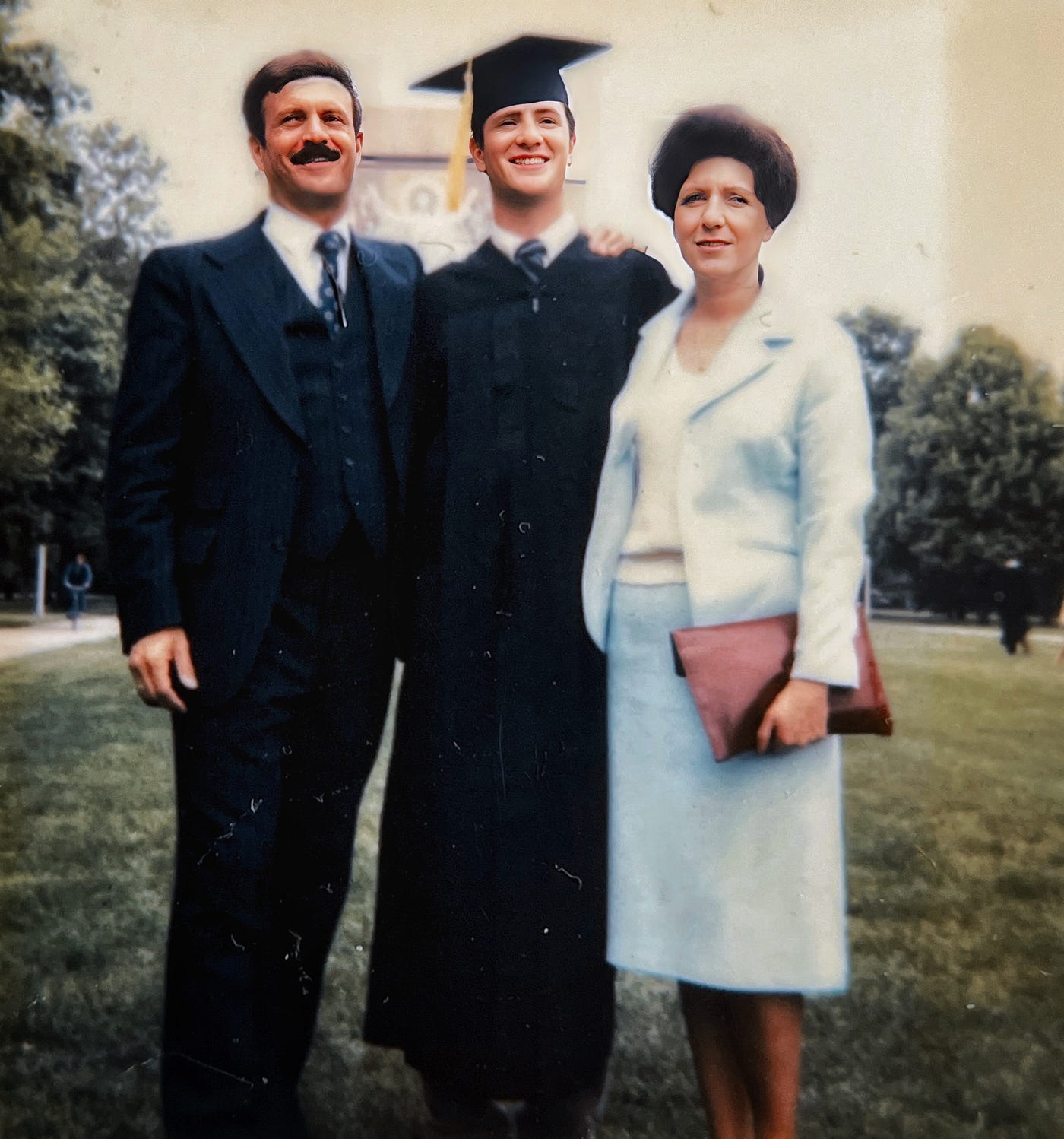
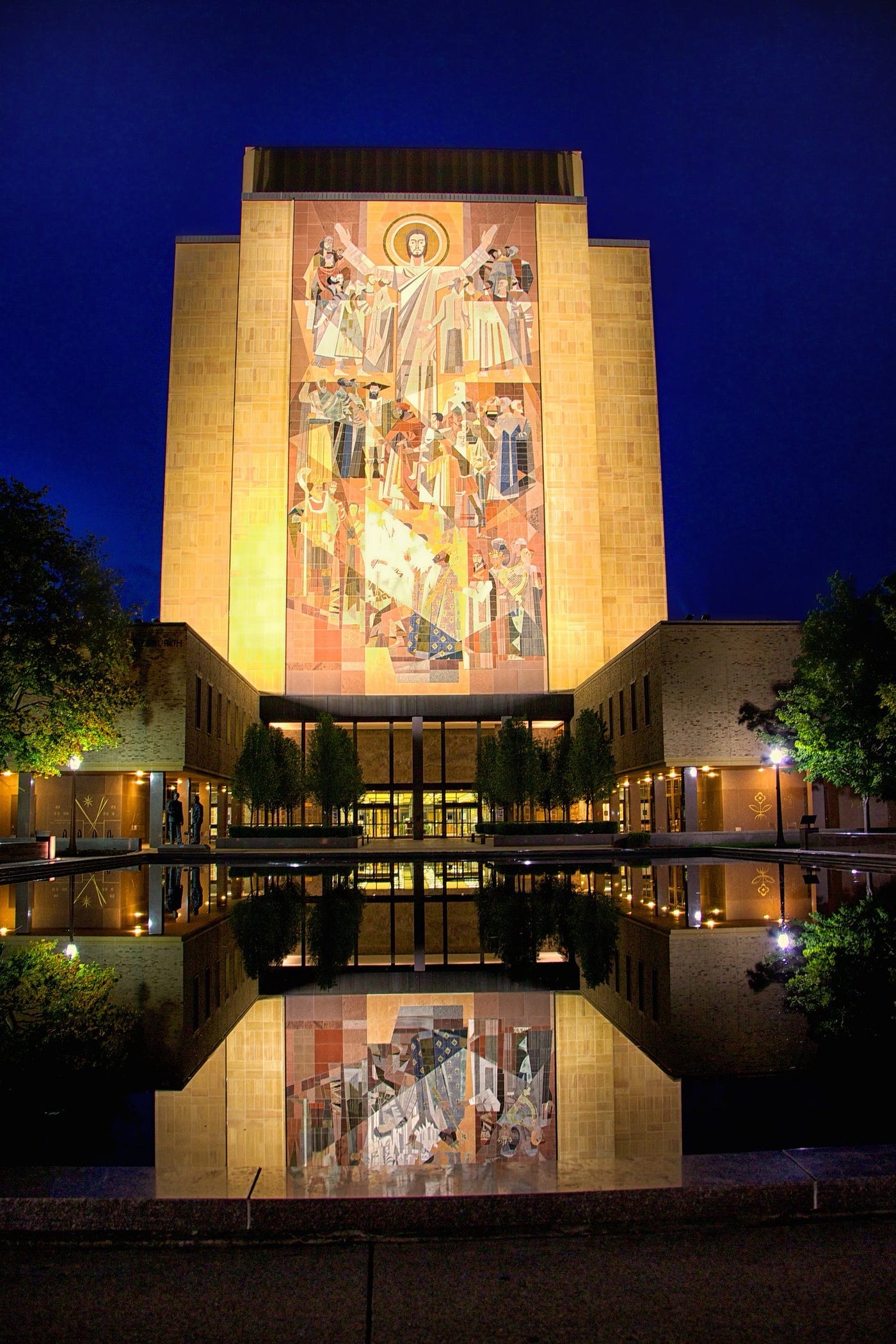
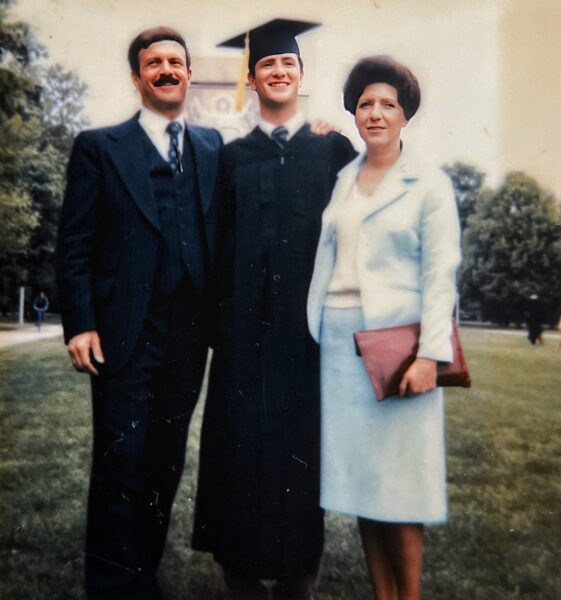
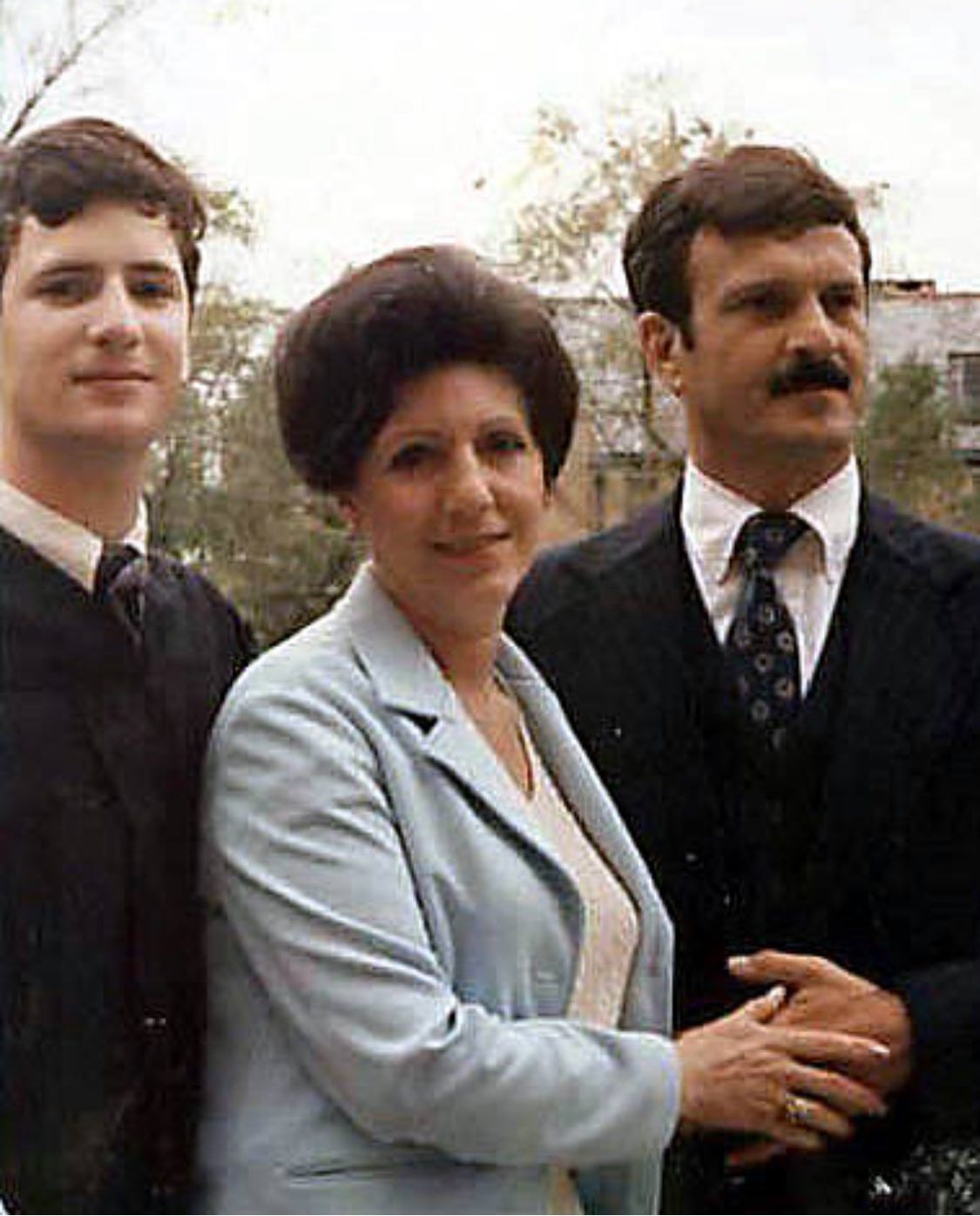
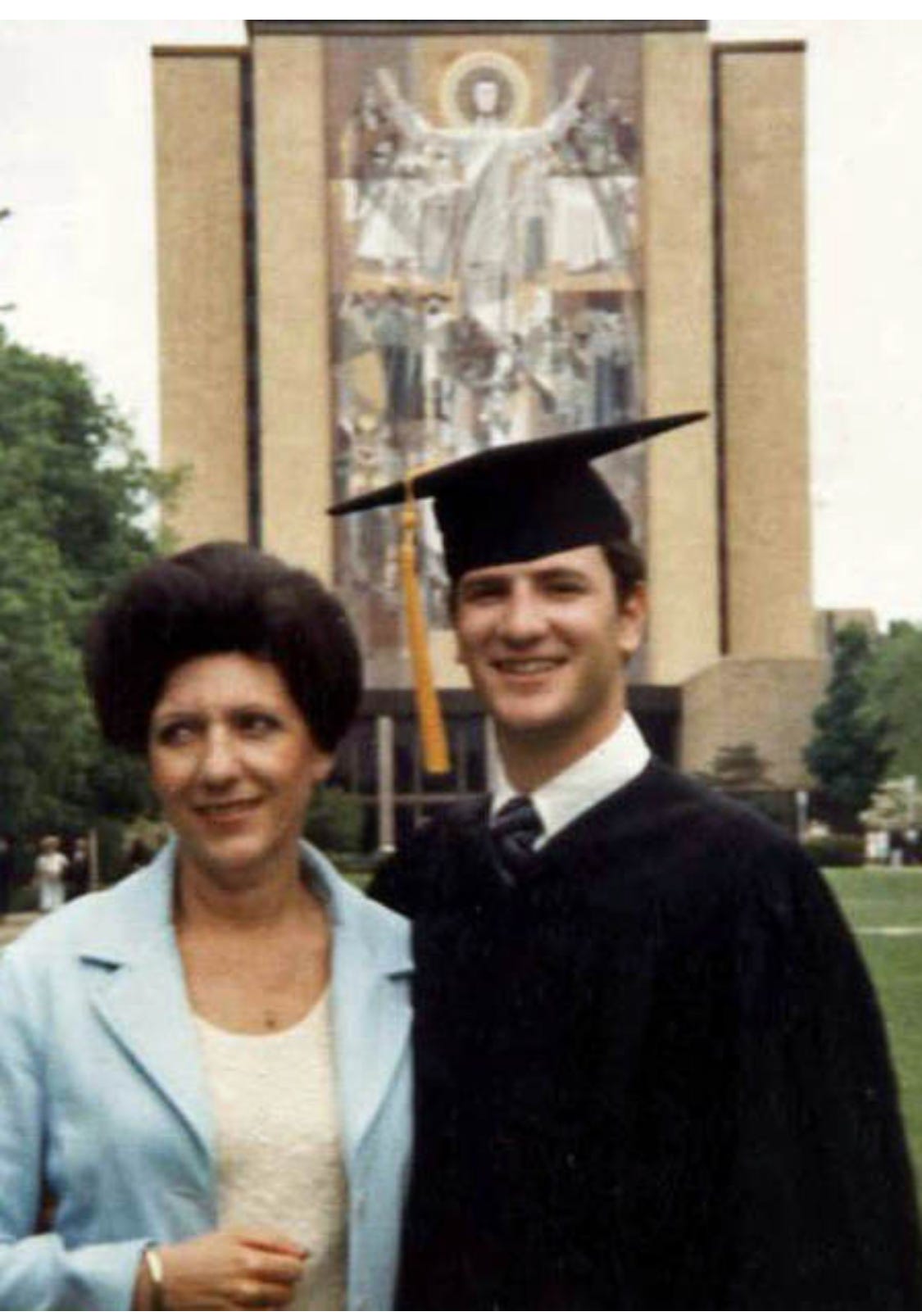
Photo of graduate Anthony J. Carbone with his parents Colonel Tony and Edda Carbone. In front of the Hesburg Library at the University of Notre Dame.

Believe Nothing You Hear, and Only Half of What You SeeA memoir of Service, Shame and the Search for Truth

Return to Campus

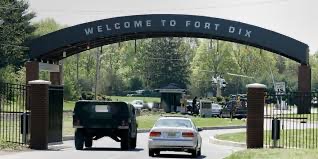
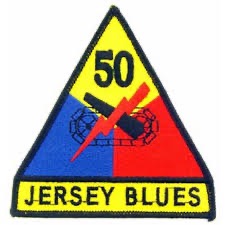
I returned to Notre Dame on Saturday, August 23, 1980, ready to begin my final year of college. I had just left my family at Fort Dix, New Jersey. My father had taken his new assignment as the Senior Army Advisor to the 50th Armored Division and the New Jersey National Guard. Saying goodbye carried a certain weight — this was it, my last year at Notre Dame. In many ways, the year that would set the course for what came next.
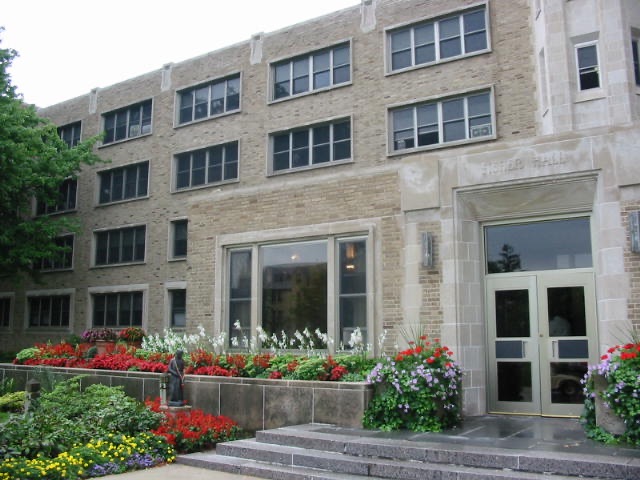
Back to Campus and Fisher Hall

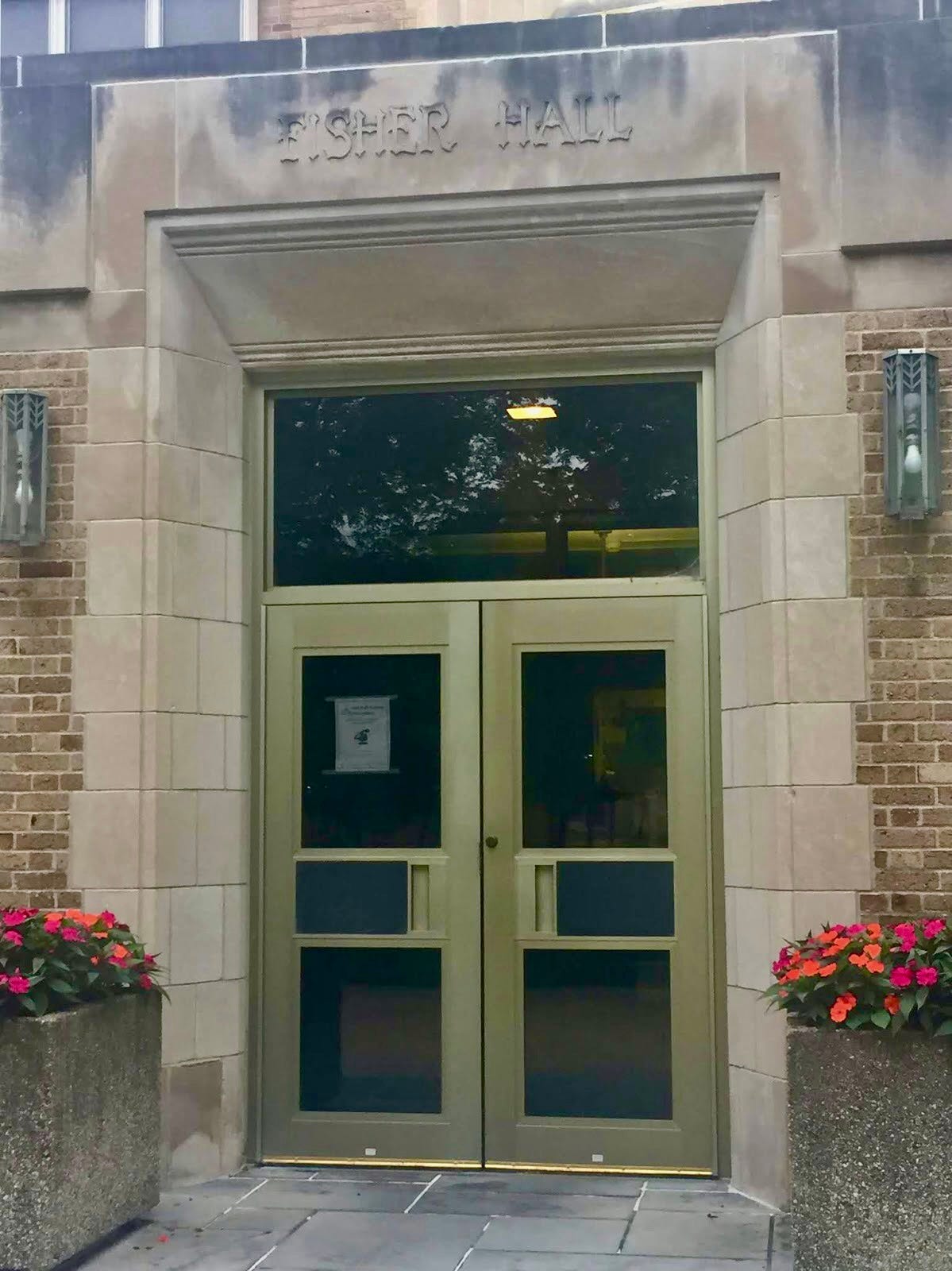
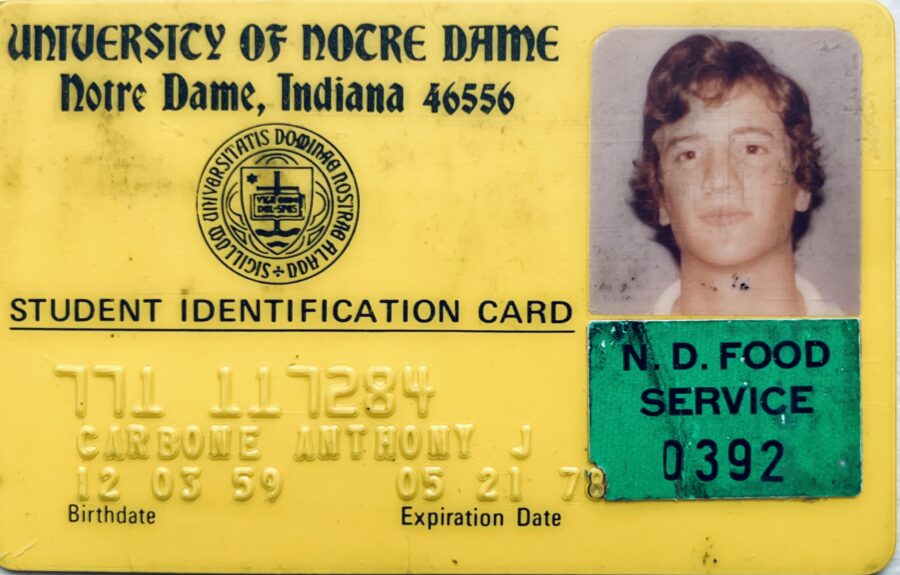
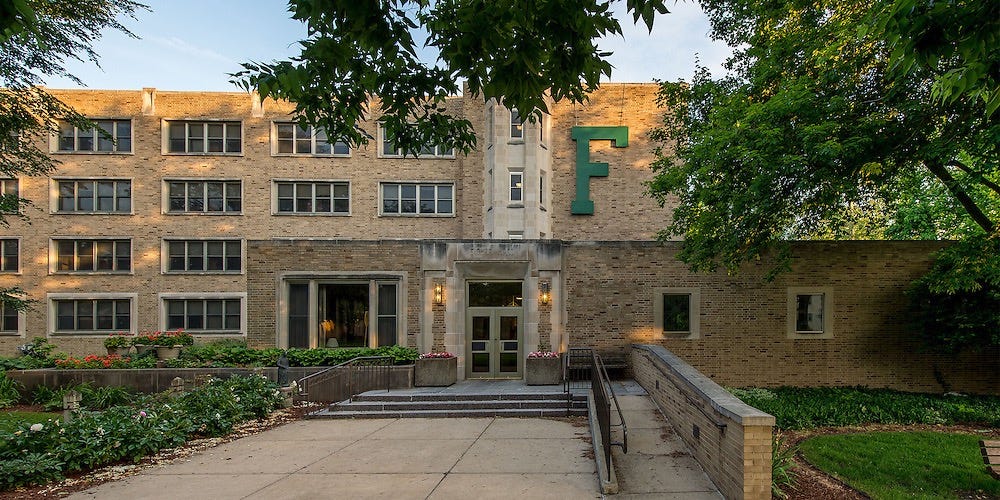
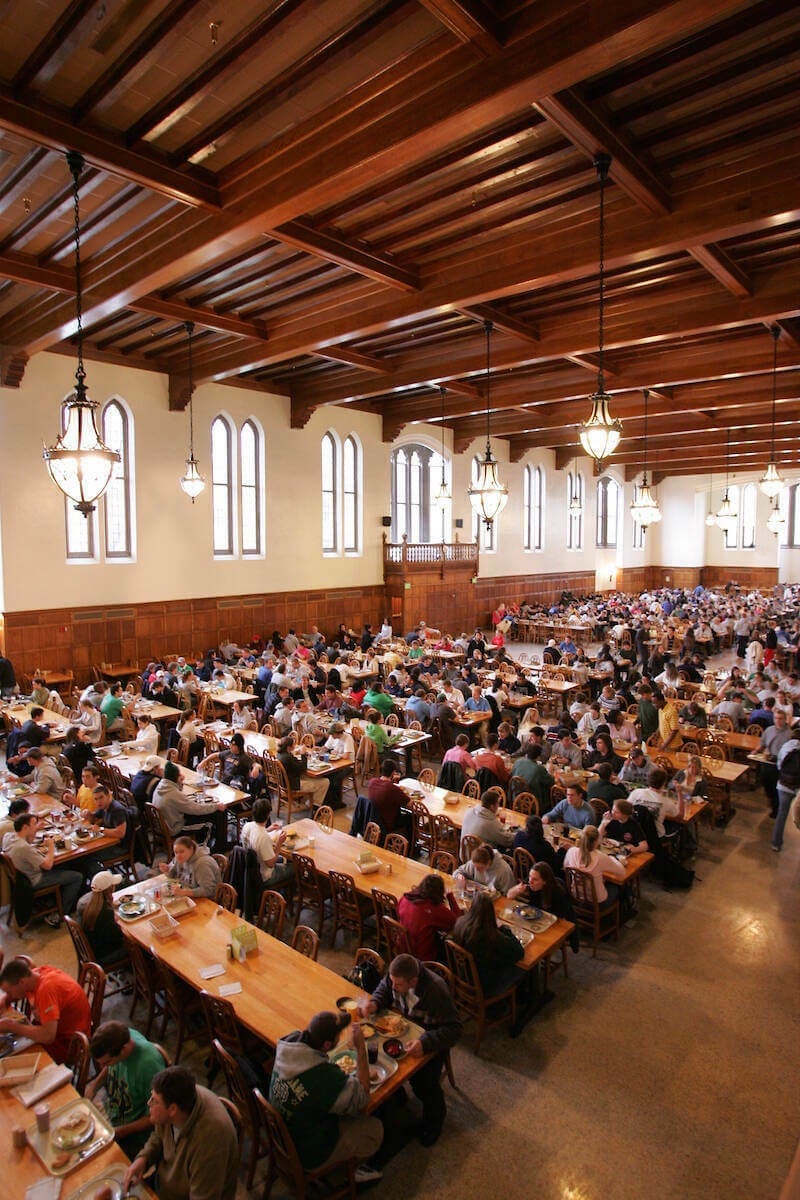
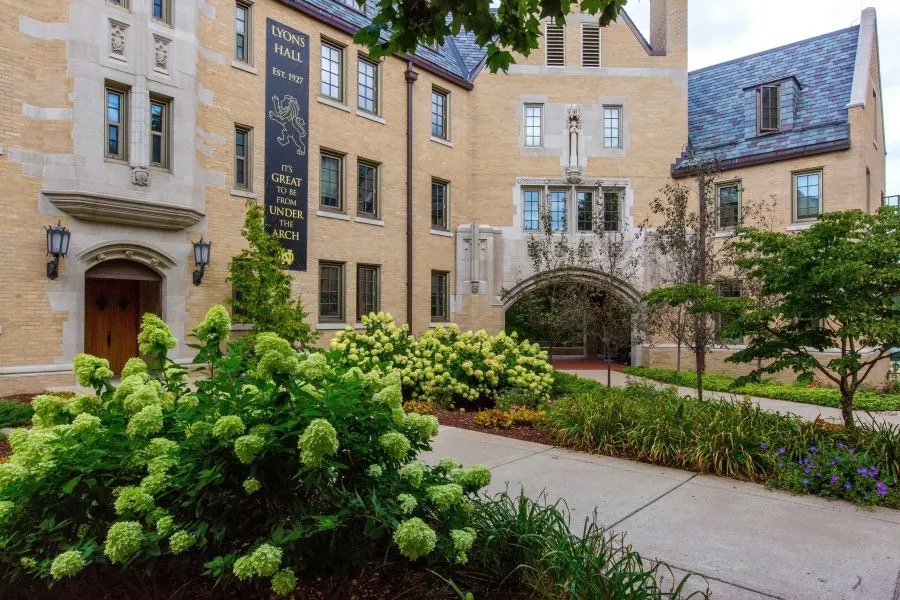
By now, I had the routine down. Arrive at Fisher Hall. Reconnect with the Fisher Hall gang. Track down Mariann at Lyons Hall. Dinner at South Dining Hall with everyone together again. Pick up my belongings from storage and turn Room 221 of Fisher into my bachelor’s pad for the year. It felt comfortable, familiar — like slipping back into a well-worn groove.
The Fisher Hall Gang

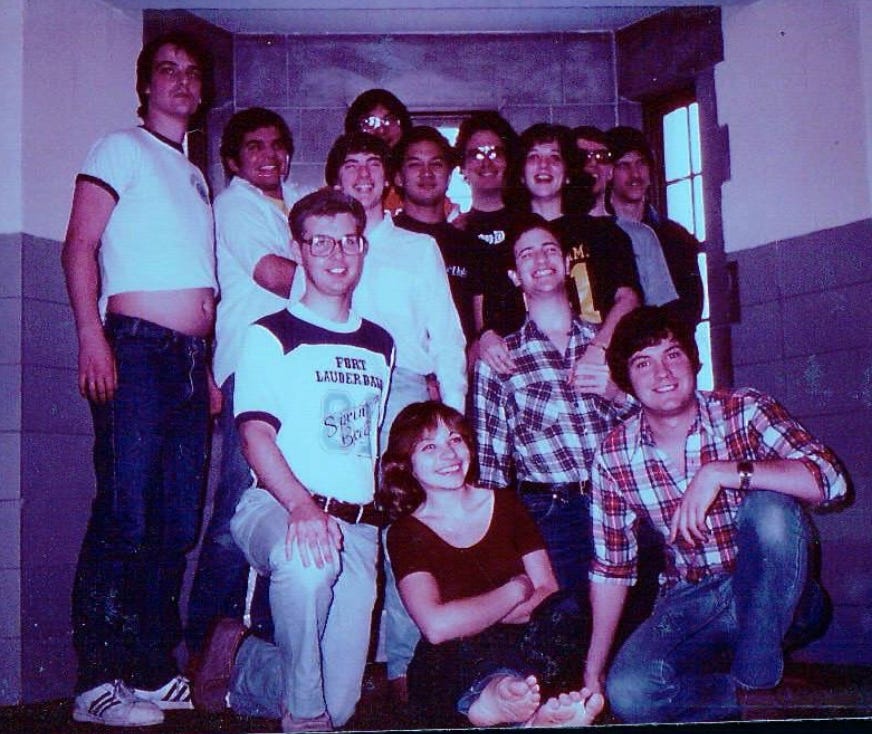
Returning to Notre Dame and Fisher Hall for my final year felt like coming home to a band of brothers. We had our tight-knit Fisher Hall gang: Bob Terifay, my fellow pre-med senior. Andy CordesAl Emory, and Chris Kane, all senior engineering majors. Matt Bedics, our senior philosophy mind. Scott Olds, our pre-med junior genius. And Joe DeLaney, our sharp-witted pre-law junior.

We weren’t just classmates — we were a crew bound by late-night study sessions, endless banter in the hallways, and a shared love of Notre Dame traditions. Adding to our circle were the three steady girlfriends. I had Mariann Schmitz. Andy was with Ginger Miklausen. And Joe with Bernadette Young. All three couples would go on to marry soon after graduation. Which made our Fisher Hall gang feel even more like a family.
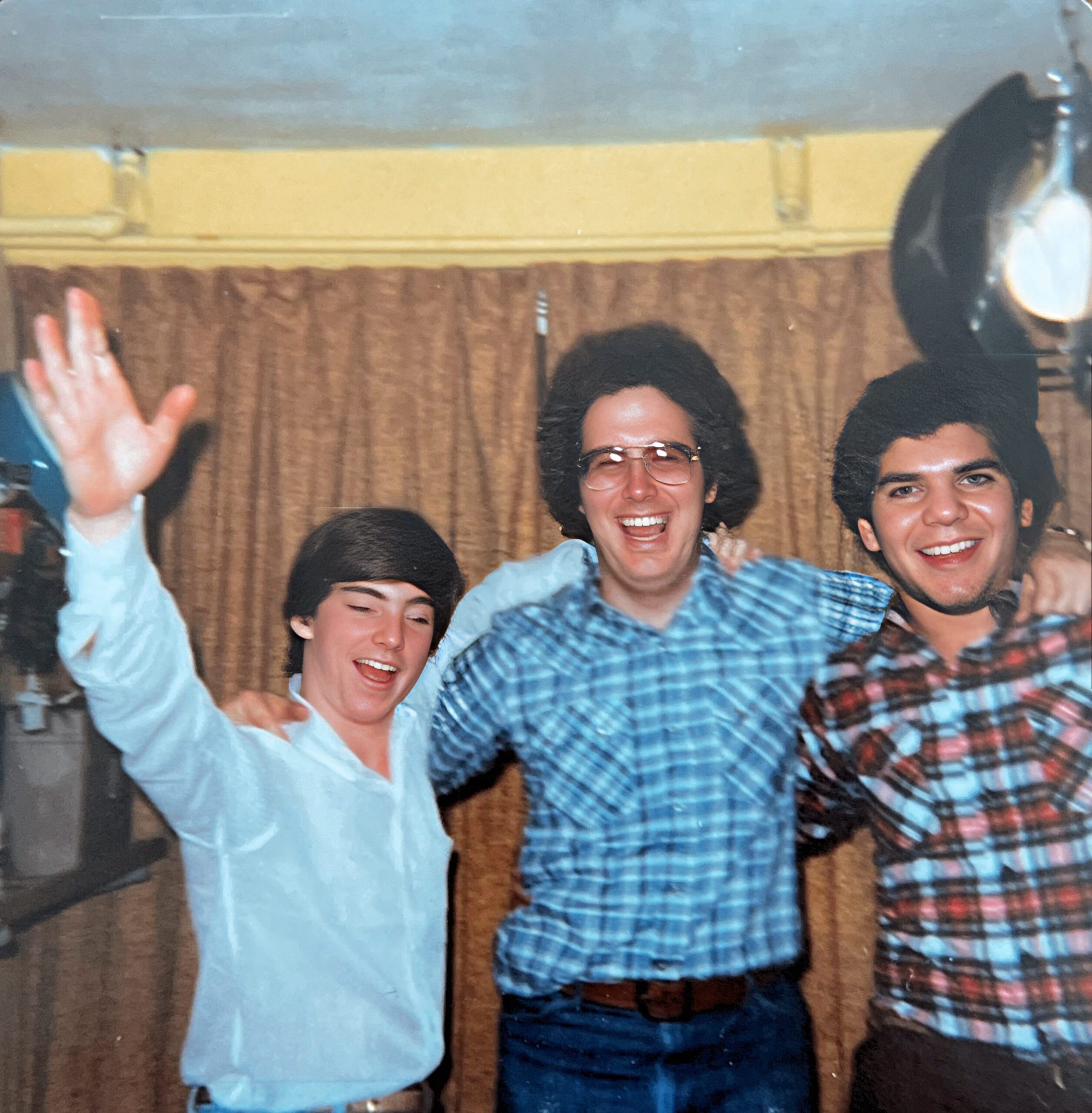
Photograph of 3 young men from Fisher Hall, University of Notre Dame.  Friends of Dr. Anthony J. Carbone.

Group photo of Fisher Hall Gang at University of Notre Dame.  Anthony Carbone with Mariann Schmitz.  Andy and Ginger Cordes.

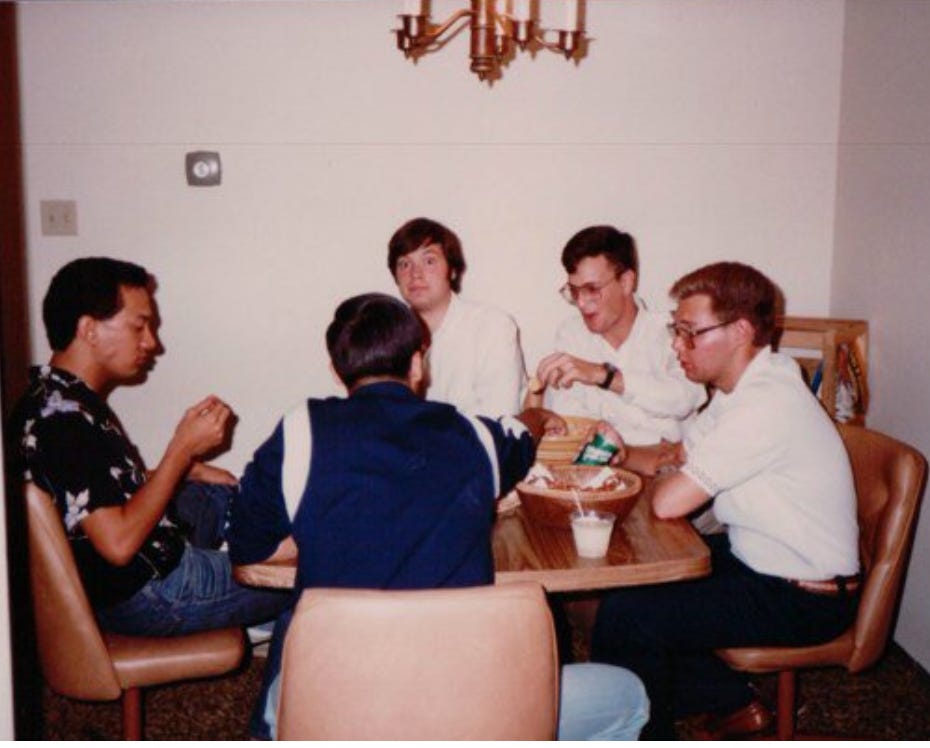
Fisher Hall gang at small dinner table.  Anthony J. Carbone with Andy Cordes and Scott Olds.

Registration Day

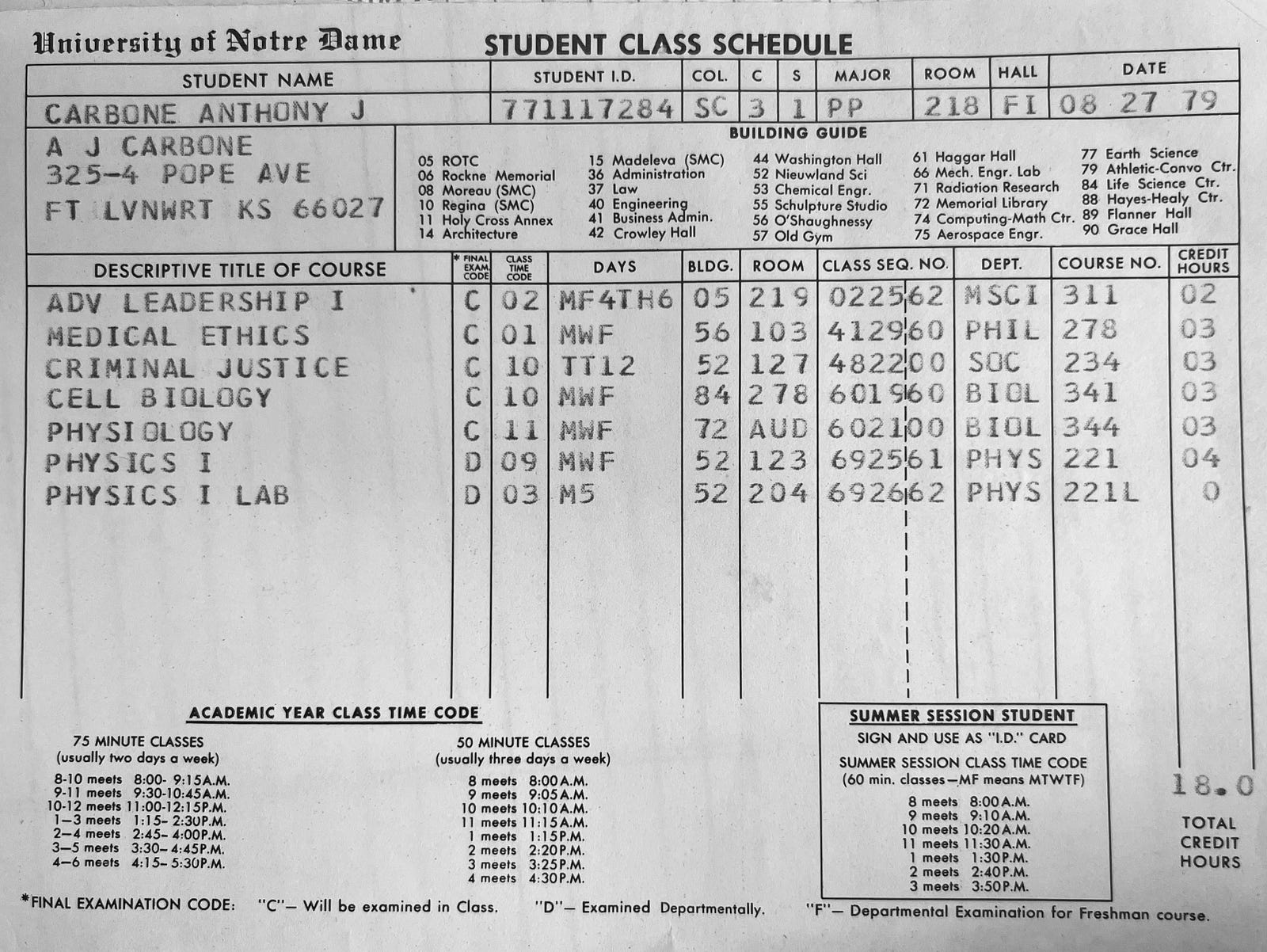
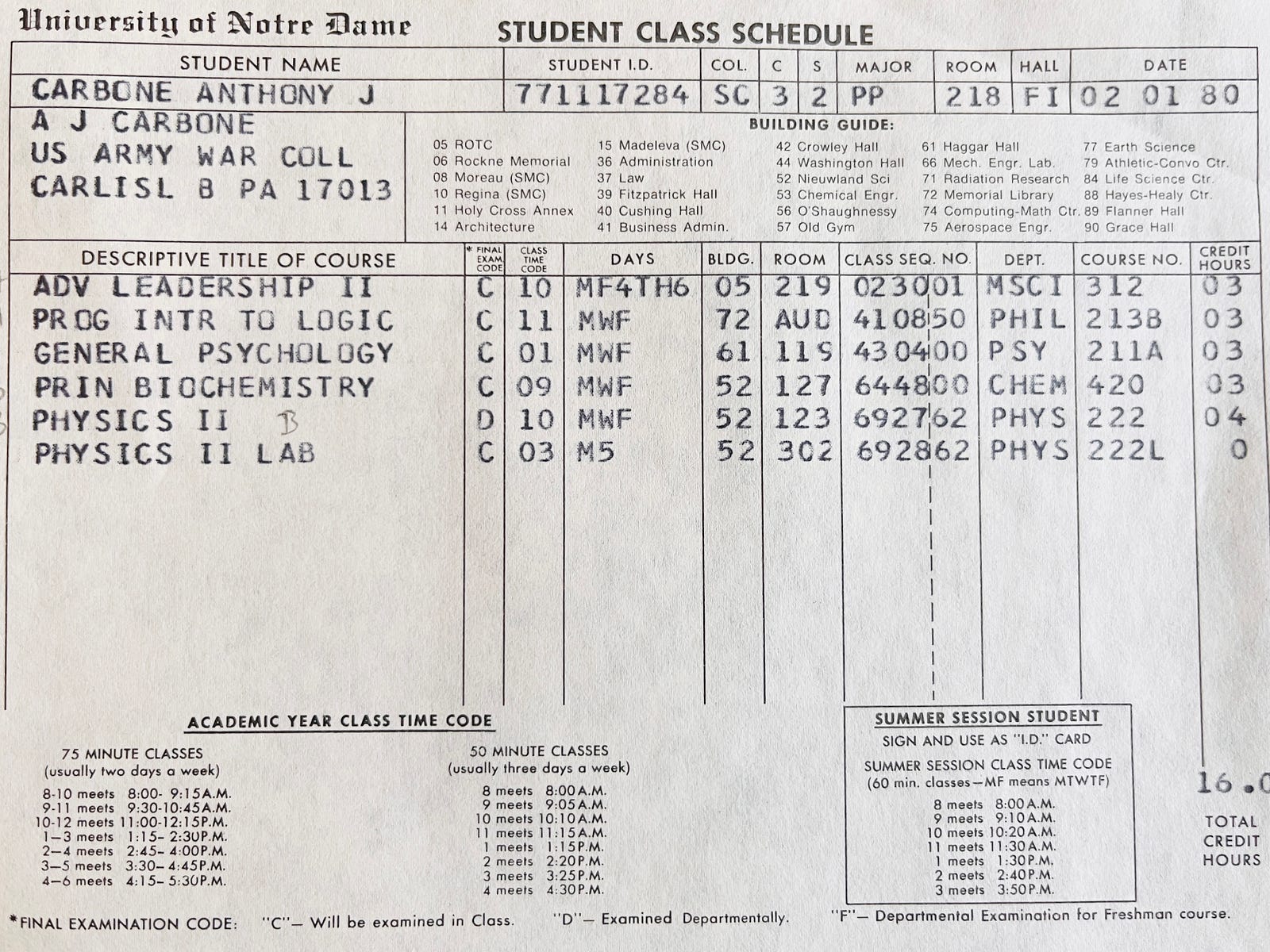
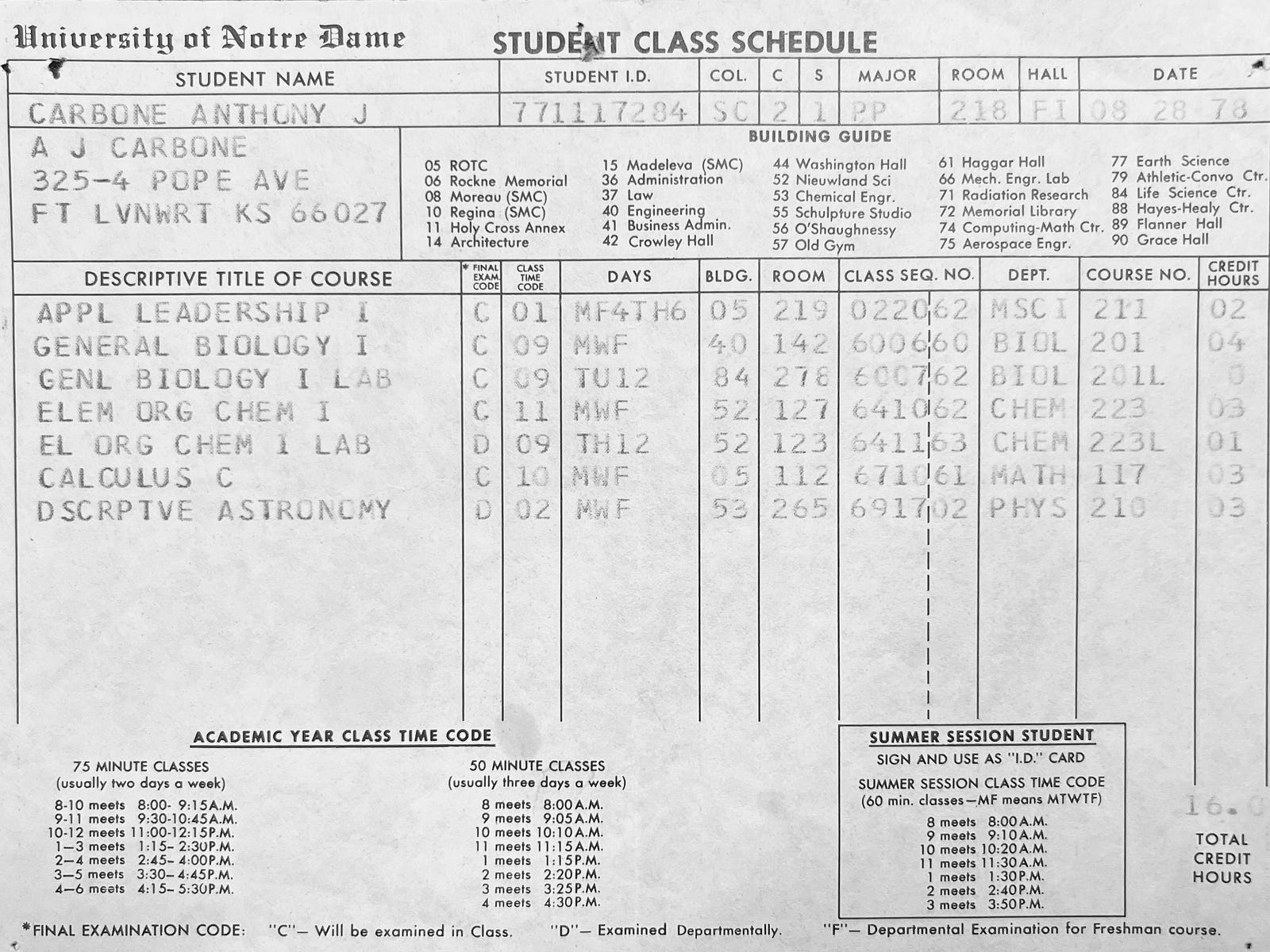
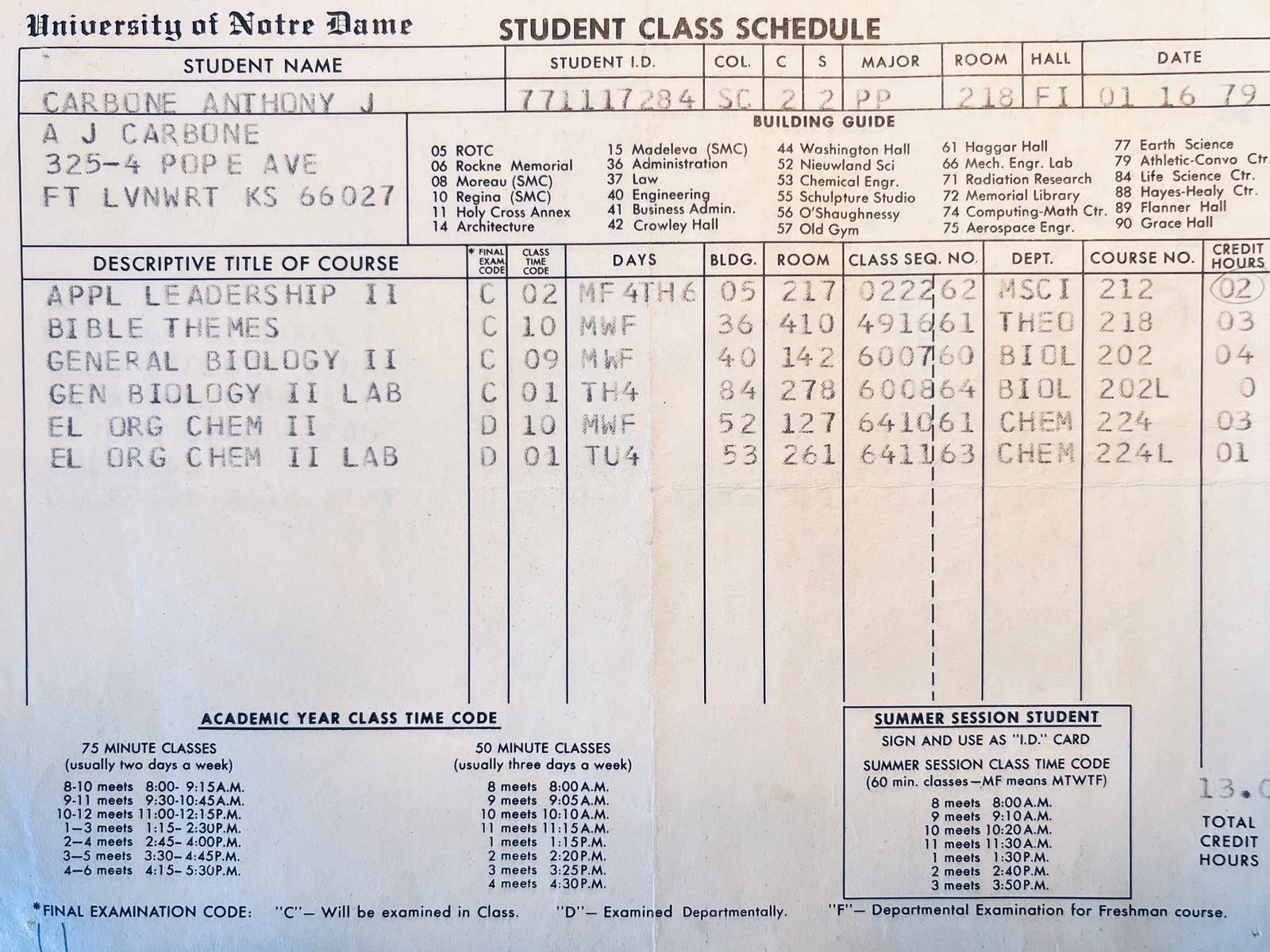
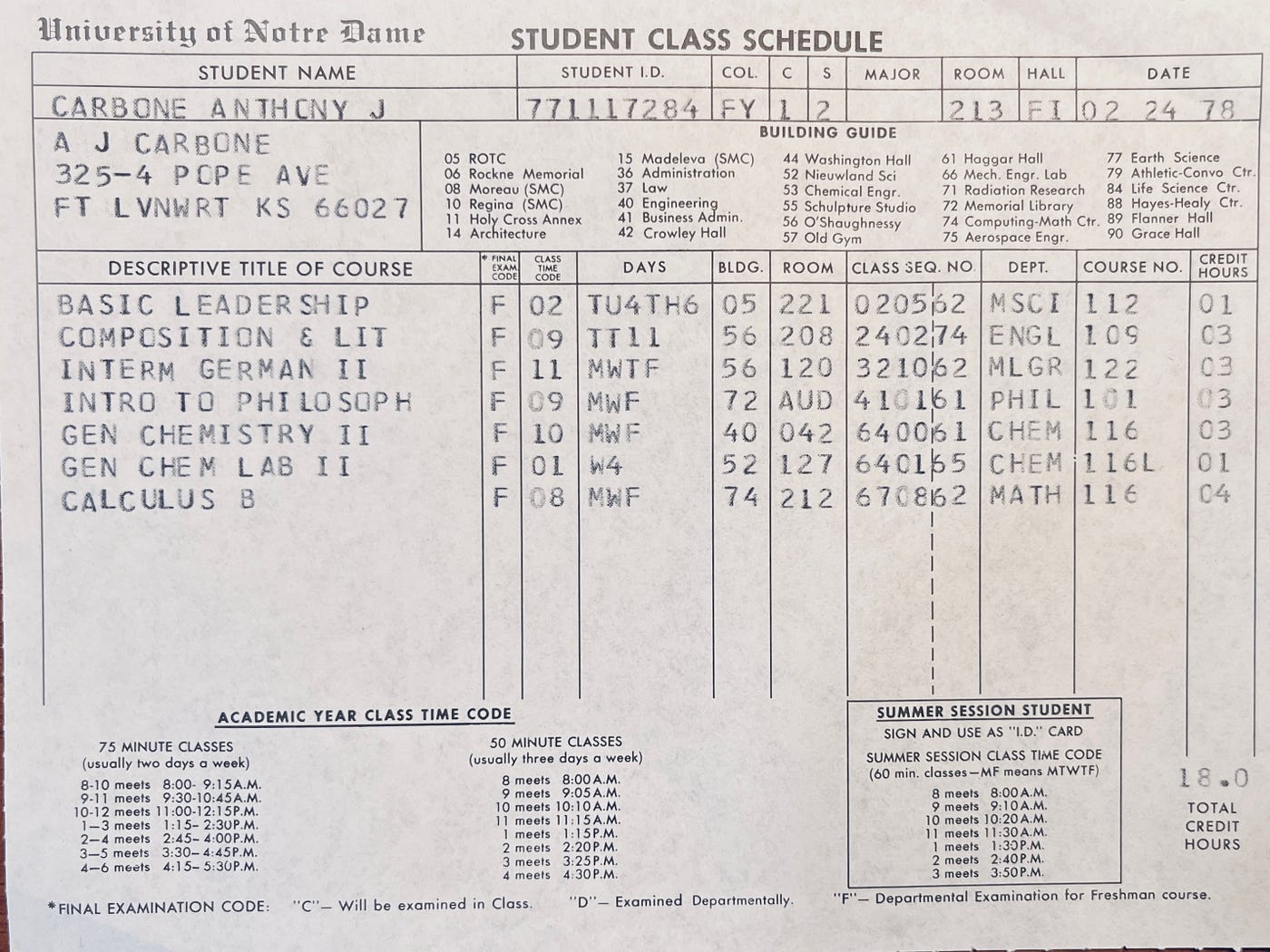
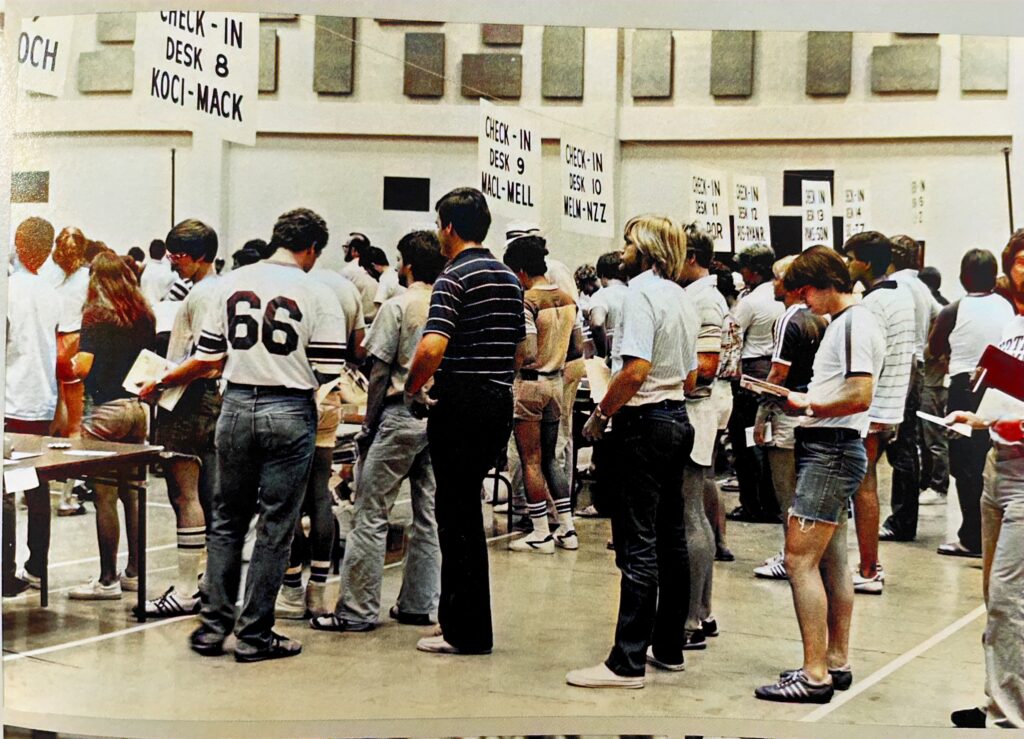
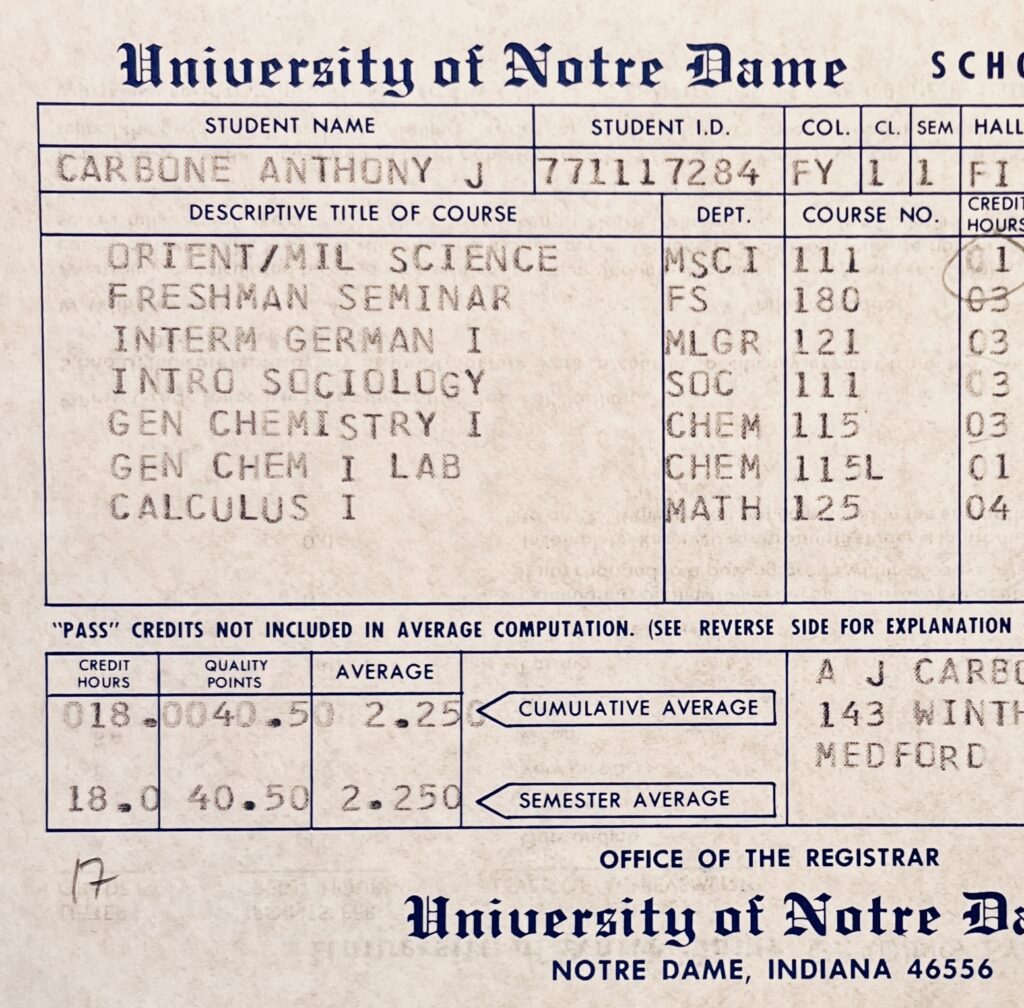
Monday, August 25, was Class Registration Day. My schedule ended up being a mix of heavy requirements and a few breaths of relief. Only two science courses first semester — Embryology (BIOL 301) with its demanding laboratory, and Physiology Lab (BIOL 344L). I signed up for Medical Ethics(THEO 344), a required English class on the Novel (ENGL 322). And, for my one true elective, Introduction to Music (MUS 220). That music class would turn out to be the only course where I could truly relax.
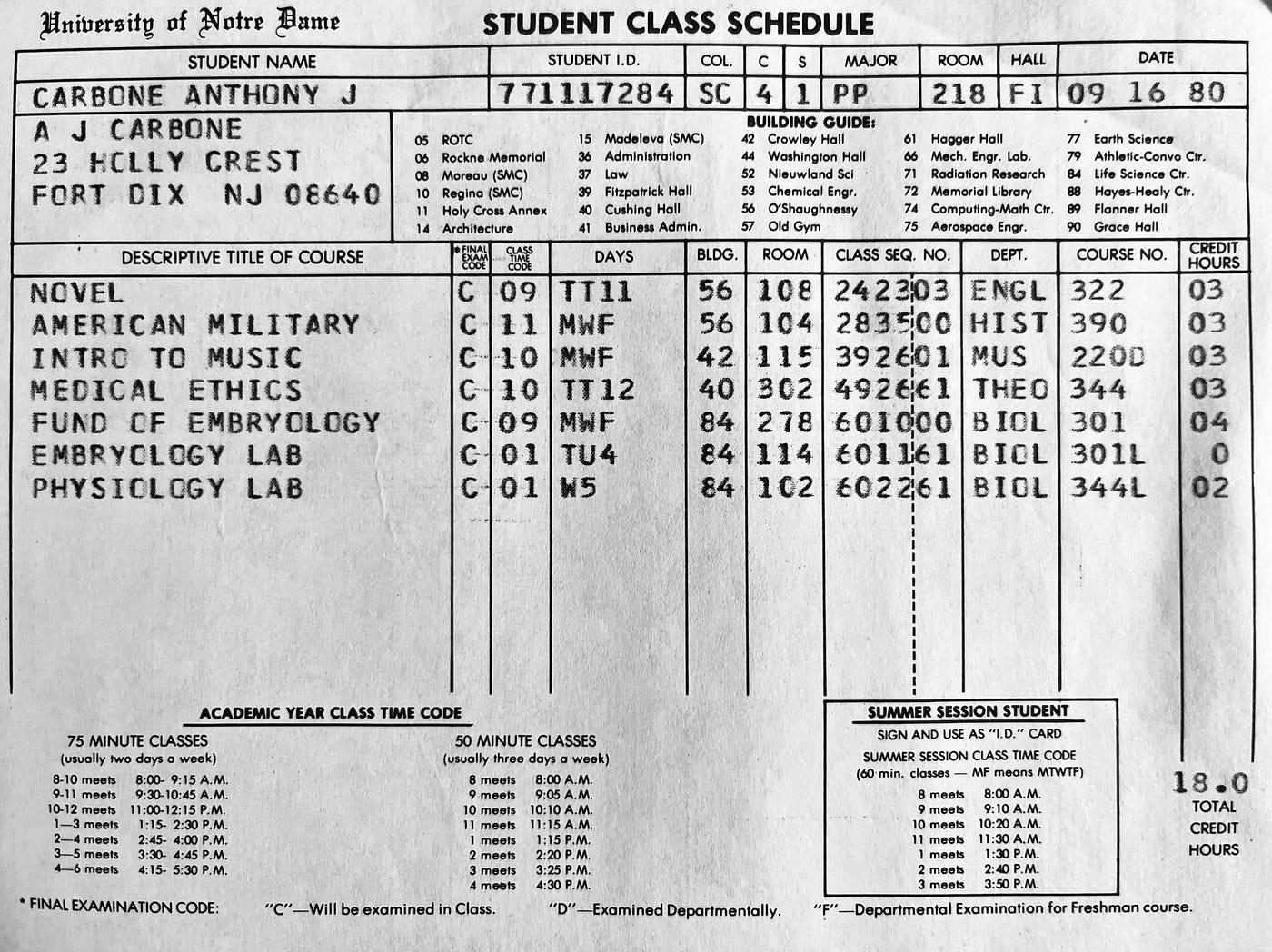
University of Notre Dame Student Class Schedule for Senior Year First Semester. Courses include Embryology with Lab, Physiology Lab, American Military History, Novel, and Intro to Music. Biography of Dr. Anthony J. Carbone.

ROTC and Military History

ROTC senior year was every bit as demanding as junior year, only in a different way. Last year, I had been preparing myself for ROTC Advanced Camp. This year, the responsibility shifted — I was the one preparing the junior class cadets for their turn at Advanced Camp. On top of that came my academic load. American Military History turned out to be one of my most difficult courses. I found both the professor and the material fascinating, but the exams were brutal. My learning disability with rote memorization — names, dates, and battles — was exactly the foundation of the course. No matter how hard I studied, the details slipped through my fingers. The tests felt like uphill battles every time.
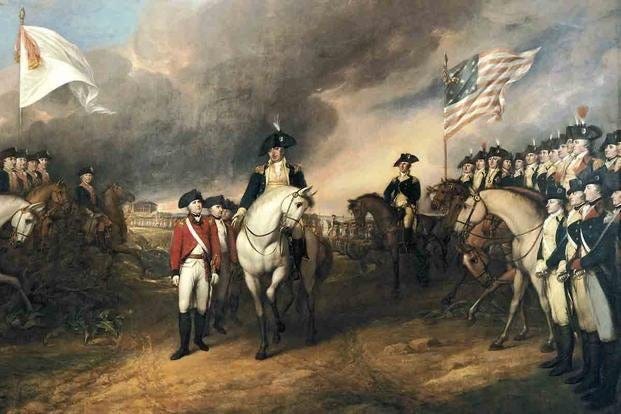
Painting of British Major General Charles Cornwallis surrenders his army at Yorktown, the U.S. Army’s first — but not last — overall war victory. Biography of Anthony J. Carbone.

Senior Year ROTC Position

As part of the ROTC routine, I had to report to the Professor of Military Science (PMS). We reviewed my evaluation from Advanced Camp at Fort Riley over the summer. My rating came back in the Top 1%. The PMS wasted no time asking if I wanted to be the next Fighting Irish Battalion Commander. It was the most coveted position for a senior cadet — prestige, responsibility, recognition. For many, it was the crown jewel of the ROTC program. But I turned it down.
The truth was, I had been wrestling with this decision for weeks. This was my last chance to raise my GPA before applying to medical school. I knew that taking on the role of Battalion Commander would be all-consuming, and I couldn’t afford the distraction. In the moment, it felt like the disciplined and practical choice — but it was a decision I later came to regret. The cadet who grabbed the title after me seemed to take delight in treating me like a brand-new recruit for the rest of the year. And the PMS, perhaps disappointed in me, seemed to punish my decision by assigning me only the rank of Cadet First Lieutenant.
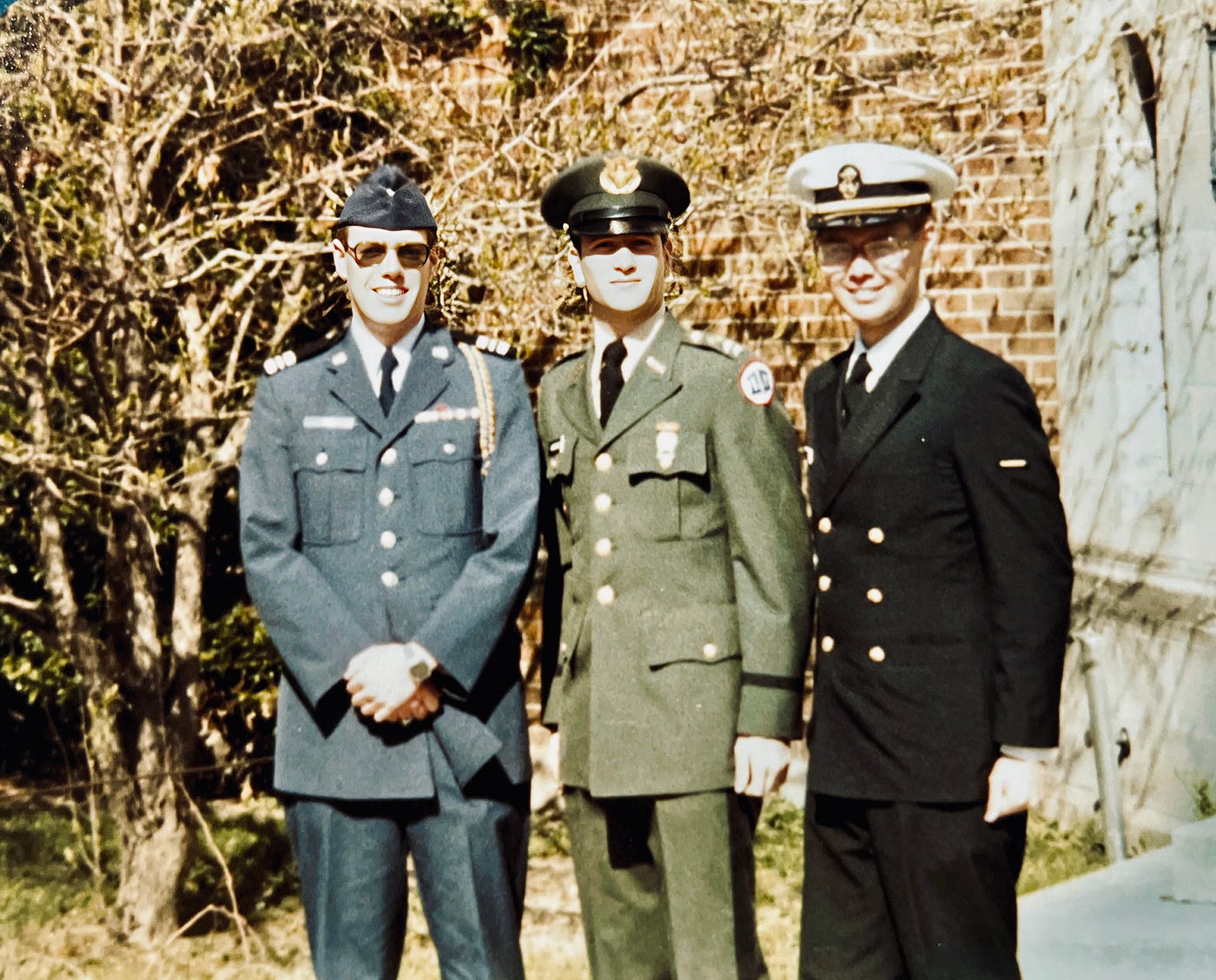
3 ROTC cadets in dress uniform in front of Fisher Hall at the University of Notre Dame.  Anthony J Carbone (Army), Chris Kane (USAF), and one US Navy midshipman.
Three Fisher Hall Section ROTC Cadets

Despite everything I had accomplished in ROTC and in my academic life up to that point, I carried a quiet but persistent lack of confidence. It didn’t make sense — I had proven myself again and again — but deep down, I couldn’t quite shake it. Partly because my father was intent on teaching me humility, to the point that it choked out any developing confidence.
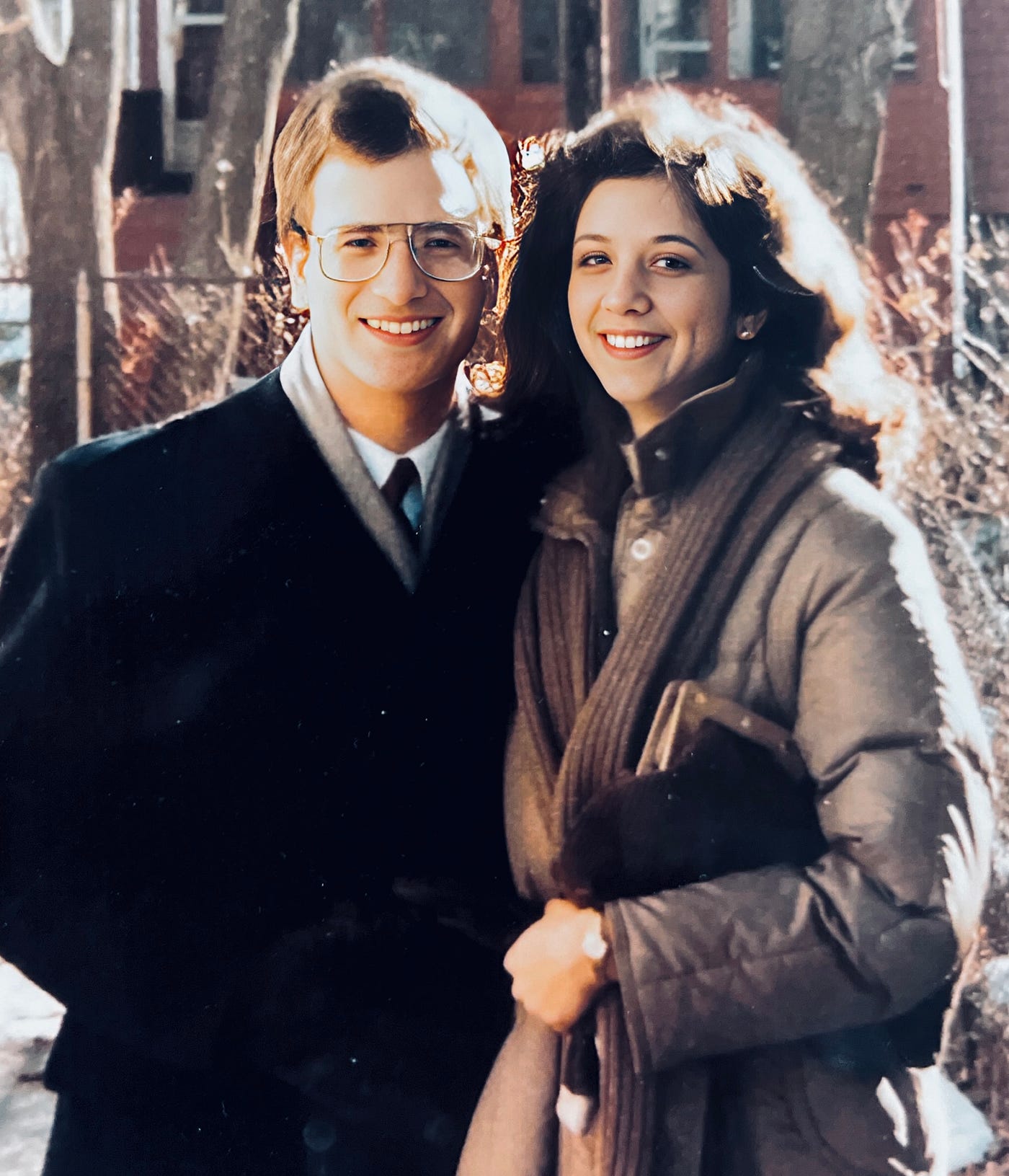
Photograph of Anthony J. Carbone with Mariann Schmitz in winter coats with scarves.
With Mariann Schmitz

Senior Year with Mariann

Mariann was at the center of my senior year. We were more than just a couple — we were companions in the truest sense. Ours was not a relationship defined by drama or passion alone, but by a steady closeness that anchored me. She understood me in ways no one else did, and she had a calming presence that quieted the anxieties I often carried.

Except for classes and the restrictions of parietals, we were inseparable. We studied together in my room every day, we ate every meal together, and we moved through campus life as a pair. In many ways, she completed me, filling in the gaps where I lacked confidence or balance. By then, even our families had begun to know each other, which only deepened the sense that what we shared was lasting and real.

Senior Year Missions

In my senior year, I focused on two missions: first, raising my overall GPA to boost my chances of getting into medical school, and second, preparing to commission as a U.S. Army officer.

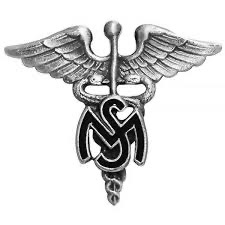
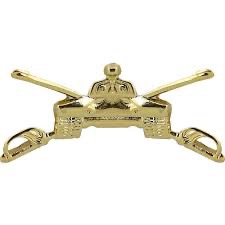
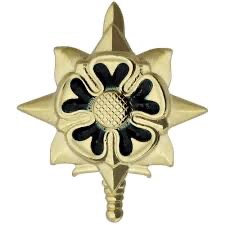
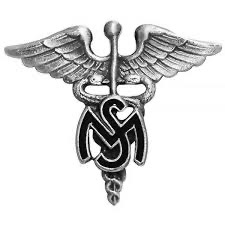
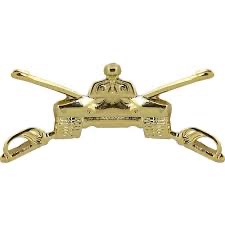
For ROTC, I had to submit my branch preferences, and I listed them in order as Military Intelligence, Medical Service Corps, and Armor. Then came the assignment location choices. If I had my way, it would be simple: (1) Germany, (2) Germany, (3) Anywhere in Europe. The Army would give me its answer soon enough.
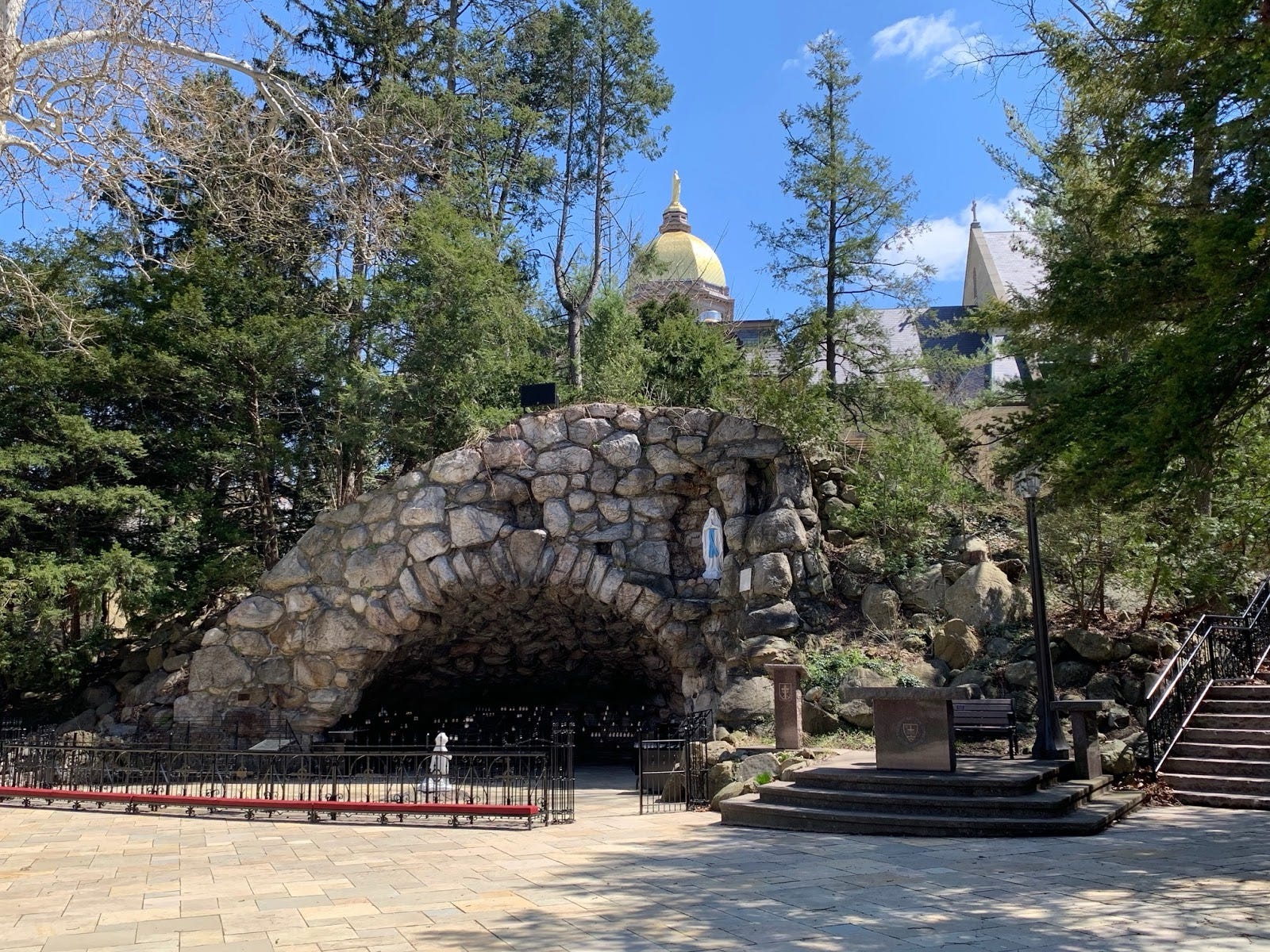
The bulk of my mental energy that autumn was spent trying to raise my GPA while I waited for an interview from any of the medical schools I had applied to. It was an endless waiting game. Every day I checked my mailbox in Fisher Hall, hoping for a letter that might finally open the door to an interview. The uncertainty gnawed at me. Most nights I prayed at the Grotto with Mariann, asking God to guide my path and steady my nerves. My classmates seemed to be coasting through their senior year with light schedules and carefree weekends, while I carried the heavy weight of not knowing whether my dream of becoming a doctor would ever get off the ground.

Ronald Reagan is Elected President

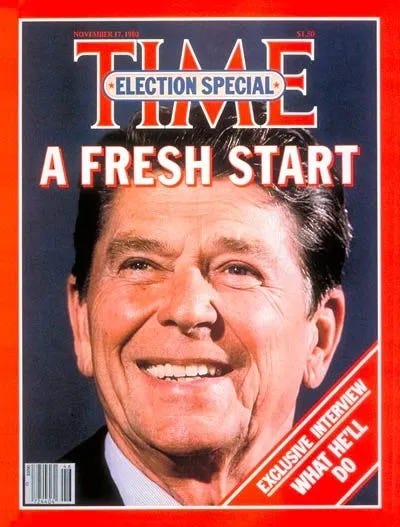
The semester flew by because I was so busy balancing academics, ROTC responsibilities, and the endless cycle of medical school applications. In the midst of all this, the country was caught up in the 1980 presidential election. In November, Ronald Reagan won a landslide victory over incumbent Jimmy Carter, signaling a dramatic political shift for the nation. Even on campus, you could feel the change in mood — an undercurrent of renewed confidence and patriotism that matched the new decade just beginning.
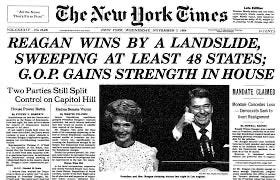
New York Times front page "Reagan Wins By A Landslide, Sweeping at Least 48 States; GOP Gains Strength in House."  Biography of Dr. Anthony J. Carbone.

Cover of Times Magazine with face of President Reagan with "A Fresh Start".  Biography of Dr. Anthony J. Carbone.

Thanksgiving 1980

Thanksgiving was a repeat trip to Mariann’s family home in Wheaton, Illinois. That year, Mrs. Schmitz decided to have the meal catered, which felt like a real treat. I slept downstairs again in John Jr.’s wood-paneled basement bedroom, complete with its enormous waterbed. Mariann’s roommate, Bernadette Young, joined us for Thanksgiving in Wheaton.
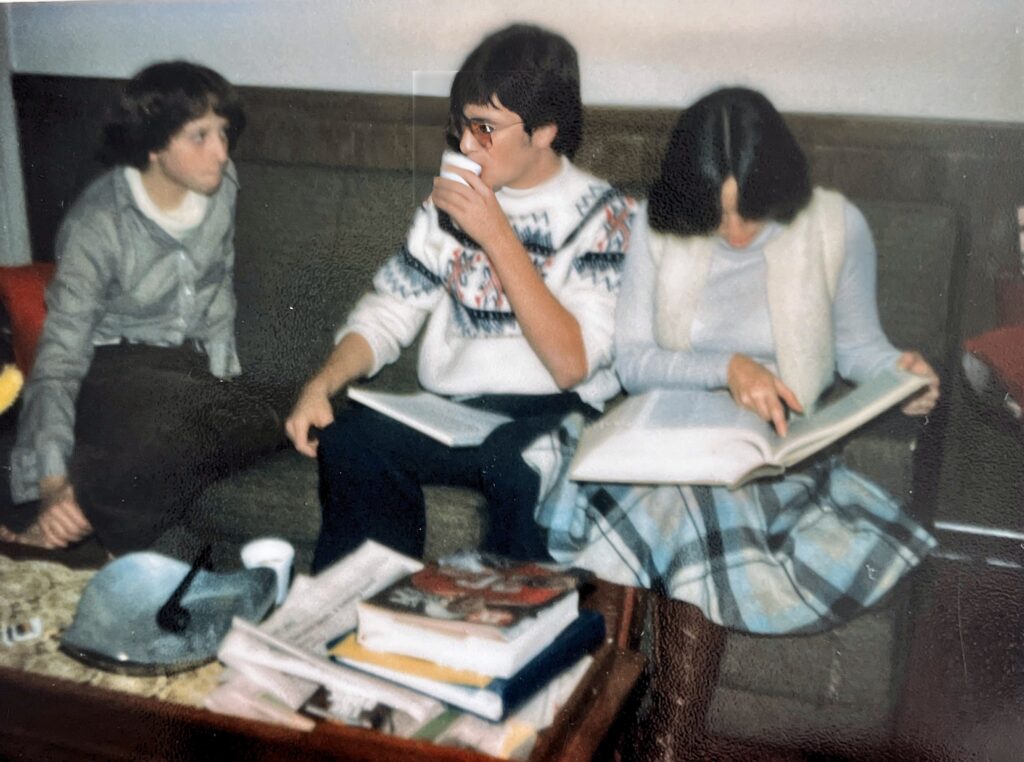
Photograph of 3 people sitting on a couch, one young man and two young ladies.  Biography of Dr. Anthony J. Carbone.
At Mariann’s house in Wheaton, Illinois, at Thanksgiving with her youngest sister, Jacqueline (to my right), and Mari’s roommate, Bernadette Young (to my left).

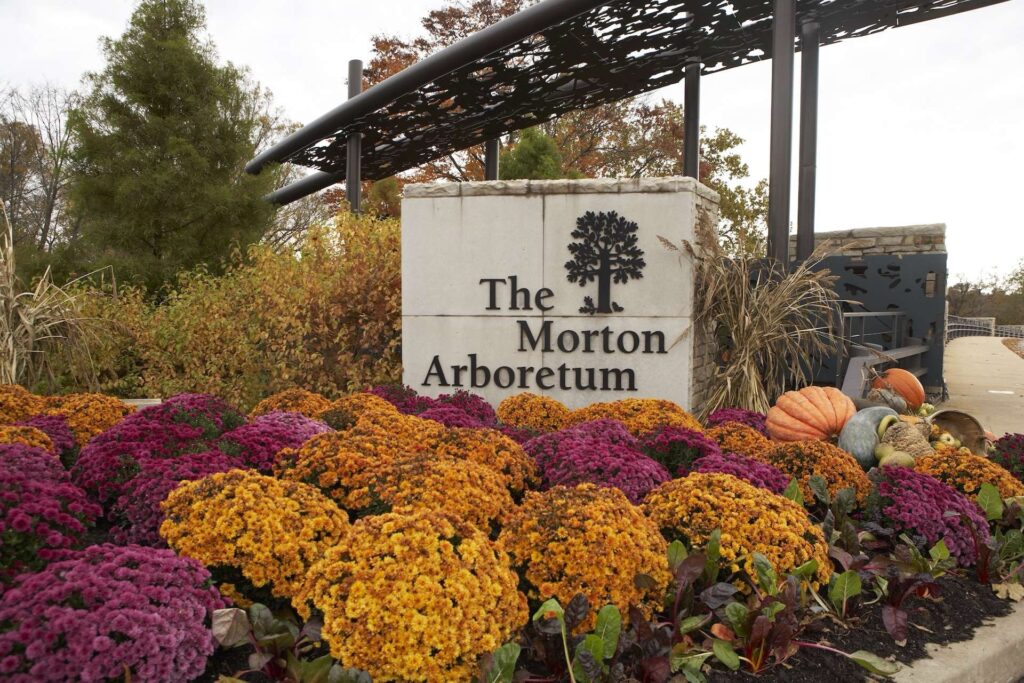
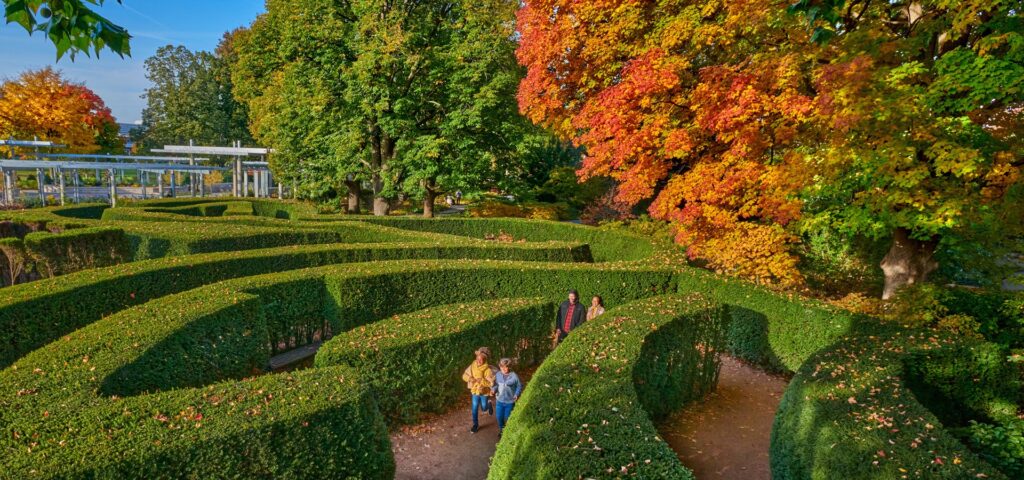
One of the highlights of the weekend was when Mariann and I drove out to the Morton Arboretum. Founded in 1922 by Joy Morton — son of Arbor Day founder J. Sterling Morton and the man behind Morton Salt — the Arboretum was created as an outdoor museum of trees and a center for tree research and conservation. It was the perfect place for a quiet walk together, surrounded by nature.
Fighting Irish Football

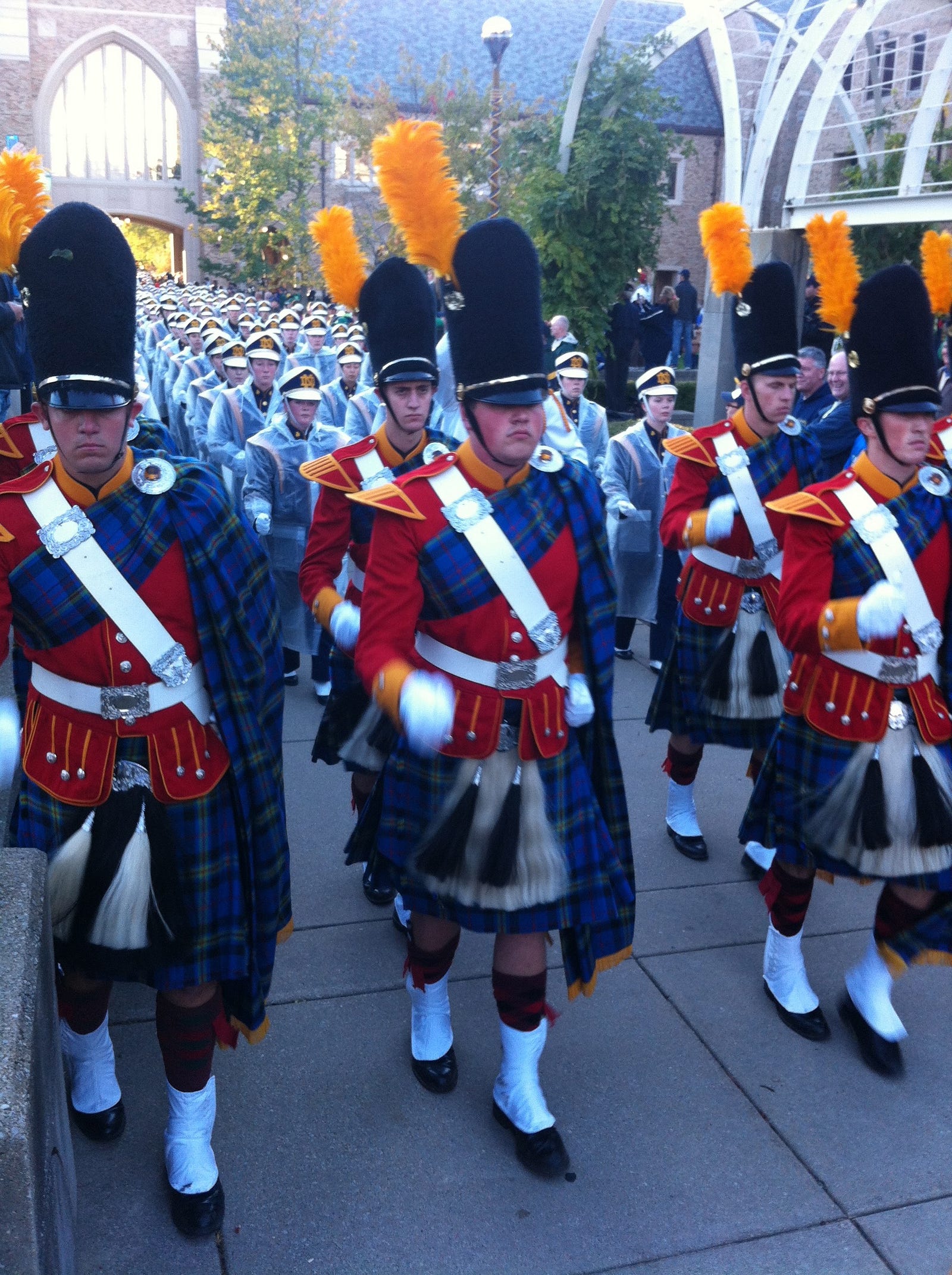
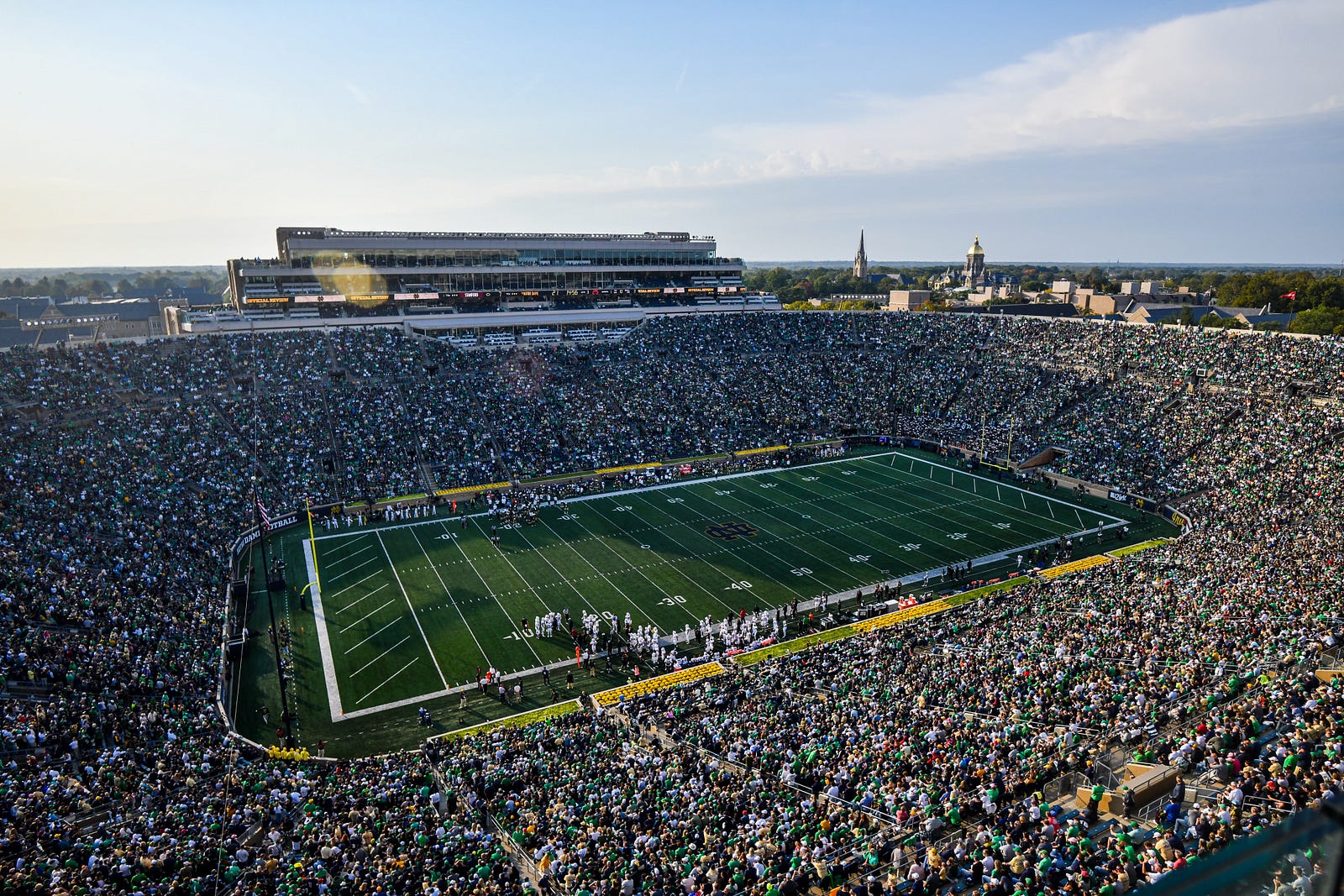
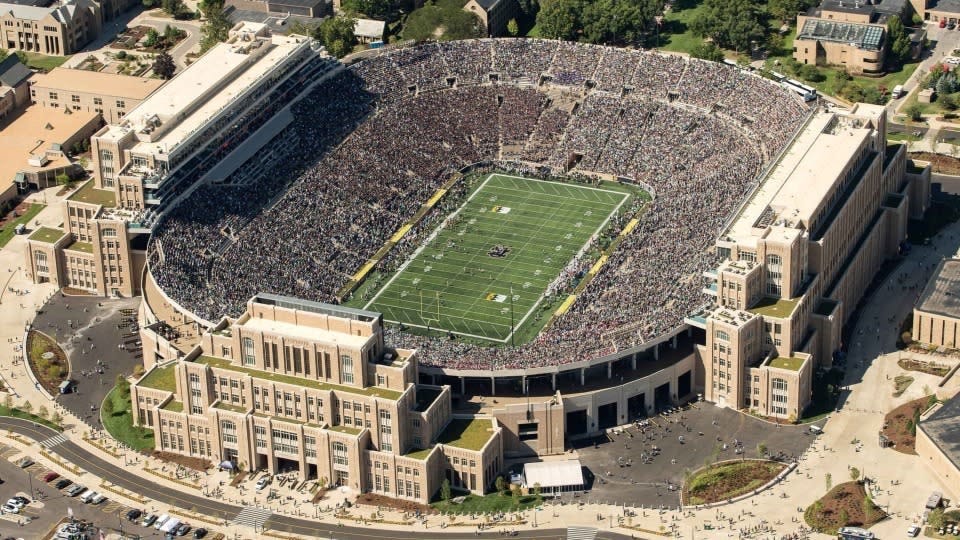
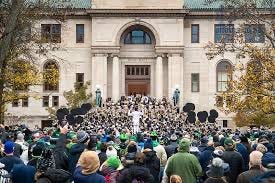
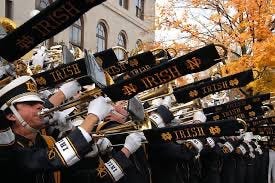
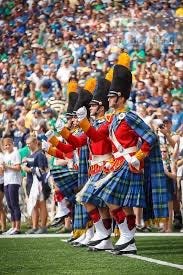
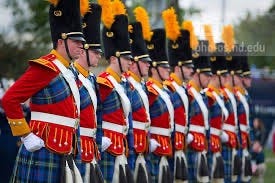
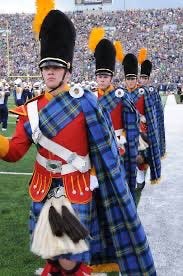
Notre Dame football in the fall of 1980 gave us plenty to cheer about. The highlight of the season was the dramatic victory over Michigan, sealed by a last-second field goal that had the whole campus buzzing for days. Saturdays were sacred for the Fisher Hall gang and our girlfriends. We would walk together across campus to the stadium, always stopping to watch and listen to the Band of the Fighting Irish perform for students and fans before the game. And always on the lookout for our Fisher Hall Irish Guardsman.
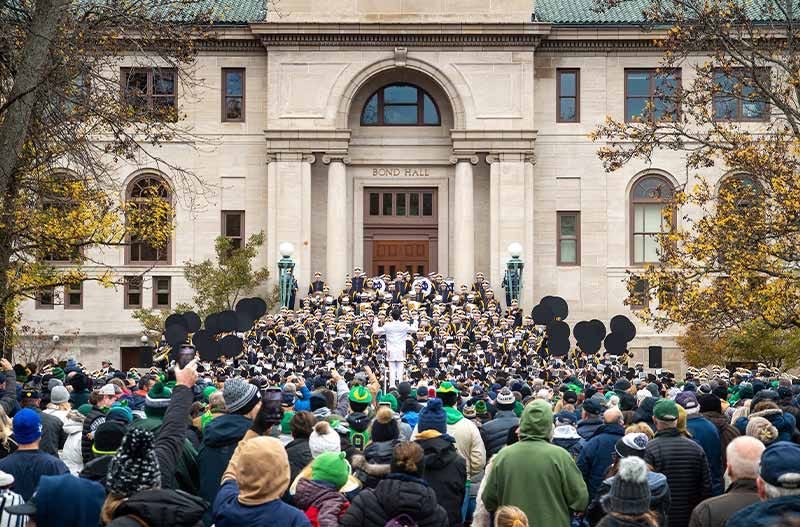
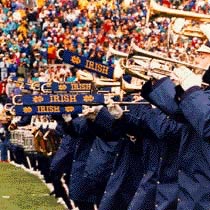
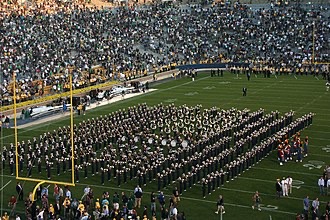
The Notre Dame Marching Band, founded in 1845, is the oldest university marching band in continuous existence in the country. From its beginnings as the Notre Dame Cornet Band, it grew into a symbol of spirit and tradition, playing at every home football game since the program’s very first in 1887. The sight and sound of the band — its drum cadence, the brass fanfares, and the unity of its formations — were an inseparable part of every football Saturday.
Fall Final Exams December 13–19, 1980

Fall Final Examinations ran from December 13–19, 1980, and they demanded steady effort from start to finish. My goal for the year was to raise my GPA for medical school applications, and I stayed focused on that. The sciences were as rigorous as ever — Embryology pushed my limits, while Physiology rewarded my persistence with an A. In Novels (English 322), I wrote a paper that came together better than expected, and in Medical Ethics (Theology 344) I faced one of those exhausting Blue Book essay exams, but came out with another A. Introduction to Music (Music 220) balanced the load with a course I thoroughly enjoyed, deepening my appreciation for the classics and revealing a growing fondness for the Baroque. The American Military History exam proved the most difficult, but I managed it better than I anticipated. Of course, my last examination fell on the final day — premeds were always the last to leave campus for the holidays. Step by step, course by course, the semester added up to real progress — exactly what I needed as medical school decisions drew nearer.

Christmas 1980 Vacation in Boston

Christmas Holiday 1980 ran from December 20 to January 12. I flew from South Bend to Boston Logan to spend Christmas and New Year’s with my family at my grandparents’ home in Medford, Massachusetts. My parents, Cynthia and Pamela, drove up from Fort Dix, New Jersey to join us. Lynne and Diana were both still in school in Boston, so they were already there when I arrived. As with most Christmas breaks, Christmas Eve and Christmas Day passed in a blur — I was running on fumes after weeks of final exam preparation.

Our Italian Christmas Traditions

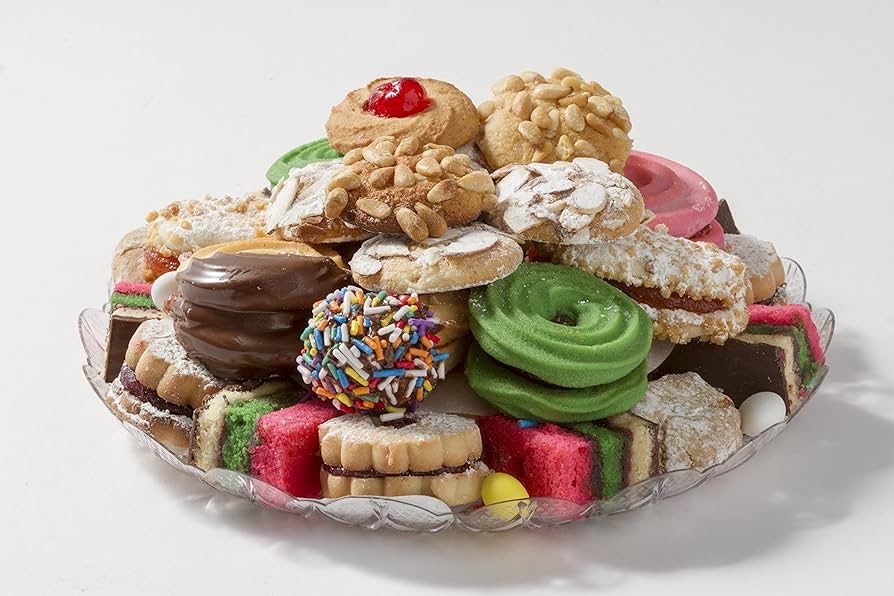
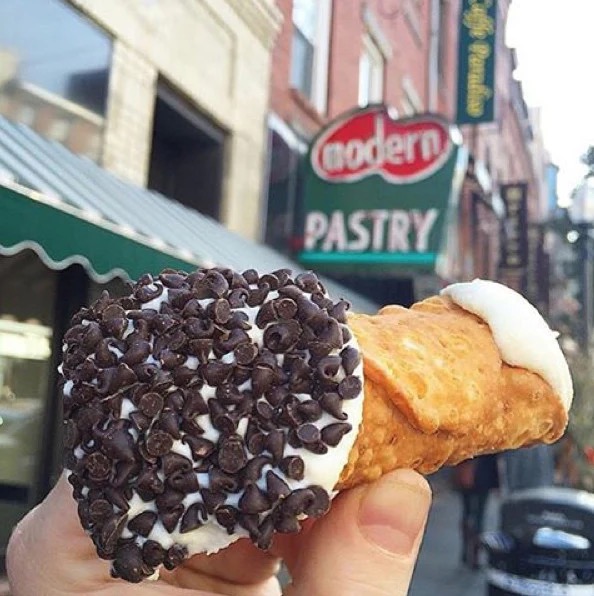
Still, the traditions were the same. On Christmas Eve, we gathered for the great Feast of the Seven Fishes with my aunts, uncles, and cousins. At midnight, we attended Mass at Saint Joseph’s Catholic Church — the same church where all of us had been baptized, where we received our First Communions, and where my sisters were married. Christmas Day brought another feast at Nana’s: roast turkey and roast beef, salad and fruit, then nuts, and finally desserts like cannoli, Italian cookies, and my mother’s favorite, Italian rum cake.
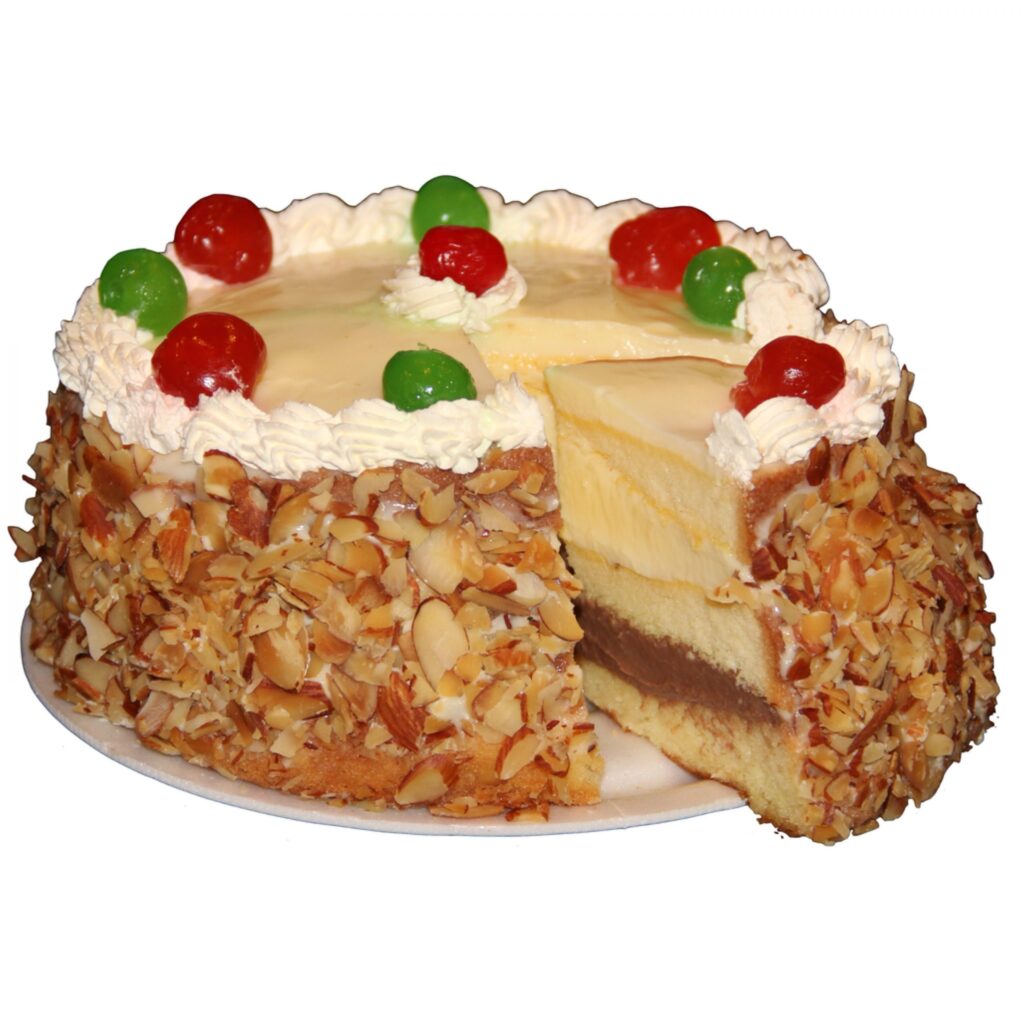
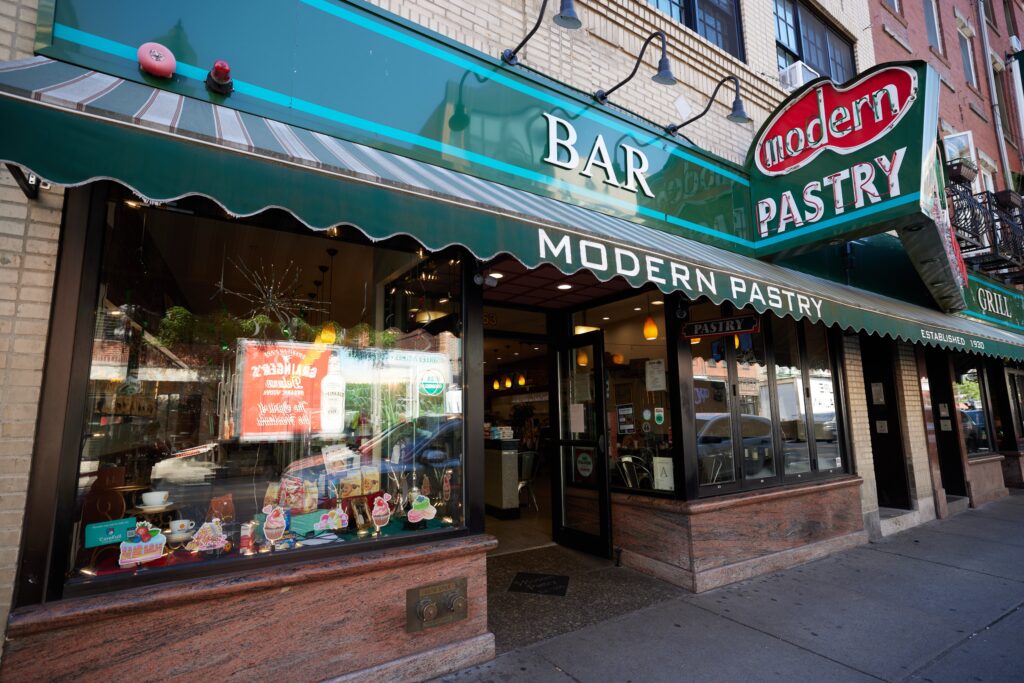
The Mike’s vs. Modern Pastry Debate

This would always lead us to the family debate on who makes a better cannoli — Mike’s or Modern Pastry. Having lived in Boston’s North End (the Italian section), I am partial to Modern Pastry.
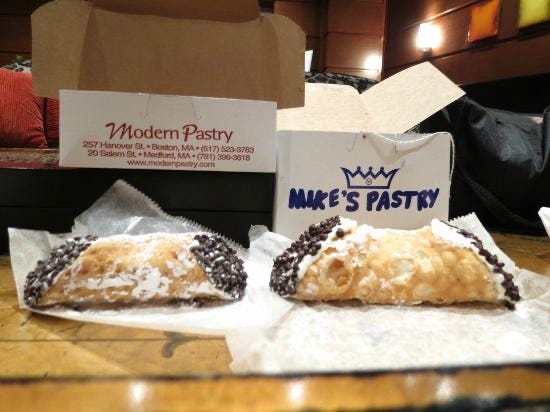
What about medical school?

The holiday wasn’t without its stresses. Every relative seemed to ask the same question: Have you heard from any medical schools yet?” I hadn’t, and each time I was asked, the weight of uncertainty pressed on me a little more. On top of that, I was phoning Mariann a couple of times a day, racking up long-distance charges. By the end of the holiday, the phone bill was steep, and I was definitely in trouble for it.

New Year’s was a quieter affair. In my family, it was never a grand occasion. We’d watch the ball drop in Times Square, share a hug and a kiss at midnight, and then be in bed by 12:30. The next morning, we went to Mass for the Solemnity of Mary, before turning our attention to football. On New Year’s Day, we gathered to watch Notre Dame face Georgia in the Sugar Bowl. A little over a week later, on January 11, I was back on the plane to South Bend, ready to begin the spring semester.

Sugar Bowl Notre Dame vs. Georgia (January 1, 1981)

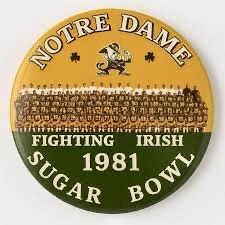
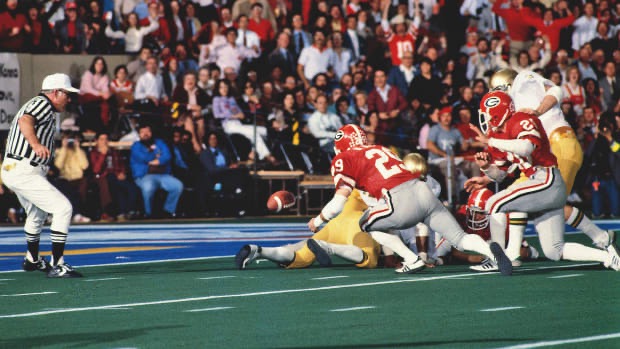
That season under Coach Dan Devine, the Irish finished with a 9–3 record. The team capped its year with an appearance in the 1981 Sugar Bowl against Georgia. Hopes were high for a bowl victory, but Georgia’s freshman running back Herschel Walker proved unstoppable, and Notre Dame fell 17–10. It was a bitter ending to what had been an exciting season, but the tradition, pageantry, and sense of community that surrounded Notre Dame football remained unforgettable.
Return to Campus for my Final Semester

Flying back into South Bend in early January, I felt the familiar mix of anticipation and relief that always came with returning to campus. I hauled my bags into Fisher Hall, where I caught up with Bob, Andy, Al, Scott, and the rest of the gang — lots of handshakes, backslaps, and quick stories about our holidays.

But as always, the first place I really wanted to be was Lyons Hall, looking for Mariann. Seeing her again was the best part of returning to Notre Dame, and it made the long break apart melt away in an instant. That first evening back, we all headed over to South Dining Hall for dinner, trading stories and laughter as we settled back into campus life.

There was also a deeper current running beneath all the reunion energy. I knew this was the start of my final semester at Notre Dame — a place that, over four years, had become the longest I had ever lived anywhere in my life. That fact alone gave everything a little more weight. I was keenly aware that the semester would fly by, and that before long I’d be saying goodbye to good friends — some I might never see again. But I also knew I’d see Mariann again. That certainty brought a quiet comfort as I braced myself for the final stretch.

Spring Registration (January 13, 1981)

My last semester at Notre Dame, and at long last, a slightly lighter schedule. For the first time in four years, I wasn’t buried under calculus equations or the endless grind of organic chemistry. Instead, my final academic stretch looked almost enjoyable. I had just one core science — Comparative Anatomy (BIOL 302) with its inevitable laboratory component. ROTC was still part of the mix, with Military Management II (Military Science 412), sharpening us for commissioning only four months away.

To balance out the science and military, I registered for American Writers Survey (ENGL 383), where we dove into classics by Ernest Hemingway, F. Scott Fitzgerald, and Edgar Allan Poe, who once warned: “Believe nothing you hear, and only half of what you see.” Rounding out the schedule was Religion & Art (Philosophy 361), an hour each day spent studying breathtaking works of sacred art, and New Testament: Death & Afterlife (Theology 314), which promised to stretch both faith and imagination. By the time I graduated, I think I had a minor in Philosopy & Theology. And ROTC should count automatically as a minor in Military Science.
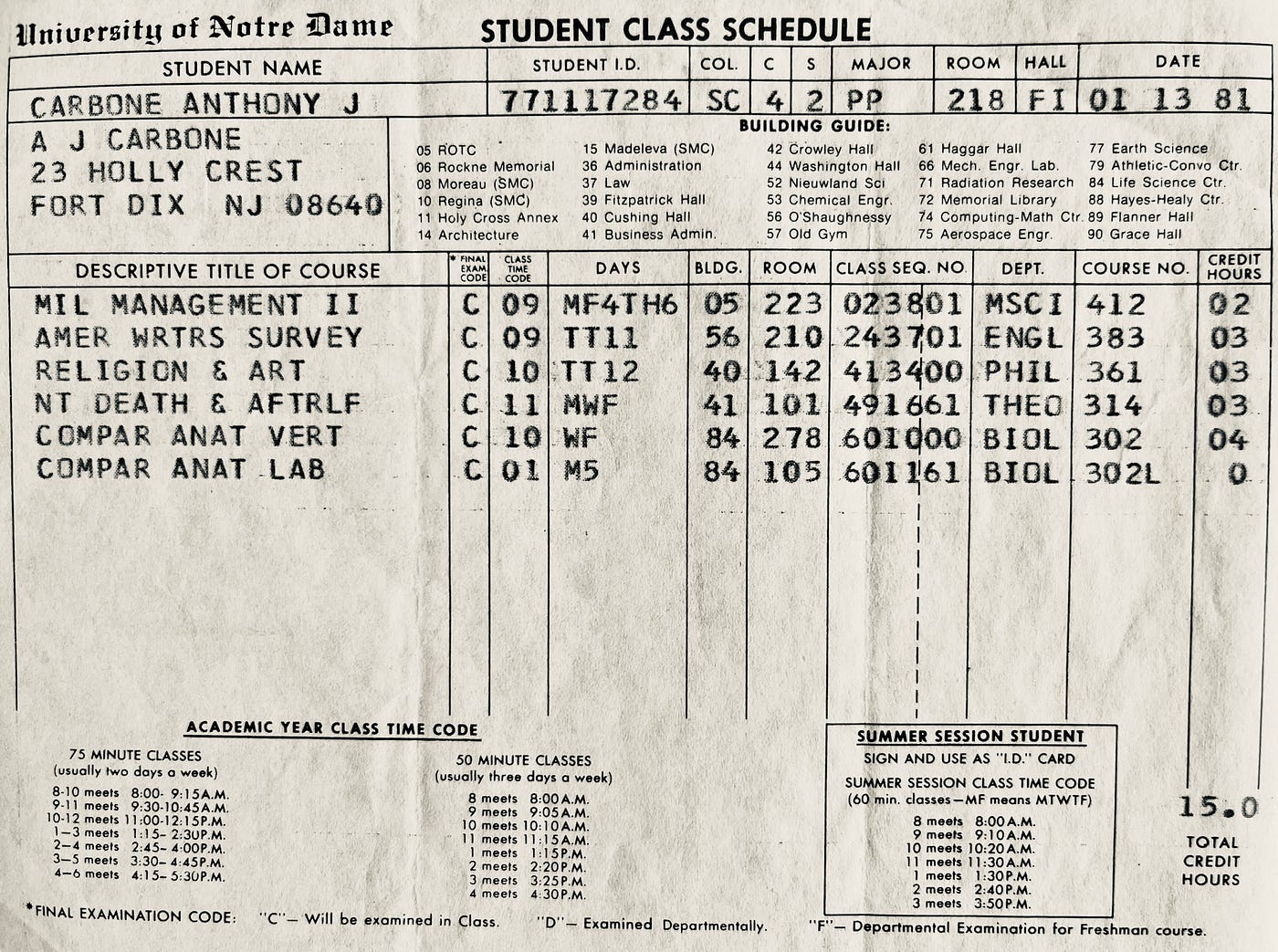
University of Notre Dame Class Schedule 4th Year 2nd Semester for Anthony J. Carbone. Courses include Comparative Anatomy plus lab, ROTC Military Management II, American Writers Survey, Religion & Art, and New Testament: Death and Afterlife.
Student Class Schedule for Spring Semester of my Senior Year at Notre Dame.

It was still a full load, but one that finally left me breathing room — a welcome change for a senior staring down the last lap of the race. More than anything, it gave me the chance to step back and enjoy the life I had built here: evenings in Fisher Hall with Bob, Andy, Al, Chris, Joe and Scott, long walks across campus with Mariann, and the daily rhythms of a place that had come to feel like home. I knew the months would fly by, but I wanted to make every one of them count.

Reagan Inauguration (20 January 1981)

On January 20, 1981, history unfolded as Ronald Reagan was inaugurated as the 40th President of the United States. It was a day marked by symbolism and change — the end of the Carter years and the beginning of what many hoped would be a new era of strength and optimism for the country.

Mariann and I gathered in the lounge of Fisher Hall with the rest of the gang to watch the inauguration on television. There was a sense of excitement in the room, mixed with the usual banter, but also an awareness that this was a turning point for America. Watching it together, with Mariann at my side and surrounded by good friends, tied the national moment into the fabric of my senior year.
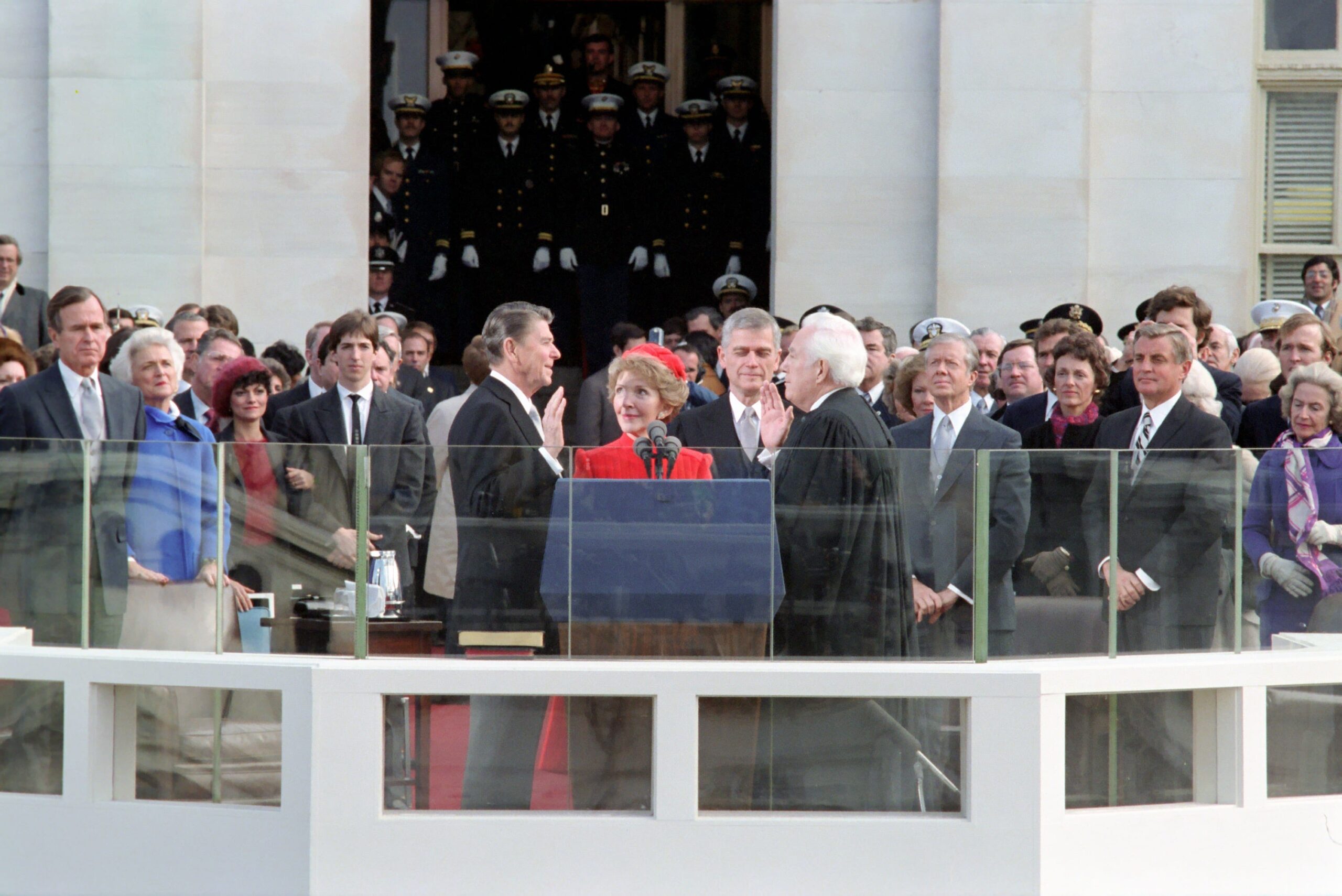
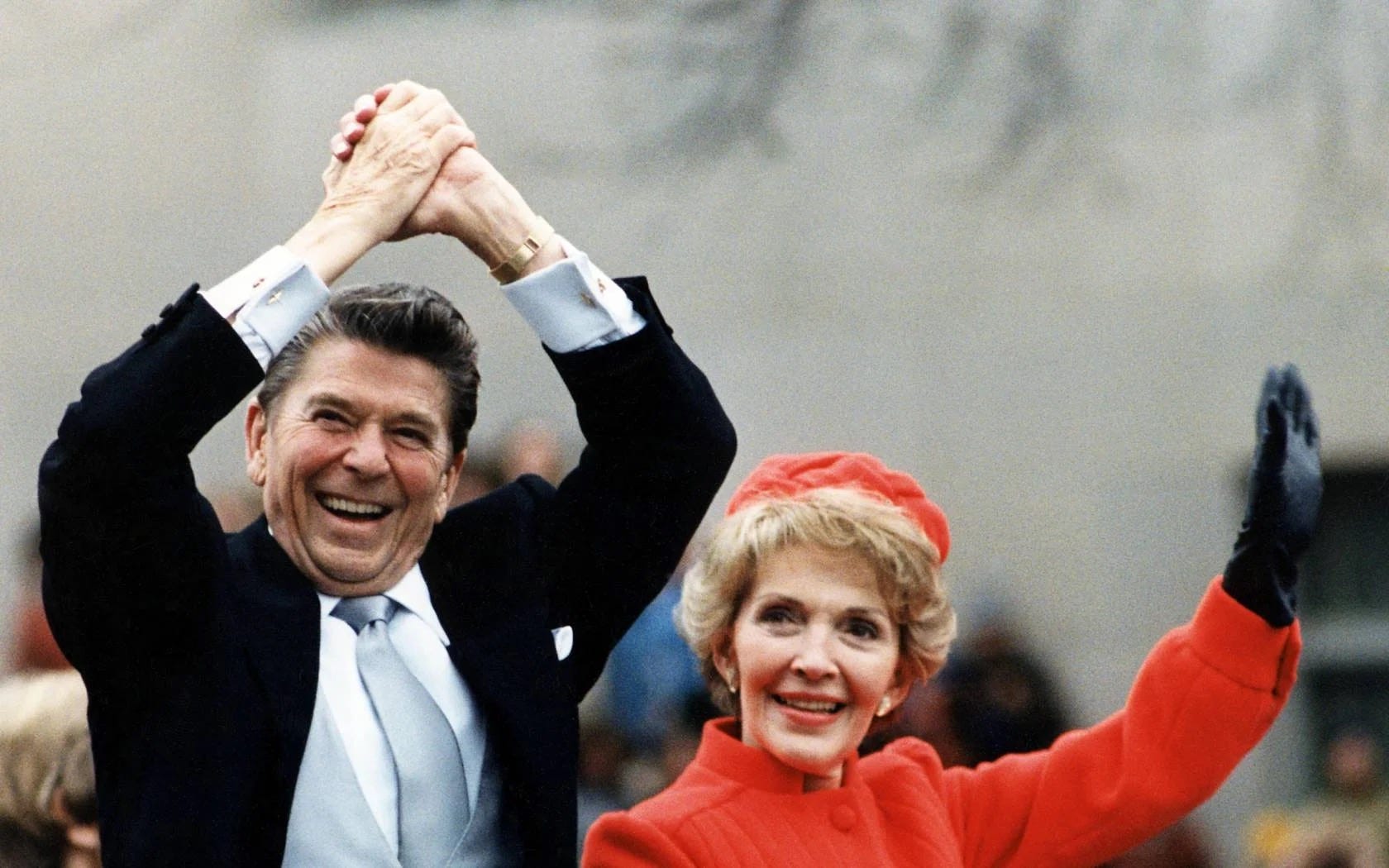
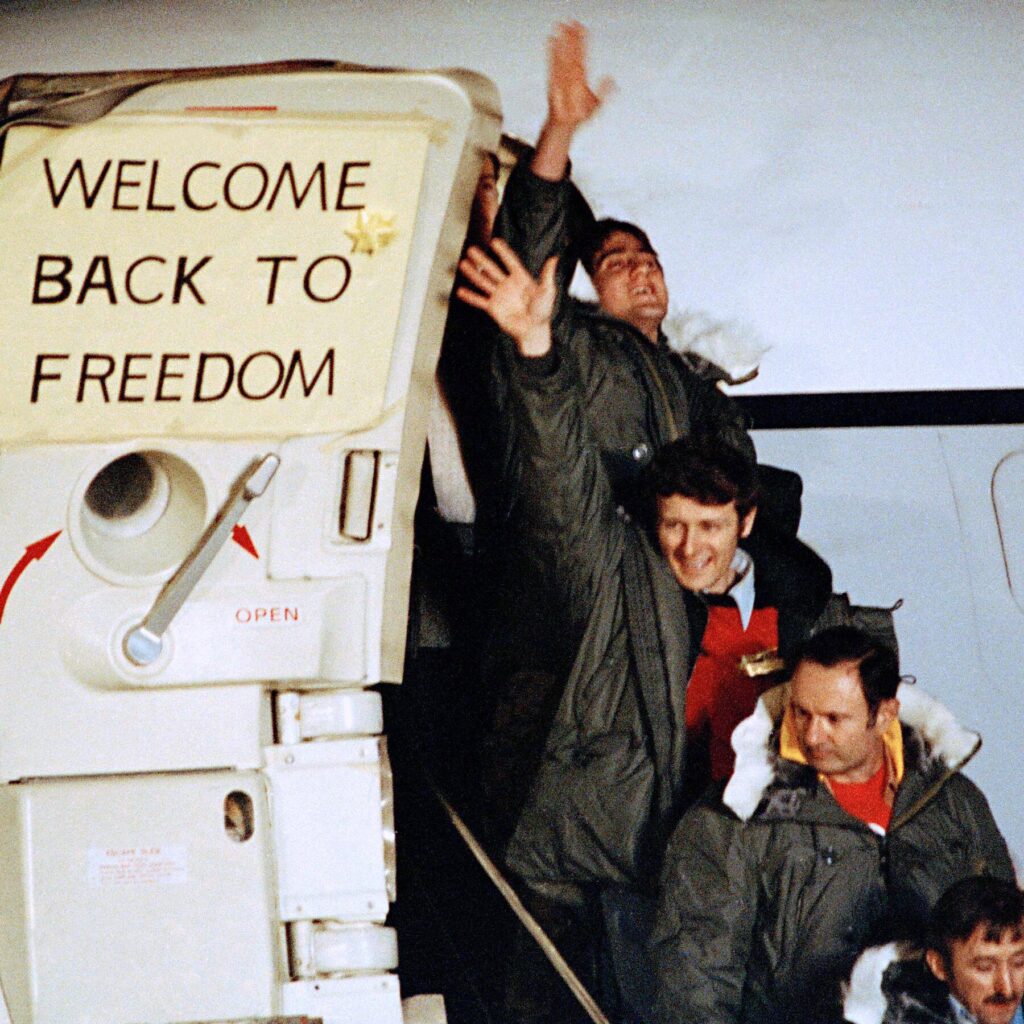
American Hostages Released From Iran After 444 Days

Just minutes after Reagan took the oath of office, the American hostages held in Iran for 444 days were released, adding even more drama to an already historic moment.
Tri-Military Ball (February 21, 1981)

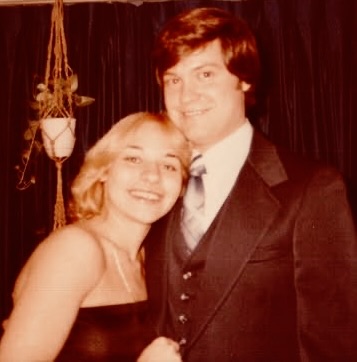
On February 21, 1981, we gathered for the Tri-Military Ball, a joint celebration of Army, Air Force, and Navy ROTC. Of course, I took Mariann as my date. It felt good to wear my dress uniform, now adorned with the badges and awards I had earned at ROTC Advanced Camp the previous summer. But what made the evening truly special was walking into that ballroom with Mariann at my side. I was proud of her — not only for her beauty, but for her intelligence and social grace. Mariann was the kind of partner who made me feel completely at ease at any event. She remembered names when I couldn’t, and she had a clever way of getting people to introduce themselves first so I wouldn’t be caught in the awkward position of trying to recall them. She was, in every sense, my better half.
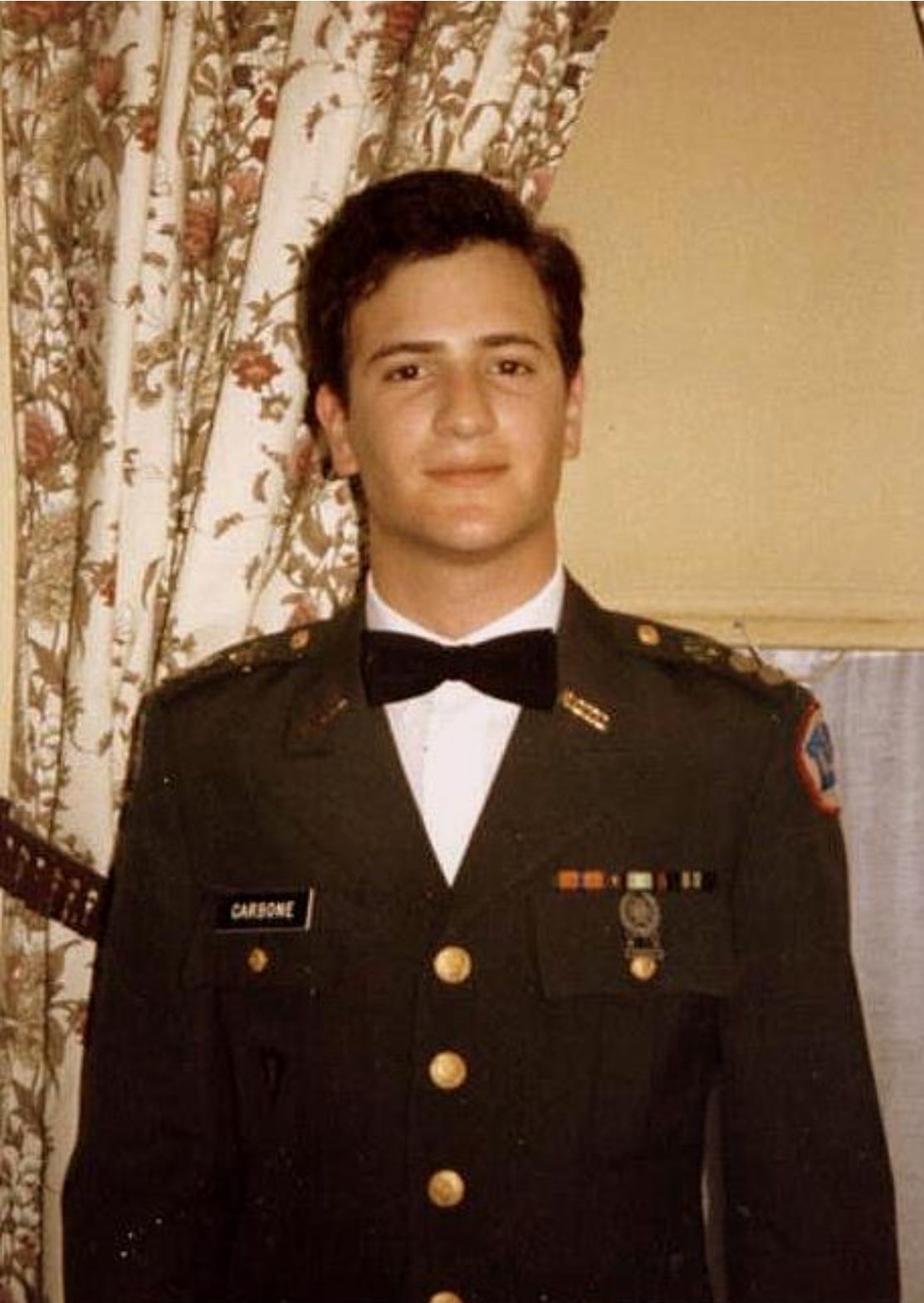
Army ROTC Cadet Lieutenant Anthony J. Carbone in dress uniform with ribbons and Expert Marksmanship Badge.
Taking Mariann to the Tri-Military Ball at Notre Dame

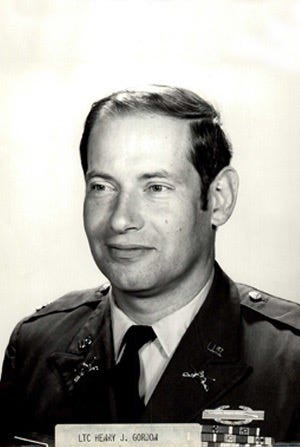
The night carried all the formality and tradition of the military, complete with the expected reception line. At the head stood our Professor of Military Science, Lieutenant Colonel Henry Gordon, with his wife at his side. As I stepped forward, he shook my hand and introduced me to his wife as “Cadet Bill Carbone.” I smiled and replied, “My name is Anthony. I’ve been your cadet for four years.” Then, as I turned to Mariann, I jokingly introduced her to him as “Sergeant Gordon.” The look of shock on his face was priceless, and Mariann laughed as I properly introduced her to Mrs. Gordon. That moment of humor broke the stiffness of the line, and together, Mariann and I carried the evening with the same warmth and confidence that made her the perfect date for any occasion.

More of the Fisher Hall Gang
Assassination Attempt on President Reagan (March 30, 1981)

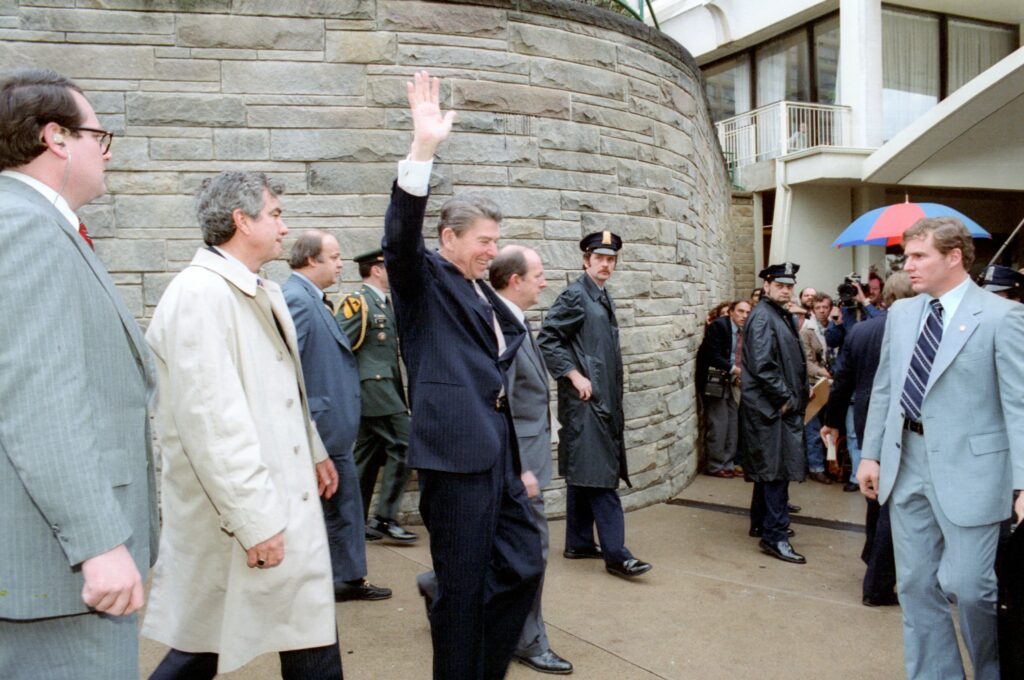
On March 30, 1981, the nation was shaken when President Ronald Reagan was shot and wounded by John Hinckley Jr. outside a Washington, D.C. hotel. I can remember the exact moment the news broke. I was in Comparative Anatomy Lab, where a few of us were goofing around with our specimens while the radio played music in the background. Suddenly, the broadcast was interrupted: “We interrupt this program for a special news bulletin. President Reagan has been shot in an attempted assassination attempt…” The room fell instantly silent. Reagan had been struck by a bullet that narrowly missed his heart, but he recovered quickly and reassured the country with his resilience and humor.
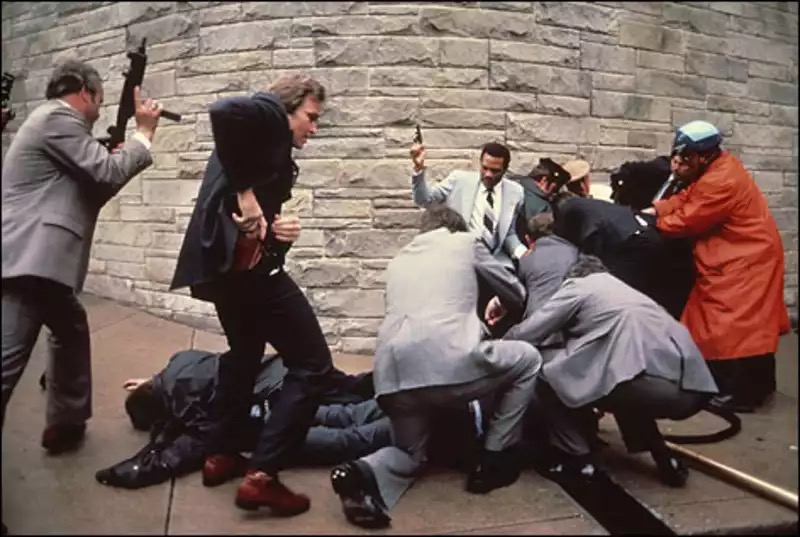
Hinckley, who had acted in a delusional attempt to impress actress Jodie Foster, was later found not guilty by reason of insanity and confined to St. Elizabeth’s Hospital for the Criminally Insane — a place I would one day walk the halls of as a Georgetown medical student. At the time, I had no idea that my future path would bring me face-to-face with the same institution where the man who had nearly killed the President was confined, giving me firsthand insight into the uneasy intersection of mental health and criminal justice.
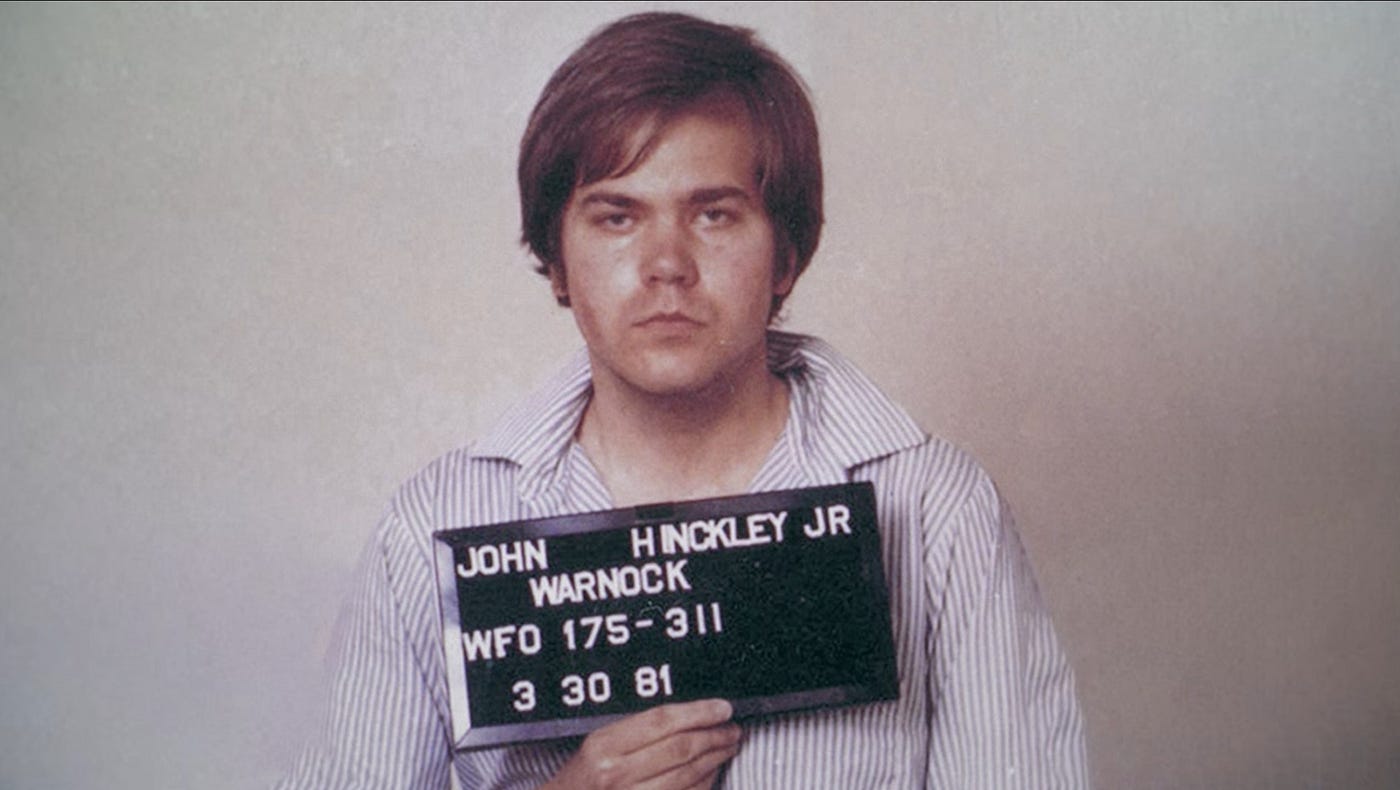
John Hinckley Jr’s Mugshot (March 30, 1981)

Assassination Attempt on Pope John Paul II — May 13, 1981

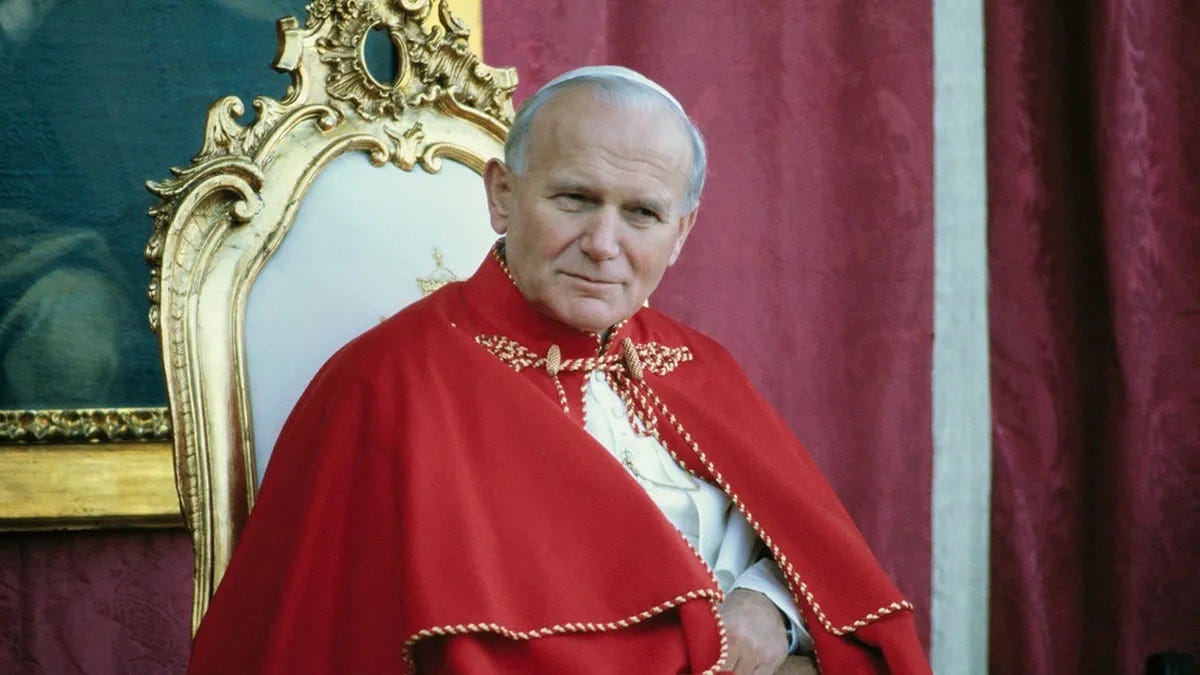
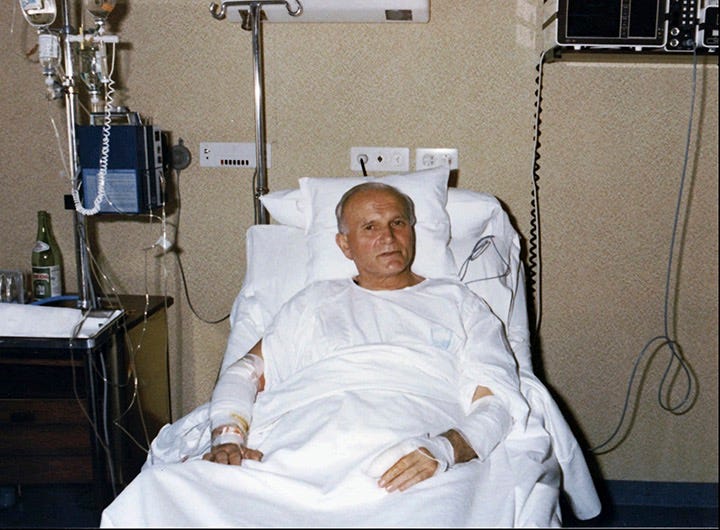
On Wednesday, May 13, 1981, just one day after my last final exam at Notre Dame, the world seemed to stop again. It was 11:17 a.m. Central Daylight Time when the broadcast cut in. A group of us — our Fisher Hall gang of seniors, along with Mariann and Ginger, who were staying behind to attend our graduation — were in our rooms watching television. I was sitting with Mari when the familiar words rang out: “We interrupt this program for a special news bulletin. Pope John Paul II was just shot in Saint Peter’s Square in an apparent assassination attempt. He is being rushed to the Agostino Gemelli University Polyclinic in Rome for emergency surgery.” The room went silent. We sat frozen, stunned by the idea that someone would try to kill the Pope. Reports came in that he had been hit in the abdomen and suffered intestinal injuries, his survival uncertain as surgeons fought for hours to save his life.
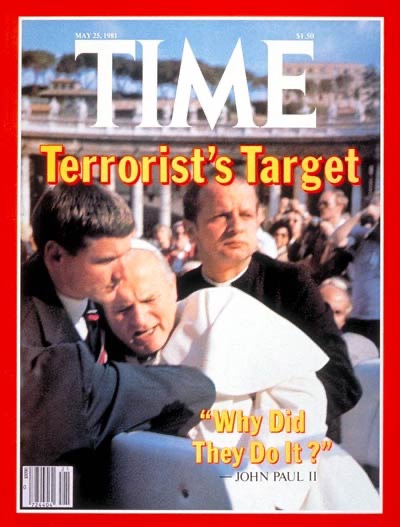
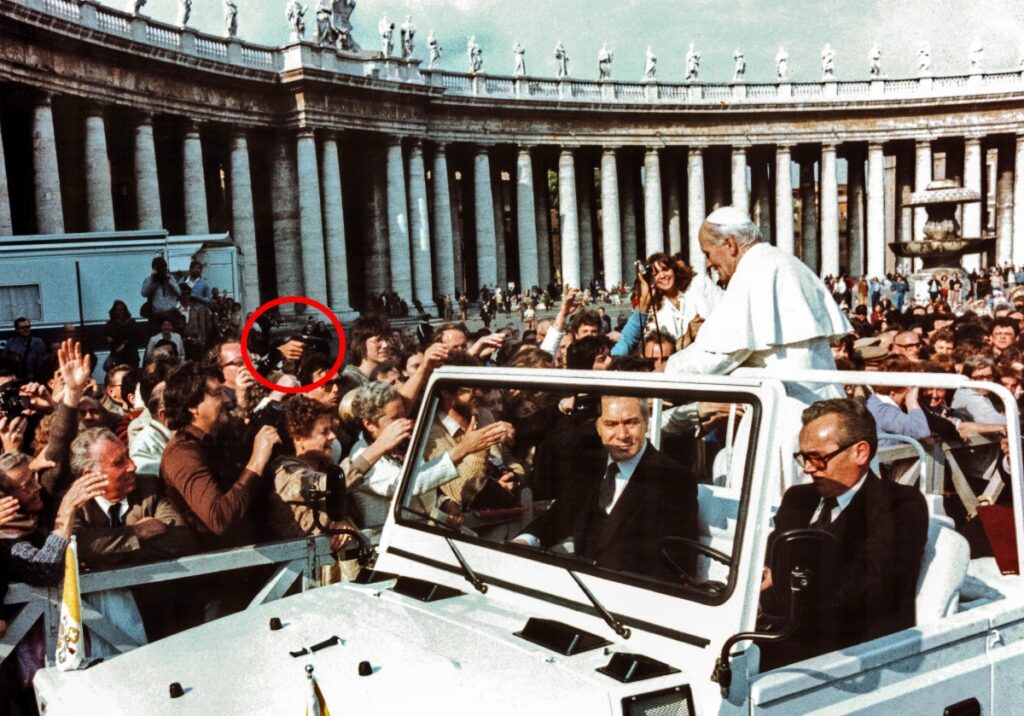
Incredibly, Pope John Paul II did survive, spending three weeks in the hospital recovering from his wounds.
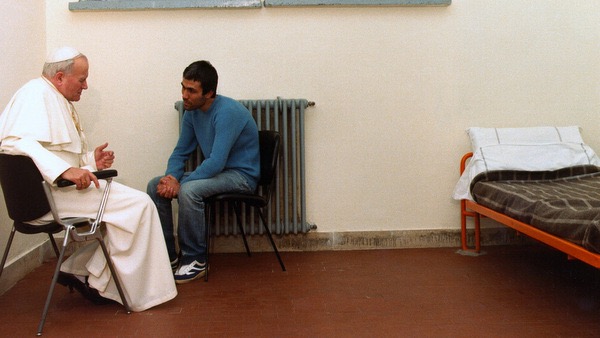
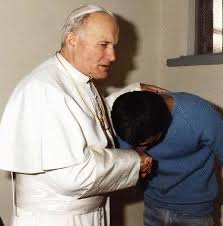
What followed made an even greater impression: his extraordinary act of forgiveness. In 1983, he visited Mehmet Ali Ağca — the man who had tried to kill him — in prison, offering him mercy and compassion instead of bitterness.
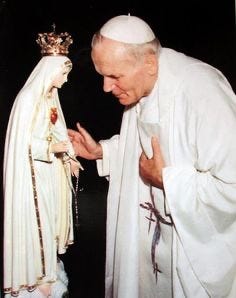
The Pope later attributed his survival to the intercession of Our Lady of Fátima, whose feast day coincided with the shooting.
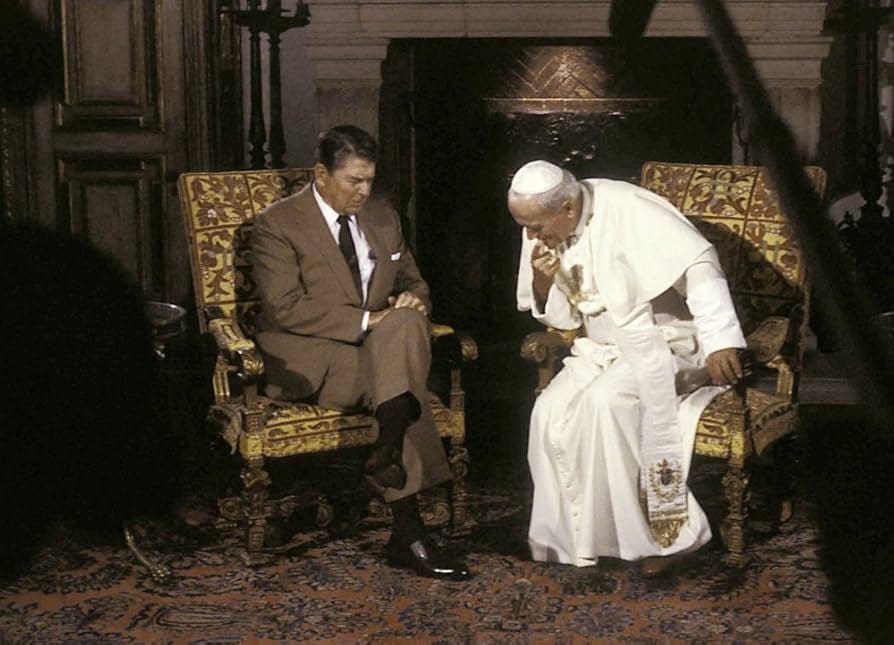
President Reagan had survived his assassination attempt just six weeks earlier. The parallel ordeals forged a deep friendship between the two men, uniting them in resilience, faith, and a shared determination to confront tyranny and defend human dignity.
Army Branch and Location Assignments

Shortly before commissioning, all of us Senior Army ROTC cadets received the orders we had been anxiously awaiting — our Army branch and unit assignments. I remember holding the envelope with a mix of anticipation and dread, knowing that whatever it contained would shape the next chapter of my life. First, my request for an educational delay to attend medical school was denied. I had been branched in the U.S. Army Chemical Corps with an initial assignment to the U.S. Army Chemical School at Fort McClellan, Alabama for the Chemical Officer Basic Course.
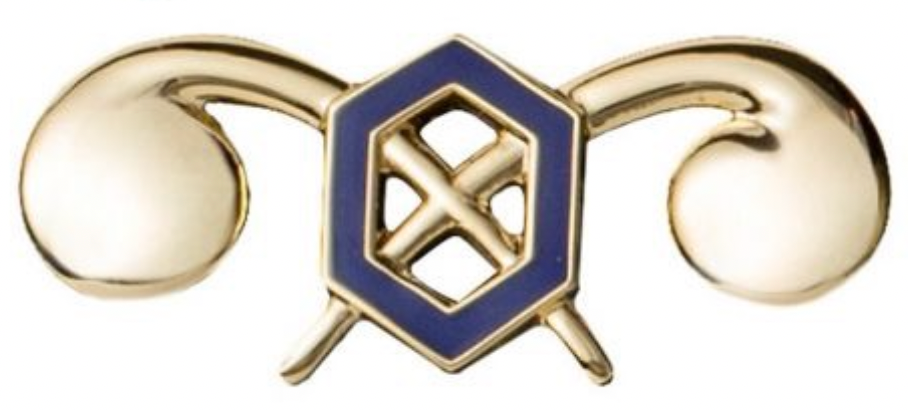
For someone who had grown up studying my father’s military career, I was amazed — I didn’t even know the Army had a Chemical Corps. I could feel my father’s quiet disappointment that I hadn’t been branched into the combat arms, like Armor or Cavalry, the “real” soldiers.
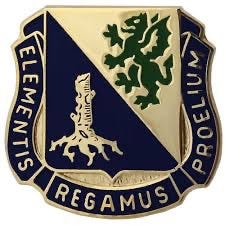
The unit crest of the Chemical Corps. A green Griffen with the motto: “Elementis Regamus Proelium” stands for “Win the Battle Through the Elements”

Not Korea, but Fort Irwin

The Army also asked if I would like to serve in Korea, which meant a one-year, unaccompanied tour. I replied that I would prefer anywhere in the United States or Europe. My father’s disapproval was clear; Korea had been the start of his own career, the proving ground of the Army, and he could not understand why I was thinking about Mariann instead of my career. Eventually, my assignment was revealed: the National Training Center at Fort Irwin, California.
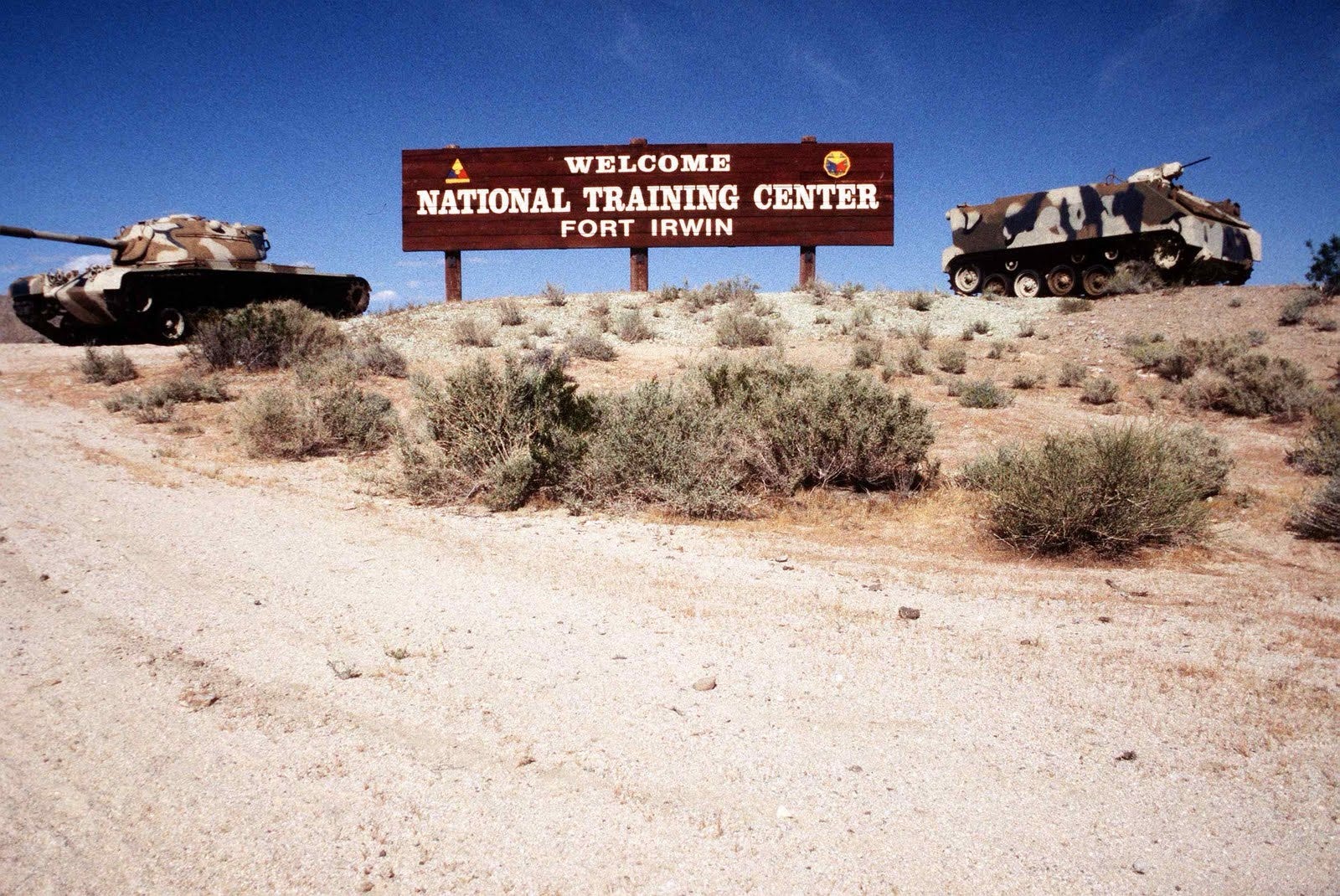
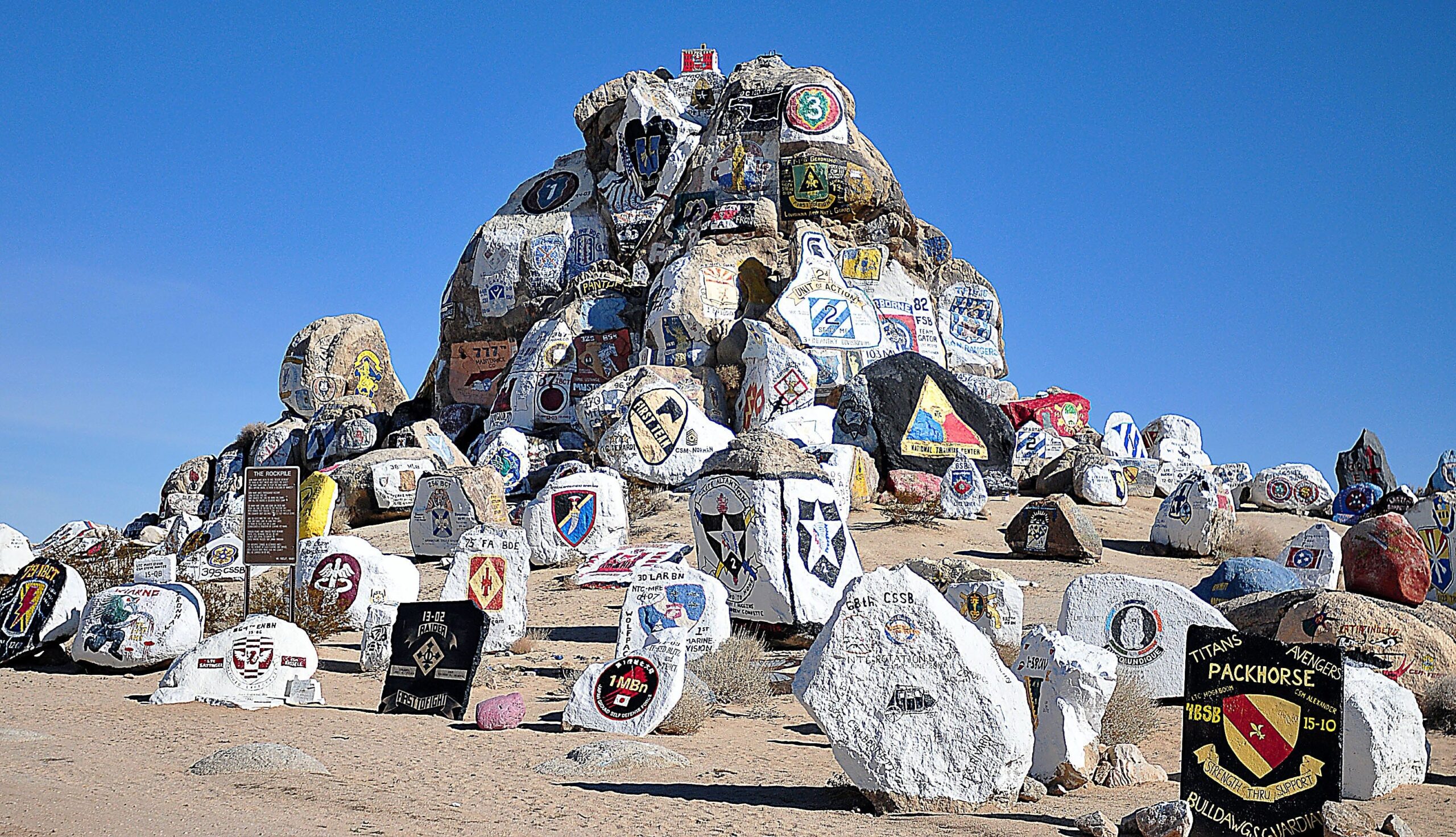
Entrance to the National Training Center at Fort Irwin and the infamous Painted Rocks Momument honoring units who have rotated through the NTC.

I had never heard of the post, which had only reopened weeks before. When I told my father, he said, “Great assignment, JR!” — and I knew I was in trouble. Sure enough, Fort Irwin was located in the infamous Mojave Desert, bordering on Death Valley, USA, a harsh and unforgiving landscape that would test me in ways I had never imagined.

Commencement Weekend (May 15–17, 1981)
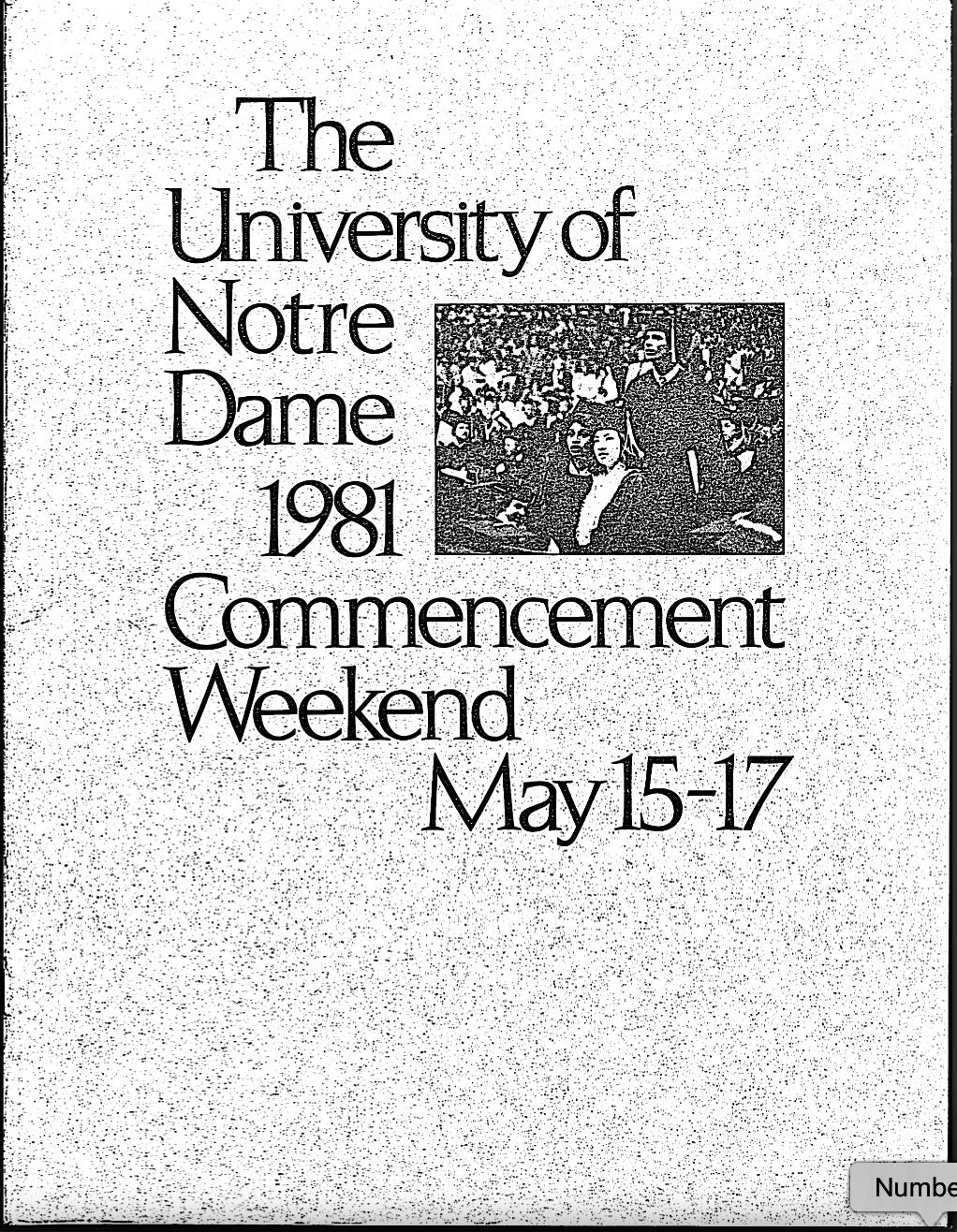
The University of Notre Dame 1981 Commencement Weekend May 15–17 Bulletin. Biography of Dr. Anthony J. Carbone.

My entire family — Mom, Dad, and all four of my sisters — made the trip out to Notre Dame for my commissioning and graduation. And of course, Mariann was right by my side through it all. The weekend was packed with ceremony and meaning.

Commissioning Ceremony (May 16, 1981)

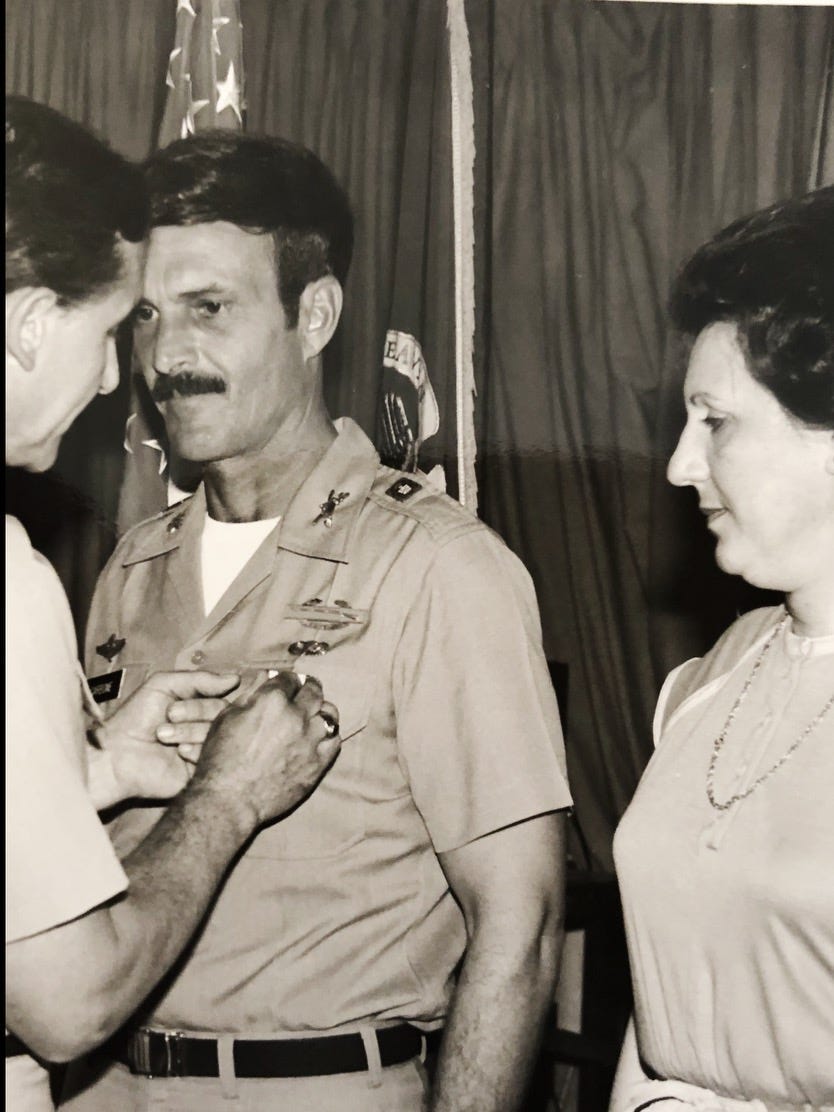
On Saturday, May 16, the day began at 10 a.m. with the Army ROTC Commissioning. The most powerful moment for me was taking the Oath of Office, sworn in by my father, a Colonel in the U.S. Army.

“I, Anthony J. Carbone, do solemnly swear that I will support and defend the Constitution of the United States against all enemies, foreign and domestic; that I will bear true faith and allegiance to the same; that I take this obligation freely, without any mental reservation or purpose of evasion; and that I will well and faithfully discharge the duties of the office on which I am about to enter. So help me God.”

To stand there, repeating those words, and to be sworn in by my own father — it was overwhelming. The pride of the moment was real, but so was the quiet sting. Deep down, I prayed that he had finally let go of his disappointment that I had turned down West Point. I couldn’t be sure. I sensed it still lingered in him, unspoken. But as I looked at my mother, my sisters, and Mariann, I saw nothing but pride in their eyes. That helped temper the pain. For me, it was the beginning of a new life: at once exhilarating, humbling, and sobering.
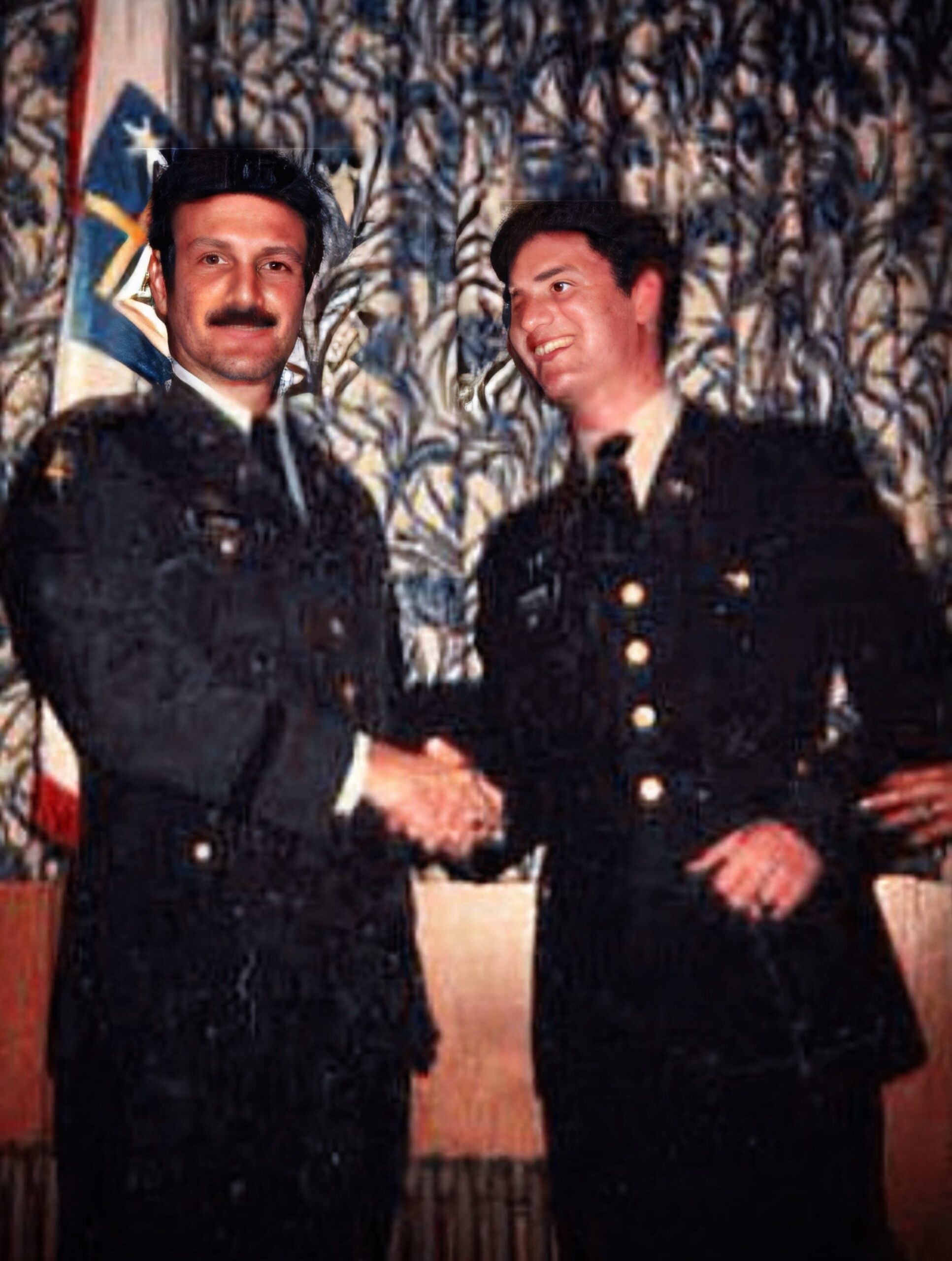
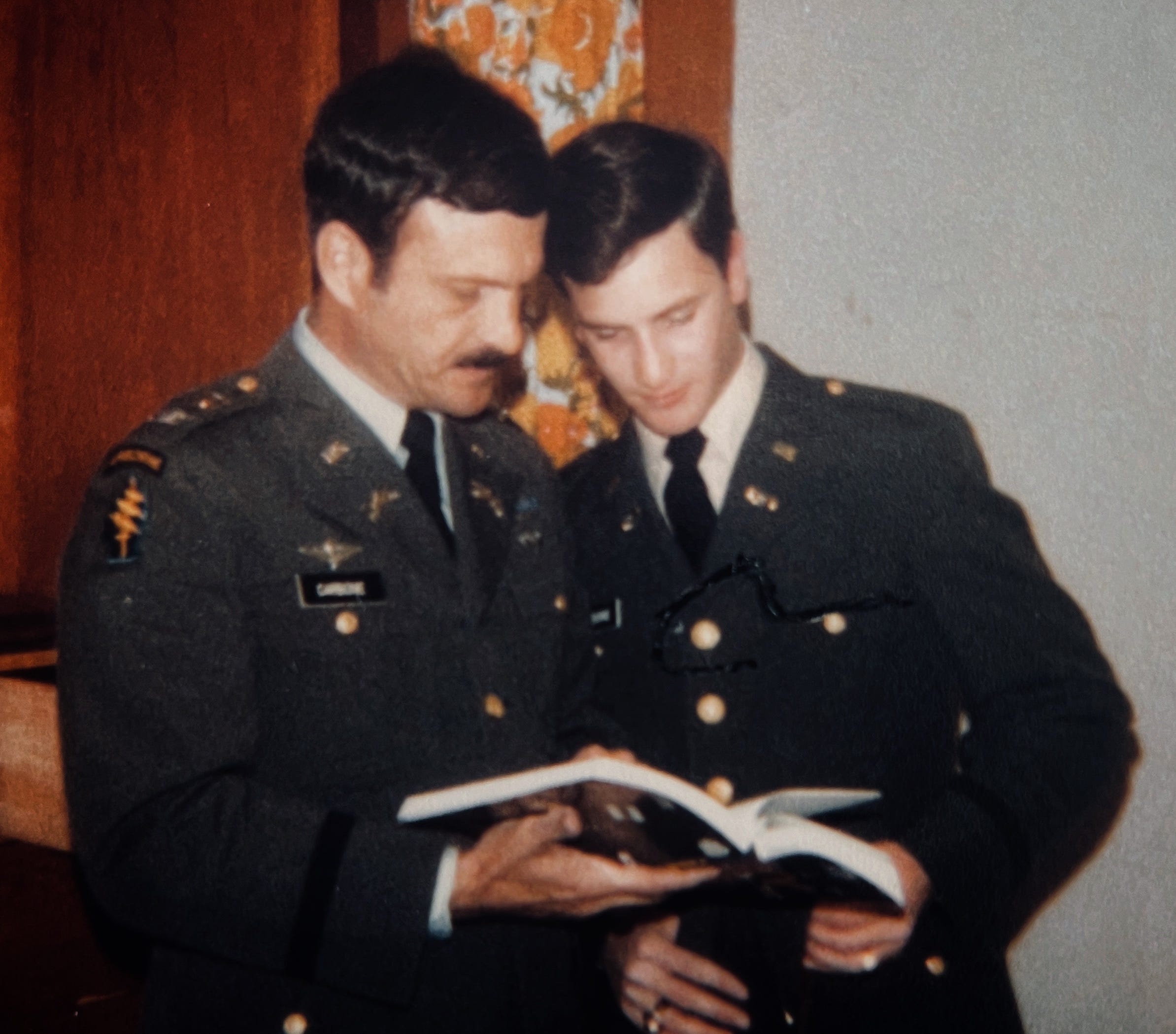
My father, Colonel Tony Carbone, commissioned me as a new Second Lieutenant in the U.S. Army
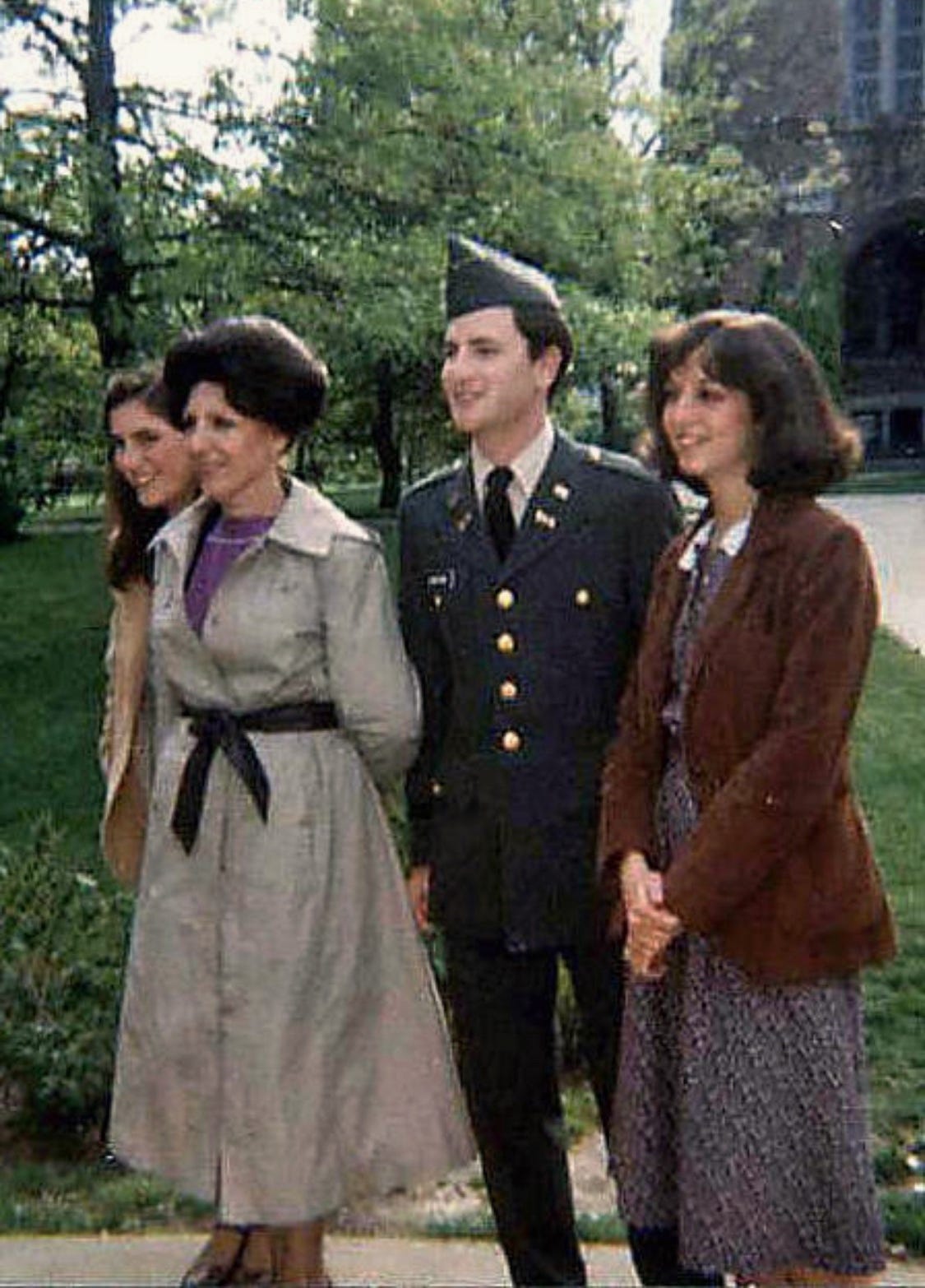
Commissioning Day with my mother, Mariann, and my sister Pamela at Notre Dame (May 16, 1981). Biography of Dr. Anthony J. Carbone.
Commissioning Day with my mother, Mariann, and my sister Pamela at Notre Dame (May 16, 1981)
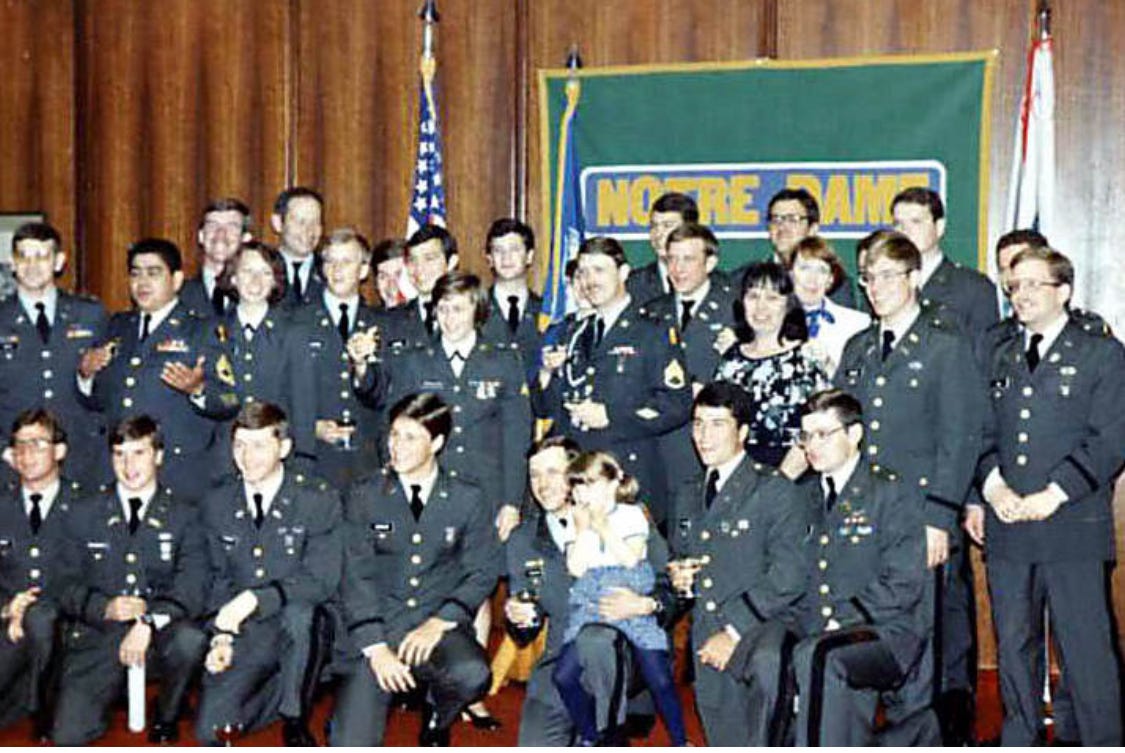
Newly commissioined U.S. Army Second Lieutenants from Notre Dame Army ROTC (May 16, 1981). I am in the back row between the American flag and Notre Dame banner. Biography of Dr. Anthony J. Carbone.
Newly commissioned Army officers from Notre Dame (May 16, 1981). I am in the back row between the American flag and the Notre Dame banner.

Academic Procession & Baccalaureate Mass

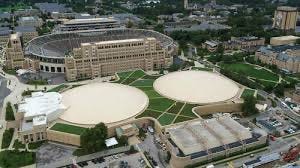
Later, at 4:20 p.m., came the Academic Procession at the Athletic and Convocation Center, followed by the Baccalaureate Mass at 5 p.m. The evening was full: a cocktail party and buffet supper from 7 to 8:30 p.m., then a concert by the University of Notre Dame Glee Club at Stepan Center at 9 p.m. It was a long, emotional, and exhausting day for all of us.
Commencement Ceremony (May 17, 1981)

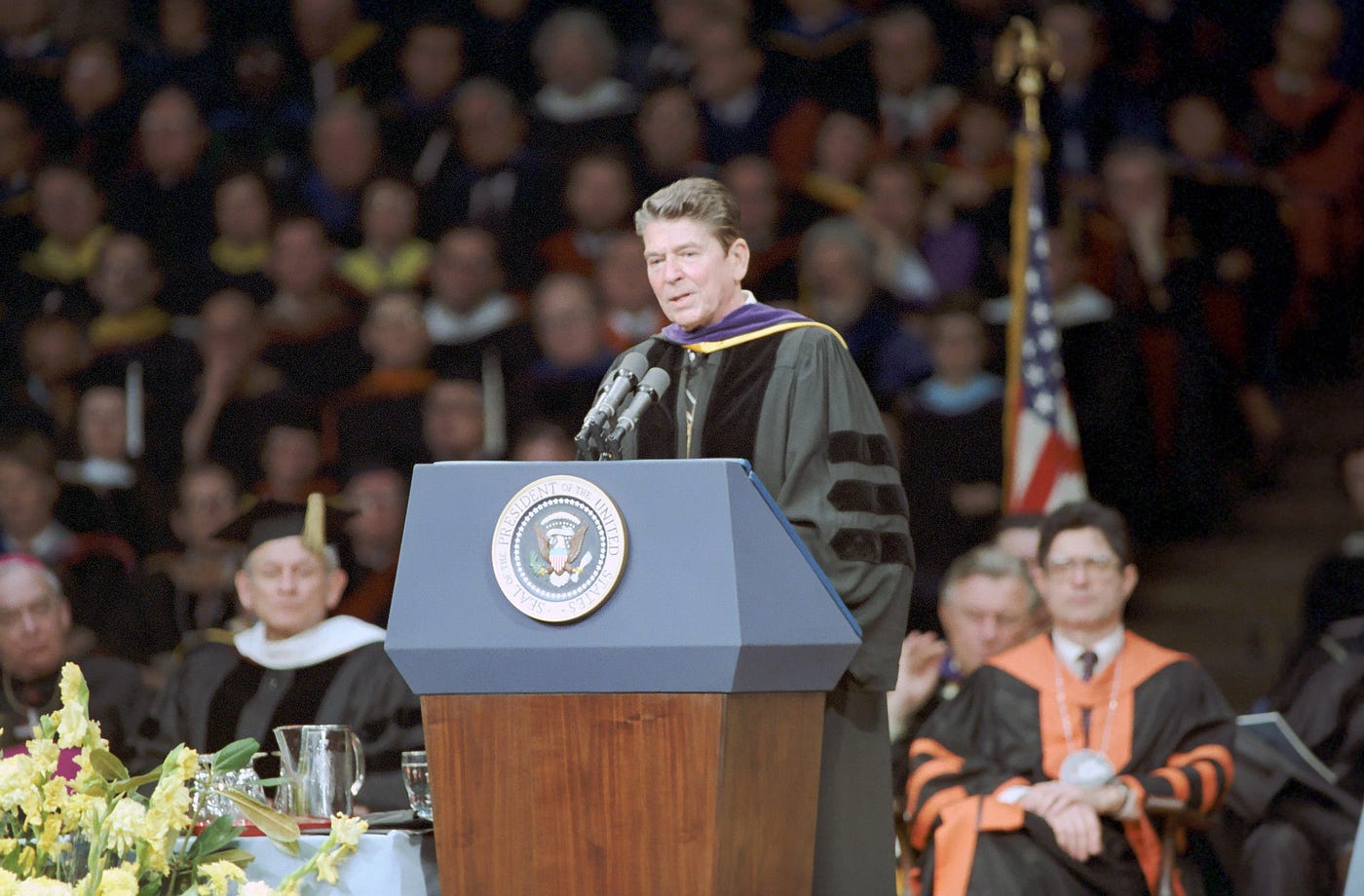
The highlight of the day, however, was President Ronald Reagan himself. On May 17, 1981, just weeks after surviving an assassination attempt, Reagan chose Notre Dame for his first public appearance. The arena crackled with anticipation. Secret Service agents were everywhere, watchful eyes scanning the crowd as we passed through metal detectors and searches to enter. The sense of history unfolding right before us was undeniable.

When President Reagan finally appeared, the entire arena erupted. His presence filled the space — larger than life, resilient, and still carrying the aura of a man who had stared down death and come back smiling. His address mixed humor with deep inspiration, speaking of America’s role in the world, the strength of freedom, and the resilience of our people. It was everything you could hope for from a commencement address, and more.
Honoring “Knute Rockne, All American”

Then came one of those unforgettable Notre Dame moments. Father Theodore Hesburgh, our legendary president, conferred honorary degrees upon both Reagan and actor Pat O’Brien. The symbolism was perfect — O’Brien, who had portrayed Knute Rockne, and Reagan, forever remembered as “The Gipper,” standing together on our stage. The crowd went wild, the cheers echoing like the roar of a football Saturday in Notre Dame Stadium.
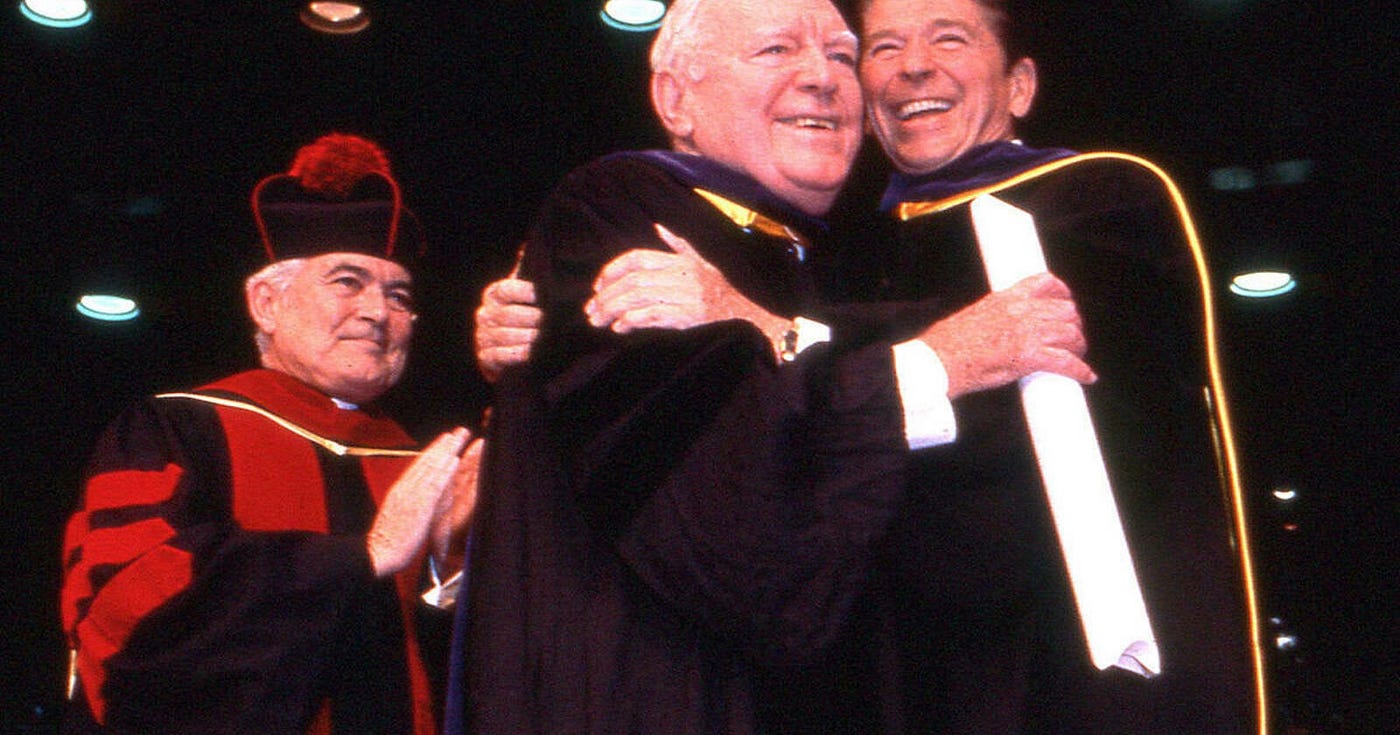
Pat O’Brien and President Reagan hugging after being awarded honorary degrees by Father Theodore Hesburgh.

Reflections on Past Four Years

For me, it was overwhelming. I had just been commissioned as a U.S. Army officer the day before, had received my diploma, and was now witnessing history alongside my family and Mariann. I felt a profound sense of pride — not just as a new graduate, not just as a soldier, but as an American. It was a moment that fused together all of my identities: Notre Dame man, Army officer, and citizen of a country that, despite its trials, always found a way to rise.

As President Reagan spoke, I couldn’t help but reflect on my own journey. Four years at Notre Dame had taught me discipline, resilience, and the value of faith and friendship. Now, standing on the threshold of adulthood, commissioned as an officer, and armed with my diploma, I felt a surge of possibility. Reagan’s words about courage, responsibility, and service resonated deeply with me — not as abstract ideals, but as a call to action for my own life.

That day, surrounded by family, friends, and Mariann, I realized that the lessons of Notre Dame, the discipline of ROTC, and the support of loved ones had prepared me for whatever challenges lay ahead. It was not just a graduation; it was the beginning of everything I had worked for, a launch into a life I was ready to embrace with confidence, hope, and gratitude.
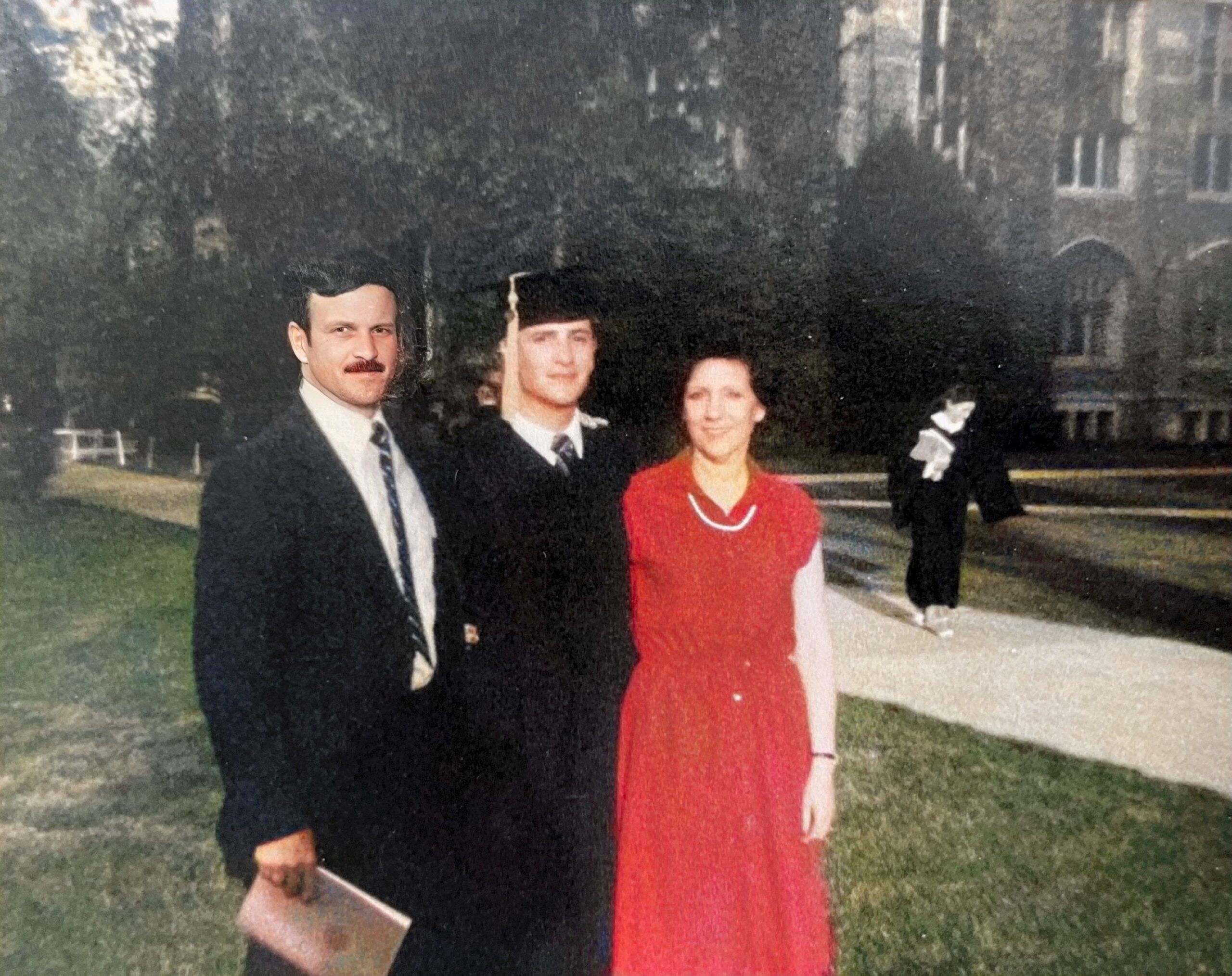
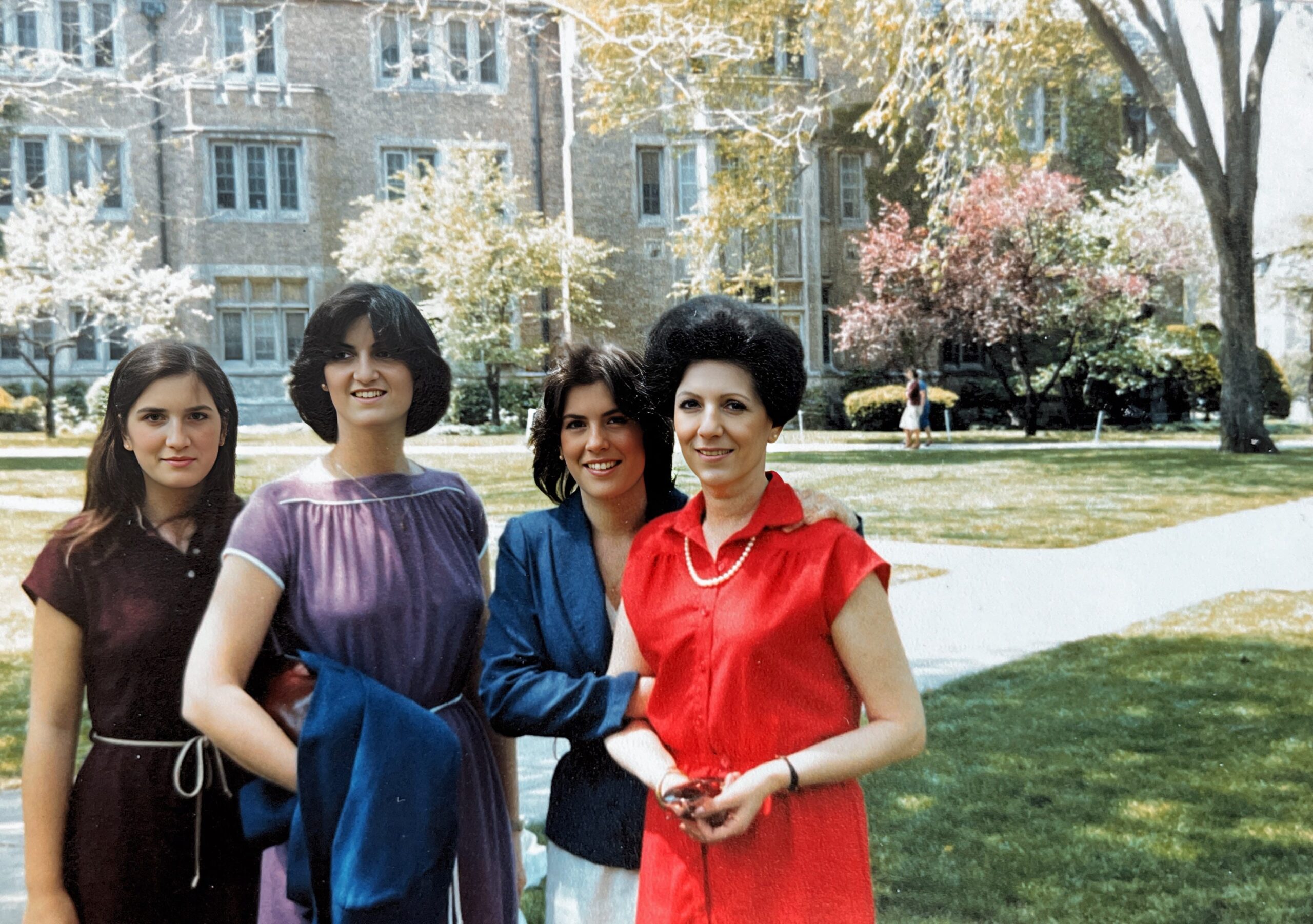
With my parents and sisters at the Big Commencement Ceremony Day with President Ronald Reagan (May 17, 1981)

The Final Chapter of my Notre Dame Experience

Looking back, my senior year at Notre Dame was a whirlwind of challenge, growth, and unforgettable experiences. Between demanding academics, ROTC responsibilities, and the uncertainty of my future, I learned to balance discipline with perseverance, ambition with patience, and intellect with heart.

Mariann’s companionship, the support of my family, and the camaraderie of the Fisher Hall gang made every obstacle more manageable and every success sweeter. From the highs of football victories and the Tri-Military Ball to the sobering moments of world events and the exhilaration of commissioning and graduation, the year was a microcosm of life itself — intense, unpredictable, and profoundly rewarding. As I left campus for the last time, I carried not only a diploma and a commission but a sense of purpose, pride, and readiness for the next chapter of my life.
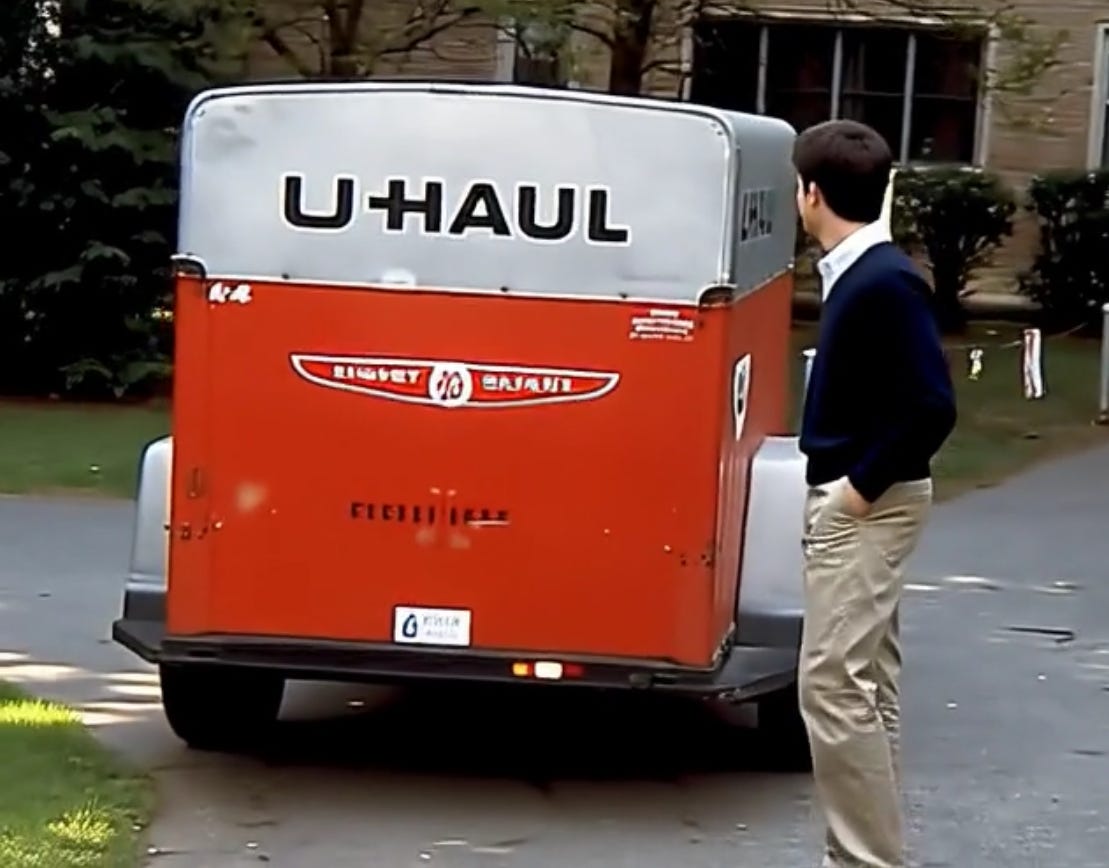
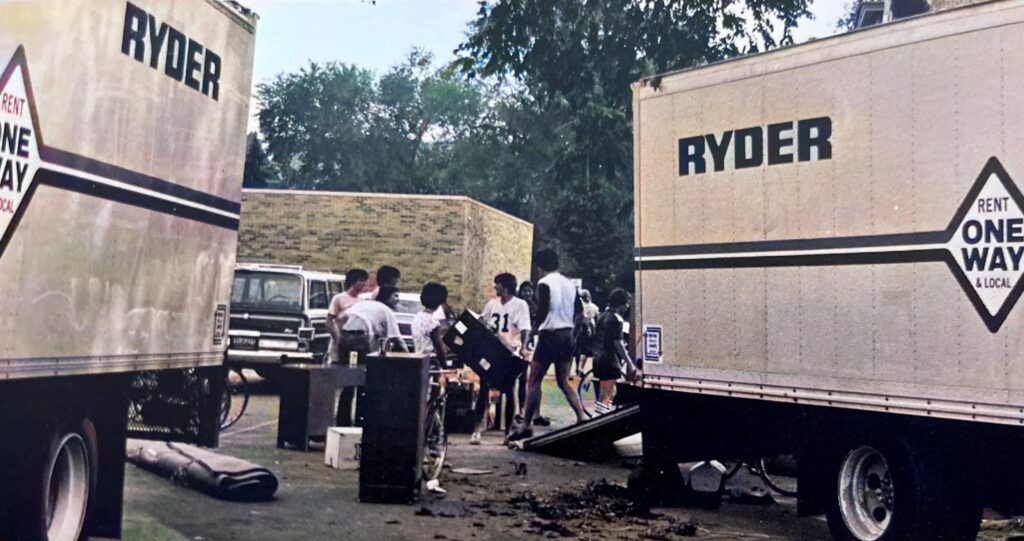
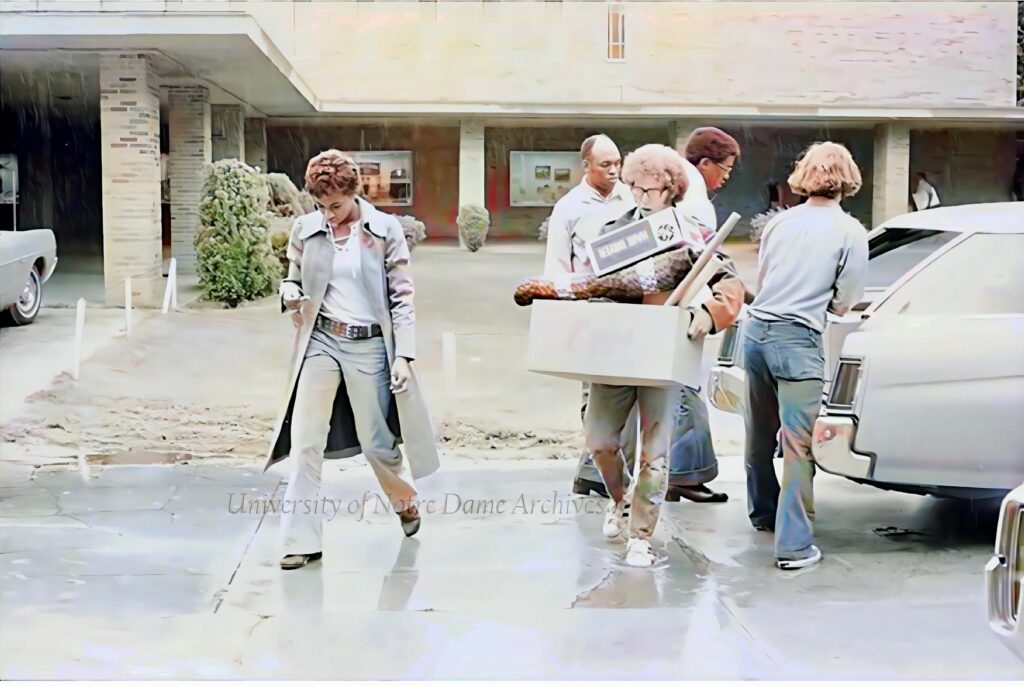
Photograph of me standing in front of the U-Haul that I used to move out of Fisher Hall at the University of Notre Dame on May 17, 1981 following graduation. Biography of Dr. Anthony J. Carbone.
Loading up my belongings from Fisher Hall into a U-Haul for the last time (May 17, 1981)

Home Page

Chapter 21: ROTC Advanced Camp — Summer of 1980

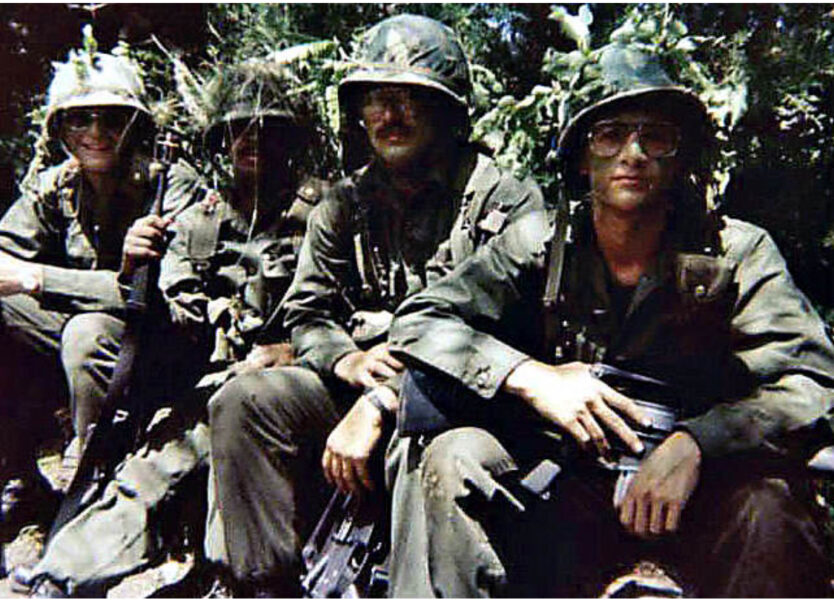
Photograph of me and 3 of my squad members in fatigues, camouflaged steel pot helmets, tactical gear and carrying our M16A1 rifles during tactical training at Army ROTC Advanced Camp.Biography of Dr. Anthony J. Carbone.

Believe Nothing You Hear, and Only Half of What You SeeA memoir of Service, Shame and the Search for Truth

Time for Army ROTC Advanced Camp

After finishing my junior year at Notre Dame — three years of increasingly difficult Military Science courses, drill, and early morning PT — it was finally time for the crucible of every Army ROTC cadet: Advanced Camp. This was the moment where all of the classroom lessons, field exercises, and countless hours in uniform were put to the test.

Army ROTC black and gold shoulder patch wit “Leadership” and “Excellence”. Autobiography of Dr. Anthony J. Carbone.

Report to Camp Forsyth

I reported to Camp Forsyth at Fort Riley, Kansas, in June of 1980 and would spend the next six weeks there. Notre Dame cadets trained side by side with the Aggies of Texas A&M and cadets from Army ROTC programs across the country. Today, Advanced Camp is held at Fort Knox, Kentucky, but in 1980, Fort Riley was the proving ground. The open Kansas plains — scorched by the summer sun, whipped by winds, and alive with biting insects — were where we would be pushed to our limits and measured against the Army’s highest standards.

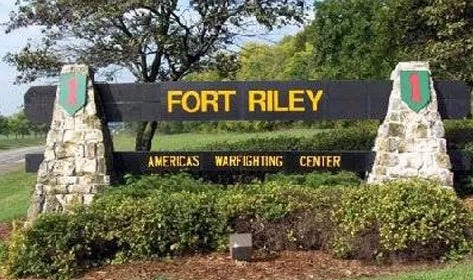
Fort Riley gate welcome sign saying "Fort Riley.  America's Warfighting Center" With the green patches with red numberal 1 for the 1st Infantry Division.  Biography of Dr. Anthony J. Carbone.

Inprocessing

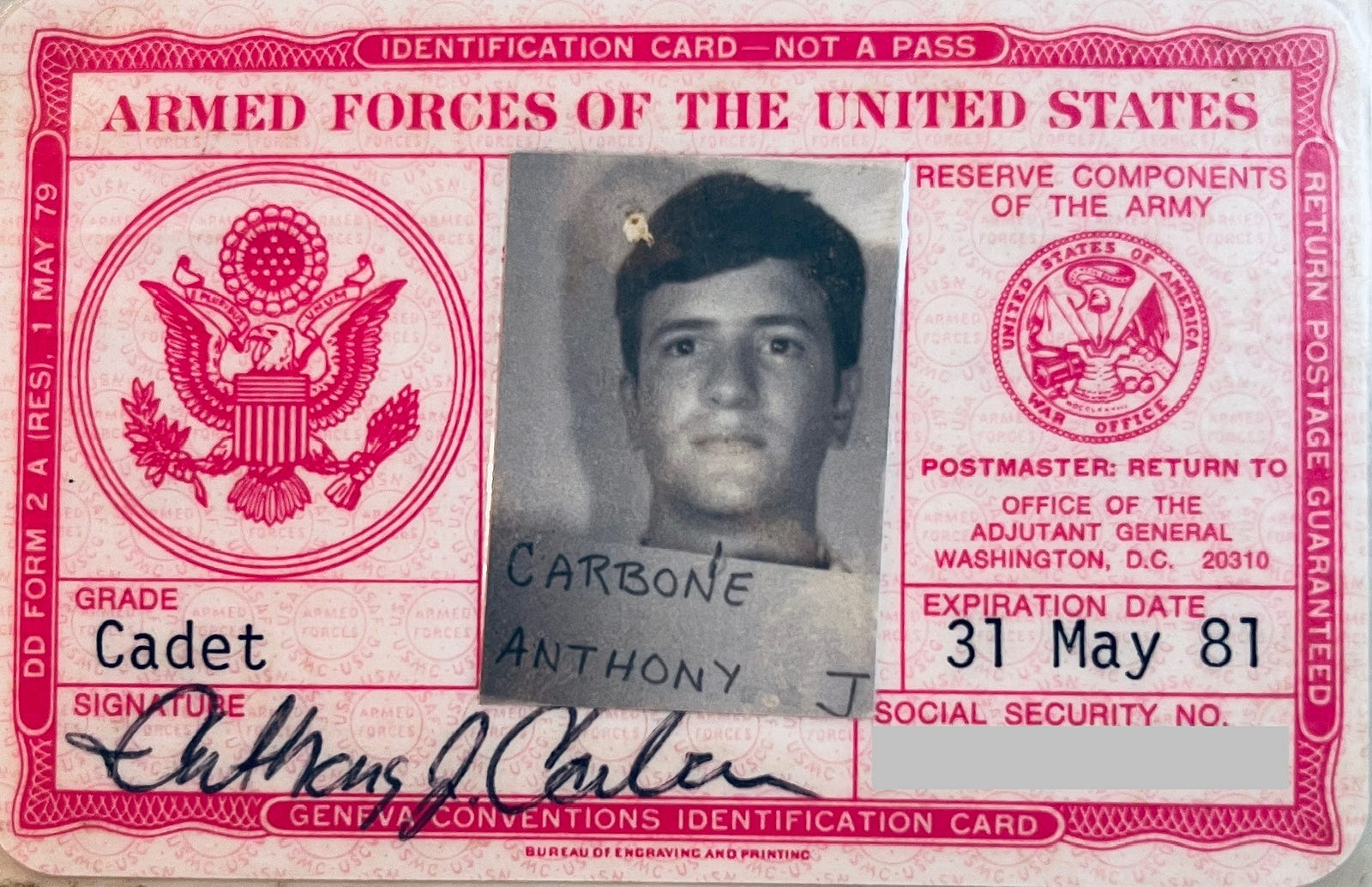
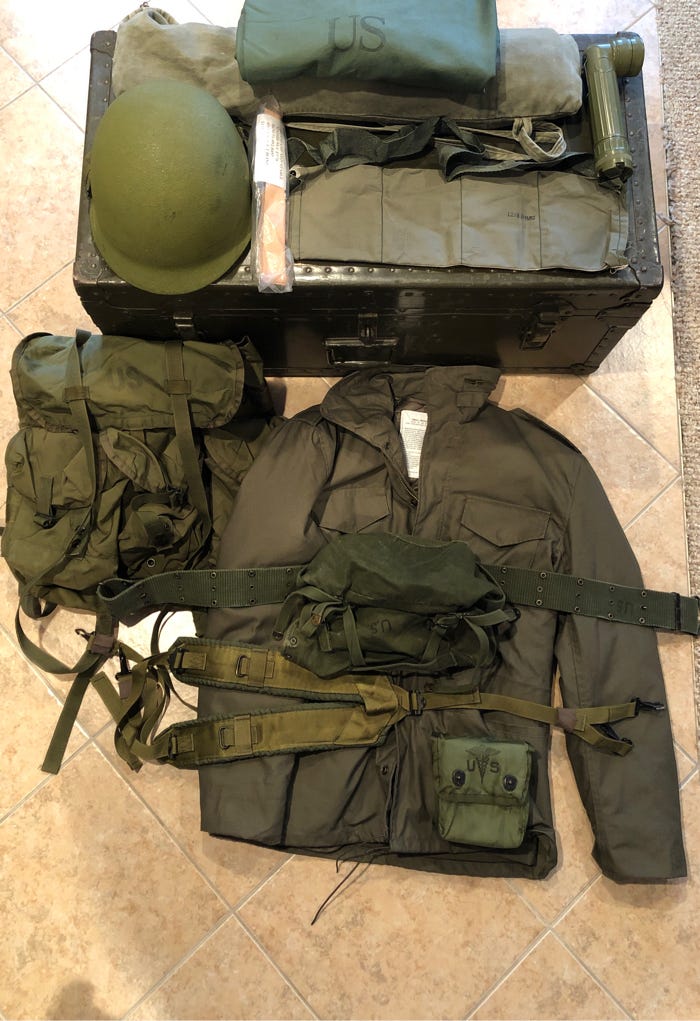
We ran through the usual in-processing: orders checked, medical paperwork signed, and the final cursory reminders that this was no longer just college ROTC. Then came issue day — the Basic Load: the old steel pot helmet, load-bearing equipment (LBE) with ammo pouches and suspenders, a poncho, canteen and cup, mess kit, a small first-aid pouch, entrenching tool, and extra socks and spare boots. They snapped our photos for the Cadet ID while we stood at parade rest, and holding that little card felt oddly official — proof we’d arrived at the Army’s doorstep.

My Cadet Geneva Conventions Identification Card issued at ROTC Advance Camp. For Cadet Anthony J. Carbone.
My Cadet Geneva Conventions Identification Card issued at ROTC Advance Camp

The Heat Wave

The summer of 1980 was brutal. A historic heat wave and drought gripped Kansas, and we felt every bit of it in our old steel pot helmets and full combat gear as we marched and trained. Day after day, the thermometer climbed past 100 degrees, with July delivering more than two weeks of triple-digit heat. The ground was dry and cracked, the air stifling, and shade was almost nonexistent. The oppressive heat wasn’t just uncomfortable — it was dangerous. For us cadets, it meant pushing our bodies through exhaustion and dehydration, learning to function in conditions that were as much a test of survival as they were of soldiering.

Cut Off From Home

Another reality of Advanced Camp in 1980 was how completely cut off we were from the outside world. This was a dozen years before personal cell phones existed. Letters were allowed, but only when we had a sliver of free time — and there wasn’t much of that. On weekends, we were marched to an area that had a dozen or so payphones lined up, each with a line of cadets waiting their turn. I would stand in the blazing sun, sometimes for over an hour, just for the chance to place a call.

Photograph of 4 Old Bell Telephone pay phone on a wall.  Biography of Dr. Anthony J. Carbone.

Every time I finally reached Mariann, my heart would race. The connection was scratchy, the time was short, but it didn’t matter. I would speak a mile a minute, trying to cram in everything I had just survived — the marches, the heat, the evaluations — and, most of all, to tell her how much I missed her. Those brief conversations sustained me. They were my lifeline.

Life in the Barracks

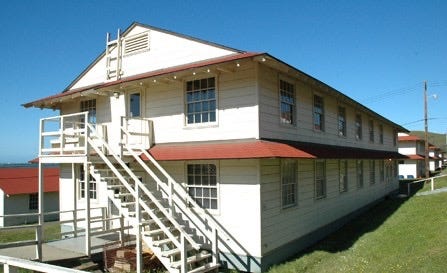
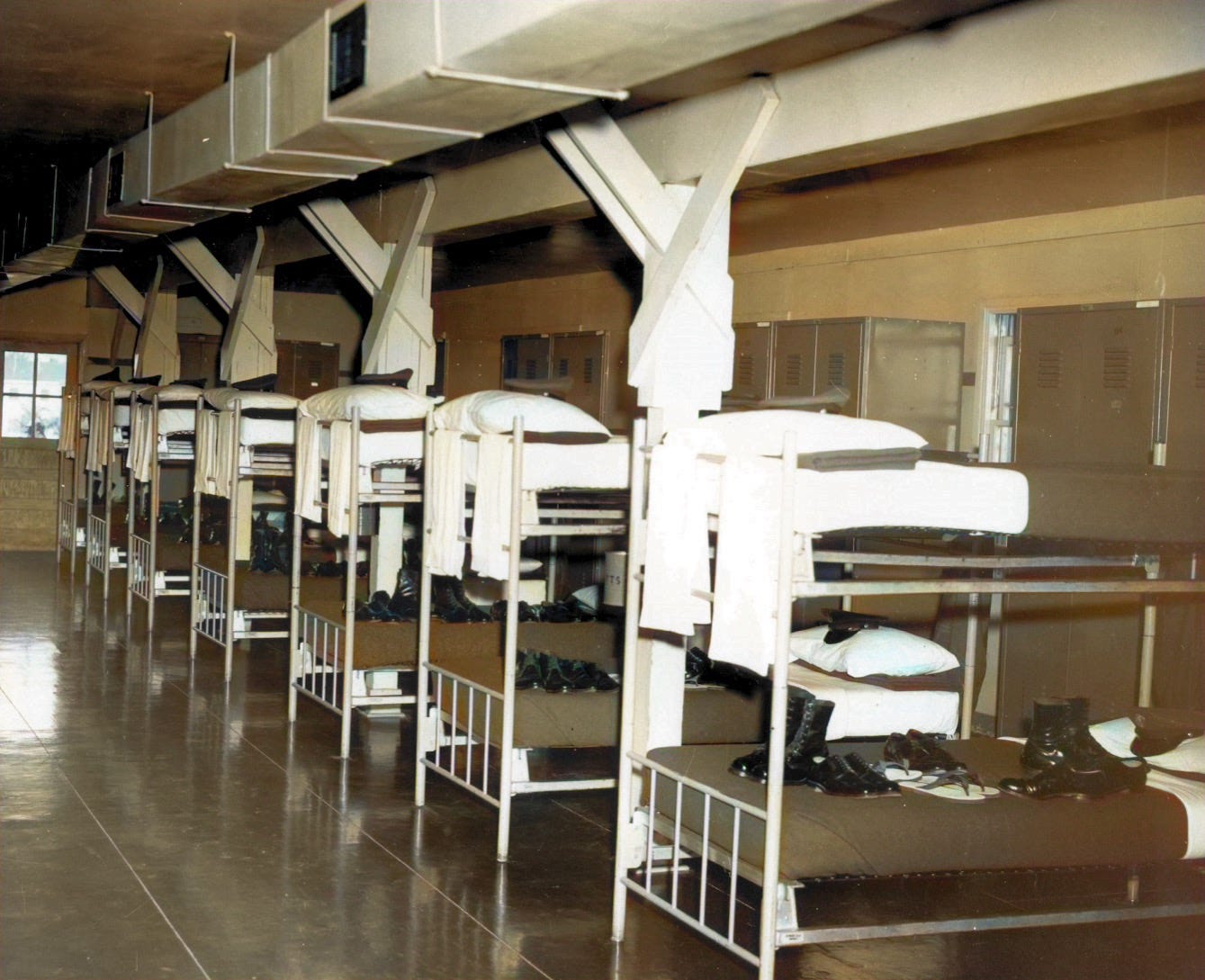
We were housed in old wooden World War II–era barracks — no frills and stripped bare of comfort. There was no air-conditioning, just two long rows of metal bunk beds. Each of us got a thin mattress, two white sheets, a goose feather pillow, and one rough-as-hell olive drab wool blanket that itched like crazy. A battered footlocker sat at the end of the bunk, with a metal locker nearby for uniforms and gear. Privacy didn’t exist. The showers were one big room with a dozen shower heads, and the toilets were lined up side by side — twelve seats in a row, no stalls, no doors. I used to sign up for Fire Guard duty around 2200 just so I could sneak to the latrine when most guys were asleep. That was the only way to find a little peace and privacy.

Exterior view of a typical World War II Army barracks, 2 stories with steps to second floor.  Found on Camp Forsyth for Army ROTC Advanced Camp.  Biography of Dr. Anthony J. Carbone
Interior view of a typical World War II Army barracks, Line of bunk beds with olive drab Army blankets and boots on bed.   Found on Camp Forsyth for Army ROTC Advanced Camp.  Biography of Dr. Anthony J. Carbone

Mornings were brutal. At the crack of dawn, the drill sergeant would storm in, flick on the lights, and bang something metal against the bunks as he marched down the aisle. We’d jolt awake, scrambling out of bed in our white boxers and t-shirts, and line up at the foot of our racks for headcount and instructions. Then it was a mad rush to throw on PT gear and fall into formation outside.

Physical Training and Jodies

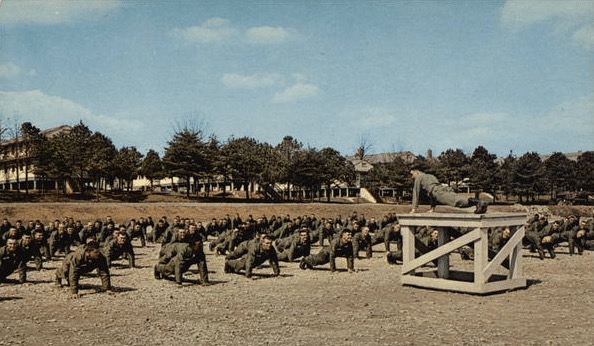
PT always ended the same way — running in step while the drill sergeant belted out Jodies. They were crude, funny, and loud, keeping us in cadence while building that strange mix of misery and camaraderie. For example, everyone has heard, “C-130 rolling down the strip. 64 Airborne on a one-way trip. Stand up, hook up, shuffle to the door. Jump right out and count to four.” Back at the barracks, just when you thought PT was over, there’d be more push-ups: “Front Leaning Rest Position! Move! One, two, three, four!” Over and over until our arms shook. Then five minutes — literally five minutes — to shower, shave, brush teeth, and dress into fatigues and boots. By the time we formed up outside and marched to the mess hall, the day had barely begun.

The Mess Hall

Getting chow felt like stepping into one of those old war movies. A long line of cadets in fatigues and combat boots stood at Parade Rest, hands clasped behind their backs. The chow hall itself was just another converted WWII barracks — bare, loud, and echoing with the clatter of trays. But with the aroma of chow.

Behind a wall of glass ran the chow line, steam curling up from metal pans. You grabbed a tray and tin dinnerware, then shuffled sideways as cadets on KP duty slapped food onto plates — scrambled eggs, greasy bacon, and a biscuit drowned in SOS (“Shit on a Shingle”). At the end, you snatched a cup of milk or juice, then dropped into a seat with your squad. You had maybe six minutes — no more — to eat, scrape your plate, and move. Not much time for chit-chat.

C-Rations

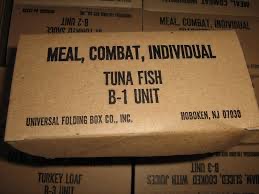
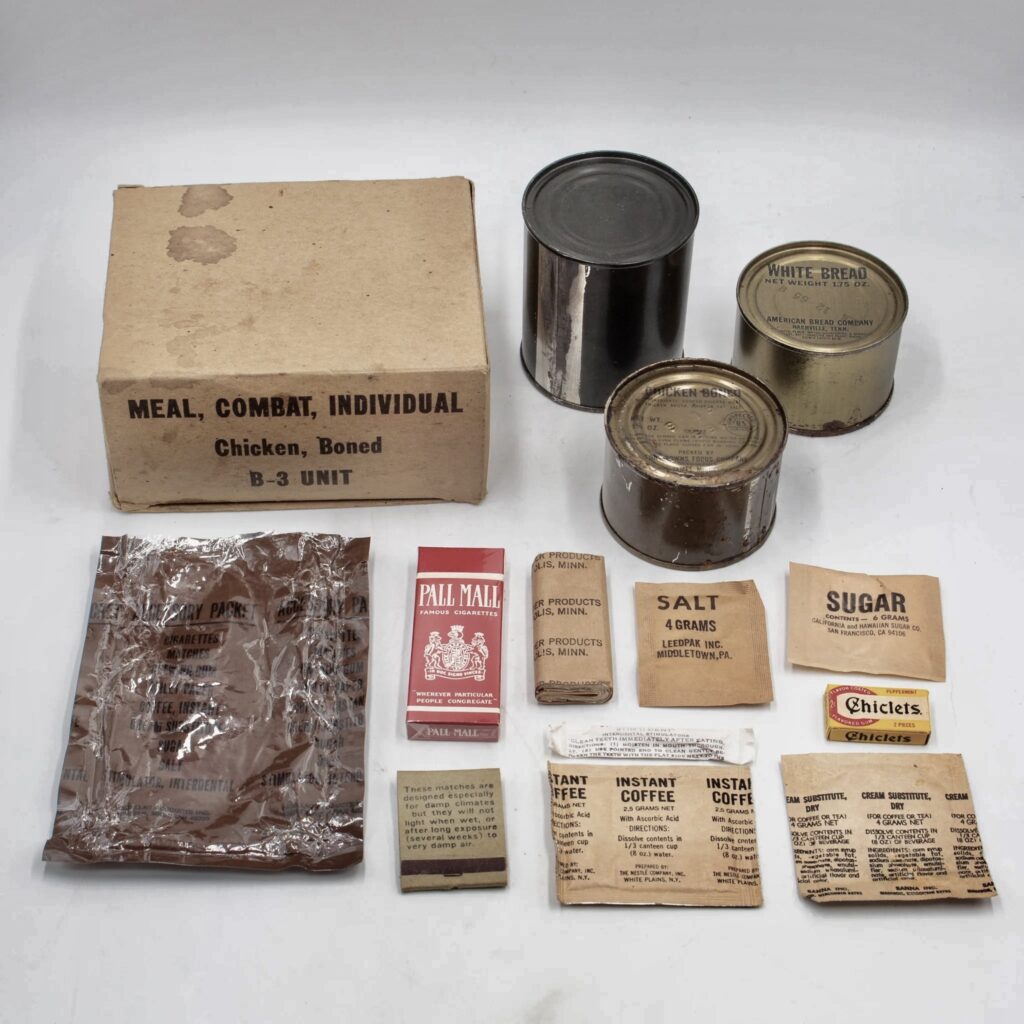
When we weren’t eating in the mess hall, the alternative was C-Rations in the field. Even on an empty stomach, most of those little brown boxes were tough to swallow. I quickly learned to sprint to the mess truck when it pulled up, fighting my way to the best meals before they were gone. My prize was B-1 Unit— a small can of tuna fish paired with a large can of fruit cocktail. Compared to the other canned meats, it felt like gourmet dining. My second choice was beans and franks, but only in a pinch. Since we almost never had the chance to heat our meals, the tuna and fruit were the safest bet. Everything else I was quick to trade, always hoping to score a pack of Chicklet gum, which was like gold in the field.

Learning to Be a Soldier

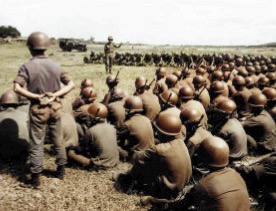
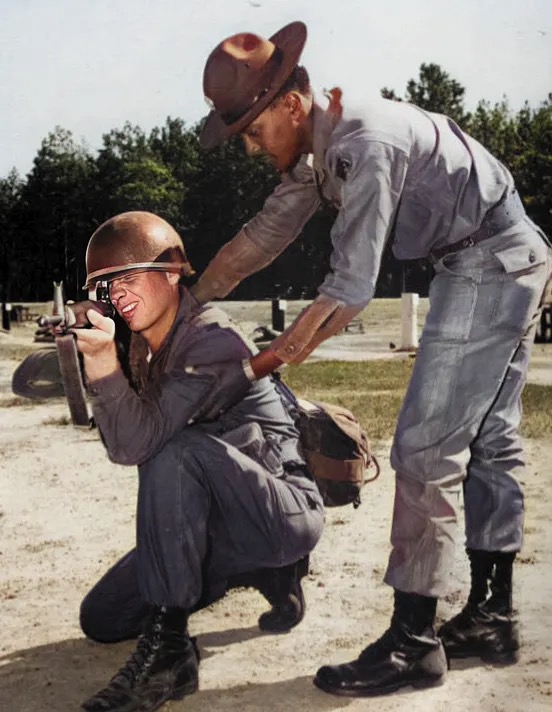
A large part of Advanced Camp was learning to be a soldier first, and an officer second. We learned to wear our uniforms and gear correctly, to stand in formation, and execute all the basic commands: Fall In, Attention, Parade Rest, Present Arms, At Ease, Fall Out. We drilled endlessly on marching and running in formation, our cadence echoing across the field.

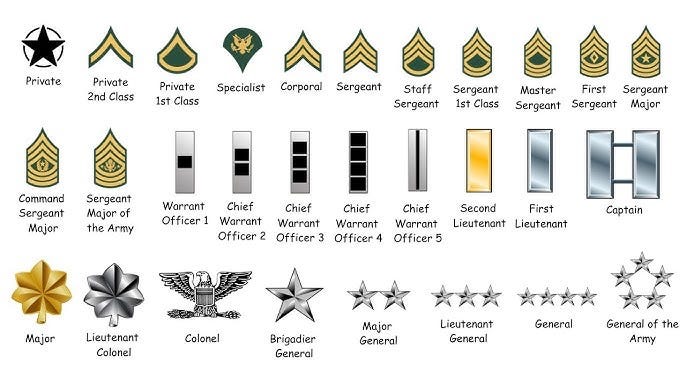
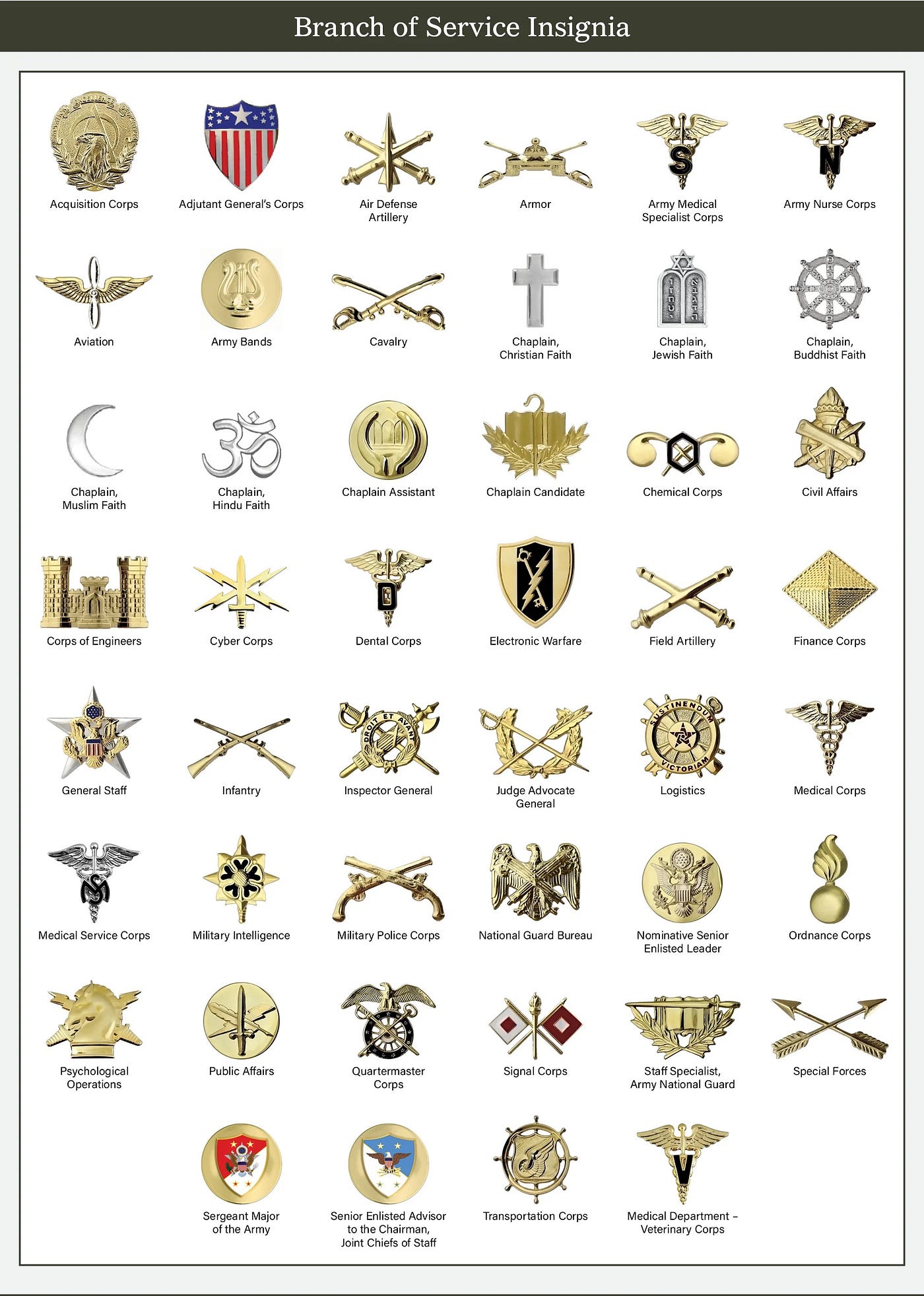
We had to learn the rank and branch insignia (something you already learned in basic ROTC).

Chart showing U.S. Army rank insignia from E-1 Private to O-11 General of the Army.  Biography of Dr. Anthony J. Carbone.

The M16 Rifle

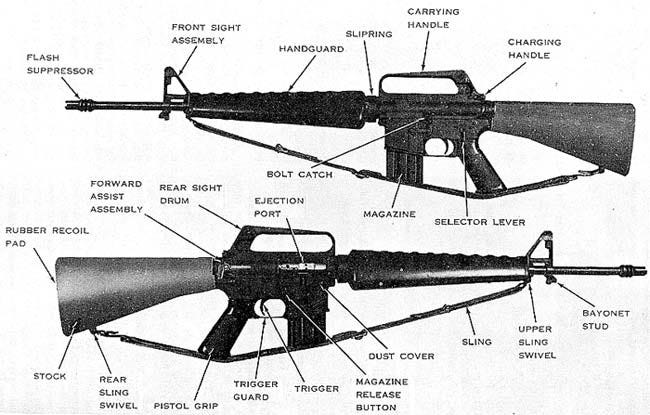
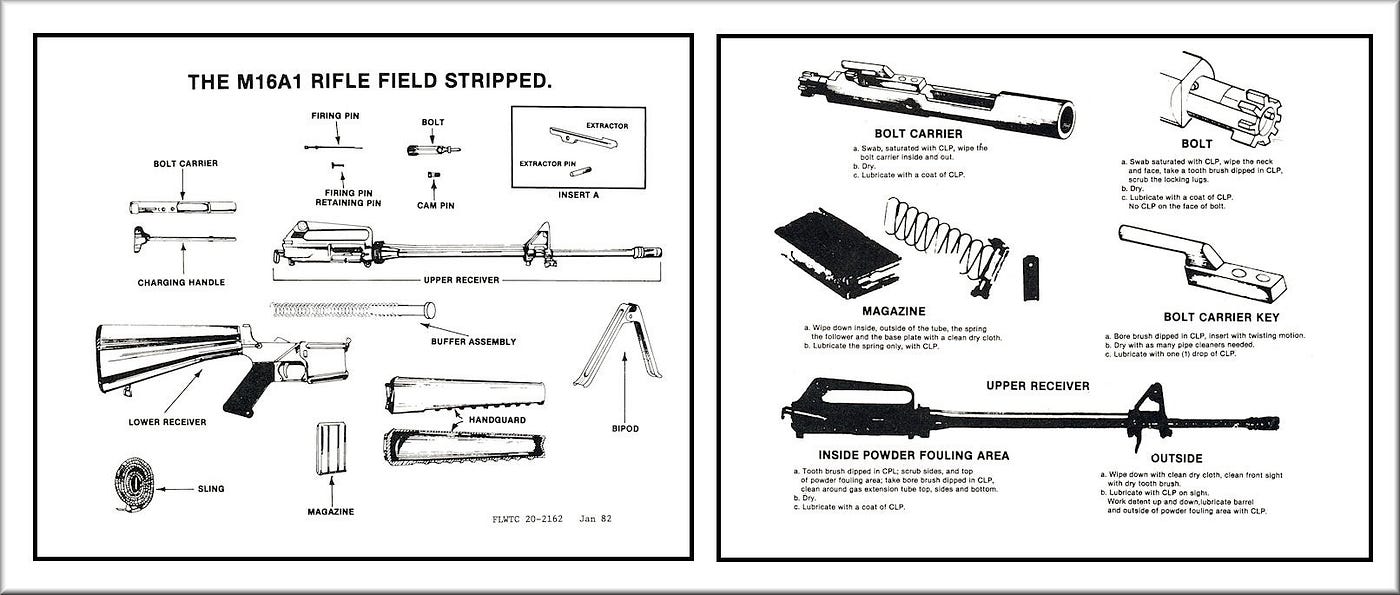
Then came the rifles. Each of us was issued an M16A1 rifle. We learned to carry it, field strip it, and reassemble it faster and faster.

Diagram of M16A1 Rifle with explanation of parts from Left and Right side views.  Biography of Dr. Anthony J. Carbone.

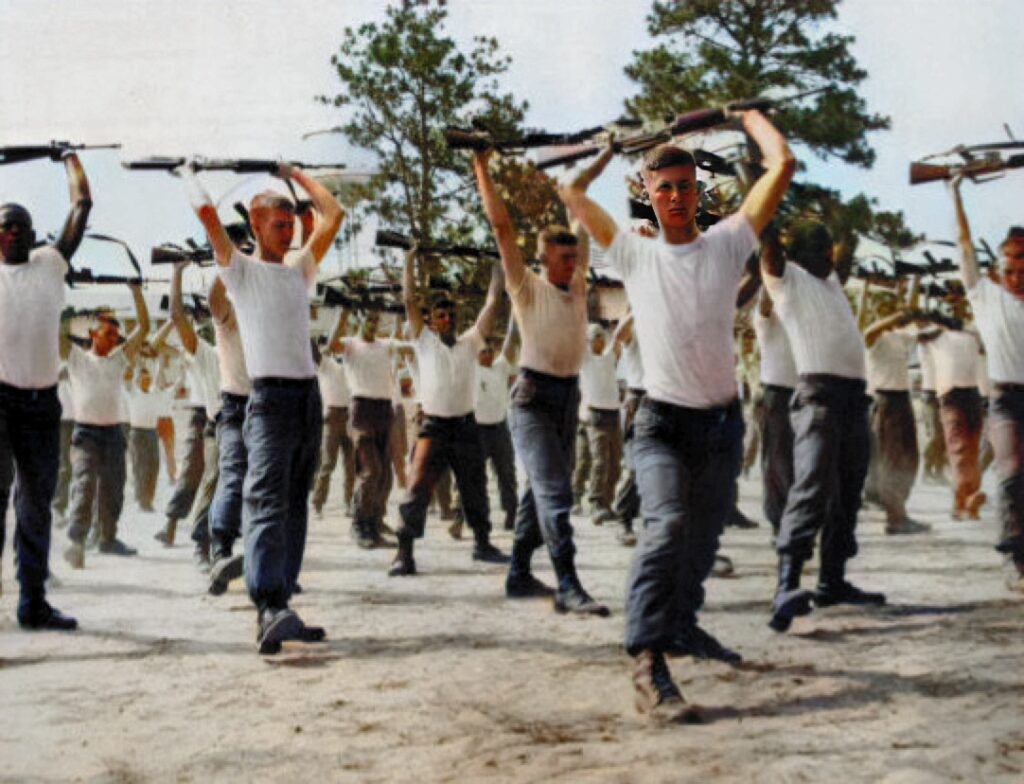
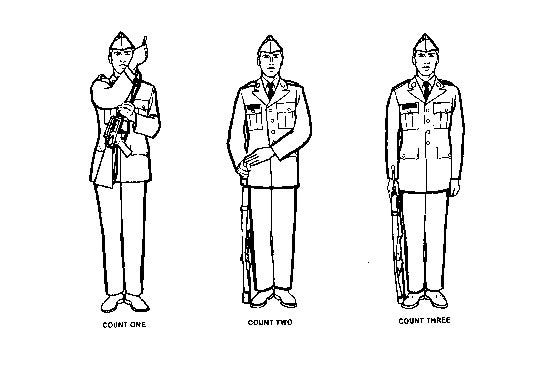
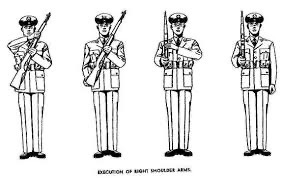
We practiced the 15-Count Manual of Arms. Right shoulder, Arms. Port, Arms. Left shoulder, Arms. Present, Arms. Order, Arms. Then something to the effect of singing, “This is my rifle, this is my gun. This is for fighting, this is for fun.”

Diagram of soldier in Class A uniform performing a part of the 15 Count Manual of Arms--Order Arms.  Biography of Dr. Anthony J. Carbone

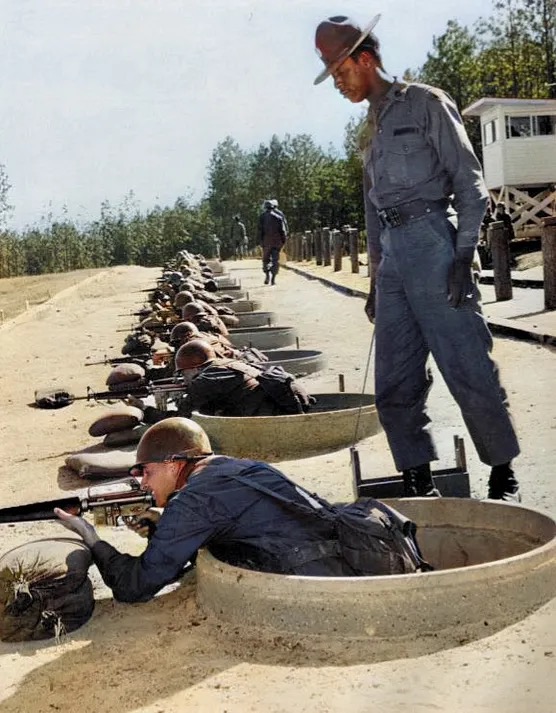
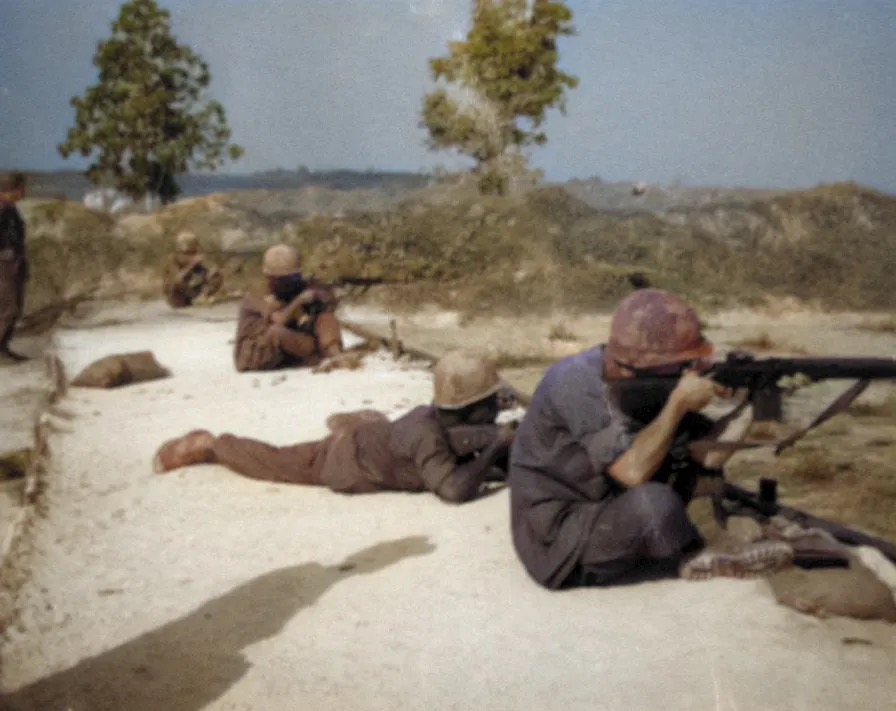
Eventually, we moved to the firing range. The rules there were strict — no motion without a direct order. We learned to load, fire, and zero our weapons. Shooting from standing, kneeling, and prone positions, clearing jams, and obeying every command was terrifying — and exhilarating. After each round, the Range Officer called, “Are there any alibis?”Those with rounds left had to empty their magazines immediately.

Afterward, we marched back to garrison, rifles in arms, singing Jodies, only to face the dreaded cleaning of weapons. Practiced field stripping our M16A1. Tedious, meticulous work, but essential. An M16 that wasn’t spotless could fail when it mattered most.

M16A1 Rifle Field Strip Diagram.  Biography of Dr. Anthony J. Carbone.

The Water Hazards

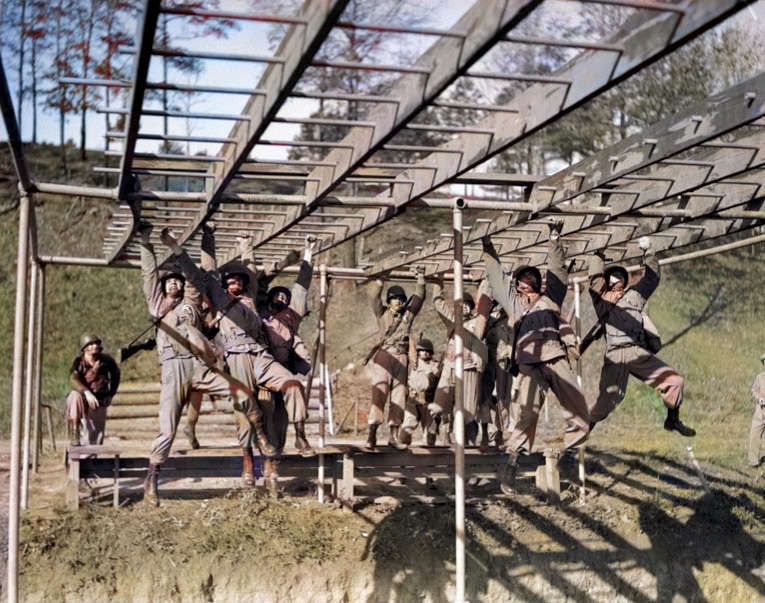
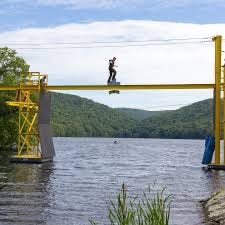
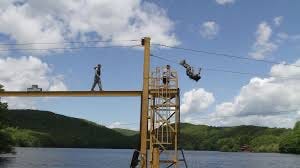
Army ROTC Advanced Camp seemed obsessed with water obstacles. No matter where we turned, there was always some new challenge over a lake, pond, or river. The cadre loved to test our courage and balance above the water, knowing full well that most cadets dreaded falling in.

U.S. Army cadet at Recondo water obstacle area.  Balancing on beam over water, with Recondo sign hanging from beam.  Biography of Dr. Anthony J. Carbone.

One of the first obstacles I faced was a balance beam stretched high over a lake. The beam wobbled with every step, and the thought of tumbling into the water below made it feel like a tightrope walk in the circus. Somehow, I managed to keep my footing and make it across.

U.S. Army cadet at Recondo water obstacle area.  Balancing on beam over water, with Recondo sign hanging from beam.  Another cadet hanging from a rope. Biography of Dr. Anthony J. Carbone.

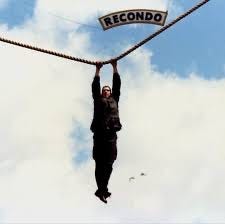
Rope Over Water

Another test was even more intimidating. I had to climb a wooden stand high above the lake, shimmy out onto a thick rope, and crawl to its midpoint where a “Recondo” sign dangled. Once I touched it, the special forces sergeant on shore barked through a bullhorn, “Hang from the rope, cadet, and request permission to drop!” I dangled from the rope and shouted, “Cadet Carbone, request permission to drop!” The sergeant’s reply stunned me: “Carbone? Like Major Tony Carbone of MACV-SOG? Carbone?” I yelled back, “Yes, Sergeant!” He paused, then shouted, “I know your father. Give me ten pull-ups before you drop, Cadet!” So I did my pull-ups, arms burning, before finally letting go and plunging twenty meters into the water.

U.S. Army cadet at Recondo water obstacle area.  Hanging over water holding onto a rope with Recondo sign.  Biography of Dr. Anthony J. Carbone.

Slide For Life

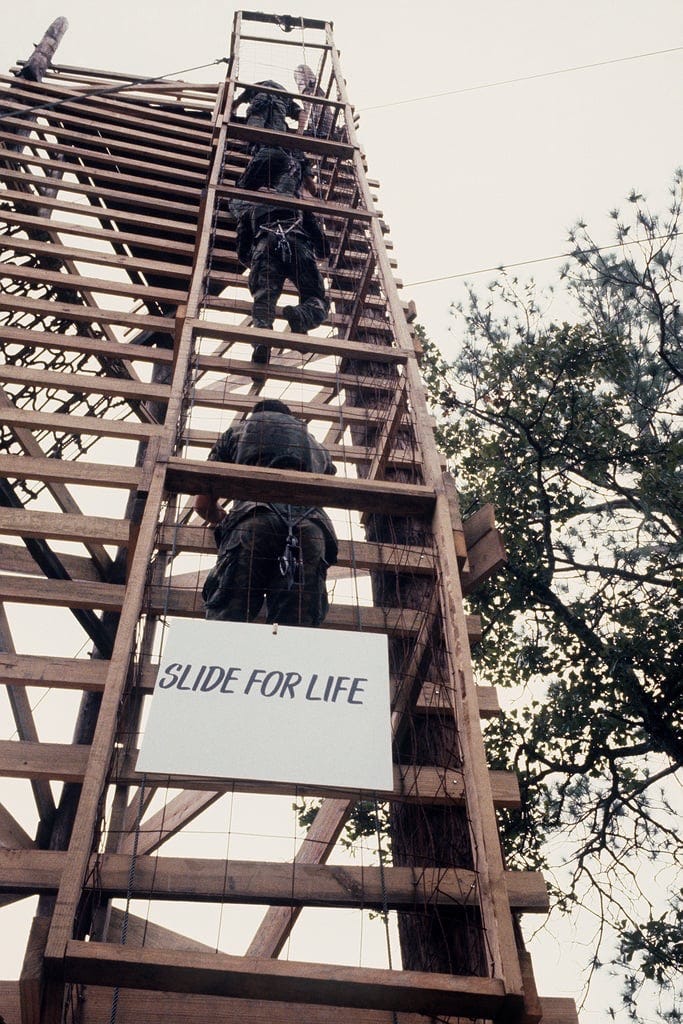
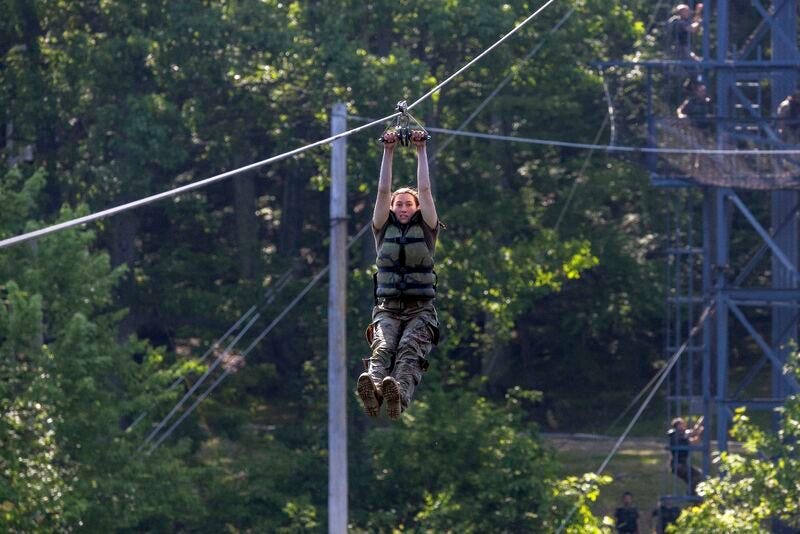
But the most famous challenge was the Slide for Life (zip line). First, we climbed what felt like a hundred meters up a tower. At the top, a special forces instructor handed me the handle to the zipline trolley. I sat down, ready to launch, but as I started to slip off too soon, he snatched me back by the shoulder and growled, “Not so fast, Cadet!” On my second try, I slid off the tower, hanging low under the rope, racing down toward the beach far below.

Cadets at ROTC Advance Camp climbing up wooden tower for the Slide For Life obstacle.  Biography of Dr. Anthony J. Carbone.
Cadet holding handles as she travels down the Slide for Life at U.S. Army ROTC Advanced Camp.  Biography of Dr. Anthony J. Carbone.

On shore, one sergeant shouted instructions through a bullhorn, while another waited with crossed flags. A crowd of cadets cheered from the beach. As I approached, the sergeant yelled, “Lift your legs into an L!” I did as told, gripping the handle until the flags crisscrossed. At that moment, I let go, tumbled into the air, and smacked the lake with so much force that I skipped across the surface, cartwheeling five times before finally sinking in. When I surfaced, sputtering but exhilarated, the other cadets broke into applause.

Slide for Life at U.S. Army ROTC Advanced Camp.  Instructor on bank holding a signal flag.  Slide For Life in the background.  Biography of Dr. Anthony J. Carbone.
Cadet slashing into the water at the end of the Slide For Life at U.S. Army ROTC Advanced Camp.  Biography of Dr. Anthony J. Carbone.

Weekend Guard Duty and Super Numero

Twice during camp, our platoon had weekend duty. No passes. No fun. Just preparation, inspection, and standing post. The first step was polishing boots. I had an advantage — years of polishing my father’s combat boots gave me a skill my platoon mates lacked.

Next came memorizing the General Orders and learning the Special Orders for that weekend. Then, the drill sergeant lined us up: “Fall In! Dress Right, Dress! Attention!” One by one, he inspected haircuts, shaves, boots, and uniforms, asking each of us to recite the General Orders. After reviewing the platoon, he announced the Special Orders and designated one cadet as Super Numero, relieved from guard duties for the weekend. I was chosen both times — a tremendous honor, though it didn’t make me popular with my platoon.

U.S. Army platoon in formation for inspection. Dress-Right-Dress command. Soldiers in olive drab fatigues with helmuts. Autobiography of Dr. Anthony J. Carbone.

Being Super Numero meant I was on my own. I used the time to call Mariann and my family. Standing there, I reflected on all the boots I had polished for my father and the lessons he had taught me. Everything he had instilled over the years had prepared me for this moment, and for the challenges ahead as a cadet — and eventually, an Army officer.

Leadership in the Field

Once we had mastered the basics of soldiering, the remainder of Advanced Camp focused on leadership development. Instructors began selecting a single cadet to serve as the leader for each task or exercise.

We were often broken into 12-man squads, and a squad leader would be chosen to plan and execute the mission. The instructors would give us a Warning Order (WARNO)— a preliminary notice of a mission — then we had to develop a detailed Operation Order (OPORD), outlining objectives, tasks, and support for execution.

Photograph of me (in foreground) with 3 of my squad members during tactical training.  Wearing olive drab fatigues, camouflaged steel pot helmets, tactical gear and carrying our M16A1 rifles. Biography of Dr. Anthony J. Carbone
Me in the foreground with three of my squad members during tactical training at ROTC Advanced Camp

When it was my turn, the instructor pointed to an enemy position beyond a large hill. I had two options: the easy route around the hill, or a straight-up assault through a forest of thorn bushes. I chose the hard path.

It was brutal. Thorns tore at our uniforms and skin with every step. But the risk paid off — we completely surprised the enemy squad and ambushed them successfully. The instructors were impressed. I received an on-the-spot Special Recognition, one of only a handful awarded among the 5,000 cadets at camp that summer. Once again, my father’s lessons rang true: sometimes the hard route is the right route.

The Leader’s Reaction Course

The next phase of Leadership Development was a full day at the Leader’s Reaction Course (LRC). Rumor had it the course had been developed by former German Field Marshal Rommel, though the origin didn’t matter once you were standing at the edge of a water obstacle with a squad waiting on you.

The course was designed to test everything a future officer needed: decision-making under pressure, clear communication, teamwork, initiative, and the ability to adapt on the fly. Obstacles were both physical and mental, forcing a cadet to think critically while leading a squad of varying strengths, weaknesses, and even injuries.

At Fort Riley, the LRC was a long series of water obstacles. Each challenge required that no one touch the water. A typical scenario involved a shallow pool of dark green water with a tall wall in the center, and we were given a bucket, a roll of rope, and a single wooden board. Fifteen minutes to get the entire squad across. Success required creativity, coordination, and making sure the slowest or weakest cadet crossed safely.

When I was chosen leader, I orchestrated each step, moving all twelve of us across successfully. For this, I earned my second on-the-spot Special Recognition. It was a defining moment, proving that leadership is as much about guiding your team as it is about completing the task.

Recondo

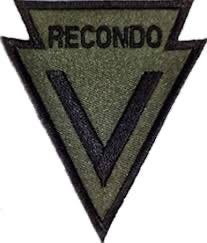
One of the proudest moments of my ROTC Advanced Camp at Fort Riley in 1980 was earning the prestigious Recondo badge. “Recondo” stood for reconnaissance and commando, and only a small percentage of cadets achieved it.

Subdued olive drab RECONDO badge with arrowhead.  Biography of Dr. Anthony J. Carbone.

To qualify, we had to exceed the already demanding standards in every graded event. That meant scoring well above average on the Army Physical Fitness Test, negotiating most of the obstacles on the Confidence Course, qualifying sharpshooter or higher on the rifle range, and excelling in land navigation both day and night. We had to complete a six-mile road march in under ninety minutes, pass the grenade assault course, and perform to standard on warrior skills and tactical evaluations.

There was no room for failure — every requirement had to be met on the first try, with no disciplinary blemishes along the way.

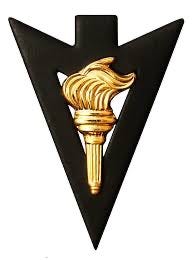
US Army Recondo Badge with black arrowhead and gold torch. Biography of Dr. Anthony J. Carbone.
Recondo Badge

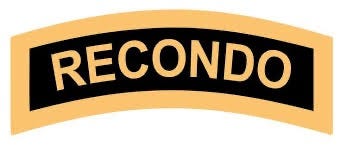
Earning Recondo was about more than just physical ability. It demanded focus, consistency, and leadership under stress. By the time I pinned the badge on my uniform, I felt a deep sense of accomplishment. It wasn’t just another award — it marked me as someone who could be counted on to meet the toughest challenges head-on. To this day, I still remember how proud I was to walk away from Advanced Camp with that Recondo badge on my chest and the black and gold tab on my shoulder.

Black and Gold RECONDO tab to be worn on shoulder sleeve.  Biography of Dr. Anthony J. Carbone.

Branch Week

The final phase of Advanced Camp was my favorite — Branch Selection. This was the week when we got a taste of every major branch of the Army before returning to campus for our final year of college and ROTC. Soon, we would have to submit our top three choices for the branch we wanted to serve in after commissioning — a huge decision for any cadet.

Chart of U.S. Army Branch Insignia.  Biography of Dr. Anthony J. Carbone.

The cadre did their best to give us a realistic glimpse of each branch’s life, challenges, and responsibilities.

Infantry

“Queen of Battle”. The foundation of all soldiering. Everything we did at Advanced Camp was Infantry. Marching, maneuvering, firing weapons and leading squads reinforced everything we had learned.

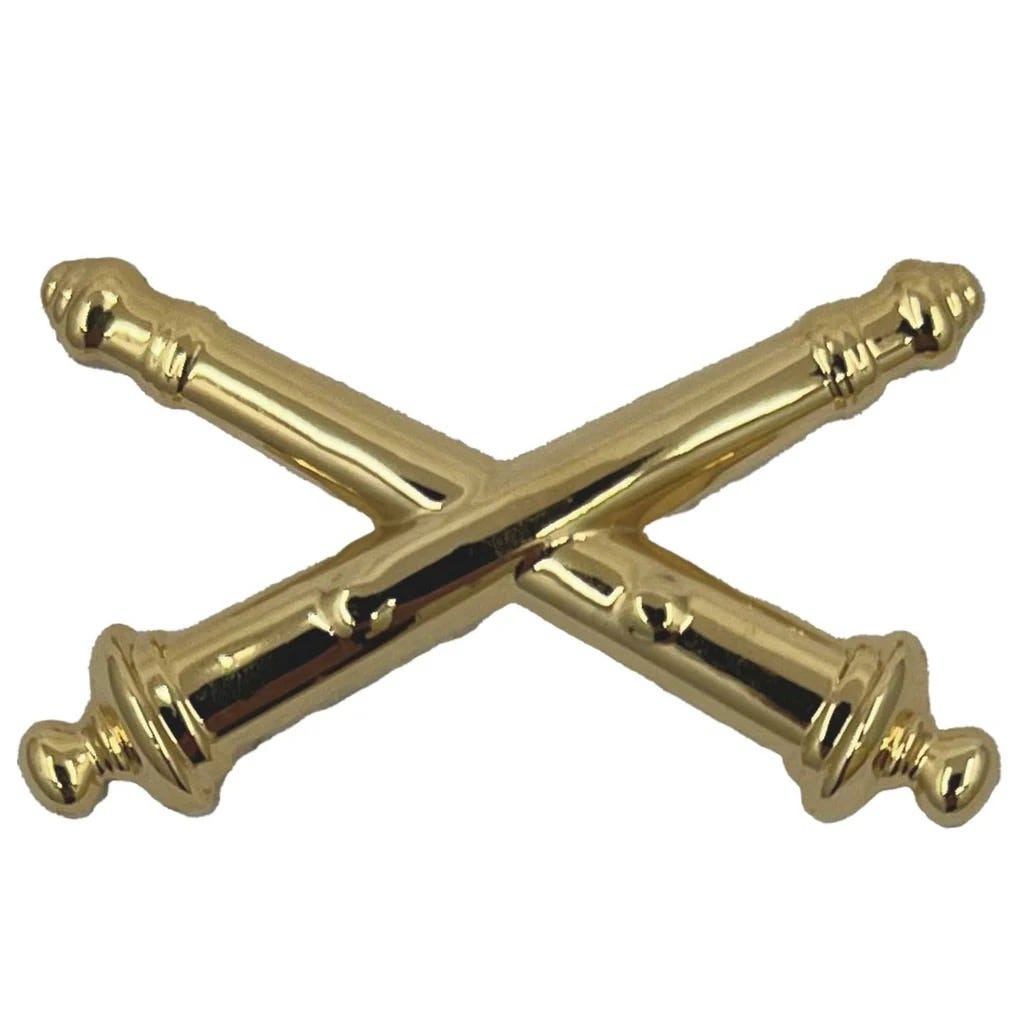
Artillery

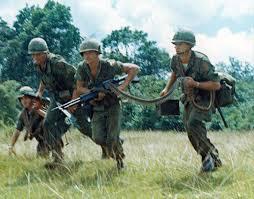
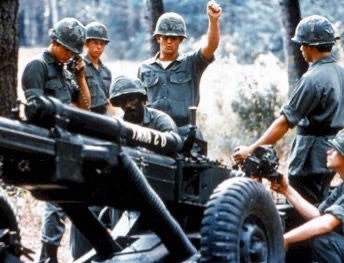
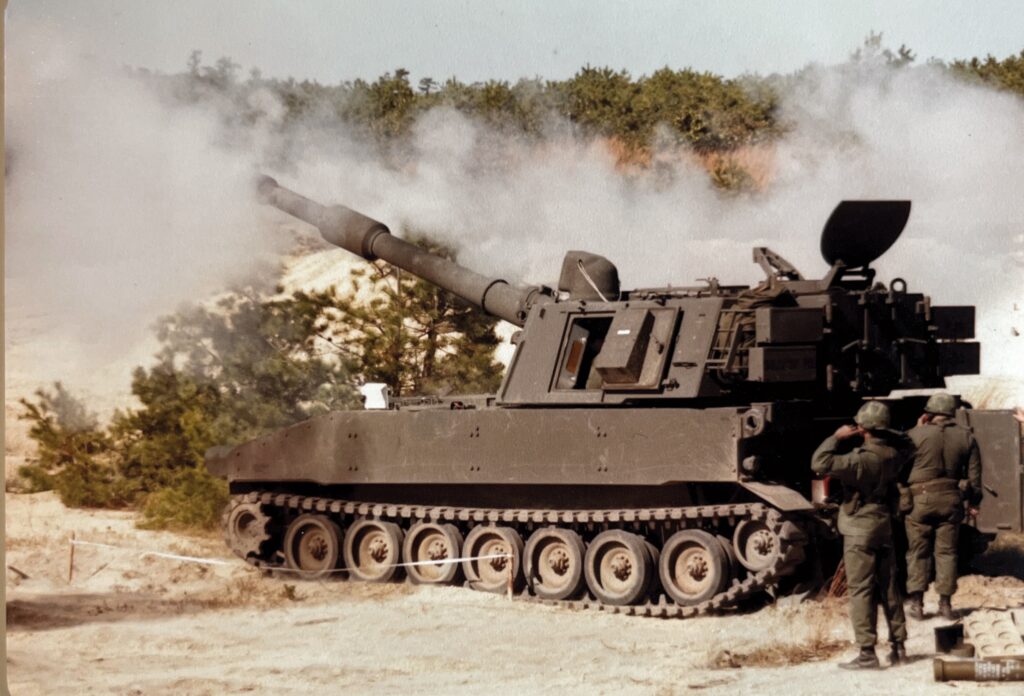
“King of Battle”. We learned to compute target acquisition and fire real Howitzer rounds. We put the fuses on the round. Filled the shell with explosives. Computed the elevation and deflection. And got to pull the lanyard. The recoil and thunder of a shell leaving the tube was unforgettable.

Armor & Cavalry

Combat Arms of Decision”. Tanks, tracked vehicles, and the chance to fire an M60 tank round. A female cadet was chosen for the live-fire demonstration, which was unusual given 1980s regulations. I knew tanks intimately from my father, and driving around fifty-two tons of steel was exhilarating. Watching them fire round downrange was even more thrilling.

Air Defense Artillery

“First to Fire”. Air-conditioned vans filled with radar screens were almost tempting after the heat wave we’d endured for weeks. But something told me that these guys were high-priority targets for the enemy.

Medical Service Corps

To Conserve Fighting Strength”. Ambulances and field hospitals fascinated me, and I knew this branch would tie directly into my future in the Medical Corps.

Aviation

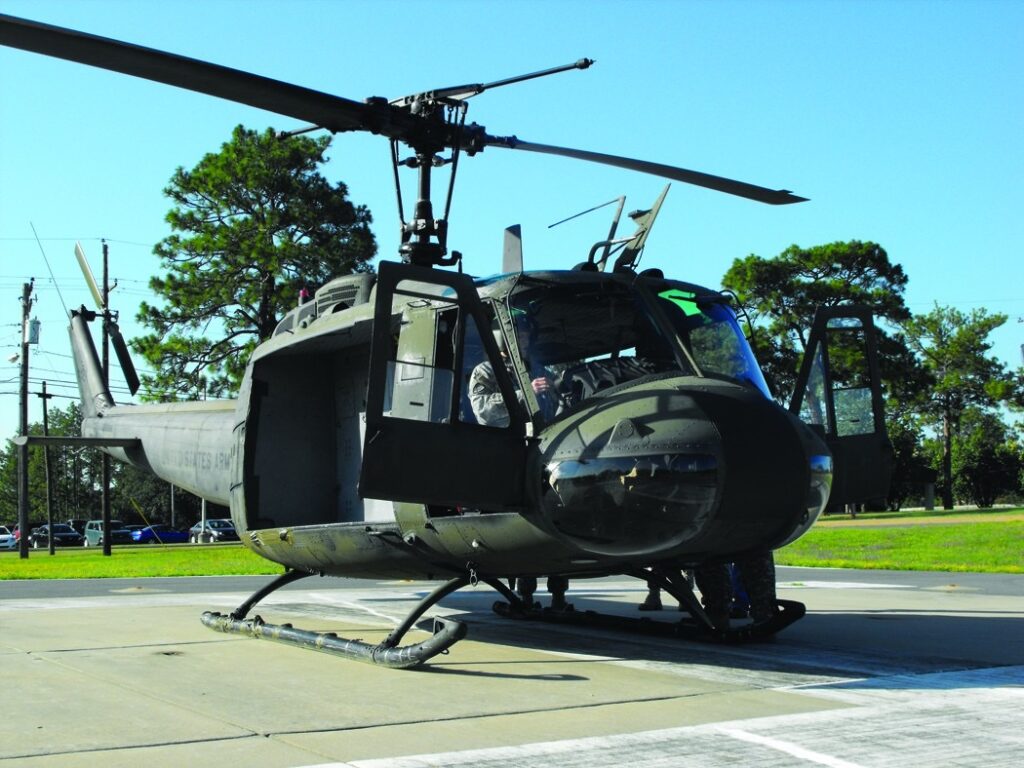
“Above the Rest”. Army airplanes and helicopters were awe-inspiring. Everyone wanted to fly. I struggled between Aviation and Medicine until I realized I could become a Flight Surgeon — combining both passions.

Military Intelligence

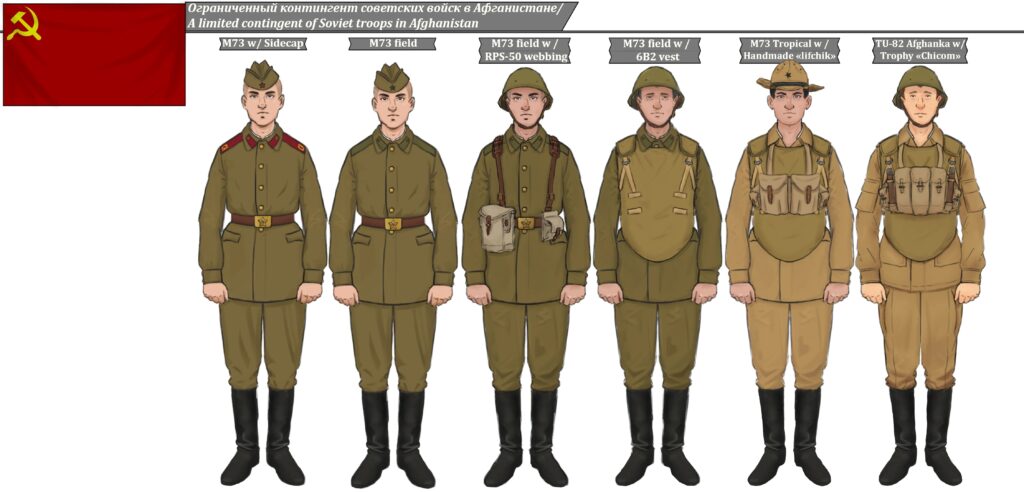
Always Out Front”. Their display of Soviet uniforms, AK-47s, maps, and Russian signage captivated me. I tried to decide between Medicine, Aviation, and Intelligence. In the end, practical limitations helped: I couldn’t apply for Aviation because I wore glasses.

Branch Choices

My final three branch choices were: (1) Military Intelligence, (2) Medical Service Corps, and (3) Armor Branch.

Graduation

Advanced Camp was six weeks of extremes — heat, exhaustion, and relentless training. It pushed us to the edge, testing everything from basic soldiering to leadership under pressure. For me, it was life-changing: it forged resilience, cemented friendships, and gave me clarity about the path I would follow as a future Army officer. When it was over, I graduated among the top five cadets out of the thousands at Advanced Camp — a recognition that validated the hard work, the sacrifice, and the determination it had taken to get there. More importantly, it marked the beginning of a professional journey that would carry me into greater challenges and responsibilities, shaping the course of my Army career in ways I was only beginning to imagine.

U.S. Army ROTC company at ROTC Advanced Camp with guidon and barracks in background.  Biography of Dr. Anthony J. Carbone.
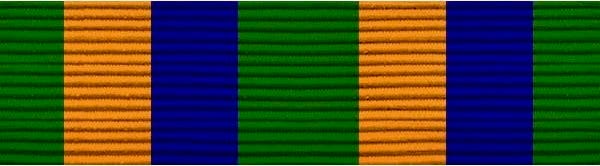
Green, Orange, and Blue ribbon awarded for completing U.S. Army ROTC Advanced Camp.  Biography of Dr. Anthony J. Carbone.
Ribbon for Completing ROTC Advanced Camp

Home Page

Chapter 20: Junior Year at Notre Dame

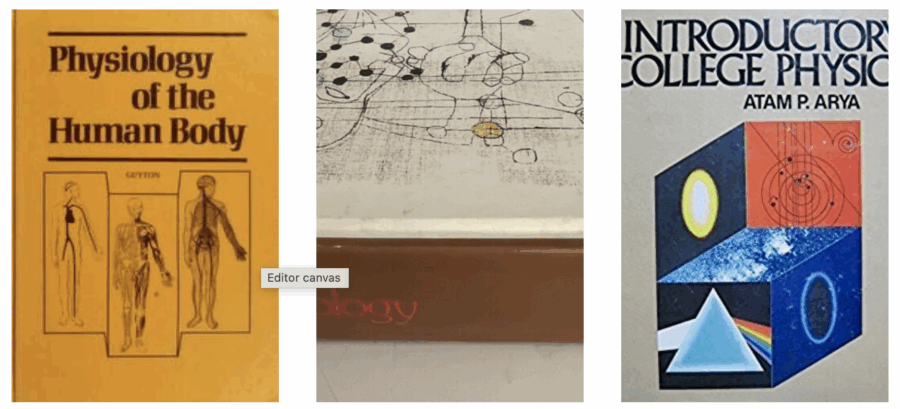
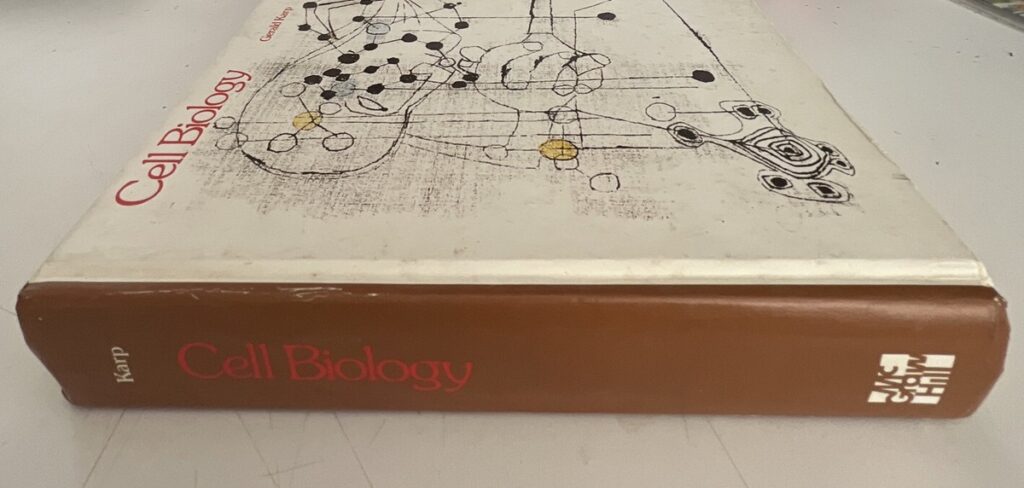
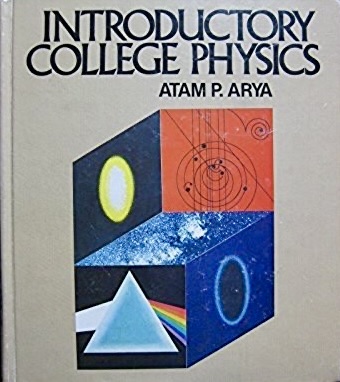
PreMed textbooks used at Notre Dame in 1979. Physiology of the Human Body. Cell Biology. Physics. Autobiography of Dr. Anthony J. Carbone

Believe Nothing You Hear, and Only Half of What You See — A memoir of Service, Shame and the Search for Truth

Return to Notre Dame

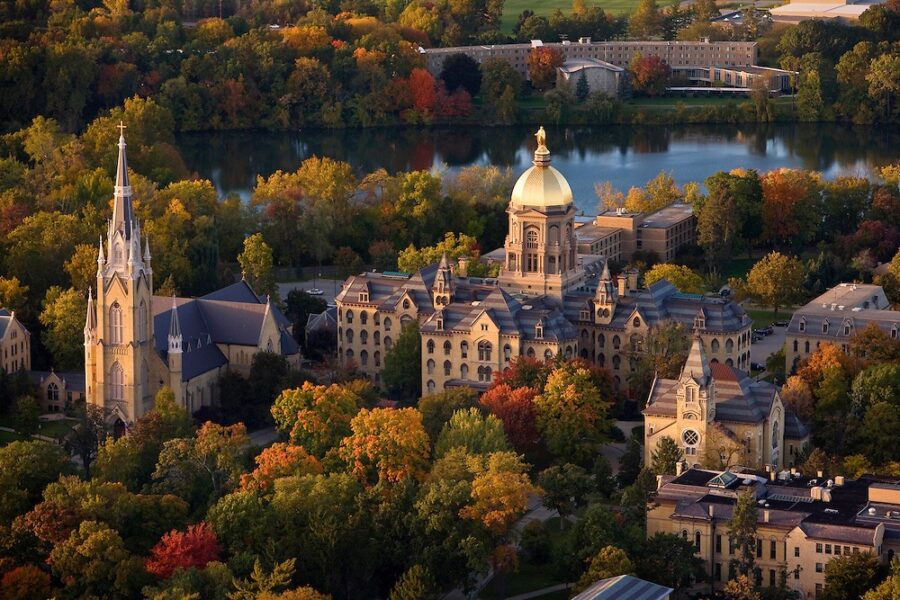
I flew back to Notre Dame on Saturday, August 25, 1979, ready to start my junior year at Notre Dame. I used to love flying into Saint Joseph County Airport [SBN] and catching a glimpse of the beautiful Notre Dame campus from the air before we landed. It was a gorgeous and peaceful home away from home.

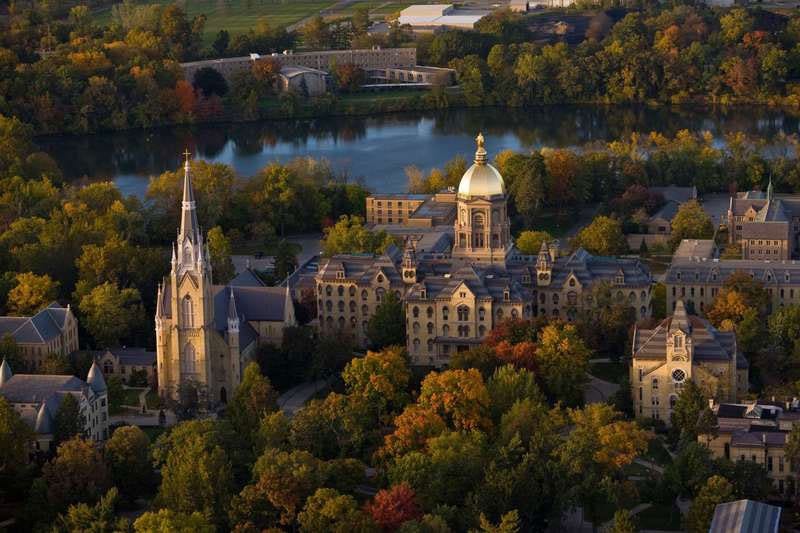
Aerial view of the University of Notre Dame du Lac campus showing the Golden Dome (Administration Building) and Sacred Heart Basilica.  Autobiography of Dr. Anthony J. Carbone.
Aerial View of the University of Notre Dame du Lac.

From the airport, I caught the shuttle into campus, the late-summer air still heavy with that Midwestern humidity. As soon as the shuttle rolled towards the familiar Golden Dome, it felt like the summer had been a quick intermission in the long play of my college life.

Back to Fisher Hall

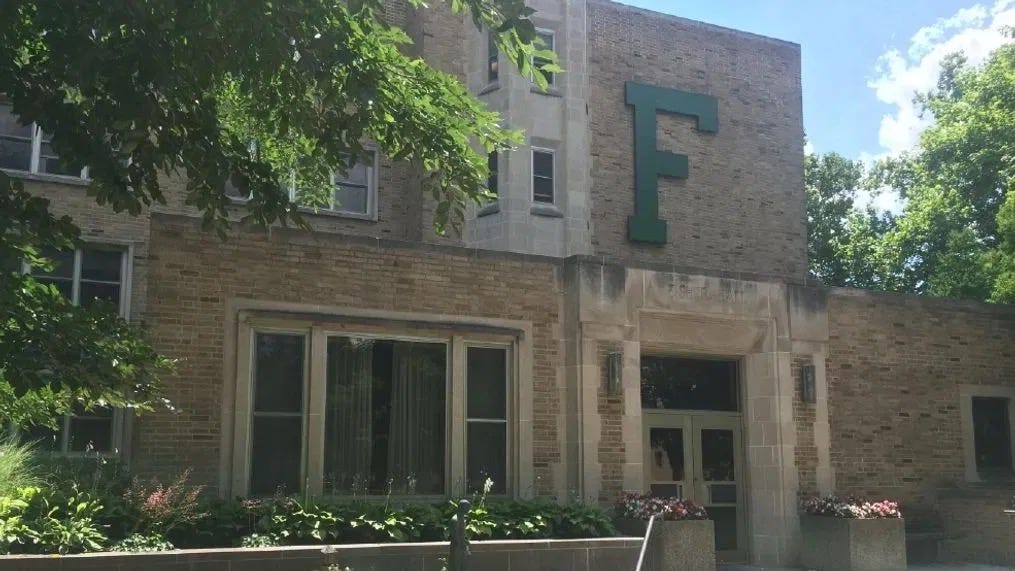
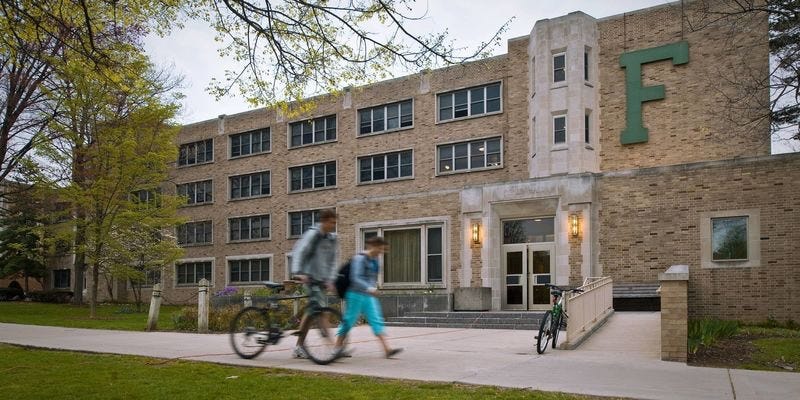
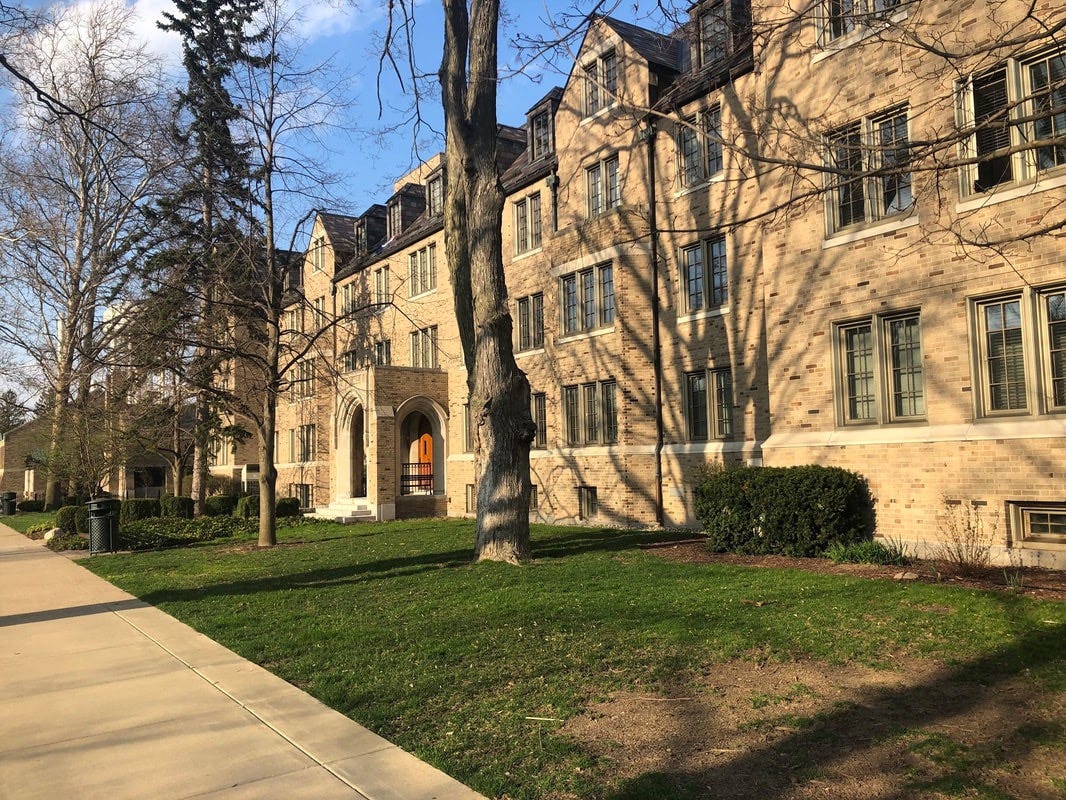
Photograph of Fisher Hall in the South Quad of the University of Notre Dame with its classic tan bricks and large green "F" for "Fisher".  Autobiography of Dr. Anthony J. Carbone.
Fisher Hall, University of Notre Dame

My stop was Fisher Hall. I hauled my bags upstairs, checked into my room, and — one by one — ran into the guys from my section. Same crew: Bob Terifay, Matt Bedics, Andy Cordes, Al Emory, Chris Kane, Scott Olds, Joe Delaney and the other cast of characters who made Fisher feel like a second home.  Voices bouncing down the hallway as everyone settled in. Doors stayed open — part welcome committee, part surveillance. B ecause you never knew who might wander by with a story from summer break.

New Fisher Section

I was curious about our new freshmen section-mates. I knew that I didn’t need to go scouting .  Bob was my go-to intel officer for dorm gossip. He already had the roster memorized. Mike Calhoun had graduated last May, so I was especially interested in meeting my next-door neighbor this year.

Before I unpacked, I made sure to find Mariann. I’d been guilty in the past of waiting too long to check in. I wasn’t about to make that mistake again. I’d wrestled for months with the idea of committing to only one girl through college, afraid it would somehow box me in. But somewhere over the summer, that resistance crumbled. I’d stopped trying to outthink it. The truth was simple: I was pretty sure I had already met — and was dating — my future wife. Knowing that was both comforting and, in a way, daunting. I could feel the weight of it even then, though in a good way.

I retrieved my belongings from storage and set up my room. There was something satisfying about putting my life back together in those four walls . Unpacking books and binders, stacking my ROTC gear in the corner, taping a few photos to the desk hutch. I was mentally gearing up for registration on Monday, August 27th, but I already knew my schedule.

First Semester 3rd Year Course Load

The first semester of junior year was shaping up to be another bruiser of a pre-med load. I had   seven classes in all. Three sciences: Physics (with yet another lab), Physiology, and Cell Biology. Military Science, this time under the daunting title “Advanced Leadership,” promised an extra layer of challenge. ROTC would be no joke this year. N ext summer I’d be heading to ROTC Advance Camp, the cadet equivalent of boot camp.

My course schedule for first semester of my Junior year at the University of Notre Dame during the 1979–1980 school season. Shows that I am signed up for Advanced Military Leadership (Military Science for ROTC), Physics I with Physics Lab, Physiology, Cell Biology, Criminal Justice and Medical Ethics.

The pressure was real. ROTC upperclassmen who had already survived Advance Camp loved to offer “helpful” tips. These were   usually in the form of horror stories about barracks life, 0430 wake-ups, daily physical training (PT), inspections, live-fire exercises, and tactical evaluations where a single mistake could tank your evaluation. I took it all in, knowing they were only half-exaggerating.

For balance, I had signed up for Medical Ethics. A philosophy course that sounded at least slightly more reflective, and Criminal Justice, which promised to be both practical and intriguing. Still, with that course list, “balance” might have been wishful thinking.

Fisher Hall had a way of keeping things light, though. In between the lectures, labs, and ROTC drills, there were late-night debates in the hallway, heading down to Food Sales. And restaurant runs into town. The girlfriends were back on campus and back at Fisher Hall. The camaraderie in our section was its own kind of fuel. We knew everyone was carrying their own load, but no one carried it alone.

Registration Day — Monday, August 27th

The South Dining Hall parking lot was already jammed when I got there. Inside, the long registration tables stretched down both sides of the hall like some kind of academic assembly line. Freshmen clutched schedules with deer-in-the-headlights expressions, upperclassmen darted from table to table, trying to swap a dreaded 0800 class for something more humane. But I was stuck with the standard Premedicine coure load. Army ROTC cadets like me had an extra layer of complexity — our schedules had to match drill times, leadership labs, and the occasional “voluntary” weekend field exercise that wasn’t voluntary at all.

I inched my way down the line, collecting my packet, verifying labs, and making sure my classes didn’t overlap with ROTC. It was chaotic, loud, and full of small reunions as friends spotted each other across the crowd. By the time I handed in my final card, I felt like the year had officially begun. The clock had started ticking, and the only way forward was head-on.

The year ahead felt big. Between the academics, ROTC, and my growing certainty about Mariann, I had the sense that the choices I made this year would echo far beyond South Bend.

Life with Mariann

Mari Moves Into Lyons Hall

Mariann and I saw each other every single day. She had moved into a new dorm, Lyons Hall, just across South Quad from Fisher, so we were practically neighbors. Most meals we ate together, drifting easily between the dining hall and the occasional off-campus bite. In the evenings, she’d come over to my room in Fisher to study, unless we decided on a change of scenery and headed to the library.

The guys in Fisher loved Mariann. She fit right in — kind, mellow, affable. She had a way of making everyone feel at ease, no games, no pretenses. Just honest and straightforward, with a sharp sense of humor that could disarm even the most sarcastic guy in the hall. My family already loved her, and I knew why. Being with her felt natural, effortless, like we’d been part of each other’s lives much longer than we actually had.

Fisher Food Sales & Oak Room

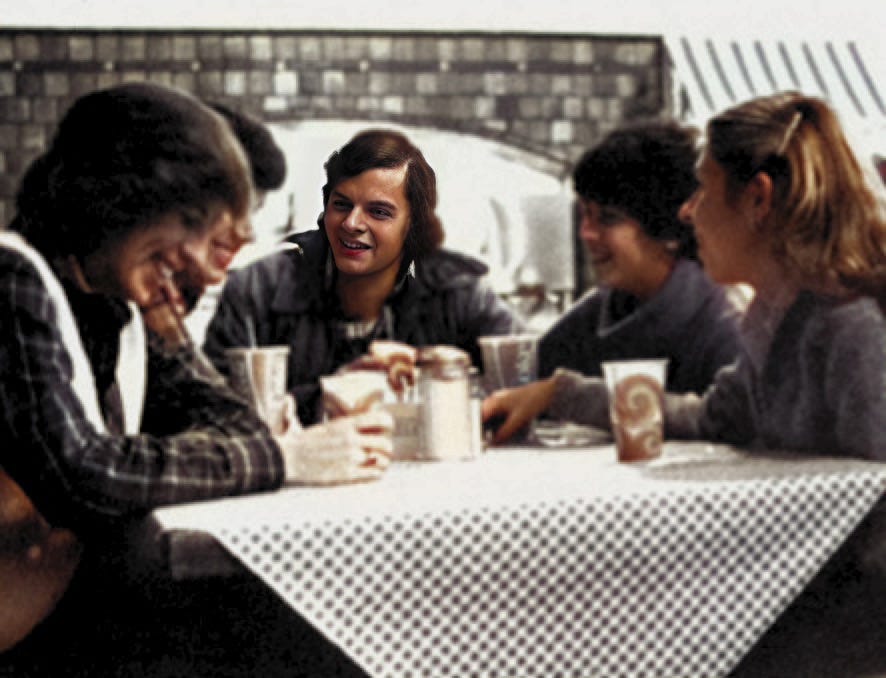
At night, we’d pool whatever cash we had and head down to Food Sales in the basement for something sweet or salty. That year, South Dining Hall opened a little late-night diner, called the Oak Room, a simple counter-service place that sold hamburgers, pizza slices and grilled cheese until closing. It became one of our go-to spots when studying had fried our brains and we needed a break.

5 Notre Dame students sitting at a table drinking coffee and soda at the Oak Cafe in the South Dining Hall at night. University of Notre Dame. Autobiography of Dr. Anthony J. Carbone.
The Oak Room in South Dining Hall at Notre Dame

Jouneys Off Campus

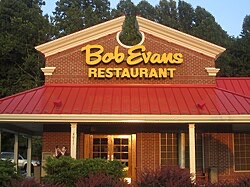
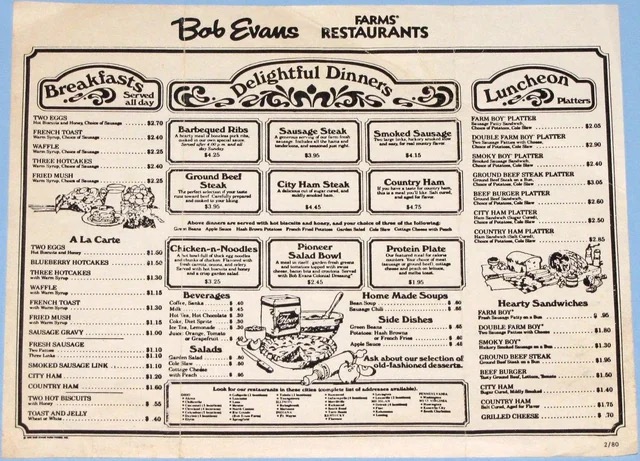
Weekends were for group outings. Our whole section would head off campus together, walking to one of the usual affordable restaurants that could handle a small mob of college students. One of our favortie stopping places was Bob Evans — it was a 3 mile walk from campus to the restaurant in Mishawaka, Indiana. It wasn’t fancy, but it didn’t need to be — those nights were more about the company than the menu.

Our Catholic Life

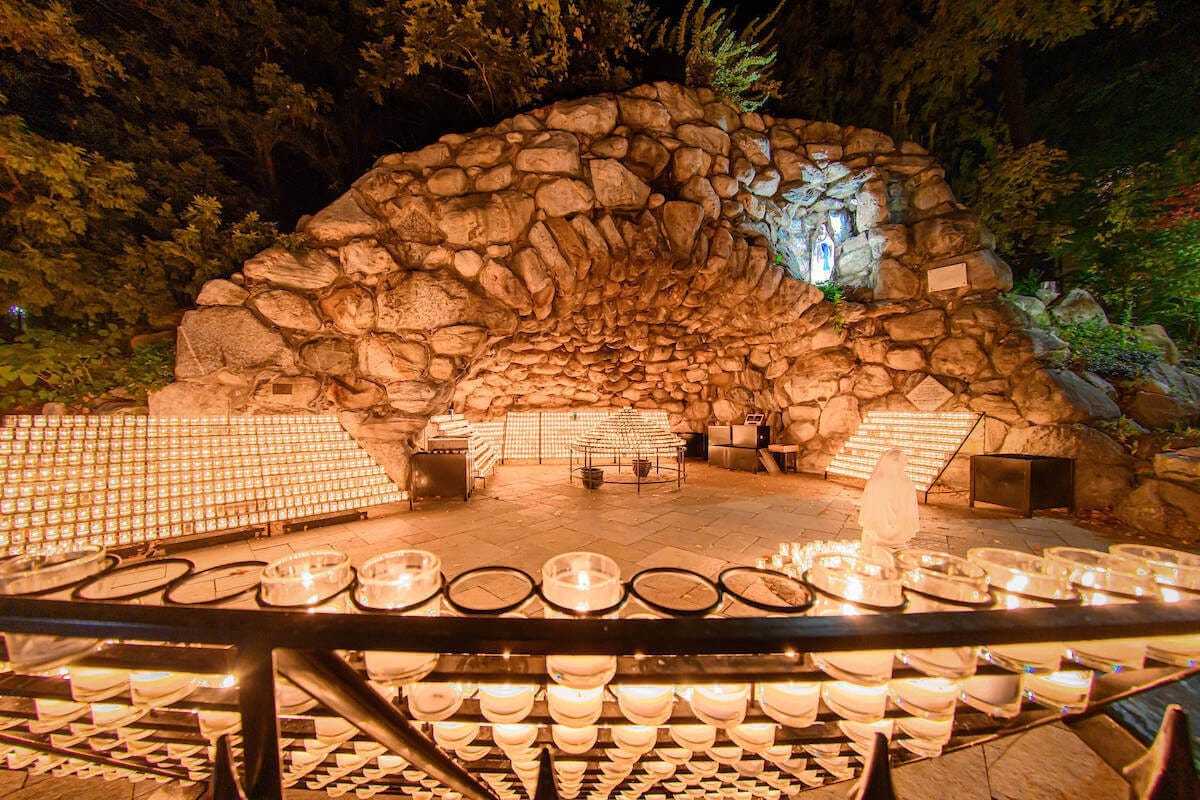
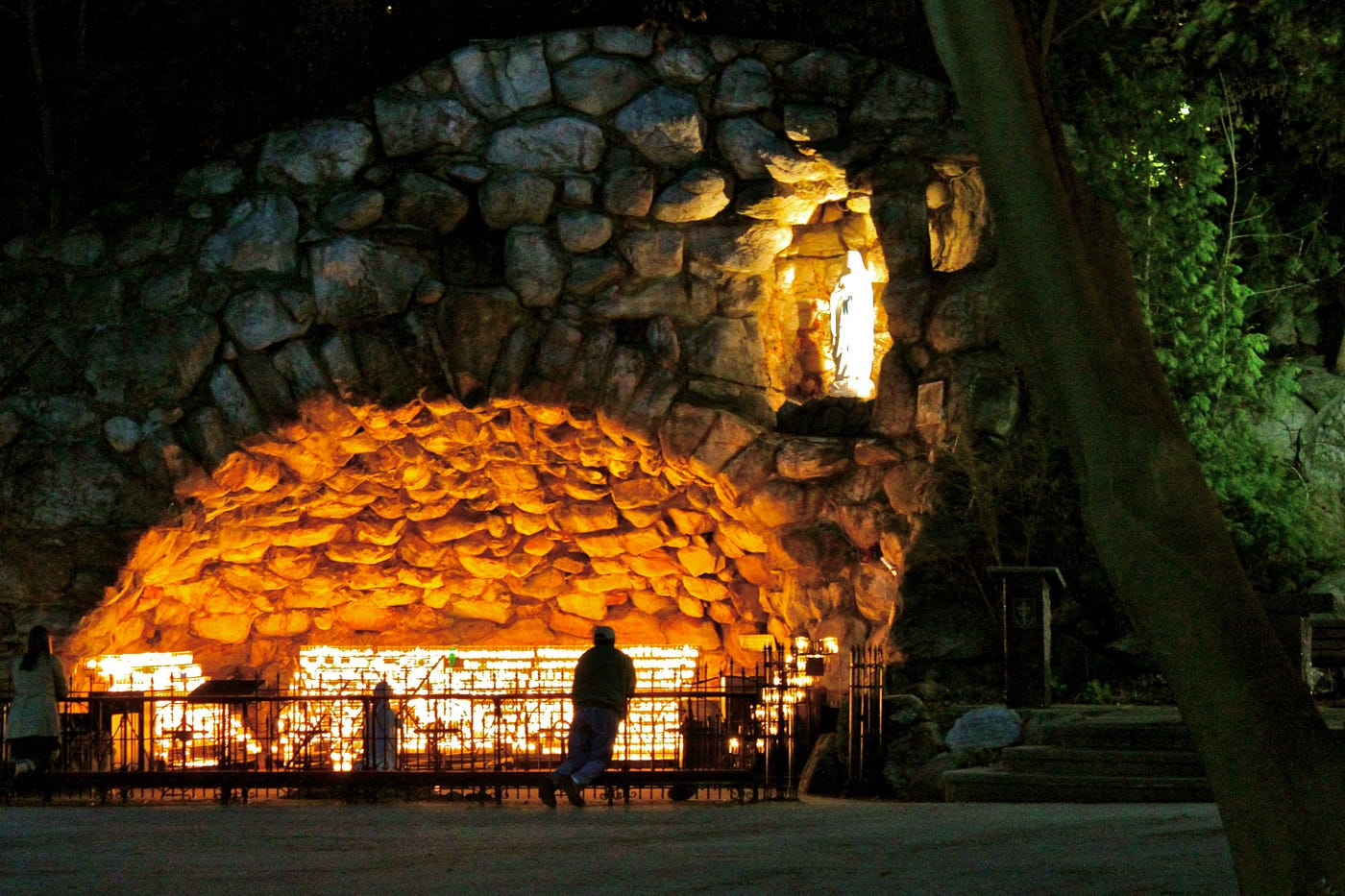
Mariann and I attended mass together nearly daily, since Fisher Hall had its own chapel and our rector was a priest. But we made the walk over to the grotto most nights to light a candle and pray. I was always begging God to help me with a test, a final grade, and eventually to get into medical school.

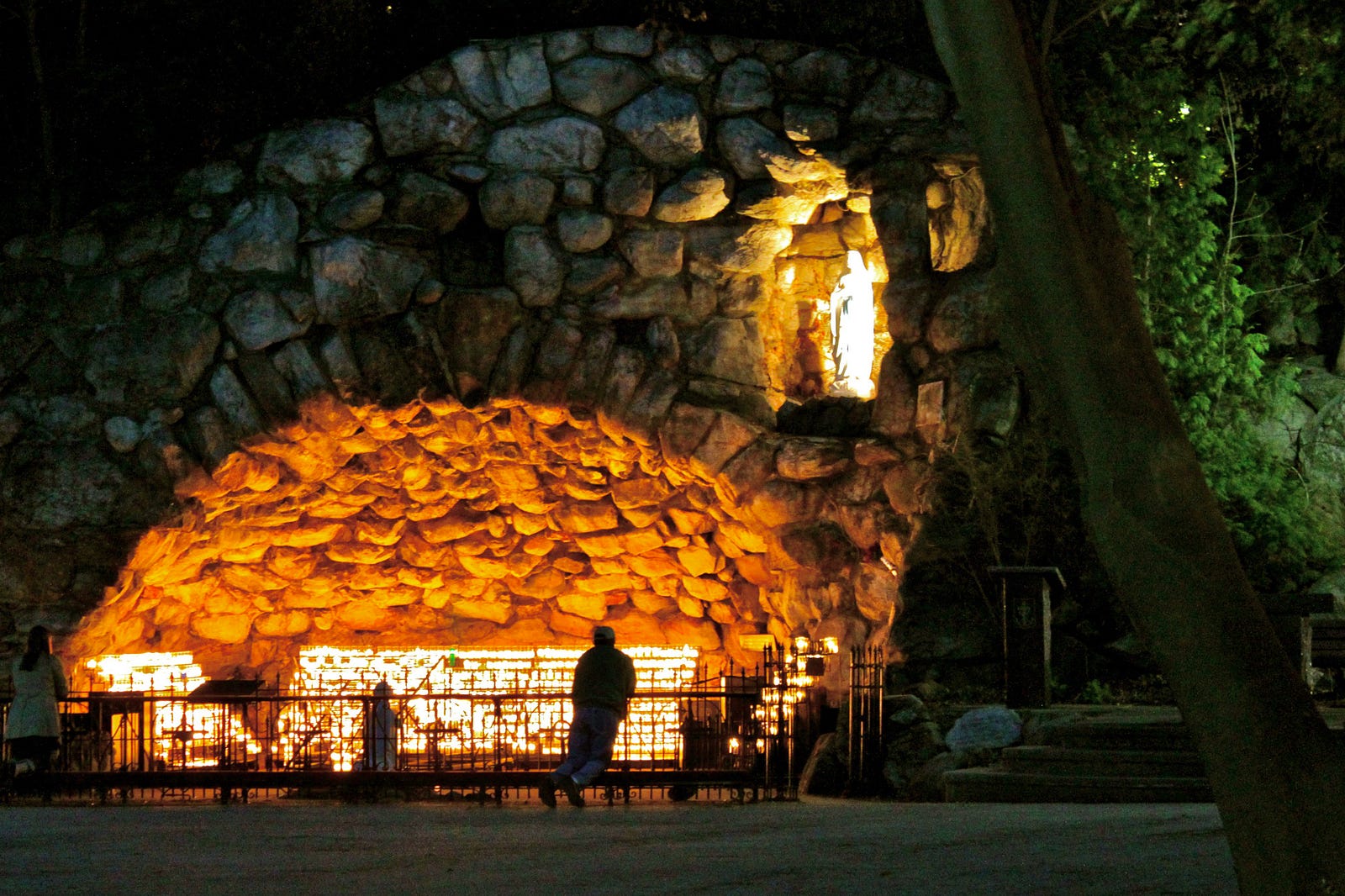
Photograph of the famous Grotto at the University of Notre Dame. Taken at night with all of the candles in the grotto lit. Autobiography of Dr. Anthony J. Carbone.
The Grotto at Night, University of Notre Dame

Fighting Irish Football Season

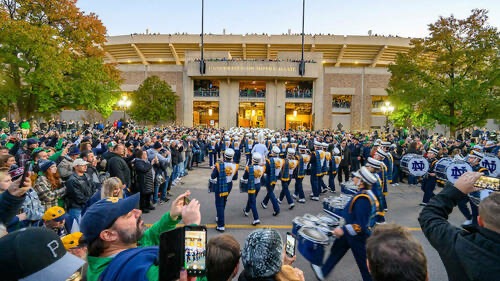
Then football season arrived. Game days transformed campus into a sea of blue and gold, with tailgates, marching band parades, and the buzz of 59,000 people heading toward Notre Dame Stadium. One of our favorite routines was watchng the Notre Dame Marching Band outside the stadium entertaining fans before the game.

Photograph of Notre Dame Stadium with Notre Dame Marching Band and surrounding students.  Autobiography of Dr. Anthony J. Carbone.
Notre Dame Marching Band Heading into the Stadium
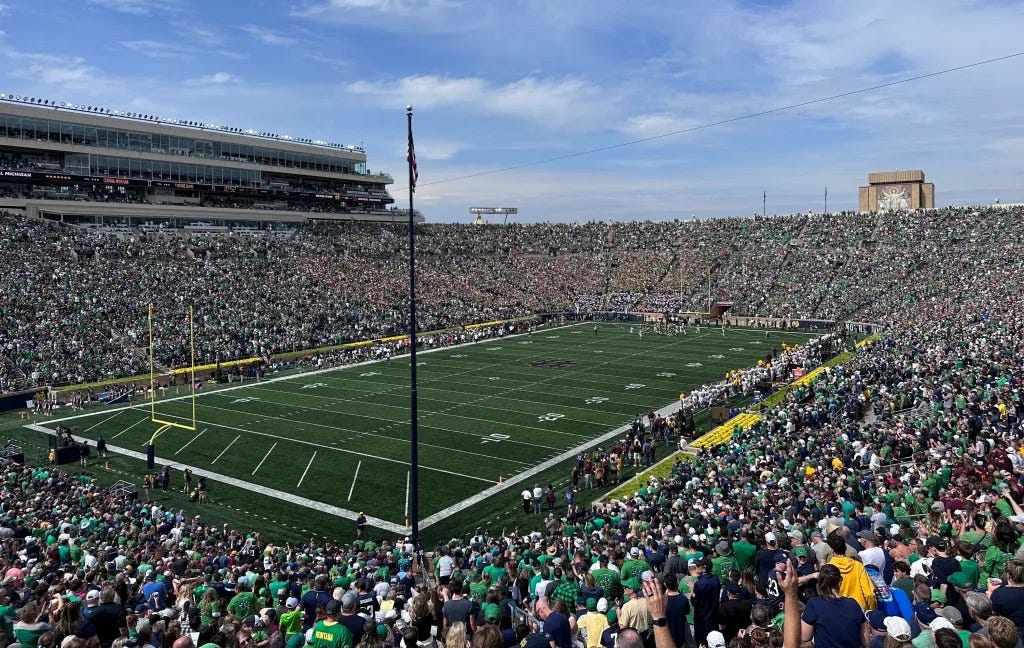
Notre Dame Stadium on Fighting Irish Football Game Day. Stands are packed with tens of thousands of students and fans. The libray with the mural of “Touchdown Jesus” can be seen in the distance. Autobiography of Dr. Anthony J. Carbone.
Notre Dame Stadium from the Freshmen Section View

My Fisher Hall Room

Life with Mariann gave me an anchor that fall, but I also needed a space of my own — a place where I could study, recharge, and make campus life feel more like home. By junior year, I had figured out how to do just that in Fisher Hall.

Photograph of Fisher Hall on the South Quad campus of the University of Notre Dame. With the famous big green “F” for Fisher on the front. Two students walking by, one holding onto his bicycle as they walk past the dorm. Autobiography of Dr. Anthony J. Carbone.


By the time I moved into Fisher as a junior, I felt like a seasoned pro at turning a bare dorm room into something that actually felt like home. I had a little extra money from working at the Boston law firm over the summer, so I invested in a few touches that made a big difference.

The first thing you noticed when you stepped inside was the wall-to-wall dark brown carpeting, which gave the whole room warmth. Dark wood shelves floated above my desk, stacked with books, binders, candles, photographs, and a few German beer steins I had kept from my time overseas. On the walls, I hung prints that carried me back to Germany — a sweeping scene of Rötenburg, a smaller one of the Bridge Houses in Bad Kreuznach — along with our old USA license plate from when we lived there.

In my Army ROTC fatigue uniform in my room at Fisher Hall, University of Notre Dame. Autobiography of Dr. Anthony J. Carbone. [Young Army ROTC cadet wearing olive drab fatigue uniform. In his college dormitory room. Floating shelves on wall filled with text books, notebooks, candles and souvenirs from Germany.]
In my Army ROTC uniform in my Fisher Hall room.

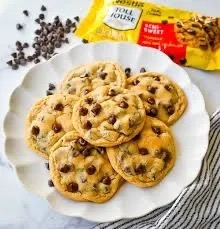
A few live plants and some dried eucalyptus gave off a scent that instantly reminded me of home. At the foot of my bed sat the television — the very same one Joe Montana once used to watch Johnny Carson and Saturday Night Live, usually with a plate of Toll House cookies my sisters had sent. It wasn’t just a dorm room; it was my retreat, and I spent long hours there studying late into the night.

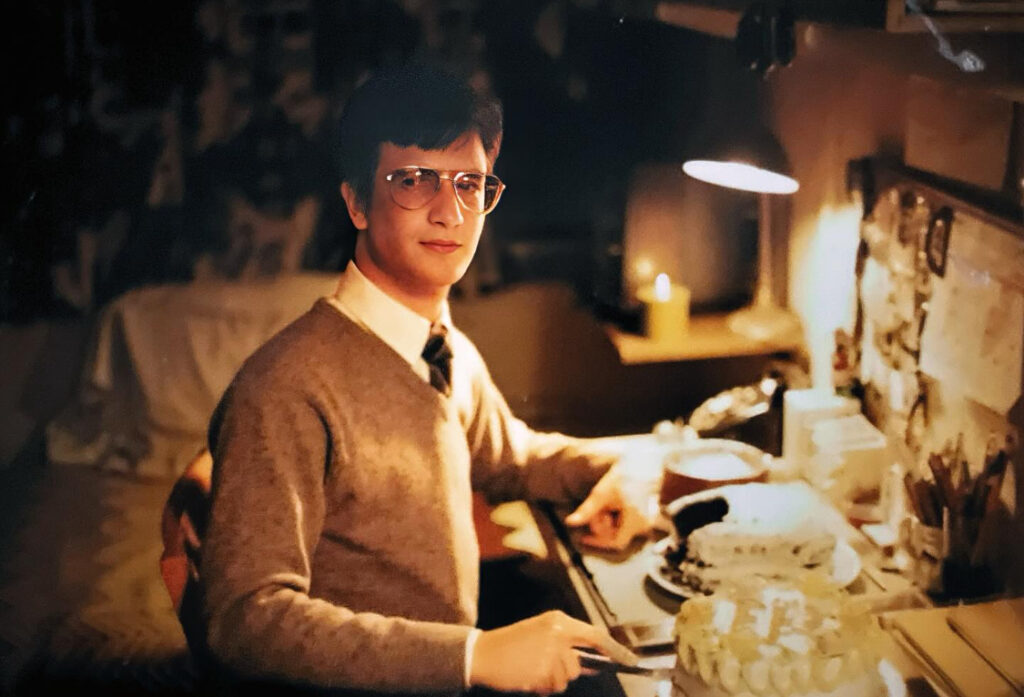
My dorm room at Fisher Hall on my birthday. University of Notre Dame. Autobiography of Dr. Anthony J. Carbone. [Student wearing glasses in white shirt and necktie wearing a grey V-neck sweater with two birthday cakes in front of him. Dormitory room with desk, lamp, bed, and small tv.]
At my study desk with my bed television at foot of bed.

Fisher Hall’s Interesting Residents

That little corner of Fisher became more than just a place to crash — it was where I read, studied, and let the stress of Notre Dame life fade away. It also became a private space for Mariann and me. She couldn’t spend the night there because of Notre Dame’s parietals, but we spent countless hours side by side studying, sometimes taking a break to watch television or heading down to Fisher Hall’s Food Sales in the basement for something to eat. Those moments made the room feel less like a dorm and more like the center of my life that year.

Our Amateur Announcer

Our section of Fisher Hall was full of colorful characters. There was a freshman who would hide in his room and narrate his life like a Notre Dame football game, and whenever the Irish scored, he’d turn on his sink faucet so the spray sounded like a cheering crowd.

Pickna

Then there was our resident druggie, Pickna. Pickna always wore a goatee and slim rectangular sunglasses indoors, probably to hide his perpetually bloodshot eyes. The stench of marijuana smoke always seaping ouf of his room. I have no clue what Pickna was studying at Notre Dame, but if I had to guess, he would be a philosophy major. If not, probably Abnormal Psych. It was difficult to ask him anything because his paranoia was out of control. 

Spiderman

I suppose others might have considered me “interesting” too, because I liked to climb up the brick façade of Fisher Hall like Spiderman. Looking back, it was incredibly dangerous, but at the time, I was young, reckless, and felt invincible. One night, I decided to take things up a notch. I climbed the back of Fisher Hall all the way to our second-floor level — which, to be clear, was three stories above the hard ground below. Then I edged sideways along the outside of the building from my window over to Pickna’s.

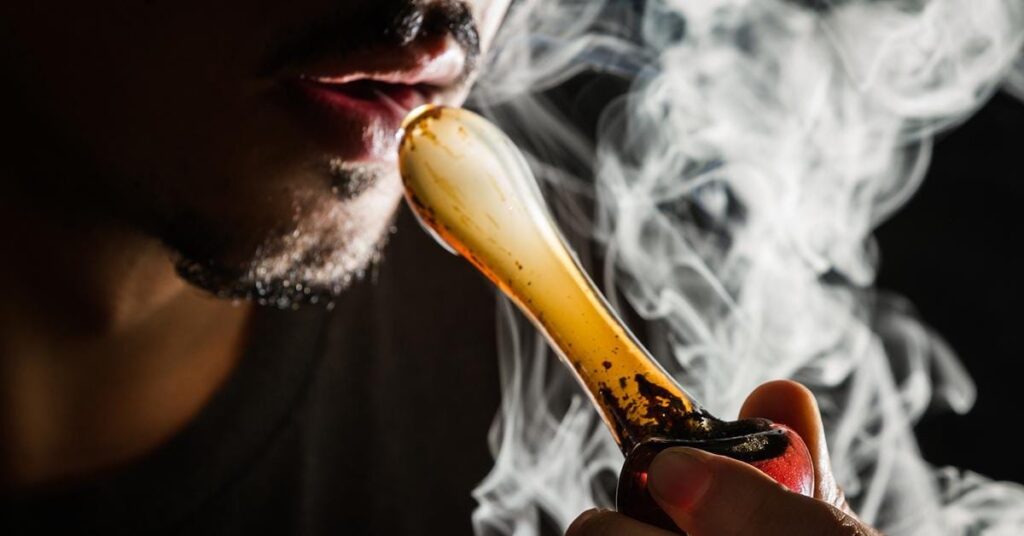
Inside, Pickna was smoking something in a glass pipe, an electric fan blowing out the window to mask the smell. I leaned toward the fan and spoke, letting my voice reverberate eerily: “Pickna, this is the Lord. Stop doing drugs!”

Photograph of man with goatee with a glass pipe smoking drug with smoke eminating from pipe. Autobiography of Notre Dame.

What happened next was instantaneous chaos. Pickna screamed, tossed his pipe into the closet, and bolted to the fan, trying to see what was happening. I climbed down the building as fast as I could and slipped back to our section just in time to watch Pickna running frantically up and down the hallway, still completely freaked out.

It was a reckless stunt, yes, but it was also a reminder that life at Notre Dame during those years could be equal parts absurd and unforgettable.

Third Year Pre-Medicine

As entertaining as life in Fisher Hall could be, it was time to turn our attention to the real work of junior year. Pre-med courses waited for no one, and our schedule was packed with Physiology, Cell Biology, and Physics, each with its own demanding laboratory. The labs were intense — long hours analyzing data, and running experiments that sometimes felt more like puzzles than science — but they were also thrilling, a glimpse into the kind of work that would shape our future careers.

Criminal Justice — or So I Thought

One of the electives I took that semester was listed as Sociology 234: Criminal Justice. I thought it would be a straightforward look at law enforcement, courts, and corrections — something I could connect to both medicine and ROTC. Instead, the course quickly turned into something else entirely.

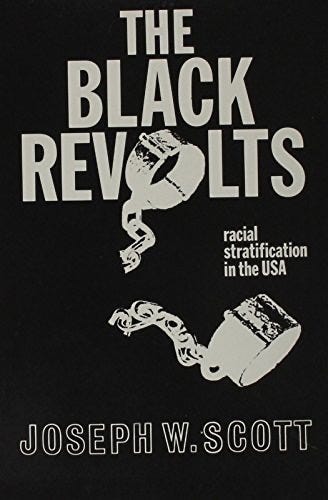
From day one, it was clear Dr. J. Scott had an agenda. The required text, The Black Revolts, was his own work. The class wasn’t so much about the criminal justice system as it was a platform for his passionate lectures on race, restitution, and the Black liberation movement.

Photograph of the textbook, The Black Revolt, by Joseph W. Scott.  Textbook used by Notre Dame Criminal Justice Course in 1979,  Autobiography of Dr. Anthony J. Carbone.

He’d stride into the lecture hall and, without even a greeting, launch into fiery declarations about “the Black Revolt” and the moral obligation of America to make restitution to African Americans. I didn’t disagree with the need to address injustice, but I expected a sociology course — not a political rally.

One day, I decided to speak up. I raised my hand and asked, “Dr. Scott, when are we going to start learning about Criminal Justice?” That was all it took. He erupted: “You want to learn about Criminal Justice? I’ll tell you about Justice!!” What followed was an intense, almost shouted, explanation of systemic oppression, the legacy of slavery, and the absolute necessity of restitution.

What About our Native Americans?

I pushed back — not to be disrespectful, but because I believed in honesty and fairness. In front of nearly a hundred classmates, I said, “If the United States government really paid restitution to all African Americans, the U.S. Treasury would go bankrupt. And if you feel so strongly about restitution, shouldn’t we start with Native Americans? That alone would break the Treasury.”

The room went silent. What followed was an uncomfortable standoff of ideas — his voice loud, mine steady. I suppose I was lucky to walk away with a “C” for the semester.

Army ROTC

After a full day in lecture halls and labs, it was straight to Army ROTC — Advanced Leadership. The work there was equally demanding, a mix of classroom instruction, leadership exercises, and tactical problem-solving designed to prepare us for Advanced Camp that summer. The thought of that cadet “boot camp” hung over us like a shadow; we trained and planned constantly, testing ourselves physically and mentally, knowing the summer would be both exhausting and transformative.

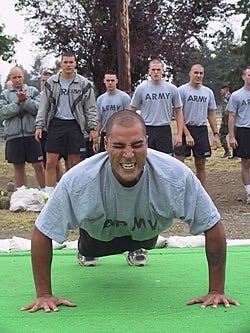
Photograph of an Army ROTC cadet doing pushups while a group of cadets watch.  Autobiography of Dr. Anthony J. Carbone.

Fighting Irish Football

Even with academics and ROTC dominating my days, Notre Dame’s heartbeat — the Fighting Irish football season — remained impossible to ignore. The campus would erupt every Saturday, and it seemed no matter how intense our schedules became, we always found a way to follow the games. Whether listening in dorm rooms, sprinting to the radio, or braving the crowds at the stadium, football tied us together. It offered a rhythm to the chaos, a chance to cheer, to celebrate, and occasionally to commiserate — all part of the full Notre Dame experience.

University of Notre Dame Irish Guard in red jackets and plaid kilts leading the Notre Dame Marching Band to the Stadium on Game Day. Autobiography of Dr. Anthony J. Carbone

Game days in were a ritual of tradition. Mariann and I always started with the pre-game festivities — meeting up with the Fisher Hall gang to watch the Fighting Irish Marching Band thunder across campus, brass gleaming in the afternoon sun, drums rattling through the crowd. The energy was contagious as the whole campus seemed to sway toward Notre Dame Stadium. We were always on the lookout for our Fisher Hall underclassman who made the Irish Guard squad.

From there, Mariann and I would walk hand in hand through the sea of blue and gold until we reached the gates, where we had to split for our assigned student sections. I sat with the junior section from Fisher Hall — Bob Terifay, Matt Bedics, Andy Cordes, and Al Emory right by my side — while Mariann headed into the Lyons Hall seats.

Notre Dame Stadium packed with students and fans.  Football on the sidelines.  Golden Dome in the distance.  Autobiography of Dr. Anthony J. Carbone.

After Game Meeting

Hooking back up after the games wasn’t simple in those days before mobile phones and texting. We had to plan our rendezvous ahead of time — picking a specific spot and hoping the crowds didn’t swallow us up. Sometimes it took longer than expected, but we always found each other eventually, usually with a mixture of relief and laughter.

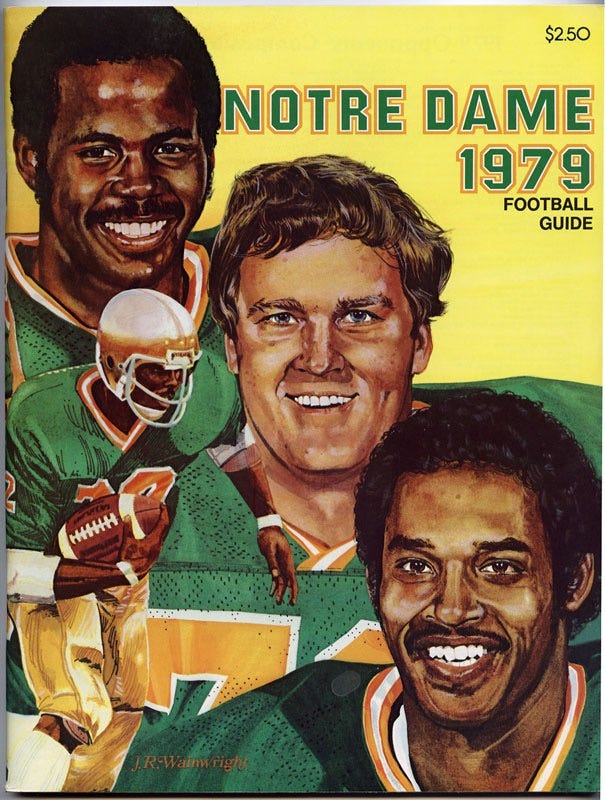
Notre Dame 1979 Football Guide.  Autobiography of Dr. Anthony J. Carbone.

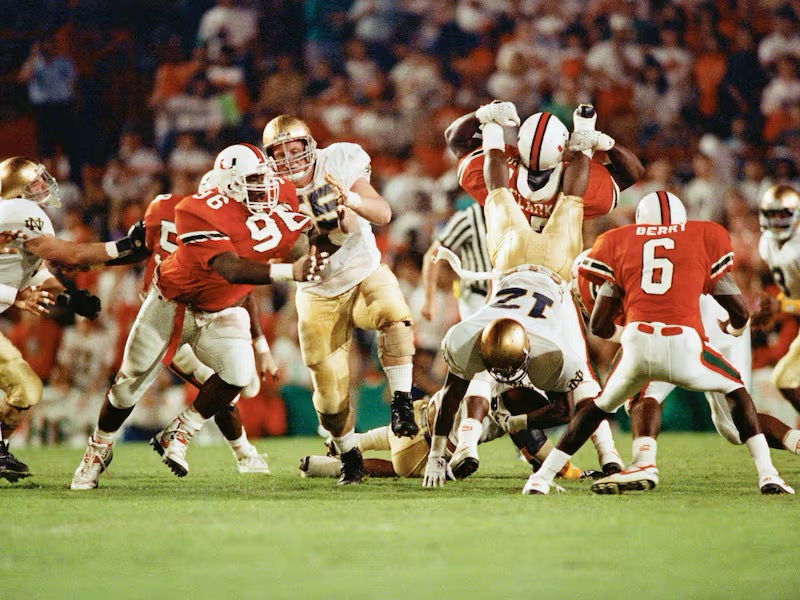
On the field, the Irish finished 7–4 under Coach Dan Devine. Highlights included the 12–10 upset at Michigan, sealed when Bob Crable leaped high to block a last-second field-goal attempt, and home wins over Michigan State (27–3), Georgia Tech (21–13), South Carolina (18–17), and Navy (14–0). But tough losses to Purdue, USC, Tennessee, and Clemson kept Notre Dame out of the bowls that year. The season ended on a brighter note with a trip to Tokyo for the Mirage Bowl, where the Irish defeated Miami, 40–15, closing out the season on a high.

Fall Final Examinations and Christmas Break

Once again, fall final examinations came before I was ready. Finals stretched from December 15th through the 20th, and, as seemed to happen every semester, I drew one on the very last day. When I finally walked out of the exam hall, drained and foggy, I caught a flight straight to Boston to meet my family for Christmas at Nana and Papa’s house in Medford.

Like the previous two years, I can’t remember much about Christmas Day itself — I was still in that post-final haze, too worn out to soak in the holiday. What I do remember vividly is that Papa Pietrantoni had been admitted to the hospital with pneumonia. Each day, I made the trip to see him, sitting by his bedside in the sterile, antiseptic ward that seemed so out of place for someone so full of life.

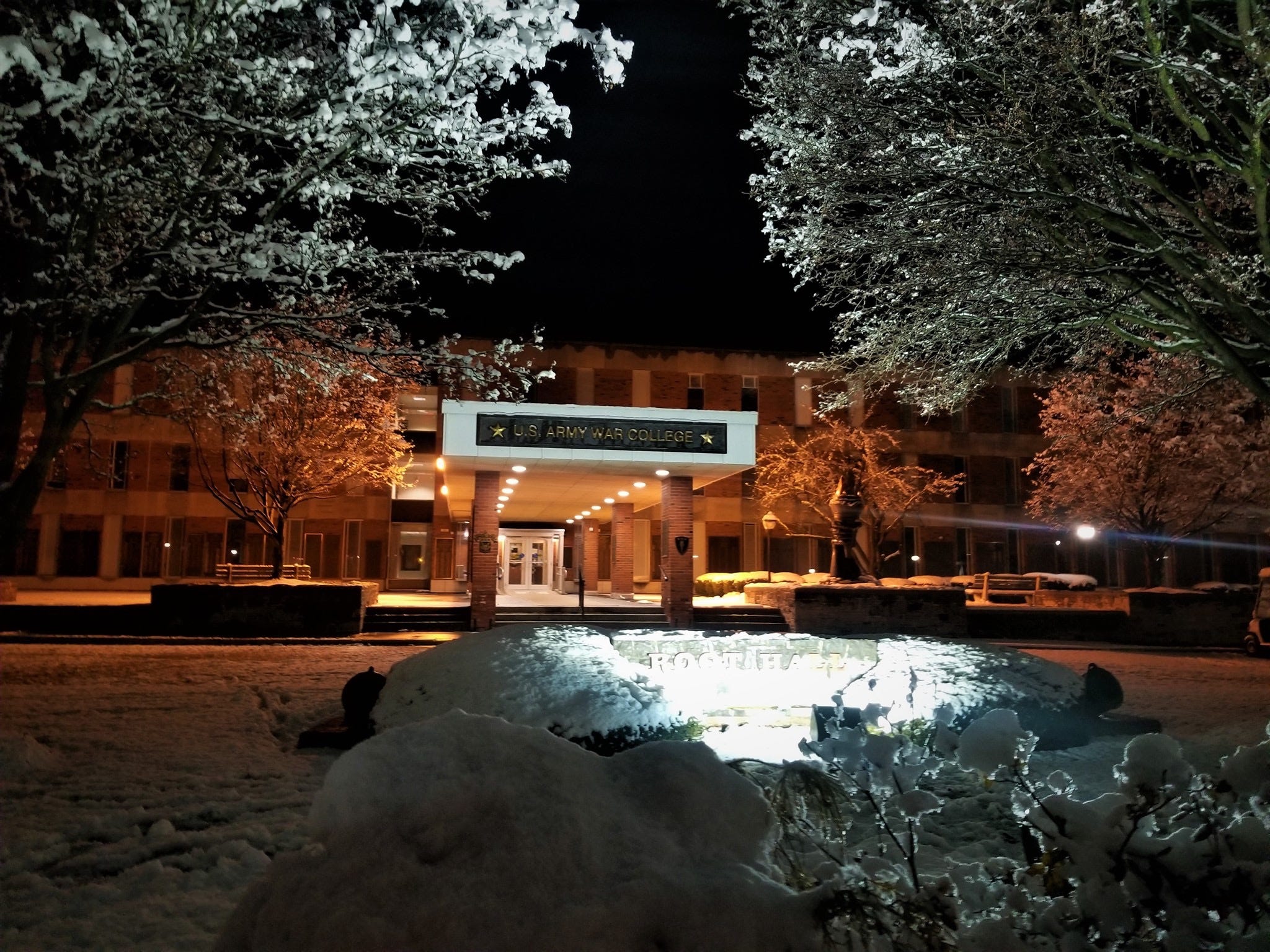
On January 2nd, our family packed into the car and drove from Boston down to Carlisle Barracks, Pennsylvania, where my father was attending the U.S. Army War College.

U.S. Army War College at Carlise Barracks, Pennsylvania in winter.  Autobiography of Dr. Anthony J. Carbone.

A week later, on January 9th, 1980, Papa Pietrantoni passed away. We returned immediately to Medford for his funeral, the weight of grief mixing with the cold New England winter. Before long, it was time to make the return trip to Carlisle Barracks, just in time for me to gather myself and head back out to Notre Dame.

Travel from Carlisle to Notre Dame — January 1980

I think it was January 13, 1980, when it came time to return to Notre Dame for the spring semester. My parents and sisters drove me to the Amtrak station. Just before I boarded, I hugged them goodbye, and my mother pressed a five-dollar bill into my hand “for the trip.” Even in 1980, five bucks didn’t stretch far on a cross-country journey, but I took it gratefully.

Amtrak to Chicago

Though I had taken plenty of train rides in Europe, this was my first trip on an American Amtrak. It felt different — bigger, looser, more unpredictable. I found my assigned seat, a wide recliner by the window, and settled in. A few minutes later, an attractive woman — early 30s, with light red hair, blue eyes, and a lilting Irish accent — sat down beside me. She introduced herself as “Miss Brianna,” a schoolteacher on her way to Chicago. When I mentioned I was a student at Notre Dame, she seemed to know more about the place than I did.

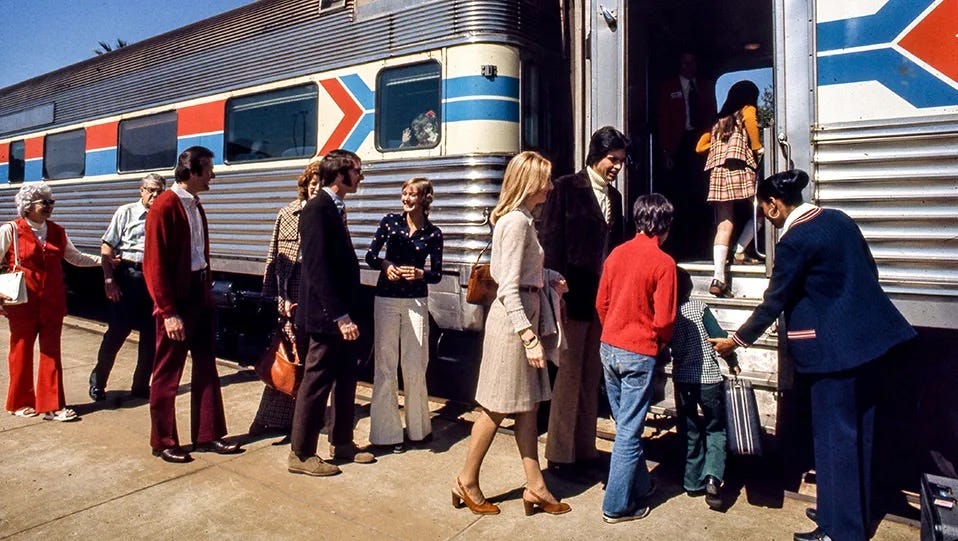
Photograph of passengers boarding an Amtrak passenger train circa 1980.  Autobiography of Dr. Anthony J. Carbone.

I asked how long the ride would take. She laughed. “Oh, American trains aren’t as reliable as they are in Europe. Expect anywhere from 19 to 24 hours, especially with snow in the forecast.” I groaned. “I don’t think I can sit here for 24 hours straight.” Her laugh was musical. “Silly boy! These are only our assigned seats. We won’t be spending much time here.”

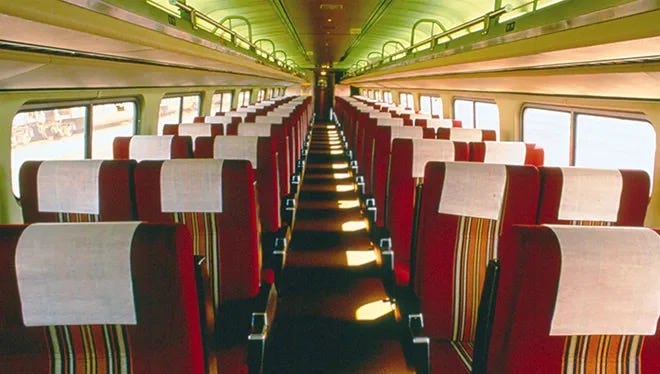
Photograph of an empty Amtrak passenger car (2x2) circa 1980.  Autobiography of Dr. Anthony J. Cabone.

The Observation Car

After the conductor punched our tickets, she led me to the Observation Car, where we sat among the floor-to-ceiling windows and watched the winter landscape glide by in snowy silence. Soon, she asked if I was hungry. I admitted I was, but sheepishly confessed my mom had only given me five dollars. That made her laugh even harder. “Well, that won’t get you far on the rails. Dinner’s on me.”

The Diner Car

Photograph of an Amtrak diner car circa 1980.  Autobiography of Dr. Anthony J. Carbone.

The Dining Car was charming — white tablecloths, real silverware, waiters in uniform. We sat at a booth, soon joined by a man and then a striking young blonde woman. Conversation began politely enough, until the man suddenly asked her, “Are you married?”
She smiled. “Yes, but we have an open relationship.”
Without hesitation he asked, “Do you have a sleeper car?”
She nodded. “I do.”
“Would you like to show it to me?”
She giggled. The two of them stood up and walked out without another word. I sat there, stunned.

Miss Brianna elbowed me. “You, Spanner! You missed your chance to sleep with her! You’re too slow!” I was completely floored. Still a virgin and utterly naive about “swinger” culture, I could barely process what had just happened.

The Lounge Car

But I wasn’t disappointed. Dinner with Miss Brianna was more than enough for me— she was witty, warm, and full of charm. Afterward, she led me to the Lounge Car, where we joined a group of older men playing cards. She asked if I knew Pinochle. I didn’t. “No worries,” she said. “Just sit, Lad, and watch me.” She played brilliantly, bantering easily with the men, while I sat there wishing she were younger — or I were older.

Photograph of a filled Amtrak Lounge Car with a waiter in white.  Autobiography of Dr. Anthony J. Carbone.

$5 to Travel

At one point, snow stopped the train cold. We were stranded. Miss Brianna stood and, with mock drama, introduced me to everyone in the Lounge Car: “This is Anthony. He’s on his way back to Notre Dame to study. His poor mother only gave him five dollars for the whole trip! Can you believe that?!” The men roared with laughter — and then began buying me beers, sodas, and hot dogs. I ended up with a small feast and the warm cheer of newfound friends.

Arrival at Union Station

Hours later, Miss Brianna announced, “Mr. Anthony, it’s time we return to our seats for a little rest.” We curled up under a shared blanket, sleeping in our chairs until the train finally pulled into Chicago Union Station. When it came time to part ways, she gave me a hug and a kiss on the cheek, then pointed me toward my connection to South Bend.

Photograph of Union Station in Chicago circa 1980.  Autography of Dr. Anthony J. Carbone.

South Bend Railroad

I transferred to the Chicago, South Shore and South Bend Railroad (CSS&SB) back to South Bend. And then rode a taxi back to the Notre Dame campus. The Amtrak trip from Harrisburg to Chicago remains the most memorable train ride of my life.
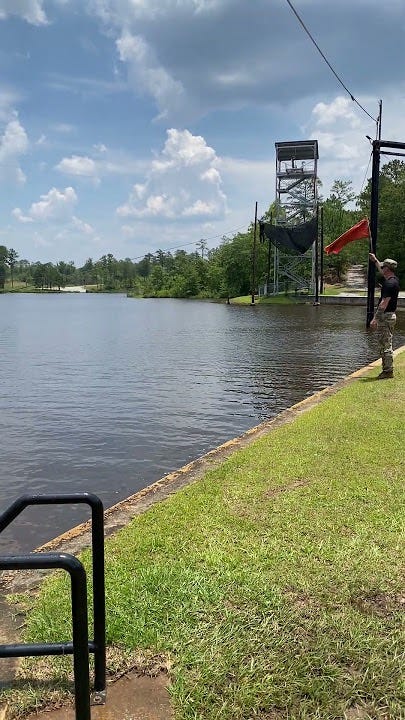
South Shore and South Bend Railroad (CSS&SB) passenger train car.  Autobiography of Dr. Anthony J. Carbone.

Return to Fisher Hall

When I returned to Fisher Hall for the spring semester, the first thing I did was look for Mariann. In the meantime, I ran into the Fisher Hall gang and we caught up on Christmas break. Everyone had stories about their favorite Christmas gift, while I shared the sad news of my grandfather’s passing and the unusual Amtrak ride I had taken back to Chicago.

Spring Semester Registration

Registration day came on January 15, 1980, and with it, the realization that this semester was going to be another uphill climb. The load was slightly lighter than in the fall — only two heavy science courses — but Biochemistry and Physics II with lab were no joke. They dominated my study time.

University of Notre Dame Student Class Schedule from Spring 1980 (my Junior year) listing Physics II with Lab, Biochemistry, General Psychology, Intro to Logic and ROTC Advanced Leadership.  Autobiography of Dr. Anthony J. Carbone.

My Electives

To balance them out, I had two electives: Philosophy 213B — Introduction to Logic, and General Psychology. I took Logic with Mariann, and she was a natural at what was then called “Symbolic Logic.” She could take a word problem and effortlessly break it down into letters and symbols to solve it mathematically. I had to work harder at it, but I managed an A in the course too.

Army ROTC

Of course, Military Science 312 — Advanced Leadership II — was always in the background. ROTC drill was as demanding as ever, with our instructors preparing us relentlessly for ROTC Advanced Camp that summer. It was clear that the semester would be split between my growing relationship with Mariann, the Fisher Hall camaraderie, long hours in the library, and the serious business of becoming Army officers.

Fighting Irish Basketball — Spring 1980

The other major highlight of that spring semester was Notre Dame basketball. The Fighting Irish, under Digger Phelps, were a national powerhouse again. That year, the team finished with a stellar 22–6 record, and ranked 9th in the final AP Poll.

Photograph of Fighting Irish Basketball Digger Phelps in 1979-1980 season.  Autobiography of Dr. Anthony J. Carbone.

Game nights at the ACC (Joyce Center) were electric. I squeezed into my assigned junior section with Bob Terifay, Matt Bedics, Andy Cordes, and Al Emory. We arrived early, the student section alive with cheers and fight-song chants, the band jumping into full swing as the team warmed up. Watching Kelly Tripucka, Orlando Woolridge, Bill Hanzlik, and Tracy Jackson dominate the court was a living reminder that spring had its own brand of Notre Dame pageantry.

The season had standout moments that still raise my pulse in memory. Early on, we upset UCLA at home, riding the momentum to a 6–0 start. A tough loss to second-ranked Kentucky in Louisville stung, but it didn’t derail us. Maybe the highlight was that unforgettable 2-point, double-overtime win over #1 DePaul (76–74) — Kelly Tripucka scored 28, and Orlando Woolridge iced it with two free throws.

Then came the NCAA Tournament. Notre Dame earned a #4 seed in the Midwest Region — but lost in the second round to #5 Missouri, 87–84 in OT. Disappointing, yes — but that season had already delivered more than its share of thrill.

Junior Parents Weekend

Junior Parents Weekend took place February 22–24, 1980, and I was genuinely surprised that both of my parents made the long trip from Carlisle Barracks, Pennsylvania, to South Bend. At the time, my father was in the thick of his studies at the U.S. Army War College and simultaneously working toward his Master of Public Administration at Penn State. Yet, they carved out the time, staying at the Morris Inn for the weekend. True to form, my father spent much of the trip editing his thesis, with my mother faithfully retyping draft after draft. 

Still, they joined me for meals in the South Dining Hall and for dinner out at a local restaurant, and most importantly, they finally met Mariann and the gang from Fisher Hall. I could sense immediately how much they approved of Mariann, which meant a great deal to me. 

The tradition of Junior Parents Weekend — first launched in 1953 as Parents-Son Day — was created to help parents better understand the lives their sons (and, since 1972, daughters) led on campus. By the time my parents arrived, it had become a full weekend of connection and celebration. For me, it was also a rare moment where the worlds of Notre Dame and my family came together in a way that felt both special and lasting.

Spring Break, MCAT and Med School Applications

Spring Break ran from March 28 through April 7, 1980. I spent the entire break studying for the Medical College Admissions Test (MCAT) and filling out my American Medical College Application Service (AMCAS) application. I sat for the MCAT right after Spring Break. t was one of the most stressful weekends of my life. Months of preparation all came down to a single day, a single test that could make or break my medical school ambitions. I also had to fill out my AMCAS and supplemental medical school application packets before reporting to Army ROTC Advanced Camp. It was extremely stressful, but it was a relief to have it behind me. Unfortunately, I knew the hard part was still ahead: waiting for responses from the medical schools.
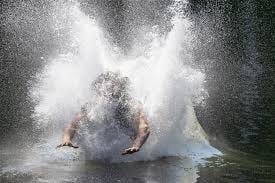
Final Examinations

Final examinations were held May 7–12th. When the dust settled, I finished with three A’s and two B’s — not horrible at all, considering the difficulty of my schedule. My junior year was over, and now it was time to go home and prepare for Advance Camp. I packed up my suitcase and cleared out my room for the summer, but saying goodbye to Mariann was the hardest part. This goodbye hurt more than any before, because I knew that once I was at Fort Riley, Kansas, for ROTC Advance Camp, it would be nearly impossible to communicate with her. I was going to miss her terribly.

Flight Home to Carlisle Barracks

I flew home to Carlisle Barracks just in time to help with yet another family move.

Side entrance to Fisher Hall at the University of Notre Dame.  Autobiography of Dr. Anthony J. Carbone.

Home Page

Chapter 19: The Summer of 1979 — Fort Leavenworth to Boston

Boston Skyline and Waterfront

Believe Nothing You Hear, and Only Half of What You See — A memoir of Service, Shame and the Search for Truth

Return to Home in Fort Leavenworth, Kansas

I had just wrapped up my sophomore year at Notre Dame when I returned to Fort Leavenworth, Kansas, where my parents and two younger sisters were living.

1869 map of Fort Leavenworth, Kansas.  With Missouri River and banks of Kansas and Missouri.  Biography of Dr. Anthony J. Carbone.

Dad Completes Assignment at Command & General Staff College

My father completed his two-year tour at the Command & General Staff College as a tactics instructor. He received another Meritorious Service Medal (MSM) from the Army.

Dad receiving another medal at the Command & General Staff College with my mother by his side. Fort Leavenworth, Kansas. Autobiography of Dr. Anthony J. Carbone.
Dad receiving another medal at the Command & General Staff College with my mother by his side.

Dad Receives Orders for U.S. Army War College

It didn’t take long to learn that my father had received orders to attend the U.S. Army War College (USAWC) at Carlisle Barracks, Pennsylvania. The Army War College is one of the most prestigious institutions in the military. Founded in 1901 in response to shortcomings revealed during the Spanish-American War, it was designed to improve leadership and strategic planning at the highest levels. It closed during World War II and reopened in 1950, eventually relocating to Carlisle Barracks in 1951.

Seal of the United States Army War College (USAWC) at Carlisle Barracks, Pennsylvania.  Autobiography of Dr. Anthony J. Carbone.
Shoulder patch worn by Army personnel assigned to the U.S. Army War College at Carlisle Barracks, Pennsylvania.  Autobiography of Dr. Anthony J. Carbone

The mission of the USAWC is to educate and develop leaders for service at the strategic level while advancing knowledge in the global application of Landpower. Students are senior military officers — including international fellows — and high-level civilian government officials preparing for top leadership roles. The College also functions as a research hub and think tank, with centers like the Center for Strategic Leadership and the Strategic Studies Institute guiding national security discussions.

Upsetting News for Me

What this meant for me personally was simple: I wasn’t going to be at Fort Leavenworth for long. No more hanging out with Becky Roberts or the Morrison girls. Instead, it meant yet another move — packing up our government quarters, clearing quarters, and a bunch of goodbyes once again.

Wisdom Teeth Extraction on Cleaning Day

The timing, as usual, was less than perfect. On the very day we were scheduled to clear quarters, I had all four of my wisdom teeth pulled. Instead of spending the day in bed sipping soup, I was on my hands and knees scrubbing the oven and refrigerator for the housing inspection team. My cheeks were swollen, my mouth was throbbing, and I was exhausted, but we passed inspection.

Sad Goodbyes

I made tearful goodbyes to all the girls I was in love with that summer — Becky, Heidi, and all the Morrison girls. Then we loaded up the Cordoba and headed east to Medford, Massachusetts, to stay with Nana Pietrantoni for what was left of the summer — before my father had to report to the War College in Carlisle.

Another Road Trip to Nana & Papa in Medford, Mass

We made the long drive across the country back to the Boston area to spend most of the summer living with Nana and Papa Pietrantoni, along with Aunties Norma and Cynthia.

That meant sleeping once again in the attic bedroom — hot, stuffy, and without air conditioning. I started thinking about where I could work that summer, and I wasn’t exactly thrilled about the prospect of returning to Carpenito Brothers’ 5-Cs fruit and produce business to load trucks again. So, when Auntie Norma suggested she might be able to get me a job at the law firm where she just started working, I jumped at the chance.

Auntie Norma at Boston’s Best Law Firm

Auntie Norma was a legal executive assistant for a prominent Boston firm located in the famous “Pregnant Building” in the Financial District. I’ll just refer to the company as “Boston’s Best Law Firm.” Before anything else, she made a few things clear: this was a serious professional law firm, I needed to look and act accordingly, and no one there was to know that we were related. The position was as a mail clerk and messenger, joining another young man already in the role.

Mail Clerk for Boston’s Best Law Firm

It turned out to be a far more fascinating position than it sounded. Half of the job was sending and receiving mail for the attorneys, which was a complex process involving client account codes and international shipping rules. The attorneys corresponded with clients worldwide, and urgent deliveries sometimes required me to take a taxi straight to Logan Airport to hand a package directly to an airline for same-day or next-day delivery.

I became a regular at the main Boston Post Office and often ran packages up to attorneys’ assistants in their offices, discreetly giving Auntie Norma a quick “hello” when I passed her desk.

Messenger for Boston’s Best Law Firm

The messenger work was even better. I got to roam all over Boston, delivering legal documents — often for signature — to clients in high-rise offices. Many receptionists were young and attractive, and, to my surprise, some of them flirted with me. I was still young and naive enough that most of the banter went over my head, but it certainly made the job more enjoyable.

Aerial photograph of Boston skyline and waterfront circa 1979.  Autobiography of Dr. Anthony J. Carbone.

Bean Town Attractions

First of all, I love Boston. There is the hustle and bustle of a city of businesses, restaurants, and tourists. It’s a city with trees and water. I love the waterfront and the Boston Harbor. I love walking in the Boston Public Gardens. Then, we have the history going back to the Pilgrims, the Boston Tea Party, the Old North Church, the American Revolution, the USS Constitution. Boston has over 70 colleges and universities — it’s the Hub of Education. It’s beautiful, exciting and entertaining.

Photograph of Boston Public Garden in summer with statue of George Washington riding a horse.  Autobiography of Dr. Anthony J. Carbone.
Photograph of the USS Constitution and ceremonial marine unit at Charlestown Naval Yard in Boston.  Autobiography of Dr. Anthony J. Carbone.
Photograph of the Boston Public Garden with bridge and swan boats.  Autobiography of Dr. Anthony J. Carbone.

Messenger Job Comes with Freedom and Independence

Another aspect I loved was the freedom and independence. I was outside, on my own, crisscrossing downtown Boston — a city that’s as beautiful as it is fascinating. I ate wherever I wanted, usually at one of my favorite little dives. Spent my lunch breaks doing two of my favorite things: eating outdoors and people-watching.

People Watching in Downtown Boston

Boston’s North End (Little Italy)

Boston’s neighborhoods offered an endless mix of cultures and cuisines. This was easily one of the best summer jobs I’d ever had. No cutting onions, mowing lawns, or loading trucks. Just me sitting by the Boston Harbor waterfront with an Italian cold-cut sandwich from the North End (Little Italy), a canoli from Modern Pastry, a cold Coca-Cola, and a steady stream of beautiful young women. Boston is filled with tourists and office workers alike — passing by in the summer sunshine.

One day, an attorney came into the mailroom with a file folder to deliver. A woman whose name and address was on the document inside. I was to get her signature and return the document to him. I said, “Yes, sir!” — until I looked at the address. It was on Wall Street in New York City.

I asked him how exactly I was supposed to do that. He pointed to the client code on the envelope and told me to take it to Accounting. There, they’d arrange a round-trip flight to New York and provide taxi vouchers for both cities. Suddenly, this was no ordinary delivery.

Eastern Shuttle to LaGuardia

I collected my tickets and vouchers, grabbed the package, and hailed a cab to Logan Airport. I flew the Eastern Shuttle to LaGuardia, took a cab into Manhattan. Then, rode the elevator dozens of floors up to a sleek Wall Street office.

There, I met the executive assistant of the woman I was delivering to — a poised professional in her forties wearing a navy skirt suit and crisp white blouse. She was warm and chatty, signed the document, and thanked me for “flying in for business.”

I retraced my route: elevator down, cab to LaGuardia, shuttle back to Boston, and taxi to Boston’s Best Law Firm. The attorney thanked me, then asked, “Where did you eat in Manhattan?”

When I said I hadn’t eaten there, he laughed. “Of course you’re allowed! Just save the receipt and we’ll bill it to the client.” From that day on, any time I was sent on a long-distance run, I made sure to enjoy a meal on the client’s dime.

Road Trip to Rhode Island

Another notable assignment came when a young attorney handed me a package bound for a client in Rhode Island. He told me to rent a car and drive it there, and I had to sheepishly admit I was only nineteen — too young to rent a car in Massachusetts. Without missing a beat, he turned to his secretary and said, “Why don’t you rent the car and go with him?”

Photograph of blonde woman typing on an old electric typewriter at an office desk.  Autobiography of Dr. Anthony J. Carbone.

Minutes later, I was heading out the door with the documents and the most beautiful assistant in the firm — long, silky strawberry-blonde hair in a bun, bright blue eyes, and a smile that could disarm anyone. She was younger than most of the secretaries but still older than me, and I could tell she was amused by my awkwardness.

Photograph of woman driving a car in a yellow dress.  Autobiography of Dr. Anthony J. Carbone.

She rented the car, and we drove south. After the meeting, she suggested we grab dinner before heading back. The attorney had already said expenses were covered, so I gladly agreed. Dinner was great — relaxed and easy — until she completely blindsided me. “It’s really late,” she said casually. “We should just get a hotel together and spend the night. It’ll be on the client.”

Back to the Mailroom in Boston

For one electrifying moment, my nineteen-year-old brain didn’t know whether to panic or celebrate. Despite my obvious interest, the Notre Dame Catholic boy in me took over and I blurted out something about needing to get back to Boston to “take care of the mail.”

It was a long, awkward, and humiliating drive back. She said little, and I could almost hear her thinking, This poor clueless kid. To this day, it remains one of those missed opportunities I still kick myself for. Oh, to be young — and far less naive — again.

Back at Nana & Papa’s in Medford

Being back in Medford meant slipping right into the old family rhythms. I’d watch Nana in the kitchen, moving with practiced ease over pots of simmering sauce. Papa would be at his Singer sewing machine, the rhythmic thunk-thunk-thunk of the needle keeping time with the sound of his talk radio. My mother and the aunties would gather at the dining room table, chatting in the warm, familiar voices I’d grown up with.

My sisters and I played on the front and back porches, or in the narrow stairway that led up to the attic bedrooms. A nickel from Nana or my godfather was enough to send me running to the corner store for a little brown bag of penny candy; with a bit more change, I might splurge on a cup of Italian Ice.

Fun with the Pietrantonis

Auntie Cynthia was dating an endocrinologist who lived downtown, and she was forever trying to get someone to drive her into the city at night to see him. Whenever I was home, I’d see my godfather, Uncle George, and on Sundays Uncle Aldo would stop by, play a quick tune on the piano, and eat a meatball before heading off again. I also saw my godmother, Auntie Yole — my mother’s oldest sister — and her four boys.

Shopping at Downtown Crossing

Now that I was familiar with Boston from my messenger work, I felt confident enough to hop on the bus and trolley downtown on my own. I’d wander through Filene’s Basement, Jordan Marsh, and the Jewelers Building in Downtown Crossing, window-shopping for something special for Mariann. I finally decided on a necklace, and — thinking like the college man I imagined myself to be — I also bought her a silk nightgown. In my mind, it seemed exactly the kind of gift a young gentleman should give his special girl back at school.

Time for Family to Move to Carlisle Barracks

Soon, mid-August arrived, and it was time for my mother and younger sisters to move into government quarters at Carlisle Barracks, Pennsylvania.

United States Army Carlisle Barracks, US Army War College, Ashburn Gate photo. Autobiography of Dr. Anthony J. Carbone

My father had already begun his program at the U.S. Army War College and was temporarily staying with some college students until our quarters were ready. I packed up the Chrysler Cordoba for my mother, and we drove my sisters down to Carlisle to meet my father and settle into their new home on post.

Anthony J. Carbone on the telephone talking to his girlfriend Mariann from his parents' military quarters at Carlisle Barracks while COL Carbone attended the U.S. Army War College (Summer of 1979).
Calling my sweetheart, Mariann, from our quarters at Carlisle Barracks.

Lynne and Diana Remain in Boston to Study

Lynne was already working one of her nursing co-op assignments at Northeastern University. Diana had completed her Associate’s Degree at Endicott College and chose to remain in Boston to continue her studies at the Forsyth School of Dental Hygiene.

Time to Return to South Bend

As for me, I turned my sights westward once again, heading back to South Bend, Indiana, to begin my junior year at the University of Notre Dame. I was happy because I earned enough to pay my Room & Board for Notre Dame, plus I was able to purchase things to spruce up my dorm room and had them mailed to me at the university.

Home Page

Chapter 18: Sophomore Year at Notre Dame

My only girlfriend at Notre Dame, Mariann. Autobiography of Dr. Anthony J. Carbone.

Believe Nothing You Hear, and Only Half of What You See — A memoir of Service, Shame and the Search for Truth

Return to South Bend for 2nd Year

After a much-needed Christmas break with my family at Fort Leavenworth, it was time to return to South Bend and face another grueling semester. This would by my sophomore year at Notre Dame. I said my goodbyes to my parents, my sisters Cynthia and Pamela, and the Morrison girls — then boarded a flight back to Indiana with a suitcase full of clothes and some money from summer work. From the airport, I caught the shuttle to campus and was dropped off in front of Fisher Hall, bracing myself for what I knew would be a brutal pre-med workload.

It felt good to be back with my sophomore section-mates — Bob Terifay, Matt Bedics, Al Emery, and the rest of the gang. Our group had started to feel like a true brotherhood. Joe Montana had graduated and was off to begin his legendary career with the San Francisco 49ers. In his place, Notre Dame football star Mike Calhoun moved into the room next door to mine. Mike was no Joe. Where Joe had been quiet and low-profile, Mike had an active nightlife that often made it hard to get any sleep. Let’s just say, I heard more than I wanted to.

Al Returns with his 1950 DeSoto

One of the great surprises that spring was that Al Emory returned to campus with his car — a 1950 DeSoto sedan. It was a beauty, a true classic, with that big rounded body style that looked like it had rolled right out of another era. Best of all, it still had its ah-oo-ga horn, which Al loved to blast whenever the mood struck him. The car quickly became a favorite of our group, because it meant freedom. We could pile the entire gang inside — crammed shoulder to shoulder, knees pressed against the seatbacks — and head off campus for a restaurant run. I never minded because I always got Mariann on my lap. Those rides in Al’s DeSoto were as much a part of our memories as the meals themselves.

Photograph of a beautifully maintained 1950 DeSoto Custom sedan covered in chrome and with whitewall tires. Biography of Dr. Anthony J. Carbone.
1950 DeSoto Custom Sedan

Pope John Paul I Elected

On the very day I arrived back on campus, Saturday, August 26, 1978, the Vatican’s College of Cardinals elected 65 year old Italian Cardinal Albino Luciani as Pope Paul VI’s successor. The campus was celebrating our new pope. The bells of the Basilica of the Sacred Heart were ringing loudly. Little did we know that our newly elected pope would mysteriously die in 33 days.

Pope John Paul I. Autobiography of Dr. Anthony J. Carbone.
Pope John Paul I

Our New Freshmen & New Girlfriends

We did welcome one notable freshman into our section — Joe Delaney, who would quickly become a key part of our Fisher clique. Joe had a great sense of humor, fit in easily, and before long, he had found a girlfriend too — Bernadette from Hawaii. Turns out, the second semester of sophomore year at Fisher was something of a love story for three of us. We started dating freshmen from the Class of 1982. Joe Delaney met Bernadette Young, Andy Cordes met Ginger Miklausen, and I met Mariann Schmitz. All three of us would be married within a year of graduation.

Mariann Schmitz Carbone. University of Notre Dame Class of 1982. Autobiography of Dr. Anthony J. Carbone.
Mariann “No Middle Name” Schmitz

My New Neighbor — Mike Calhoun

Next door to me lived Mike Calhoun, a huge defensive tackle on the Fighting Irish football team. He had taken over the room Joe Montana had occupied the previous year. Mike’s social life was a world apart from Joe’s. Joe never dated at Notre Dame — at least, I never heard of him with a girl until he met his wife on a flight to Hawaii for the Hula Bowl, where she was a flight attendant. Mike, on the other hand, had a beautiful Saint Mary’s College girlfriend, and he liked her terribly. Even though we had cinder-block walls between our rooms, I could often hear her thank him loudly.

Mike wasn’t your average college football jock. I think he was a pre-med major too, and he was genuinely nice and funny. One late night, I was buried in my books, having just walked Mariann back to her dorm for the evening. Mike poked his head into my room. “Tony, you study too hard. You need to relax a little. Come next door,” he said. I couldn’t say no.

I walked into Mike’s room to find three other football players sitting around a table, each with a submarine sandwich in front of them. Mike turned to me and asked, “Tony, are you hungry?” I mumbled, “A little.” Without hesitation, he grabbed one of the sandwiches from another player, shoved it into my hands, and barked, “Tony’s hungry. Eat!” I sank down into a chair, afraid to look up, and shyly ate the submarine sandwich that had been yanked from one of the other players. It was the strangest, most hilarious study break I had ever had, and for a moment, I felt like I was part of their world — even if only for a night.

Another difficult academic year

I wish I could remember more about sophomore year, but the truth is, it was so academically demanding that I barely recall most of it. My course load was a perfect storm of misery: Organic Chemistry I, Organic Chemistry Lab I, Biology I, Biology Lab I, Calculus C (third semester Calculus), Astronomy (a deceptively difficult 200-level Physics course) and Applied Leadership (Army ROTC), with weekly Drill and Physical Training (PT).

Anthony Carbone’s Sophomore Fall Schedule at the University of Notre Dame. August 1978. Autobiography of Dr. Anthony J. Carbone.

It was a rigorous semester academically, with a greuling workload. Organic Chemistry alone weeded out half the pre-med students. Calculus C made the earlier semesters feel like a warm-up. And those half-day science labs ate up time for just a single credit. Astronomy wasn’t about gazing at stars — it was math-heavy, abstract, and anything but relaxing.

Army ROTC — Military Science

And then there was ROTC — Military Science with drill afternoons and Physical Training (PT), which took up every spare minute I didn’t have.

Entrance to building at the University of Notre Dame with "God, Country, Notre Dame" slogan.  Autobiography of Dr. Anthony J. Carbone.

Sophomore year in Army ROTC is where it begins to get real. We dove into leadership developmentmilitary tactics, and officer responsibilities. We learned how to give and follow orders, how to think tactically, and how to lead under pressure.

There were classroom lectures, weekly Leadership Labs, and three mornings of physical training (PT) each week, rain or shine. Each semester ended with a Field Training Exercise (FTX), complete with land navigation, rappelling, and cold nights under the stars. It was exhausting — and it left little time for anything else.

I Meet Mariann Schmitz

And yet, right in the middle of all that chaos, something extraordinary happened. Somewhere out on the quad — I don’t remember where, or even exactly when — I met Mariann “No Middle Name” Schmitz, the girl I would someday marry. That I can’t recall the exact moment bothers me a little, but it also makes sense. I was overworked, underslept, and socially anxious — especially around girls. But something about Mari caught me off guard.

Mariann Schmitz Carbone. University of Notre Dame. Autobiography of Dr. Anthony J. Carbone.

Not My Usual Type

Mariann wasn’t my “type” at all — not the girly-girl in a miniskirt and flowing, silky hair I usually noticed. Mari was wearing running shorts, a sweatshirt, tube socks, tennis shoes, and her hair was tied back in a sweaty ponytail. She had just finished jogging with some upperclassman jock. And yet, there was something about her — her eyes, her smirk of a smile, her calm presence — that made me stop.

What possessed me to talk to her, I’ll never know. I had nothing to offer — no helpful tips about the campus, no shared major (she was an Economics major), I didn’t play basketball, and no cool social clout. But thank God, she was Catholicand intelligent. That gave us common ground. Then I found out her mom was full-blooded Italian, her dad German. Now we were talking. At least I’d met my cultural match.

Italian and German crossed flags pin.  Autobiography of Dr. Anthony J. Carbone.

Schmitz Family in Wheaton, Illinois

Mariann came from Wheaton, Illinois, part of a big, devout Catholic family. Her father, John Henry Schmitz, was German-American and worked as Executive Vice President at Hollister Corporation. Her mother, Sara Gene Crivello Schmitz, was a powerhouse in her own right — President of the DuPage County Bar Association. Mariann was a graduate of Wheaton Central Class of 1978.

Together, Mr. & Mrs. Schmitz raised seven children: John Jr., Susan, Margaret, Kathryn, Mariann, James, and Jacqueline. Mr. Schmitz had just passed away in March 2025 at age 94 — after 73 years of marriage. That tells you everything you need to know about their values. They were the real deal.

Mariann–a Scholar-Athlete

Mari was brilliant — a Notre Dame Scholar, likely a National Merit finalist. She was also athletic, having played on her varsity basketball team back in Wheaton. A true Notre Dame scholar-athlete. But what struck me most wasn’t her résumé — it was how comfortable I felt around her. She had a sharp wit, a quick mind, and those sleepy eyes that made me lose my train of thought. She just made me laugh and feel comfortable. I don’t remember how it all unfolded from there. I just know that we started spending more time together. And before long, we were spending every day together.

Our First Date?

There was no official “first date.” We just ended up together. I still remember one quiet evening, walking with her around Saint Mary’s Lake at twilight. She was talking — about what, I have no idea — and I was suddenly overcome with dread. “Oh my God… I’m going to marry this girl.”

I knew it. That was it. No more dorm parties, or panty raids, or sampling the brilliant Saint Mary’s coeds. All those college fantasies I’d picked up from TV and movies evaporated. Because I had just met my future wife.

Did Mari think the same thing? Probably not. More likely she was thinking, “This guy is short and definitely can’t play basketball.” But somehow, we clicked. And I knew how lucky I was.

Forty-seven years later, I still can’t think of a single flaw in her. She was — and is — smart, kind, holy, funny, and the most grounded person I’ve ever met. For someone who was half Italian and half German, Mariann never fought or gave me the silent treatment. Mari is that rare girl — pure, strong, sweet, and serious about life, studies, faith and family.

Looking back, meeting Mariann was the most important part of my Notre Dame experience. It wasn’t just the professors, labs, the tests, or the military drills that shaped me — it was her. She changed the course of my life. And in the chaos of it all, I found something I never expected: love.
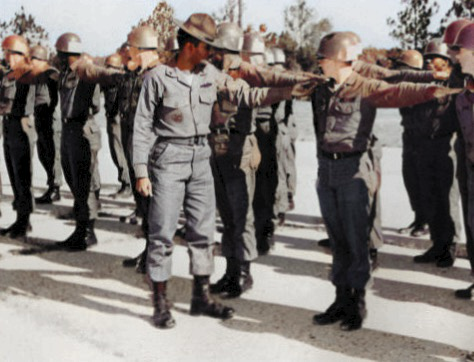
Animal House, Food Fights & Toga Parties

Not long after we met, the campus atmosphere shifted into a different kind of chaos — thanks to Hollywood.

Movie Poster for National Lampoon’s movie “Animal House” that debuted July 28, 1978 right before my sophomore year at University of Notre Dame. Autobiography of Dr. Anthony J. Carbone.

Toga Parties

That fall, the movie Animal House had just debuted on July 28, 1978, right before school started. It became an instant cultural phenomenon. The film’s irreverent, chaotic fraternity spirit swept across campuses like wildfire — and Notre Dame was no exception. Residence halls across campus threw Animal House-inspired toga parties in those early weeks of the semester. Even the usually reserved Fisher Hall got in on the fun.

Food Fights in South Dining Hall

I remember walking into the South Dining Hall and watching spontaneous food fights erupt without warning. Someone would shout a battle cry — usually something absurd like “TOGA!” or “FOOD FIGHT!” — and trays of mashed potatoes, carrots, and Jell-O would go flying. Most of the students would duck under the long oak tables for cover, but a few brave or foolish souls stood their ground, hurling dinner rolls like grenades. It was madness — hilarious, stupid, and strangely exhilarating.

Animal House Attitude

That Animal House attitude — carefree, rebellious, and loud — lingered across campus for nearly the entire school year. And yet, amid all that absurdity, I had found Mariann. My world had become more grounded and more joyful, even as food flew through the air.

Photo of the cast of National Lampoon’s “Animal House” from July 1978. Autobiography of Dr. Anthony J. Carbone.

My Academic Load Sophomore Year

When I reminisce about my sophomore year at Notre Dame, all I can think about are the hours and hours I spent buried in Organic Chemistry, Biology, and their respective laboratories — plus third semester Calculus. It was a brutal academic year.

My first semester of my sophomore year at the University of Notre Dame in 1978 schedule of courses. Autobiography of Dr. Anthony J. Carbone.

Pope John Paul II Elected

On October 16, 1978, the Vatican’s College of Cardinals elected 58 year old Cardinal Karol Józef Wojtyła of Wodowice, Poland, the first non-Italian Pope in over 400 years. His election inspired hope and resistance against the communist regime in his home country. And his work with United States President Ronald Reagan is believed to have facilitated the decline and eventual fall of the Soviet Union years later.

Pope John Paul II. Vatican City. Autobiography of Dr. Anthony J. Carbone.
Pope John Paul II

19th Birthday at Notre Dame

My 19th birthday on December 3, 1978 felt completely different from the year before — quieter in some ways, but more meaningful. This time, I had Mariann by my side. She surprised me with a homemade cake, and, as if by tradition, my mother’s cake arrived in the mail the very same day. I suddenly had two birthday cakes again, and somehow that made me feel doubly blessed.

My 19th birthday at University of Notre Dame.  Two birthday cakes in my dormitory room at Fisher Hall.  Autobiography of Dr. Anthony J. Carbone.

Birthday Dinner at Bob Evans

That evening, our little Fisher Hall crew — me, the guys, and the new girlfriends, Ginger, Bernadette, and Mariann — bundled up and walked a mile or so off campus to Bob Evans. The winter air was crisp, our laughter drifting into the night as we crunched along the sidewalk. Bob Evans was one of our favorite spots because of homecooked meals, especially on cold, winter evenings. Over steaming plates of comfort food, we celebrated like only college kids can — loudly, joyfully, without a care in the world.

When we returned to campus, Mariann took the birthday cakes out in my Fisher Hall room, candles glowing in the dim light. Friends gathered close, the room filled with the sound of voices, the scent of frosting and coffee. Looking across at Mariann, with her smile soft and warm in the candlelight, I realized this birthday wasn’t just perfect — it was the kind you carry with you forever. I felt, in that moment, incredibly lucky.

Fall Final Examinations

The fall was coming to a close before I knew it once again. Final exams were held December 13th through 21st, and of course my pre-med final examinations went until the very last day. I wasn’t back home at Fort Leavenworth until December 22nd. 

Just like last year, I can’t remember much about this Christmas either — other than the fact that all four of my sisters were home from college for the holidays with me. The weeks leading up to finals, followed by the rigorous examinations themselves, alwasy left me in a fog for several days. And by the time I rested, Christmas was over.

I do remember calling Mariann in Wheaton, Illinois every evening. In those days, long-distance telephone calls were expensive, with rates dropping 35% after 5 PM and 60% after 11 PM. To save money — and stay out of trouble — I would wait until 11 PM to call her.

New Year’s Eve at the Morrison’s Again

I visited the Morrison girls after Christmas, and once again we rang in the New Year together at their house — a warm, lively evening filled with laughter, music, and the comfort of familiar friendship. Yet beneath the cheerful surface, I was caught in a quiet tug-of-war. I found myself drawn to one of the Morrison girls, while at the same time thinking constantly about Mariann. Deep down, I already knew Mariann was the woman I would one day marry. 

Still, part of me wanted to experience a bit of college dating before settling into something so serious. The Catholic boy in me wrestled with guilt over such thoughts; the mix of emotions made for a season of both soaring highs and quiet lows.

Time to Return to Notre Dame

Drive Back to Campus

January 15th arrived far more quickly than I wanted. I loved being home with my four sisters, and of course, seeing the Morrison girls. This year, my parents encouraged me to catch a ride from Kansas City to South Bend with fellow Notre Damers. I remember sitting in the front bench seat of a guy’s car with a female student between us. Didn’t know either one of them, so initially, the trip was a bit awkward for me. I recall that the trip took up about 9 hours or so. We arrived after dinner, so I had only a little time to unpack and chat before Spring Semester Registration the following morning. 

Second Semester was as bad as First

The second semester course load was nearly identical in workload to fall semester. The only change in my schedule was that Astronomy (Physics 210) had wrapped up after first semester, and I replaced it with Bible Themes (Theology 218) in the spring. Every day was an academic gauntlet, and spare time was nearly nonexistent.

My second semester of my sophomore year at the University of Notre Dame in 1979. Autobiography of Dr. Anthony J. Carbone.

Spending More Time with Mariann

Despite the heavy course load, I happily shared all of my limited free time with Mariann. While I maintained my friendships with my Fisher Hall section mates, Mari quickly became the center of my world. We ate together, studied together, attended daily Mass together, and prayed together at the Grotto nearly every evening.

Mariann and I prayed at the Grotto nearly every night while at the University of Notre Dame. Autobiography of Dr. Anthony J. Carbone.

Our nights often ended with a late snack from “Food Sales” in the basement of Fisher Hall — usually something like a microwaved sandwich or vending machine chips and a Coca-Cola — before I walked Mariann back to her dormitory in the North Quad.

Marinn at Farley Hall

Mariann lived in Farley Hall that year, one of the all-female dorms on campus. After dropping her off, I’d head back to Fisher to study or collapse from exhaustion.

Farley Hall, one of the all-female dormitories, at the University of Notre Dame. Where Mariann Schmitz lived her first year at Notre Dame. Autobiography of Dr. Anthony J. Carbone.

My First Dance with Mariann

I can still remember my very first dance at Notre Dame — my first real date. Fisher Hall was hosting its Fall Dance, and of course, I was taking Mariann. She looked absolutely stunning in her dress, and though the night held many small moments, one that still lingers in my memory is dancing with her to “Three Times a Lady” by the Commodores.

Lionel Ritchie’s hit with the Commodores in 1978 “Three Times a Lady”. Autobiography of Dr. Anthony J. Carbone.

Lionel Richie and “Three Times a Lady”

The 1978 ballad, written by Lionel Richie, had just become the group’s first #1 hit on the Billboard Hot 100 and also topped the soul chart. As we swayed to its slow, romantic rhythm, I already knew — somehow — that Mariann and I were meant to be. Even then, I wondered whether “Three Times a Lady” might someday be our First Dance song at our wedding.

Mari’s Brother John Visits Us at Notre Dame

Over time, I began to meet Mariann’s family. Her oldest brother, John, came to visit us at Notre Dame, and on one occasion, he took us out to dinner so he could get to know me. It was a nice restaurant — nicer than anything Mari and I could afford. At the end of the meal, John said, “I’ll pay for dinner; you two can leave the tip.” He put down cash for the check and stood up to leave. Mari and I looked at each other in panic. We checked our wallets and, between us, had just one dollar. As we were sneaking out, we left the crumpled bill on the table and followed John out the door, mortified but unsure what else to do.

Waitress with tiny tip Mariann and I left her. Autobiography of Dr. Anthony J. Carbone

We didn’t make it far. Just outside the restaurant, John realized he had forgotten his car keys and ran back in to retrieve them. When he returned, he was holding his keys in one hand and, in the other, the waitress’s outstretched hand with our sad little $1 tip still sitting in her palm. We were completely embarrassed — but we were broke.

Mari and I were Both Broke at School

Even though Mari came from a wealthy family, she didn’t receive a stipend or spending allowance. I was earning $100 a month from ROTC, but my father required me to send $50 of it home for my personal expenses. That left Mari and me living on about $50 a month combined — and even in the late 1970s, that didn’t go very far for two hungry, busy college students.

Empty wallet while attending University of Notre Dame. Autobiography of Dr. Anthony J. Carbone.

Another Exciting Year of Sports for the Fighting Irish

Thank God that tickets to all Fighting Irish home games was part of our tuition. Mari and I attended football and basketball games together, although we always had to sit in different sections due to the fact I was a sophomore and she was a freshman. Notre Dame sports teams continued to have a great year during my sophomore year.

University of Notre Dame athletic ND Logo. Autobiography of Dr. Anthony J. Carbone.

Fighting Irish Football Squad Wins at the 1979 Cotton Bowl

The Fighting Irish football team, led by legendary quarterback Joe Montana, delivered one of the most unforgettable comebacks in college football history. Despite a disappointing regular season that left them out of national title contention, Notre Dame finished strong with a trip to the Cotton Bowl on January 1, 1979, to face the Houston Cougars.

That day in Dallas was bitterly cold, with wind chills dipping below zero, and Montana — already battling the flu — suffered from hypothermia and had to be taken to the locker room. Trainers wrapped him in blankets and fed him warm chicken soup to bring his body temperature back up.

The Chicken Soup Game

Miraculously, Montana returned to the field in the fourth quarter with the Irish trailing 34–12. What followed was pure magic. Montana led three late scoring drives, capped by a last-second touchdown pass and a two-point conversion to win the game 35–34. The comeback sealed Joe’s reputation as “The Comeback Kid” and helped propel Notre Dame to a №6 national ranking by the end of the season. And the game has since been affectionately refered to as “The Chicken Soup Game.”

Fighting Irish Men’s Basketball

The basketball team also made headlines that year. The Notre Dame men’s basketball team, coached by Digger Phelps, posted a stellar 24–6 record and finished the season ranked #4 in the nation. With a dynamic roster that included sharp-shooter Kelly Tripuka and 6-foot-11-inch center Gill Salinas, the team played with speed, skill, and strength.

University of Notre Dame Fighting Irish Mens Basketball Team. Final 4 1978. Autobiography of Dr. Anthony J. Carbone.

Classmates Kelly Tripuka and Gil Salinas

It was a thrill for me to sit in class with both Kelly Tripuka and Gill Salinas, knowing they would later take the court in nationally televised games. The energy on campus during basketball season was electric, with high expectations and intense pride in our Fighting Irish.

Fighting Irish Scholar-Athletes

Notre Dame prides itself on being home to true scholar-athletes, where academic excellence is expected of every student — regardless of how many touchdowns they score or rebounds they grab. The Irish have had more Academic All-Americans than any other school in baseball and women’s soccer, while also cracking the top-10 in football (third), men’s at-large (third), softball (eighth), men’s basketball (ninth) and men’s track/cross country (tenth).

Banner that reads, "Notre Dame's Academic All-Americans--A Legacy of Athletic and Academic Success". Autobiography of Dr. Anthony J. Carbone.

Before every football game, when the public address announcer introduced each Fighting Irish starter, he also announced their academic major — and I was humbled by how many of them were Pre-MedEngineering, or other tough majors. I was barely surviving my own academic load, and here were these guys playing top-tier NCAA football while preparing for med school.

I remember one day in Theology class with Gil Salinas, our star basketball center, when the professor asked him to stand and explain why he wasn’t traveling with the team. Gill quietly admitted that his GPA had slipped below the required standard, and he’d been benched until he brought it back up. Thank God he did — quickly.

Easter Holiday 1979

Easter Holiday was April 13–16 this year, and it was too close to summer break to afford another trip home. So Mariann invited me home to Wheaton, Illinois to meet the rest of the family. I think we traveled by train from South Bend to Chicago and then took the commuter rail from downtown to Wheaton.

I was nervous as hell meeting Mr. John Schmitz. He was a large framed, grey haired gentleman. I remember that he grilled me like fathers do when they meet the new boyfriend the first time. He had that no-nonsense German way about him, wearing a tweed jacket and smoking a pipe. Mariann’s mother, Sara(fina), was a beautiful Italian-American lady. She was very kind to me. 

Mariann came from a huge family. Only her sister Sue was married and not living home. Everyone else was still living at home, including her older brother John. I was suprised that John was still living at home at his age, but I learned that John had been in a terrible automobile accident and I think someone died, and he was living at home to save money to repay his father.

I think the Mrs. Schmitz gave me John Jr’s bedroom. He lived in the basement and had a dark, wood-paneled bedroom with a king-size waterbed. I had never slept on a waterbed prior to that, and I never wanted one afterwards. I remember Mariann coming downstairs to visit me and I was scared to death that Mr. Schmitz would pop in with a shotgun.

Back to Campus

Mari and I returned to Notre Dame on Easter Monday, with spring final exams just three weeks away. The last stretch of the semester was a blur of long nights in the library, cram sessions, and that familiar, gnawing anxiety that came final examinations. I especially hated courses with papers and blue-book exams like Theology. When the last test was turned in, the relief was immediate — and quickly replaced by the bittersweet reality of saying goodbye for the summer.

Packing Up Dorm Rooms & Saying Goodbye

I surprised myself with how sad I felt saying goodbye to Mariann for the summer. I was still unsettled that I had fallen for someone this much, this soon — it wasn’t the carefree college experience I had imagined for myself. But it was too late. I had already met my other half, and anyone who knew us both would have agreed without hesitation that she was my “better half.”

I packed up both of our dorm rooms, carefully stacking boxes and making sure everything went into the storage the university provided — though I’m sure they charged us some fee for it. Then Mari’s brother, John, arrived to pick her up and take her home to Wheaton. He offered me a ride to the airport. Saying goodbye in front of him felt awkward, so I kept it short, but I already missed her before she was even out of sight.

Flight to Kansas City

As I boarded my flight home, I knew it was going to be a long summer. And judging by how much we were already talking about calling each other, I also knew it was going to come with some very expensive phone bills.

Home Page

Chapter 17: Winter Break, Second Semester at Notre Dame & Summer Fun

Copy of Moby Dick by Herman Melville and first page showing first line "Call me Ishmael". Part of autobiography of Dr. Anthony J. Cabone.

Believe Nothing You Hear, and Only Half of What You See — A memoir of Service, Shame and the Search for Truth

Christmas Break at Fort Leavenworth

As soon as I finished my last final examination at Notre Dame, which was on the absolute last day of finals on December 22nd, I ran back to Fisher Hall, grabbed my already packed suitcase, and called a taxi to take me to the South Bend Airport. I couldn’t wait to get home. My flight landed in Kansas City, where I was picked up and driven to our new home at Fort Leavenworth, Kansas.

Antique map showing early Fort Leavenworth, Kansas on the Missouri River.  Autobiography of Dr. Anthony J. Carbone.
Antique Map of Fort Leavenworth, Kansas on the Missouri River

Father Assigned to US Command & General Staff College

My father was now serving as a tactical instructor at the U.S. Army Command & General Staff College (C&GSC), and we lived on post in one of the older red brick cavalry-era townhouses.

Fort Leavenworth Coat of Arms.  Autobiography of Dr. Anthony J. Carbone.
Fort Leavenworth Coat of Arms

The Carbone Family Home at Fort Leavenworth

My mother had, as always, transformed the place into an exquisitely beautifully decorated home. From the moment I walked in, I was struck by how long the house was — narrow in width, but stretched out like a hallway that never ended. The living room was the first space you entered, decorated with her signature touches and filled with the familiar scent of eucalyptus. That aroma always meant home to me. I even had a bunch of eucalyptus hanging in my dorm room back at Notre Dame.

Postcard showing Officer's Quarters at Fort Leavenworth, Kansas.  Auto biography of Dr. Anthony J. Carbone.
Officers’ Quarters at Fort Leavenworth

The apartment was bright, thanks to unusually tall windows that let in generous light — even during winter. The large living room was flanked by two sets of white French doors. To the right, through one set, was a front sitting room that faced the main street. To the left, through the other, a large dining room that led into a long hallway running the entire length of the home. Off that hallway were the kitchen, four bedrooms, a bathroom, and finally, the back porch. All hardwood floors. Beautiful, classic Army housing.

The Fog of Finals

Strangely, I don’t remember much about that Christmas itself. That would become a recurring theme in the years ahead. After weeks of cramming for finals, followed by the intensity of the exams themselves and then the travel home, I was always in a kind of fog until well after Christmas. The exhaustion erased some of the joy. I remember things mostly through photographs — but I have almost none from this tour at Fort Leavenworth.

Me at home at Fort Leavenworth, Kansas, for Christmas Break (December 1977)

The Young Ladies on Post

With the exception, of course, of three beautiful young ladies who managed to capture my attention. Upstairs from us lived a family with a daughter in her freshman year of college. I remember wanting to meet her. Looking out from our back porch to the right was another red brick townhouse, and I quickly learned that a high school senior named Becky Roberts lived there. Beautiful and poised, I knew I would be asking her out by summertime.

Officers' quarters at Fort Leavenworth.  Autobiography of Dr. Anthony J. Carbone.
The back porch of post quarters

The Morrison Family

Then there was the Morrison Family. Colonel Morrison was a friend and colleague of my father. His home was a warm, lively place. His wife, Mrs. Morrison, was gracious and generous, and her mother — whom everyone affectionately called “Abuela” — lived with them too. Best of all, the Morrisons had six daughters, each as beautiful and charming as the next. But it was the youngest, Cynthia, who quietly captured my attention. Because of my own shyness — and probably out of respect for the other girls — I never openly admitted which of the six daughters I favored most. I simply kept returning to their home and called upon all of them.

Cynthia Morrison from Fort Leavenworth, Kansas.  Biography of Dr. Anthony J. Carbone
Cynthia Morrison of Fort Leavenworth, Kansas

New Year’s Eve at the Morrison’s

The first clear memory I have of that Christmas break is actually New Year’s Eve at the Morrisons’. They introduced me to a Spanish tradition called Las Doce Uvas de la Suerte — The Twelve Grapes of Luck. As the clock struck midnight, you were to eat one grape with each chime, symbolizing good fortune for each month of the year. The tradition had originated in Spain in the late 19th or early 20th century and was still cherished in the Morrison household. It’s a tradition my oldest sister, Lynne, has adopted for her own family ever since.

The Spanish Traditions of the 12 Grapes of Luck “Las Doce Uvas de la Suerte”
Autobiography of Dr. Anthony J. Carbone.
The Spanish Traditions of the 12 Grapes of Luck “Las Doce Uvas de la Suerte”

The Morrison Home at Fort Leavenworth

I spent nearly the entire Christmas break visiting the Morrison girls. Every time I returned to Fort Leavenworth, their house was my second home. I’d sit at their long dining table, surrounded by all six daughters, talking and laughing for hours. Sometimes Abuela would sit quietly at the head of the table, listening in with a gentle smile. Then, like clockwork, Colonel Morrison would call from upstairs: “Anthony! Go home!” I’d spring up as ordered while the girls begged me to stay.

Living room set that reminds me of the beautiful home of Colonel & Mrs. Morrison.  Table where I would sit with the 6 Morrison girls and Abuela.  Autobiography of Dr. Anthony J. Carbone.

“Stay! We’ll be quiet!” they’d whisper. But I wasn’t about to get caught and reprimanded. I knew I was only allowed to be there unchaperoned because Colonel and Mrs. Morrison trusted me. I was a gentleman, and I wasn’t going to give them any reason to change their minds.

Clock at the Morrison’s house reminding me that it was time to go home. Autobiography of Dr. Anthony J. Carbone.

The Carbone Home and Rules

The Carbone Home had a curfew too. It was rare for any of us — Lynne, Diana, or me — to be out past 10 PM, even into adulthood. Pamela and Cynthia, who were younger, seemed to have grown up under a different, slightly more relaxed set of rules. But for us, it just wasn’t done.

Before I knew it, the days had passed. It was time to pack my suitcase again and return to Notre Dame for my second semester.

Back to Notre Dame: Second Semester Begins

Back to South Bend

Christmas break ended far too quickly. I was just beginning to get to know some of the young ladies on post, and I couldn’t wait to return for summer break. Still, I packed my bags and flew back to South Bend. From the airport, I headed straight to Fisher Hall. Despite the bitter cold, I was genuinely excited to see the guys in my section again and to hear about their Christmas adventures. What gifts had they received? Had any of them found romance over the holidays?

The Boys are Back in Town

I figured Andy Cordes had probably picked up a dozen new LPs — no doubt rare imports or something obscure and progressive. Matt Bedics, ever the deep thinker, had probably unwrapped some esoteric philosophy textbook. Al Emory, our resident metallurgist, almost certainly came back with the newest Texas Instruments TI-59 programmable calculator. I returned with a couple of crewneck sweaters and a few small odds and ends to brighten up my dorm room.

Registration for Second Semester Classes

Bob Terifay was back and eager to start the second semester with a fervor that I was lacking–I was nervous about the next round of classes. Registration was held on Tuesday, January 17th, and classes began the next morning. My second-semester schedule was just as grueling as the fall term: Basic Leadership (Military Science), with weekly Army ROTC drill, General Chemistry II, with weekly lab, Calculus B, Intermediate German II, English Composition & Literature, and Introduction to Philosophy.

University of Notre Dame Second Semester of freshman year schedule.  Autobiography of Dr. Anthony J. Carbone.

It was another heavy academic load, and I found myself constantly buried in study. What made it worse was how uneven the core curriculum felt. There were easier math and science tracks for non-STEM (Science-Technology-Engineering-Math) majors, but we — the pre-meds and engineers — had no such luxury. We were expected to hold our own in the same Humanities courses as English majors and philosophy buffs and write papers and essays at the Humanities Major level.

Typing Papers before Word Processing

This was long before laptops, Google Docs, or even word processors. At Notre Dame in the late 1970s, writing a term or research paper meant starting with a legal pad and pen, scratching out sentences by hand, and then heading over to the bulletin board in Fisher Hall to find a typist. Most of the ads were posted by coeds from the women’s dorms who earned extra cash typing papers for guys like me.

You would take your handwritten draft over to one of the girls’ halls, and for ten cents a page, they’d type it up. Revisions — of which I always had many — were typically five cents a page. I never thought of myself as a strong writer, but I was a pretty good editor. That meant I’d go back and forth with the typist again and again, burning through pages, coins, and much of my monthly stipend in the process. But I was determined to get each paper just right — even if it meant wearing out both my budget and my welcome.

College coed typing for money at University of Notre Dame.  Autobiography of Dr. Anthony J. Carbone.

The Blizzard of 1978

Return to Campus for Second Semester

Returning to campus in January meant facing another long stretch of South Bend winter. Snowbanks rose higher than the dorm windows, and cold wind whipped across the quads as we hurried to class bundled in every layer we owned. But there was one winter storm that would mark our semester forever: the Blizzard of 1978.

On January 26, 1978, the snow began falling — and didn’t stop for three straight days. In the end, 41 inches fell, bringing the month’s total to a record-breaking 85 inches. Snow drifts piled up to 20 feet in places. The University of Notre Dame, famous for never canceling classes, shut down for three days straight. That had never happened before.

Blizzard of 1978 while attending the University of Notre Dame. As part of the autobiography of Dr. Anthony J. Carbone.

Blizzard at Fisher Hall

Fisher Hall became our snowbound fortress. The wind howled outside, but inside we were checked on multiple times a day by nuns and nurses who came bearing medicine, hot soup, and tea. They brought comfort and compassion that warmed us more than the broken radiators ever could. If we dared to leave Fisher Hall, Verna the maid would insist that we wear at least 3 layers of clothing, a hat, and a hood.

Blizzard of 1978 while attending the University of Notre Dame. As part of the autobiography of Dr. Anthony J. Carbone.

Most of the roads into South Bend were impassable. Emergency vehicles were stuck, students from the Campus View Apartments tried to help a stranded woman in labor, and the Red Cross had to step in. Our food service workers and power plant staff slept in dining hall basements and locker rooms, doing all they could to keep the University running. In response, hundreds of students volunteered to shovel snow for local residents. We found ways to amuse ourselves: diving off porches into ten-foot snow drifts, building snow forts, and braving trench-like walkways carved between buildings.

Tunnels Through the Snow Across Campus

The Notre Dame groundkeepers worked endlessly moving snow. They carved out 3-foot wide paths in the 6 foot snow that led to major points on campus. One to the dining hall. Another to the library. One to the Science Building. You could only pray that you chose the right path, because you couldn’t see. I’ll never forget the sight of students walking to the basketball arena to watch Notre Dame play the University of Maryland — only their heads visible above the snow walls carved into campus walkways, like some winter World War I battlefield. We were cold, tired, and mostly trapped, but we were together.

Blizzard of 1978 while attending the University of Notre Dame. As part of the autobiography of Dr. Anthony J. Carbone.

Now Back to the Academic Grind

Back to Class

After the snow, classes resumed and second semester quickly fell into a rhythm. I became more focused. I knew what was expected and understood the system a little better. My grades improved, and I made more friends. I was studying like crazy and always tired. Still trying to prove myself. Still afraid of failing.

English Comp & Lit

I remember sitting in English Composition & Literature surrounded by students who had attended elite prep schools and taken AP Literature. Many of them had read Moby-Dick half a dozen times before college. I, on the other hand, was reading “Call me Ishmael” for the very first time — while they were already pondering the symbolic implications of the whiteness of the whale.

My Essay on Einstein’s Theory of Relativity Goes Unappreciated

For one assignment, we were required to read a novel and submit an analytical essay. I decided to take an interdisciplinary approach and crafted a thoughtful comparison between the novel’s theme and Einstein’s Theory of Relativity — a bold analogy that I felt reflected the character’s emotional disorientation. I was proud of the result and handed it in with confidence.

When the paper was returned, I was stunned to see a bold red F at the top of the page. Upset, and completely out of character, I marched straight to my professor’s office. “Why did you give me an F on my paper?” I asked. She glanced at me and said flatly, “Because I didn’t understand it. I don’t know anything about the Theory of Relativity.”

Albert Einstein Theory of Relativity. Autobiography of Dr. Anthony J. Carbone

I stood there, dumbfounded. “That’s not my fault,” I replied. “It’s a brilliant analogy, and I deserve a better grade. Can I have your permission to have my paper graded by a Physics professor?” She paused, gave a dismissive little harrumph, and said, “That won’t be necessary, Anthony. I’ll re-read your paper.”

She never did change the grade and that moment stayed with me — the frustration of being penalized for creativity, thinking outside the box, and for trying to bridge my scientific background with literature. That paper didn’t just represent my thoughts — it represented me. And at that moment, being misunderstood felt like a kind of failure I didn’t know how to fix. It’s a struggle that I have battled my entire life.

Calculus for STEM Majors

Unfortunately, English wasn’t my only challenge. I was especially struggling in Calculus. Bad Kreuznach American High School hadn’t offered it, and most of my classmates had already taken AP Calculus in high school. I was falling behind fast and trying to climb a wall without tools.

Calculus textbook. Autobiography of Dr. Anthony J. Carbone.

Summoned to See the Chairman of Pre-Med

Then I received the summons I had been dreading: I was to report to Father Joseph L. Walter, C.S.C., Chairman of the Department of Preprofessional Studies — the pre-med program.

Father Joseph L. Walter, C.S.C., Chairman of the Department of Preprofessional Studies — the pre-med program. Autobiography of Dr. Anthony J. Carbone.
Rev. Joseph L. Walter, CSC

I walked into his elegant office, trembling. It was imposing, with a massive polished mahogany desk that looked like it belonged in the Oval Office. Father Walter sat behind it like a judge in chambers. My heart was pounding.

Example of Dean Walter's wood paneled room at Notre Dame with his huge mohogany desk. Autobiography of Dr. Anthony J. Carbone.

Failing Calculus

He got right to the point. “Anthony, you’re failing Calculus,” he said. “You may want to consider whether medicine is truly the right path.” My heart dropped. My entire life plan — everything I had worked for — teetered on that one conversation. I was sweating. I could barely speak.

Blackboard of Calculus. Autobiography of Dr. Anthony J. Carbone.

Father Walter Gives Me a Calculus Tutor

Father Walter admirably chose not to cut me loose. He arranged for me to work with a Calculus tutor. But he also wrote a letter to my parents, advising them that perhaps I should consider another path within the health sciences — something more suitable, he implied, than medicine. That letter crushed what was left of my pride. But I kept it.

Calculus Tutor. Autobiography of Dr. Anthony J. Carbone.

Perseverance

Years later, when I was accepted into Georgetown University School of Medicine, I mailed Father Walter a copy of my acceptance letter — along with the letter he had written to my parents. I also wrote him a note of my own, reminding him that sometimes the best thing a struggling student needs is encouragement — not dismissal.

Georgetown University School of Medicine Seal. Autobiography of Dr. Anthony J. Carbone.

To his credit, he replied with a kind letter in return. “Anthony,” he wrote, “I admire your perseverance.” That word — perseverance — might be the one word that defines my rollercoaster life.

The Tenerife Disaster of March 1977

That meeting with Father Walter would stay with me for another reason. Behind his desk, mounted on the wall, was a framed airline ticket. Curious, I asked about it. He smiled. “Ah yes,” he said. “I survived the worst plane crash in aviation history.”

He explained that he had once booked a seat on Pan Am Flight 1736 to the Canary Islands. At the last minute, he missed the flight. That was the same flight that, on March 27, 1977, collided with a KLM 747 in the fog on the runway in Tenerife, killing 583 people in what remains the deadliest aviation disaster in history.

He had lived because of a twist of fate — a delay, a missed boarding call, a quirk of timing. I never forgot it. That moment planted a seed in me that would eventually grow into something more: the desire to become a Flight Surgeon. That day in Father Walter’s office, as painful as it was, became one of the sentinel events of my life. I have told the story of the Tenerife Disaster in a hundred lectures on Aviation Safety since becoming a flight surgeon. The bottom line of the story of the Tenerife Disaster was the junior officers’ fear of speaking out about the obvious danger to their superiors.
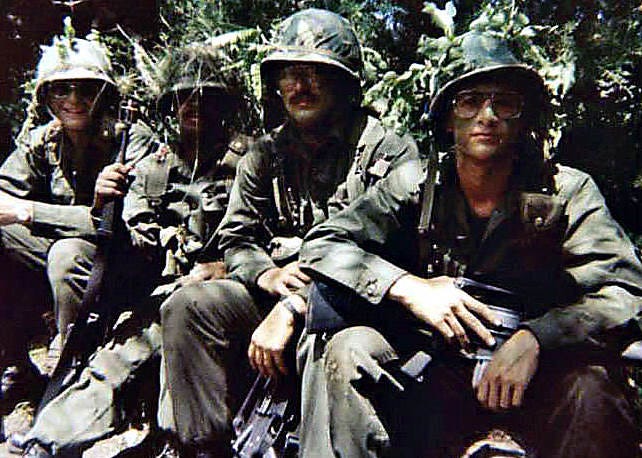
ROTC: Military Science

Not every course was astruggle that semester. Basic Leadership — my ROTC Military Science course — was practically effortless. I could do it in my sleep. That term we focused on map reading, which I had mastered years before. My father had taught me how to read maps from the time I was a kid, and before the invention of GPS, map reading was one of the most essential skills for a military officer. While others struggled to interpret topographic lines and grid coordinates, I was breezing through with confidence and even tutoring classmates.

Intermediate German mit Herrn Wimmer

Another class that came relatively easily to me was Intermediate German. I had studied German in high school while living in Germany, first at Mannheim American High School and later at Bad Kreuznach. My instructor, Professor Albert K. Wimmer, took an immediate liking to me. I was the only student in the class who had ever actually lived in Germany, and he complimented me often on my authentic German accent.

Albert K Wimmer. University of Notre Dame. Associate Professor of German. Autobiography of Dr. Anthony J. Carbone.
Professor of German & Russia Albert K. Wimmer, University of Notre Dame

Denied Study in Innsbruck, Austria

Professor Wimmer was soon to be appointed to the University of Notre Dame’s Program in Innsbruck, Austria, and he invited me more than once to join him there for a full academic year.

It was tempting — I love Austria, the Alps, the culture, the opportunity to study abroad with a professor who believed in me — but ultimately impossible. Neither the Pre-Med Program nor ROTC would allow a full year abroad, so I had to decline. Another door closed in the name of obligation.

The 1977–78 Fighting Irish Basketball Season

The 1977–78 University of Notre Dame men’s basketball season was exciting as well as a historic one, marking the program’s only appearance in the NCAA Final Four. Led by Coach Digger Phelps, the team finished with a 23–8 record and reached as high as №2 in the national polls. Key players included Rich Branning, Bill Laimbeer, Orlando Woolridge, Bill Hanzlik, Tracy Jackson, Bruce Flowers, Dave Batton, Kelly Tripucka, and Duck Williams. Notre Dame dominated their first three NCAA Tournament games, including a 23-point victory over Houston, before ultimately losing to Duke in the Final Four. Orland Woolridge lived in Fisher Hall and we saw him and the rest of the team often.

Freshman Kelly Tripuka #44 Fighting Irish Basketball team 1977-78 Season

Spring Break at Fort Leavenworth

Spring Break came before I knew it. This time, my family allowed me to come home to Fort Leavenworth for Easter break, which ran from March 18 to March 27. While most of my classmates headed south to warm beaches and wild parties in Fort Lauderdale, I returned to a chilly, gray Leavenworth, Kansas this March — rain, snow, and near-freezing temperatures all week.

Still, I was happy to be home. I caught up with my family, the Morrison girls, and my upstairs neighbor, and I appreciated the quiet. But much of my time was spent studying chemistry and calculus in preparation for final exams. I barely noticed how fast the week passed. Again, this was one of those moments where I was so sleep deprived from school, that vacation flew by before I came out of the fog.

Back to Notre Dame to Finish up 2nd Semester

Before I knew it, I was back in South Bend, grinding through another brutal exam schedule. It was a regrettable repeat of the fall semester — weeks of grueling preparation followed by equally grueling finals, with disappointing results.

Summer Break of Fun

As soon as my last exam was over, I hurried back to Fisher Hall and began packing up my dorm room for the summer. Notre Dame had a convenient system that allowed students to store their belongings on campus, which made the process easier. Within a couple of days, I was back home at Fort Leavenworth.

Me with my sister Cynthia in the sun room of my father's quarters at Fort Leavenworth, Kansas.  Autobiography of Dr. Anthony J. Carbone.

Got My First Driver’s License

First things first: I studied for and took the Kansas driver’s license exam. That’s right — I didn’t get my license until after my freshman year in college.

My first Driver's License from the State of Kansas issued back in 1978 while we were living in Fort Leavenworth, Kansas.  Autobiography of Dr. Anthony J. Carbone.

I passed the road test using our new Chrysler Cordoba, and from that day forward, I found every excuse to borrow it. I’d volunteer for errands to the commissary at least once a day. I made daily runs to the post exchange or the Shoppette — any excuse to cruise around in the Cordoba. And I have to give credit to my buddy Jeff Bell, who actually taught me to drive his VW Beetle in Germany back in 1976.

1977 Chrysler Cordoba. Carbone Family Car 1977–1980. Autobiography of Dr. Anthony J. Carbone.

First Time Asking a Girl Out on a Date

Now a college student with a driver’s license and a decent car, I figured it was finally time to go out on a real date. I worked up the nerve to ask Rebecca Roberts — a colonel’s daughter — if she’d like to go to the movies with me. I think it was the debut of Grease. She said yes, and I was over the moon.

Becky from Fort Leavenworth, Kansas.  Autobiography of Dr. Anthony J. Carbone.
Becky from Fort Leavenworth

Use of Car–Denied!

I ran home to tell my family the news. Then I waited for my father to come home from work so I could ask him for the car for the big date. I expected he’d be happy for me — but he wasn’t. His response was blunt: “No. You should have thought about asking to borrow the car before you asked out a young lady.”

That was it. In our household, you got one chance to ask my father for something. He never changed his mind, and you never asked twice. Timing was everything. My friends never understood this. They’d beg me to hurry and ask him if I could go to a party or a sleepover, and I’d always say, “Not yet.” I had to wait for just the right moment — after he’d taken off his boots, after dinner, after dessert. Only then would I ask. Because I only had one shot.

So, I had to do the painfully embarrassing task of calling Becky and asking if one of her parents could drive us to the movies. She agreed, but I was humiliated — and that might explain why I never asked her out for a second date. I went from feeling like a confident young premed student at Notre Dame, to a foolish young boy being scolded by my father.

End of Summer and Return to South Bend

Before I knew it, August was here again and it was time to prepare for my return to Notre Dame. I packed up my suitcase and a few more things for my dormatory room. Had a couple of boxes shipped to Fisher Hall. I said my goodbyes to Becky Roberts and the Morrisons — and of course, my family. My mother arranged to have me drive back to South Bend with two other Notre Dame upper classmen — complete strangers to me. All I remember about that trip is an overweight guy drove the car, there was a skinny girl between us, and I sat up front on the bench seat because the back seat was filled with suitcases and other things on their way to Notre Dame.

Home Page

Chapter 16: My first semester at Notre Dame

Aerial view of campus of University of Notre Dame. Showing the Golden Dome and Our Lady above the Admin Building. Autobiography of Dr. Anthony J. Carbone.

Believe Nothing You Hear, and Only Half of What You See — A memoir of Service, Shame and the Search for Truth

My First Week of College at Notre Dame

By the time the first official week of college began, our long summer of anticipation was finally over. The buzz of orientation events and the flurry of new friendships had barely settled when a singular rite of passage landed in our hands and marked our true arrival into Notre Dame life.

The Infamous Dog Book

It came wrapped in glossy pages. The little blue-and-yellow hardback — formally titled The Notre Dame & Saint Mary’s Freshman Register, Class of 1977— was better known across campus by its infamous, irreverent nickname: The Dog Book.

Notre Dame & St Mary’s College Freshman Register ’77 (The “Dog Book”)

The Girls of Saint Mary’s

Now, let me clarify from the start: the girls of Saint Mary’s were anything but “dogs.” The name was a holdover from Notre Dame’s all-male history and had lingered through decades of tradition and crude humor. But if you were a freshman guy in 1977, you knew exactly what the Dog Book meant. It was your first unofficial introduction to the incoming class — your own classmates and, far more tantalizingly, the women across the road at Saint Mary’s College.

The book was laid out like a catalog: headshots of every incoming freshman at both schools, organized alphabetically. Each photo came with a name, nickname (if they had one), hometown, high school, and intended major. No bios. No blurbs. Just faces, facts, and enough fuel for hours of hallway commentary.

The moment the Dog Books were delivered to Fisher Hall, tradition took over. Guys poured out of their dorm rooms with books in hand and formed an impromptu gathering in the hallway. We sat cross-legged against the cinderblock walls, flipping pages together as if we were drafting fantasy football teams — or, more accurately, evaluating potential dates, girlfriends, and future wives.

Girls of Saint Mary’s College mingled among the boys on the campus of Notre Dame

The jokes flew fast. So did the judgments. Someone would point at a photo and say, “She looks like trouble.” Another guy would shout, “Bottom of Page 56 — dibs!” Every once in a while someone would spot a classmate or recognize a name and make a big show of it, good or bad. It was crude, superficial, often cruel — but also a strange kind of bonding ritual.

I Avoided Being in the Dog Book

And I remember one very specific feeling: relief. I wasn’t in the Dog Book. Not a picture. Not a nickname. Nothing. Because I hadn’t applied to Notre Dame the traditional way, my name had been left out of the publication entirely. I watched the teasing pile up on a few poor souls — guys and girls alike — and silently thanked the registration gods for my invisibility. That day, anonymity was a blessing.

Notre Dame & St Mary’s Freshman Register from 1977 (Showing Elizabeth Carbone and no Anthony Carbone)

For all its dated humor and objectifying overtones, the Dog Book was a tradition. And like so many Notre Dame traditions, it was one we absorbed without question — half-laughing, half-cringing, entirely immersed in the absurdity of it all.

Saint Mary’s College (SMC): The College Across the Street

Aerial photograph of Saint Mary’s College, Notre Dame, Indiana.
Aerial view of Saint Mary’s College, Notre Dame, Indiana

To really understand the role the Dog Book played in campus life, you had to understand something about the girls across the street. Saint Mary’s College (SMC), a Catholic women’s college sponsored by the Sisters of the Holy Cross, stood just across U.S. Route 933, a short walk from the main gates of Notre Dame. But culturally, it often felt a world apart.

In 1977, Saint Mary’s enrolled 876 students, with 101 new applicants joining that fall. Student life at SMC was still steeped in tradition and governed by parietal rules that had barely budged despite the cultural revolutions of the late ’60s and early ’70s. These rules restricted when and how male visitors could enter the women’s dorms — usually limited to certain weekend hours, and always under strict supervision. The Sisters of the Holy Cross (CSC) still played an active role on campus, both academically and spiritually, guiding their students with a sense of purpose, decorum, and discipline.

The Sisters of the Holy Cross (CSC)

My First Venture to Saint Mary’s

LeMans Hall

Like most Notre Dame freshmen, I was more than a little fascinated by the girls of Saint Mary’s. They seemed like a blend of grace, charm, mystery — and yes, temptation. I forget exactly how I met my first SMC coed, but I was invited over to her dormitory, Le Mans Hall, for a Saturday evening visit early in the semester.

LeMans Hall at Saint Mary's College across from the University of Notre Dame.  Biography of Dr. Anthony J. Carbone.
Le Mans Hall at Saint Mary’s College

Rules of Saint Mary’s College

I was already nervous walking across the road by myself, unsure of the etiquette or expectations. But when I arrived, things got a whole lot more intimidating. There was an elderly nun stationed at the reception desk in the front hall. She asked me, in a tone that made it clear she was not one to be trifled with, what my intentions were. I stammered something about being invited, and obediently handed over my Notre Dame ID card when she requested it.

Getting Past the Front Desk

Photograph of older religious sister at a desk at Saint Mary's College.  Biography of Dr. Anthony J. Carbone.

Then came the interrogation. She called upstairs to verify that the young lady had indeed invited me, and when the coed confirmed, the nun told her to come down to escort me personally. No unsupervised wandering was allowed. Once upstairs, I was so on edge that I can barely remember the girl, her room, or what we even talked about. All I remember is the phone ringing about forty-five minutes into our visit. It was the same nun, calling the room to speak to me directly.

“Anthony,” she said in a clear, commanding voice, “you have fifteen minutes to leave the dormitory before parietal hours begin.” Parietals. That was the Notre Dame–SMC term for the formal rules regulating male visitation in female residence halls — rules that had the force of institutional and moral authority behind them. Once parietals began, all male guests had to be out, no exceptions. And this particular nun wasn’t leaving anything to chance.

I thanked her, hung up the phone, and left immediately — heart racing, palms sweating, a little dazed by the whole ordeal. I honestly don’t remember if I ever went back to that room, or even spoke to the young lady again.

It wasn’t just the strictness that kept me away. I was busy — pre-med classes, ROTC, and intramural soccer didn’t leave much space for cross-campus courtships. But I’d be lying if I said the nun hadn’t made a lasting impression. Avoiding Sisters of the Holy Cross became something of a subconscious strategy that semester.

The Saint Mary’s Panty Raids

I didn’t set foot in a Saint Mary’s dorm again until the panty raid in the spring — a decades-old tradition that had long blurred the line between innocent fun and cultural cringe. The stories from the women of Saint Mary’s say it all.

“Our room being on the second floor… provided the best view for Panty Raid. Seeing all the guys run up The Avenue near midnight, yelling, and girls screaming back, was quite a sight… Some girls actually threw panties down!” — Alice M. Tsui, Class of 1970

“I remember calling my mother and telling her I needed all new underwear because I had thrown almost all my things to the boys.” — Judy Johnson Crates, Class of 1970

“The ND guys got into the dorm and were trolling the halls… We pushed a desk up against our door and watched through the transom while the campus guards tried to chase them down!” — Karen Preston McCarty, Class of 1970

Group of Notre Dame boys holding lingerie from a recent Panty Raid at Saint Mary's College.  Biography of Dr. Anthony J. Carbone.
Notre Dame boys at St. Mary’s panty raid

It was outrageous. It was immature. And in hindsight, it’s the kind of thing that could never — and probably should never — happen today. At the time, we actively embraced many bizarre traditions as part of life under the Golden Dome.

Even by the time I was a freshman in 1977, the tradition was beginning to fade, or at least lose its luster. But the lore lingered. And for many of us, that was more than enough to keep the mystique of Saint Mary’s alive — whether we were brave enough to cross the Avenue or not.

Cadet Life Begins

While dorm pranks and hallway rituals offered a strange kind of social education, my real initiation into Notre Dame life came through two far more demanding callings — both of which began to take shape that very first week. I arrived on campus with a clear and heavy burden: two missions, equally urgent.

The first was academic. I was a pre-professional science major on the pre-med track, and I knew that earning a shot at medical school would take everything I had. There were no shortcuts. No excuses. I had to perform — and outperform — starting on day one.

The second mission was military. As an Army ROTC scholarship cadet, I actively committed—both contractually and personally—to developing into a leader capable of earning a first-class lieutenant commission by graduation.

That meant discipline, training, and excellence in every formation, drill, and leadership lab for the next four years. Two tracks. One man. No room to stumble.

So while most of my classmates were still finding their rhythm in dorm life, I was already switching gears — fast. I traded in the laughter of Dog Book hallway sessions and the chaos of panty raids for the early-morning demands of a cadet’s life. Gone were the Sperry’s and free time. In their place: combat boots, pressed uniforms, tight schedules, and 0600 alarms.

ROTC and Reality

The day of ROTC orientation began with the usual morning routine in Fisher Hall: a shower down the hall, a quick breakfast at South Dining Hall, and then a walk across campus. The morning sun lit the yellow brick buildings beautifully as I passed the Knute Rockne Memorial Gym — “The Rock” — on my way to the ROTC building.

Knute Rockne Memorial Building on the South Quad of the University of Notre Dame.  Biography of Dr. Anthony J. Carbone.
Knute Rockne Memorial Building

Professor of Military Science (PMS)Lieutenant Colonel Henry J. Gordon greeting us. A team of senior cadets who had clearly been through it all before also helped us.

Professor of Military Science (PMS) LTC Henry Gordon, University of Notre Dame. Biography of Dr. Anthony J. Carbone.
Professor of Military Science (PMS) for University of Notre Dame, LTC Gordon

Received my Army ROTC Basic Issue

The orientation included a historical overview of Notre Dame’s long-standing military tradition, stretching back to the Civil War, officially formalized in 1951. There were about 50 of us new Army cadets. We were issued our fatigues, boots, T-shirts, caps, helmut, a few other GI items — our first taste of uniformed life.

U.S. Army basic issue of gear including steel pot Helmut, flashlight and footlocker.  Biography of Dr. Anthony J. Carbone.

For most, it was a novelty; yet, for me, it was second nature. I had grown up watching my father in his starched olive drab fatigues, crisp white T-shirts, and brightly colored unit patches. By 1977, ROTC cadets like me were still wearing the OG-107 uniform — green fatigues with subdued patches. The details had changed, but the discipline hadn’t. I knew how a uniform should look. And as you know, I was already a master boot-shiner. The rituals felt more familiar than foreign.

My Father & Me in the Old & New Army Fatigues

Truthfully, the orientation itself felt underwhelming. Compared to what I imagined at West Point, it felt like a watered-down version. I left wondering — again — if I had made the right choice turning down my West Point appointment.

Pre-Med at Fisher Hall

Back at Fisher Hall, I connected with Bob Terifay, the other pre-med student in our section. He was brilliant, confident, and pathologically competitive — a natural leader of the freshmen, even though no one had elected him. He already seemed to have every textbook memorized. I had no problem striving for A’s, but I didn’t get any joy from beating my classmates. I would have been happy if we all aced the exams. That wasn’t Bob’s style.

Robert Terifay, Pre-Medicine at University of Notre Dame.  Biography of Dr. Anthony J. Carbone.
Bob Terifay, Pre-Med, Fisher Hall Freshman

In Bob Terifay’s defense, Bob was a great guy. A genuinely nice guy, smart as a tac, faithful Catholic boy. Bob was the unofficial leader of our Fisher Hall section. He would step out of his dorm room when it was dinnertime, clap his hands, and announce dinnertime to all by yelling “Pret!” (French for “Ready!“) Bob’s only problem was that he was a pre-med student at Notre Dame.

ROTC Scholarship Pays for Books & Supplies

I stuck close to him for a while because he had insider knowledge. He told me what to expect, what to prep for, and which professors to avoid. We walked together to the Hammes Bookstore, where a I learned a wonderful surprise — my ROTC scholarship covered all my books and supplies. That was a massive relief.

My First Year Academic Load

Many of our classes overlapped, except for Military Science and German. My first year schedule of courses included two semesters of: General Chemistry I&II with lab, Calculus I&II, English Composition & Literature, Intro to Philosophy, Intro to Sociology, Intermediate German, and Military Science.

The schedule was punishing. Science labs were four-hour marathons that earned just one credit hour. ROTC drills and PT demanded more time. Tuesdays were especially brutal — leadership labs in the afternoon, military class in the evening.

My Prep School Classmates-CLEP’d

What made it worse was this: many of the other pre-meds had come from elite Catholic prep schools and private academies. Most had CLEP’d out of chemistry, biology, or calculus thanks to AP credits. They were already a semester — sometimes a year — ahead of me. I had no such advantage. I came from a strong public high school, but I was starting from zero. And I knew I had to work twice as hard to keep up.

Advanced Placement AP Textbooks Calculus Biology Chemistry History.  Biography of Dr. Anthony J. Carbone.

Army ROTC Drill

Drill periods were a throwback. We trained with M1903 Springfield rifles — heavy, nine-pound bolt-action relics from World War II. We practiced saluting, standing at attention, and performing the full 15-Count Manual of Arms. I can still snap it off to this day. If you could master the Springfield, the M16 was a walk in the park.

My First Day of Class

My first day of classes at Notre Dame must have been so chaotic and overwhelming that I only remember one class: General Chemistry I. The legendary Professor Emil T. Hofman, who also served as the Dean of the Freshman Year of Studies was our teacher.

The Legendary Dean Emil T. Hofman

Emil T. Hofman, Dean of Freshmen Year Studies & Professor of Chemistry. University of Notre Dame. Dr. Carbone Autobiography.
Emil T. Hofman, Dean of Freshmen Year Studies & Professor of Chemistry

He was strict. In fact, he was so strict that he once gave future Nobel Prize in Medicine winner Eric Wieschaus — Notre Dame Class of 1969 — a B in both semesters of chemistry. Over four decades, Emil T. taught more than 60 percent of each freshman class. That totaled over 32,000 students, with more than 8,000 of them going on to become doctors. He was a Notre Dame institution unto himself.

Dean Emil T. Hofman being celebrated on the cover of Notre Dame Magazine. Professor of Chemistry. Dean of Freshmen Year Studies. University of Notre Dame. Dr. Carbone autobiography.
Emil T. Hofman on the cover of Notre Dame Magazine

Basic Chemistry House Rules

First Rule: Begin with the Lord’s Prayer

The class began with a brief introduction. Then, with no warmup or small talk, Professor Hofman commanded, “Settle down!” before leading us in the Lord’s Prayer. Every class began that way. That was the First Rule of Chemistry Class. At the end of the prayer, he would say, “Queen of Peace,” and we would reply in unison, “Pray for us.” Without fail.

Second Rule: Quiz Every Friday

Next, he went straight into the second rule. There would be a mandatory seven-question multiple-choice question quiz every Friday covering the material presented during the week. These quizzes were known for being tough, motivating many students to spend their Thursday nights studying to prepare for them. The phrase “Deliver us from Emil” was a common student sentiment.

Third Rule: Assigned Seats and “These are the rows!”

Assigned Seats: A key aspect of his first day routine, and indeed the entire semester, was the assignment of seats. Students were given specific seats they had to occupy for every class, a practice that ensured attendance could be easily monitored and probably discouraged late arrivals or skipping class.

“These Are the Rows!”: Related to the assigned seating, Hofman had a particular way of emphasizing the importance of staying in one’s assigned place. He would emphatically declare, “These are the rows!” This phrase reinforced the strictness of the seating arrangement and left no doubt that deviations would not be tolerated. This was likely a combination of setting expectations for discipline and ensuring a consistent classroom environment.

Dean Emil T. Hofman proctoring the weekly Friday Quiz. Professor of Chemistry and Dean of Freshmen Year Studies. University of Notre Dame.
Dean Emil T. Hofman proctoring the weekly Friday Quiz

When’s Your Birthday?

That’s when the girl sitting to my right turned towards me and abruptly asked, “When’s your birthday?” I told her, “Me? December 3rd. Why?” She replied, “Oh, just curious,” and she went back to listening to Professor Hofman. She didn’t say another word to me — not that day, not the next, not for months.

Calendar from December 1977 showing my birthday, 3 December, on Saturday.  Biography of Anthony J. Carbone.

My 18th Birthday

2 Girls and 2 Birthday Cakes

Then came Saturday, December 3rd, 1977 — I was 18 years old. Out of nowhere, that same beautiful girl and her equally beautiful roommate knocked on my door in Fisher Hall, holding a homemade birthday cake. “We came to celebrate your eighteenth birthday,” they said. They lit eighteen candles, sang “Happy Birthday to You,” and handed me a slice.

My First R-Rated Movie Followed by my First Beer in a Bar

Then things got interesting. They took me to my first R-rated movieLooking for Mr. Goodbar. Sitting between two beautiful girls I barely knew during that particular film was, to say the least, uncomfortable. Afterward, they drove me across the border into Niles, Michigan to Kubiak’s Tavern so I could legally order my first alcoholic drink. I think we danced a little at the bar, laughed a lot, and eventually headed back.

The Goodnight Kisses

All three of us squeezed into the front bench seat of the car, me squarely in the middle. When we pulled up to Fisher Hall, I turned to thank them for the best birthday of my life and started to open the door.

Blonde girl in pink minidress and white boots in the driver's seat of a 1970s-era car with blue bench seats.  Biography of Dr. Anthony J. Carbone.

“Not so quick, Tony,” they both said. I turned back toward my classmate. “What?” She leaned in and gave me a five-minute French kiss. I was blown away. As I turned the other direction to open the door, her roommate gently pulled me back. “Slow down,” she said. Then she gave me a five-minute French kiss of her own. It was, hands down, the best birthday of my life.
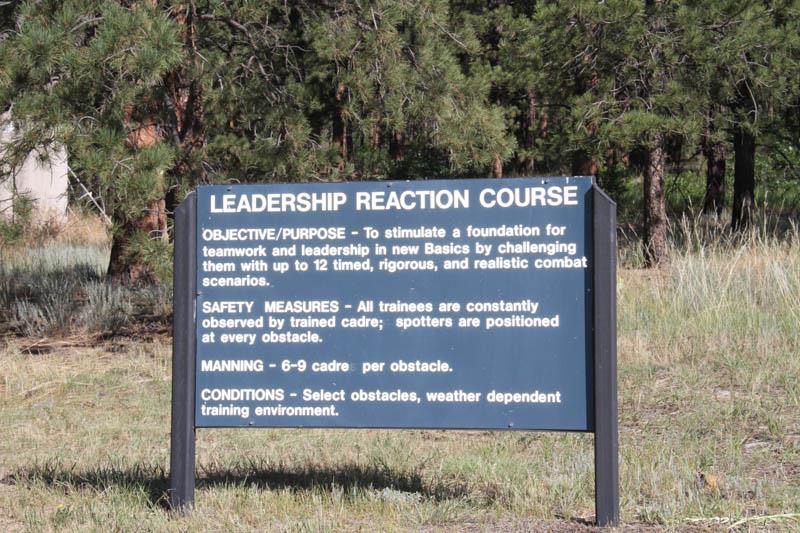
Football Season and My Neighbor Joe Montana

Without a doubt, the most exciting part of my freshman year at Notre Dame was football season — a highlight in any Domer’s college experience. But for me and every student in 1977, it was unforgettable because we won the National Championship.

1977 NCAA National Football Champions. University of Notre Dame Fighting Irish. Joe Montana. Dr. Anthony Carbone autobiography.

Notre Dame Fighting Irish Football Wins NCAA National Championship

That year, the Notre Dame Fighting Irish, coached by Dan Devine and led by quarterback Joe Montana, finished the season with an 11–1 record and capped it off by demolishing the previously undefeated and top-ranked Texas Longhorns 38–10 in the Cotton Bowl. That victory sealed our tenth national title.

Quarterback Joe Montana and Coach Dan Devine

Photograph of Joe Montana (#3) talking to Coach Dan Devine during a football game.  Biography of Dr. Anthony J. Carbone.

Entering the 1977 season, Joe Montana was a junior quarterback, but he found himself in a precarious position on the depth chart—listed as third string after battling injuries and inconsistent play. His relationship with Coach Dan Devine wasn’t particularly warm or enthusiastic.

However, the turning point came in the third game of the season against Purdue. Notre Dame was losing 24-14, and starting quarterback Rusty Lisch was struggling. When backup Gary Forystek was injured, Devine was forced to turn to Montana, despite the previous tension. However, the turning point came in the third game of the season against Purdue. Notre Dame was losing 24-14, and starting quarterback Rusty Lisch was struggling. When backup Gary Forystek was injured, Devine was forced to turn to Montana, despite the previous tension.

Montana, a former seventh-string quarterback, was inserted into the game late in the third quarter. What followed was a classic comeback performance: Montana threw for 154 yards and a touchdown in the final 11 minutes, leading the Irish to a dramatic 31-24 victory. This comeback, in particular, helped launch Montana’s legend and reignited Notre Dame’s national championship hopes.

After this game, Devine recognized Montana’s capabilities and named him the starting quarterback. The team went on to win every game from that point forward, culminating in a dominating 38-10 victory over number one ranked Texas in the Cotton Bowl and securing the national championship. While their relationship might have been complicated, the Purdue game became a pivotal moment for both Montana and Devine, proving that despite any previous doubts or disagreements, they were a powerful combination that propelled Notre Dame to a memorable championship season.

Joe Montana and Four All-American Football Stars

The 1977 squad was stacked with All-Americans: Ken MacAfee, Ross Browner, Luther Bradley, and Bob Golic. But surprisingly, Joe Montana — our quarterback and undeniable team leader — was not named to any All-American team. That still bothers me to this day. Joe’s later NFL career proved what a star he truly was. He led the 49ers to four Super Bowl victories and earned MVP honors in three of them. His 92-yard winning drive in Super Bowl XXIII became legendary. And his eight Pro Bowl appearances set the standard for greatness.

Bob Golic #55 of the Fighting Irish football team.  Biography of Dr. Anthony J. Carbone.
Bob Golic #55

Joe Montana My Next Door Neighbor

I knew Joe Montana–he was my next-door neighbor in Fisher Hall. The kind, funny, somewhat shy, and good-looking guy you see today in commercials and commentary — that was the exact same Joe I knew back then. He was humble and approachable. Let me give you two stories that show who Joe Montana really was.

Notre Dame Football Stadium

First, during home games at Notre Dame Stadium — “The House that Rockne Built” — student seating was assigned by class year and then by residence hall. Seniors got prime seats near the 50-yard line. Freshmen like us were tucked in the end zone. Our whole Fisher Hall section sat together.

Notre Dame Football Stadium “The House That Rockne Built”. Biography of Dr. Anthony J. Carbone.
Notre Dame Football Stadium “The House That Rockne Built”

Joe Montana and His Fisher Freshmen

In nearly every game, whenever Notre Dame’s offense got into the red zone near our end zone seats, Joe Montana would pause behind the center, scan the crowd, find us — the Fisher Hall freshmen — point directly at us, and then throw a touchdown pass. That was Joe. In his biggest moments, in a deafening stadium, on national television, he remembered his freshman friends. That, to me, is what leadership looks like.

Joe Visits My Room Nightly for Snacks

And Joe’s kindness extended off the field. Many nights, he’d quietly slip into my dorm room late, because I had a TV and he didn’t. He’d lay down on my bed, turn on the television, and say with a grin, “What do you have?” — hand outstretched. My four sisters constantly sent me care packages, especially homemade Tollhouse chocolate chip cookies. Joe knew it. So I’d break out the latest box and share it with him. He was always gracious and genuinely appreciative.

No Athletic Dorms, Cafeterias, or Tables

Notre Dame was different. Unlike big football schools, we had no athletic fraternities, no athlete-only dorms, no athlete dining halls. Our NCAA stars lived with us. Ate with us. Walked across campus like any other student. In our Fisher Hall section alone, we had Joe Montana, Jerome Heavens, and Mike Calhoun — which meant that we got to meet the other players when they visited.

Definitely, no hostesses!

I later visited schools like Alabama and Florida and saw how athletes were treated like royalty. I met women who called themselves “hostesses” and bragged about entertaining football recruits. Some even said they were on scholarship for it. When I told them that Notre Dame didn’t have hostesses, they didn’t believe me. I said, “Believe me. Notre Dame is so small, we know what goes on. And we do not have hostesses.”

1977 Music

The music of 1977 was definitely not one of my favorites; I am much more of a 1960s, maybe early-1970s music fan. Debby Boone’s “You Light Up My Life” debued in October 1977 and stayed #1 until the end of the year. So “You Light Up My Life” reminds me of my first round of college final examinations, and I am happy that the song was so overplayed that it’s never been on the air since.

Crosby, Stills & Nash at Notre Dame

On November 5, 1977, I saw Crosby, Stills & Nash perform at the Athletics and Convocation Center. The stage setup looked exactly like their famous album cover — just the three of them sitting together on a leather couch, guitars in hand, playing pure acoustic sets. No flashy lights or backup bands, just their harmonies filling the arena. It felt intimate despite the size of the crowd, like we were all sitting in their living room. I was happy because they played all of their greatest hits.

A Wild & Crazy Night at Notre Dame

Four days later, on November 9, 1978, I had the rare treat of seeing Steve Martin perform live on campus. He was debuting his now-famous “Wild & Crazy Guy” routine from Saturday Night Live. Dressed in his classic white suit with an arrow going through his head, he alternated between cracking absurd one-liners and picking out lightning-fast banjo tunes. I had always known he was funny, but that night I also realized he was quite a musician. This was the act that catapulted him into superstardom, and I was lucky enough to see it up close and personal right there at Notre Dame.

Thanksgiving, Homesickness, and a Visit from Jeff Bell

First Thanksgiving Away From Home

Thanksgiving came, and I wasn’t able to make it home. The cost of traveling after an already expensive first semester was just too much. It was the first major holiday I had ever spent away from my family, and the homesickness hit hard. Most of the students left campus to go home, and suddenly, the bustling grounds of Notre Dame became eerily quiet.

The only people left were a handful of domestic students like me and the international students who also had nowhere to go. The University did its best to create some holiday spirit. The Dining Hall put on a Thanksgiving feast, complete with turkey, stuffing, mashed potatoes, and pumpkin pie. The food was good, and the gesture was appreciated, but it didn’t come close to the warmth and chaos of a Carbone family holiday back in Winchester. I smiled politely through dinner, then went back to the dorm, feeling the weight of distance more than ever.

Jeff Bell Visits Notre Dame

Shortly after Thanksgiving and before finals in December, I got a much-needed boost. My buddy Jeff Bell drove up from his college in Texas to visit me. His arrival felt like a taste of home, and I was excited to show him around the campus that I was beginning to call my own.

Jeff was immediately impressed. The sight of Fisher Hall, the Gothic buildings, the golden dome — he soaked it all in. But nothing impressed him more than running into Joe Montana in our dorm hallway. He was even more awestruck when we went to the South Dining Hall for dinner and spotted both Joe Montana and Ross Browner eating together like regular students. That moment stayed with him for decades. To Jeff, it was unthinkable that future NFL legends would sit among the student body without any entourage, just two guys with trays and a meal card.

But Jeff quickly realized that Notre Dame wasn’t exactly a party school. That Saturday night, he turned to me and asked, “Where is everybody?” I smiled and said, “You want to see where everyone is on a Saturday night?”

The Big 3 Icons of Notre Dame: Golden Dome, Memorial Library, Sacred Heart Basilica at Twilight

The Library

I led him to the Notre Dame Memorial Library — the 13-story tower with the massive mural of Jesus stretching his arms skyward, affectionately known as “Touchdown Jesus.” When we entered, the place was packed. The first floor buzzed with activity, the snack bar and bathrooms offering quick breaks for students deep in study.

Notre Dame’s Hesburgh Library at Night (With “Touchdown Jesus” Mural)

Jeff was baffled. “This is where everyone goes on a Saturday night?”

The “Pre-Med” Floor

I nodded, but told him I couldn’t study there — too many distractions. So we took the elevator to the 13th floor: the “Pre-Med Floor.” As soon as the doors opened, the atmosphere shifted. You could hear every cough, every footstep, every rustle of paper. When I turned a page in my textbook, I could feel heads involuntarily lift from their cubicles just at the sound.

The Pre-Med Floor of Hesburgh Library (After Hours)

This was serious business. The Pre-Med students at Notre Dame didn’t mess around. Competition was fierce. Focus was absolute. It was a place of quiet desperation and razor-sharp ambition.

Jeff took it all in, visibly stunned. He never said much about it, but he never came back to visit again during undergrad. He waited until I made it to medical school at Georgetown. I think that night explained it all.

Final Exams: A Humbling First Encounter

All that remained of my first semester was final examinations. And let me say this clearly: they were a humbling experience.

I studied nearly 24/7 in the days leading up to exams. Every waking moment was spent buried in textbooks, notes, and problem sets. My mind was constantly racing between subjects — chemistry equations, biology lab reports, calculus proofs, and theology essays. Sleep came in short bursts. Meals were rushed. My stress was constant.

Final Exam Care Packages From Mom

I was deeply grateful that my mother had purchased a Notre Dame-sponsored Exam Care Package, which came loaded with snacks and encouragement. Even better, my four sisters came through as always — sending their signature Toll House chocolate chip cookies and bags of gummi bears to get me through the marathon week. Those care packages felt like lifelines.

Pre-Med Exams Until the Last Day

What surprised and frustrated me most was learning that students in other majors were already finished. My friend Matt Bedics, a philosophy major, was packed up and home for the holidays while I was still knee-deep in test prep. Pre-Med and Engineering students weren’t so lucky — our final exams stretched all the way to the last possible day of the semester, often just a few days before Christmas.

Exam Time

When the time came to Fisher Hall for our examination, Andy Cordes started a tradition that lasted all four years. Right when it was time for everyone to get ready to leave to take final examinations, Andy would start playing Bachman Turner Overdrive’s (BTO) “Taking Care of Business”. And one by one, each of us would open our dorm room doors and step into the hallway singing.

Album cover for Bachman Turner Overdrive (BTO) “Taking Care of Business”. Biography of Dr. Anthony J. Carbone.

The exams themselves were brutal. Chemistry in particular shook my confidence. The content was dense, the questions were sharp, and I knew I hadn’t nailed it. After everything was over, I didn’t even want to check my grades. I was too afraid. I needed a break from the pressure, the competition, and the relentless self-judgment. What should I expect from a professor who gave a pre-med Nobel Laureate a “B” in Chemistry?

Grades are Posted

But my pre-med buddy Bob Terifay had no such hesitation. He stormed back into Fisher Hall with his usual energy, grinning as he delivered the news: “You got a C in Chemistry!” I was stunned. “How the hell do you know my grade?” He just smiled. Somehow, he had remembered my Notre Dame student ID number: 7711117284. I have no idea how or why. But he did. And he looked up my grades like it was nothing.

Scholastic report card from my first semester at University of Notre Dame from 1977. Dr. Anthony J Carbone’s autobiography

Bob clearly was better at rote memorization than me. And I know he had a better academic preparation than I did. All I knew was that I had survived. And that, for my first semester at Notre Dame, would have to be enough.

When I finally made it home to Fort Leavenworth for the holidays, I was so mentally and physically drained that I didn’t feel like myself again until after Christmas Day. That’s how deeply finals had consumed me.

Home Page

Chapter 15: Registration Day at Notre Dame

Identifacation Card for University of Notre Dame. #71117284. Autobiography of Dr. Anthony J. Carbone.

Believe Nothing You Hear, and Only Half of What You See — A memoir of Service, Shame and the Search for Truth

First Official Morning at Fisher Hall

I woke up early on my first official morning at Fisher Hall. The room was still unfamiliar, and everything felt strangely quiet. I slipped out of bed, gathered my shower gear, and walked down the hallway to our section’s men’s room — then next door to the shower room. After cleaning up, I returned to my room, pulled on a pair of jeans and one of my favorite Bad Kreuznach t-shirts, and headed out for my first breakfast at the South Dining Hall.

Fisher Hall on the South Quad of the University of Notre Dame. Dr. Carbone’s Autobiography. University of Notre Dame.
Fisher Hall on the South Quad of the University of Notre Dame.

Breakfast at the South Dining Hall

There seemed to be even more freshmen around than I’d seen the day before. The dining hall had everything — fried eggs, scrambled eggs, SOS (creamed beef on toast), biscuits, Cream of Wheat, cereals, milk, chocolate milk, juices. It was as good as any mess hall I’d ever been to. But the setting — the great hall itself — was almost overwhelming. With its high vaulted ceilings, wood-paneled walls, stained-glass windows, and long tables, it felt like something out of Hogwarts, or a cathedral built for meals.

Breakfast being served at the South Dining Hall at Notre Dame. Dr. Carbone’s Autobiography. University of Notre Dame. South Dining Hall.
Breakfast being served at the South Dining Hall at Notre Dame.

New Freshmen Move In With the Help of Their Families

After breakfast, I made my way back to Fisher Hall, conveniently located just across from the dining hall on South Quad. By now, more and more freshmen and their families were arriving. One by one, I began meeting my section-mates and future friends — Andy Cordes, Bob Terifay, Matt Bedics, Al Emery… Each arrived flanked by parents and siblings, all of them carrying in boxes, carpets, mini-refrigerators, stereo systems, televisions, and even potted plants.

Freshmen filling up their dorm rooms with their families. University of Notre Dame. Dr. Carbone’s Autobiography.
Freshmen filling up their dorm rooms with their families.
Moving In Day at Notre Dame

We all tried to make conversation in between the chaos — chitchat squeezed in between furniture rearranging and teary goodbyes. I smiled and nodded along, but inside, I felt a little lost. I was still homesick, still alone. For the past 17 years, I’d been surrounded constantly by my sisters. The silence was deafening now. They were the ones who usually made the introductions, broke the ice, and filled the space. I realized — maybe for the first time — that from here on out, I was on my own.

South Quad of the University of Notre Dame. Dr. Carbone’s Autobiography.
South Quad of the University of Notre Dame.

Hammes Bookstore

So I decided to get some air and explore campus a bit more. Just across the South Quad, next to the dining hall and near the Main Building, was the Notre Dame Bookstore. When I stepped inside, it was like a wonderland — part souvenir shop, part museum, part temple to all things Notre Dame. Every type of clothing imaginable bore the university logo in a rainbow of blue, gold, and gray. I remember thinking I wanted one of everything.

Later that fall, in October, Coach Dan Devine would surprise everyone by bringing back the historic green-and-gold football uniforms for the first time since the Knute Rockne era in the 1920s. But for now, I just wanted something simple — a navy blue T-shirt with “Notre Dame” and the ND logo in white. That would be my first purchase.

Notre Dame T-Shirt

The Souvenirs and Memorabilia

The bookstore had more than just clothes, though. There were shelves of beautiful Notre Dame memorabilia — framed photographs of campus, mugs, scarves, pennants. And as the academic nerd I’d always been, I was mesmerized by the displays of class rings and diploma frames. I stared at them long enough to imagine my own name printed on one of those crisp, gold-lettered documents.

The Academic Textbooks Await Purchase

In the back half of the store was the real academic core: the textbook section. Each course had a neatly labeled stack of books, arranged by course number, course title, and professor’s name. I hadn’t registered for classes yet, but I knew I’d be back soon to pick out my own stack.

I bought my T-shirt, tucked it into the bag, and made my way back to Fisher Hall, where the move-in mayhem was still going strong. I’d soon need to ask the others about how to register for classes. But for now, I stood quietly among the hustle, holding my first piece of Notre Dame — and wondering what came next.

Freshmen Registration

When I got back to Fisher Hall, I asked my fellow freshmen what to expect next. They handed me the Welcome Weekend itinerary, a neatly folded pamphlet that outlined all the orientation activities for incoming students. Sure enough, one of the biggest items on the schedule was registration.

We were to report in person to the Athletic & Convocation Center — known around campus as the ACC. A group of us from our Fisher Hall section decided to go together. It was a long hike across campus, but spirits were high and the energy of the day carried us forward.

Notre Dame Marching Band Entertained Us

Along the way, we passed the Notre Dame Marching Band out on one of the practice fields. They were in full uniform and in full voice, playing the “Notre Dame Victory March” as we walked past. That was the first time I saw the Irish Guard — tall, stoic figures dressed in traditional kilts, standing proudly in formation. They moved with the band in perfect step, their presence commanding attention like ceremonial sentinels.

The Irish Guard

I later learned the Guard was one of the university’s most beloved traditions. Originally formed in 1951 as the “Irish Pipers,” they became the Irish Guard officially in 1953. In those days, the Guard was made up of tall freshmen — over six-foot-two — who didn’t necessarily play an instrument. That would change decades later, but in 1977, they were still the towering, kilted gatekeepers of Notre Dame pageantry. Seeing them for the first time was a surreal reminder: I was no longer watching Notre Dame from afar — I was in it.

The Athletic & Convocation Center (ACC)

When we arrived at the ACC, we were met with organized chaos. Hundreds of students filled the giant space, forming long, snaking lines. Each line was organized alphabetically by last name, so I headed toward the “C” line and found my place.

Registration Day at University of Notre Dame.  Students standing in line waiting.  Autobiography of Dr. Anthony J. Carbone.
Registration Day University of Notre Dame Students Standing in Line

Meeting Another Carbone in my Class

As I waited, I struck up a few conversations, the usual freshman questions: Where are you from? What dorm are you in? What are you planning to major in? Then, when I got close to the front of the line, the girl right in front of me turned to the desk and gave her name: “Elizabeth Jean Carbone.” I blinked. “Wait — Carbone?” She turned around and smiled. “Yeah.” I laughed. “Me too. Anthony Carbone. What are the odds?”

With a freshman class of about 1,800 students, it felt like a strange little coincidence that the person standing directly in front of me — out of all those queues, all those names — would share mine. It was the kind of moment that made the university feel just a little smaller, a little more connected, as if fate had its own quirky sense of humor.

When it was my turn at the desk, I was handed a packet of materials that included my assigned academic advisor, a draft class schedule, a campus map, and instructions on how to make schedule changes. Because I was a Preprofessional Studies (Pre-Med) major enrolled in Army ROTC, my schedule was already packed from Monday morning to Friday afternoon.

Univ of Notre Dame Schedule 1st Semester

Between science lectures, biology and chemistry labs, and the early-morning ROTC drill sessions, there wasn’t much room left for electives or experimentation. I already felt the weight of the road ahead.

Students wearing white lab coats with University of Notre Dame seal using microscopes.
U.S. Army ROTC Cadets in athletic uniforms saying "ARMY" across their chests, running PT.

My One Elective–Deutsch

The one exception was my required language course. I chose German, mostly because I had taken it during my years in high school in Germany. It felt like a small gift to myself — one familiar thread in a semester that would otherwise be tightly choreographed by microscopes, lab coats, and early-morning formations on the quad.

German Class Poster with German words including "Deutsch"

Once my registration was complete, I tucked the schedule into my bag, shook hands with a few other freshmen in my line, and walked back toward Fisher Hall — half-dazed, half-excited. I was now officially a Notre Dame student.

Identification Card for University of Notre Dame #771117284.  Autobiography of Dr. Anthony J. Carbone.

Home Page

Chapter 14: First 24 Hours Under the Golden Dome

Golden Dome on top of the Administrative Building of the University of Notre Dame. Autobiography of Dr. Anthony J. Carbone

Believe Nothing You Hear, and Only Half of What You See — A memoir of Service, Shame and the Search for Truth

My New Home–Fisher Hall

My father walked me over to my new home, Fisher Hall — one of Notre Dame’s newer and quirkiest dormitories. Not the historic, charming, ivy-covered palaces like St. Edward’s Hall or Dillon Hall. Fisher didn’t have mahogany paneling, grand staircases, or a dusty old library with secret corners. Rumor had it that the building had once housed religious sisters, and honestly, it looked the part. Built with plain cinder blocks and lined with linoleum floors, it felt more like a high school hallway than something lifted from Oxford or Harvard. There was no Ivy League pedigree here. But it did have one coveted feature that made everyone else jealous: all single rooms. No bunk beds. No roommate drama. Just your own space — and in that sense, Fisher Hall was a kind of hidden treasure.

Fisher Hall on the South Quad of Notre Dame. University of Notre Dame. Dr. Carbone’s Autobiography. College Dormatory.
Fisher Hall on the South Quad of Notre Dame.

My Father’s Brief Goodbye

My father didn’t linger. No proud farewell speech. No long hug. Just a handshake and a nod. And then he was gone and I was alone. I returned to my dorm room and I stood there in the doorway of my tiny single room with just my one suitcase and nothing else but silence. There was no roommate coming.

Atypical Notre Dame Freshman with Atypical Admission

Before I go any further, I should say something important: I was not your typical Notre Dame student. In fact, I had barely heard of Notre Dame before I applied. Actually, scratch that — I never really applied at all. That might sound impossible to believe, especially to people who grew up in South Bend or the Chicago suburbs, where Notre Dame is revered like a holy shrine. But it’s true. I hadn’t grown up watching Fighting Irish football on NBC. Nor did I know the names of dorm hall, the players or any students who were attending. I came from a military family. We moved constantly. Our home base was Boston, and Boston has over 70 colleges and universities including Harvard, MIT and a number of famous Catholic colleges like Boston College. Notre Dame was a name I knew vaguely, but it wasn’t part of my world.

The Admission Essay

The average Notre Dame student, on the other hand, seemed to be born into the place. Their fathers had gone to Notre Dame. Their grandfathers. An uncle or two. Maybe an older brother already living in Dillon or Zahm or Alumni Hall. They came in wearing ND sweatshirts they’d had since the fifth grade and carrying framed photos of the family tailgaters. When they found out I didn’t write an application essay, they looked at me like I had just admitted to skipping Confession.

“What did you write about on your admission essay?” they’d ask, curiously. “I didn’t write an essay, becasue I wasn’t asked to provide one.” That was thanks in part to my story of going to a Department of Defense School in Europe, my class standings and SAT scores, and my four-year Army ROTC scholarship. I had been admitted through a separate channel, one that didn’t require me to jump through the traditional hoops. I never thought much about it. But I would quickly come to understand how elite and competitive Notre Dame was, how much it meant to be accepted, and how many doors people believed it opened.

Notre Dame Residential College System

It also meant that I didn’t know a thing about the school’s endless stream of traditions. And Notre Dame is built on tradition. The residential college system, for one, is nearly unique in the United States — modeled more on The University of Oxford in England than on your average American campus which gave it that Ivy League atmosphere. Students are placed in a dorm their first year, and they usually stay there all four years. The dorm becomes your social center, your family, your identity. Greek life is nonexistent at Notre Dame — Catholic universities like this one typically forbid fraternities and sororities, seeing them as elitist or exclusionary. So your dorm is your fraternity. It’s your house, your flag, your tribe.

Coat of arms of the halls of the University of Notre Dame.

In that sense, Notre Dame was surprisingly similar to West Point — where I might have ended up if I hadn’t chosen this path. And in those first few days, adjusting to this foreign but rigidly structured environment, rules and traditions to quickly learn, it felt like Beast Barracks. A strange place. A complex system. A culture I hadn’t studied, but one I needed to figure out quickly, if I was going to survive.

Fisher Hall Charm and Eccentrism

Fisher Hall had its own charm, albeit untraditional— 150 single rooms, eighteen singles in my section alone, and each section had its own culture and cast of characters. Fisher’s single rooms seems to attract an eclectic group of guys, especially geniuses and jocks — and at Notre Dame, it was not unusual to find students who were both. My section included several new freshmen to include two pre-meds: me and Bob Terifay. We had our resident philosophy major, Matthew Bedics. A couple of engineers, including Andy Cordes and Al Emery, an architecture major, and Andy Entwistle, a goverment major. Our upperclassmen included several NCAA stars like premed football player Mike Calhoun (defensive tackle), Jerome Heavens (running back)and most famous of all, Joe Montana — yes, that Joe Montana — future NFL legend and our quarterback who would go on to win the National Championship that fall, was my nextdoor neighbor.

Fisher Hall Celebrity–Joe Montana

New Freshmen Arrive with Their Families

That first afternoon, I watched from my door as the new freshman section-mates arrived with their families. They came in caravans, unloading what seemed like entire moving trucks full of stuff: lumber to build lofts, mini-fridges, televisions, rugs, stereo systems, full-blown furniture, posters, lamps, potted trees — yes, actual trees. They turned their dorm rooms into tiny kingdoms.

My New Dorm Room and Home

I stood there in my blank little barracks-like room, clutching my one suitcase and feeling like a foreign exchange student who had arrived with nothing but a passport and a toothbrush. My room looked like a cell. And I couldn’t help but feel envious — not just of the decorations, but of the closeness and excitement about Notre Dame that these families shared. My father’s goodbye had been swift, businesslike, and cold by comparison. Everyone else had a support team. I had… orders.

Empty cinder block single room of Fisher Hall at the University of Notre Dame

Over time, I would fix up my room and carve out a version of home inside those four walls: shelves with books and German beer steins and other souvenirs from Europe that reminded me of home in Bad Kreuznach and Heidelberg. I bought dark brown carpet, hanging plants, blankets, and bunches of eucalyptus that added to the familiar aroma of the Carbone home. But that first day, I was alone in an empty room and just felt like an outsider.

Dr. Carbone’s Autobiography. University of Notre Dame. US Army ROTC Cadet. Dormatory Room. Fatigues.
My Fisher Hall Dorm Room after it was fixed up and me in my Army ROTC fatigues.

Most of my classmates were brimming with excitement — grinning, exploring, laughing with parents and siblings. Me? I was trying to figure out what exactly I was supposed to be so excited about. I was ready to study hard and begin military training — but to me, it all felt like work. Just work. My classmates seemed to know something I didn’t: that Notre Dame was a place of joy, tradition, and magic. I would come to see it too — but not yet.

South Dining Hall

That night, most freshmen went out to dinner with their families and ended up sleeping in the hotels with their families. I wandered down to the South Dining Hall on my own. I always called it the “Mess Hall”, out of habit. That’s what it reminded me of — except with far more beauty, history and civility.

South Dining Hall on the South Quad of the University of Notre Dame. Dr. Carbone’s Autobiography.
South Dining Hall of Notre Dame

The place was stunning. A gothic cathedral of food. Vaulted ceilings stretching possibly 50 feet high. Stained glass windows filtering the golden dusk. Long oak tables arranged like a medieval feast. It felt like something out of Harry Potter, long before Hogwarts had been imagined.

Inside the South Dining Hall where I ate three square meals a day for four years. University of Notre Dame. Dr. Carbone’s Autobiography.
Inside the South Dining Hall where I ate three square meals a day for four years.

The food was hot and hearty — roasts, fresh vegetables, warm rolls. But it was the women behind the counter who stood out most. Older, warm, motherly. The kind who called you “Son” and gave you an extra scoop of mashed potatoes if they thought you looked too skinny. I used to joke to myself that the only job requirement was: must be a Polish grandmother who lost a son in the war.

I ate alone that night, watching the swirl of happy students around me, and tried to study the system — where to find the trays, where to drop off your dishes, what tables were open and which ones were “taken.” Everything felt like a puzzle. But I was swept up in the history of the university and the ghosts of students past who had eaten their meals here in the old South Dining Hall.

South Dining Hall c.1930 with white table cloths and waiters. University of Notre Dame. Dr. Carbone’s Autobiography.
South Dining Hall c.1930 with white table cloths and waiters.

The Golden Dome–Administration Building at Notre Dame

After dinner, I went walking. The sun was low in the sky, and the evening air was cool. I couldn’t help but make my way toward the heart of campus — the University’s most iconic symbol — the Golden Dome atop the Main Building. As twilight settled over South Bend, the dome shimmered in the fading sunlight, radiating a warm, almost heavenly glow. I had seen pictures, sure — but standing there in person was something else entirely.

Administration Building with its iconic Golden Dome with statue of Our Lady of the Lake. University of Notre Dame. Dr. Carbone’s autobiography.
Administration Building with its iconic Golden Dome with statue of Our Lady of the Lake.

The real gold leaf that coated the dome caught every last ray of light, casting a halo over the campus. Atop it all stood a 19-foot-tall, 4,000-pound statue of Mary, the Mother of God, arms outstretched, as if blessing all who passed beneath her. I didn’t yet know the full history — that the dome had originally been painted white, destroyed by fire in 1879, then rebuilt and regilded many times since, most recently in 2023 — but I could feel the weight of that history just standing there.

Inside the Administrative Building

I climbed the front steps and pushed open the heavy doors of the Main Building. Inside, I was immediately overwhelmed. It was magnificent — like walking into a cathedral of learning.

The mahogany-paneled walls glowed with polish and age. Massive staircases spiraled upward like something out of a Gilded Age mansion. And on the walls hung enormous historic murals — depictions of explorers, saints, and scholars that seemed to breathe with meaning. This wasn’t just an administration building. It was a shrine to the university’s mission, to its faith, and to the vision of its founder, Father Sorin, who had dreamed of building a great university in honor of Our Lady. I had felt out of place for most of the day. But here, under the Golden Dome, I felt something new: reverence. And maybe, just maybe, a sense that I belonged.

Basilica of the Sacred Heart

My next stop was the Basilica of the Sacred Heart — Notre Dame’s main church and one of the most awe-inspiring buildings I had ever stepped inside.

The Basilica is the spiritual center of the campus, both historically and physically. Its stained glass windows alone are legendary — the largest collection of 19th-century French stained glass outside of France, crafted by Carmelite nuns in Le Mans. The colors glowed like jewels in the candlelight.

The carvings, the gold, the silence — it was the first time since Europe that I had seen such sacred beauty. It felt holy. Not just as a church, but as a space where something deeper pulsed. I couldn’t wait to attend Mass there.

Note the Engraving above the door — similar to what I saw at West Point: “God, Country, Notre Dame”, University of Notre Dame. Dr. Carbone’s autobiography.
Note the Engraving above the door — similar to what I saw at West Point: “God, Country, Notre Dame”

Grotto of Our Lady of Lourdes at Notre Dame

And I wasn’t done walking. I found my way toward the woodsy end of campus, past the bookstore (already closed), and finally, to the most sacred place of all: The Grotto.

The Grotto (replica of the grotto at Lourdes in France) at the University of Notre Dame.
The Grotto (replica of the Grotto at Lourdes in France) at the University of Notre Dame.

Nestled into the hillside, the Grotto is a one-seventh scale replica of the famous shrine at Lourdes, where the Virgin Mary appeared to Saint Bernadette. Father Edward Sorin, Notre Dame’s founder, had visited Lourdes and felt compelled to bring its spirit home to South Bend. The Grotto he built became a place of prayer and pilgrimage for generations of Notre Dame students. And from that very first night, it became my place too.

The Notre Dame Grotto at night. University of Notre Dame.
The Notre Dame Grotto at night.

Hundreds of candles flickered in the dusk, casting shadows on the stones. It was silent, sacred, and impossibly peaceful. I knelt, lit a candle, and said my first prayer as a Notre Dame student. Please, God — let me become a doctor.

That became my nightly ritual. For four years, I would visit the Grotto almost every single night. No matter how stressful the day, no matter how many exams or drills or sleepless nights, I would return to that spot, light a candle, and pray. Even in the coldest of blizzard nights.

The Grotto at night in winter. University of Notre Dame. Dr. Carbone’s autobiography.
The Grotto at night in winter.

Saint Mary’s Lake

After I spent some time at the Grotto, I wandered farther down the winding paths and found myself standing at the edge of a still, glistening lake — Saint Mary’s Lake. The reflection of the trees and sky on the water’s surface was breathtaking. I paused there for a long time, alone with my thoughts, overwhelmed by the sense of history and sacredness that seemed to rise from the very ground beneath my feet.

Saint Mary’s Lake at the University of Notre Dame du lac

I later learned that this same lake was what captivated the French missionaries who founded the university. In 1842, Reverend Edward Sorin and his companions from the Congregation of Holy Cross arrived here from France. Struck by the natural beauty of the lake and the surrounding land, they chose this spot to build a school dedicated to the Virgin Mary. That’s why the university’s full name is Notre Dame du Lac — Our Lady of the Lake. Knowing that made the place feel even more special, as if I was now part of a story that had started long before me.

Reverand Edward Sorin CSC, Founder of the University of Notre Dame du lac

Subsequently, I made my way back to Fisher Hall. It was eerily quiet. Most freshmen were out at restaurants or hotels with their families. I crawled into bed in my tiny single room, listening to the old radiator click and groan, and stared at the ceiling in the dark. I had no idea what the coming days, weeks, or months would bring. However, I was here — and I was ready.

Home Page

Chapter 2: Family, Courtship and Commitment

Mom & Dad at my mother's prom. Autobiography of Dr. Anthony J. Carbone.

Believe Nothing You Hear, and Only Half of What You See — A memoir of Service, Shame and the Search for Truth

My Young Father Sent to Bordentown Military Institute

My father was the youngest of four children. His three sisters — Lucille, Theresa, and Rosemarie — absolutely adored their little brother throughout their lives. He was a typical roughhousing boy who loved sports and was constantly in trouble. As a result, my grandparents sent him away to military boarding school — Bordentown Military Institute in New Jersey. Bordentown turned out to be the magic solution, helping straighten out my father into an ideal soldier. It marked the beginning of an honorable 50-year military career.

Cadets from Bordentown Military Institute, New Jersey on parade (c. 1950s).
Dr. Anthony Carbone's Autobiography.
Bordentown Military Institute, New Jersey

My Father as a Cadet at Bordentown Military Institute

My father (Cadet Tony Carbone) in his Bordentown Military Institute uniform during his high school years (c.1953).
Dr. Anthony Carbone's Autobiography.
Dad at Bordentown Military Institute
My grandparents, Nana & Papa Carbone, visiting my father (Cadet Tony Carbone) at Bordentown Military Institute, in New Jersey (c.1954).
Dr. Anthony Carbone's Autobiography.
Nana & Papa Carbone visiting my father at Bordentown Military Institute

Carbone Family Moves to Stoneham, Massachusetts

By that time, the Carbone family had moved to Stoneham, Massachusetts, just outside Boston, where my grandfather worked in the garment district. One day while my father was on leave from Bordentown, he attended a high school party in Medford, Massachusetts, where my mother lived. That’s where they met — and from that night forward, my father was in love for the rest of his life. They corresponded while apart. My mother was slower to fall for him, but eventually, he won her heart.

Mom (Edda Pietrantoni) and Dad (Cadet Tony Carbone) at my mother’s prom at Medford High School, Medford, Massachusetts c.1954.
Dr. Anthony Carbone's Autobiography.
Mom and Dad at my mother’s prom at Medford High School

Father Enters Norwich University

After graduating from Bordentown, my father attended Norwich University, the Military College of Vermont, as an Army cadet. My mother was working as a secretary at Hood Milk in Boston.

Cadets in formation outside of Old Jackman Hall, Norwich University (c.1950s).
Dr. Anthony Carbone's Autobiography.
Corps of Cadets at Norwich University

My Parents Marriage

On November 25, 1955, my father convinced my mother to elope. The elopement caused an uproar. His parents insisted they actively marry in a church before living together, which they did on December 22, 1955.

My parents always celebrated both anniversaries.

My parents’ (Anthony Carbone and Edda Pietrantoni) church wedding reception December 22, 1955 in Medford, Massachusetts.
Dr. Anthony Carbone's Autobiography.
My parents’ church wedding reception December 22, 1955

Parents Get Settled at Norwich

Norwich University wasn’t happy about the marriage either — cadets were forbidden to wed — so my father was busted in rank. His father cut him off financially, forcing him to work up to three jobs at once to finish school and ROTC training. They were assigned to the “pre-fab” apartments where married cadets lived.

Mom & Dad at Norwich in front of the Prefabs near Norwich University campus when my father was a married cadet
Dr. Anthony Carbone's Autobiography.
Mom & Dad at Norwich in front of the Prefabs

Birth of My Sister, Lynne

My oldest sister, Lynne, was born in 1957, and my father graduated from Norwich University on December 18, 1958 — the same day my second sister, Diana, was born.

My mother (Edda Carbone) with my oldest sister Lynne Elizabeth Carbone (c.1957).
Dr. Anthony Carbone's Autobiography.
My mother with my oldest sister Lynne Elizabeth.

It wasn’t until after the wedding, when both families finally met, that an incredible coincidence emerged: my maternal grandfather had been working in a factory owned by my paternal grandfather for years — without either of them realizing their future connection. The discovery delighted both families, and the two grandfathers became great friends.

Death of my Father’s Sister Lucille and Brother-in-Law Patrick

Tragedy would strike the Carbone family once again. My father’s eldest sister, Lucille, and her husband Patrick Bonesera of Medford, Massachusetts, were killed by a drunk driver near their home in Lawrence Estates on Valentine’s Day. They left behind two young children, my cousins Margie and Ricky — who were raised by my Uncle John and Auntie Rosemarie Antonelli. The loss was devastating and left a permanent mark on the family’s story. My father kept a news clip with the drunk driver’s name in his wallet for many years to come.

My father’s oldest sister Auntie Lucille Bonesera & his brother-in-law, Uncle Pat Bonesara, before they were killed by a drunk driver in the 1950s.
Dr. Anthony Carbone's Autobiography.
Auntie Lucille & Uncle Pat Bonesara

My Father’s Sister Theresa Marries Uncle Arthur McDonald

My father’s second sister was Theresa B. Carbone was born on July 4, 1926. She married an Irish-American, Arthur F. McDonald, and the two of them had seven children: Dennis, Thomas, Michael, James, Arthur, Jeffrey and Susan.

My father's second sister Theresa B. Carbone and her husband Arthur F. McDonald with their firstborn, my cousin Dennis McDonald.
Dr. Anthony Carbone's Autobiography.
Uncle Arthur, Auntie Terry, and Cousin Dennis McDonald

Uncle Arthur at Kennedy Space Center

My Uncle Arthur worked for Grumman Aerospace at the Kennedy Space Center in Florida for 30 years in the Apollo Program, and focusing on the Grummun Lunar Module. I remember during the exciting early years of the American space program, Uncle Arthur would send me astronaut patches, photographs, and models of each of the space ships.

Dr. Carbone’s Autobiography: Grumman Aerospace’s Lunar Module for the Apollo Program being worked on at the Kennedy Space Center in Cape Kennedy in the 1960s. My Uncle Arthur.
Dr. Anthony Carbone's Autobiography.
Grumman Aerospace Engineers Working on the Apollo’s Lunar Module at Cape Kennedy.

My Father’s Sister Rosemarie Marries Johnny Antonelli

My father’s youngest sister Rosemarie married Johnny Antonelli, a celebrated American professional baseball player. Together, they had four children, Lisa, Donna, John Jr, and Regina and were raised in Rochester, New York.

Uncle John & Auntie Rosemarie (Carbone) Antonelli. Uncle John served in the Old Guard (3rd Infantry Regiment) that guards the Tomb of the Unknown Soldier at Arlington National Cemetery.
Dr. Anthony Carbone's Autobiography.
Uncle John & Auntie Rosemarie Antonelli. He served in the Old Guard (3rd Infantry Regiment) that guards the Tomb of the Unknown Soldier at Arlington National Cemetery.

Uncle Johnny Antonelli the Professional Baseball Pitcher

My uncle was a left-handed starting pitcher, he played for the Boston / Milwaukee Braves, New York / San Francisco Giants, and Cleveland Indians between 1948 and 1961. Noted at the outset of his career as the recipient of the biggest bonus in baseball history when he signed with the Braves for $52,000 in 1948, Antonelli became a six-time National League All-Star, a two-time 20-game winner, and an essential part of the 1954 World Series champion Giants’ pitching staff. His success brought a sense of pride and celebrity into the family at a time when hope was deeply needed.

Uncle Johnny Antonelli pitching for the New York Giants (Baseball Card).
Dr. Anthony Carbone's Autobiography.
Uncle Johnny Antonelli pitching for the New York Giants

My Parents Meet and Fall in Love for Life

My parents met during their high school years and quickly fell in love — a love that would last for more than fifty years of marriage. Their bond was something rare and beautiful, marked by a constant affection that made them seem more like sweethearts than a long-married couple. My father often called my mother “Ellie Mae” and proudly referred to her as his girlfriend. Even after decades together, whenever they were in the same room, you could still see the spark between them. Their love never faded — it only deepened with time.

Mom and Dad in an automatic photo booth in the early 1960s.
Dr. Anthony Carbone's Autobiography.
Mom & Dad were boyfriend & girlfriend for life.

Home Page

Prologue

BELIEVE NOTHING YOU HEAR, AND ONLY HALF OF WHAT YOU SEE — A Memoir of Service, Shame, and the Search for Truth

This prologue introduces the emotional and philosophical foundation of this memoir. While many of the events it alludes to are revealed later, it offers a glimpse of the deeper truths that shaped my life’s journey.

The Prologue

My father gave me that advice when I was a boy still learning to trust the world. “JR,” he said (short for Anthony Jr.), “believe nothing you hear, and only half of what you see.” I didn’t understand it then. I thought truth was obvious and justice inevitable. But as I got older, as life broke me down and built me back in ways I never expected, those words became my anchor.

I grew up in the long, complicated shadow of a Green Beret hero. My father was the kind of man little boys want to become, and grown men feel unworthy to follow. I spent my life trying to live up to his ideals—of duty, honor, country, family, courage—and paid a high price when I couldn’t.

I served my country–I wore the uniform. And later, I was a soldier and a healer. But under the surface, I was unraveling. Crushed by trauma I didn’t yet understand. Haunted by what I saw, by what I didn’t see, and worst of all, by what others chose to believe.

There’s a moment in every man’s life when he realizes the truth doesn’t always win. That moment came for me like a whisper—a rumor. One lie was enough to destroy a reputation I spent decades building. And it wasn’t the first. It wouldn’t be the last.

I’ve been judged for things I didn’t do. Lost friends, careers, my peace of mind. I’ve walked into rooms where the air went still. I’ve watched good people turn away because they heard something. That’s why I live by my father’s words now more than ever.

This memoir is not just about service—it’s about shame. It’s about how the system fails, how silence protects the wrong people, and how strength sometimes means learning to survive in your own skin.

I’m telling this story not to clear my name, but to reclaim my life. To show that even in the aftermath of lies, there is still truth worth telling—and a man still worth knowing.
So read what follows with open eyes. And remember what my father said.

Home Page: Believe Nothing You Hear, and Only Half of What You See