Chapter 16: My first semester at Notre Dame

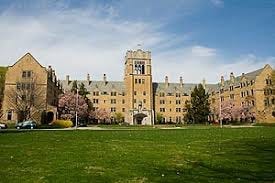
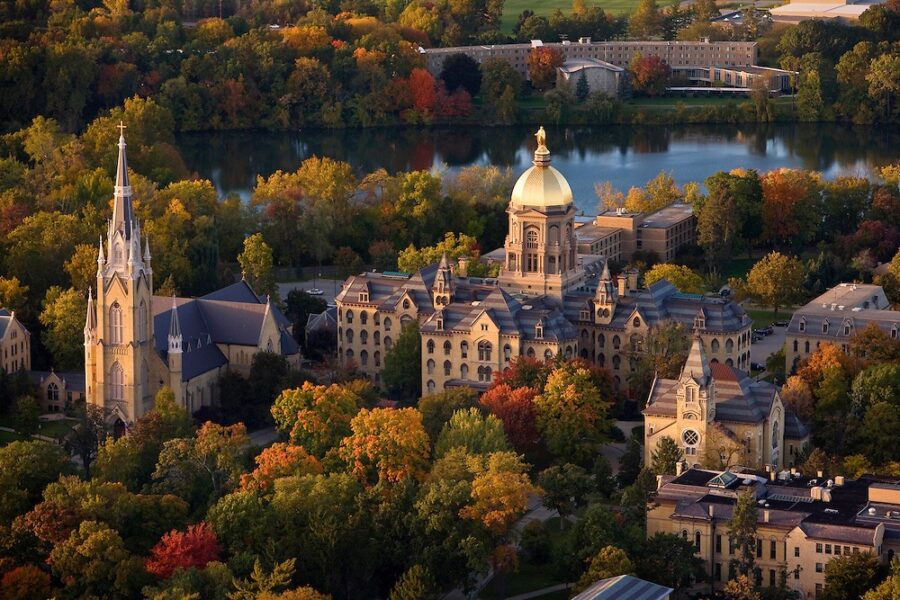
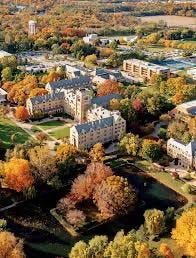
Aerial view of campus of University of Notre Dame. Showing the Golden Dome and Our Lady above the Admin Building. Autobiography of Dr. Anthony J. Carbone.

Believe Nothing You Hear, and Only Half of What You See — A memoir of Service, Shame and the Search for Truth

My First Week of College at Notre Dame

By the time the first official week of college began, our long summer of anticipation was finally over. The buzz of orientation events and the flurry of new friendships had barely settled when a singular rite of passage landed in our hands and marked our true arrival into Notre Dame life.

The Infamous Dog Book

It came wrapped in glossy pages. The little blue-and-yellow hardback — formally titled The Notre Dame & Saint Mary’s Freshman Register, Class of 1977— was better known across campus by its infamous, irreverent nickname: The Dog Book.
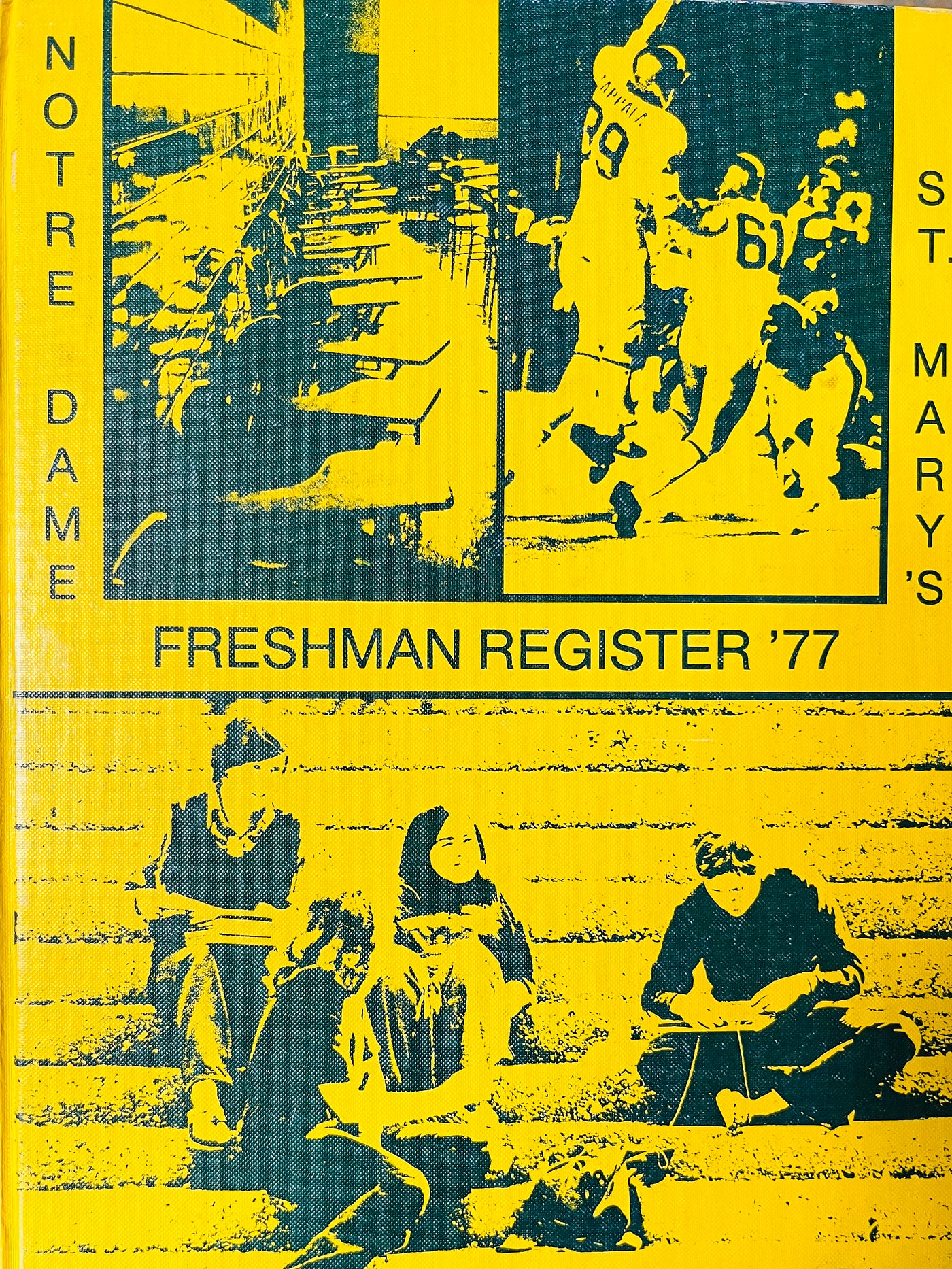
Notre Dame & St Mary’s College Freshman Register ’77 (The “Dog Book”)

The Girls of Saint Mary’s

Now, let me clarify from the start: the girls of Saint Mary’s were anything but “dogs.” The name was a holdover from Notre Dame’s all-male history and had lingered through decades of tradition and crude humor. But if you were a freshman guy in 1977, you knew exactly what the Dog Book meant. It was your first unofficial introduction to the incoming class — your own classmates and, far more tantalizingly, the women across the road at Saint Mary’s College.

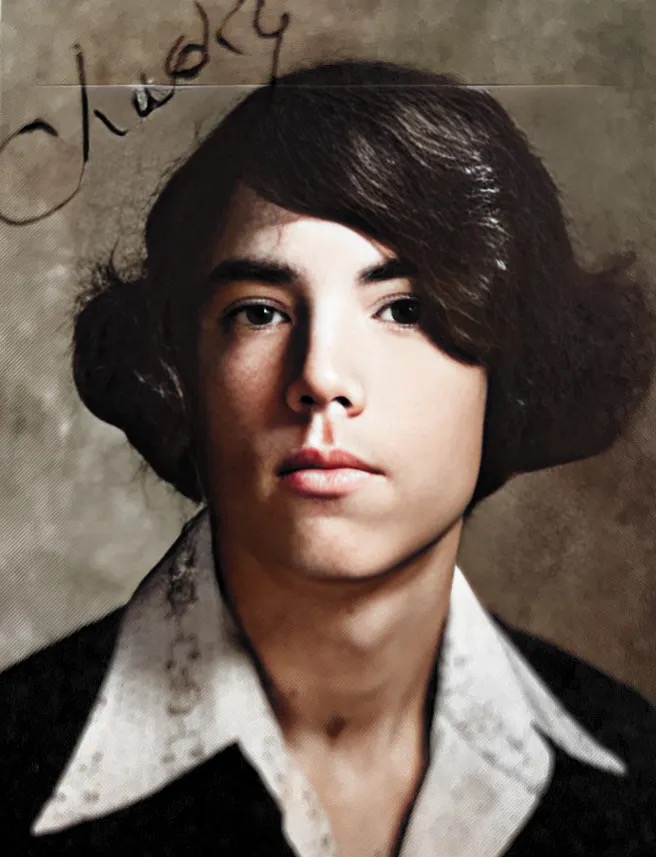
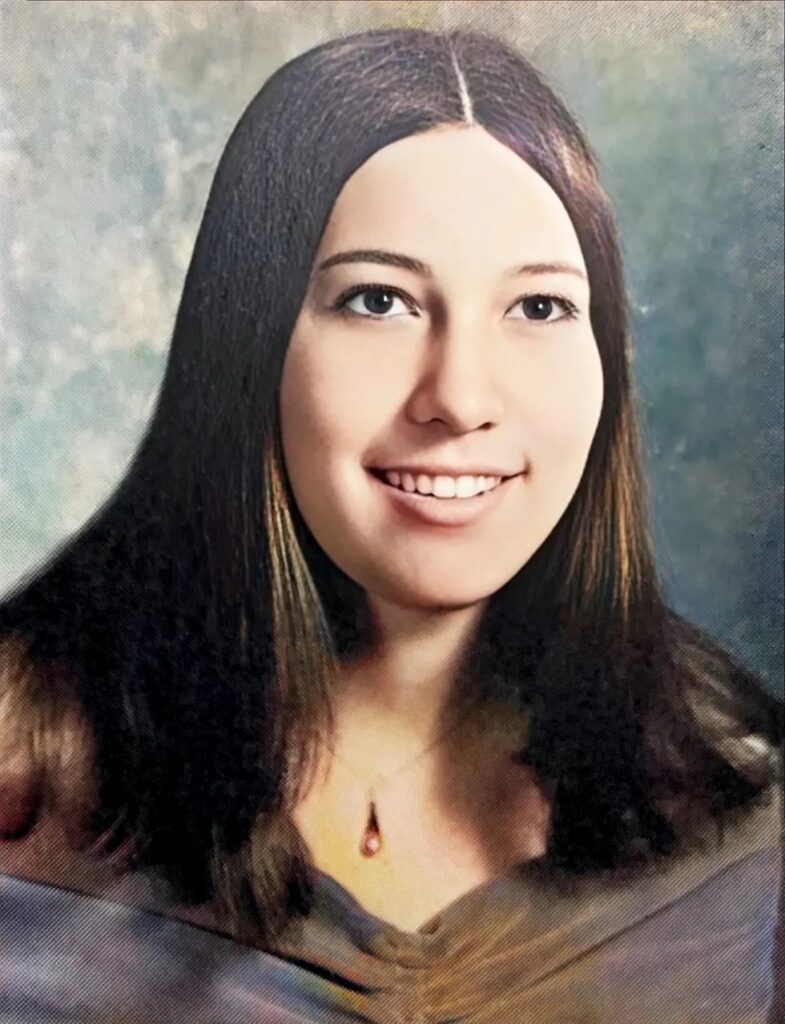
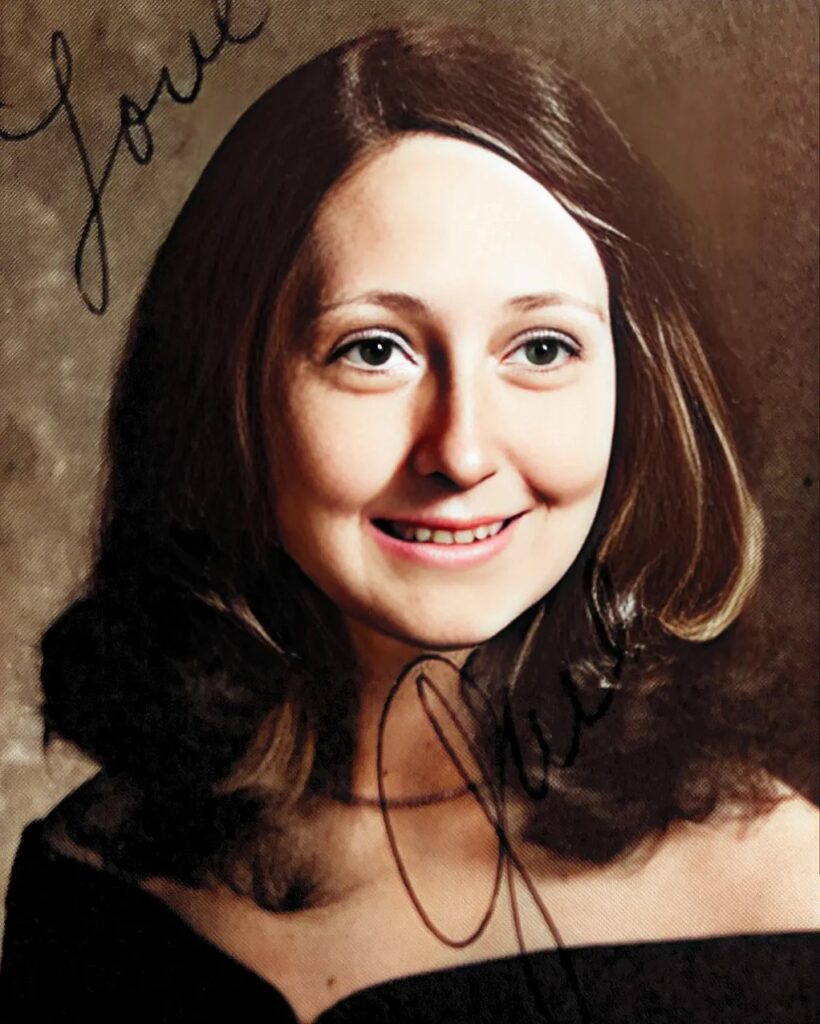
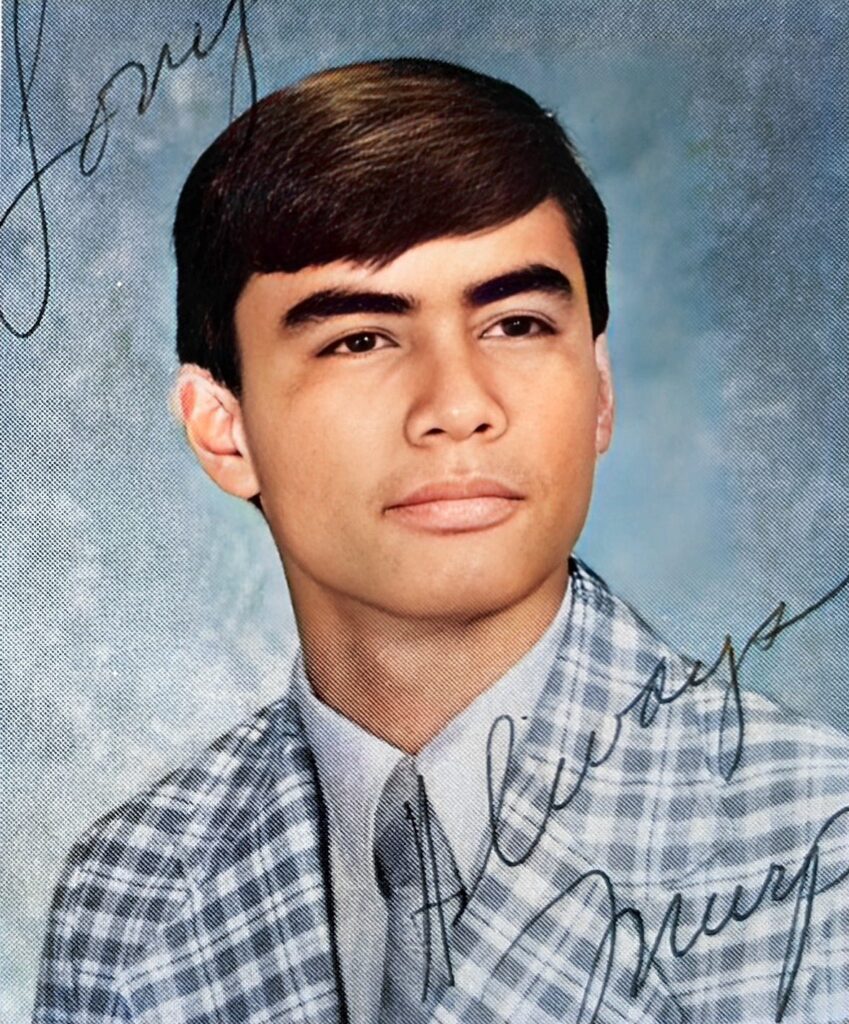
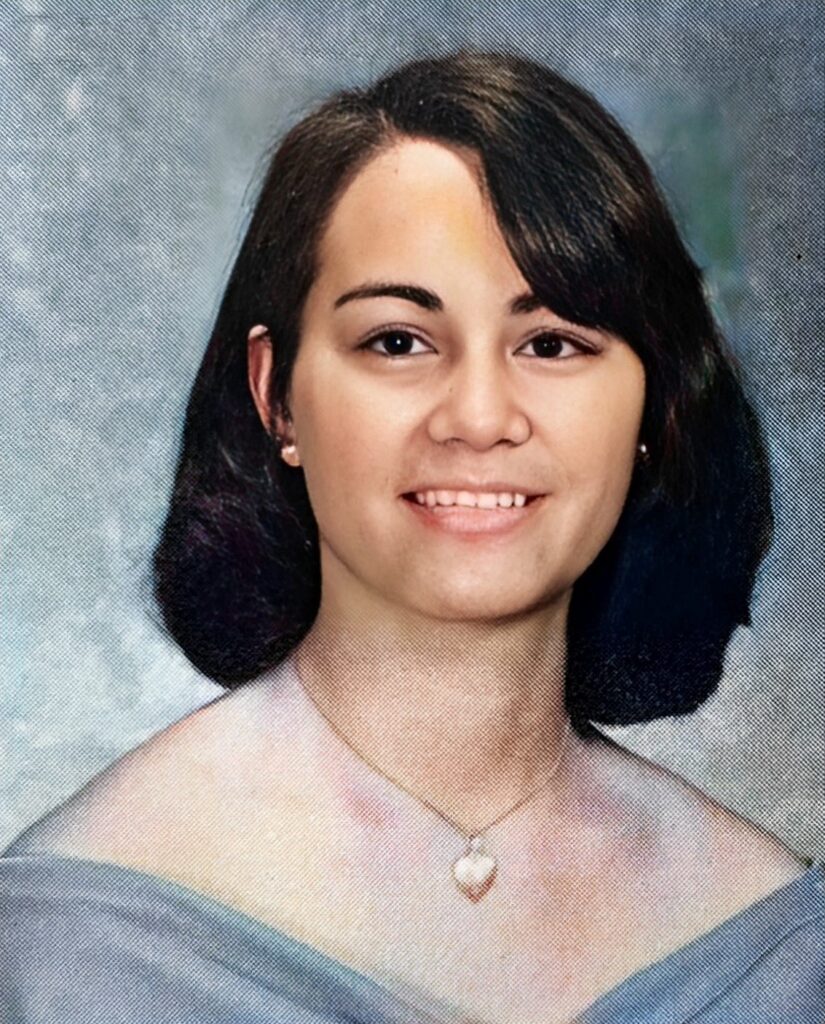
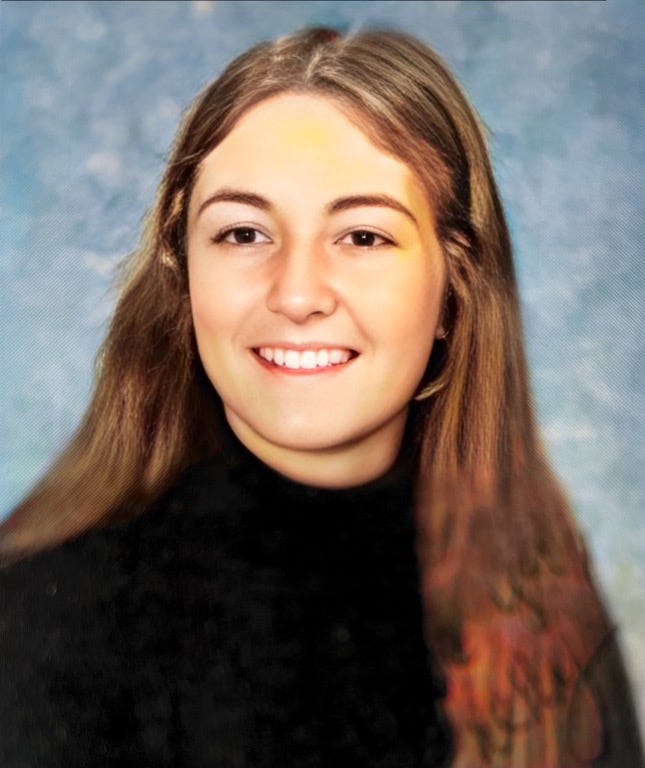
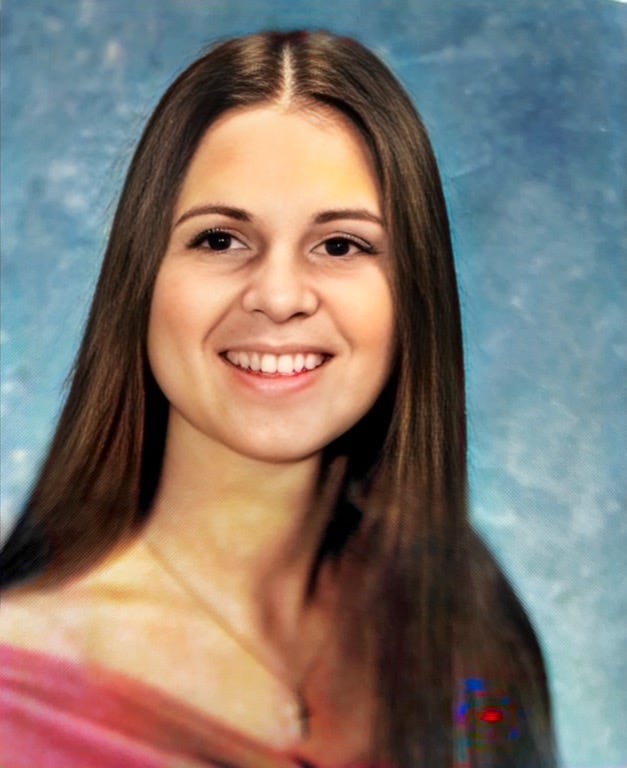
The book was laid out like a catalog: headshots of every incoming freshman at both schools, organized alphabetically. Each photo came with a name, nickname (if they had one), hometown, high school, and intended major. No bios. No blurbs. Just faces, facts, and enough fuel for hours of hallway commentary.

The moment the Dog Books were delivered to Fisher Hall, tradition took over. Guys poured out of their dorm rooms with books in hand and formed an impromptu gathering in the hallway. We sat cross-legged against the cinderblock walls, flipping pages together as if we were drafting fantasy football teams — or, more accurately, evaluating potential dates, girlfriends, and future wives.
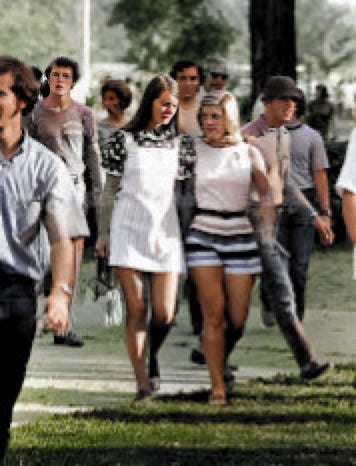
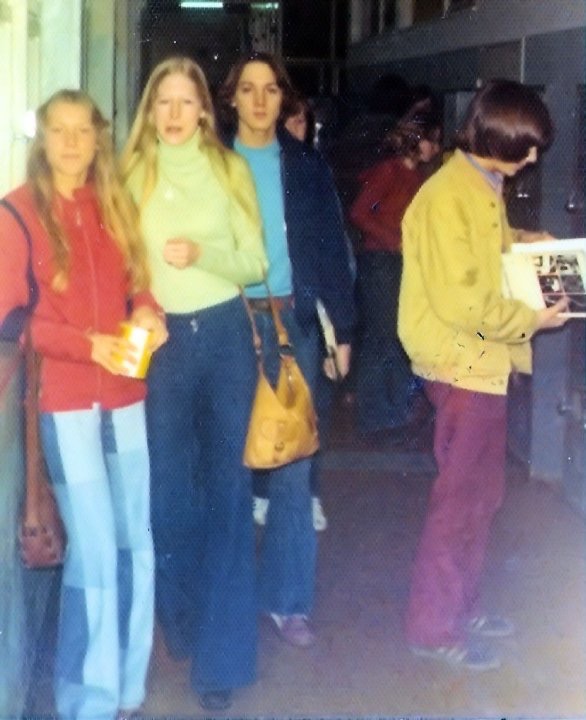
Girls of Saint Mary’s College mingled among the boys on the campus of Notre Dame

The jokes flew fast. So did the judgments. Someone would point at a photo and say, “She looks like trouble.” Another guy would shout, “Bottom of Page 56 — dibs!” Every once in a while someone would spot a classmate or recognize a name and make a big show of it, good or bad. It was crude, superficial, often cruel — but also a strange kind of bonding ritual.

I Avoided Being in the Dog Book

And I remember one very specific feeling: relief. I wasn’t in the Dog Book. Not a picture. Not a nickname. Nothing. Because I hadn’t applied to Notre Dame the traditional way, my name had been left out of the publication entirely. I watched the teasing pile up on a few poor souls — guys and girls alike — and silently thanked the registration gods for my invisibility. That day, anonymity was a blessing.
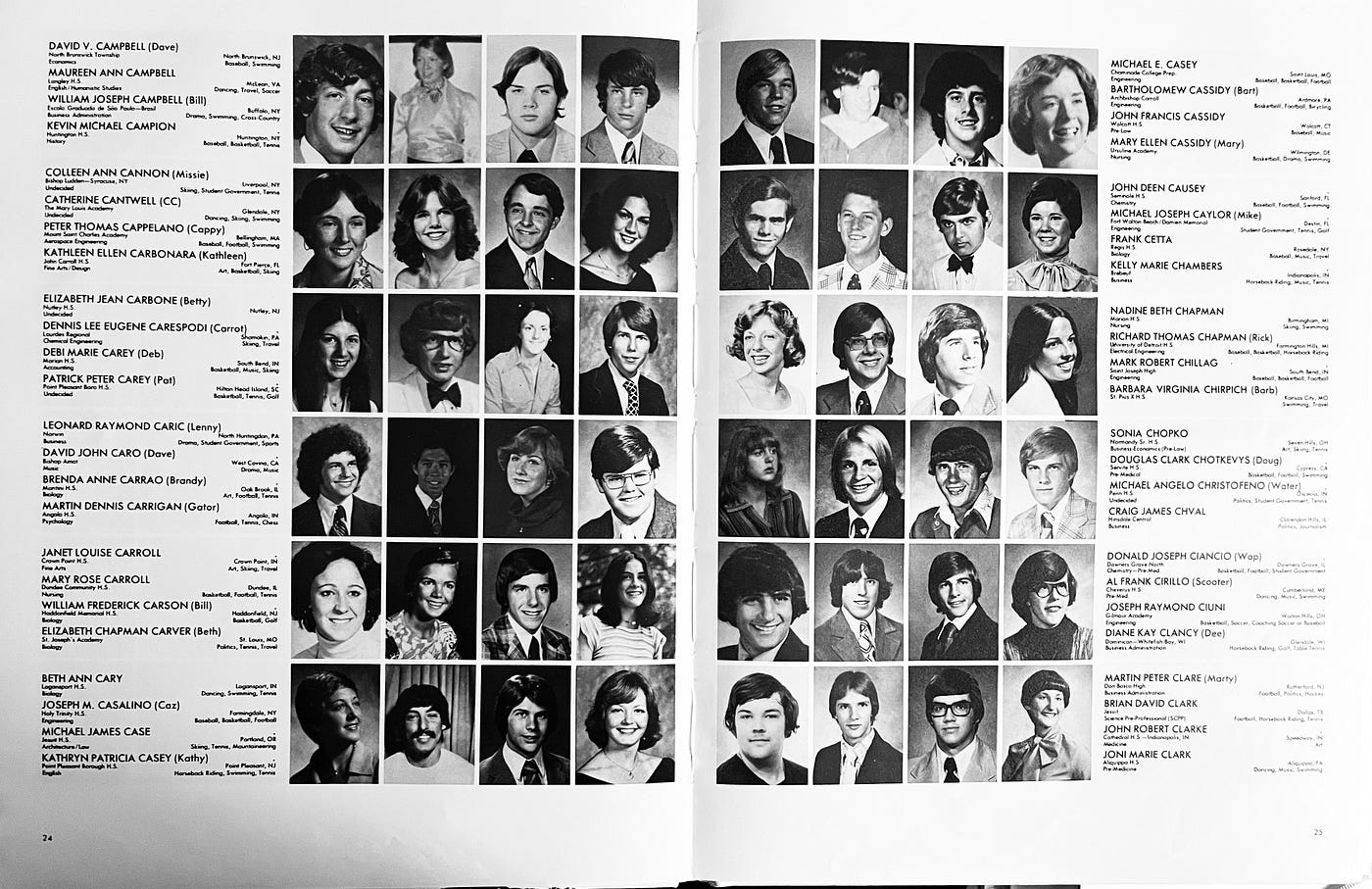
Notre Dame & St Mary’s Freshman Register from 1977 (Showing Elizabeth Carbone and no Anthony Carbone)

For all its dated humor and objectifying overtones, the Dog Book was a tradition. And like so many Notre Dame traditions, it was one we absorbed without question — half-laughing, half-cringing, entirely immersed in the absurdity of it all.

Saint Mary’s College (SMC): The College Across the Street
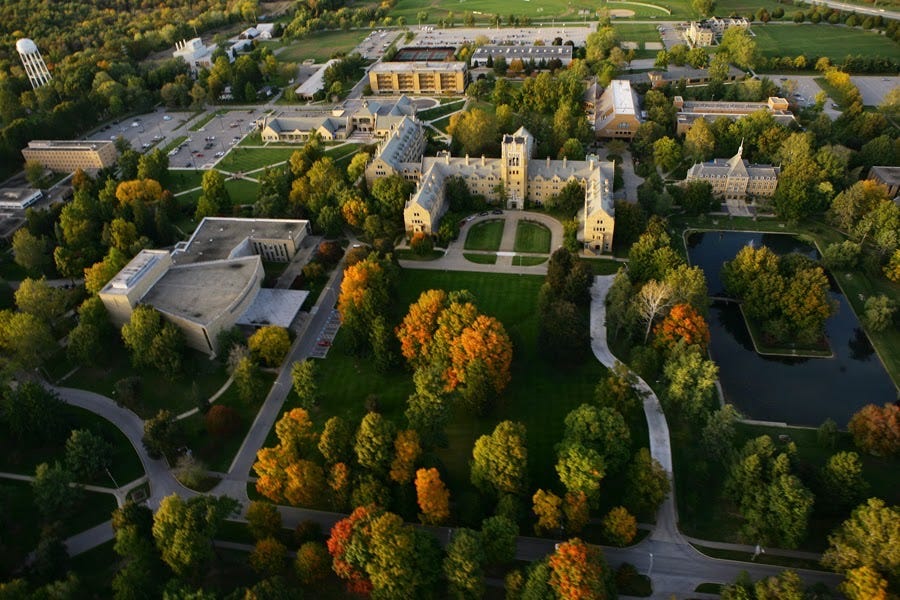
Aerial photograph of Saint Mary’s College, Notre Dame, Indiana.
Aerial view of Saint Mary’s College, Notre Dame, Indiana

To really understand the role the Dog Book played in campus life, you had to understand something about the girls across the street. Saint Mary’s College (SMC), a Catholic women’s college sponsored by the Sisters of the Holy Cross, stood just across U.S. Route 933, a short walk from the main gates of Notre Dame. But culturally, it often felt a world apart.
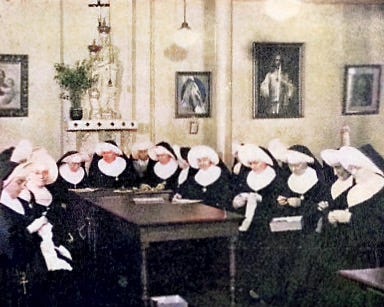
In 1977, Saint Mary’s enrolled 876 students, with 101 new applicants joining that fall. Student life at SMC was still steeped in tradition and governed by parietal rules that had barely budged despite the cultural revolutions of the late ’60s and early ’70s. These rules restricted when and how male visitors could enter the women’s dorms — usually limited to certain weekend hours, and always under strict supervision. The Sisters of the Holy Cross (CSC) still played an active role on campus, both academically and spiritually, guiding their students with a sense of purpose, decorum, and discipline.

The Sisters of the Holy Cross (CSC)
My First Venture to Saint Mary’s

LeMans Hall

Like most Notre Dame freshmen, I was more than a little fascinated by the girls of Saint Mary’s. They seemed like a blend of grace, charm, mystery — and yes, temptation. I forget exactly how I met my first SMC coed, but I was invited over to her dormitory, Le Mans Hall, for a Saturday evening visit early in the semester.
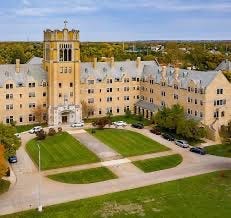
LeMans Hall at Saint Mary's College across from the University of Notre Dame.  Biography of Dr. Anthony J. Carbone.
Le Mans Hall at Saint Mary’s College

Rules of Saint Mary’s College

I was already nervous walking across the road by myself, unsure of the etiquette or expectations. But when I arrived, things got a whole lot more intimidating. There was an elderly nun stationed at the reception desk in the front hall. She asked me, in a tone that made it clear she was not one to be trifled with, what my intentions were. I stammered something about being invited, and obediently handed over my Notre Dame ID card when she requested it.

Getting Past the Front Desk
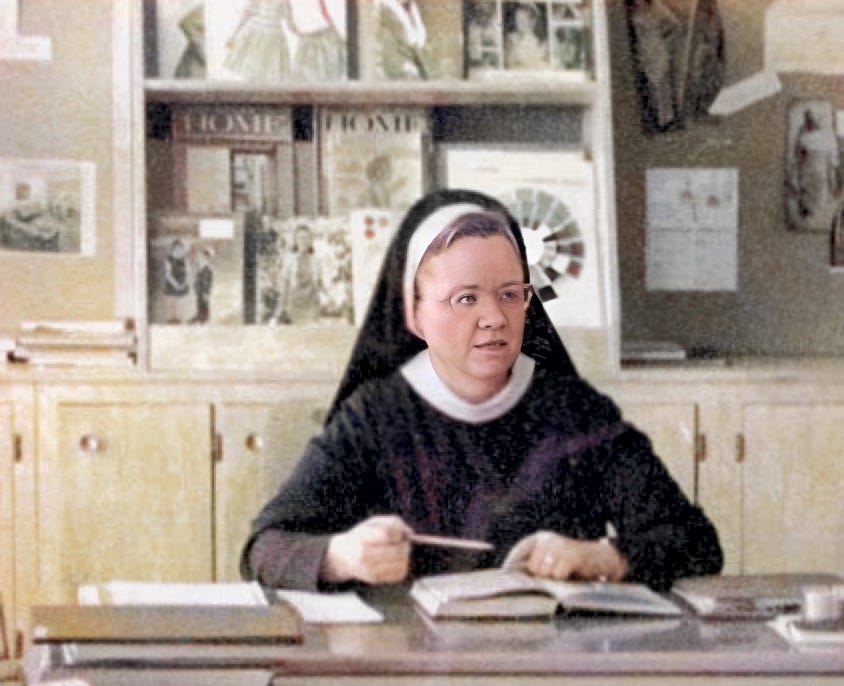
Photograph of older religious sister at a desk at Saint Mary's College.  Biography of Dr. Anthony J. Carbone.

Then came the interrogation. She called upstairs to verify that the young lady had indeed invited me, and when the coed confirmed, the nun told her to come down to escort me personally. No unsupervised wandering was allowed. Once upstairs, I was so on edge that I can barely remember the girl, her room, or what we even talked about. All I remember is the phone ringing about forty-five minutes into our visit. It was the same nun, calling the room to speak to me directly.

“Anthony,” she said in a clear, commanding voice, “you have fifteen minutes to leave the dormitory before parietal hours begin.” Parietals. That was the Notre Dame–SMC term for the formal rules regulating male visitation in female residence halls — rules that had the force of institutional and moral authority behind them. Once parietals began, all male guests had to be out, no exceptions. And this particular nun wasn’t leaving anything to chance.

I thanked her, hung up the phone, and left immediately — heart racing, palms sweating, a little dazed by the whole ordeal. I honestly don’t remember if I ever went back to that room, or even spoke to the young lady again.

It wasn’t just the strictness that kept me away. I was busy — pre-med classes, ROTC, and intramural soccer didn’t leave much space for cross-campus courtships. But I’d be lying if I said the nun hadn’t made a lasting impression. Avoiding Sisters of the Holy Cross became something of a subconscious strategy that semester.

The Saint Mary’s Panty Raids

I didn’t set foot in a Saint Mary’s dorm again until the panty raid in the spring — a decades-old tradition that had long blurred the line between innocent fun and cultural cringe. The stories from the women of Saint Mary’s say it all.

“Our room being on the second floor… provided the best view for Panty Raid. Seeing all the guys run up The Avenue near midnight, yelling, and girls screaming back, was quite a sight… Some girls actually threw panties down!” — Alice M. Tsui, Class of 1970

“I remember calling my mother and telling her I needed all new underwear because I had thrown almost all my things to the boys.” — Judy Johnson Crates, Class of 1970

“The ND guys got into the dorm and were trolling the halls… We pushed a desk up against our door and watched through the transom while the campus guards tried to chase them down!” — Karen Preston McCarty, Class of 1970
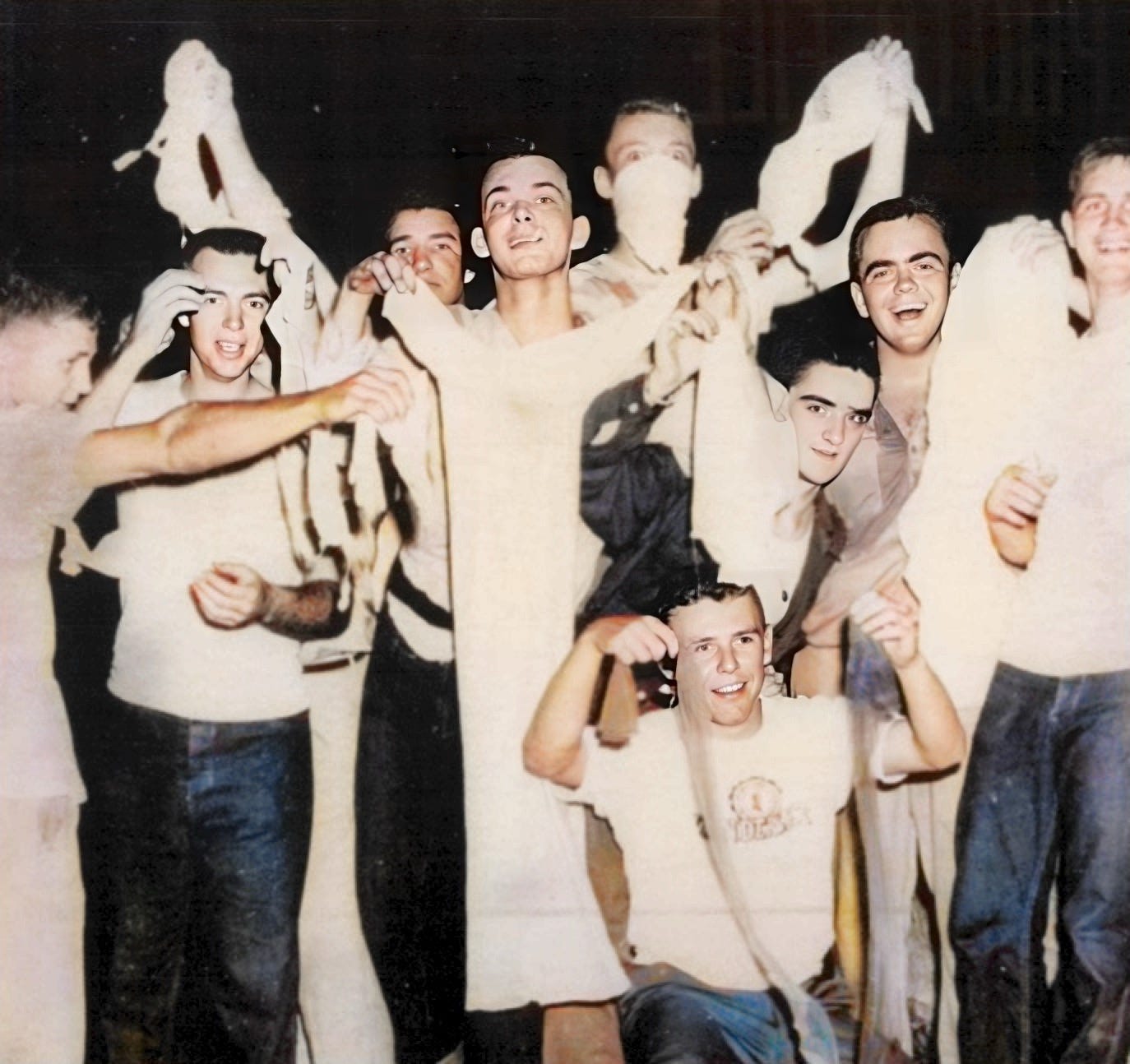
Group of Notre Dame boys holding lingerie from a recent Panty Raid at Saint Mary's College.  Biography of Dr. Anthony J. Carbone.
Notre Dame boys at St. Mary’s panty raid

It was outrageous. It was immature. And in hindsight, it’s the kind of thing that could never — and probably should never — happen today. At the time, we actively embraced many bizarre traditions as part of life under the Golden Dome.

Even by the time I was a freshman in 1977, the tradition was beginning to fade, or at least lose its luster. But the lore lingered. And for many of us, that was more than enough to keep the mystique of Saint Mary’s alive — whether we were brave enough to cross the Avenue or not.

Cadet Life Begins

While dorm pranks and hallway rituals offered a strange kind of social education, my real initiation into Notre Dame life came through two far more demanding callings — both of which began to take shape that very first week. I arrived on campus with a clear and heavy burden: two missions, equally urgent.

The first was academic. I was a pre-professional science major on the pre-med track, and I knew that earning a shot at medical school would take everything I had. There were no shortcuts. No excuses. I had to perform — and outperform — starting on day one.

The second mission was military. As an Army ROTC scholarship cadet, I actively committed—both contractually and personally—to developing into a leader capable of earning a first-class lieutenant commission by graduation.

That meant discipline, training, and excellence in every formation, drill, and leadership lab for the next four years. Two tracks. One man. No room to stumble.

So while most of my classmates were still finding their rhythm in dorm life, I was already switching gears — fast. I traded in the laughter of Dog Book hallway sessions and the chaos of panty raids for the early-morning demands of a cadet’s life. Gone were the Sperry’s and free time. In their place: combat boots, pressed uniforms, tight schedules, and 0600 alarms.

ROTC and Reality

The day of ROTC orientation began with the usual morning routine in Fisher Hall: a shower down the hall, a quick breakfast at South Dining Hall, and then a walk across campus. The morning sun lit the yellow brick buildings beautifully as I passed the Knute Rockne Memorial Gym — “The Rock” — on my way to the ROTC building.
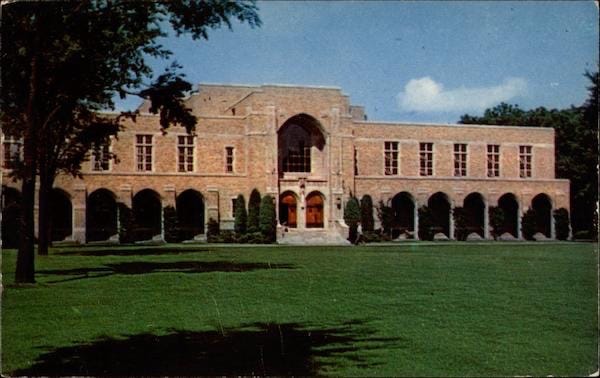
Knute Rockne Memorial Building on the South Quad of the University of Notre Dame.  Biography of Dr. Anthony J. Carbone.
Knute Rockne Memorial Building

Professor of Military Science (PMS)Lieutenant Colonel Henry J. Gordon greeting us. A team of senior cadets who had clearly been through it all before also helped us.
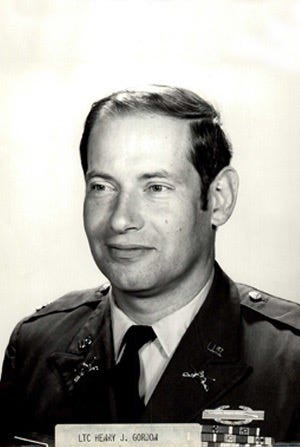
Professor of Military Science (PMS) LTC Henry Gordon, University of Notre Dame. Biography of Dr. Anthony J. Carbone.
Professor of Military Science (PMS) for University of Notre Dame, LTC Gordon

Received my Army ROTC Basic Issue

The orientation included a historical overview of Notre Dame’s long-standing military tradition, stretching back to the Civil War, officially formalized in 1951. There were about 50 of us new Army cadets. We were issued our fatigues, boots, T-shirts, caps, helmut, a few other GI items — our first taste of uniformed life.
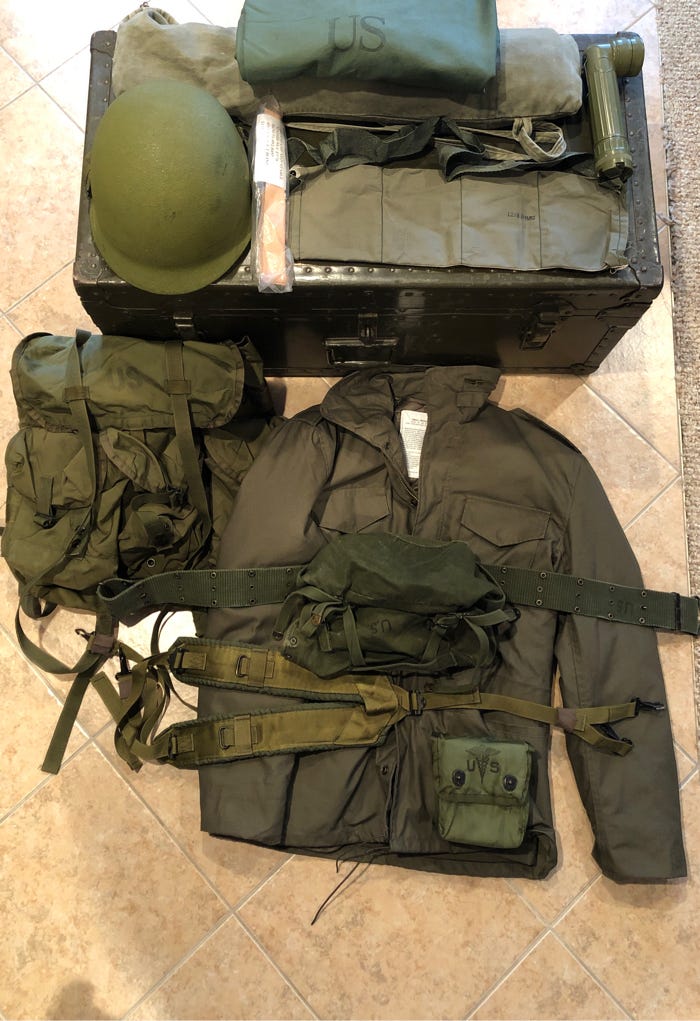
U.S. Army basic issue of gear including steel pot Helmut, flashlight and footlocker.  Biography of Dr. Anthony J. Carbone.

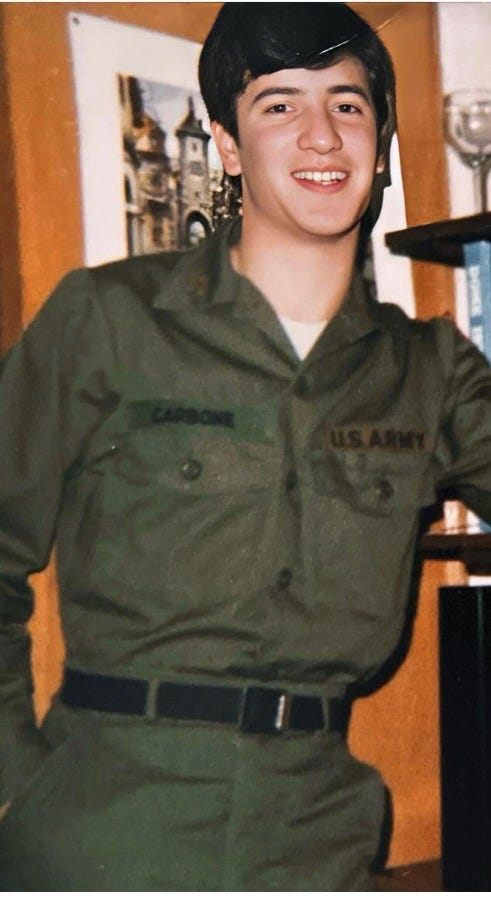
For most, it was a novelty; yet, for me, it was second nature. I had grown up watching my father in his starched olive drab fatigues, crisp white T-shirts, and brightly colored unit patches. By 1977, ROTC cadets like me were still wearing the OG-107 uniform — green fatigues with subdued patches. The details had changed, but the discipline hadn’t. I knew how a uniform should look. And as you know, I was already a master boot-shiner. The rituals felt more familiar than foreign.

My Father & Me in the Old & New Army Fatigues
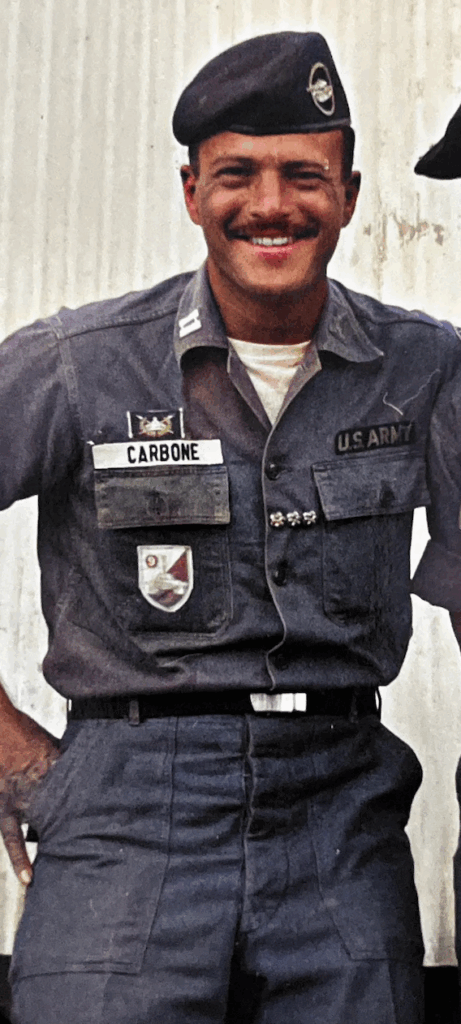
Truthfully, the orientation itself felt underwhelming. Compared to what I imagined at West Point, it felt like a watered-down version. I left wondering — again — if I had made the right choice turning down my West Point appointment.

Pre-Med at Fisher Hall

Back at Fisher Hall, I connected with Bob Terifay, the other pre-med student in our section. He was brilliant, confident, and pathologically competitive — a natural leader of the freshmen, even though no one had elected him. He already seemed to have every textbook memorized. I had no problem striving for A’s, but I didn’t get any joy from beating my classmates. I would have been happy if we all aced the exams. That wasn’t Bob’s style.
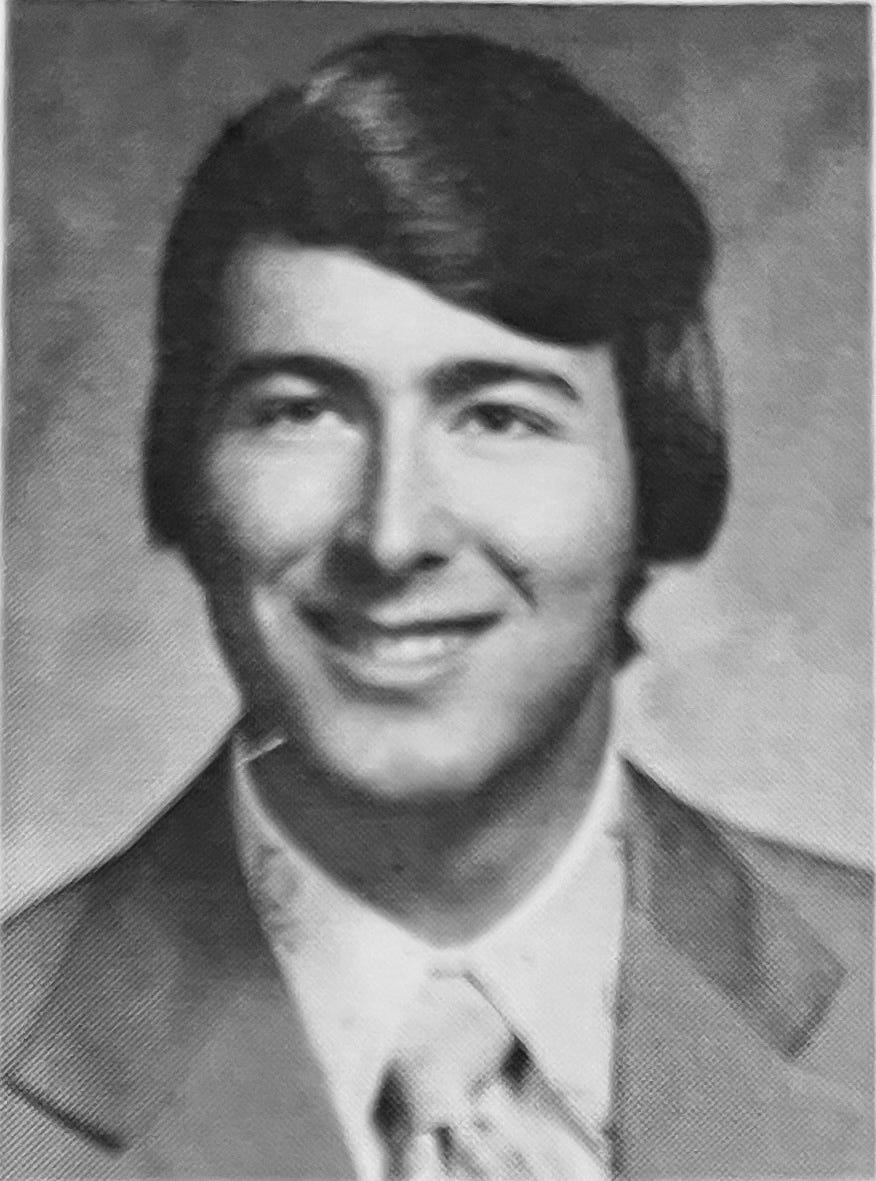
Robert Terifay, Pre-Medicine at University of Notre Dame.  Biography of Dr. Anthony J. Carbone.
Bob Terifay, Pre-Med, Fisher Hall Freshman

In Bob Terifay’s defense, Bob was a great guy. A genuinely nice guy, smart as a tac, faithful Catholic boy. Bob was the unofficial leader of our Fisher Hall section. He would step out of his dorm room when it was dinnertime, clap his hands, and announce dinnertime to all by yelling “Pret!” (French for “Ready!“) Bob’s only problem was that he was a pre-med student at Notre Dame.

ROTC Scholarship Pays for Books & Supplies

I stuck close to him for a while because he had insider knowledge. He told me what to expect, what to prep for, and which professors to avoid. We walked together to the Hammes Bookstore, where a I learned a wonderful surprise — my ROTC scholarship covered all my books and supplies. That was a massive relief.

My First Year Academic Load

Many of our classes overlapped, except for Military Science and German. My first year schedule of courses included two semesters of: General Chemistry I&II with lab, Calculus I&II, English Composition & Literature, Intro to Philosophy, Intro to Sociology, Intermediate German, and Military Science.

The schedule was punishing. Science labs were four-hour marathons that earned just one credit hour. ROTC drills and PT demanded more time. Tuesdays were especially brutal — leadership labs in the afternoon, military class in the evening.

My Prep School Classmates-CLEP’d

What made it worse was this: many of the other pre-meds had come from elite Catholic prep schools and private academies. Most had CLEP’d out of chemistry, biology, or calculus thanks to AP credits. They were already a semester — sometimes a year — ahead of me. I had no such advantage. I came from a strong public high school, but I was starting from zero. And I knew I had to work twice as hard to keep up.

Advanced Placement AP Textbooks Calculus Biology Chemistry History.  Biography of Dr. Anthony J. Carbone.

Army ROTC Drill

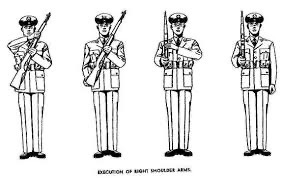
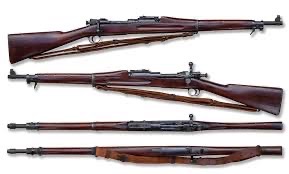
Drill periods were a throwback. We trained with M1903 Springfield rifles — heavy, nine-pound bolt-action relics from World War II. We practiced saluting, standing at attention, and performing the full 15-Count Manual of Arms. I can still snap it off to this day. If you could master the Springfield, the M16 was a walk in the park.
My First Day of Class

My first day of classes at Notre Dame must have been so chaotic and overwhelming that I only remember one class: General Chemistry I. The legendary Professor Emil T. Hofman, who also served as the Dean of the Freshman Year of Studies was our teacher.

The Legendary Dean Emil T. Hofman
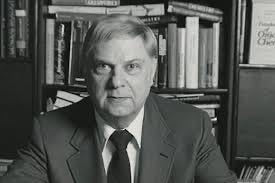
Emil T. Hofman, Dean of Freshmen Year Studies & Professor of Chemistry. University of Notre Dame. Dr. Carbone Autobiography.
Emil T. Hofman, Dean of Freshmen Year Studies & Professor of Chemistry

He was strict. In fact, he was so strict that he once gave future Nobel Prize in Medicine winner Eric Wieschaus — Notre Dame Class of 1969 — a B in both semesters of chemistry. Over four decades, Emil T. taught more than 60 percent of each freshman class. That totaled over 32,000 students, with more than 8,000 of them going on to become doctors. He was a Notre Dame institution unto himself.
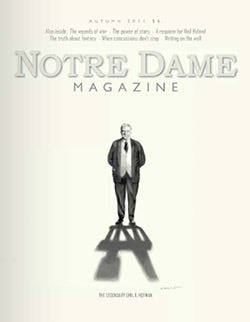
Dean Emil T. Hofman being celebrated on the cover of Notre Dame Magazine. Professor of Chemistry. Dean of Freshmen Year Studies. University of Notre Dame. Dr. Carbone autobiography.
Emil T. Hofman on the cover of Notre Dame Magazine

Basic Chemistry House Rules

First Rule: Begin with the Lord’s Prayer

The class began with a brief introduction. Then, with no warmup or small talk, Professor Hofman commanded, “Settle down!” before leading us in the Lord’s Prayer. Every class began that way. That was the First Rule of Chemistry Class. At the end of the prayer, he would say, “Queen of Peace,” and we would reply in unison, “Pray for us.” Without fail.

Second Rule: Quiz Every Friday

Next, he went straight into the second rule. There would be a mandatory seven-question multiple-choice question quiz every Friday covering the material presented during the week. These quizzes were known for being tough, motivating many students to spend their Thursday nights studying to prepare for them. The phrase “Deliver us from Emil” was a common student sentiment.

Third Rule: Assigned Seats and “These are the rows!”

Assigned Seats: A key aspect of his first day routine, and indeed the entire semester, was the assignment of seats. Students were given specific seats they had to occupy for every class, a practice that ensured attendance could be easily monitored and probably discouraged late arrivals or skipping class.

“These Are the Rows!”: Related to the assigned seating, Hofman had a particular way of emphasizing the importance of staying in one’s assigned place. He would emphatically declare, “These are the rows!” This phrase reinforced the strictness of the seating arrangement and left no doubt that deviations would not be tolerated. This was likely a combination of setting expectations for discipline and ensuring a consistent classroom environment.
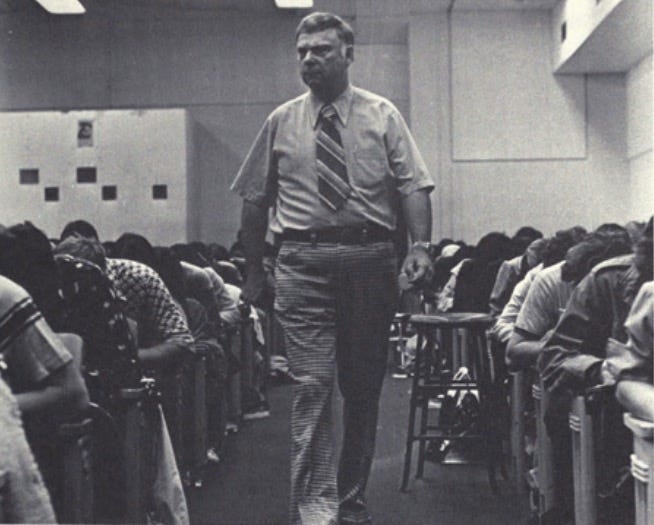
Dean Emil T. Hofman proctoring the weekly Friday Quiz. Professor of Chemistry and Dean of Freshmen Year Studies. University of Notre Dame.
Dean Emil T. Hofman proctoring the weekly Friday Quiz

When’s Your Birthday?

That’s when the girl sitting to my right turned towards me and abruptly asked, “When’s your birthday?” I told her, “Me? December 3rd. Why?” She replied, “Oh, just curious,” and she went back to listening to Professor Hofman. She didn’t say another word to me — not that day, not the next, not for months.
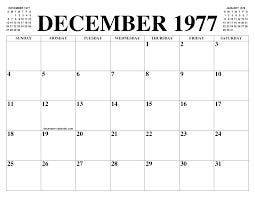
Calendar from December 1977 showing my birthday, 3 December, on Saturday.  Biography of Anthony J. Carbone.

My 18th Birthday

2 Girls and 2 Birthday Cakes

Then came Saturday, December 3rd, 1977 — I was 18 years old. Out of nowhere, that same beautiful girl and her equally beautiful roommate knocked on my door in Fisher Hall, holding a homemade birthday cake. “We came to celebrate your eighteenth birthday,” they said. They lit eighteen candles, sang “Happy Birthday to You,” and handed me a slice.

My First R-Rated Movie Followed by my First Beer in a Bar

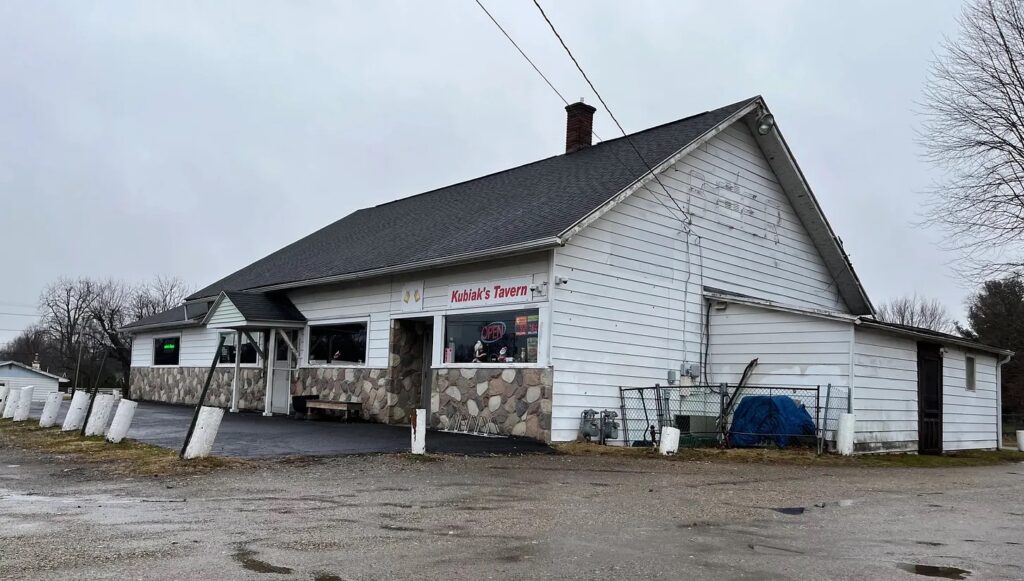
Then things got interesting. They took me to my first R-rated movieLooking for Mr. Goodbar. Sitting between two beautiful girls I barely knew during that particular film was, to say the least, uncomfortable. Afterward, they drove me across the border into Niles, Michigan to Kubiak’s Tavern so I could legally order my first alcoholic drink. I think we danced a little at the bar, laughed a lot, and eventually headed back.
The Goodnight Kisses

All three of us squeezed into the front bench seat of the car, me squarely in the middle. When we pulled up to Fisher Hall, I turned to thank them for the best birthday of my life and started to open the door.
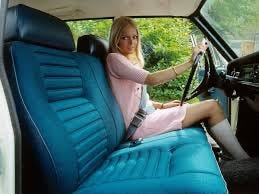
Blonde girl in pink minidress and white boots in the driver's seat of a 1970s-era car with blue bench seats.  Biography of Dr. Anthony J. Carbone.

“Not so quick, Tony,” they both said. I turned back toward my classmate. “What?” She leaned in and gave me a five-minute French kiss. I was blown away. As I turned the other direction to open the door, her roommate gently pulled me back. “Slow down,” she said. Then she gave me a five-minute French kiss of her own. It was, hands down, the best birthday of my life.

Football Season and My Neighbor Joe Montana

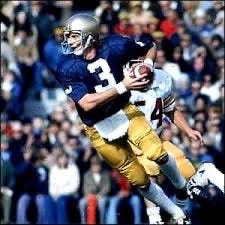
Without a doubt, the most exciting part of my freshman year at Notre Dame was football season — a highlight in any Domer’s college experience. But for me and every student in 1977, it was unforgettable because we won the National Championship.
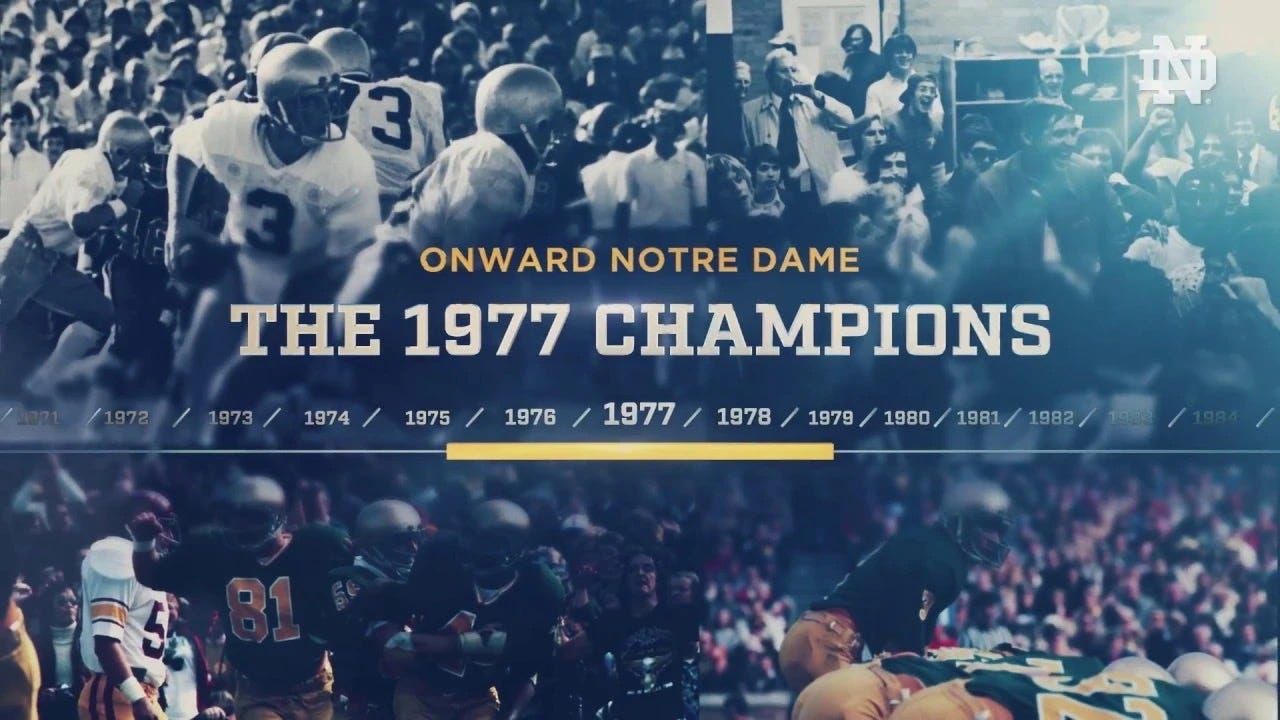
1977 NCAA National Football Champions. University of Notre Dame Fighting Irish. Joe Montana. Dr. Anthony Carbone autobiography.

Notre Dame Fighting Irish Football Wins NCAA National Championship

That year, the Notre Dame Fighting Irish, coached by Dan Devine and led by quarterback Joe Montana, finished the season with an 11–1 record and capped it off by demolishing the previously undefeated and top-ranked Texas Longhorns 38–10 in the Cotton Bowl. That victory sealed our tenth national title.

Quarterback Joe Montana and Coach Dan Devine
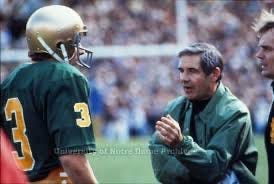
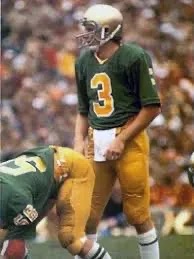
Photograph of Joe Montana (#3) talking to Coach Dan Devine during a football game.  Biography of Dr. Anthony J. Carbone.

Entering the 1977 season, Joe Montana was a junior quarterback, but he found himself in a precarious position on the depth chart—listed as third string after battling injuries and inconsistent play. His relationship with Coach Dan Devine wasn’t particularly warm or enthusiastic.

However, the turning point came in the third game of the season against Purdue. Notre Dame was losing 24-14, and starting quarterback Rusty Lisch was struggling. When backup Gary Forystek was injured, Devine was forced to turn to Montana, despite the previous tension. However, the turning point came in the third game of the season against Purdue. Notre Dame was losing 24-14, and starting quarterback Rusty Lisch was struggling. When backup Gary Forystek was injured, Devine was forced to turn to Montana, despite the previous tension.

Montana, a former seventh-string quarterback, was inserted into the game late in the third quarter. What followed was a classic comeback performance: Montana threw for 154 yards and a touchdown in the final 11 minutes, leading the Irish to a dramatic 31-24 victory. This comeback, in particular, helped launch Montana’s legend and reignited Notre Dame’s national championship hopes.

After this game, Devine recognized Montana’s capabilities and named him the starting quarterback. The team went on to win every game from that point forward, culminating in a dominating 38-10 victory over number one ranked Texas in the Cotton Bowl and securing the national championship. While their relationship might have been complicated, the Purdue game became a pivotal moment for both Montana and Devine, proving that despite any previous doubts or disagreements, they were a powerful combination that propelled Notre Dame to a memorable championship season.

Joe Montana and Four All-American Football Stars

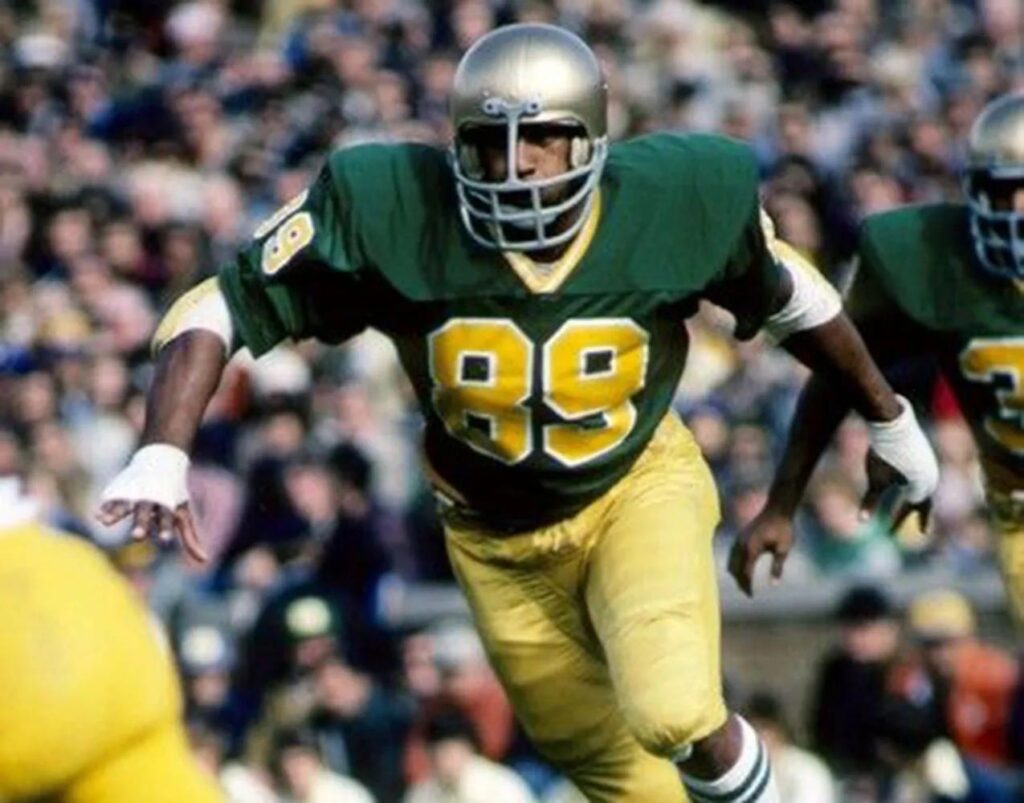
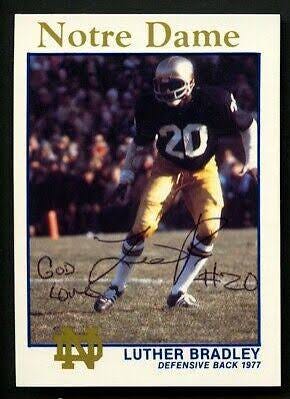
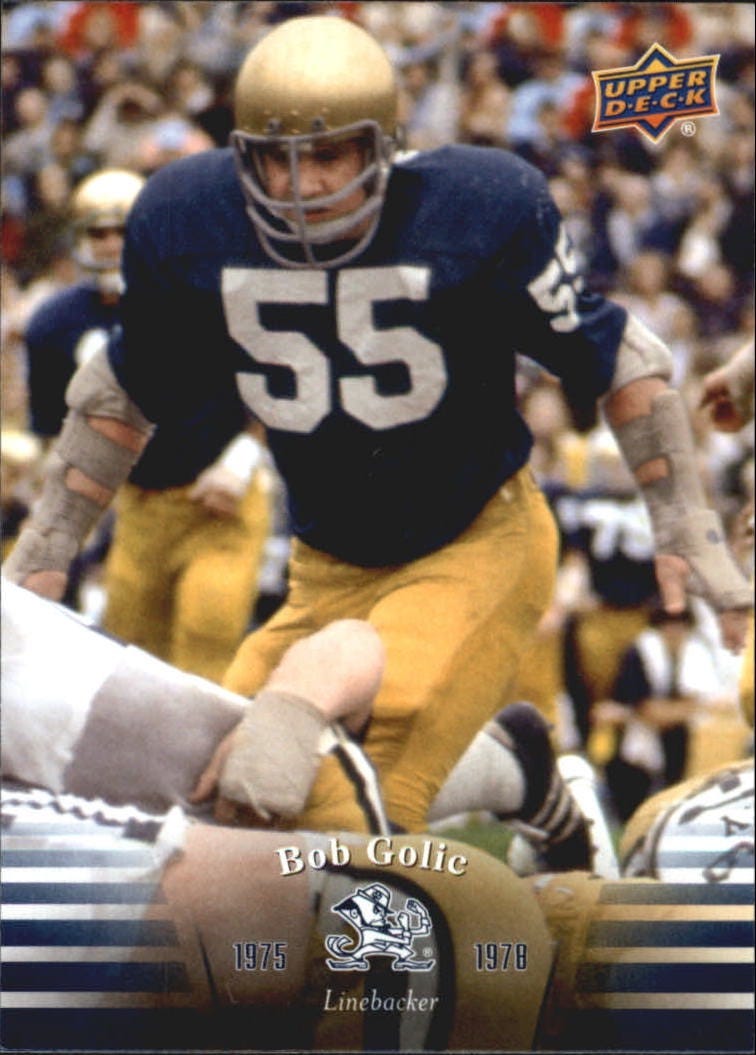
The 1977 squad was stacked with All-Americans: Ken MacAfee, Ross Browner, Luther Bradley, and Bob Golic. But surprisingly, Joe Montana — our quarterback and undeniable team leader — was not named to any All-American team. That still bothers me to this day. Joe’s later NFL career proved what a star he truly was. He led the 49ers to four Super Bowl victories and earned MVP honors in three of them. His 92-yard winning drive in Super Bowl XXIII became legendary. And his eight Pro Bowl appearances set the standard for greatness.
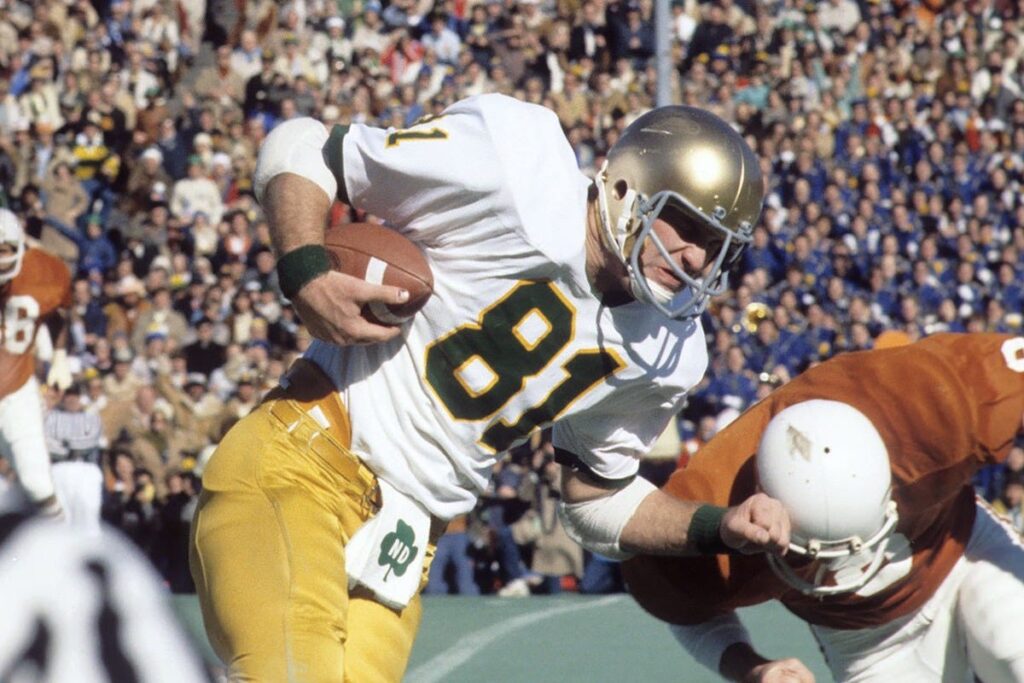
Bob Golic #55 of the Fighting Irish football team.  Biography of Dr. Anthony J. Carbone.
Bob Golic #55

Joe Montana My Next Door Neighbor

I knew Joe Montana–he was my next-door neighbor in Fisher Hall. The kind, funny, somewhat shy, and good-looking guy you see today in commercials and commentary — that was the exact same Joe I knew back then. He was humble and approachable. Let me give you two stories that show who Joe Montana really was.


Notre Dame Football Stadium

First, during home games at Notre Dame Stadium — “The House that Rockne Built” — student seating was assigned by class year and then by residence hall. Seniors got prime seats near the 50-yard line. Freshmen like us were tucked in the end zone. Our whole Fisher Hall section sat together.
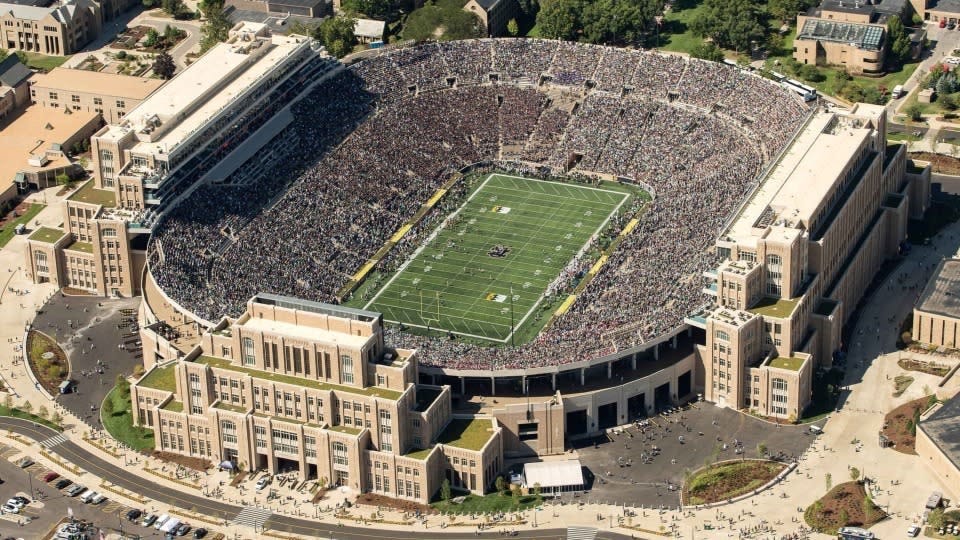
Notre Dame Football Stadium “The House That Rockne Built”. Biography of Dr. Anthony J. Carbone.
Notre Dame Football Stadium “The House That Rockne Built”

Joe Montana and His Fisher Freshmen

In nearly every game, whenever Notre Dame’s offense got into the red zone near our end zone seats, Joe Montana would pause behind the center, scan the crowd, find us — the Fisher Hall freshmen — point directly at us, and then throw a touchdown pass. That was Joe. In his biggest moments, in a deafening stadium, on national television, he remembered his freshman friends. That, to me, is what leadership looks like.
Joe Visits My Room Nightly for Snacks

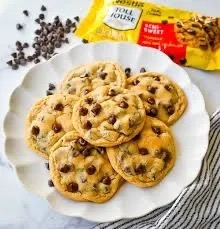
And Joe’s kindness extended off the field. Many nights, he’d quietly slip into my dorm room late, because I had a TV and he didn’t. He’d lay down on my bed, turn on the television, and say with a grin, “What do you have?” — hand outstretched. My four sisters constantly sent me care packages, especially homemade Tollhouse chocolate chip cookies. Joe knew it. So I’d break out the latest box and share it with him. He was always gracious and genuinely appreciative.
No Athletic Dorms, Cafeterias, or Tables

Notre Dame was different. Unlike big football schools, we had no athletic fraternities, no athlete-only dorms, no athlete dining halls. Our NCAA stars lived with us. Ate with us. Walked across campus like any other student. In our Fisher Hall section alone, we had Joe Montana, Jerome Heavens, and Mike Calhoun — which meant that we got to meet the other players when they visited.

Definitely, no hostesses!

I later visited schools like Alabama and Florida and saw how athletes were treated like royalty. I met women who called themselves “hostesses” and bragged about entertaining football recruits. Some even said they were on scholarship for it. When I told them that Notre Dame didn’t have hostesses, they didn’t believe me. I said, “Believe me. Notre Dame is so small, we know what goes on. And we do not have hostesses.”

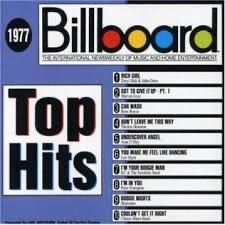
1977 Music

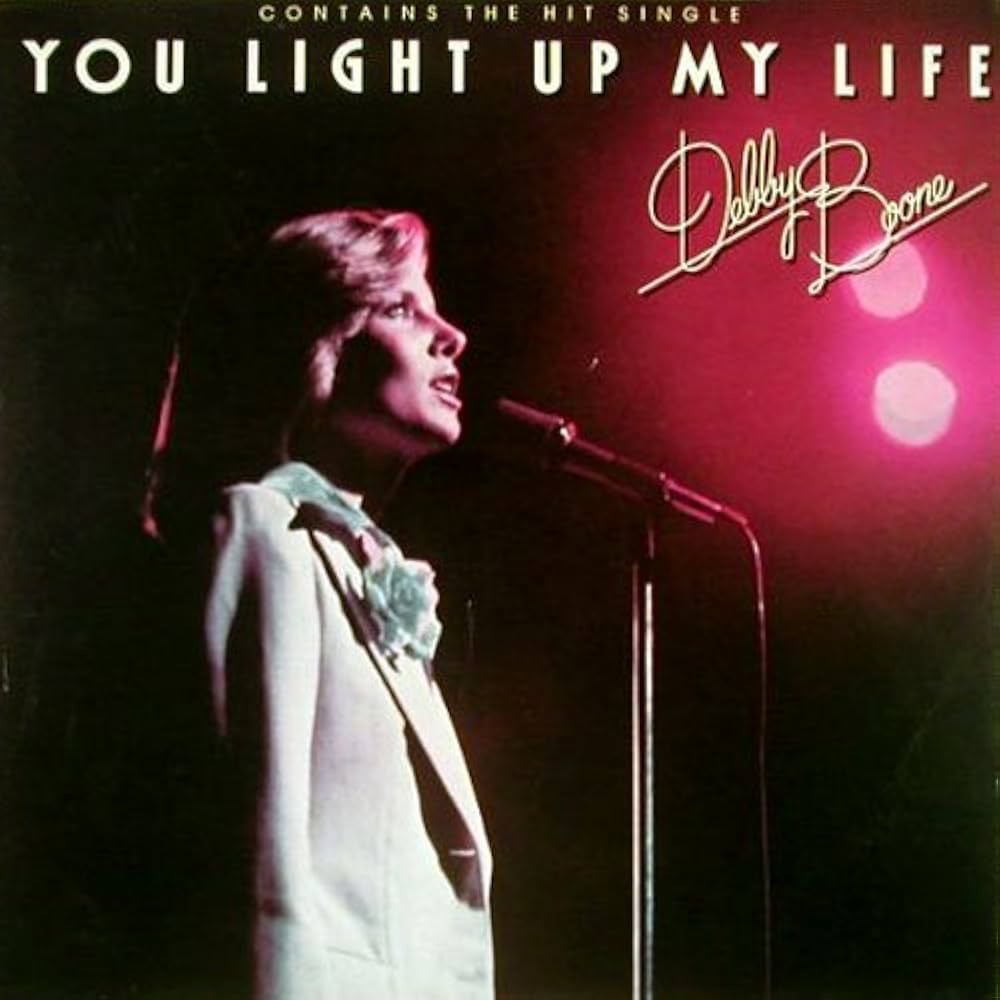
The music of 1977 was definitely not one of my favorites; I am much more of a 1960s, maybe early-1970s music fan. Debby Boone’s “You Light Up My Life” debued in October 1977 and stayed #1 until the end of the year. So “You Light Up My Life” reminds me of my first round of college final examinations, and I am happy that the song was so overplayed that it’s never been on the air since.
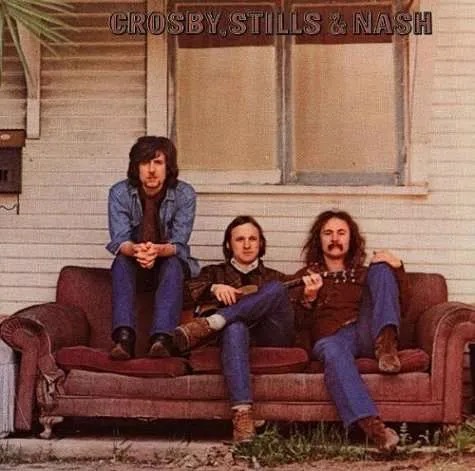
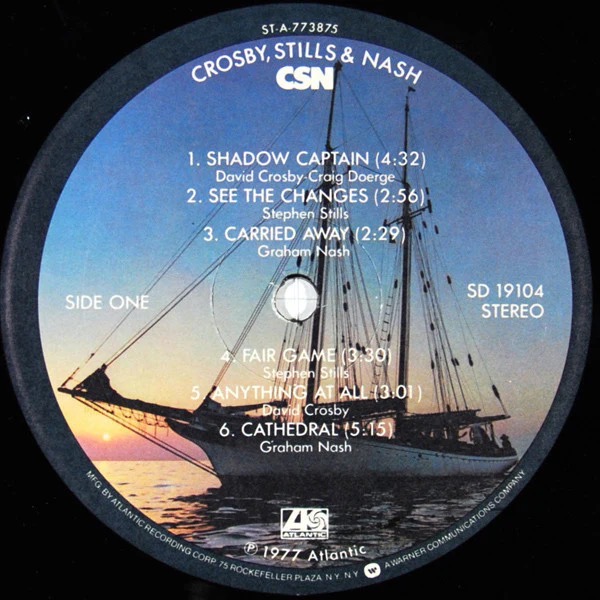
Crosby, Stills & Nash at Notre Dame

On November 5, 1977, I saw Crosby, Stills & Nash perform at the Athletics and Convocation Center. The stage setup looked exactly like their famous album cover — just the three of them sitting together on a leather couch, guitars in hand, playing pure acoustic sets. No flashy lights or backup bands, just their harmonies filling the arena. It felt intimate despite the size of the crowd, like we were all sitting in their living room. I was happy because they played all of their greatest hits.
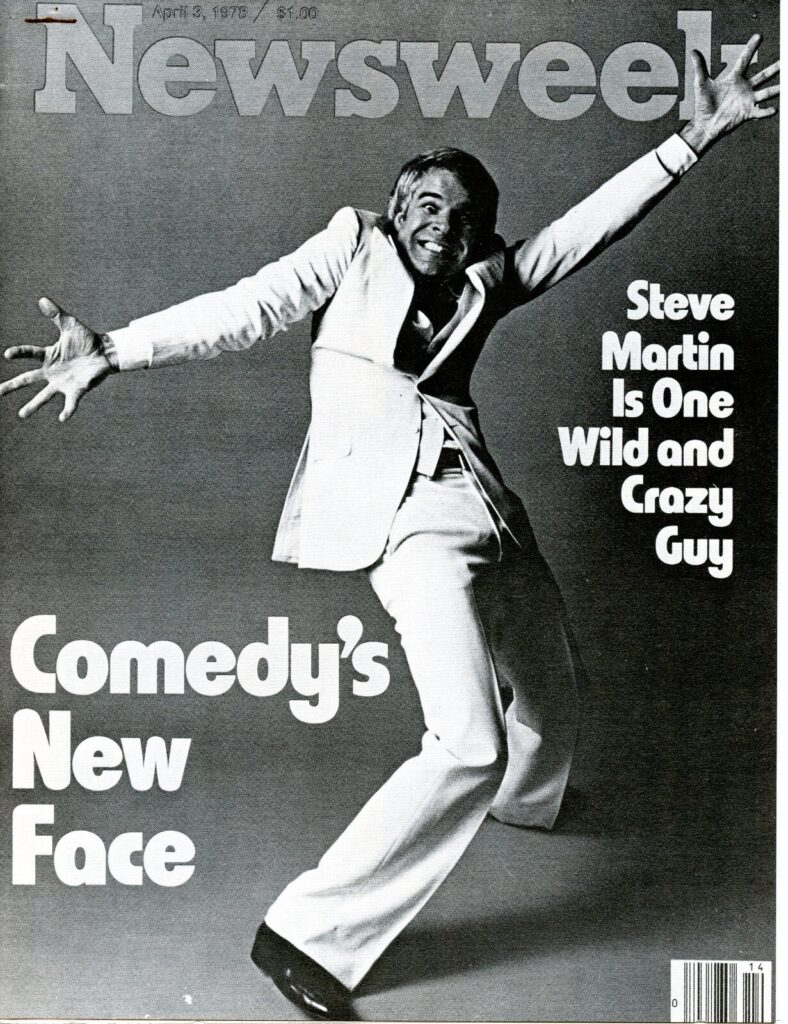
A Wild & Crazy Night at Notre Dame

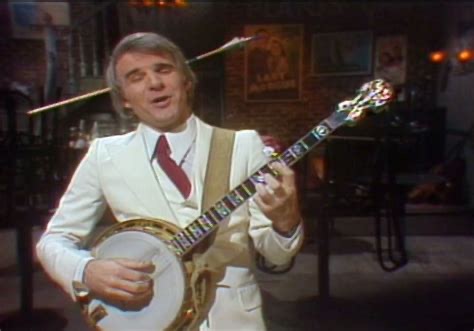
Four days later, on November 9, 1978, I had the rare treat of seeing Steve Martin perform live on campus. He was debuting his now-famous “Wild & Crazy Guy” routine from Saturday Night Live. Dressed in his classic white suit with an arrow going through his head, he alternated between cracking absurd one-liners and picking out lightning-fast banjo tunes. I had always known he was funny, but that night I also realized he was quite a musician. This was the act that catapulted him into superstardom, and I was lucky enough to see it up close and personal right there at Notre Dame.
Thanksgiving, Homesickness, and a Visit from Jeff Bell

First Thanksgiving Away From Home

Thanksgiving came, and I wasn’t able to make it home. The cost of traveling after an already expensive first semester was just too much. It was the first major holiday I had ever spent away from my family, and the homesickness hit hard. Most of the students left campus to go home, and suddenly, the bustling grounds of Notre Dame became eerily quiet.

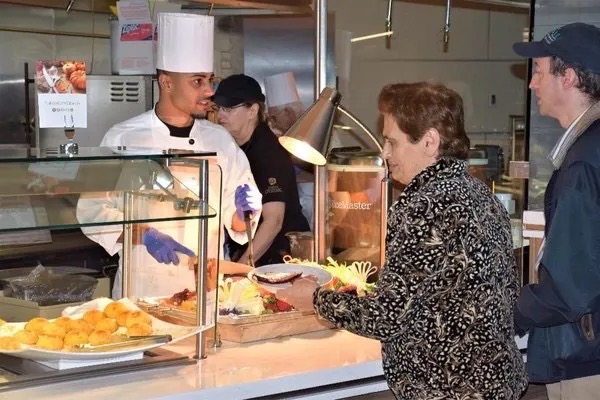
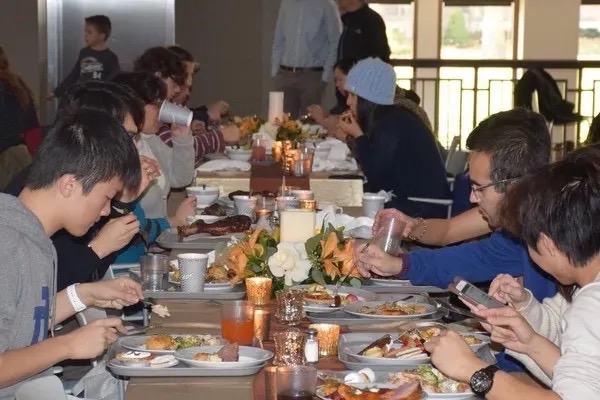
The only people left were a handful of domestic students like me and the international students who also had nowhere to go. The University did its best to create some holiday spirit. The Dining Hall put on a Thanksgiving feast, complete with turkey, stuffing, mashed potatoes, and pumpkin pie. The food was good, and the gesture was appreciated, but it didn’t come close to the warmth and chaos of a Carbone family holiday back in Winchester. I smiled politely through dinner, then went back to the dorm, feeling the weight of distance more than ever.
Jeff Bell Visits Notre Dame

Shortly after Thanksgiving and before finals in December, I got a much-needed boost. My buddy Jeff Bell drove up from his college in Texas to visit me. His arrival felt like a taste of home, and I was excited to show him around the campus that I was beginning to call my own.

Jeff was immediately impressed. The sight of Fisher Hall, the Gothic buildings, the golden dome — he soaked it all in. But nothing impressed him more than running into Joe Montana in our dorm hallway. He was even more awestruck when we went to the South Dining Hall for dinner and spotted both Joe Montana and Ross Browner eating together like regular students. That moment stayed with him for decades. To Jeff, it was unthinkable that future NFL legends would sit among the student body without any entourage, just two guys with trays and a meal card.

But Jeff quickly realized that Notre Dame wasn’t exactly a party school. That Saturday night, he turned to me and asked, “Where is everybody?” I smiled and said, “You want to see where everyone is on a Saturday night?”
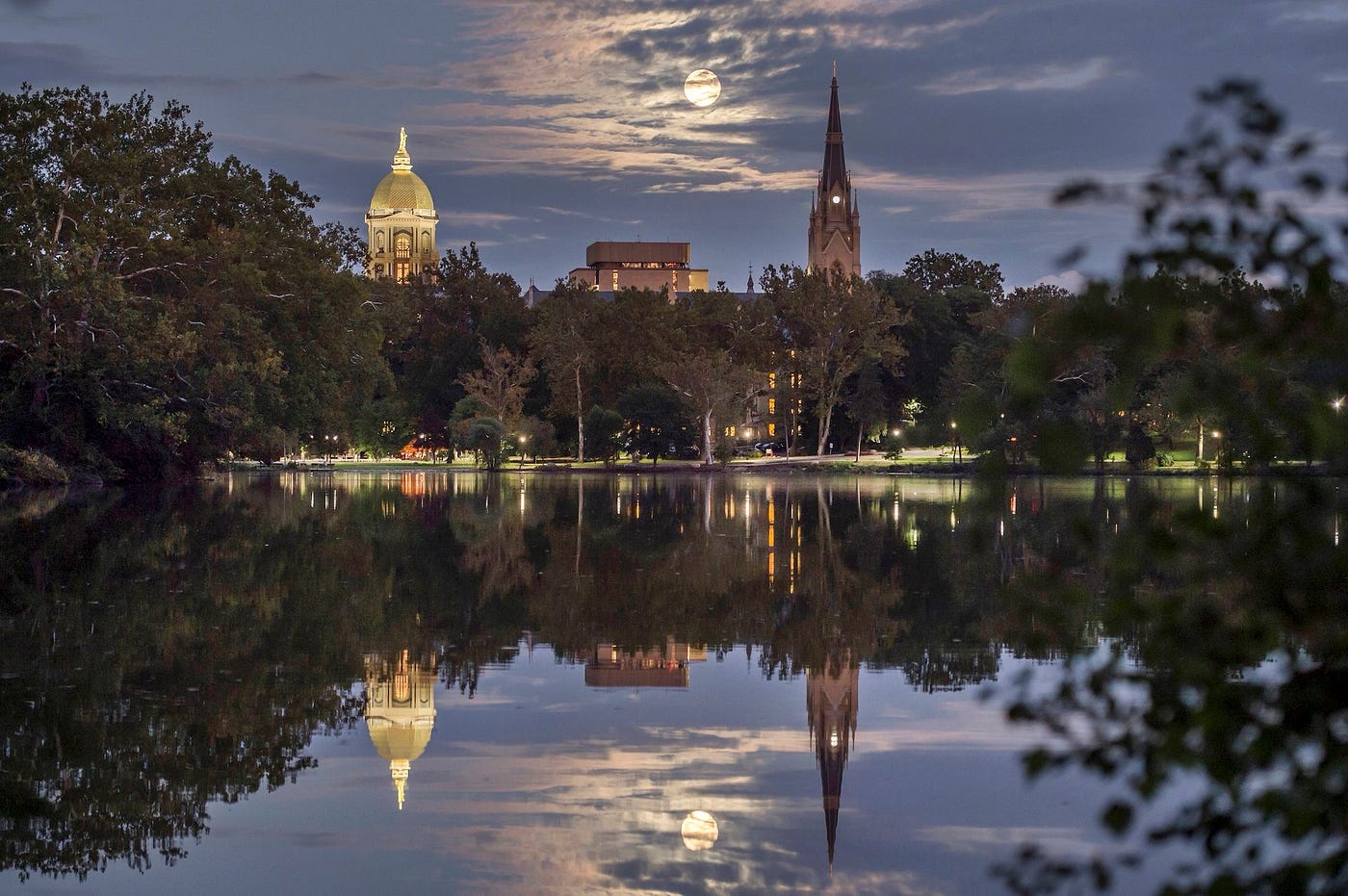
The Big 3 Icons of Notre Dame: Golden Dome, Memorial Library, Sacred Heart Basilica at Twilight

The Library

I led him to the Notre Dame Memorial Library — the 13-story tower with the massive mural of Jesus stretching his arms skyward, affectionately known as “Touchdown Jesus.” When we entered, the place was packed. The first floor buzzed with activity, the snack bar and bathrooms offering quick breaks for students deep in study.
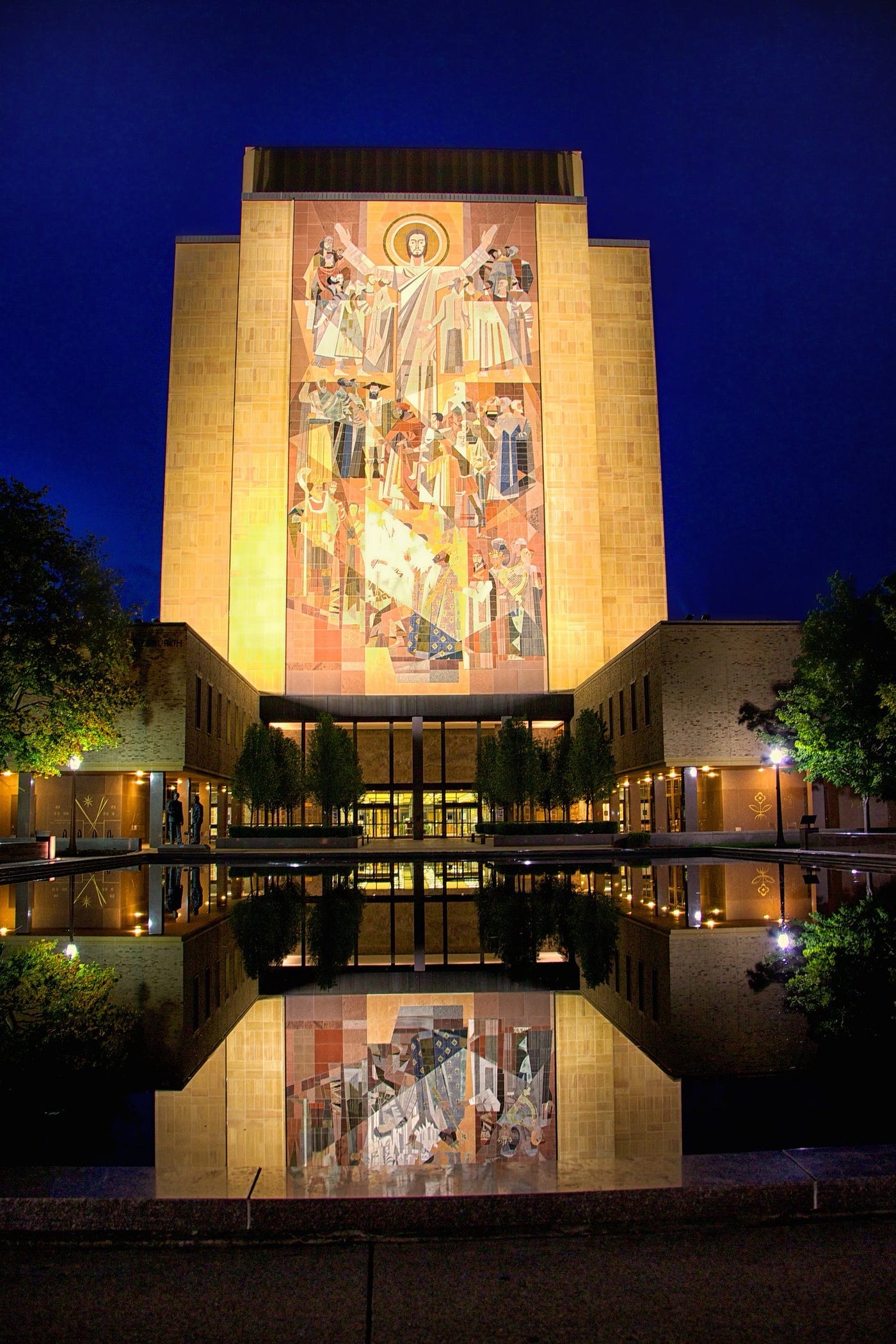
Notre Dame’s Hesburgh Library at Night (With “Touchdown Jesus” Mural)

Jeff was baffled. “This is where everyone goes on a Saturday night?”
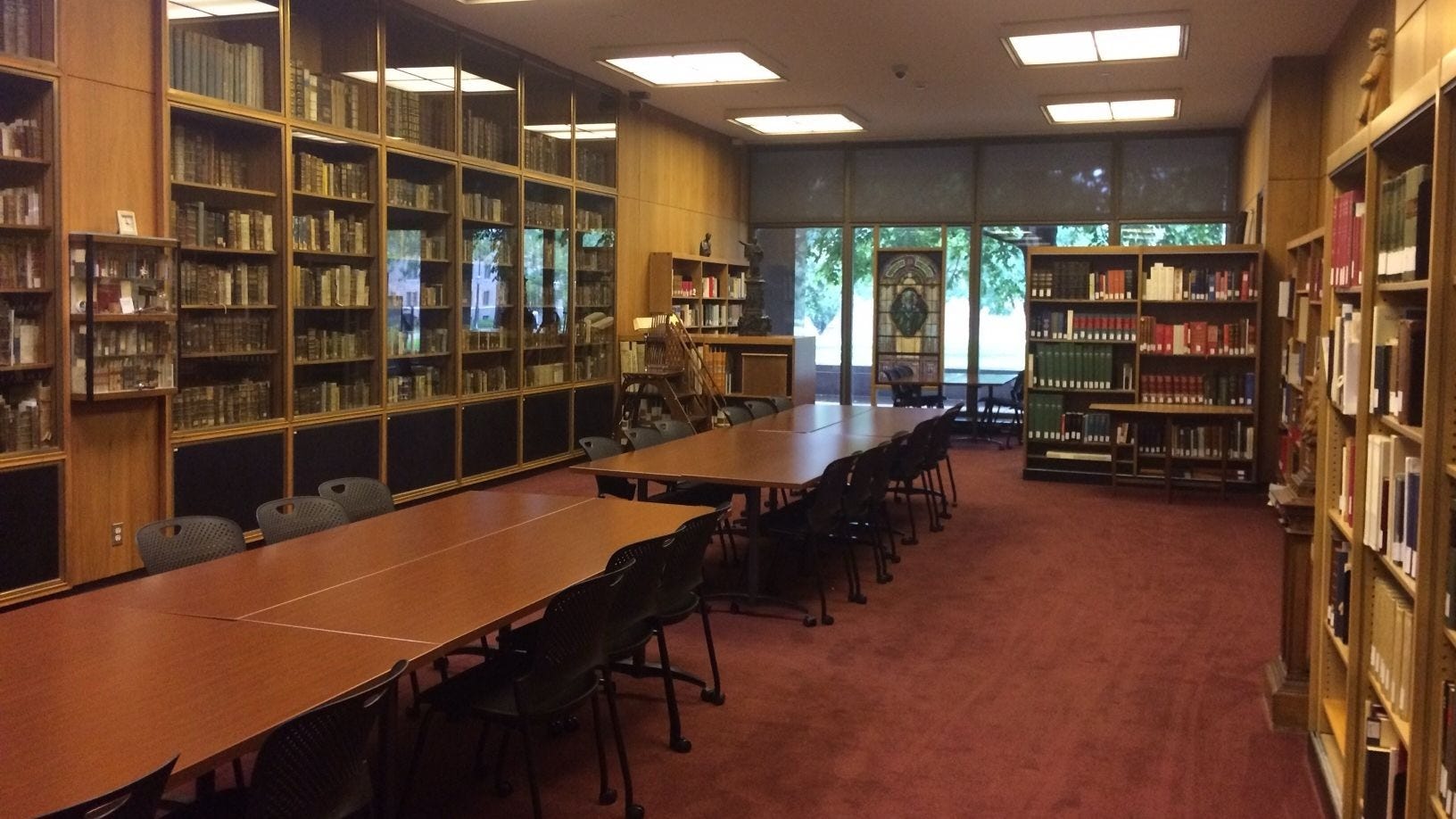
The “Pre-Med” Floor

I nodded, but told him I couldn’t study there — too many distractions. So we took the elevator to the 13th floor: the “Pre-Med Floor.” As soon as the doors opened, the atmosphere shifted. You could hear every cough, every footstep, every rustle of paper. When I turned a page in my textbook, I could feel heads involuntarily lift from their cubicles just at the sound.
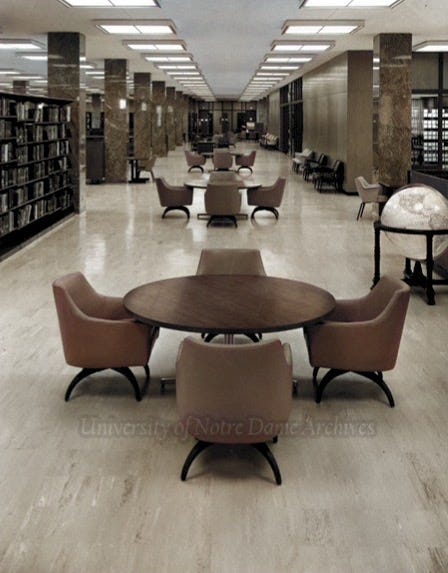
The Pre-Med Floor of Hesburgh Library (After Hours)

This was serious business. The Pre-Med students at Notre Dame didn’t mess around. Competition was fierce. Focus was absolute. It was a place of quiet desperation and razor-sharp ambition.

Jeff took it all in, visibly stunned. He never said much about it, but he never came back to visit again during undergrad. He waited until I made it to medical school at Georgetown. I think that night explained it all.

Final Exams: A Humbling First Encounter

All that remained of my first semester was final examinations. And let me say this clearly: they were a humbling experience.

I studied nearly 24/7 in the days leading up to exams. Every waking moment was spent buried in textbooks, notes, and problem sets. My mind was constantly racing between subjects — chemistry equations, biology lab reports, calculus proofs, and theology essays. Sleep came in short bursts. Meals were rushed. My stress was constant.

Final Exam Care Packages From Mom

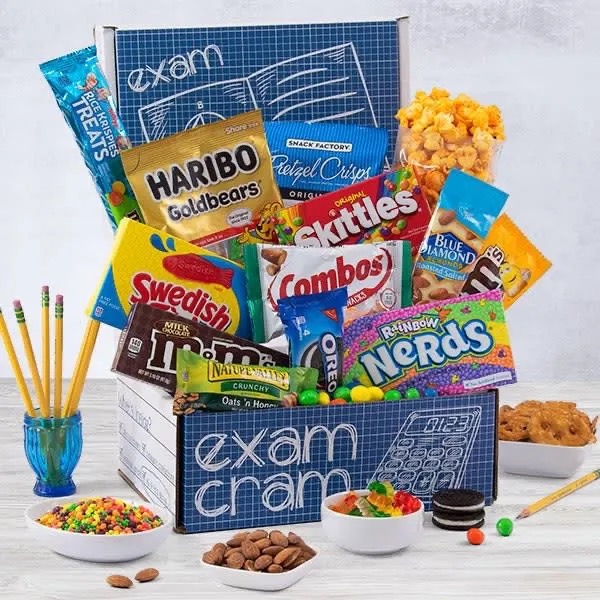
I was deeply grateful that my mother had purchased a Notre Dame-sponsored Exam Care Package, which came loaded with snacks and encouragement. Even better, my four sisters came through as always — sending their signature Toll House chocolate chip cookies and bags of gummi bears to get me through the marathon week. Those care packages felt like lifelines.
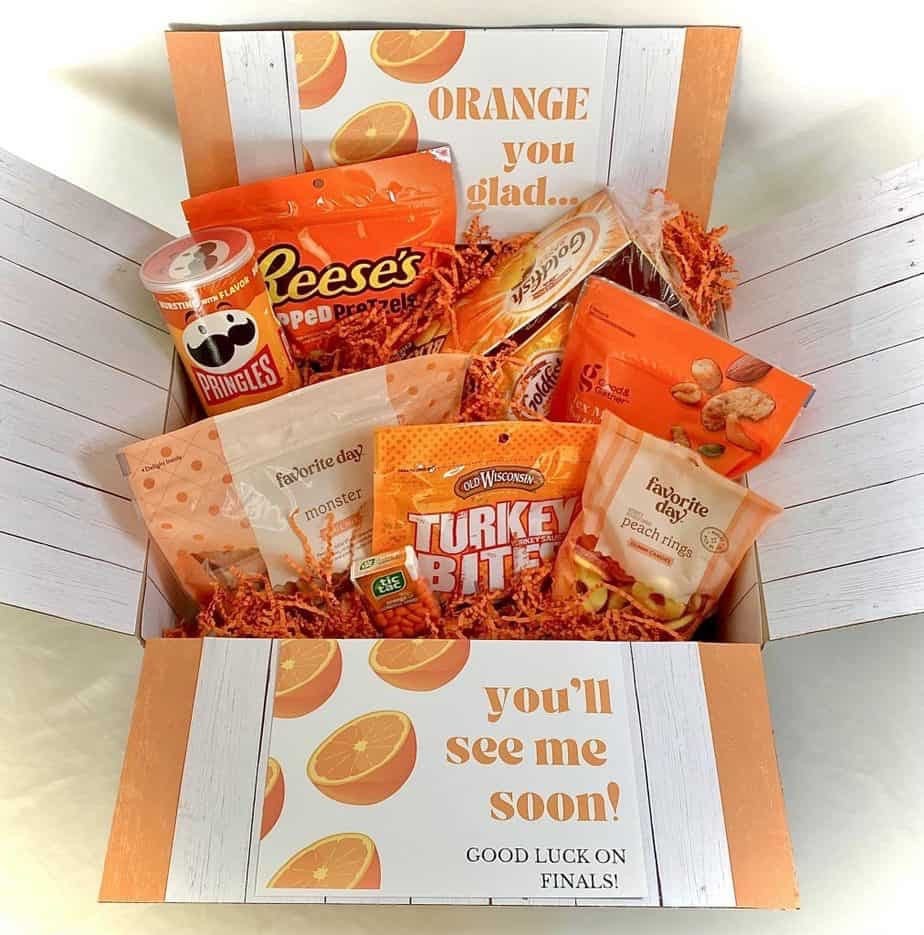
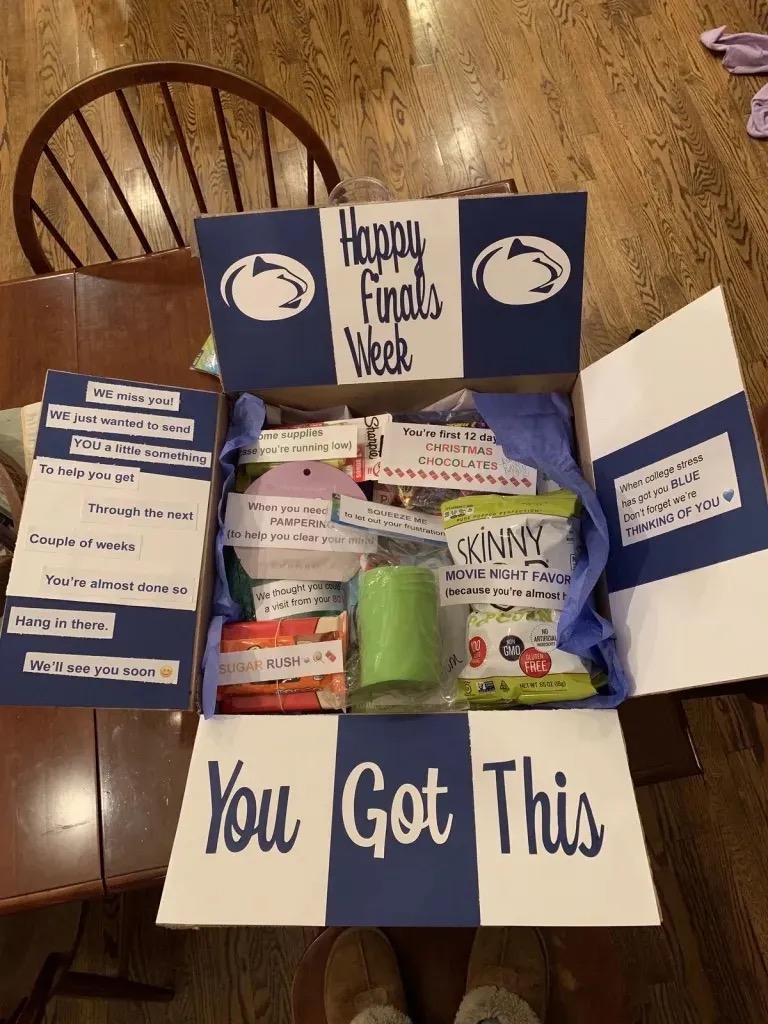
Pre-Med Exams Until the Last Day

What surprised and frustrated me most was learning that students in other majors were already finished. My friend Matt Bedics, a philosophy major, was packed up and home for the holidays while I was still knee-deep in test prep. Pre-Med and Engineering students weren’t so lucky — our final exams stretched all the way to the last possible day of the semester, often just a few days before Christmas.

Exam Time

When the time came to Fisher Hall for our examination, Andy Cordes started a tradition that lasted all four years. Right when it was time for everyone to get ready to leave to take final examinations, Andy would start playing Bachman Turner Overdrive’s (BTO) “Taking Care of Business”. And one by one, each of us would open our dorm room doors and step into the hallway singing.
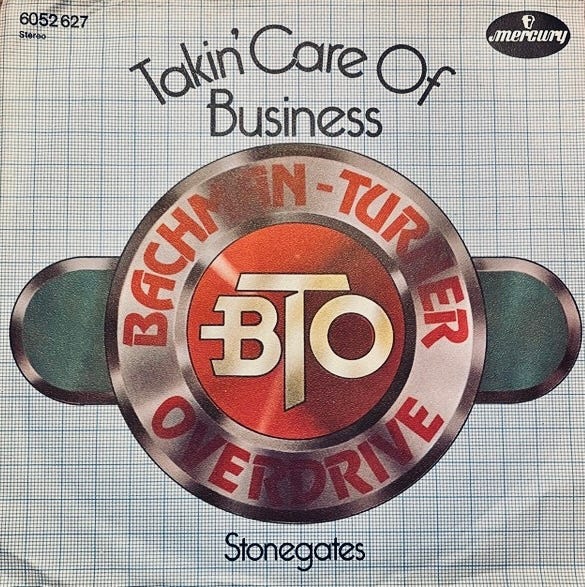
Album cover for Bachman Turner Overdrive (BTO) “Taking Care of Business”. Biography of Dr. Anthony J. Carbone.

The exams themselves were brutal. Chemistry in particular shook my confidence. The content was dense, the questions were sharp, and I knew I hadn’t nailed it. After everything was over, I didn’t even want to check my grades. I was too afraid. I needed a break from the pressure, the competition, and the relentless self-judgment. What should I expect from a professor who gave a pre-med Nobel Laureate a “B” in Chemistry?


Grades are Posted

But my pre-med buddy Bob Terifay had no such hesitation. He stormed back into Fisher Hall with his usual energy, grinning as he delivered the news: “You got a C in Chemistry!” I was stunned. “How the hell do you know my grade?” He just smiled. Somehow, he had remembered my Notre Dame student ID number: 7711117284. I have no idea how or why. But he did. And he looked up my grades like it was nothing.

Scholastic report card from my first semester at University of Notre Dame from 1977. Dr. Anthony J Carbone’s autobiography

Bob clearly was better at rote memorization than me. And I know he had a better academic preparation than I did. All I knew was that I had survived. And that, for my first semester at Notre Dame, would have to be enough.

When I finally made it home to Fort Leavenworth for the holidays, I was so mentally and physically drained that I didn’t feel like myself again until after Christmas Day. That’s how deeply finals had consumed me.
Home Page

Chapter 11: Dad Gets His Tank Battalion Command and I Continue High School in Mannheim, Germany

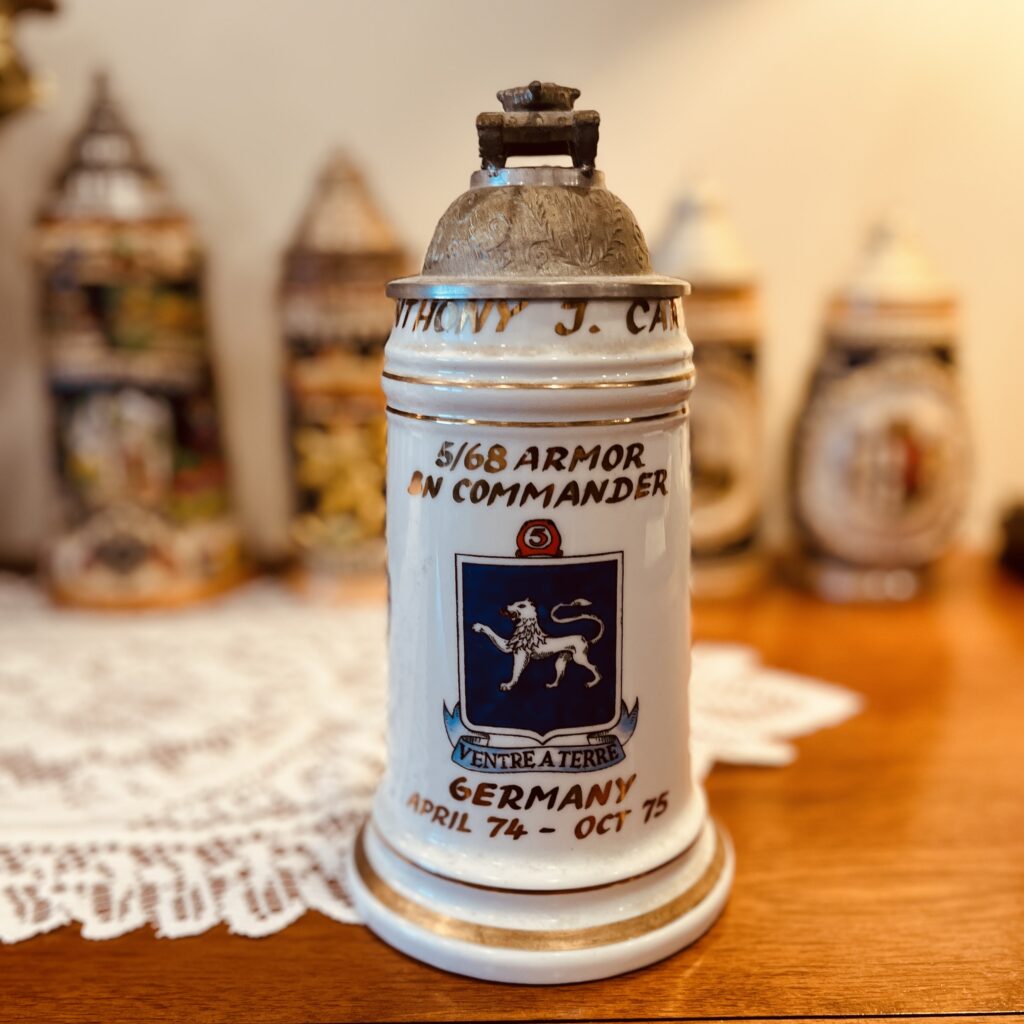
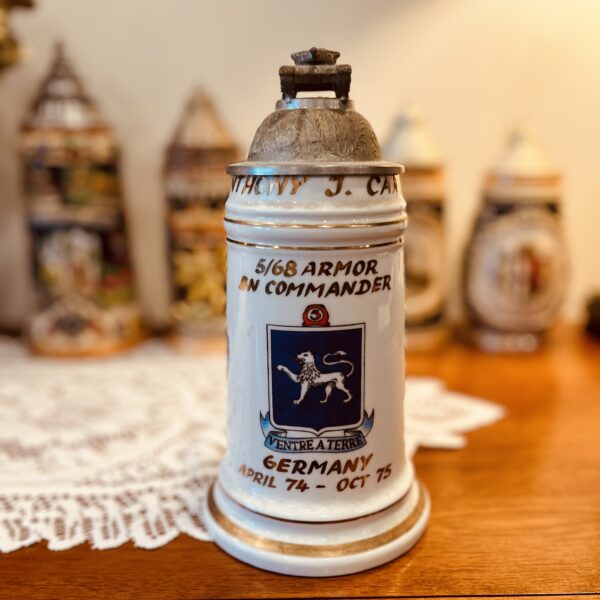
Bierstein 5/68 Armor Commander LTC Carbone. Dr. Carbone's Autobiography

Believe Nothing You Hear, and Only Half of What You SeeA Memoir of Service, Shame, and the Search for Truth

Dad Gets Orders for Germany Again And Command of a Tank Battalion

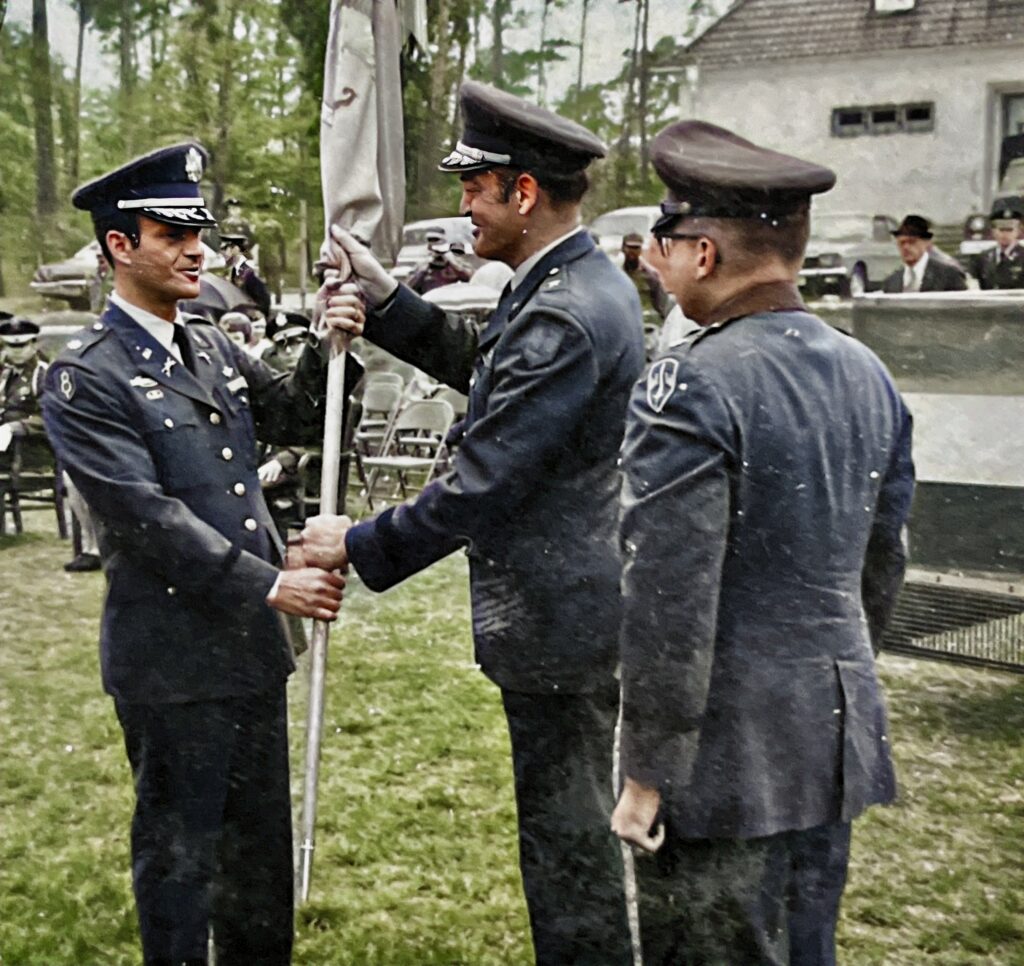
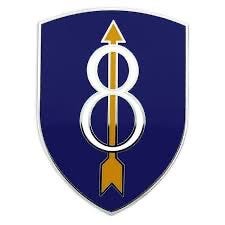
In the summer of 1973, my father received orders to return to West Germany and take command of a tank battalion in Mannheim — the 5th Battalion, 68th Armor, part of the 8th Infantry Division. This would be our family’s third and final tour in Germany and, for me, it would mark the beginning of my high school years. For my father, now a Lieutenant Colonel, this was one of the most important and prestigious assignments of his career.

Mom and I Prepare for Another Overseas Transfer

We went through the same routine we had already mastered over the years. My father left as soon as possible to get our family on the post housing list. That left my mother behind to sell our house in Woodbridge and for me to go through everything we owned, once again sorting our lives into categories: Hold BaggageHousehold GoodsStorage, and Throw or Give Away. By now, this process felt almost second nature.

All of us were elated about returning to Germany. My sister Lynne may have had a few reservations about spending three years at Woodbridge Senior High School and then finishing her senior year in Germany, but in retrospect, she would later say it was the best thing that could have happened to her.

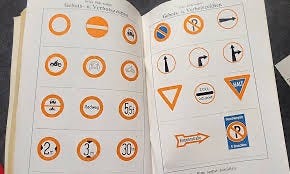
My father was busy in Germany preparing for his new command and studying for his German driver’s license, which included understanding over 1,000 different international road signs. Back home, my mother and I had to get our family station wagon to the Port of Baltimore, where it would be shipped across the Atlantic. Weeks later, my father and I picked it up at the port in Bremerhaven, Germany — known as the “Gateway to Europe.”

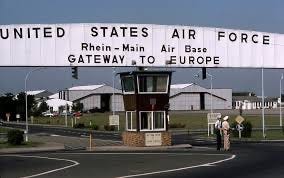
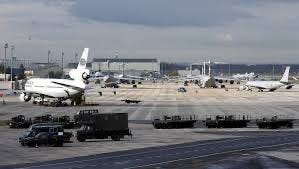
The professional government packers and movers arrived to take care of our belongings. After everything was boxed and shipped, my mother, my four sisters, and I boarded a commercial charter flight to Germany. We landed at Rhein-Main Air Force Base near Frankfurt.

Family Arrives at Rhein-Main Air Base Enroute to Mannheim

Our official sponsor was my father’s boss, Colonel Curry, the Commander of the 3rd Brigade of the 8th Infantry Division. Often, it’s the sponsor who picks you up at the airport — but this time, it was my father and his battalion adjutant, Lieutenant Scalise, who met us on arrival.

Bierstein 5/68 Armor Commander LTC Carbone. Dr. Carbone's Autobiography
Bierstein 5th Battalion 68th Armor Mannheim Germany

5th Battalion 68th Armor

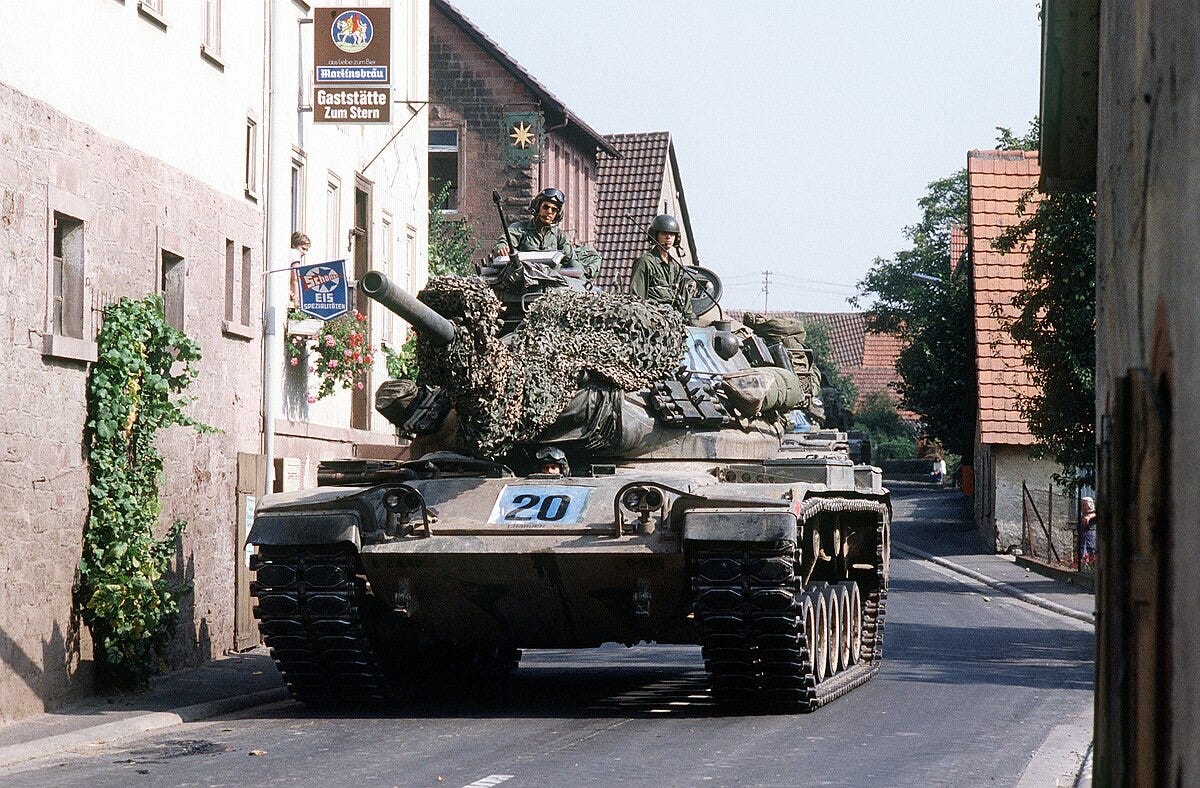
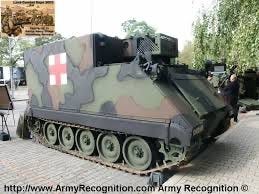
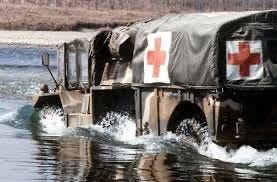
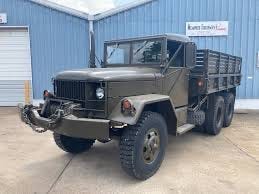
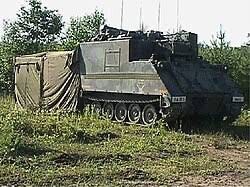
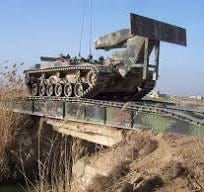
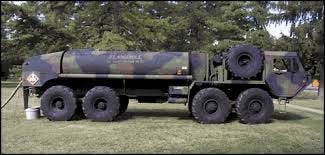
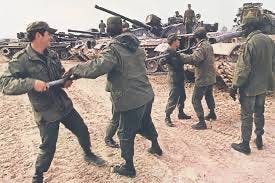
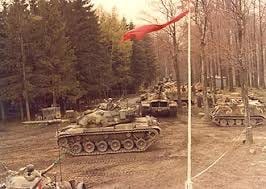
My father had taken command of the 5th Battalion, 68th Armor at Sullivan Barracks in Mannheim. He had taken over a massive mechanized combat unit: over 700 tankers and support soldiers, 52 M60 main battle tanks, more than a hundred M113 armored personnel carriers (APCs), dozens of M114 armored reconnaissance vehicles used by the cavalry scouts, several M577 Command Post Carriers, and a variety of heavy tactical vehicles, including M35 2.5-ton trucks — affectionately known as “deuce-and-a-halfs” — M939 5-ton trucks, M561 Gamma-Goats, M932 fuel trucks, and M60 AVLB (Armored Vehicle Launched Bridge) vehicles.

The various vehicles found within the 5th Battalion 68th Armor. M60A1 main battle tanks, M113 armored personnel carriers, M114 armored reconnaissance vehicles, M577 Command Post Carriers, AVLB (Armored Vehicle Launch Bridge), and Fuel Trucks.

Part of the autobiography of Dr. Anthony J. Carbone, Son in the Shadow of a Green Beret Hero
American M60 Series Main Battle Tank rolling down the small streets of a Geman village.

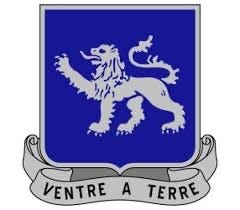
The unit insignia for the 68th Armored Regiment was a silver lion on a blue crest, with the Latin phrase “Ventre a Terra” scrolled beneath the shield. Translated, it means “Belly to the Ground,” describing what a lion does just before it attacks. That image — silent, watchful, coiled for action — embodied exactly the posture of a Cold War tank battalion stationed in Europe, ready to spring into action at a moment’s notice. My father took great pride in that insignia and everything it stood for.

68th Armor Regiment with Motto “Ventre A Terre” (Belly to the Ground)

Part of the autobiography of Dr. Anthony J. Carbone, Son in the Shadow of a Green Beret Hero.
68th Armor Regiment with Motto “Ventre A Terre” (Belly to the Ground)

Hand-Picked Key Battalion Personnel

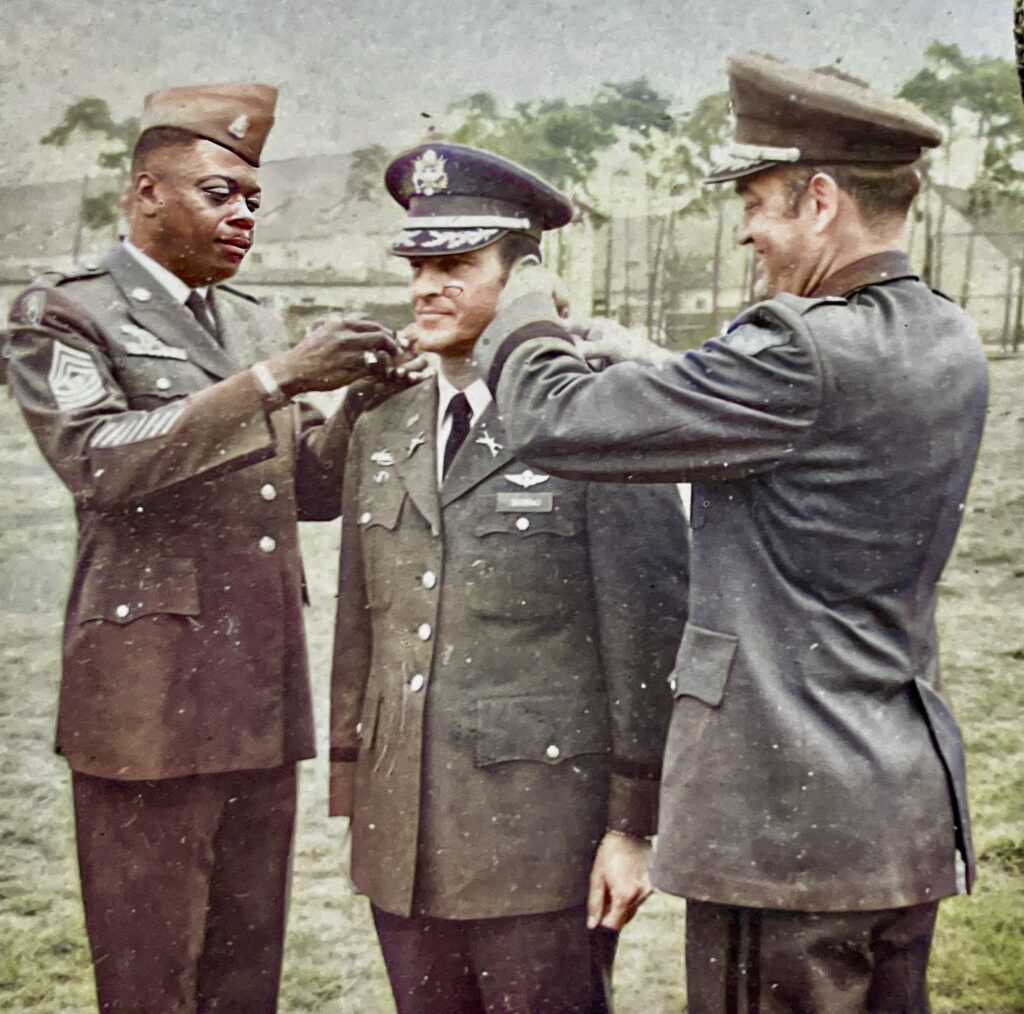
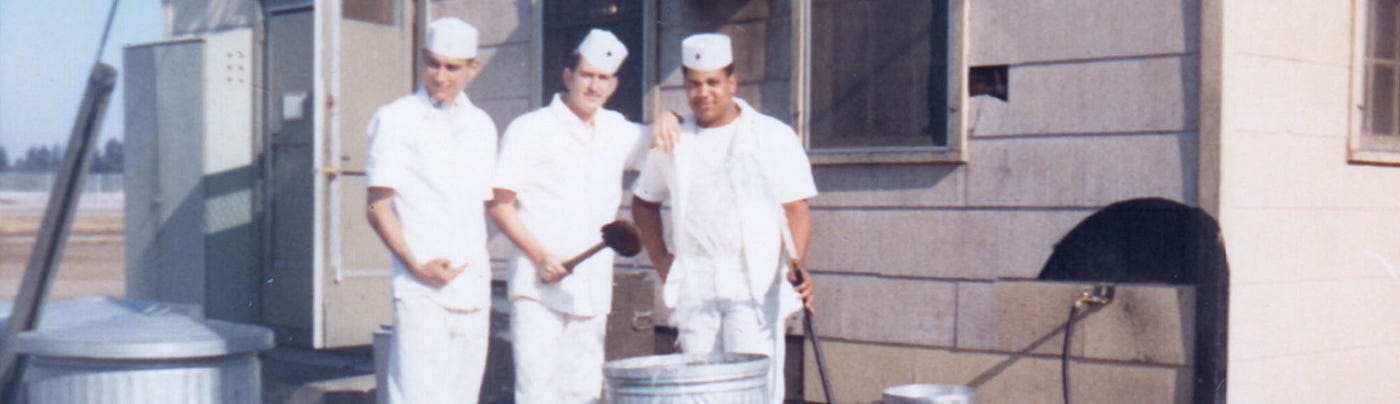
He hand-picked his key officers: Major Jim Mills was selected as the battalion S3 (Plans and Operations); Lieutenant Scalise served as the S1 (Personnel Officer & Adjutant); and Major Anthony Swain was his Executive Officer (XO). I don’t recall the name of his S2 (Intelligence Officer), but I’ll never forget who he said was the most important recruit he made at the start of his command — the battalion head chef, someone he had known and served with during his tour in Korea.

My father always believed I would follow in his footsteps and become an Army officer, and from a young age he took every opportunity to prepare me for that role. He told me often, “Feeding your men well is one of the most important things you can do for morale.” He meant it. The chef was the very first person he had reassigned to his new battalion.

Army cooks outside a U.S. Army mess hall.

Part of the autobiography of Dr. Anthony J. Carbone, Son in the Shadow of a Green Beret Hero.
Army cooks outside the mess hall

Battalion Motor Pool

On many weekends, my father’s jeep driver would come to our quarters to pick us up and bring us to Sullivan Barracks. I accompanied him on his rounds. He didn’t bring me along to impress me — he brought me to teach. We always began in the motor pool, where he’d check in with the Motor Sergeant and ask about the status of every single vehicle. “A tank battalion is useless,” he told me, “if the tanks and support vehicles can’t move at a moment’s notice.” He stressed how critical the Motor Sergeant was to the entire operation.

Next, we would stop at the Mail Room, where he introduced me to the Mail Clerk. “If you bring your men hot food and their mail out in the field,” he said, “they’ll follow you anywhere.”

Then he took me to meet the Supply Sergeant, explaining that the supply room controls all the gear and equipment that keeps a unit functioning. “Make friends with your supply sergeant on Day One,” he advised. “He’s your lifeline.”

The Mess Hall

And finally, we always ended our rounds at the mess hall, where we checked in with the chef. My father would taste test the food, sipping soup straight from the ladle, dipping bread into sauces, even pulling out his combat knife from his tanker’s boot to slice off a piece of roast beef for us to sample. The chef was remarkable. He created themed menus throughout the week — Italian Day in honor of my father, Soul Food DayHispanic DayAsian Day, and classic American Day. On holidays like Thanksgiving and New Year’s, officers and NCOs wore their dress uniforms and served the troops. The chef even created ice sculptures and elaborate displays. Our family always joined the battalion for those special meals.

Major Jim Mills, Battalion S3

Major Jim Mills, my father’s S3, became a great friend of our family. When my father was promoted to become the G3 of the 8th Infantry Division, Major Mills and his family followed us to Bad Kreuznach. His son, Jim Jr., became one of my best friends during high school there.

Photograph of Major James J. Mills Sr, Armor & Aviation Officer and Dad's (LTC Tony Carbone's) S3 Plans & Operations Officer.


Part of the autobiography of Dr. Anthony J. Carbone, Son in the Shadow of a Green Beret Hero.
Major James J Mills Sr, Armor & Aviation Officer and Dad’s S3 Officer

Hohenfels & Grafenwöhr

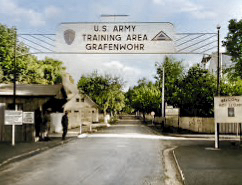
But back to Mannheim. This was the height of the Cold War, and the 5–68 Armor was constantly on alert. Many weeks were spent in the field, training at places like Hohenfels and Grafenwöhr. The tempo was relentless, but my father thrived on it.

U.S. Army Training Area at Grafenwöhr Germany.

Part of the autobiography of Dr. Anthony J. Carbone, Son in the Shadow of a Green Beret Hero.
U.S. Army Training Area at Grafenwöhr

It’s All About Tank Gunnery

When he took command, the battalion was struggling. He had inherited the unit from a commander who had been quietly relieved. At the time, 5–68 Armor ranked dead last in Tank Gunnery in the entire 8th Infantry Division — the lowest position a tank battalion could fall to. One officer even approached my father and said he was sorry that he had to take command of such a poor-performing unit. My father just smiled and said, “I’m delighted. We can only go up.”

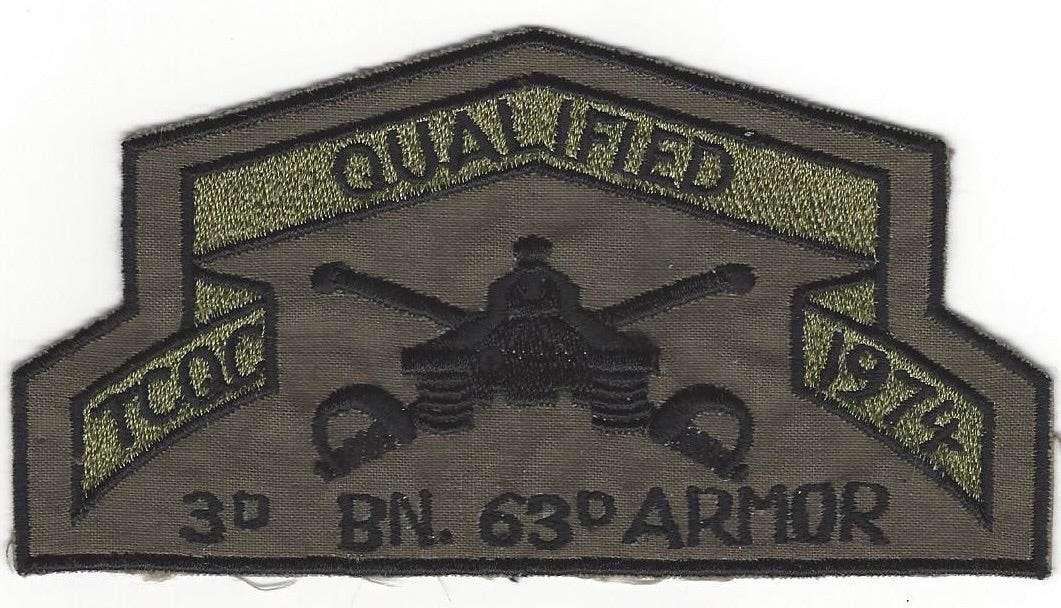
And they did. Before he relinquished command, the 5th Battalion, 68th Armor had gone from worst to first in tank gunnery. That achievement meant everything. In the world of armor, gunnery is life. Every soldier is trained to “Move, Shoot, and Communicate,” but if a tank can’t shoot accurately, it’s nothing more than a 52-ton steel coffin. My father turned that battalion around through leadership, standards, and trust in his men — and by never forgetting the basics: maintenance, mail, supply, and a hot meal.

Qualified Tank Crew Patch

Part of autobiography of Dr. Anthony J. Carbone, Son in the Shadow of a Green Beret Hero.
Qualified Tank Crew Badge similar to the ones earned by 5th Bn 68th Armor crewmembers

Benjamin Franklin Village (BFV)

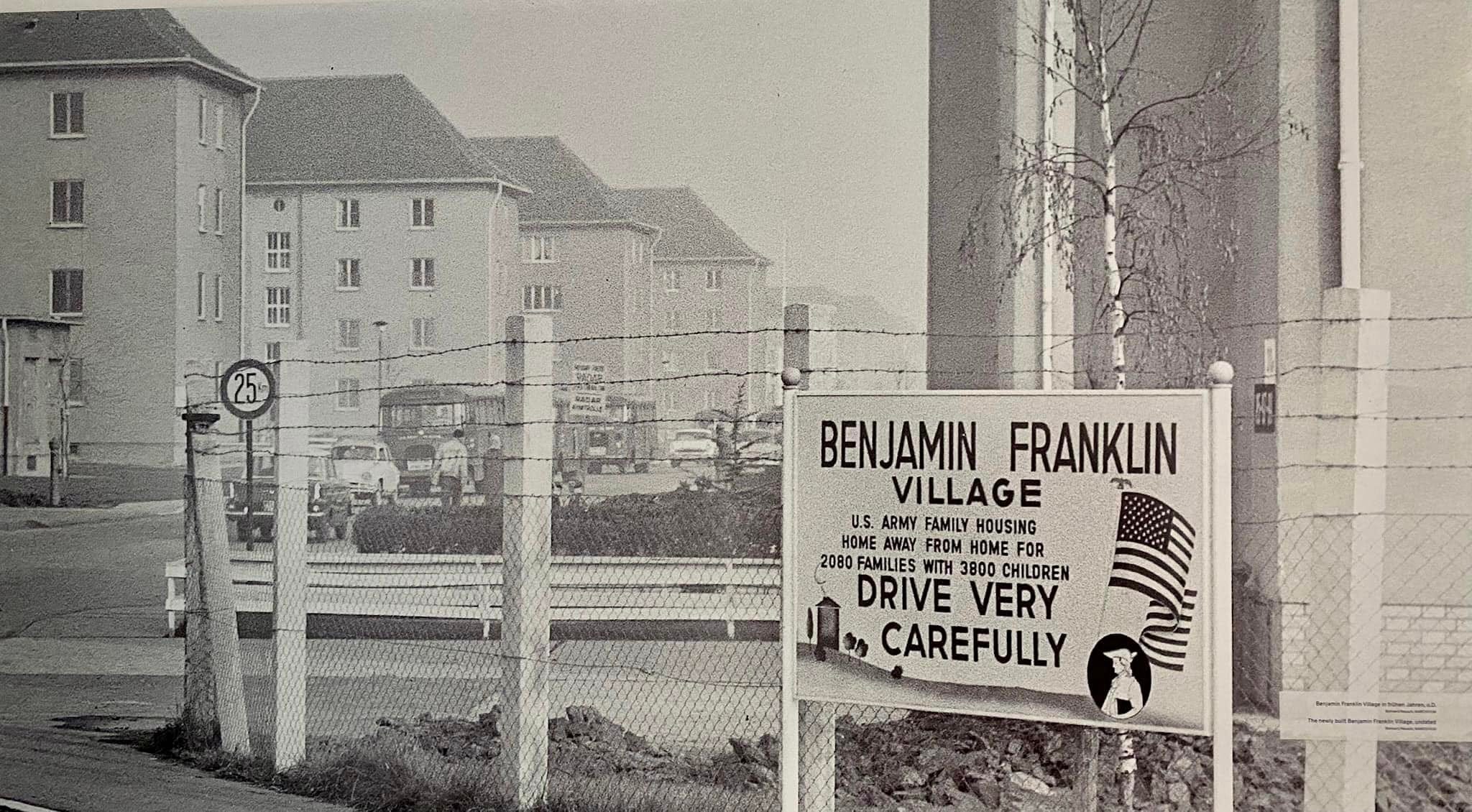
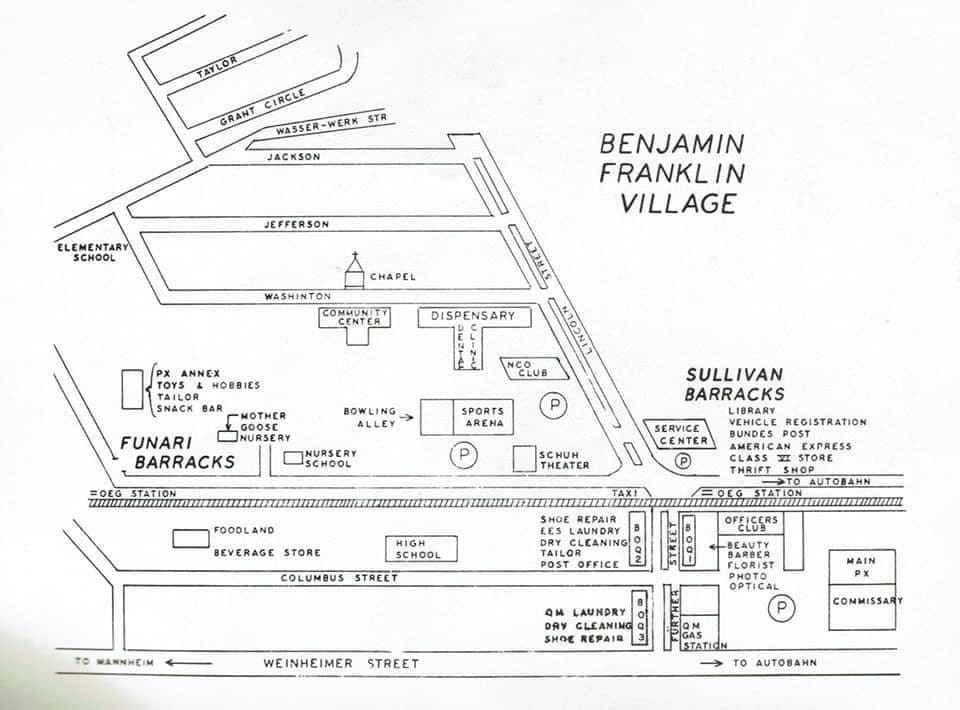
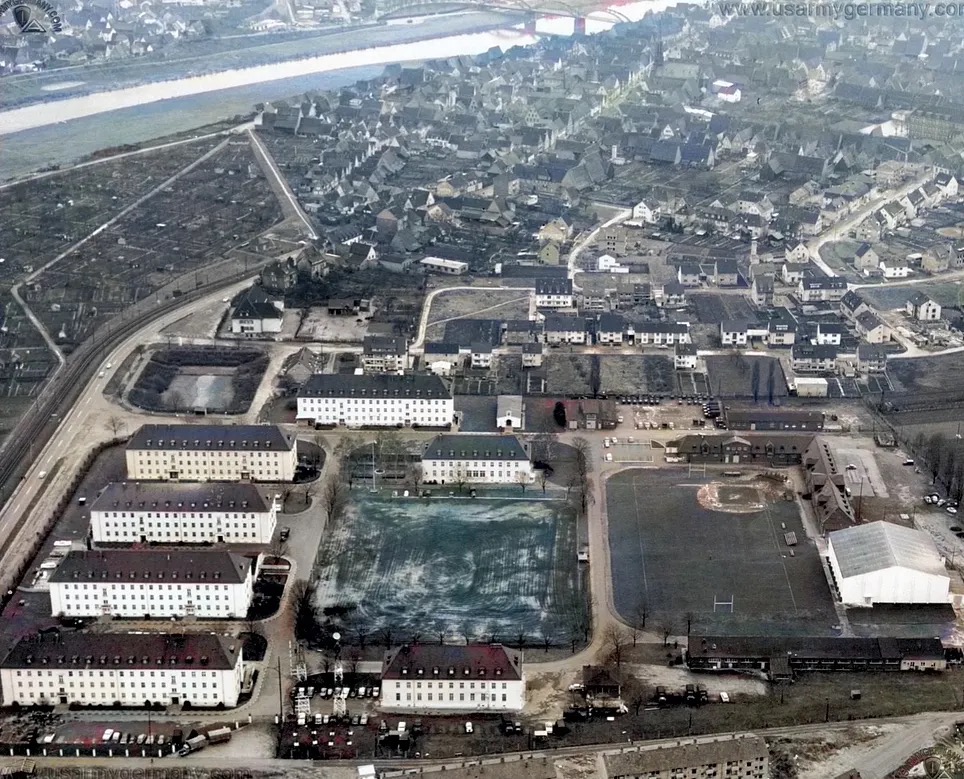
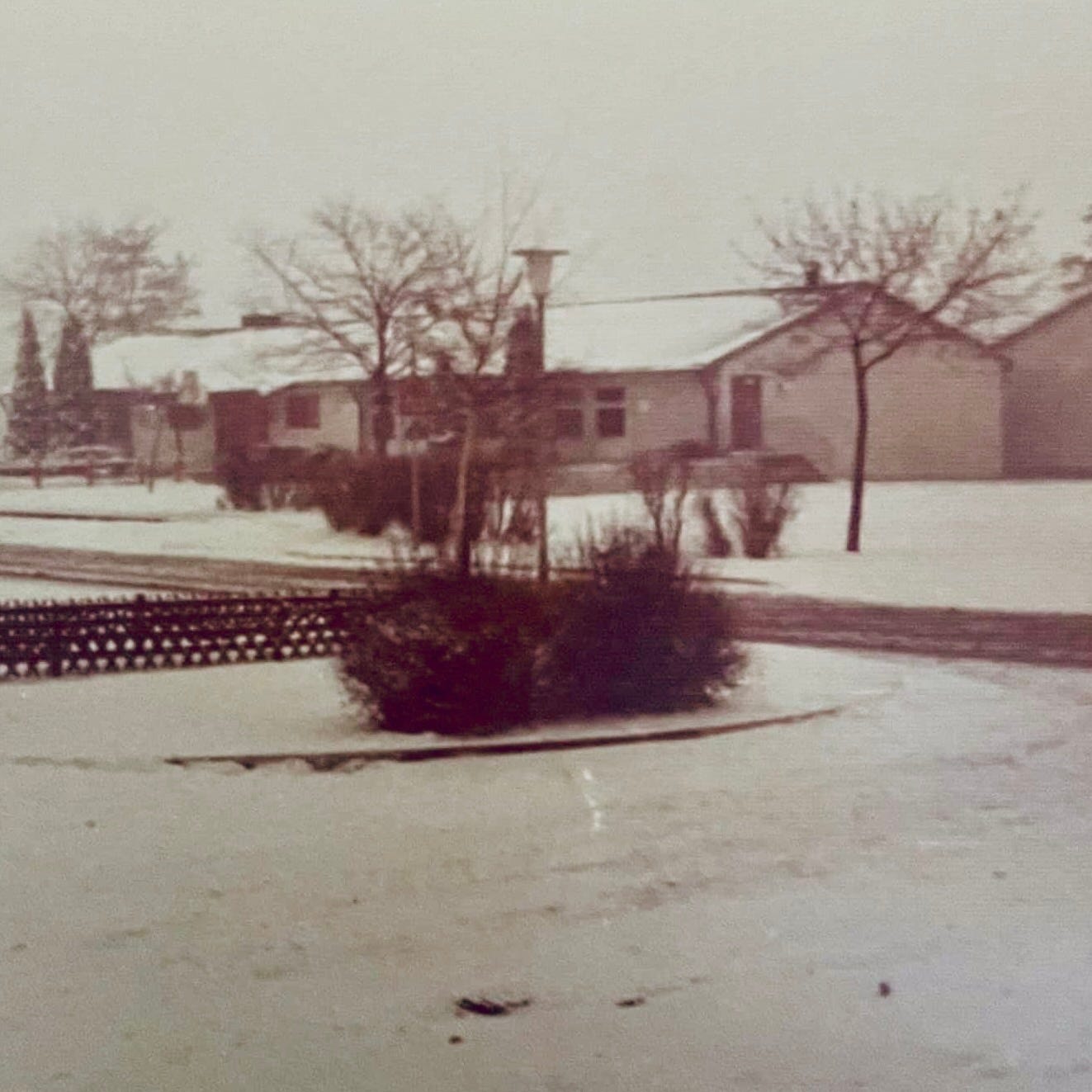
While my father’s battalion was housed within Sullivan Barracks, all of the families — including ours — lived in Benjamin Franklin Village, commonly known as BFV. We moved into beautiful, newly renovated officers’ quarters at 11 Grant Circle, a spacious two-story duplex with four bedrooms and one-and-a-half bathrooms. It was pristine — gleaming, freshly varnished wood floors, crisp whitewashed walls, and all the signs of recent renovation. My small bedroom was the only one located downstairs; the rest of the family — my parents and four sisters — had bedrooms upstairs.

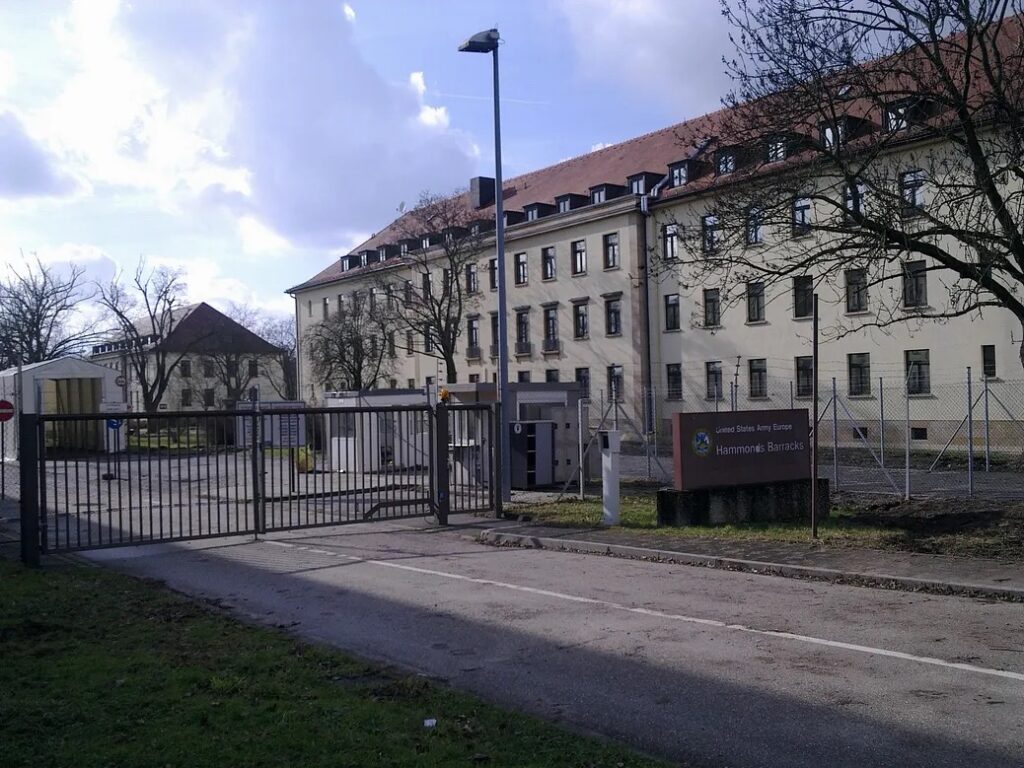
Benjamin Franklin Village Gate.


Part of autobiography of Dr. Anthony J. Carbone, Son in the Shadow of a Green Beret Hero.

Map of Benjamin Franklin Village (BFV) and Barracks, Mannheim, Germany

Benjamin Franklin Village map showing Sullivan and Funari Barracks.

Part of autobiography of Dr. Anthony J. Carbone, Son in the Shadow of a Green Beret Hero.
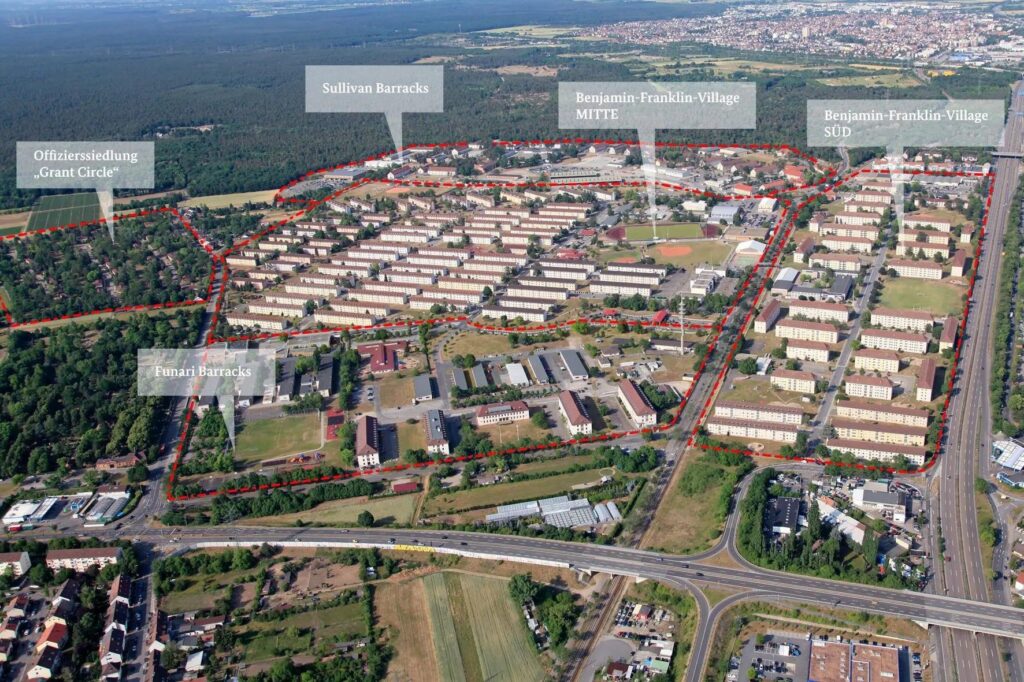
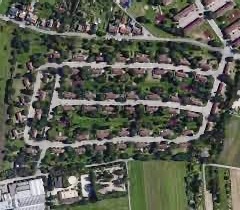
Aerial view of Benjamin Franklin Village (BFV) Mannheim, Germany.

Part of autobiography of Dr. Anthony J. Carbone, Son in the Shadow of a Green Beret Hero.
Aerial View of Benjamin Franklin Village (BFV) Mannheim, Germany

Grant Circle

Grant Circle was the place to live on post. It was where the base commander, General Timmerburg, and all the full colonels and lieutenant colonels resided. It felt both prestigious and incredibly lucky to be there. Most of our closest friends lived in Grant Circle too, which meant that life there — especially in the evenings — was incredibly social. Army brats like us hung around outside most nights, talking for hours under the stars. Our house, right near the entrance to Grant Circle and the corner where Taylor Street split the circle in two, became one of the unofficial gathering spots. It always seemed to be the hub of activity.

Maps of BFV, the Kasernes and Grant Circle

Every commanding officer had a colorful replica of their Distinctive Unit Crest mounted outside their quarters. My father proudly displayed the crest of the 68th Armored Regiment — a blue shield with a silver lion, beneath which read the Latin motto: “Ventre a Terra”, meaning “Belly to the Ground.” The image of a crouched lion, low and poised to strike, captured the essence of a tank battalion ready for action at any moment. That crest nailed to the front of our home was a symbol of pride and command — and it let everyone know exactly who lived there.

We had a carport next to the house where my father parked our family station wagon. But his prized possession — his beautiful white Porsche 911— was always parked right out front, gleaming and impossible to miss.

Grant Circle of Benjamin Franklin Village (BFV) at Mannheim, Germany.


Part of autobiography of Dr. Anthony J. Carbone, Son in the Shadow of a Green Beret Hero.
Grant Circle Benjamin Franklin Village Mannheim Germany

At the far end of Grant Circle was a smaller loop where the full colonels lived in large single-family homes. And beyond even that, at the very end of “full colonel’s row,” stood the Commanding General’s house — a stately and fitting centerpiece for a Cold War-era military village.

Full Colonel's Quarters (like COL Bell's) Grant Circle at Benjamin Franklin Village in Mannheim, Germany.

Part of autobiography of Dr. Anthony J. Carbone, Son in the Shadow of a Green Beret Hero.
Full Colonel’s Quarters (like COL Bell’s) Grant Circle Benjamin Franklin Village Mannheim Germany

Jeff Bell and Family

My closest friend at Mannheim — then and to this very day — was Jeff Bell. His father, Colonel Wiley Bell, was a career Signal Corps officer, a veteran of the Korean War, the Chinese conflict, and Vietnam. A battle-tested and respected leader, he was also one of the warmest and funniest men I ever knew.

Jeff's father, Colonel Wiley Bell in Officer Dress Mess Uniform.

Part of autobiography of Dr. Anthony J. Carbone, Son in the Shadow of a Green Beret Hero.
Jeff’s father, Colonel WIley Bell in Officer Dress Mess Uniform

Mrs. Bell, on the other hand, was memorable in her own way: a chain-smoker, a fan of Coca-Cola by the liter, and someone who hated to cook. As a result, the Bell family ate out almost every meal — and lucky for me, they often invited me to join. They favored a cozy nearby Gasthaus, where Jeff and I always ordered our two favorites: Jägerschnitzel (mushroom cream schnitzel) and Zigeunerschnitzel — a paprika-spiced dish better known then as Gypsy Schnitzel.

German Gasthaus (restaurant) outside of Benjamin Franklin Village, Mannheim, Germany.

Part of autobiography of Dr. Anthony J. Carbone, Son in the Shadow of a Green Beret Hero.
German Gasthaus (restaurant) outside of Benjamin Franklin Village, Mannheim, Germany

Jeff Learns to Eat Italian

Jeff Bell was at our house for dinner regularly, but I’ll never forget one spaghetti night in particular. My mother had made classic spaghetti with meatballs, and Jeff took his usual seat at our table. After we said grace, Jeff picked up his fork and knife and began cutting his spaghetti into neat little pieces.

My best friend, Jeff Bell, at Mannheim, Germany.

Part of autobiography of Dr. Anthony J. Carbone, Son in the Shadow of a Green Beret Hero.

My father immediately stood up. In his firm but calm voice, he told Jeff to leave the table and go sit in the living room. Jeff obeyed, completely unsure whether my father was joking or serious. He sat there in awkward silence while the rest of us waited. Eventually, my father called him back into the dining room. He explained, in no uncertain terms, that in an Italian household like the Carbone’s, you never cut your spaghetti. Ever.

Then, with that rare combination of pride and precision, my father gave Jeff a lesson in Italian table manners, teaching him how to take the spaghetti with his fork and twirl it into a spoon in his other hand. And if you were to ask Jeff today how he eats spaghetti, he will still tell you: “I twirl it in my spoon — like the Italians do.”

Photo of chef eating spaghetti with red sauce the Italian way, swilling the spaghetti in a spoon.

Part of autobiography of Dr. Anthony J. Carbone, Son in the Shadow of a Green Beret Hero.
This is how you eat spaghetti in the Carbone home.

The Red Volkswagen Bug

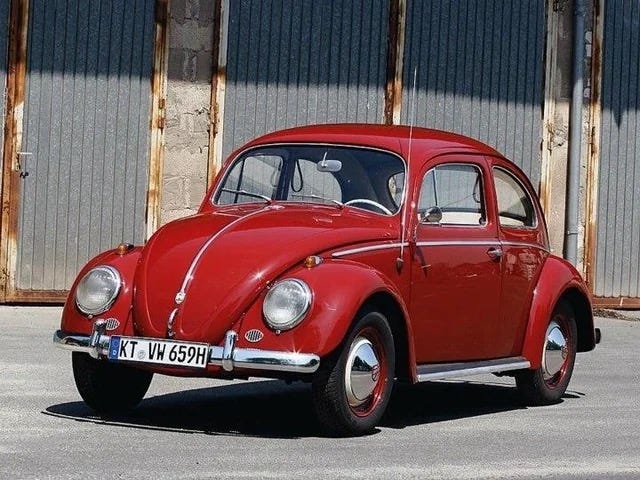
Jeff was one of the only students at Mannheim American High School who had his own car — an old, beat-up red Volkswagen Beetle, which made us kings among high schoolers. The heater didn’t work, so Jeff kept wool Army blankets in the back seat, and to make the windshield wipers work, I had to pull on strings coming out of the glove compartment. But it got us around.

Photo of red Volkswagen Beetle circa 1970 similar Jeff Bell's.

Part of autobiography of Dr. Anthony J. Carbone, Son in the Shadow of a Green Beret Hero.

Mannheim Officers’ Club

We had a habit of sneaking away from school during lunch to eat at the Mannheim Officer’s Club. We charged our meals directly to Colonel Bell’s Officers’ Club account, eating like lieutenants while we were still teenagers. I still remember the code: 0011 — a number permanently burned into my memory like a locker combination.

Officers' Club at Mannheim, Germany.

Part of autobiography of Dr. Anthony J. Carbone, Son in the Shadow of a Green Beret Hero.
Officer’s Club Mannheim Germany

Years later, I told Colonel Bell about our lunchtime exploits, expecting some scolding or disapproval. But instead, he laughed so hard his false teeth fell out.

Mannheim American High School (MAHS) Bisons

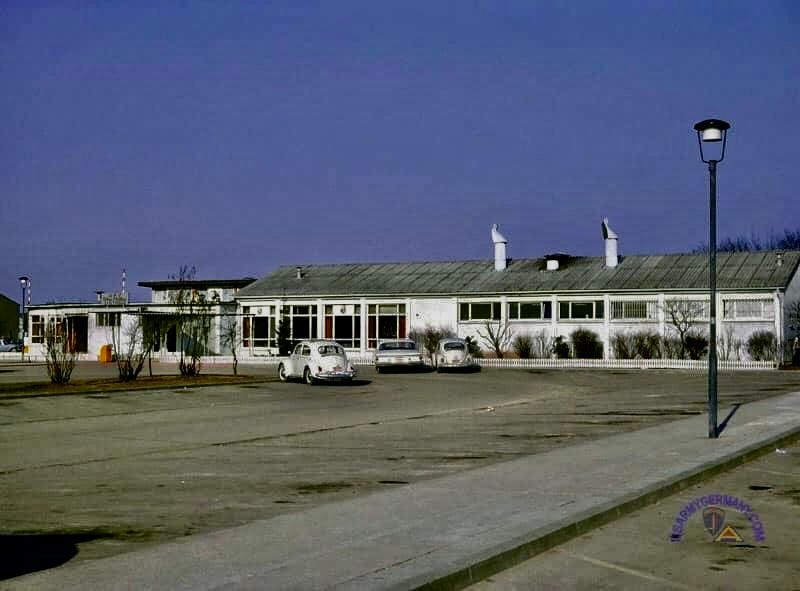
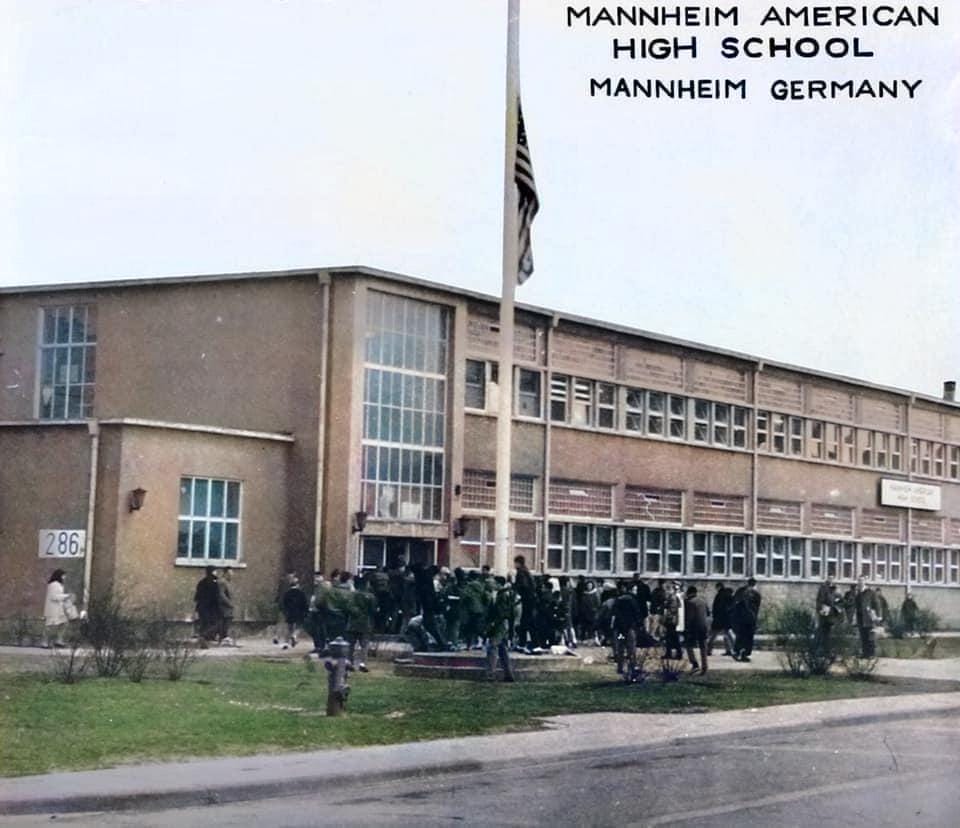
Mannheim American High School (MAHS), Mannheim, Germany

Part of autobiography of Dr. Anthony J. Carbone, Son in the Shadow of a Green Beret Hero.
Mannheim American High School (MAHS), Mannheim, Germany

Class of 1975 Seniors

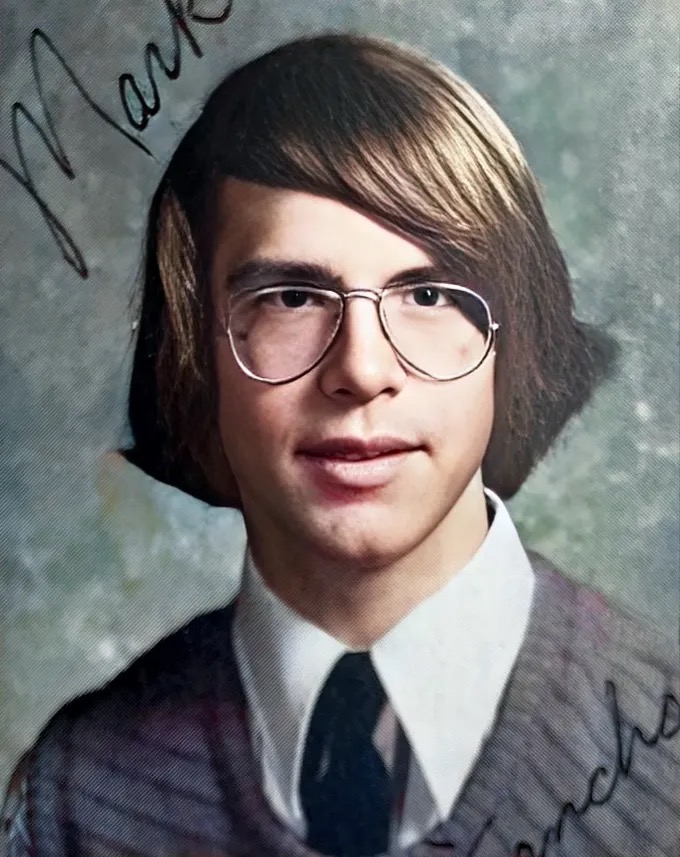
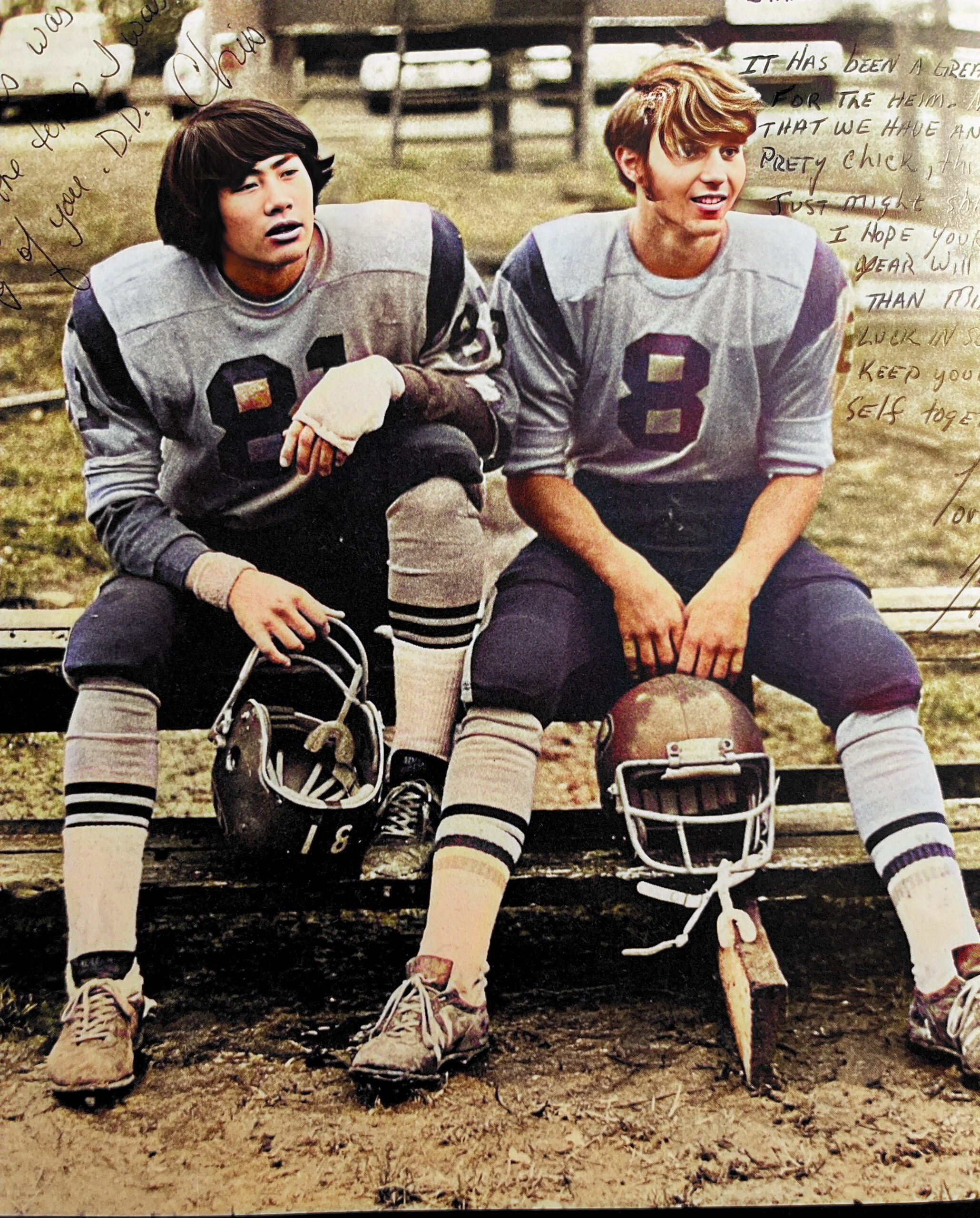
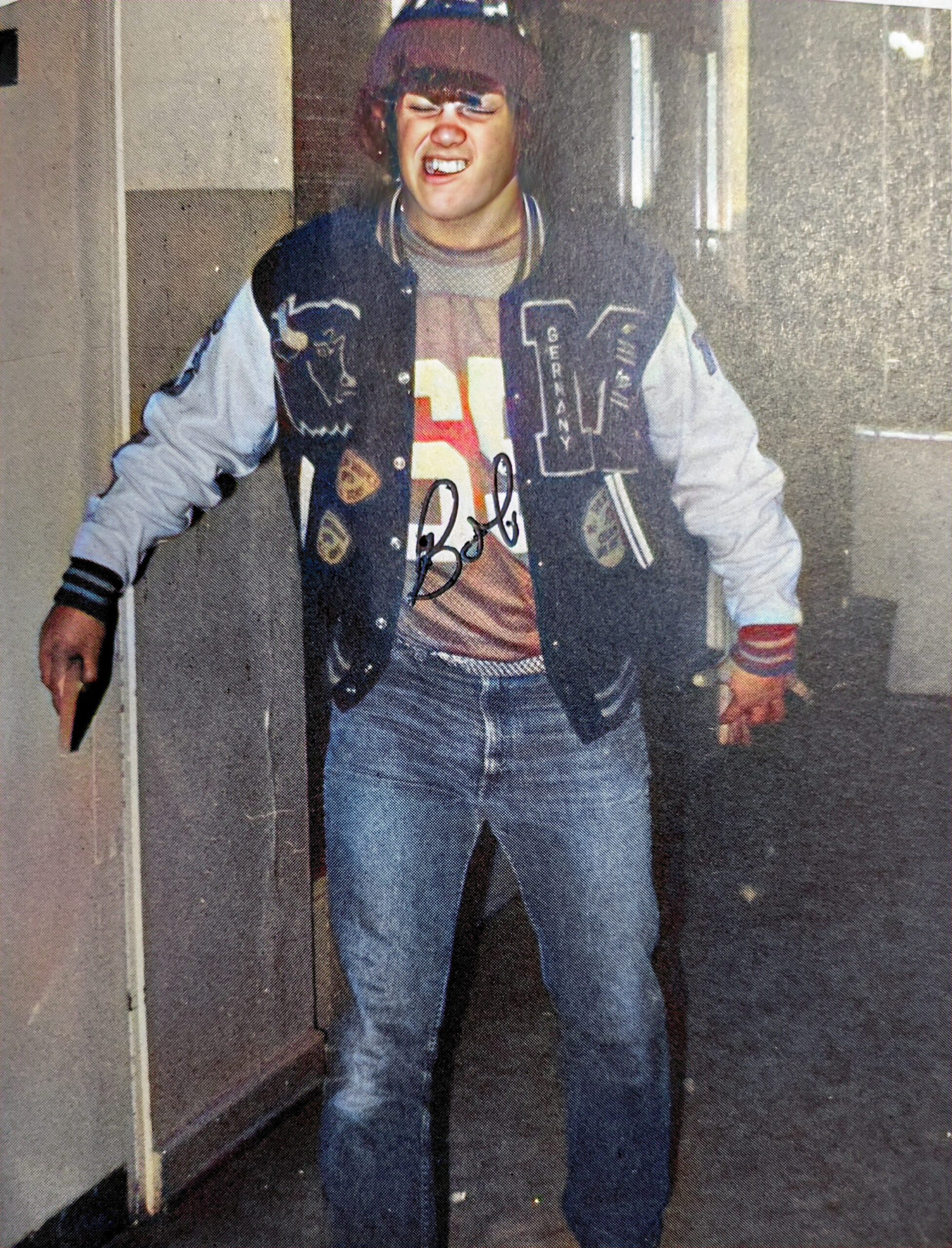
The Class of 1975 was Lynne’s Senior class, and it was filled with stars: Chris Corpus (Senior Class President, Varsity Football and Basketball), Jeff Wing (Varsity Football), Jeff Blair (Varsity Football and Basketball)Chuck Grayson (Varsity Football, Basketball and Golf), Bob Nicholson (Captain Varsity Football and Baseball, Class VP), and Kyle Kamalu (Varsity Tennis and Golf). Lynne’s best girlfriends were Gail Hayward and Lori Herrick (both Lettergirls with Lynne). And our duplex neighbor, Mark Sanchez — brilliant and eccentric — loved Diana but became one of my best friends.

My oldest sister, Lynne Carbone's, formal senior portrait.

Part of autobiography of Dr. Anthony J. Carbone, Son in the Shadow of a Green Beret Hero.
My oldest sister, Lynne Carbone, Senior Portrait Class of 1975
Jeff Blair, Co-Captain, Varsity Basketball Squad, Mannheim Ameican High School.

Part of autobiography of Dr. Anthony J. Carbone, Son in the Shadow of a Green Beret Hero.
Jeff Blair, Co-Captain of Varsity Basketball Squad, Mannheim Bisons
Varsity Football Co-Captains Crhis Corpus (Left) and Jeff Wing (Right) for Mannheim American High School.

Part of autobiography of Dr. Anthony J. Carbone, Son in the Shadow of a Green Beret Hero.
Chris Corpus (Left) & Jeff Wing (Right) Varsity Football Co-Captains
Bob Nicholson, Class of 1975, in his Mannheim Bison Varsity Letterjacket.

Part of autobiography of Dr. Anthony J. Carbone, Son in the Shadow of a Green Beret Hero.
Bob Nicholson (Class of 1975) in a classic Mannheim Bison Letterjacket
Corwin Christopher Corpus, Class of 1975 Senior Class President at Manneheim Ameican High School.

Part of autobiography of Dr. Anthony J. Carbone, Son in the Shadow of a Green Beret Hero.
Chirs Corpus, Class of 1975 Senior Class President

Class of 1976 Juniors

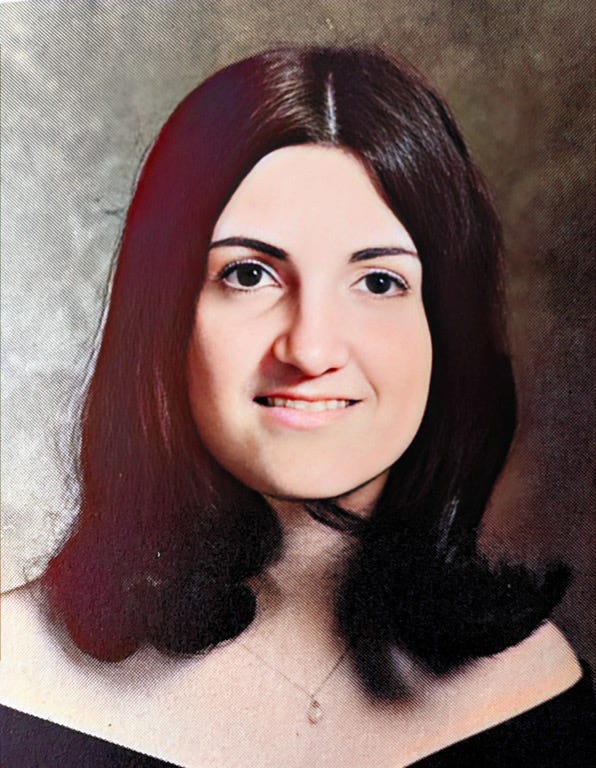
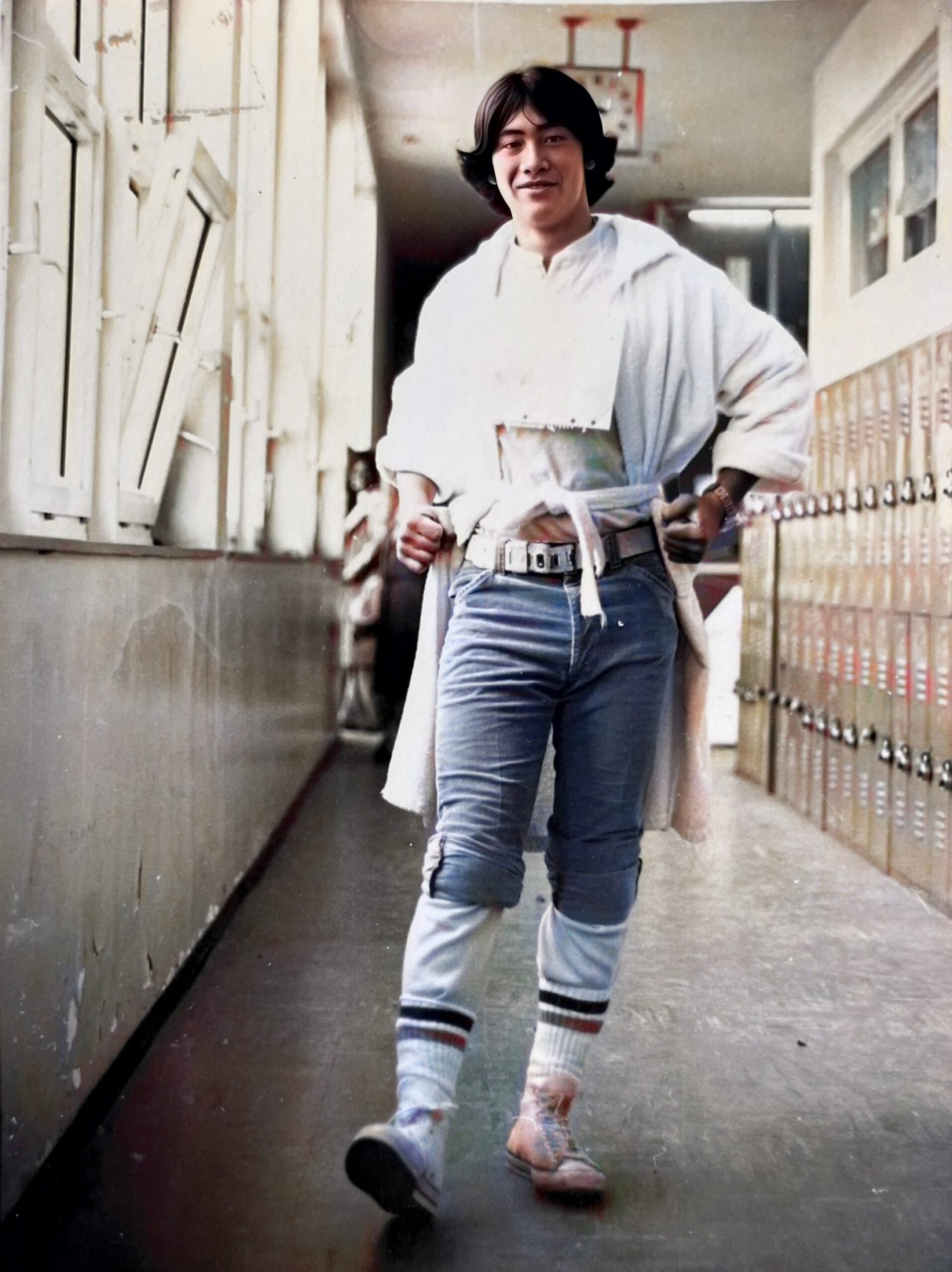
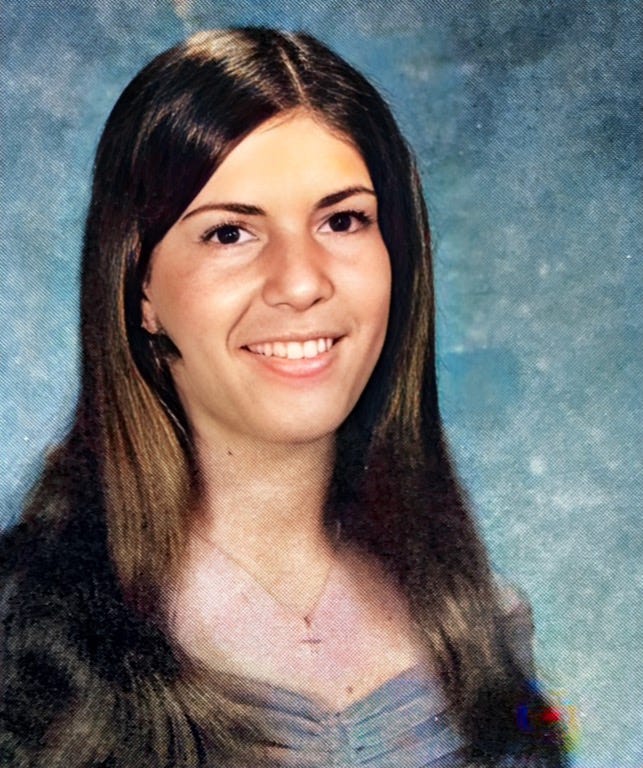
My sister Diana, in the Junior Class of 1976, was the most popular girl in school. She was Junior PrincessVarsity Cheerleader, and Homecoming escort to Jeff Blair. Everyone was in love with her. Her class included Rudy Glenn (Varsity Football and Varsity Soccer Captain 3 years in a row), Lorraine Duhovnik (Varsity Tennis), Terry Swenson (Varsity Cheerleader), the Auna twins, BeeBe (Varisty Cheerleader and Class President) and Murph (Varsity Basketball, Class VP and JROTC Officer), Kathy Wing, and Kelly Diest(Varsity Cheerleader)— along with Jeff Bell, my best friend and our beloved golf captain. Super athlete, Jenny Leitnaker, was in Diana’s class but was more of a friend of Jeff Bell and mine.

My sister Diana Carbone (Class of 1976) Senior Class Portrait at Mannheim American High School.

Part of autobiography of Dr. Anthony J. Carbone, Son in the Shadow of a Green Beret Hero.
My sister, Diana Carbone (Class of 1976)
Jeff Bell, Man of Fashion and Pro-Golfer.

Part of autobiography of Dr. Anthony J. Carbone, Son in the Shadow of a Green Beret Hero.
Jeff Bell, Man of Fashion and Golf Pro
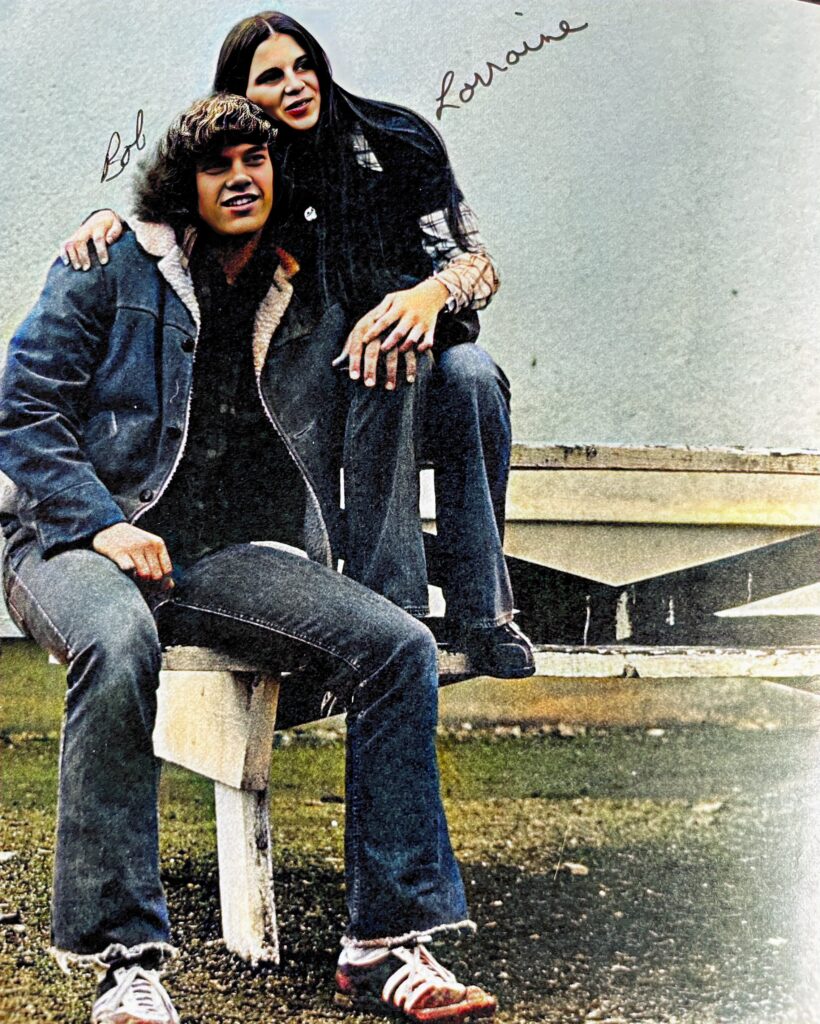
Me with Lorraine Duhovnik (Junior Class) in the hallway of Mannheim American High School with Seniors, Mark Sanchez, Kyle Kamalu, and Bob Nicholson behind us.

Class of 1977 — Me and my Fellow Sophomores

I was a sophomore in the Class of 1977, but thanks to being ahead in school, I ended up in several of Diana’s classes — and even Lynne’s Physics classwith the infamous Miss Sapatka, a devout Star Trek fan who wore a Starfleet uniformand gave the Vulcan salute regularly. Odd as she was, she made physics one of my favorite subjects.

Class Photo at Mannheim American High School.

Part of autobiography of Dr. Anthony J. Carbone

I was also in Diana’s Chemistry class with Mr. Voltz, another science nerd with a great sense of humor, who eventually made me his assistant teacher because I earned straight A’s and was his top student. Diana wasn’t thrilled about sharing her classes — or her spotlight — with her nerdy little brother, but she had plenty of distractions, with every boy in school falling for her.

I was inducted into the National Honor Society, joined the choir, and made the Junior Varsity Soccer Team thanks to Rudy Glenn (Captain of the Varsity soccer team and a future professional soccer player), who took me under his wing. One afternoon, Rudy came up to me, dribbling a soccer ball, and asked if I played. “Not at all,” I said. “I can’t play anything.” He smiled and said, “Anyone can learn soccer.” And I did. By senior year, I was Captain of the Varsity Soccer Team, and we won the European Championship in our DoDDS division.

National Honor Society Inductees, Mannheim American High School.

Part of autobiography of Dr. Anthony J. Carbone, Son in the Shadow of a Green Beret Hero.
National Honor Society Inductees at Mannheim American

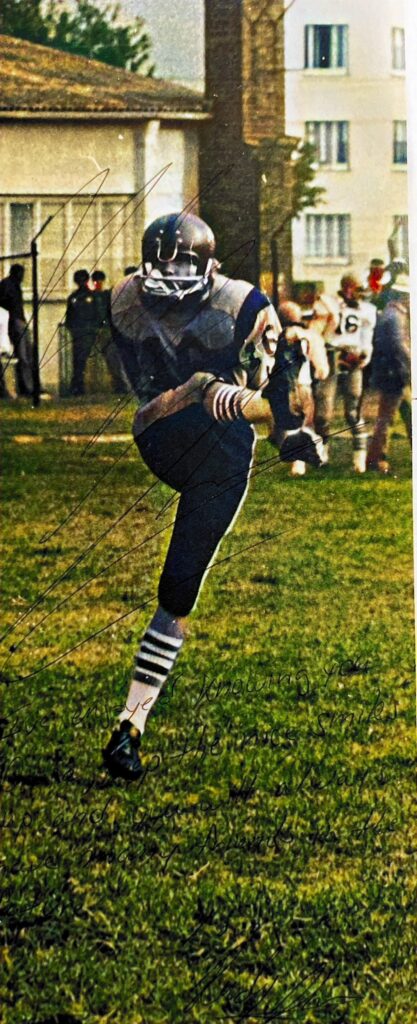
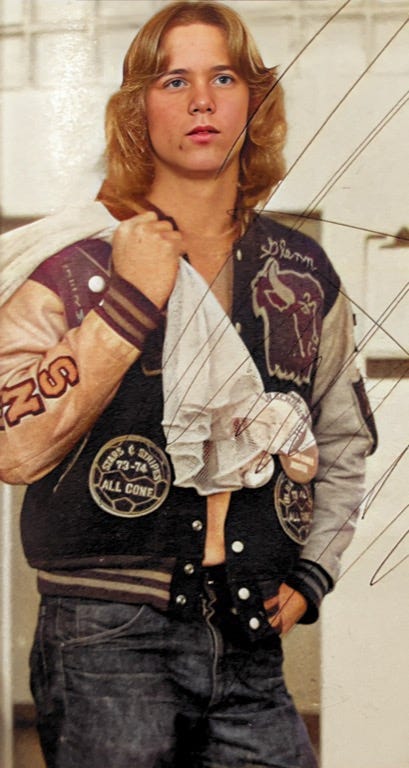
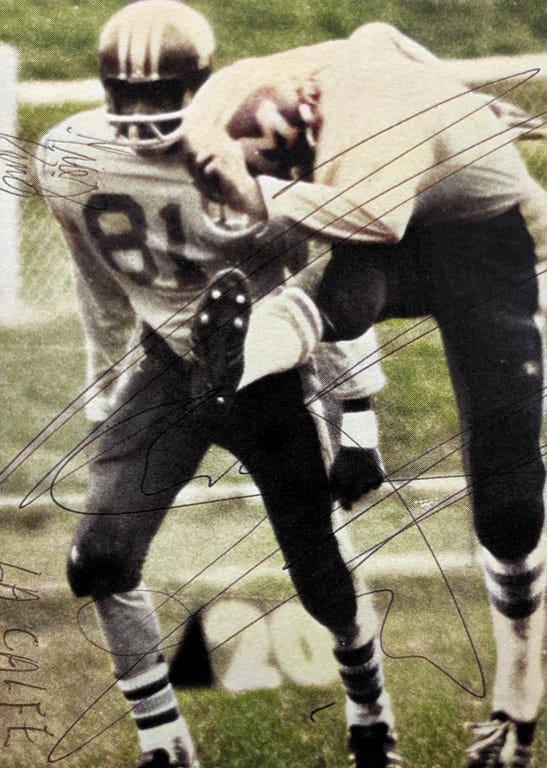
Rudy Glenn, Varsity Football & Soccer Star

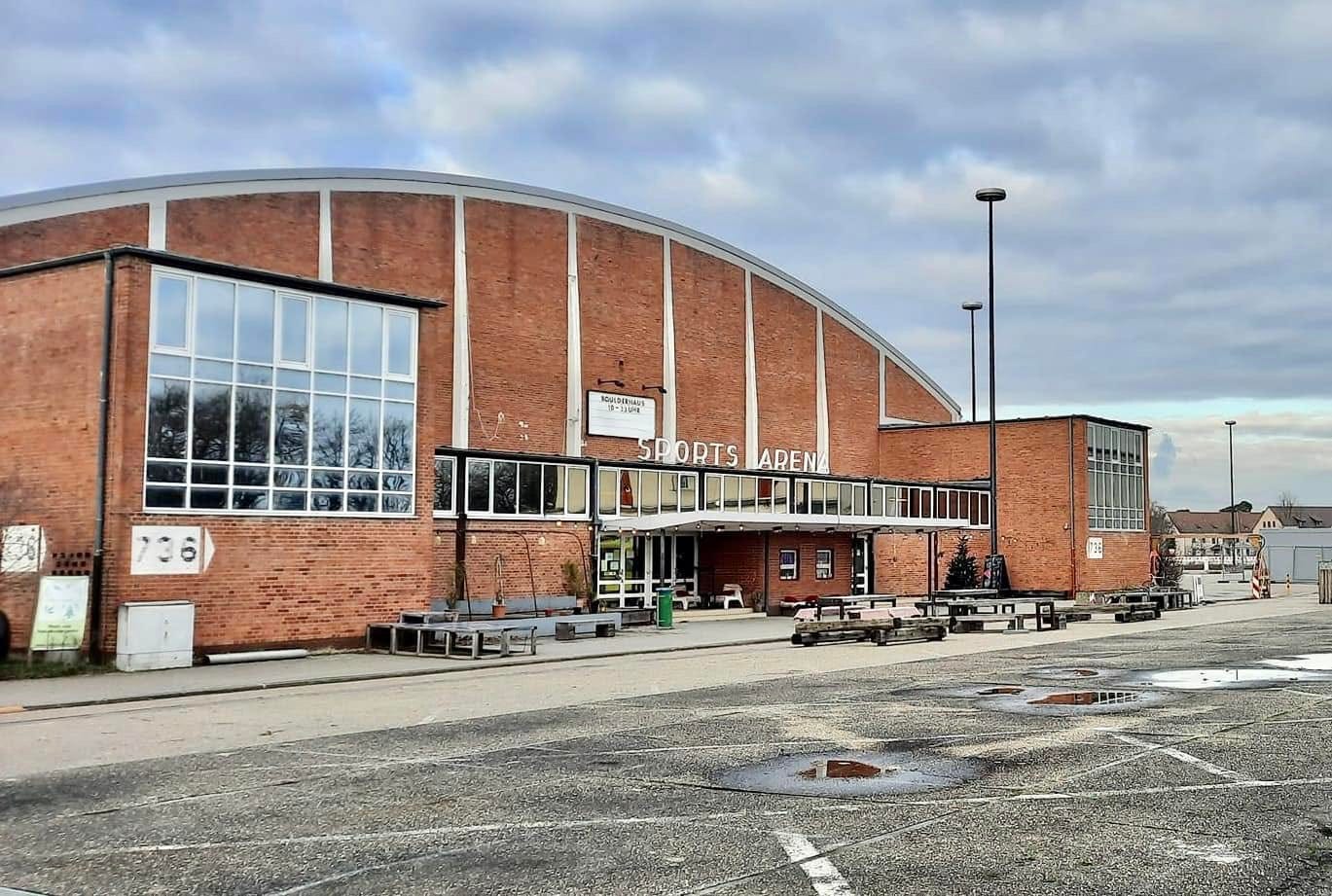
Sports Arena at Benjamin Franklin Village, Mannheim, Germany.

Part of autobiography of Dr. Anthony J. Carbone, Son in the Shadow of a Green Beret Hero.
Sports Arena in Benjamin Franklin Village Mannheim, Germany where MAHS played basketball.

Other Class of 1977 Notables

My class also had its own share of notables: Debbie Murray, who became a nurse anesthetist and a lifelong friend of Diana and mine; Andrea Simmons, the Diana Carbone of our sophomore class; and Jim Mills, son of my father’s S3, who followed us to Bad Kreuznach and became an All-Europe athlete there.

Jim Mills Jr (#66) On the Mannheim Bison Varsiry Football Team.

Part of the autobiography of Dr. Anthony J. Carbone, Son in the Shadow of a Green Beret Hero.
Jim Mills Jr with that 1970s hair!

Class of 1978–Freshman Class

And from the Class of 1978, one student I’ll never forget: Debi Bell, Jeff’s sister, who I thought was beautiful, kind, and incredibly talented. She was a JV cheerleader, a top gymnast and volleyball player, and she even agreed to be my date for a few dances — mostly out of kindness… and brotherly loyalty. Jeff and I made every single game and practice of Debi’s. Yes, I had a big (unrequited) crush.

Homecoming ’75: A Portrait of the Perpetual Ninth Wheel

The photograph of me below with 4 senior class friends: Mark Sanchez, Chuck Grayson, Kyle Kamalu, and John Timmerburg with their dates (forget Mark’s date name, Gail Hayward, Beebe Auna and Michele Kamalu). This was a photograph taken before Homecoming dance at Mannheim American High School in 1975. This sums up my high school romantic life in a single photograph — this night, I was the 9th wheel!

Photograph of Mannheim American High School Homecoming Dance evening with 4 senior classmen friends: Mark Sanchez, Chuck Grayson, Kyle Kamalu, and John Timmerburg.  With their dates: (Can't remember Mark's date name), Gail Hayward, Beebe Auna, and Michele Kamalu.  I am the 9th wheel.  Autobiography of Dr. Anthony J. Carbone.

Mannheim was a great school with great students and faculty. It was one of those small Department of Defense Schools Europe (DODSEUR) where everyone had to be involved in everything just to make the school function — which made it an absolute blast. Our superstar athletes were also in the choir, the chess club, and every other club imaginable because each one meant one thing: a road trip. And when your school is in Germany, that means one club might hold a meeting in London, another in Nürnberg, another in Berlin. The sports teams traveled somewhere exciting nearly every other weekend. It’s how I saw all of Germany for free.

Basketball Teams Roadtrip to Nüremberg

I remember traveling to Nürnberg for a basketball tournament with the teams — but even more memorably, I traveled with the cheerleaders and beautiful Kathy Wing, who was my co-basketball manager.

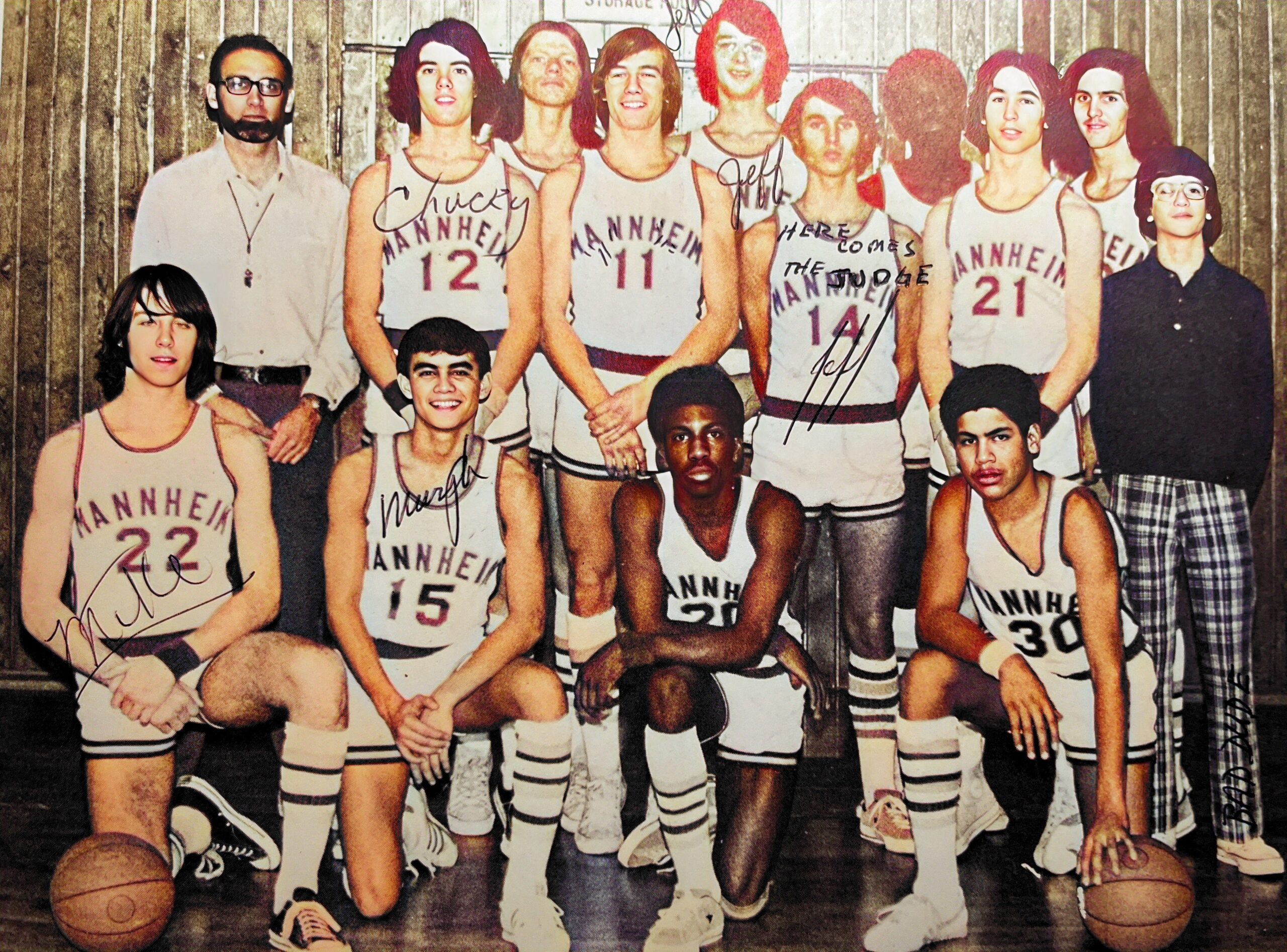
Men's Varsity Basketball Team with me as the manager at 5 foot 2 inches at Mannheim American High School in Germany.

Part of the autobiography of Dr. Anthony J. Carbone, Son in the Shadow of a Green Beret Hero.
Mens Varsity Basketball Squade (with me as manager)
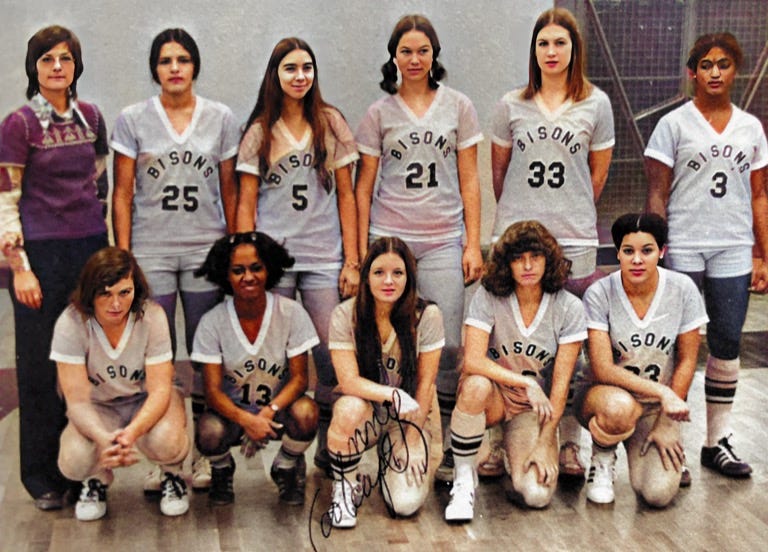
Women's Varsity Basketball Team, Mannheim American High School.

Part of the autobiography of Dr. Anthony J. Carbone, Son in the Shadow of a Green Beret Hero.
Women’s Varsity Basketball Squad

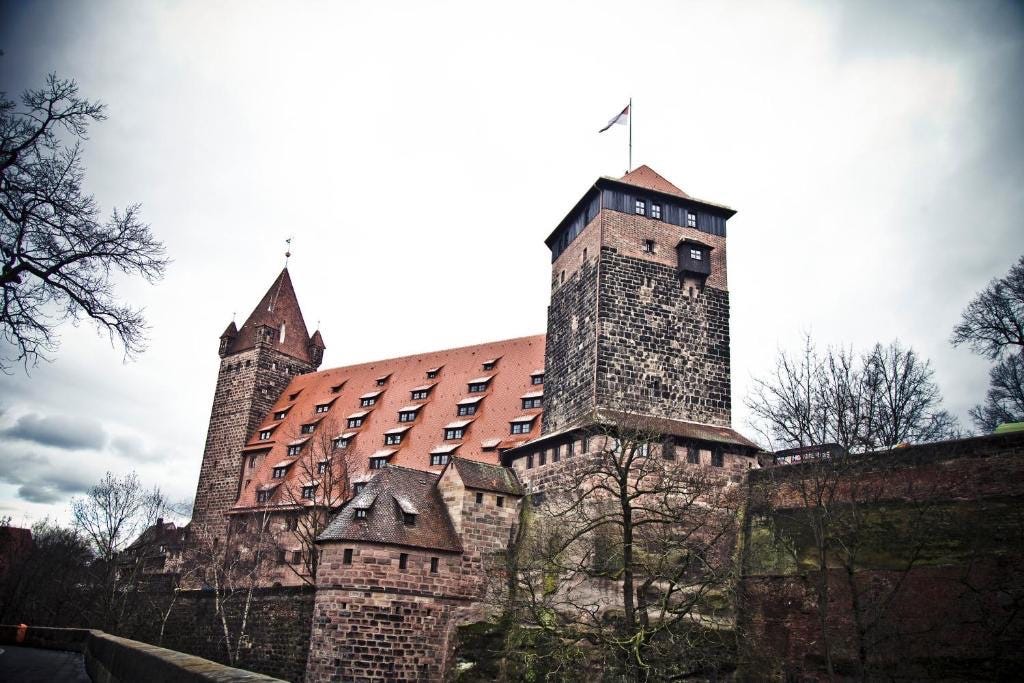
They put us up in the old Nürmberg Castle, right in the center of town. The youth hostel was actually located in one of the ancient towers of the castle. That night, I figured out that the cheerleaders were in the room directly below mine. Naturally, I tied my tennis shoes together by the laces, leaned out of the castle tower window, and started swinging them down, hoping to get their attention. Sure enough, I was thrilled when Terry Swenson and Kelly Diest poked their heads out of the window below and looked up at me, laughing. I might have been small in high school, but I definitely put my genius IQ to work when it counted.

Nüremberg Castle that contained the youth hostel where the basketball teams and cheerleaders in Nürmberg, Germany.

Part of the autobiography of Dr. Anthony J. Carbone, Son in the Shadow of a Green Beret Hero.
Nürmberg Castle (Youth Hostel) Germany
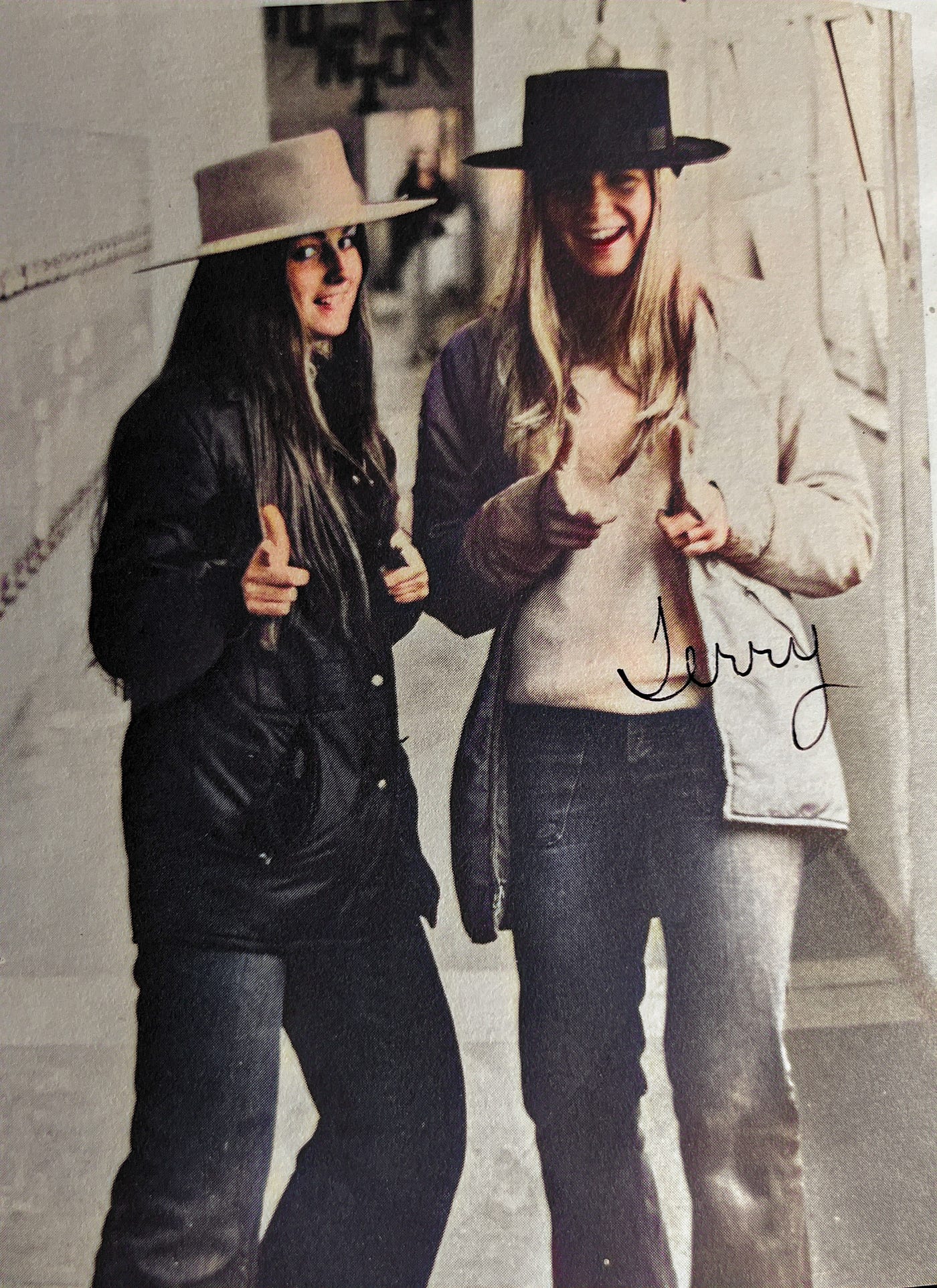
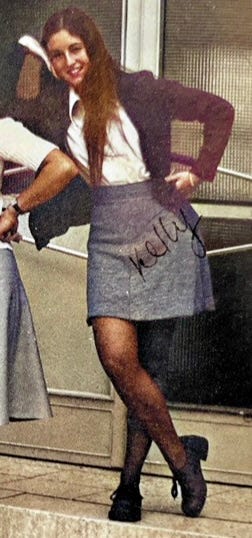
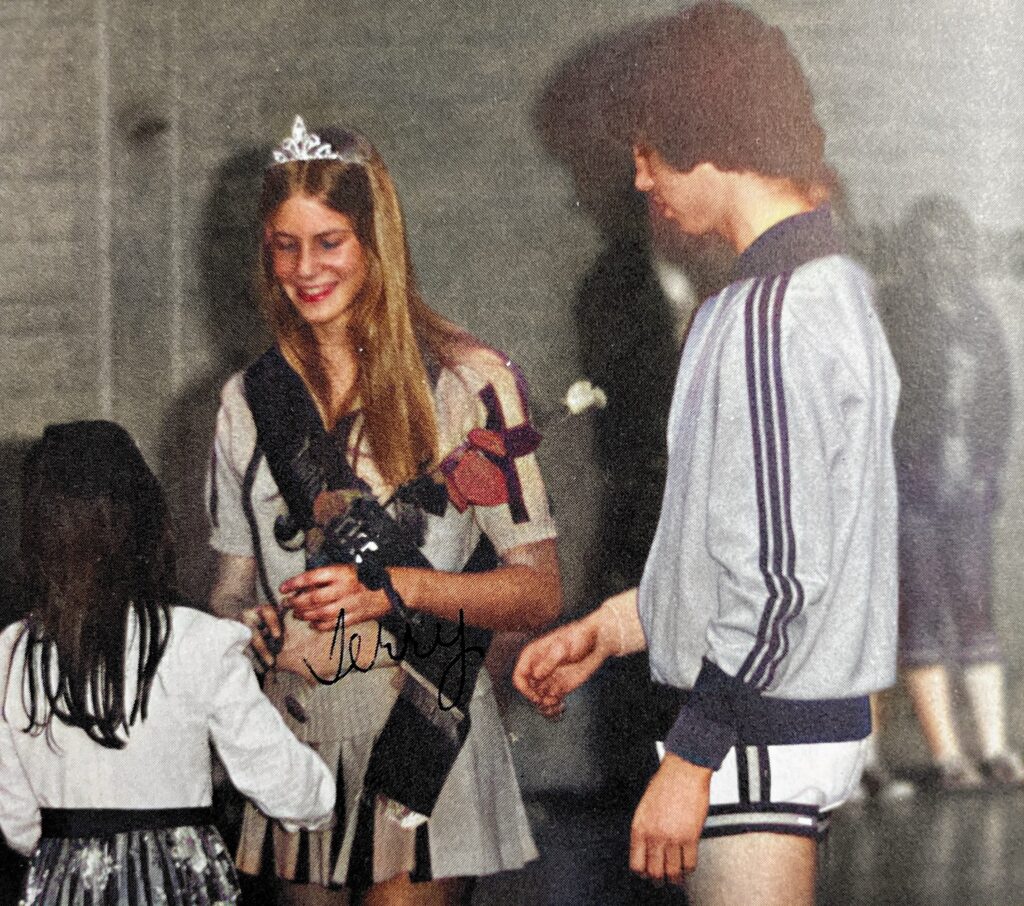
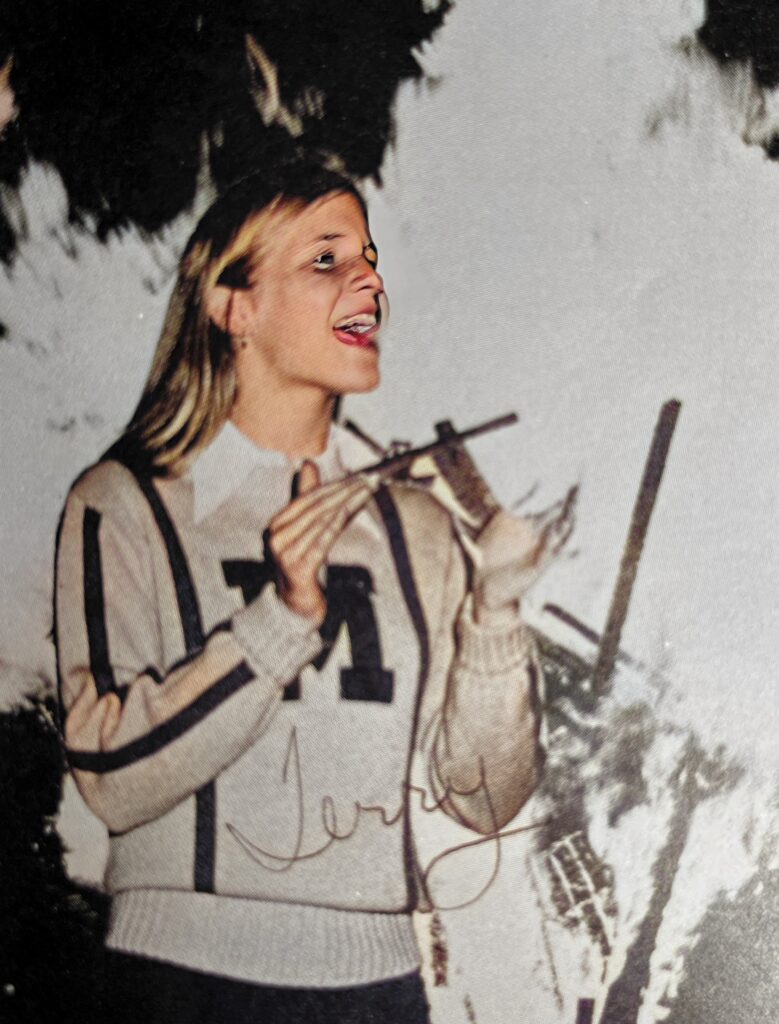
Kelly Diest (Left) and Terry Swenson (Right) varsity cheerleaders two of the most popular and nicest girls at Mannheim Ameican High School, Germany.

Part of the autobiography of Dr. Anthony J. Carbone, Son in the Shadow of a Green Beret Hero.
Kelly Diest (Left) and Terry Swenson (Right)
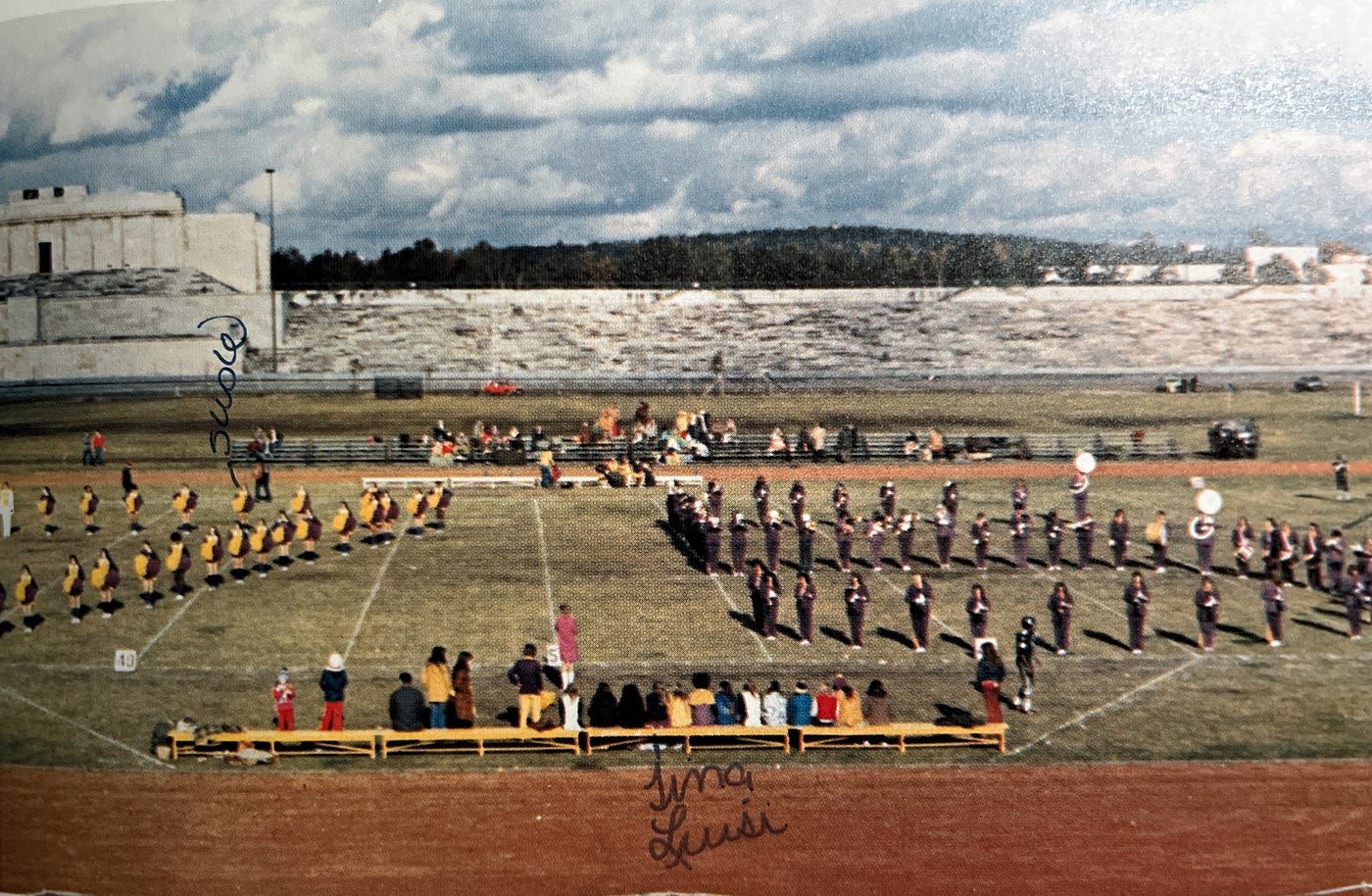
We played Nüremberg American High School football and soccer in the infamous Nüremberg Stadium that Hitler fave his rallies years ago.

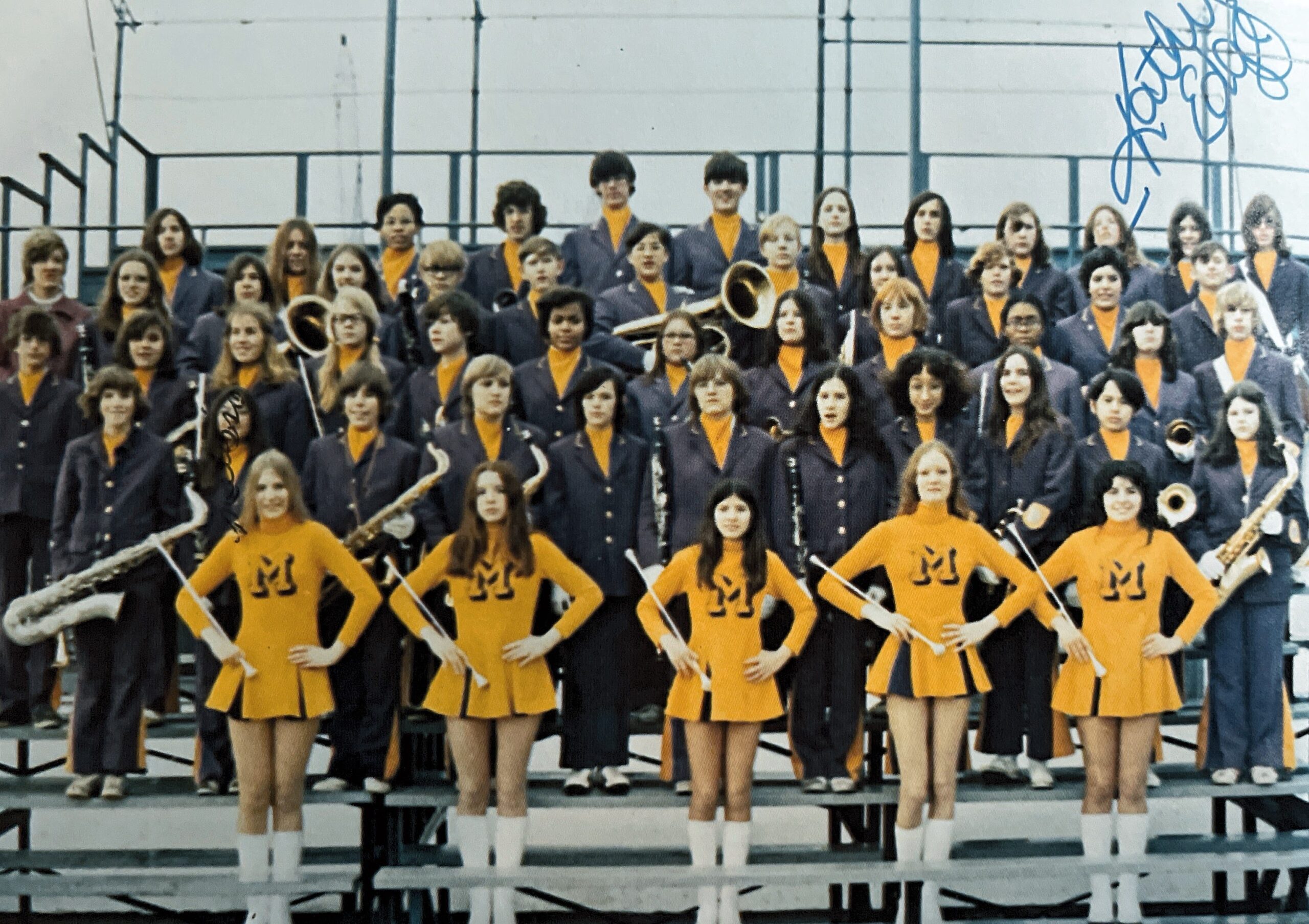
Mannheim American High School Band and Lettergirls performing.


Part of the autobiography of Dr. Anthony J. Carbone, Son in the Shadow of a Green Beret Hero.
We played Nüremberg American High School football & soccer in the infamous Nüremberg Stadium that Hitler gave his rallies years ago.

Kelly Diest and the Kissing Booth

And then, there was my first real kiss. I can’t remember the exact event — it might have been a school fair or some kind of student fundraiser — but I definitely remember the kissing booth. And I absolutely remember who was inside it. There she was: the one and only Kelly Diest — gorgeous, red-haired, and a cheerleader. I was already in love with her, and now, here she was, smiling at me through the booth window. I gave her a quarter and stepped up. She gently placed her hands on my face and kissed me on the lips — oncetwice, and on the third kiss, I felt something I had never felt before: my first French kiss. I was stunned. Giddy. Smitten. My head was spinning.

I left the auditorium, ran home to my room, grabbed a roll of quarters I had saved from commissary tips, and sprinted right back to the kissing booth. I stood there handing Kelly one quarter after another — completely starstruck. At one point, I remember Kelly turning to one of my sisters and saying with a laugh, “I think your brother really likes kissing!” She had no idea. I’ve never forgotten Kelly Diest.

Kelly Diest (Class of 1976) Mannheim American High School.

Part of the autobiography of Dr. Anthony J. Carbone, Son in the Shadow of a Green Beret Hero.
Kelly Diest

Summer Hire at Seckenheim

In the summer of 1975, Lynne had just left for college in Boston, and Diana and I both signed up for “Summer Hire” through the U.S. Government. We earned $1.65 an hour — not much even back then. Diana landed a cushy gig working the front desk at the Military Police Station with her best friend, Leslie Roddy. Their job mostly involved answering phones and getting flirted with by MPs all day.

I wasn’t quite so lucky. I got assigned to an isolated Army base out in Seckenheim, a kaserne filled with warehouses and a giant industrial laundromat and ended up working in a warehouse that handled shipments of household goods — giant wooden crates shipped from the States. The place was run entirely by German nationals working for the U.S. Government, most of whom considered it the ultimate cush job. As the token American kid, they made me do everything: the paperwork, the filing, and even unloading trucks with a forklift — at age 14.

To pacify me, they called me Meister (which means “Boss”), fed me cartons of German Orangina, and gave me girlie magazines while they lounged around drinking beer all day. Yes, it was a bizarre experience.

Joined in Seckenheim by Jeff Bell & Kathy Wing

The one saving grace was that I wasn’t alone. I was stationed out in Seckenheim with my buddy Jeff Bell and the stunning Kathy Wing, who I adored and who later became our basketball team manager with me. Jeff got an equally tough assignment at the government furniture warehouse. We both worked like dogs that summer. Every day we ate lunch in a tiny canteen — just two Deutschmarks (about 50 cents) for a hot meal.

At first, Jeff and I were completely grossed out by the laundromat staff: large, tough old German women in sweaty uniforms manhandling loads of military uniforms and linens. But by the end of the summer, we’d catch each other sneaking glances at them — clearly overworked and heat-addled — and then smack each other on the shoulder and break out laughing.

Honestly, the only real consolation was the twice-daily commute. Jeff and I crammed ourselves into Jeff’s tiny Volkswagen Beetle for the long, hot ride to and from Seckenheim every day with Kathy Wing. That made the entire summer worth it.

Mannheim American HS Hallway with Debbie Bell, Debbie Murray, Jeff Bell, and Tony Carbone.  Biography of Dr. Anthony J. Carbone
Mannheim American HS Hallway with Debbie Bell, Debbie Murray, Jeff Bell, and Tony Carbone.

Mischief in Mannheim

Mannheim was definitely my mischievous era. Our family had a lot of rules, which wasn’t unusual for military families at the time. One of the biggest rules was that we were not to leave the house when my parents were away — a rule you’ll soon see I broke more than once. Another rule was that Diana, Lynne, and I had to leave for events together and return home together at our designated curfew.

Jeff & I Watch Out for Diana

That meant almost every weekend ended the same way: Jeff Bell and I driving around Mannheim in the VW Beetle looking for Diana, who was always just moments away from getting in trouble. She wasn’t a bad kid — not at all. She was just incredibly naive when it came to boys, and Jeff and I became her unofficial watchdogs.

Chinese Fire Drill

And speaking of that little Volkswagen Beetle, Jeff and I made the most of it. We cruised around both on-post and off, pulled Chinese fire drills at intersections, and generally used it as our ticket to freedom. Once, when I was supposed to be babysitting my younger sisters Pamela and Cynthia, Jeff and I decided to take them out cruising. We hit a stoplight somewhere downtown Mannheim when a car full of other Army brats behind us honked, which was our cue for a car swap.

Jeff and I jumped out of the Beetle and ran to the car behind us, leaving Pam and Cynthia in the front seat. To their horror — and mine — two strangers jumped into the Beetle and drove off with my little sisters. According to Pam and Cynthia, it was one of the most terrifying moments of their childhood. Thankfully, the “strangers” were just other high school kids we knew — and Jeff and I recovered the girls moments later. My parents never found out. To this day, Pam and Cynthia still bring up that story, and I still count my lucky stars that I survived that one without court-martial.

Night of the Armor Ball

But I wasn’t always that lucky. One night, my parents got all dressed up — my father in his Dress Blue uniform and my mother in a gown — and they headed out in the Porsche for the Armor Ball. That usually meant they’d be out until midnight or later, so it was one of the nights I decided to sneak outof the house. Big mistake.

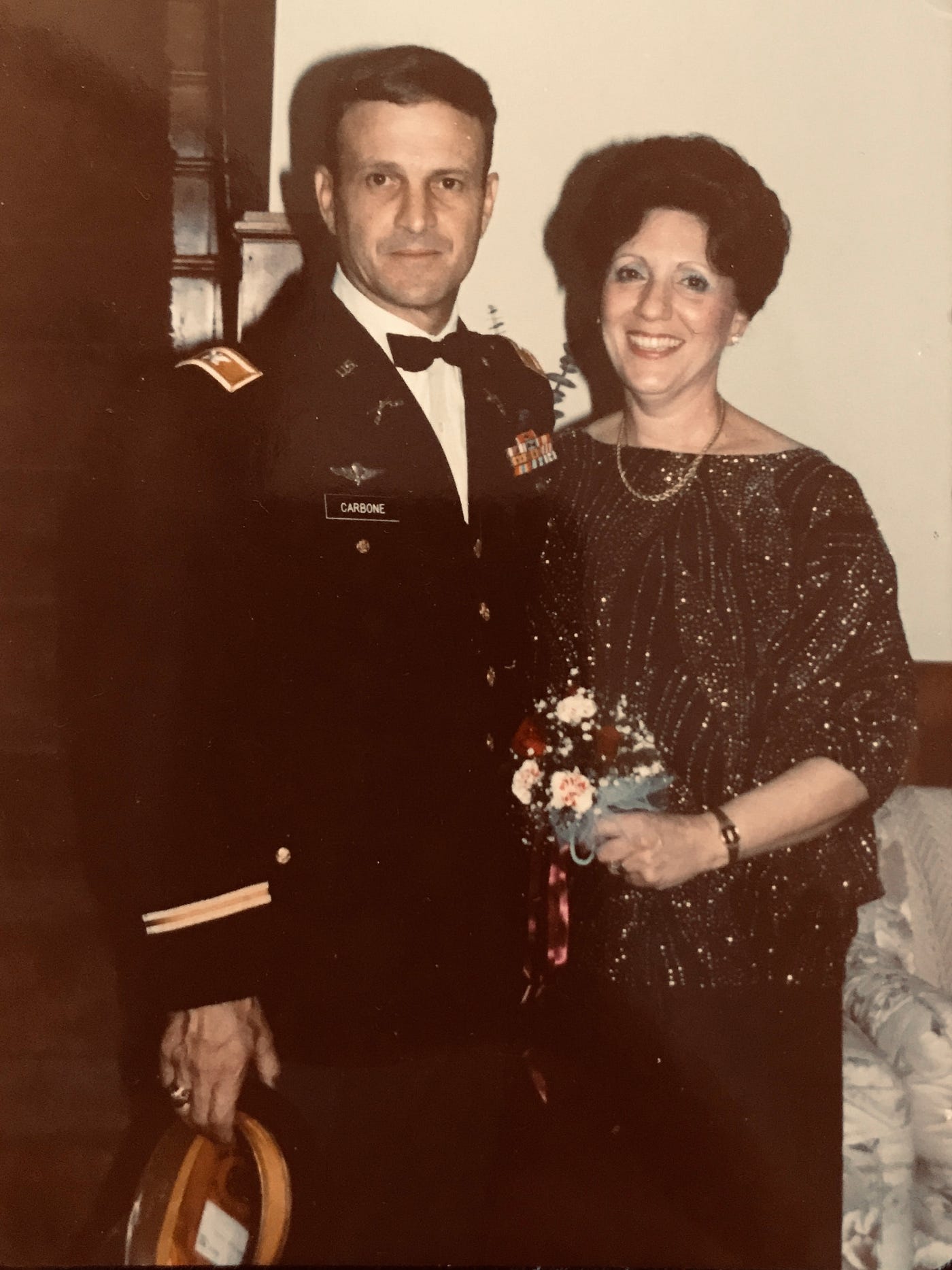
Dad (Colonel Tony Carbone) in his dress blue uniform and Mom (Edda Carbone) in an evening gown.

Part of the autobiography of Dr. Anthony J. Carbone, Son in the Shadow of a Green Beret Hero.
Dad in his Dress Blue Uniform and Mom in her evening dress.

My mother became ill on the way to the Armor Ball, and my father turned the Porsche around to bring her home and put her to bed. Meanwhile, I was out with Jeff, causing mischief for hours. When I finally returned home and slid my key into the front door, it opened on its own. My heart stopped. There, standing in the doorway, was my father — still in his uniform pants with suspenders, jacket off, calm as could be. In a very soft voice, he said: “Go sit on the couch.” I did. And I sat there for what felt like hours. Eventually, he came back into the living room and, in the same soft, low voice, he said: “Never do that again.”  I shook my head and muttered, “Never again, sir.” Then he quietly said: “Now, get to bed.”

My father’s power and authority

That was how powerful my father was — with everyone.  He never had to raise his voice. In fact, I can say with 100% certainty that he never raised his voice at my mother — not once in my life. It reminded me of that time back in Leavenworth, when the hippie brat came stomping into our quarters. My father spoke to him with the same calm authority, and I’m pretty sure that kid messed his pants.

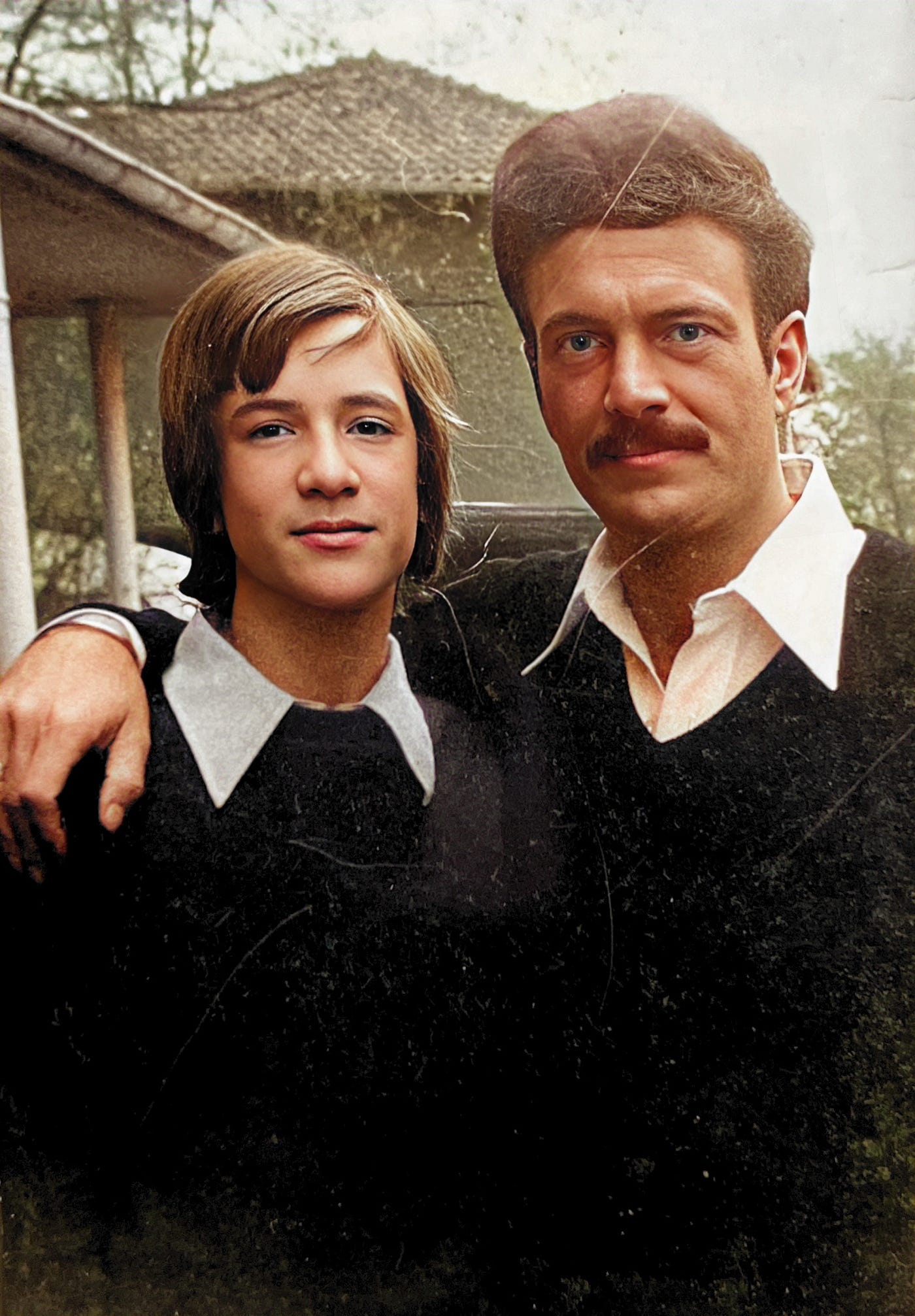
Me with my father (LTC Tony Carbone) outside our quarters on Grant Circle in Benjamin Franklin Village (BFV), Mannheim, Germany.

Part of the autobiography of Dr. Anthony J. Carbone, Son in the Shadow of a Green Beret Hero.
Me with my father (had to be hours before his next haircut).
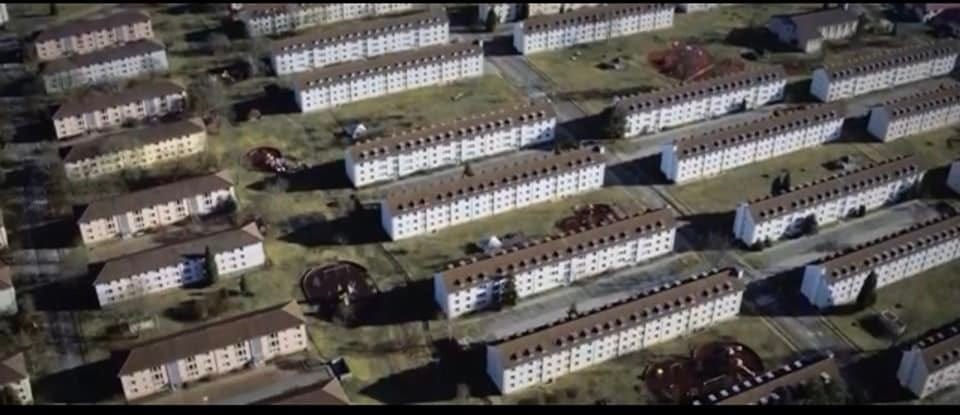
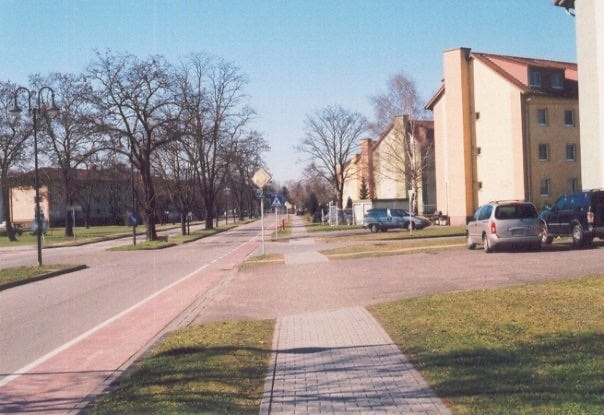
Base family housing area showing typical government apartment buildings at Benjamin Franklin Village, Mannheim, Germany.

Part of the autobiography of Dr. Anthony J. Carbone, Son in the Shadow of a Green Beret Hero.
Base Housing Benjamin Franklin Village, Mannheim, Germany

The American Youth Association (AYA)

On weekends, all of us high school students gathered at the AYA (American Youth Association), which was a cultural time capsule of the 1970s. There were couches to hang out on, a few pinball machines, a small snack bar window, and walls covered in blacklight posters. At the center was a big dance floor, and suspended above it, the ultimate prize: a shiny disco ball. We had dances every weekend, and for a teenage couple on an Army base, an AYA dance was about as far as you could go.

The American Youth Association (AYA) buiding at Benjamin Franklin Village (BFV) Mannheim, Germany where we dependents played games, hung out and had dances.


Part of the autobiography of Dr. Anthony J. Carbone, Son in the Shadow of a Green Beret Hero.
American Youth Association (AYA) Building in Mannheim, Germany

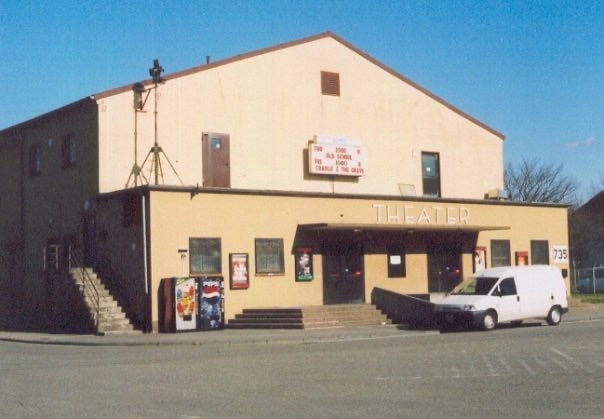
Saturday afternoons meant the post theaterMatinees were free, and regular movies cost 25 cents. You had to show either your military dependent ID card or your dog tags to get in. Every movie began with everyone standing for the National Anthem — no exceptions. And because soldiers and dependents were seated together, the theater lights were never turned off completely. We watched every film in a dim glow.

Post Theater at Benjamin Franklin Village (BFV) Mannheim, Germany.

Part of the autobiography of Dr. Anthony J. Carbone, Son in the Shadow of a Green Beret Hero.
Post Theater at Benjamin Franklin Village, Mannheim, Germany

Fun Times at the A&W

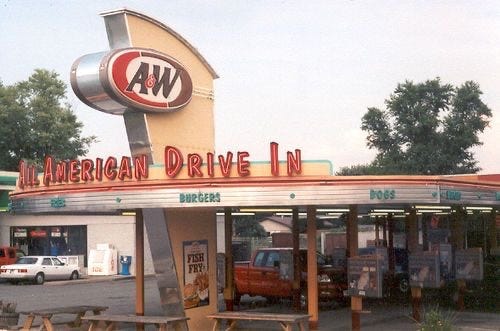
And then there was the A&W drive-in just outside the back gate of Sullivan Barracks. In the days before fast food chains conquered the globe, this was a very big deal. Jeff and I would pull into the lot and a waitress — often on roller skates, would come to take our order. We almost always ordered the same thing: an A&W Crunchburger (a hamburger with crispy onion strings on top). And of course, an ice-cold root beer float.

A&W drive-in restaurant like the one just off-post where Jeff and I would frequent in his VW Beetle in Mannheim, Germany.

Part of the autobiography of Dr. Anthony J. Carbone, Son in the Shadow of a Green Beret Hero.
Typical A&W Drive Thur c.1975

Those nights — cruising with Jeff, jukebox tunes playing, root beer in hand, sneaking glances at girls we liked, hoping not to get caught breaking curfew . Those were the sweet, golden days of youth. Mannheim was structured and disciplined, but it was also a place where we found room to rebel just enoughlaugh just loud enough, and live just fully enough to remember it all forever.

Military Orders Again!

But as all military kids know, just when life starts to feel perfect, the orders come down. Midway through Diana’s senior year, my father received new orders: he was to leave his beloved tank battalion and take a position at 8th Infantry Division Headquarters in Bad Kreuznach. Lynne had already left for college in Boston, but for Diana and me, the news hit like a punch to the gut.

We were devastated. Mannheim had become our home and the greatest place we have ever been assigned. I was just beginning to feel like I belonged, even though girls like Kelly Diest, Lorraine Duhovnik, Terry Swenson, or Kelly Wing barely noticed me. A teenager’s hope that one of them might give me a chance lingered, but that dream soon shattered. Yearbooks, countless photographs, and cherished childhood memories remained my solace.
Sitting outside our quarters in Mannheim, Germany (August 1976), before moving to Bad Kreuznach.

Decision made–Diana stays in Mannheim; I go to Bad Kreuznach

There were tears, long talks, and serious negotiations, but eventually my parents reached a compromise: Diana would stay behind to finish her senior year at Mannheim. She moved in with the Roddy family until she graduated. Meanwhile, the rest of us — my parents, my younger sisters, and I — packed up once more and moved to Bad Kreuznach.

Major Mills and Family Follow Us to Bad Kreuznach

We weren’t the only ones making the move. My father’s trusted S3, Major Jim Mills, was also reassigned to 8th Infantry Division HQ. His son, Jim Jr., followed us to BK — and the two of us would become close friends.

As the curtains closed on our life in Mannheim, I left behind a whirlwind of memories: first crushes, first kisses, wild drives in a beat-up Beetle, soccer matches, school dances, and the unbreakable bond with friends like Jeff Bell. Mannheim had been magic. But now, it was time to start again.

Photographs of Fellow Mannheim Bisons

Mannheim American High School Marching Band and Majorettes.

Part of the autobiography of Dr. Anthony J. Carbone, Son in the Shadow of a Green Beret Hero.
Mannheim Ameican High School Marching Band & Majorettes
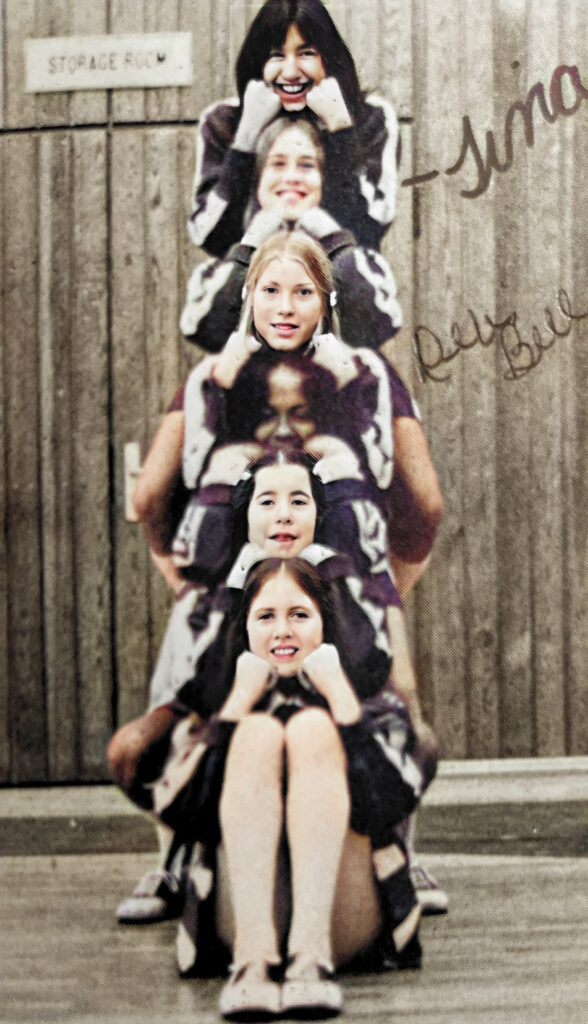
Few of the Mannheim Bison Lettergirls at Mannheim American High School in Germany.

Part of the autobiography of Dr. Anthony J. Carbone, Son in the Shadow of a Green Beret Hero.
Few of the Mannheim Bison Lettergirls
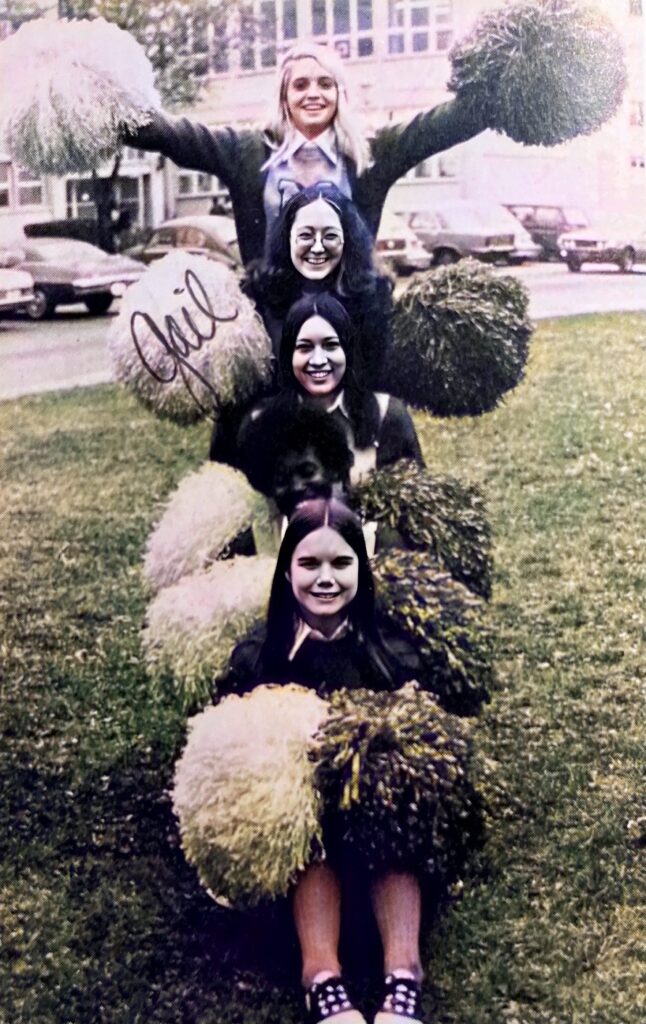
Few of the Mannheim Bison Lettergirls at Mannheim American High School in Germany.

Part of the autobiography of Dr. Anthony J. Carbone, Son in the Shadow of a Green Beret Hero.
Few of the Mannheim Bison Lettergirls
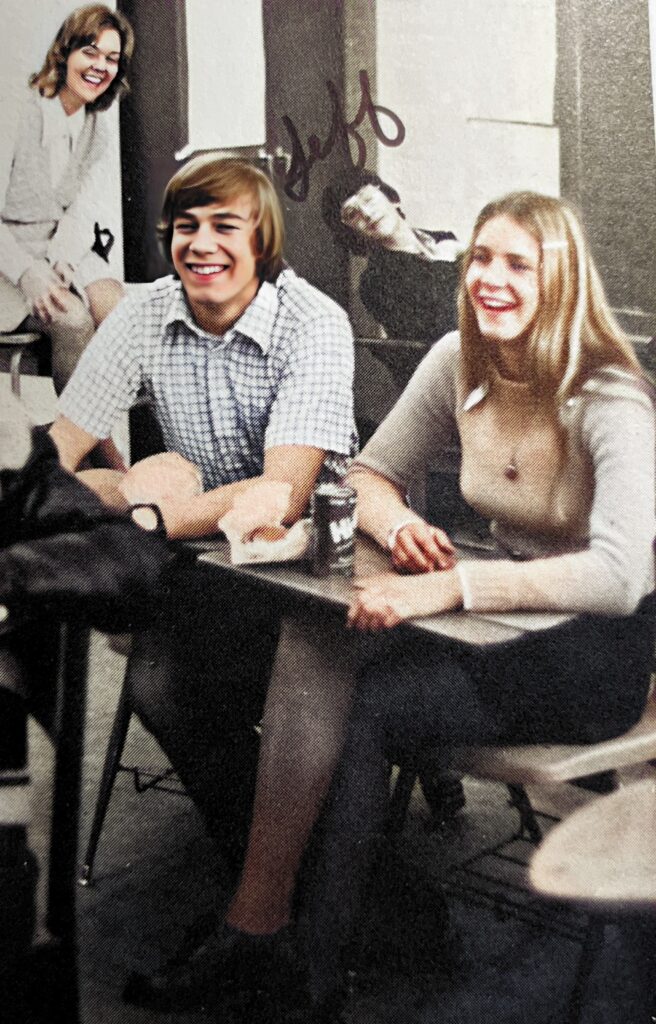
Few of the Mannheim Bison Lettergirls at Mannheim American High School in Germany.

Part of the autobiography of Dr. Anthony J. Carbone, Son in the Shadow of a Green Beret Hero.
Mannheim Bison Lettergirls

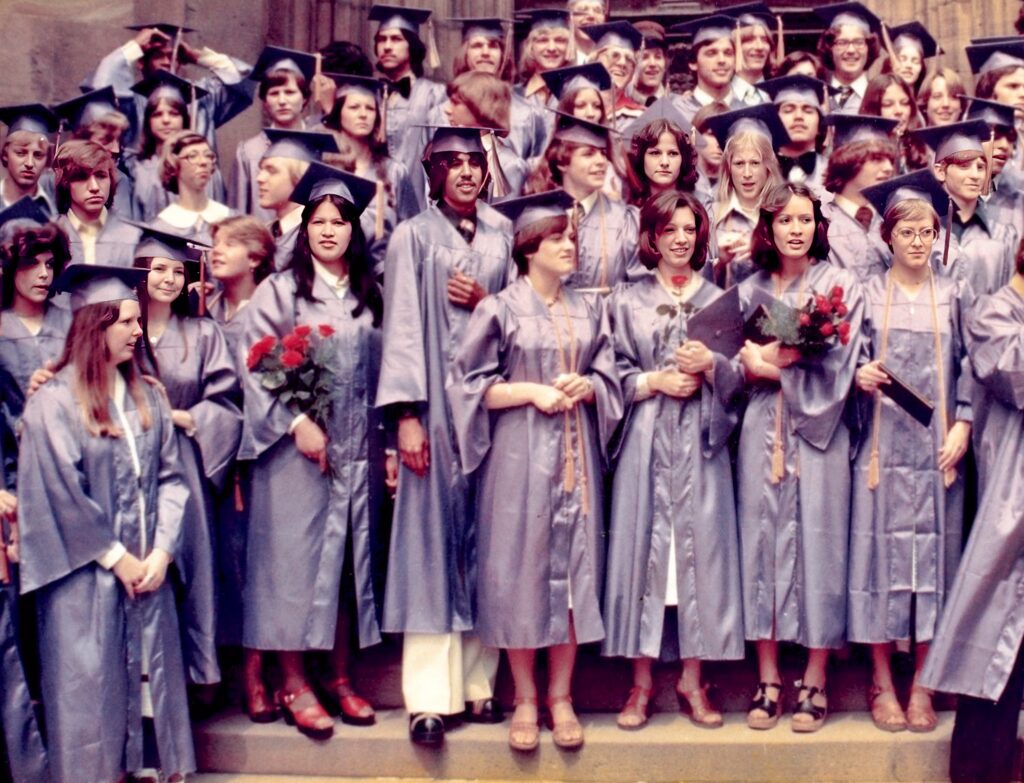
Mannheim American High School Class of 1977 Graduation

Graduating Class of 1977 in cap & gown, Mannheim American High School, Mannheim, Germany.  Biography of Dr. Anthony J. Carbone.

Home Page

Chapter 10: Dad Gets Assigned to the Pentagon and We Move to Woodbridge, Virginia

Cavalry Officer Branch Insignia US Army. Autobiography of Dr. Anthony J. Carbone

Believe Nothing You Hear, and Only Half of What You SeeA Memoir of Service, Shame, and the Search for Truth

Dad Gets Orders for the Pentagon & We Move to Woodbridge, Virginia

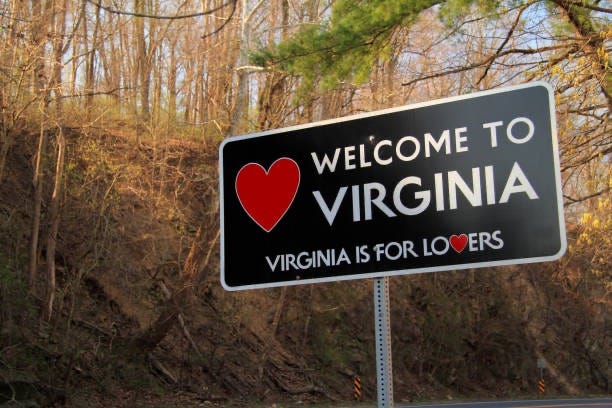
The Virginia is for Lovers sign

Part of autobiography of Dr. Anthony J. Carbone, Son in the Shadow of a Green Beret Hero
Virginia’s Logo for the 1970’s

Job at the Pentagon

In the late summer of 1971, we arrived in Woodbridge, Virginia, just in time for the start of the school year. My father had returned from Vietnam and was assigned to the Armor Officer Branch at the Pentagon. To the outside world, this seemed like a prestigious post — Washington D.C., the Pentagon, a desk job with influence. His section was eventually moved to the Hoffman Building in Alexandria, Virgina, but that didn’t make things any better for him — to my father, it was the worst assignment of his career.

His new job involved issuing deployment orders — sending fellow Armor officers into the very war he had just come home from. It was the kind of responsibility that haunted him. But what I believe truly embittered him were the officers who looked for ways to dodge their duty. He loathed cowardice. For a tanker who thrived in the field, where courage was tested in dust and diesel and sweat, being confined to an office, moving paper instead of people, was a kind of death. Gone were the tank engines, the battalion maneuvers, and the brotherhood of warriors. Now he was just one more suit commuting to a beige building full of bureaucracy.

New Friends the Callens

There was, however, one redeeming element of that year: Mr. Richard Callen. A civilian with a GS-11 rating, Mr. Callen lived nearby and carpooled with my father to the Pentagon. But he was more than a work buddy — he and his wife Karen became lifelong friends to my parents. The Callahans were kind, sincere, and the kind of people who asked real questions and listened to the answers. In a time when shallow relationships were the norm, theirs was a friendship that endured, shaped by mutual respect.

Dale City in Woodbridge, Virginia

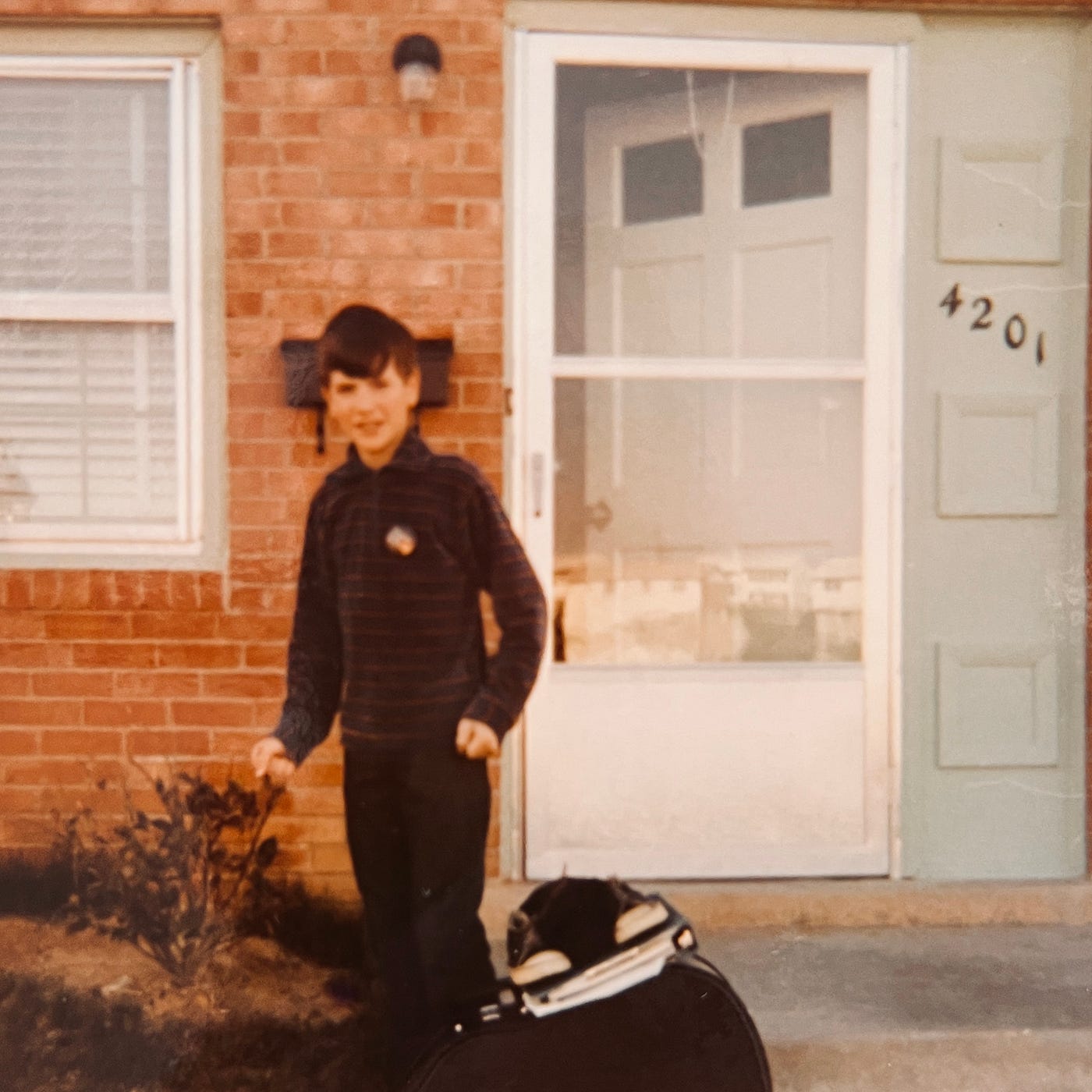
We moved into a brand-new, single-family home in a sprawling Dale City subdivision, located at 4201 Harvest Court. The house was pistachio-green on the outside, with green shag carpeting and dark wood paneling on the inside. I hatedthat pistachio-green exterior, but this was our first home — the first one my parents actually owned.

Me in front of our house at 4201 Harvest Court, Woodbridge, Virginia

Part of autobiography of Dr. Anthony J. Carbone, Son in the Shadow of a Green Beret Hero
Me in front of our house at 4201 Harvest Court, Woodbridge, Virginia

After years of base housing and temporary quarters, just having a steady address for three full years felt like luxury. Harvest Court was a quiet little cul-de-sac with just seven homes, tucked away in a sleepy pocket of suburban Virginia.

Photograph of me with my four sisters at Christmas time with our stockings hanginf on the fireplace.  Lynne, Diana, Tony Jr, Cynthia & Pamela.  Biography of Dr. Anthony J. Carbone.

Washington DC Monuments & Museums

Another great advantage of living in Woodbridge, Virginia was that we were now close not only to Washington, D.C.and its historic monuments — the White House, Capitol Building, Smithsonian Museums, and all those gleaming marble landmarks — but also to our Carbone relatives, the Carluccios.

The Carluccios

My father’s cousin Lucille (Carbone) had married Uncle Joe Carluccio, and they lived within visiting distance. Their home was spotless, warm, and always welcoming — thanks in no small part to Auntie Lucille, who exuded quiet elegance and grace. She was pure Carbone: classy, demure, and always composed. Her husband, Uncle Joe, was more than family — he was one of my father’s closest friends. If you didn’t know better, you’d assume they were brothers by blood.

They had two daughters: Debbie and Donna. Debbie was just a year older than I was but in the same grade, and she looked like a college coed — tall, stunning, with long, dark hair parted straight down the middle in true 1970s fashion, and a dazzling smile. She had a cool-girl edge to her — tough on the outside, but genuinely sweet when you got to know her. Her younger sister Donna was her polar opposite: smaller, louder, and a bit of a brat. While Debbie exuded grace and maturity, Donna brought the chaos.

A fun genetic twist: Debbie and I were technically double first cousins, or whatever the proper genealogical term might be. Both of our grandfathers were brothers, and both of our grandmothers were sisters. We saw the Carluccios regularly — about once a month during our three years in Woodbridge — and those visits added a sense of family rootedness in what otherwise felt like a season of drift for my father. You’ll hear more about the Carluccios in chapters to come — they remained an important part of my story.

Camping with My Father

My father took full advantage of the U.S. Army’s Morale, Welfare and Recreation (MMR) which provided tickets to baseball games, boating and camping equipment and passes. We went camping often. My father was a gormet camping cook. We had meals like roasted chicken and spaghetti. And of course we did our best fishing.

Camping at DoD Camp Ground with my father. Note SONY cassette recorder on picnic table.

Part of autobiography of Dr. Anthony J. Carbone,
Camping with my father wearing my Cape Cod Boy Scout Council sweatshirt. Note the infamous SONY cassette recorder on the picnic table (that my father used to send us tapes from Vietnam)

My Friend, Tim Ring

My closest friend on the block was a younger kid named Tim Ring, though calling him “little” would be misleading — he was at least three times my size. Despite the age difference, we clicked instantly and spent countless afternoons riding bikes, tossing footballs, and watching cartoons. Tim had an older sister who looked like she had walked off the cover of a minidress catalog — exactly the kind of teenage beauty that defined the early 1970s. His older brother had been set to attend the U.S. Air Force Academy, only to drop out of high school at the last minute — a shocking move that reflected the strange, restless spirit of the time.

The Ring household was also one of the first I knew that fit the mold of a “modern” American family. I almost never saw his parents. He was a latchkey kid before the term became common — independent, self-sufficient, and raised more by circumstance than supervision. It left an impression on me.

Next door to Tim lived a man who spent most of his free time working on classic cars in his driveway. That summer, I watched him restore a 1955 Chevy Corvette from the ground up. Piece by piece, he brought it back to life — gleaming chrome, leather seats, flawless curves. The final touch came when he had it painted a beautiful metallic blue that shimmered in the sun like an oil slick. I was mesmerized. Then, one day, I stopped by and asked where the car had gone. “Sold it,” he said casually. I couldn’t believe it. How could you spend all summer creating something so beautiful, only to give it away? I didn’t understand it at the time. Maybe it was about the process, not the product. But to my young mind, it felt like watching someone build their dream — then hand it off to a stranger.

Mills E. Godwin Middle School

I started 7th grade that fall at Mills E. Godwin Middle School, a so-called “progressive” school that actually lived up to the label. It ran on a year-round 45–15 schedule — forty-five school days followed by fifteen off. This meant we got breaks in all four seasons, which I loved, but it made family planning chaotic since my sisters were on a traditional schedule at the local high school.

Mills E. Godwin Middle School in Woodbridge,Virginia.

Part of autobiography of Dr. Anthony J. Carbone, Son in the Shadow of a Green Beret Hero
Mills E. Godwin Middle School, Woodbridge, Virgina

The Progressive School

The school was divided into four rotating color-coded groups: Red, Yellow, Blue, and Green. I was in Blue, while kids just across the street from me were in Red, which meant we never had school at the same time. Only three groups were in session at any given time, which kept the building under control but gave everything a weird rhythm. The structure of the school itself was equally unconventional. Classes were co-ed, and all students took both Shop and Home Economics. Our main subjects were blended into a long “Block” session, mixing English, history, and science in one flowing period.

Even the physical layout was strange. Godwin was housed in a single massive room — basically an old auditorium — divided only by six-foot-high partitions. You could hear the teacher in the next “room” while trying to concentrate on your own. Students didn’t sit at desks either. Most of us sat cross-legged on the carpeted floor, grooving through the school day in true 1970s fashion.

Yearbook from Mills E. Godwin Middle School in Woodbridge, Virginia.

Part of autobiography of Dr. Anthony J. Carbone, Son in the Shadow of a Green Beret Hero
Yearbook from Mills E. Godwin Middle School in Woodbridge

The Watergate Hearings

Because I scored so well on my placement tests, I was exempted from most of the regular coursework and spent much of my time in the library, where I became completely absorbed in the Watergate Hearings on television. I didn’t fully understand the intricacies of the scandal, but I recognized that I was witnessing history. The drama, the questions, the fall of a president — it felt massive.

The Senate Watergate Hearings that I watched during middle school.

Part of autobiography of Dr. Anthony J. Carbone, Son in the Shadow of a Green Beret Hero
Senate Watergate Hearings on Television

IQ Testing & Genius IQ, But Can’t Memorize

Despite being an excellent student, I struggled constantly with memorization. Locker combinations, phone numbers, names — I forgot them all. Memorizing the Boy Scout Oath or prays for First Communion and Conformation terrified me. Spelling made no sense to me. I assumed something was wrong.
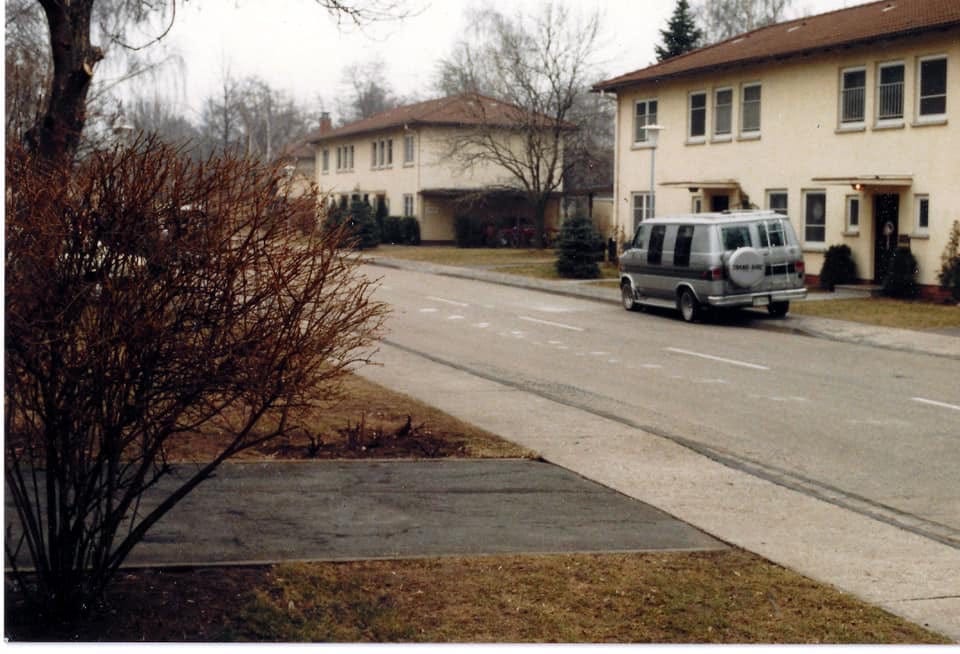
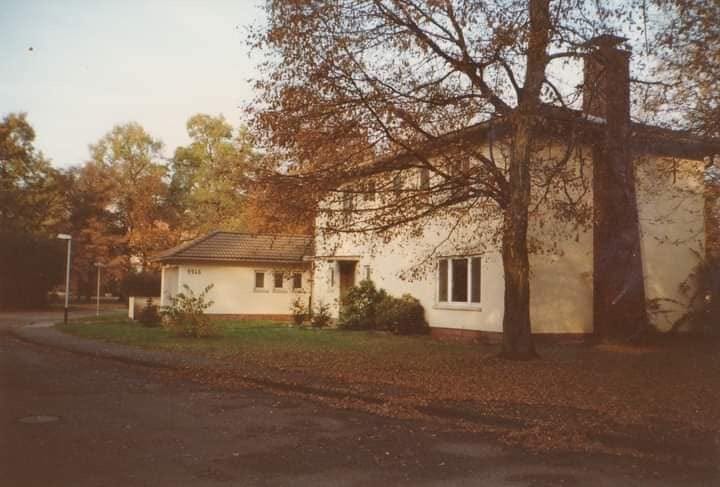
The school psychologist tested me repeatedly, and every time I scored a Genius IQ — 160 or higher. He was baffled and asked me, “How can a genius have trouble memorizing?!” I had no idea. I still don’t. It’s just how I am wired. I love learning, breezed through assignments, and earned straight A’s, but the basic act of remembering facts or phrases left me panicked. That contradiction — genius but with difficulty memorizing— has shaped my professional and social life ever since.

Middle School Activiites

Surprisingly, none of this ever made me feel like an outsider. I made friends easily–was even elected class representative by write-in vote, which surprised everyone, including me. Joined the school choir, where I discovered a passion and a gift for music. I eventually made regional and all-state choir as a first tenor, a rare honor for a middle schooler. Life at Godwin was strange and beautiful — a little chaotic, a little brilliant, like the 1970s themselves.
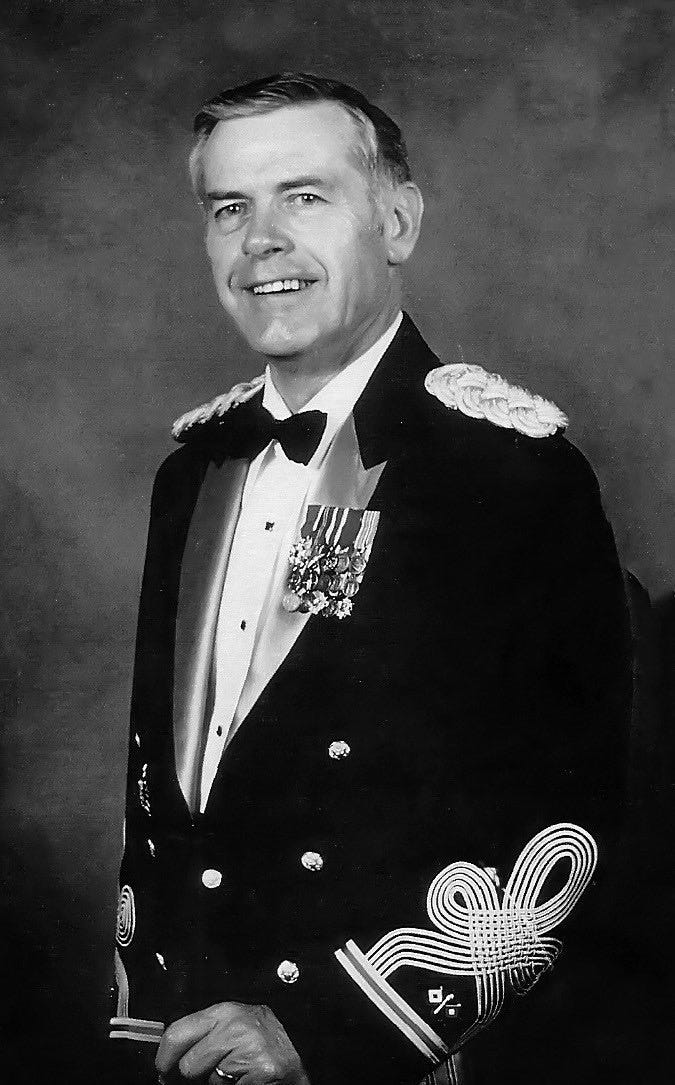
Visit From My Cousin Johnny

Another good memory is when my cousin Johnny Lakos from the Boston area came to visit us. Johnny was the oldest of the four boys of my godmother, Auntie Yole, my mother’s oldest sister. At the time, he was growing up in Billerica, Massachusetts, which had a reputation as a tough neighborhood. One summer when we were back in Medford, I broke my right hand after John got into a fight with a group of local tough guys at the corner store. Things might have turned out much worse if the store owner hadn’t come charging outside with a baseball bat to scatter the crowd.
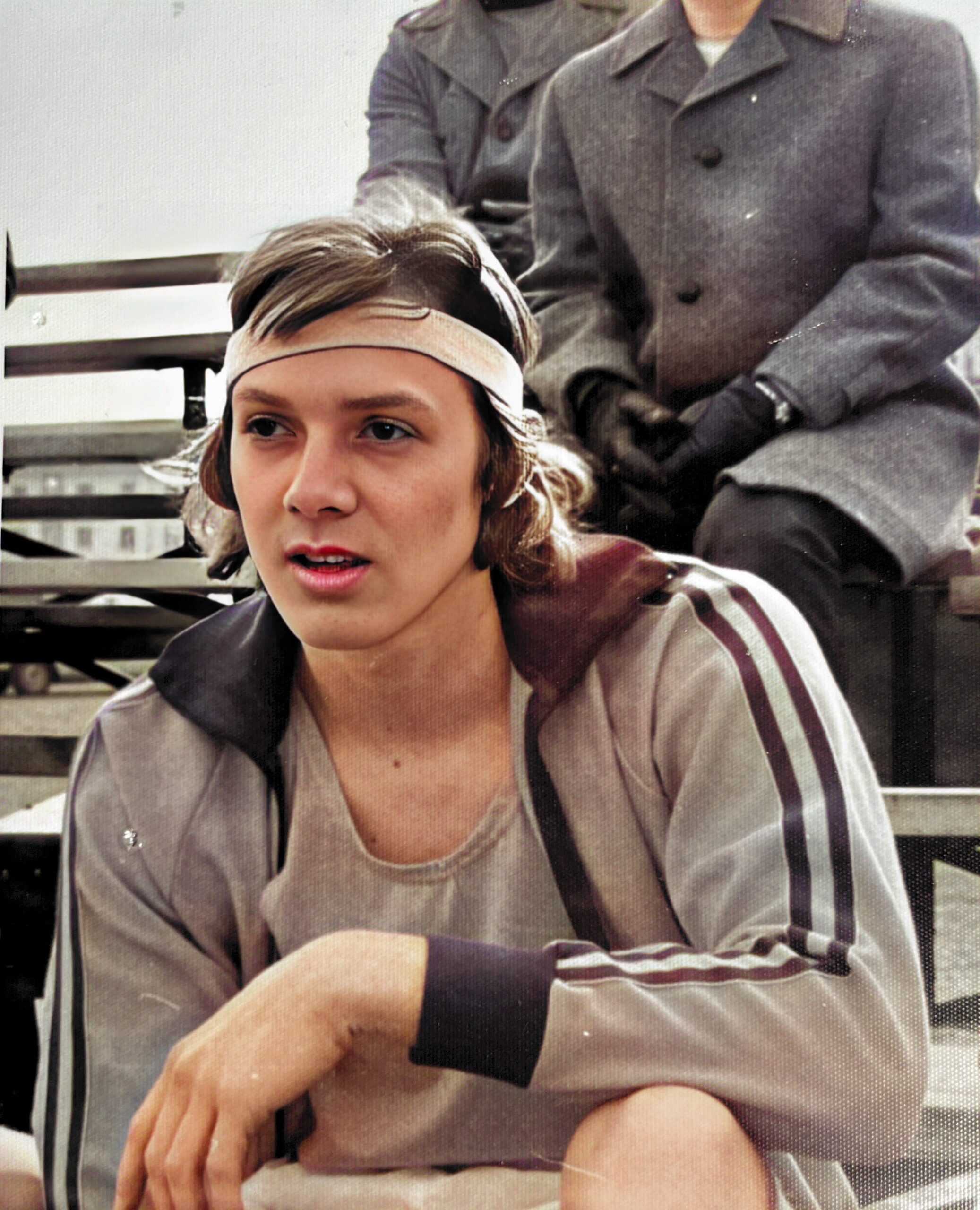
Photograph of my cousin John Lakos when he visited us in Woodbridge, VA.  We are both wearing my father's green beret and saluting.  You can see a NASA model of a Mercury spaceship that was given to me from my Uncle Arthur McDonald, who worked for NASA and Grummun Aerospace.

Music of 1972

One of the things that sticks with me about our time in Woodbridge in 1972 was the music. Two songs that I’ll never forget from that year were “American Pie” by Don McLean and “Everything I Own” by Bread. Yes, I’ll admit it — I liked Bread, and David Gates had a voice that stuck with you. Lynne’s favorite that year was “Motorcycle Mama” by Sailcat, while she was trying to find her 1970s free-spirited nature. And Diana? She was still deep in her Donny Osmond phase, blasting “Go Away Little Girl” from her bedroom while gazing at his poster on the wall. Meanwhile, I found myself falling hard for Michelle Phillips of The Mamas & the Papas — her blonde hair and bohemian spirit were electric.

Entering Woodbridge Senior High School

By the time I entered Woodbridge Senior High School, the world around us felt just as chaotic. It was a wild time in America. The Vietnam War was reaching a painful crescendo before the Paris Peace Accords finally brought it to an end. Watergate was on every television, peeling away the illusion of presidential authority. The drug culture was roaring. The sexual revolutionwas in full swing, and so, it seemed, were my teenage hormones.

I was noticing girls for the first time — just in time to be thrown into the whirlwind that was Woodbridge Senior High. Unlike Godwin’s experimental vibe, Woodbridge was huge and traditional. My freshman class alone had over 1,000 students. The school was so overcrowded that we were placed on split-shifts: half the school attended from 0600 to noon, the other half from noon to 1800. My sisters and I drew the short straw — we were in the afternoon shift.

Eventually, though, a brand-new, modern, and massive school building was completed, large enough to accommodate us all. The moment we walked into that sleek, state-of-the-art campus, everything changed. We loved it. I was finally at the same school as my sisters, and for the first time, we could enjoy high school together. I had the same lunch break as my sister Diana, so I always ate with her and her girlfriends. So I got to know the sophomore girls easily.

New Woodbride Senior High School

Part of autobiography of Dr. Anthony J. Carbone, Son in the Shadow of a Green Beret Hero
Woodbridge Senior High School in Virgina

Taking Field Biology During the Summer

One of the biggest turning points for me came during summer school, where Diana and I were required to take a class because of our involvement in choir. We signed up for Field Biology — and I hit the jackpot. The class consisted of 26 girls and 1 lucky boy (me), many of them cheerleaders, majorettes, or fellow choir members. Every day we took field trips to local parks, where we studied flora and fauna and wrote reports. I quickly became known as the only student willing to do the dissections, which won me a strange kind of fame. I guess I was destined to become a surgeon.
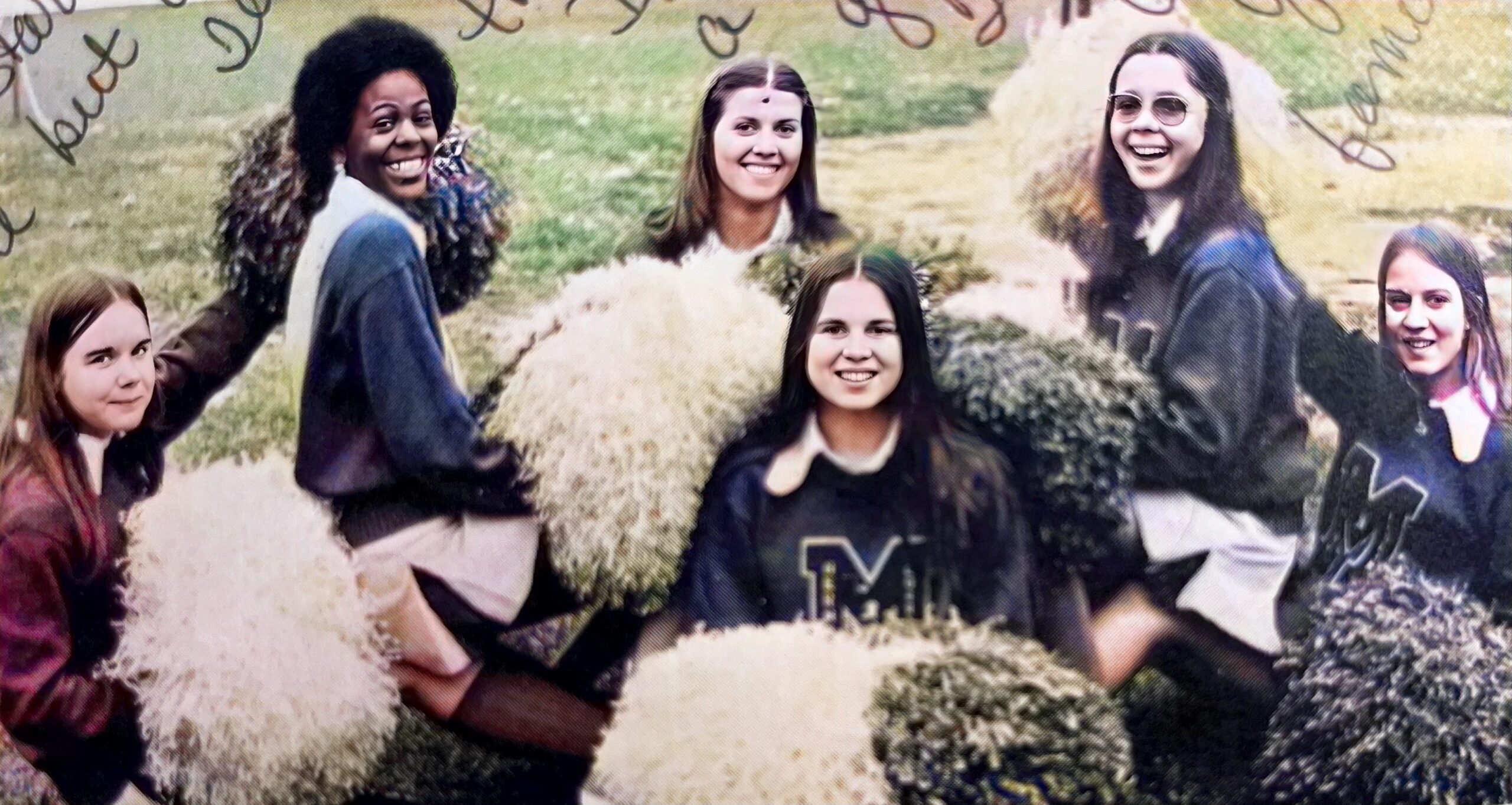
9th Grade Field Biology Class
looking in microscopes.

Part of autobiography of Dr. Anthony J. Carbone, Son in the Shadow of a Green Beret Hero
9th Grade Field Biology Class

But let’s be honest — it was the bus rides and field trips with the girls that I loved most. Despite my shyness, I started to meet girls, and for a boy on the cusp of adolescence, there was no better time. Mini-dresses & skirts were still in fashion, and I fell in love ten times a day.
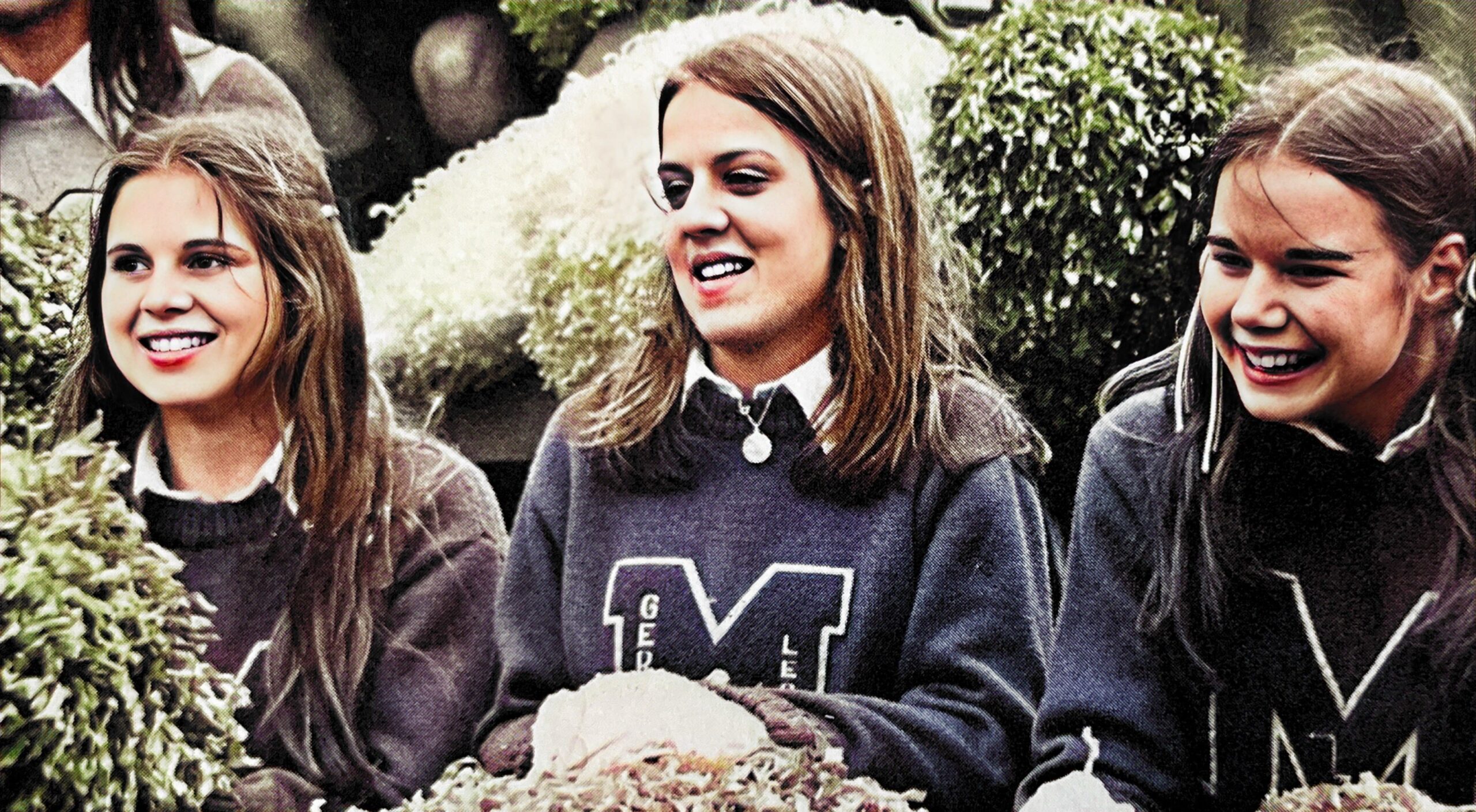
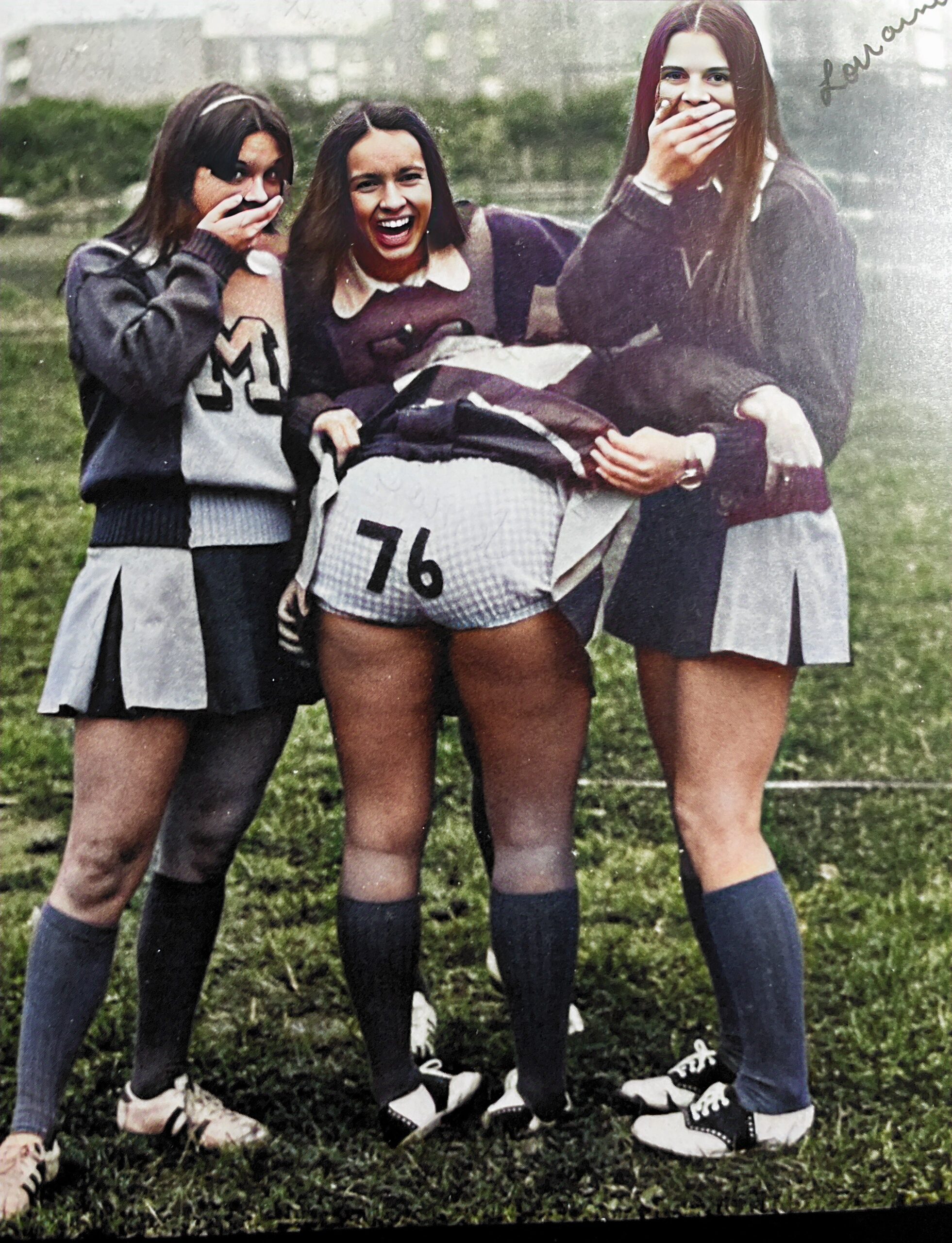
One of those girls, Sue Grizzard, who was a year ahead of me, even asked me to the Sadie Hawkins Dance. I was thrilled because it was my first real date with a girl. And Sue became my first high school crush.

My friend, Sue Grizzard, from Woodbridge Senior High School

The Changing Times of the 1970s

It was also a time when the cultural tides were shifting fast — even inside our own home. Diana had stacks of Tiger Beat Magazine posters of Donny Osmond and David Cassidy from The Partridge Family pinned to her bedroom wall, dreaming of clean-cut pop idols with pearly smiles. 

My musical tastes were evolving too. I was drifting away from folk music like the Mamas & the Papas and Don McLean’s American Pie, and moving into the hazy world of rock like The 5 Man Electrical Band’s “Signs” and psychedelic rock, hypnotized by songs like “Crimson & Clover” by Tommy James and the Shondells. The innocence of the 1960s was giving way to something more experimental, more sensual, and I was riding that wave right into high school.

Senior High Activities

That first year of high school also brought new freedoms. We were finally allowed to attend football gamesschool concerts, and other evening events. I especially loved Friday night varsity football games. The energy, the marching band, the lights on the field — it was everything high school was supposed to be.

In just a few short years, I had gone from watching Watergate on TV and wondering why I couldn’t remember a locker combination, to discovering music, girls, and football under the Friday night lights. And all of it — the political chaos, the cultural shifts, the awkward first steps into teenage life — was part of the strange and wonderful chapter we called Woodbridge.

Nixon Resigns August 9, 1974

My copy of the front page of the Stars & Stripes newspaper from 9 August 1974 showing "Nixon Resigning"

Part of autobiography of Dr. Anthony J. Carbone, Son in the Shadow of a Green Beret Hero.
I still have the 9 August 1974 edition of the Stars & Stripes announcing President Nixon’s resignation.
9th Grade Class Photo from Woodbridge Senior High School, Woodbridge, Virgina while Dad was assigned to the Pentagon.  Biography of Dr. Anthony J. Carbone.
9th Grade Class Photo from Woodbridge Senior High School

Home Page

Prologue

BELIEVE NOTHING YOU HEAR, AND ONLY HALF OF WHAT YOU SEE — A Memoir of Service, Shame, and the Search for Truth

This prologue introduces the emotional and philosophical foundation of this memoir. While many of the events it alludes to are revealed later, it offers a glimpse of the deeper truths that shaped my life’s journey.

The Prologue

My father gave me that advice when I was a boy still learning to trust the world. “JR,” he said (short for Anthony Jr.), “believe nothing you hear, and only half of what you see.” I didn’t understand it then. I thought truth was obvious and justice inevitable. But as I got older, as life broke me down and built me back in ways I never expected, those words became my anchor.

I grew up in the long, complicated shadow of a Green Beret hero. My father was the kind of man little boys want to become, and grown men feel unworthy to follow. I spent my life trying to live up to his ideals—of duty, honor, country, family, courage—and paid a high price when I couldn’t.

I served my country–I wore the uniform. And later, I was a soldier and a healer. But under the surface, I was unraveling. Crushed by trauma I didn’t yet understand. Haunted by what I saw, by what I didn’t see, and worst of all, by what others chose to believe.

There’s a moment in every man’s life when he realizes the truth doesn’t always win. That moment came for me like a whisper—a rumor. One lie was enough to destroy a reputation I spent decades building. And it wasn’t the first. It wouldn’t be the last.

I’ve been judged for things I didn’t do. Lost friends, careers, my peace of mind. I’ve walked into rooms where the air went still. I’ve watched good people turn away because they heard something. That’s why I live by my father’s words now more than ever.

This memoir is not just about service—it’s about shame. It’s about how the system fails, how silence protects the wrong people, and how strength sometimes means learning to survive in your own skin.

I’m telling this story not to clear my name, but to reclaim my life. To show that even in the aftermath of lies, there is still truth worth telling—and a man still worth knowing.

So read what follows with open eyes. And remember what my father said.

Home Page: Believe Nothing You Hear, and Only Half of What You See