Believe Nothing You Hear, and Only Half of What You See — A memoir of Service, Shame and the Search for Truth
Return to Campus
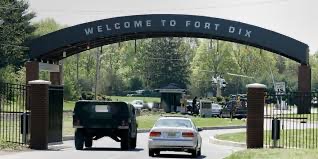
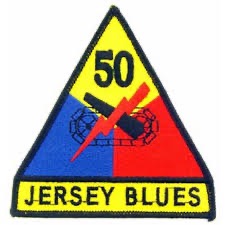
I returned to Notre Dame on Saturday, August 23, 1980, ready to begin my final year of college. I had just left my family at Fort Dix, New Jersey. My father had taken his new assignment as the Senior Army Advisor to the 50th Armored Division and the New Jersey National Guard. Saying goodbye carried a certain weight — this was it, my last year at Notre Dame. In many ways, the year that would set the course for what came next.
Back to Campus and Fisher Hall
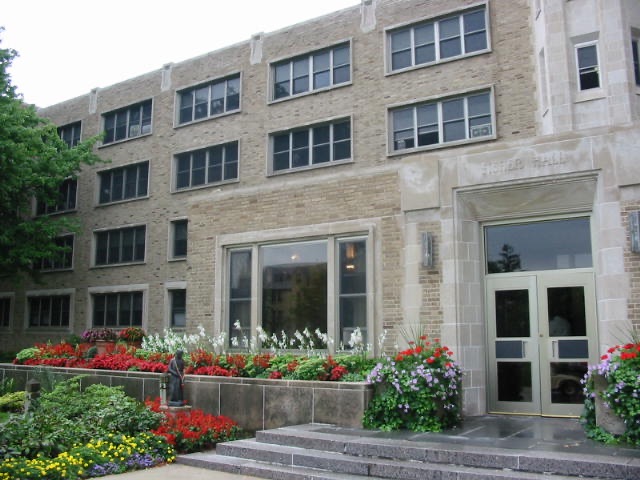
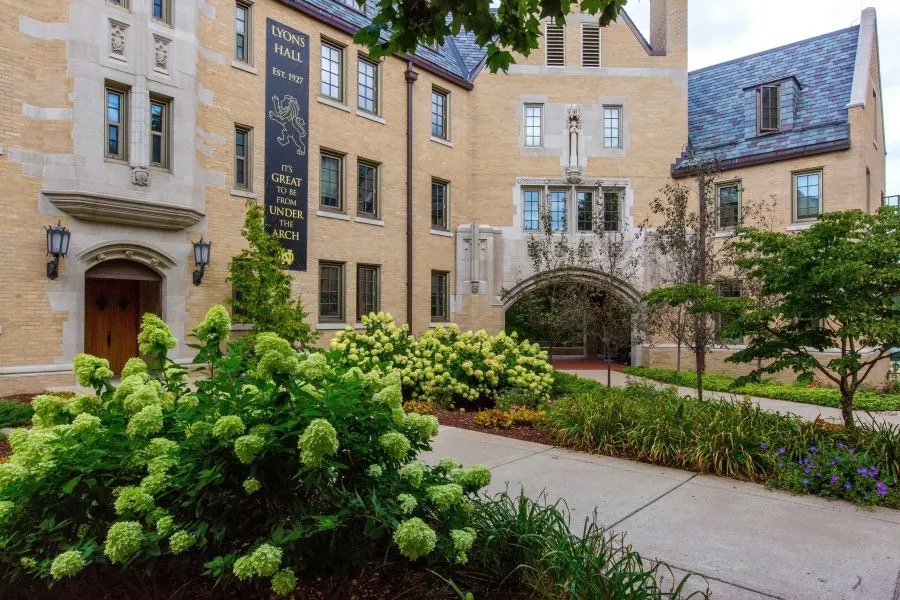
By now, I had the routine down. Arrive at Fisher Hall. Reconnect with the Fisher Hall gang. Track down Mariann at Lyons Hall. Dinner at South Dining Hall with everyone together again. Pick up my belongings from storage and turn Room 221 of Fisher into my bachelor’s pad for the year. It felt comfortable, familiar — like slipping back into a well-worn groove.
The Fisher Hall Gang
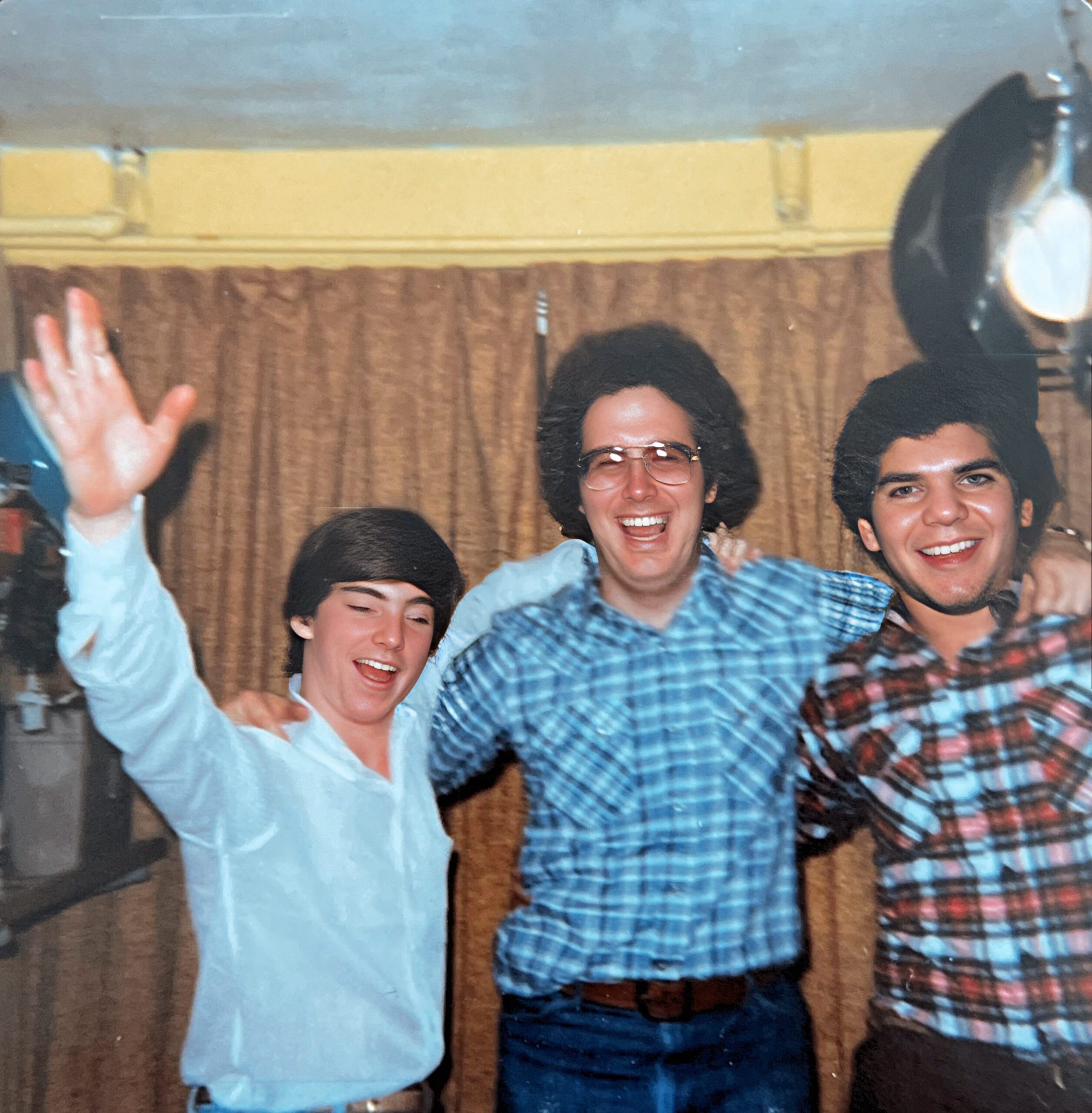
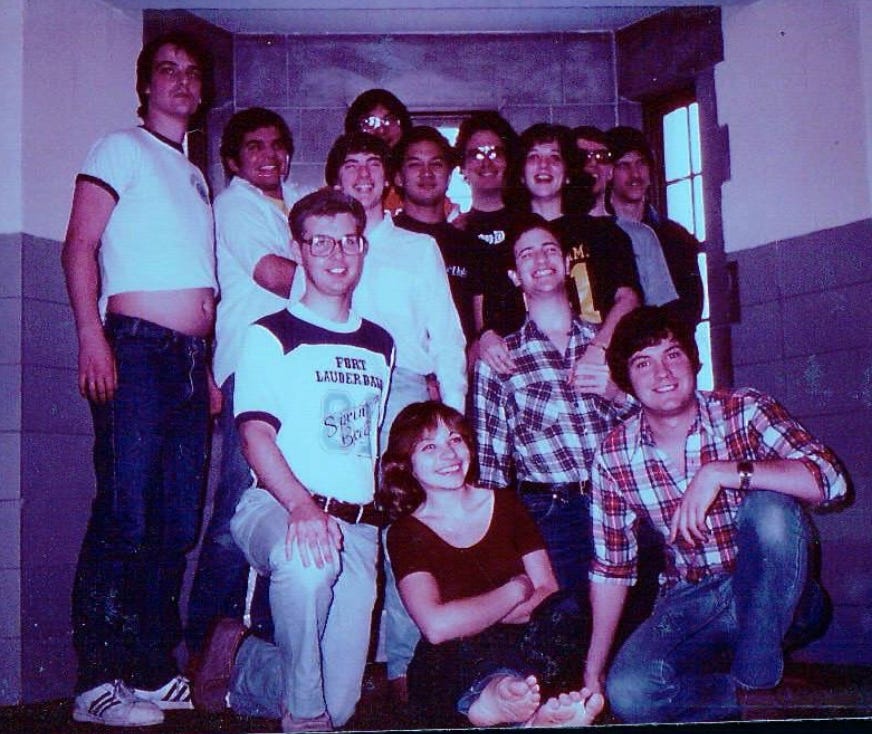
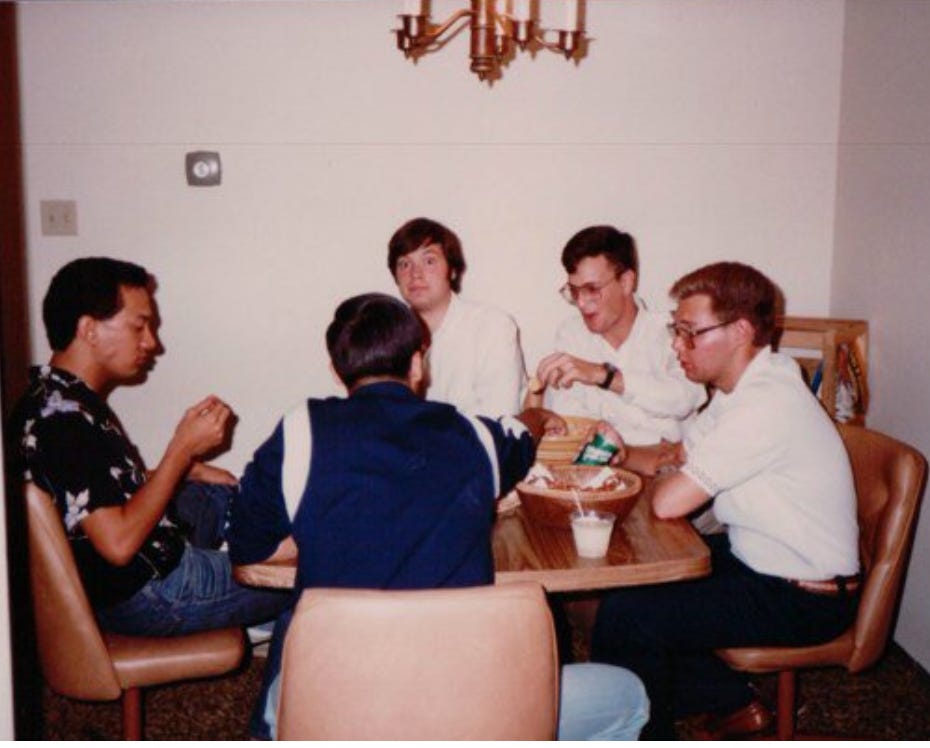
Returning to Notre Dame and Fisher Hall for my final year felt like coming home to a band of brothers. We had our tight-knit Fisher Hall gang: Bob Terifay, my fellow pre-med senior. Andy Cordes, Al Emory, and Chris Kane, all senior engineering majors. Matt Bedics, our senior philosophy mind. Scott Olds, our pre-med junior genius. And Joe DeLaney, our sharp-witted pre-law junior.
We weren’t just classmates — we were a crew bound by late-night study sessions, endless banter in the hallways, and a shared love of Notre Dame traditions. Adding to our circle were the three steady girlfriends. I had Mariann Schmitz. Andy was with Ginger Miklausen. And Joe with Bernadette Young. All three couples would go on to marry soon after graduation. Which made our Fisher Hall gang feel even more like a family.
Registration Day
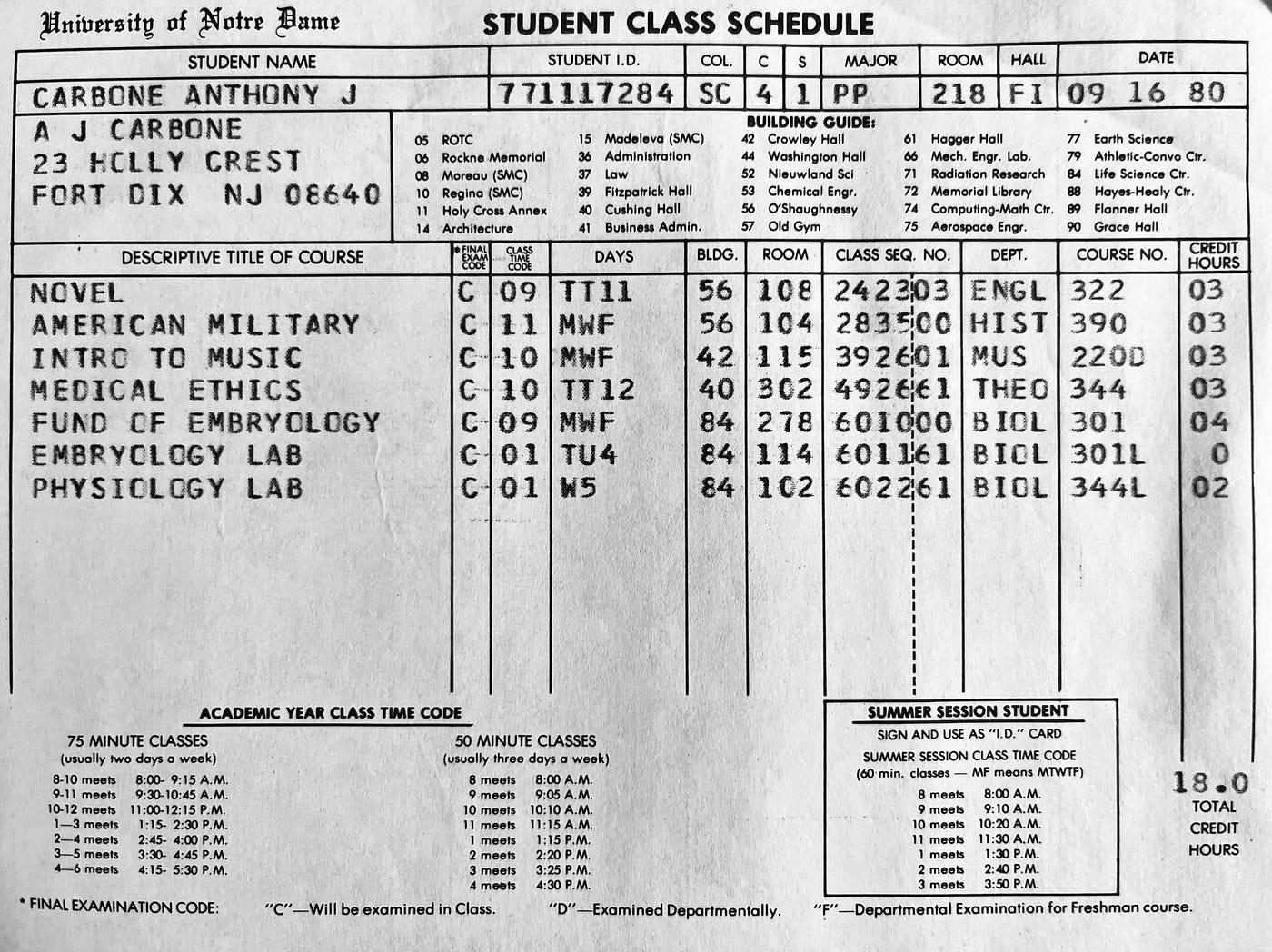
Monday, August 25, was Class Registration Day. My schedule ended up being a mix of heavy requirements and a few breaths of relief. Only two science courses first semester — Embryology (BIOL 301) with its demanding laboratory, and Physiology Lab (BIOL 344L). I signed up for Medical Ethics(THEO 344), a required English class on the Novel (ENGL 322). And, for my one true elective, Introduction to Music (MUS 220). That music class would turn out to be the only course where I could truly relax.
ROTC and Military History
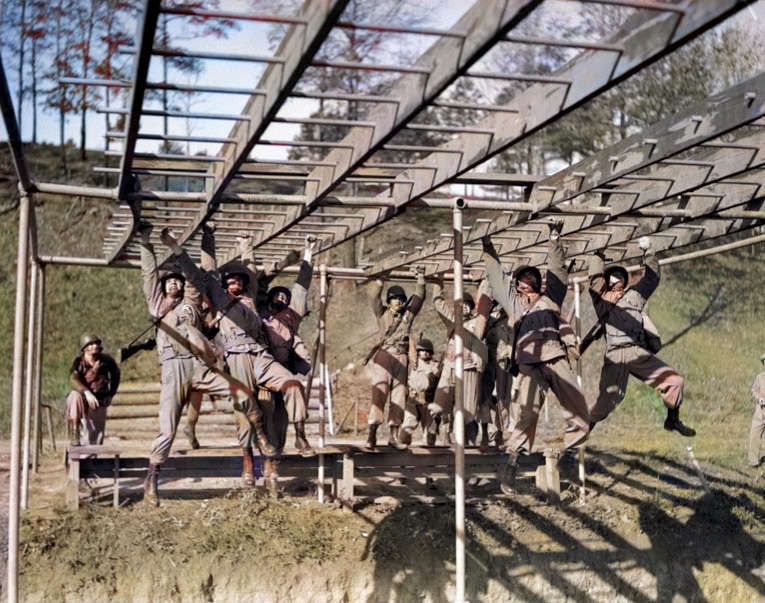
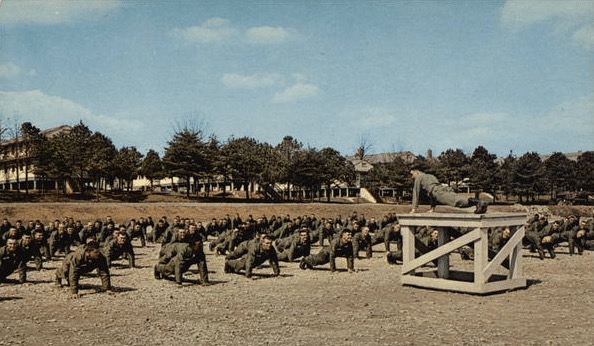
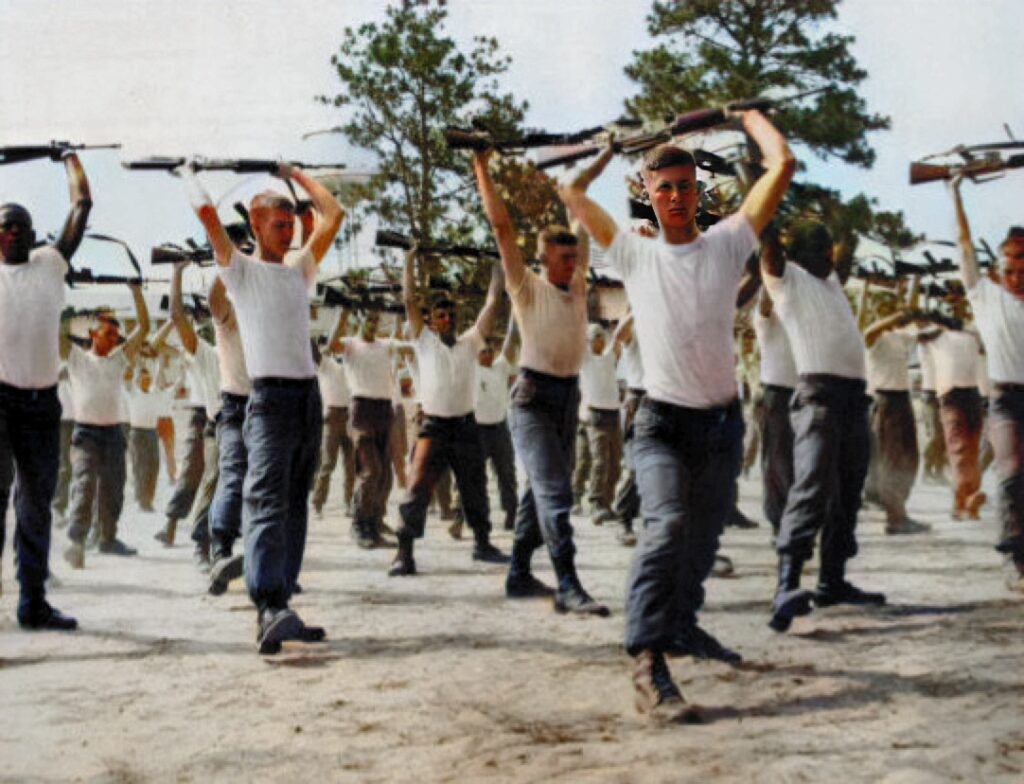
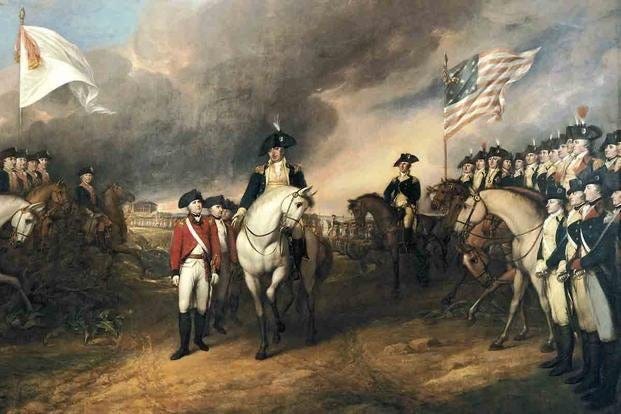
ROTC senior year was every bit as demanding as junior year, only in a different way. Last year, I had been preparing myself for ROTC Advanced Camp. This year, the responsibility shifted — I was the one preparing the junior class cadets for their turn at Advanced Camp. On top of that came my academic load. American Military History turned out to be one of my most difficult courses. I found both the professor and the material fascinating, but the exams were brutal. My learning disability with rote memorization — names, dates, and battles — was exactly the foundation of the course. No matter how hard I studied, the details slipped through my fingers. The tests felt like uphill battles every time.
Senior Year ROTC Position
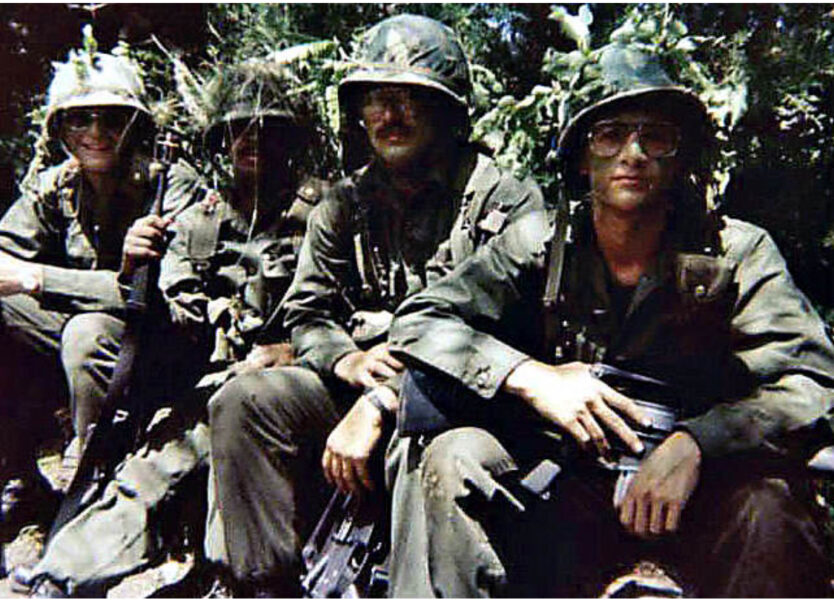
As part of the ROTC routine, I had to report to the Professor of Military Science (PMS). We reviewed my evaluation from Advanced Camp at Fort Riley over the summer. My rating came back in the Top 1%. The PMS wasted no time asking if I wanted to be the next Fighting Irish Battalion Commander. It was the most coveted position for a senior cadet — prestige, responsibility, recognition. For many, it was the crown jewel of the ROTC program. But I turned it down.
The truth was, I had been wrestling with this decision for weeks. This was my last chance to raise my GPA before applying to medical school. I knew that taking on the role of Battalion Commander would be all-consuming, and I couldn’t afford the distraction. In the moment, it felt like the disciplined and practical choice — but it was a decision I later came to regret. The cadet who grabbed the title after me seemed to take delight in treating me like a brand-new recruit for the rest of the year. And the PMS, perhaps disappointed in me, seemed to punish my decision by assigning me only the rank of Cadet First Lieutenant.
Despite everything I had accomplished in ROTC and in my academic life up to that point, I carried a quiet but persistent lack of confidence. It didn’t make sense — I had proven myself again and again — but deep down, I couldn’t quite shake it. Partly because my father was intent on teaching me humility, to the point that it choked out any developing confidence.
Senior Year with Mariann
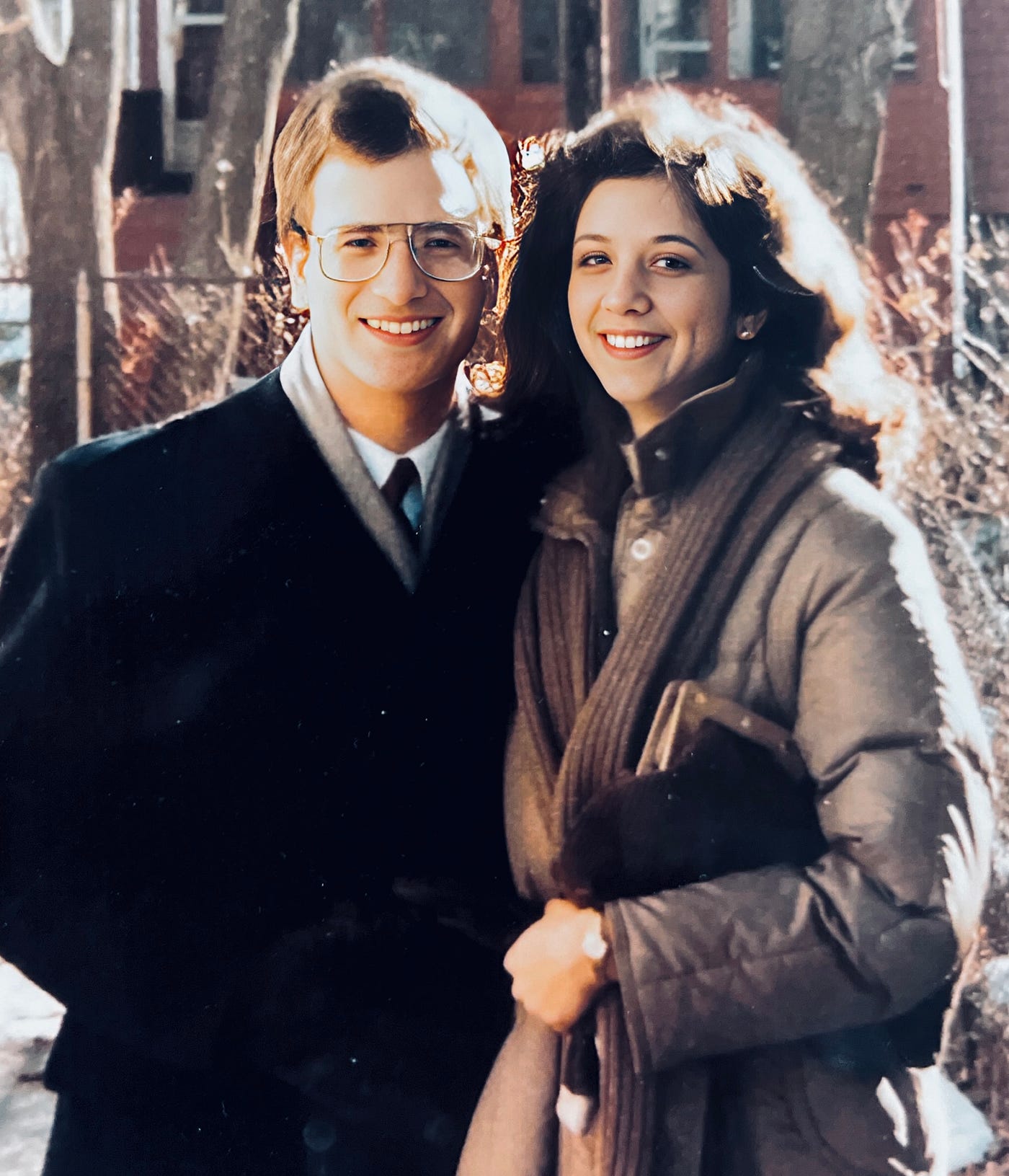
Mariann was at the center of my senior year. We were more than just a couple — we were companions in the truest sense. Ours was not a relationship defined by drama or passion alone, but by a steady closeness that anchored me. She understood me in ways no one else did, and she had a calming presence that quieted the anxieties I often carried.
Except for classes and the restrictions of parietals, we were inseparable. We studied together in my room every day, we ate every meal together, and we moved through campus life as a pair. In many ways, she completed me, filling in the gaps where I lacked confidence or balance. By then, even our families had begun to know each other, which only deepened the sense that what we shared was lasting and real.
Senior Year Missions
In my senior year, I focused on two missions: first, raising my overall GPA to boost my chances of getting into medical school, and second, preparing to commission as a U.S. Army officer.
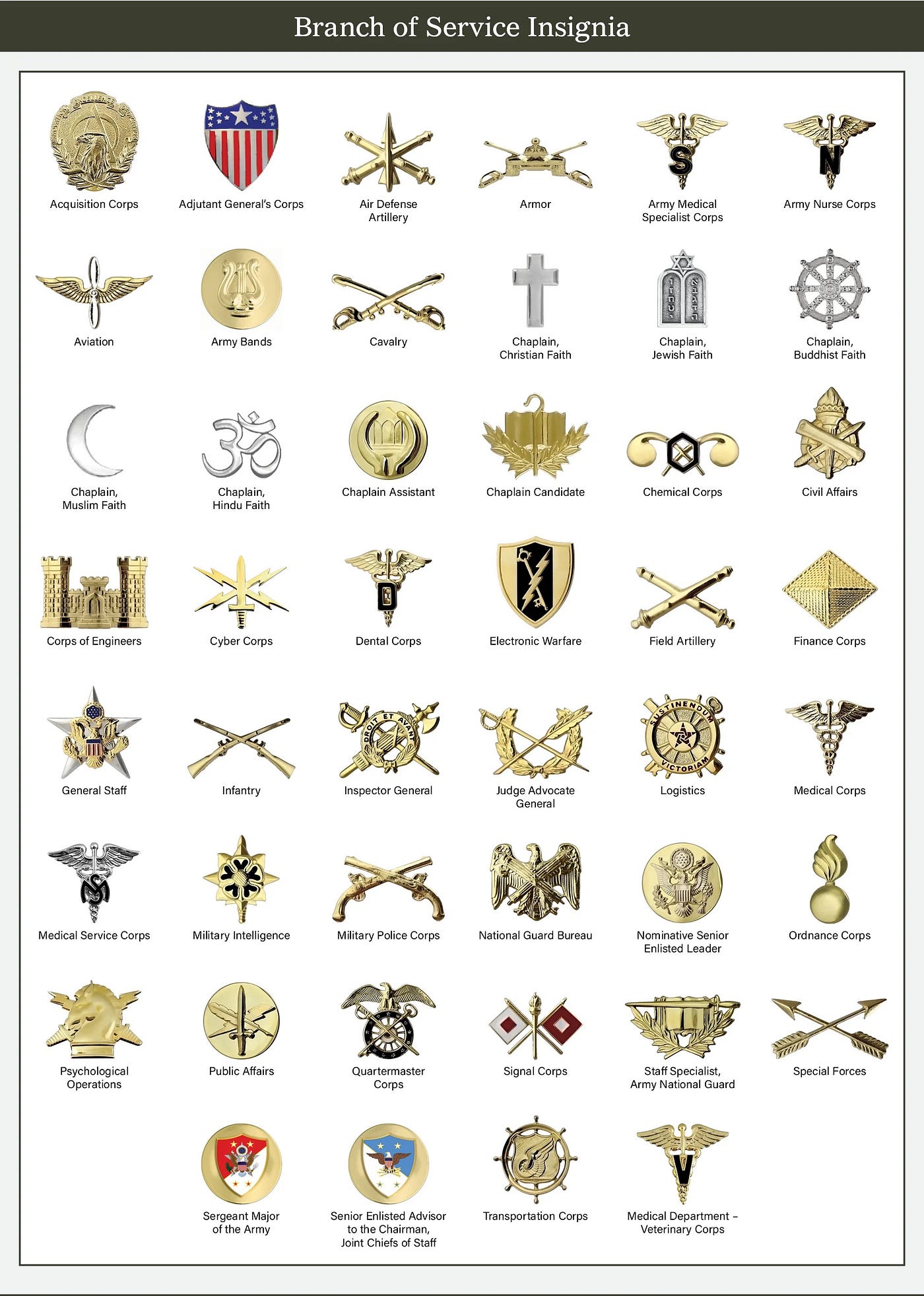
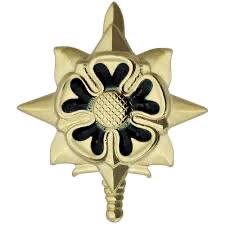
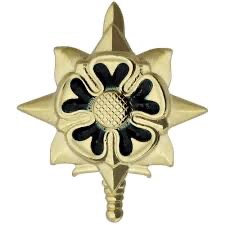
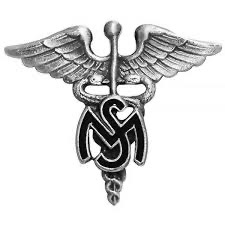
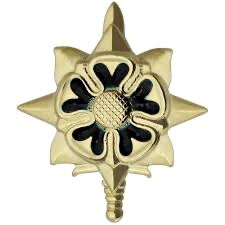
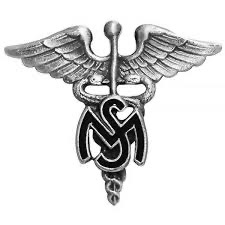
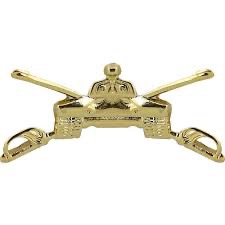
For ROTC, I had to submit my branch preferences, and I listed them in order as Military Intelligence, Medical Service Corps, and Armor. Then came the assignment location choices. If I had my way, it would be simple: (1) Germany, (2) Germany, (3) Anywhere in Europe. The Army would give me its answer soon enough.
The bulk of my mental energy that autumn was spent trying to raise my GPA while I waited for an interview from any of the medical schools I had applied to. It was an endless waiting game. Every day I checked my mailbox in Fisher Hall, hoping for a letter that might finally open the door to an interview. The uncertainty gnawed at me. Most nights I prayed at the Grotto with Mariann, asking God to guide my path and steady my nerves. My classmates seemed to be coasting through their senior year with light schedules and carefree weekends, while I carried the heavy weight of not knowing whether my dream of becoming a doctor would ever get off the ground.
Ronald Reagan is Elected President
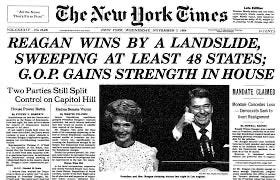
The semester flew by because I was so busy balancing academics, ROTC responsibilities, and the endless cycle of medical school applications. In the midst of all this, the country was caught up in the 1980 presidential election. In November, Ronald Reagan won a landslide victory over incumbent Jimmy Carter, signaling a dramatic political shift for the nation. Even on campus, you could feel the change in mood — an undercurrent of renewed confidence and patriotism that matched the new decade just beginning.

Thanksgiving 1980
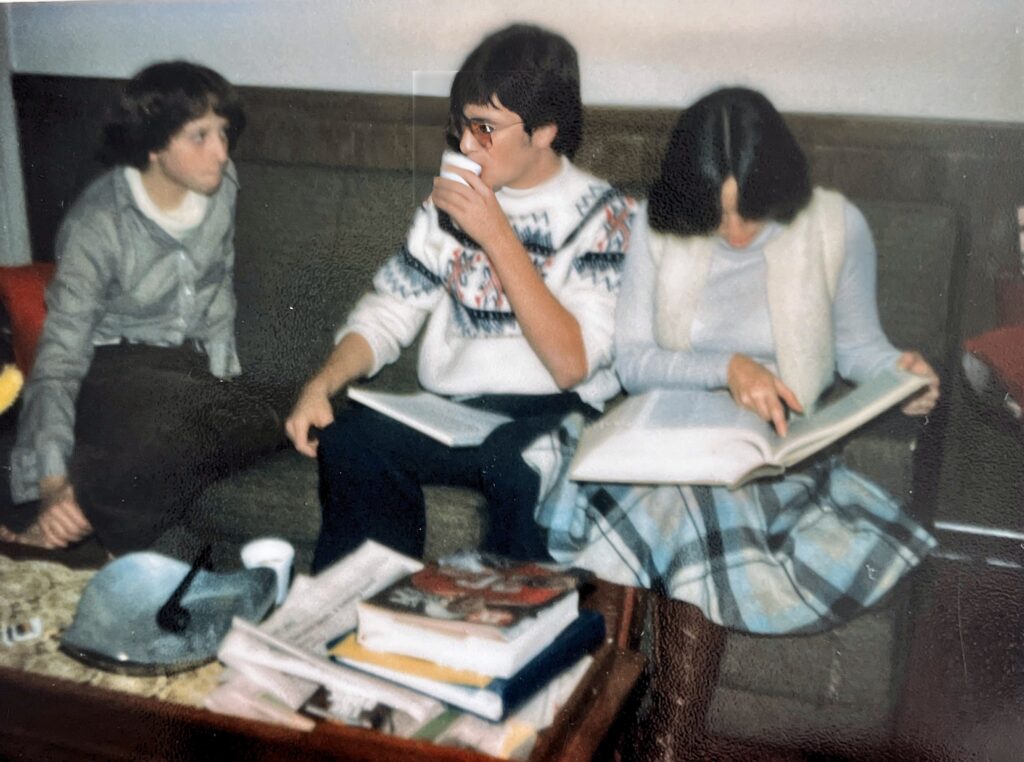
Thanksgiving was a repeat trip to Mariann’s family home in Wheaton, Illinois. That year, Mrs. Schmitz decided to have the meal catered, which felt like a real treat. I slept downstairs again in John Jr.’s wood-paneled basement bedroom, complete with its enormous waterbed. Mariann’s roommate, Bernadette Young, joined us for Thanksgiving in Wheaton.
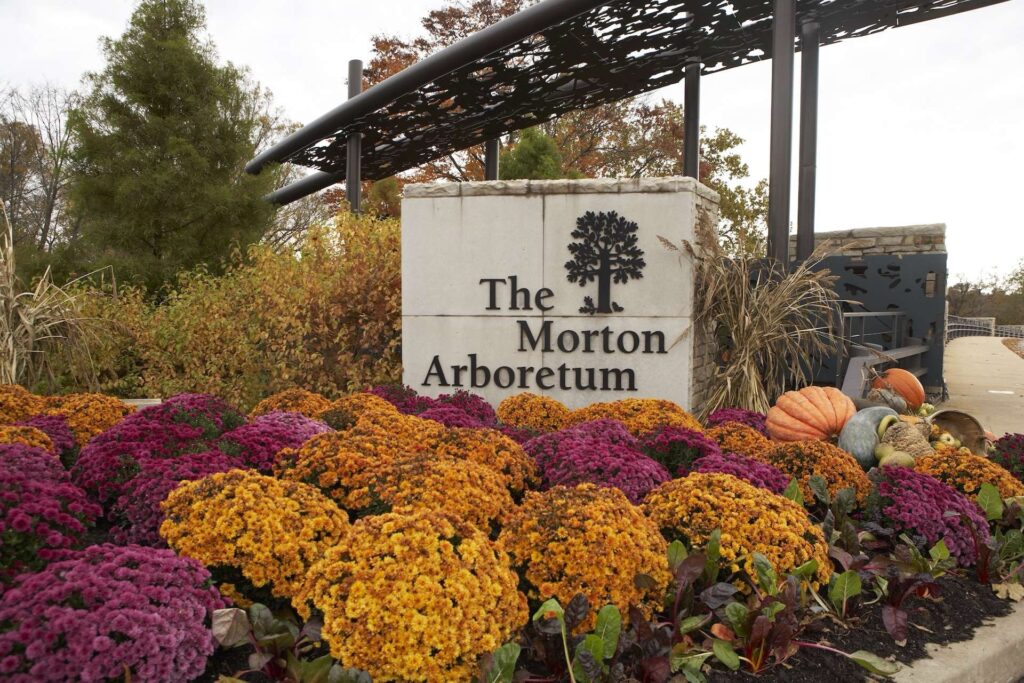
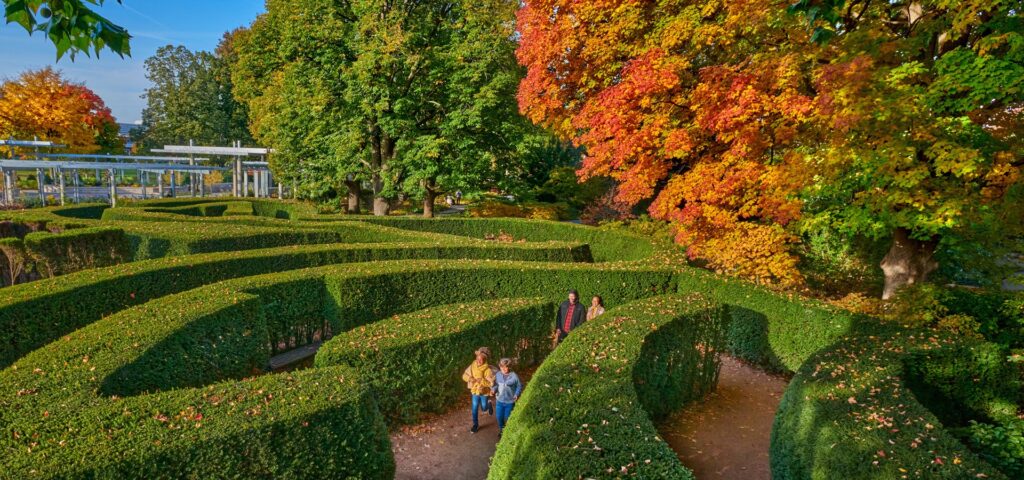
One of the highlights of the weekend was when Mariann and I drove out to the Morton Arboretum. Founded in 1922 by Joy Morton — son of Arbor Day founder J. Sterling Morton and the man behind Morton Salt — the Arboretum was created as an outdoor museum of trees and a center for tree research and conservation. It was the perfect place for a quiet walk together, surrounded by nature.
Fighting Irish Football
Notre Dame football in the fall of 1980 gave us plenty to cheer about. The highlight of the season was the dramatic victory over Michigan, sealed by a last-second field goal that had the whole campus buzzing for days. Saturdays were sacred for the Fisher Hall gang and our girlfriends. We would walk together across campus to the stadium, always stopping to watch and listen to the Band of the Fighting Irish perform for students and fans before the game. And always on the lookout for our Fisher Hall Irish Guardsman.
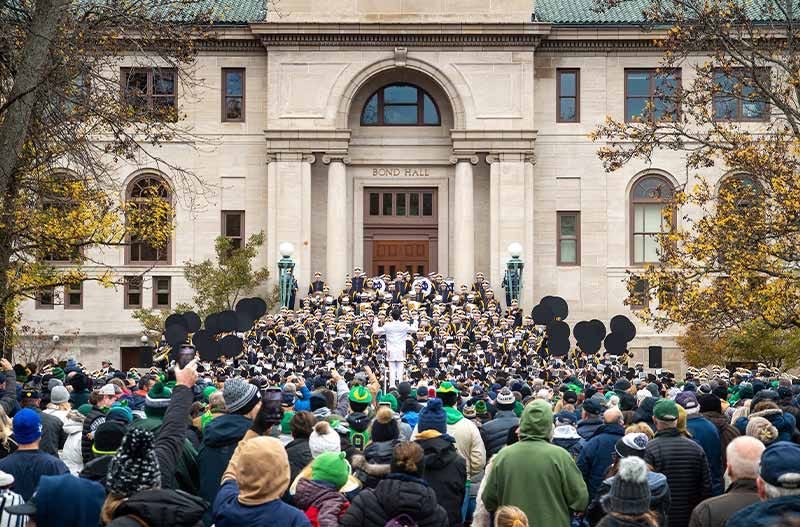
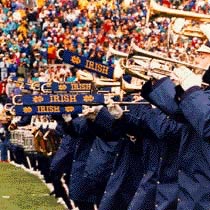
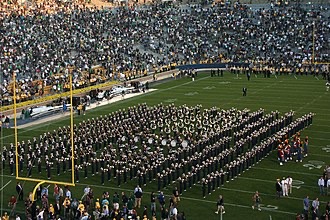
The Notre Dame Marching Band, founded in 1845, is the oldest university marching band in continuous existence in the country. From its beginnings as the Notre Dame Cornet Band, it grew into a symbol of spirit and tradition, playing at every home football game since the program’s very first in 1887. The sight and sound of the band — its drum cadence, the brass fanfares, and the unity of its formations — were an inseparable part of every football Saturday.
Fall Final Exams December 13–19, 1980
Fall Final Examinations ran from December 13–19, 1980, and they demanded steady effort from start to finish. My goal for the year was to raise my GPA for medical school applications, and I stayed focused on that. The sciences were as rigorous as ever — Embryology pushed my limits, while Physiology rewarded my persistence with an A. In Novels (English 322), I wrote a paper that came together better than expected, and in Medical Ethics (Theology 344) I faced one of those exhausting Blue Book essay exams, but came out with another A. Introduction to Music (Music 220) balanced the load with a course I thoroughly enjoyed, deepening my appreciation for the classics and revealing a growing fondness for the Baroque. The American Military History exam proved the most difficult, but I managed it better than I anticipated. Of course, my last examination fell on the final day — premeds were always the last to leave campus for the holidays. Step by step, course by course, the semester added up to real progress — exactly what I needed as medical school decisions drew nearer.
Christmas 1980 Vacation in Boston
Christmas Holiday 1980 ran from December 20 to January 12. I flew from South Bend to Boston Logan to spend Christmas and New Year’s with my family at my grandparents’ home in Medford, Massachusetts. My parents, Cynthia and Pamela, drove up from Fort Dix, New Jersey to join us. Lynne and Diana were both still in school in Boston, so they were already there when I arrived. As with most Christmas breaks, Christmas Eve and Christmas Day passed in a blur — I was running on fumes after weeks of final exam preparation.
Our Italian Christmas Traditions
Still, the traditions were the same. On Christmas Eve, we gathered for the great Feast of the Seven Fishes with my aunts, uncles, and cousins. At midnight, we attended Mass at Saint Joseph’s Catholic Church — the same church where all of us had been baptized, where we received our First Communions, and where my sisters were married. Christmas Day brought another feast at Nana’s: roast turkey and roast beef, salad and fruit, then nuts, and finally desserts like cannoli, Italian cookies, and my mother’s favorite, Italian rum cake.
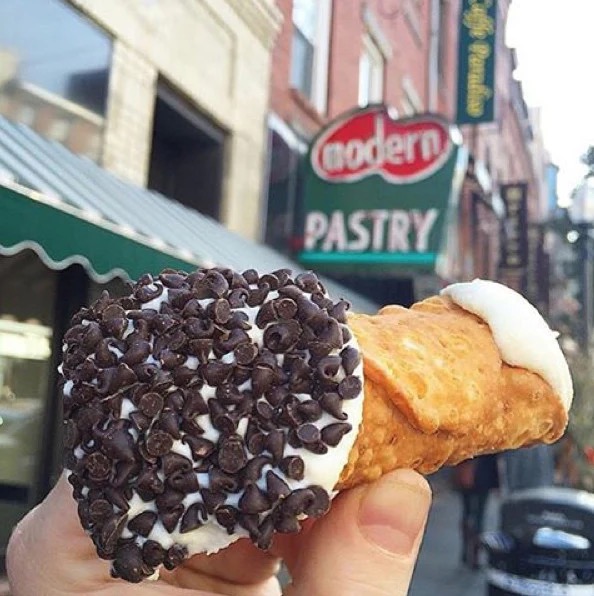


The Mike’s vs. Modern Pastry Debate
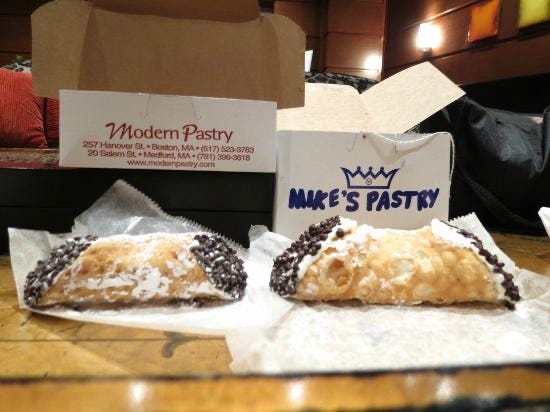
This would always lead us to the family debate on who makes a better cannoli — Mike’s or Modern Pastry. Having lived in Boston’s North End (the Italian section), I am partial to Modern Pastry.
What about medical school?
The holiday wasn’t without its stresses. Every relative seemed to ask the same question: “Have you heard from any medical schools yet?” I hadn’t, and each time I was asked, the weight of uncertainty pressed on me a little more. On top of that, I was phoning Mariann a couple of times a day, racking up long-distance charges. By the end of the holiday, the phone bill was steep, and I was definitely in trouble for it.
New Year’s was a quieter affair. In my family, it was never a grand occasion. We’d watch the ball drop in Times Square, share a hug and a kiss at midnight, and then be in bed by 12:30. The next morning, we went to Mass for the Solemnity of Mary, before turning our attention to football. On New Year’s Day, we gathered to watch Notre Dame face Georgia in the Sugar Bowl. A little over a week later, on January 11, I was back on the plane to South Bend, ready to begin the spring semester.
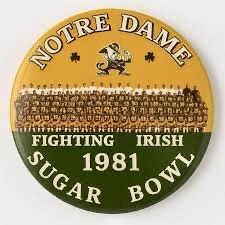
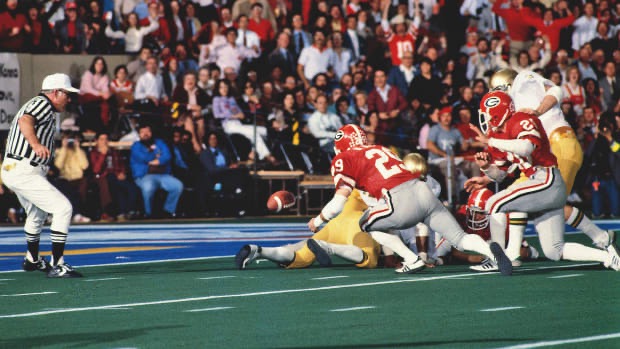
Sugar Bowl Notre Dame vs. Georgia (January 1, 1981)
That season under Coach Dan Devine, the Irish finished with a 9–3 record. The team capped its year with an appearance in the 1981 Sugar Bowl against Georgia. Hopes were high for a bowl victory, but Georgia’s freshman running back Herschel Walker proved unstoppable, and Notre Dame fell 17–10. It was a bitter ending to what had been an exciting season, but the tradition, pageantry, and sense of community that surrounded Notre Dame football remained unforgettable.
Return to Campus for my Final Semester
Flying back into South Bend in early January, I felt the familiar mix of anticipation and relief that always came with returning to campus. I hauled my bags into Fisher Hall, where I caught up with Bob, Andy, Al, Scott, and the rest of the gang — lots of handshakes, backslaps, and quick stories about our holidays.
But as always, the first place I really wanted to be was Lyons Hall, looking for Mariann. Seeing her again was the best part of returning to Notre Dame, and it made the long break apart melt away in an instant. That first evening back, we all headed over to South Dining Hall for dinner, trading stories and laughter as we settled back into campus life.
There was also a deeper current running beneath all the reunion energy. I knew this was the start of my final semester at Notre Dame — a place that, over four years, had become the longest I had ever lived anywhere in my life. That fact alone gave everything a little more weight. I was keenly aware that the semester would fly by, and that before long I’d be saying goodbye to good friends — some I might never see again. But I also knew I’d see Mariann again. That certainty brought a quiet comfort as I braced myself for the final stretch.
Spring Registration (January 13, 1981)
My last semester at Notre Dame, and at long last, a slightly lighter schedule. For the first time in four years, I wasn’t buried under calculus equations or the endless grind of organic chemistry. Instead, my final academic stretch looked almost enjoyable. I had just one core science — Comparative Anatomy (BIOL 302) with its inevitable laboratory component. ROTC was still part of the mix, with Military Management II (Military Science 412), sharpening us for commissioning only four months away.
To balance out the science and military, I registered for American Writers Survey (ENGL 383), where we dove into classics by Ernest Hemingway, F. Scott Fitzgerald, and Edgar Allan Poe, who once warned: “Believe nothing you hear, and only half of what you see.” Rounding out the schedule was Religion & Art (Philosophy 361), an hour each day spent studying breathtaking works of sacred art, and New Testament: Death & Afterlife (Theology 314), which promised to stretch both faith and imagination. By the time I graduated, I think I had a minor in Philosopy & Theology. And ROTC should count automatically as a minor in Military Science.
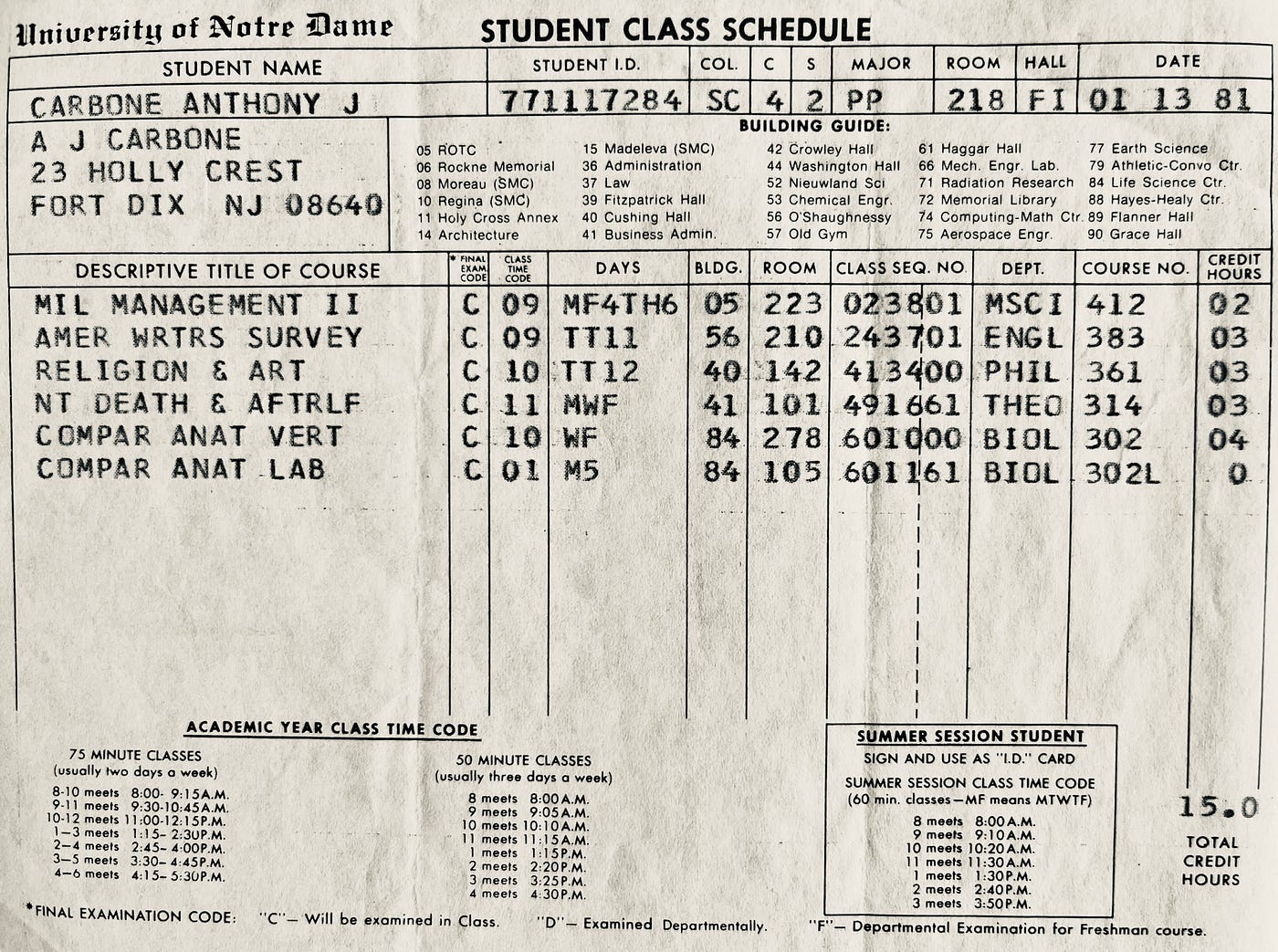
It was still a full load, but one that finally left me breathing room — a welcome change for a senior staring down the last lap of the race. More than anything, it gave me the chance to step back and enjoy the life I had built here: evenings in Fisher Hall with Bob, Andy, Al, Chris, Joe and Scott, long walks across campus with Mariann, and the daily rhythms of a place that had come to feel like home. I knew the months would fly by, but I wanted to make every one of them count.
Reagan Inauguration (20 January 1981)
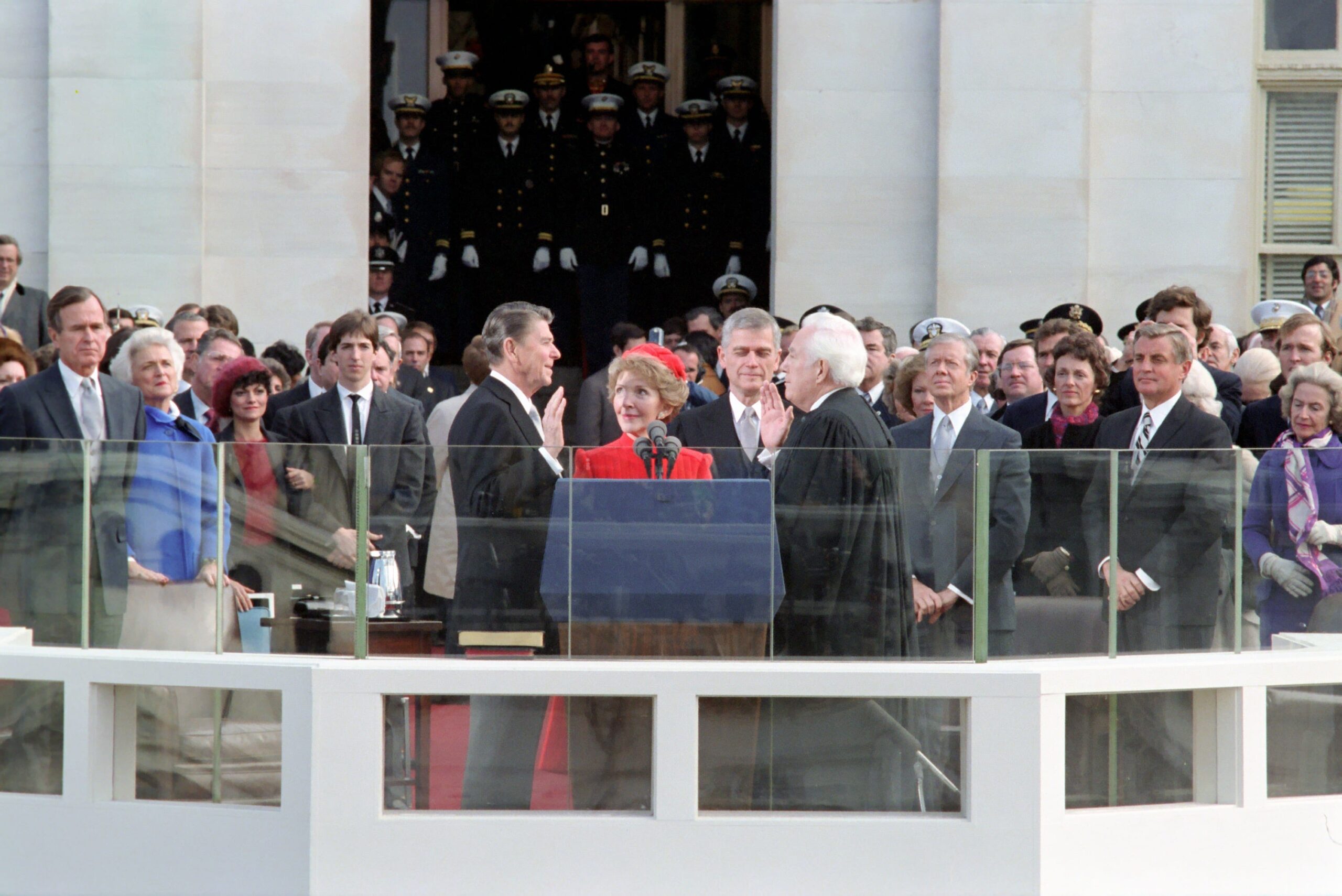
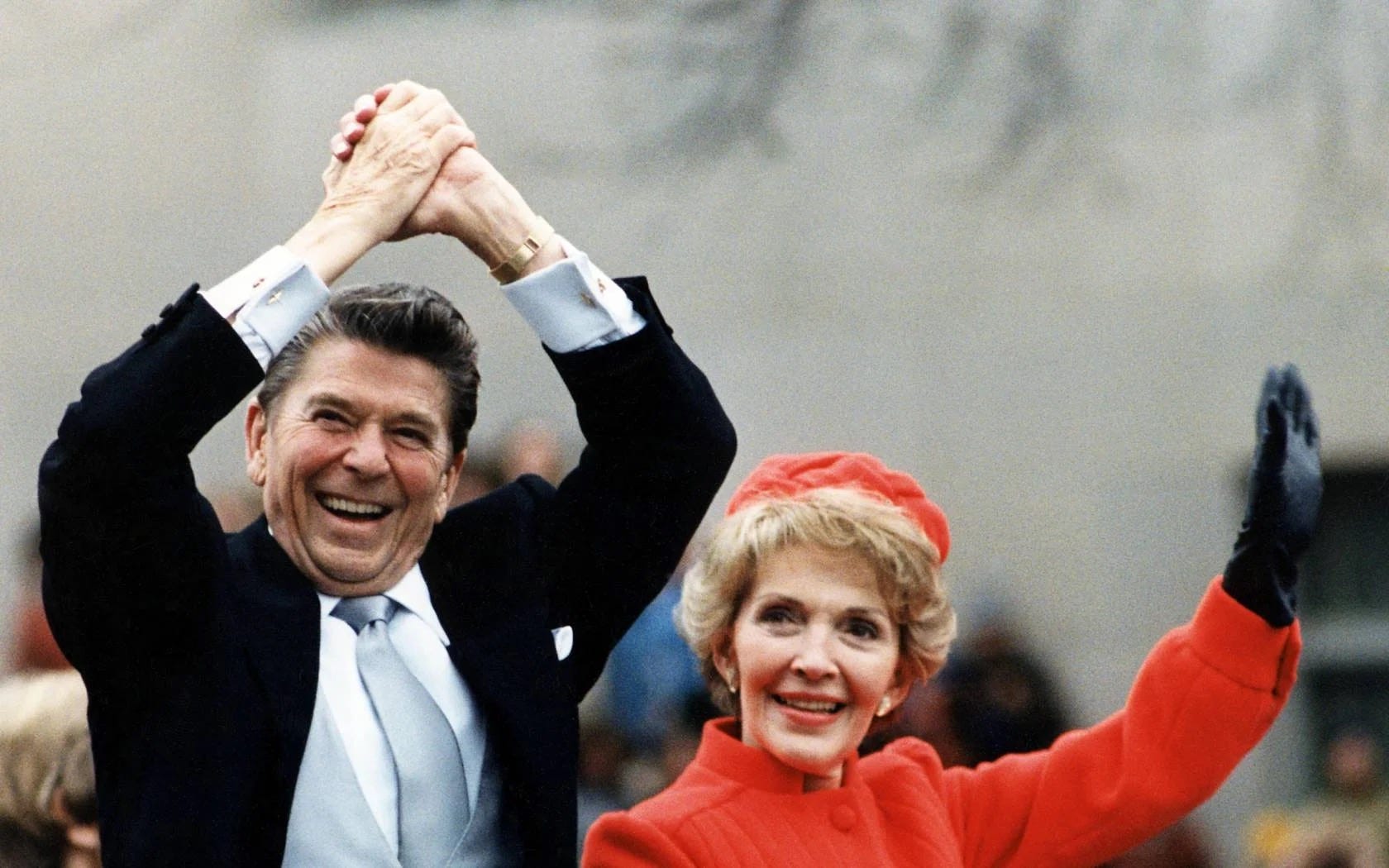
On January 20, 1981, history unfolded as Ronald Reagan was inaugurated as the 40th President of the United States. It was a day marked by symbolism and change — the end of the Carter years and the beginning of what many hoped would be a new era of strength and optimism for the country.
Mariann and I gathered in the lounge of Fisher Hall with the rest of the gang to watch the inauguration on television. There was a sense of excitement in the room, mixed with the usual banter, but also an awareness that this was a turning point for America. Watching it together, with Mariann at my side and surrounded by good friends, tied the national moment into the fabric of my senior year.
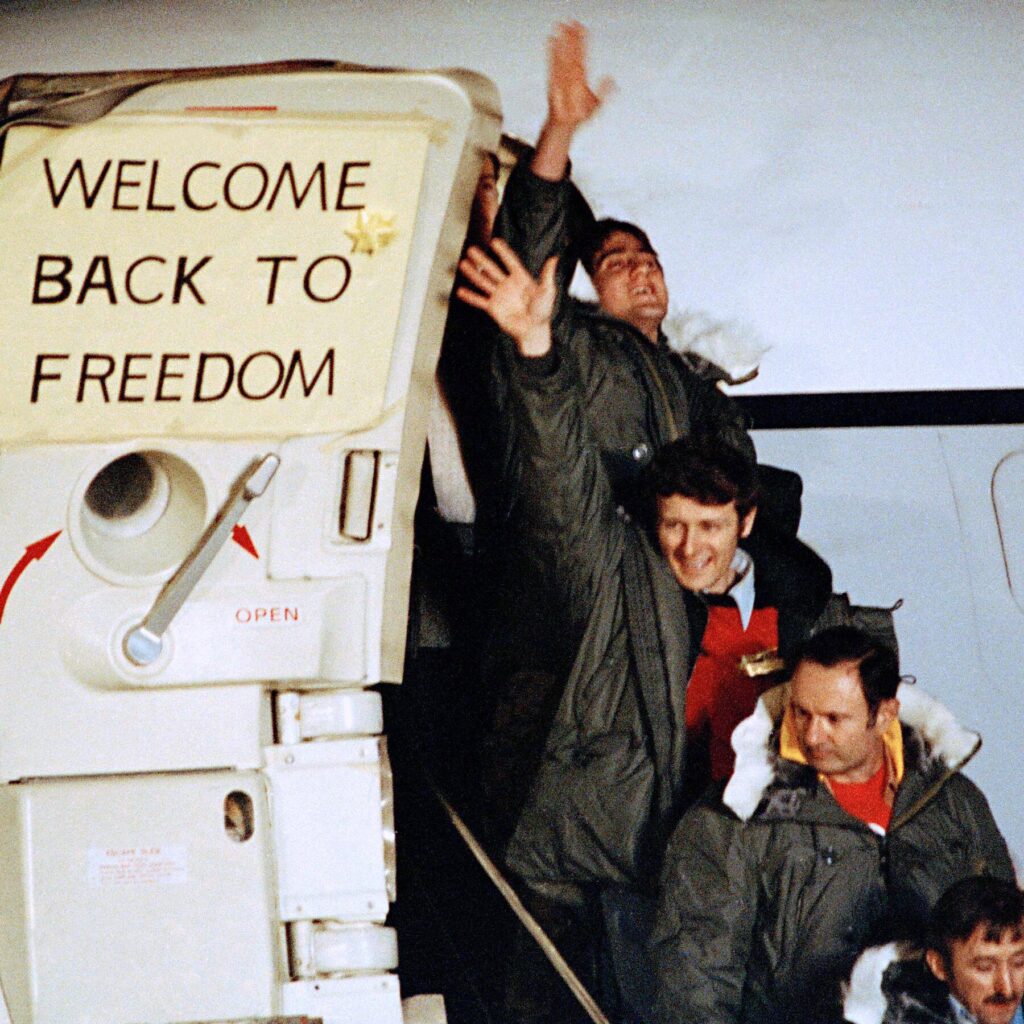
American Hostages Released From Iran After 444 Days
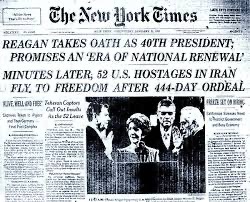
Just minutes after Reagan took the oath of office, the American hostages held in Iran for 444 days were released, adding even more drama to an already historic moment.
Tri-Military Ball (February 21, 1981)
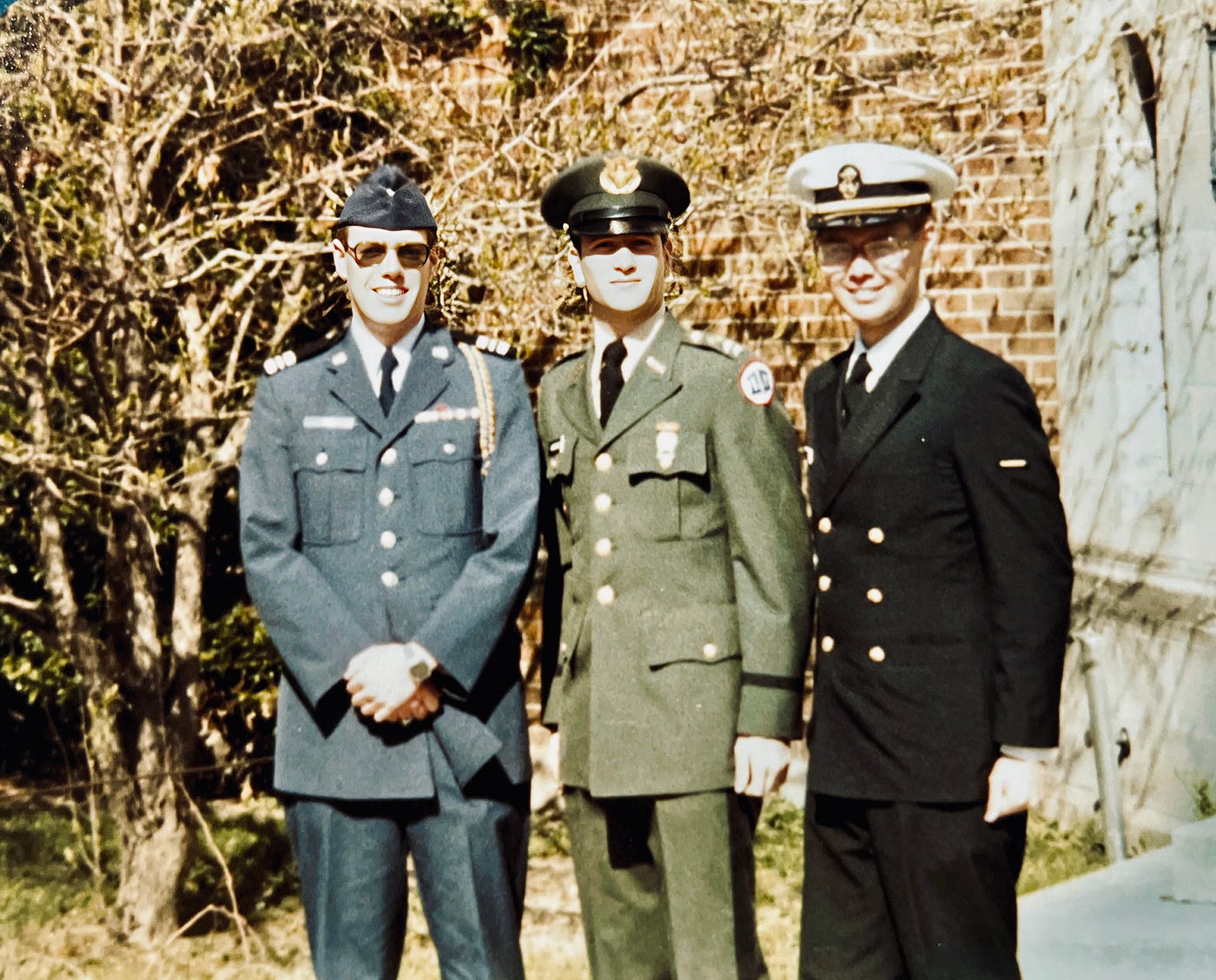
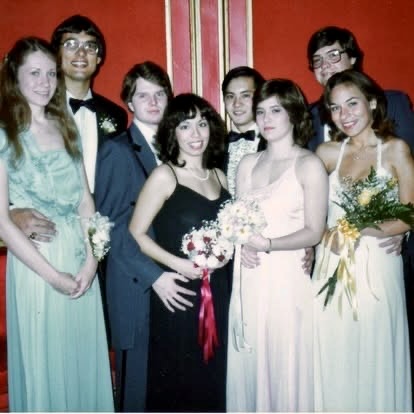
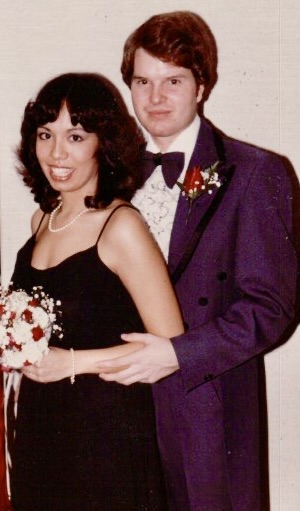
On February 21, 1981, we gathered for the Tri-Military Ball, a joint celebration of Army, Air Force, and Navy ROTC. Of course, I took Mariann as my date. It felt good to wear my dress uniform, now adorned with the badges and awards I had earned at ROTC Advanced Camp the previous summer. But what made the evening truly special was walking into that ballroom with Mariann at my side. I was proud of her — not only for her beauty, but for her intelligence and social grace. Mariann was the kind of partner who made me feel completely at ease at any event. She remembered names when I couldn’t, and she had a clever way of getting people to introduce themselves first so I wouldn’t be caught in the awkward position of trying to recall them. She was, in every sense, my better half.
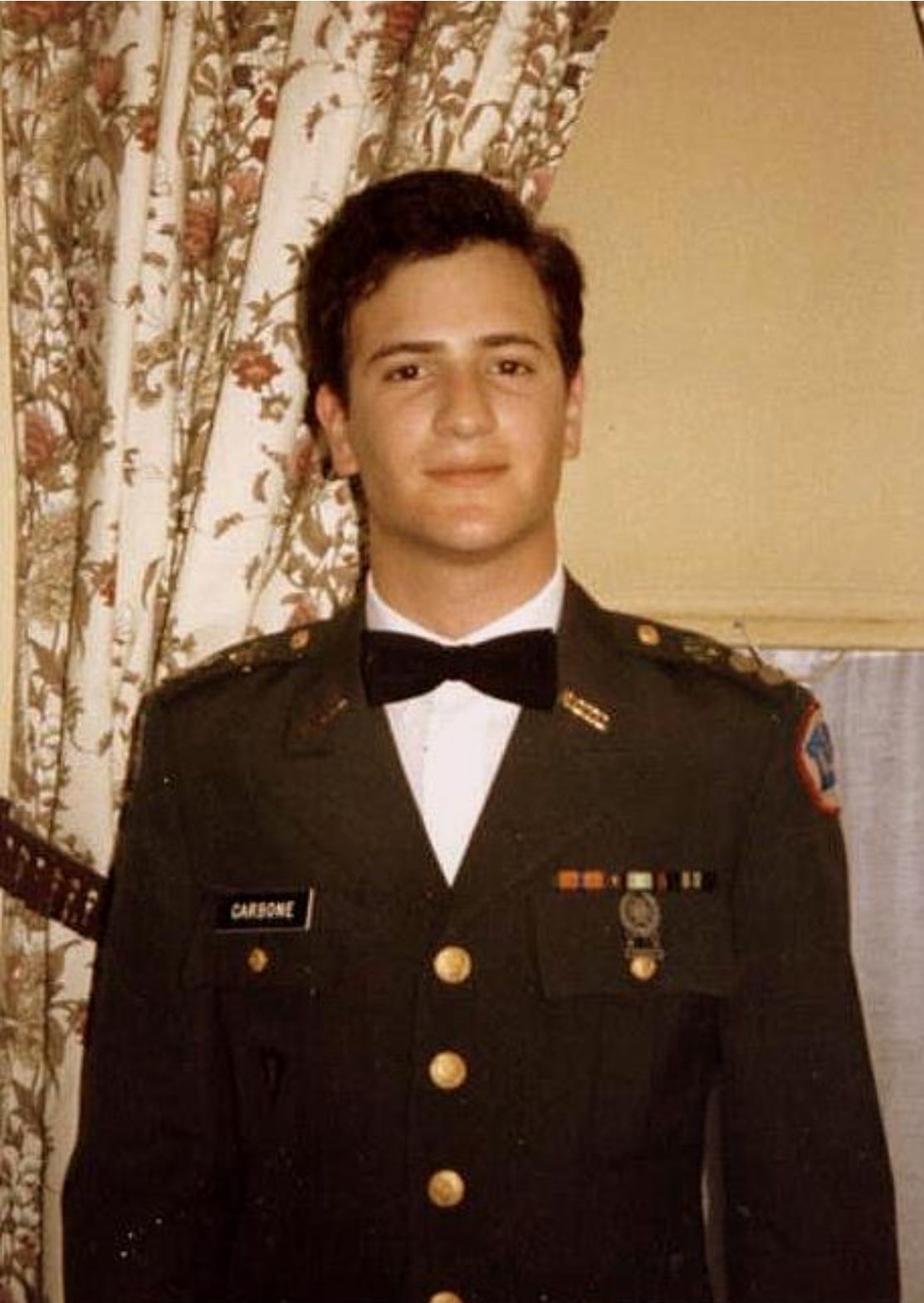
The night carried all the formality and tradition of the military, complete with the expected reception line. At the head stood our Professor of Military Science, Lieutenant Colonel Henry Gordon, with his wife at his side. As I stepped forward, he shook my hand and introduced me to his wife as “Cadet Bill Carbone.” I smiled and replied, “My name is Anthony. I’ve been your cadet for four years.” Then, as I turned to Mariann, I jokingly introduced her to him as “Sergeant Gordon.” The look of shock on his face was priceless, and Mariann laughed as I properly introduced her to Mrs. Gordon. That moment of humor broke the stiffness of the line, and together, Mariann and I carried the evening with the same warmth and confidence that made her the perfect date for any occasion.
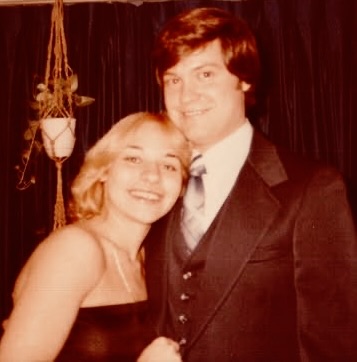
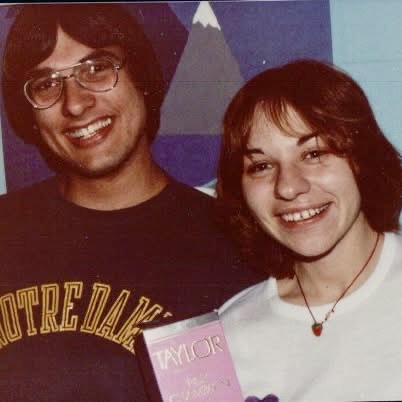
More of the Fisher Hall Gang
Assassination Attempt on President Reagan (March 30, 1981)
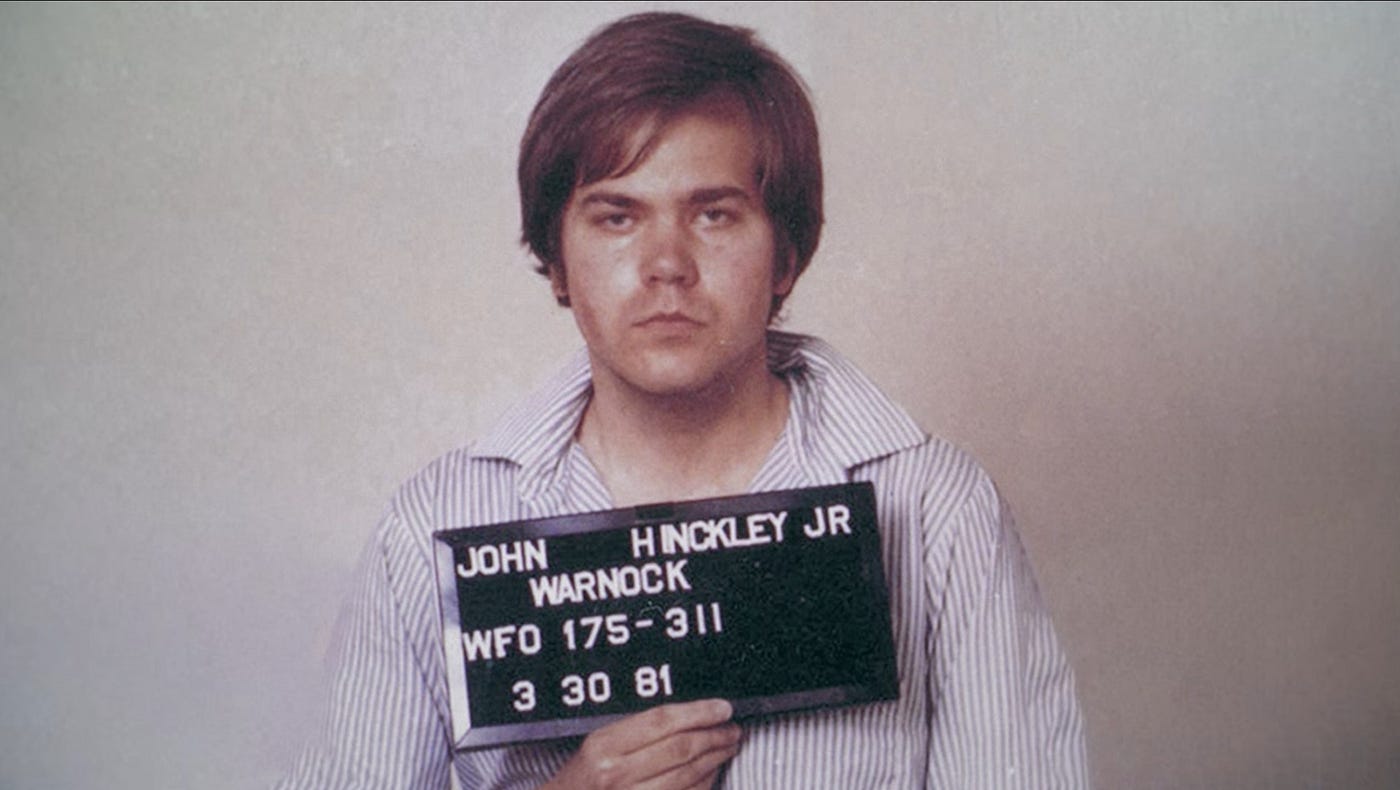
On March 30, 1981, the nation was shaken when President Ronald Reagan was shot and wounded by John Hinckley Jr. outside a Washington, D.C. hotel. I can remember the exact moment the news broke. I was in Comparative Anatomy Lab, where a few of us were goofing around with our specimens while the radio played music in the background. Suddenly, the broadcast was interrupted: “We interrupt this program for a special news bulletin. President Reagan has been shot in an attempted assassination attempt…” The room fell instantly silent. Reagan had been struck by a bullet that narrowly missed his heart, but he recovered quickly and reassured the country with his resilience and humor.
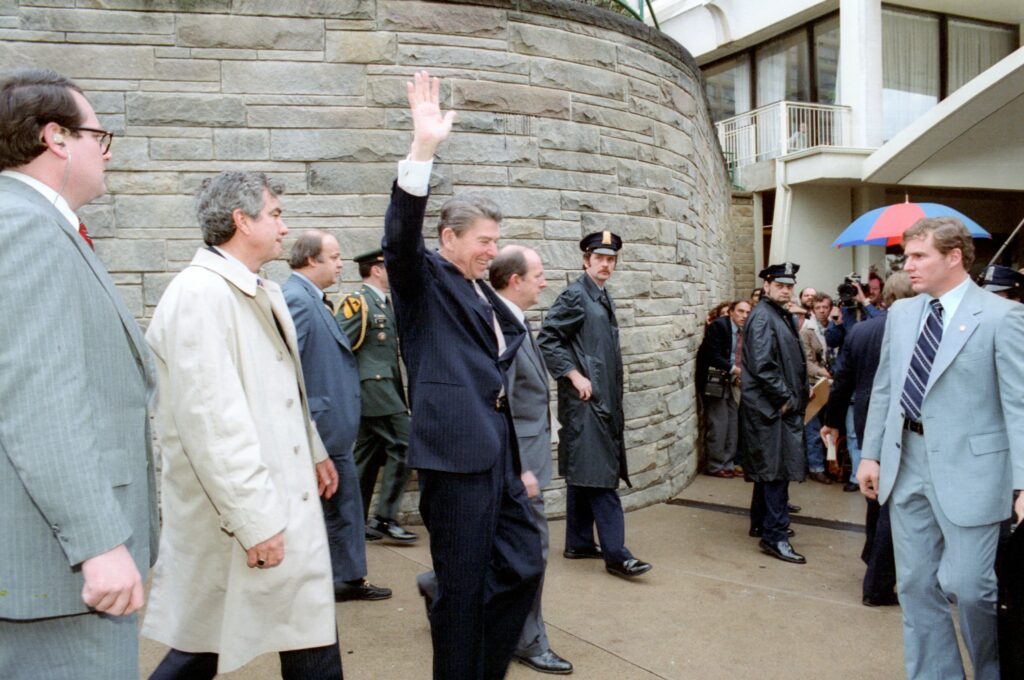
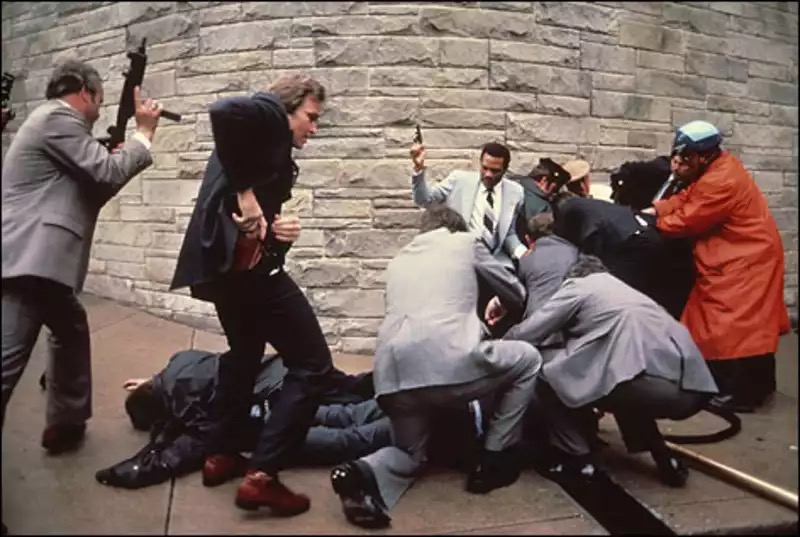
Hinckley, who had acted in a delusional attempt to impress actress Jodie Foster, was later found not guilty by reason of insanity and confined to St. Elizabeth’s Hospital for the Criminally Insane — a place I would one day walk the halls of as a Georgetown medical student. At the time, I had no idea that my future path would bring me face-to-face with the same institution where the man who had nearly killed the President was confined, giving me firsthand insight into the uneasy intersection of mental health and criminal justice.
Assassination Attempt on Pope John Paul II — May 13, 1981
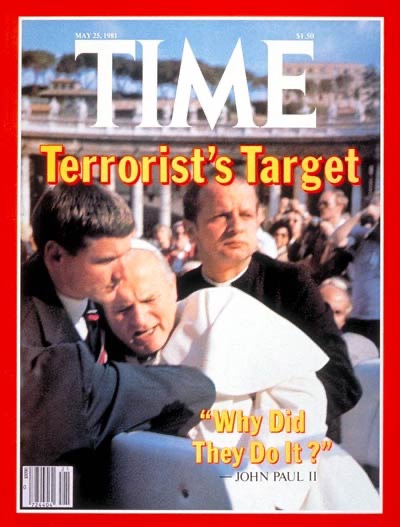
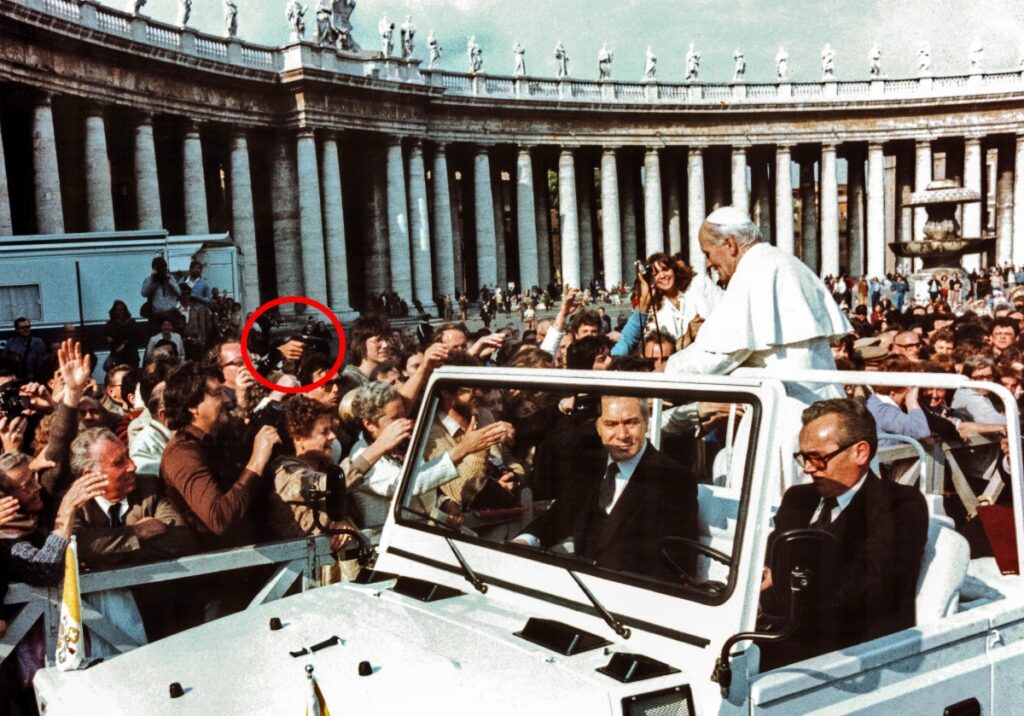
On Wednesday, May 13, 1981, just one day after my last final exam at Notre Dame, the world seemed to stop again. It was 11:17 a.m. Central Daylight Time when the broadcast cut in. A group of us — our Fisher Hall gang of seniors, along with Mariann and Ginger, who were staying behind to attend our graduation — were in our rooms watching television. I was sitting with Mari when the familiar words rang out: “We interrupt this program for a special news bulletin. Pope John Paul II was just shot in Saint Peter’s Square in an apparent assassination attempt. He is being rushed to the Agostino Gemelli University Polyclinic in Rome for emergency surgery.” The room went silent. We sat frozen, stunned by the idea that someone would try to kill the Pope. Reports came in that he had been hit in the abdomen and suffered intestinal injuries, his survival uncertain as surgeons fought for hours to save his life.
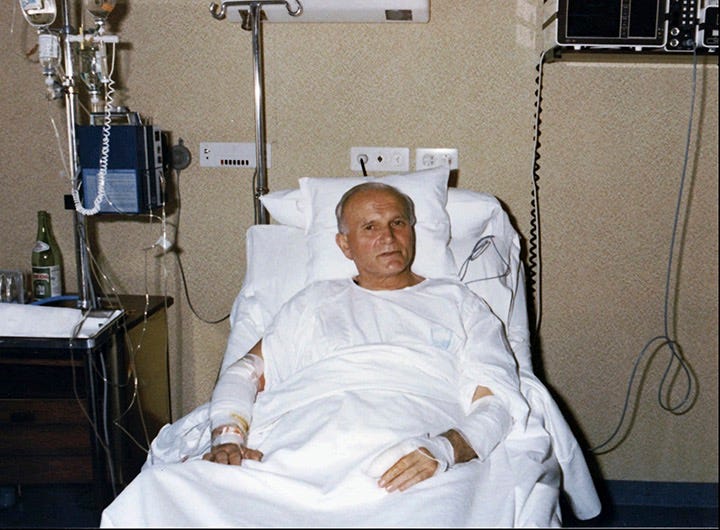
Incredibly, Pope John Paul II did survive, spending three weeks in the hospital recovering from his wounds.
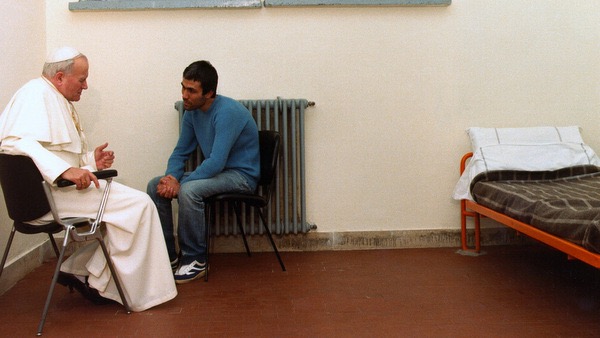
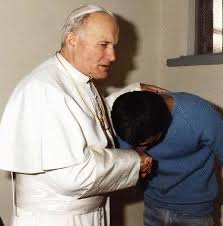
What followed made an even greater impression: his extraordinary act of forgiveness. In 1983, he visited Mehmet Ali Ağca — the man who had tried to kill him — in prison, offering him mercy and compassion instead of bitterness.
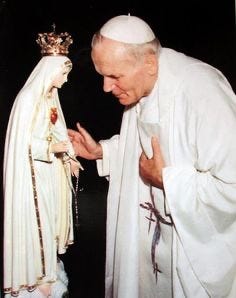
The Pope later attributed his survival to the intercession of Our Lady of Fátima, whose feast day coincided with the shooting.
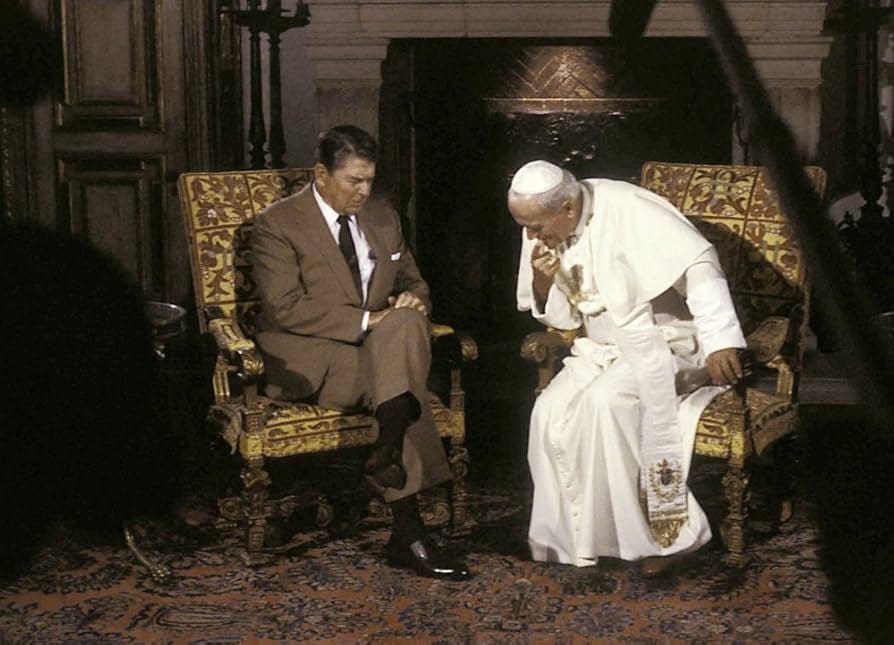
President Reagan had survived his assassination attempt just six weeks earlier. The parallel ordeals forged a deep friendship between the two men, uniting them in resilience, faith, and a shared determination to confront tyranny and defend human dignity.
Army Branch and Location Assignments
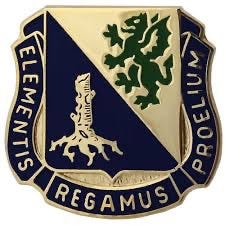
Shortly before commissioning, all of us Senior Army ROTC cadets received the orders we had been anxiously awaiting — our Army branch and unit assignments. I remember holding the envelope with a mix of anticipation and dread, knowing that whatever it contained would shape the next chapter of my life. First, my request for an educational delay to attend medical school was denied. I had been branched in the U.S. Army Chemical Corps with an initial assignment to the U.S. Army Chemical School at Fort McClellan, Alabama for the Chemical Officer Basic Course.
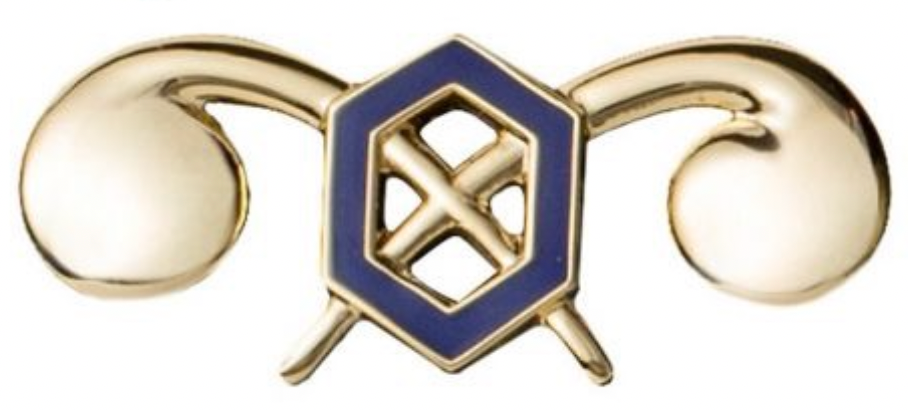
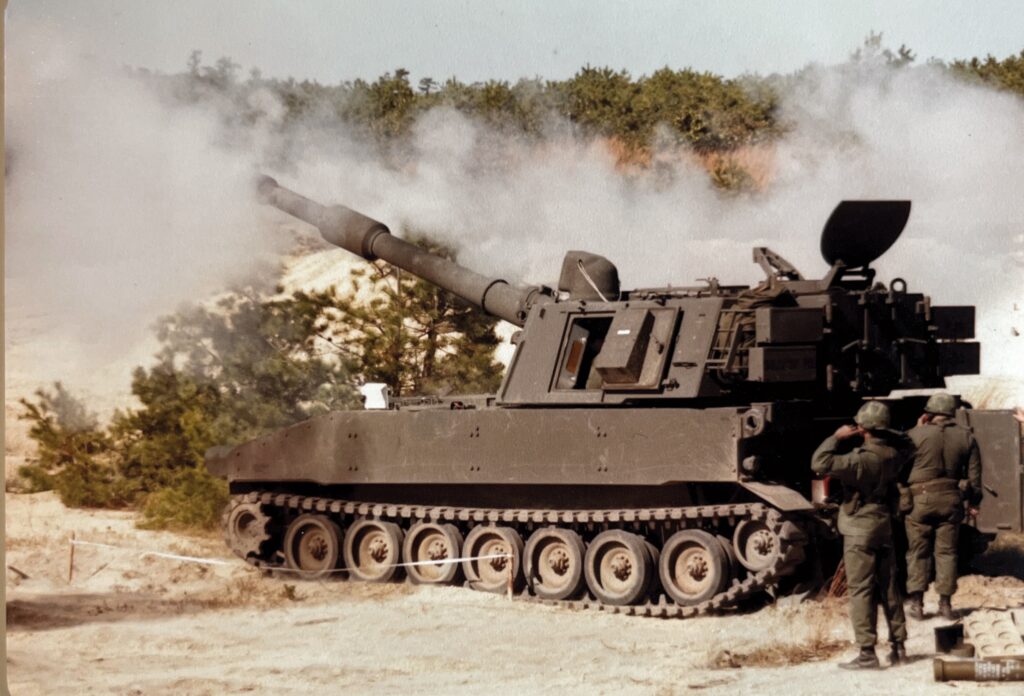
For someone who had grown up studying my father’s military career, I was amazed — I didn’t even know the Army had a Chemical Corps. I could feel my father’s quiet disappointment that I hadn’t been branched into the combat arms, like Armor or Cavalry, the “real” soldiers.
Not Korea, but Fort Irwin
The Army also asked if I would like to serve in Korea, which meant a one-year, unaccompanied tour. I replied that I would prefer anywhere in the United States or Europe. My father’s disapproval was clear; Korea had been the start of his own career, the proving ground of the Army, and he could not understand why I was thinking about Mariann instead of my career. Eventually, my assignment was revealed: the National Training Center at Fort Irwin, California.
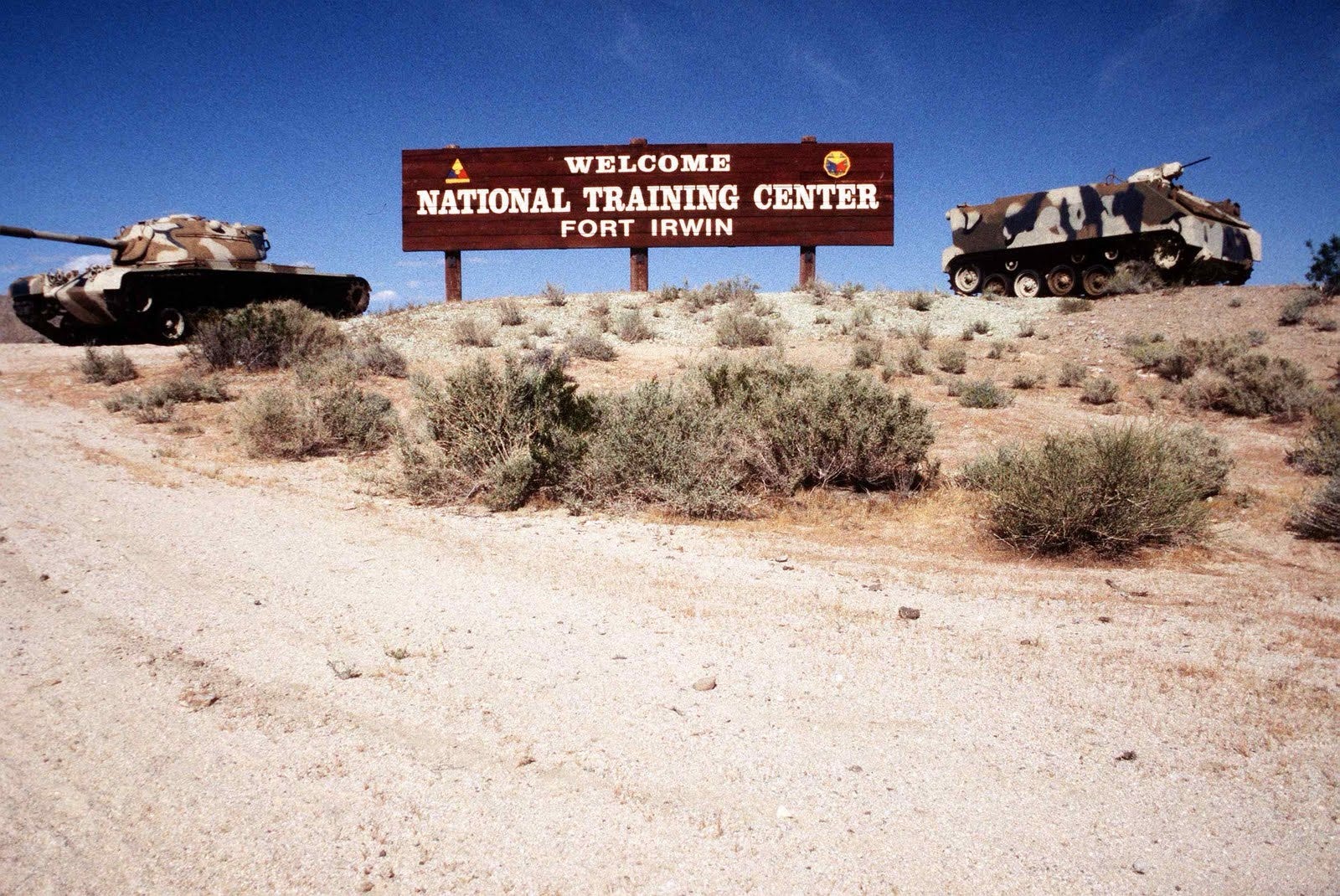
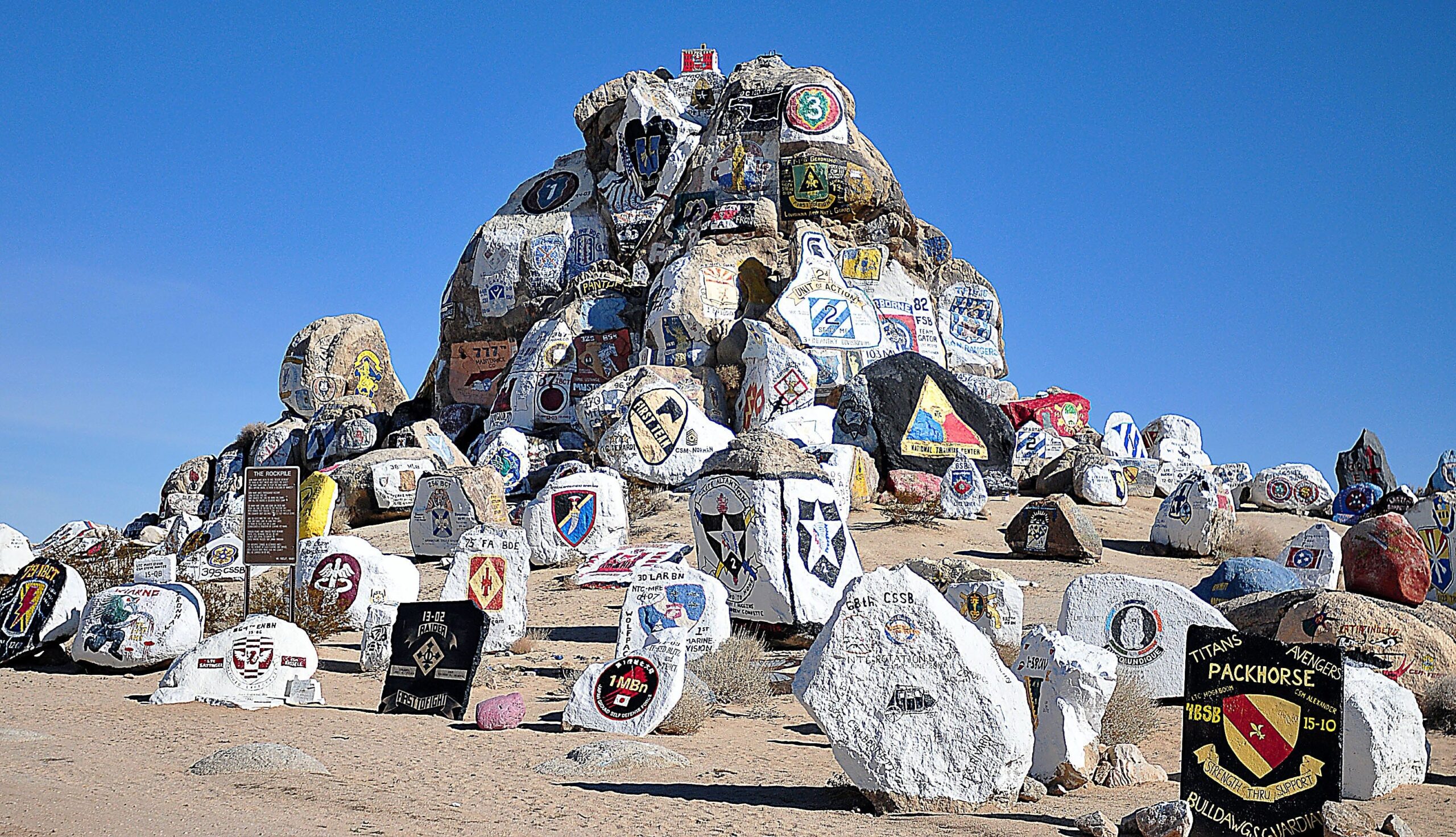
I had never heard of the post, which had only reopened weeks before. When I told my father, he said, “Great assignment, JR!” — and I knew I was in trouble. Sure enough, Fort Irwin was located in the infamous Mojave Desert, bordering on Death Valley, USA, a harsh and unforgiving landscape that would test me in ways I had never imagined.
Commencement Weekend (May 15–17, 1981)
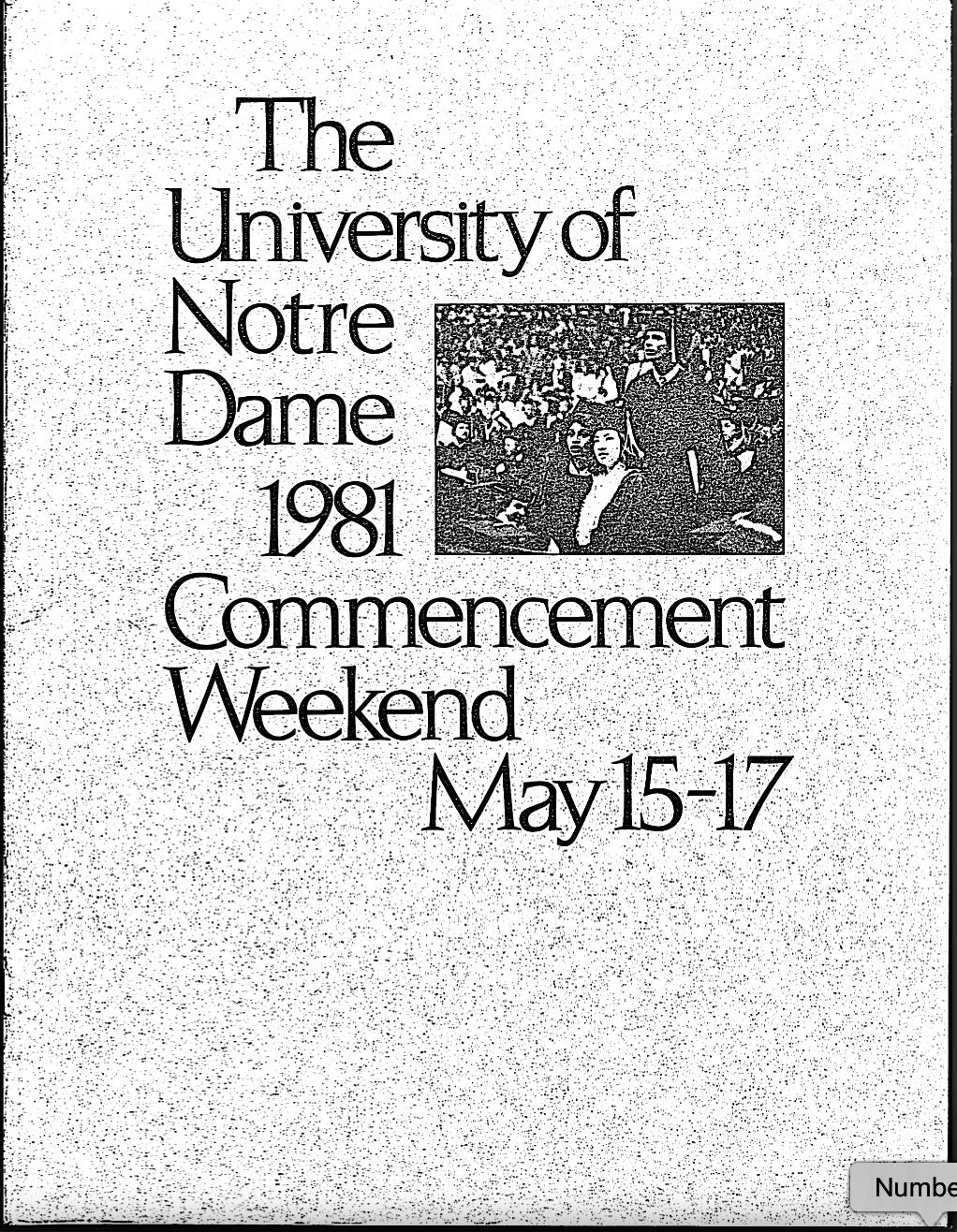
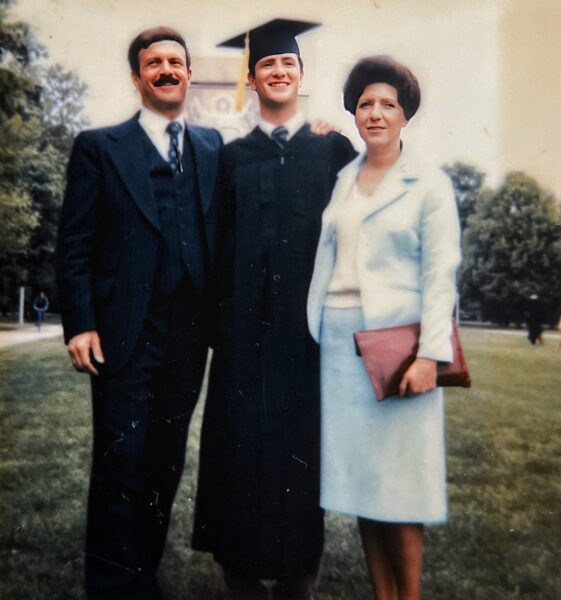
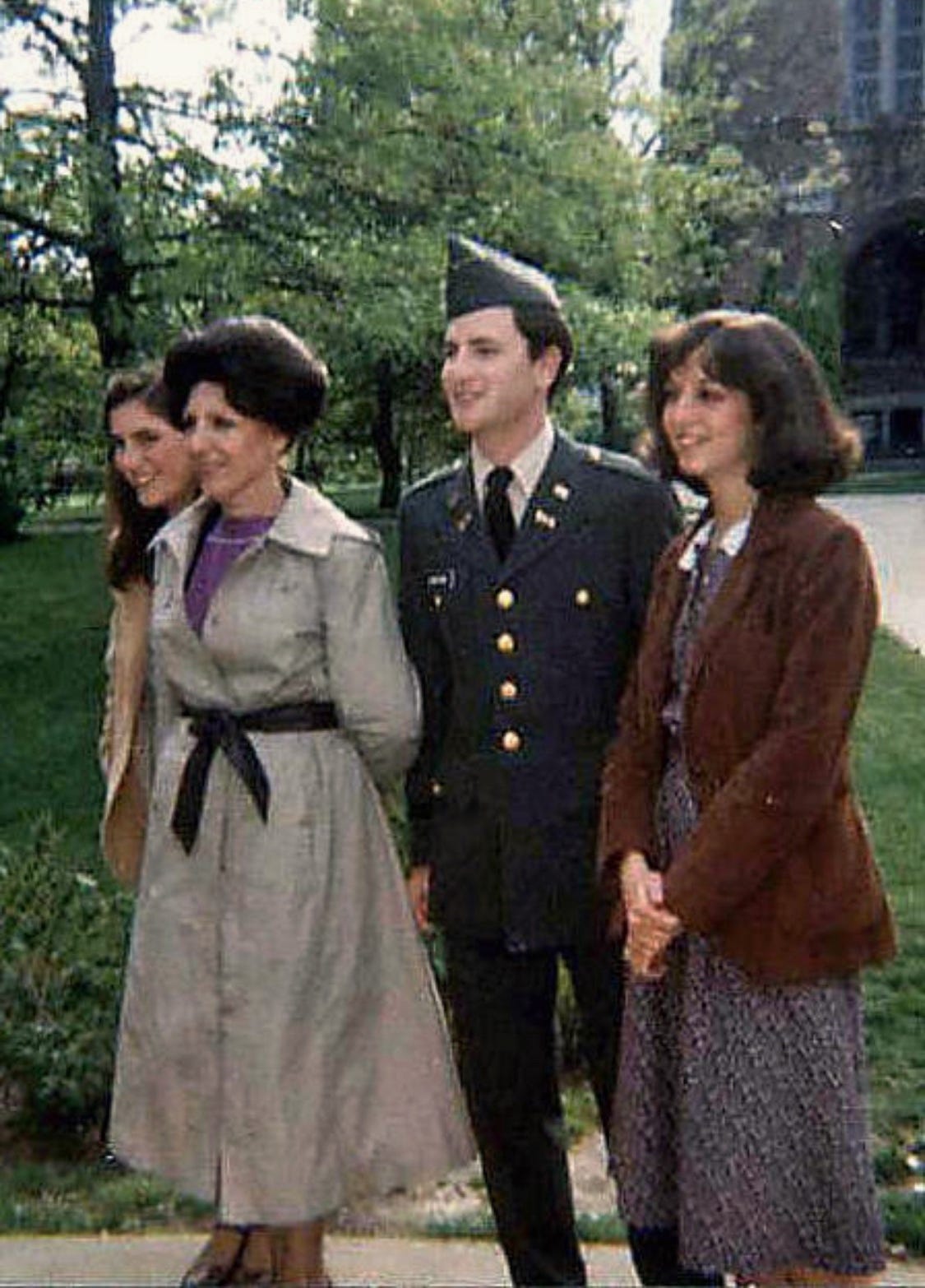
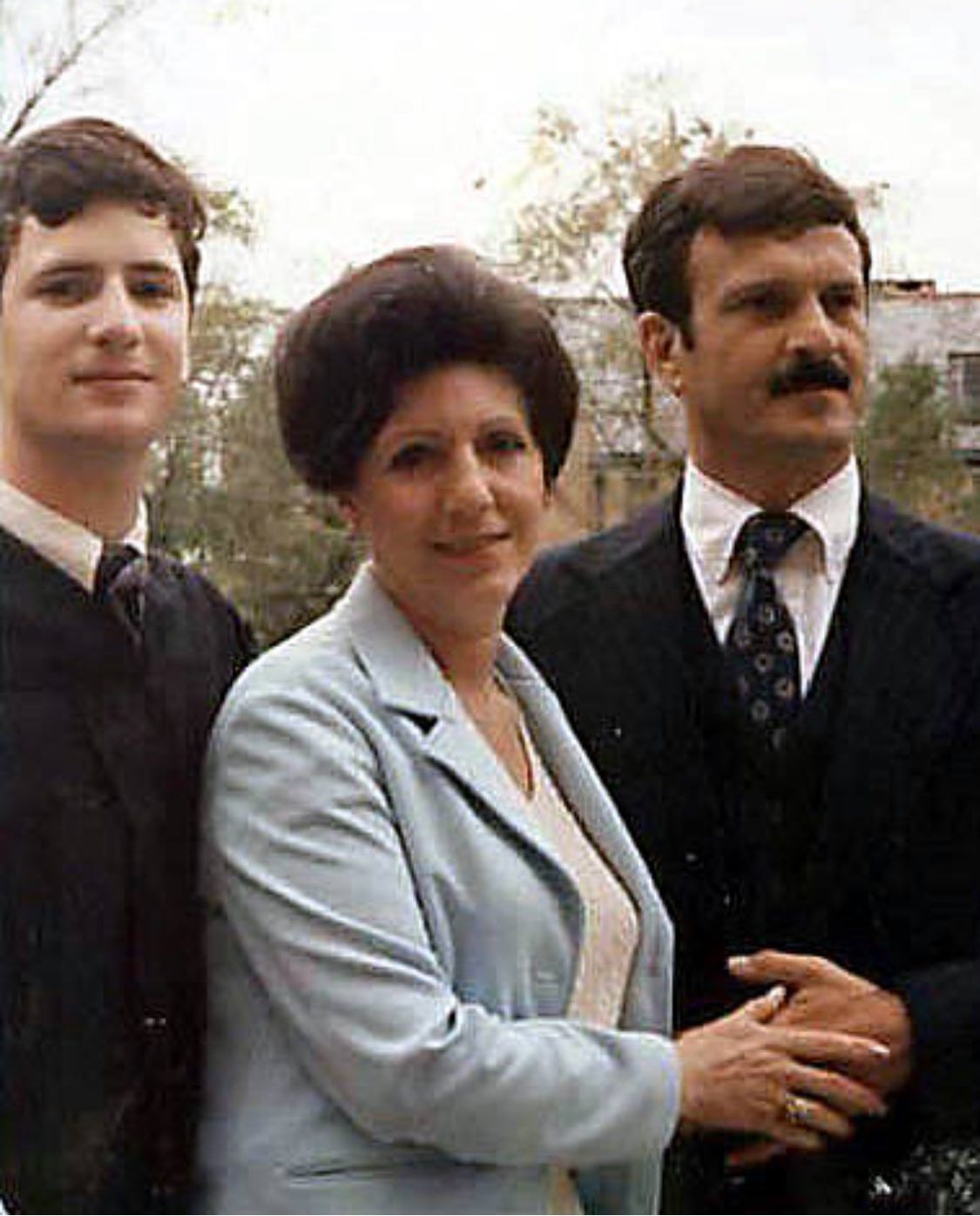
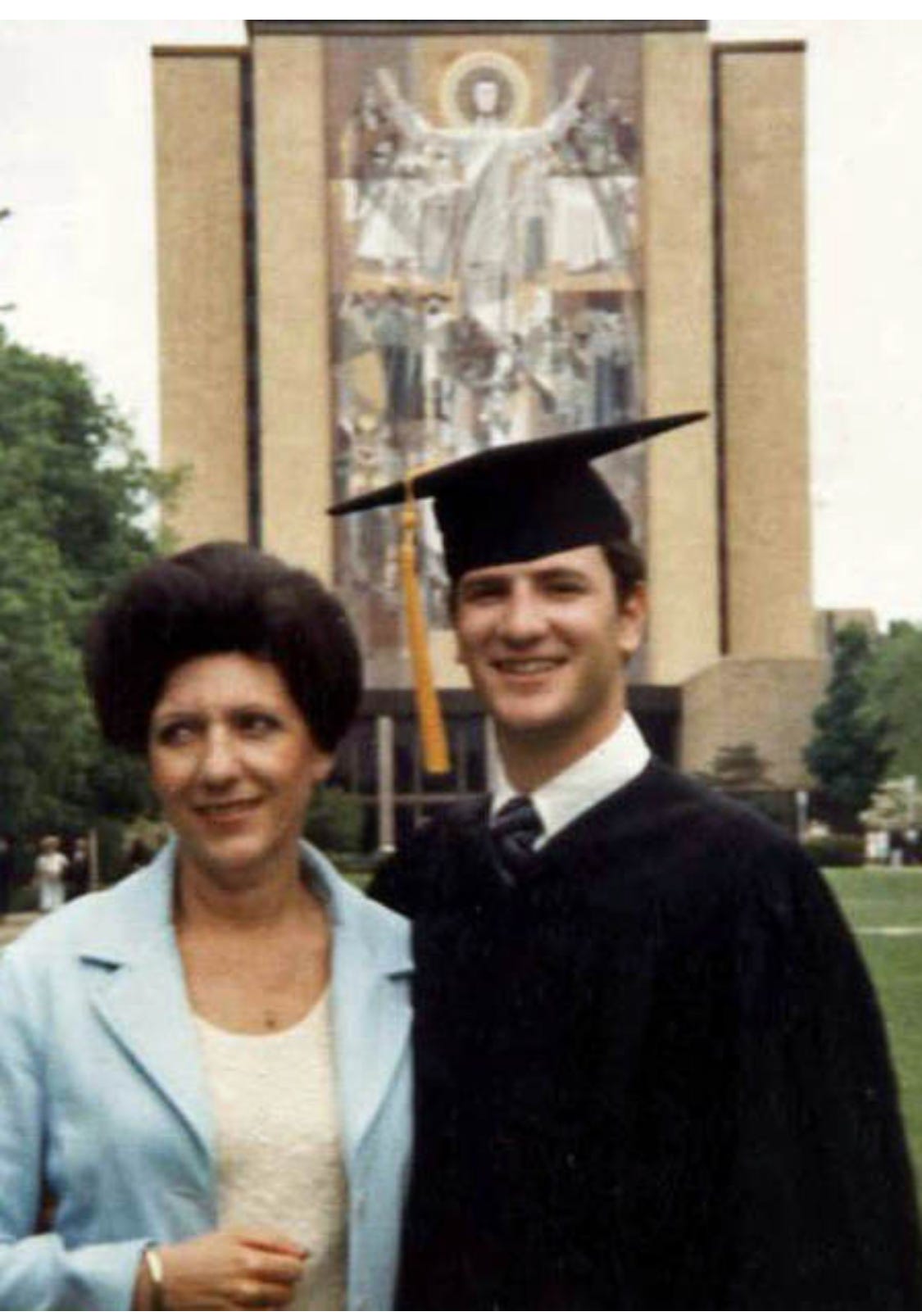
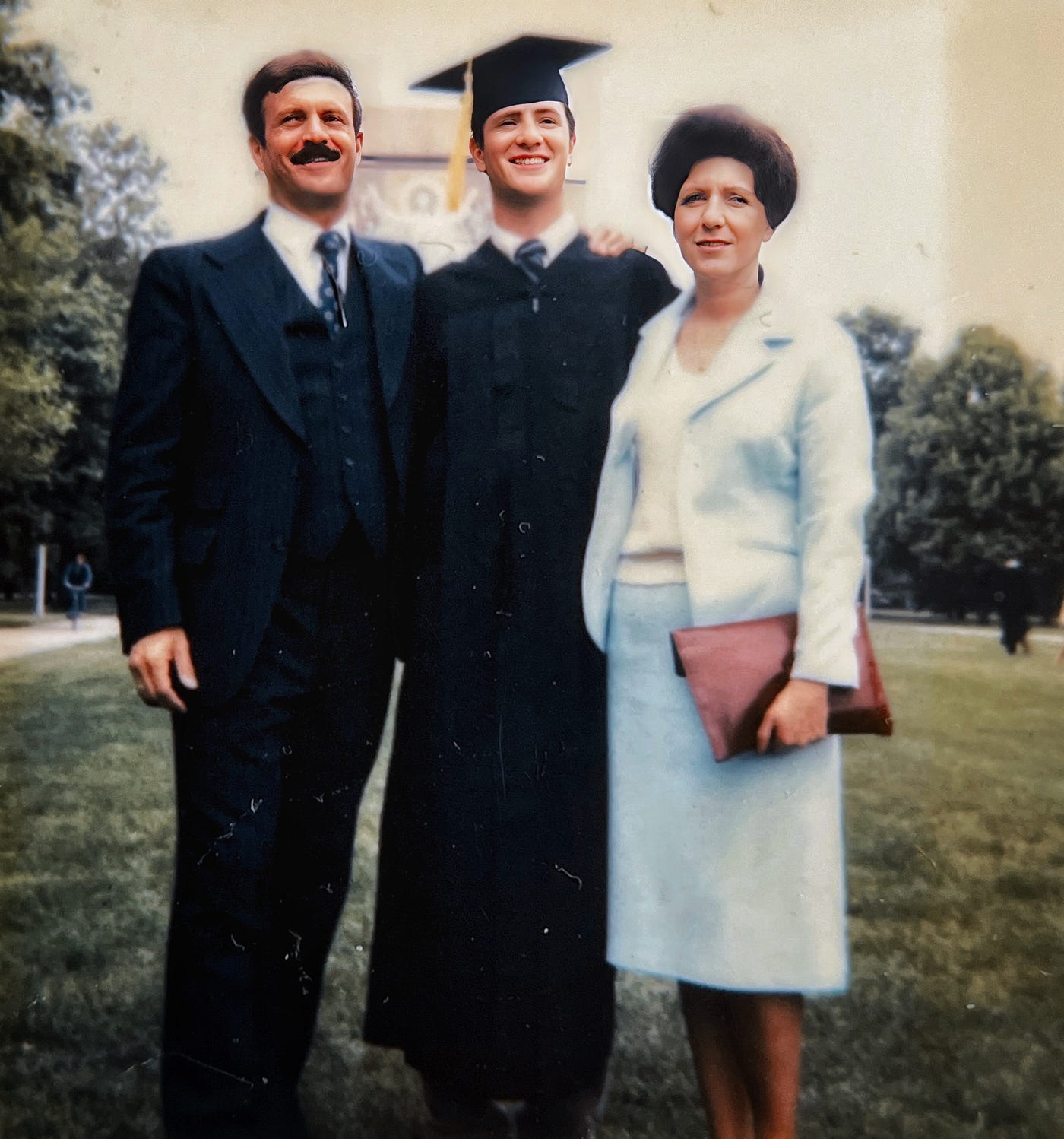
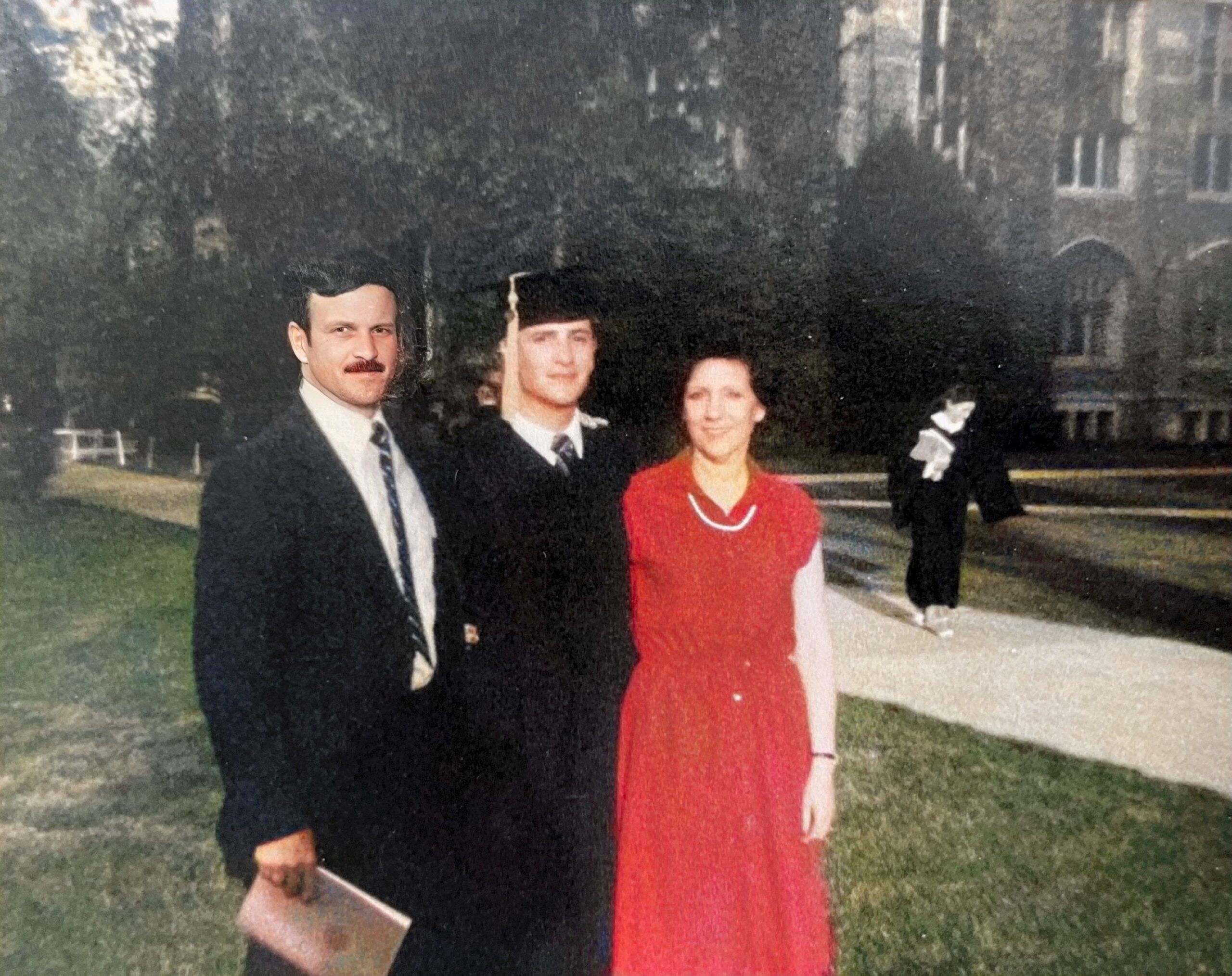
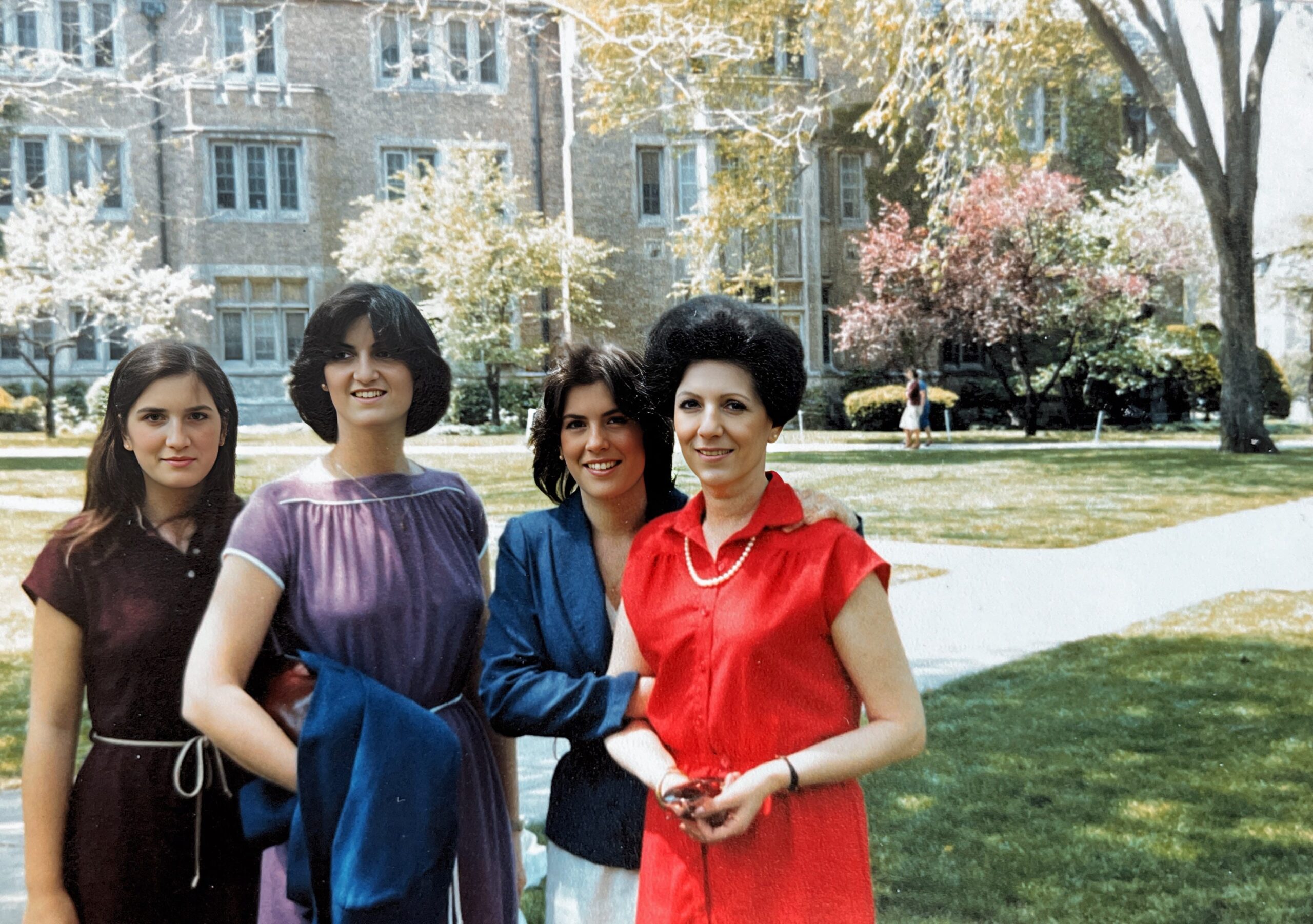
My entire family — Mom, Dad, and all four of my sisters — made the trip out to Notre Dame for my commissioning and graduation. And of course, Mariann was right by my side through it all. The weekend was packed with ceremony and meaning.
Commissioning Ceremony (May 16, 1981)
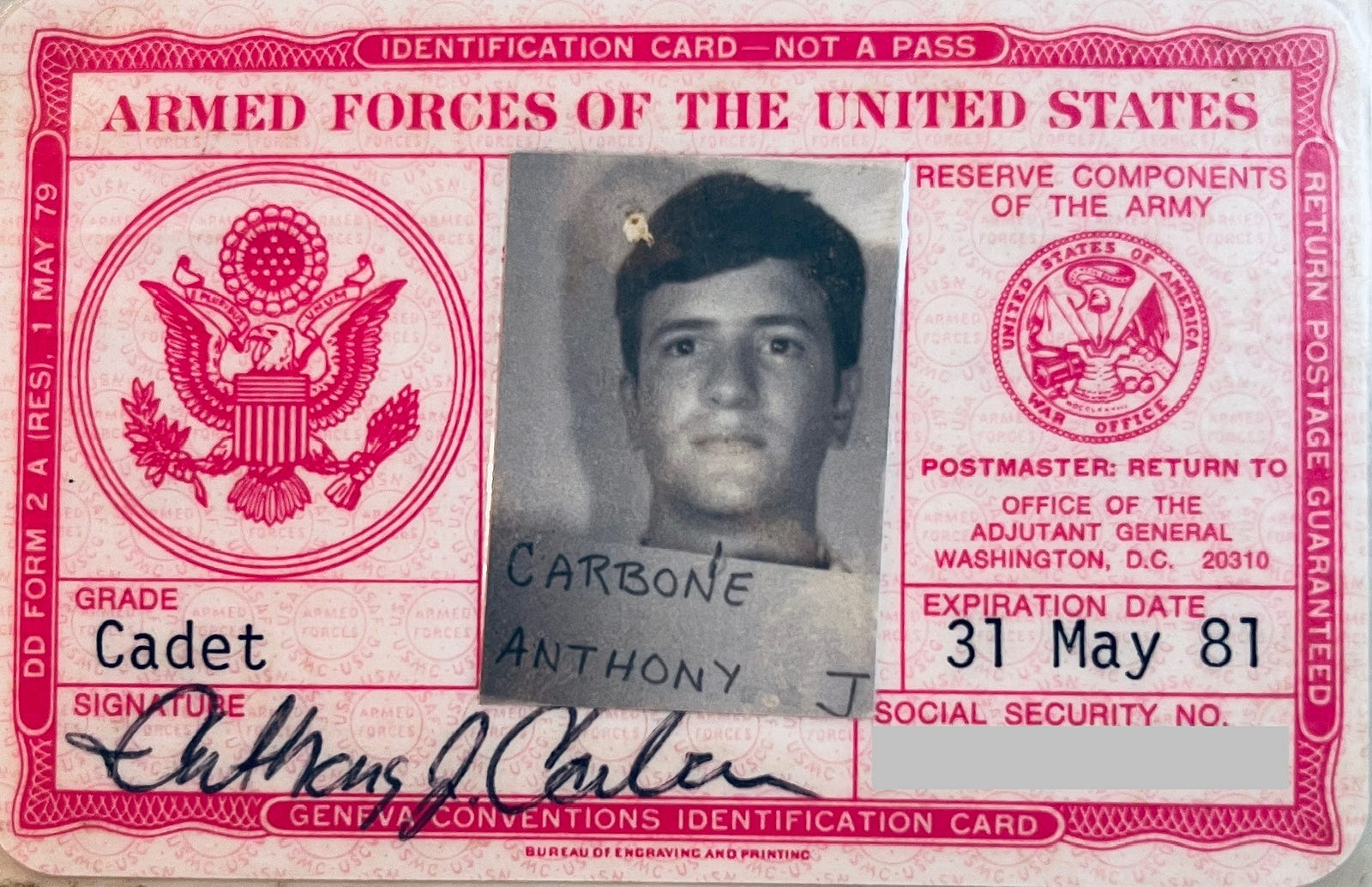
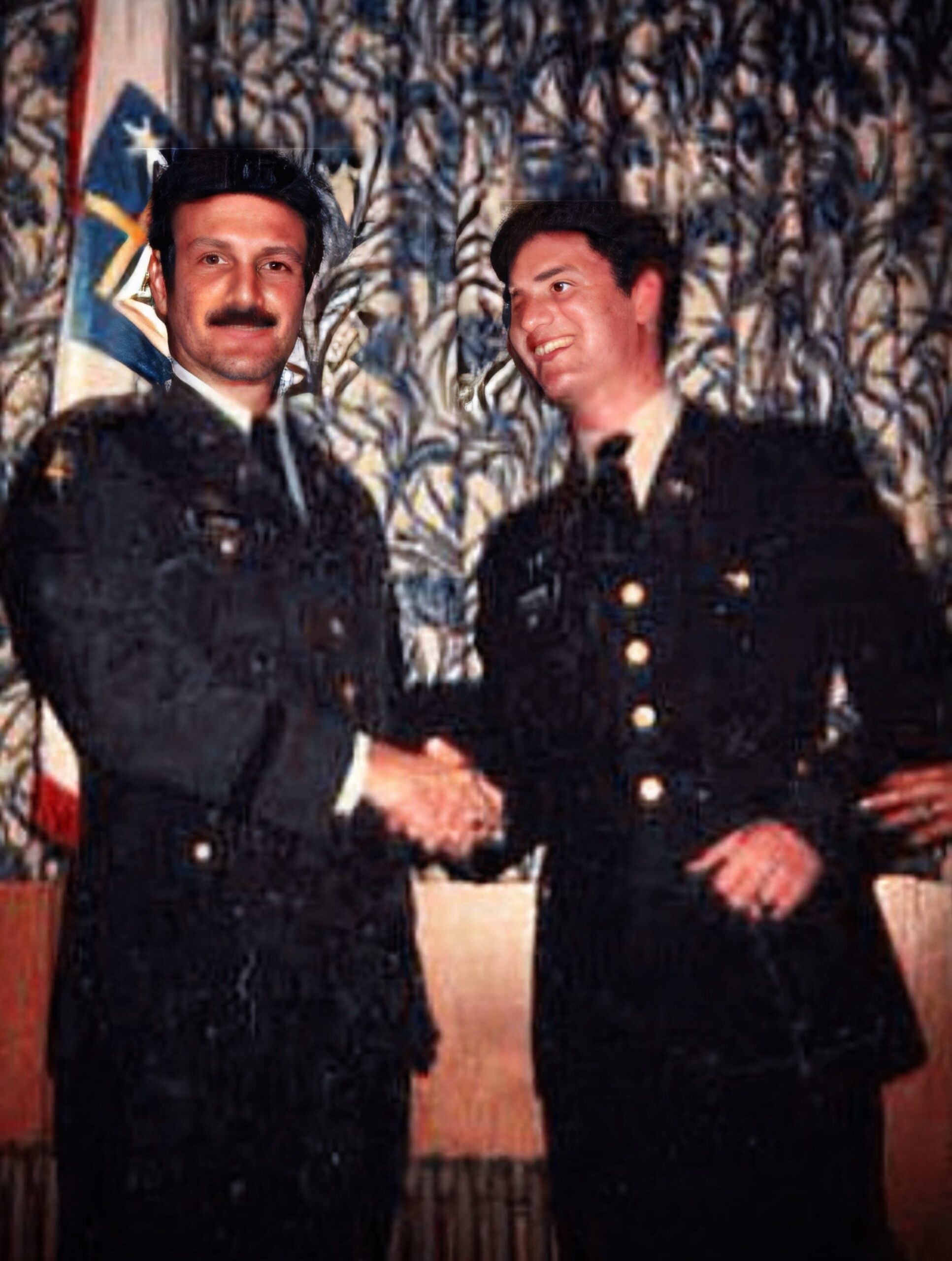
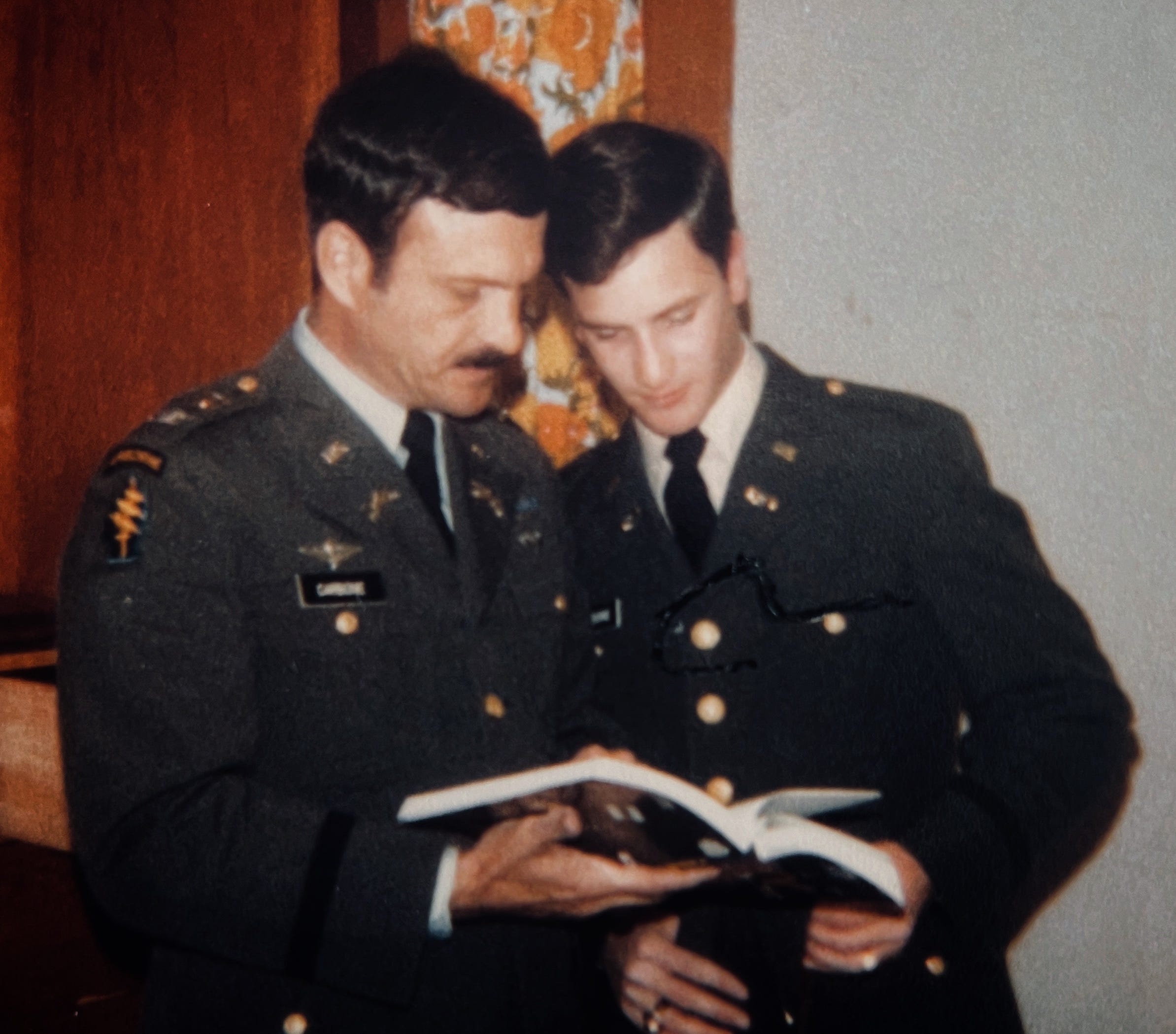
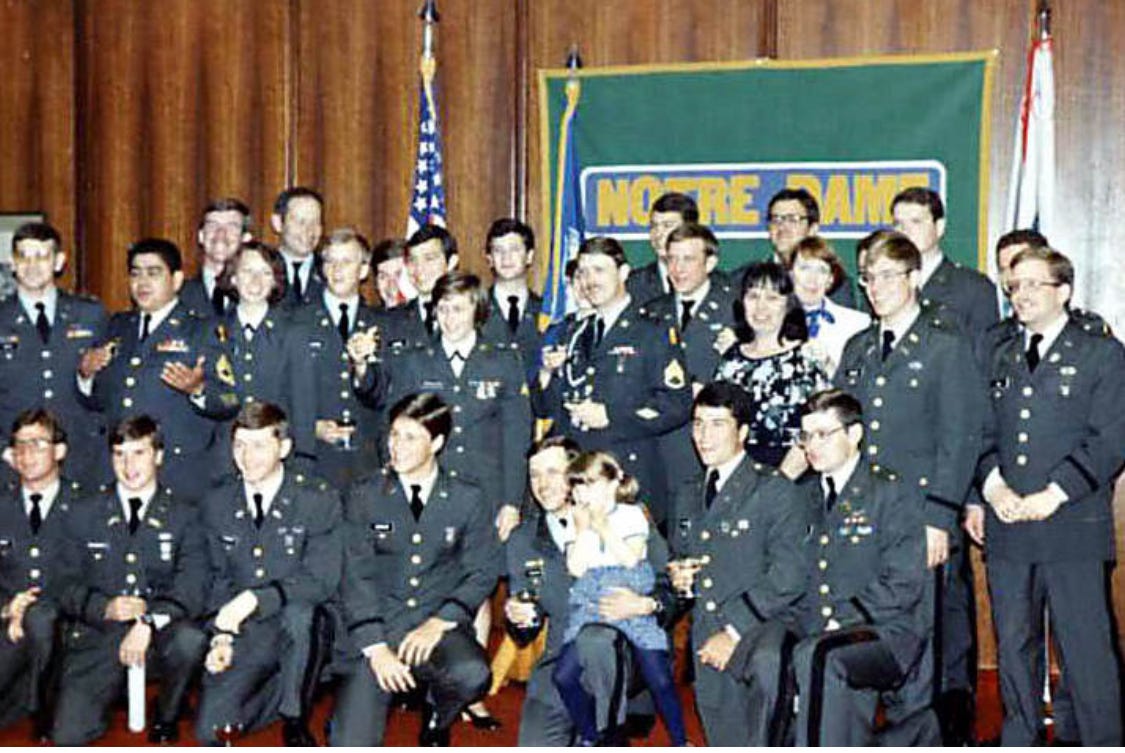
On Saturday, May 16, the day began at 10 a.m. with the Army ROTC Commissioning. The most powerful moment for me was taking the Oath of Office, sworn in by my father, a Colonel in the U.S. Army.
“I, Anthony J. Carbone, do solemnly swear that I will support and defend the Constitution of the United States against all enemies, foreign and domestic; that I will bear true faith and allegiance to the same; that I take this obligation freely, without any mental reservation or purpose of evasion; and that I will well and faithfully discharge the duties of the office on which I am about to enter. So help me God.”
To stand there, repeating those words, and to be sworn in by my own father — it was overwhelming. The pride of the moment was real, but so was the quiet sting. Deep down, I prayed that he had finally let go of his disappointment that I had turned down West Point. I couldn’t be sure. I sensed it still lingered in him, unspoken. But as I looked at my mother, my sisters, and Mariann, I saw nothing but pride in their eyes. That helped temper the pain. For me, it was the beginning of a new life: at once exhilarating, humbling, and sobering.
Academic Procession & Baccalaureate Mass
Later, at 4:20 p.m., came the Academic Procession at the Athletic and Convocation Center, followed by the Baccalaureate Mass at 5 p.m. The evening was full: a cocktail party and buffet supper from 7 to 8:30 p.m., then a concert by the University of Notre Dame Glee Club at Stepan Center at 9 p.m. It was a long, emotional, and exhausting day for all of us.
Commencement Ceremony (May 17, 1981)
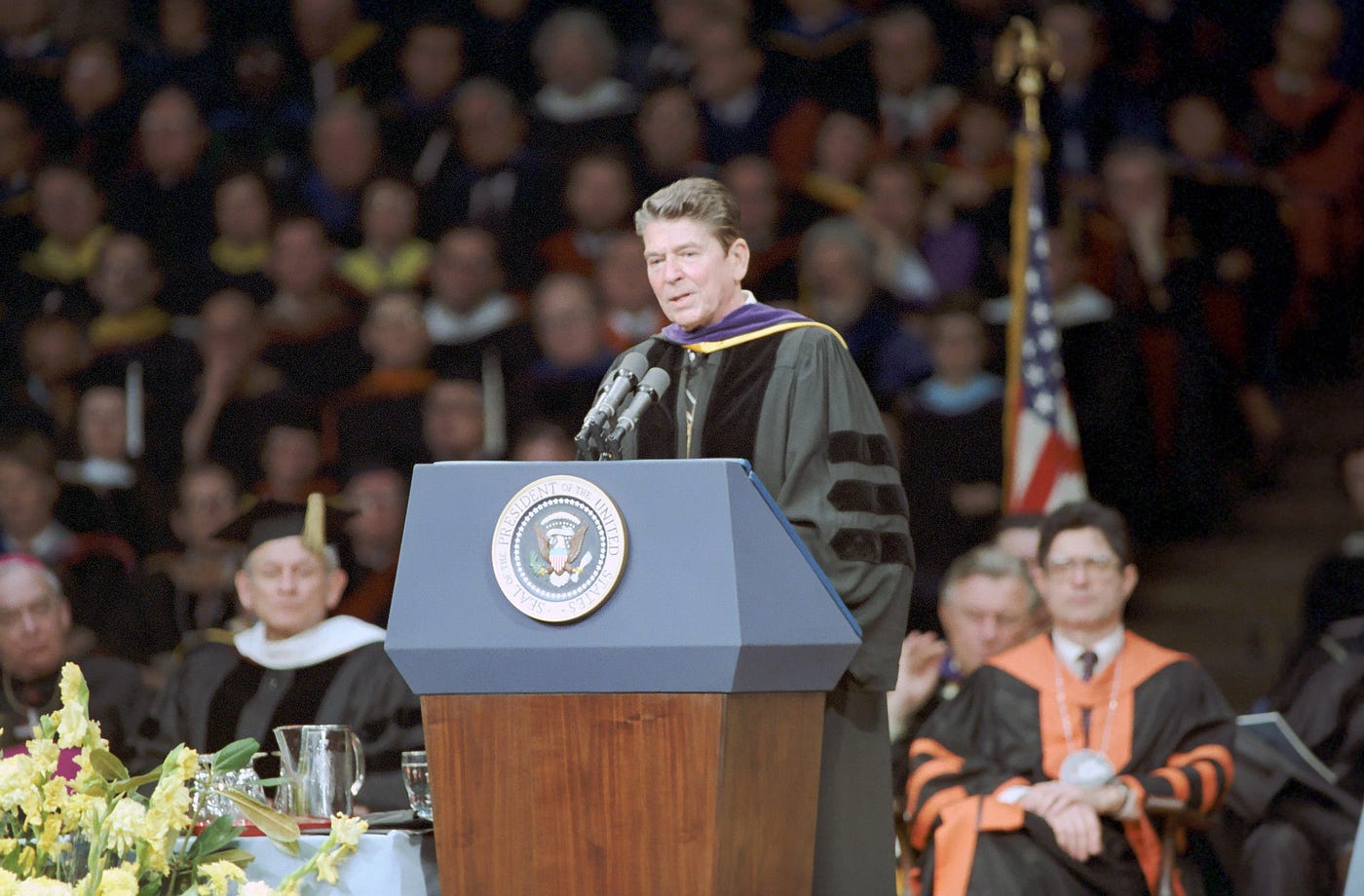
The highlight of the day, however, was President Ronald Reagan himself. On May 17, 1981, just weeks after surviving an assassination attempt, Reagan chose Notre Dame for his first public appearance. The arena crackled with anticipation. Secret Service agents were everywhere, watchful eyes scanning the crowd as we passed through metal detectors and searches to enter. The sense of history unfolding right before us was undeniable.
When President Reagan finally appeared, the entire arena erupted. His presence filled the space — larger than life, resilient, and still carrying the aura of a man who had stared down death and come back smiling. His address mixed humor with deep inspiration, speaking of America’s role in the world, the strength of freedom, and the resilience of our people. It was everything you could hope for from a commencement address, and more.
Honoring “Knute Rockne, All American”
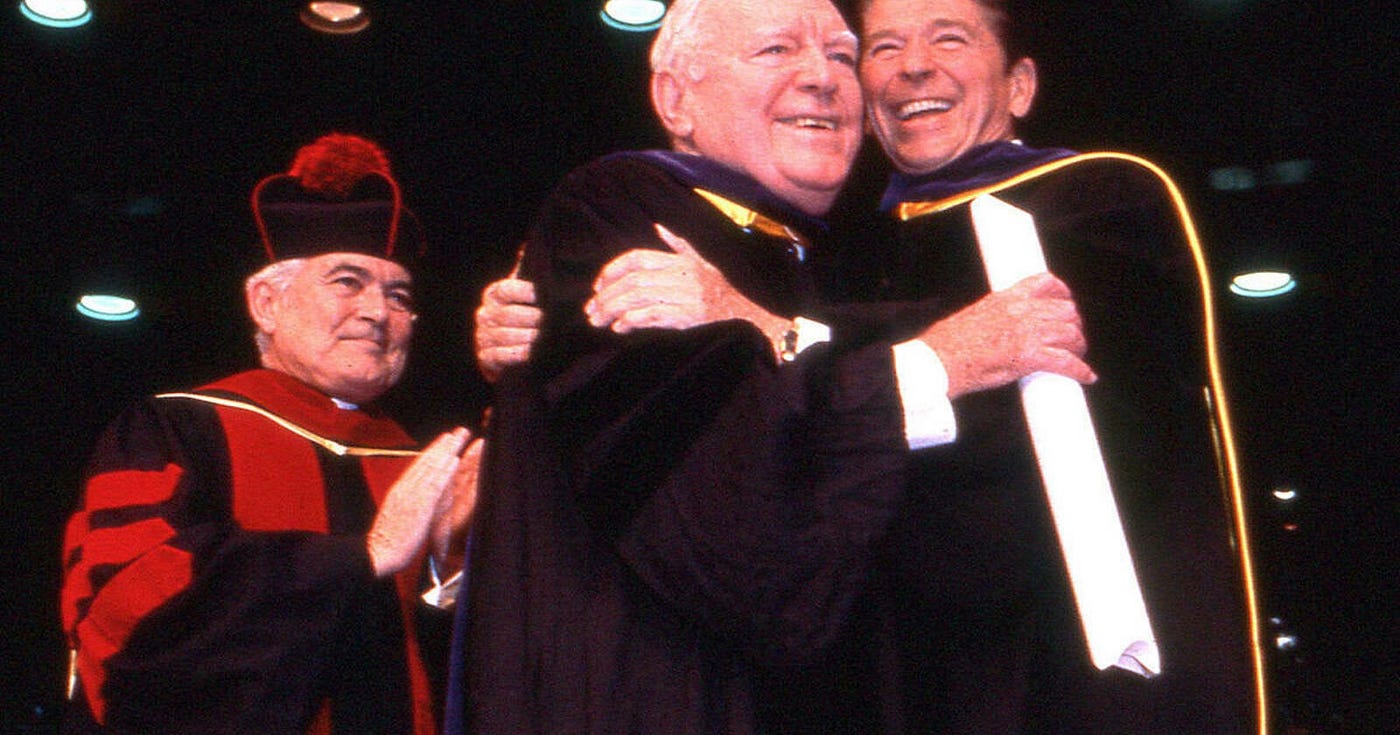
Then came one of those unforgettable Notre Dame moments. Father Theodore Hesburgh, our legendary president, conferred honorary degrees upon both Reagan and actor Pat O’Brien. The symbolism was perfect — O’Brien, who had portrayed Knute Rockne, and Reagan, forever remembered as “The Gipper,” standing together on our stage. The crowd went wild, the cheers echoing like the roar of a football Saturday in Notre Dame Stadium.
Reflections on Past Four Years
For me, it was overwhelming. I had just been commissioned as a U.S. Army officer the day before, had received my diploma, and was now witnessing history alongside my family and Mariann. I felt a profound sense of pride — not just as a new graduate, not just as a soldier, but as an American. It was a moment that fused together all of my identities: Notre Dame man, Army officer, and citizen of a country that, despite its trials, always found a way to rise.
As President Reagan spoke, I couldn’t help but reflect on my own journey. Four years at Notre Dame had taught me discipline, resilience, and the value of faith and friendship. Now, standing on the threshold of adulthood, commissioned as an officer, and armed with my diploma, I felt a surge of possibility. Reagan’s words about courage, responsibility, and service resonated deeply with me — not as abstract ideals, but as a call to action for my own life.
That day, surrounded by family, friends, and Mariann, I realized that the lessons of Notre Dame, the discipline of ROTC, and the support of loved ones had prepared me for whatever challenges lay ahead. It was not just a graduation; it was the beginning of everything I had worked for, a launch into a life I was ready to embrace with confidence, hope, and gratitude.
The Final Chapter of my Notre Dame Experience
Looking back, my senior year at Notre Dame was a whirlwind of challenge, growth, and unforgettable experiences. Between demanding academics, ROTC responsibilities, and the uncertainty of my future, I learned to balance discipline with perseverance, ambition with patience, and intellect with heart.
Mariann’s companionship, the support of my family, and the camaraderie of the Fisher Hall gang made every obstacle more manageable and every success sweeter. From the highs of football victories and the Tri-Military Ball to the sobering moments of world events and the exhilaration of commissioning and graduation, the year was a microcosm of life itself — intense, unpredictable, and profoundly rewarding. As I left campus for the last time, I carried not only a diploma and a commission but a sense of purpose, pride, and readiness for the next chapter of my life.