Chapter 22: My Senior Year at Notre Dame

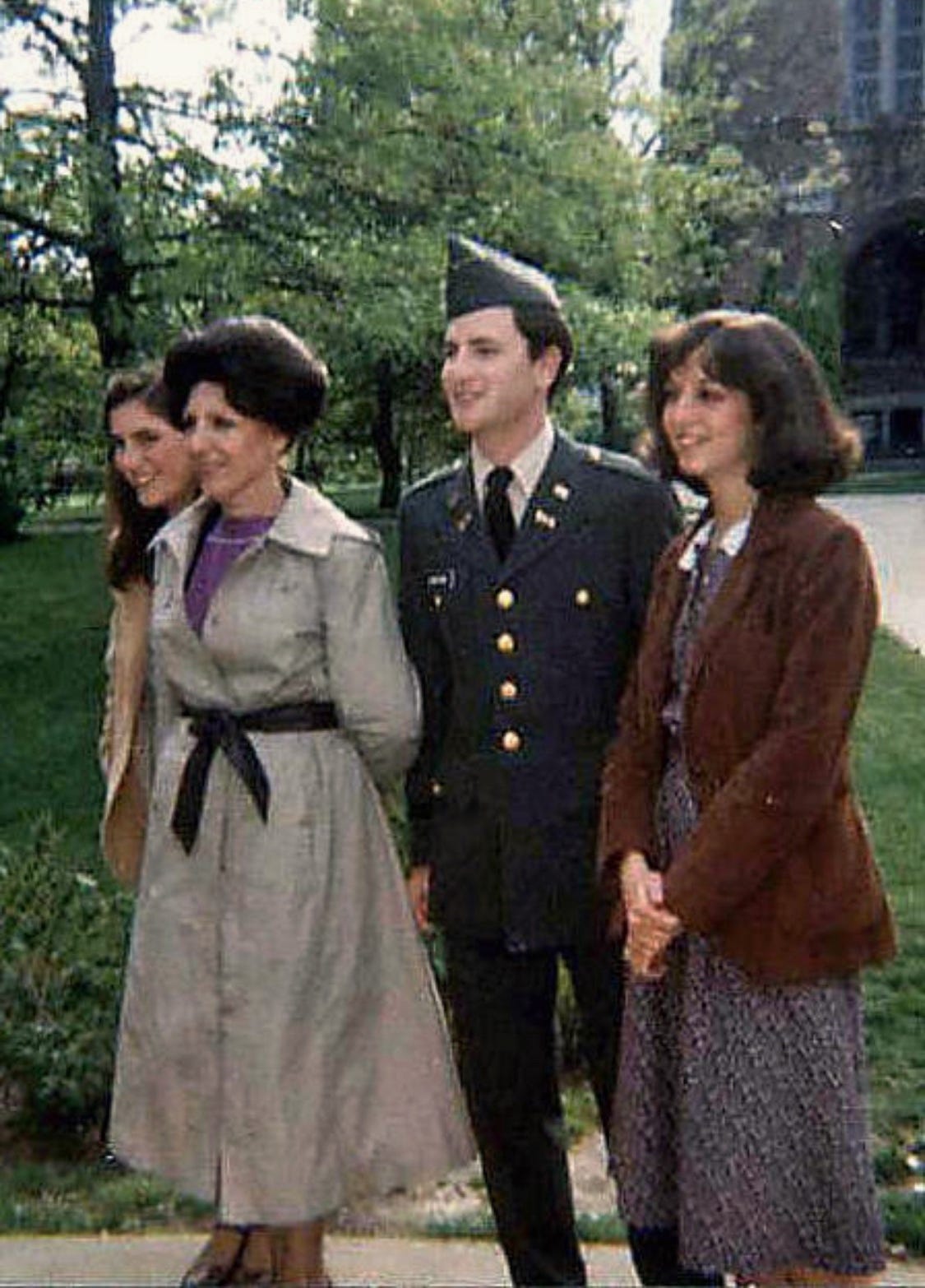
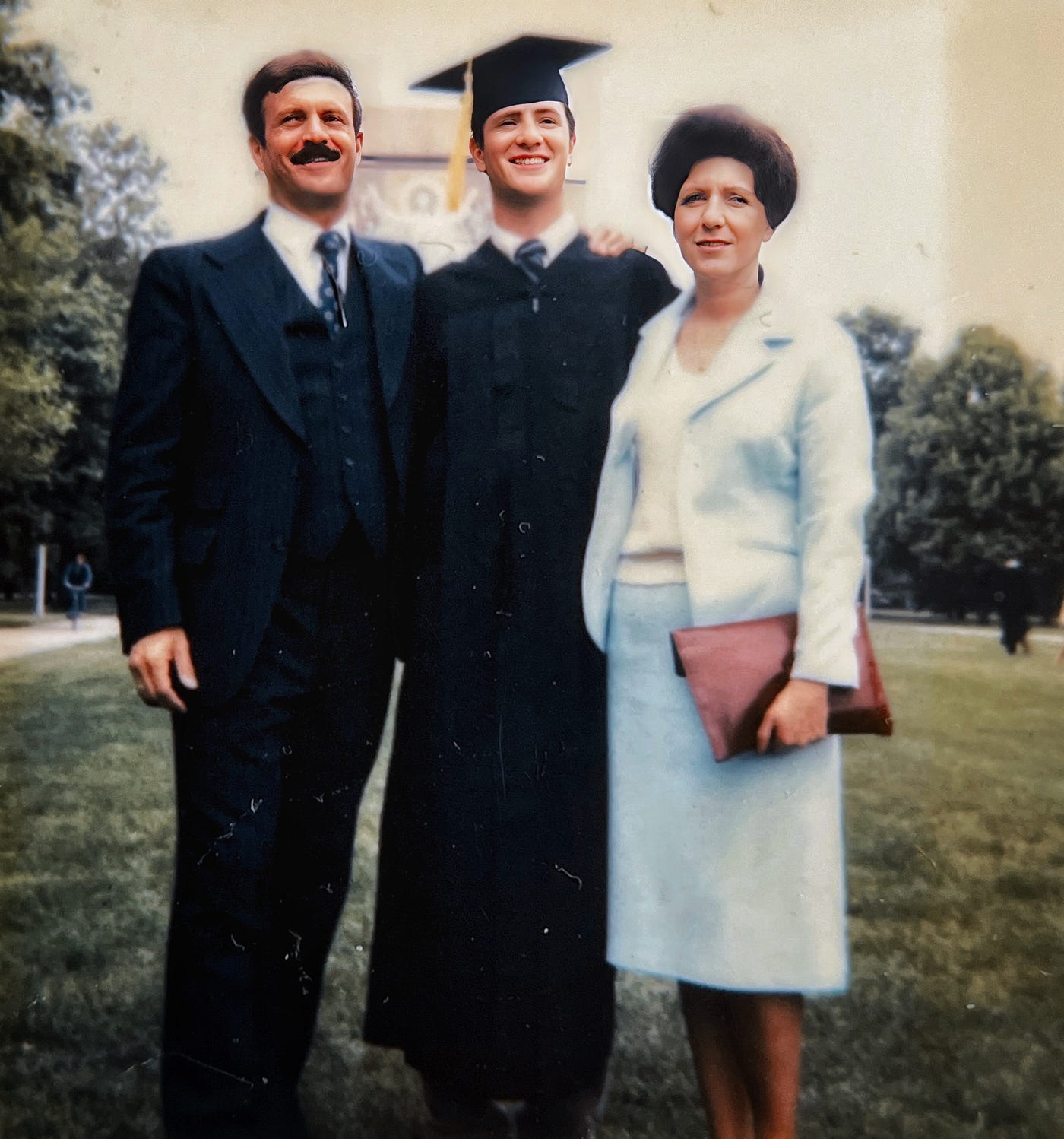
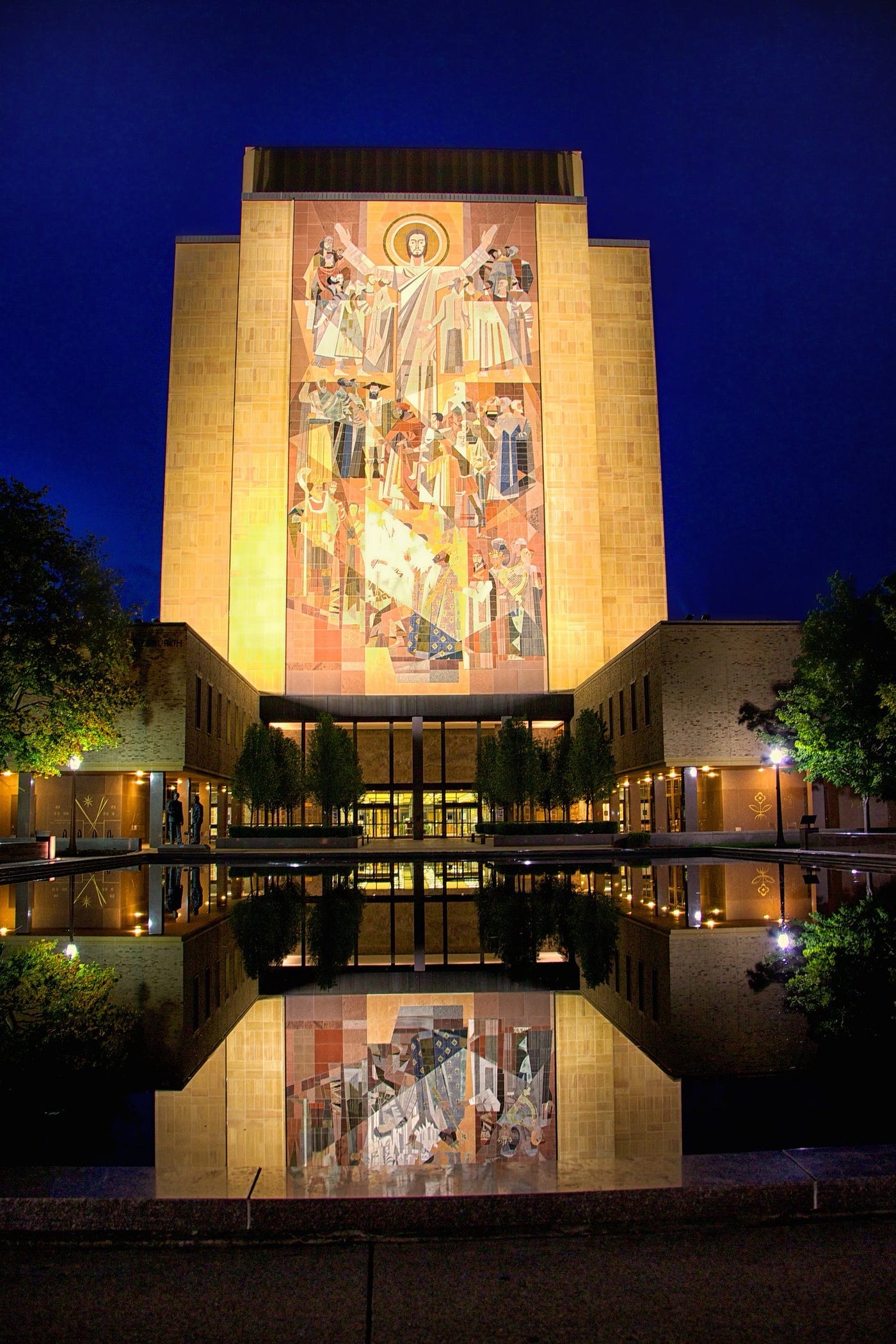
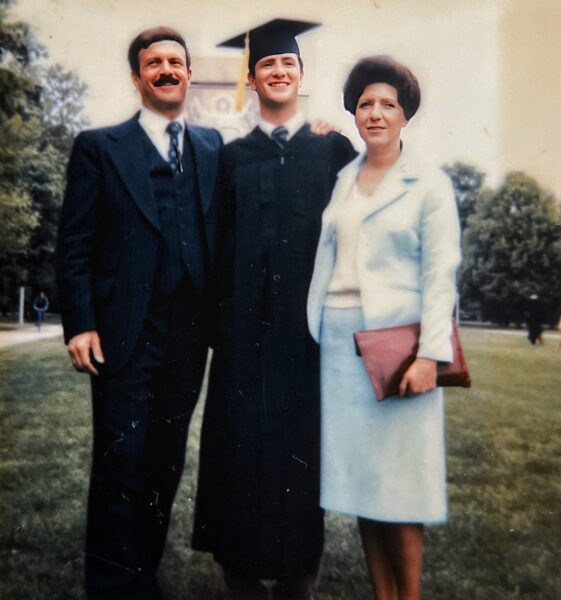
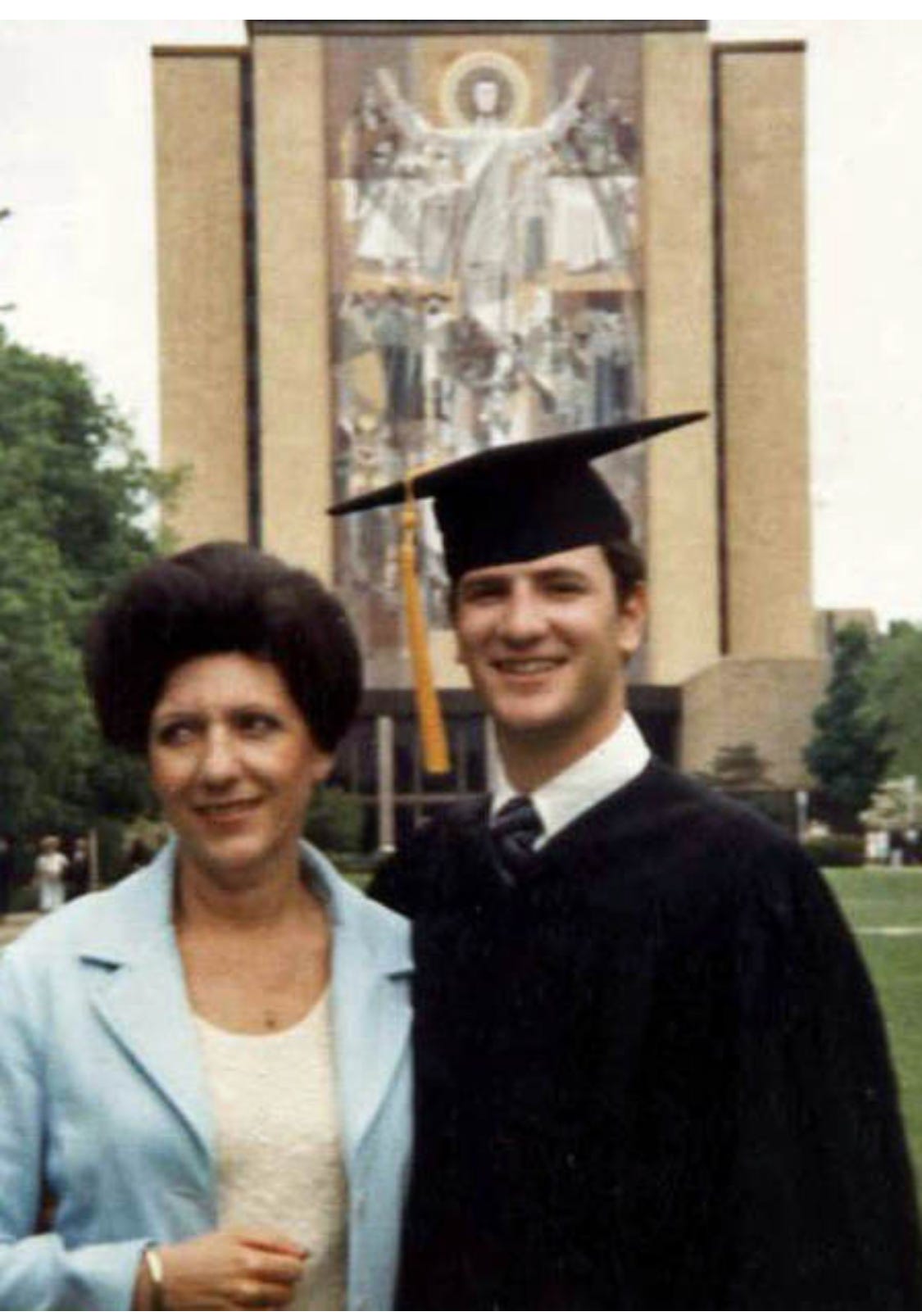
Photo of graduate Anthony J. Carbone with his parents Colonel Tony and Edda Carbone. In front of the Hesburg Library at the University of Notre Dame.

Believe Nothing You Hear, and Only Half of What You SeeA memoir of Service, Shame and the Search for Truth

Return to Campus

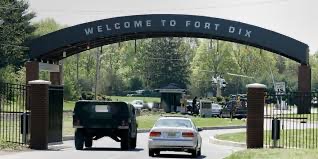
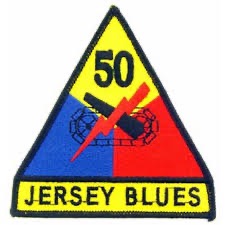
I returned to Notre Dame on Saturday, August 23, 1980, ready to begin my final year of college. I had just left my family at Fort Dix, New Jersey. My father had taken his new assignment as the Senior Army Advisor to the 50th Armored Division and the New Jersey National Guard. Saying goodbye carried a certain weight — this was it, my last year at Notre Dame. In many ways, the year that would set the course for what came next.
Back to Campus and Fisher Hall

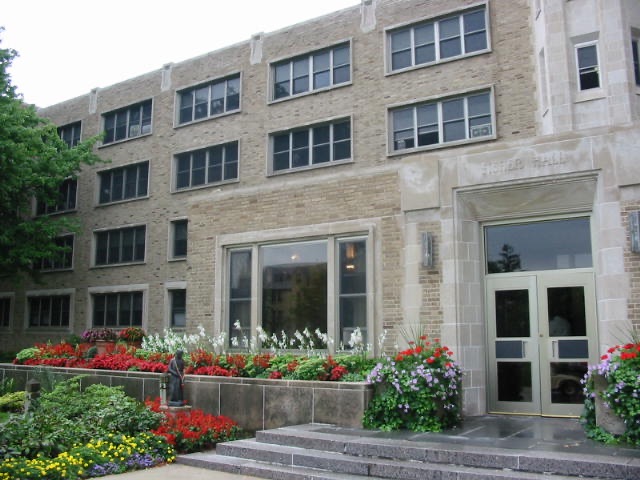
By now, I had the routine down. Arrive at Fisher Hall. Reconnect with the Fisher Hall gang. Track down Mariann at Lyons Hall. Dinner at South Dining Hall with everyone together again. Pick up my belongings from storage and turn Room 221 of Fisher into my bachelor’s pad for the year. It felt comfortable, familiar — like slipping back into a well-worn groove.
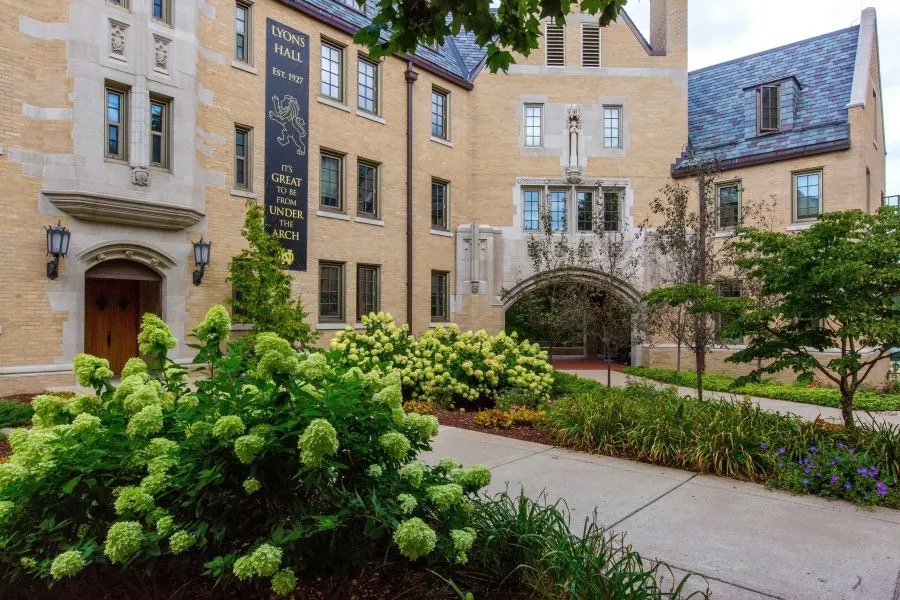
The Fisher Hall Gang

Returning to Notre Dame and Fisher Hall for my final year felt like coming home to a band of brothers. We had our tight-knit Fisher Hall gang: Bob Terifay, my fellow pre-med senior. Andy CordesAl Emory, and Chris Kane, all senior engineering majors. Matt Bedics, our senior philosophy mind. Scott Olds, our pre-med junior genius. And Joe DeLaney, our sharp-witted pre-law junior.

We weren’t just classmates — we were a crew bound by late-night study sessions, endless banter in the hallways, and a shared love of Notre Dame traditions. Adding to our circle were the three steady girlfriends. I had Mariann Schmitz. Andy was with Ginger Miklausen. And Joe with Bernadette Young. All three couples would go on to marry soon after graduation. Which made our Fisher Hall gang feel even more like a family.
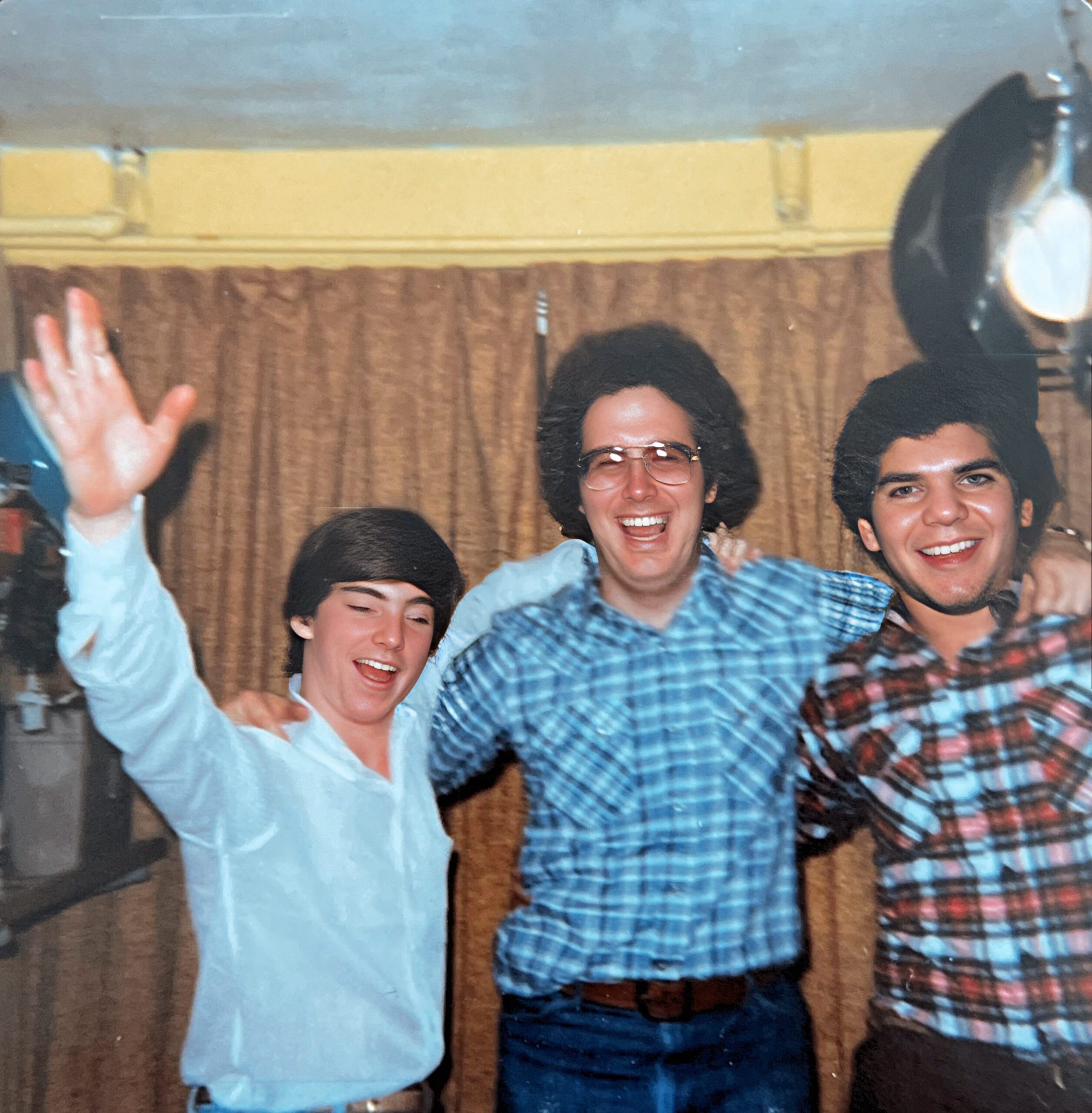
Photograph of 3 young men from Fisher Hall, University of Notre Dame.  Friends of Dr. Anthony J. Carbone.

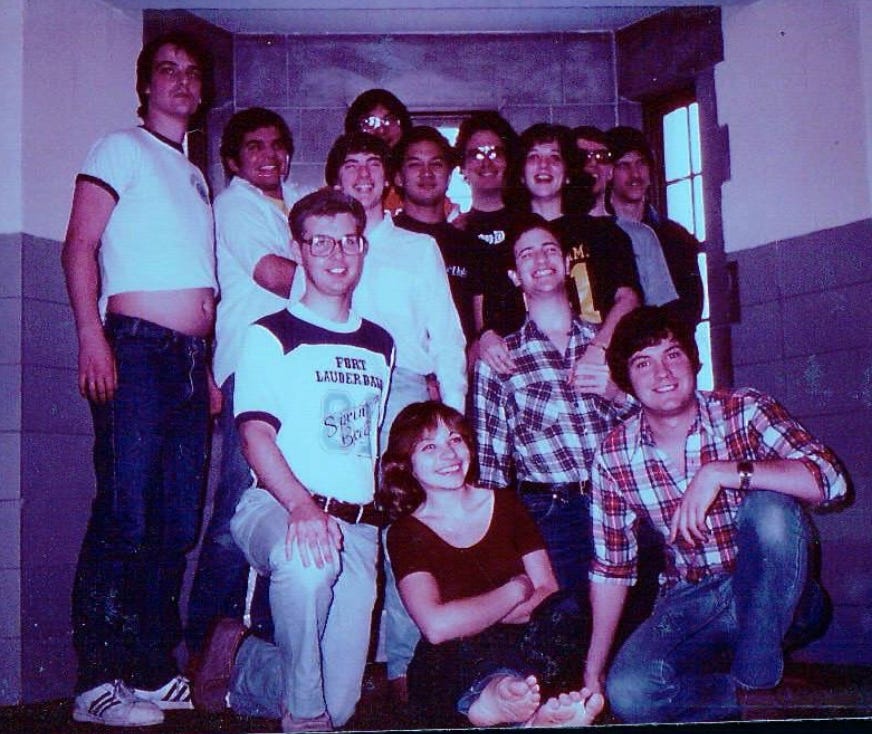
Group photo of Fisher Hall Gang at University of Notre Dame.  Anthony Carbone with Mariann Schmitz.  Andy and Ginger Cordes.

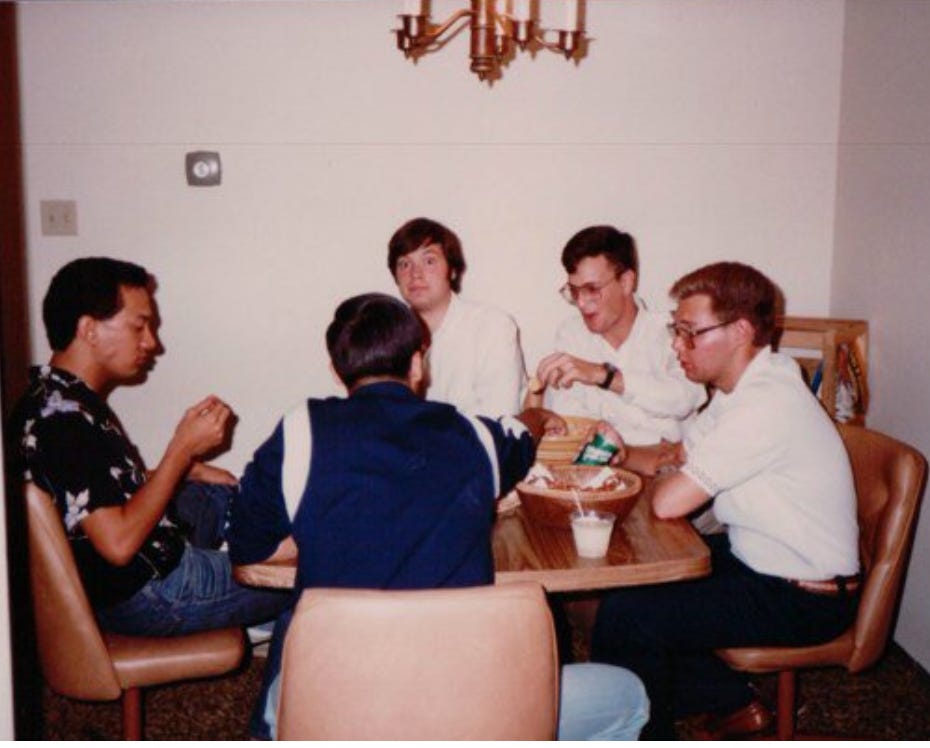
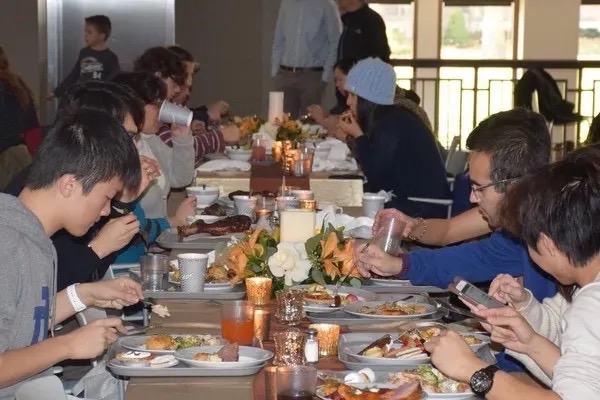
Fisher Hall gang at small dinner table.  Anthony J. Carbone with Andy Cordes and Scott Olds.

Registration Day

Monday, August 25, was Class Registration Day. My schedule ended up being a mix of heavy requirements and a few breaths of relief. Only two science courses first semester — Embryology (BIOL 301) with its demanding laboratory, and Physiology Lab (BIOL 344L). I signed up for Medical Ethics(THEO 344), a required English class on the Novel (ENGL 322). And, for my one true elective, Introduction to Music (MUS 220). That music class would turn out to be the only course where I could truly relax.
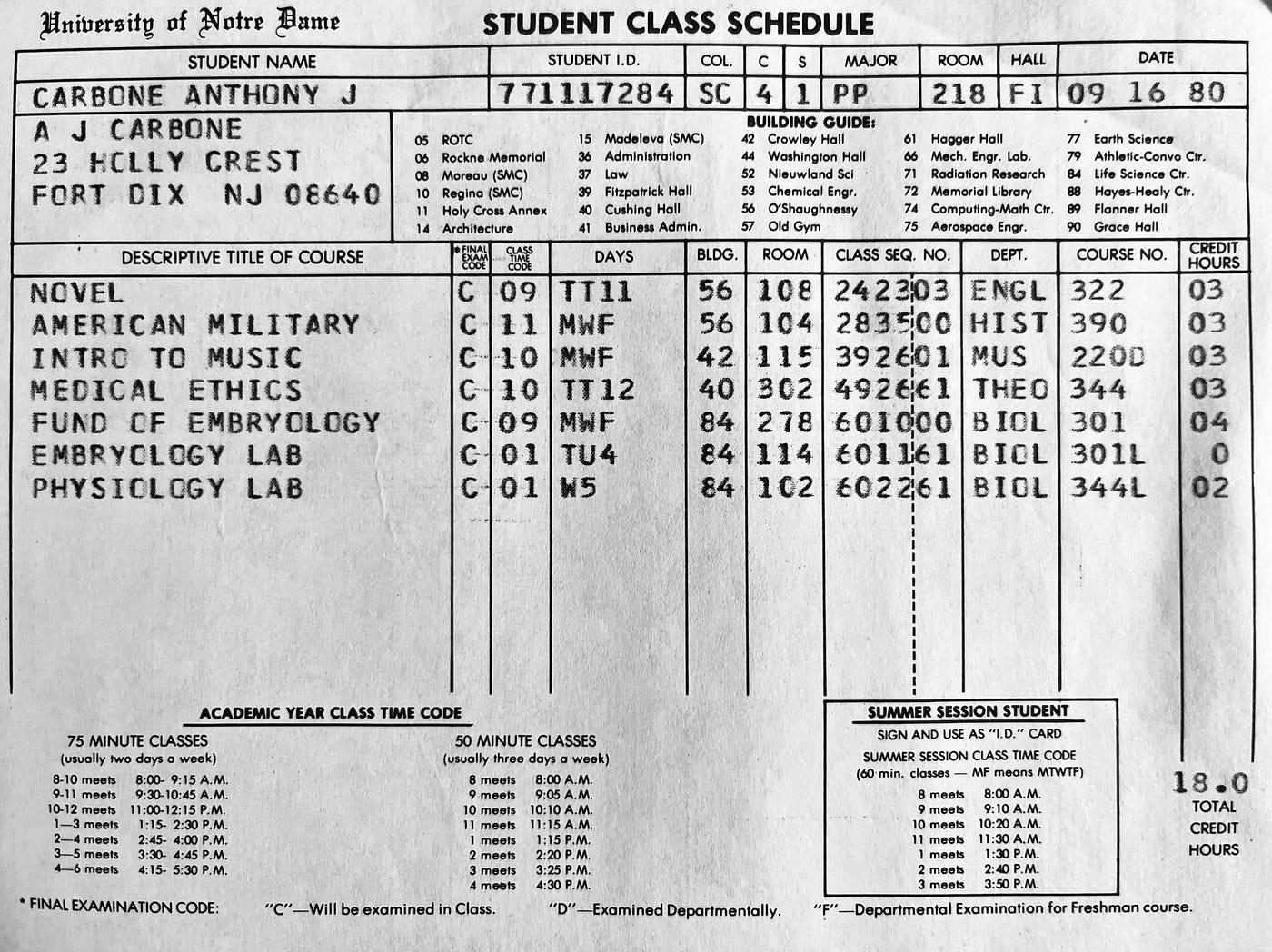
University of Notre Dame Student Class Schedule for Senior Year First Semester. Courses include Embryology with Lab, Physiology Lab, American Military History, Novel, and Intro to Music. Biography of Dr. Anthony J. Carbone.

ROTC and Military History

ROTC senior year was every bit as demanding as junior year, only in a different way. Last year, I had been preparing myself for ROTC Advanced Camp. This year, the responsibility shifted — I was the one preparing the junior class cadets for their turn at Advanced Camp. On top of that came my academic load. American Military History turned out to be one of my most difficult courses. I found both the professor and the material fascinating, but the exams were brutal. My learning disability with rote memorization — names, dates, and battles — was exactly the foundation of the course. No matter how hard I studied, the details slipped through my fingers. The tests felt like uphill battles every time.
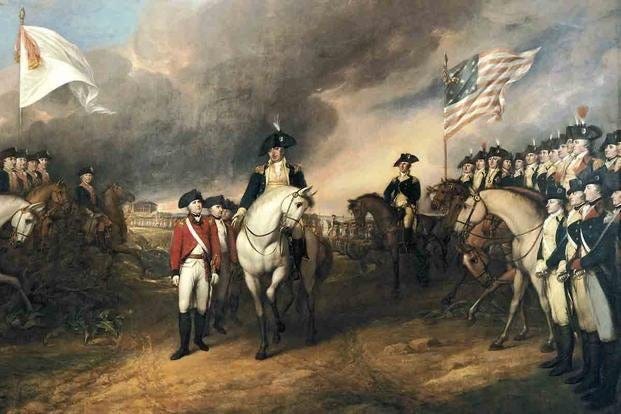
Painting of British Major General Charles Cornwallis surrenders his army at Yorktown, the U.S. Army’s first — but not last — overall war victory. Biography of Anthony J. Carbone.

Senior Year ROTC Position

As part of the ROTC routine, I had to report to the Professor of Military Science (PMS). We reviewed my evaluation from Advanced Camp at Fort Riley over the summer. My rating came back in the Top 1%. The PMS wasted no time asking if I wanted to be the next Fighting Irish Battalion Commander. It was the most coveted position for a senior cadet — prestige, responsibility, recognition. For many, it was the crown jewel of the ROTC program. But I turned it down.
The truth was, I had been wrestling with this decision for weeks. This was my last chance to raise my GPA before applying to medical school. I knew that taking on the role of Battalion Commander would be all-consuming, and I couldn’t afford the distraction. In the moment, it felt like the disciplined and practical choice — but it was a decision I later came to regret. The cadet who grabbed the title after me seemed to take delight in treating me like a brand-new recruit for the rest of the year. And the PMS, perhaps disappointed in me, seemed to punish my decision by assigning me only the rank of Cadet First Lieutenant.
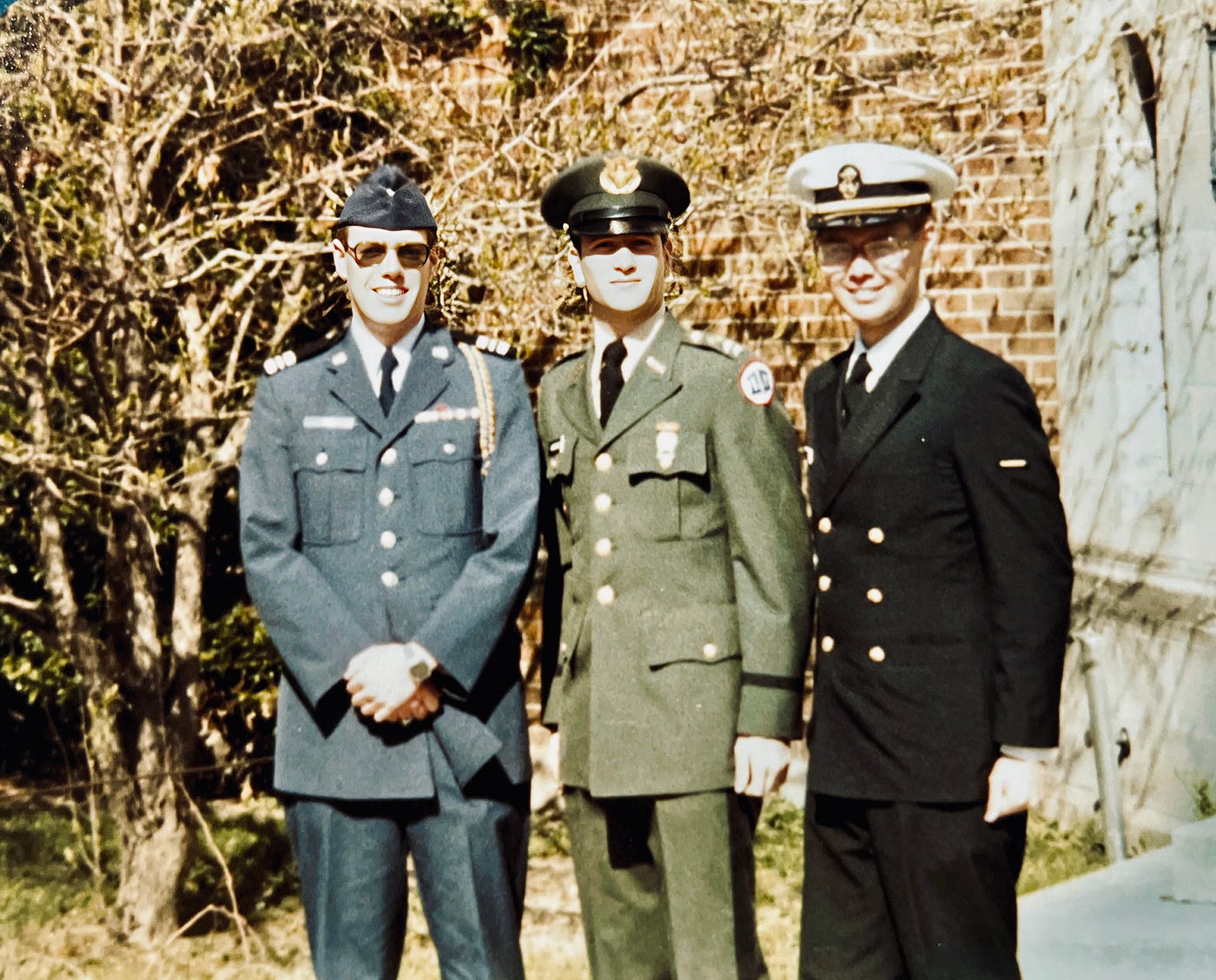
3 ROTC cadets in dress uniform in front of Fisher Hall at the University of Notre Dame.  Anthony J Carbone (Army), Chris Kane (USAF), and one US Navy midshipman.
Three Fisher Hall Section ROTC Cadets

Despite everything I had accomplished in ROTC and in my academic life up to that point, I carried a quiet but persistent lack of confidence. It didn’t make sense — I had proven myself again and again — but deep down, I couldn’t quite shake it. Partly because my father was intent on teaching me humility, to the point that it choked out any developing confidence.
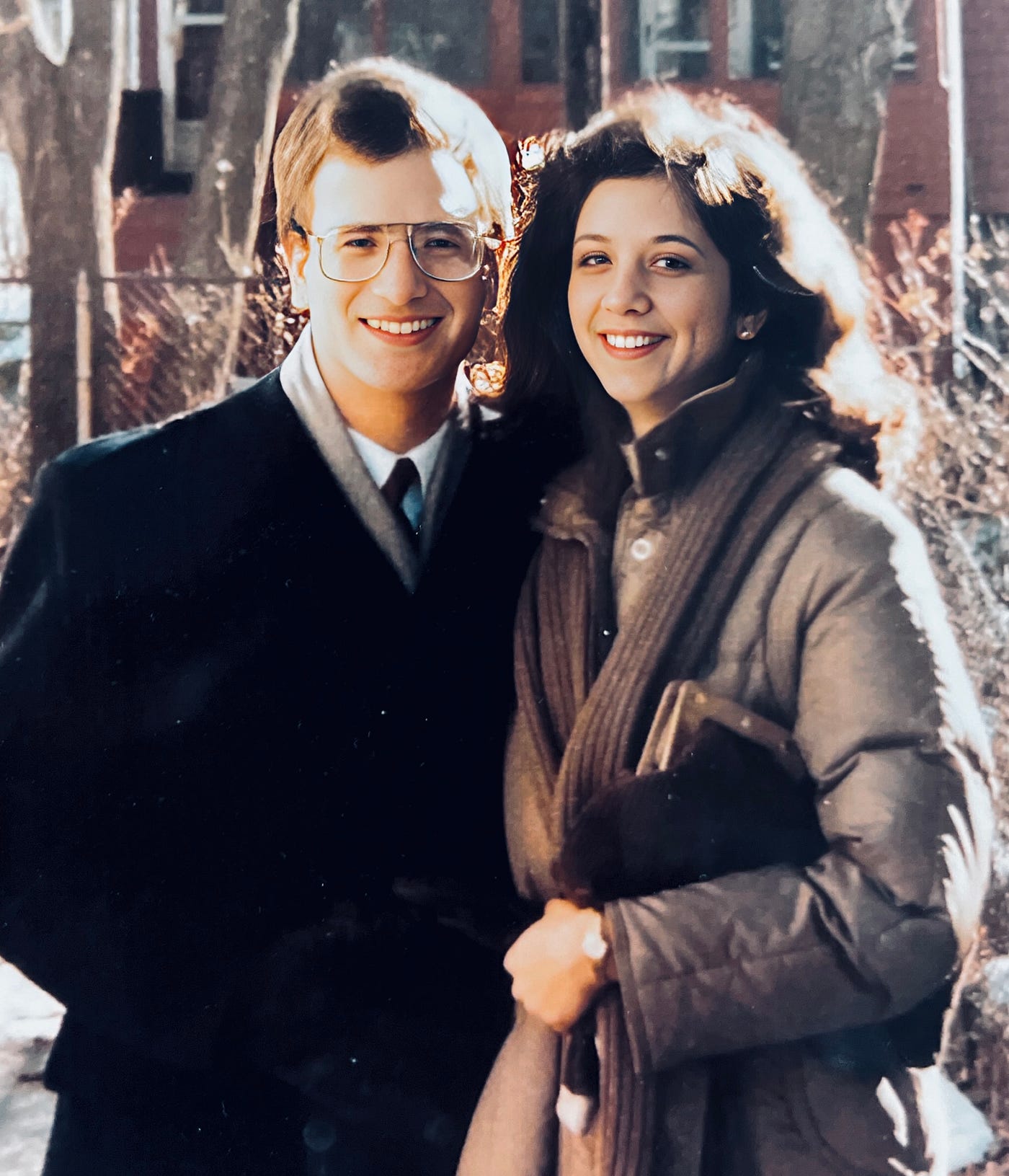
Photograph of Anthony J. Carbone with Mariann Schmitz in winter coats with scarves.
With Mariann Schmitz

Senior Year with Mariann

Mariann was at the center of my senior year. We were more than just a couple — we were companions in the truest sense. Ours was not a relationship defined by drama or passion alone, but by a steady closeness that anchored me. She understood me in ways no one else did, and she had a calming presence that quieted the anxieties I often carried.

Except for classes and the restrictions of parietals, we were inseparable. We studied together in my room every day, we ate every meal together, and we moved through campus life as a pair. In many ways, she completed me, filling in the gaps where I lacked confidence or balance. By then, even our families had begun to know each other, which only deepened the sense that what we shared was lasting and real.

Senior Year Missions

In my senior year, I focused on two missions: first, raising my overall GPA to boost my chances of getting into medical school, and second, preparing to commission as a U.S. Army officer.

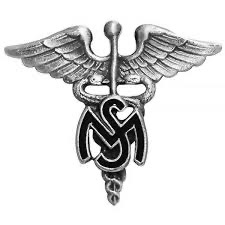
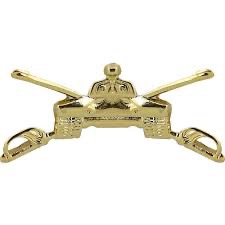
For ROTC, I had to submit my branch preferences, and I listed them in order as Military Intelligence, Medical Service Corps, and Armor. Then came the assignment location choices. If I had my way, it would be simple: (1) Germany, (2) Germany, (3) Anywhere in Europe. The Army would give me its answer soon enough.
The bulk of my mental energy that autumn was spent trying to raise my GPA while I waited for an interview from any of the medical schools I had applied to. It was an endless waiting game. Every day I checked my mailbox in Fisher Hall, hoping for a letter that might finally open the door to an interview. The uncertainty gnawed at me. Most nights I prayed at the Grotto with Mariann, asking God to guide my path and steady my nerves. My classmates seemed to be coasting through their senior year with light schedules and carefree weekends, while I carried the heavy weight of not knowing whether my dream of becoming a doctor would ever get off the ground.

Ronald Reagan is Elected President

The semester flew by because I was so busy balancing academics, ROTC responsibilities, and the endless cycle of medical school applications. In the midst of all this, the country was caught up in the 1980 presidential election. In November, Ronald Reagan won a landslide victory over incumbent Jimmy Carter, signaling a dramatic political shift for the nation. Even on campus, you could feel the change in mood — an undercurrent of renewed confidence and patriotism that matched the new decade just beginning.
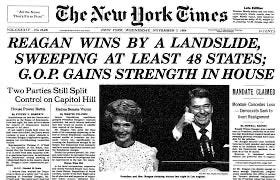

New York Times front page "Reagan Wins By A Landslide, Sweeping at Least 48 States; GOP Gains Strength in House."  Biography of Dr. Anthony J. Carbone.

Cover of Times Magazine with face of President Reagan with "A Fresh Start".  Biography of Dr. Anthony J. Carbone.

Thanksgiving 1980

Thanksgiving was a repeat trip to Mariann’s family home in Wheaton, Illinois. That year, Mrs. Schmitz decided to have the meal catered, which felt like a real treat. I slept downstairs again in John Jr.’s wood-paneled basement bedroom, complete with its enormous waterbed. Mariann’s roommate, Bernadette Young, joined us for Thanksgiving in Wheaton.
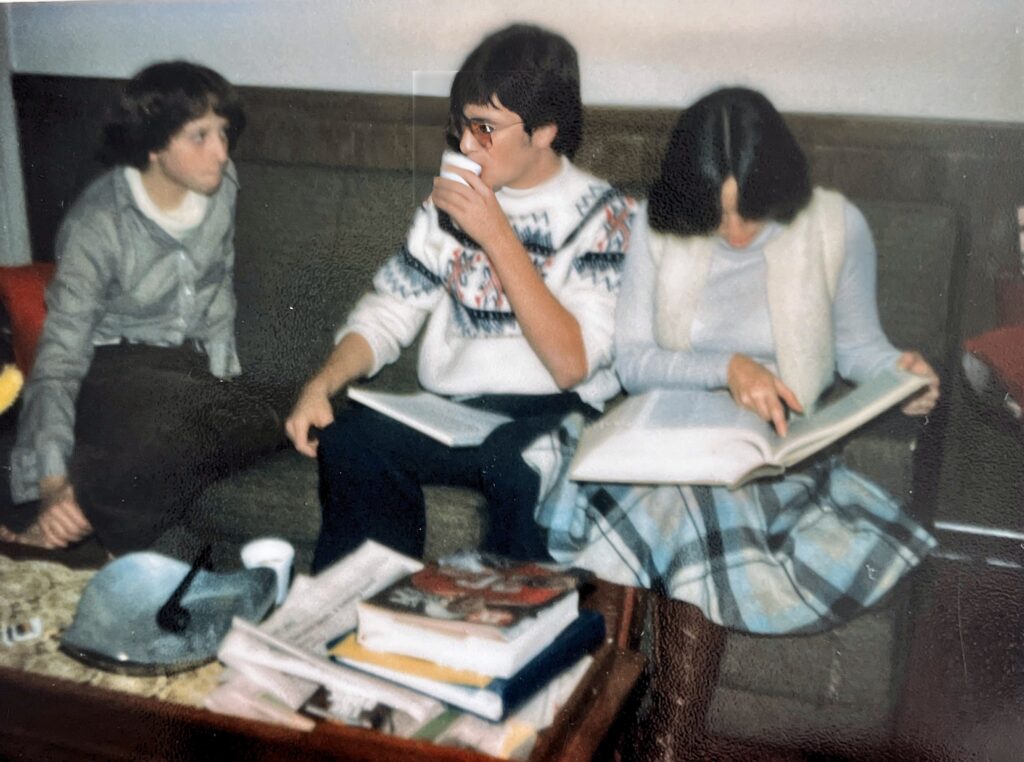
Photograph of 3 people sitting on a couch, one young man and two young ladies.  Biography of Dr. Anthony J. Carbone.
At Mariann’s house in Wheaton, Illinois, at Thanksgiving with her youngest sister, Jacqueline (to my right), and Mari’s roommate, Bernadette Young (to my left).

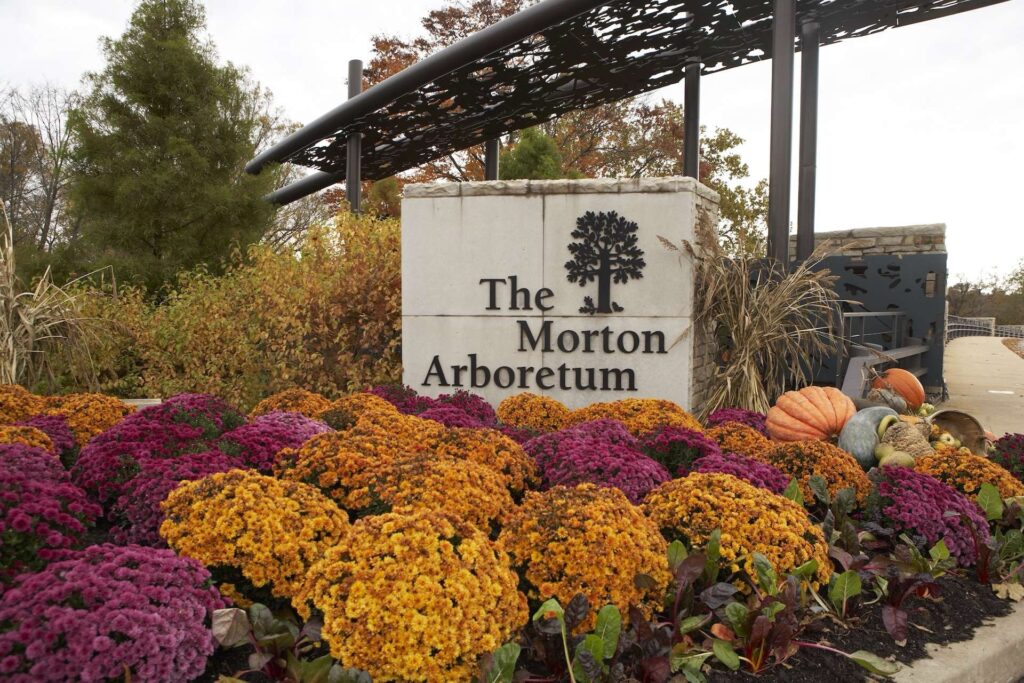
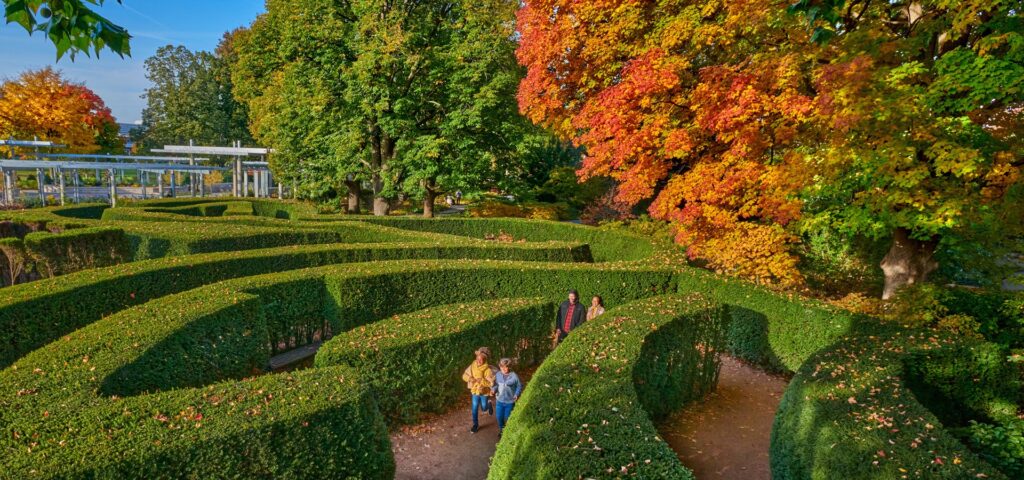
One of the highlights of the weekend was when Mariann and I drove out to the Morton Arboretum. Founded in 1922 by Joy Morton — son of Arbor Day founder J. Sterling Morton and the man behind Morton Salt — the Arboretum was created as an outdoor museum of trees and a center for tree research and conservation. It was the perfect place for a quiet walk together, surrounded by nature.
Fighting Irish Football

Notre Dame football in the fall of 1980 gave us plenty to cheer about. The highlight of the season was the dramatic victory over Michigan, sealed by a last-second field goal that had the whole campus buzzing for days. Saturdays were sacred for the Fisher Hall gang and our girlfriends. We would walk together across campus to the stadium, always stopping to watch and listen to the Band of the Fighting Irish perform for students and fans before the game. And always on the lookout for our Fisher Hall Irish Guardsman.
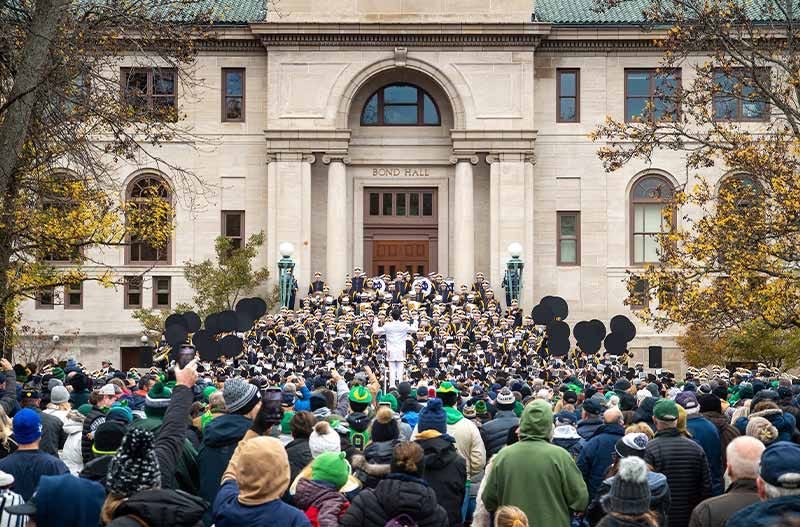
The Notre Dame Marching Band, founded in 1845, is the oldest university marching band in continuous existence in the country. From its beginnings as the Notre Dame Cornet Band, it grew into a symbol of spirit and tradition, playing at every home football game since the program’s very first in 1887. The sight and sound of the band — its drum cadence, the brass fanfares, and the unity of its formations — were an inseparable part of every football Saturday.
Fall Final Exams December 13–19, 1980

Fall Final Examinations ran from December 13–19, 1980, and they demanded steady effort from start to finish. My goal for the year was to raise my GPA for medical school applications, and I stayed focused on that. The sciences were as rigorous as ever — Embryology pushed my limits, while Physiology rewarded my persistence with an A. In Novels (English 322), I wrote a paper that came together better than expected, and in Medical Ethics (Theology 344) I faced one of those exhausting Blue Book essay exams, but came out with another A. Introduction to Music (Music 220) balanced the load with a course I thoroughly enjoyed, deepening my appreciation for the classics and revealing a growing fondness for the Baroque. The American Military History exam proved the most difficult, but I managed it better than I anticipated. Of course, my last examination fell on the final day — premeds were always the last to leave campus for the holidays. Step by step, course by course, the semester added up to real progress — exactly what I needed as medical school decisions drew nearer.

Christmas 1980 Vacation in Boston

Christmas Holiday 1980 ran from December 20 to January 12. I flew from South Bend to Boston Logan to spend Christmas and New Year’s with my family at my grandparents’ home in Medford, Massachusetts. My parents, Cynthia and Pamela, drove up from Fort Dix, New Jersey to join us. Lynne and Diana were both still in school in Boston, so they were already there when I arrived. As with most Christmas breaks, Christmas Eve and Christmas Day passed in a blur — I was running on fumes after weeks of final exam preparation.

Our Italian Christmas Traditions

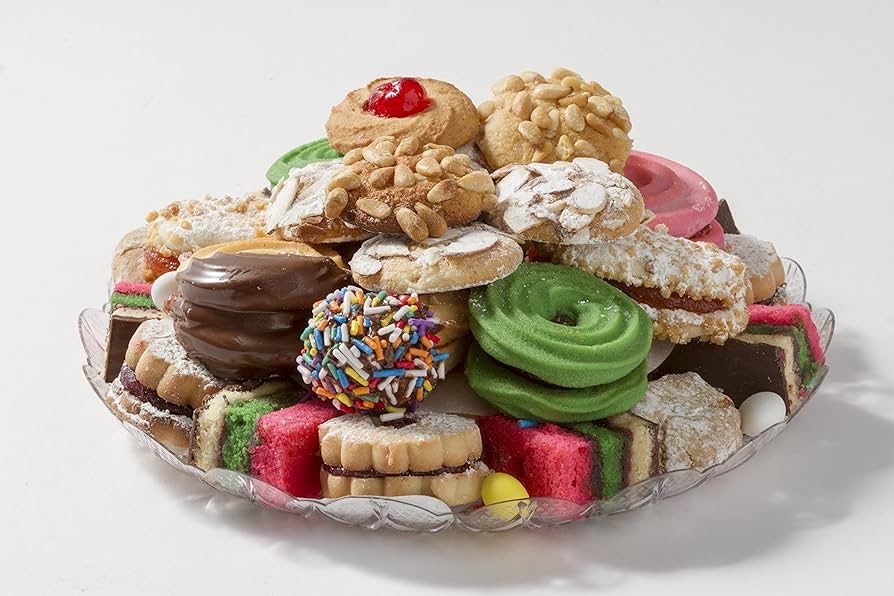
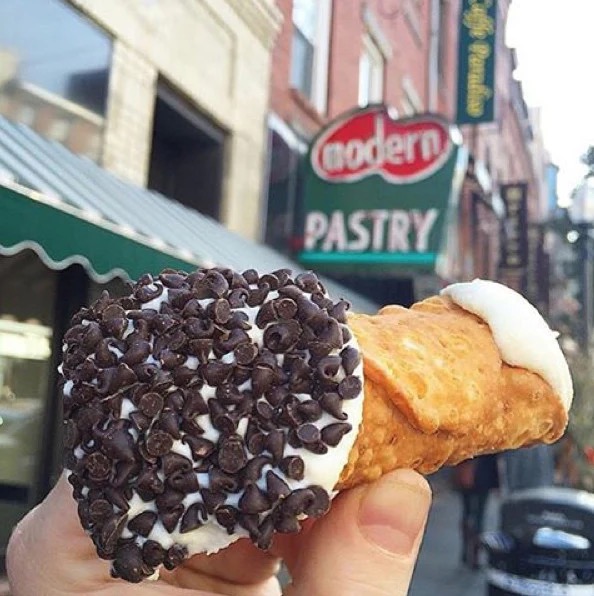
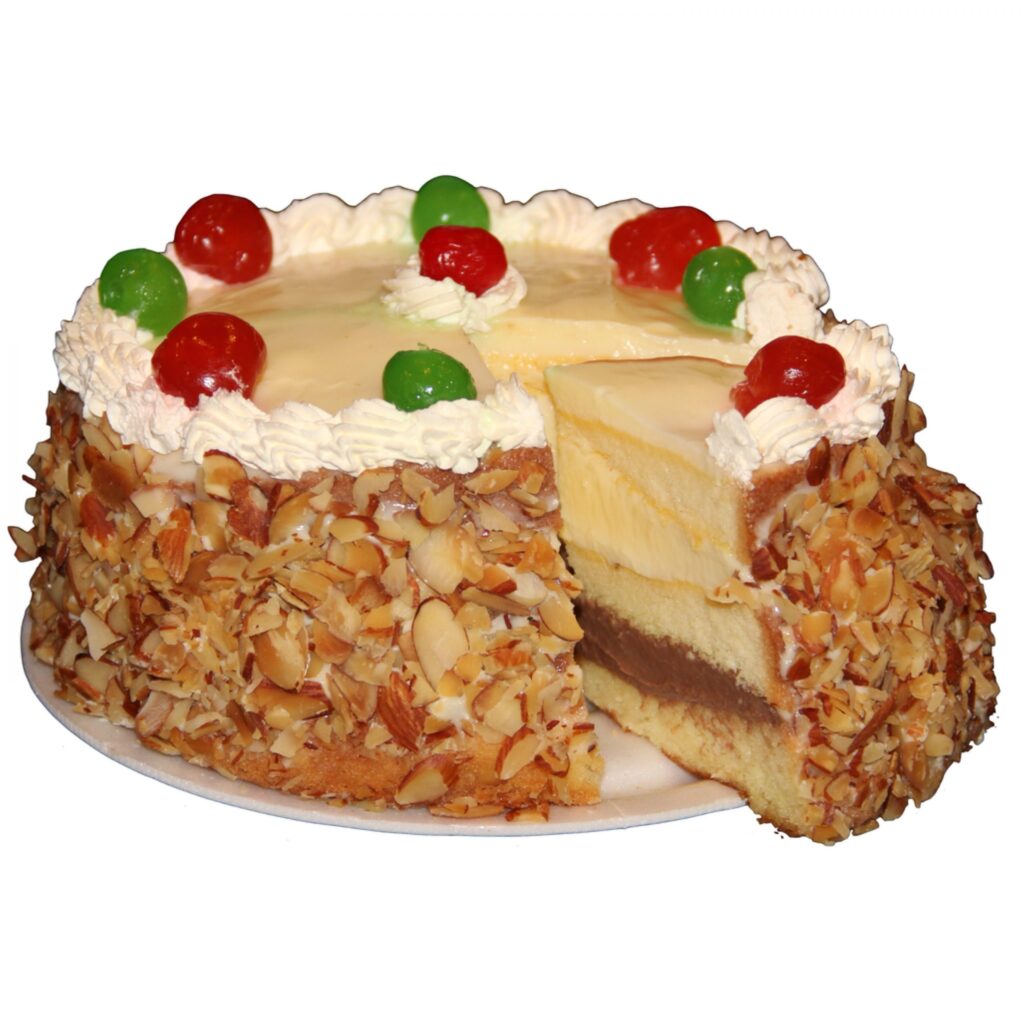
Still, the traditions were the same. On Christmas Eve, we gathered for the great Feast of the Seven Fishes with my aunts, uncles, and cousins. At midnight, we attended Mass at Saint Joseph’s Catholic Church — the same church where all of us had been baptized, where we received our First Communions, and where my sisters were married. Christmas Day brought another feast at Nana’s: roast turkey and roast beef, salad and fruit, then nuts, and finally desserts like cannoli, Italian cookies, and my mother’s favorite, Italian rum cake.
The Mike’s vs. Modern Pastry Debate

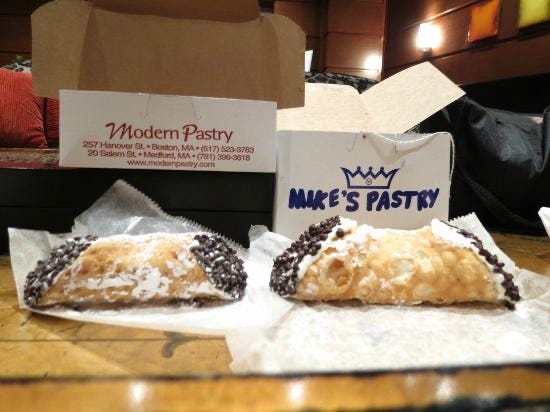
This would always lead us to the family debate on who makes a better cannoli — Mike’s or Modern Pastry. Having lived in Boston’s North End (the Italian section), I am partial to Modern Pastry.
What about medical school?

The holiday wasn’t without its stresses. Every relative seemed to ask the same question: Have you heard from any medical schools yet?” I hadn’t, and each time I was asked, the weight of uncertainty pressed on me a little more. On top of that, I was phoning Mariann a couple of times a day, racking up long-distance charges. By the end of the holiday, the phone bill was steep, and I was definitely in trouble for it.

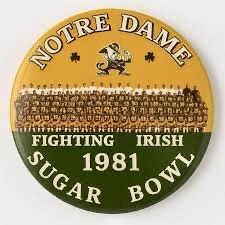
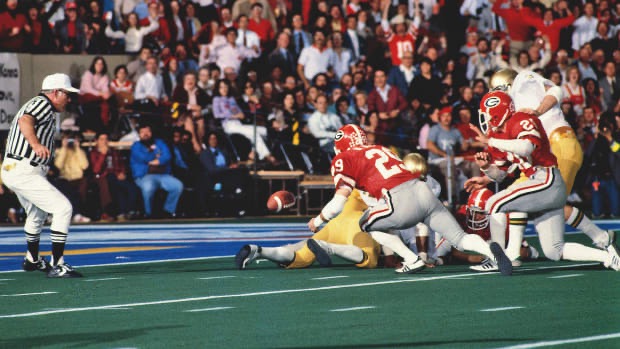
New Year’s was a quieter affair. In my family, it was never a grand occasion. We’d watch the ball drop in Times Square, share a hug and a kiss at midnight, and then be in bed by 12:30. The next morning, we went to Mass for the Solemnity of Mary, before turning our attention to football. On New Year’s Day, we gathered to watch Notre Dame face Georgia in the Sugar Bowl. A little over a week later, on January 11, I was back on the plane to South Bend, ready to begin the spring semester.

Sugar Bowl Notre Dame vs. Georgia (January 1, 1981)

That season under Coach Dan Devine, the Irish finished with a 9–3 record. The team capped its year with an appearance in the 1981 Sugar Bowl against Georgia. Hopes were high for a bowl victory, but Georgia’s freshman running back Herschel Walker proved unstoppable, and Notre Dame fell 17–10. It was a bitter ending to what had been an exciting season, but the tradition, pageantry, and sense of community that surrounded Notre Dame football remained unforgettable.
Return to Campus for my Final Semester

Flying back into South Bend in early January, I felt the familiar mix of anticipation and relief that always came with returning to campus. I hauled my bags into Fisher Hall, where I caught up with Bob, Andy, Al, Scott, and the rest of the gang — lots of handshakes, backslaps, and quick stories about our holidays.

But as always, the first place I really wanted to be was Lyons Hall, looking for Mariann. Seeing her again was the best part of returning to Notre Dame, and it made the long break apart melt away in an instant. That first evening back, we all headed over to South Dining Hall for dinner, trading stories and laughter as we settled back into campus life.

There was also a deeper current running beneath all the reunion energy. I knew this was the start of my final semester at Notre Dame — a place that, over four years, had become the longest I had ever lived anywhere in my life. That fact alone gave everything a little more weight. I was keenly aware that the semester would fly by, and that before long I’d be saying goodbye to good friends — some I might never see again. But I also knew I’d see Mariann again. That certainty brought a quiet comfort as I braced myself for the final stretch.

Spring Registration (January 13, 1981)

My last semester at Notre Dame, and at long last, a slightly lighter schedule. For the first time in four years, I wasn’t buried under calculus equations or the endless grind of organic chemistry. Instead, my final academic stretch looked almost enjoyable. I had just one core science — Comparative Anatomy (BIOL 302) with its inevitable laboratory component. ROTC was still part of the mix, with Military Management II (Military Science 412), sharpening us for commissioning only four months away.

To balance out the science and military, I registered for American Writers Survey (ENGL 383), where we dove into classics by Ernest Hemingway, F. Scott Fitzgerald, and Edgar Allan Poe, who once warned: “Believe nothing you hear, and only half of what you see.” Rounding out the schedule was Religion & Art (Philosophy 361), an hour each day spent studying breathtaking works of sacred art, and New Testament: Death & Afterlife (Theology 314), which promised to stretch both faith and imagination. By the time I graduated, I think I had a minor in Philosopy & Theology. And ROTC should count automatically as a minor in Military Science.
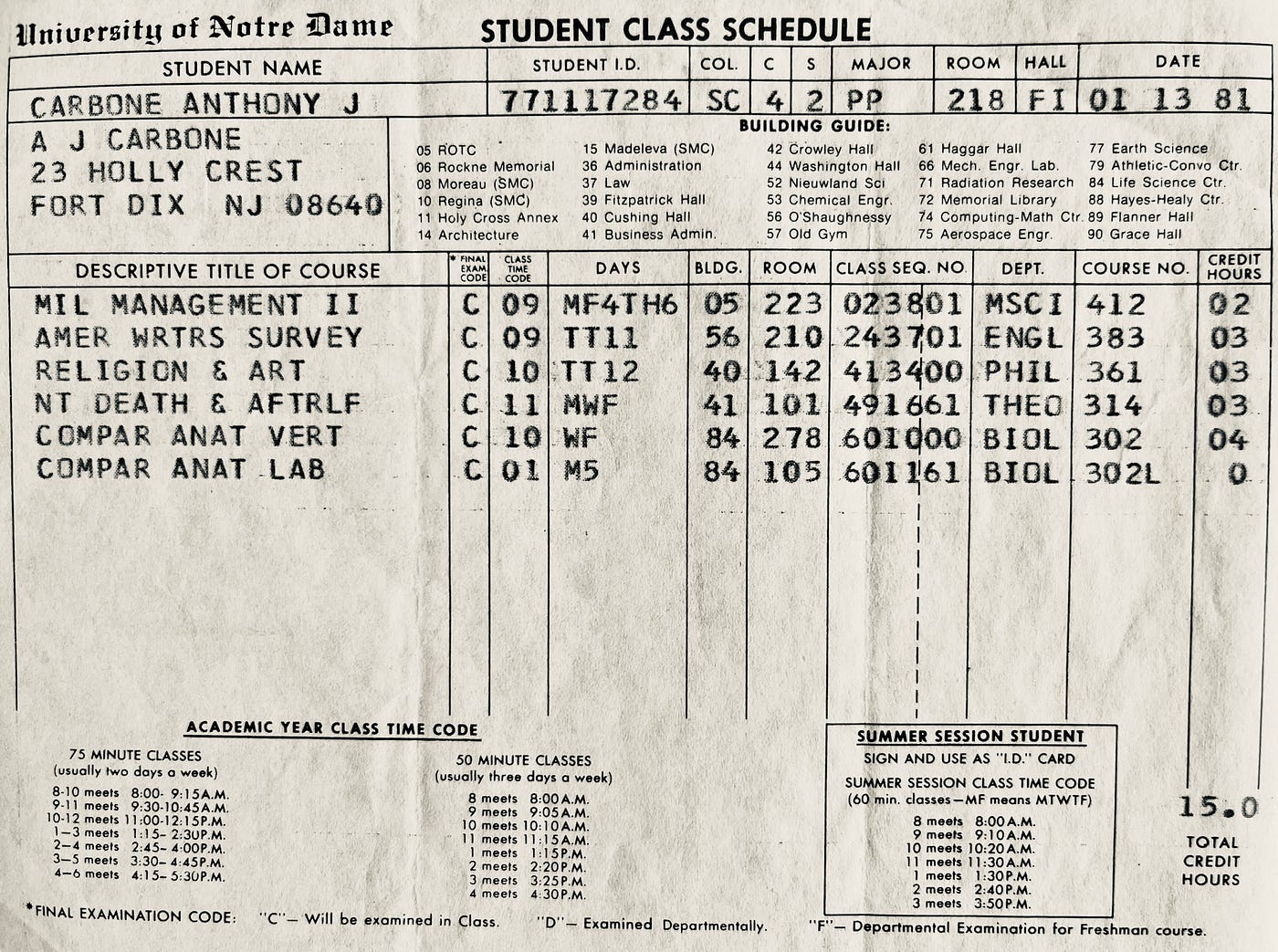
University of Notre Dame Class Schedule 4th Year 2nd Semester for Anthony J. Carbone. Courses include Comparative Anatomy plus lab, ROTC Military Management II, American Writers Survey, Religion & Art, and New Testament: Death and Afterlife.
Student Class Schedule for Spring Semester of my Senior Year at Notre Dame.

It was still a full load, but one that finally left me breathing room — a welcome change for a senior staring down the last lap of the race. More than anything, it gave me the chance to step back and enjoy the life I had built here: evenings in Fisher Hall with Bob, Andy, Al, Chris, Joe and Scott, long walks across campus with Mariann, and the daily rhythms of a place that had come to feel like home. I knew the months would fly by, but I wanted to make every one of them count.

Reagan Inauguration (20 January 1981)

On January 20, 1981, history unfolded as Ronald Reagan was inaugurated as the 40th President of the United States. It was a day marked by symbolism and change — the end of the Carter years and the beginning of what many hoped would be a new era of strength and optimism for the country.

Mariann and I gathered in the lounge of Fisher Hall with the rest of the gang to watch the inauguration on television. There was a sense of excitement in the room, mixed with the usual banter, but also an awareness that this was a turning point for America. Watching it together, with Mariann at my side and surrounded by good friends, tied the national moment into the fabric of my senior year.
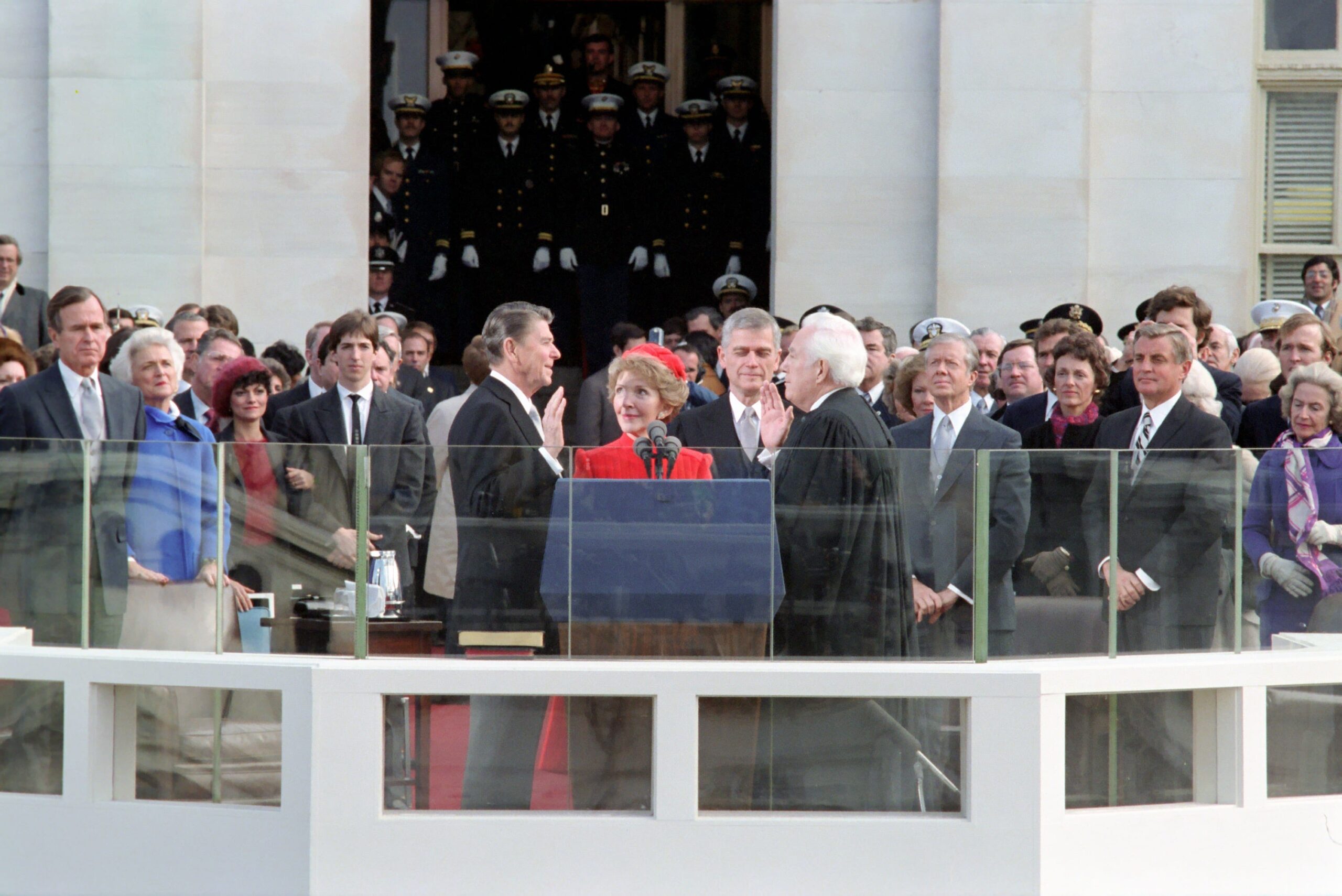

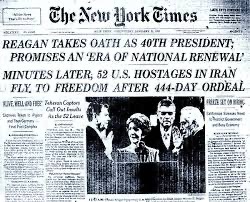
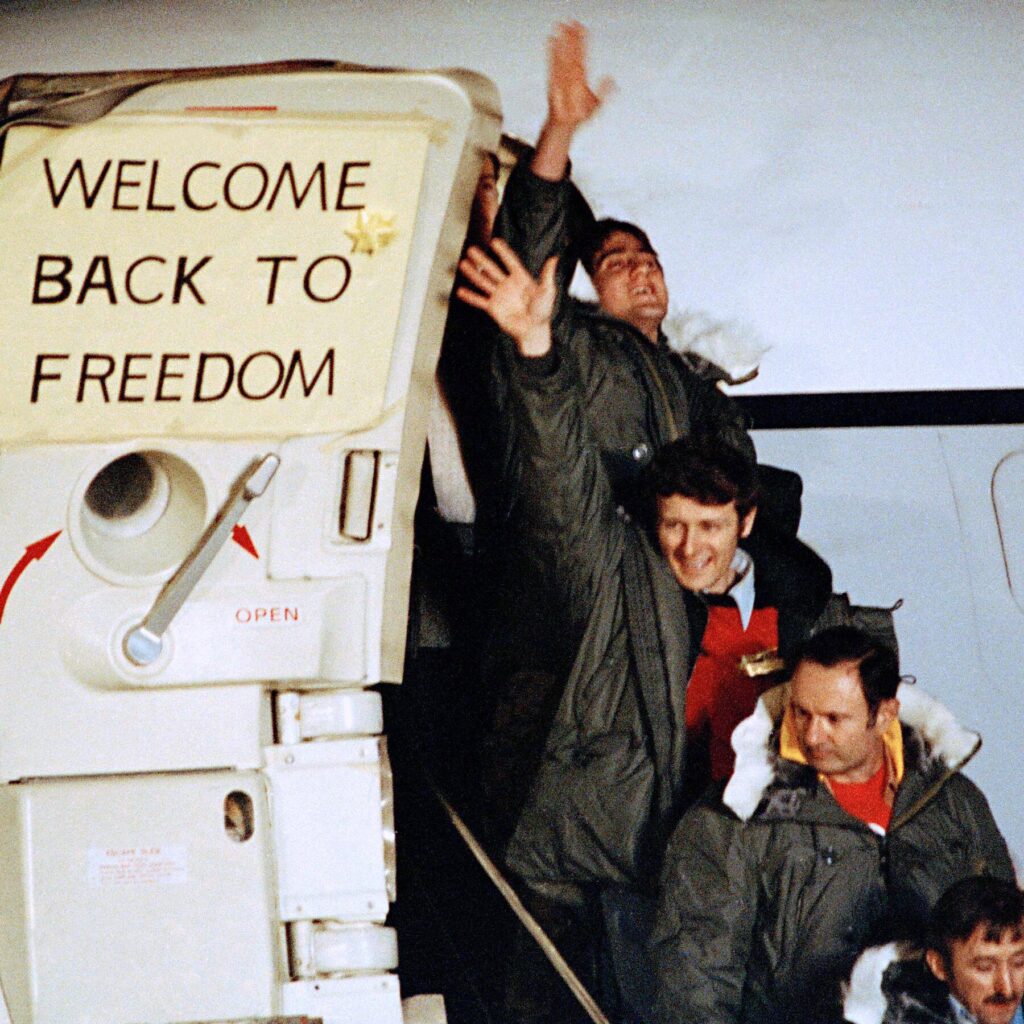
American Hostages Released From Iran After 444 Days

Just minutes after Reagan took the oath of office, the American hostages held in Iran for 444 days were released, adding even more drama to an already historic moment.
Tri-Military Ball (February 21, 1981)

On February 21, 1981, we gathered for the Tri-Military Ball, a joint celebration of Army, Air Force, and Navy ROTC. Of course, I took Mariann as my date. It felt good to wear my dress uniform, now adorned with the badges and awards I had earned at ROTC Advanced Camp the previous summer. But what made the evening truly special was walking into that ballroom with Mariann at my side. I was proud of her — not only for her beauty, but for her intelligence and social grace. Mariann was the kind of partner who made me feel completely at ease at any event. She remembered names when I couldn’t, and she had a clever way of getting people to introduce themselves first so I wouldn’t be caught in the awkward position of trying to recall them. She was, in every sense, my better half.
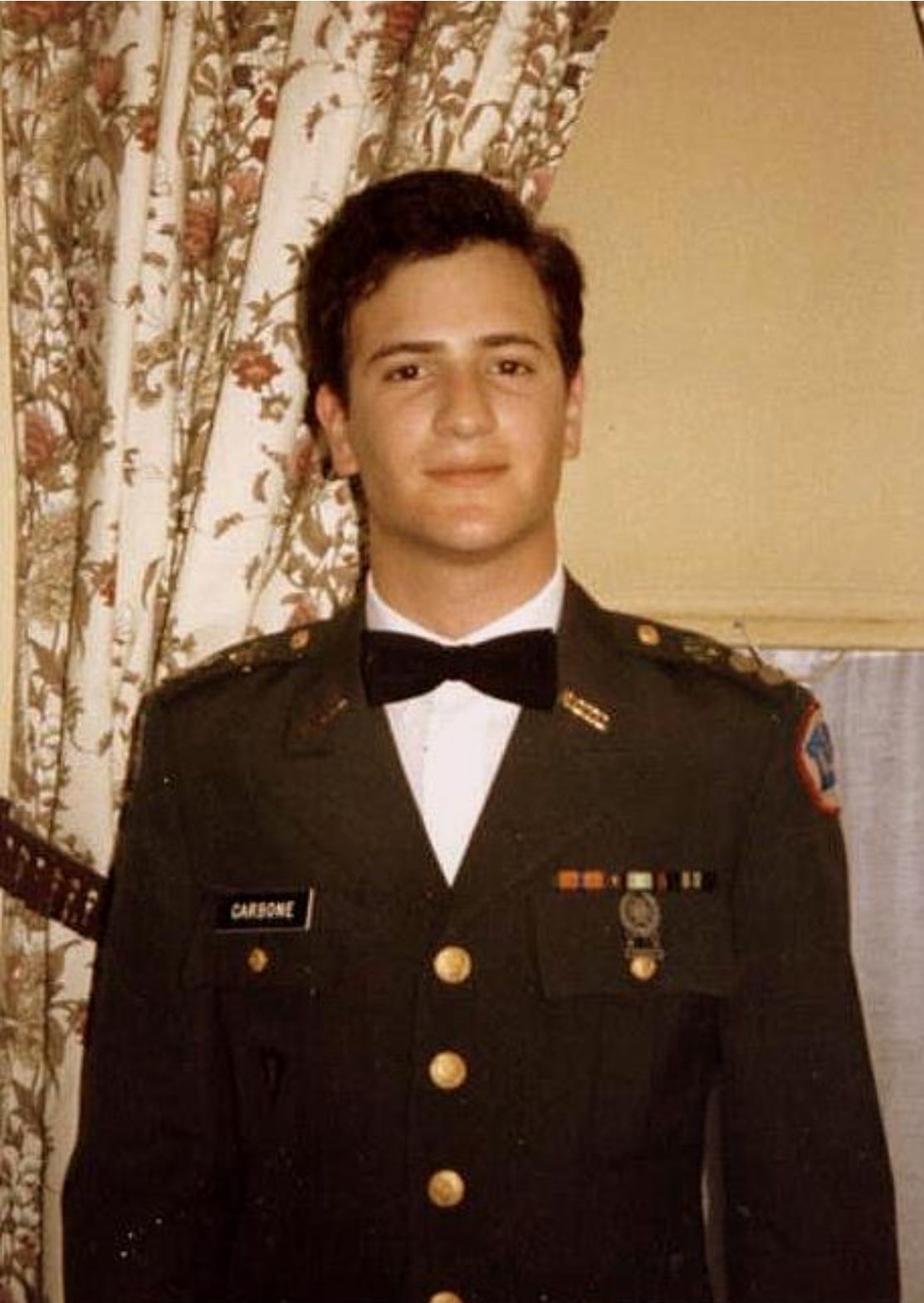
Army ROTC Cadet Lieutenant Anthony J. Carbone in dress uniform with ribbons and Expert Marksmanship Badge.
Taking Mariann to the Tri-Military Ball at Notre Dame

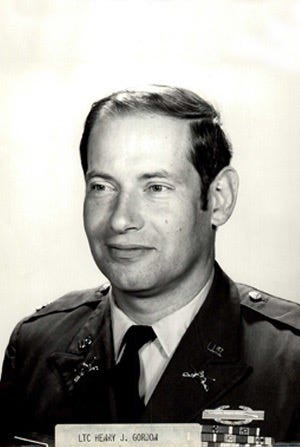
The night carried all the formality and tradition of the military, complete with the expected reception line. At the head stood our Professor of Military Science, Lieutenant Colonel Henry Gordon, with his wife at his side. As I stepped forward, he shook my hand and introduced me to his wife as “Cadet Bill Carbone.” I smiled and replied, “My name is Anthony. I’ve been your cadet for four years.” Then, as I turned to Mariann, I jokingly introduced her to him as “Sergeant Gordon.” The look of shock on his face was priceless, and Mariann laughed as I properly introduced her to Mrs. Gordon. That moment of humor broke the stiffness of the line, and together, Mariann and I carried the evening with the same warmth and confidence that made her the perfect date for any occasion.

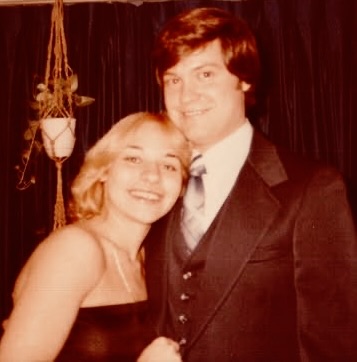
More of the Fisher Hall Gang
Assassination Attempt on President Reagan (March 30, 1981)

On March 30, 1981, the nation was shaken when President Ronald Reagan was shot and wounded by John Hinckley Jr. outside a Washington, D.C. hotel. I can remember the exact moment the news broke. I was in Comparative Anatomy Lab, where a few of us were goofing around with our specimens while the radio played music in the background. Suddenly, the broadcast was interrupted: “We interrupt this program for a special news bulletin. President Reagan has been shot in an attempted assassination attempt…” The room fell instantly silent. Reagan had been struck by a bullet that narrowly missed his heart, but he recovered quickly and reassured the country with his resilience and humor.
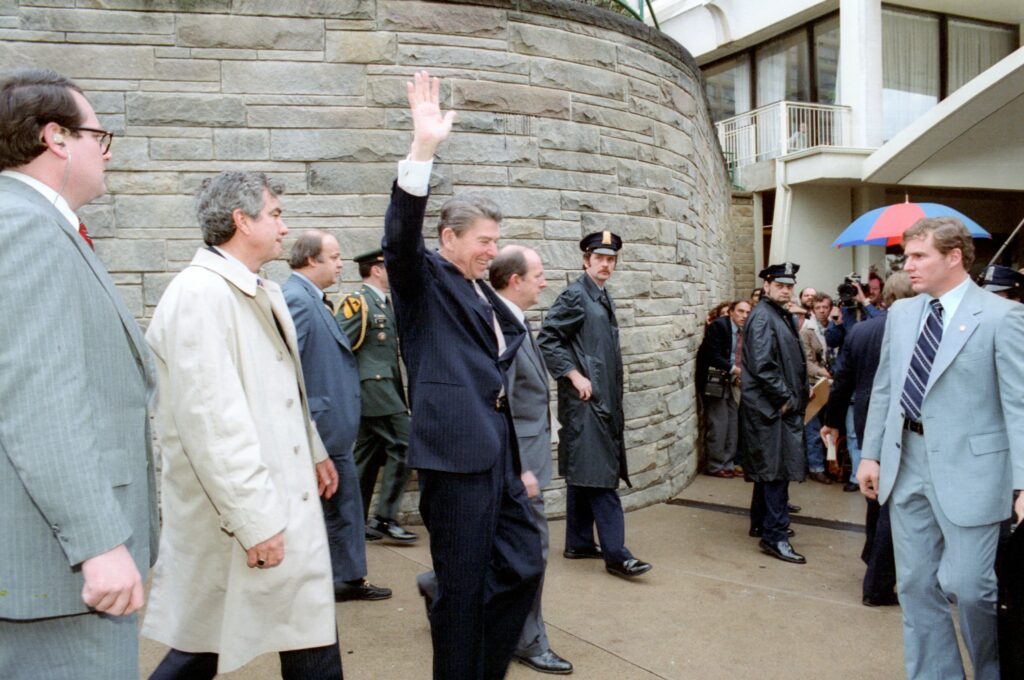
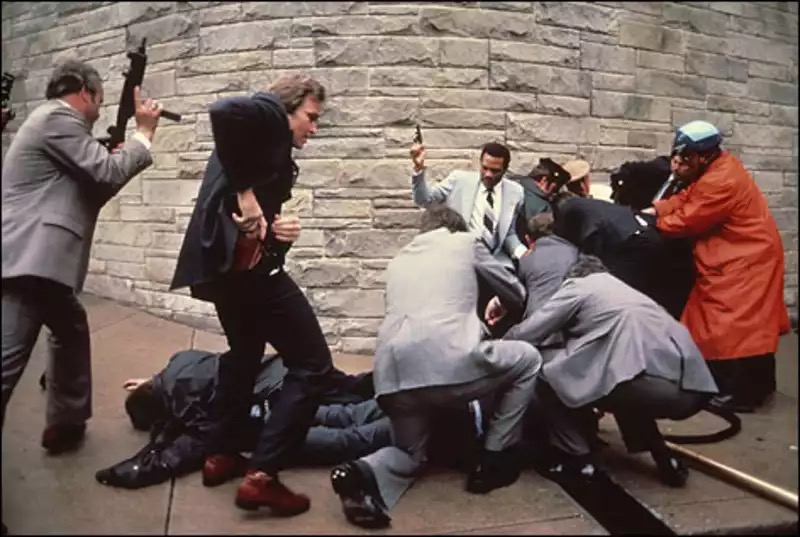
Hinckley, who had acted in a delusional attempt to impress actress Jodie Foster, was later found not guilty by reason of insanity and confined to St. Elizabeth’s Hospital for the Criminally Insane — a place I would one day walk the halls of as a Georgetown medical student. At the time, I had no idea that my future path would bring me face-to-face with the same institution where the man who had nearly killed the President was confined, giving me firsthand insight into the uneasy intersection of mental health and criminal justice.
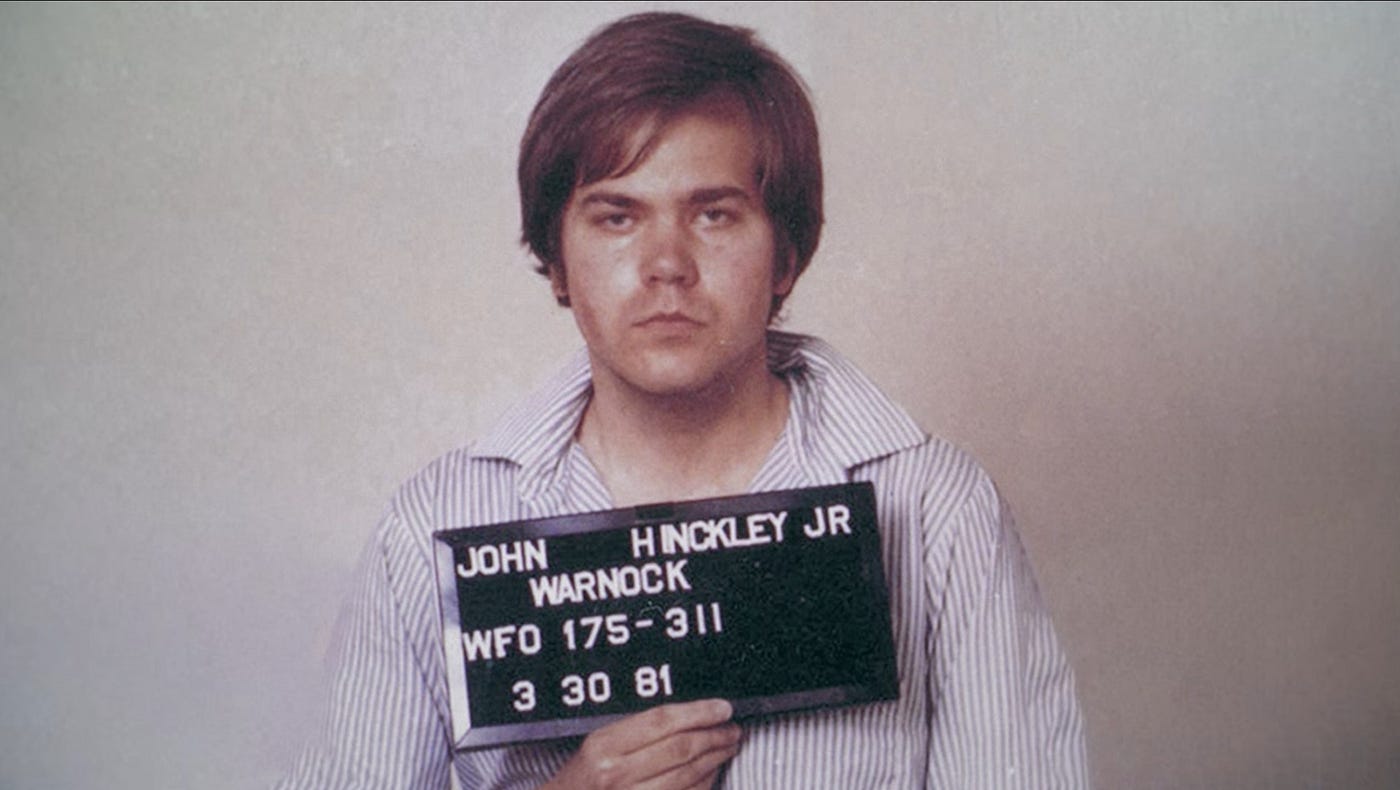
John Hinckley Jr’s Mugshot (March 30, 1981)

Assassination Attempt on Pope John Paul II — May 13, 1981

On Wednesday, May 13, 1981, just one day after my last final exam at Notre Dame, the world seemed to stop again. It was 11:17 a.m. Central Daylight Time when the broadcast cut in. A group of us — our Fisher Hall gang of seniors, along with Mariann and Ginger, who were staying behind to attend our graduation — were in our rooms watching television. I was sitting with Mari when the familiar words rang out: “We interrupt this program for a special news bulletin. Pope John Paul II was just shot in Saint Peter’s Square in an apparent assassination attempt. He is being rushed to the Agostino Gemelli University Polyclinic in Rome for emergency surgery.” The room went silent. We sat frozen, stunned by the idea that someone would try to kill the Pope. Reports came in that he had been hit in the abdomen and suffered intestinal injuries, his survival uncertain as surgeons fought for hours to save his life.
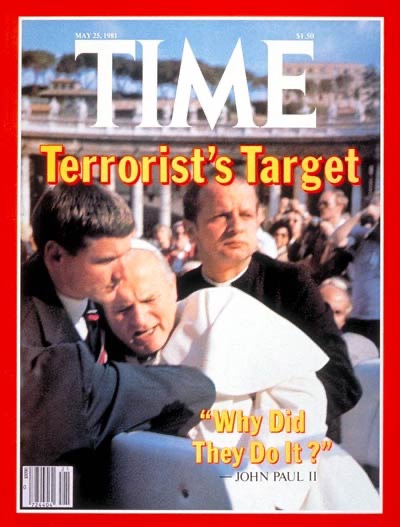
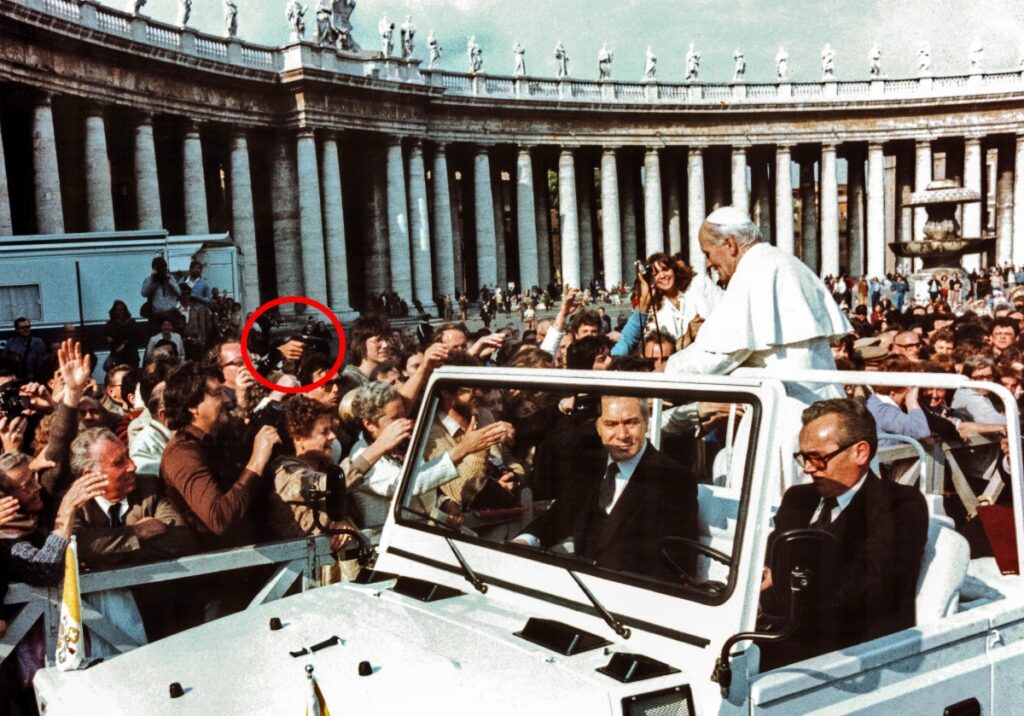
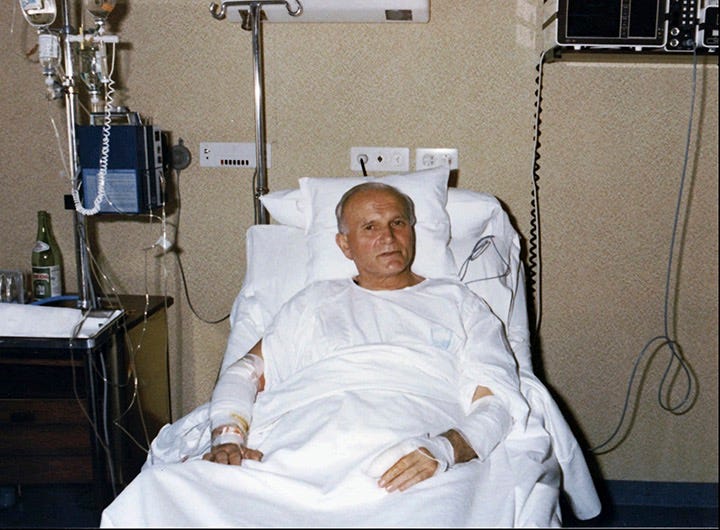
Incredibly, Pope John Paul II did survive, spending three weeks in the hospital recovering from his wounds.
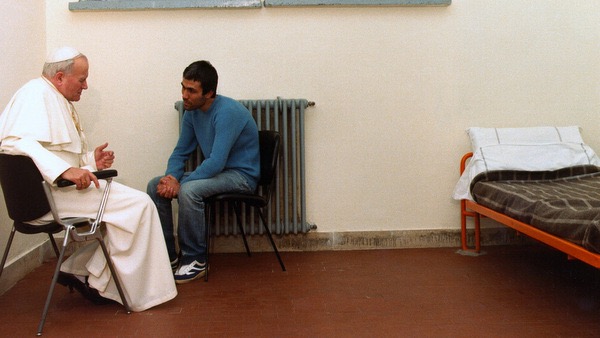
What followed made an even greater impression: his extraordinary act of forgiveness. In 1983, he visited Mehmet Ali Ağca — the man who had tried to kill him — in prison, offering him mercy and compassion instead of bitterness.
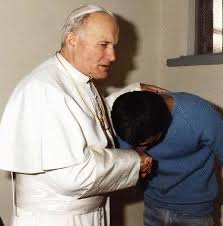
The Pope later attributed his survival to the intercession of Our Lady of Fátima, whose feast day coincided with the shooting.
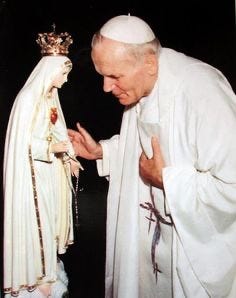
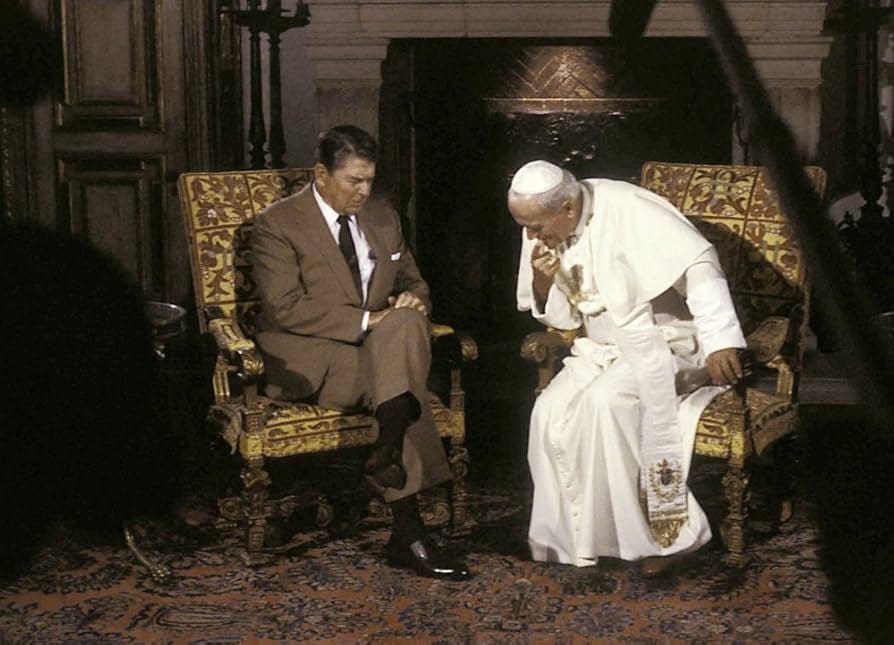
President Reagan had survived his assassination attempt just six weeks earlier. The parallel ordeals forged a deep friendship between the two men, uniting them in resilience, faith, and a shared determination to confront tyranny and defend human dignity.
Army Branch and Location Assignments

Shortly before commissioning, all of us Senior Army ROTC cadets received the orders we had been anxiously awaiting — our Army branch and unit assignments. I remember holding the envelope with a mix of anticipation and dread, knowing that whatever it contained would shape the next chapter of my life. First, my request for an educational delay to attend medical school was denied. I had been branched in the U.S. Army Chemical Corps with an initial assignment to the U.S. Army Chemical School at Fort McClellan, Alabama for the Chemical Officer Basic Course.
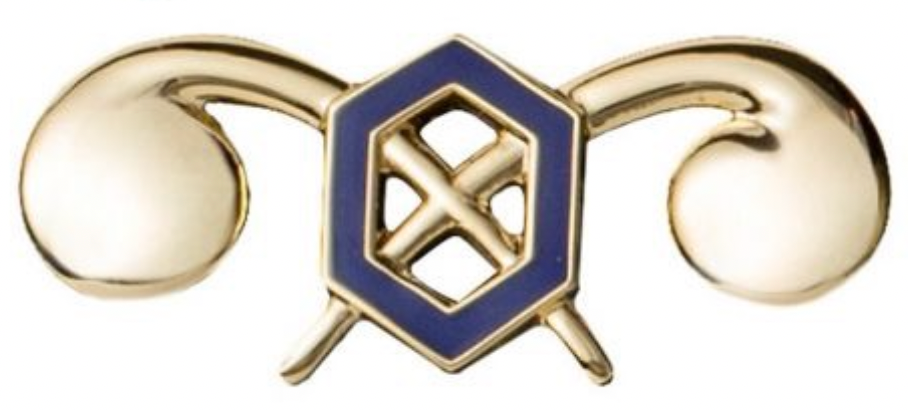
For someone who had grown up studying my father’s military career, I was amazed — I didn’t even know the Army had a Chemical Corps. I could feel my father’s quiet disappointment that I hadn’t been branched into the combat arms, like Armor or Cavalry, the “real” soldiers.
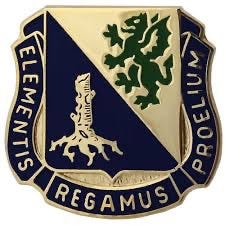
The unit crest of the Chemical Corps. A green Griffen with the motto: “Elementis Regamus Proelium” stands for “Win the Battle Through the Elements”

Not Korea, but Fort Irwin

The Army also asked if I would like to serve in Korea, which meant a one-year, unaccompanied tour. I replied that I would prefer anywhere in the United States or Europe. My father’s disapproval was clear; Korea had been the start of his own career, the proving ground of the Army, and he could not understand why I was thinking about Mariann instead of my career. Eventually, my assignment was revealed: the National Training Center at Fort Irwin, California.
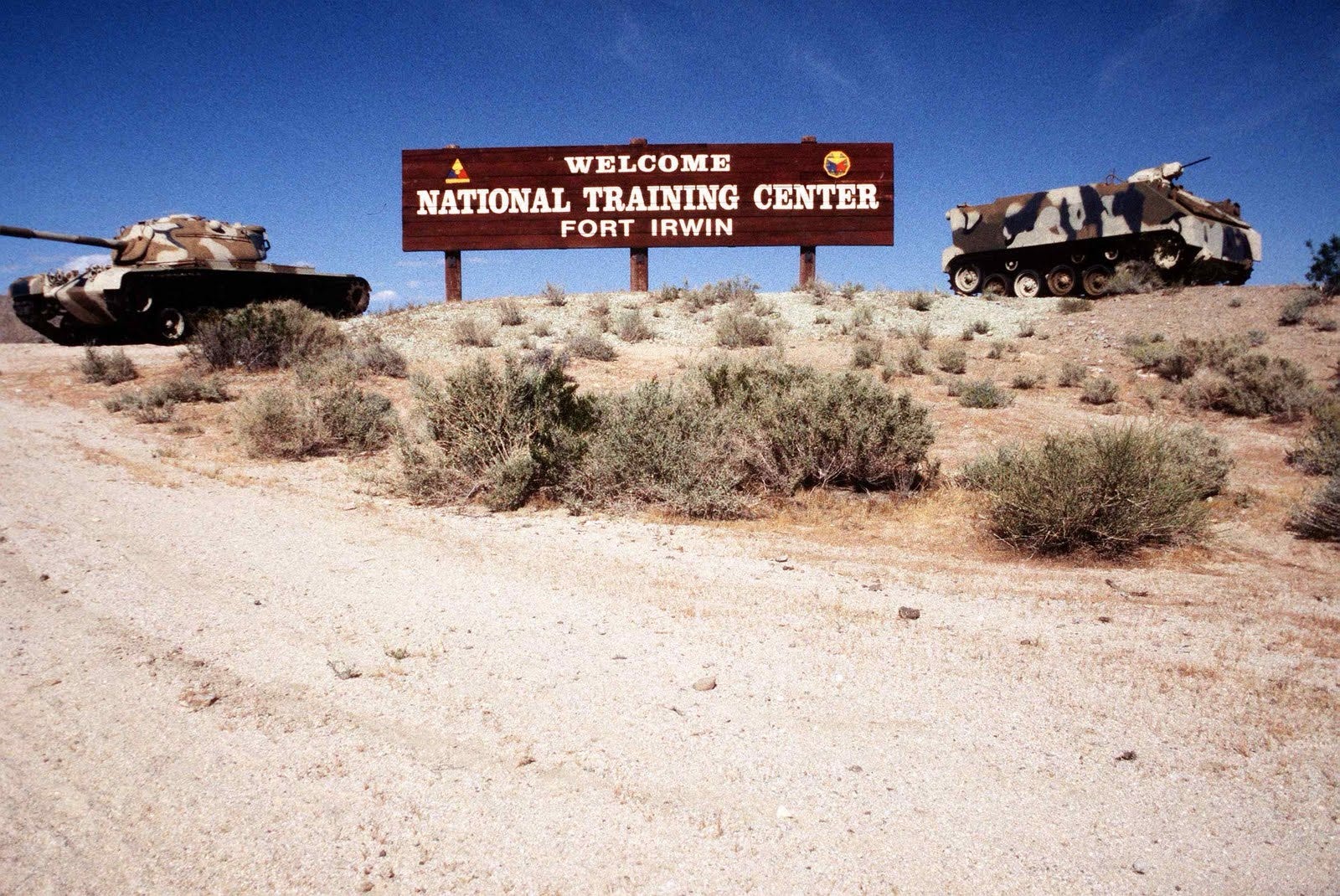
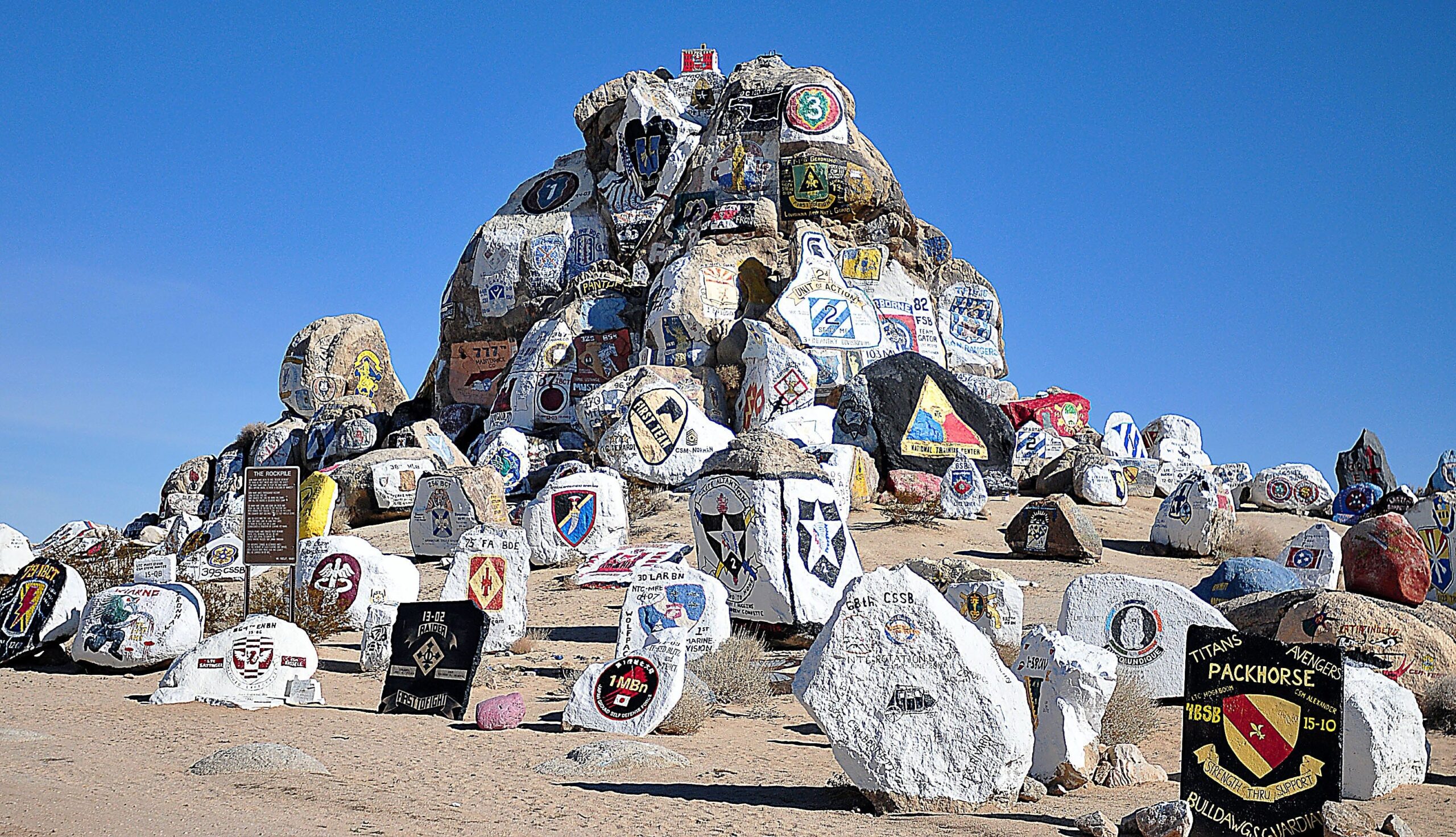
Entrance to the National Training Center at Fort Irwin and the infamous Painted Rocks Momument honoring units who have rotated through the NTC.

I had never heard of the post, which had only reopened weeks before. When I told my father, he said, “Great assignment, JR!” — and I knew I was in trouble. Sure enough, Fort Irwin was located in the infamous Mojave Desert, bordering on Death Valley, USA, a harsh and unforgiving landscape that would test me in ways I had never imagined.

Commencement Weekend (May 15–17, 1981)
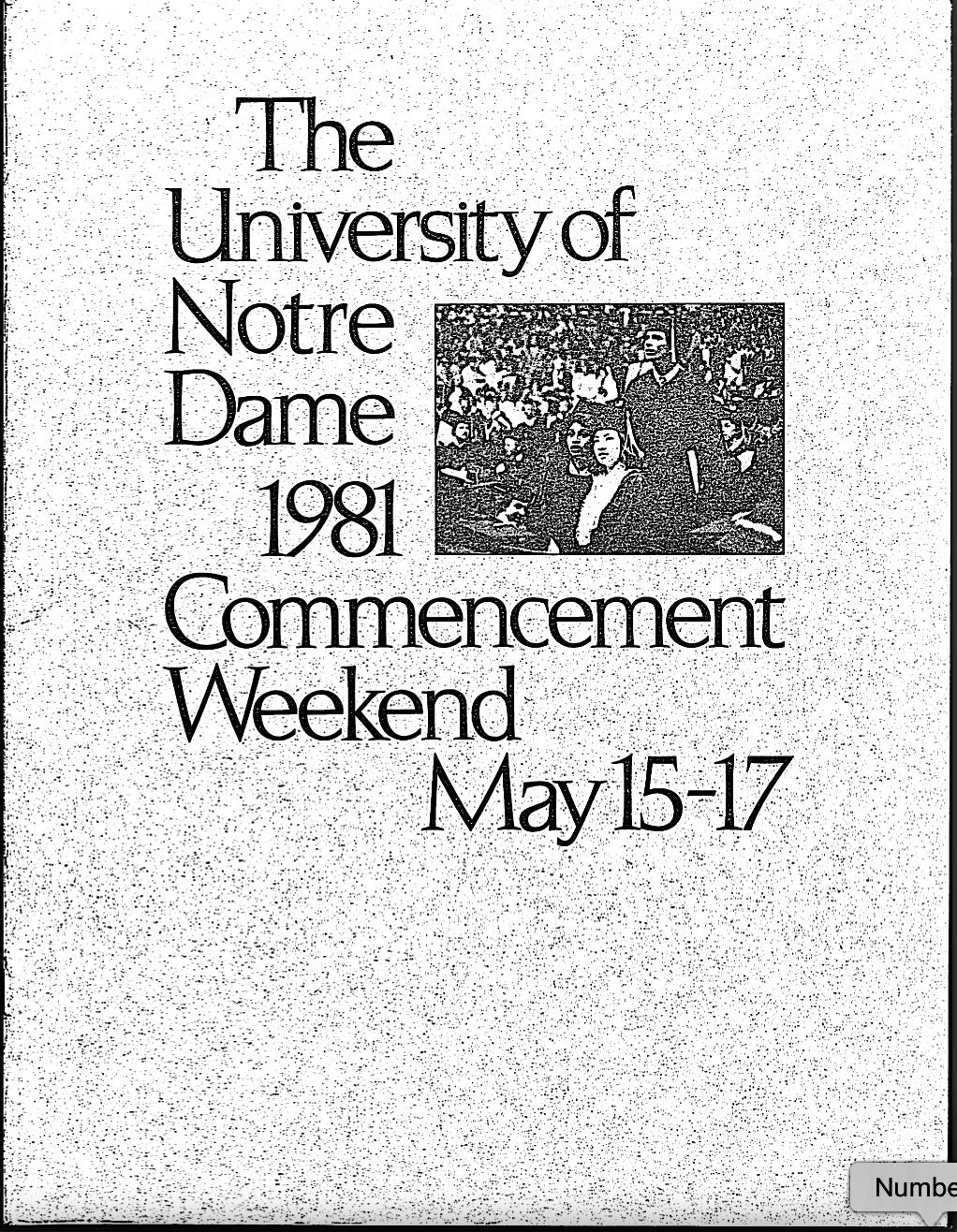
The University of Notre Dame 1981 Commencement Weekend May 15–17 Bulletin. Biography of Dr. Anthony J. Carbone.

My entire family — Mom, Dad, and all four of my sisters — made the trip out to Notre Dame for my commissioning and graduation. And of course, Mariann was right by my side through it all. The weekend was packed with ceremony and meaning.

Commissioning Ceremony (May 16, 1981)

On Saturday, May 16, the day began at 10 a.m. with the Army ROTC Commissioning. The most powerful moment for me was taking the Oath of Office, sworn in by my father, a Colonel in the U.S. Army.

“I, Anthony J. Carbone, do solemnly swear that I will support and defend the Constitution of the United States against all enemies, foreign and domestic; that I will bear true faith and allegiance to the same; that I take this obligation freely, without any mental reservation or purpose of evasion; and that I will well and faithfully discharge the duties of the office on which I am about to enter. So help me God.”

To stand there, repeating those words, and to be sworn in by my own father — it was overwhelming. The pride of the moment was real, but so was the quiet sting. Deep down, I prayed that he had finally let go of his disappointment that I had turned down West Point. I couldn’t be sure. I sensed it still lingered in him, unspoken. But as I looked at my mother, my sisters, and Mariann, I saw nothing but pride in their eyes. That helped temper the pain. For me, it was the beginning of a new life: at once exhilarating, humbling, and sobering.
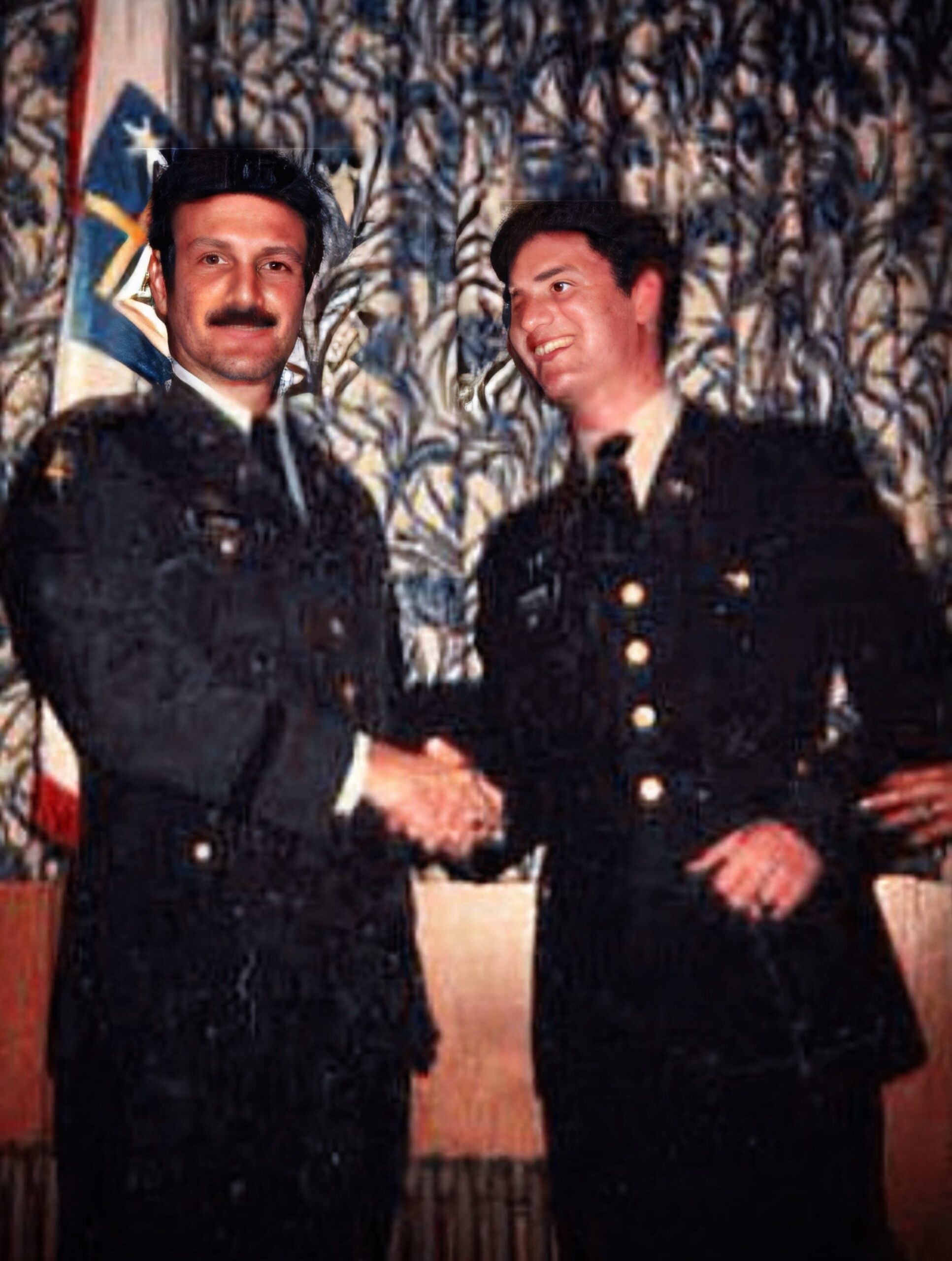
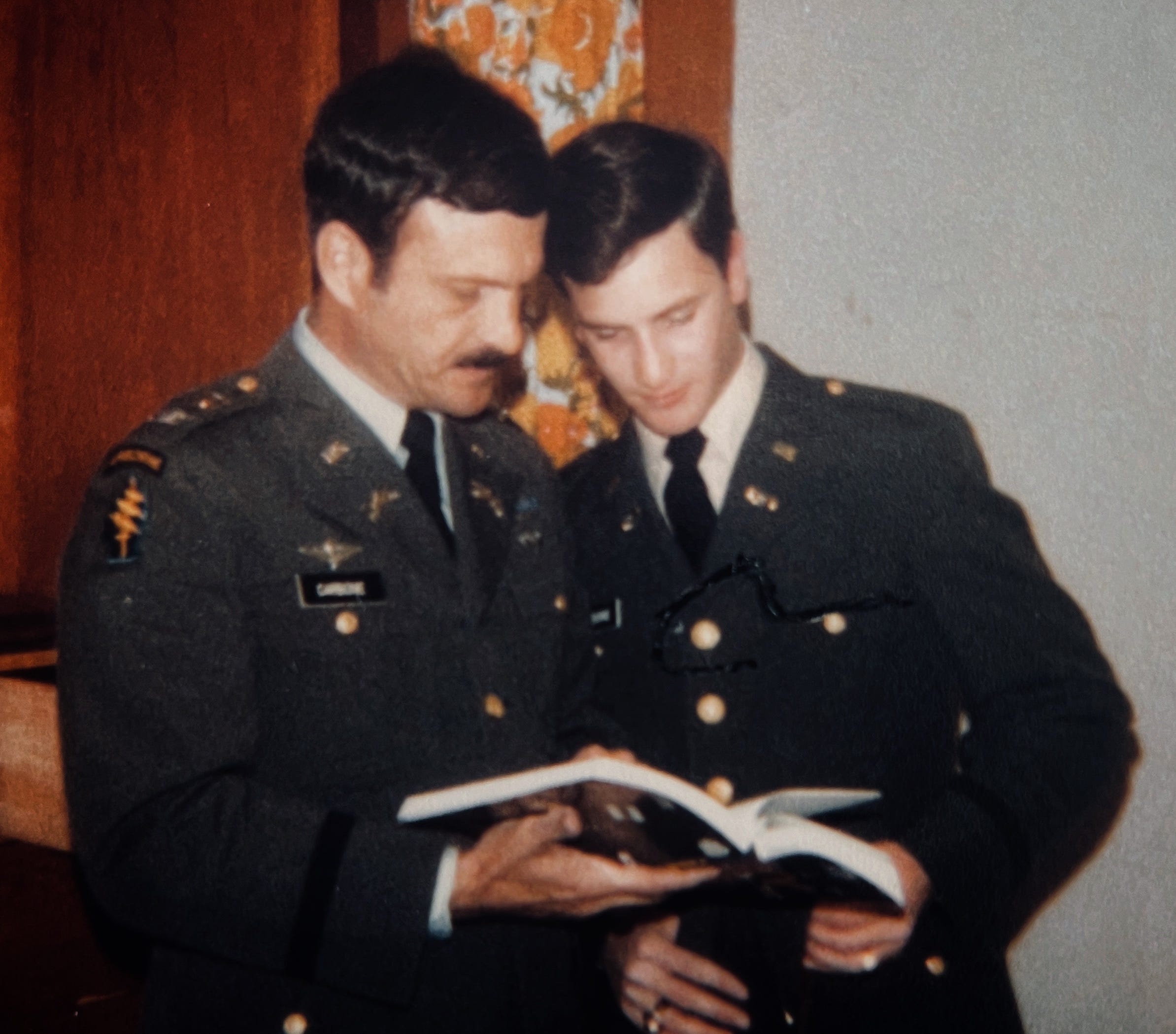
My father, Colonel Tony Carbone, commissioned me as a new Second Lieutenant in the U.S. Army
Commissioning Day with my mother, Mariann, and my sister Pamela at Notre Dame (May 16, 1981). Biography of Dr. Anthony J. Carbone.
Commissioning Day with my mother, Mariann, and my sister Pamela at Notre Dame (May 16, 1981)
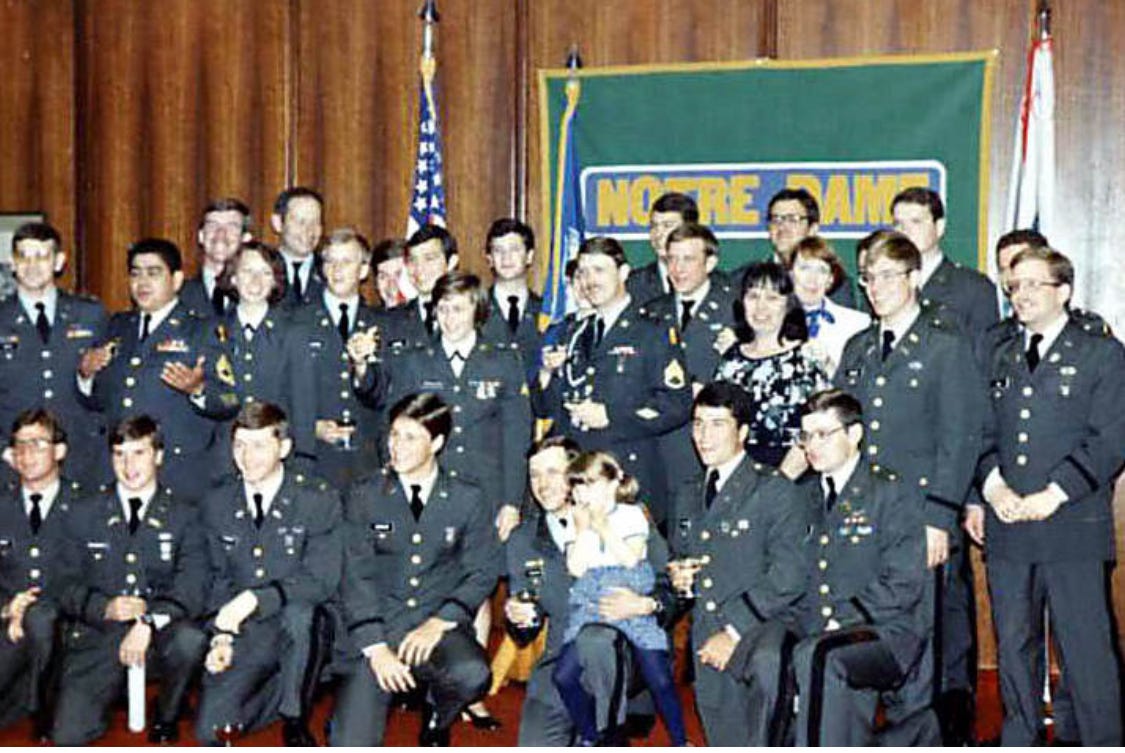
Newly commissioined U.S. Army Second Lieutenants from Notre Dame Army ROTC (May 16, 1981). I am in the back row between the American flag and Notre Dame banner. Biography of Dr. Anthony J. Carbone.
Newly commissioned Army officers from Notre Dame (May 16, 1981). I am in the back row between the American flag and the Notre Dame banner.

Academic Procession & Baccalaureate Mass

Later, at 4:20 p.m., came the Academic Procession at the Athletic and Convocation Center, followed by the Baccalaureate Mass at 5 p.m. The evening was full: a cocktail party and buffet supper from 7 to 8:30 p.m., then a concert by the University of Notre Dame Glee Club at Stepan Center at 9 p.m. It was a long, emotional, and exhausting day for all of us.
Commencement Ceremony (May 17, 1981)

The highlight of the day, however, was President Ronald Reagan himself. On May 17, 1981, just weeks after surviving an assassination attempt, Reagan chose Notre Dame for his first public appearance. The arena crackled with anticipation. Secret Service agents were everywhere, watchful eyes scanning the crowd as we passed through metal detectors and searches to enter. The sense of history unfolding right before us was undeniable.

When President Reagan finally appeared, the entire arena erupted. His presence filled the space — larger than life, resilient, and still carrying the aura of a man who had stared down death and come back smiling. His address mixed humor with deep inspiration, speaking of America’s role in the world, the strength of freedom, and the resilience of our people. It was everything you could hope for from a commencement address, and more.

Honoring “Knute Rockne, All American”

Then came one of those unforgettable Notre Dame moments. Father Theodore Hesburgh, our legendary president, conferred honorary degrees upon both Reagan and actor Pat O’Brien. The symbolism was perfect — O’Brien, who had portrayed Knute Rockne, and Reagan, forever remembered as “The Gipper,” standing together on our stage. The crowd went wild, the cheers echoing like the roar of a football Saturday in Notre Dame Stadium.
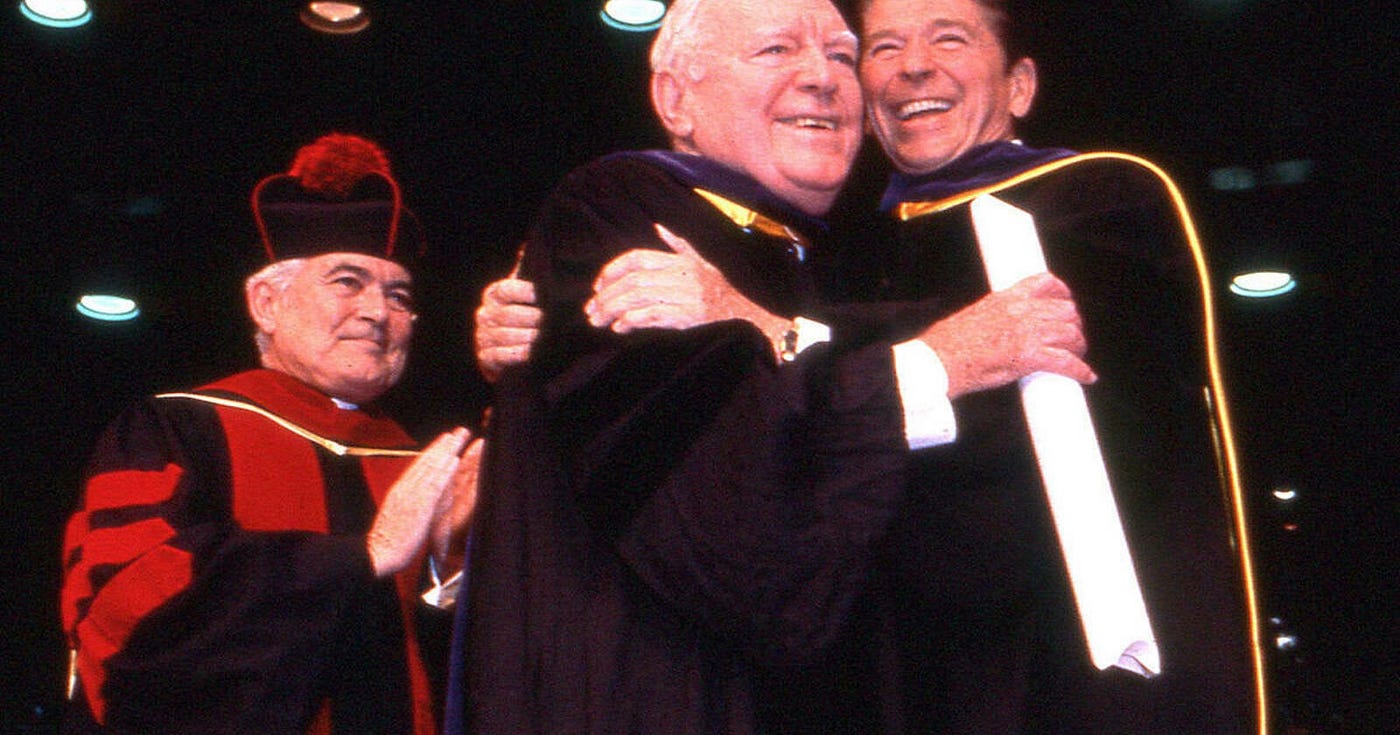
Pat O’Brien and President Reagan hugging after being awarded honorary degrees by Father Theodore Hesburgh.

Reflections on Past Four Years

For me, it was overwhelming. I had just been commissioned as a U.S. Army officer the day before, had received my diploma, and was now witnessing history alongside my family and Mariann. I felt a profound sense of pride — not just as a new graduate, not just as a soldier, but as an American. It was a moment that fused together all of my identities: Notre Dame man, Army officer, and citizen of a country that, despite its trials, always found a way to rise.

As President Reagan spoke, I couldn’t help but reflect on my own journey. Four years at Notre Dame had taught me discipline, resilience, and the value of faith and friendship. Now, standing on the threshold of adulthood, commissioned as an officer, and armed with my diploma, I felt a surge of possibility. Reagan’s words about courage, responsibility, and service resonated deeply with me — not as abstract ideals, but as a call to action for my own life.

That day, surrounded by family, friends, and Mariann, I realized that the lessons of Notre Dame, the discipline of ROTC, and the support of loved ones had prepared me for whatever challenges lay ahead. It was not just a graduation; it was the beginning of everything I had worked for, a launch into a life I was ready to embrace with confidence, hope, and gratitude.
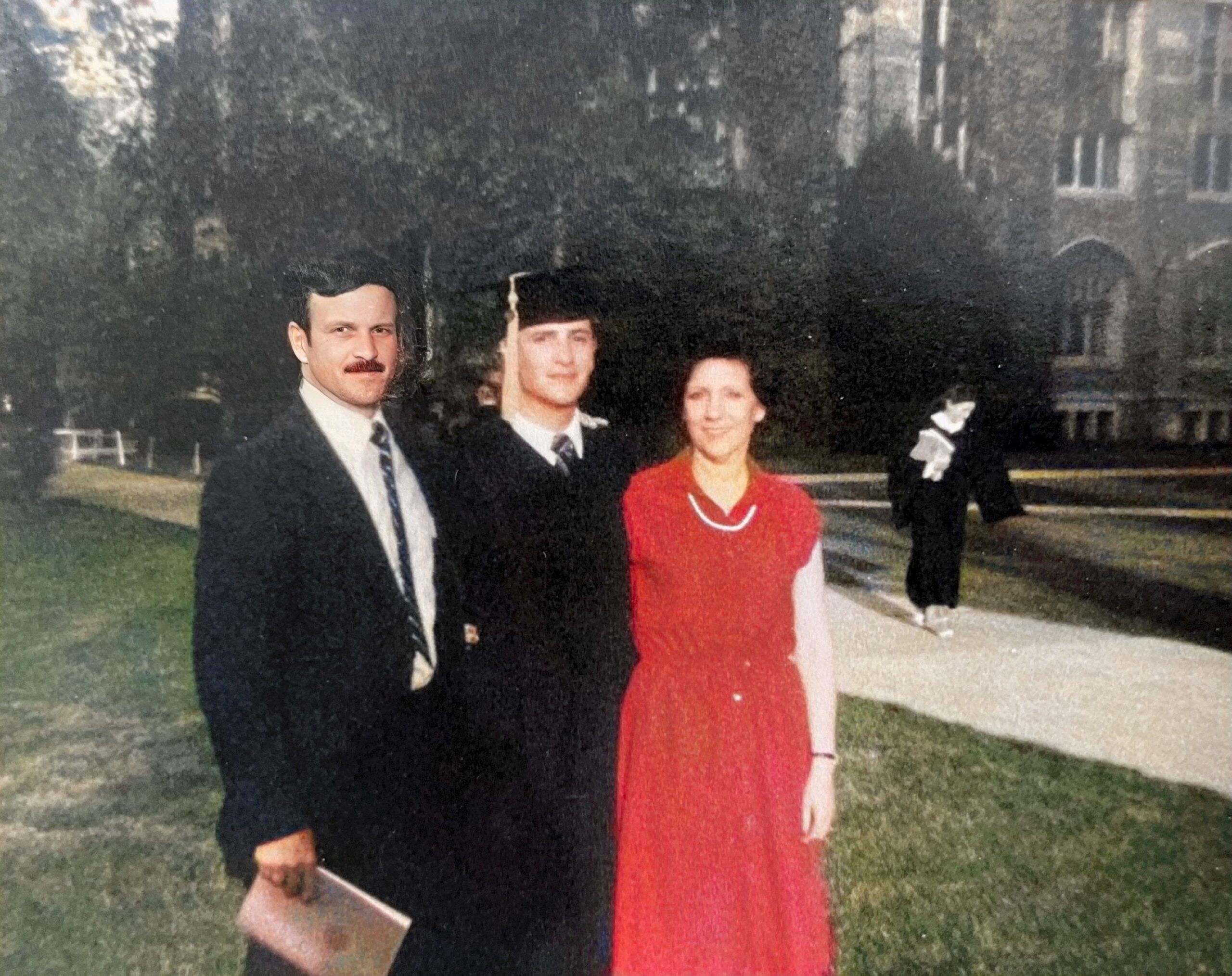
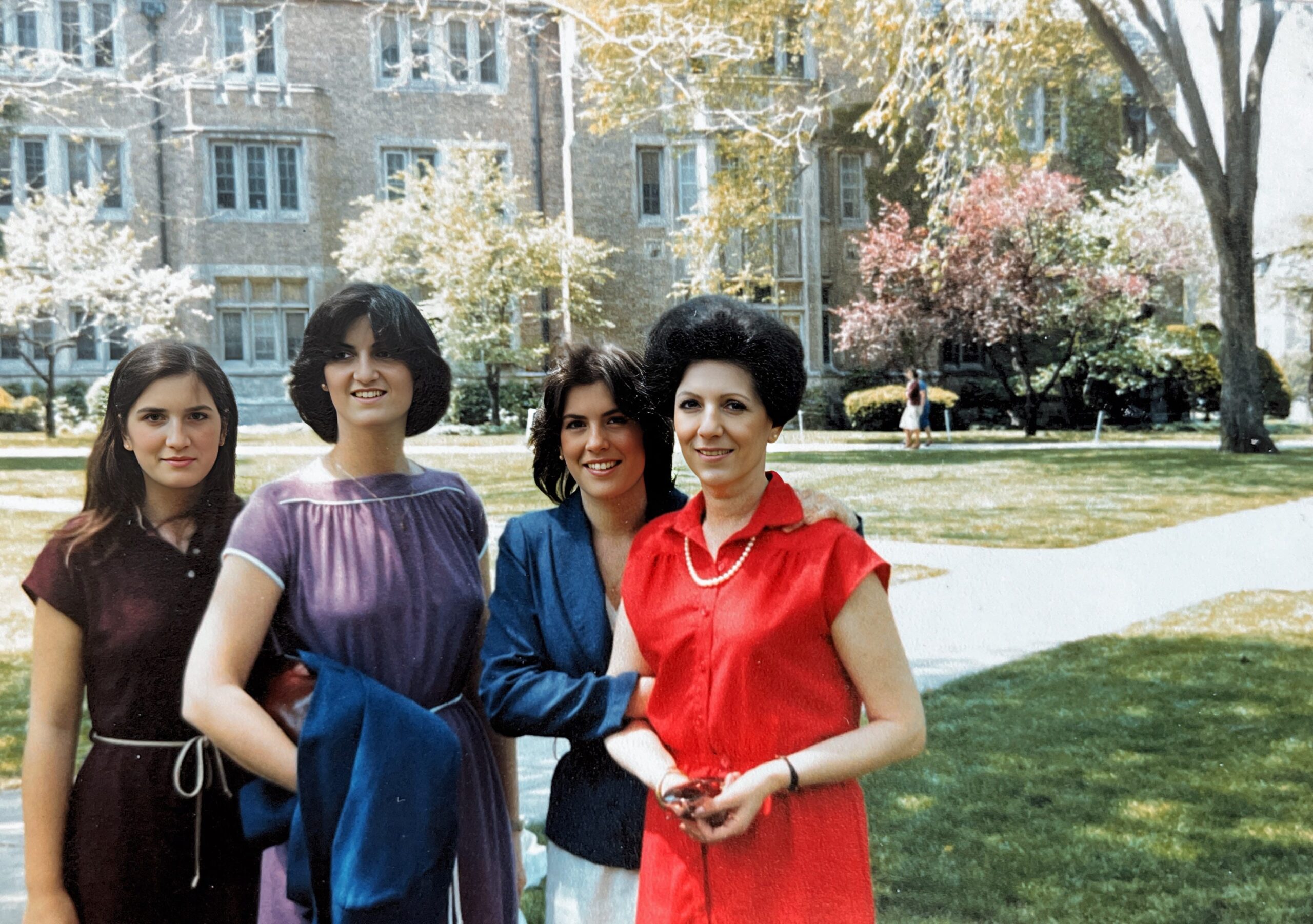
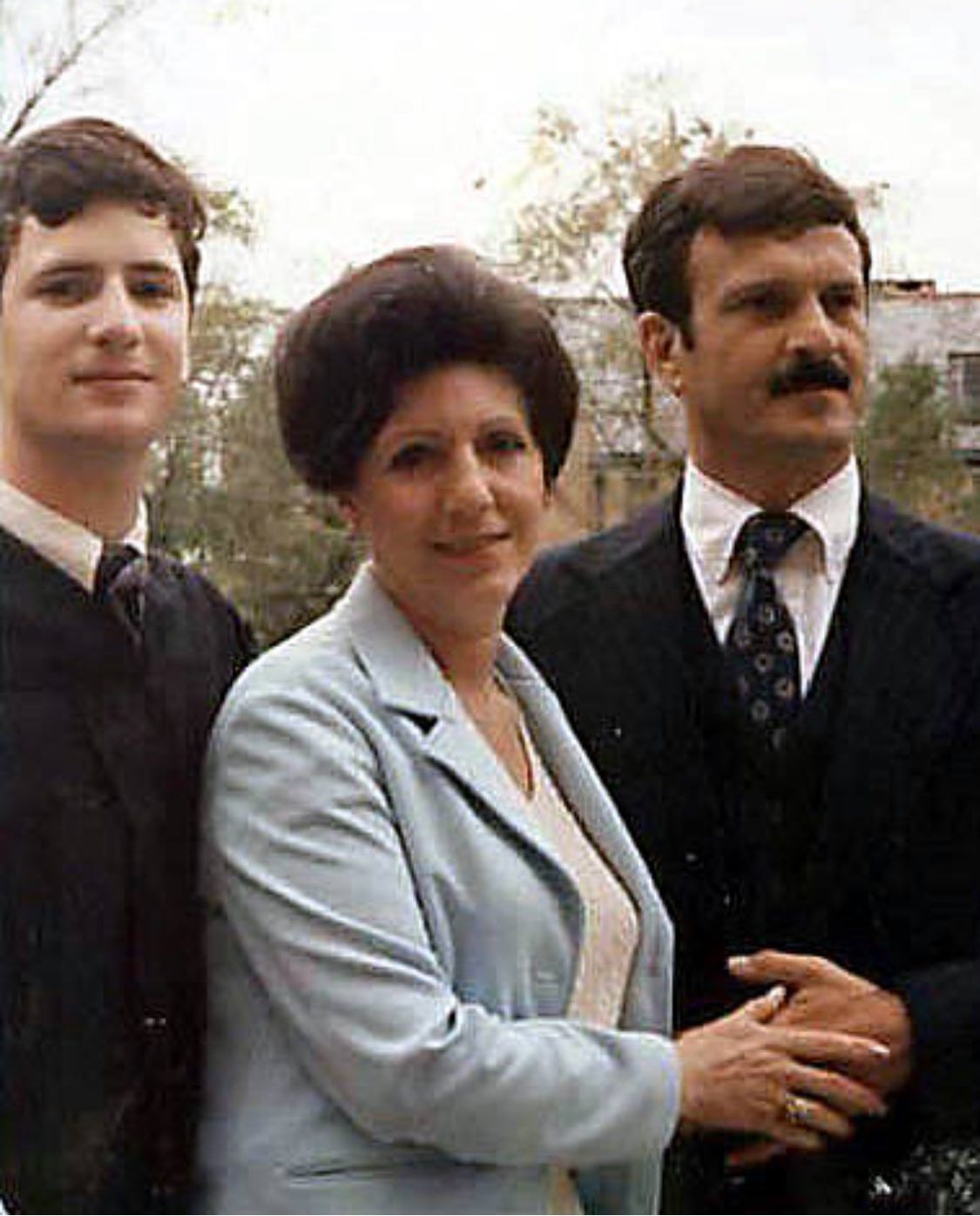
With my parents and sisters at the Big Commencement Ceremony Day with President Ronald Reagan (May 17, 1981)

The Final Chapter of my Notre Dame Experience

Looking back, my senior year at Notre Dame was a whirlwind of challenge, growth, and unforgettable experiences. Between demanding academics, ROTC responsibilities, and the uncertainty of my future, I learned to balance discipline with perseverance, ambition with patience, and intellect with heart.

Mariann’s companionship, the support of my family, and the camaraderie of the Fisher Hall gang made every obstacle more manageable and every success sweeter. From the highs of football victories and the Tri-Military Ball to the sobering moments of world events and the exhilaration of commissioning and graduation, the year was a microcosm of life itself — intense, unpredictable, and profoundly rewarding. As I left campus for the last time, I carried not only a diploma and a commission but a sense of purpose, pride, and readiness for the next chapter of my life.

Photograph of me standing in front of the U-Haul that I used to move out of Fisher Hall at the University of Notre Dame on May 17, 1981 following graduation. Biography of Dr. Anthony J. Carbone.
Loading up my belongings from Fisher Hall into a U-Haul for the last time (May 17, 1981)

Home Page

Chapter 21: ROTC Advanced Camp — Summer of 1980

Photograph of me and 3 of my squad members in fatigues, camouflaged steel pot helmets, tactical gear and carrying our M16A1 rifles during tactical training at Army ROTC Advanced Camp.Biography of Dr. Anthony J. Carbone.

Believe Nothing You Hear, and Only Half of What You SeeA memoir of Service, Shame and the Search for Truth

Time for Army ROTC Advanced Camp

After finishing my junior year at Notre Dame — three years of increasingly difficult Military Science courses, drill, and early morning PT — it was finally time for the crucible of every Army ROTC cadet: Advanced Camp. This was the moment where all of the classroom lessons, field exercises, and countless hours in uniform were put to the test.

Army ROTC black and gold shoulder patch wit “Leadership” and “Excellence”. Autobiography of Dr. Anthony J. Carbone.

Report to Camp Forsyth

I reported to Camp Forsyth at Fort Riley, Kansas, in June of 1980 and would spend the next six weeks there. Notre Dame cadets trained side by side with the Aggies of Texas A&M and cadets from Army ROTC programs across the country. Today, Advanced Camp is held at Fort Knox, Kentucky, but in 1980, Fort Riley was the proving ground. The open Kansas plains — scorched by the summer sun, whipped by winds, and alive with biting insects — were where we would be pushed to our limits and measured against the Army’s highest standards.

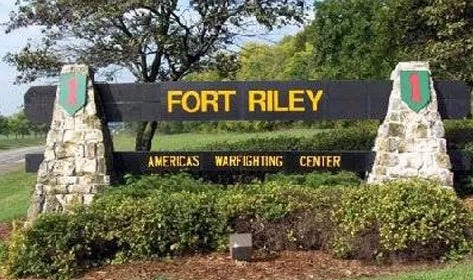
Fort Riley gate welcome sign saying "Fort Riley.  America's Warfighting Center" With the green patches with red numberal 1 for the 1st Infantry Division.  Biography of Dr. Anthony J. Carbone.

Inprocessing

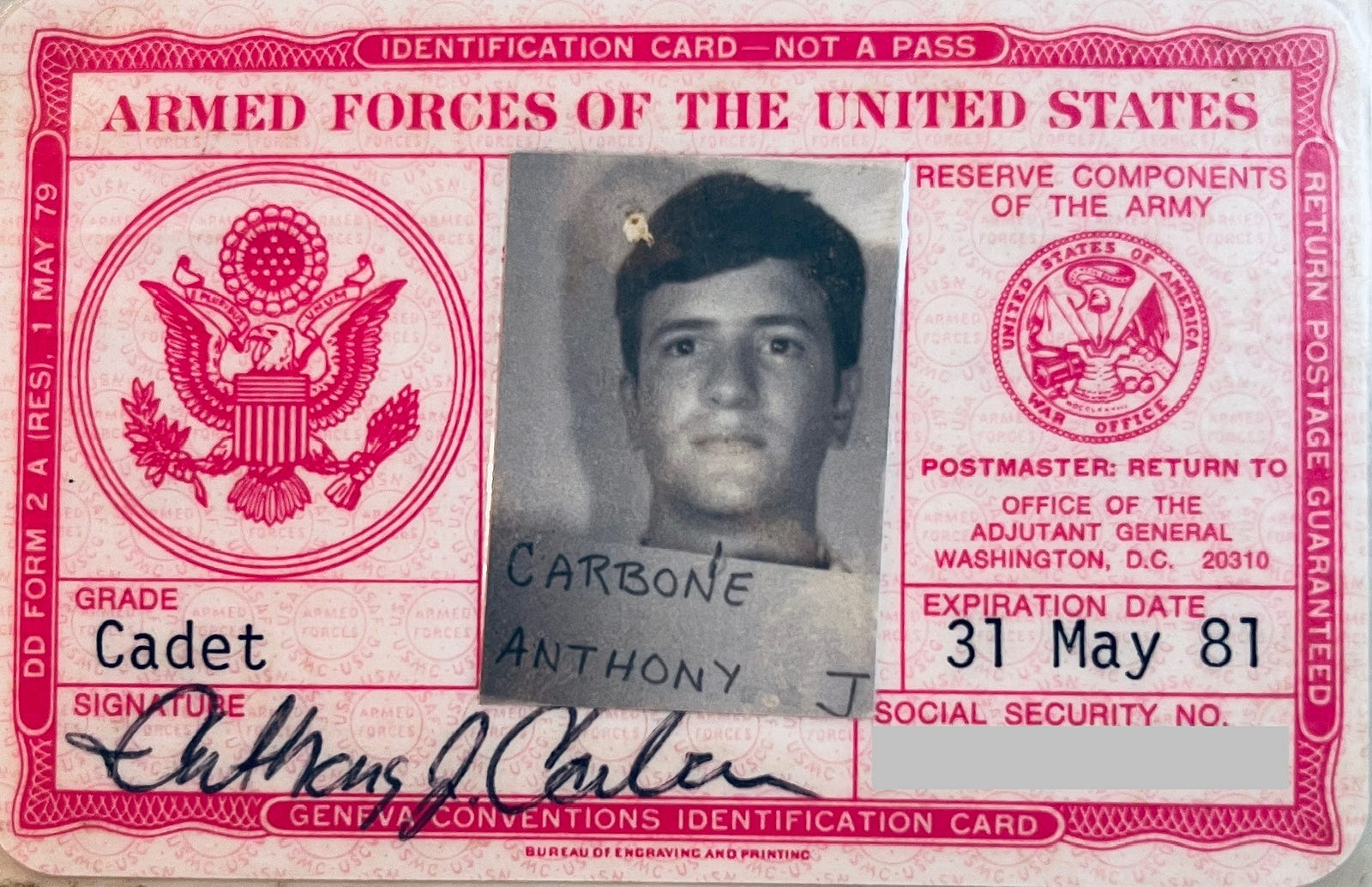
We ran through the usual in-processing: orders checked, medical paperwork signed, and the final cursory reminders that this was no longer just college ROTC. Then came issue day — the Basic Load: the old steel pot helmet, load-bearing equipment (LBE) with ammo pouches and suspenders, a poncho, canteen and cup, mess kit, a small first-aid pouch, entrenching tool, and extra socks and spare boots. They snapped our photos for the Cadet ID while we stood at parade rest, and holding that little card felt oddly official — proof we’d arrived at the Army’s doorstep.

My Cadet Geneva Conventions Identification Card issued at ROTC Advance Camp. For Cadet Anthony J. Carbone.
My Cadet Geneva Conventions Identification Card issued at ROTC Advance Camp

The Heat Wave

The summer of 1980 was brutal. A historic heat wave and drought gripped Kansas, and we felt every bit of it in our old steel pot helmets and full combat gear as we marched and trained. Day after day, the thermometer climbed past 100 degrees, with July delivering more than two weeks of triple-digit heat. The ground was dry and cracked, the air stifling, and shade was almost nonexistent. The oppressive heat wasn’t just uncomfortable — it was dangerous. For us cadets, it meant pushing our bodies through exhaustion and dehydration, learning to function in conditions that were as much a test of survival as they were of soldiering.

Cut Off From Home

Another reality of Advanced Camp in 1980 was how completely cut off we were from the outside world. This was a dozen years before personal cell phones existed. Letters were allowed, but only when we had a sliver of free time — and there wasn’t much of that. On weekends, we were marched to an area that had a dozen or so payphones lined up, each with a line of cadets waiting their turn. I would stand in the blazing sun, sometimes for over an hour, just for the chance to place a call.

Photograph of 4 Old Bell Telephone pay phone on a wall.  Biography of Dr. Anthony J. Carbone.

Every time I finally reached Mariann, my heart would race. The connection was scratchy, the time was short, but it didn’t matter. I would speak a mile a minute, trying to cram in everything I had just survived — the marches, the heat, the evaluations — and, most of all, to tell her how much I missed her. Those brief conversations sustained me. They were my lifeline.

Life in the Barracks

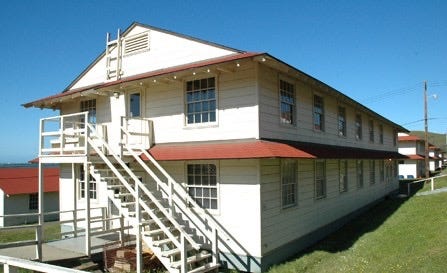
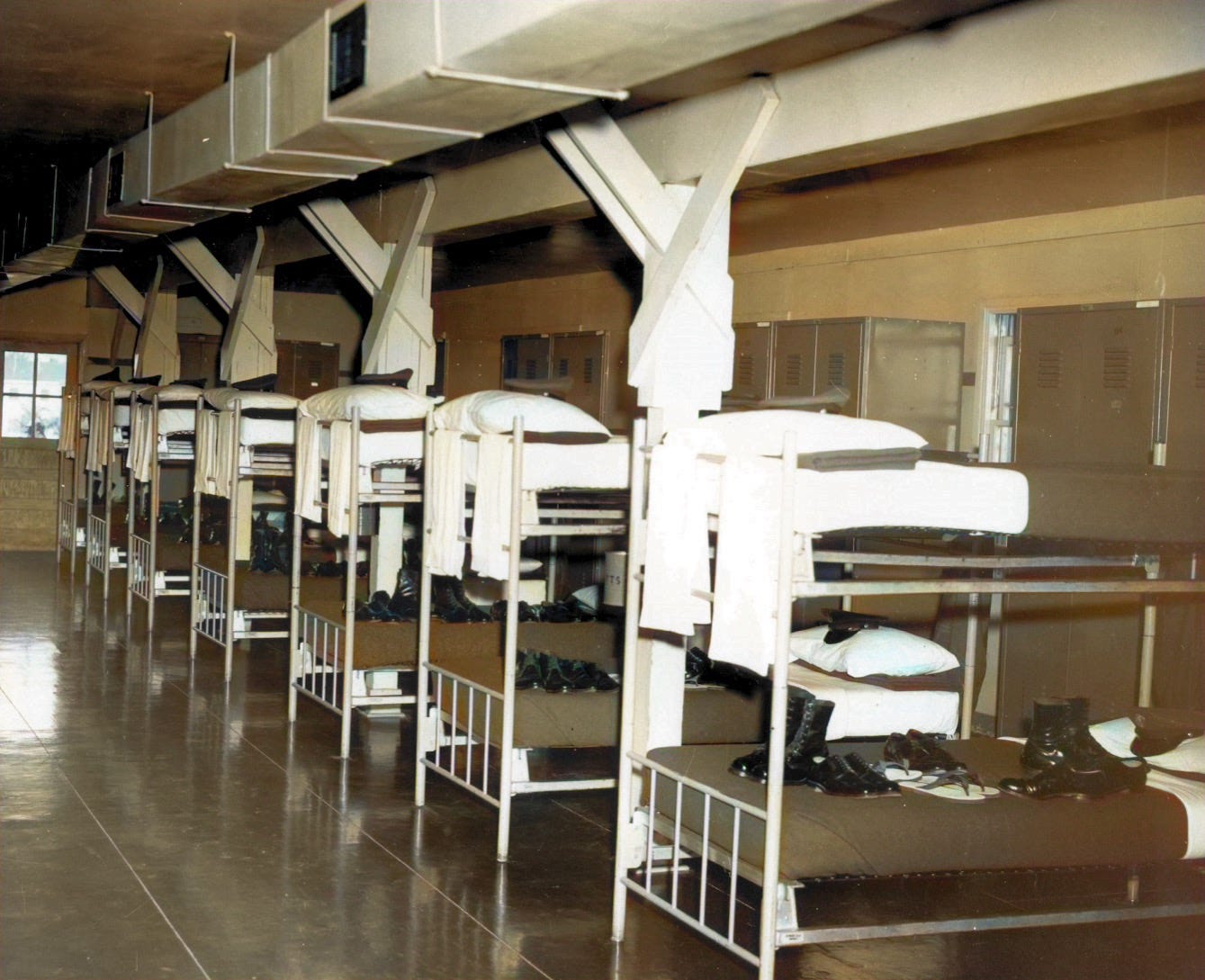
We were housed in old wooden World War II–era barracks — no frills and stripped bare of comfort. There was no air-conditioning, just two long rows of metal bunk beds. Each of us got a thin mattress, two white sheets, a goose feather pillow, and one rough-as-hell olive drab wool blanket that itched like crazy. A battered footlocker sat at the end of the bunk, with a metal locker nearby for uniforms and gear. Privacy didn’t exist. The showers were one big room with a dozen shower heads, and the toilets were lined up side by side — twelve seats in a row, no stalls, no doors. I used to sign up for Fire Guard duty around 2200 just so I could sneak to the latrine when most guys were asleep. That was the only way to find a little peace and privacy.

Exterior view of a typical World War II Army barracks, 2 stories with steps to second floor.  Found on Camp Forsyth for Army ROTC Advanced Camp.  Biography of Dr. Anthony J. Carbone
Interior view of a typical World War II Army barracks, Line of bunk beds with olive drab Army blankets and boots on bed.   Found on Camp Forsyth for Army ROTC Advanced Camp.  Biography of Dr. Anthony J. Carbone

Mornings were brutal. At the crack of dawn, the drill sergeant would storm in, flick on the lights, and bang something metal against the bunks as he marched down the aisle. We’d jolt awake, scrambling out of bed in our white boxers and t-shirts, and line up at the foot of our racks for headcount and instructions. Then it was a mad rush to throw on PT gear and fall into formation outside.

Physical Training and Jodies

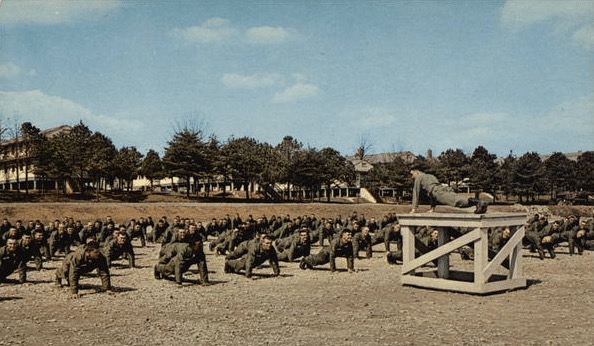
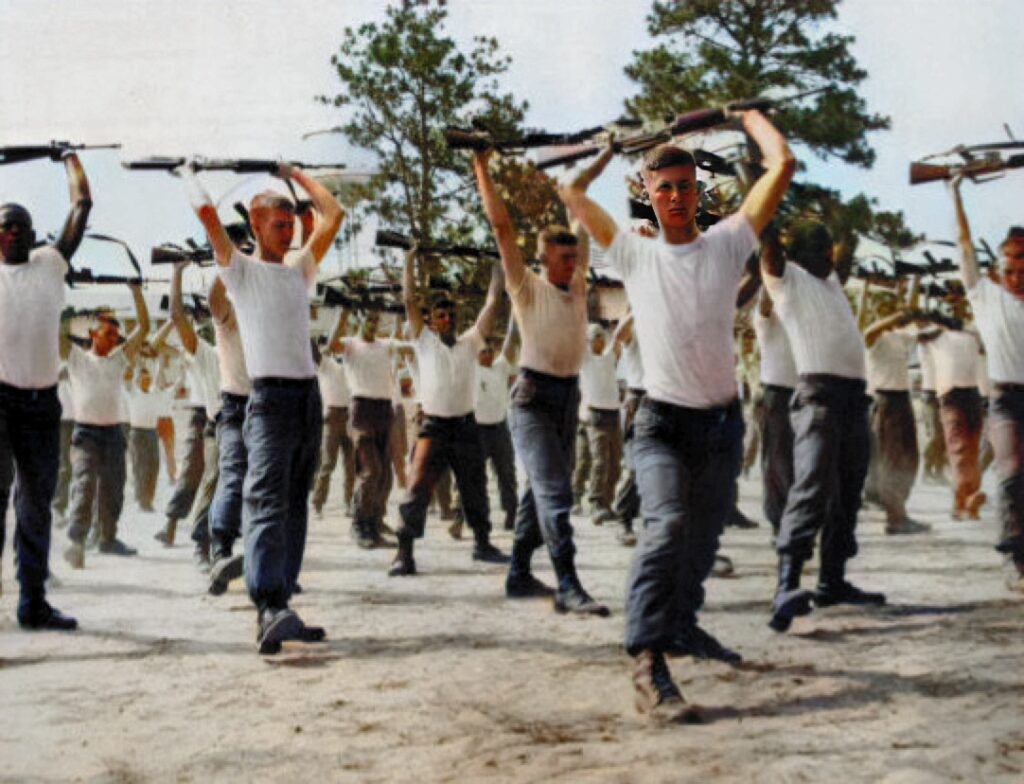
PT always ended the same way — running in step while the drill sergeant belted out Jodies. They were crude, funny, and loud, keeping us in cadence while building that strange mix of misery and camaraderie. For example, everyone has heard, “C-130 rolling down the strip. 64 Airborne on a one-way trip. Stand up, hook up, shuffle to the door. Jump right out and count to four.” Back at the barracks, just when you thought PT was over, there’d be more push-ups: “Front Leaning Rest Position! Move! One, two, three, four!” Over and over until our arms shook. Then five minutes — literally five minutes — to shower, shave, brush teeth, and dress into fatigues and boots. By the time we formed up outside and marched to the mess hall, the day had barely begun.

The Mess Hall

Getting chow felt like stepping into one of those old war movies. A long line of cadets in fatigues and combat boots stood at Parade Rest, hands clasped behind their backs. The chow hall itself was just another converted WWII barracks — bare, loud, and echoing with the clatter of trays. But with the aroma of chow.

Behind a wall of glass ran the chow line, steam curling up from metal pans. You grabbed a tray and tin dinnerware, then shuffled sideways as cadets on KP duty slapped food onto plates — scrambled eggs, greasy bacon, and a biscuit drowned in SOS (“Shit on a Shingle”). At the end, you snatched a cup of milk or juice, then dropped into a seat with your squad. You had maybe six minutes — no more — to eat, scrape your plate, and move. Not much time for chit-chat.

C-Rations

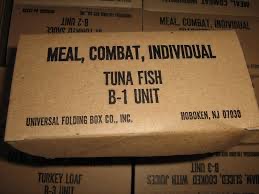
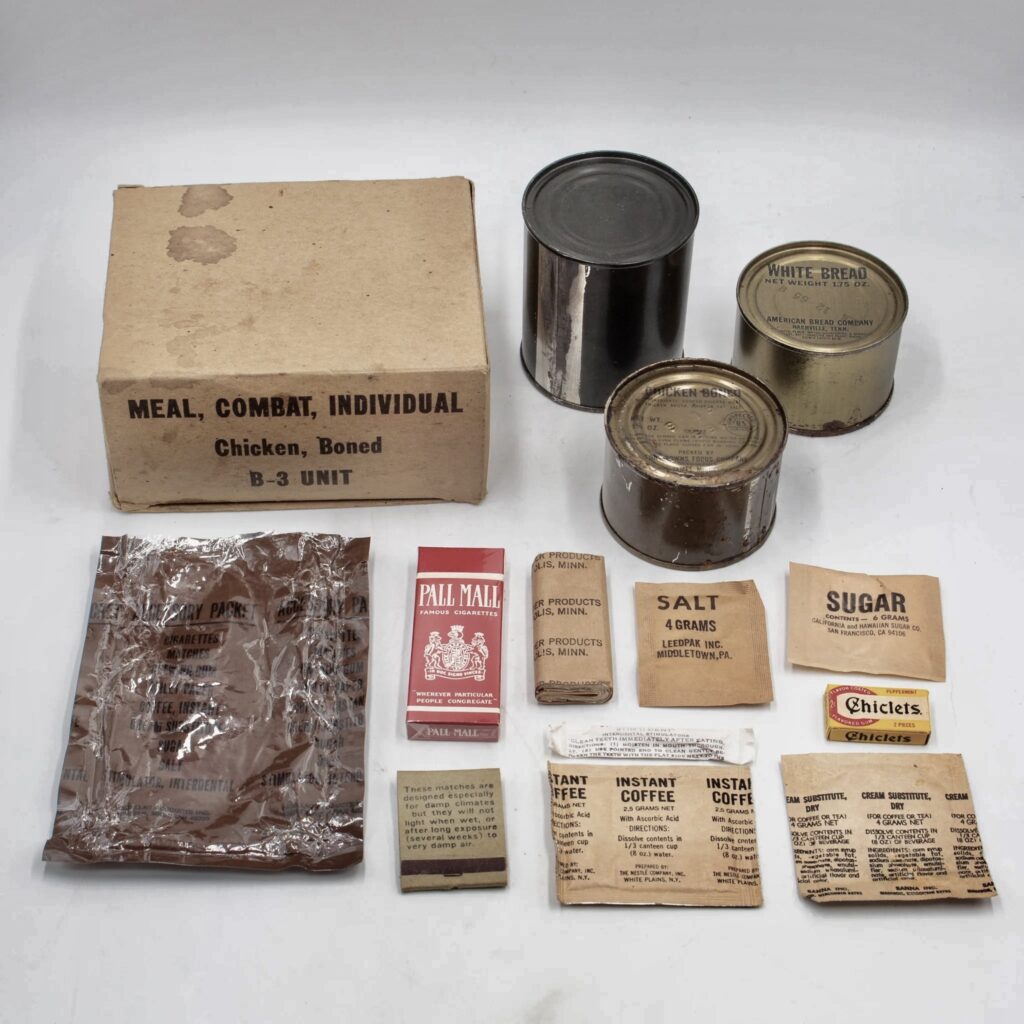
When we weren’t eating in the mess hall, the alternative was C-Rations in the field. Even on an empty stomach, most of those little brown boxes were tough to swallow. I quickly learned to sprint to the mess truck when it pulled up, fighting my way to the best meals before they were gone. My prize was B-1 Unit— a small can of tuna fish paired with a large can of fruit cocktail. Compared to the other canned meats, it felt like gourmet dining. My second choice was beans and franks, but only in a pinch. Since we almost never had the chance to heat our meals, the tuna and fruit were the safest bet. Everything else I was quick to trade, always hoping to score a pack of Chicklet gum, which was like gold in the field.

Learning to Be a Soldier

A large part of Advanced Camp was learning to be a soldier first, and an officer second. We learned to wear our uniforms and gear correctly, to stand in formation, and execute all the basic commands: Fall In, Attention, Parade Rest, Present Arms, At Ease, Fall Out. We drilled endlessly on marching and running in formation, our cadence echoing across the field.

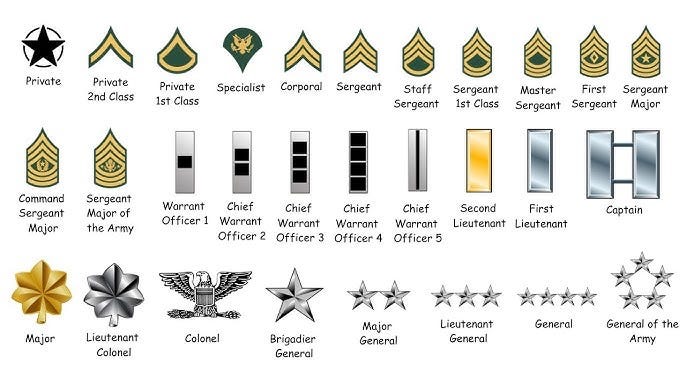
We had to learn the rank and branch insignia (something you already learned in basic ROTC).

Chart showing U.S. Army rank insignia from E-1 Private to O-11 General of the Army.  Biography of Dr. Anthony J. Carbone.

The M16 Rifle

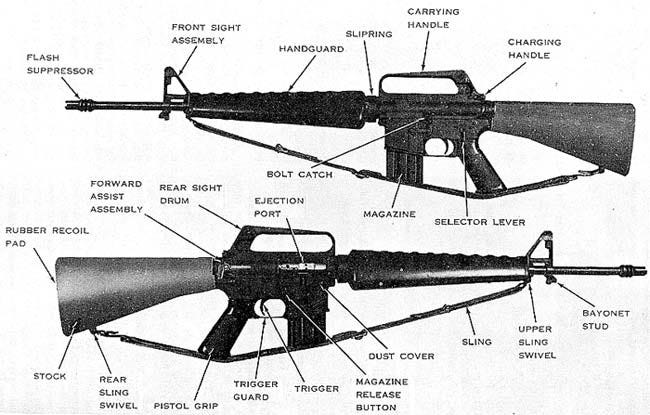
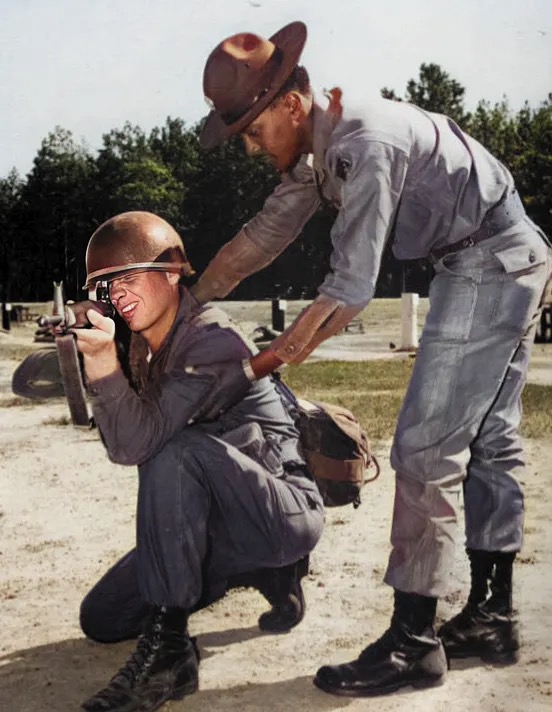
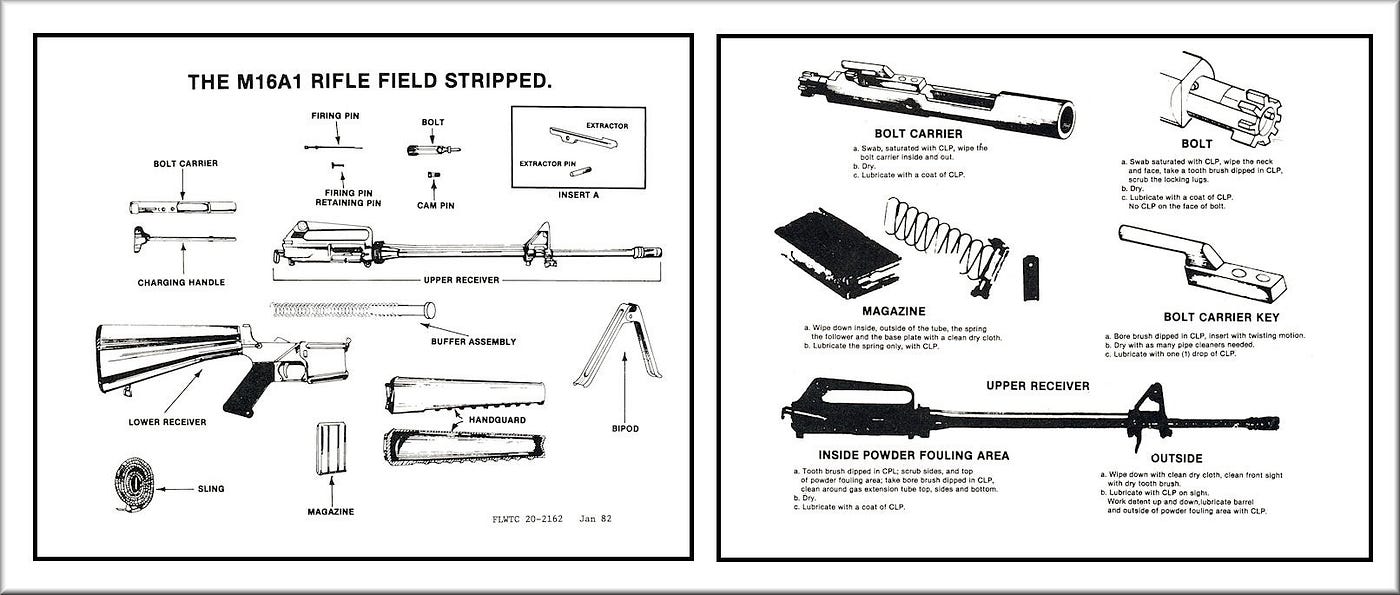
Then came the rifles. Each of us was issued an M16A1 rifle. We learned to carry it, field strip it, and reassemble it faster and faster.

Diagram of M16A1 Rifle with explanation of parts from Left and Right side views.  Biography of Dr. Anthony J. Carbone.

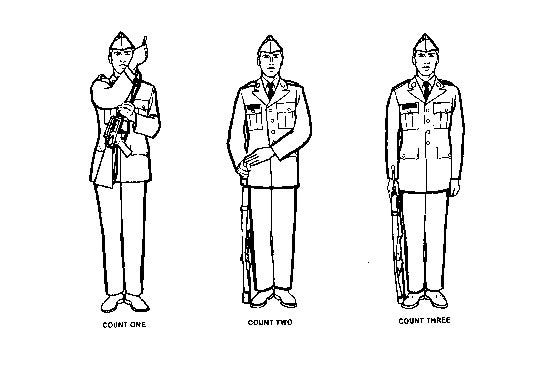
We practiced the 15-Count Manual of Arms. Right shoulder, Arms. Port, Arms. Left shoulder, Arms. Present, Arms. Order, Arms. Then something to the effect of singing, “This is my rifle, this is my gun. This is for fighting, this is for fun.”

Diagram of soldier in Class A uniform performing a part of the 15 Count Manual of Arms--Order Arms.  Biography of Dr. Anthony J. Carbone

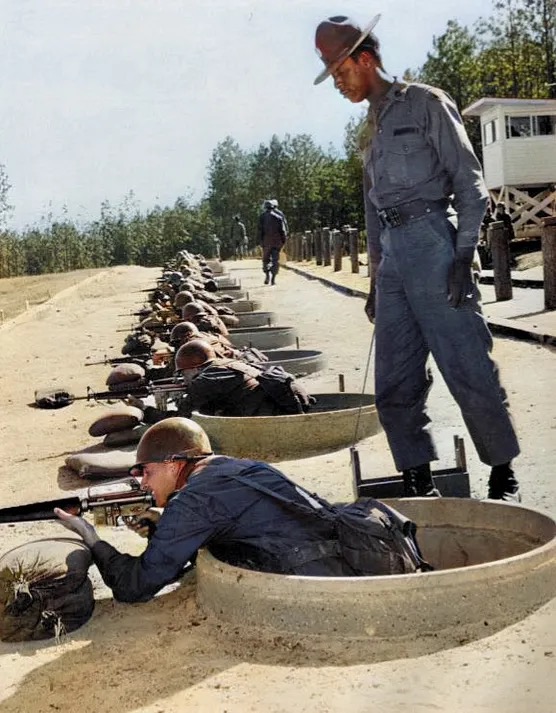
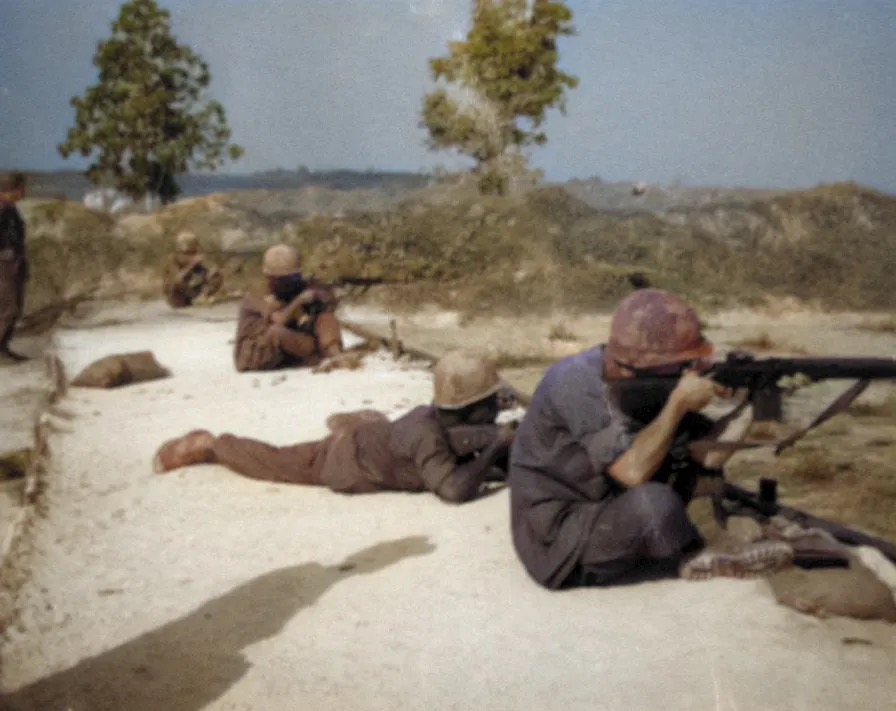
Eventually, we moved to the firing range. The rules there were strict — no motion without a direct order. We learned to load, fire, and zero our weapons. Shooting from standing, kneeling, and prone positions, clearing jams, and obeying every command was terrifying — and exhilarating. After each round, the Range Officer called, “Are there any alibis?”Those with rounds left had to empty their magazines immediately.

Afterward, we marched back to garrison, rifles in arms, singing Jodies, only to face the dreaded cleaning of weapons. Practiced field stripping our M16A1. Tedious, meticulous work, but essential. An M16 that wasn’t spotless could fail when it mattered most.

M16A1 Rifle Field Strip Diagram.  Biography of Dr. Anthony J. Carbone.

The Water Hazards

Army ROTC Advanced Camp seemed obsessed with water obstacles. No matter where we turned, there was always some new challenge over a lake, pond, or river. The cadre loved to test our courage and balance above the water, knowing full well that most cadets dreaded falling in.

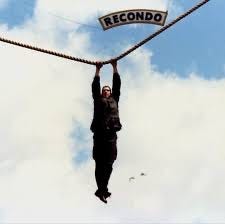
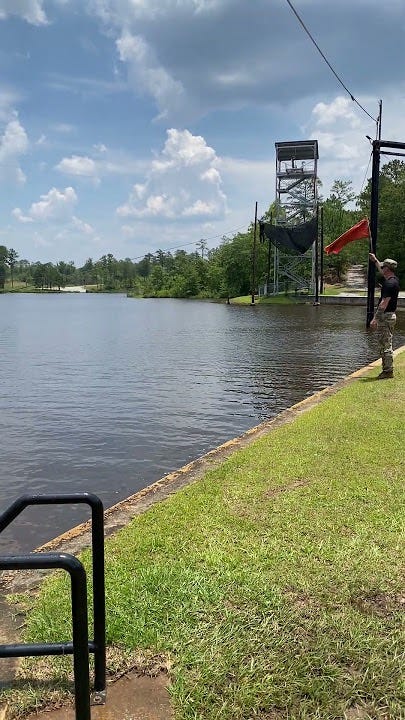
U.S. Army cadet at Recondo water obstacle area.  Balancing on beam over water, with Recondo sign hanging from beam.  Biography of Dr. Anthony J. Carbone.

One of the first obstacles I faced was a balance beam stretched high over a lake. The beam wobbled with every step, and the thought of tumbling into the water below made it feel like a tightrope walk in the circus. Somehow, I managed to keep my footing and make it across.

U.S. Army cadet at Recondo water obstacle area.  Balancing on beam over water, with Recondo sign hanging from beam.  Another cadet hanging from a rope. Biography of Dr. Anthony J. Carbone.

Rope Over Water

Another test was even more intimidating. I had to climb a wooden stand high above the lake, shimmy out onto a thick rope, and crawl to its midpoint where a “Recondo” sign dangled. Once I touched it, the special forces sergeant on shore barked through a bullhorn, “Hang from the rope, cadet, and request permission to drop!” I dangled from the rope and shouted, “Cadet Carbone, request permission to drop!” The sergeant’s reply stunned me: “Carbone? Like Major Tony Carbone of MACV-SOG? Carbone?” I yelled back, “Yes, Sergeant!” He paused, then shouted, “I know your father. Give me ten pull-ups before you drop, Cadet!” So I did my pull-ups, arms burning, before finally letting go and plunging twenty meters into the water.

U.S. Army cadet at Recondo water obstacle area.  Hanging over water holding onto a rope with Recondo sign.  Biography of Dr. Anthony J. Carbone.

Slide For Life

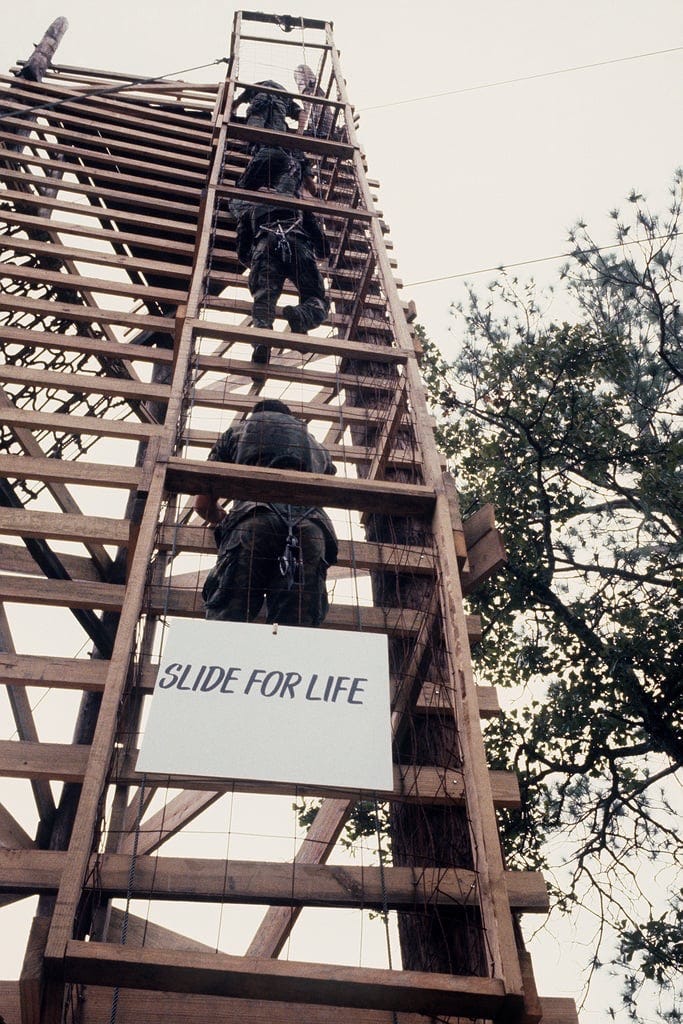
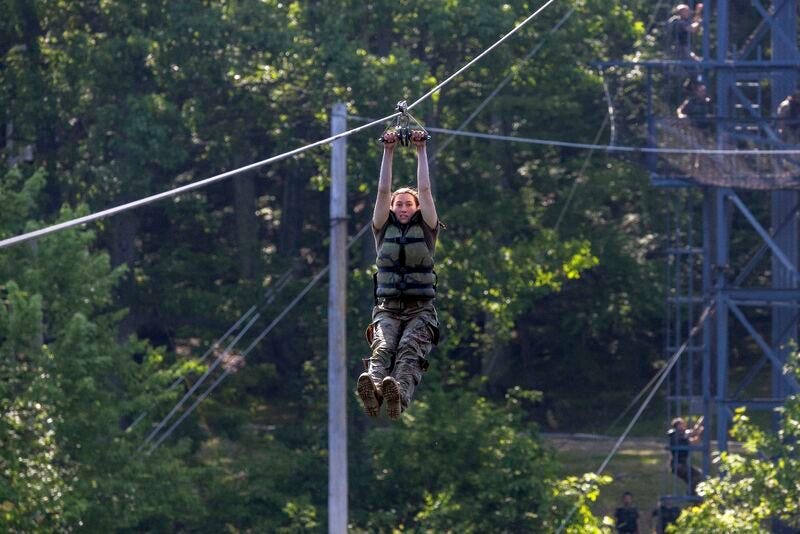
But the most famous challenge was the Slide for Life (zip line). First, we climbed what felt like a hundred meters up a tower. At the top, a special forces instructor handed me the handle to the zipline trolley. I sat down, ready to launch, but as I started to slip off too soon, he snatched me back by the shoulder and growled, “Not so fast, Cadet!” On my second try, I slid off the tower, hanging low under the rope, racing down toward the beach far below.

Cadets at ROTC Advance Camp climbing up wooden tower for the Slide For Life obstacle.  Biography of Dr. Anthony J. Carbone.
Cadet holding handles as she travels down the Slide for Life at U.S. Army ROTC Advanced Camp.  Biography of Dr. Anthony J. Carbone.

On shore, one sergeant shouted instructions through a bullhorn, while another waited with crossed flags. A crowd of cadets cheered from the beach. As I approached, the sergeant yelled, “Lift your legs into an L!” I did as told, gripping the handle until the flags crisscrossed. At that moment, I let go, tumbled into the air, and smacked the lake with so much force that I skipped across the surface, cartwheeling five times before finally sinking in. When I surfaced, sputtering but exhilarated, the other cadets broke into applause.

Slide for Life at U.S. Army ROTC Advanced Camp.  Instructor on bank holding a signal flag.  Slide For Life in the background.  Biography of Dr. Anthony J. Carbone.
Cadet slashing into the water at the end of the Slide For Life at U.S. Army ROTC Advanced Camp.  Biography of Dr. Anthony J. Carbone.

Weekend Guard Duty and Super Numero

Twice during camp, our platoon had weekend duty. No passes. No fun. Just preparation, inspection, and standing post. The first step was polishing boots. I had an advantage — years of polishing my father’s combat boots gave me a skill my platoon mates lacked.

Next came memorizing the General Orders and learning the Special Orders for that weekend. Then, the drill sergeant lined us up: “Fall In! Dress Right, Dress! Attention!” One by one, he inspected haircuts, shaves, boots, and uniforms, asking each of us to recite the General Orders. After reviewing the platoon, he announced the Special Orders and designated one cadet as Super Numero, relieved from guard duties for the weekend. I was chosen both times — a tremendous honor, though it didn’t make me popular with my platoon.

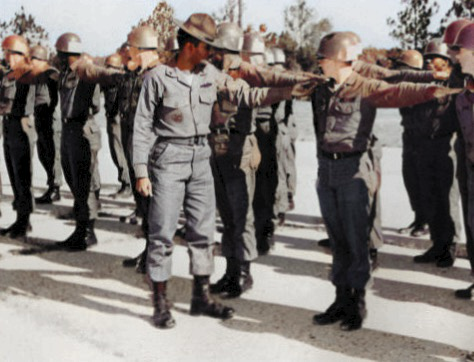
U.S. Army platoon in formation for inspection. Dress-Right-Dress command. Soldiers in olive drab fatigues with helmuts. Autobiography of Dr. Anthony J. Carbone.

Being Super Numero meant I was on my own. I used the time to call Mariann and my family. Standing there, I reflected on all the boots I had polished for my father and the lessons he had taught me. Everything he had instilled over the years had prepared me for this moment, and for the challenges ahead as a cadet — and eventually, an Army officer.

Leadership in the Field

Once we had mastered the basics of soldiering, the remainder of Advanced Camp focused on leadership development. Instructors began selecting a single cadet to serve as the leader for each task or exercise.

We were often broken into 12-man squads, and a squad leader would be chosen to plan and execute the mission. The instructors would give us a Warning Order (WARNO)— a preliminary notice of a mission — then we had to develop a detailed Operation Order (OPORD), outlining objectives, tasks, and support for execution.

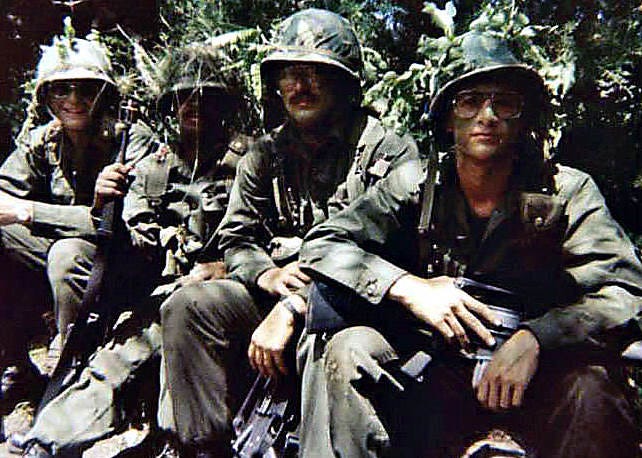
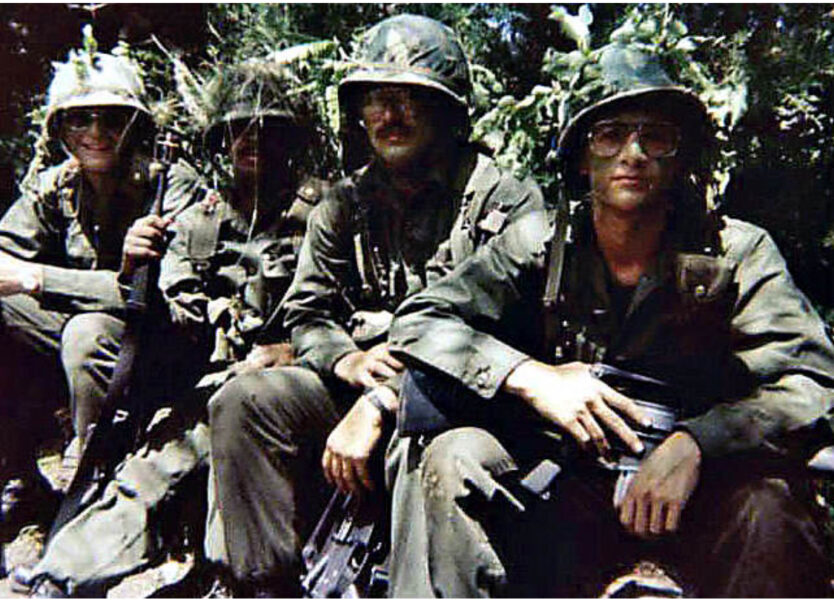
Photograph of me (in foreground) with 3 of my squad members during tactical training.  Wearing olive drab fatigues, camouflaged steel pot helmets, tactical gear and carrying our M16A1 rifles. Biography of Dr. Anthony J. Carbone
Me in the foreground with three of my squad members during tactical training at ROTC Advanced Camp

When it was my turn, the instructor pointed to an enemy position beyond a large hill. I had two options: the easy route around the hill, or a straight-up assault through a forest of thorn bushes. I chose the hard path.

It was brutal. Thorns tore at our uniforms and skin with every step. But the risk paid off — we completely surprised the enemy squad and ambushed them successfully. The instructors were impressed. I received an on-the-spot Special Recognition, one of only a handful awarded among the 5,000 cadets at camp that summer. Once again, my father’s lessons rang true: sometimes the hard route is the right route.

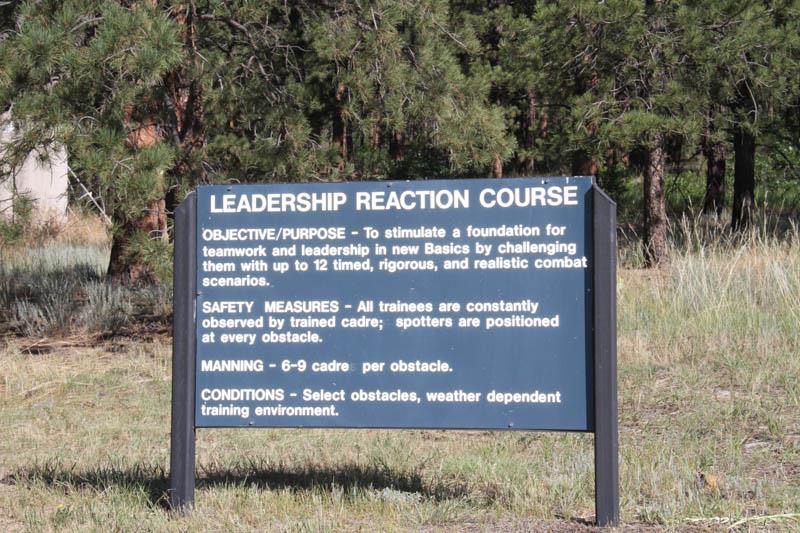
The Leader’s Reaction Course

The next phase of Leadership Development was a full day at the Leader’s Reaction Course (LRC). Rumor had it the course had been developed by former German Field Marshal Rommel, though the origin didn’t matter once you were standing at the edge of a water obstacle with a squad waiting on you.

The course was designed to test everything a future officer needed: decision-making under pressure, clear communication, teamwork, initiative, and the ability to adapt on the fly. Obstacles were both physical and mental, forcing a cadet to think critically while leading a squad of varying strengths, weaknesses, and even injuries.

At Fort Riley, the LRC was a long series of water obstacles. Each challenge required that no one touch the water. A typical scenario involved a shallow pool of dark green water with a tall wall in the center, and we were given a bucket, a roll of rope, and a single wooden board. Fifteen minutes to get the entire squad across. Success required creativity, coordination, and making sure the slowest or weakest cadet crossed safely.

When I was chosen leader, I orchestrated each step, moving all twelve of us across successfully. For this, I earned my second on-the-spot Special Recognition. It was a defining moment, proving that leadership is as much about guiding your team as it is about completing the task.

Recondo

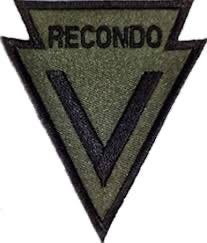
One of the proudest moments of my ROTC Advanced Camp at Fort Riley in 1980 was earning the prestigious Recondo badge. “Recondo” stood for reconnaissance and commando, and only a small percentage of cadets achieved it.

Subdued olive drab RECONDO badge with arrowhead.  Biography of Dr. Anthony J. Carbone.

To qualify, we had to exceed the already demanding standards in every graded event. That meant scoring well above average on the Army Physical Fitness Test, negotiating most of the obstacles on the Confidence Course, qualifying sharpshooter or higher on the rifle range, and excelling in land navigation both day and night. We had to complete a six-mile road march in under ninety minutes, pass the grenade assault course, and perform to standard on warrior skills and tactical evaluations.

There was no room for failure — every requirement had to be met on the first try, with no disciplinary blemishes along the way.

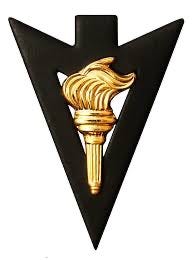
US Army Recondo Badge with black arrowhead and gold torch. Biography of Dr. Anthony J. Carbone.
Recondo Badge

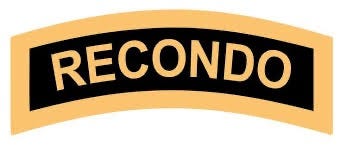
Earning Recondo was about more than just physical ability. It demanded focus, consistency, and leadership under stress. By the time I pinned the badge on my uniform, I felt a deep sense of accomplishment. It wasn’t just another award — it marked me as someone who could be counted on to meet the toughest challenges head-on. To this day, I still remember how proud I was to walk away from Advanced Camp with that Recondo badge on my chest and the black and gold tab on my shoulder.

Black and Gold RECONDO tab to be worn on shoulder sleeve.  Biography of Dr. Anthony J. Carbone.

Branch Week

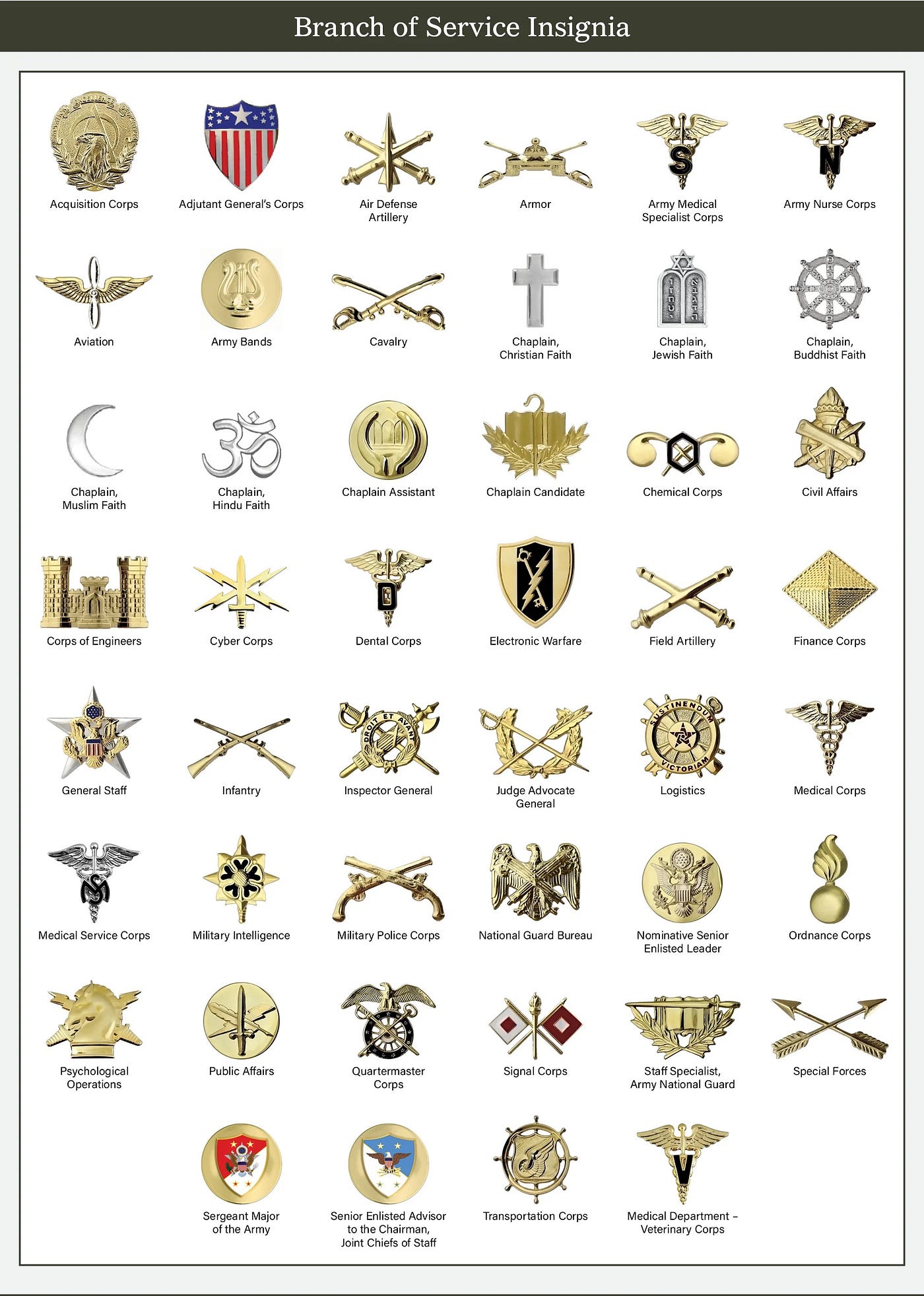
The final phase of Advanced Camp was my favorite — Branch Selection. This was the week when we got a taste of every major branch of the Army before returning to campus for our final year of college and ROTC. Soon, we would have to submit our top three choices for the branch we wanted to serve in after commissioning — a huge decision for any cadet.

Chart of U.S. Army Branch Insignia.  Biography of Dr. Anthony J. Carbone.

The cadre did their best to give us a realistic glimpse of each branch’s life, challenges, and responsibilities.

Infantry

“Queen of Battle”. The foundation of all soldiering. Everything we did at Advanced Camp was Infantry. Marching, maneuvering, firing weapons and leading squads reinforced everything we had learned.

Artillery

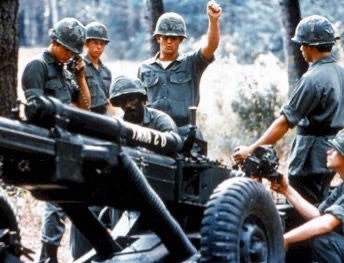
“King of Battle”. We learned to compute target acquisition and fire real Howitzer rounds. We put the fuses on the round. Filled the shell with explosives. Computed the elevation and deflection. And got to pull the lanyard. The recoil and thunder of a shell leaving the tube was unforgettable.

Armor & Cavalry

Combat Arms of Decision”. Tanks, tracked vehicles, and the chance to fire an M60 tank round. A female cadet was chosen for the live-fire demonstration, which was unusual given 1980s regulations. I knew tanks intimately from my father, and driving around fifty-two tons of steel was exhilarating. Watching them fire round downrange was even more thrilling.

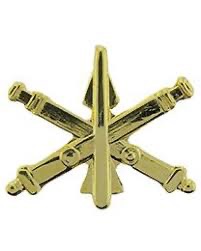
Air Defense Artillery

“First to Fire”. Air-conditioned vans filled with radar screens were almost tempting after the heat wave we’d endured for weeks. But something told me that these guys were high-priority targets for the enemy.

Medical Service Corps

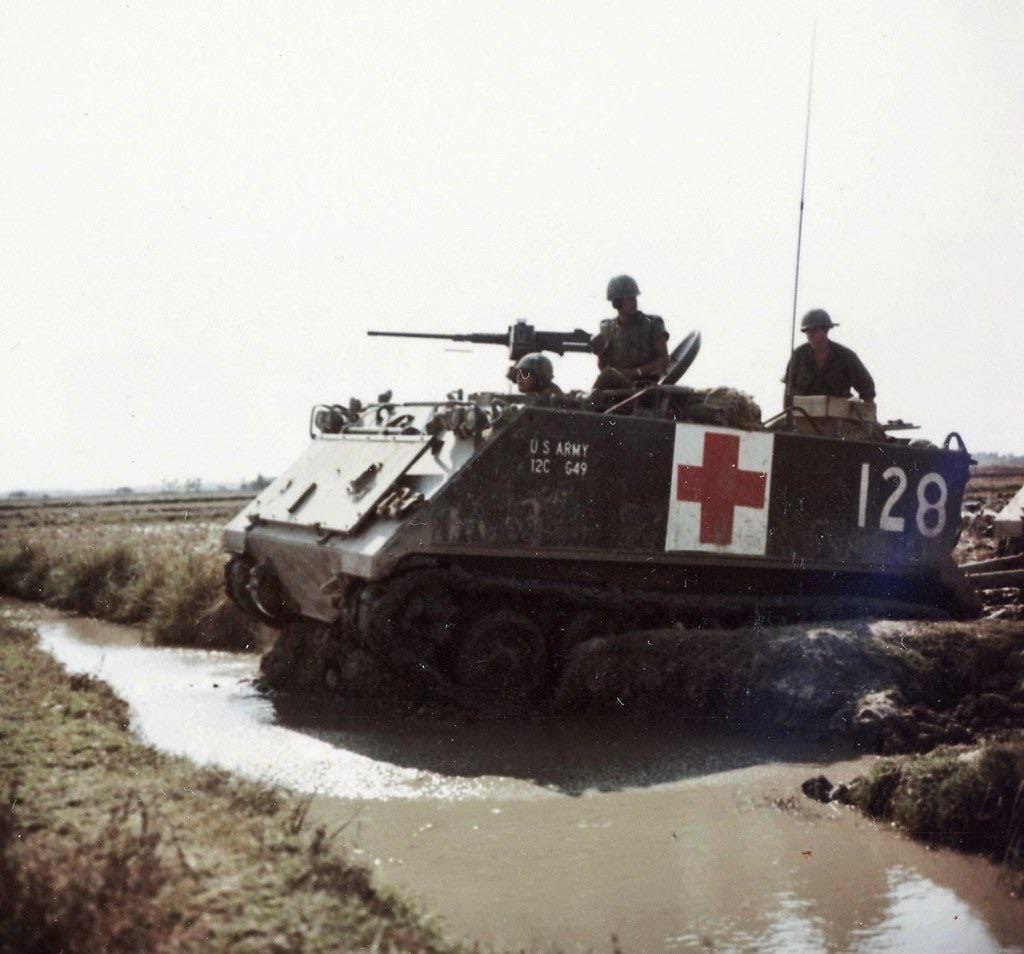
To Conserve Fighting Strength”. Ambulances and field hospitals fascinated me, and I knew this branch would tie directly into my future in the Medical Corps.

Aviation

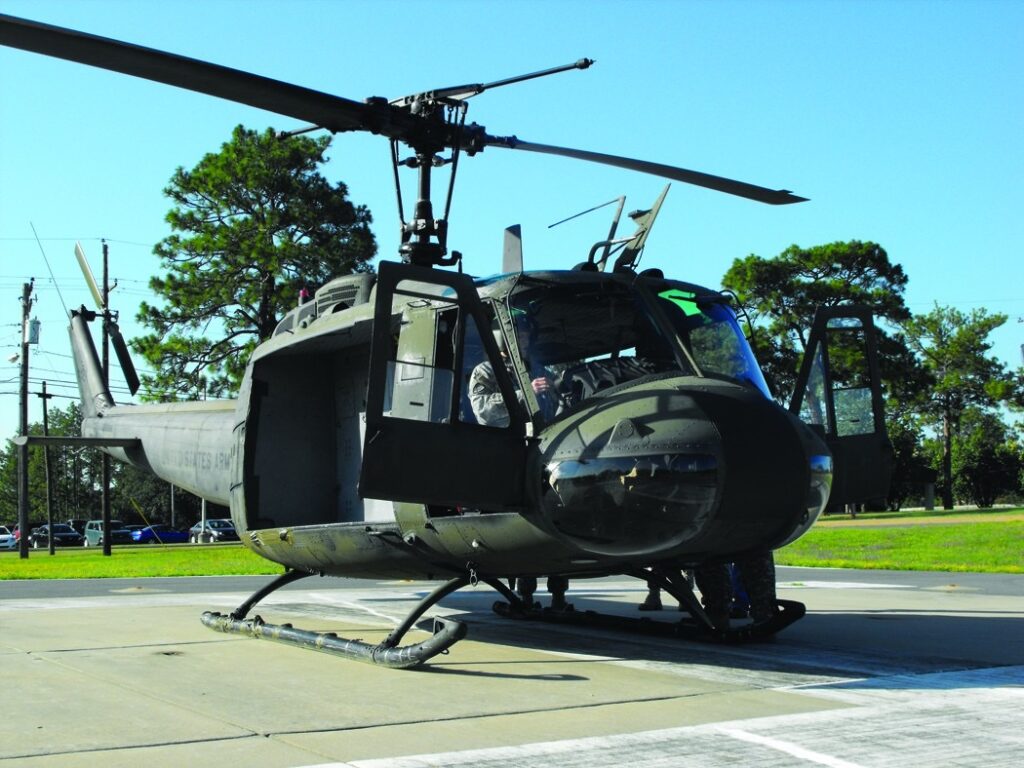
“Above the Rest”. Army airplanes and helicopters were awe-inspiring. Everyone wanted to fly. I struggled between Aviation and Medicine until I realized I could become a Flight Surgeon — combining both passions.

Military Intelligence

Always Out Front”. Their display of Soviet uniforms, AK-47s, maps, and Russian signage captivated me. I tried to decide between Medicine, Aviation, and Intelligence. In the end, practical limitations helped: I couldn’t apply for Aviation because I wore glasses.

Branch Choices

My final three branch choices were: (1) Military Intelligence, (2) Medical Service Corps, and (3) Armor Branch.

Graduation

Advanced Camp was six weeks of extremes — heat, exhaustion, and relentless training. It pushed us to the edge, testing everything from basic soldiering to leadership under pressure. For me, it was life-changing: it forged resilience, cemented friendships, and gave me clarity about the path I would follow as a future Army officer. When it was over, I graduated among the top five cadets out of the thousands at Advanced Camp — a recognition that validated the hard work, the sacrifice, and the determination it had taken to get there. More importantly, it marked the beginning of a professional journey that would carry me into greater challenges and responsibilities, shaping the course of my Army career in ways I was only beginning to imagine.

U.S. Army ROTC company at ROTC Advanced Camp with guidon and barracks in background.  Biography of Dr. Anthony J. Carbone.
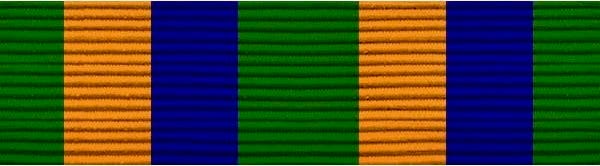
Green, Orange, and Blue ribbon awarded for completing U.S. Army ROTC Advanced Camp.  Biography of Dr. Anthony J. Carbone.
Ribbon for Completing ROTC Advanced Camp

Home Page

Chapter 16: My first semester at Notre Dame

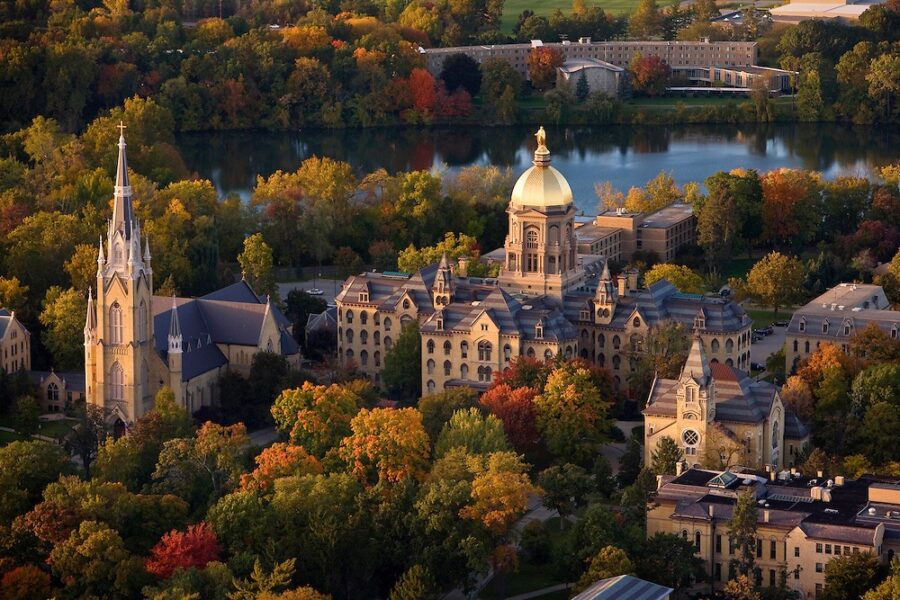
Aerial view of campus of University of Notre Dame. Showing the Golden Dome and Our Lady above the Admin Building. Autobiography of Dr. Anthony J. Carbone.

Believe Nothing You Hear, and Only Half of What You See — A memoir of Service, Shame and the Search for Truth

My First Week of College at Notre Dame

By the time the first official week of college began, our long summer of anticipation was finally over. The buzz of orientation events and the flurry of new friendships had barely settled when a singular rite of passage landed in our hands and marked our true arrival into Notre Dame life.

The Infamous Dog Book

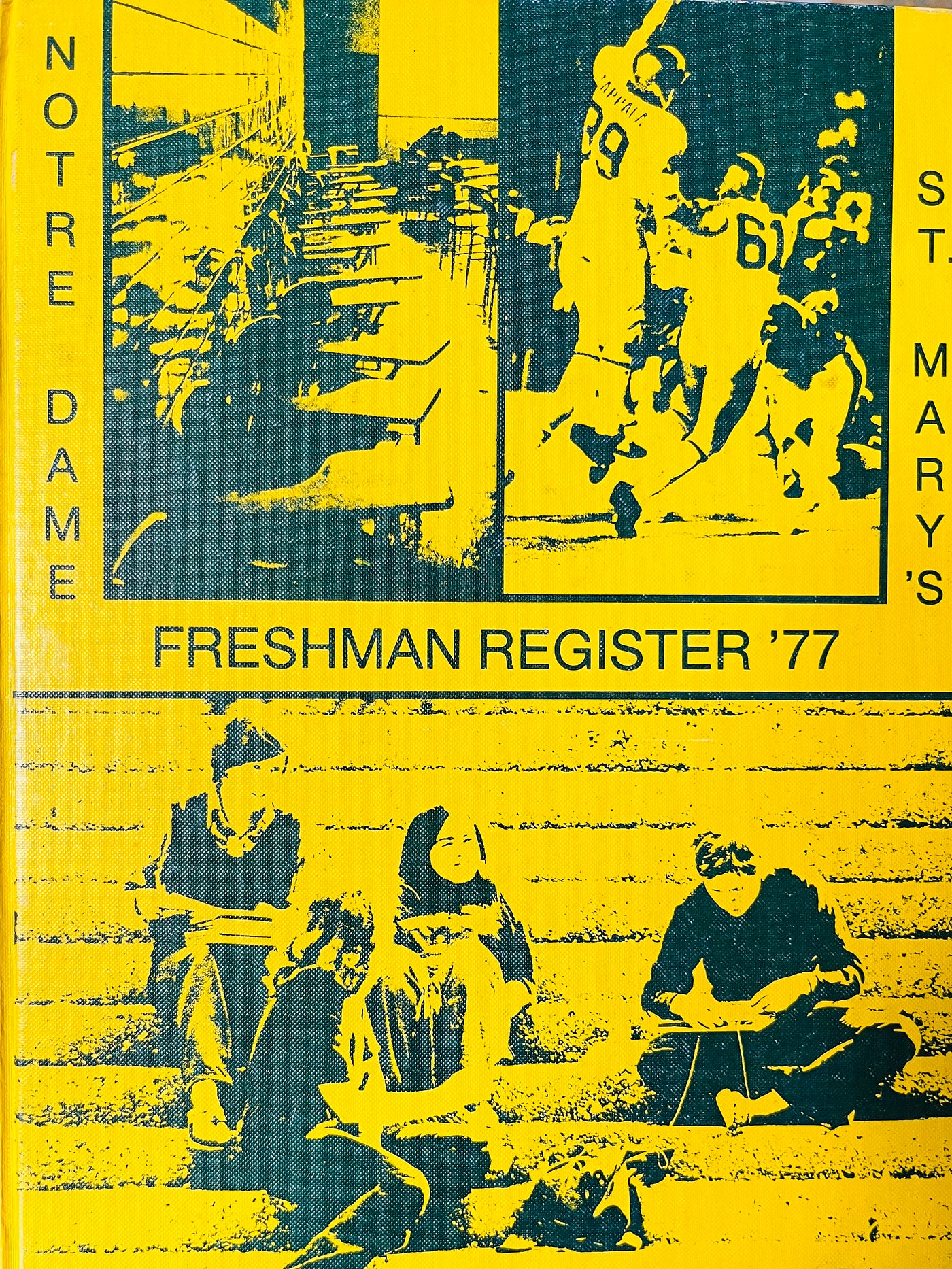
It came wrapped in glossy pages. The little blue-and-yellow hardback — formally titled The Notre Dame & Saint Mary’s Freshman Register, Class of 1977— was better known across campus by its infamous, irreverent nickname: The Dog Book.

Notre Dame & St Mary’s College Freshman Register ’77 (The “Dog Book”)

The Girls of Saint Mary’s

Now, let me clarify from the start: the girls of Saint Mary’s were anything but “dogs.” The name was a holdover from Notre Dame’s all-male history and had lingered through decades of tradition and crude humor. But if you were a freshman guy in 1977, you knew exactly what the Dog Book meant. It was your first unofficial introduction to the incoming class — your own classmates and, far more tantalizingly, the women across the road at Saint Mary’s College.

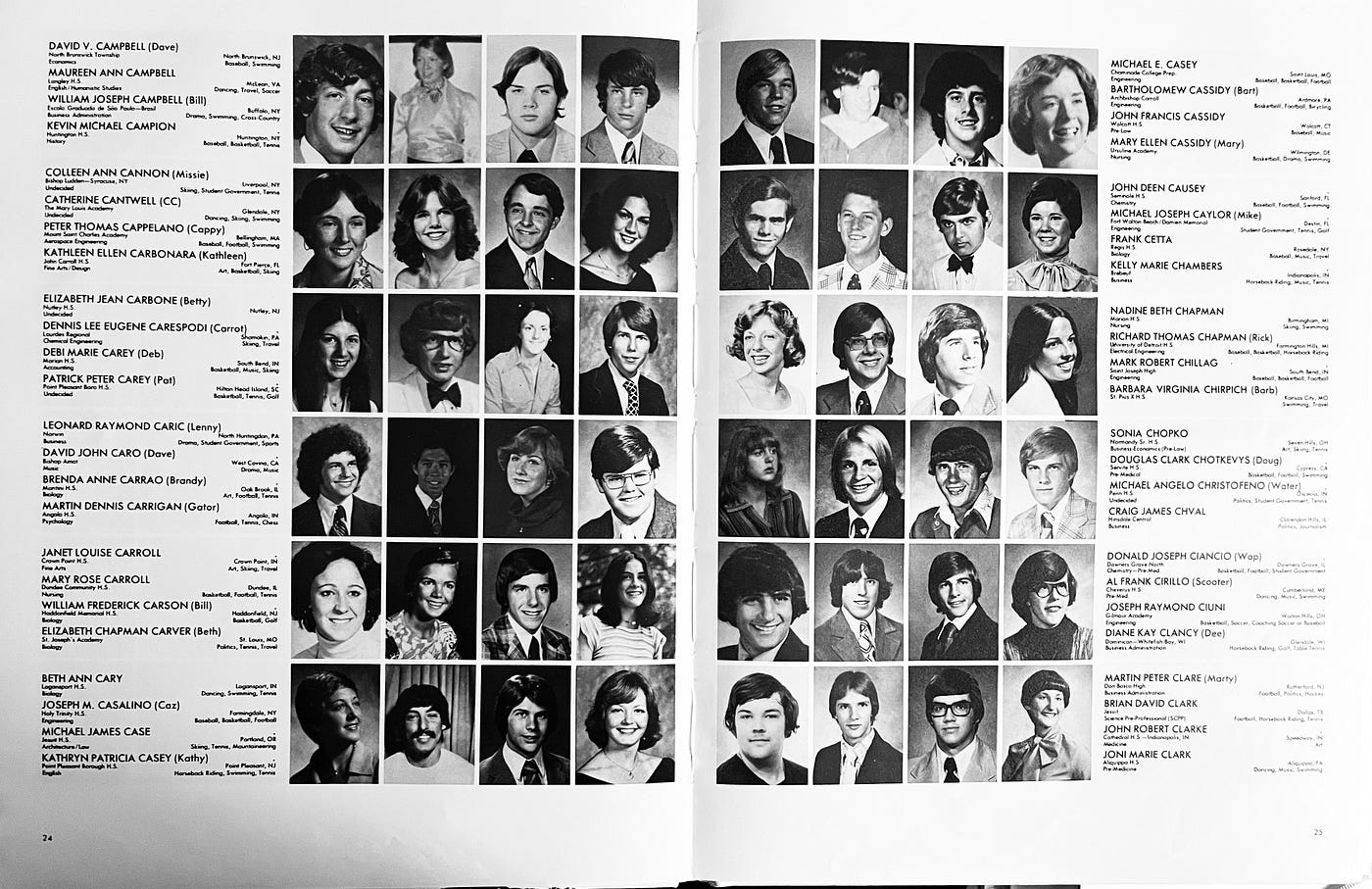
The book was laid out like a catalog: headshots of every incoming freshman at both schools, organized alphabetically. Each photo came with a name, nickname (if they had one), hometown, high school, and intended major. No bios. No blurbs. Just faces, facts, and enough fuel for hours of hallway commentary.

The moment the Dog Books were delivered to Fisher Hall, tradition took over. Guys poured out of their dorm rooms with books in hand and formed an impromptu gathering in the hallway. We sat cross-legged against the cinderblock walls, flipping pages together as if we were drafting fantasy football teams — or, more accurately, evaluating potential dates, girlfriends, and future wives.

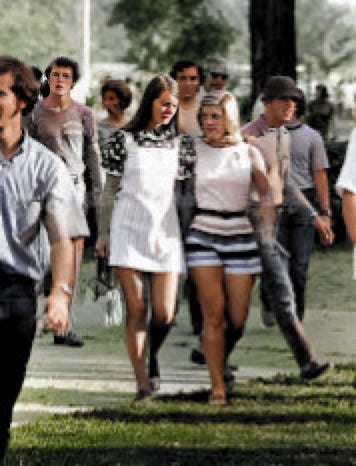
Girls of Saint Mary’s College mingled among the boys on the campus of Notre Dame

The jokes flew fast. So did the judgments. Someone would point at a photo and say, “She looks like trouble.” Another guy would shout, “Bottom of Page 56 — dibs!” Every once in a while someone would spot a classmate or recognize a name and make a big show of it, good or bad. It was crude, superficial, often cruel — but also a strange kind of bonding ritual.

I Avoided Being in the Dog Book

And I remember one very specific feeling: relief. I wasn’t in the Dog Book. Not a picture. Not a nickname. Nothing. Because I hadn’t applied to Notre Dame the traditional way, my name had been left out of the publication entirely. I watched the teasing pile up on a few poor souls — guys and girls alike — and silently thanked the registration gods for my invisibility. That day, anonymity was a blessing.

Notre Dame & St Mary’s Freshman Register from 1977 (Showing Elizabeth Carbone and no Anthony Carbone)

For all its dated humor and objectifying overtones, the Dog Book was a tradition. And like so many Notre Dame traditions, it was one we absorbed without question — half-laughing, half-cringing, entirely immersed in the absurdity of it all.

Saint Mary’s College (SMC): The College Across the Street

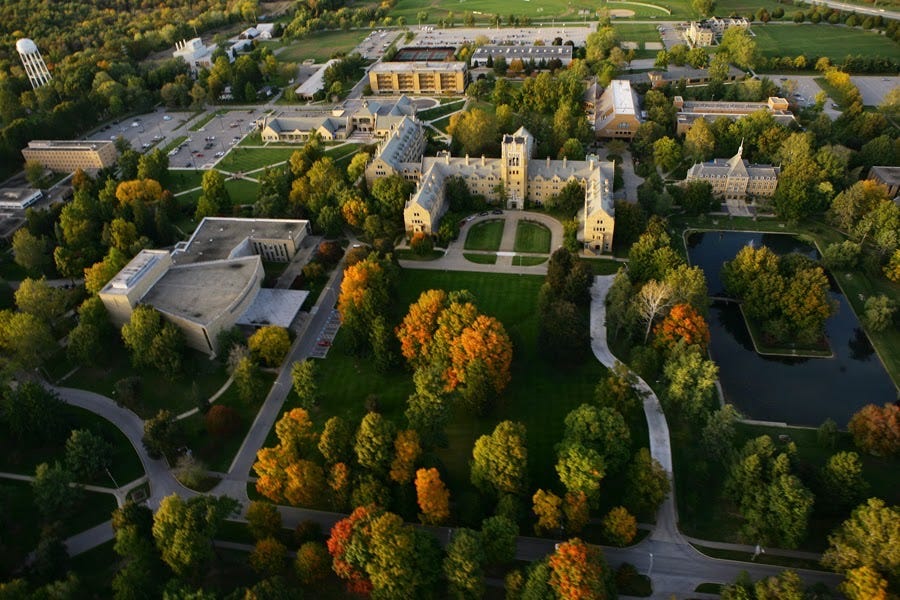
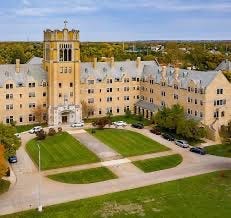
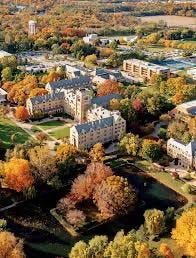
Aerial photograph of Saint Mary’s College, Notre Dame, Indiana.
Aerial view of Saint Mary’s College, Notre Dame, Indiana

To really understand the role the Dog Book played in campus life, you had to understand something about the girls across the street. Saint Mary’s College (SMC), a Catholic women’s college sponsored by the Sisters of the Holy Cross, stood just across U.S. Route 933, a short walk from the main gates of Notre Dame. But culturally, it often felt a world apart.

In 1977, Saint Mary’s enrolled 876 students, with 101 new applicants joining that fall. Student life at SMC was still steeped in tradition and governed by parietal rules that had barely budged despite the cultural revolutions of the late ’60s and early ’70s. These rules restricted when and how male visitors could enter the women’s dorms — usually limited to certain weekend hours, and always under strict supervision. The Sisters of the Holy Cross (CSC) still played an active role on campus, both academically and spiritually, guiding their students with a sense of purpose, decorum, and discipline.

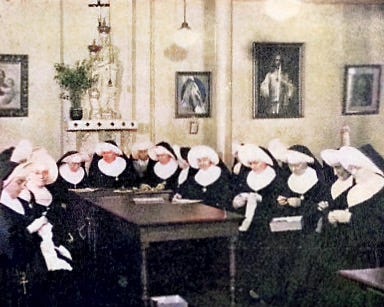
The Sisters of the Holy Cross (CSC)

My First Venture to Saint Mary’s

LeMans Hall

Like most Notre Dame freshmen, I was more than a little fascinated by the girls of Saint Mary’s. They seemed like a blend of grace, charm, mystery — and yes, temptation. I forget exactly how I met my first SMC coed, but I was invited over to her dormitory, Le Mans Hall, for a Saturday evening visit early in the semester.

LeMans Hall at Saint Mary's College across from the University of Notre Dame.  Biography of Dr. Anthony J. Carbone.
Le Mans Hall at Saint Mary’s College

Rules of Saint Mary’s College

I was already nervous walking across the road by myself, unsure of the etiquette or expectations. But when I arrived, things got a whole lot more intimidating. There was an elderly nun stationed at the reception desk in the front hall. She asked me, in a tone that made it clear she was not one to be trifled with, what my intentions were. I stammered something about being invited, and obediently handed over my Notre Dame ID card when she requested it.

Getting Past the Front Desk

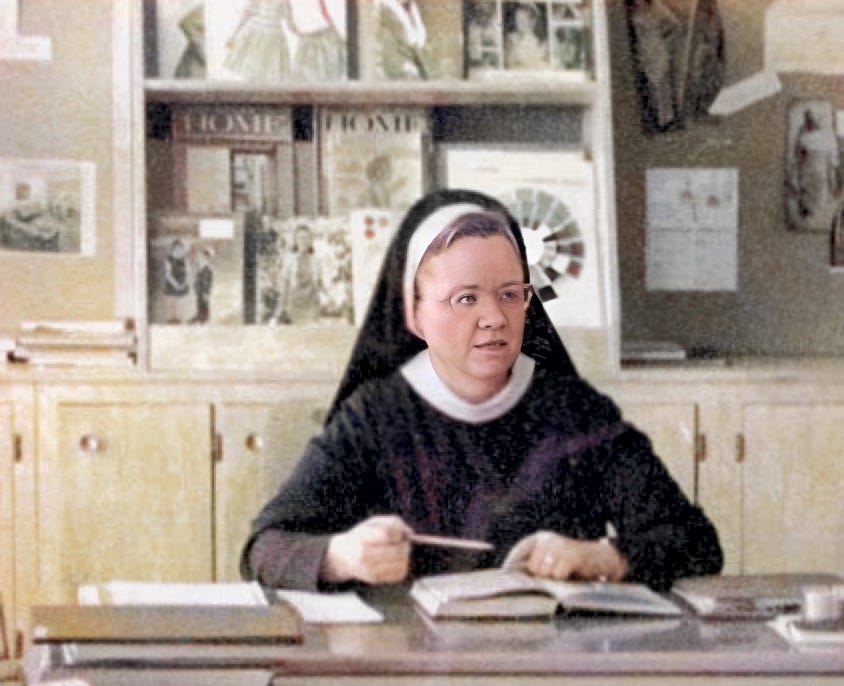
Photograph of older religious sister at a desk at Saint Mary's College.  Biography of Dr. Anthony J. Carbone.

Then came the interrogation. She called upstairs to verify that the young lady had indeed invited me, and when the coed confirmed, the nun told her to come down to escort me personally. No unsupervised wandering was allowed. Once upstairs, I was so on edge that I can barely remember the girl, her room, or what we even talked about. All I remember is the phone ringing about forty-five minutes into our visit. It was the same nun, calling the room to speak to me directly.

“Anthony,” she said in a clear, commanding voice, “you have fifteen minutes to leave the dormitory before parietal hours begin.” Parietals. That was the Notre Dame–SMC term for the formal rules regulating male visitation in female residence halls — rules that had the force of institutional and moral authority behind them. Once parietals began, all male guests had to be out, no exceptions. And this particular nun wasn’t leaving anything to chance.

I thanked her, hung up the phone, and left immediately — heart racing, palms sweating, a little dazed by the whole ordeal. I honestly don’t remember if I ever went back to that room, or even spoke to the young lady again.

It wasn’t just the strictness that kept me away. I was busy — pre-med classes, ROTC, and intramural soccer didn’t leave much space for cross-campus courtships. But I’d be lying if I said the nun hadn’t made a lasting impression. Avoiding Sisters of the Holy Cross became something of a subconscious strategy that semester.

The Saint Mary’s Panty Raids

I didn’t set foot in a Saint Mary’s dorm again until the panty raid in the spring — a decades-old tradition that had long blurred the line between innocent fun and cultural cringe. The stories from the women of Saint Mary’s say it all.

“Our room being on the second floor… provided the best view for Panty Raid. Seeing all the guys run up The Avenue near midnight, yelling, and girls screaming back, was quite a sight… Some girls actually threw panties down!” — Alice M. Tsui, Class of 1970

“I remember calling my mother and telling her I needed all new underwear because I had thrown almost all my things to the boys.” — Judy Johnson Crates, Class of 1970

“The ND guys got into the dorm and were trolling the halls… We pushed a desk up against our door and watched through the transom while the campus guards tried to chase them down!” — Karen Preston McCarty, Class of 1970

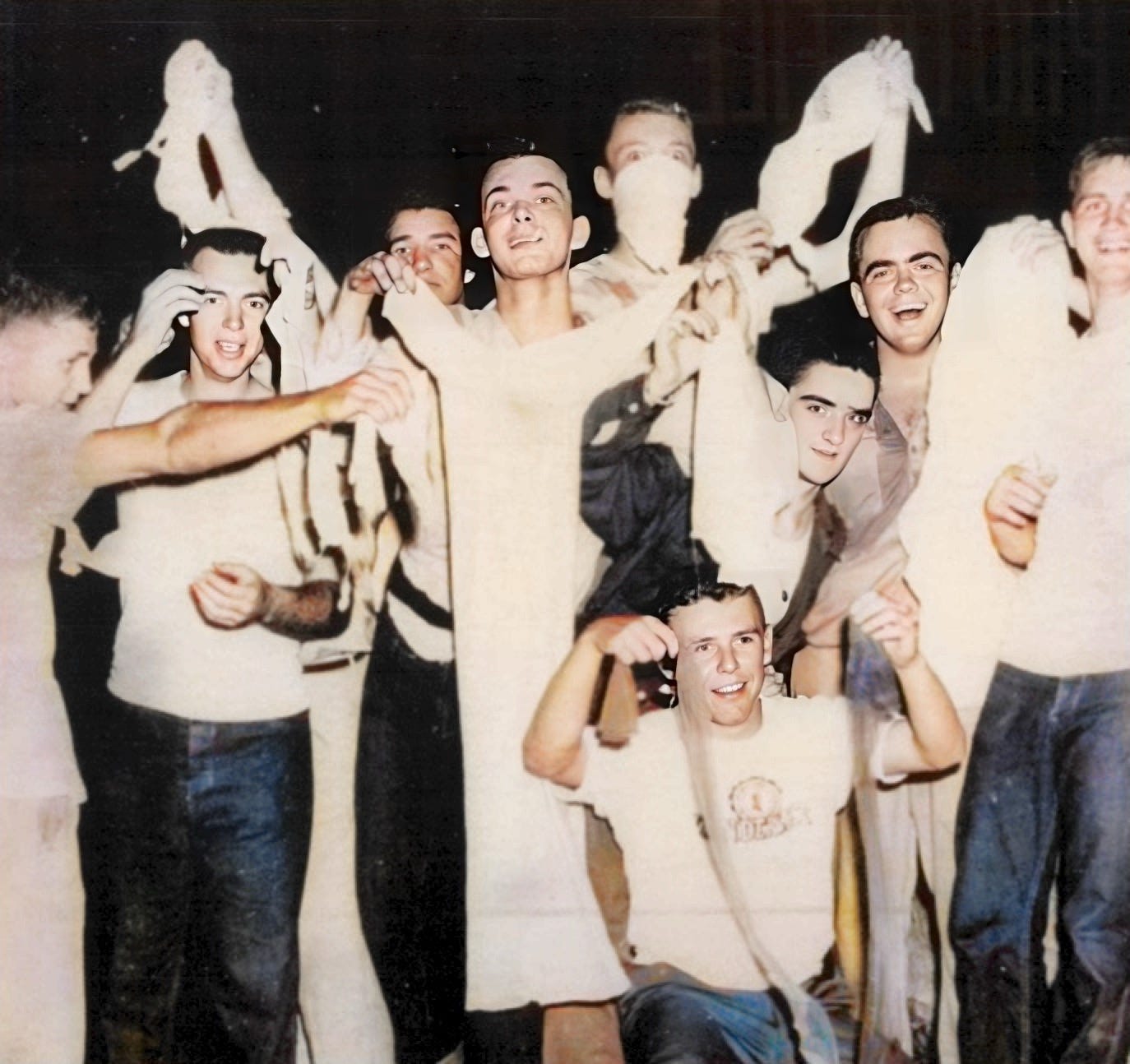
Group of Notre Dame boys holding lingerie from a recent Panty Raid at Saint Mary's College.  Biography of Dr. Anthony J. Carbone.
Notre Dame boys at St. Mary’s panty raid

It was outrageous. It was immature. And in hindsight, it’s the kind of thing that could never — and probably should never — happen today. At the time, we actively embraced many bizarre traditions as part of life under the Golden Dome.

Even by the time I was a freshman in 1977, the tradition was beginning to fade, or at least lose its luster. But the lore lingered. And for many of us, that was more than enough to keep the mystique of Saint Mary’s alive — whether we were brave enough to cross the Avenue or not.

Cadet Life Begins

While dorm pranks and hallway rituals offered a strange kind of social education, my real initiation into Notre Dame life came through two far more demanding callings — both of which began to take shape that very first week. I arrived on campus with a clear and heavy burden: two missions, equally urgent.

The first was academic. I was a pre-professional science major on the pre-med track, and I knew that earning a shot at medical school would take everything I had. There were no shortcuts. No excuses. I had to perform — and outperform — starting on day one.

The second mission was military. As an Army ROTC scholarship cadet, I actively committed—both contractually and personally—to developing into a leader capable of earning a first-class lieutenant commission by graduation.

That meant discipline, training, and excellence in every formation, drill, and leadership lab for the next four years. Two tracks. One man. No room to stumble.

So while most of my classmates were still finding their rhythm in dorm life, I was already switching gears — fast. I traded in the laughter of Dog Book hallway sessions and the chaos of panty raids for the early-morning demands of a cadet’s life. Gone were the Sperry’s and free time. In their place: combat boots, pressed uniforms, tight schedules, and 0600 alarms.

ROTC and Reality

The day of ROTC orientation began with the usual morning routine in Fisher Hall: a shower down the hall, a quick breakfast at South Dining Hall, and then a walk across campus. The morning sun lit the yellow brick buildings beautifully as I passed the Knute Rockne Memorial Gym — “The Rock” — on my way to the ROTC building.

Knute Rockne Memorial Building on the South Quad of the University of Notre Dame.  Biography of Dr. Anthony J. Carbone.
Knute Rockne Memorial Building

Professor of Military Science (PMS)Lieutenant Colonel Henry J. Gordon greeting us. A team of senior cadets who had clearly been through it all before also helped us.

Professor of Military Science (PMS) LTC Henry Gordon, University of Notre Dame. Biography of Dr. Anthony J. Carbone.
Professor of Military Science (PMS) for University of Notre Dame, LTC Gordon

Received my Army ROTC Basic Issue

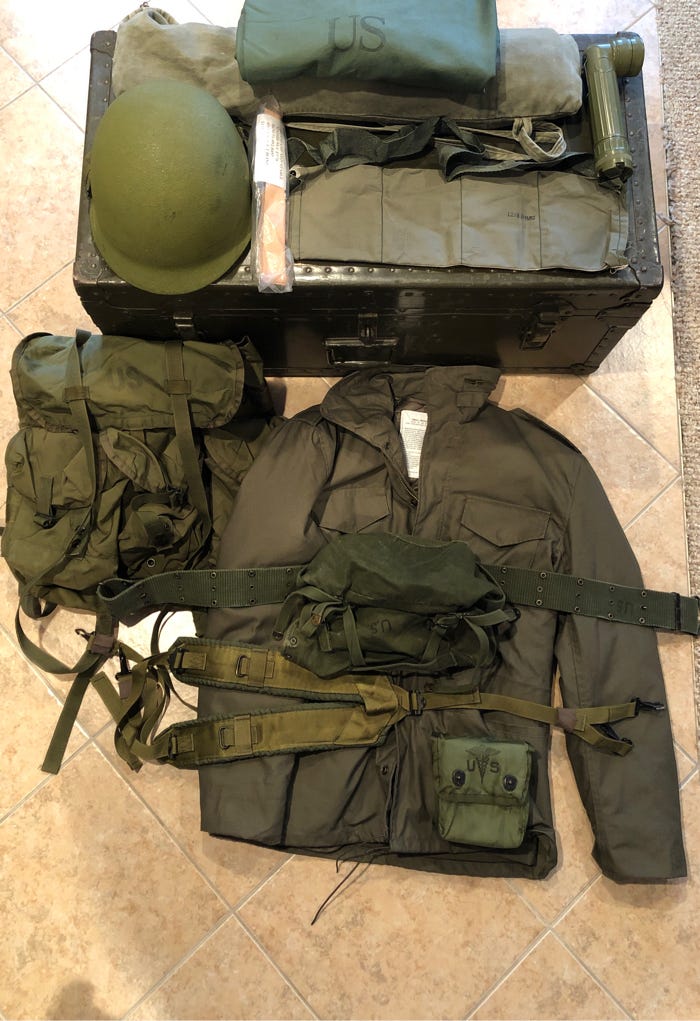
The orientation included a historical overview of Notre Dame’s long-standing military tradition, stretching back to the Civil War, officially formalized in 1951. There were about 50 of us new Army cadets. We were issued our fatigues, boots, T-shirts, caps, helmut, a few other GI items — our first taste of uniformed life.

U.S. Army basic issue of gear including steel pot Helmut, flashlight and footlocker.  Biography of Dr. Anthony J. Carbone.

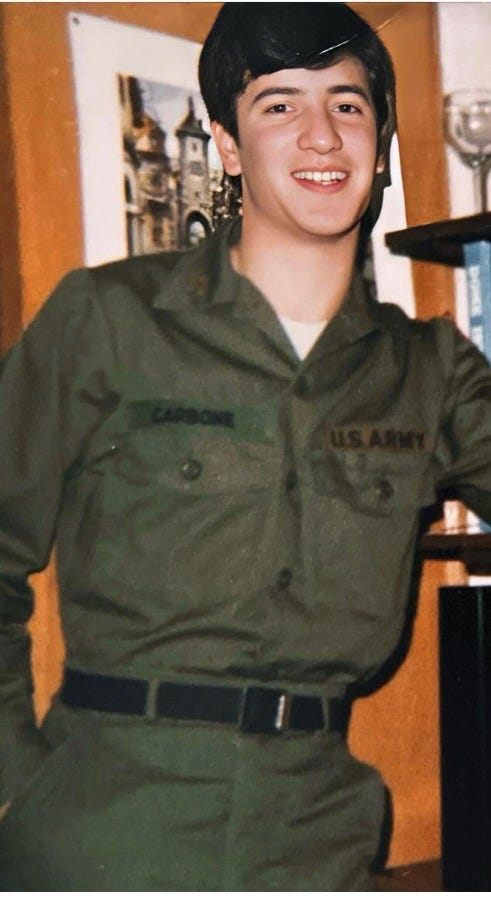
For most, it was a novelty; yet, for me, it was second nature. I had grown up watching my father in his starched olive drab fatigues, crisp white T-shirts, and brightly colored unit patches. By 1977, ROTC cadets like me were still wearing the OG-107 uniform — green fatigues with subdued patches. The details had changed, but the discipline hadn’t. I knew how a uniform should look. And as you know, I was already a master boot-shiner. The rituals felt more familiar than foreign.

My Father & Me in the Old & New Army Fatigues

Truthfully, the orientation itself felt underwhelming. Compared to what I imagined at West Point, it felt like a watered-down version. I left wondering — again — if I had made the right choice turning down my West Point appointment.

Pre-Med at Fisher Hall

Back at Fisher Hall, I connected with Bob Terifay, the other pre-med student in our section. He was brilliant, confident, and pathologically competitive — a natural leader of the freshmen, even though no one had elected him. He already seemed to have every textbook memorized. I had no problem striving for A’s, but I didn’t get any joy from beating my classmates. I would have been happy if we all aced the exams. That wasn’t Bob’s style.

Robert Terifay, Pre-Medicine at University of Notre Dame.  Biography of Dr. Anthony J. Carbone.
Bob Terifay, Pre-Med, Fisher Hall Freshman

In Bob Terifay’s defense, Bob was a great guy. A genuinely nice guy, smart as a tac, faithful Catholic boy. Bob was the unofficial leader of our Fisher Hall section. He would step out of his dorm room when it was dinnertime, clap his hands, and announce dinnertime to all by yelling “Pret!” (French for “Ready!“) Bob’s only problem was that he was a pre-med student at Notre Dame.

ROTC Scholarship Pays for Books & Supplies

I stuck close to him for a while because he had insider knowledge. He told me what to expect, what to prep for, and which professors to avoid. We walked together to the Hammes Bookstore, where a I learned a wonderful surprise — my ROTC scholarship covered all my books and supplies. That was a massive relief.

My First Year Academic Load

Many of our classes overlapped, except for Military Science and German. My first year schedule of courses included two semesters of: General Chemistry I&II with lab, Calculus I&II, English Composition & Literature, Intro to Philosophy, Intro to Sociology, Intermediate German, and Military Science.

The schedule was punishing. Science labs were four-hour marathons that earned just one credit hour. ROTC drills and PT demanded more time. Tuesdays were especially brutal — leadership labs in the afternoon, military class in the evening.

My Prep School Classmates-CLEP’d

What made it worse was this: many of the other pre-meds had come from elite Catholic prep schools and private academies. Most had CLEP’d out of chemistry, biology, or calculus thanks to AP credits. They were already a semester — sometimes a year — ahead of me. I had no such advantage. I came from a strong public high school, but I was starting from zero. And I knew I had to work twice as hard to keep up.

Advanced Placement AP Textbooks Calculus Biology Chemistry History.  Biography of Dr. Anthony J. Carbone.

Army ROTC Drill

Drill periods were a throwback. We trained with M1903 Springfield rifles — heavy, nine-pound bolt-action relics from World War II. We practiced saluting, standing at attention, and performing the full 15-Count Manual of Arms. I can still snap it off to this day. If you could master the Springfield, the M16 was a walk in the park.

My First Day of Class

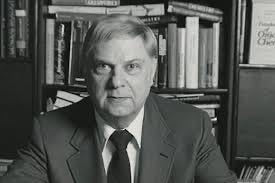
My first day of classes at Notre Dame must have been so chaotic and overwhelming that I only remember one class: General Chemistry I. The legendary Professor Emil T. Hofman, who also served as the Dean of the Freshman Year of Studies was our teacher.

The Legendary Dean Emil T. Hofman

Emil T. Hofman, Dean of Freshmen Year Studies & Professor of Chemistry. University of Notre Dame. Dr. Carbone Autobiography.
Emil T. Hofman, Dean of Freshmen Year Studies & Professor of Chemistry

He was strict. In fact, he was so strict that he once gave future Nobel Prize in Medicine winner Eric Wieschaus — Notre Dame Class of 1969 — a B in both semesters of chemistry. Over four decades, Emil T. taught more than 60 percent of each freshman class. That totaled over 32,000 students, with more than 8,000 of them going on to become doctors. He was a Notre Dame institution unto himself.

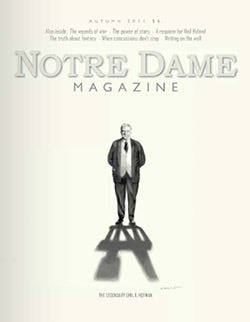
Dean Emil T. Hofman being celebrated on the cover of Notre Dame Magazine. Professor of Chemistry. Dean of Freshmen Year Studies. University of Notre Dame. Dr. Carbone autobiography.
Emil T. Hofman on the cover of Notre Dame Magazine

Basic Chemistry House Rules

First Rule: Begin with the Lord’s Prayer

The class began with a brief introduction. Then, with no warmup or small talk, Professor Hofman commanded, “Settle down!” before leading us in the Lord’s Prayer. Every class began that way. That was the First Rule of Chemistry Class. At the end of the prayer, he would say, “Queen of Peace,” and we would reply in unison, “Pray for us.” Without fail.

Second Rule: Quiz Every Friday

Next, he went straight into the second rule. There would be a mandatory seven-question multiple-choice question quiz every Friday covering the material presented during the week. These quizzes were known for being tough, motivating many students to spend their Thursday nights studying to prepare for them. The phrase “Deliver us from Emil” was a common student sentiment.

Third Rule: Assigned Seats and “These are the rows!”

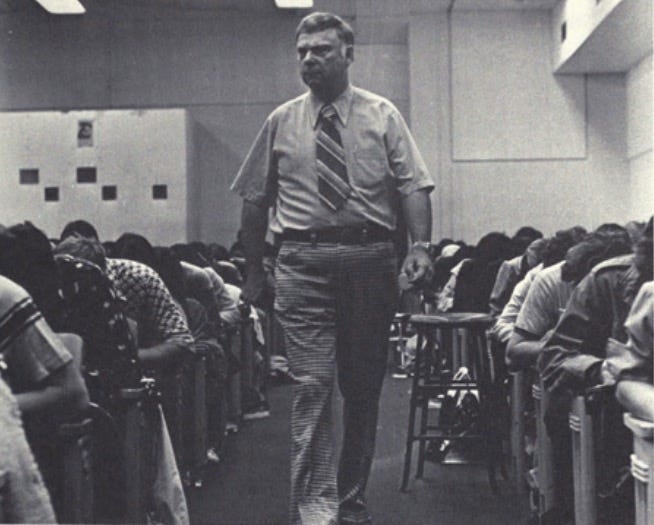
Assigned Seats: A key aspect of his first day routine, and indeed the entire semester, was the assignment of seats. Students were given specific seats they had to occupy for every class, a practice that ensured attendance could be easily monitored and probably discouraged late arrivals or skipping class.

“These Are the Rows!”: Related to the assigned seating, Hofman had a particular way of emphasizing the importance of staying in one’s assigned place. He would emphatically declare, “These are the rows!” This phrase reinforced the strictness of the seating arrangement and left no doubt that deviations would not be tolerated. This was likely a combination of setting expectations for discipline and ensuring a consistent classroom environment.

Dean Emil T. Hofman proctoring the weekly Friday Quiz. Professor of Chemistry and Dean of Freshmen Year Studies. University of Notre Dame.
Dean Emil T. Hofman proctoring the weekly Friday Quiz

When’s Your Birthday?

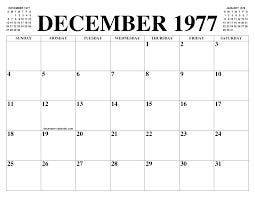
That’s when the girl sitting to my right turned towards me and abruptly asked, “When’s your birthday?” I told her, “Me? December 3rd. Why?” She replied, “Oh, just curious,” and she went back to listening to Professor Hofman. She didn’t say another word to me — not that day, not the next, not for months.

Calendar from December 1977 showing my birthday, 3 December, on Saturday.  Biography of Anthony J. Carbone.

My 18th Birthday

2 Girls and 2 Birthday Cakes

Then came Saturday, December 3rd, 1977 — I was 18 years old. Out of nowhere, that same beautiful girl and her equally beautiful roommate knocked on my door in Fisher Hall, holding a homemade birthday cake. “We came to celebrate your eighteenth birthday,” they said. They lit eighteen candles, sang “Happy Birthday to You,” and handed me a slice.

My First R-Rated Movie Followed by my First Beer in a Bar

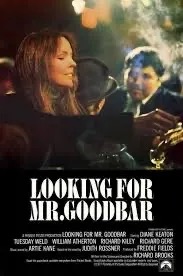
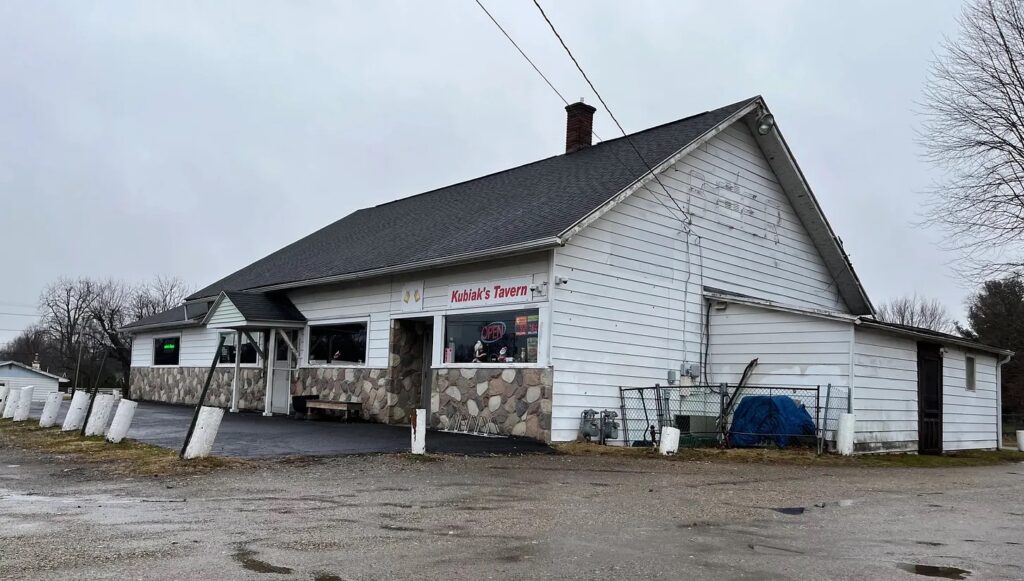
Then things got interesting. They took me to my first R-rated movieLooking for Mr. Goodbar. Sitting between two beautiful girls I barely knew during that particular film was, to say the least, uncomfortable. Afterward, they drove me across the border into Niles, Michigan to Kubiak’s Tavern so I could legally order my first alcoholic drink. I think we danced a little at the bar, laughed a lot, and eventually headed back.

The Goodnight Kisses

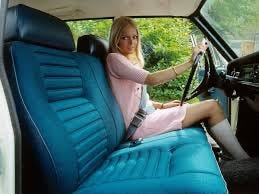
All three of us squeezed into the front bench seat of the car, me squarely in the middle. When we pulled up to Fisher Hall, I turned to thank them for the best birthday of my life and started to open the door.

Blonde girl in pink minidress and white boots in the driver's seat of a 1970s-era car with blue bench seats.  Biography of Dr. Anthony J. Carbone.

“Not so quick, Tony,” they both said. I turned back toward my classmate. “What?” She leaned in and gave me a five-minute French kiss. I was blown away. As I turned the other direction to open the door, her roommate gently pulled me back. “Slow down,” she said. Then she gave me a five-minute French kiss of her own. It was, hands down, the best birthday of my life.
Football Season and My Neighbor Joe Montana

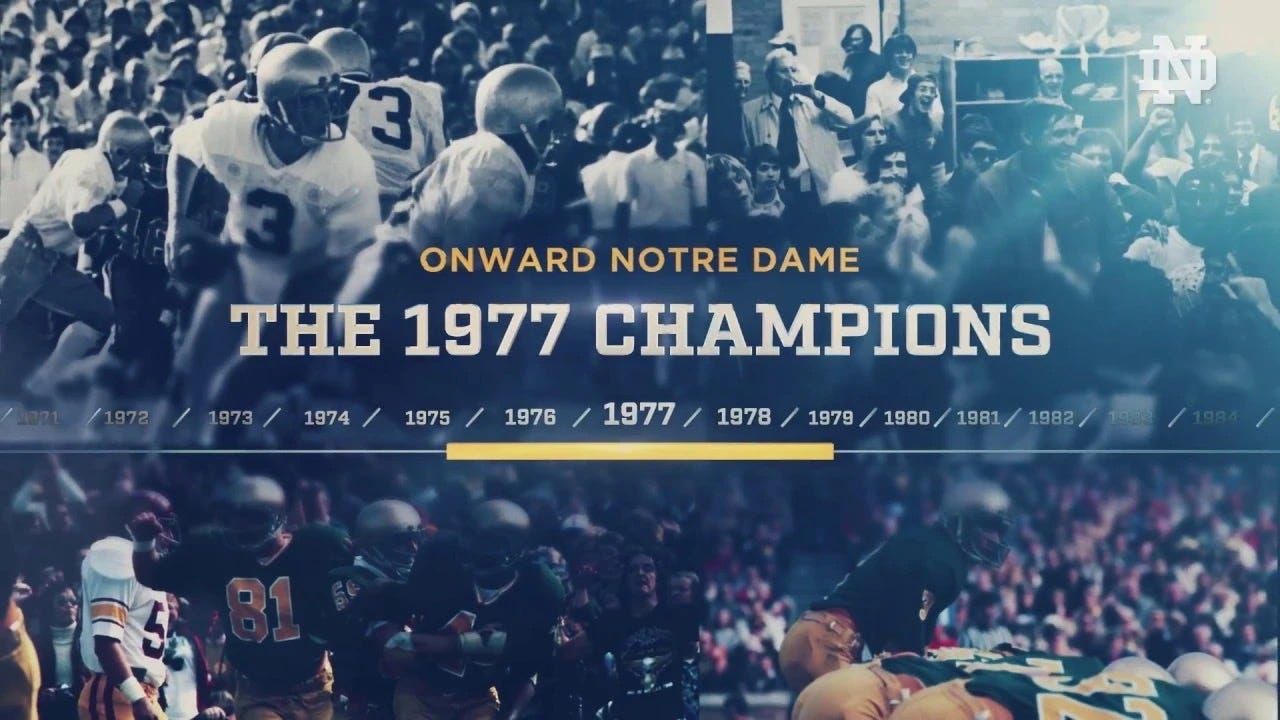
Without a doubt, the most exciting part of my freshman year at Notre Dame was football season — a highlight in any Domer’s college experience. But for me and every student in 1977, it was unforgettable because we won the National Championship.
1977 NCAA National Football Champions. University of Notre Dame Fighting Irish. Joe Montana. Dr. Anthony Carbone autobiography.

Notre Dame Fighting Irish Football Wins NCAA National Championship

That year, the Notre Dame Fighting Irish, coached by Dan Devine and led by quarterback Joe Montana, finished the season with an 11–1 record and capped it off by demolishing the previously undefeated and top-ranked Texas Longhorns 38–10 in the Cotton Bowl. That victory sealed our tenth national title.

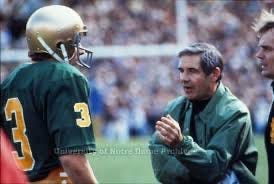
Quarterback Joe Montana and Coach Dan Devine

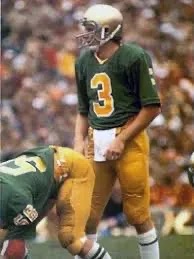
Photograph of Joe Montana (#3) talking to Coach Dan Devine during a football game.  Biography of Dr. Anthony J. Carbone.

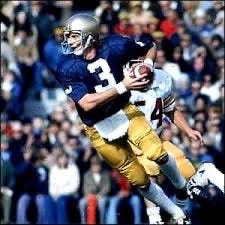
Entering the 1977 season, Joe Montana was a junior quarterback, but he found himself in a precarious position on the depth chart—listed as third string after battling injuries and inconsistent play. His relationship with Coach Dan Devine wasn’t particularly warm or enthusiastic.

However, the turning point came in the third game of the season against Purdue. Notre Dame was losing 24-14, and starting quarterback Rusty Lisch was struggling. When backup Gary Forystek was injured, Devine was forced to turn to Montana, despite the previous tension. However, the turning point came in the third game of the season against Purdue. Notre Dame was losing 24-14, and starting quarterback Rusty Lisch was struggling. When backup Gary Forystek was injured, Devine was forced to turn to Montana, despite the previous tension.

Montana, a former seventh-string quarterback, was inserted into the game late in the third quarter. What followed was a classic comeback performance: Montana threw for 154 yards and a touchdown in the final 11 minutes, leading the Irish to a dramatic 31-24 victory. This comeback, in particular, helped launch Montana’s legend and reignited Notre Dame’s national championship hopes.

After this game, Devine recognized Montana’s capabilities and named him the starting quarterback. The team went on to win every game from that point forward, culminating in a dominating 38-10 victory over number one ranked Texas in the Cotton Bowl and securing the national championship. While their relationship might have been complicated, the Purdue game became a pivotal moment for both Montana and Devine, proving that despite any previous doubts or disagreements, they were a powerful combination that propelled Notre Dame to a memorable championship season.

Joe Montana and Four All-American Football Stars

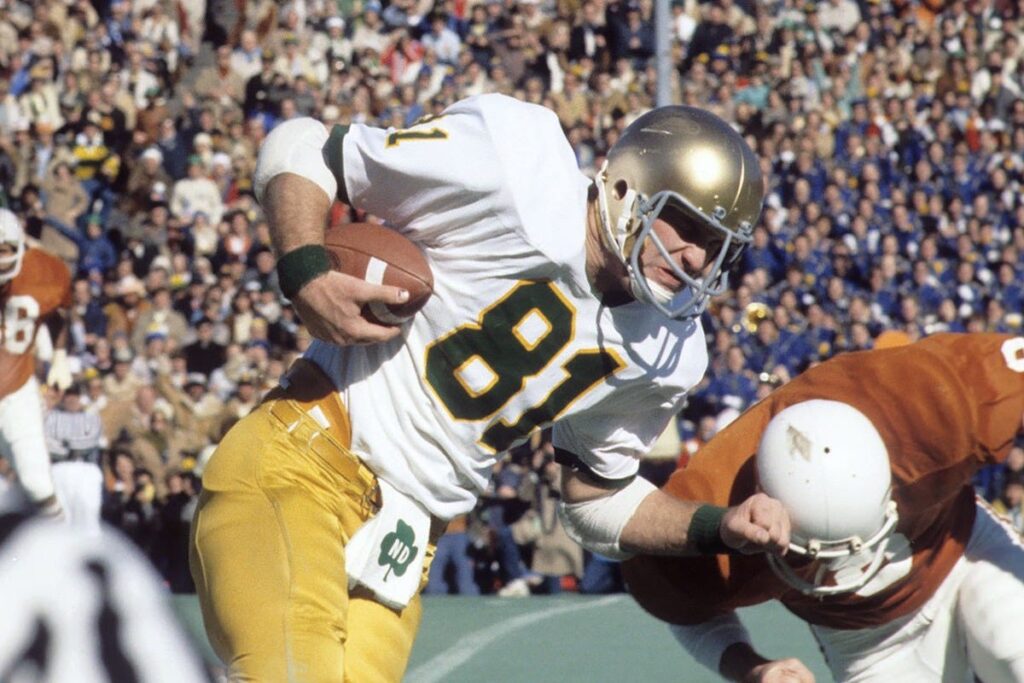
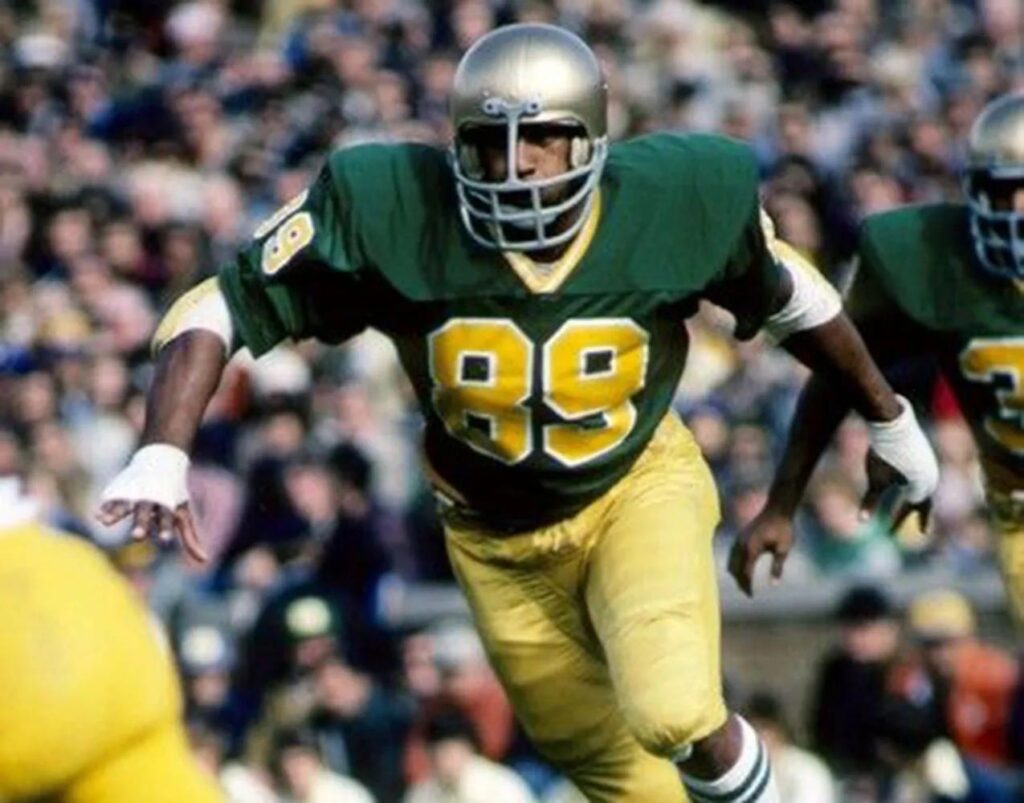
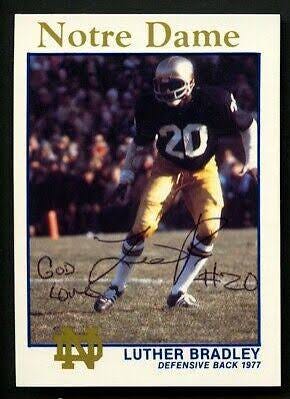
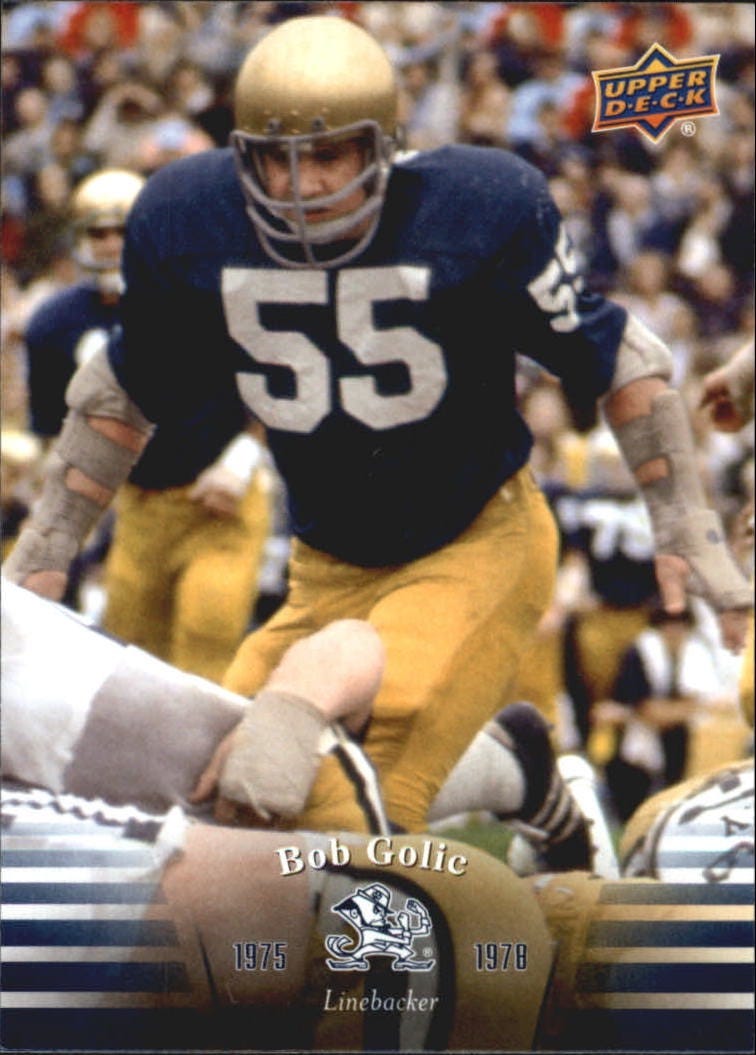
The 1977 squad was stacked with All-Americans: Ken MacAfee, Ross Browner, Luther Bradley, and Bob Golic. But surprisingly, Joe Montana — our quarterback and undeniable team leader — was not named to any All-American team. That still bothers me to this day. Joe’s later NFL career proved what a star he truly was. He led the 49ers to four Super Bowl victories and earned MVP honors in three of them. His 92-yard winning drive in Super Bowl XXIII became legendary. And his eight Pro Bowl appearances set the standard for greatness.

Bob Golic #55 of the Fighting Irish football team.  Biography of Dr. Anthony J. Carbone.
Bob Golic #55

Joe Montana My Next Door Neighbor

I knew Joe Montana–he was my next-door neighbor in Fisher Hall. The kind, funny, somewhat shy, and good-looking guy you see today in commercials and commentary — that was the exact same Joe I knew back then. He was humble and approachable. Let me give you two stories that show who Joe Montana really was.

Notre Dame Football Stadium

First, during home games at Notre Dame Stadium — “The House that Rockne Built” — student seating was assigned by class year and then by residence hall. Seniors got prime seats near the 50-yard line. Freshmen like us were tucked in the end zone. Our whole Fisher Hall section sat together.

Notre Dame Football Stadium “The House That Rockne Built”. Biography of Dr. Anthony J. Carbone.
Notre Dame Football Stadium “The House That Rockne Built”

Joe Montana and His Fisher Freshmen

In nearly every game, whenever Notre Dame’s offense got into the red zone near our end zone seats, Joe Montana would pause behind the center, scan the crowd, find us — the Fisher Hall freshmen — point directly at us, and then throw a touchdown pass. That was Joe. In his biggest moments, in a deafening stadium, on national television, he remembered his freshman friends. That, to me, is what leadership looks like.

Joe Visits My Room Nightly for Snacks

And Joe’s kindness extended off the field. Many nights, he’d quietly slip into my dorm room late, because I had a TV and he didn’t. He’d lay down on my bed, turn on the television, and say with a grin, “What do you have?” — hand outstretched. My four sisters constantly sent me care packages, especially homemade Tollhouse chocolate chip cookies. Joe knew it. So I’d break out the latest box and share it with him. He was always gracious and genuinely appreciative.

No Athletic Dorms, Cafeterias, or Tables

Notre Dame was different. Unlike big football schools, we had no athletic fraternities, no athlete-only dorms, no athlete dining halls. Our NCAA stars lived with us. Ate with us. Walked across campus like any other student. In our Fisher Hall section alone, we had Joe Montana, Jerome Heavens, and Mike Calhoun — which meant that we got to meet the other players when they visited.

Definitely, no hostesses!

I later visited schools like Alabama and Florida and saw how athletes were treated like royalty. I met women who called themselves “hostesses” and bragged about entertaining football recruits. Some even said they were on scholarship for it. When I told them that Notre Dame didn’t have hostesses, they didn’t believe me. I said, “Believe me. Notre Dame is so small, we know what goes on. And we do not have hostesses.”

1977 Music

The music of 1977 was definitely not one of my favorites; I am much more of a 1960s, maybe early-1970s music fan. Debby Boone’s “You Light Up My Life” debued in October 1977 and stayed #1 until the end of the year. So “You Light Up My Life” reminds me of my first round of college final examinations, and I am happy that the song was so overplayed that it’s never been on the air since.

Crosby, Stills & Nash at Notre Dame

On November 5, 1977, I saw Crosby, Stills & Nash perform at the Athletics and Convocation Center. The stage setup looked exactly like their famous album cover — just the three of them sitting together on a leather couch, guitars in hand, playing pure acoustic sets. No flashy lights or backup bands, just their harmonies filling the arena. It felt intimate despite the size of the crowd, like we were all sitting in their living room. I was happy because they played all of their greatest hits.

A Wild & Crazy Night at Notre Dame

Four days later, on November 9, 1978, I had the rare treat of seeing Steve Martin perform live on campus. He was debuting his now-famous “Wild & Crazy Guy” routine from Saturday Night Live. Dressed in his classic white suit with an arrow going through his head, he alternated between cracking absurd one-liners and picking out lightning-fast banjo tunes. I had always known he was funny, but that night I also realized he was quite a musician. This was the act that catapulted him into superstardom, and I was lucky enough to see it up close and personal right there at Notre Dame.

Thanksgiving, Homesickness, and a Visit from Jeff Bell

First Thanksgiving Away From Home

Thanksgiving came, and I wasn’t able to make it home. The cost of traveling after an already expensive first semester was just too much. It was the first major holiday I had ever spent away from my family, and the homesickness hit hard. Most of the students left campus to go home, and suddenly, the bustling grounds of Notre Dame became eerily quiet.

The only people left were a handful of domestic students like me and the international students who also had nowhere to go. The University did its best to create some holiday spirit. The Dining Hall put on a Thanksgiving feast, complete with turkey, stuffing, mashed potatoes, and pumpkin pie. The food was good, and the gesture was appreciated, but it didn’t come close to the warmth and chaos of a Carbone family holiday back in Winchester. I smiled politely through dinner, then went back to the dorm, feeling the weight of distance more than ever.

Jeff Bell Visits Notre Dame

Shortly after Thanksgiving and before finals in December, I got a much-needed boost. My buddy Jeff Bell drove up from his college in Texas to visit me. His arrival felt like a taste of home, and I was excited to show him around the campus that I was beginning to call my own.

Jeff was immediately impressed. The sight of Fisher Hall, the Gothic buildings, the golden dome — he soaked it all in. But nothing impressed him more than running into Joe Montana in our dorm hallway. He was even more awestruck when we went to the South Dining Hall for dinner and spotted both Joe Montana and Ross Browner eating together like regular students. That moment stayed with him for decades. To Jeff, it was unthinkable that future NFL legends would sit among the student body without any entourage, just two guys with trays and a meal card.

But Jeff quickly realized that Notre Dame wasn’t exactly a party school. That Saturday night, he turned to me and asked, “Where is everybody?” I smiled and said, “You want to see where everyone is on a Saturday night?”

The Big 3 Icons of Notre Dame: Golden Dome, Memorial Library, Sacred Heart Basilica at Twilight

The Library

I led him to the Notre Dame Memorial Library — the 13-story tower with the massive mural of Jesus stretching his arms skyward, affectionately known as “Touchdown Jesus.” When we entered, the place was packed. The first floor buzzed with activity, the snack bar and bathrooms offering quick breaks for students deep in study.

Notre Dame’s Hesburgh Library at Night (With “Touchdown Jesus” Mural)

Jeff was baffled. “This is where everyone goes on a Saturday night?”

The “Pre-Med” Floor

I nodded, but told him I couldn’t study there — too many distractions. So we took the elevator to the 13th floor: the “Pre-Med Floor.” As soon as the doors opened, the atmosphere shifted. You could hear every cough, every footstep, every rustle of paper. When I turned a page in my textbook, I could feel heads involuntarily lift from their cubicles just at the sound.

The Pre-Med Floor of Hesburgh Library (After Hours)

This was serious business. The Pre-Med students at Notre Dame didn’t mess around. Competition was fierce. Focus was absolute. It was a place of quiet desperation and razor-sharp ambition.

Jeff took it all in, visibly stunned. He never said much about it, but he never came back to visit again during undergrad. He waited until I made it to medical school at Georgetown. I think that night explained it all.

Final Exams: A Humbling First Encounter

All that remained of my first semester was final examinations. And let me say this clearly: they were a humbling experience.

I studied nearly 24/7 in the days leading up to exams. Every waking moment was spent buried in textbooks, notes, and problem sets. My mind was constantly racing between subjects — chemistry equations, biology lab reports, calculus proofs, and theology essays. Sleep came in short bursts. Meals were rushed. My stress was constant.

Final Exam Care Packages From Mom

I was deeply grateful that my mother had purchased a Notre Dame-sponsored Exam Care Package, which came loaded with snacks and encouragement. Even better, my four sisters came through as always — sending their signature Toll House chocolate chip cookies and bags of gummi bears to get me through the marathon week. Those care packages felt like lifelines.

Pre-Med Exams Until the Last Day

What surprised and frustrated me most was learning that students in other majors were already finished. My friend Matt Bedics, a philosophy major, was packed up and home for the holidays while I was still knee-deep in test prep. Pre-Med and Engineering students weren’t so lucky — our final exams stretched all the way to the last possible day of the semester, often just a few days before Christmas.

Exam Time

When the time came to Fisher Hall for our examination, Andy Cordes started a tradition that lasted all four years. Right when it was time for everyone to get ready to leave to take final examinations, Andy would start playing Bachman Turner Overdrive’s (BTO) “Taking Care of Business”. And one by one, each of us would open our dorm room doors and step into the hallway singing.

Album cover for Bachman Turner Overdrive (BTO) “Taking Care of Business”. Biography of Dr. Anthony J. Carbone.

The exams themselves were brutal. Chemistry in particular shook my confidence. The content was dense, the questions were sharp, and I knew I hadn’t nailed it. After everything was over, I didn’t even want to check my grades. I was too afraid. I needed a break from the pressure, the competition, and the relentless self-judgment. What should I expect from a professor who gave a pre-med Nobel Laureate a “B” in Chemistry?

Grades are Posted

But my pre-med buddy Bob Terifay had no such hesitation. He stormed back into Fisher Hall with his usual energy, grinning as he delivered the news: “You got a C in Chemistry!” I was stunned. “How the hell do you know my grade?” He just smiled. Somehow, he had remembered my Notre Dame student ID number: 7711117284. I have no idea how or why. But he did. And he looked up my grades like it was nothing.

Scholastic report card from my first semester at University of Notre Dame from 1977. Dr. Anthony J Carbone’s autobiography

Bob clearly was better at rote memorization than me. And I know he had a better academic preparation than I did. All I knew was that I had survived. And that, for my first semester at Notre Dame, would have to be enough.

When I finally made it home to Fort Leavenworth for the holidays, I was so mentally and physically drained that I didn’t feel like myself again until after Christmas Day. That’s how deeply finals had consumed me.

Home Page