Chapter 16: My first semester at Notre Dame

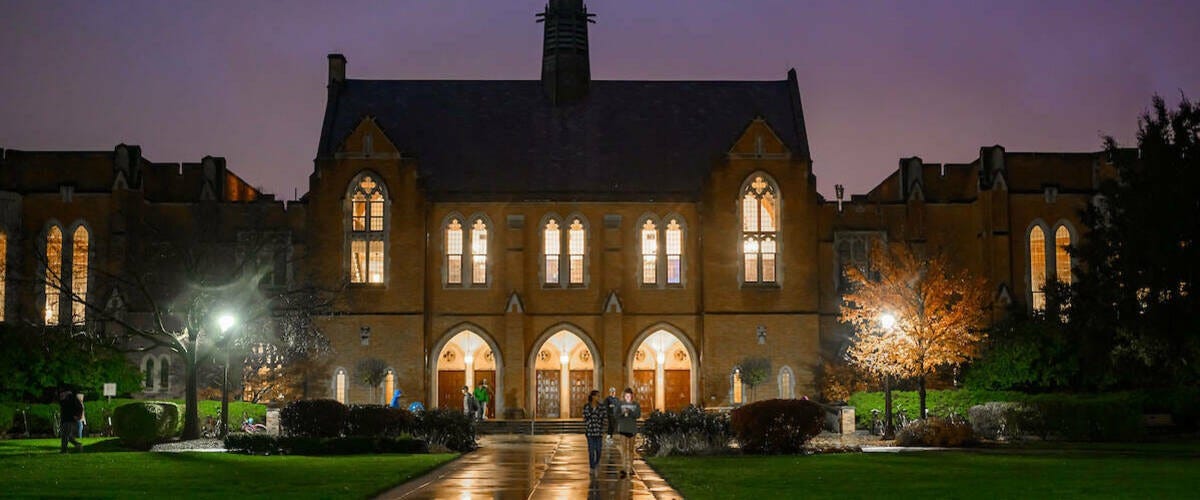
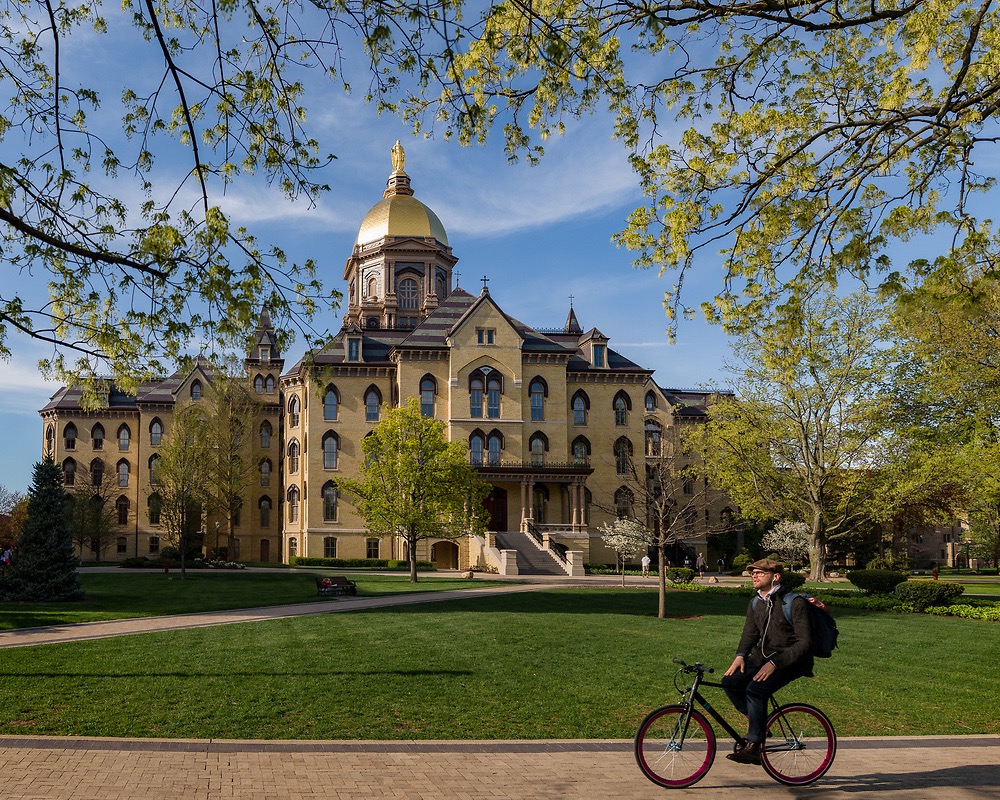
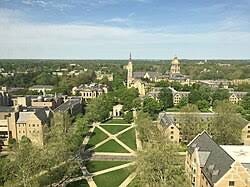
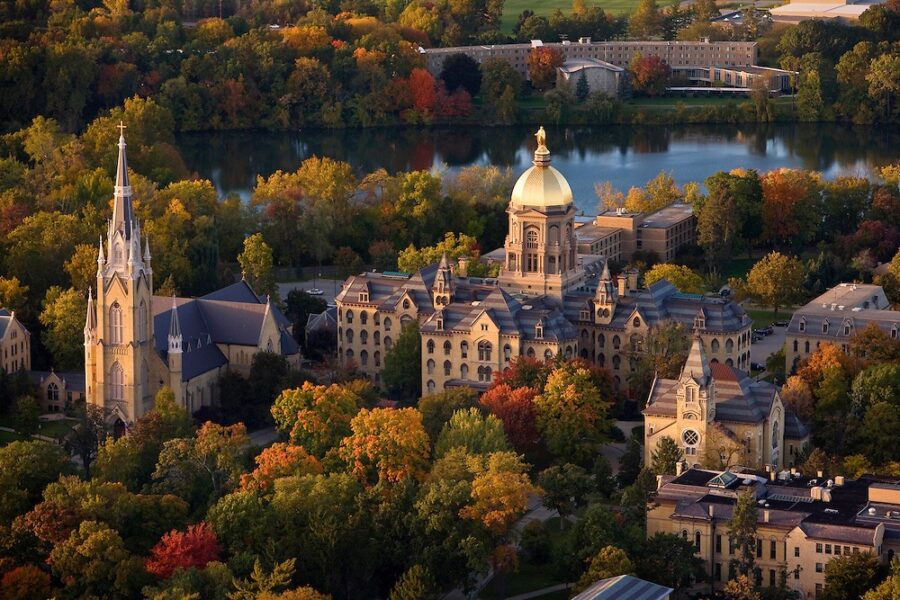
Aerial view of campus of University of Notre Dame. Showing the Golden Dome and Our Lady above the Admin Building. Autobiography of Dr. Anthony J. Carbone.

Believe Nothing You Hear, and Only Half of What You See — A memoir of Service, Shame and the Search for Truth

My First Week of College at Notre Dame

By the time the first official week of college began, our long summer of anticipation was finally over. The buzz of orientation events and the flurry of new friendships had barely settled when a singular rite of passage landed in our hands and marked our true arrival into Notre Dame life.

The Infamous Dog Book

It came wrapped in glossy pages. The little blue-and-yellow hardback — formally titled The Notre Dame & Saint Mary’s Freshman Register, Class of 1977— was better known across campus by its infamous, irreverent nickname: The Dog Book.
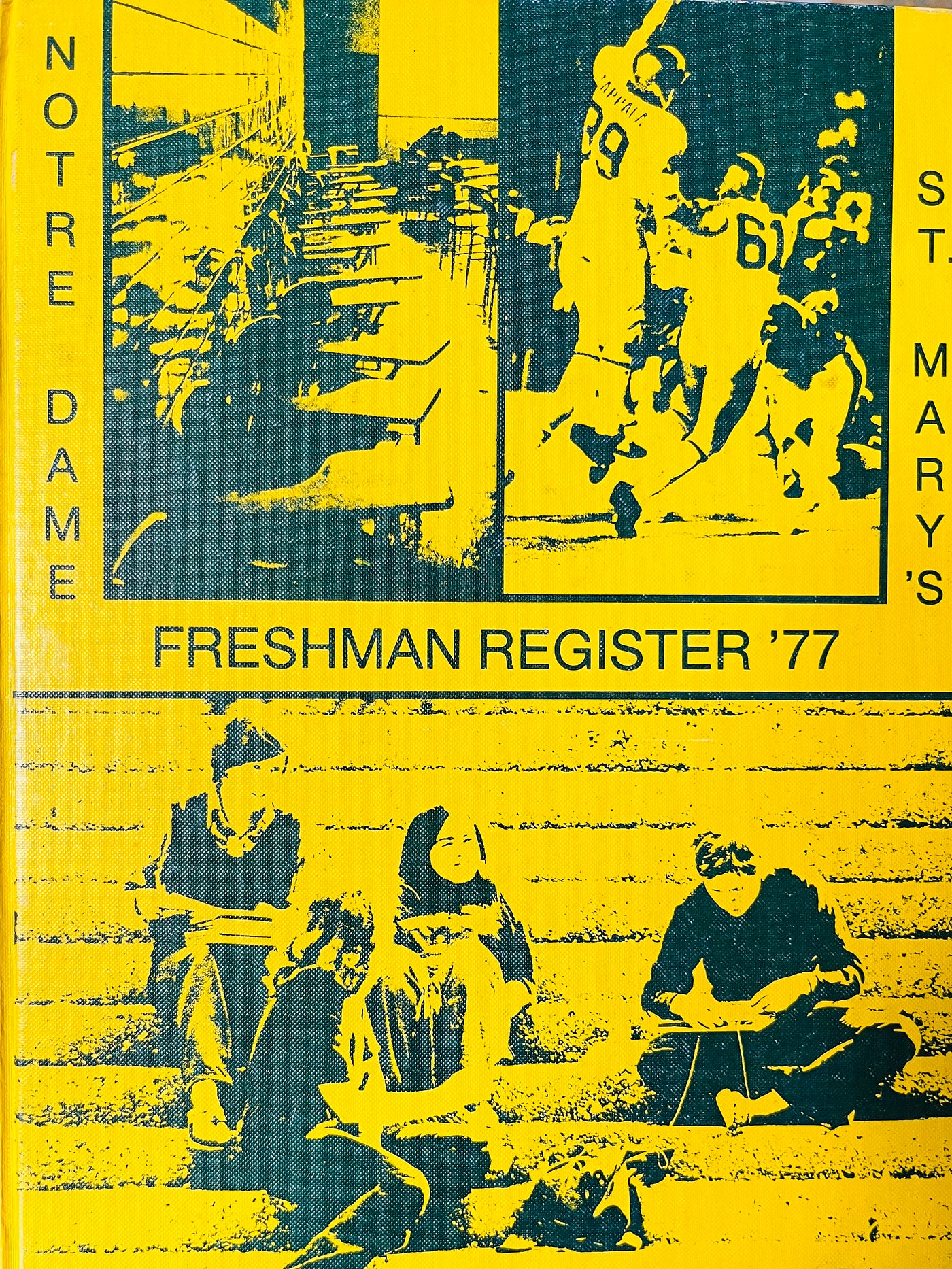
Notre Dame & St Mary’s College Freshman Register ’77 (The “Dog Book”)

The Girls of Saint Mary’s

Now, let me clarify from the start: the girls of Saint Mary’s were anything but “dogs.” The name was a holdover from Notre Dame’s all-male history and had lingered through decades of tradition and crude humor. But if you were a freshman guy in 1977, you knew exactly what the Dog Book meant. It was your first unofficial introduction to the incoming class — your own classmates and, far more tantalizingly, the women across the road at Saint Mary’s College.

The book was laid out like a catalog: headshots of every incoming freshman at both schools, organized alphabetically. Each photo came with a name, nickname (if they had one), hometown, high school, and intended major. No bios. No blurbs. Just faces, facts, and enough fuel for hours of hallway commentary.

The moment the Dog Books were delivered to Fisher Hall, tradition took over. Guys poured out of their dorm rooms with books in hand and formed an impromptu gathering in the hallway. We sat cross-legged against the cinderblock walls, flipping pages together as if we were drafting fantasy football teams — or, more accurately, evaluating potential dates, girlfriends, and future wives.
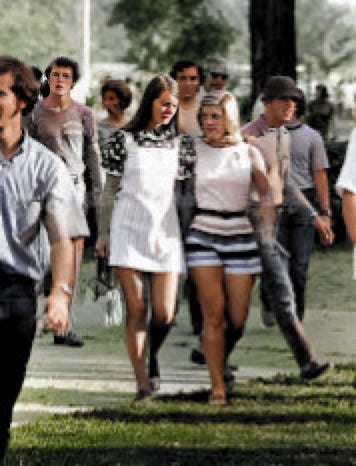
Girls of Saint Mary’s College mingled among the boys on the campus of Notre Dame

The jokes flew fast. So did the judgments. Someone would point at a photo and say, “She looks like trouble.” Another guy would shout, “Bottom of Page 56 — dibs!” Every once in a while someone would spot a classmate or recognize a name and make a big show of it, good or bad. It was crude, superficial, often cruel — but also a strange kind of bonding ritual.

I Avoided Being in the Dog Book

And I remember one very specific feeling: relief. I wasn’t in the Dog Book. Not a picture. Not a nickname. Nothing. Because I hadn’t applied to Notre Dame the traditional way, my name had been left out of the publication entirely. I watched the teasing pile up on a few poor souls — guys and girls alike — and silently thanked the registration gods for my invisibility. That day, anonymity was a blessing.
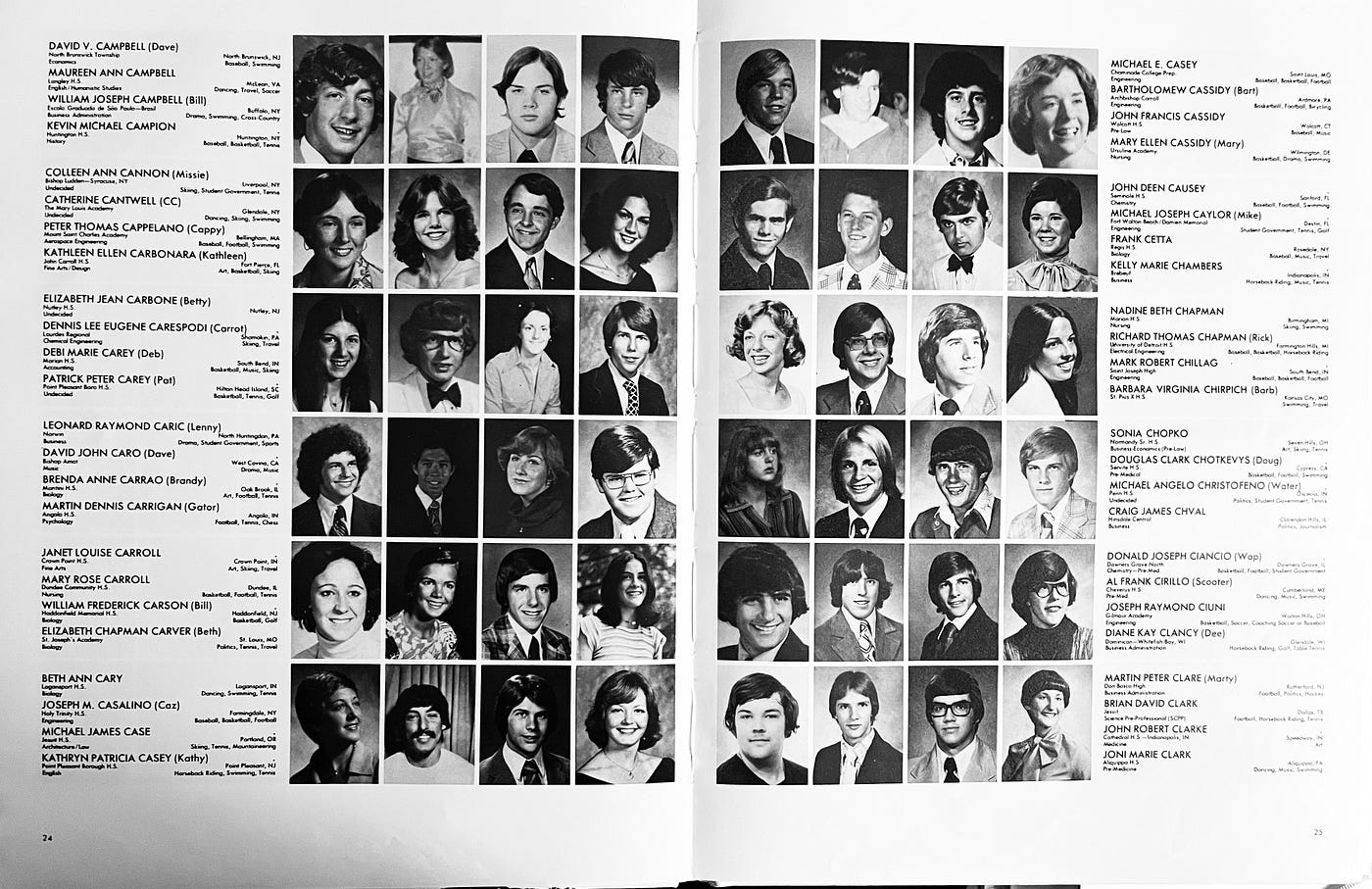
Notre Dame & St Mary’s Freshman Register from 1977 (Showing Elizabeth Carbone and no Anthony Carbone)

For all its dated humor and objectifying overtones, the Dog Book was a tradition. And like so many Notre Dame traditions, it was one we absorbed without question — half-laughing, half-cringing, entirely immersed in the absurdity of it all.

Saint Mary’s College (SMC): The College Across the Street
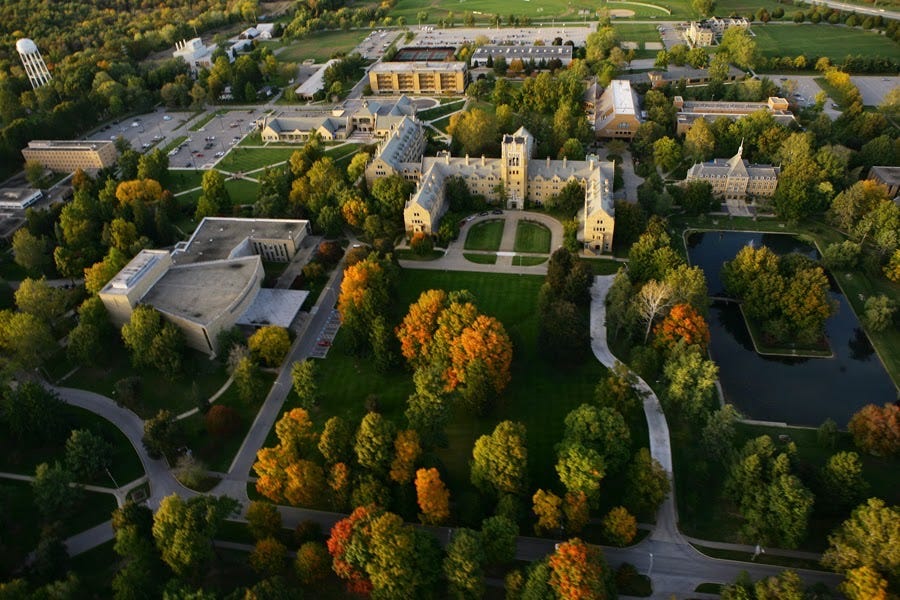
Aerial photograph of Saint Mary’s College, Notre Dame, Indiana.
Aerial view of Saint Mary’s College, Notre Dame, Indiana

To really understand the role the Dog Book played in campus life, you had to understand something about the girls across the street. Saint Mary’s College (SMC), a Catholic women’s college sponsored by the Sisters of the Holy Cross, stood just across U.S. Route 933, a short walk from the main gates of Notre Dame. But culturally, it often felt a world apart.
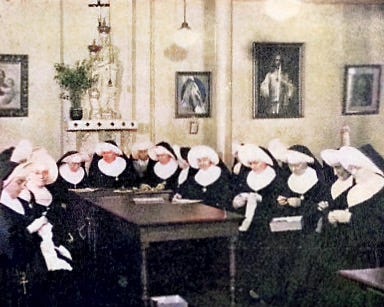
In 1977, Saint Mary’s enrolled 876 students, with 101 new applicants joining that fall. Student life at SMC was still steeped in tradition and governed by parietal rules that had barely budged despite the cultural revolutions of the late ’60s and early ’70s. These rules restricted when and how male visitors could enter the women’s dorms — usually limited to certain weekend hours, and always under strict supervision. The Sisters of the Holy Cross (CSC) still played an active role on campus, both academically and spiritually, guiding their students with a sense of purpose, decorum, and discipline.

The Sisters of the Holy Cross (CSC)
My First Venture to Saint Mary’s

LeMans Hall

Like most Notre Dame freshmen, I was more than a little fascinated by the girls of Saint Mary’s. They seemed like a blend of grace, charm, mystery — and yes, temptation. I forget exactly how I met my first SMC coed, but I was invited over to her dormitory, Le Mans Hall, for a Saturday evening visit early in the semester.
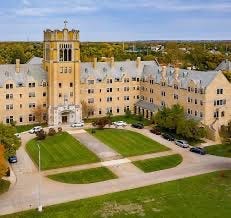
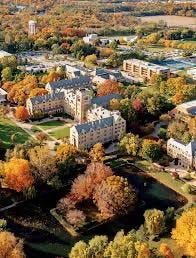
LeMans Hall at Saint Mary's College across from the University of Notre Dame.  Biography of Dr. Anthony J. Carbone.
Le Mans Hall at Saint Mary’s College

Rules of Saint Mary’s College

I was already nervous walking across the road by myself, unsure of the etiquette or expectations. But when I arrived, things got a whole lot more intimidating. There was an elderly nun stationed at the reception desk in the front hall. She asked me, in a tone that made it clear she was not one to be trifled with, what my intentions were. I stammered something about being invited, and obediently handed over my Notre Dame ID card when she requested it.

Getting Past the Front Desk
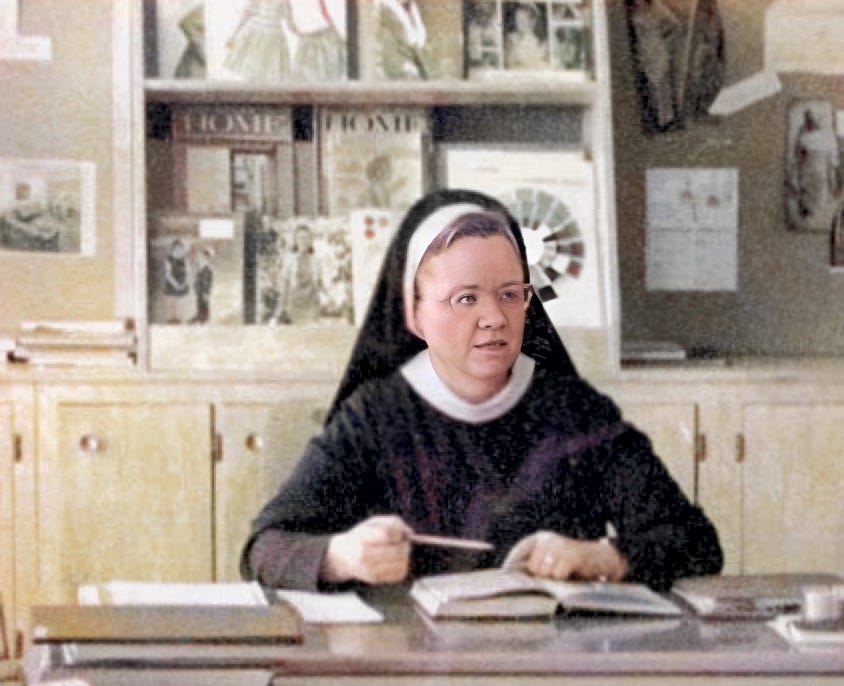
Photograph of older religious sister at a desk at Saint Mary's College.  Biography of Dr. Anthony J. Carbone.

Then came the interrogation. She called upstairs to verify that the young lady had indeed invited me, and when the coed confirmed, the nun told her to come down to escort me personally. No unsupervised wandering was allowed. Once upstairs, I was so on edge that I can barely remember the girl, her room, or what we even talked about. All I remember is the phone ringing about forty-five minutes into our visit. It was the same nun, calling the room to speak to me directly.

“Anthony,” she said in a clear, commanding voice, “you have fifteen minutes to leave the dormitory before parietal hours begin.” Parietals. That was the Notre Dame–SMC term for the formal rules regulating male visitation in female residence halls — rules that had the force of institutional and moral authority behind them. Once parietals began, all male guests had to be out, no exceptions. And this particular nun wasn’t leaving anything to chance.

I thanked her, hung up the phone, and left immediately — heart racing, palms sweating, a little dazed by the whole ordeal. I honestly don’t remember if I ever went back to that room, or even spoke to the young lady again.

It wasn’t just the strictness that kept me away. I was busy — pre-med classes, ROTC, and intramural soccer didn’t leave much space for cross-campus courtships. But I’d be lying if I said the nun hadn’t made a lasting impression. Avoiding Sisters of the Holy Cross became something of a subconscious strategy that semester.

The Saint Mary’s Panty Raids

I didn’t set foot in a Saint Mary’s dorm again until the panty raid in the spring — a decades-old tradition that had long blurred the line between innocent fun and cultural cringe. The stories from the women of Saint Mary’s say it all.

“Our room being on the second floor… provided the best view for Panty Raid. Seeing all the guys run up The Avenue near midnight, yelling, and girls screaming back, was quite a sight… Some girls actually threw panties down!” — Alice M. Tsui, Class of 1970

“I remember calling my mother and telling her I needed all new underwear because I had thrown almost all my things to the boys.” — Judy Johnson Crates, Class of 1970

“The ND guys got into the dorm and were trolling the halls… We pushed a desk up against our door and watched through the transom while the campus guards tried to chase them down!” — Karen Preston McCarty, Class of 1970
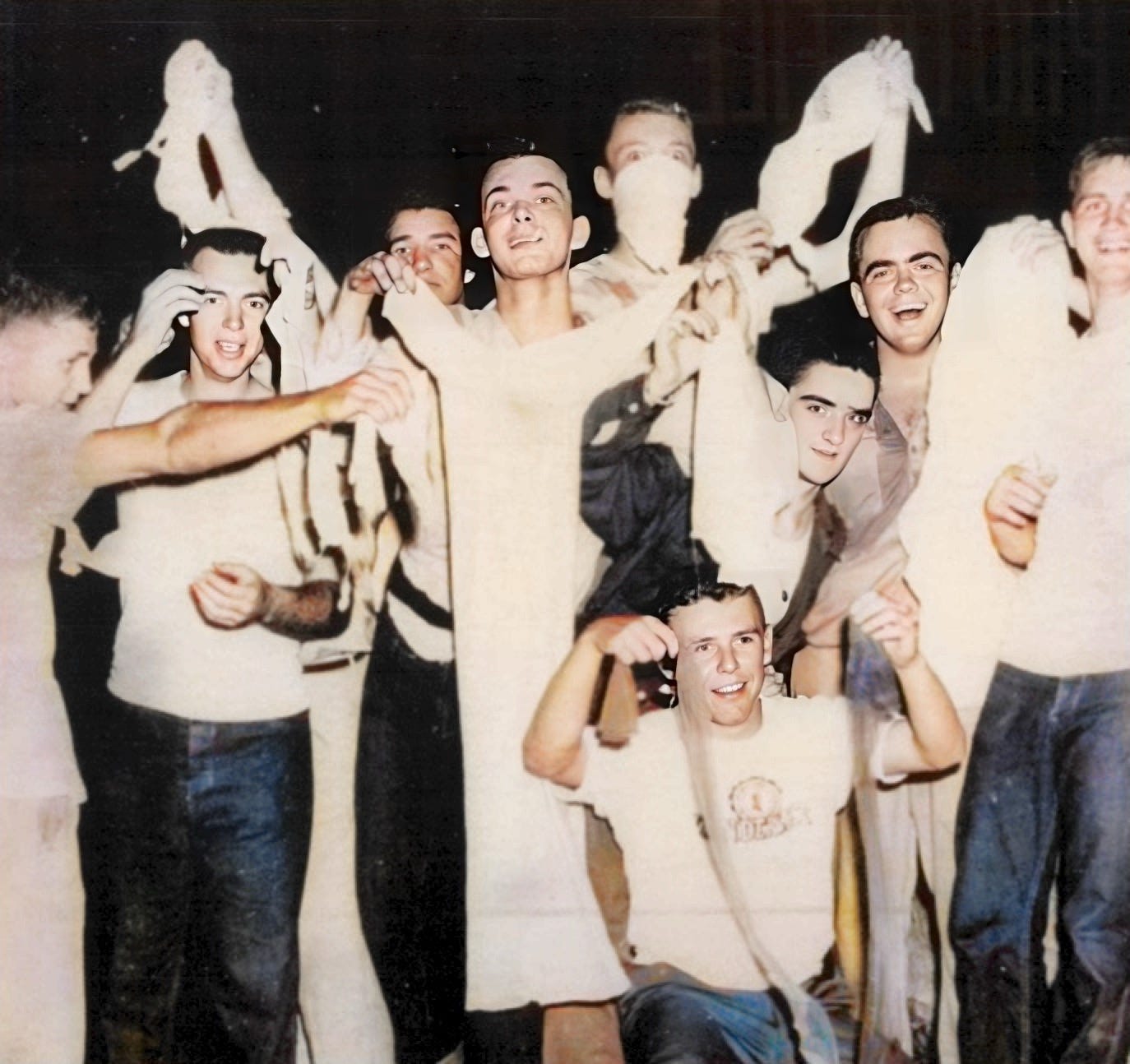
Group of Notre Dame boys holding lingerie from a recent Panty Raid at Saint Mary's College.  Biography of Dr. Anthony J. Carbone.
Notre Dame boys at St. Mary’s panty raid

It was outrageous. It was immature. And in hindsight, it’s the kind of thing that could never — and probably should never — happen today. At the time, we actively embraced many bizarre traditions as part of life under the Golden Dome.

Even by the time I was a freshman in 1977, the tradition was beginning to fade, or at least lose its luster. But the lore lingered. And for many of us, that was more than enough to keep the mystique of Saint Mary’s alive — whether we were brave enough to cross the Avenue or not.

Cadet Life Begins

While dorm pranks and hallway rituals offered a strange kind of social education, my real initiation into Notre Dame life came through two far more demanding callings — both of which began to take shape that very first week. I arrived on campus with a clear and heavy burden: two missions, equally urgent.

The first was academic. I was a pre-professional science major on the pre-med track, and I knew that earning a shot at medical school would take everything I had. There were no shortcuts. No excuses. I had to perform — and outperform — starting on day one.

The second mission was military. As an Army ROTC scholarship cadet, I actively committed—both contractually and personally—to developing into a leader capable of earning a first-class lieutenant commission by graduation.

That meant discipline, training, and excellence in every formation, drill, and leadership lab for the next four years. Two tracks. One man. No room to stumble.

So while most of my classmates were still finding their rhythm in dorm life, I was already switching gears — fast. I traded in the laughter of Dog Book hallway sessions and the chaos of panty raids for the early-morning demands of a cadet’s life. Gone were the Sperry’s and free time. In their place: combat boots, pressed uniforms, tight schedules, and 0600 alarms.

ROTC and Reality

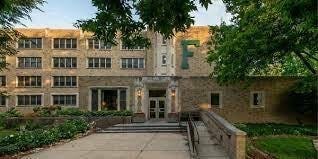
The day of ROTC orientation began with the usual morning routine in Fisher Hall: a shower down the hall, a quick breakfast at South Dining Hall, and then a walk across campus. The morning sun lit the yellow brick buildings beautifully as I passed the Knute Rockne Memorial Gym — “The Rock” — on my way to the ROTC building.
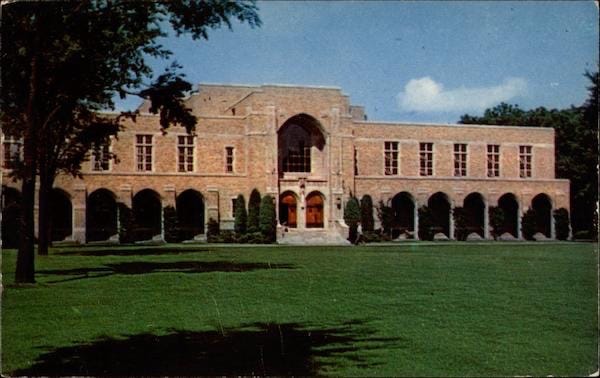
Knute Rockne Memorial Building on the South Quad of the University of Notre Dame.  Biography of Dr. Anthony J. Carbone.
Knute Rockne Memorial Building

Professor of Military Science (PMS)Lieutenant Colonel Henry J. Gordon greeting us. A team of senior cadets who had clearly been through it all before also helped us.
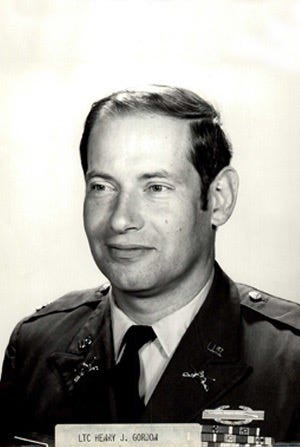
Professor of Military Science (PMS) LTC Henry Gordon, University of Notre Dame. Biography of Dr. Anthony J. Carbone.
Professor of Military Science (PMS) for University of Notre Dame, LTC Gordon

Received my Army ROTC Basic Issue

The orientation included a historical overview of Notre Dame’s long-standing military tradition, stretching back to the Civil War, officially formalized in 1951. There were about 50 of us new Army cadets. We were issued our fatigues, boots, T-shirts, caps, helmut, a few other GI items — our first taste of uniformed life.
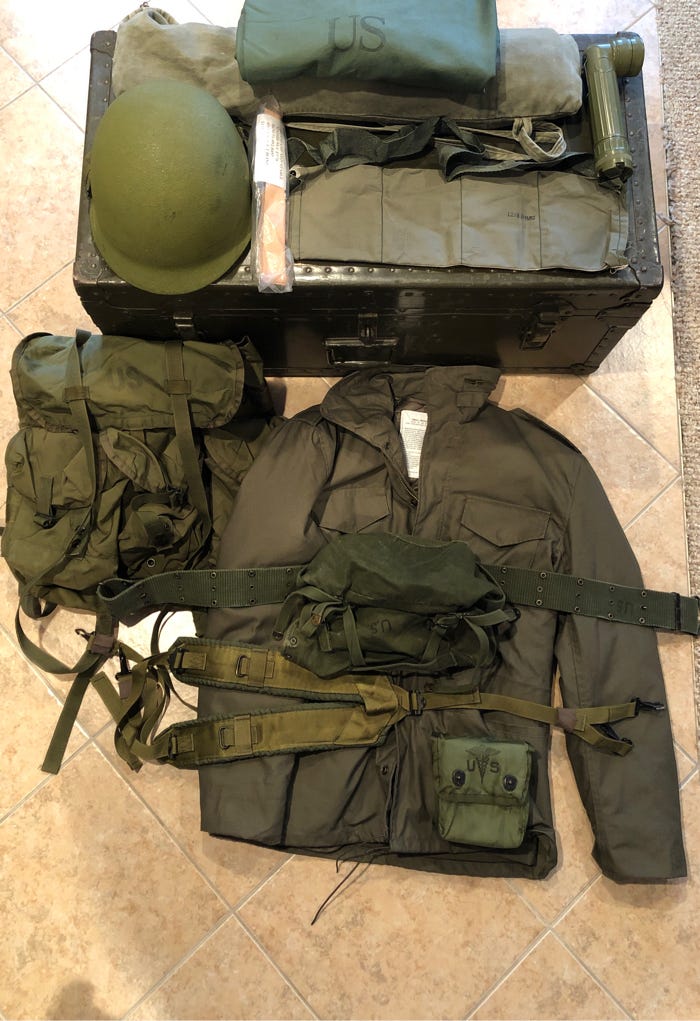
U.S. Army basic issue of gear including steel pot Helmut, flashlight and footlocker.  Biography of Dr. Anthony J. Carbone.

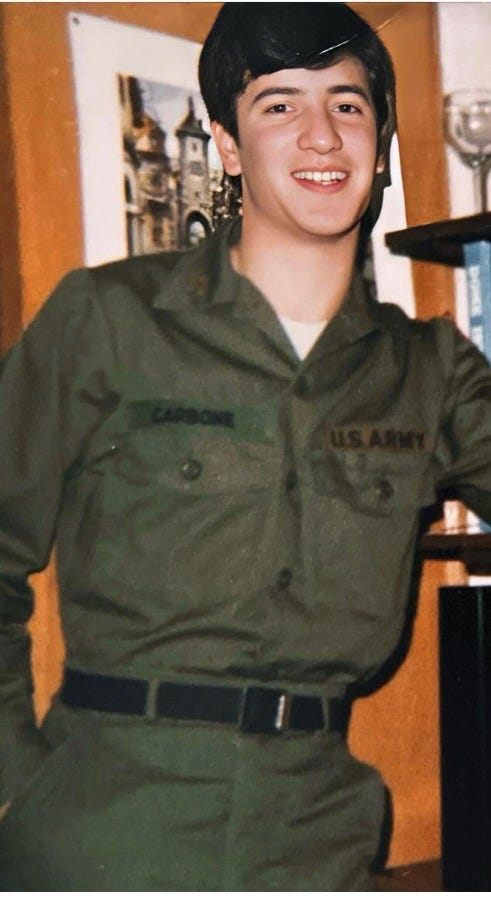
For most, it was a novelty; yet, for me, it was second nature. I had grown up watching my father in his starched olive drab fatigues, crisp white T-shirts, and brightly colored unit patches. By 1977, ROTC cadets like me were still wearing the OG-107 uniform — green fatigues with subdued patches. The details had changed, but the discipline hadn’t. I knew how a uniform should look. And as you know, I was already a master boot-shiner. The rituals felt more familiar than foreign.

My Father & Me in the Old & New Army Fatigues
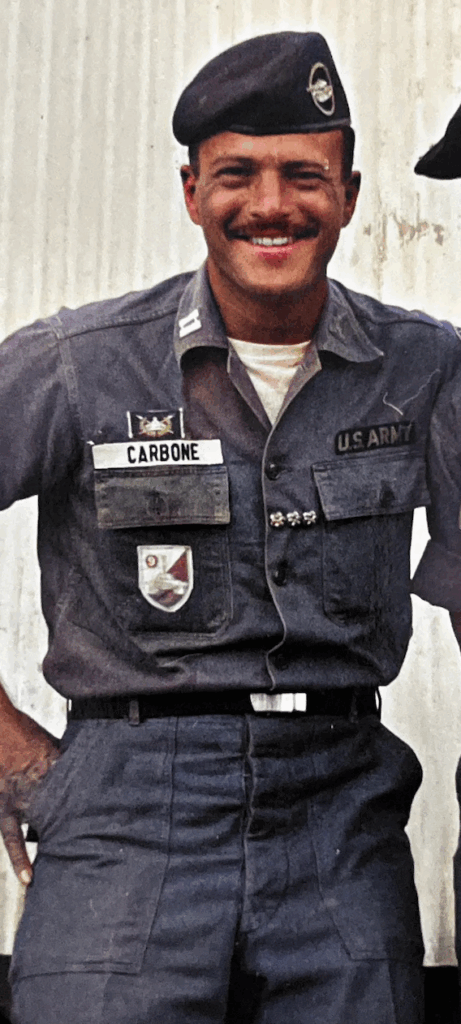
Truthfully, the orientation itself felt underwhelming. Compared to what I imagined at West Point, it felt like a watered-down version. I left wondering — again — if I had made the right choice turning down my West Point appointment.

Pre-Med at Fisher Hall

Back at Fisher Hall, I connected with Bob Terifay, the other pre-med student in our section. He was brilliant, confident, and pathologically competitive — a natural leader of the freshmen, even though no one had elected him. He already seemed to have every textbook memorized. I had no problem striving for A’s, but I didn’t get any joy from beating my classmates. I would have been happy if we all aced the exams. That wasn’t Bob’s style.
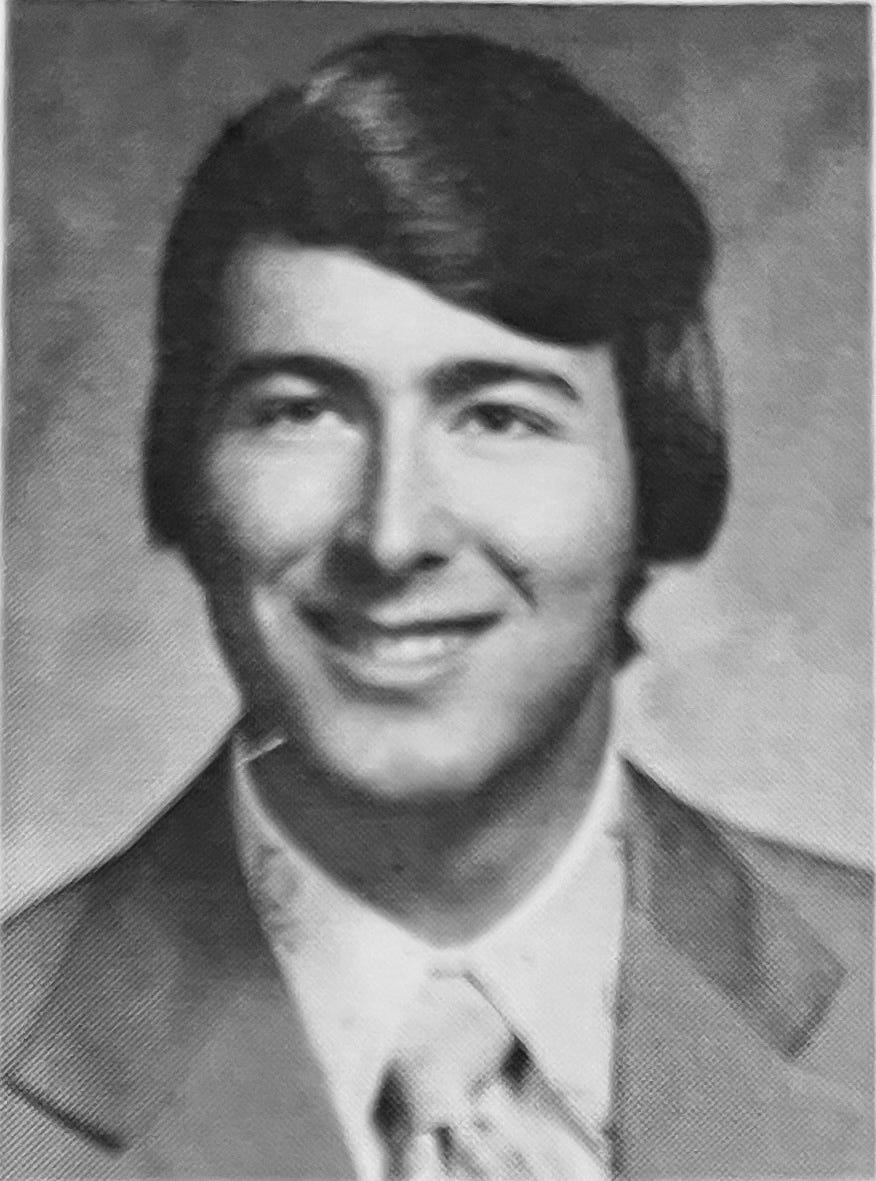
Robert Terifay, Pre-Medicine at University of Notre Dame.  Biography of Dr. Anthony J. Carbone.
Bob Terifay, Pre-Med, Fisher Hall Freshman

In Bob Terifay’s defense, Bob was a great guy. A genuinely nice guy, smart as a tac, faithful Catholic boy. Bob was the unofficial leader of our Fisher Hall section. He would step out of his dorm room when it was dinnertime, clap his hands, and announce dinnertime to all by yelling “Pret!” (French for “Ready!“) Bob’s only problem was that he was a pre-med student at Notre Dame.

ROTC Scholarship Pays for Books & Supplies

I stuck close to him for a while because he had insider knowledge. He told me what to expect, what to prep for, and which professors to avoid. We walked together to the Hammes Bookstore, where a I learned a wonderful surprise — my ROTC scholarship covered all my books and supplies. That was a massive relief.

My First Year Academic Load

Many of our classes overlapped, except for Military Science and German. My first year schedule of courses included two semesters of: General Chemistry I&II with lab, Calculus I&II, English Composition & Literature, Intro to Philosophy, Intro to Sociology, Intermediate German, and Military Science.

The schedule was punishing. Science labs were four-hour marathons that earned just one credit hour. ROTC drills and PT demanded more time. Tuesdays were especially brutal — leadership labs in the afternoon, military class in the evening.

My Prep School Classmates-CLEP’d

What made it worse was this: many of the other pre-meds had come from elite Catholic prep schools and private academies. Most had CLEP’d out of chemistry, biology, or calculus thanks to AP credits. They were already a semester — sometimes a year — ahead of me. I had no such advantage. I came from a strong public high school, but I was starting from zero. And I knew I had to work twice as hard to keep up.

Advanced Placement AP Textbooks Calculus Biology Chemistry History.  Biography of Dr. Anthony J. Carbone.

Army ROTC Drill

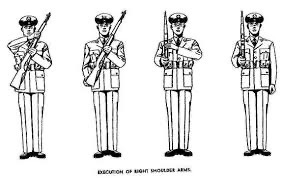
Drill periods were a throwback. We trained with M1903 Springfield rifles — heavy, nine-pound bolt-action relics from World War II. We practiced saluting, standing at attention, and performing the full 15-Count Manual of Arms. I can still snap it off to this day. If you could master the Springfield, the M16 was a walk in the park.
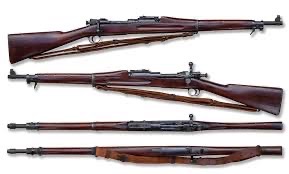
My First Day of Class

My first day of classes at Notre Dame must have been so chaotic and overwhelming that I only remember one class: General Chemistry I. The legendary Professor Emil T. Hofman, who also served as the Dean of the Freshman Year of Studies was our teacher.

The Legendary Dean Emil T. Hofman
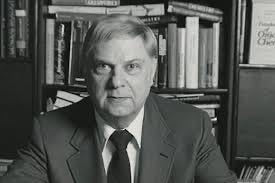
Emil T. Hofman, Dean of Freshmen Year Studies & Professor of Chemistry. University of Notre Dame. Dr. Carbone Autobiography.
Emil T. Hofman, Dean of Freshmen Year Studies & Professor of Chemistry

He was strict. In fact, he was so strict that he once gave future Nobel Prize in Medicine winner Eric Wieschaus — Notre Dame Class of 1969 — a B in both semesters of chemistry. Over four decades, Emil T. taught more than 60 percent of each freshman class. That totaled over 32,000 students, with more than 8,000 of them going on to become doctors. He was a Notre Dame institution unto himself.
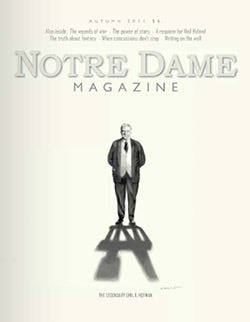
Dean Emil T. Hofman being celebrated on the cover of Notre Dame Magazine. Professor of Chemistry. Dean of Freshmen Year Studies. University of Notre Dame. Dr. Carbone autobiography.
Emil T. Hofman on the cover of Notre Dame Magazine

Basic Chemistry House Rules

First Rule: Begin with the Lord’s Prayer

The class began with a brief introduction. Then, with no warmup or small talk, Professor Hofman commanded, “Settle down!” before leading us in the Lord’s Prayer. Every class began that way. That was the First Rule of Chemistry Class. At the end of the prayer, he would say, “Queen of Peace,” and we would reply in unison, “Pray for us.” Without fail.

Second Rule: Quiz Every Friday

Next, he went straight into the second rule. There would be a mandatory seven-question multiple-choice question quiz every Friday covering the material presented during the week. These quizzes were known for being tough, motivating many students to spend their Thursday nights studying to prepare for them. The phrase “Deliver us from Emil” was a common student sentiment.

Third Rule: Assigned Seats and “These are the rows!”

Assigned Seats: A key aspect of his first day routine, and indeed the entire semester, was the assignment of seats. Students were given specific seats they had to occupy for every class, a practice that ensured attendance could be easily monitored and probably discouraged late arrivals or skipping class.

“These Are the Rows!”: Related to the assigned seating, Hofman had a particular way of emphasizing the importance of staying in one’s assigned place. He would emphatically declare, “These are the rows!” This phrase reinforced the strictness of the seating arrangement and left no doubt that deviations would not be tolerated. This was likely a combination of setting expectations for discipline and ensuring a consistent classroom environment.
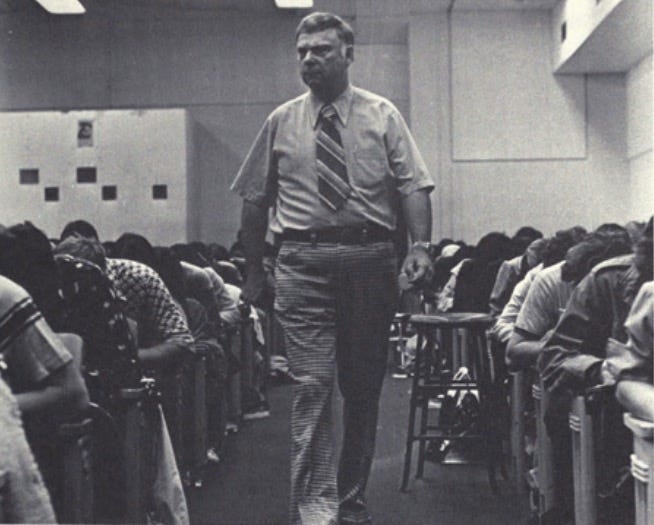
Dean Emil T. Hofman proctoring the weekly Friday Quiz. Professor of Chemistry and Dean of Freshmen Year Studies. University of Notre Dame.
Dean Emil T. Hofman proctoring the weekly Friday Quiz

When’s Your Birthday?

That’s when the girl sitting to my right turned towards me and abruptly asked, “When’s your birthday?” I told her, “Me? December 3rd. Why?” She replied, “Oh, just curious,” and she went back to listening to Professor Hofman. She didn’t say another word to me — not that day, not the next, not for months.
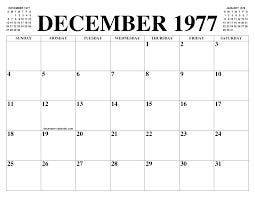
Calendar from December 1977 showing my birthday, 3 December, on Saturday.  Biography of Anthony J. Carbone.

My 18th Birthday

2 Girls and 2 Birthday Cakes

Then came Saturday, December 3rd, 1977 — I was 18 years old. Out of nowhere, that same beautiful girl and her equally beautiful roommate knocked on my door in Fisher Hall, holding a homemade birthday cake. “We came to celebrate your eighteenth birthday,” they said. They lit eighteen candles, sang “Happy Birthday to You,” and handed me a slice.

My First R-Rated Movie Followed by my First Beer in a Bar

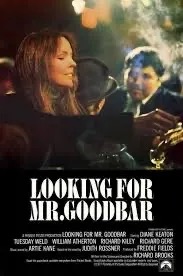
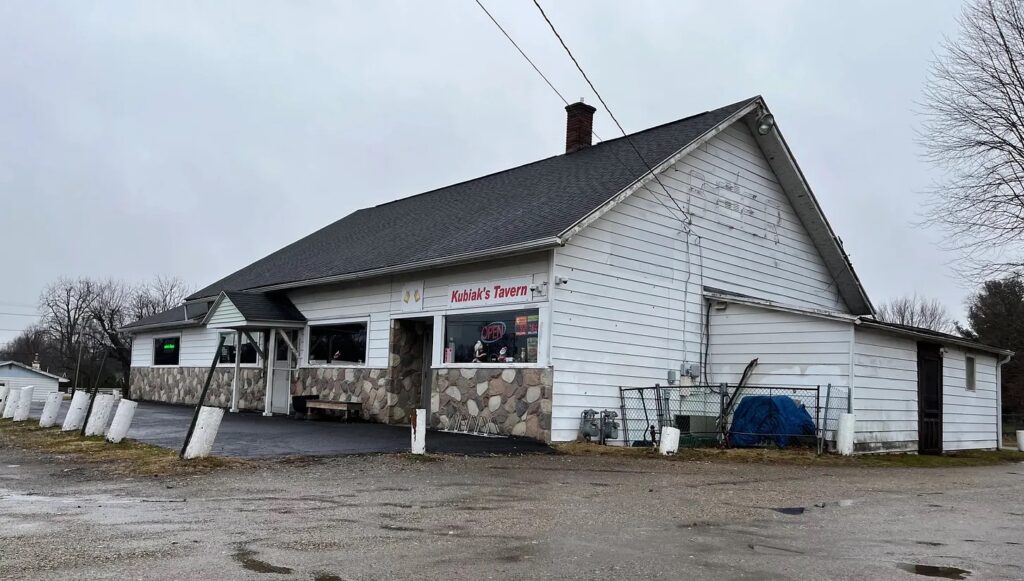
Then things got interesting. They took me to my first R-rated movieLooking for Mr. Goodbar. Sitting between two beautiful girls I barely knew during that particular film was, to say the least, uncomfortable. Afterward, they drove me across the border into Niles, Michigan to Kubiak’s Tavern so I could legally order my first alcoholic drink. I think we danced a little at the bar, laughed a lot, and eventually headed back.
The Goodnight Kisses

All three of us squeezed into the front bench seat of the car, me squarely in the middle. When we pulled up to Fisher Hall, I turned to thank them for the best birthday of my life and started to open the door.
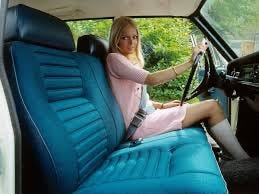
Blonde girl in pink minidress and white boots in the driver's seat of a 1970s-era car with blue bench seats.  Biography of Dr. Anthony J. Carbone.

“Not so quick, Tony,” they both said. I turned back toward my classmate. “What?” She leaned in and gave me a five-minute French kiss. I was blown away. As I turned the other direction to open the door, her roommate gently pulled me back. “Slow down,” she said. Then she gave me a five-minute French kiss of her own. It was, hands down, the best birthday of my life.

Football Season and My Neighbor Joe Montana

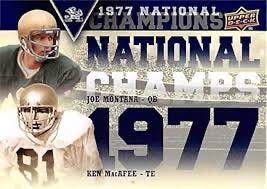
Without a doubt, the most exciting part of my freshman year at Notre Dame was football season — a highlight in any Domer’s college experience. But for me and every student in 1977, it was unforgettable because we won the National Championship.
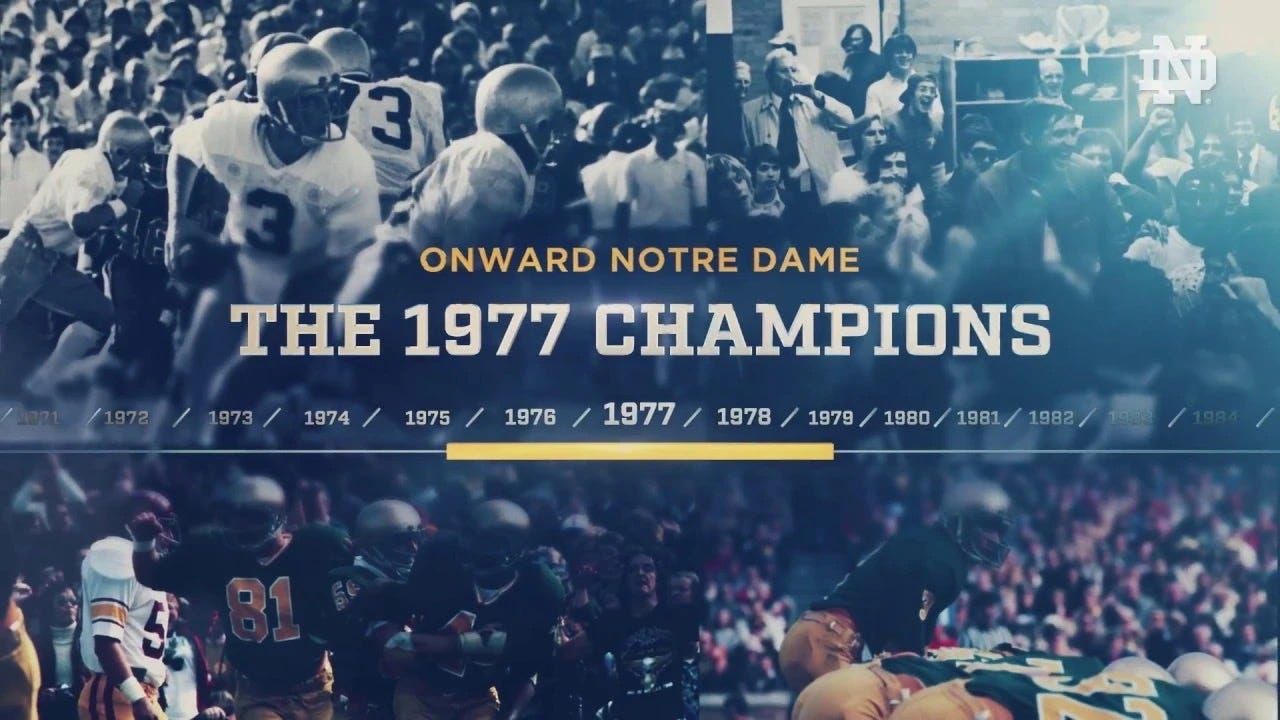
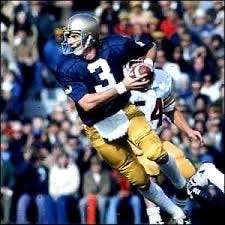
1977 NCAA National Football Champions. University of Notre Dame Fighting Irish. Joe Montana. Dr. Anthony Carbone autobiography.

Notre Dame Fighting Irish Football Wins NCAA National Championship

That year, the Notre Dame Fighting Irish, coached by Dan Devine and led by quarterback Joe Montana, finished the season with an 11–1 record and capped it off by demolishing the previously undefeated and top-ranked Texas Longhorns 38–10 in the Cotton Bowl. That victory sealed our tenth national title.

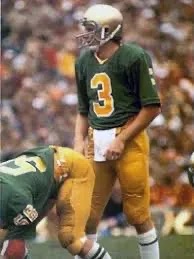
Quarterback Joe Montana and Coach Dan Devine
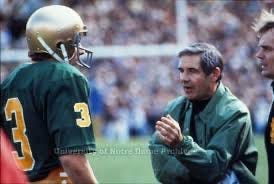
Photograph of Joe Montana (#3) talking to Coach Dan Devine during a football game.  Biography of Dr. Anthony J. Carbone.

Entering the 1977 season, Joe Montana was a junior quarterback, but he found himself in a precarious position on the depth chart—listed as third string after battling injuries and inconsistent play. His relationship with Coach Dan Devine wasn’t particularly warm or enthusiastic.

However, the turning point came in the third game of the season against Purdue. Notre Dame was losing 24-14, and starting quarterback Rusty Lisch was struggling. When backup Gary Forystek was injured, Devine was forced to turn to Montana, despite the previous tension. However, the turning point came in the third game of the season against Purdue. Notre Dame was losing 24-14, and starting quarterback Rusty Lisch was struggling. When backup Gary Forystek was injured, Devine was forced to turn to Montana, despite the previous tension.

Montana, a former seventh-string quarterback, was inserted into the game late in the third quarter. What followed was a classic comeback performance: Montana threw for 154 yards and a touchdown in the final 11 minutes, leading the Irish to a dramatic 31-24 victory. This comeback, in particular, helped launch Montana’s legend and reignited Notre Dame’s national championship hopes.

After this game, Devine recognized Montana’s capabilities and named him the starting quarterback. The team went on to win every game from that point forward, culminating in a dominating 38-10 victory over number one ranked Texas in the Cotton Bowl and securing the national championship. While their relationship might have been complicated, the Purdue game became a pivotal moment for both Montana and Devine, proving that despite any previous doubts or disagreements, they were a powerful combination that propelled Notre Dame to a memorable championship season.

Joe Montana and Four All-American Football Stars

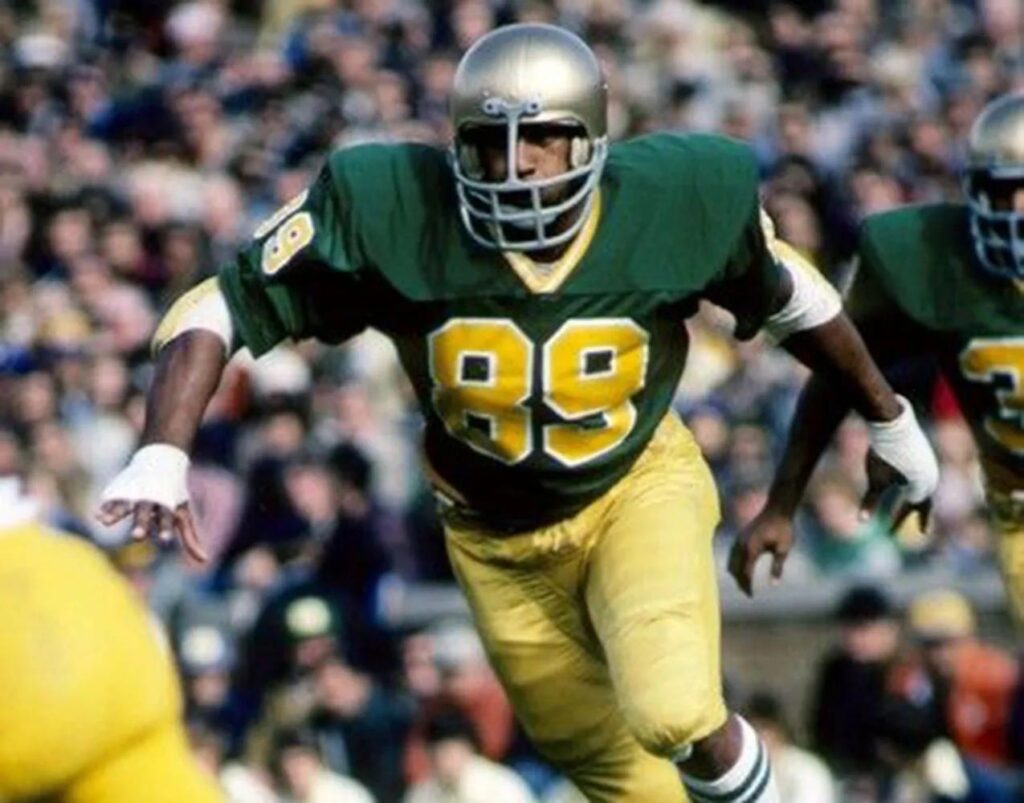
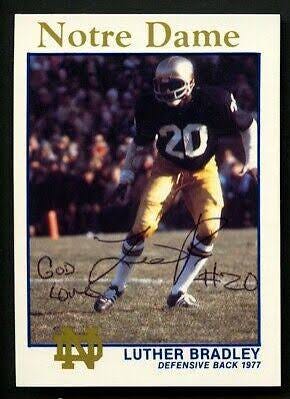
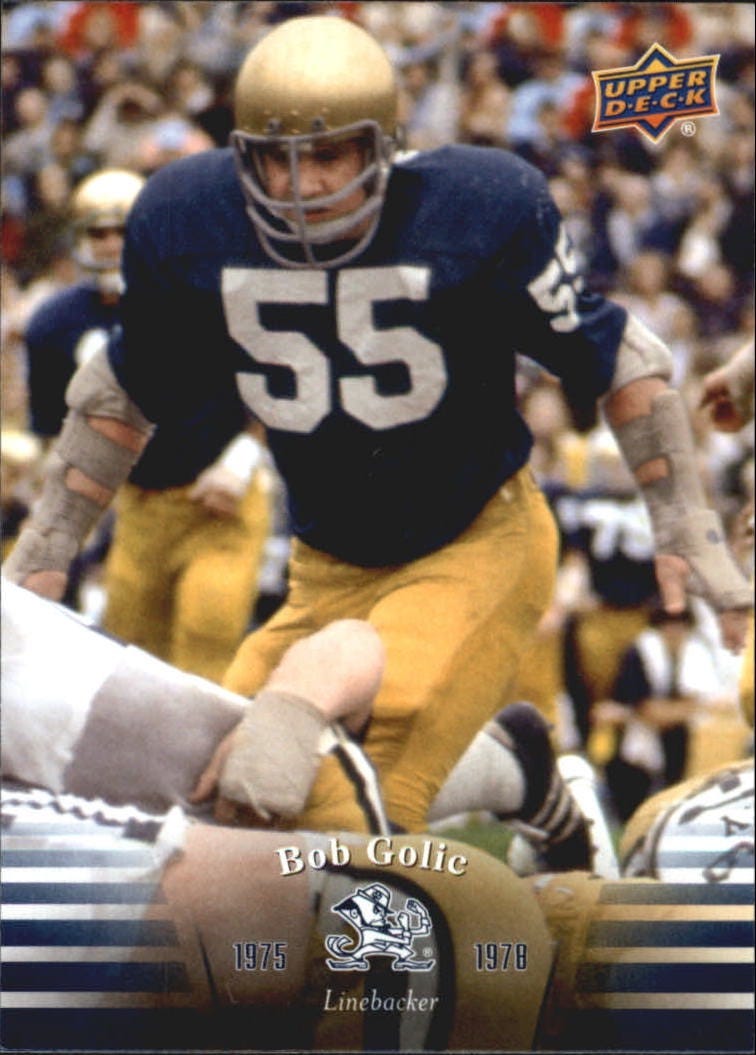
The 1977 squad was stacked with All-Americans: Ken MacAfee, Ross Browner, Luther Bradley, and Bob Golic. But surprisingly, Joe Montana — our quarterback and undeniable team leader — was not named to any All-American team. That still bothers me to this day. Joe’s later NFL career proved what a star he truly was. He led the 49ers to four Super Bowl victories and earned MVP honors in three of them. His 92-yard winning drive in Super Bowl XXIII became legendary. And his eight Pro Bowl appearances set the standard for greatness.
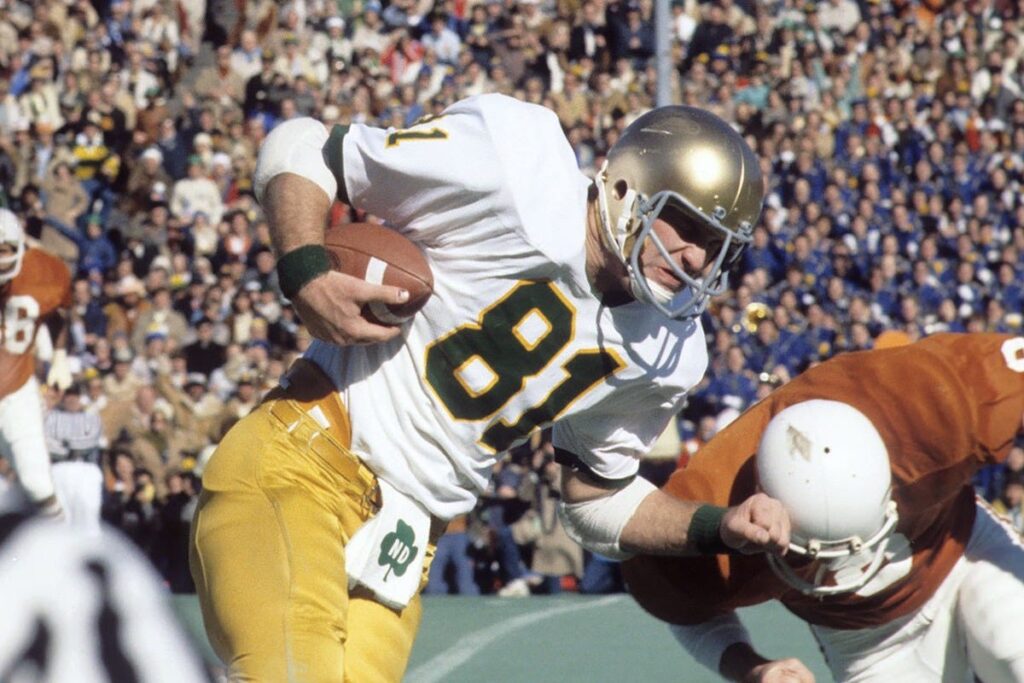
Bob Golic #55 of the Fighting Irish football team.  Biography of Dr. Anthony J. Carbone.
Bob Golic #55

Joe Montana My Next Door Neighbor

I knew Joe Montana–he was my next-door neighbor in Fisher Hall. The kind, funny, somewhat shy, and good-looking guy you see today in commercials and commentary — that was the exact same Joe I knew back then. He was humble and approachable. Let me give you two stories that show who Joe Montana really was.


Notre Dame Football Stadium

First, during home games at Notre Dame Stadium — “The House that Rockne Built” — student seating was assigned by class year and then by residence hall. Seniors got prime seats near the 50-yard line. Freshmen like us were tucked in the end zone. Our whole Fisher Hall section sat together.
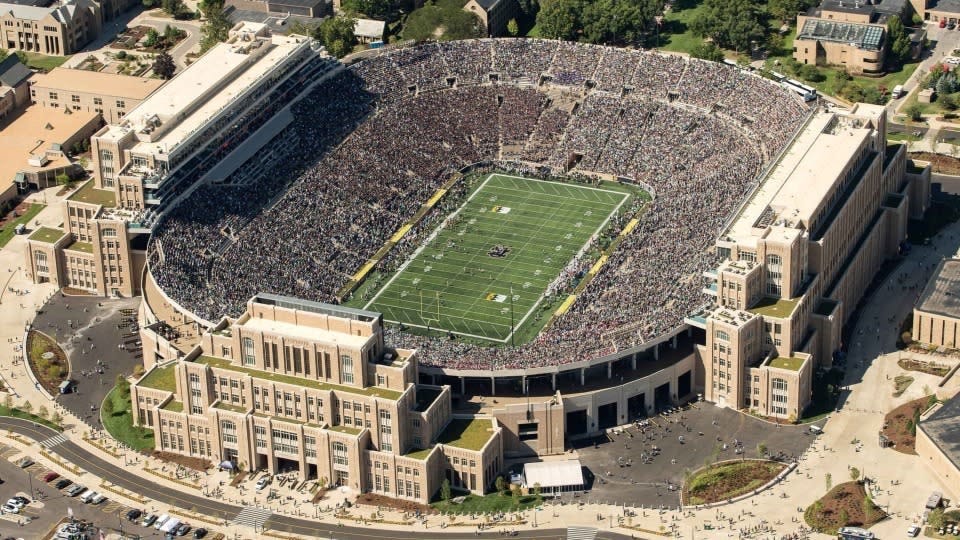
Notre Dame Football Stadium “The House That Rockne Built”. Biography of Dr. Anthony J. Carbone.
Notre Dame Football Stadium “The House That Rockne Built”

Joe Montana and His Fisher Freshmen

In nearly every game, whenever Notre Dame’s offense got into the red zone near our end zone seats, Joe Montana would pause behind the center, scan the crowd, find us — the Fisher Hall freshmen — point directly at us, and then throw a touchdown pass. That was Joe. In his biggest moments, in a deafening stadium, on national television, he remembered his freshman friends. That, to me, is what leadership looks like.
Joe Visits My Room Nightly for Snacks

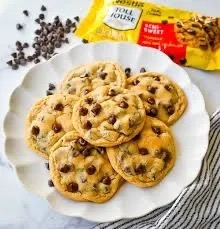
And Joe’s kindness extended off the field. Many nights, he’d quietly slip into my dorm room late, because I had a TV and he didn’t. He’d lay down on my bed, turn on the television, and say with a grin, “What do you have?” — hand outstretched. My four sisters constantly sent me care packages, especially homemade Tollhouse chocolate chip cookies. Joe knew it. So I’d break out the latest box and share it with him. He was always gracious and genuinely appreciative.

No Athletic Dorms, Cafeterias, or Tables

Notre Dame was different. Unlike big football schools, we had no athletic fraternities, no athlete-only dorms, no athlete dining halls. Our NCAA stars lived with us. Ate with us. Walked across campus like any other student. In our Fisher Hall section alone, we had Joe Montana, Jerome Heavens, and Mike Calhoun — which meant that we got to meet the other players when they visited.

Definitely, no hostesses!

I later visited schools like Alabama and Florida and saw how athletes were treated like royalty. I met women who called themselves “hostesses” and bragged about entertaining football recruits. Some even said they were on scholarship for it. When I told them that Notre Dame didn’t have hostesses, they didn’t believe me. I said, “Believe me. Notre Dame is so small, we know what goes on. And we do not have hostesses.”

1977 Music

The music of 1977 was definitely not one of my favorites; I am much more of a 1960s, maybe early-1970s music fan. Debby Boone’s “You Light Up My Life” debued in October 1977 and stayed #1 until the end of the year. So “You Light Up My Life” reminds me of my first round of college final examinations, and I am happy that the song was so overplayed that it’s never been on the air since.
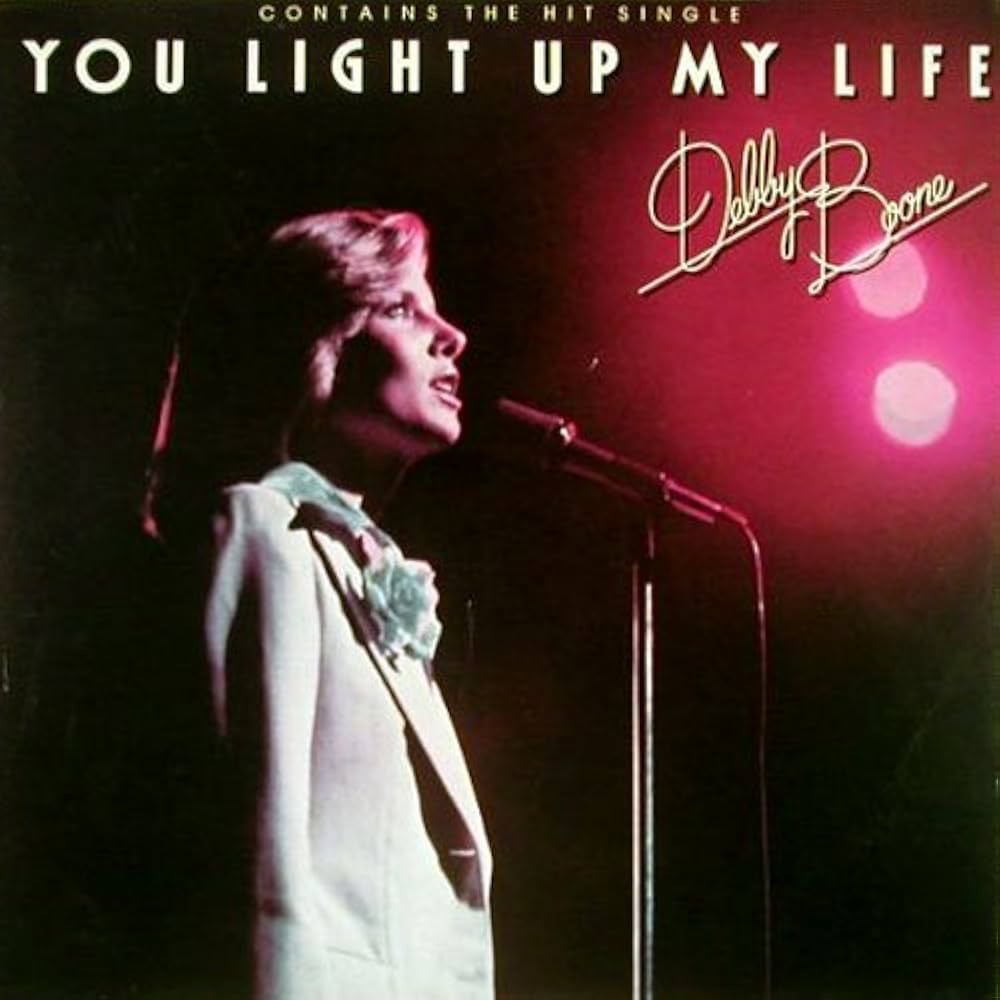
Crosby, Stills & Nash at Notre Dame

On November 5, 1977, I saw Crosby, Stills & Nash perform at the Athletics and Convocation Center. The stage setup looked exactly like their famous album cover — just the three of them sitting together on a leather couch, guitars in hand, playing pure acoustic sets. No flashy lights or backup bands, just their harmonies filling the arena. It felt intimate despite the size of the crowd, like we were all sitting in their living room. I was happy because they played all of their greatest hits.
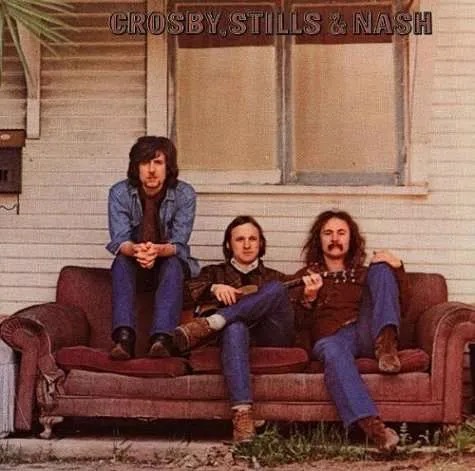
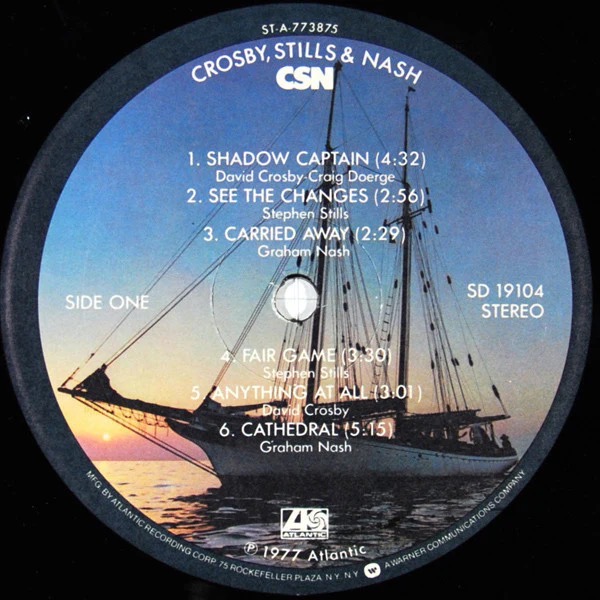
A Wild & Crazy Night at Notre Dame

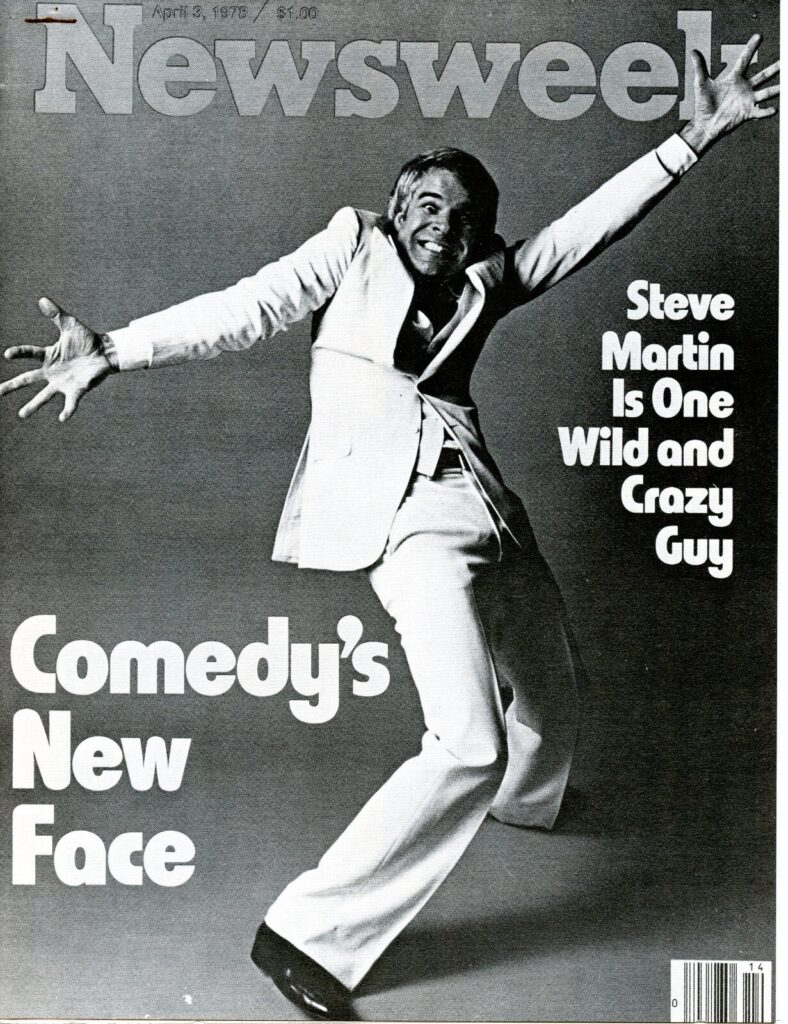
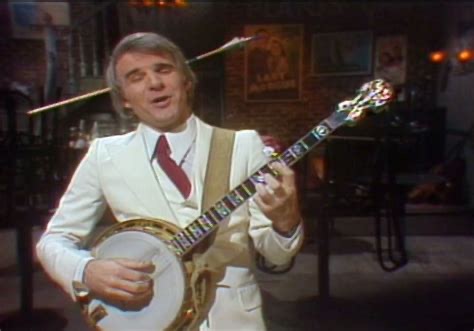
Four days later, on November 9, 1978, I had the rare treat of seeing Steve Martin perform live on campus. He was debuting his now-famous “Wild & Crazy Guy” routine from Saturday Night Live. Dressed in his classic white suit with an arrow going through his head, he alternated between cracking absurd one-liners and picking out lightning-fast banjo tunes. I had always known he was funny, but that night I also realized he was quite a musician. This was the act that catapulted him into superstardom, and I was lucky enough to see it up close and personal right there at Notre Dame.
Thanksgiving, Homesickness, and a Visit from Jeff Bell

First Thanksgiving Away From Home

Thanksgiving came, and I wasn’t able to make it home. The cost of traveling after an already expensive first semester was just too much. It was the first major holiday I had ever spent away from my family, and the homesickness hit hard. Most of the students left campus to go home, and suddenly, the bustling grounds of Notre Dame became eerily quiet.

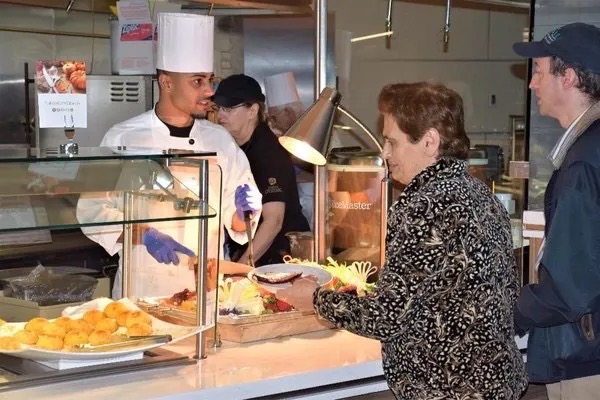
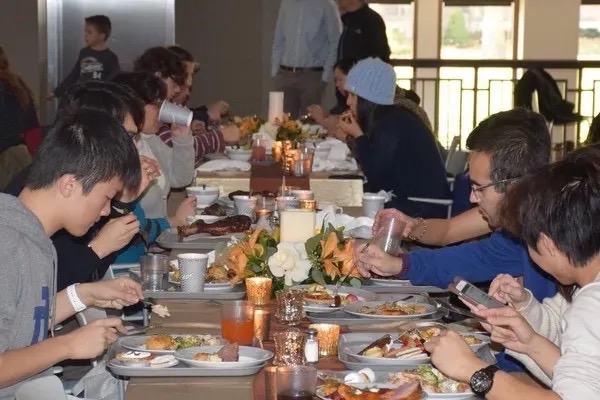
The only people left were a handful of domestic students like me and the international students who also had nowhere to go. The University did its best to create some holiday spirit. The Dining Hall put on a Thanksgiving feast, complete with turkey, stuffing, mashed potatoes, and pumpkin pie. The food was good, and the gesture was appreciated, but it didn’t come close to the warmth and chaos of a Carbone family holiday back in Winchester. I smiled politely through dinner, then went back to the dorm, feeling the weight of distance more than ever.
Jeff Bell Visits Notre Dame

Shortly after Thanksgiving and before finals in December, I got a much-needed boost. My buddy Jeff Bell drove up from his college in Texas to visit me. His arrival felt like a taste of home, and I was excited to show him around the campus that I was beginning to call my own.

Jeff was immediately impressed. The sight of Fisher Hall, the Gothic buildings, the golden dome — he soaked it all in. But nothing impressed him more than running into Joe Montana in our dorm hallway. He was even more awestruck when we went to the South Dining Hall for dinner and spotted both Joe Montana and Ross Browner eating together like regular students. That moment stayed with him for decades. To Jeff, it was unthinkable that future NFL legends would sit among the student body without any entourage, just two guys with trays and a meal card.

But Jeff quickly realized that Notre Dame wasn’t exactly a party school. That Saturday night, he turned to me and asked, “Where is everybody?” I smiled and said, “You want to see where everyone is on a Saturday night?”
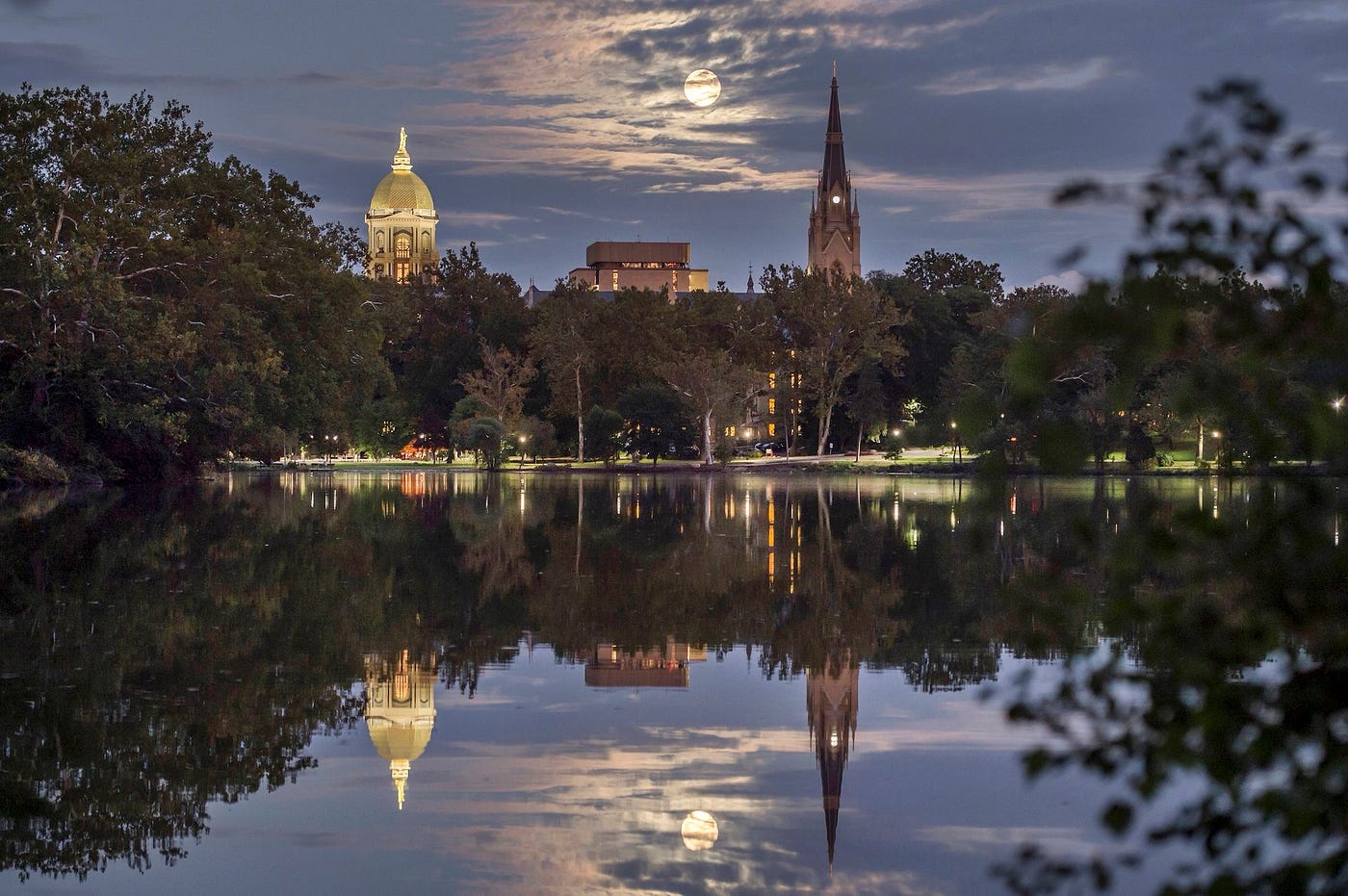
The Big 3 Icons of Notre Dame: Golden Dome, Memorial Library, Sacred Heart Basilica at Twilight

The Library

I led him to the Notre Dame Memorial Library — the 13-story tower with the massive mural of Jesus stretching his arms skyward, affectionately known as “Touchdown Jesus.” When we entered, the place was packed. The first floor buzzed with activity, the snack bar and bathrooms offering quick breaks for students deep in study.
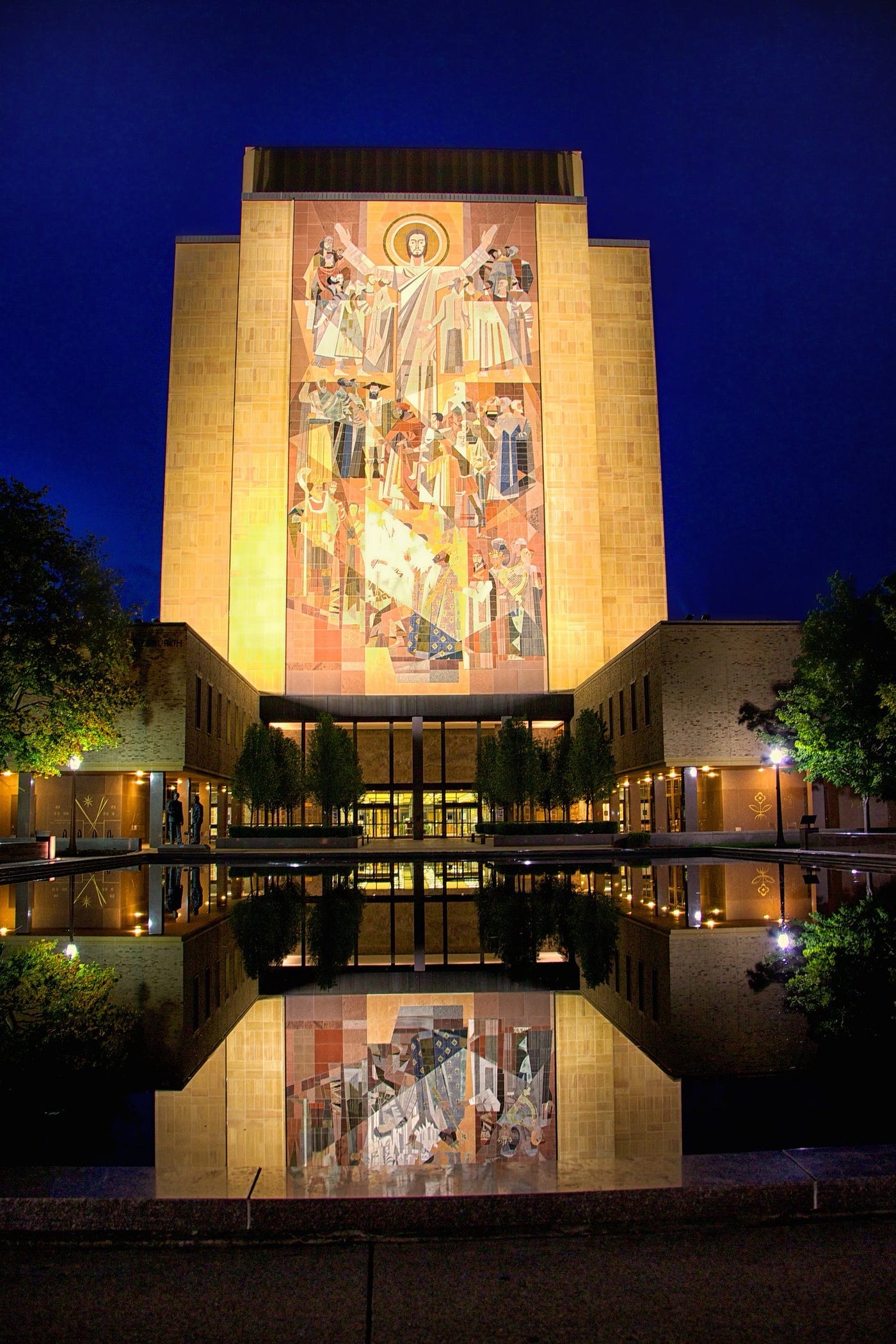
Notre Dame’s Hesburgh Library at Night (With “Touchdown Jesus” Mural)

Jeff was baffled. “This is where everyone goes on a Saturday night?”
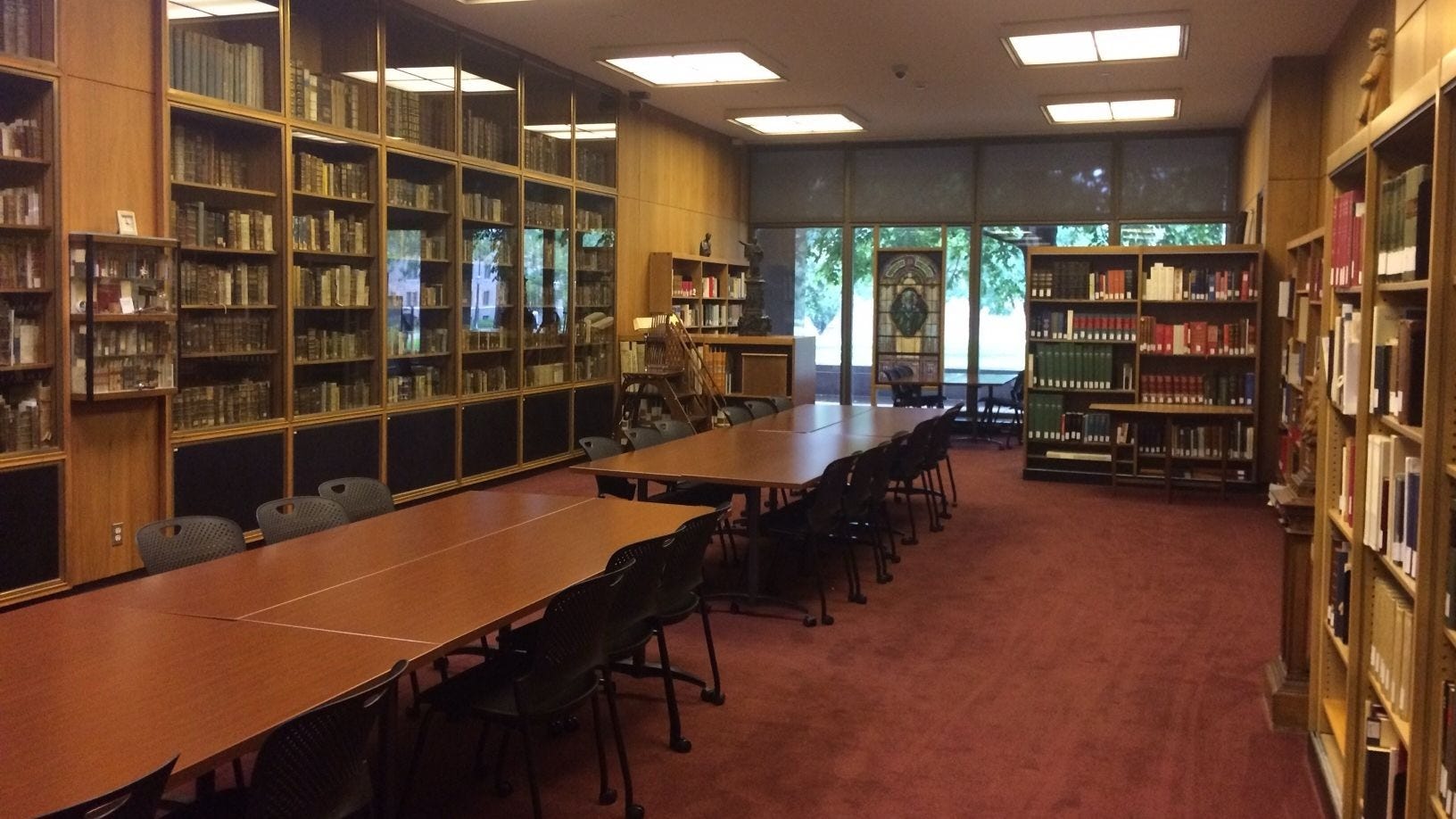
The “Pre-Med” Floor

I nodded, but told him I couldn’t study there — too many distractions. So we took the elevator to the 13th floor: the “Pre-Med Floor.” As soon as the doors opened, the atmosphere shifted. You could hear every cough, every footstep, every rustle of paper. When I turned a page in my textbook, I could feel heads involuntarily lift from their cubicles just at the sound.
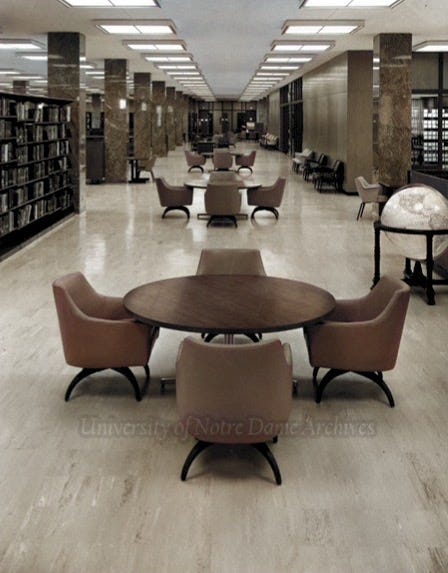
The Pre-Med Floor of Hesburgh Library (After Hours)

This was serious business. The Pre-Med students at Notre Dame didn’t mess around. Competition was fierce. Focus was absolute. It was a place of quiet desperation and razor-sharp ambition.

Jeff took it all in, visibly stunned. He never said much about it, but he never came back to visit again during undergrad. He waited until I made it to medical school at Georgetown. I think that night explained it all.

Final Exams: A Humbling First Encounter

All that remained of my first semester was final examinations. And let me say this clearly: they were a humbling experience.

I studied nearly 24/7 in the days leading up to exams. Every waking moment was spent buried in textbooks, notes, and problem sets. My mind was constantly racing between subjects — chemistry equations, biology lab reports, calculus proofs, and theology essays. Sleep came in short bursts. Meals were rushed. My stress was constant.

Final Exam Care Packages From Mom

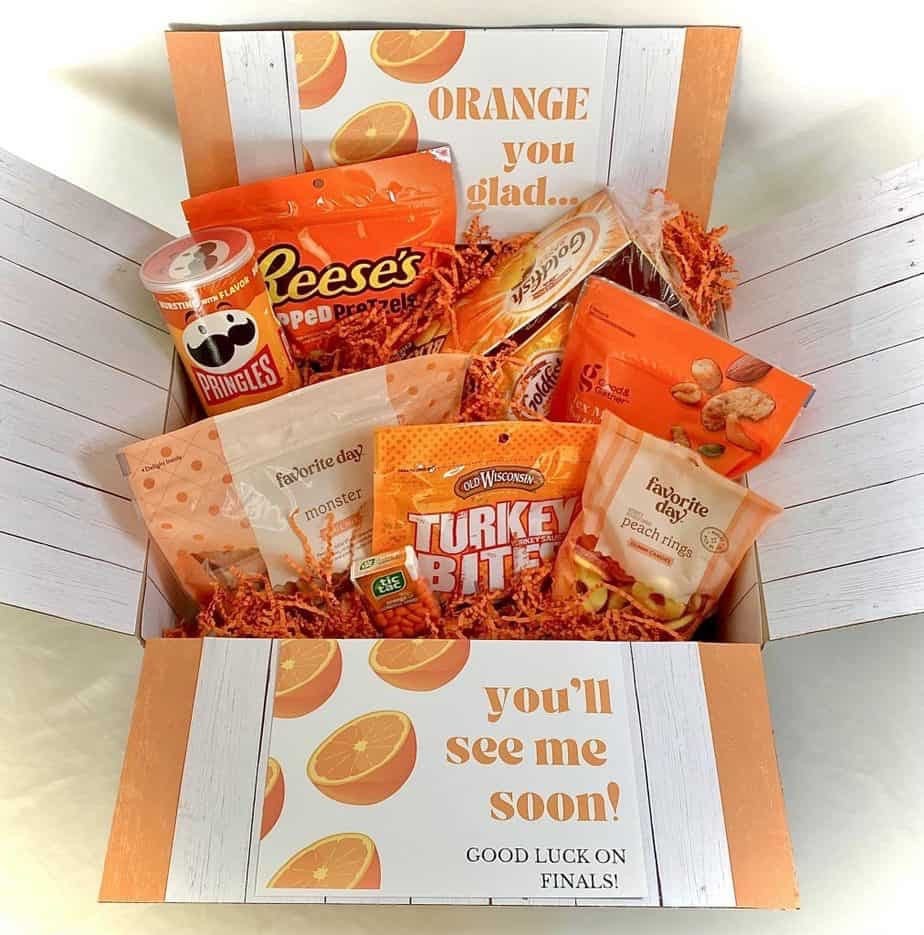
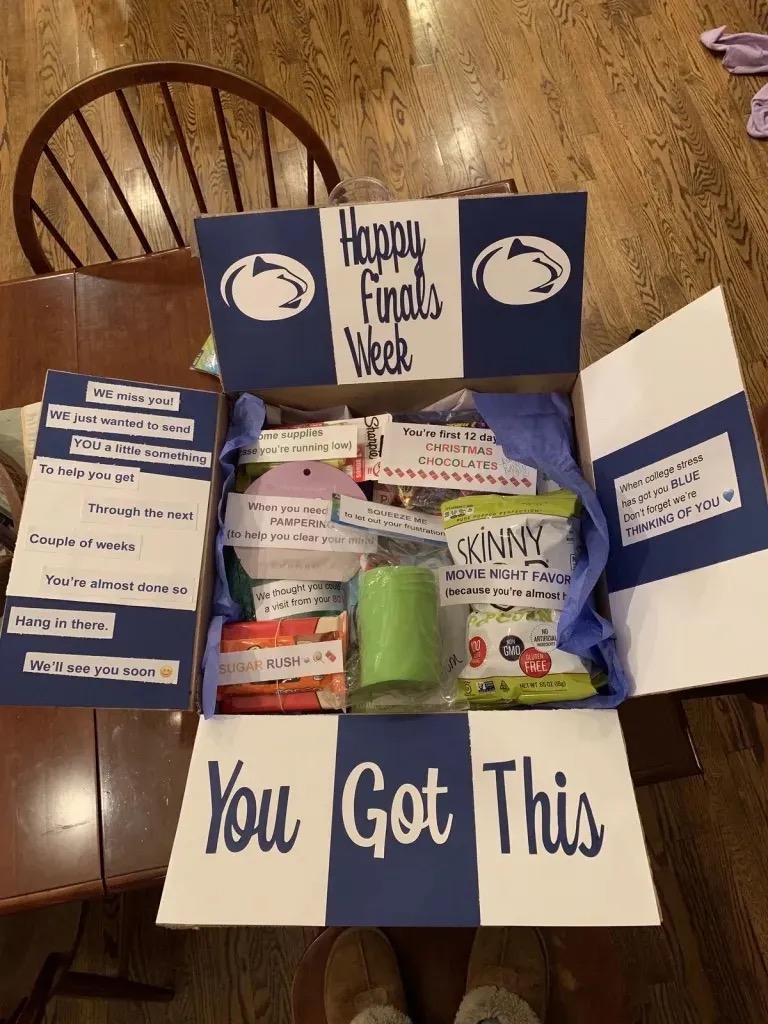
I was deeply grateful that my mother had purchased a Notre Dame-sponsored Exam Care Package, which came loaded with snacks and encouragement. Even better, my four sisters came through as always — sending their signature Toll House chocolate chip cookies and bags of gummi bears to get me through the marathon week. Those care packages felt like lifelines.
Pre-Med Exams Until the Last Day

What surprised and frustrated me most was learning that students in other majors were already finished. My friend Matt Bedics, a philosophy major, was packed up and home for the holidays while I was still knee-deep in test prep. Pre-Med and Engineering students weren’t so lucky — our final exams stretched all the way to the last possible day of the semester, often just a few days before Christmas.

Exam Time

When the time came to Fisher Hall for our examination, Andy Cordes started a tradition that lasted all four years. Right when it was time for everyone to get ready to leave to take final examinations, Andy would start playing Bachman Turner Overdrive’s (BTO) “Taking Care of Business”. And one by one, each of us would open our dorm room doors and step into the hallway singing.
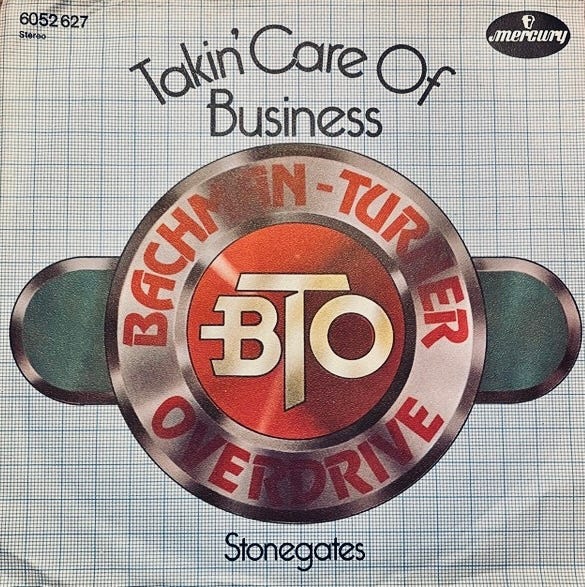
Album cover for Bachman Turner Overdrive (BTO) “Taking Care of Business”. Biography of Dr. Anthony J. Carbone.

The exams themselves were brutal. Chemistry in particular shook my confidence. The content was dense, the questions were sharp, and I knew I hadn’t nailed it. After everything was over, I didn’t even want to check my grades. I was too afraid. I needed a break from the pressure, the competition, and the relentless self-judgment. What should I expect from a professor who gave a pre-med Nobel Laureate a “B” in Chemistry?


Grades are Posted

But my pre-med buddy Bob Terifay had no such hesitation. He stormed back into Fisher Hall with his usual energy, grinning as he delivered the news: “You got a C in Chemistry!” I was stunned. “How the hell do you know my grade?” He just smiled. Somehow, he had remembered my Notre Dame student ID number: 7711117284. I have no idea how or why. But he did. And he looked up my grades like it was nothing.

Scholastic report card from my first semester at University of Notre Dame from 1977. Dr. Anthony J Carbone’s autobiography

Bob clearly was better at rote memorization than me. And I know he had a better academic preparation than I did. All I knew was that I had survived. And that, for my first semester at Notre Dame, would have to be enough.

When I finally made it home to Fort Leavenworth for the holidays, I was so mentally and physically drained that I didn’t feel like myself again until after Christmas Day. That’s how deeply finals had consumed me.
Home Page

Chapter 14: First 24 Hours Under the Golden Dome

Golden Dome on top of the Administrative Building of the University of Notre Dame. Autobiography of Dr. Anthony J. Carbone

Believe Nothing You Hear, and Only Half of What You See — A memoir of Service, Shame and the Search for Truth

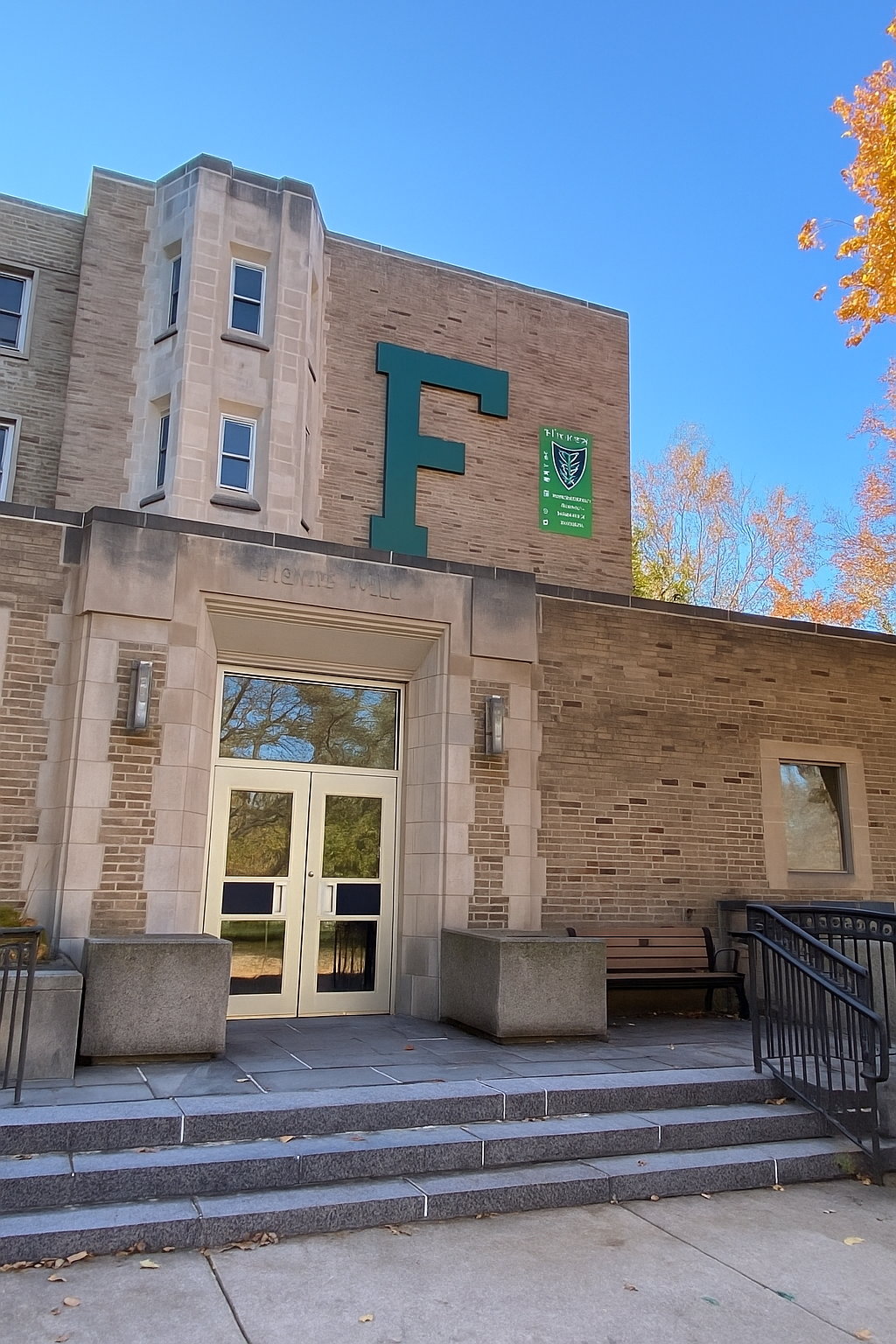
My New Home–Fisher Hall

My father walked me over to my new home, Fisher Hall — one of Notre Dame’s newer and quirkiest dormitories. Not the historic, charming, ivy-covered palaces like St. Edward’s Hall or Dillon Hall. Fisher didn’t have mahogany paneling, grand staircases, or a dusty old library with secret corners. Rumor had it that the building had once housed religious sisters, and honestly, it looked the part. Built with plain cinder blocks and lined with linoleum floors, it felt more like a high school hallway than something lifted from Oxford or Harvard. There was no Ivy League pedigree here. But it did have one coveted feature that made everyone else jealous: all single rooms. No bunk beds. No roommate drama. Just your own space — and in that sense, Fisher Hall was a kind of hidden treasure.

Fisher Hall on the South Quad of Notre Dame. University of Notre Dame. Dr. Carbone’s Autobiography. College Dormatory.
Fisher Hall on the South Quad of Notre Dame.

My Father’s Brief Goodbye

My father didn’t linger. No proud farewell speech. No long hug. Just a handshake and a nod. And then he was gone and I was alone. I returned to my dorm room and I stood there in the doorway of my tiny single room with just my one suitcase and nothing else but silence. There was no roommate coming.

Atypical Notre Dame Freshman with Atypical Admission

Before I go any further, I should say something important: I was not your typical Notre Dame student. In fact, I had barely heard of Notre Dame before I applied. Actually, scratch that — I never really applied at all. That might sound impossible to believe, especially to people who grew up in South Bend or the Chicago suburbs, where Notre Dame is revered like a holy shrine. But it’s true. I hadn’t grown up watching Fighting Irish football on NBC. Nor did I know the names of dorm hall, the players or any students who were attending. I came from a military family. We moved constantly. Our home base was Boston, and Boston has over 70 colleges and universities including Harvard, MIT and a number of famous Catholic colleges like Boston College. Notre Dame was a name I knew vaguely, but it wasn’t part of my world.

The Admission Essay

The average Notre Dame student, on the other hand, seemed to be born into the place. Their fathers had gone to Notre Dame. Their grandfathers. An uncle or two. Maybe an older brother already living in Dillon or Zahm or Alumni Hall. They came in wearing ND sweatshirts they’d had since the fifth grade and carrying framed photos of the family tailgaters. When they found out I didn’t write an application essay, they looked at me like I had just admitted to skipping Confession.

“What did you write about on your admission essay?” they’d ask, curiously. “I didn’t write an essay, becasue I wasn’t asked to provide one.” That was thanks in part to my story of going to a Department of Defense School in Europe, my class standings and SAT scores, and my four-year Army ROTC scholarship. I had been admitted through a separate channel, one that didn’t require me to jump through the traditional hoops. I never thought much about it. But I would quickly come to understand how elite and competitive Notre Dame was, how much it meant to be accepted, and how many doors people believed it opened.

Notre Dame Residential College System

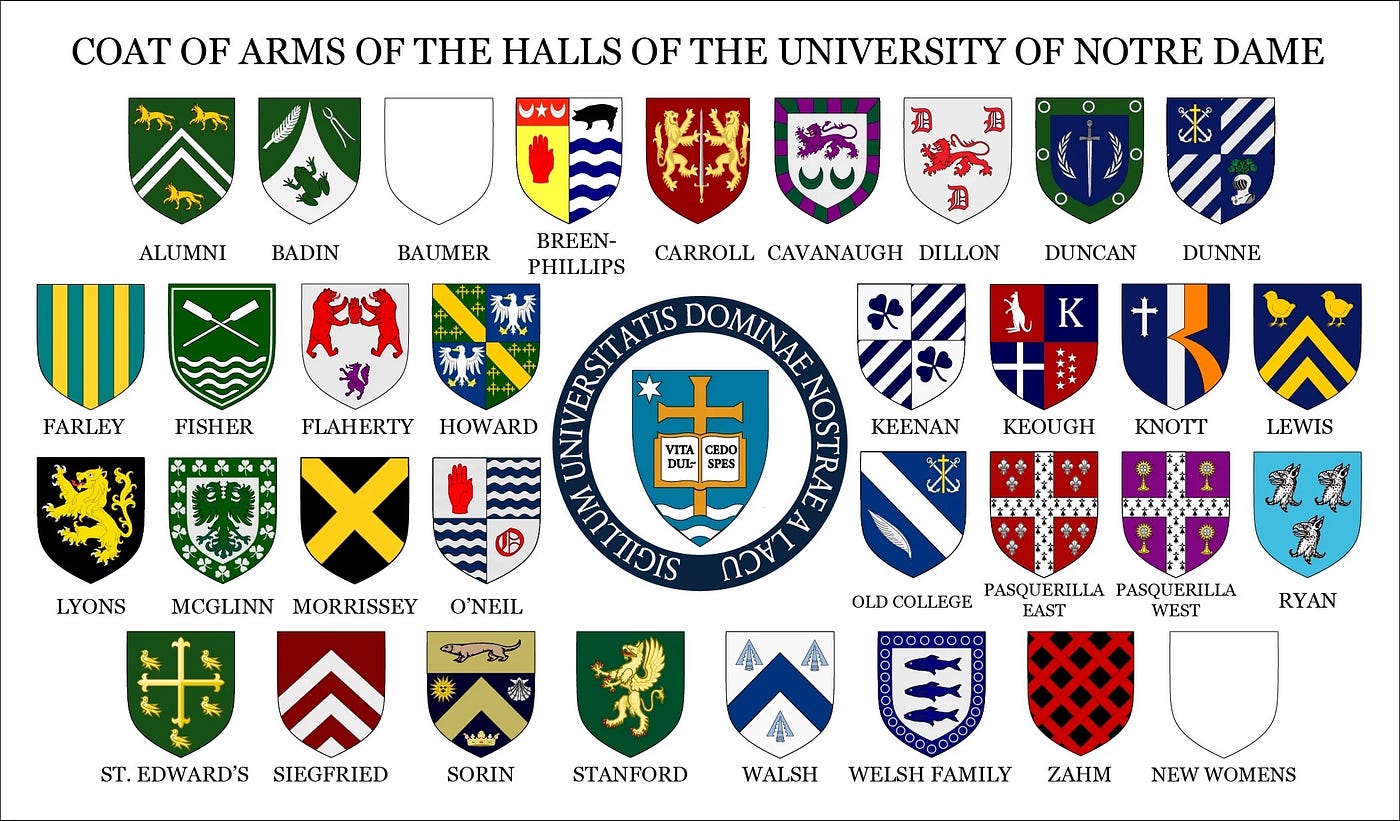
It also meant that I didn’t know a thing about the school’s endless stream of traditions. And Notre Dame is built on tradition. The residential college system, for one, is nearly unique in the United States — modeled more on The University of Oxford in England than on your average American campus which gave it that Ivy League atmosphere. Students are placed in a dorm their first year, and they usually stay there all four years. The dorm becomes your social center, your family, your identity. Greek life is nonexistent at Notre Dame — Catholic universities like this one typically forbid fraternities and sororities, seeing them as elitist or exclusionary. So your dorm is your fraternity. It’s your house, your flag, your tribe.

Coat of arms of the halls of the University of Notre Dame.

In that sense, Notre Dame was surprisingly similar to West Point — where I might have ended up if I hadn’t chosen this path. And in those first few days, adjusting to this foreign but rigidly structured environment, rules and traditions to quickly learn, it felt like Beast Barracks. A strange place. A complex system. A culture I hadn’t studied, but one I needed to figure out quickly, if I was going to survive.

Fisher Hall Charm and Eccentrism

Fisher Hall had its own charm, albeit untraditional— 150 single rooms, eighteen singles in my section alone, and each section had its own culture and cast of characters. Fisher’s single rooms seems to attract an eclectic group of guys, especially geniuses and jocks — and at Notre Dame, it was not unusual to find students who were both. My section included several new freshmen to include two pre-meds: me and Bob Terifay. We had our resident philosophy major, Matthew Bedics. A couple of engineers, including Andy Cordes and Al Emery, an architecture major, and Andy Entwistle, a goverment major. Our upperclassmen included several NCAA stars like premed football player Mike Calhoun (defensive tackle), Jerome Heavens (running back)and most famous of all, Joe Montana — yes, that Joe Montana — future NFL legend and our quarterback who would go on to win the National Championship that fall, was my nextdoor neighbor.

Fisher Hall Celebrity–Joe Montana

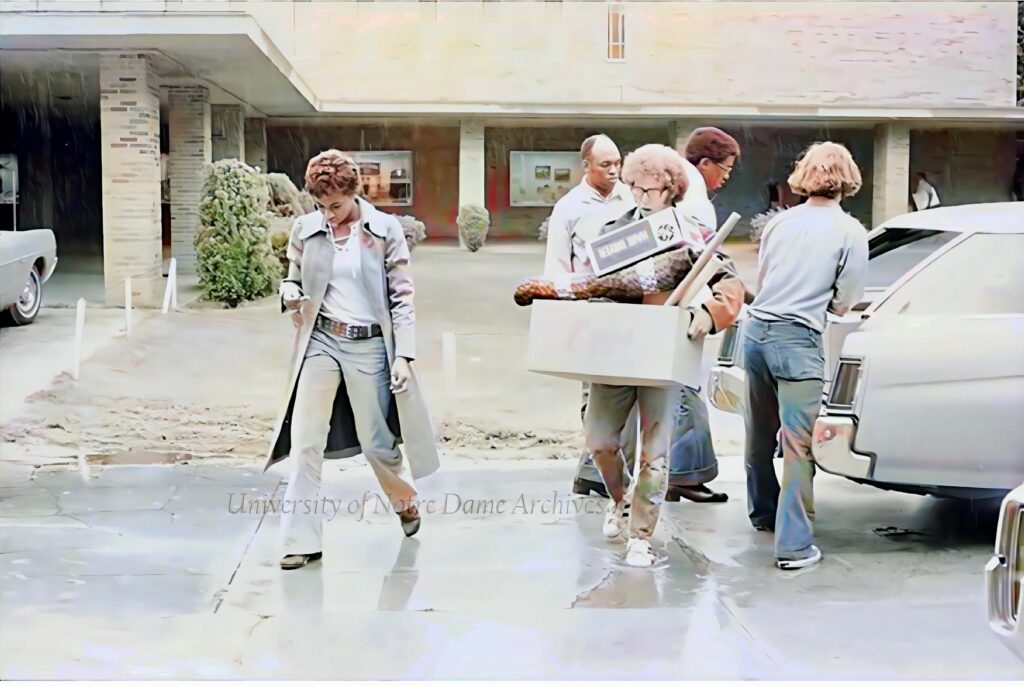
New Freshmen Arrive with Their Families

That first afternoon, I watched from my door as the new freshman section-mates arrived with their families. They came in caravans, unloading what seemed like entire moving trucks full of stuff: lumber to build lofts, mini-fridges, televisions, rugs, stereo systems, full-blown furniture, posters, lamps, potted trees — yes, actual trees. They turned their dorm rooms into tiny kingdoms.

My New Dorm Room and Home

I stood there in my blank little barracks-like room, clutching my one suitcase and feeling like a foreign exchange student who had arrived with nothing but a passport and a toothbrush. My room looked like a cell. And I couldn’t help but feel envious — not just of the decorations, but of the closeness and excitement about Notre Dame that these families shared. My father’s goodbye had been swift, businesslike, and cold by comparison. Everyone else had a support team. I had… orders.

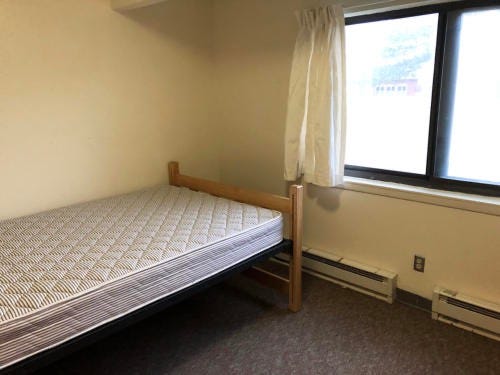
Empty cinder block single room of Fisher Hall at the University of Notre Dame

Over time, I would fix up my room and carve out a version of home inside those four walls: shelves with books and German beer steins and other souvenirs from Europe that reminded me of home in Bad Kreuznach and Heidelberg. I bought dark brown carpet, hanging plants, blankets, and bunches of eucalyptus that added to the familiar aroma of the Carbone home. But that first day, I was alone in an empty room and just felt like an outsider.

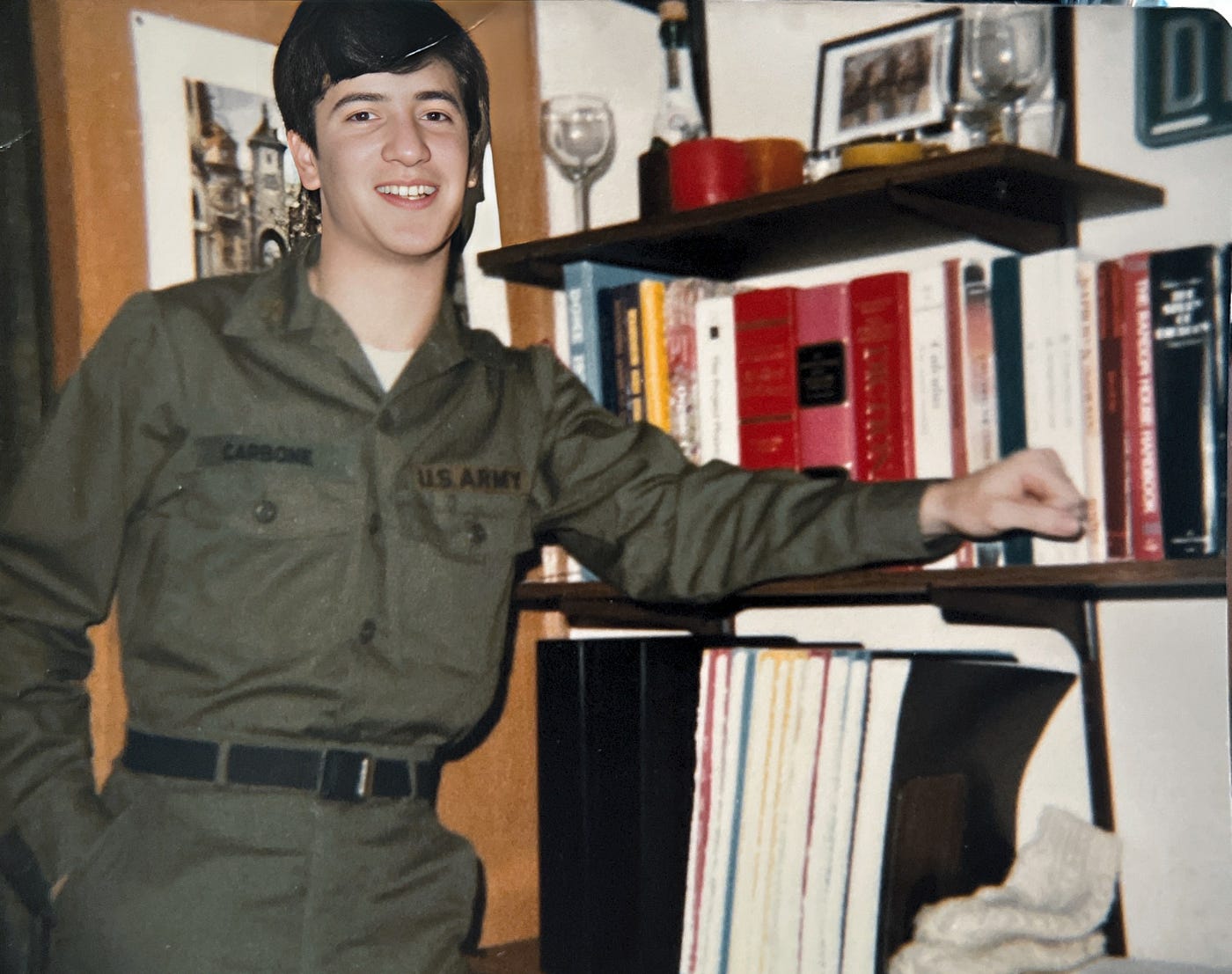
Dr. Carbone’s Autobiography. University of Notre Dame. US Army ROTC Cadet. Dormatory Room. Fatigues.
My Fisher Hall Dorm Room after it was fixed up and me in my Army ROTC fatigues.

Most of my classmates were brimming with excitement — grinning, exploring, laughing with parents and siblings. Me? I was trying to figure out what exactly I was supposed to be so excited about. I was ready to study hard and begin military training — but to me, it all felt like work. Just work. My classmates seemed to know something I didn’t: that Notre Dame was a place of joy, tradition, and magic. I would come to see it too — but not yet.

South Dining Hall

That night, most freshmen went out to dinner with their families and ended up sleeping in the hotels with their families. I wandered down to the South Dining Hall on my own. I always called it the “Mess Hall”, out of habit. That’s what it reminded me of — except with far more beauty, history and civility.

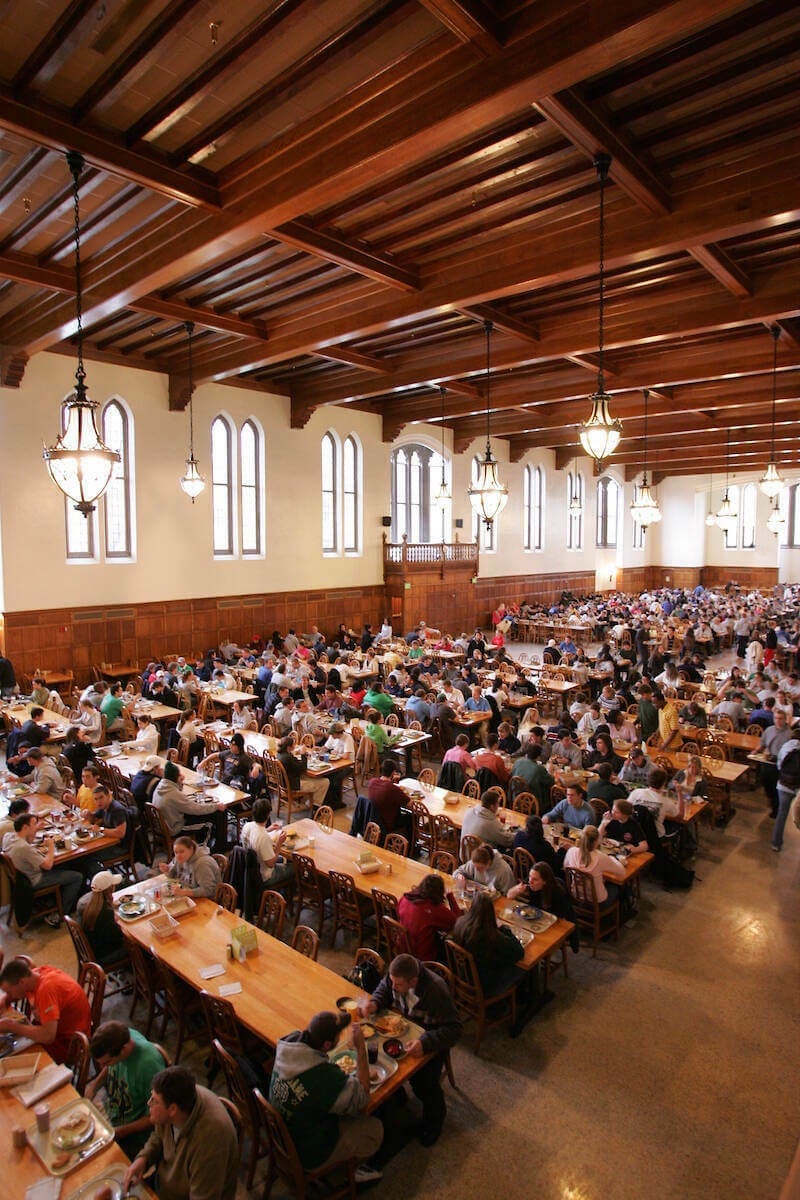
South Dining Hall on the South Quad of the University of Notre Dame. Dr. Carbone’s Autobiography.
South Dining Hall of Notre Dame

The place was stunning. A gothic cathedral of food. Vaulted ceilings stretching possibly 50 feet high. Stained glass windows filtering the golden dusk. Long oak tables arranged like a medieval feast. It felt like something out of Harry Potter, long before Hogwarts had been imagined.

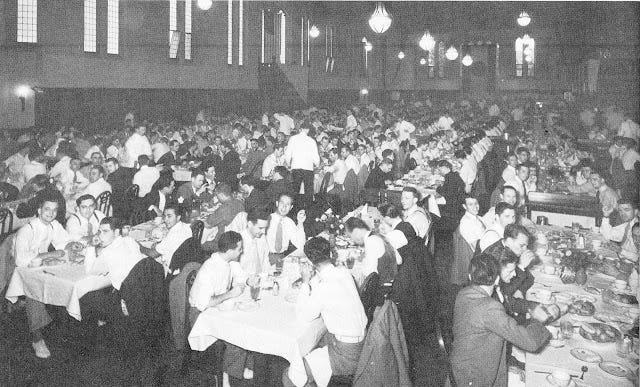
Inside the South Dining Hall where I ate three square meals a day for four years. University of Notre Dame. Dr. Carbone’s Autobiography.
Inside the South Dining Hall where I ate three square meals a day for four years.

The food was hot and hearty — roasts, fresh vegetables, warm rolls. But it was the women behind the counter who stood out most. Older, warm, motherly. The kind who called you “Son” and gave you an extra scoop of mashed potatoes if they thought you looked too skinny. I used to joke to myself that the only job requirement was: must be a Polish grandmother who lost a son in the war.

I ate alone that night, watching the swirl of happy students around me, and tried to study the system — where to find the trays, where to drop off your dishes, what tables were open and which ones were “taken.” Everything felt like a puzzle. But I was swept up in the history of the university and the ghosts of students past who had eaten their meals here in the old South Dining Hall.

South Dining Hall c.1930 with white table cloths and waiters. University of Notre Dame. Dr. Carbone’s Autobiography.
South Dining Hall c.1930 with white table cloths and waiters.

The Golden Dome–Administration Building at Notre Dame

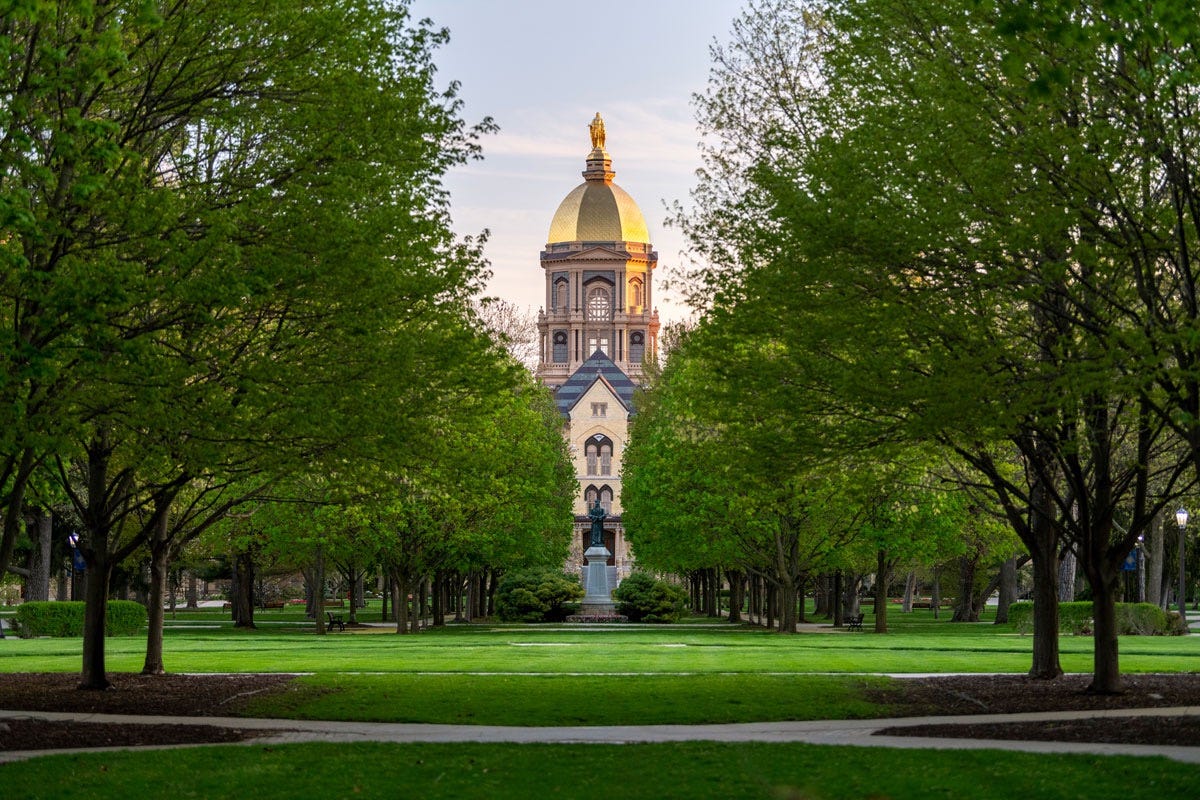
After dinner, I went walking. The sun was low in the sky, and the evening air was cool. I couldn’t help but make my way toward the heart of campus — the University’s most iconic symbol — the Golden Dome atop the Main Building. As twilight settled over South Bend, the dome shimmered in the fading sunlight, radiating a warm, almost heavenly glow. I had seen pictures, sure — but standing there in person was something else entirely.

Administration Building with its iconic Golden Dome with statue of Our Lady of the Lake. University of Notre Dame. Dr. Carbone’s autobiography.
Administration Building with its iconic Golden Dome with statue of Our Lady of the Lake.

The real gold leaf that coated the dome caught every last ray of light, casting a halo over the campus. Atop it all stood a 19-foot-tall, 4,000-pound statue of Mary, the Mother of God, arms outstretched, as if blessing all who passed beneath her. I didn’t yet know the full history — that the dome had originally been painted white, destroyed by fire in 1879, then rebuilt and regilded many times since, most recently in 2023 — but I could feel the weight of that history just standing there.

Inside the Administrative Building

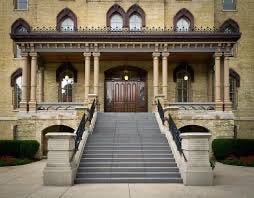
I climbed the front steps and pushed open the heavy doors of the Main Building. Inside, I was immediately overwhelmed. It was magnificent — like walking into a cathedral of learning.

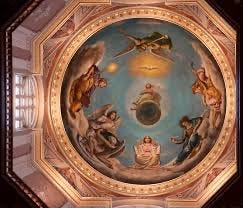
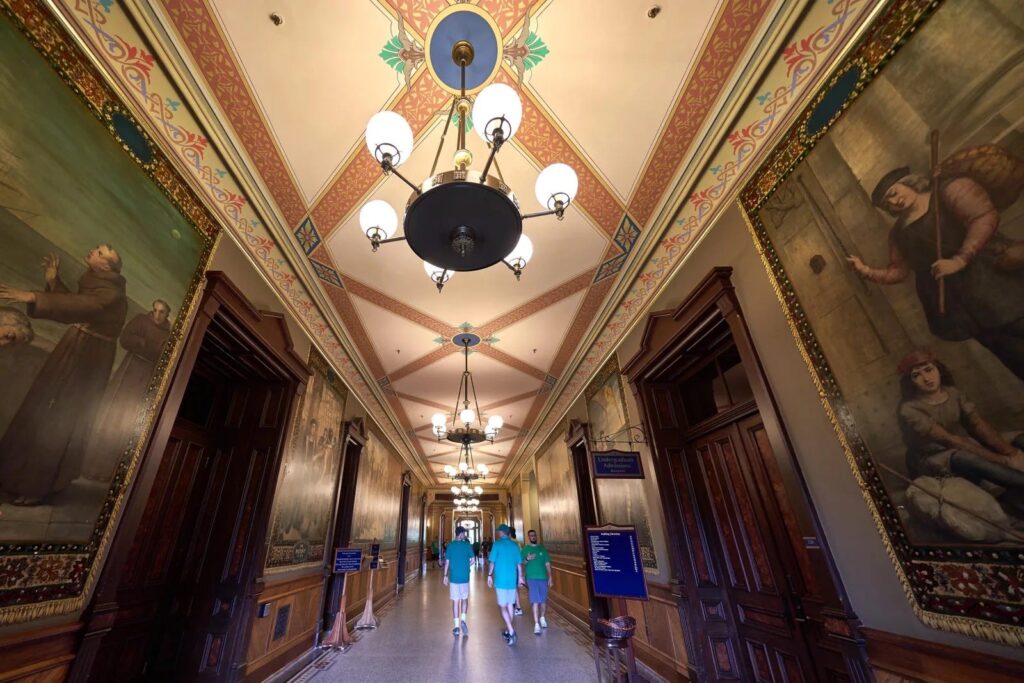
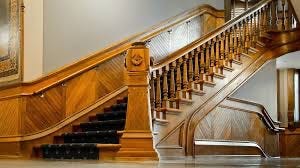
The mahogany-paneled walls glowed with polish and age. Massive staircases spiraled upward like something out of a Gilded Age mansion. And on the walls hung enormous historic murals — depictions of explorers, saints, and scholars that seemed to breathe with meaning. This wasn’t just an administration building. It was a shrine to the university’s mission, to its faith, and to the vision of its founder, Father Sorin, who had dreamed of building a great university in honor of Our Lady. I had felt out of place for most of the day. But here, under the Golden Dome, I felt something new: reverence. And maybe, just maybe, a sense that I belonged.

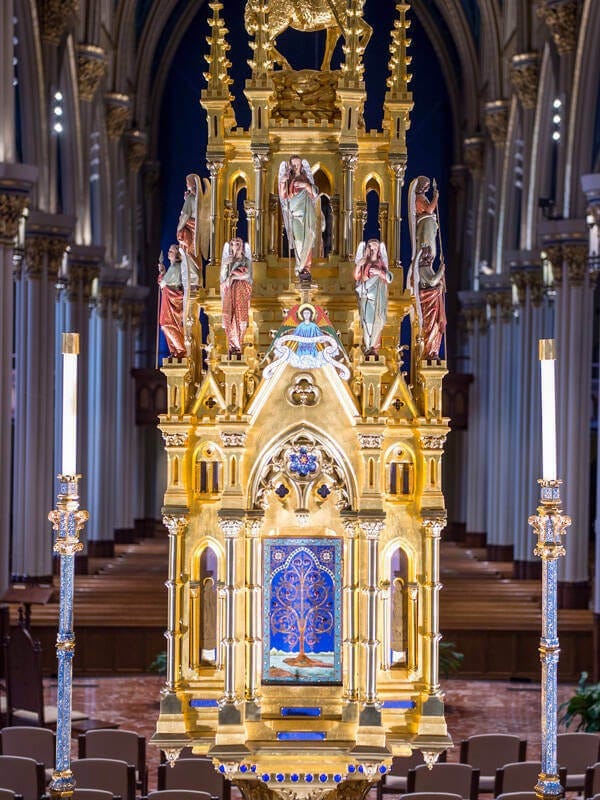
Basilica of the Sacred Heart

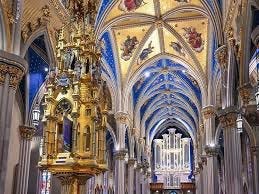
My next stop was the Basilica of the Sacred Heart — Notre Dame’s main church and one of the most awe-inspiring buildings I had ever stepped inside.

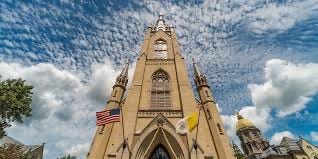
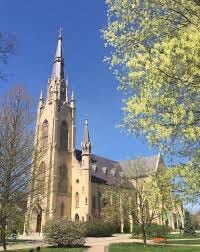
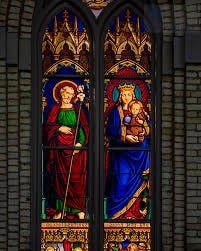
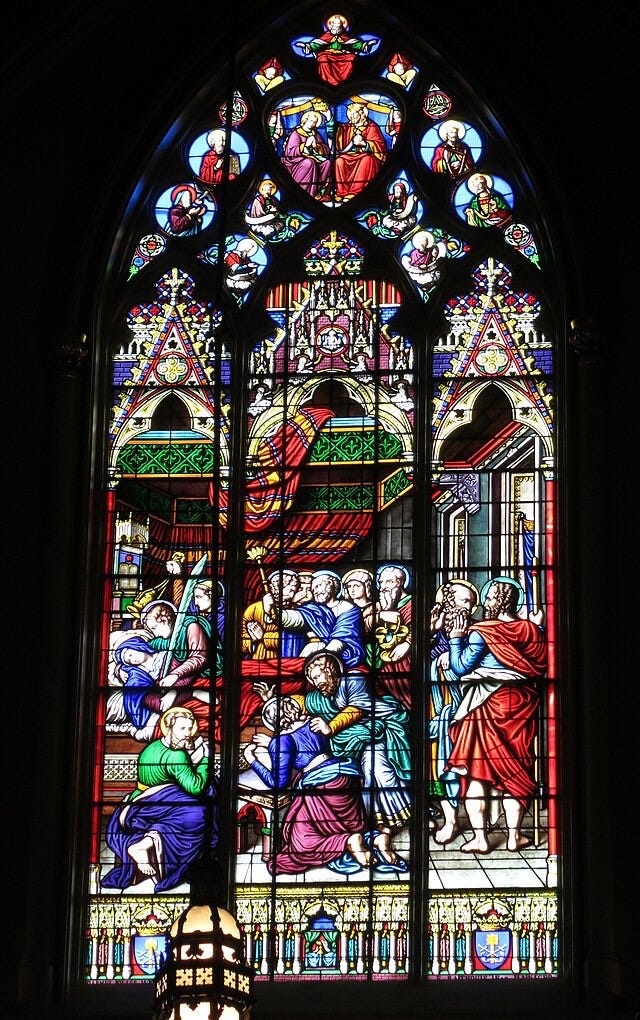
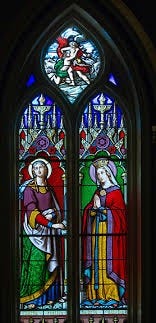
The Basilica is the spiritual center of the campus, both historically and physically. Its stained glass windows alone are legendary — the largest collection of 19th-century French stained glass outside of France, crafted by Carmelite nuns in Le Mans. The colors glowed like jewels in the candlelight.

The carvings, the gold, the silence — it was the first time since Europe that I had seen such sacred beauty. It felt holy. Not just as a church, but as a space where something deeper pulsed. I couldn’t wait to attend Mass there.

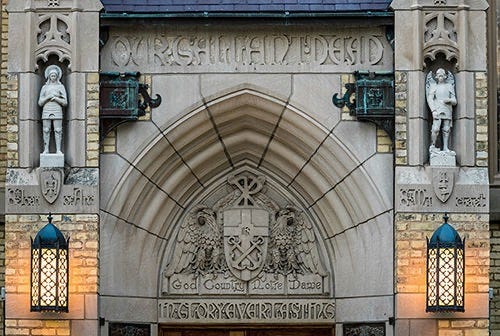
Note the Engraving above the door — similar to what I saw at West Point: “God, Country, Notre Dame”, University of Notre Dame. Dr. Carbone’s autobiography.
Note the Engraving above the door — similar to what I saw at West Point: “God, Country, Notre Dame”

Grotto of Our Lady of Lourdes at Notre Dame

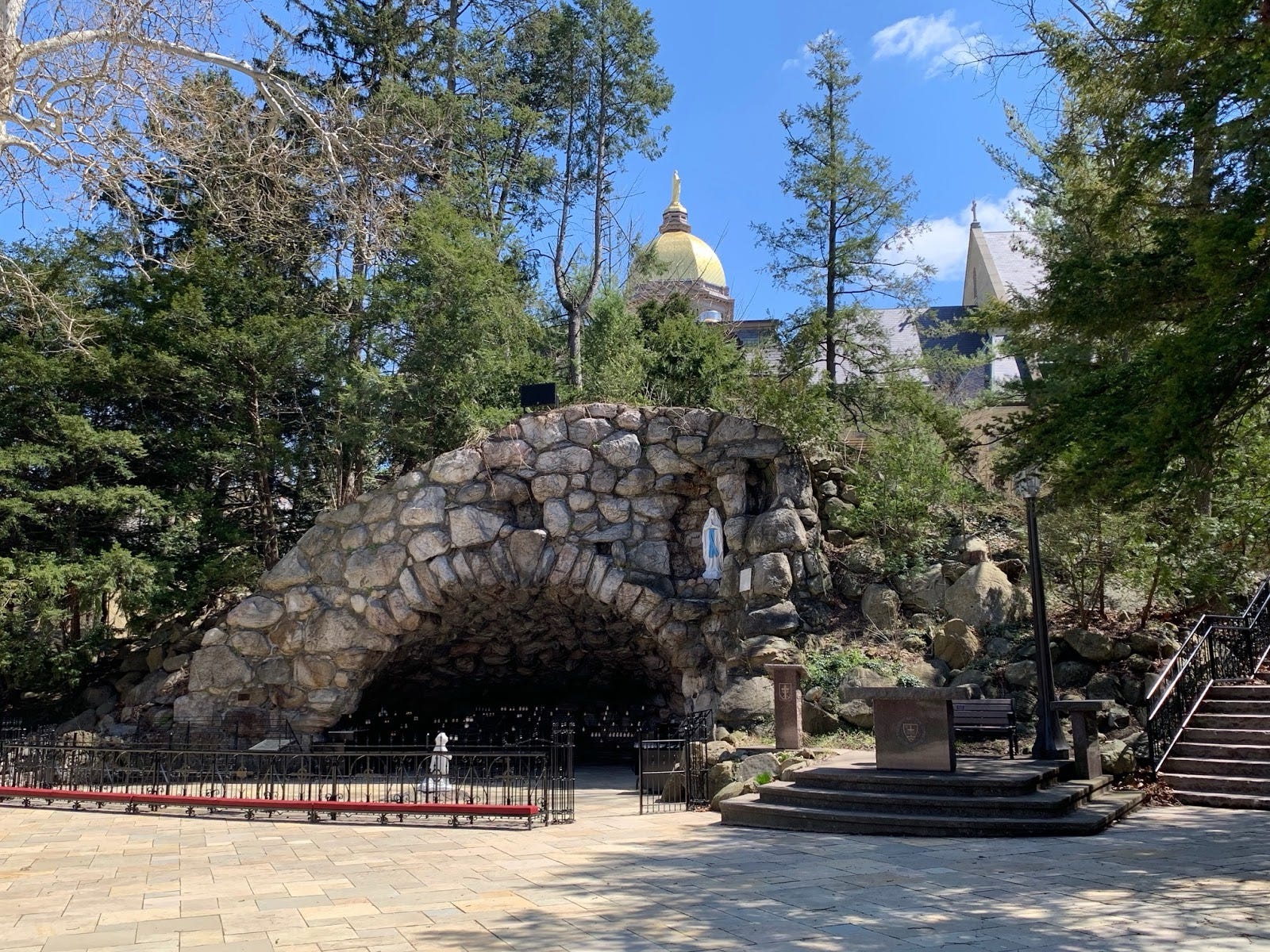
And I wasn’t done walking. I found my way toward the woodsy end of campus, past the bookstore (already closed), and finally, to the most sacred place of all: The Grotto.

The Grotto (replica of the grotto at Lourdes in France) at the University of Notre Dame.
The Grotto (replica of the Grotto at Lourdes in France) at the University of Notre Dame.

Nestled into the hillside, the Grotto is a one-seventh scale replica of the famous shrine at Lourdes, where the Virgin Mary appeared to Saint Bernadette. Father Edward Sorin, Notre Dame’s founder, had visited Lourdes and felt compelled to bring its spirit home to South Bend. The Grotto he built became a place of prayer and pilgrimage for generations of Notre Dame students. And from that very first night, it became my place too.

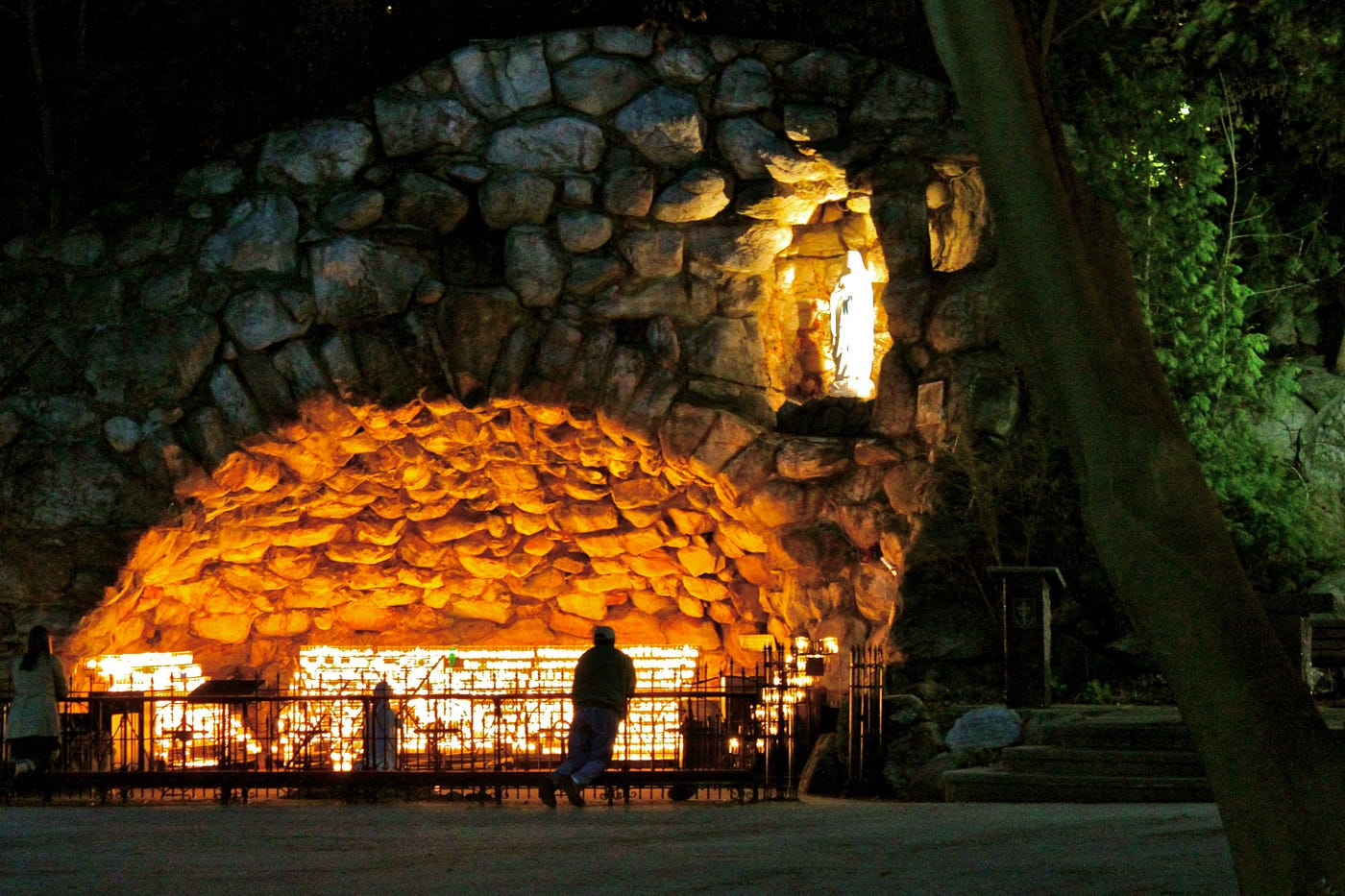
The Notre Dame Grotto at night. University of Notre Dame.
The Notre Dame Grotto at night.

Hundreds of candles flickered in the dusk, casting shadows on the stones. It was silent, sacred, and impossibly peaceful. I knelt, lit a candle, and said my first prayer as a Notre Dame student. Please, God — let me become a doctor.

That became my nightly ritual. For four years, I would visit the Grotto almost every single night. No matter how stressful the day, no matter how many exams or drills or sleepless nights, I would return to that spot, light a candle, and pray. Even in the coldest of blizzard nights.

The Grotto at night in winter. University of Notre Dame. Dr. Carbone’s autobiography.
The Grotto at night in winter.

Saint Mary’s Lake

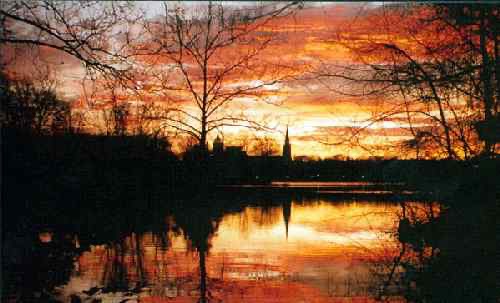
After I spent some time at the Grotto, I wandered farther down the winding paths and found myself standing at the edge of a still, glistening lake — Saint Mary’s Lake. The reflection of the trees and sky on the water’s surface was breathtaking. I paused there for a long time, alone with my thoughts, overwhelmed by the sense of history and sacredness that seemed to rise from the very ground beneath my feet.

Saint Mary’s Lake at the University of Notre Dame du lac

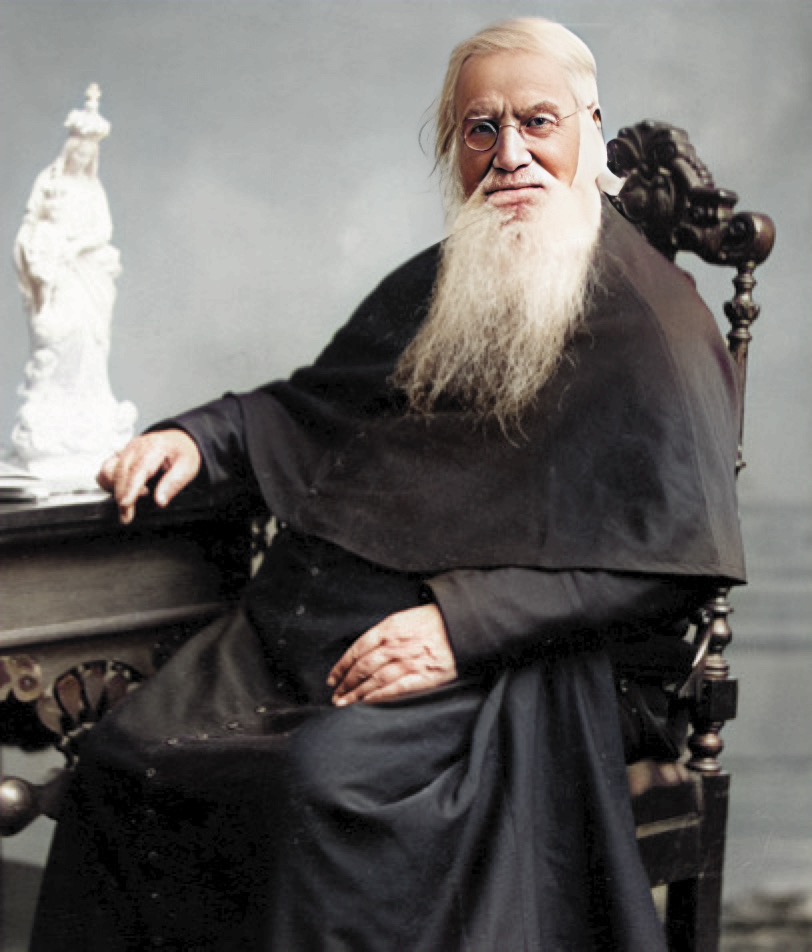
I later learned that this same lake was what captivated the French missionaries who founded the university. In 1842, Reverend Edward Sorin and his companions from the Congregation of Holy Cross arrived here from France. Struck by the natural beauty of the lake and the surrounding land, they chose this spot to build a school dedicated to the Virgin Mary. That’s why the university’s full name is Notre Dame du Lac — Our Lady of the Lake. Knowing that made the place feel even more special, as if I was now part of a story that had started long before me.

Reverand Edward Sorin CSC, Founder of the University of Notre Dame du lac

Subsequently, I made my way back to Fisher Hall. It was eerily quiet. Most freshmen were out at restaurants or hotels with their families. I crawled into bed in my tiny single room, listening to the old radiator click and groan, and stared at the ceiling in the dark. I had no idea what the coming days, weeks, or months would bring. However, I was here — and I was ready.

Home Page

Chapter 13: The Summer Between

Seal of the U.S. Command & General Staff College. Autobiography of Dr. Anthony J. Carbone

Believe Nothing You Hear, and Only Half of What You SeeA Memoir of Service, Shame, and the Search for Truth

The Summer of 1977: Family to Fort Leavenworth and I to College

The summer of 1977 marked a huge transition in my life — the bridge between childhood and independence, high school and college, Germany and America. Our family had just packed up our house in Bad Kreuznach and returned to the States, unsure of what was next for me — but with one major change for my father: he had received new orders to return to the Command & General Staff College at Fort Leavenworth, Kansas — not as a student this time, but as a field-experienced faculty professor and full colonel.

Seal of the United States Command & General Staff College at Fort Leavenworth, Kansas.

Part of the autobiography of Dr. Anthony J. Carbone. Believe Nothing You Hear, and Only Half of What You See--A Memoir of Service, Shame, and the Search for Truth
United States Command & General Staff College at Fort Leavenworth, Kansas

First Stop Boston, Massachusetts

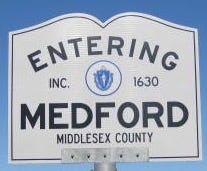
We started that summer back in Medford, Massachusetts, staying with my mother’s family. It felt good to be home. We Army Brats used to joke about returning to “The Land of the Round Doorknobs,” a nod to the classic American doorknobs we hadn’t seen in years — so different from the L-shaped European handles. It was silly, but symbolic. For me, it really did feel like I was back where I belonged.

Next Stop: Nana & Papa Pietrantoni’s House in Medford

It was a short stay in Boston, but I made the most of it. I reveled in Nana Pietrantoni’s kitchen — her spaghetti sauce with meatballs, the Italian cold cuts, the fresh Scali bread from the bakery. I’d watch her cook, and those aromas wrapped around me like a warm, familiar hug. When I wanted quiet, I’d go sit in Papa’s sewing room. He’d be working at his Singer machine, radio playing in the background, and we’d chat about life while he stitched jackets and slacks. That rhythm — the hum of the sewing machine and the soft murmur of his voice — anchored me.
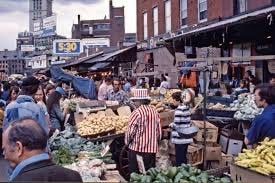
A Little Summer Work at the Carpenito Family Fruit & Produce

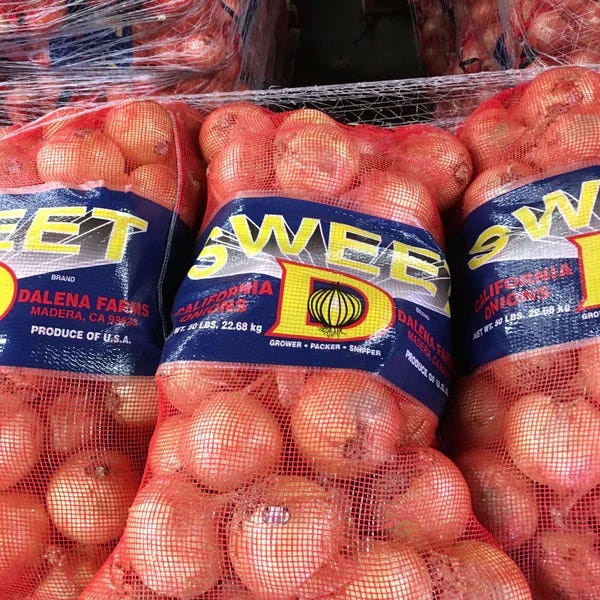
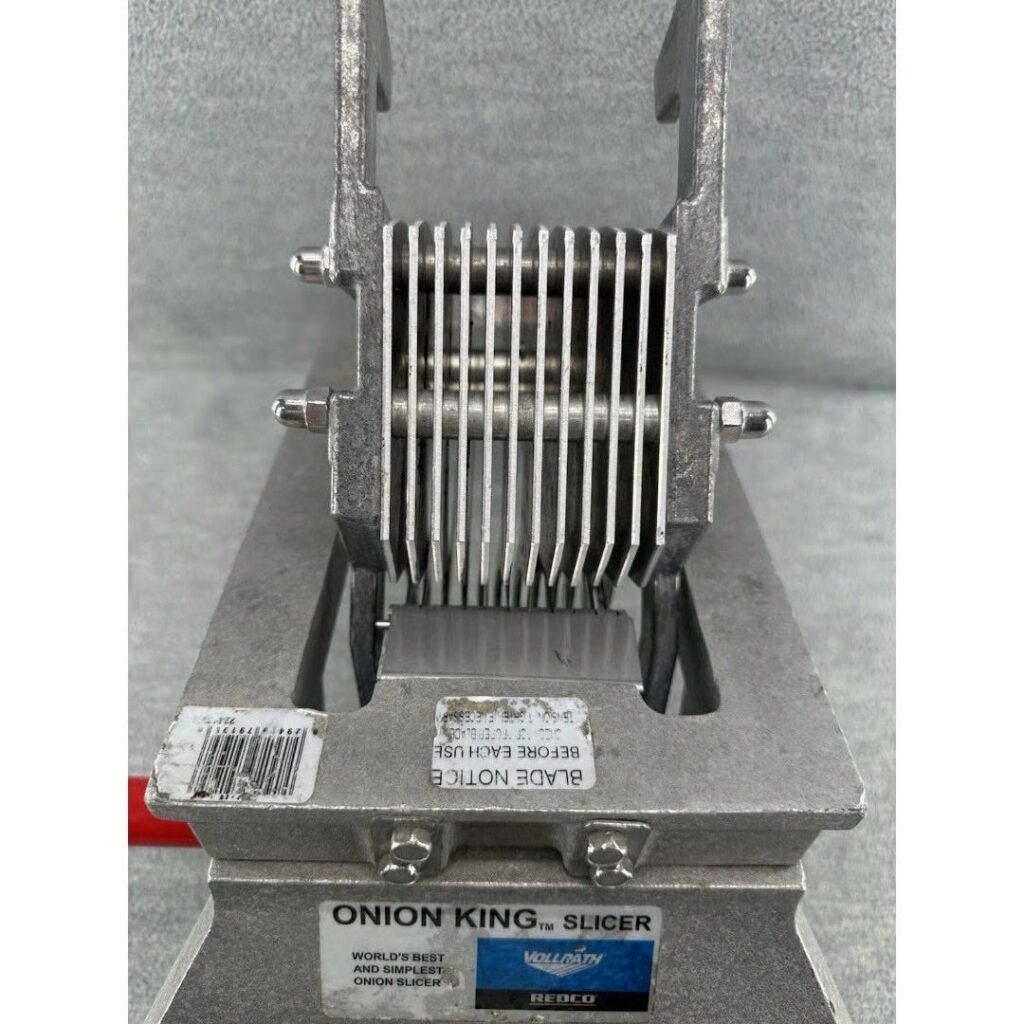
I also went back to my old summer job at 5-Cs, the Carpenito Family Fruit & Produce business in Medford. It was run by my father’s closest friend — his gumbadi — “Uncle” Pat Carpenito. In our Italian culture, every respected adult who wasn’t family still got called “Uncle” or “Aunt.” I had worked at 5-Cs on and off for years. My first job? Cutting onions. Tons of onions. I reeked of them. I remember going to church, and people would actually switch pews to get away from the stench coming off me.

But I did it all — unloading train cars, stocking produce, running the deli counter, making sub sandwiches. When I was just starting out, they’d send me into the freezer to fetch things — Italian parsley, chicory, broccoli rabe — and I didn’t know what any of them looked like. My glasses would fog up instantly. I’d stand in there freezing until someone else came in so I could whisper, “Which one is chicory?”

Working With Deliquents

Uncle Pat had a big heart for giving second chances. He hired guys others called ex-cons or delinquents, but they were hardworking Italian men with tough hands and bigger hearts. They treated me like a younger brother. They’d throw 50-pound bags of potatoes into the back of the truck and laugh when they knocked me over. It was rough, but it toughened me up. I honestly believe it prepared me for Army boot camp later on.

Truck Deliveries with My Father and His Gumba, Uncle Pat

The best part of the day was when Uncle Pat would yell, “Go make us a sub!” I’d build two thick Italian sandwiches in the deli, and we’d hit the road, delivering produce to restaurants around Boston. Sometimes my father would come along, and we’d all ride in the cab of the delivery truck, trading stories, busting chops, and laughing until our stomachs hurt.

They had this running joke — whenever we passed a wedding party outside a church, Uncle Pat would slow down, roll down the window, beep the horn, and yell, “Don’t do it!!!” before peeling off. Every time.

Photo of a wedding party leaving a church like the ones in Boston that my father and Uncle Pat would jeer.

Part of the autobiography of Dr. Anthony J. Carbone. Believe Nothing You Hear, and Only Half of What You See--A Memoir of Service, Shame, and the Search for Truth.

And maybe it sounds small, but this next part meant the world to me: the only time my father ever seemed to show genuine admiration or pride in me was when I was working like a dog and sweating like a pig. When I was dead tired and covered in onion stench or loading crates like a longshoreman, he’d look at me and smile. Just a little smirk–but it was his smirk, and I lived for it.

Still No Idea Where I am Going to College (Or How to Pay)

At that point in the summer, I still had no clue where I was going to college. I had turned down West Point — an offer most would kill for — because I wanted a different kind of college experience. I had a 4-year Army ROTC scholarship, but it only covered tuition, not room and board. And places like Harvard and MIT were quoting over $3,000 a year just for room and board. That sounded like a fortune to me. There was talk of commuting to a Boston school and living with Nana, but I didn’t want to miss out on the full campus experience.

Learned About Notre Dame and Its Cheap Room & Board

Then a friend of the family told me her son was going to the University of Notre Dame. She said his room and board was just $1,000 a year — including maid and laundry service. I had barely even heard of Notre Dame. Despite being a lifelong Catholic, I didn’t know anything about it. I hadn’t visited, seen a brochure, or even a photograph. But I looked into it — and discovered that it had a strong academic reputation, a solid pre-med program, and, most importantly, an Army ROTC detachment.

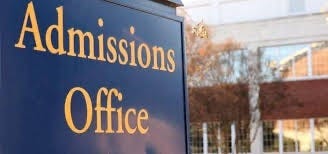
Call to Notre Dame’s Admissions Office

The clock was ticking. It was already mid-summer. I called the long-distance information operator and asked for the number to the University of Notre Dame Admissions Office, and surprisingly got through to the Director of Admissions herself.

Admissions Office sign at a college.

Part of the autobiography of Dr. Anthony J. Carbone. Believe Nothing You Hear, and Only Half of What You See--A Memoir of Service, Shame, and the Search for Truth.

I told her my story: my family had just returned from Germany, I had just graduated high school, and I had an Army ROTC scholarship but no school. She asked my class rank. “I was valedictorian.” She asked my GPA, SAT scores, and what schools had accepted me. I rattled them off.
Admitted to University of Notre Dame!!!!

Then she said something that changed my life: “If you can send me your transcript, SAT scores, and proof of your ROTC scholarship acceptance right away, we’ll admit you for the fall.” And just like that, I had a college.

Seal of the University of Notre Dame du Lac.

Part of the autobiography of Dr. Anthony J. Carbone. Believe Nothing You Hear, and Only Half of What You See--A Memoir of Service, Shame, and the Search for Truth.
Seal of the University of Notre Dame du Lac

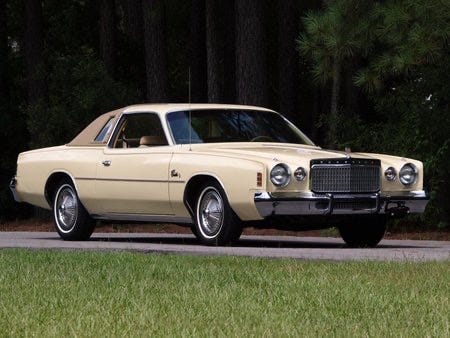
By late August, we were preparing for our cross-country move to Kansas. My father surprised the whole family by trading in our old Pontiac station wagon for a brand-new yellow Chrysler Cordoba. It was beautiful. It was also the first family car we’d ever owned with air-conditioning — perfect timing for a long, hot summer drive.

Photograph of a 1977 cream colored Chrysler Cordoba sedan like my father bought in 1977.

Part of the autobiography of Dr. Anthony J. Carbone. Believe Nothing You Hear, and Only Half of What You See--A Memoir of Service, Shame, and the Search for Truth.

Road Trip from Boston to Fort Leavenworth

We packed up, said our goodbyes in Medford, and began the trip to Fort Leavenworth. I took my usual seat in the front between my parents, map book in hand. My father treated every road trip as military training. Reading a map was a critical skill for any young officer. GPS didn’t exist yet. You had to know your terrain.

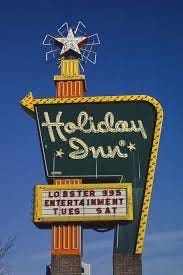
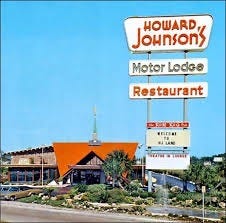
As always, we stopped at Howard Johnsons or Holiday Inns along the way — affordable, family-friendly, usually with a pool.

Arrival at Fort Leavenworth, Kansas

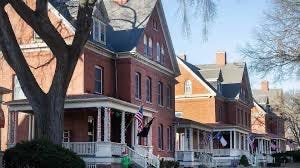
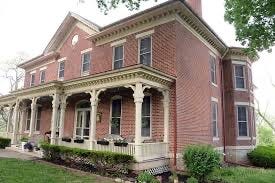
We arrived at Fort Leavenworth and pulled into our new quarters: a stately, red brick townhouse along the post’s main street. It was one of the old cavalry-era homes, and it had real charm. A front sitting room with French doors, a formal living room, a dining room separated by more French doors, and a long hallway leading to the kitchen, bedrooms, and a screened-in back porch. Diana had arranged to do her externship at the post dental clinic. I started meeting neighborhood girls. For the first time in a while, things felt settled.

Already Time to Leave for College

Then it was time. My father and I packed the Cordoba again, this time for the nine-and-a-half-hour drive to South Bend, Indiana. I was taking only a suitcase or two. I think my mother was quietly keeping a room for me back at Fort Leavenworth — just in case.

Father’s Words of Wisdom

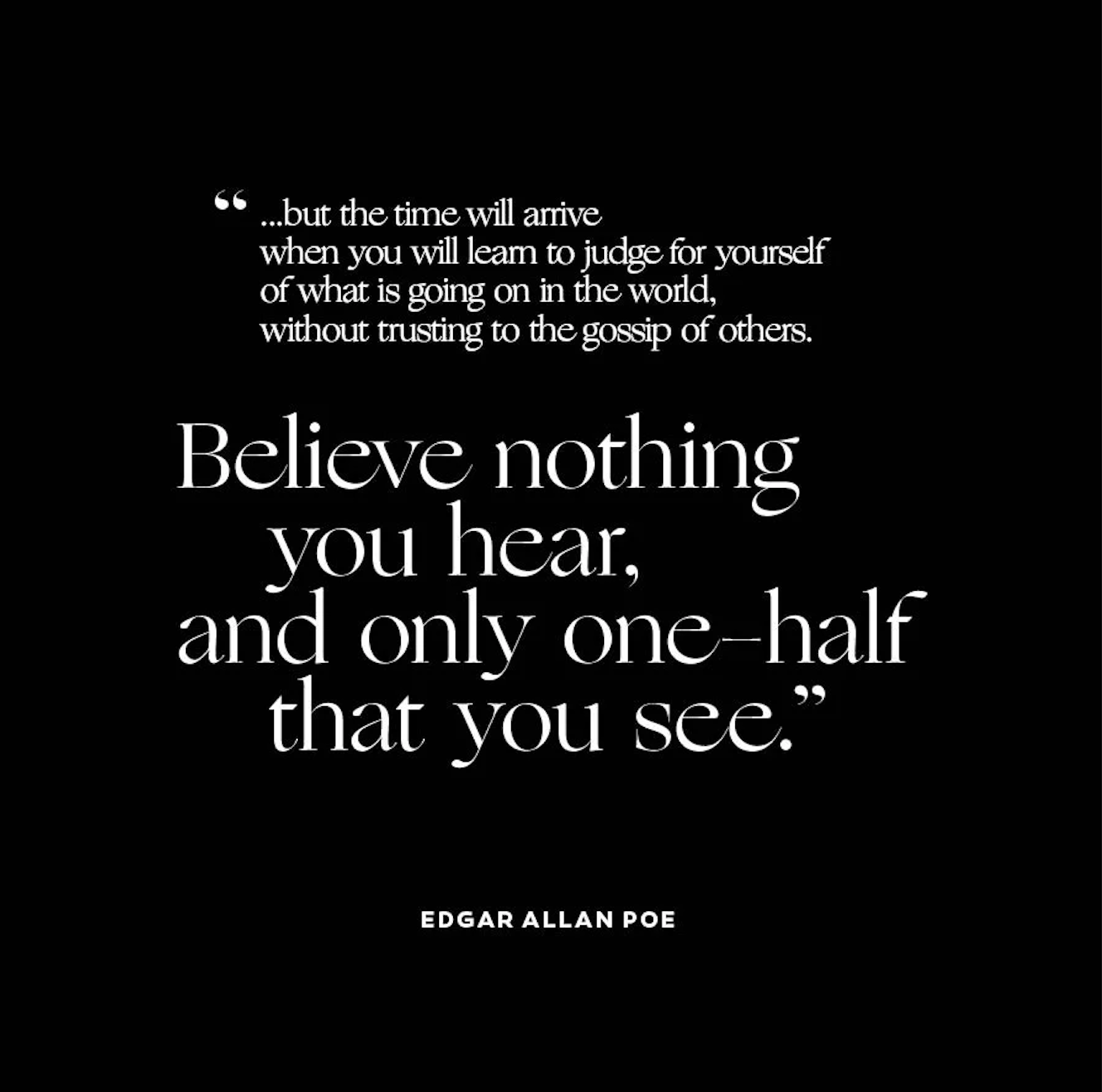
The drive was long and mostly quiet. Neither of us spoke much. Every now and then, my father would offer some short bursts of advice. “Work hard. Push yourself. Be careful who you trust. Don’t drink. Don’t use drugs.” Then, the line I’ll never forget — the one I still carry with me today: “Believe nothing you hear, and only half that you see.”

“Believe nothing you hear, and only half that you see.” Quote from Edgar Allen Poe.

Part of the autobiography of Dr. Anthony J. Carbone. Believe Nothing You Hear, and Only Half of What You See--A Memoir of Service, Shame, and the Search for Truth.

I believe that quote had as much to do with surviving as an officer in combat as it did for life in general. It’s an old quote, attributed to Edgar Allan Poe, but I heard it first from my father’s lips. And in today’s world of spin, misinformation, and digital illusions, it feels more true than ever.

Arrival at South Bend and University of Notre Dame

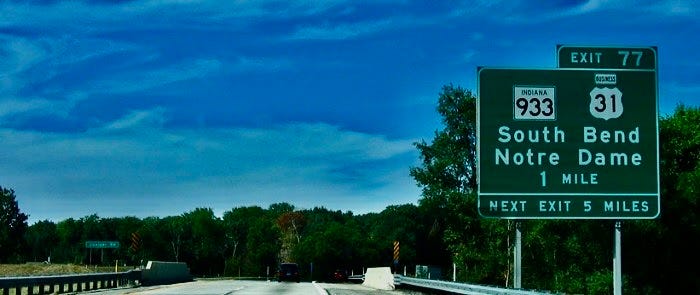
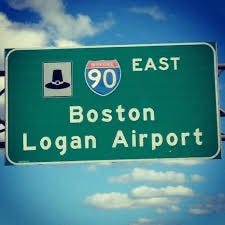
South Bend, Notre Dame, Highway Exit 77.

Part of the autobiography of Dr. Anthony J. Carbone. Believe Nothing You Hear, and Only Half of What You See--A Memoir of Service, Shame, and the Search for Truth..
Exit 77 to Notre Dame

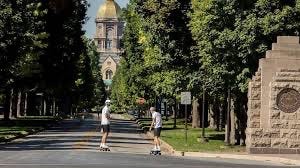
We arrived in South Bend before sundown. I had never seen a photo of the school. I had no expectations. But as we turned onto the main avenue and I caught my first glimpse of Notre Dame — the Golden Dome of the Administration Building glowing in the evening light, the towering steeple of the Basilica beside it, the ancient trees stretching over the brick paths — I was stunned. I was in love. I didn’t even know what a college campus couldlook like until I saw Notre Dame.

Seeing the Golden Dome for the First Time

Entrance to the University of Notre Dame.  The view you first see when you drive up the boulevard;.

Part of the autobiography of Dr. Anthony J. Carbone. Believe Nothing You Hear, and Only Half of What You See--A Memoir of Service, Shame, and the Search for Truth.

Administration Building (The Golden Dome) the icon of the university.

Part of the autobiography of Dr. Anthony J. Carbone. Believe Nothing You Hear, and Only Half of What You See--A Memoir of Service, Shame, and the Search for Truth.

Our Stay at the Morris Inn on Campus

My father pulled into the Morris Inn, Notre Dame’s iconic hotel just off the main quad, where we would stay the night. I didn’t have a welcome packet. I had no dorm assignment. No schedule. We had dinner, slept, and woke early the next morning.

Visit to the Army ROTC Building

We walked across campus to the Army ROTC building. It was quiet — only a young Army captain was there. When we entered, the captain stood immediately at attention. My father introduced himself: “Colonel Carbone. This is my son, Tony. He has a 4-year Army ROTC scholarship but no dormitory assignment.” The captain picked up the phone and within two minutes had secured me a room: Fisher Hall, Room 212.

Got a Room Assignment at Fisher Hall

We walked over together. Fisher was one of the newer dorms on South Quad. It didn’t have the old Notre Dame charm. Rumor was it had once been a convent for nuns — which might explain why every room was a single. That part I liked.

The room was tiny — more like a cinder block cell than a student room. A single bed under the window, a small desk, a sink, and a closet. No roommate, sheets, blanket, or idea what came next.

My Father’s Quick Goodbye

My father set my suitcase down in the closet, looked around, and said, “This looks really nice.” He gave me a quick hug. “Goodbye, J.R. Good luck in school.” And just like that, he turned and walked out. No long goodbye. No words of encouragement. Not even five bucks for pocket change. Just a final reminder: “Make sure you write your mother.”

The door clicked shut behind him. And there I sat — alone in Room 212, Fisher Hall. A bare white room. A suitcase. And the heavy, ringing silence of being completely on my own. But there was something else sitting in that silence with me.
As I watched my father walk away, I couldn’t shake the feeling that he was disappointed — not in me exactly, but in where he was leaving me. I knew he had imagined dropping me off at West Point, not Notre Dame. I could feel it in the way he looked at me, in the way he didn’t linger. And that feeling — that quiet shadow of his disappointment — stayed with me for years. If I’m honest, it never completely left — not even after he died.

Home Page