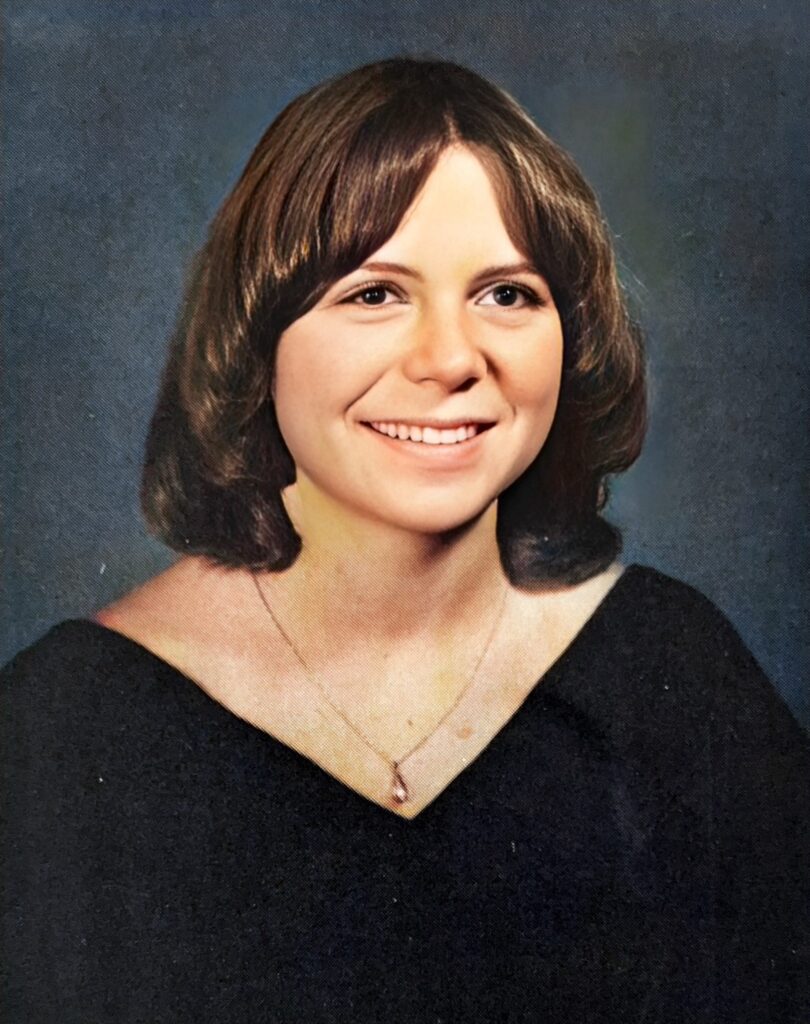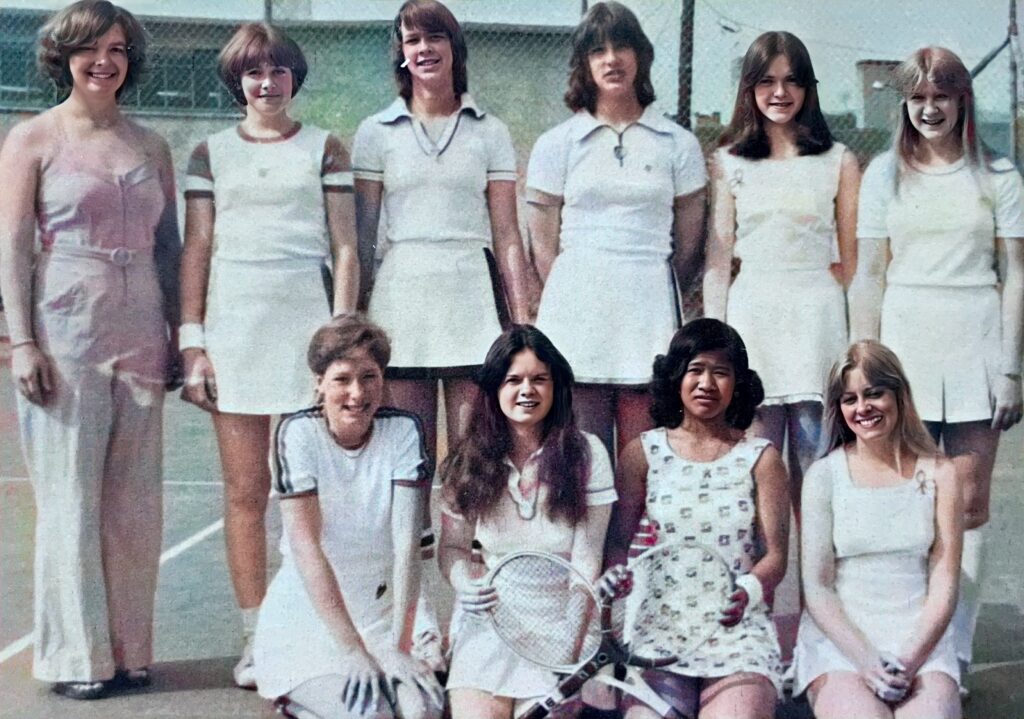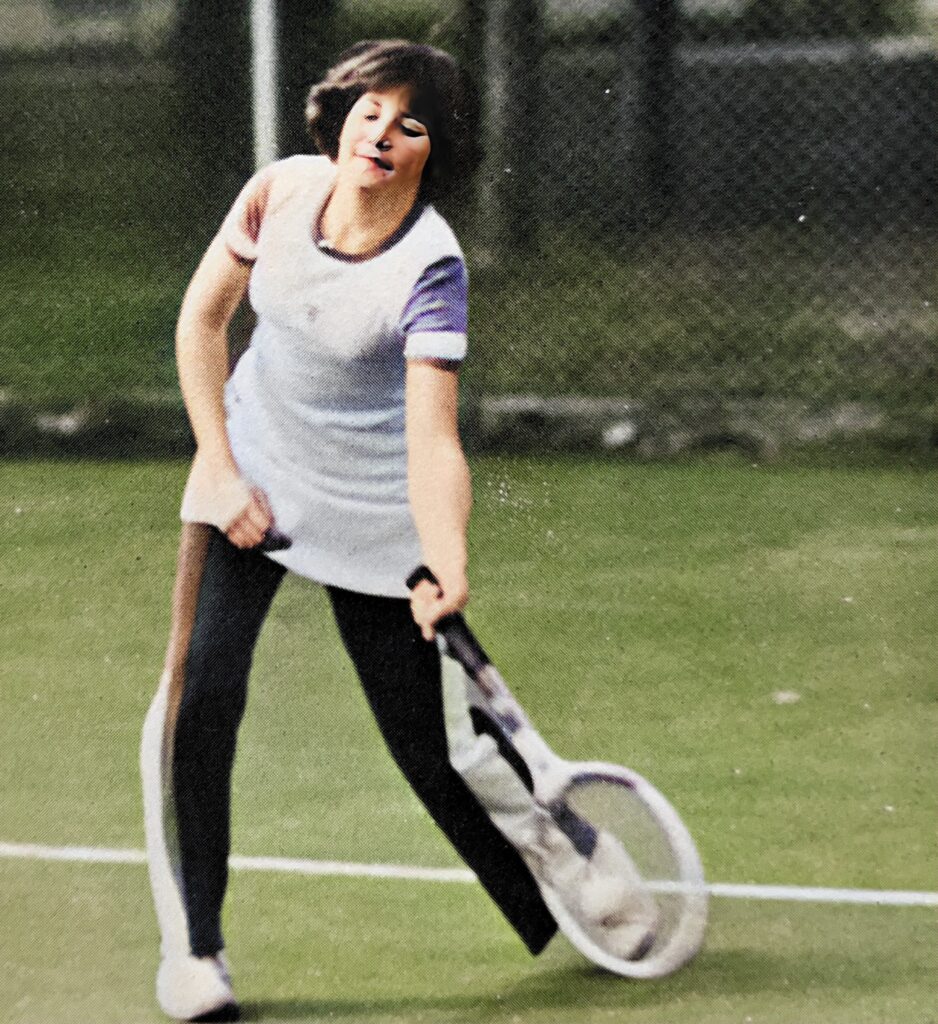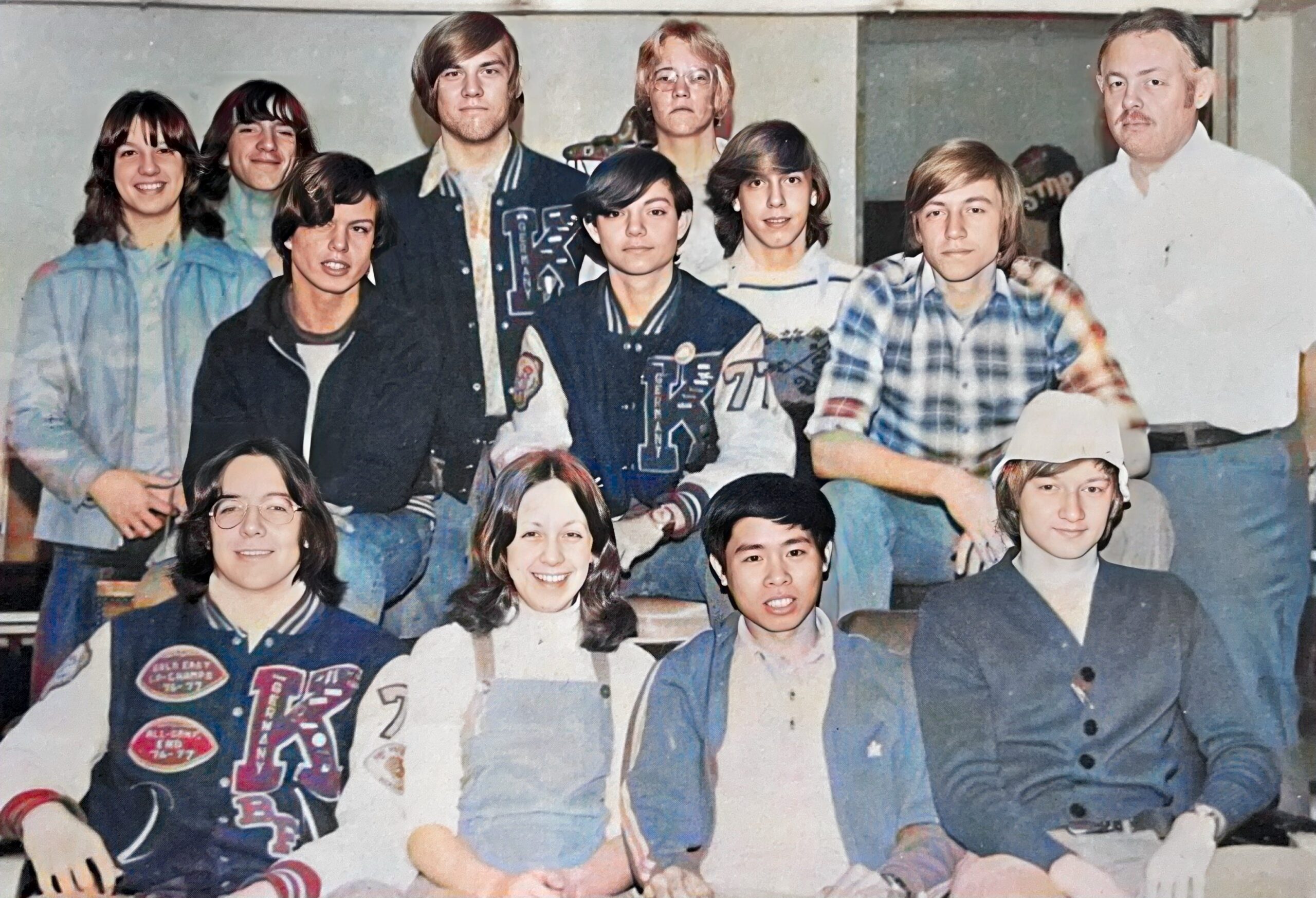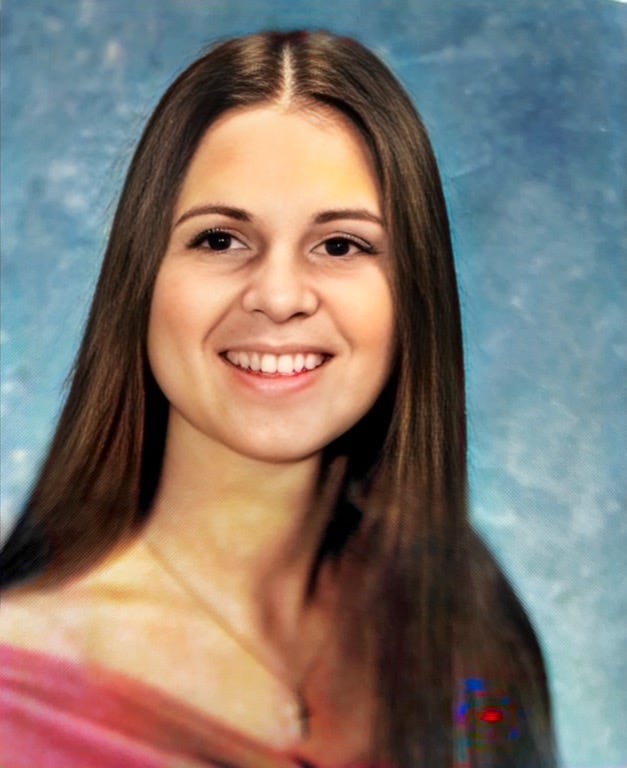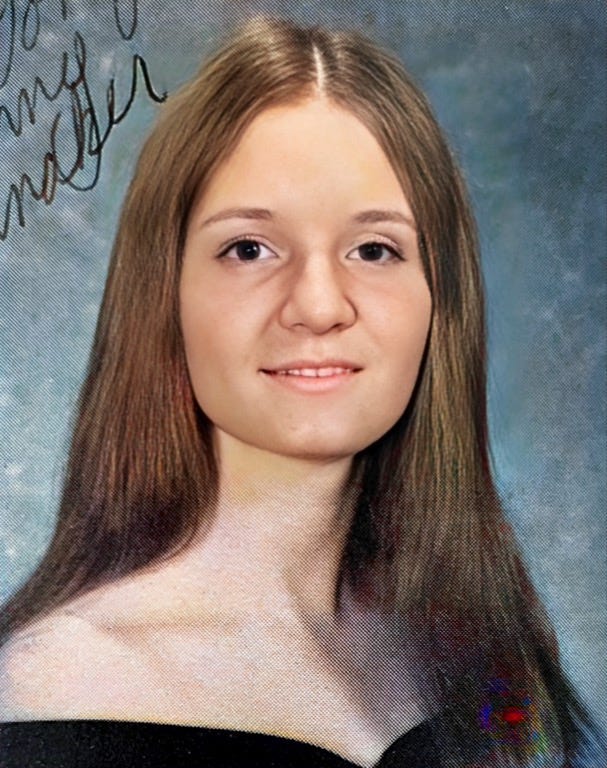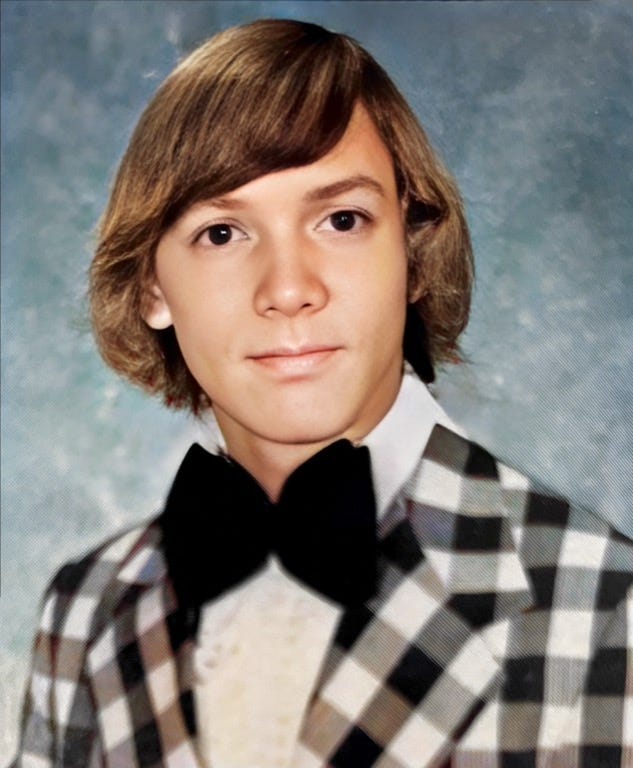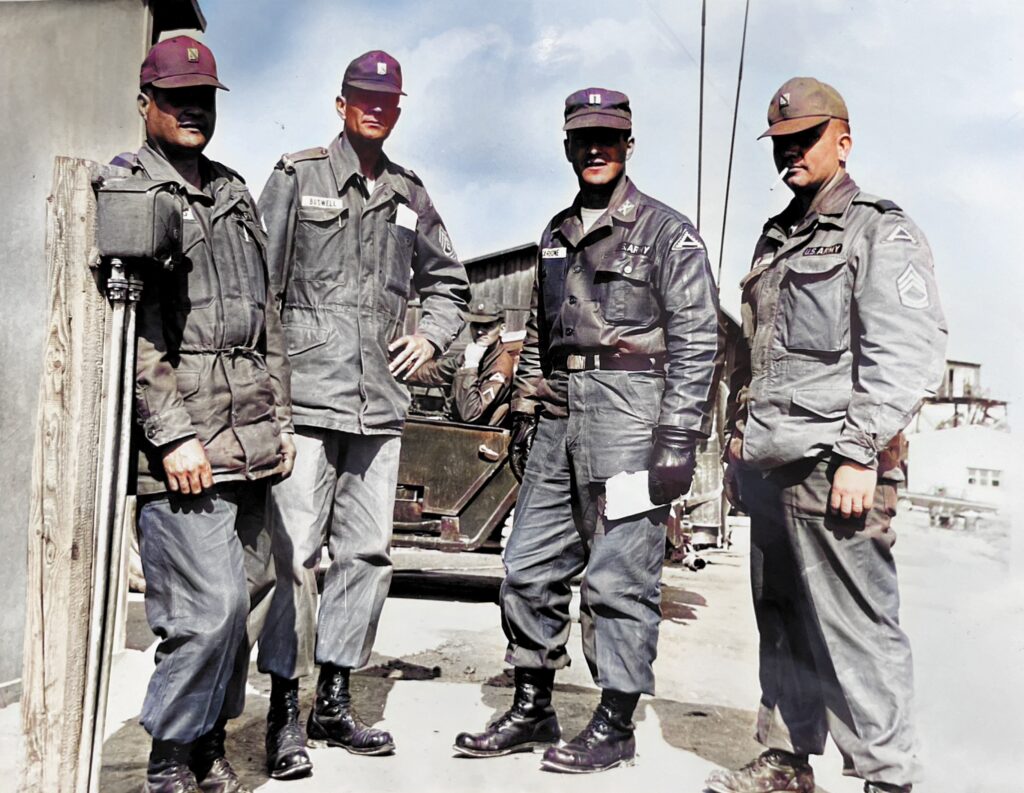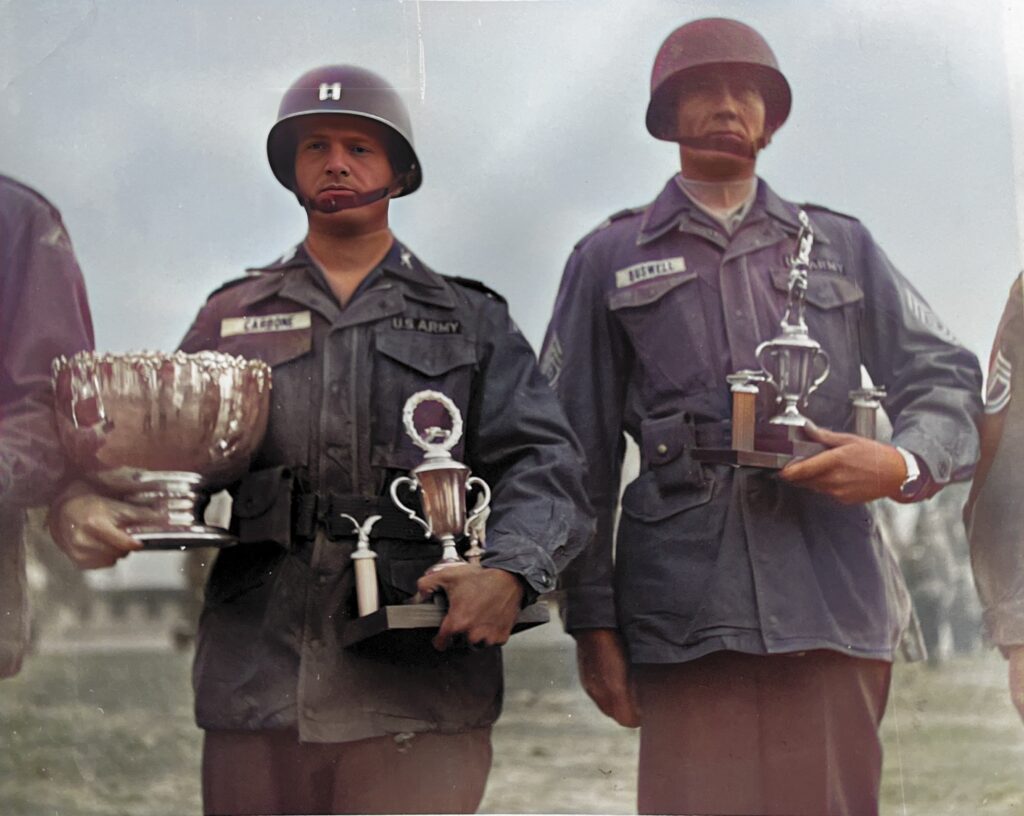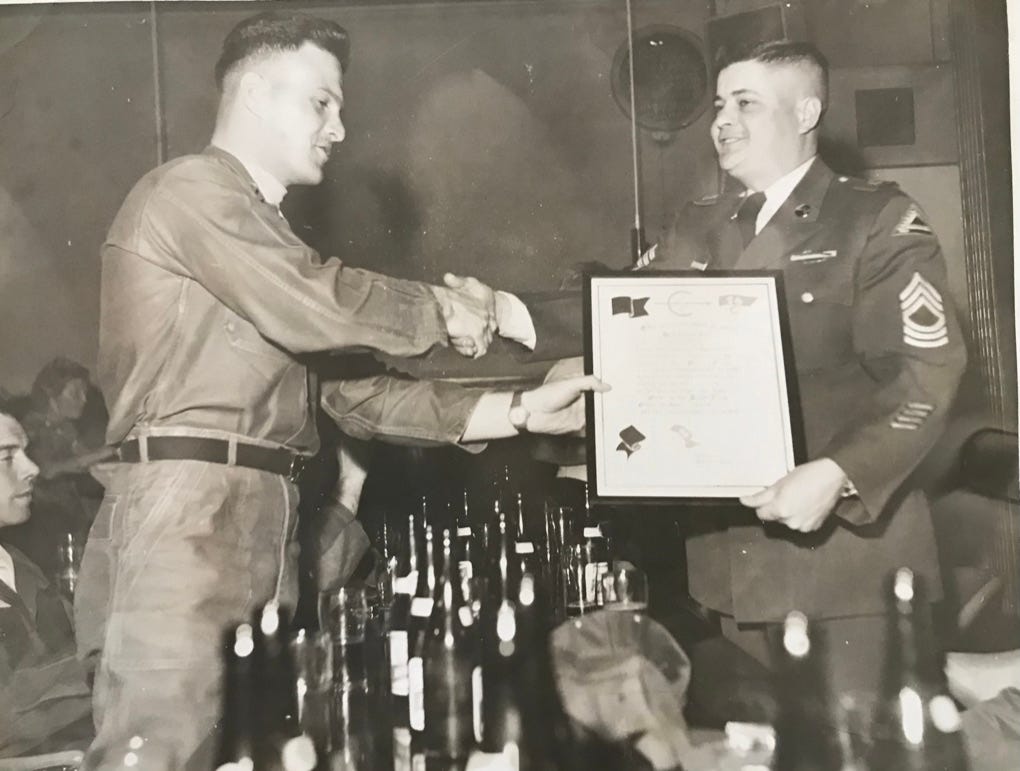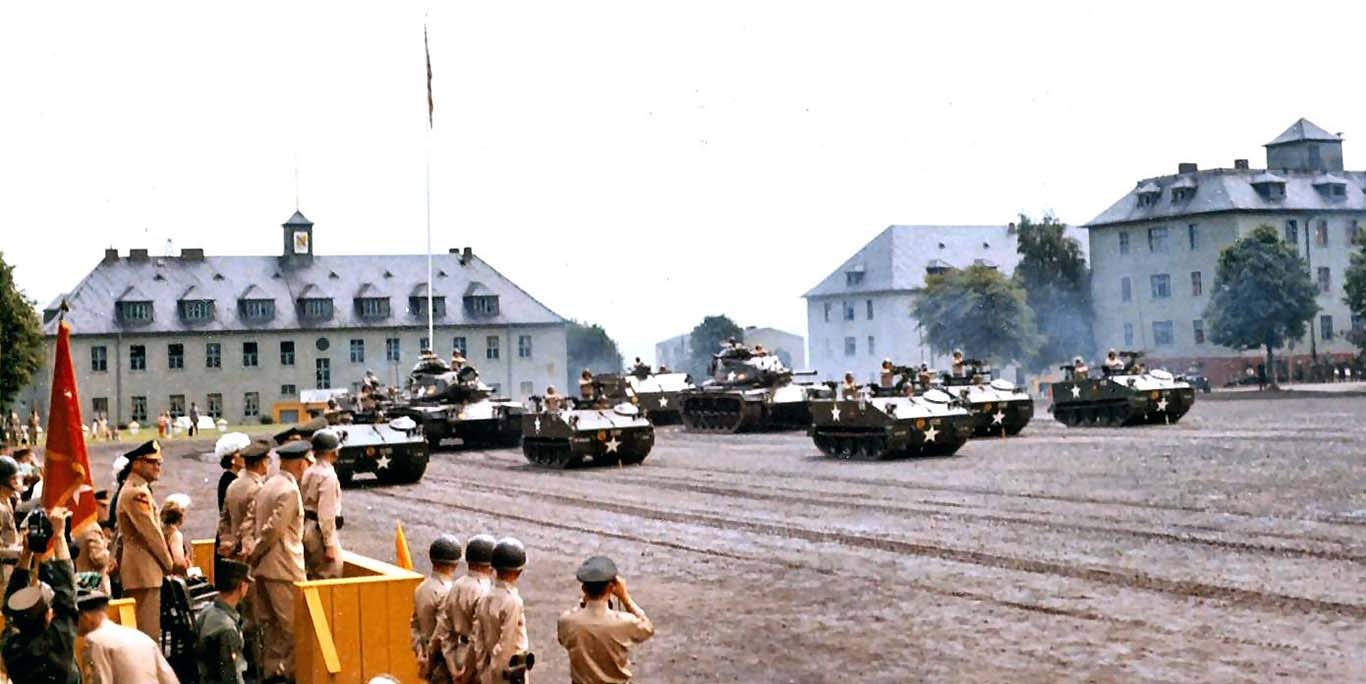
Chapter 12: Bad Kreuznach–Duty, Discipline and a Defining Choice

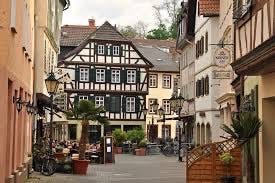
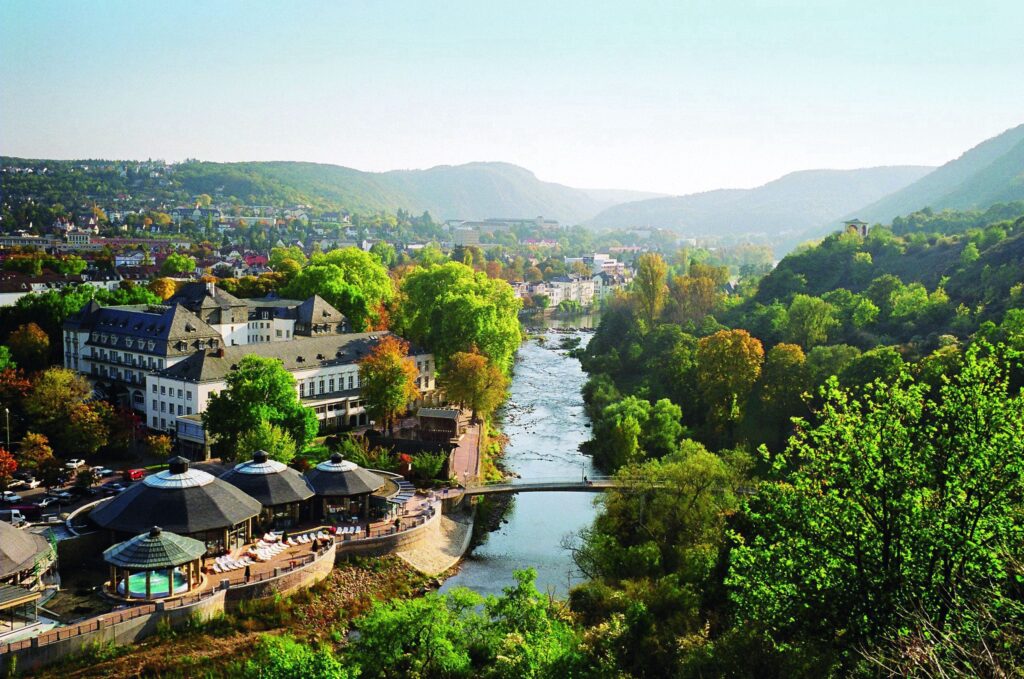
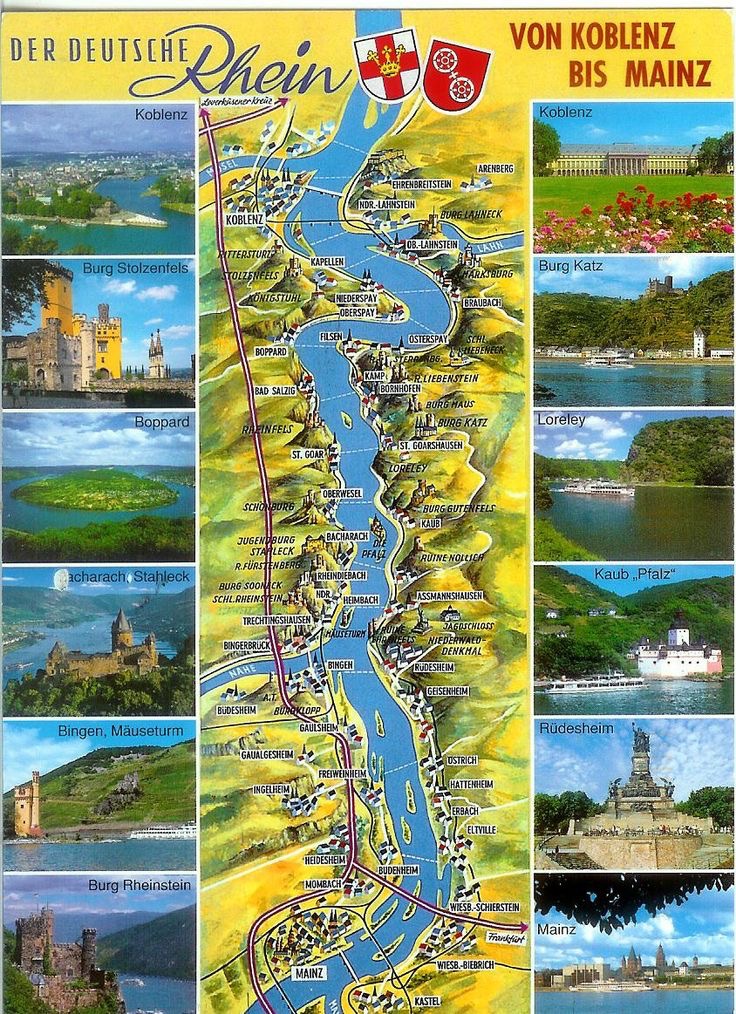
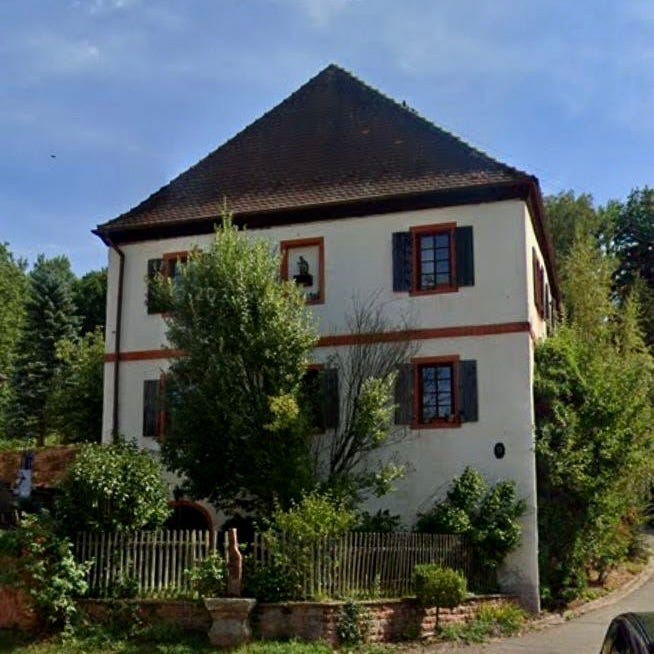
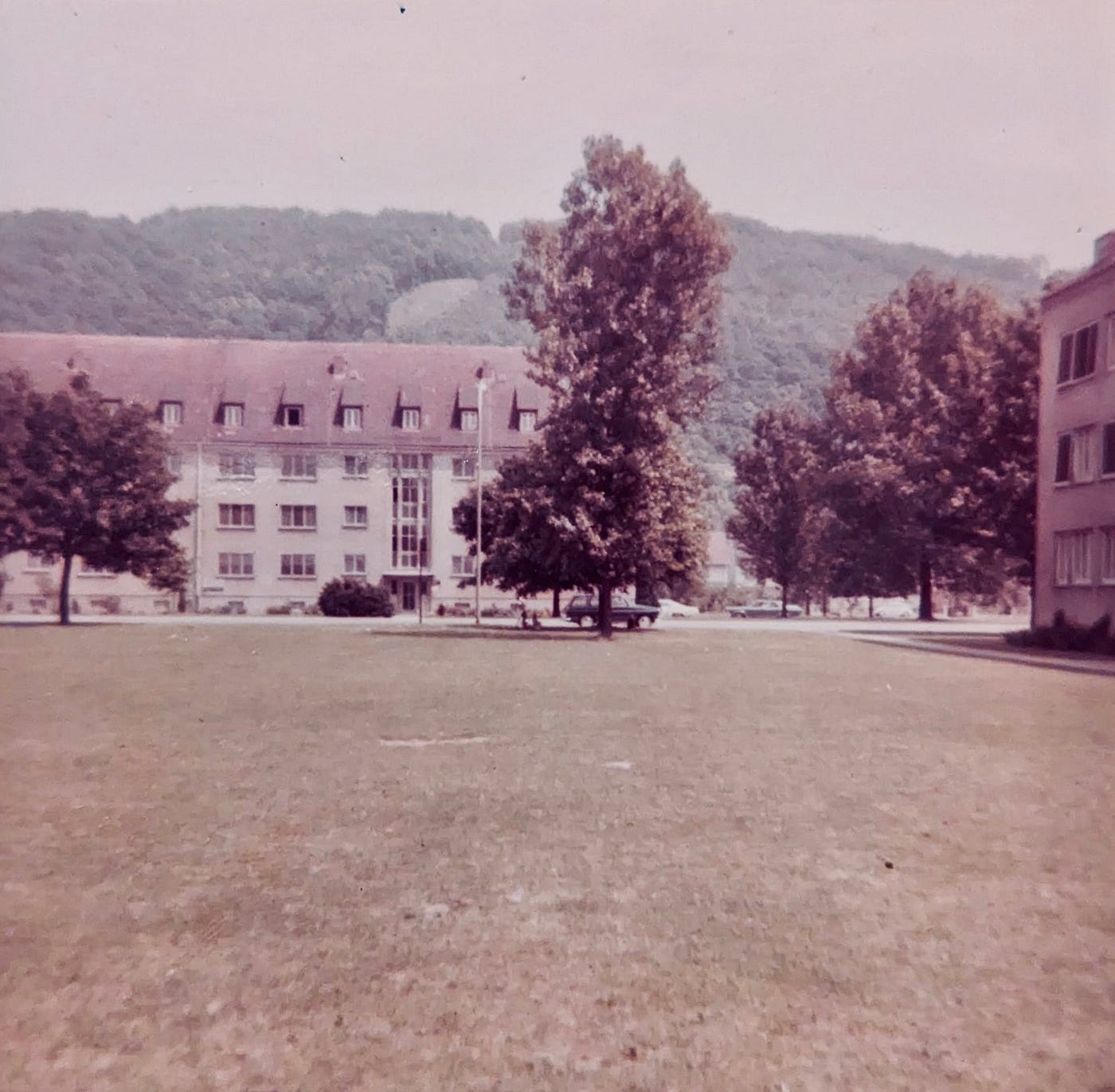
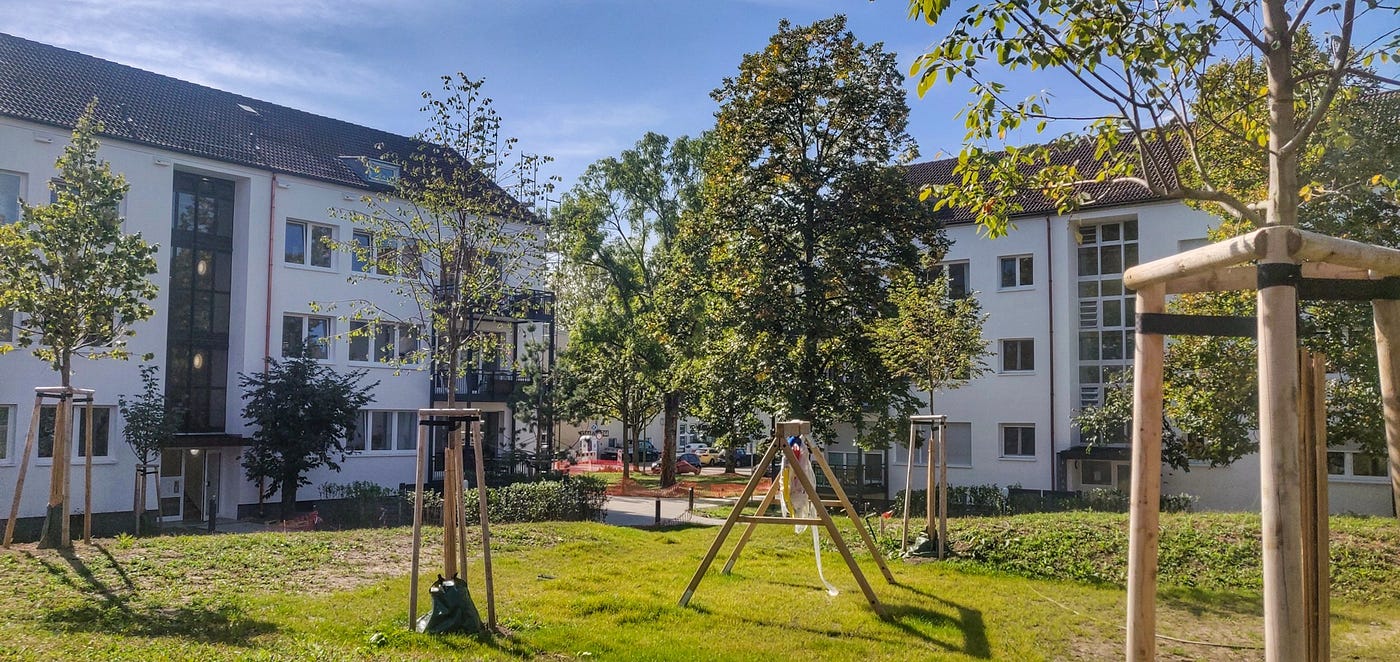
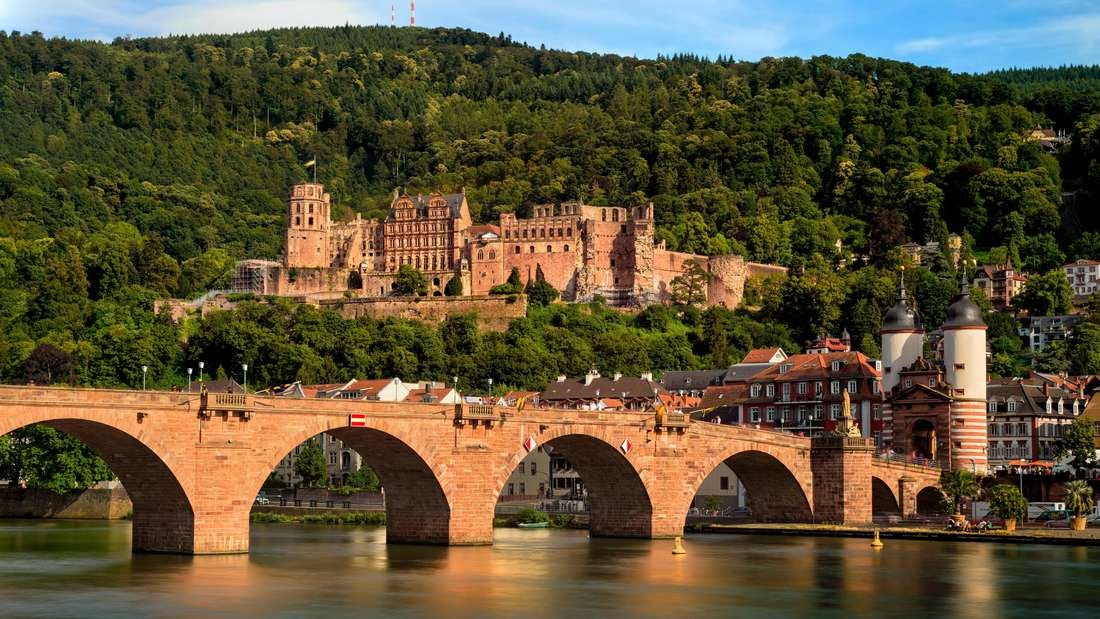
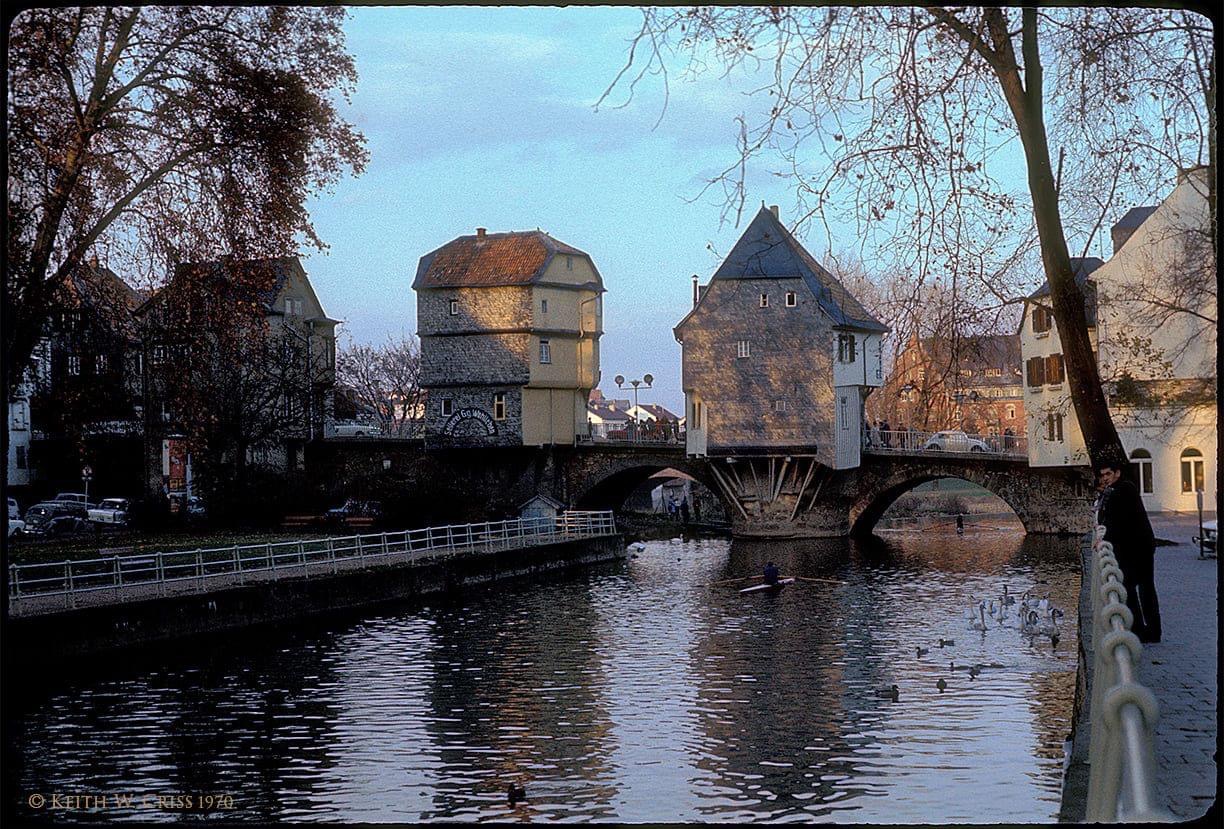
Bad Kreuznach, Germany Bridge Houses over the Nahe River. Autobiography of Dr. Anthony J. Carbone.

Believe Nothing You Hear, and Only Half of What You SeeA Memoir of Service, Shame, and the Search for Truth

Bad Kreuznach Germany
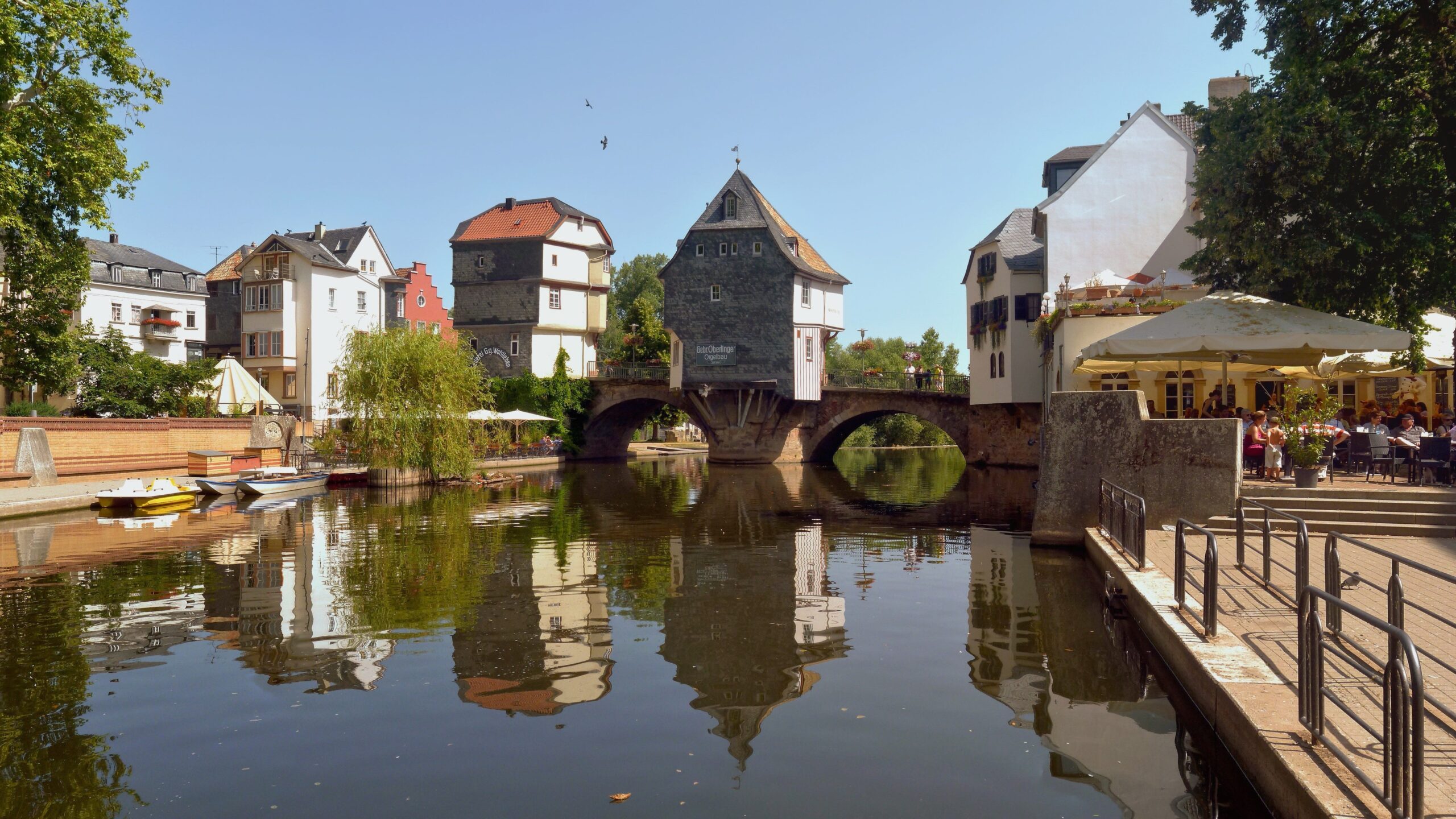
Bad Kreuznach, Germany with it’s iconic Bridge Houses over the Nahe River.

Part of the autobiography of Dr. Anthony J. Carbone, Son in the Shadow of a Green Beret Hero.
Bad Kreuznach, Germany, with its iconic Bridge Houses over the Nahe River.

Dad transfers to the 8th Infantry Division HQ, and I enter Bad Kreuznach American High School

It was mid-junior year, right around New Year’s Day 1976, when my life changed again. We moved from Mannheim to Bad Kreuznach, Germany — just me, my parents, and my two younger sisters. Lynne was already in college in Boston, and Diana chose to stay behind in Mannheim to finish high school. This move marked a major shift not just for me, but for my father as well.
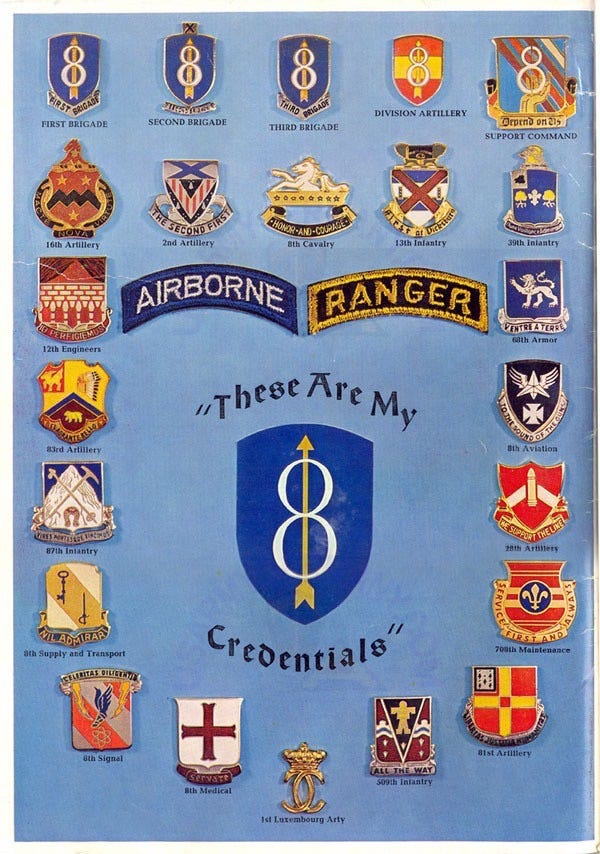
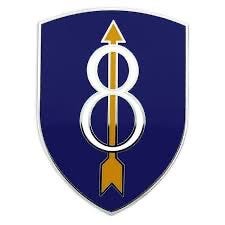
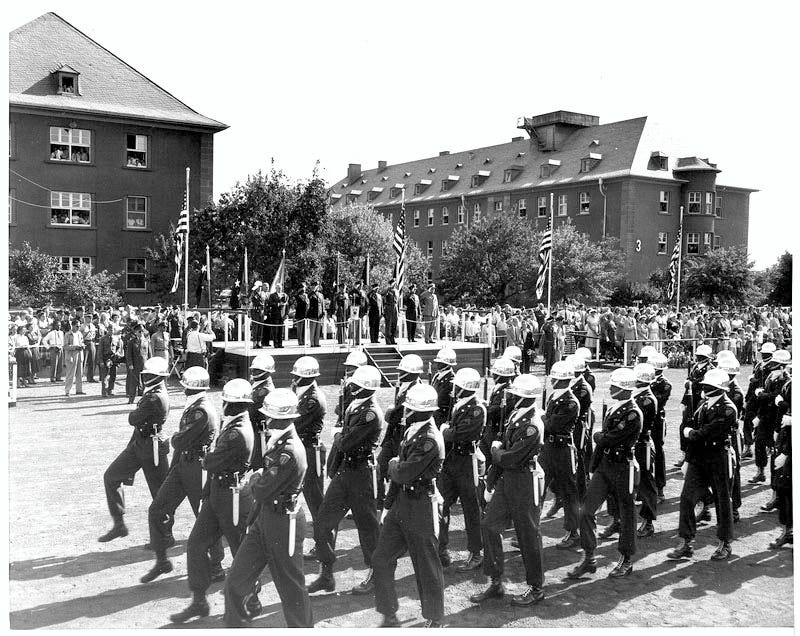
8th Infantry Division “Pathfinders” Headquartered in Bad Kreuznach, Germany

Part of the autobiography of Dr. Anthony J. Carbone, Son in the Shadow of a Green Beret Hero.
8th Infantry Division “Pathfinders” Headquartered in Bad Kreuznach, Germany

8th Infantry Division G3

Dad was no longer commanding a front-line tank battalion. He had been selected for a prestigious yet grueling assignment at the 8th Infantry Division Headquarters at Rose Barracks — serving as the G3, or Plans and Operations Officer. In Army terms, the G3 is arguably the most critical position under the Division Commander, responsible for planning everything from readiness drills to potential combat scenarios. His new boss, Major General John Cleland, was a stern, humorless officer, and these were difficult years for my father.
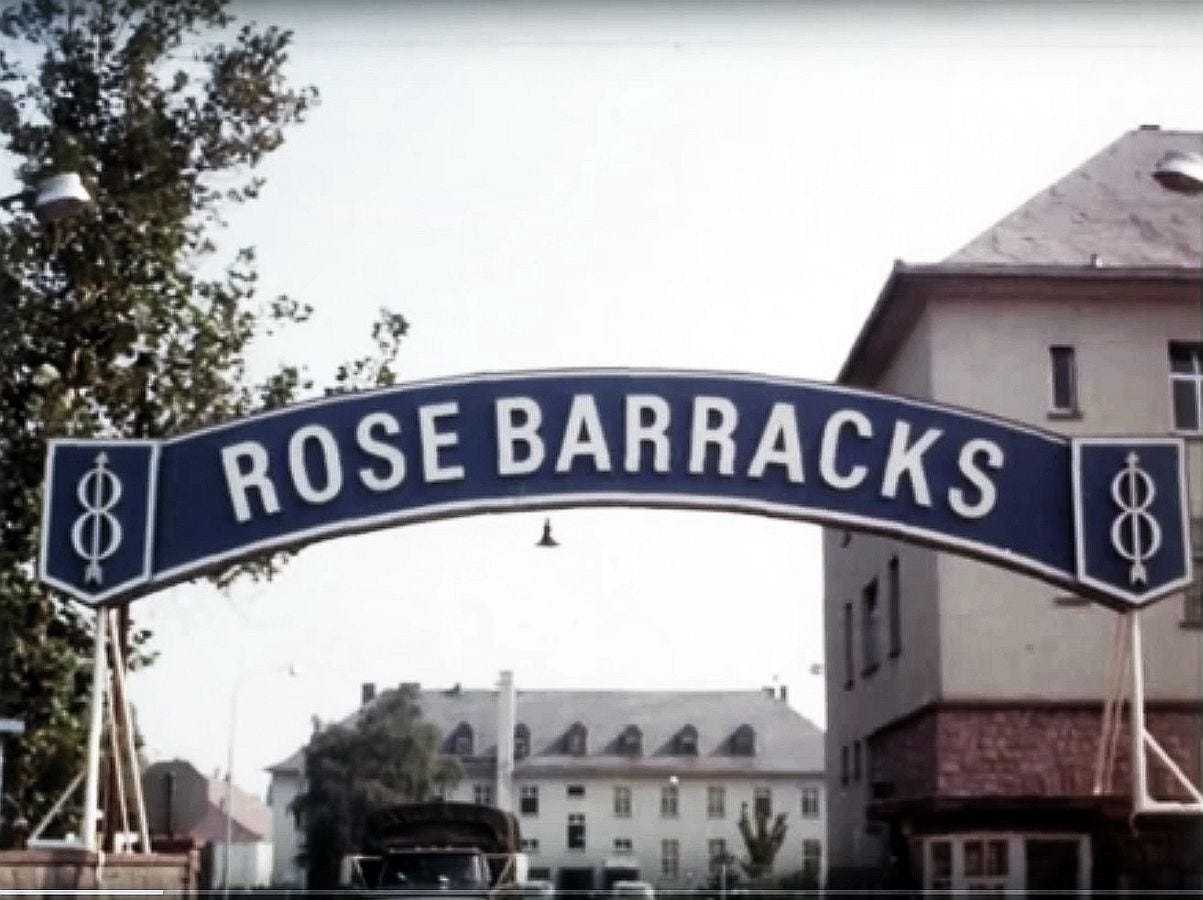
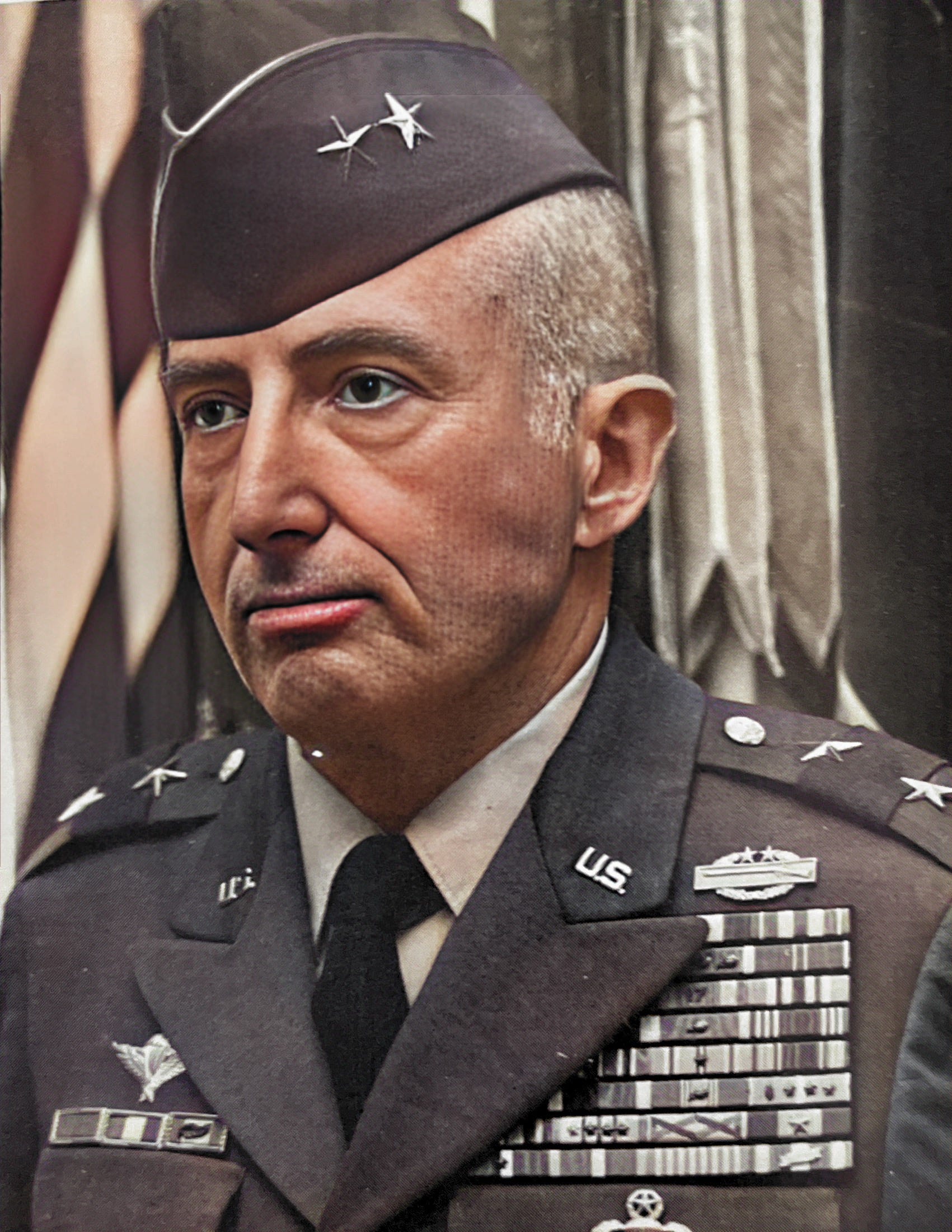
8th Infantry Division Rose Barracks Front Gate

Part of the autobiography of Dr. Anthony J. Carbone, Son in the Shadow of a Green Beret Hero.
8th Infantry Division Rose Barracks Front Gate
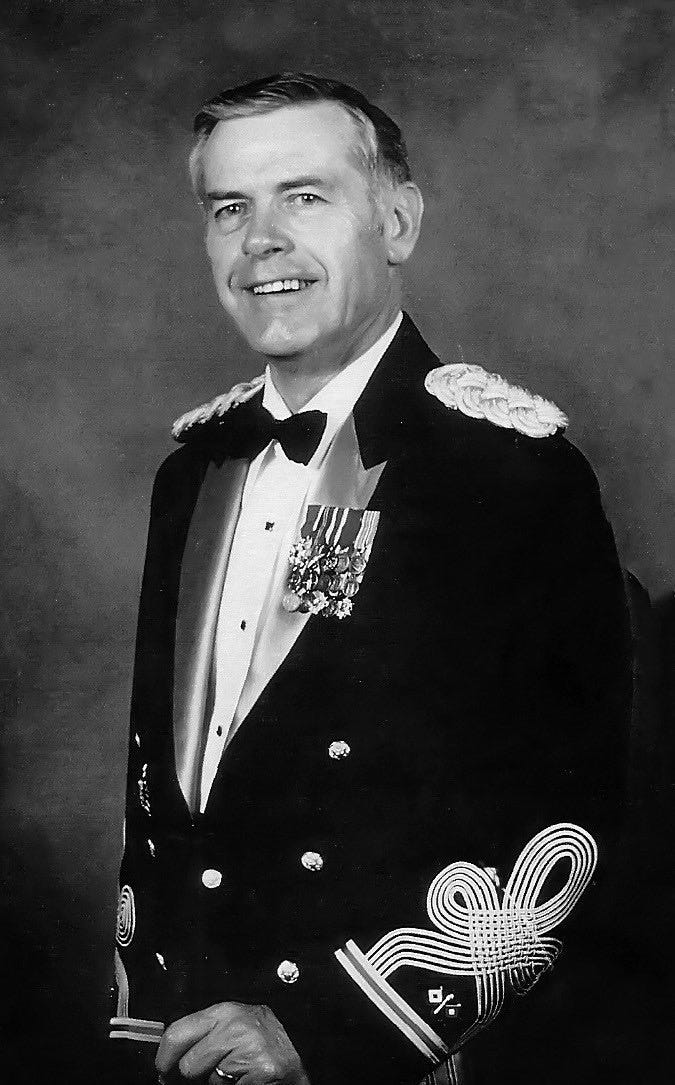
8th Infantry Division Commanding General Cleland

Part of the autobiography of Dr. Anthony J. Carbone, Son in the Shadow of a Green Beret Hero.
8th Infantry Division Commanding General, Major General Cleland
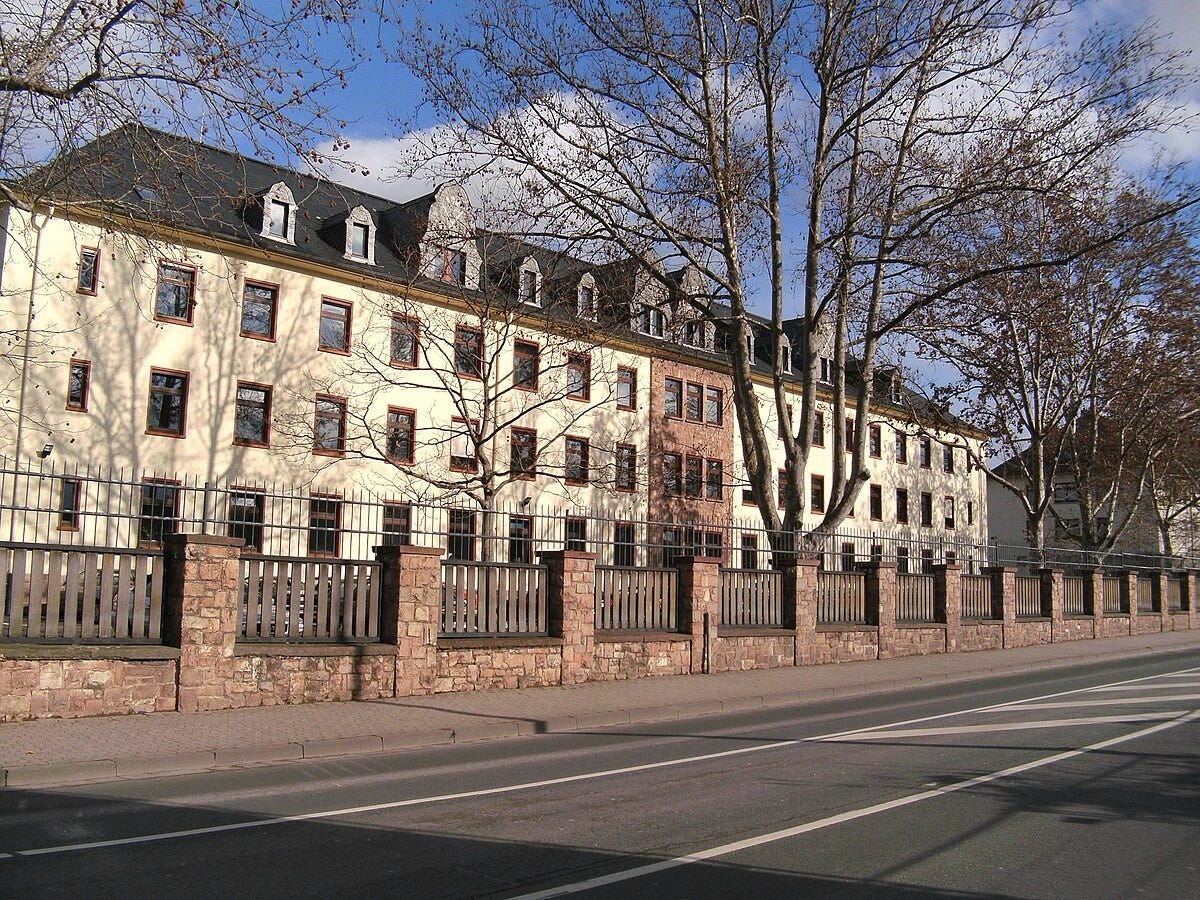
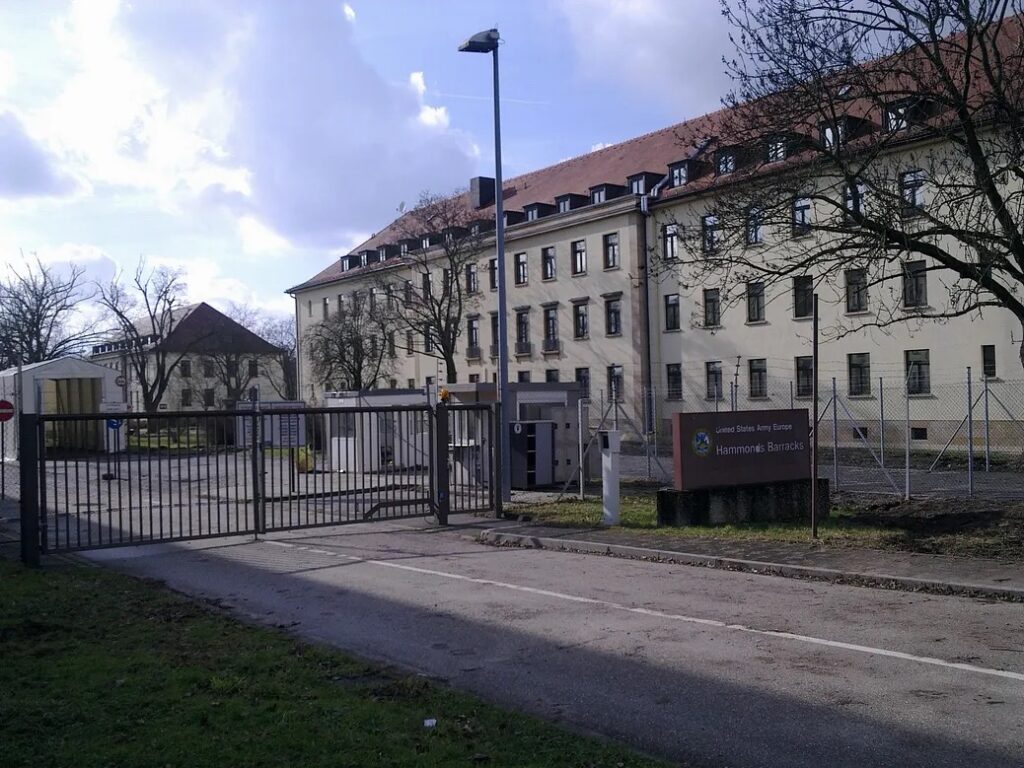
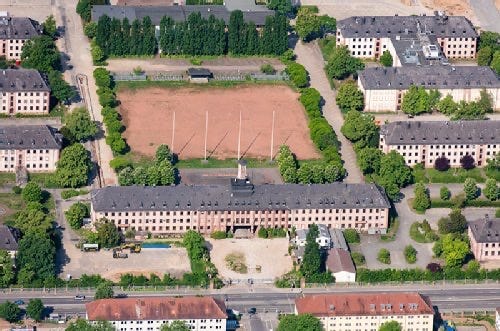
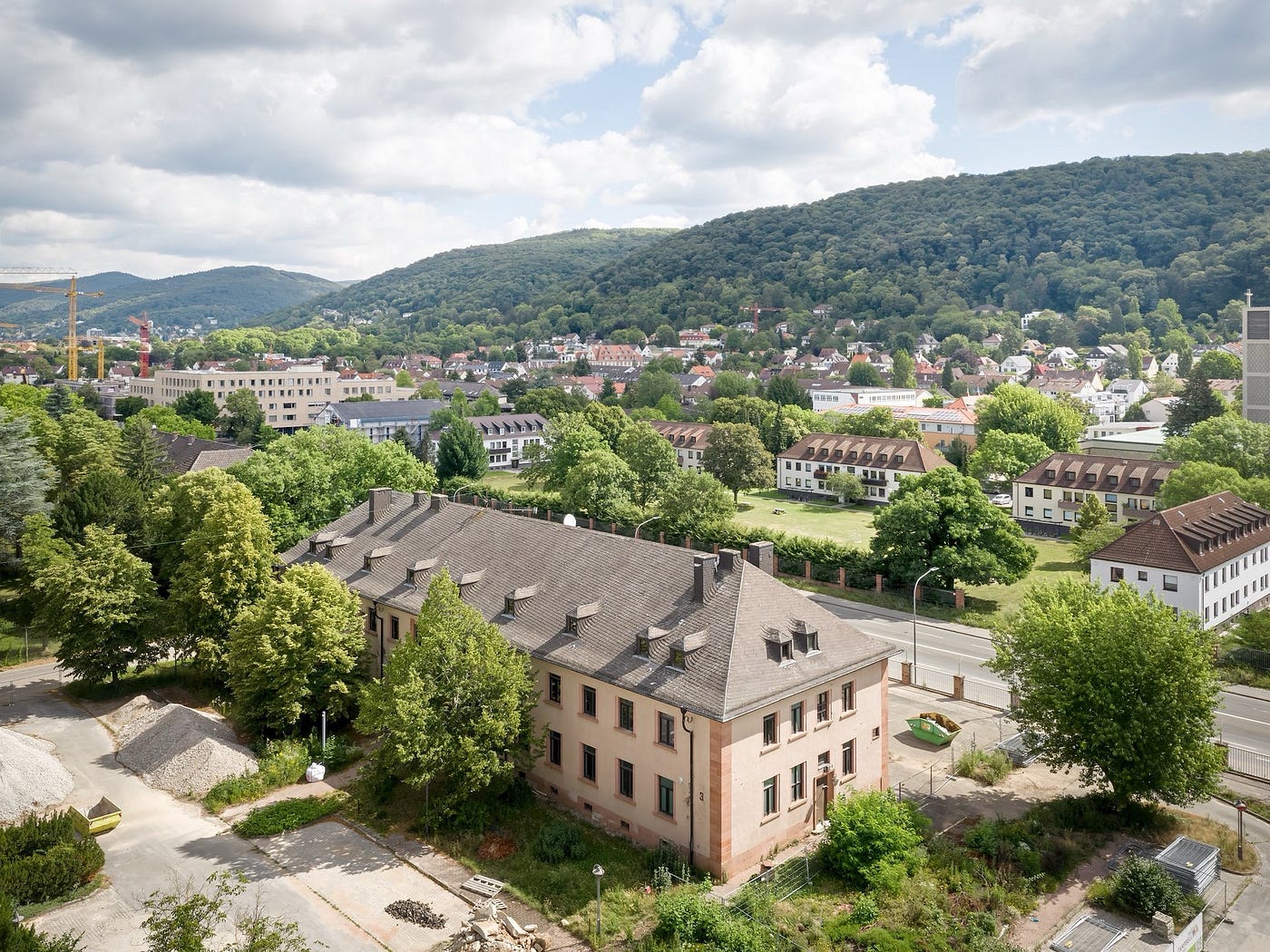
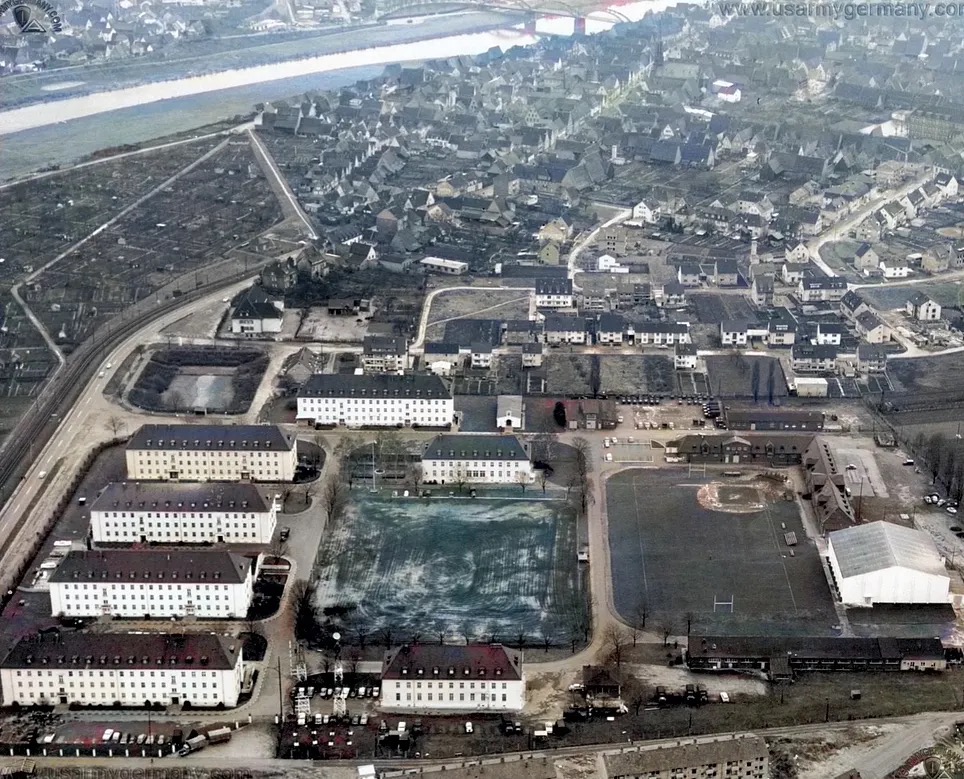
Rose Barracks, Home of HQ 8th Infantry Division

Part of the autobiography of Dr. Anthony J. Carbone, Son in the Shadow of a Green Beret Hero.
Rose Barracks, Home of HQ 8th Infantry Division

Busier Days for Dad at Division HQ

Dad brought Major Jim Mills — his trusted officer from Mannheim — with him to the G3 office at BK. But even with a loyal team, the workload was relentless. He was up before dawn and often didn’t return home until well after dark. By the time I woke up for school each morning, he was already gone. But beside my bed, like clockwork, would be a pair of combat boots and a handwritten note. The note included five to ten daily tasks — each one numbered inside a small circle. It was understood that the boots needed to be shined, and when I completed each task, I’d color in the circle. This was how we communicated for most of my time in high school — short, silent exchanges of expectation and acknowledgment.
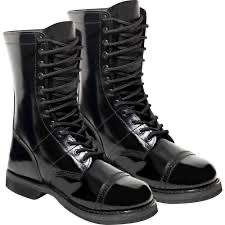
Pair of official Corcoran Army Jump Boots

Part of the autobiography of Dr. Anthony J. Carbone, Son in the Shadow of a Green Beret Hero.
Pair of official Corcoran Army Jump Boots

If Dad managed to sneak home for dinner, it was brief. He’d eat, maybe ask about our day, then disappear back to Headquarters. If he ever woke me up after I had gone to bed, it meant something hadn’t gone well. We lived in the same apartment, but we were passing shadows.

He never saw me play a single Varsity football or soccer game — even though that year, our school won the European Championship in both sports for our division. I was a starter on both teams. Not even one practice. It was always my mom and sisters on the sidelines, cheering me on. Maybe Auntie Norma, too.

The French Quarters

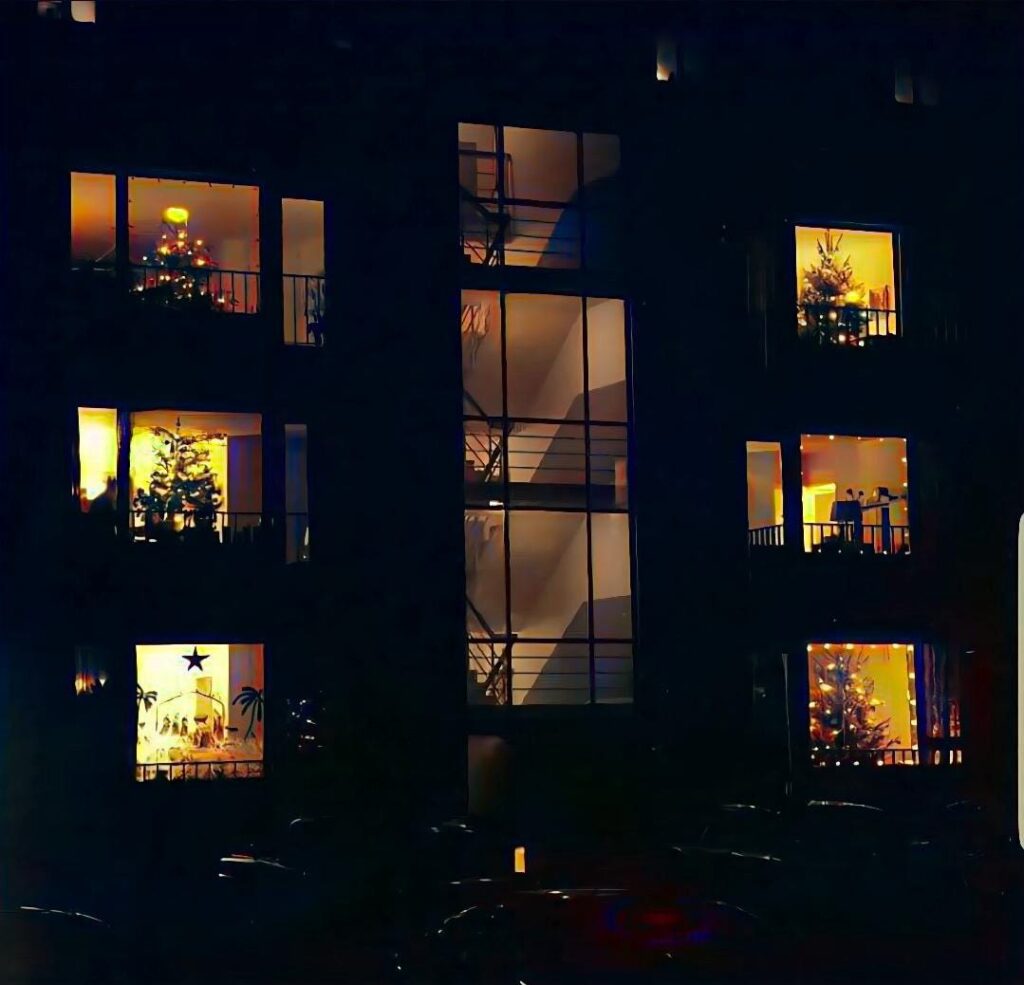
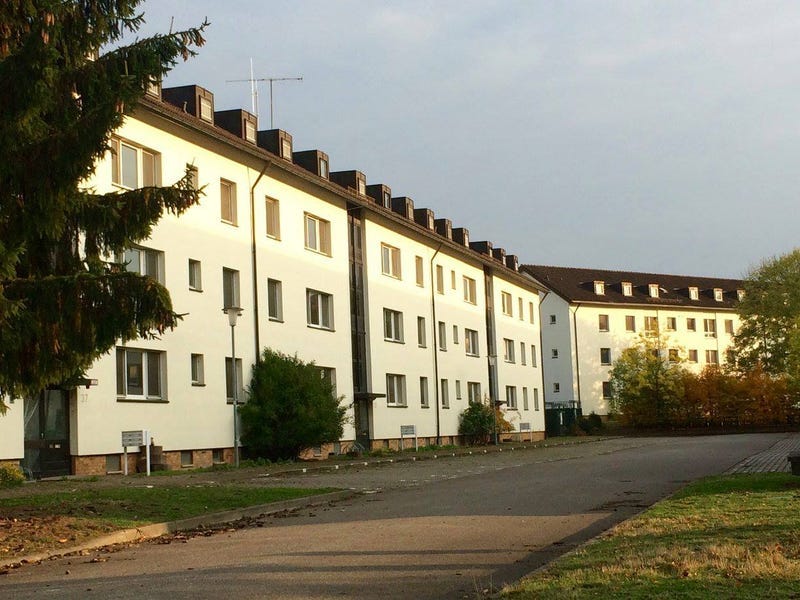
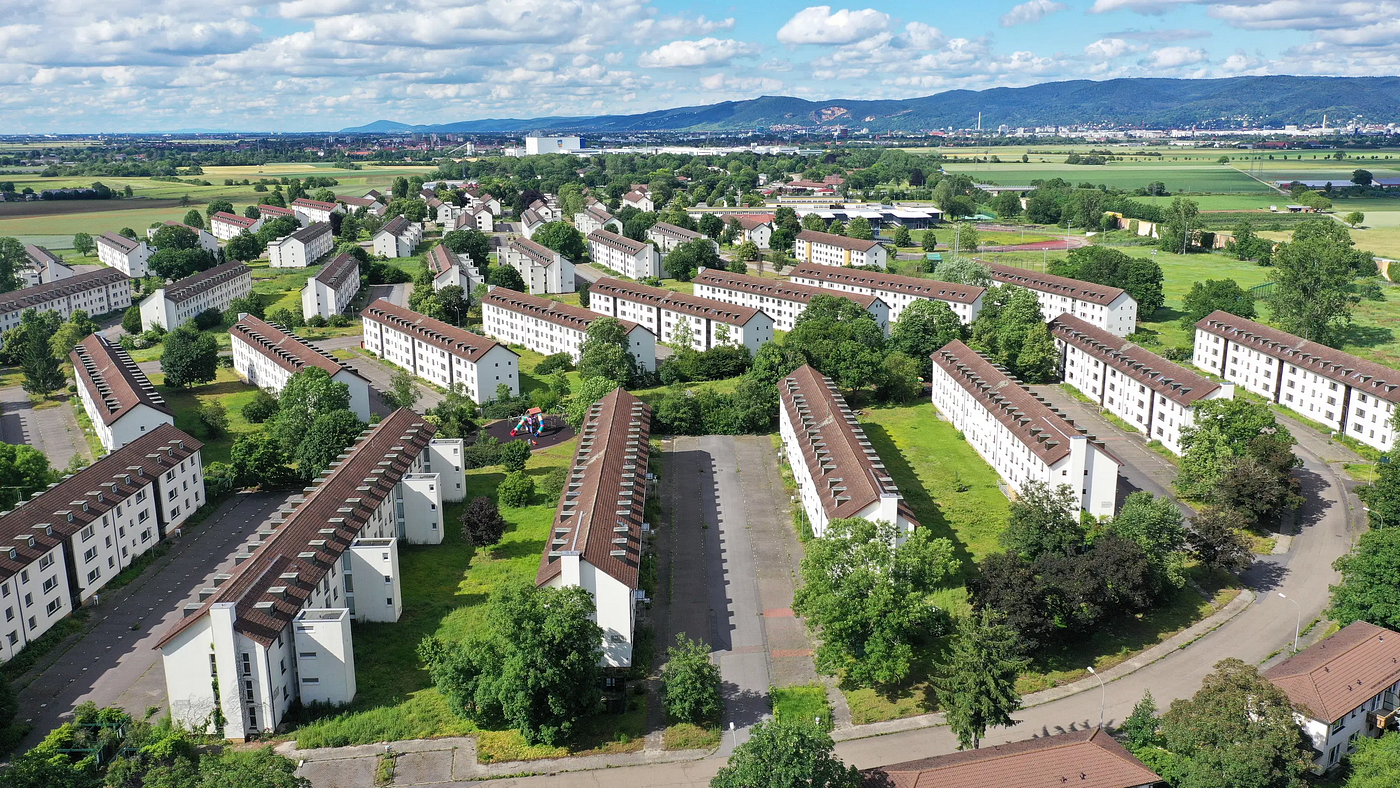
Dad’s world was focused entirely on the Cold War’s ever-present threat. Much of his time as G3 was spent preparing for the possibility of Soviet invasion and coordinating readiness with NATO partners. The Army post at Bad Kreuznach was small — quieter, more insular than Mannheim. We lived in a government apartment in a cluster of buildings known as the “French Quarters,” perched on a hill overlooking the town. There were only three French Quarters buildings, and ours housed just eight families.
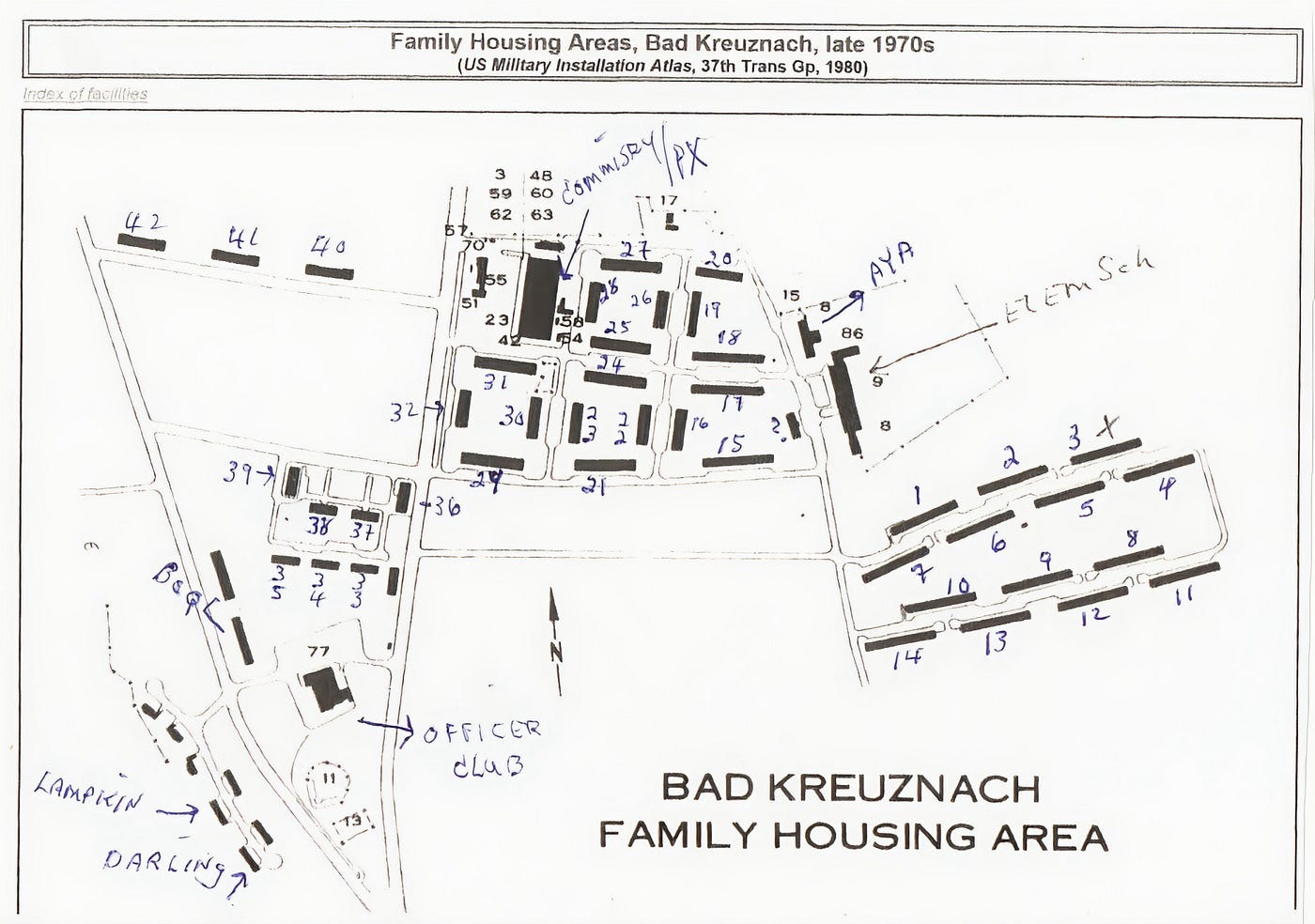
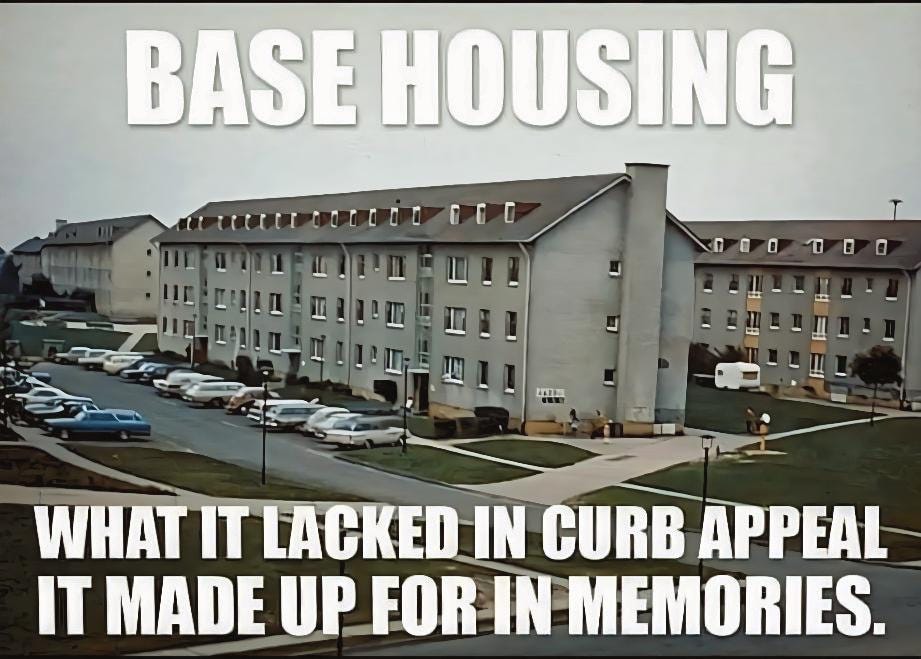
Map of the Family Housing Area at Bad Kreuznach, Germany.

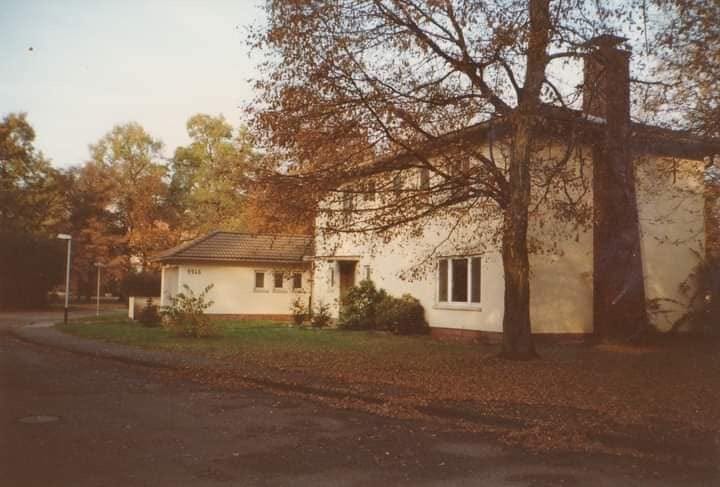
We lived in the French Quarters #42

Part of the autobiography of Dr. Anthony J. Carbone, Son in the Shadow of a Green Beret Hero.
We lived in the French Quarters Building #42
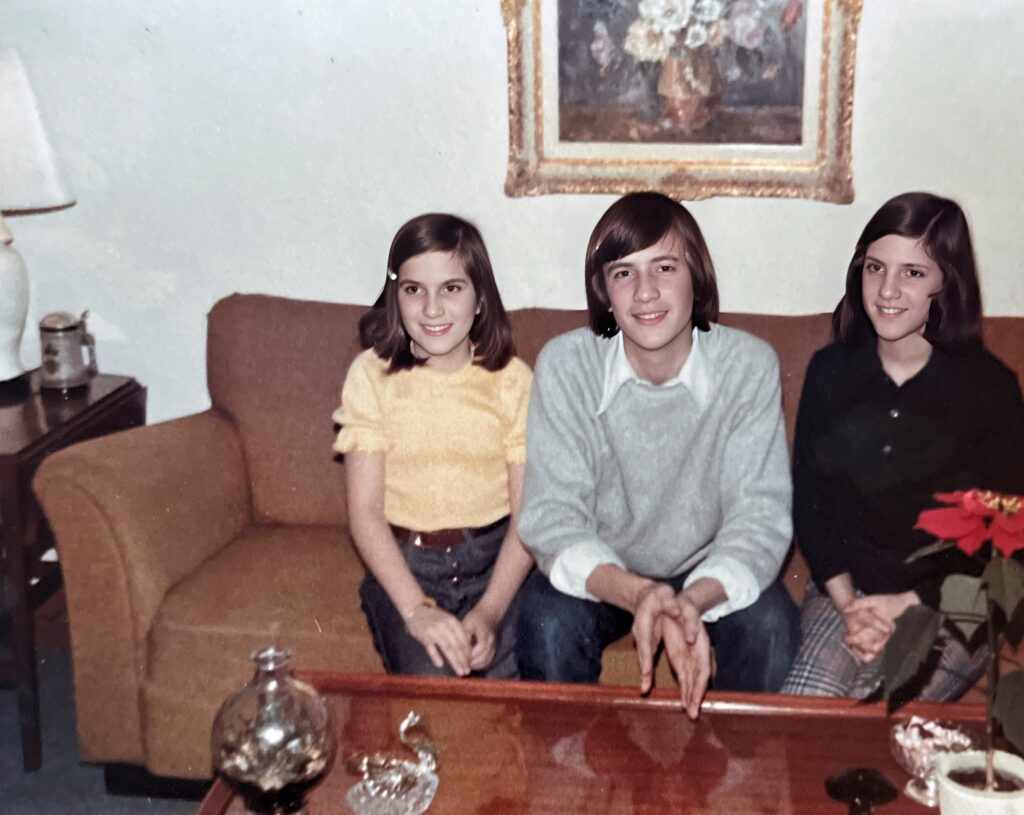
Sitting on the sofa (governement issue) in our home in the French Quarters of Bad Kreuznach Housing Area with my two younger sisters, Cynthia and Pamela.  Autobiography of Dr. Anthony J. Carbone.
In our government quarters in Bad Kreuznach, with my sisters Pamela and Cynthia

Again, the Sights, Sounds and Smells of Germany

What I remember most? The smell of fresh bread from the nearby German bakery — twenty-four hours a day. And the sound of church bells from the Catholic church just down the street, ringing rhythmically throughout the day. Both scents and sounds would stay with me for life.
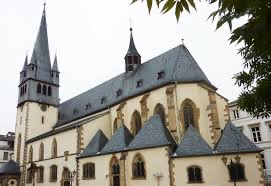
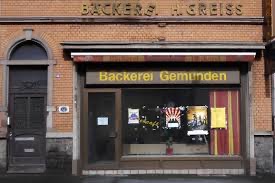
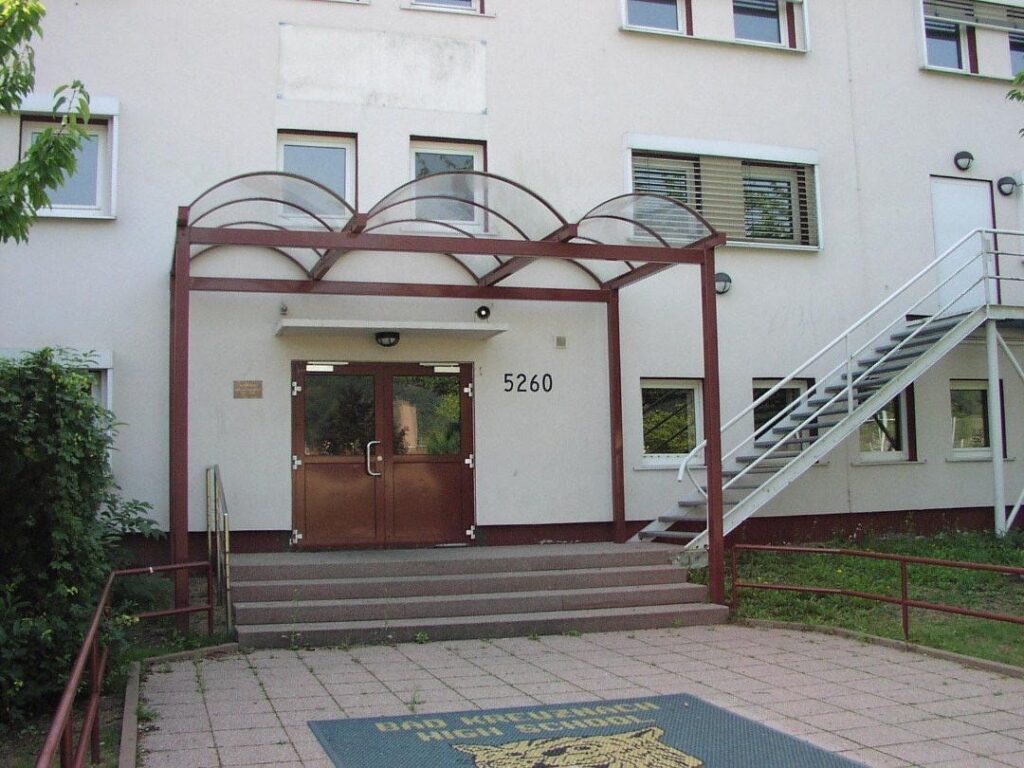
Bad Kreuznach American High School (BKAHS)

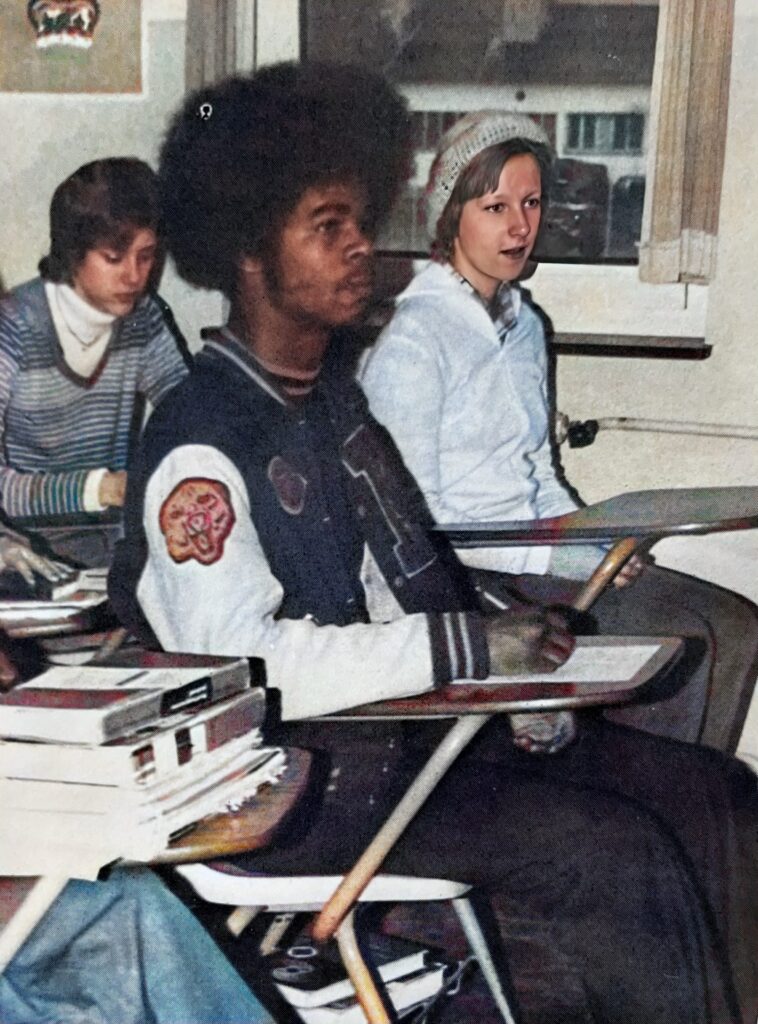
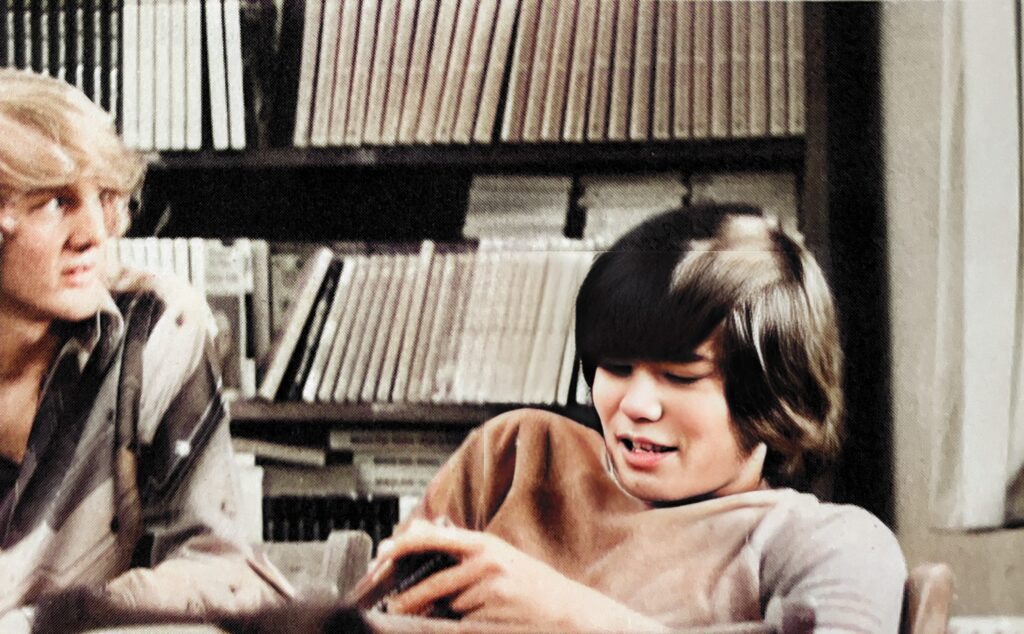
Bad Kreuznach American High School was a smaller, tighter-knit school than Mannheim. It was unusual in that it combined grades 7 through 12 in one building.
My 7th Grade Sister Cynthia Goes to my School

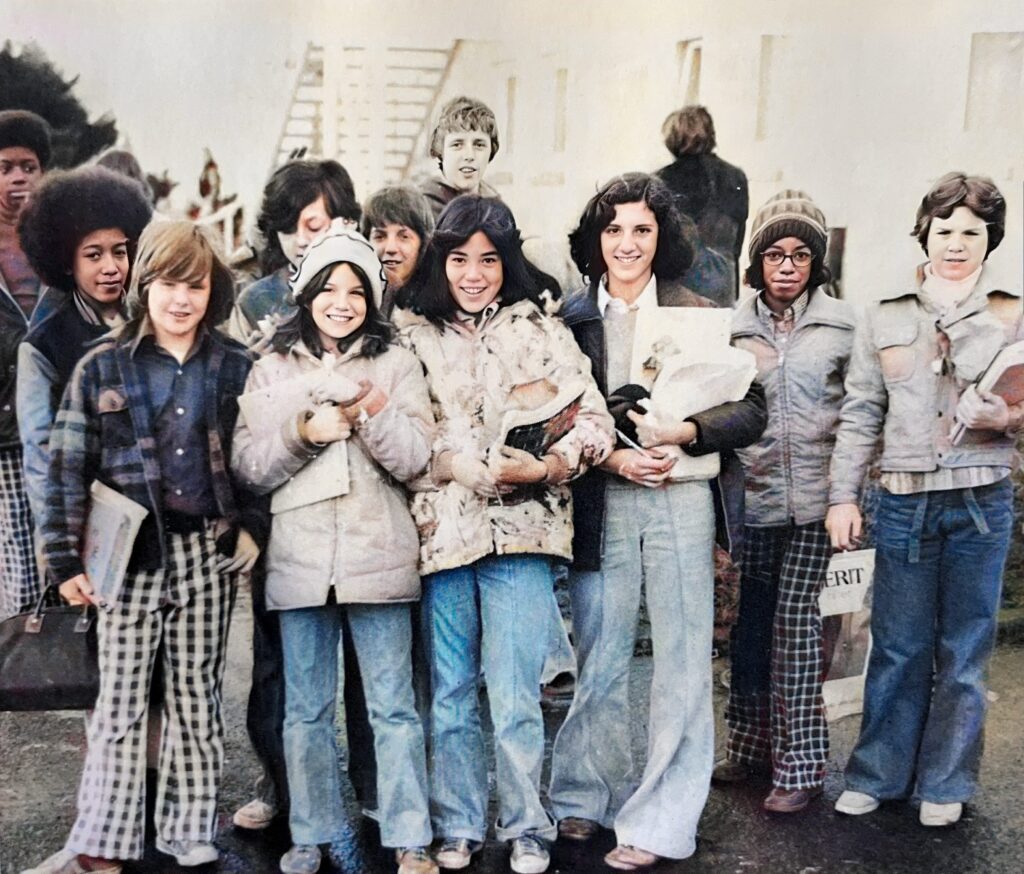
That meant I shared a school with my little sister Cynthia, who was in 7th grade, and believe it or not, I often ate lunch with her and her group of friends. It gave me a break from the pressure of running the school — and those girls were funny, sweet, and surprisingly great company.
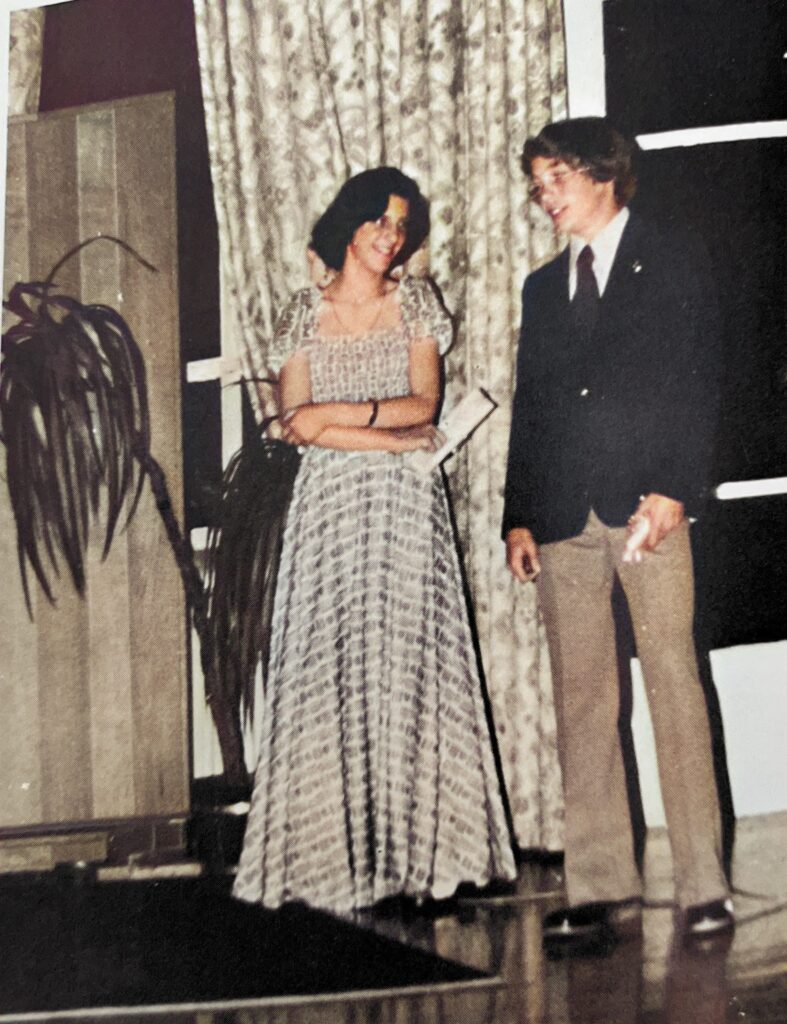
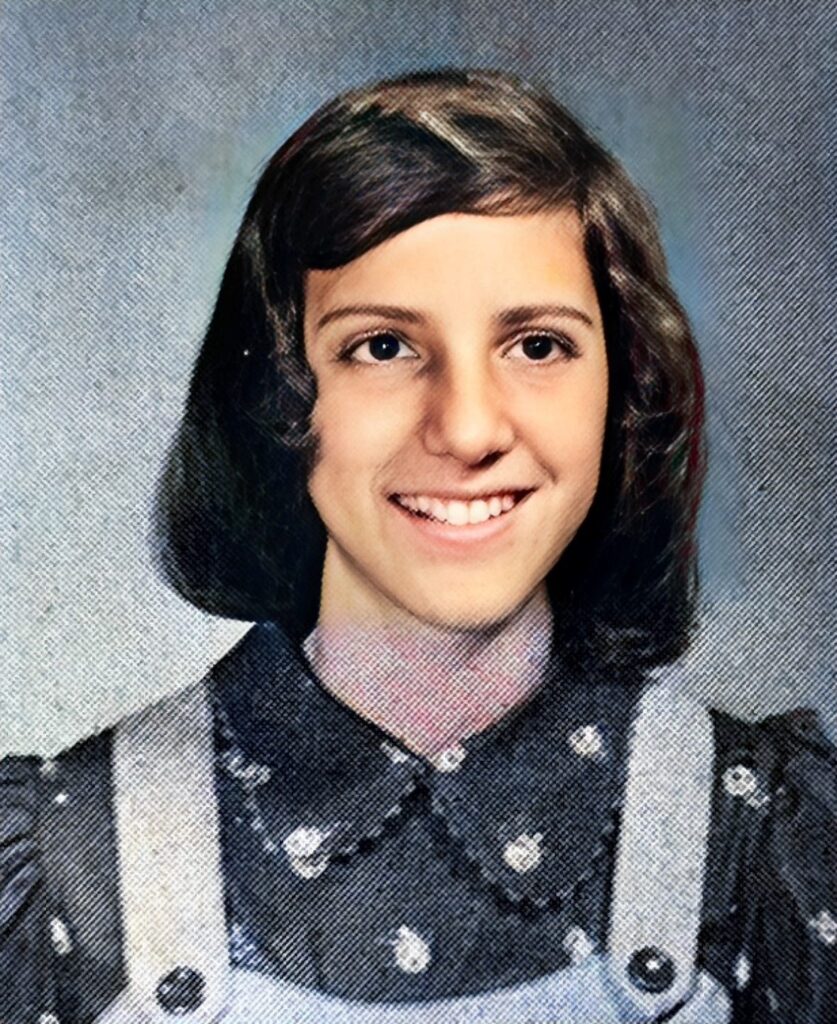
My Close Friends at Bad Kreuznach: Greg Otte, Debbie Wingfield & Jim Mills

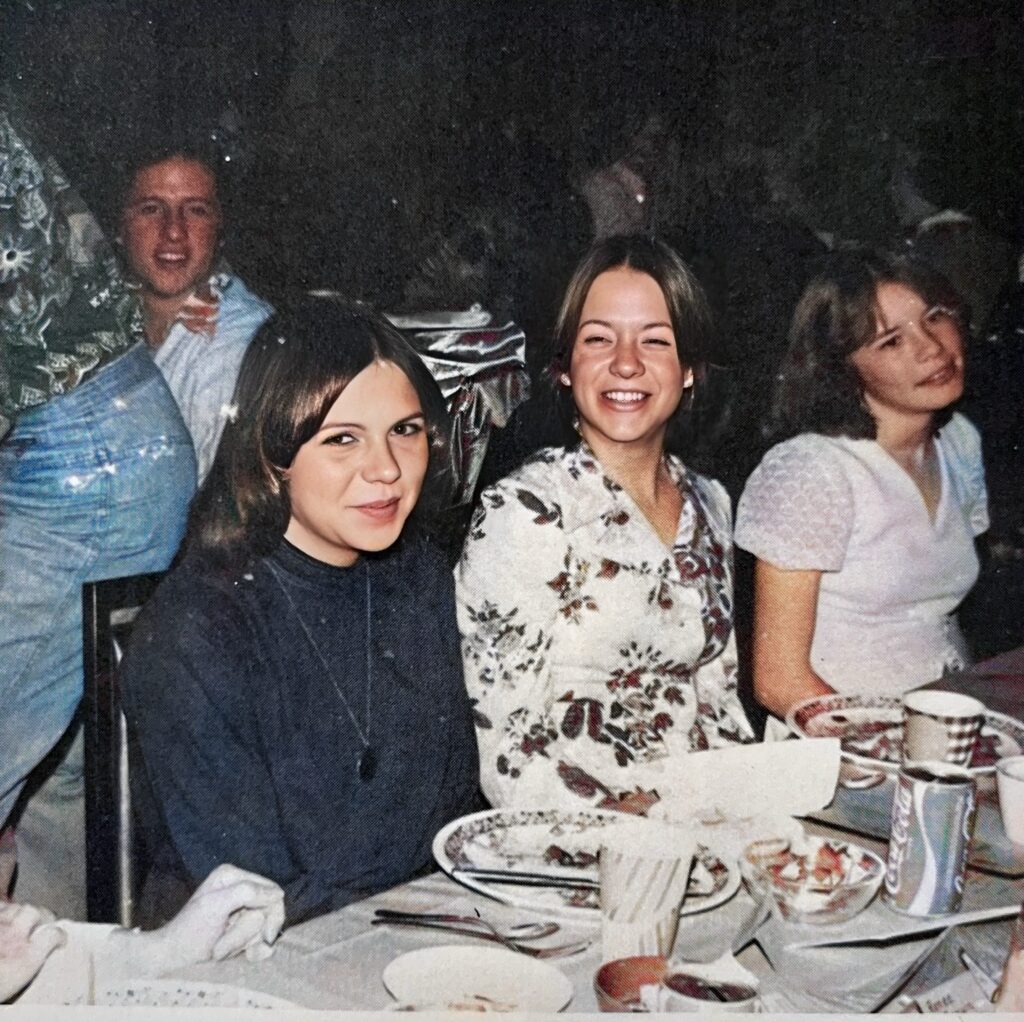
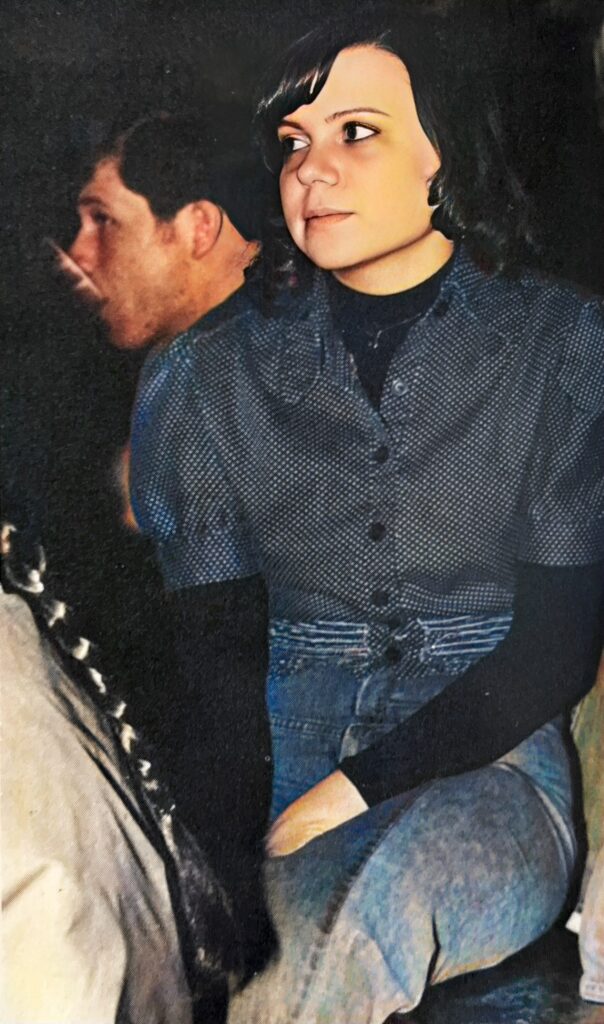
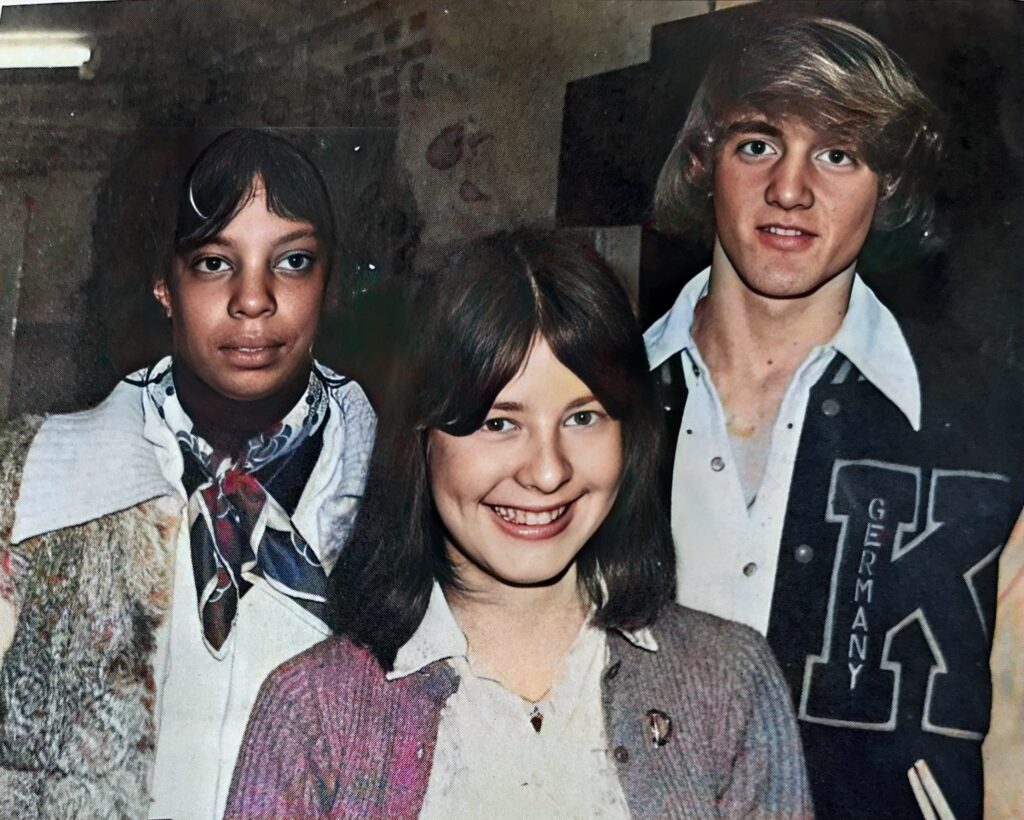
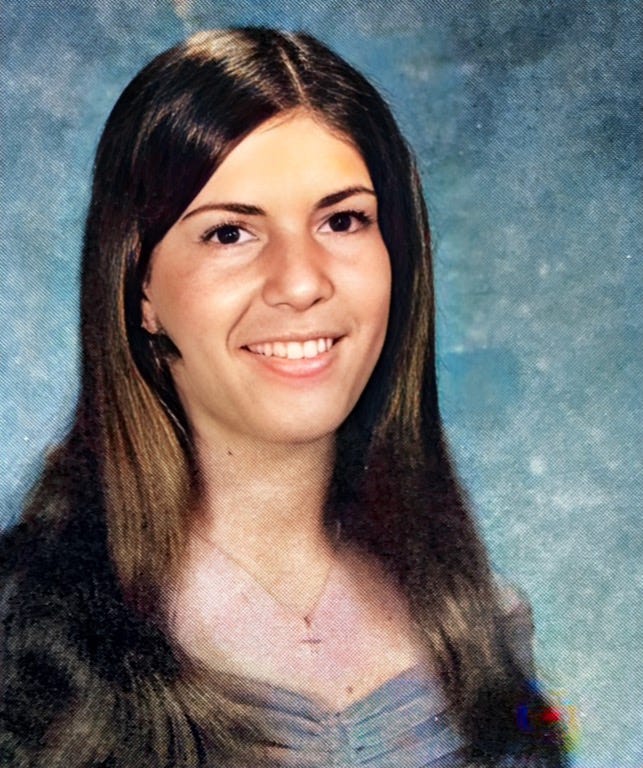
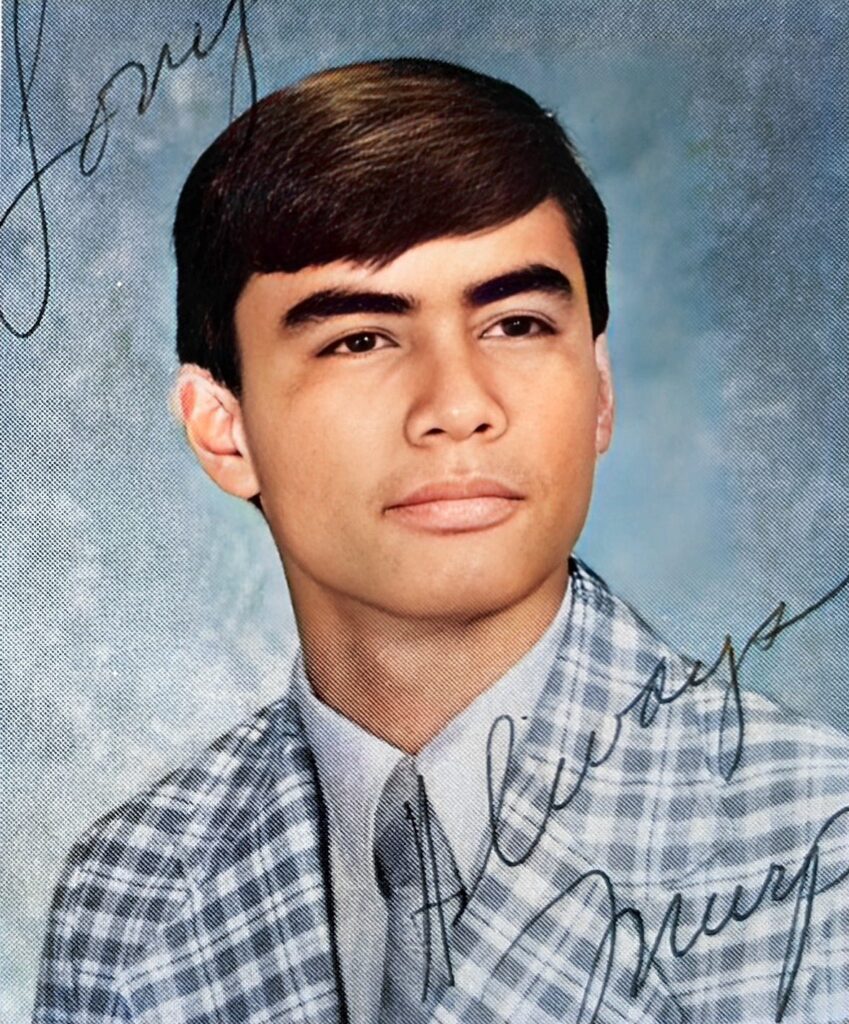
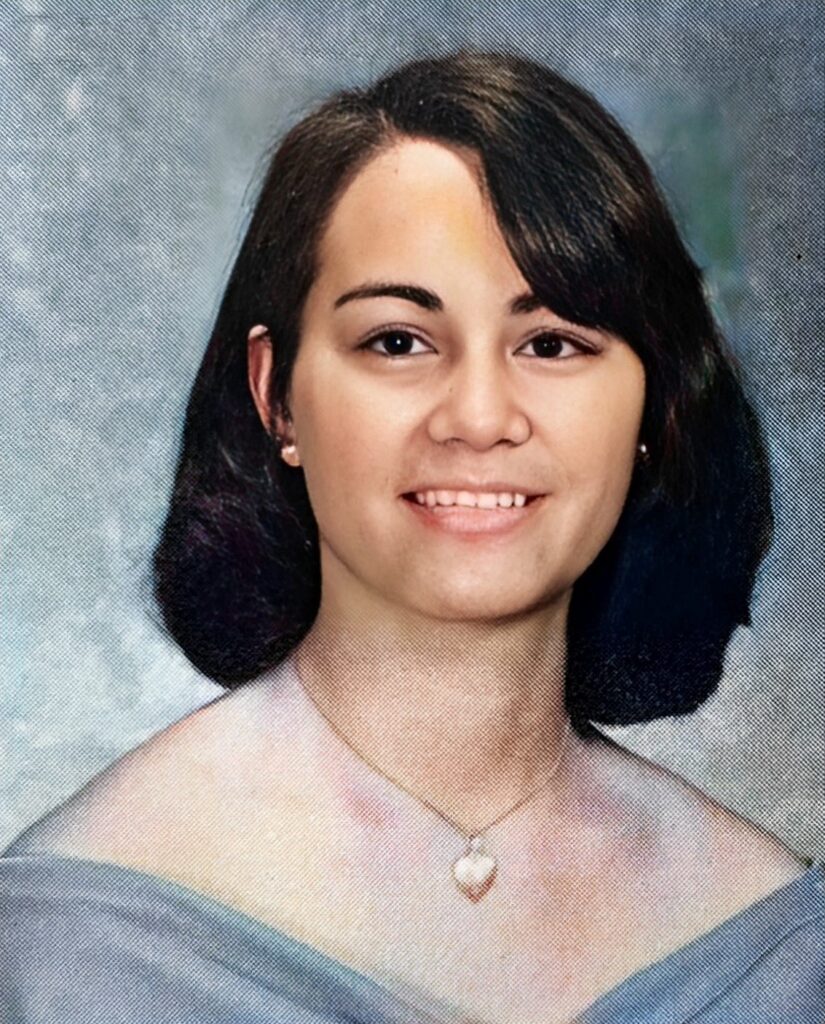
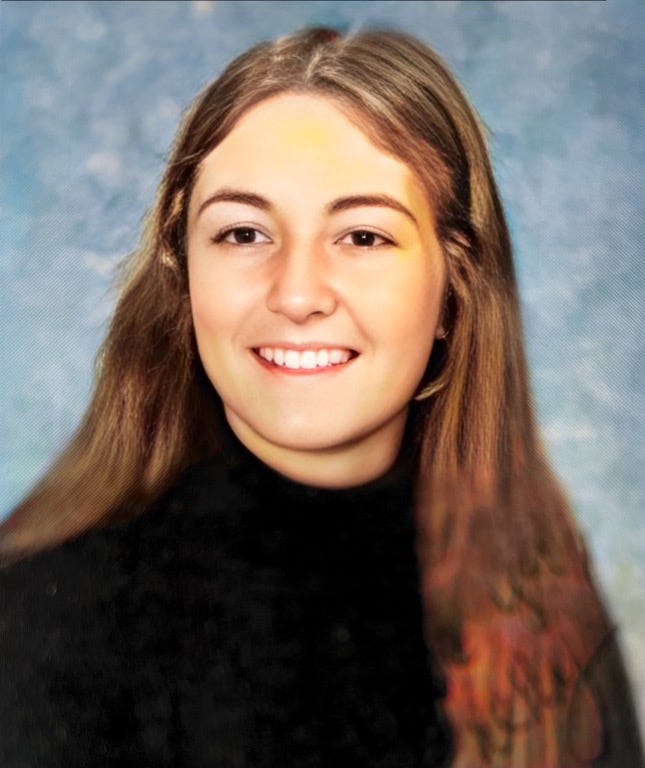
Although I was Senior Class President and knew everyone in our small school, I really had three closest friends: Jim Mills Jr., Greg Otte (another super-athlete), and Greg’s girlfriend, Debbie Wingfield. The school was so small and familiar that I could honestly say everyone was my friend, but I spent most of my free time with that trio.
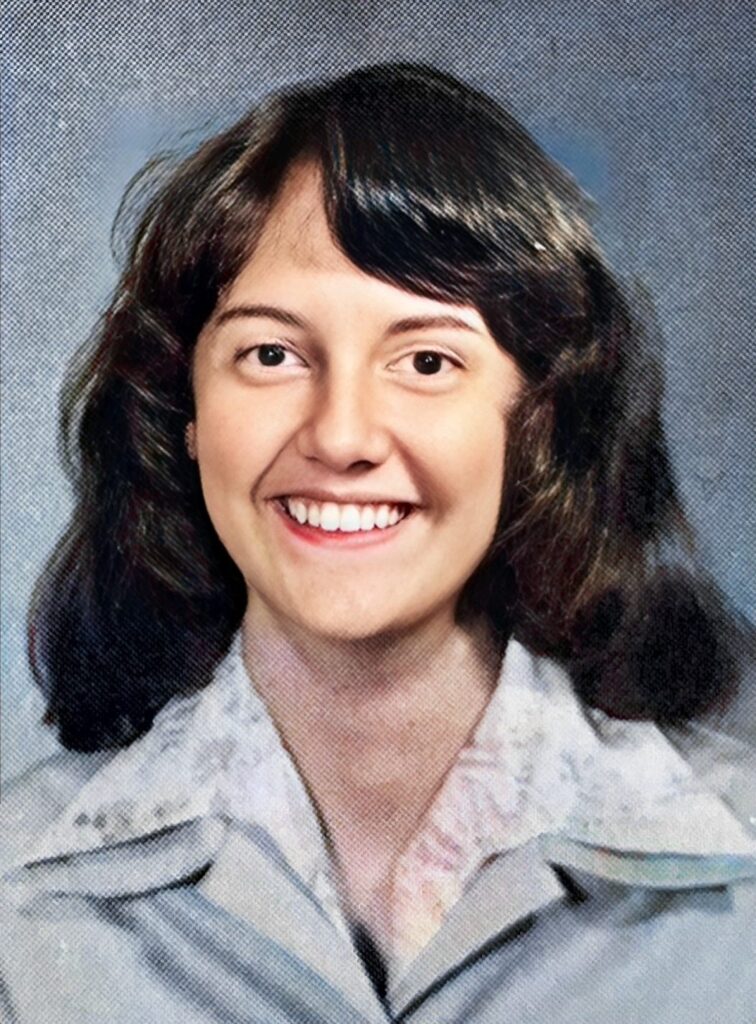
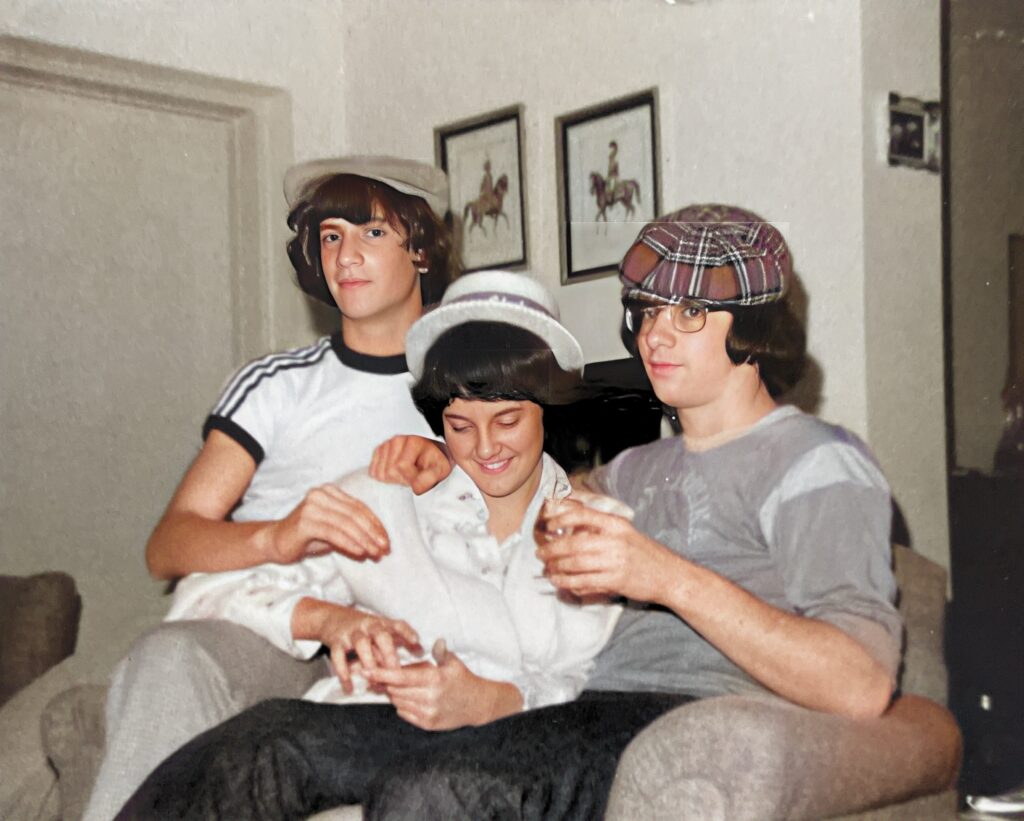
Jim Mills is a Bigger Star in Bad Kreuznach

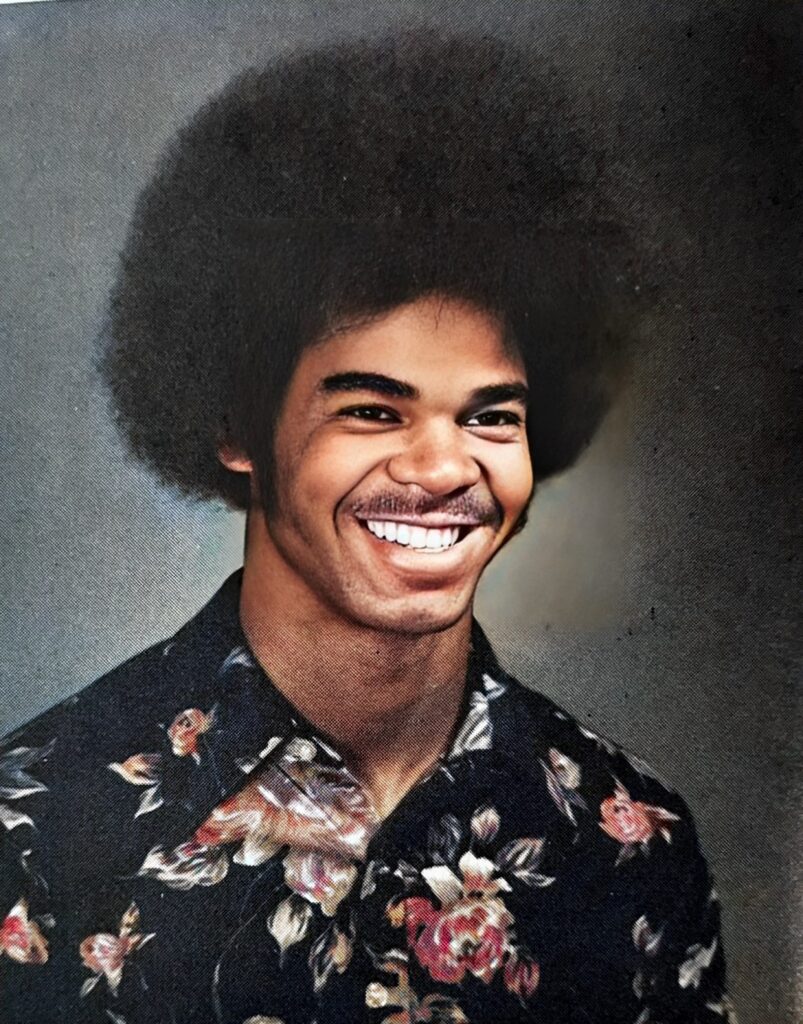
Jim Mills was a star from the minute he arrived. It didn’t take long for everyone to realize that Bad Kreuznach had just inherited a rare specimen — a super athlete with brains and discipline. He was elected President of the Student Government, and his talents seemed endless. But if Jim had one dominant hobby, it was women. I wouldn’t call him a “player,” but let’s just say he was never without a girlfriend. With his muscular frame, thick hair, smooth charm, and unshakable confidence, he was a magnet.
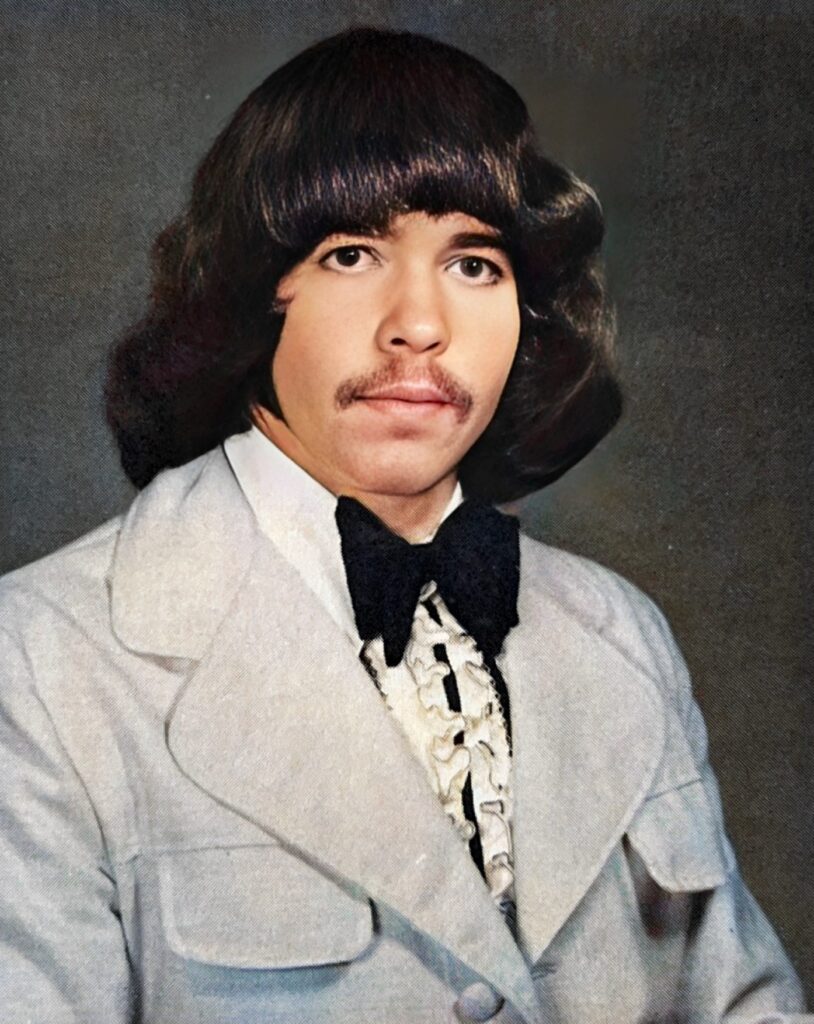
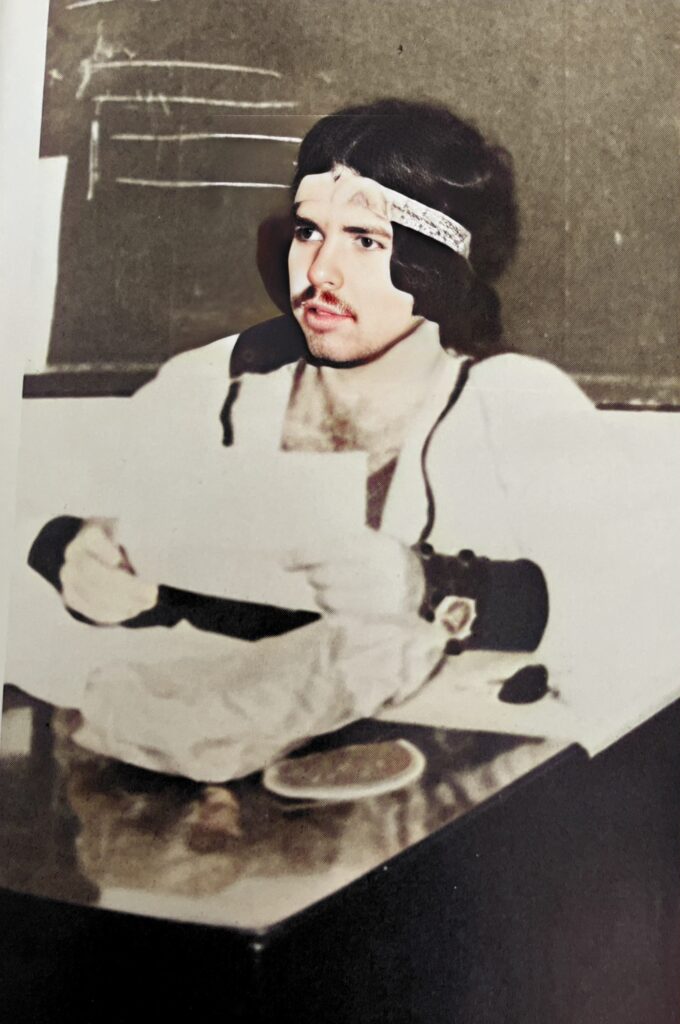
Part of the autobiography of Dr. Anthony J. Carbone, Son in the Shadow of a Green Beret Hero.
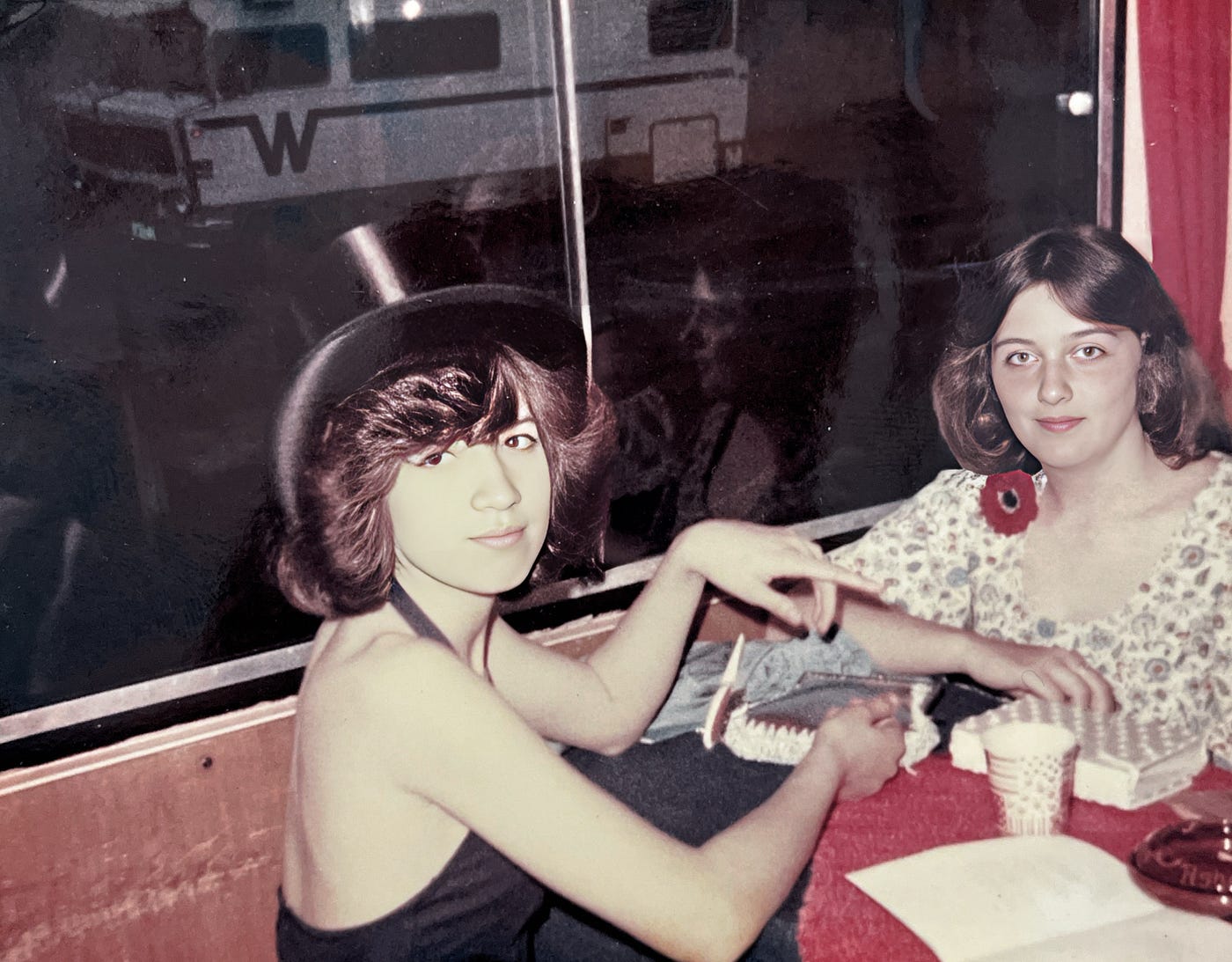
Jo Gonzales and Brenda Pierce with Jim Mills’ Winnebago in the background.

The Mills’ Winnebago

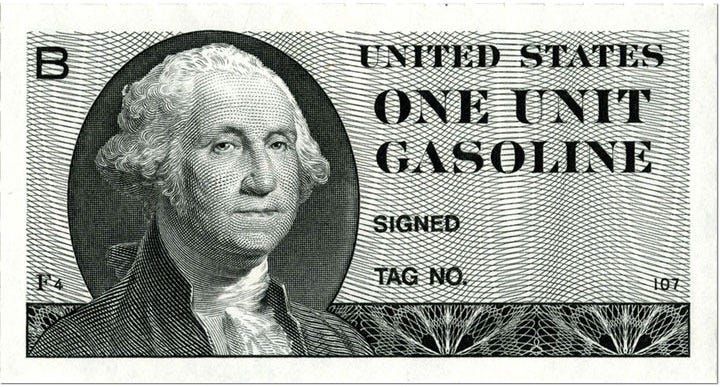
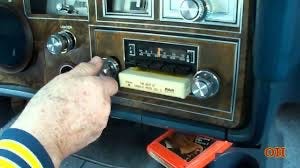
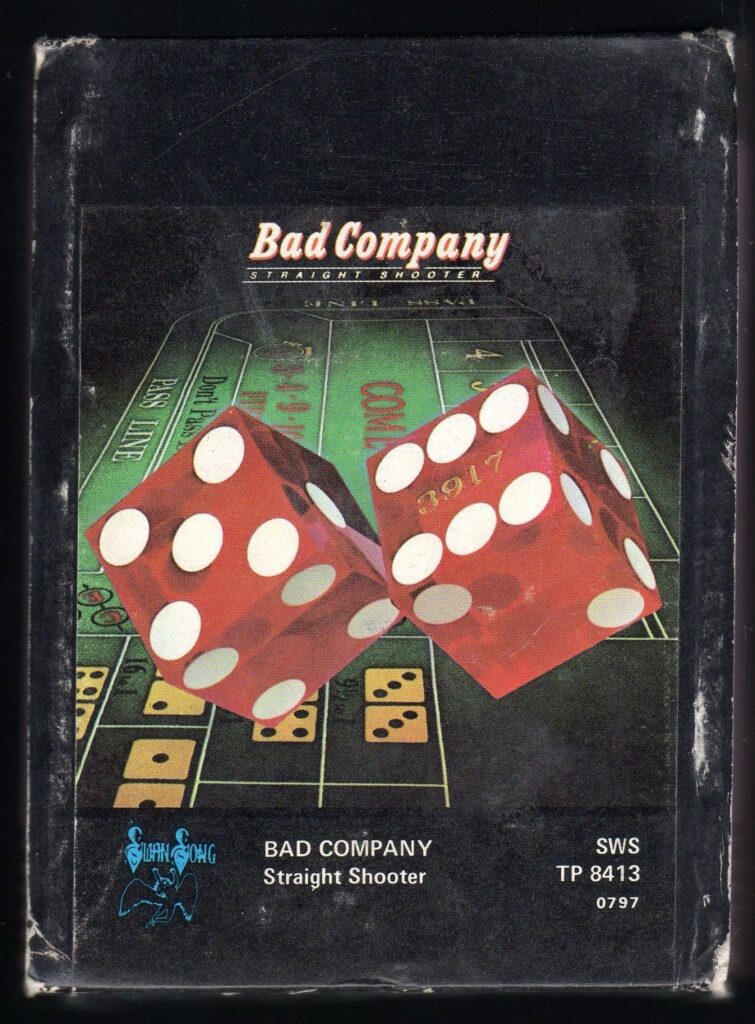
To top it off, Jim drove around in his family’s Winnebago. Not a car. Not a van. A full-blown mobile bedroom with a rumbling engine and an 8-track stereo permanently loaded with Bad Company — especially “I Feel Like Making Love.” He literally drove everywhere in that machine. I was one of his copilots — or more accurately, his gas stamp collector. At the time, many things in Germany were still rationed for Americans, including gasoline, cigarettes, and alcohol. If you wanted a ride in the Winnebago, you handed over your gas stamps. I managed the trade like a logistics officer.
No Love Life in Bad Kreuznach

My own love life in Bad Kreuznach was much quieter than in Mannheim. I was so focused on schoolwork, school functions, sports, and applying to college that romance became more of a background story. In Woodbridge and Mannheim, I had always relied on my sisters — Lynne and Diana — to help me get socially connected and involved. At Bad Kreuznach, for the first time in my life, I was on my own. Things started off slowly.

Dad Drives Jeff Bell from Mannheim to BK

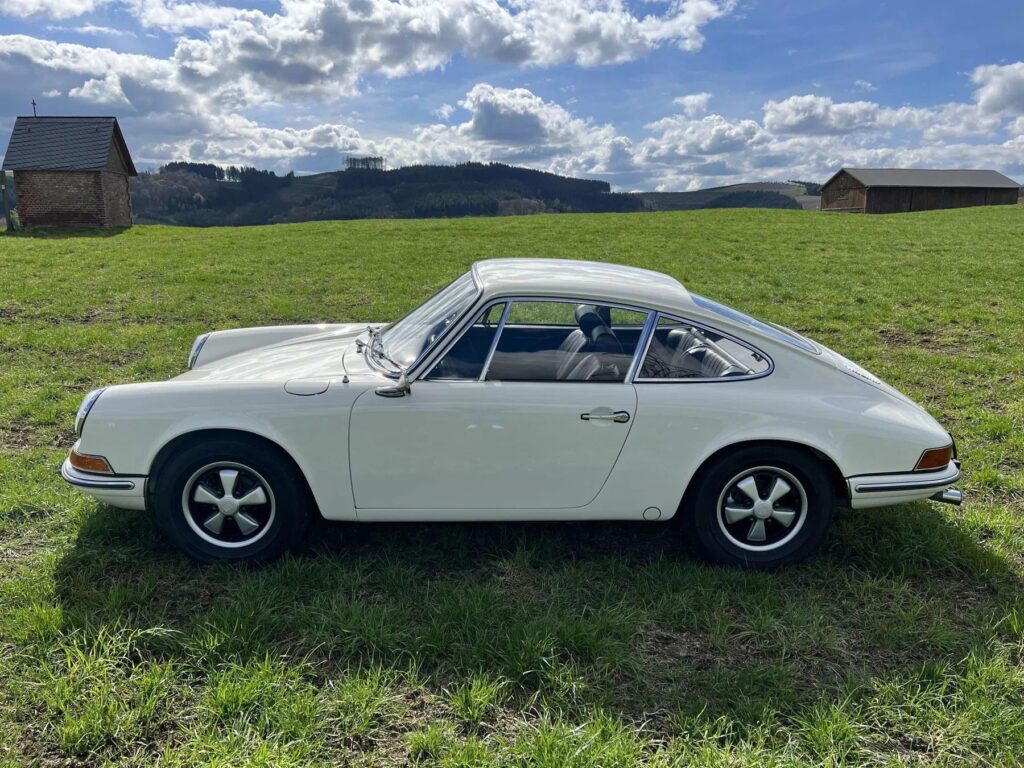
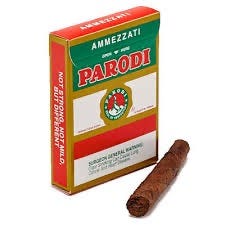
My father tried helping me out by occasionally surprising me on a Friday when he would drive his Porsche 911, the 82 kilometers to Mannheim and pick Jeff Bell up, and bring him to Bad Kreuznach for the weekend. All that Jeff can remember about those trips is my father asking Jeff if he minded if he smoked one of his Italian stogie cigars, and Jeff holding his breath for an hour.
My First Loves at Bad Kreuznach American

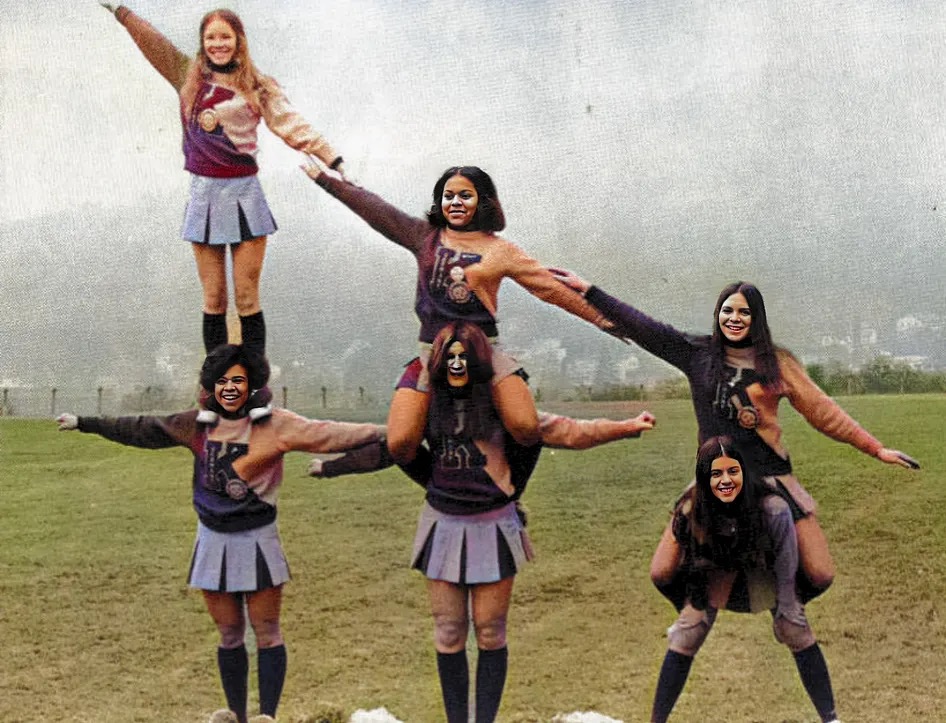
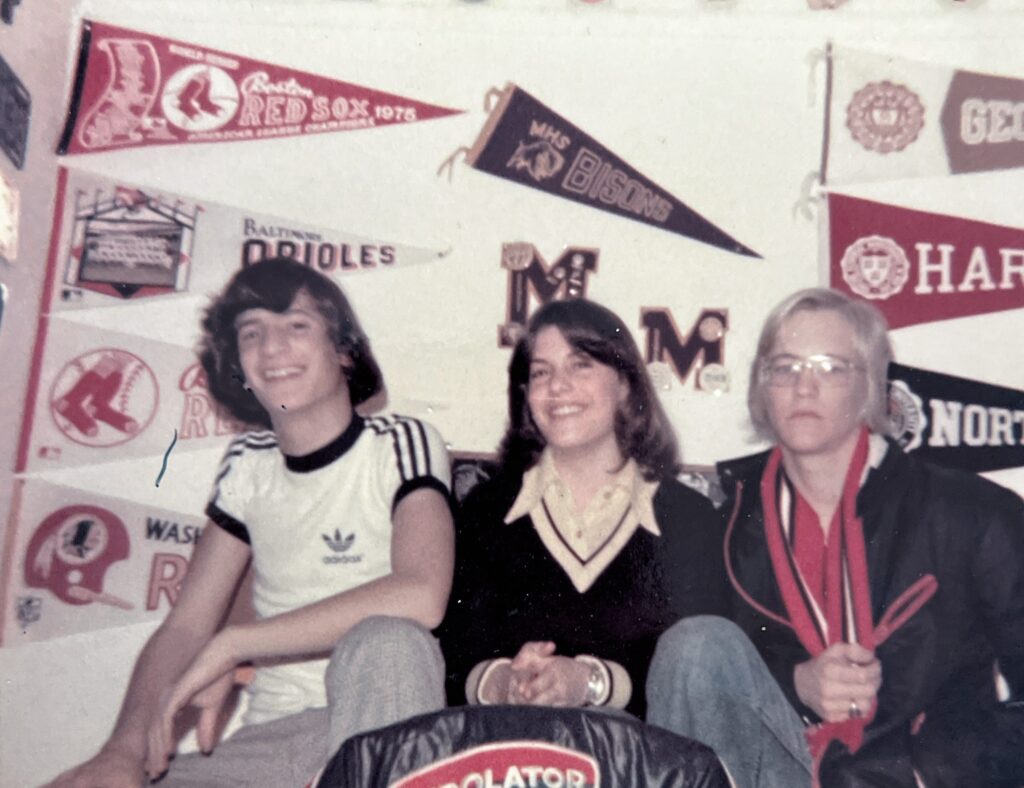
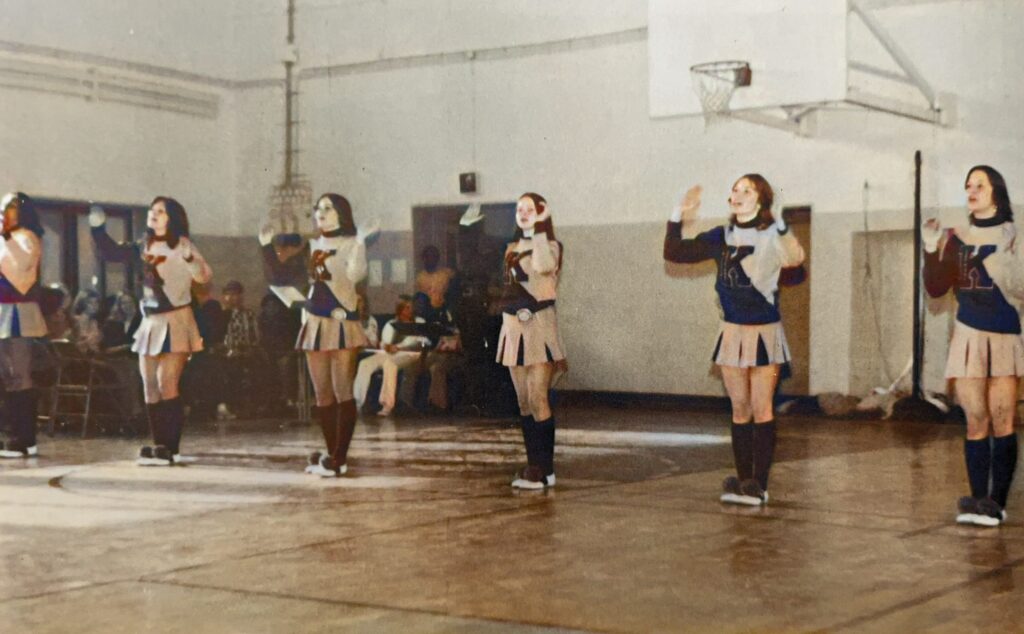
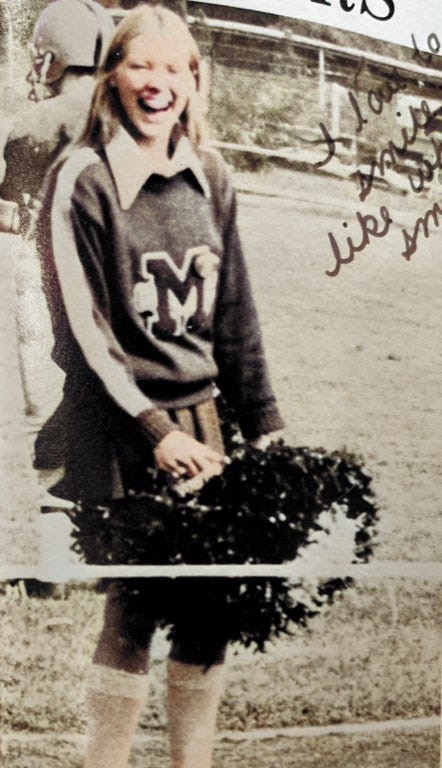
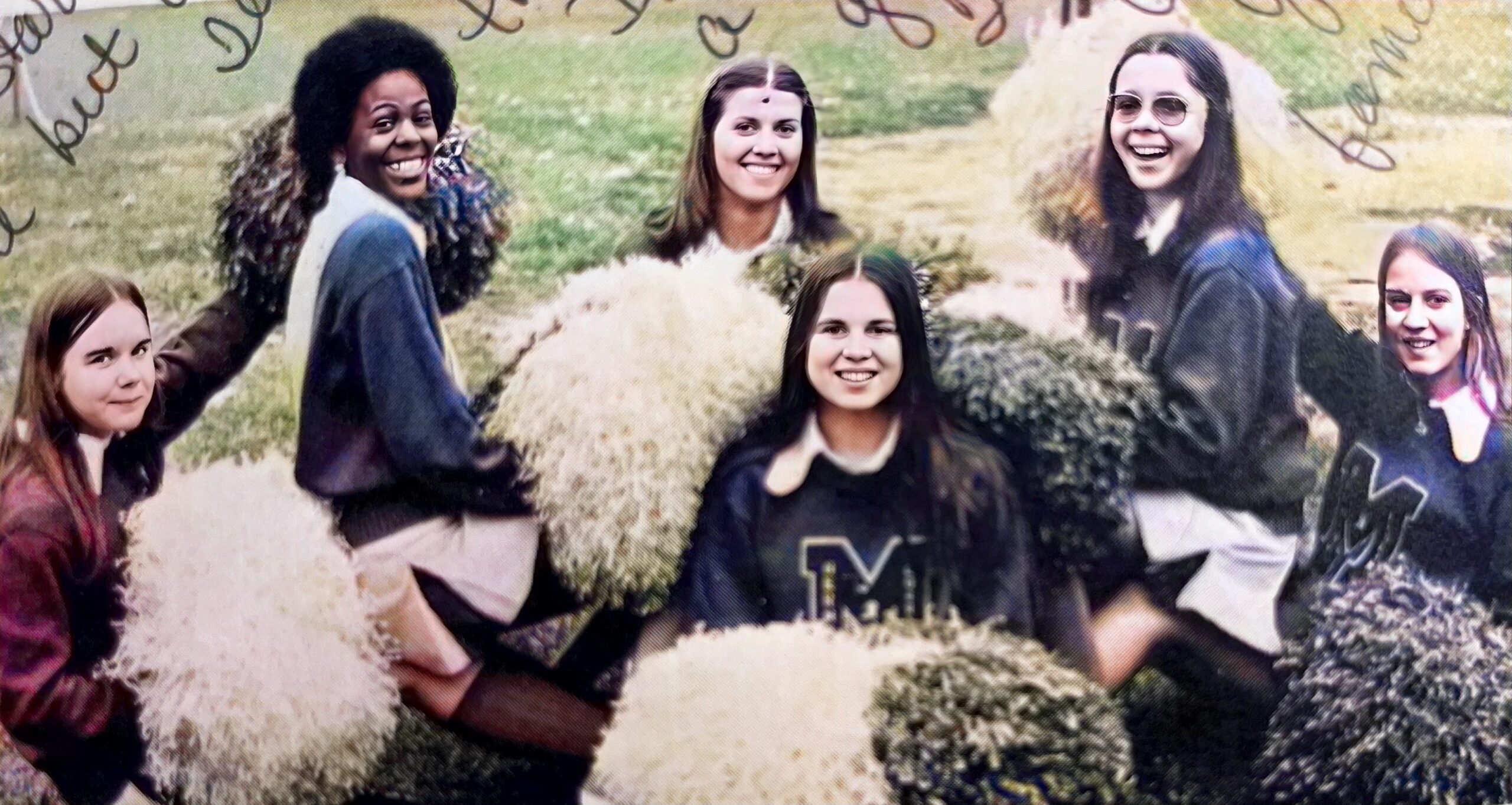
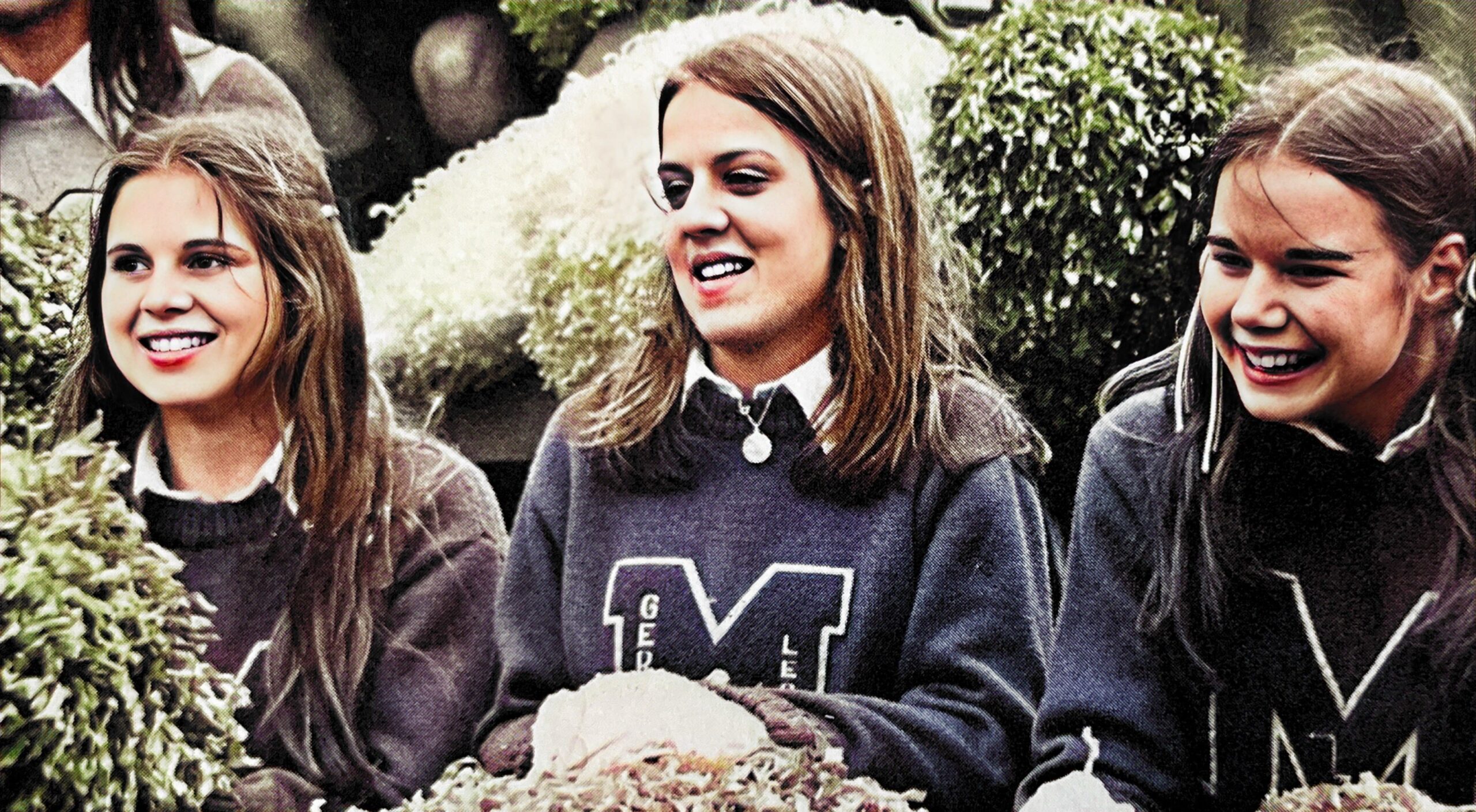
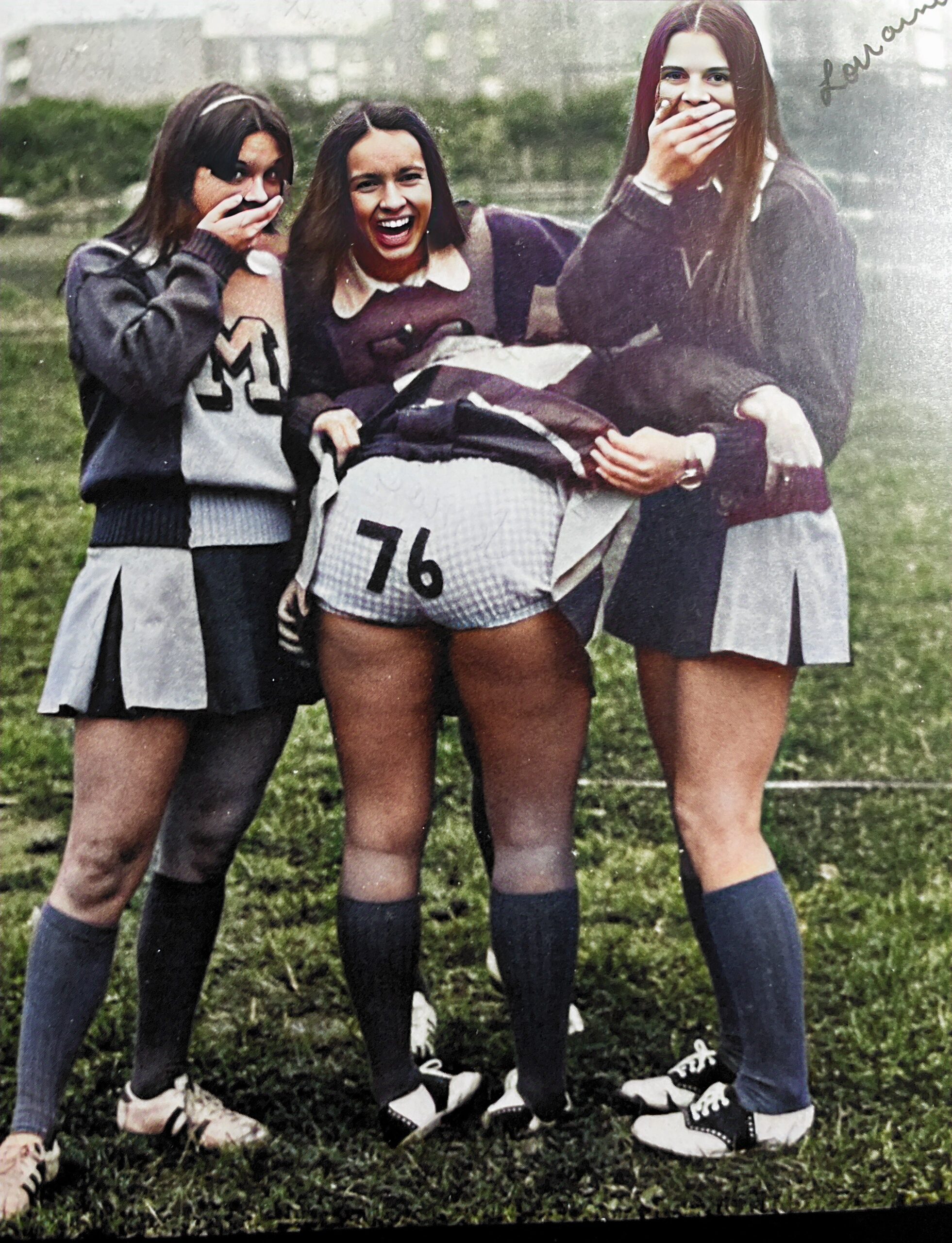
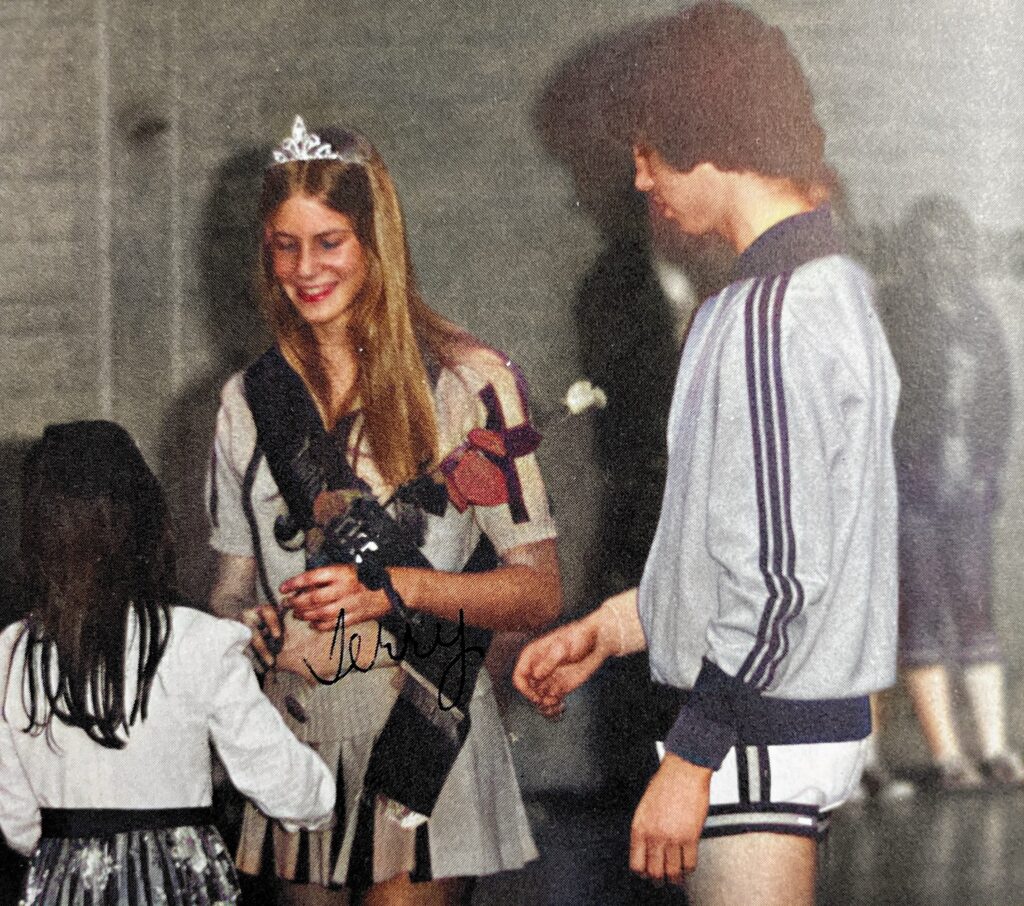
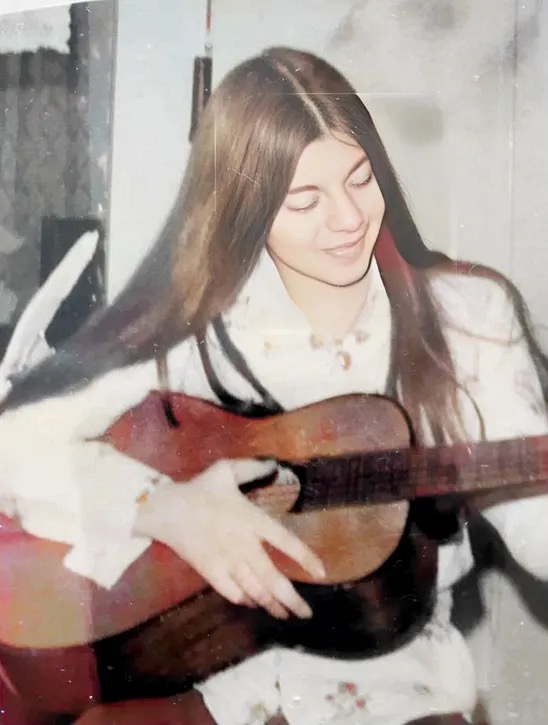
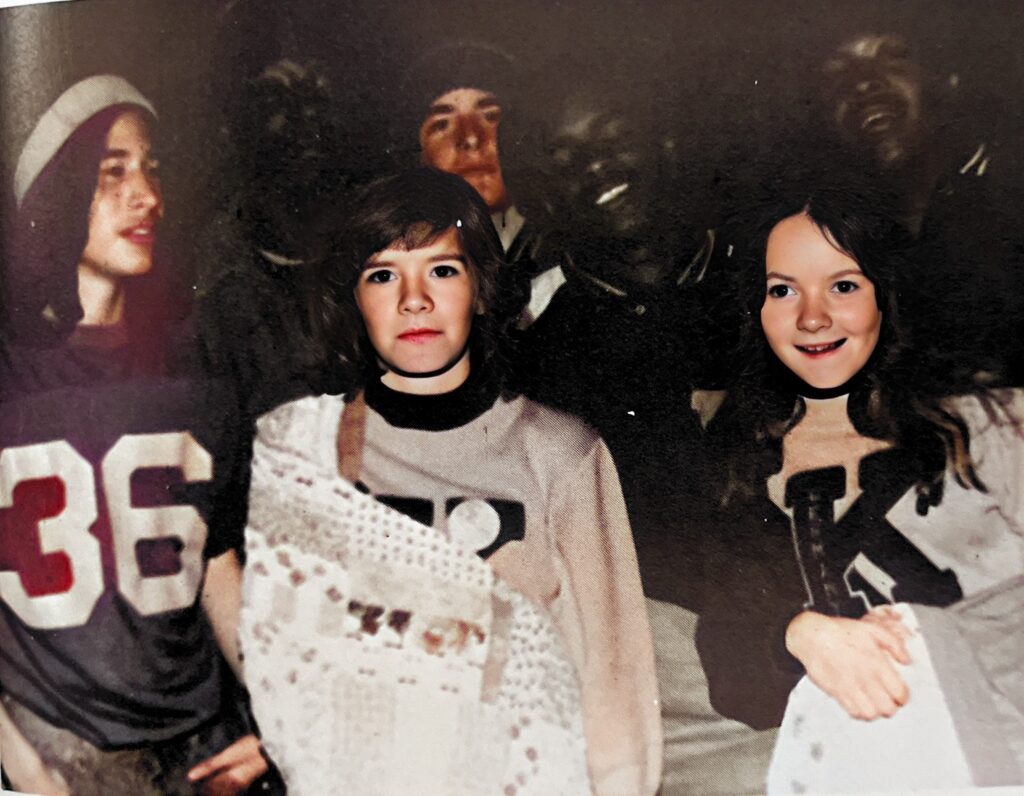
My first crush at Bad Kreuznach was Pauline Shortell (playing the guitar, and bottom right with the cheerleading squad), but she left for the States before she noticed me. Then sometime later, came Sherrie Sullivan, a sophomore on the cheerleading squad (top left cheerleader). 
My Sister Diana Remained in Mannheim, but Visited

During my first semester at Bad Kreuznach, Diana was staying with the Colonel Roddy’s Family (right next to Colonel Bell’s quarters) in Mannheim. So, my father picked her up often and brought her home for weekends when she wasn’t cheerleading or otherwise busy.
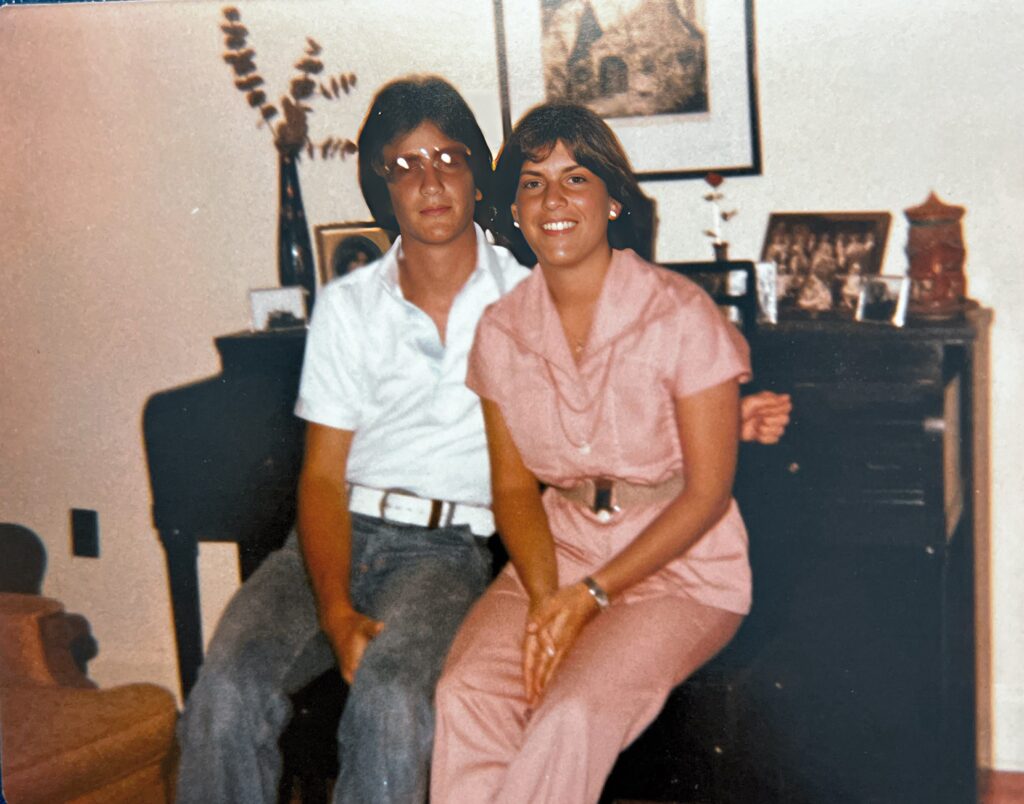
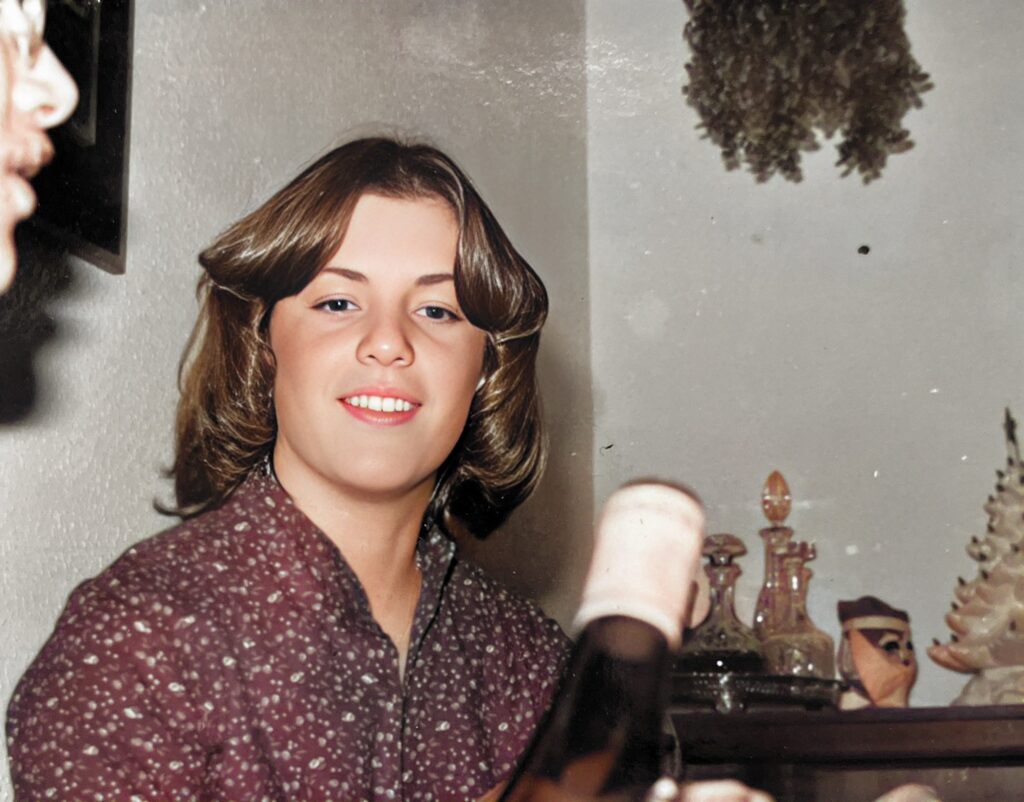
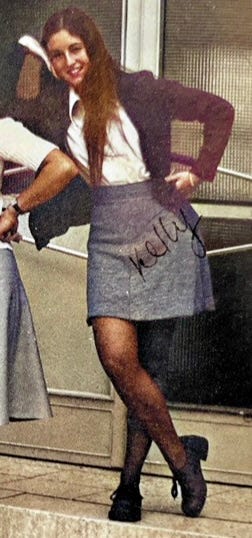
My sister Diana and Kelly Diest back in Mannheim, Germany.  Typical post housing in the background.

My Sister Lynne

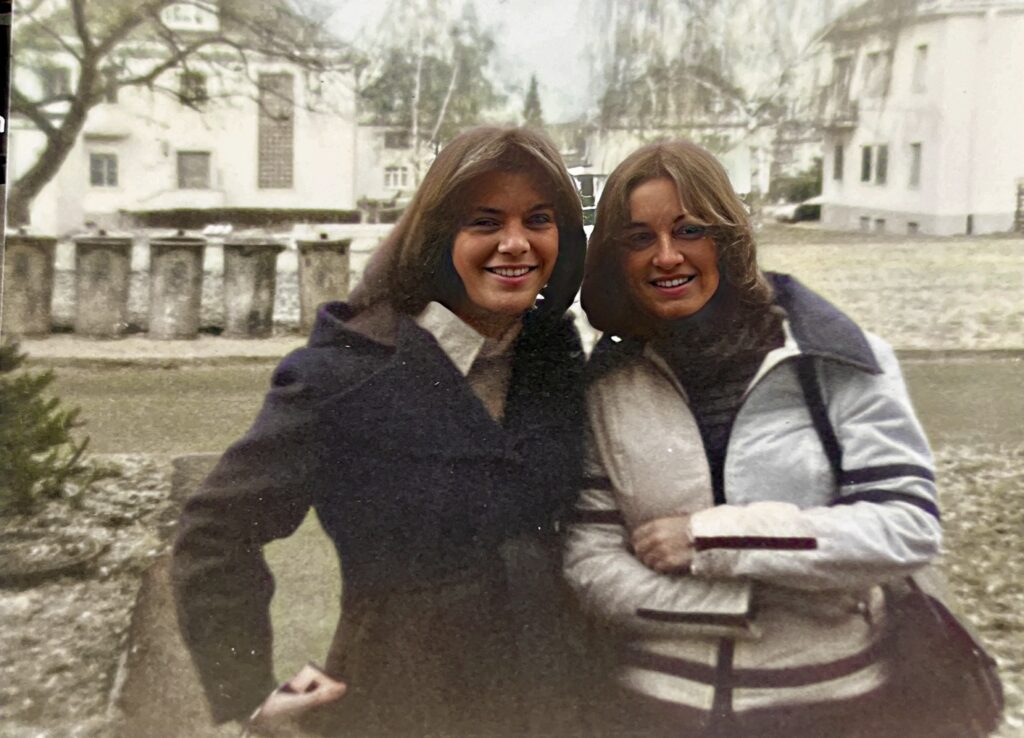
My sister Lynne was going to nursing school at Northeastern in Boston in 1975 to 1980. Besides the fact that Northeastern has a world-renown nursing school, she choose it because it was a 5-year program with co-op periods where she worked as a student nurse and was paid.
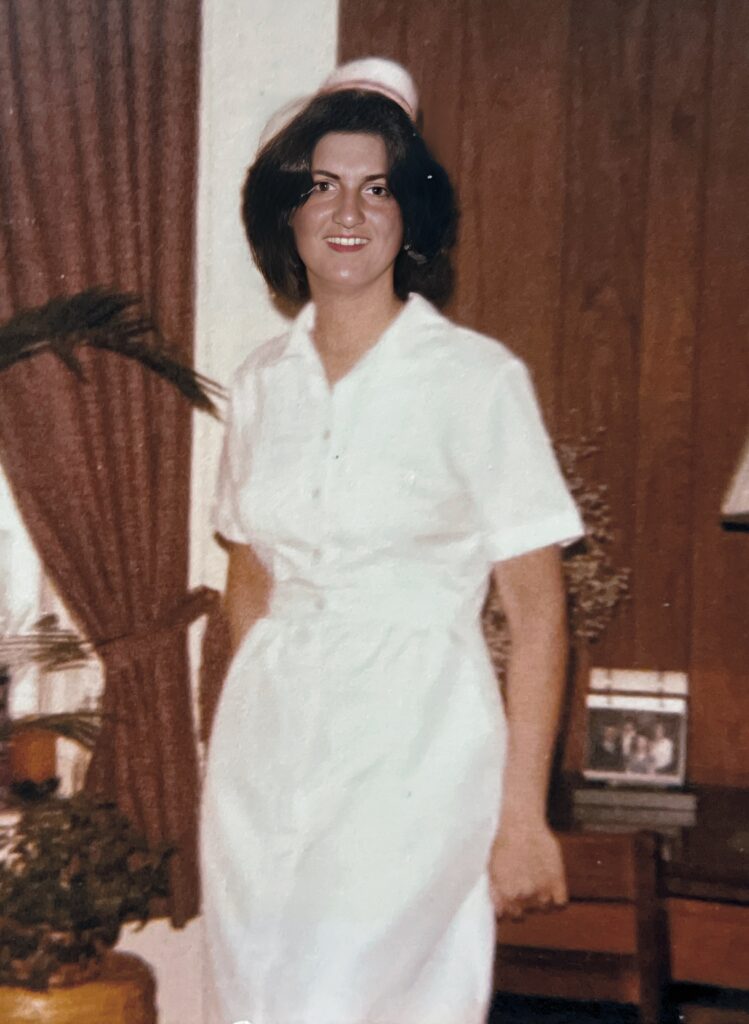
My oldest sister Lynne at Northeastern School of Nursing in Boston.  BIography of Dr. Anthony J. Carbone.

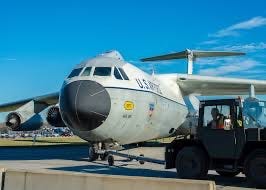
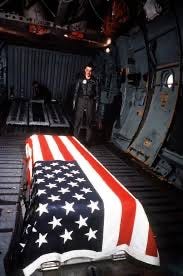
She couldn’t visit us often, but when she did, it was an adventure. She would sometimes have to fly Space-Available on a U.S. Air Force C-141 Starlifter in the cargo hold with soldiers, and often with American flag draped metal caskets. The only consolation, was that when Lynne finally made it back to Bad Kreuznach, she dated the Commanding General’s son, Gary Cleland.
My First Formal at Bad Kreuznach

For my very first dance at Bad Kreuznach, I actually invited Diana up from Mannheim to be my date. She was attractive and charming, and everyone at the dance assumed she was my girlfriend — which had both advantages and drawbacks. On the one hand, it gave me some social credibility; on the other, people thought I was taken.

Debbie Bell in Bad Kreuznach

Then, for Spring Homecoming, Jeff’s sister Debbie Bell did me a huge favor by traveling to Bad Kreuznach to be my date. Debbie was beautiful — and importantly, not a blood relative — which helped spark my actual romantic life at BK.
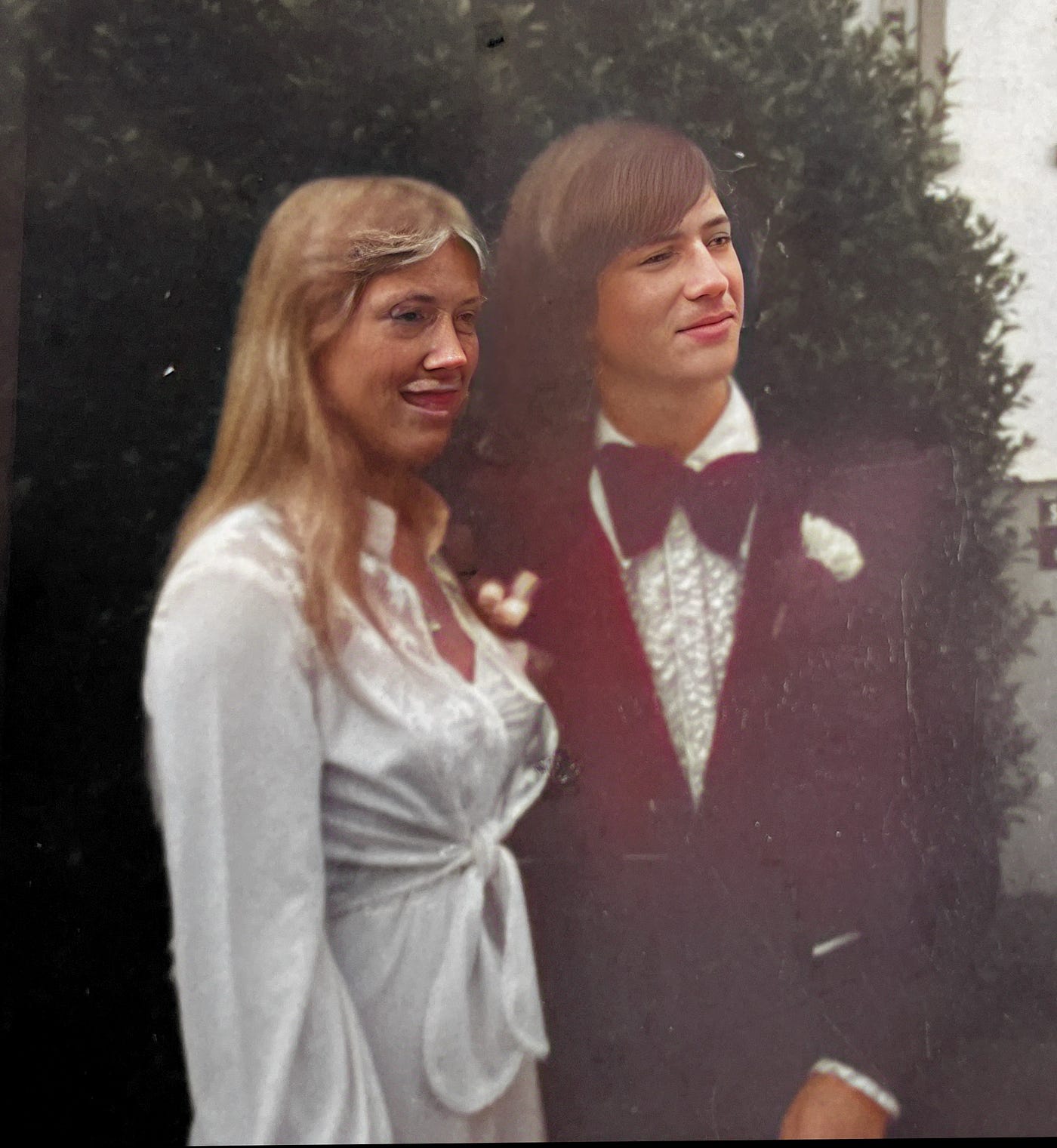
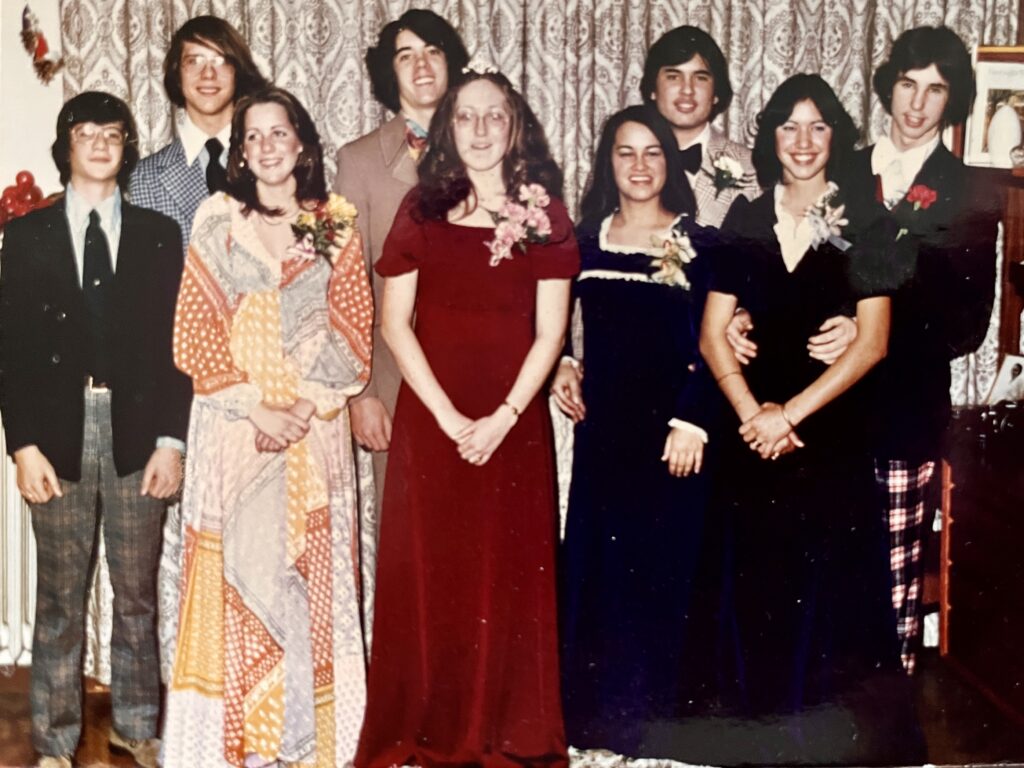
Debbie Bell was my date for my first formal dance at Bad Kreuznach.

Part of the autobiography of Dr. Anthony J. Carbone, Son in the Shadow of a Green Beret Hero.
Debbie Bell was my date for my first formal dance at Bad Kreuznach.

Spring Break in Spain, 1976

In the spring of 1976, while I was living in Bad Kreuznach and my sister Diana was still in Mannheim, she wanted to go on her Senior Class trip to Lloret de Mar, near Barcelona, Spain. My parents wouldn’t let her go without a chaperone, so they volunteered me for the job. The Mannheim seniors traveled by bus all the way from Germany to Spain, and we stayed at the Flamingo Hotel in Lloret de Mar. This hotel was famous among military dependents across Europe as a Spring Break destination.


I was especially excited because Kelly Diest was on the trip with her brother Jack (who was sent as Kelly’s chaperone).
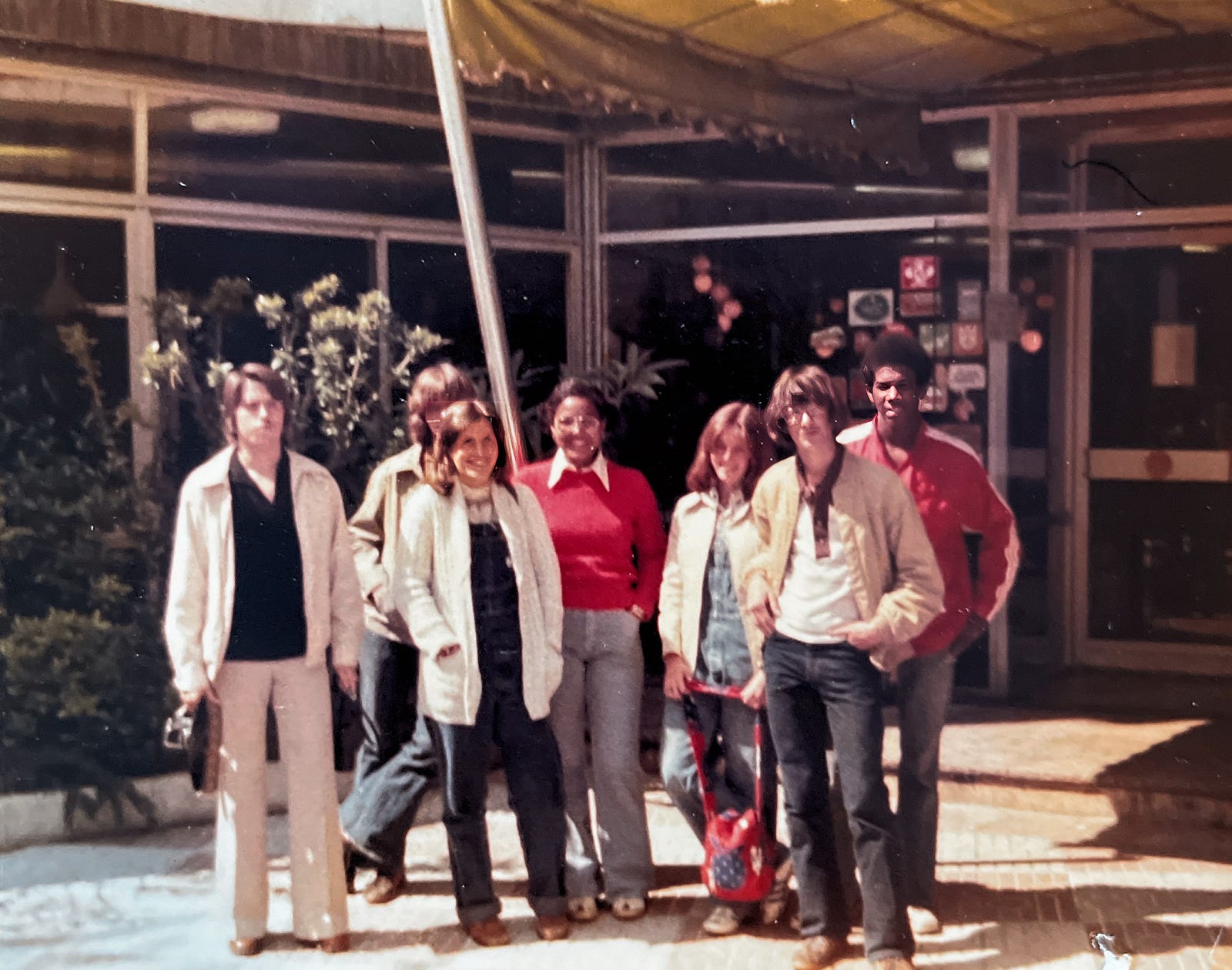
A few of us are standing in front of the Hotel Flamingo. I am in front with a 1976 mop of a haircut. Kelly Diest is to my right. Diana is in the white sweater, and Jack Diest is directly behind her.

The Flamingo included three meals a day, but the food was terrible. On a side trip to Madrid to see a bullfight, the hotel packed us “chicken sandwiches” — except their idea of a chicken sandwich was a roll stuffed with an entire chicken thigh and drumstick, bones still inside, and, to my horror, the leg still had the foot attached. It was revolting.
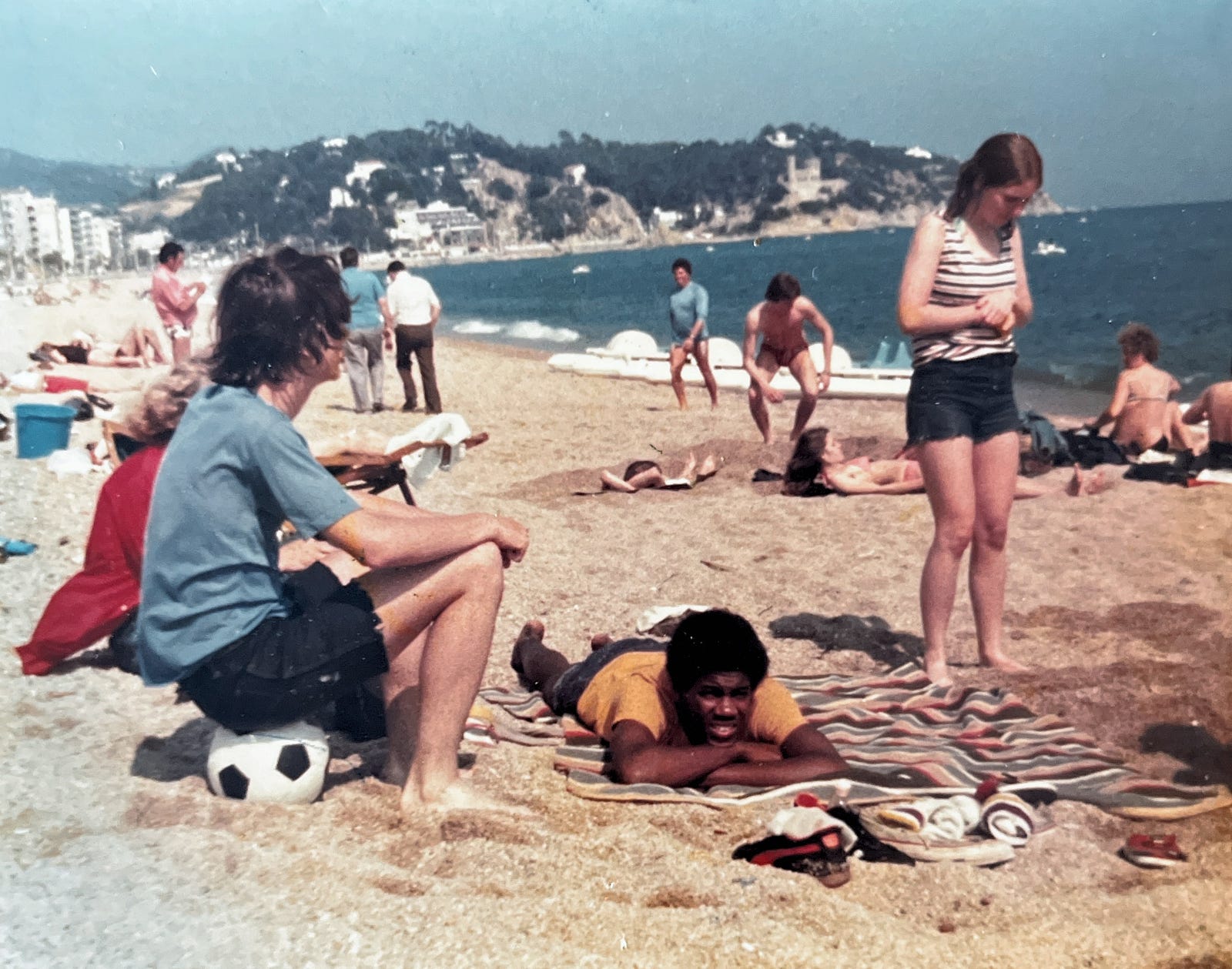
Me sitting on a soccer ball staring at Kelly Diest on the beach in Spain.
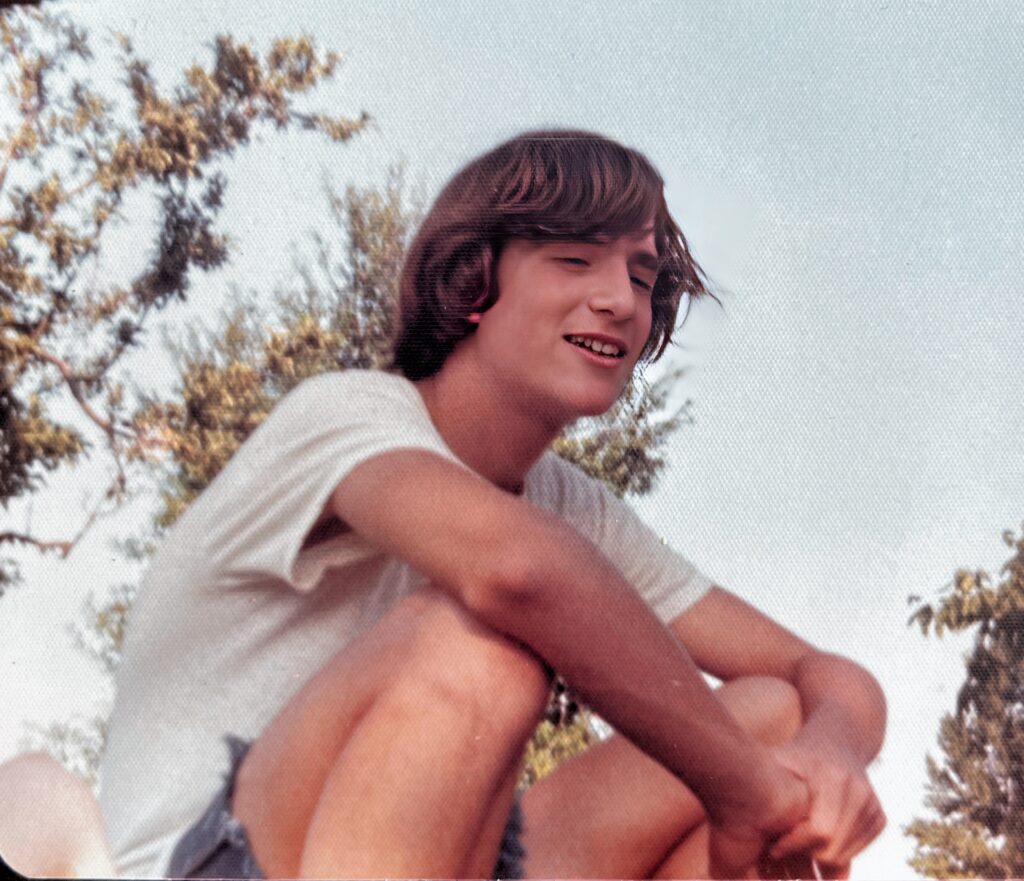
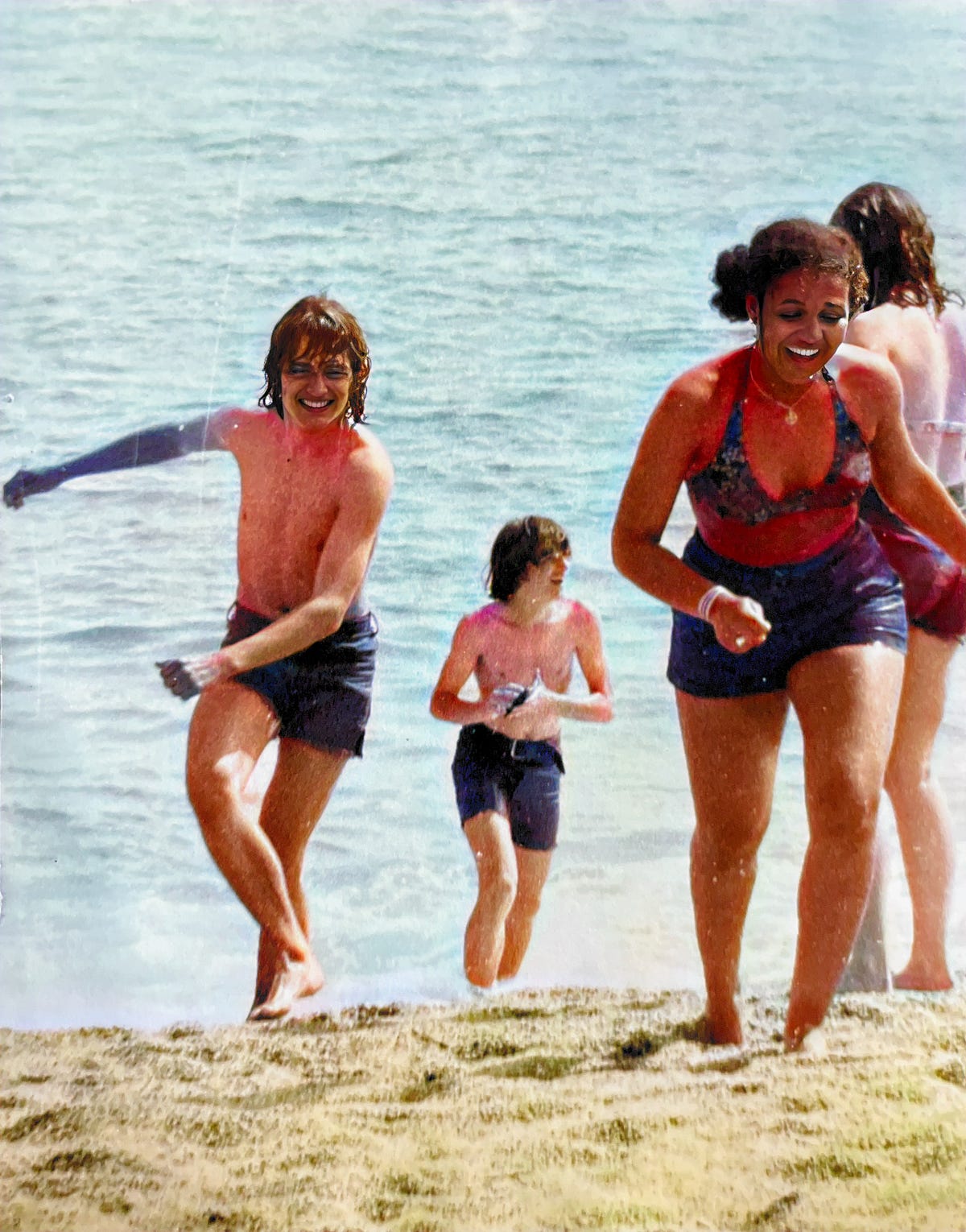
Me coming out of the ocean after being thrown in the water in Lloret de Mar, Spain.

Encounter With Spanish Civil Guard

Bad food aside, the trip was a blast. The hotel sat right on the beach, and we were out there every day. One night, we all went down to the water without realizing the beach was off-limits after dark. Out of nowhere, members of the Spanish Civil Guard appeared, surrounding us with machine guns pointed right at us. Most of our group was half-drunk and mouthing off, and I was certain they’d open fire if one of the Americans got too aggressive.
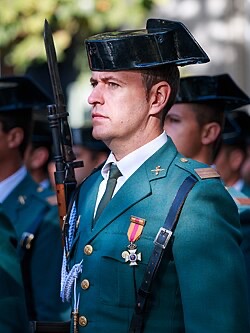
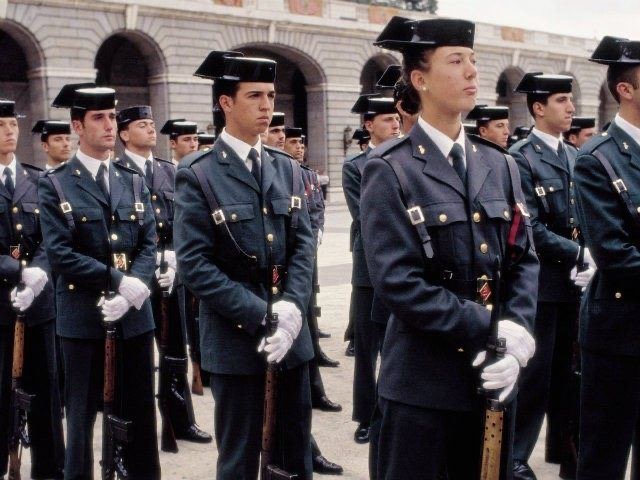
I instinctively stepped in front of Diana, raised my hands, and slowly walked us backward, saying, “We surrender!” The Guards kept yelling “Hotel!” and I replied, “Hotel Flamingo! We go now!” Miraculously, we made it back without incident — and learned that Francisco Franco’s fascist grip on Spain was still very real even a year after his death.

The rest of the week was sun, sand, and 24/7 teenage romance. I was completely smitten with Kelly Diest, but, unfortunately, the feeling wasn’t mutual.

First BK Love–Sherrie Sullivan

Later that year, I developed a crush on Sherrie Sullivan, a varsity cheerleader, and we dated for a while. I was also very close to Debbie Wingfield. After Greg Otte left for the States, there was a strong mutual attraction between us, but neither of us could come to terms with what felt like disloyalty to a good friend, so we kept it at friends without benefits.
Varsity Soccer at Bad Kreuznach

Let me tell you a little about my sports experiences at Bad Kreuznach. As I mentioned in the previous chapter, Rudy Glenn had taught me to play soccer in Mannheim, and I kept improving every year. By senior year, I made the Varsity Soccer Team at Bad Kreuznach and loved every minute of it.
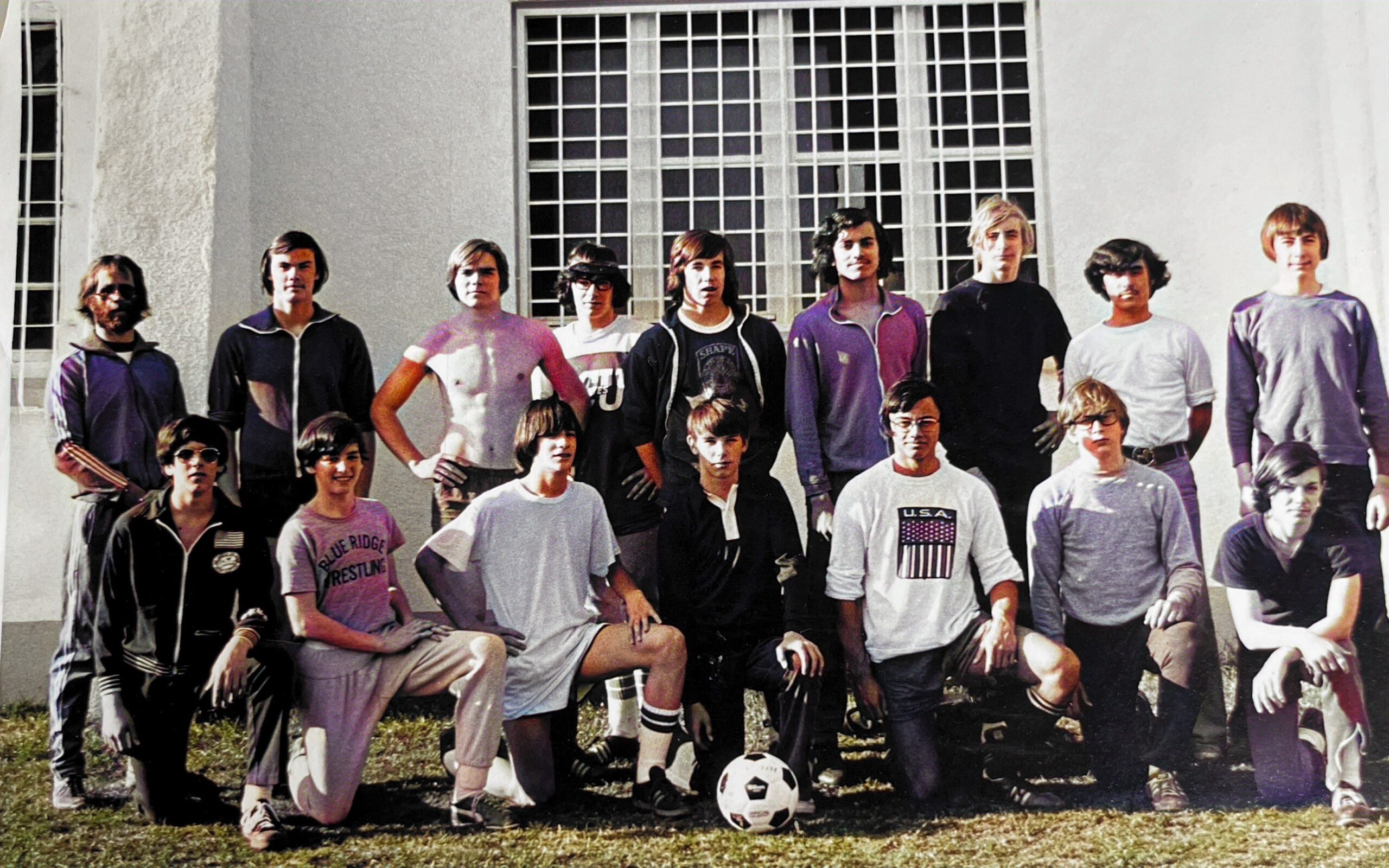
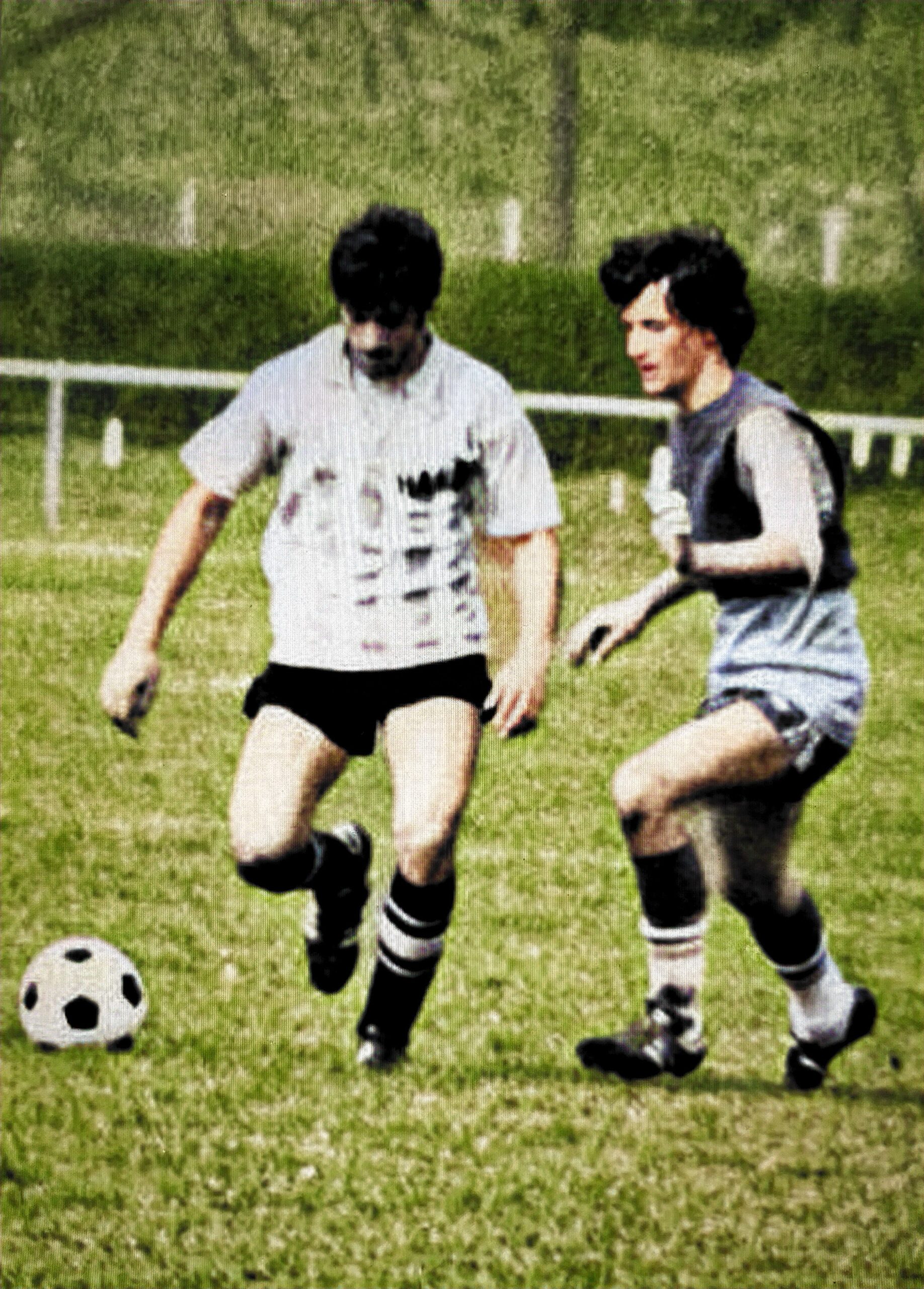
Bad Kreuznach Varsity Soccer Team at Practice

Part of the autobiography of Dr. Anthony J. Carbone, Son in the Shadow of a Green Beret Hero.
Bad Kreuznach Varsity Soccer Team at Practice
Varsity Soccer Co-Captain Tony Carbone

Part of the autobiography of Dr. Anthony J. Carbone, Son in the Shadow of a Green Beret Hero.
Bad Kreuznach American High School Varsity Soccer Co-Captain Tony Carbone

Made the Varisity Football Team

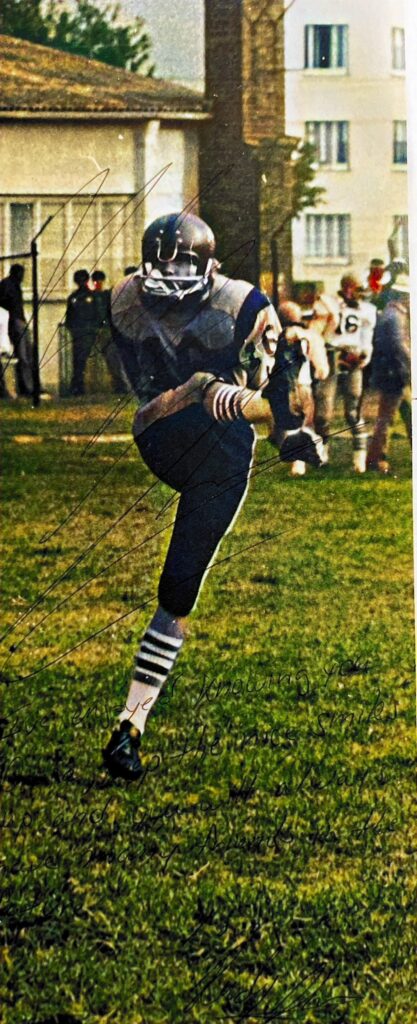
Then came the fall of senior year — football season. My friends, who were already on the team, wanted me to join so we could travel together and hang out more. The problem? I had never played a single day of football in my life. I didn’t even know how to put on the uniform.
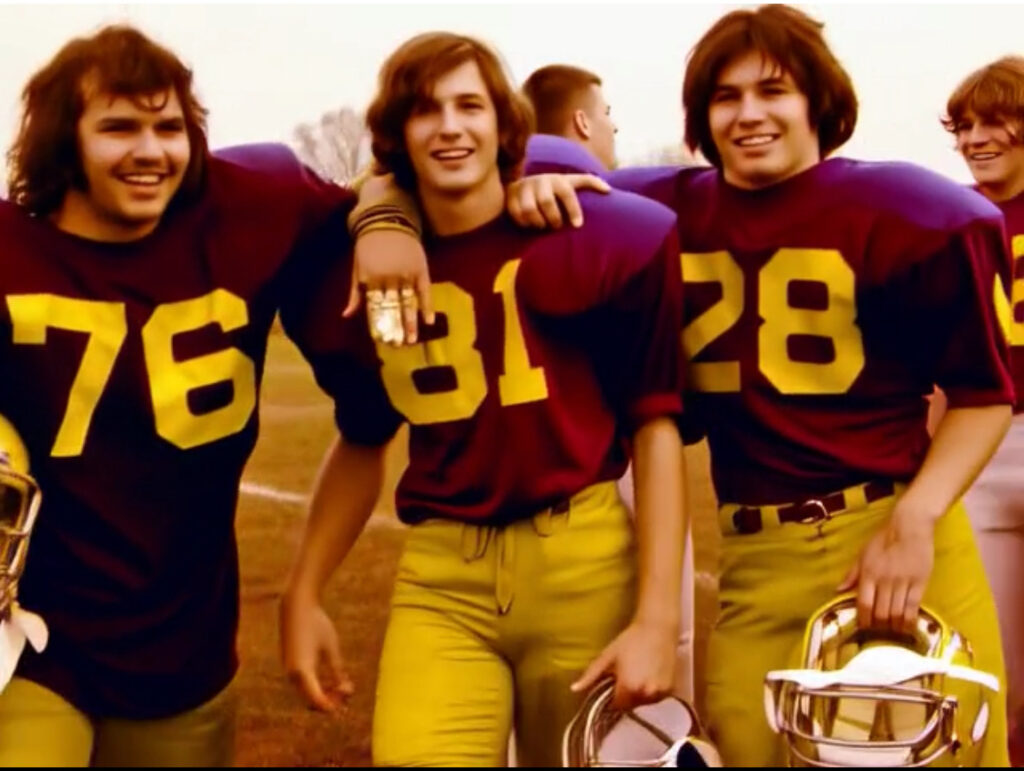
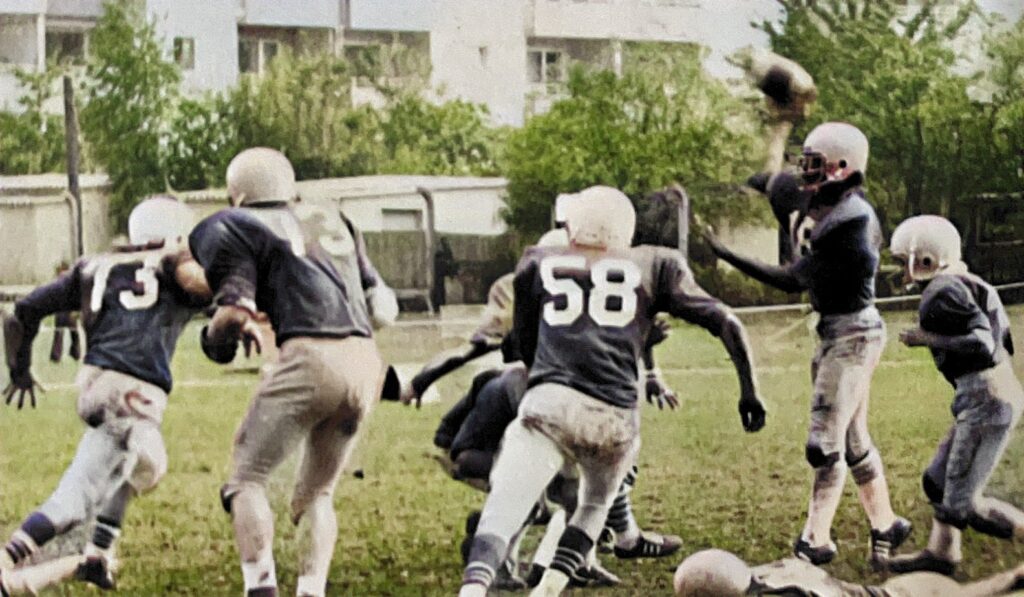
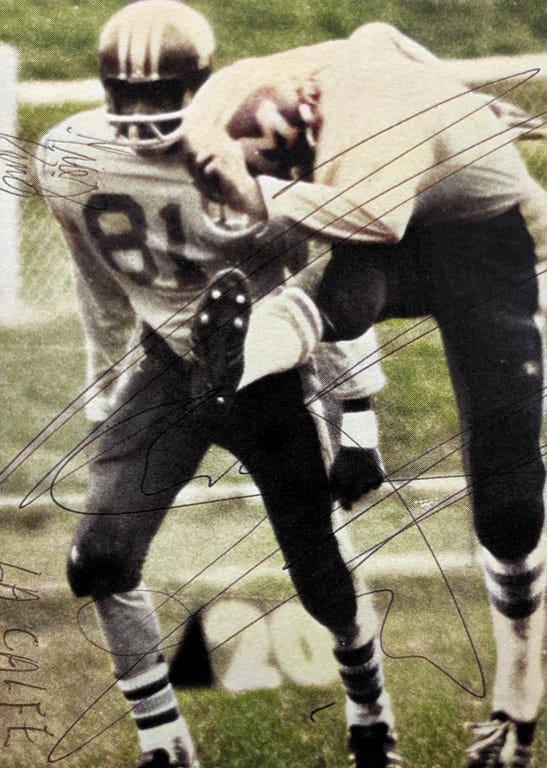
Bad Kreuznach American Varsity Football with Jim Mills #76, Tony Carbone #81, and Greg Otte #28

They taught me everything — starting with how to wear a girdle and pads. At first, they tried me out as a running back because of my speed from soccer. But my small body couldn’t take the hard tackles, and it became clear I’d need a less punishing position. That’s when they turned me into a wide receiver on offense and the safety on defense.

I had to learn how to run routes — and even more importantly, how to catch a football. I wasn’t a starter, so I spent most games standing next to the coach. But when he needed to send a play to the quarterback, he’d look around, spot me, and send me in with the call for our All-Europe quarterback, Jamey Boynton.

Jamey Boynton–All Europe Quarterback
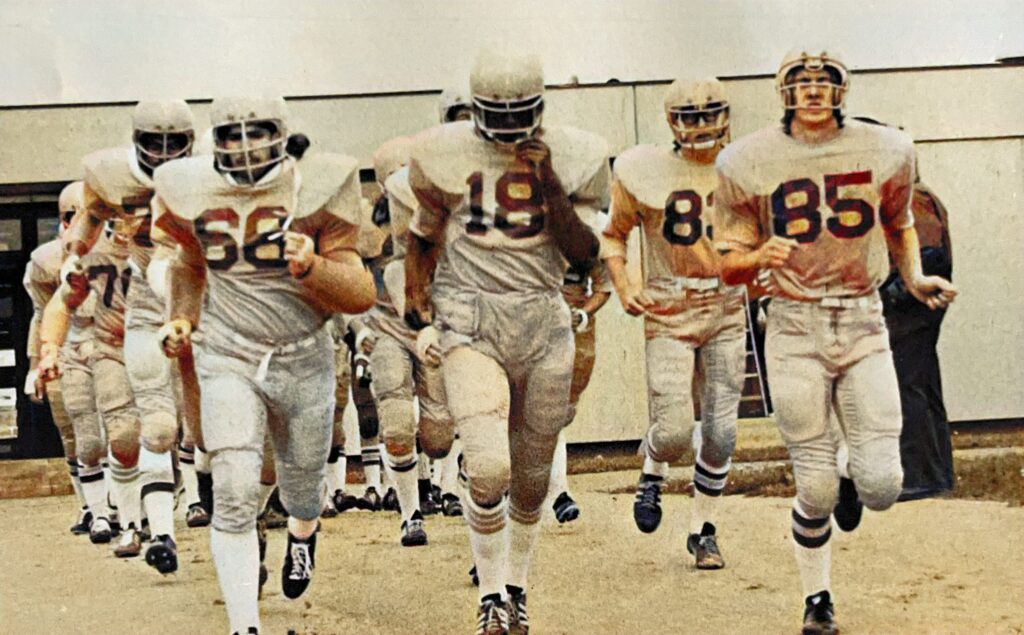
Now, Jamey was one of my good friends — and an incredibly talented QB with a mind of his own. Nearly every time I ran in with a play, he would change it on the spot. He’d send me deep and throw the ball to me. His aim? Unbelievable. He would hit the number “81” on my jersey dead center, over and over. I caught touchdown passes, built my confidence, and eventually earned a starting spot and my Varsity letter. I owe all of that to Jamey Boynton and he led our team on to become European Football Champions in our division.

European Football Champions
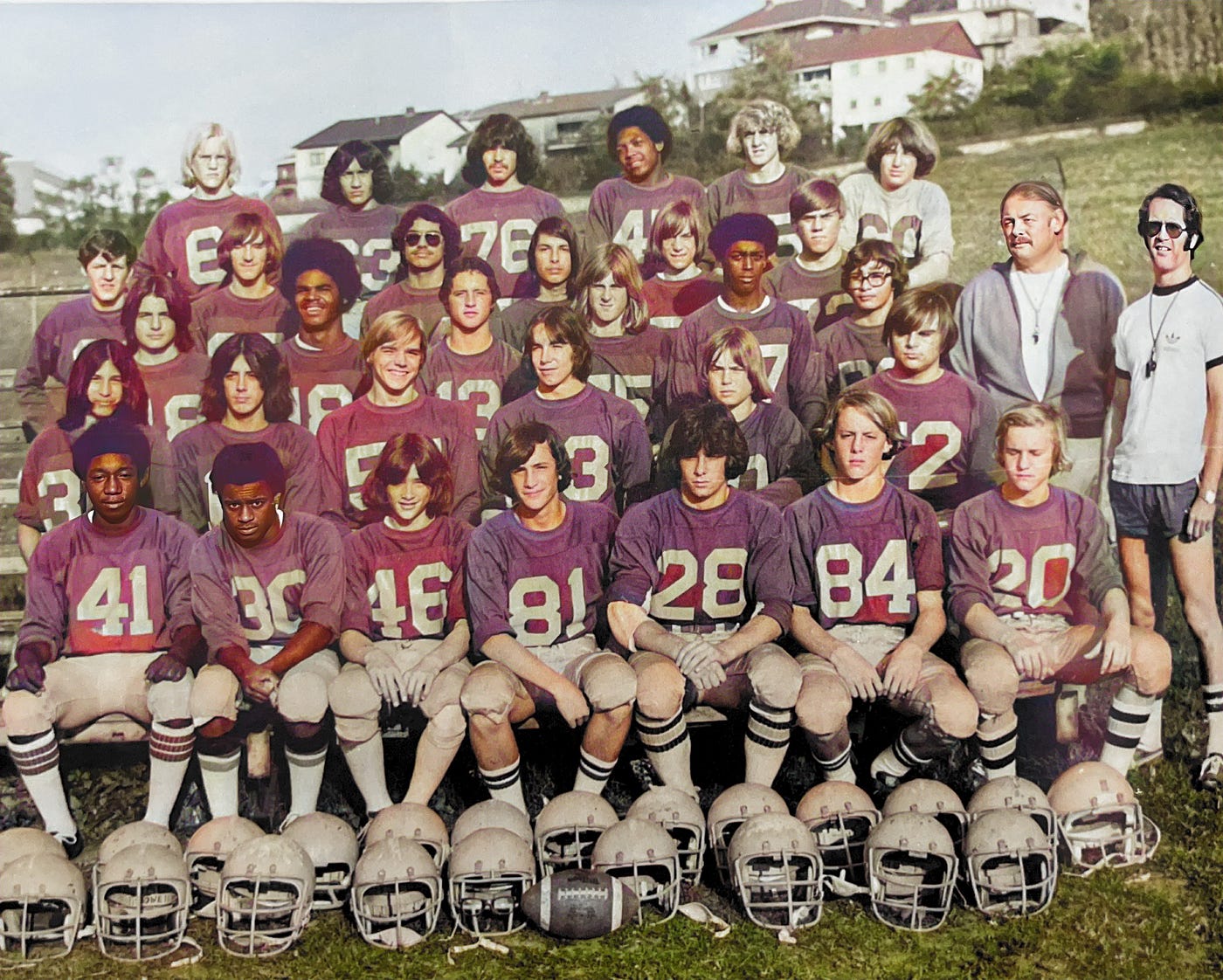
The 1976–1977 Bad Kreuznach Varsity Football Team and DoDDEUR European Champions. (I’m wearing #81, Greg Otte #28, Jim Mills #76, Jamey Boynton)

Part of the autobiography of Dr. Anthony J. Carbone, Son in the Shadow of a Green Beret Hero.
The 1976–1977 Bad Kreuznach Varsity Football Team and DoDDEUR European Champions. (I’m wearing #81, Greg Otte #28, Jim Mills #76, Jamey Boynton)
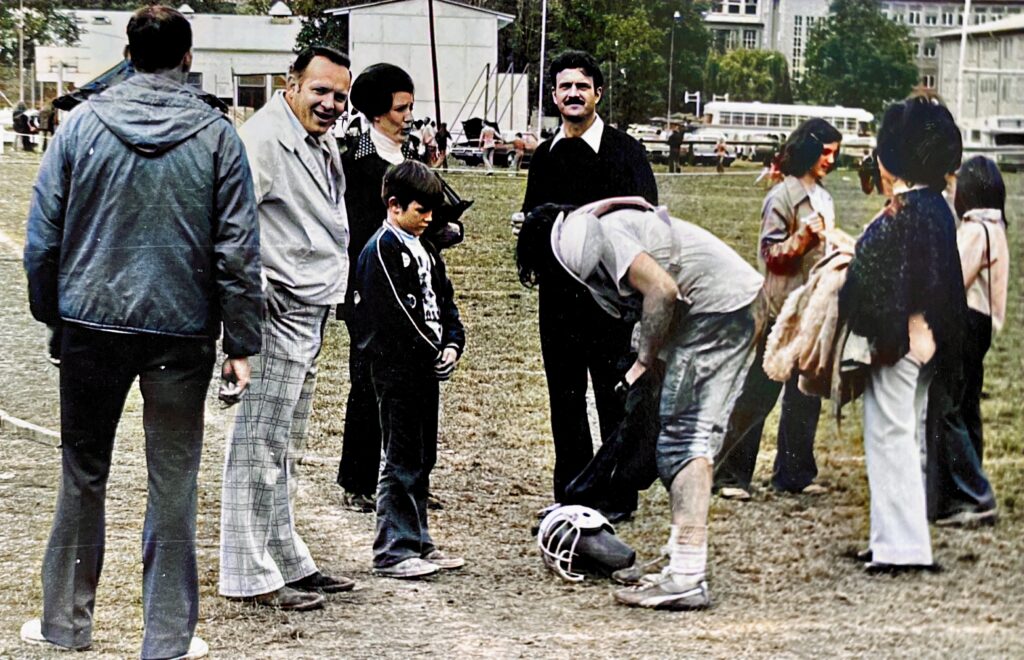
Jim Mills Jr., after a football game at Bad Kreuznach with his parents (Major & Mrs. Mills) and my parents (Colonel & Mrs. Carbone), and my sisters Cynthia and Pamela.

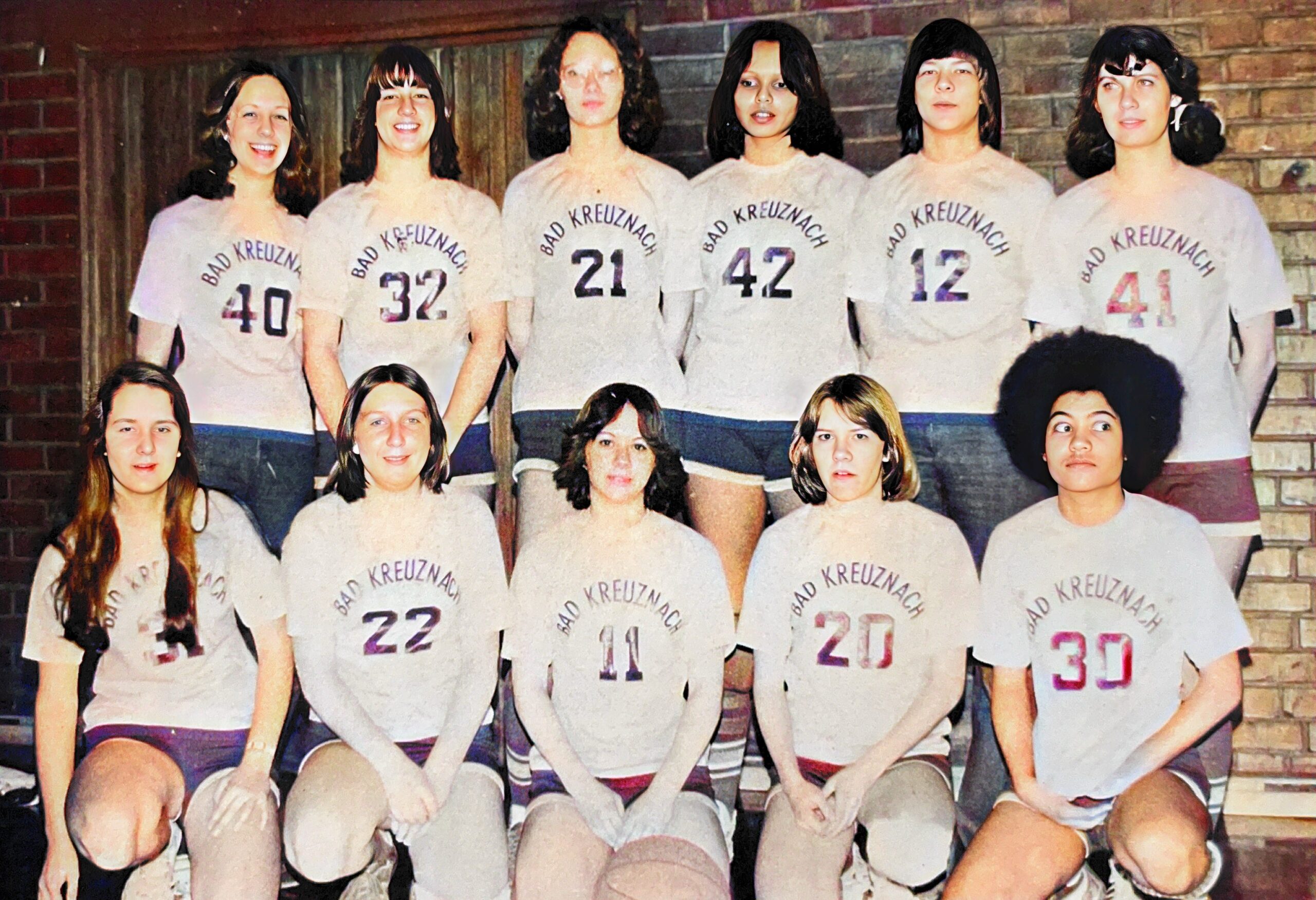
Bad Kreuznach American High School Basketball

In Winter season, I didn’t have a sport, so I was Basketball Manager for both the men’s and women’s Varsity Basketball teams. We didn’t make European championships in basketball, but basketball was filled with tons of road trips across Germany and I was always looking to travel.
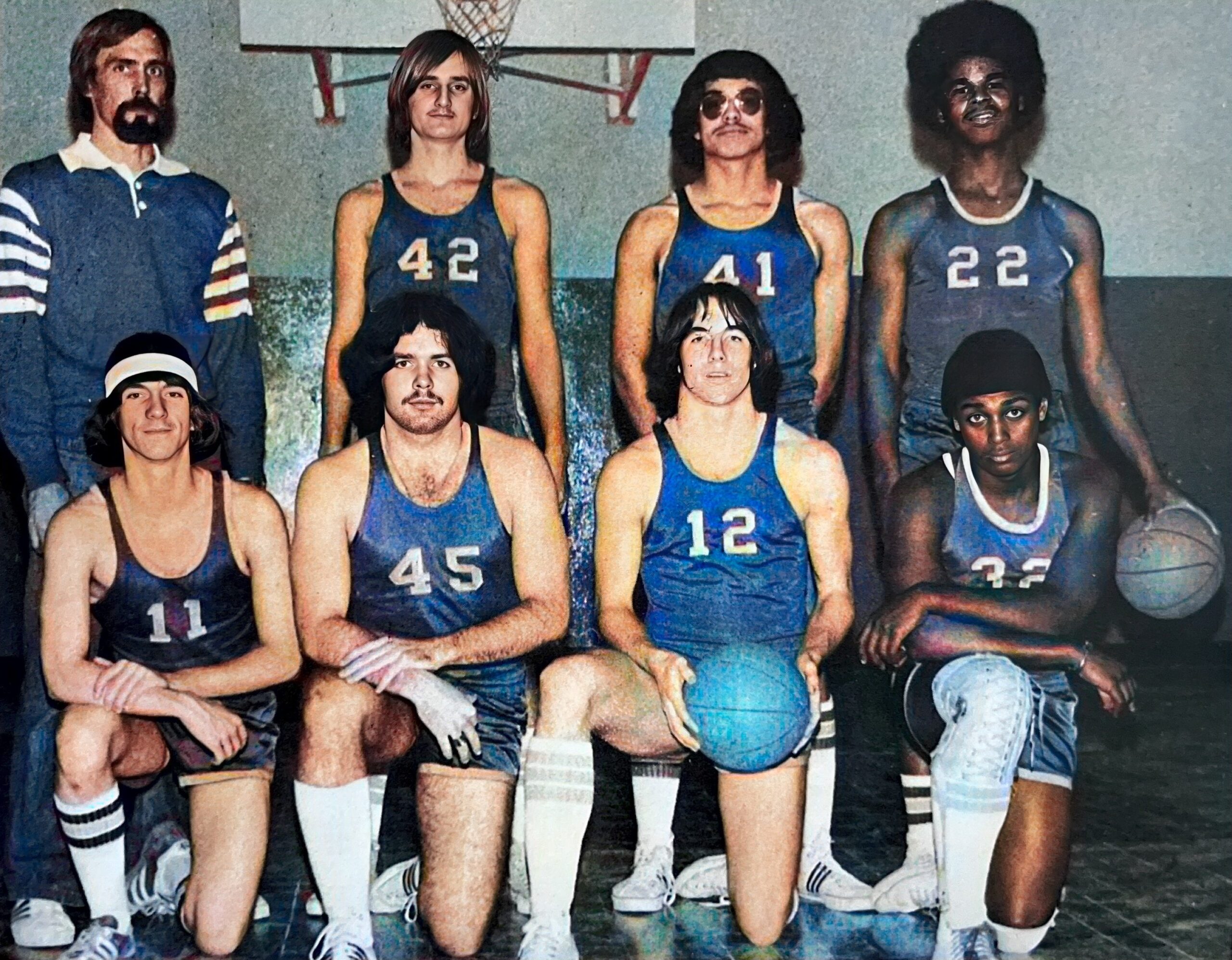
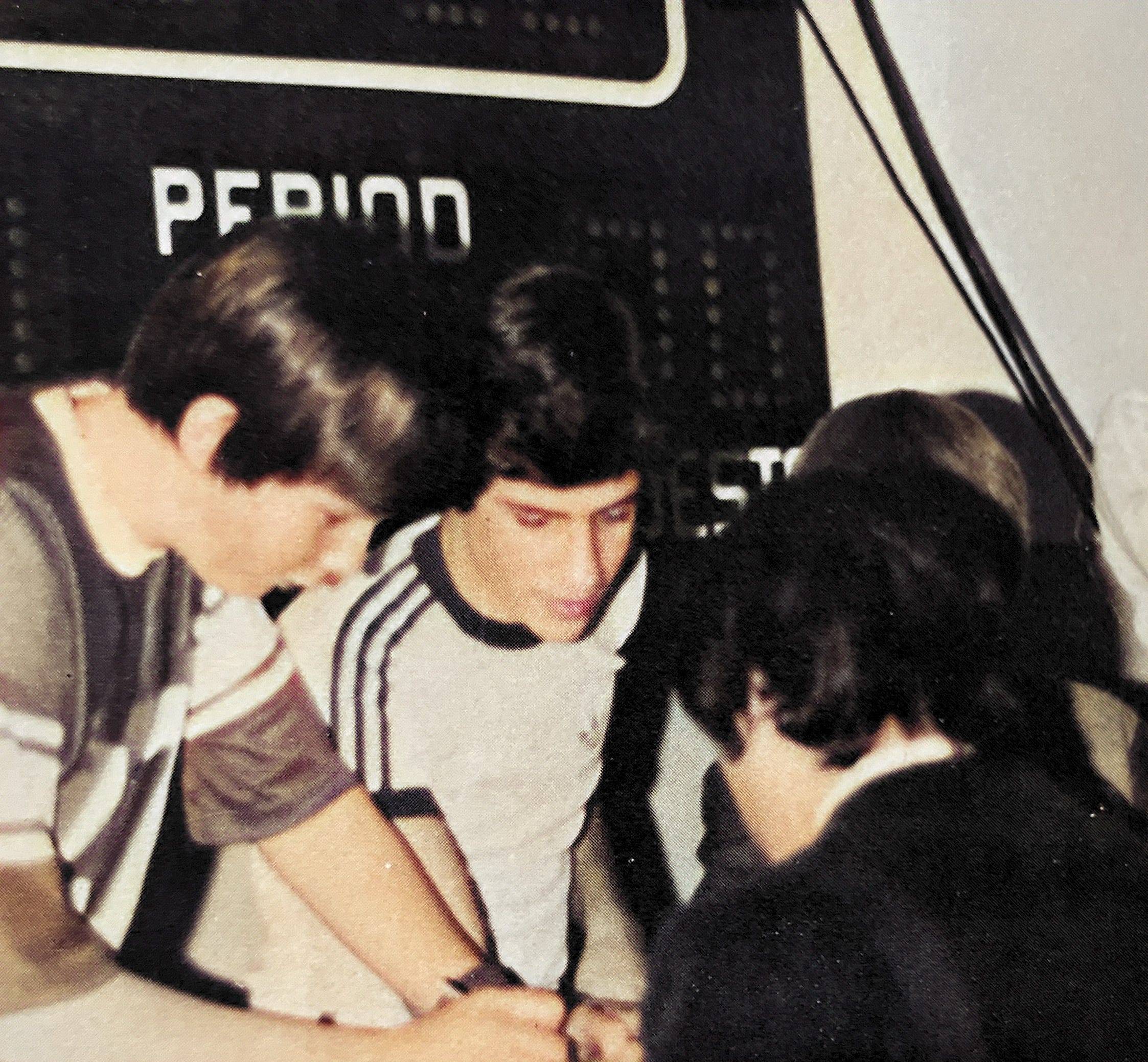
Mens BKAHS Basketball Team

Part of the autobiography of Dr. Anthony J. Carbone, Son in the Shadow of a Green Beret Hero.
Mens BKAHS Basketball Team
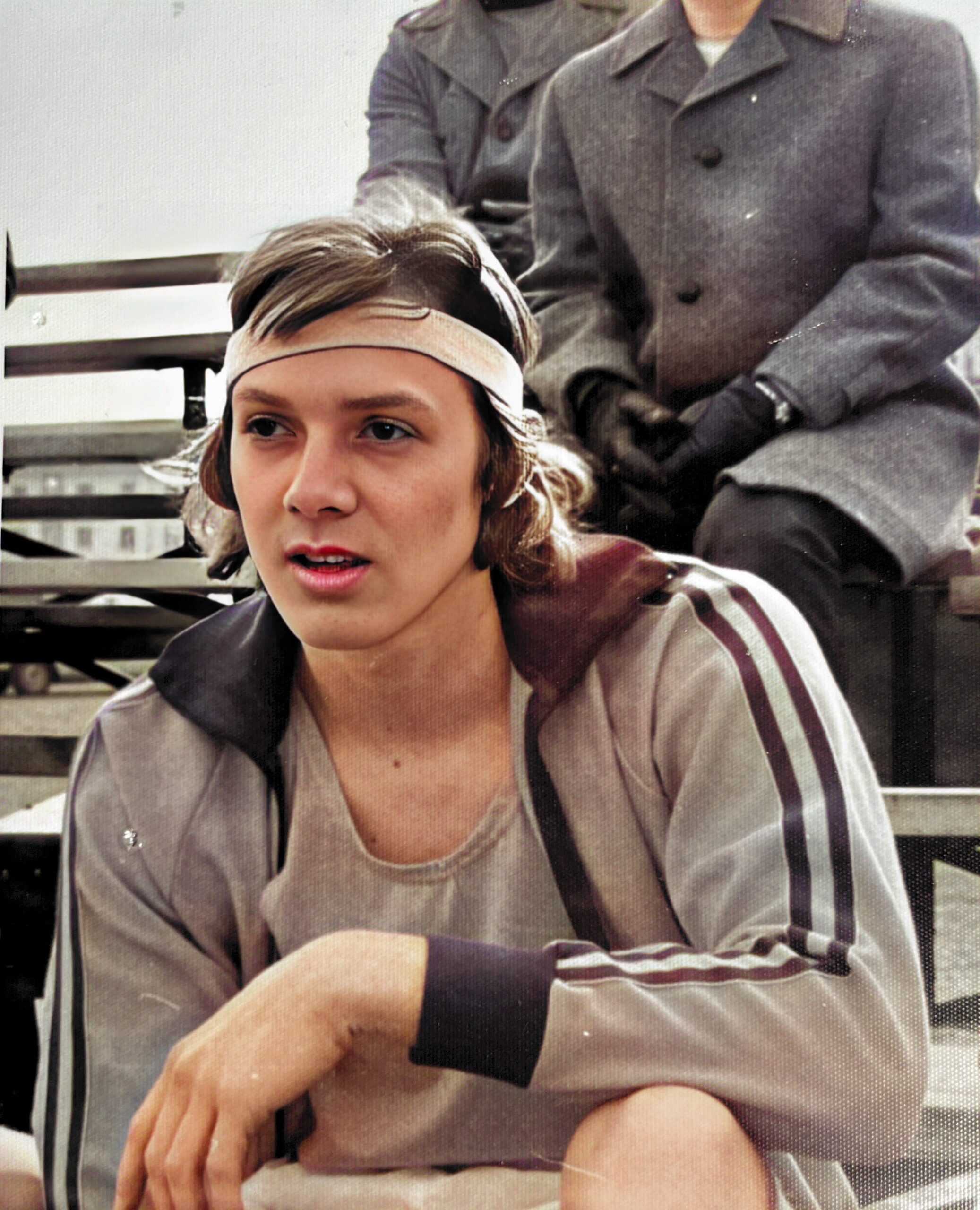
Me in Adidas Shirt Managing Basketball

Part of the autobiography of Dr. Anthony J. Carbone, Son in the Shadow of a Green Beret Hero.
Me in an Adidas Shirt Managing Basketball
Girls Varsity Basketball Teams.

Part of the autobiography of Dr. Anthony J. Carbone, Son in the Shadow of a Green Beret Hero.
Bad Kreuznach American High School Girls Varsity Basketball Teams.

Co-Captain of Varsity Soccer at Bad Kreuznach American High School

Soccer, though — was my game. I was co-captain with Bobbie Fredricks of the Varsity team that would go on to win the European Championship. Wore number 4, in honor of my childhood hero, Boston Bruins defenseman Bobby Orr. I played center halfback — the playmaker of the team — and I ran the entire field, from goal line to goal line, every minute of every game.
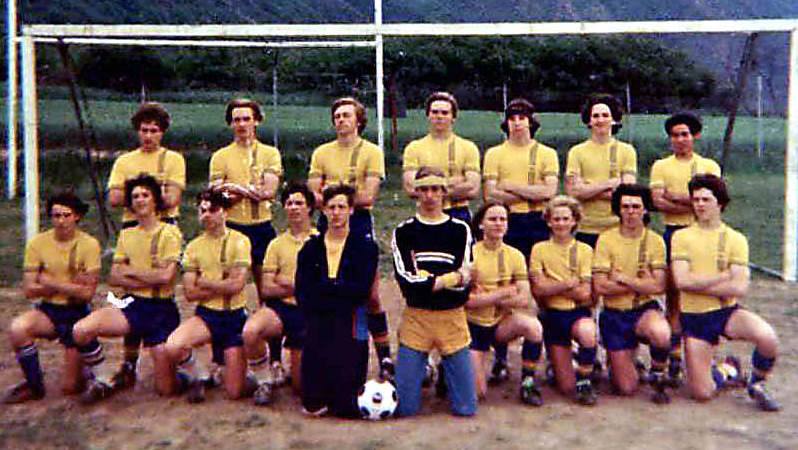
1977 Bad Kreuznach American Varsity Soccer Team and European Champions

Part of the autobiography of Dr. Anthony J. Carbone, Son in the Shadow of a Green Beret Hero.
European Champion Soccer Team, Bad Kreuznach American, 1977

I led the team, but hated the spotlight. I would steal the ball near our goal, pass and move upfield, race toward the opposing keeper, and then — at the last second — I’d pass the ball to Bobbie for the score. The Americans would cheer for Bobbie. But the Germans, who truly understood the game, would run to me and cheer enthusiastically. Bobbie made the Stars & Stripesr newspaper regularly. I rarely got mentioned — but I knew I drove that team to European Champions.
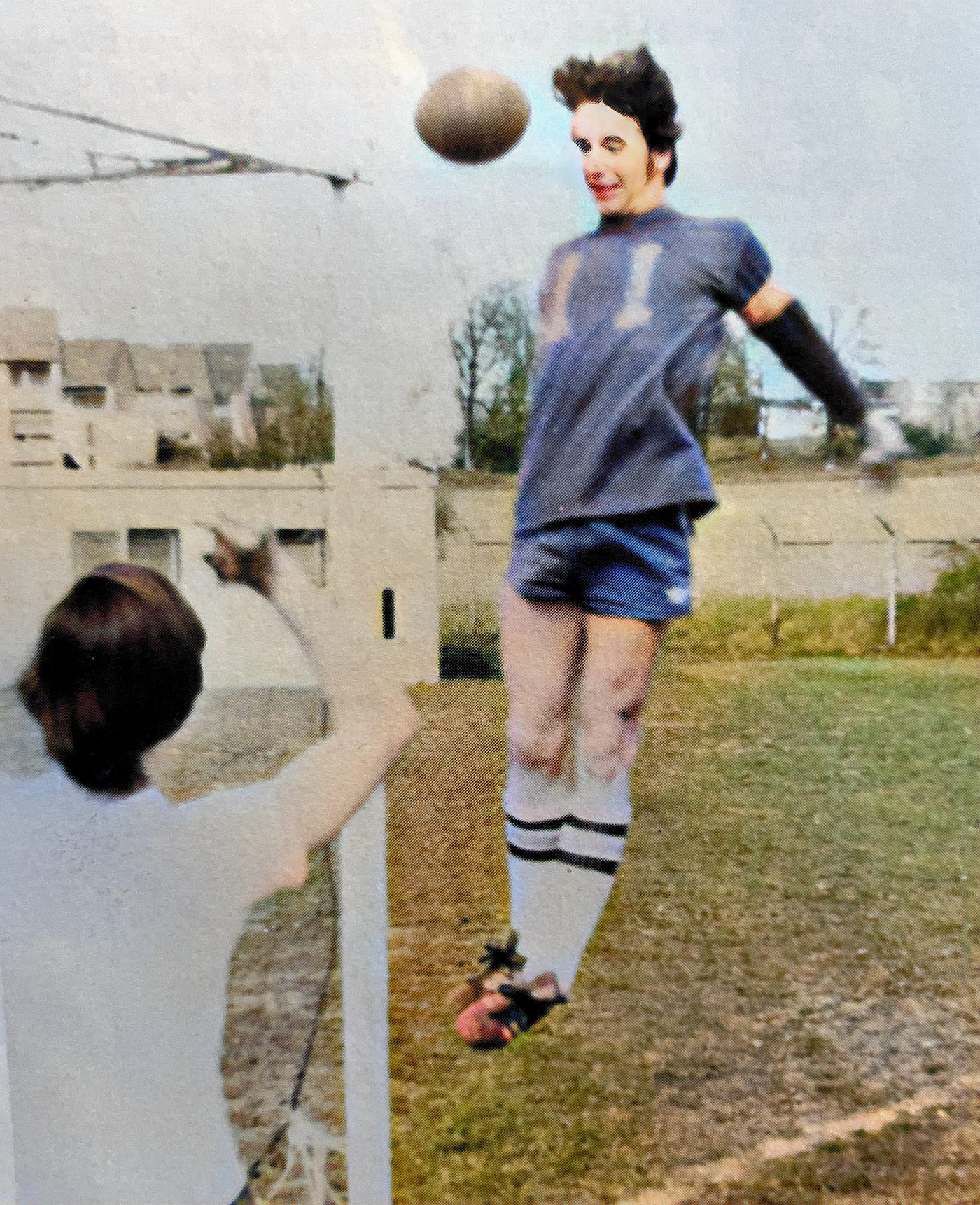
BK Varsity Soccer Co-Captain Bobby Fredricks

Part of the autobiography of Dr. Anthony J. Carbone, Son in the Shadow of a Green Beret Hero.
BK Varsity Soccer Co-Captain Bobby Fredricks

Troop Train Through Soviet Union to West Berlin

One unforgettable game was in Berlin. We had to receive special military orders to ride the Troop Train through East Germany — still part of the Soviet-controlled Eastern Bloc at the time. Soviet officers boarded the train at designated stops and checked our papers. It felt surreal.
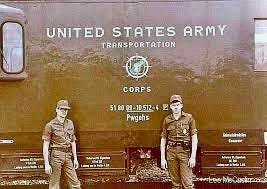
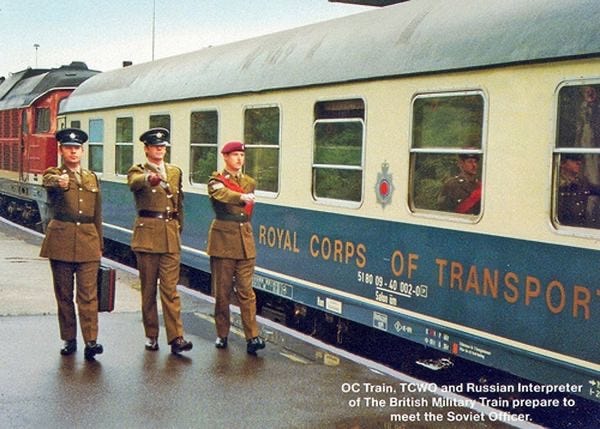
The Berlin Wall and East-West Contrast

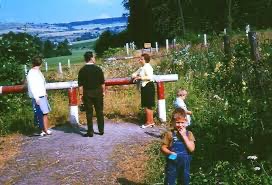
When we reached Berlin, I was struck by how starkly the world divided at the Wall. On one side — West Berlin — was color: parks, flowers, movement, freedom. On the other side — East Berlin — everything was grey. Lifeless. And what stunned me even more was the direction of the machine guns. They weren’t pointed at us in the West. They were turned inward, aimed at their own people. That moment changed me forever. I realized that communism was not just flawed — it was oppressive. And I became determined, right then and there, to serve in the U.S. Army and help stop it from spreading.
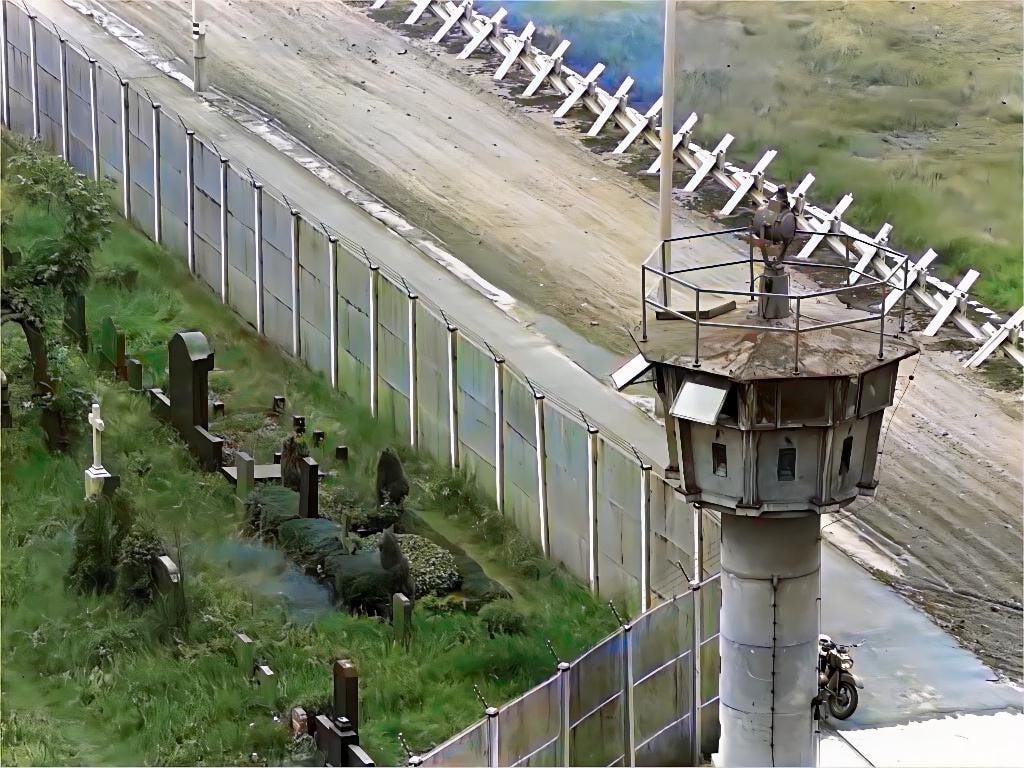
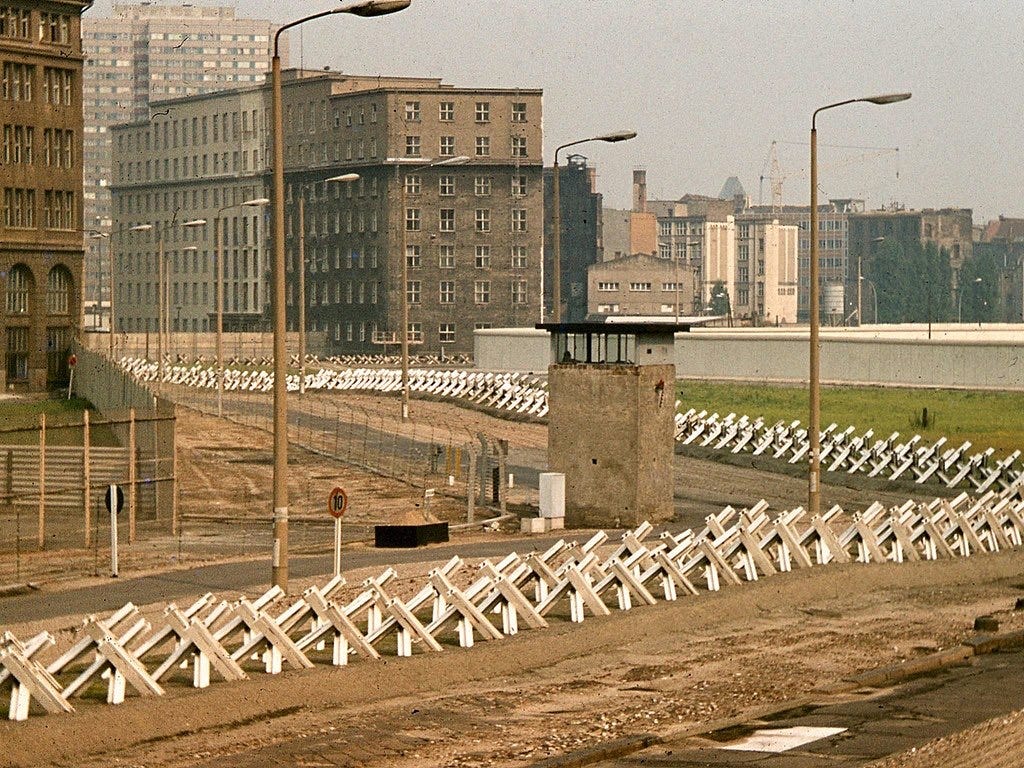
East-West Berlin Border showing how color stopped at Communist Block.

Part of the autobiography of Dr. Anthony J. Carbone, Son in the Shadow of a Green Beret Hero.
East-West Berlin Border showing how the color stopped at the Communist Block.
East-West Berlin Border showing how color stopped at Communist Block.

Part of the autobiography of Dr. Anthony J. Carbone, Son in the Shadow of a Green Beret Hero.
Looking into Soviet East Berlin from the Berlin Wall during the Cold War.

European Champions in Varsity Soccer

Then came the championship game. Bad Kreuznach vs. Munich American for the European title. After regulation, we were tied 2–2. We went to 11-meter penalty kicks. After nine kicks, it was 4–4. I was the tenth shooter. I approached the ball. Looked down. Then up at the upper left corner. Then back down. I ran forward, sold the keeper on a power shot to the top shelf — and then gently rolled the ball along the ground to the opposite bottom corner. Goal! Game over! European Soccer Champions! And for once, even the Americans cheered for me.
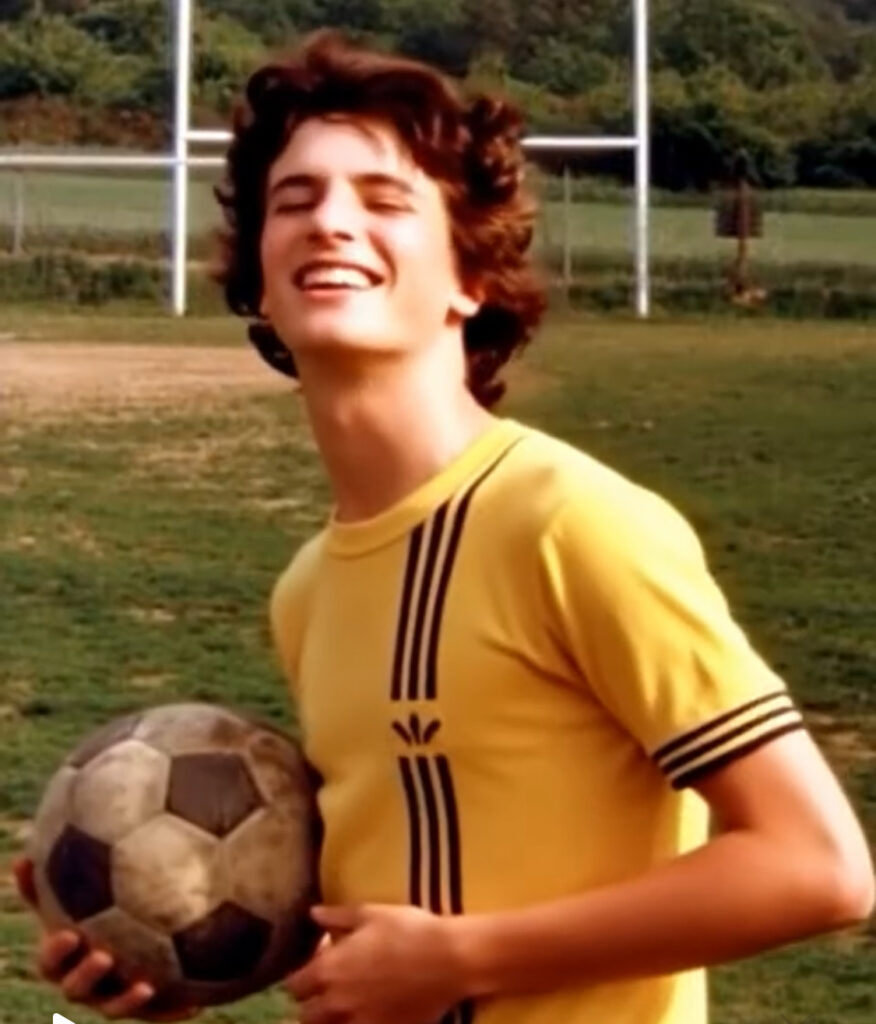
Co-Captain #4 Tony Carbone, European Varsity Soccer Champion 1977

Prom Night on the Rhein

Right after we won the championship game in Munich, we sprinted to the locker room for the fastest showers of our lives, then piled onto the bus for the long ride back to Bad Kreuznach. That night was our Senior Prom, and we couldn’t miss it. Our tuxedos and shoes were stashed on the bus, so as we got closer to the Rhein, the whole team was changing in the aisles, tying bow ties and pulling on jackets while still buzzing from the win.

I hadn’t asked anyone to prom, but Lisa Schlieper — my friend and sparring partner since childhood — asked me, and my mother’s rule was always the same: you either go with the first person who asks, or you don’t go at all. It was a terrible rule, but I abided by it. To make things even more awkward, Lisa had just injured her leg and was stuck in a full cast beneath her prom dress, unable to dance. That hardly mattered to me — I had already burned every ounce of energy in the Munich game.

The prom itself was unforgettable: a moonlit cruise down the Rhein, castles glowing on the hillsides, the river shimmering in the night. And at some point that evening, I had a prom portrait taken with my good friend, Debbie Wingfield — a memory I still treasure.
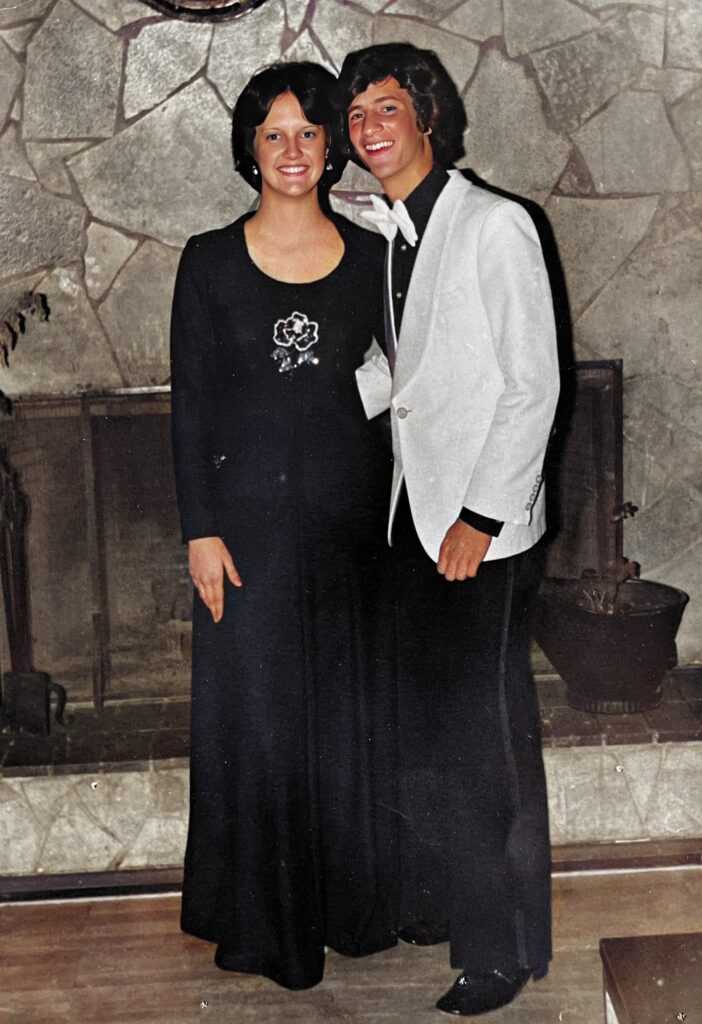
Senior Class President at BKAHS

Outside of sports, I ran the Senior Class. I’d taken over the presidency as a write-in — awkwardly, since my nemesis (albeit good friend) Lisa Schlieper had officially run and lost. She also lost the National Honor Society election to me. I’ve always been an overachiever, but I dislike direct competition. I hated solo performances. I avoided leading roles in school plays. I’m naturally shy, yet oddly confident when leading groups. It’s a strange duality.
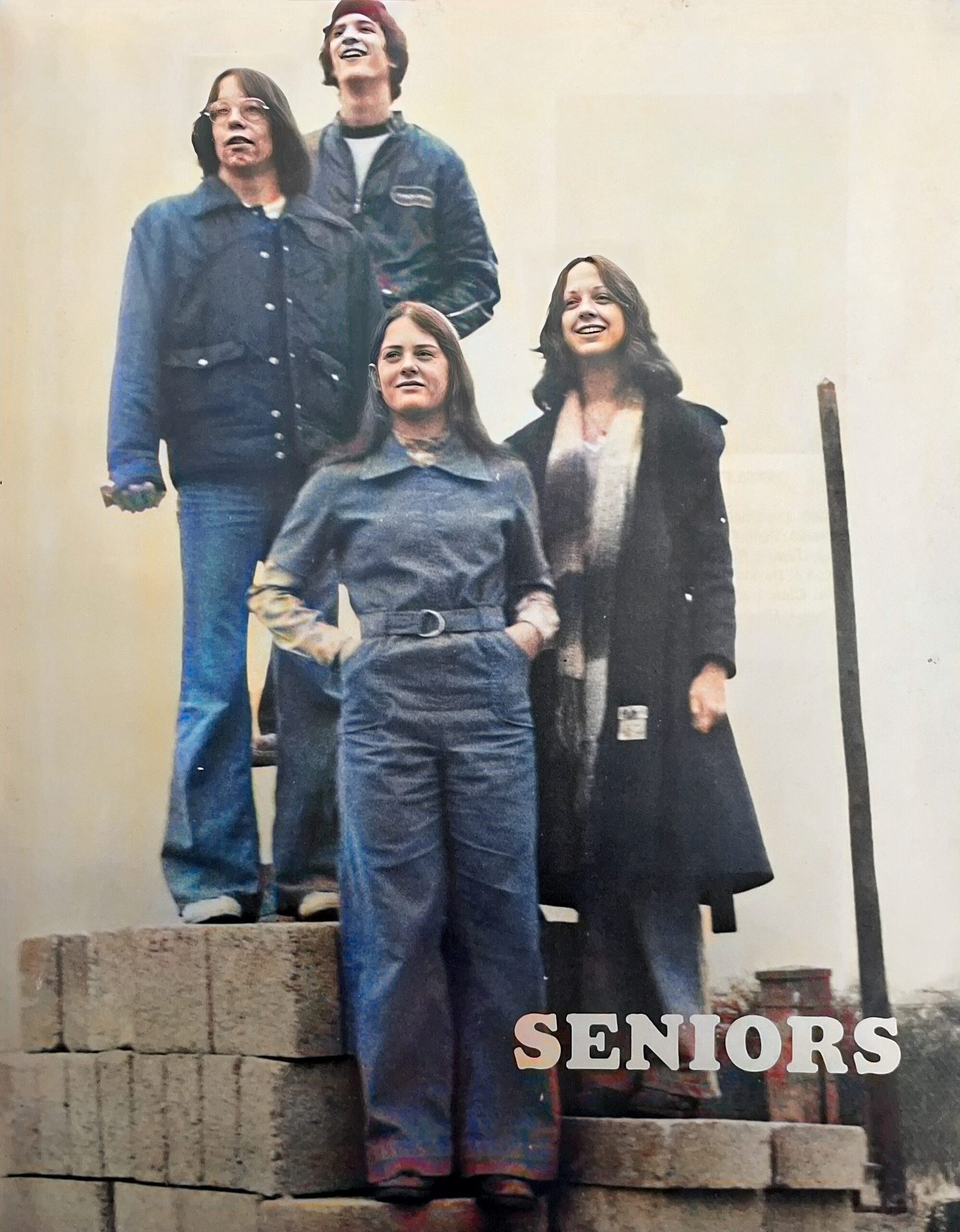
1977 Senior Class Officers for Bad Kreuznach (Top to Bottom: Anthony-President, Bobby Fredricks-VP, Kelly Marks-Sec, & Lisa Helper-Treasurer)

Part of the autobiography of Dr. Anthony J. Carbone, Son in the Shadow of a Green Beret Hero.
1977 Senior Class Officers for Bad Kreuznach (Top to Bottom: Anthony-President, Bobby Fredricks-VP, Kelly Marks-Sec, & Lisa Helper-Treasurer)

When I took over as Senior Class President, I discovered that the Class of 1976 had left us several hundred dollars in debt. I launched fundraisers and found our goldmine in a humble little operation: a snack closet in the student lounge. We sold chips, candy bars, and soda during lunch and made a fortune — hundreds of dollars.
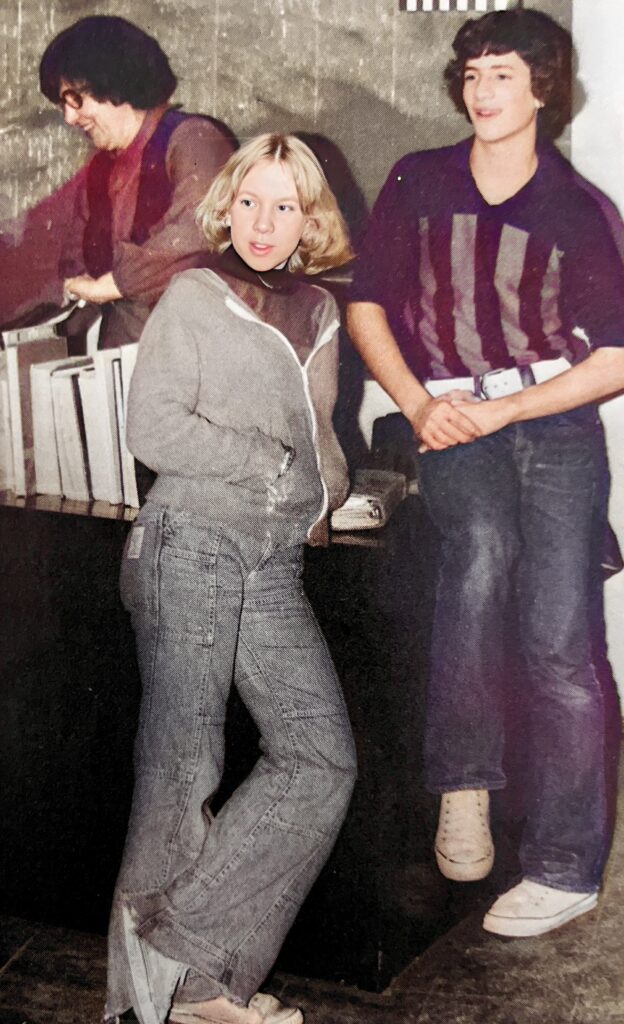
Running a Senior Class meeting as President with ever-helpful Kathy Cramer and our wonderful Faculty Advisor, Claudia Wood

President of National Honor Society

I was also elected President of the Bad Kreuznach American High School Chapter of the National Honor Society.
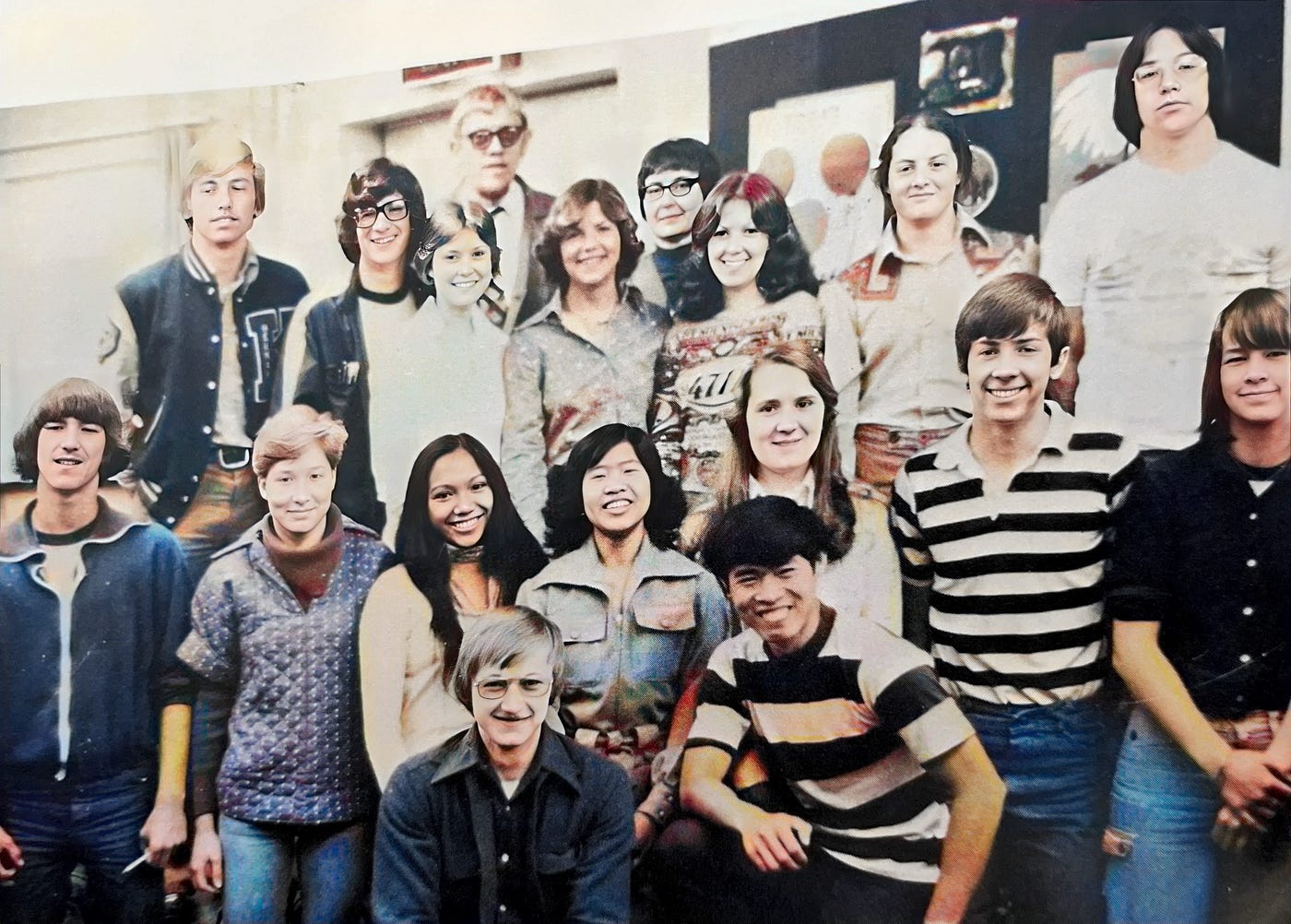
Bad Kreuznach American National Honor Society.  I was President of the Chapter

Part of the autobiography of Dr. Anthony J. Carbone, Son in the Shadow of a Green Beret Hero.
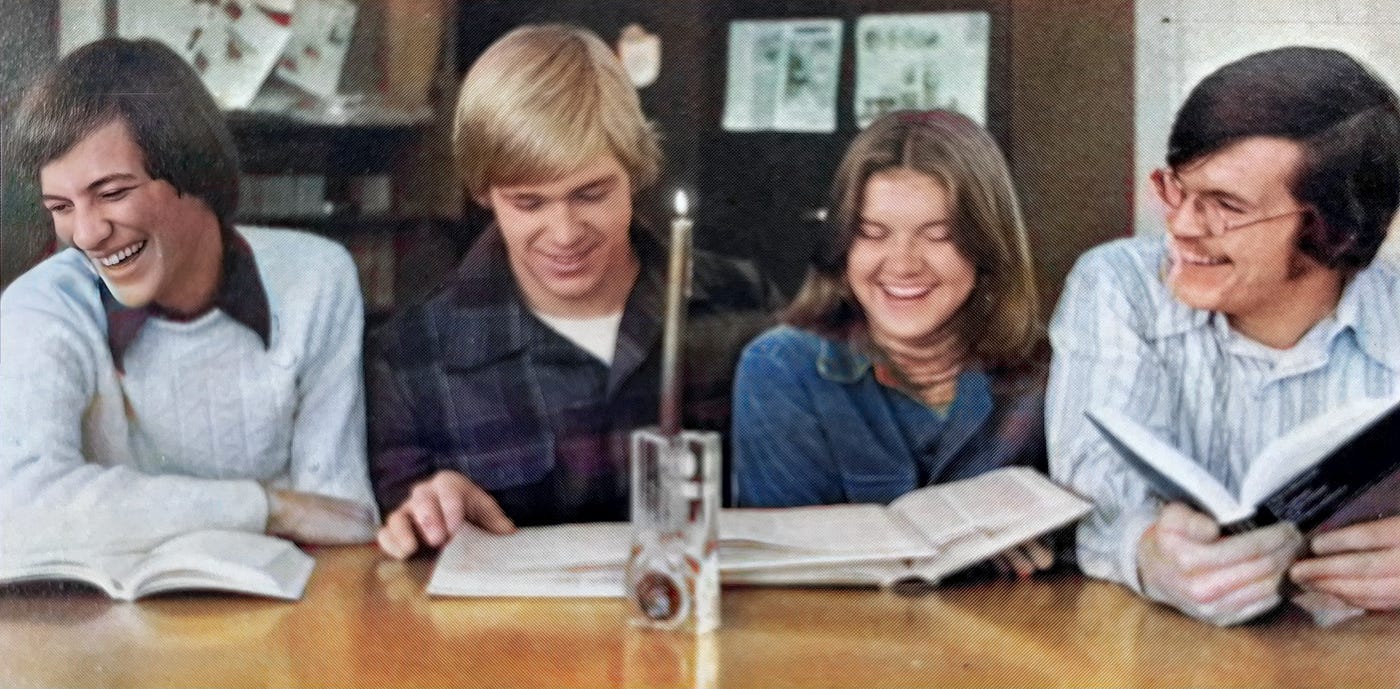
Bad Kreuznach American National Honor Society with the sharpest students in the school.

Army Hospital Mess Hall over School Lunch

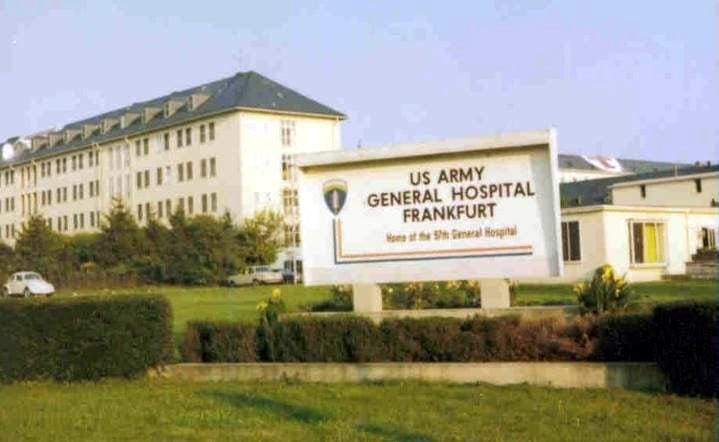
I usually skipped lunch at school anyway. I preferred walking next door to the 56th General Hospital and eating in the Army mess hall. Might be hard to believe, butI loved Army food — meat, potatoes, hot trays. It sure beat soggy peanut butter sandwiches. But I gave up my mess hall meals when soccer practice was extended. Coach McCauley wanted to push practice later. I told him I’d have to quit.
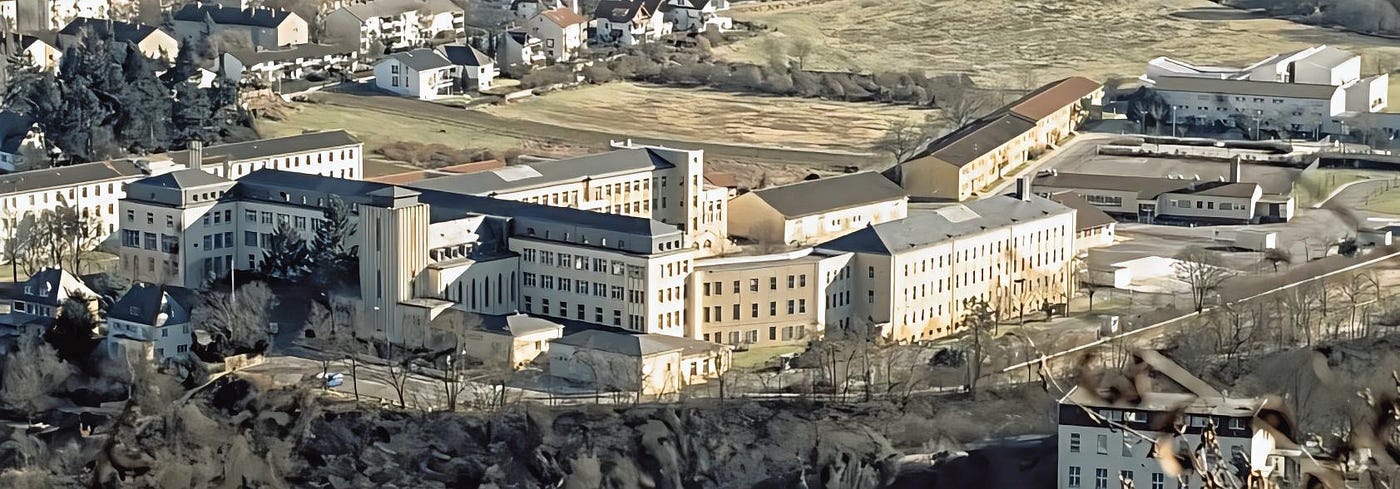
56th US Army General Hospital with Bad Kreuznach American High School (in the upper right corner)

Part of the autobiography of Dr. Anthony J. Carbone, Son in the Shadow of a Green Beret Hero.
56th US Army General Hospital with Bad Kreuznach American High School (in the upper right corner)

Dinner at the Cabones

Dinner was sacred in the Carbone household. We set the table each night with lace tablecloths, candlesticks lit, and casual china from Vietnam. My mother insisted that no condiment bottles be on the table — only crystal dishes. My father would go around and ask, “What did you do for your country today?” He praised improvement, but never perfect performance. He feared pride.
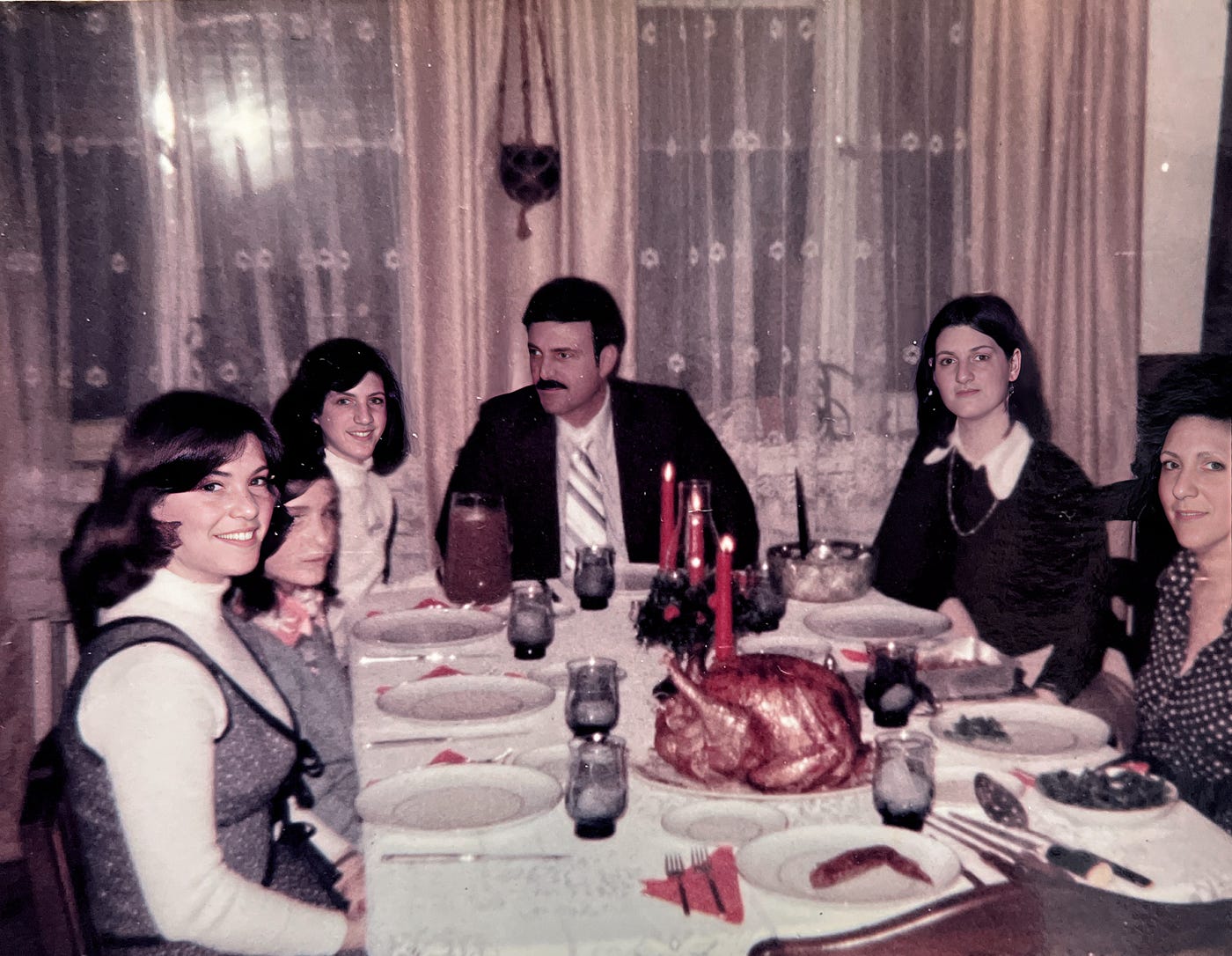
This was a typical setting for the Carbone Family dinner table. Lynne & Diana were home for Christmas.

Part of the autobiography of Dr. Anthony J. Carbone, Son in the Shadow of a Green Beret Hero.
This was a typical setting for the Carbone Family dinner table. Lynne & Diana were home for Christmas.

Authentic German Gummis

And then there was dessert. Every night, Dad turned to Mom: “Ellie Mae, what’s for dessert?” If there was none, he asked for candy. And in Germany, candy meant Haribo gummies — pronounced goo-mee, not gum-mee. He would lay them out in neat columns — one for each of us. When Lynne and Diana were gone, it meant more for the rest.
Coach Wants to Change Soccer Practice Time

So when I told Coach McCauley I couldn’t miss dinner, he thought I was joking. “You’re the co-captain — we’re going to be European Champions!” But I wasn’t joking. He changed practice to our lunch hour. I lost my mess hall meals, but I kept dinner with my family — and we did go on to become European Soccer Champions.

We made enough money from the Snack Shack to pay off the senior class debt, buy brand-new caps and gowns for future graduates, purchase a new color Xerox copier for the administration, and still had money left over to gift to the Class of 1978.

Now to Think About College
And finally, college. I applied to Harvard, MIT, Tufts, and West Point. I got into every school — except Smith College (an all-girls school at the time).

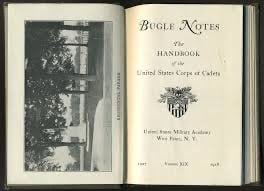
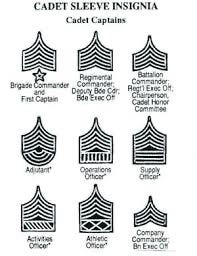
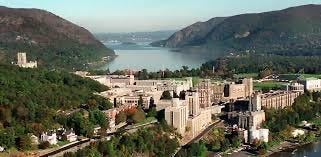
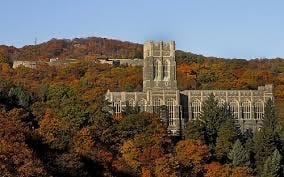
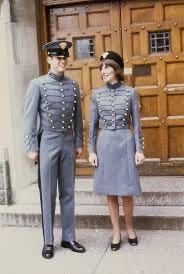
West Point Presidential Nomination, Beast Barracks & Bugle Notes

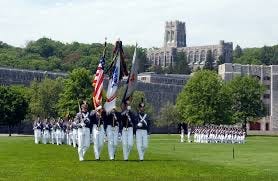
West Point was the first to accept me. I earned a Presidential Nomination. Everyone assumed I’d go. Visiting officers praised me. Cadets warned me about Beast Barracks and the Plebe Bible (Bugle Notes). But I had a secret: I couldn’t memorize. And West Point didn’t offer pre-med.
Turned Down West Point

I was terrified. I talked to my parents. Their response: “Whatever you decide, we’ll support you.” So I turned it down. My father came into my room that night. “You turned down your appointment?” I replied, “Yes, Sir.” He responded quietly, “You know that West Point is completely free, right?” “Yes, Sir” I replied. “Well then, college is on you. Good luck.” And he walked out. I had no plan. I had no money. But I applied for an Army ROTC scholarship — one of the hardest to get — and I won it. And that scholarship opened the door to the opportunity to attend college, become an Army officer, and eventually a physician.
Relationship wIth Father Whithers with West Point

After I turned down my Presidential Nomination to West Point, my relationship with my father changed forever. His disappointment in me was immediate — and he couldn’t hide it. In the years and decades that followed, it festered. From that moment on, it felt as if nothing I did could make him proud — not even following in his footsteps to become an Army officer, a paratrooper, and later an Army flight surgeon. None of it mattered. He told others that he was convinced I had made such an idiotic career decision because West Point was an all-boys school— though West Point had started admitting women in 1976.
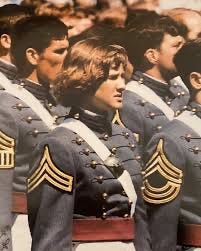
I never had the chance to explain to him that it wasn’t about women at all. It was about fear. I was terrified that my learning disability — my lifelong struggle with rote memorization — would doom me to fail out of Beast Barracks before my Plebe year even began. To this day, almost no one believes I have a memory issue — how could they, given that I made it through Georgetown Medical School and earned a degree from Harvard? But the fear of failure at West Point was real. And my father never knew the truth. After I signed away my appointment, we were never truly okay again.
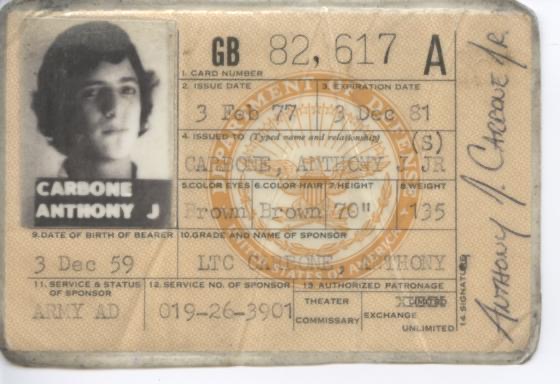
My military dependent ID card from my senior year at Bad Kreuznach.  Autobiography of Dr. Anthony J. Carbone.
My Military Dependent ID Card From High School

Armed Forces Radio & Television Service (AFRTS)

Outside of school, like every American overseas, I got my entertainment from a single source: AFRTS — Armed Forces Radio and Television Service, affectionately nicknamed “A-Ferts.” There was one television station and one radio station for all of us. They rotated programming to please everyone — rock & roll hour, jazz hour, country, classical, Soul Train, Casey Kasem’s Top 40, and my personal favorite: Wolfman Jack. It was a strange mix — but it made you feel connected to home.

Vice Principal Mr. Donald Boepple

I had a very special relationship with our Vice Principal, Mr. Donald Boepple. He was like a gentleman’s gentleman — calm, refined, and quietly wise. When the weather was nice, he would sometimes meet me outside our government apartment building in the French Quarters, and together we’d walk the couple of kilometers to school, chatting along the way. At least once a day, he would send a student messenger to my classroom with a handwritten note asking the teacher to release me — always under the pretext of “Senior Class business.”
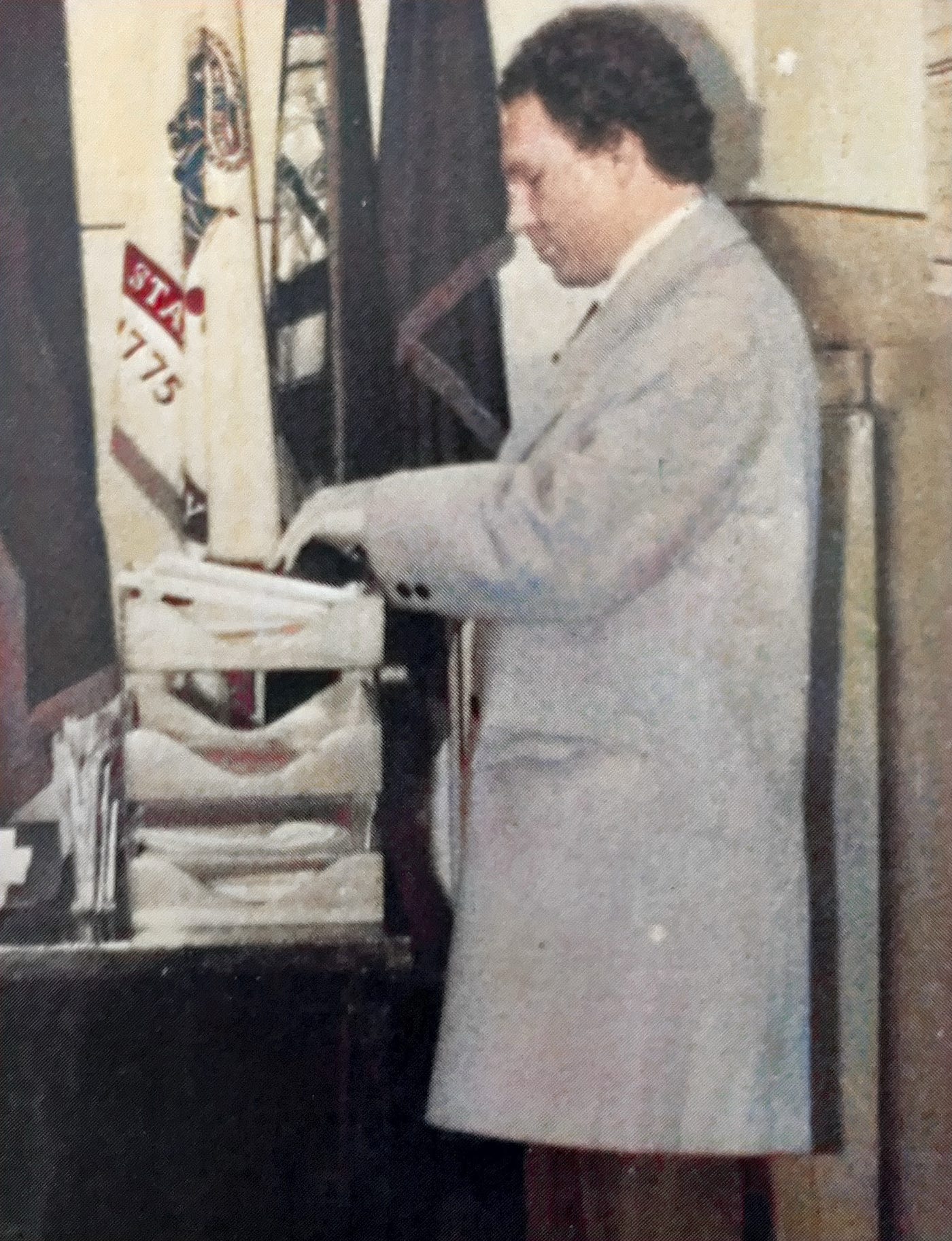
BK’s Vice Principal, Mr. Donald Boepple

Dr. Anthony Carbone’s Autobiography. Bad Kreuznach American High School. Germany. Vice Principal Mr. Donald Boepple.
Bad Kreuznach American’s Vice Principal, Mr. Donald Boepple

Bad Kreuznach’s Famous Salinental Park

If the weather held, we’d walk down the hill from where the school perched on a mountain plateau above the Bad Kreuznach Salinental, the beautiful spa park nestled in the valley below our high school. The Salinental is famous for housing Europe’s largest open-air inhalatorium, a therapeutic health park lined with “Gradierwerke” — enormous wooden walls made of blackthorn brushwood designed to evaporate saline water and release mineral-rich mist into the air. The effect was like standing near the ocean, with air believed to soothe the lungs and restore the spirit.
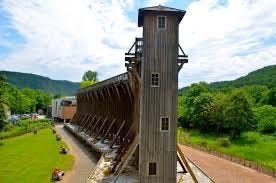
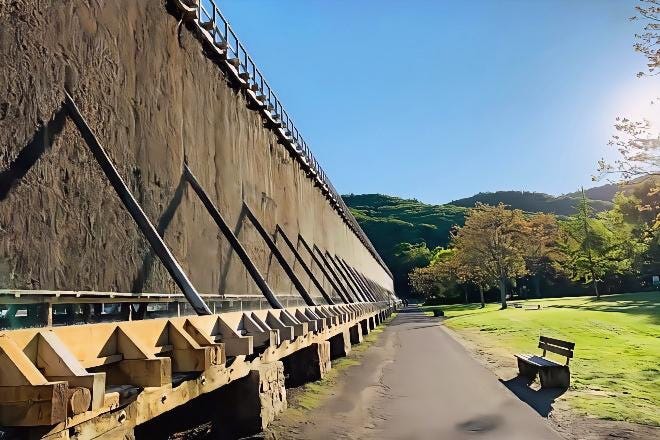
Mr. Boepple and I would sit on one of the wooden benches near the Gradierwerke, breathing in the salt air and talking about the world, about life, and about my future. Those quiet conversations gave me a sense of calm and perspective during what was otherwise a whirlwind year of pressure, responsibility, and transition. He wasn’t just a school administrator to me — he was a steadying presence, a mentor who reminded me to slow down and take in the moment, even as everything in my life seemed to be racing forward.

Graduation Day for Bad Kreuznach American 1977
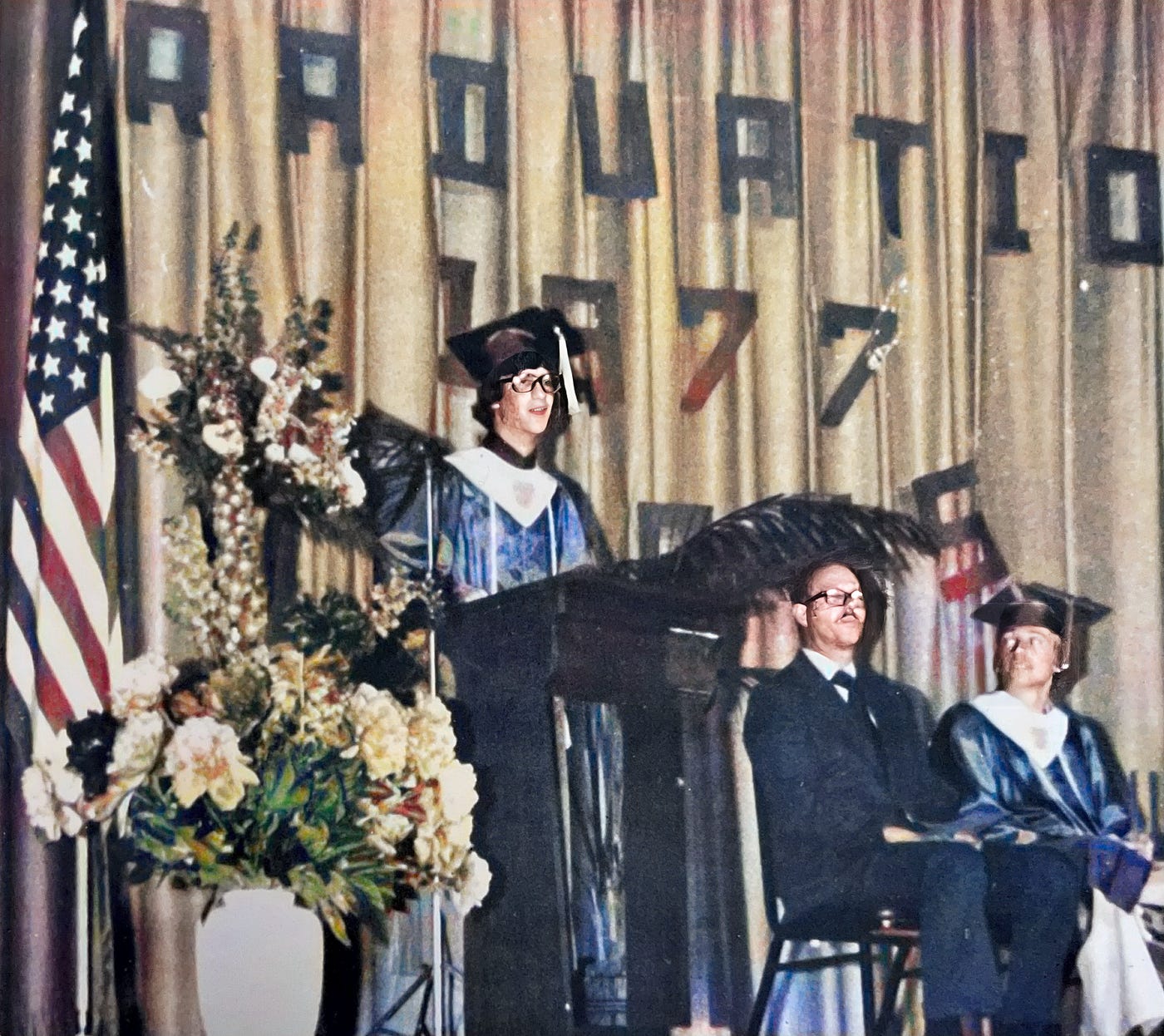
Giving my Valedictorian Address at the Class of 1977 Graduation.

Dr. Anthony Carbone’s autobiography. Bad Kreuznach American High School. Germany. 1977. Army Brats. Validictorian.
Giving the Senior Class President & Valedictorian Addresses at the Class of 1977 Graduation.

Earned Valedictorian Spot

Then graduation day arrived. I gave two speeches: one as Senior Class President, and one as Class Valedictorian. It’s a blur now. But I remember one moment clearly. I thanked Major General Cleland for finally giving my father an hour off work so he could attend my graduation. The entire auditorium let out a quiet, knowing chuckle. I was also awarded the Officers’ Wives’ Club Scholarship, which paid for my first year of college room and board — expenses not covered by my ROTC scholarship.
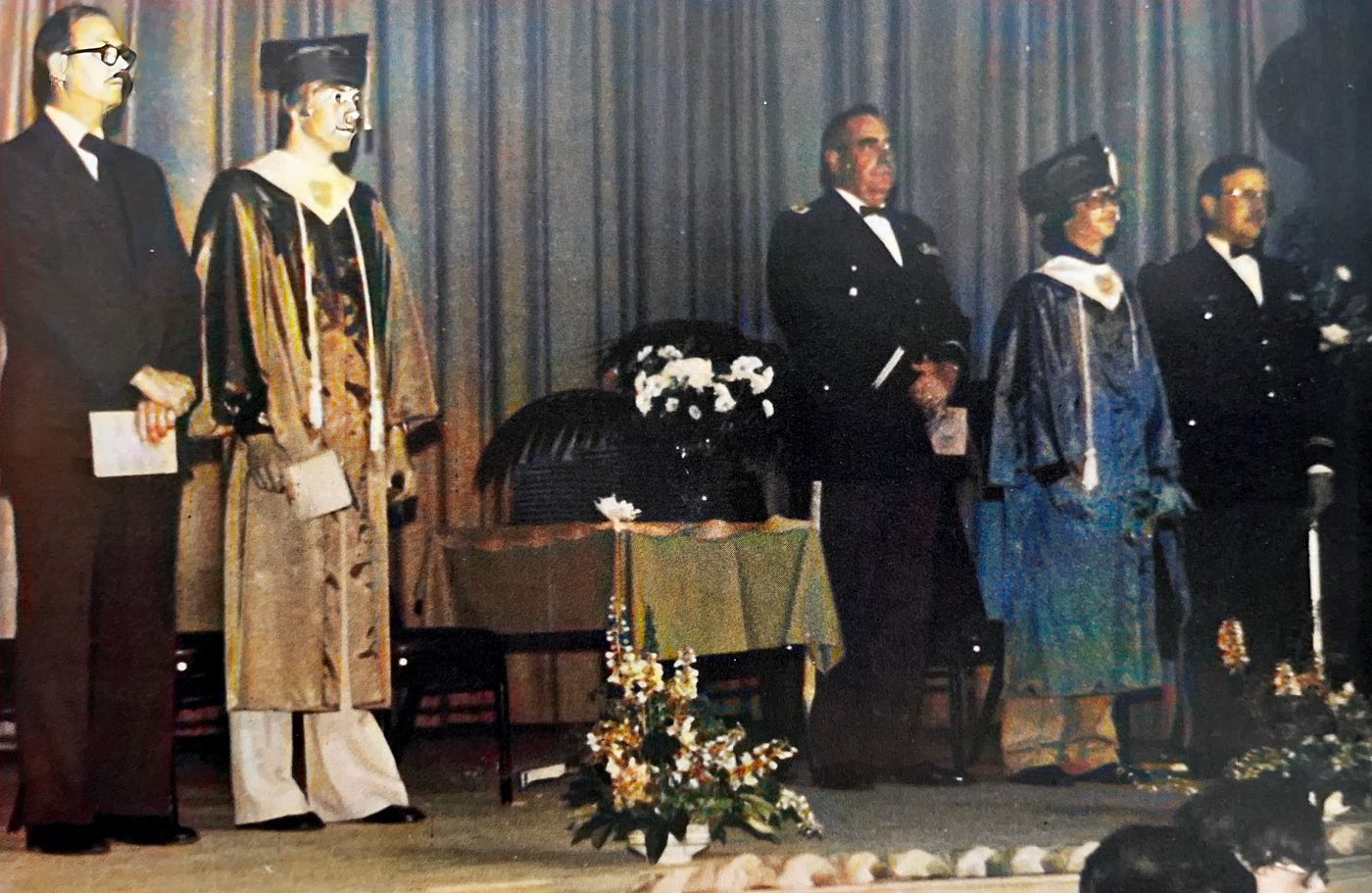
Valedictorian, Salutatorian, Principal, Vice Principal and other Honored Guests at Graduation.

Part of the autobiography of Dr. Anthony J. Carbone, Son in the Shadow of a Green Beret Hero.
Valedictorian, Salutatorian, Principal, Vice Principal and other Honored Guests at Graduation.

Sobering Thought of Future

That night, while most classmates celebrated with cold German beer, silence enveloped me. Drinking and cheering held no appeal. A quiet certainty settled in, acknowledging that life might never surpass high school’s peak. The path ahead loomed—four grueling years of study, training, and discipline to fulfill my commitment to becoming an Army doctor.
Senior Class Portrait from Bad Kreuznach American High School 1977.

Part of the autobiography of Dr. Anthony J. Carbone, Son in the Shadow of a Green Beret Hero.
Senior Class Portrait from Bad Kreuznach American High School 1977.

Photos of my BK Friends and Classmates
BKAHS German Club

Part of the autobiography of Dr. Anthony J. Carbone, Son in the Shadow of a Green Beret Hero.
BKAHS German Club

Home Page

Chapter 11: Dad Gets His Tank Battalion Command and I Continue High School in Mannheim, Germany

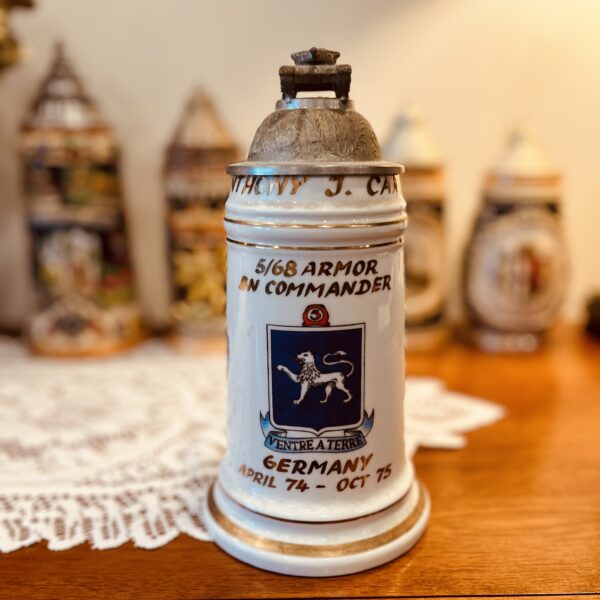
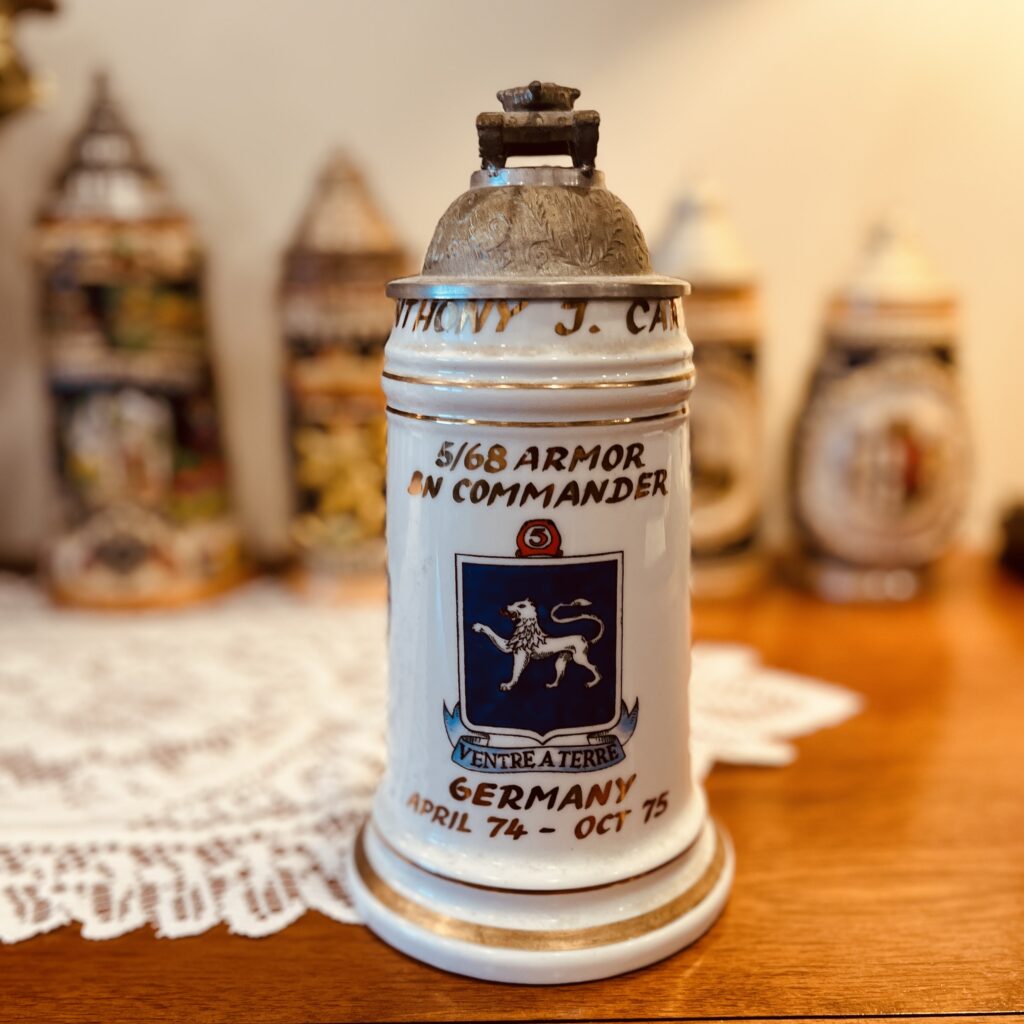
Bierstein 5/68 Armor Commander LTC Carbone. Dr. Carbone's Autobiography

Believe Nothing You Hear, and Only Half of What You SeeA Memoir of Service, Shame, and the Search for Truth

Dad Gets Orders for Germany Again And Command of a Tank Battalion

In the summer of 1973, my father received orders to return to West Germany and take command of a tank battalion in Mannheim — the 5th Battalion, 68th Armor, part of the 8th Infantry Division. This would be our family’s third and final tour in Germany and, for me, it would mark the beginning of my high school years. For my father, now a Lieutenant Colonel, this was one of the most important and prestigious assignments of his career.

Mom and I Prepare for Another Overseas Transfer

We went through the same routine we had already mastered over the years. My father left as soon as possible to get our family on the post housing list. That left my mother behind to sell our house in Woodbridge and for me to go through everything we owned, once again sorting our lives into categories: Hold BaggageHousehold GoodsStorage, and Throw or Give Away. By now, this process felt almost second nature.

All of us were elated about returning to Germany. My sister Lynne may have had a few reservations about spending three years at Woodbridge Senior High School and then finishing her senior year in Germany, but in retrospect, she would later say it was the best thing that could have happened to her.

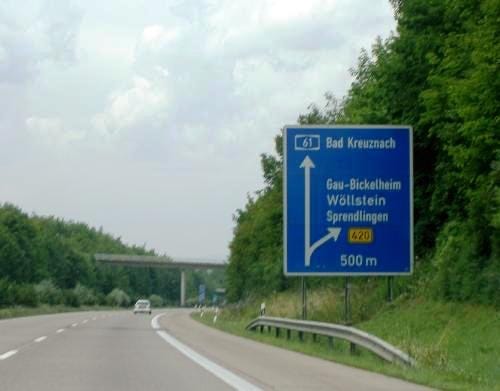
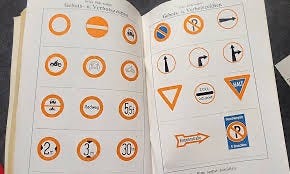
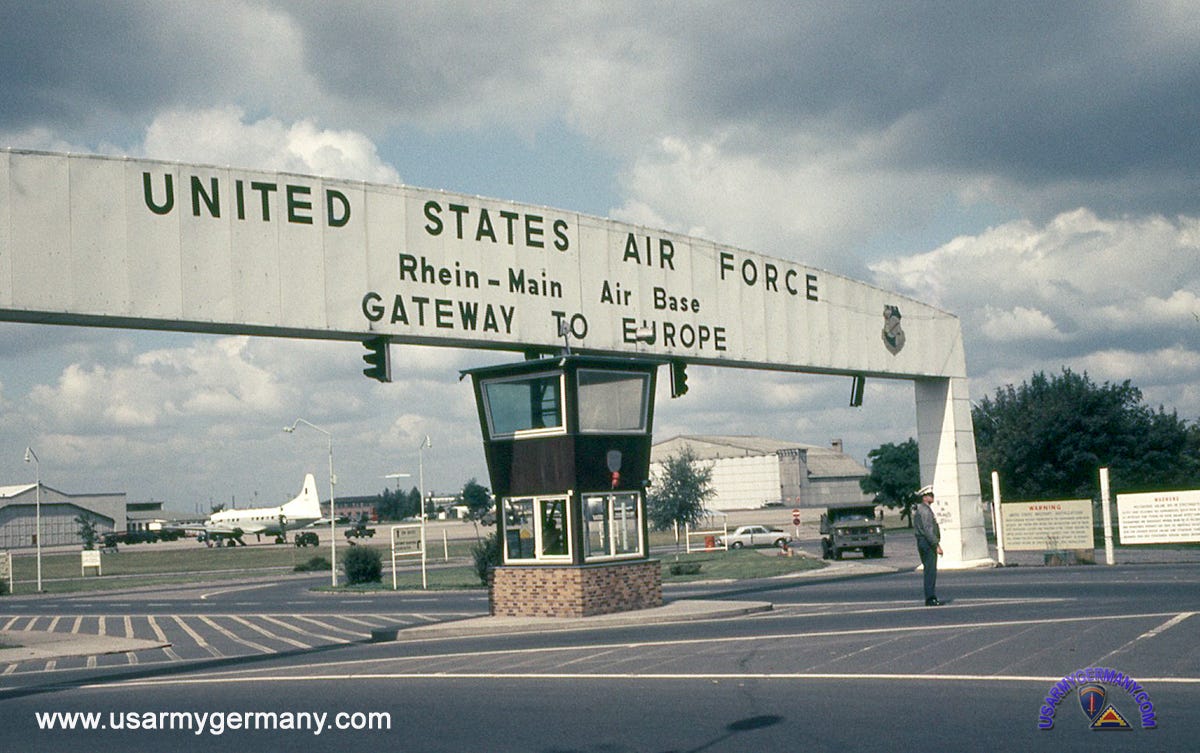
My father was busy in Germany preparing for his new command and studying for his German driver’s license, which included understanding over 1,000 different international road signs. Back home, my mother and I had to get our family station wagon to the Port of Baltimore, where it would be shipped across the Atlantic. Weeks later, my father and I picked it up at the port in Bremerhaven, Germany — known as the “Gateway to Europe.”

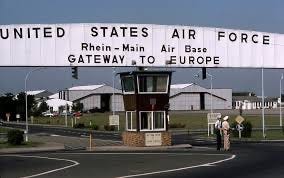
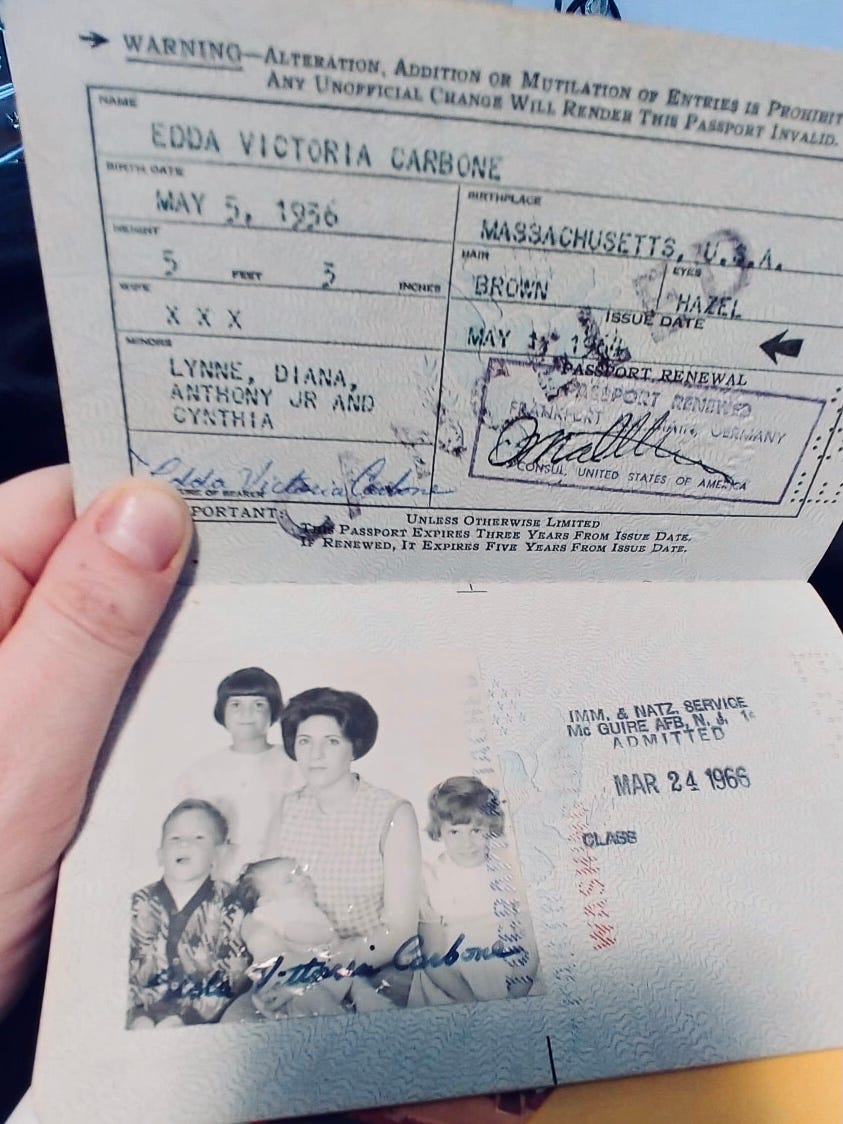
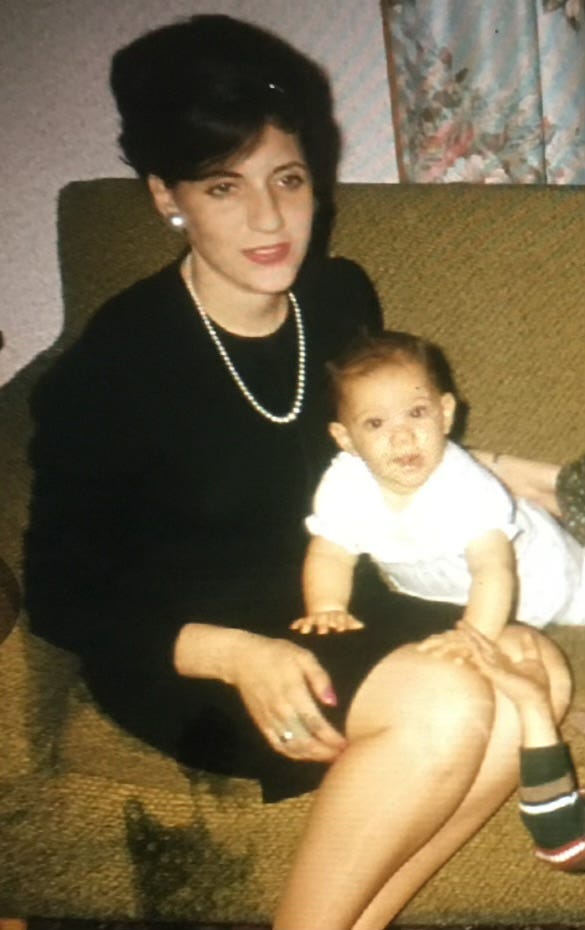
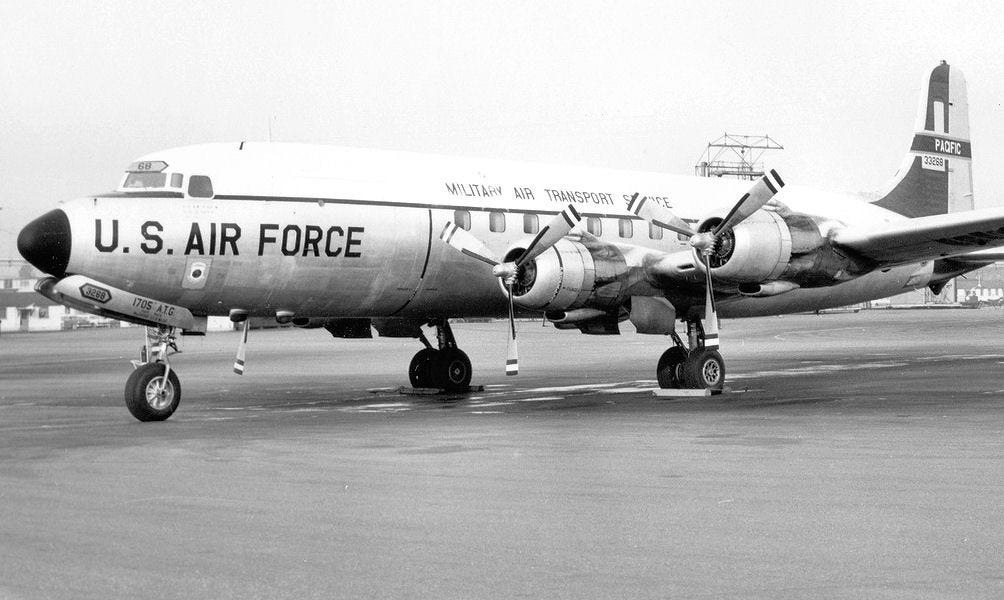
The professional government packers and movers arrived to take care of our belongings. After everything was boxed and shipped, my mother, my four sisters, and I boarded a commercial charter flight to Germany. We landed at Rhein-Main Air Force Base near Frankfurt.

Family Arrives at Rhein-Main Air Base Enroute to Mannheim

Our official sponsor was my father’s boss, Colonel Curry, the Commander of the 3rd Brigade of the 8th Infantry Division. Often, it’s the sponsor who picks you up at the airport — but this time, it was my father and his battalion adjutant, Lieutenant Scalise, who met us on arrival.

Bierstein 5/68 Armor Commander LTC Carbone. Dr. Carbone's Autobiography
Bierstein 5th Battalion 68th Armor Mannheim Germany

5th Battalion 68th Armor

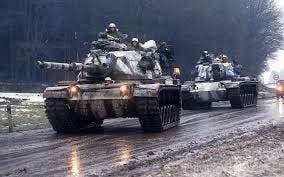
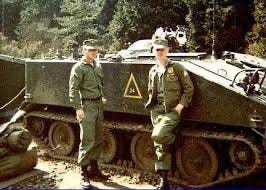
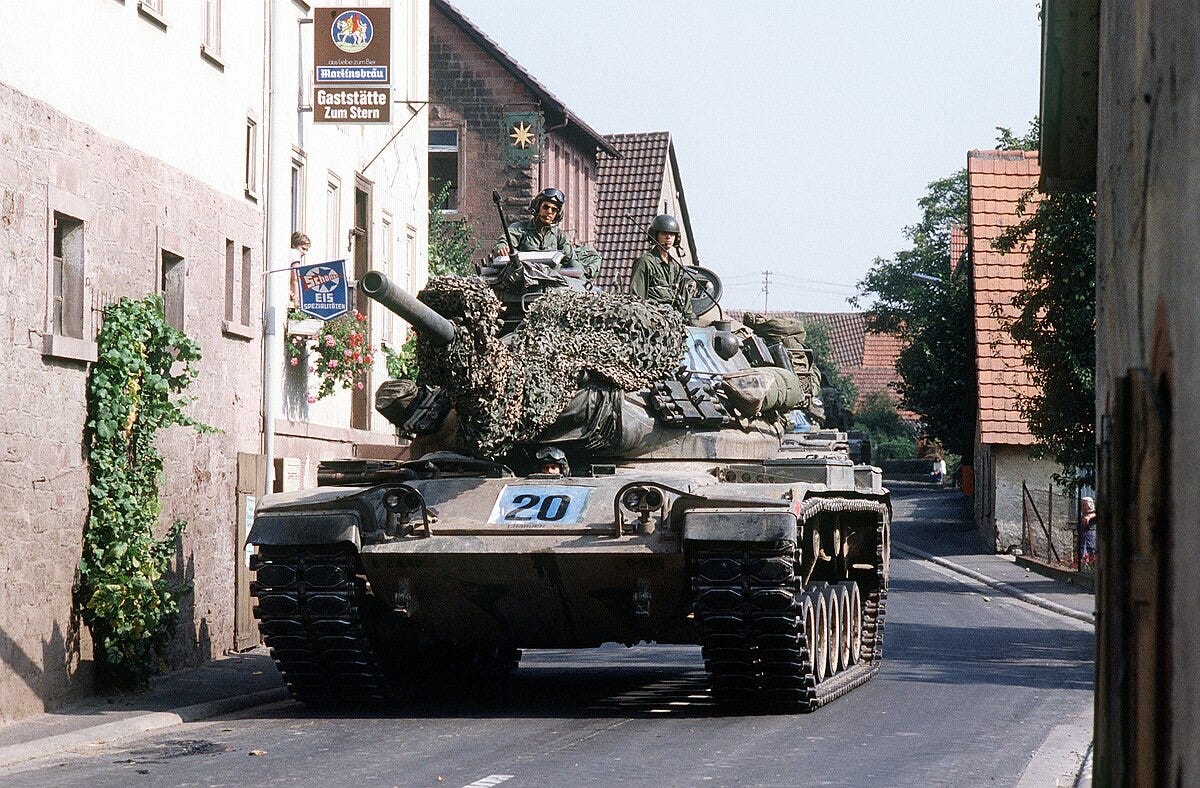
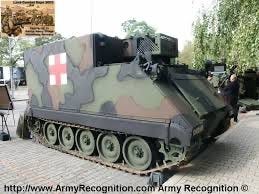
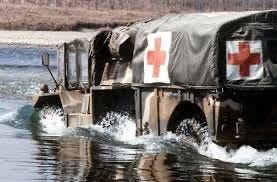
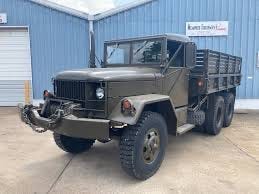
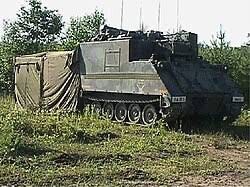
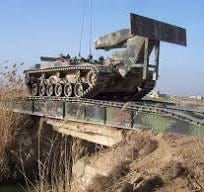
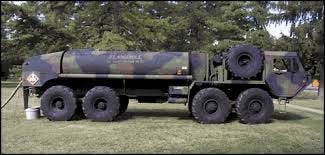
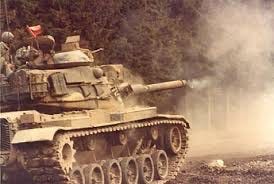
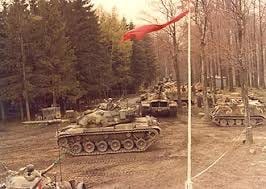
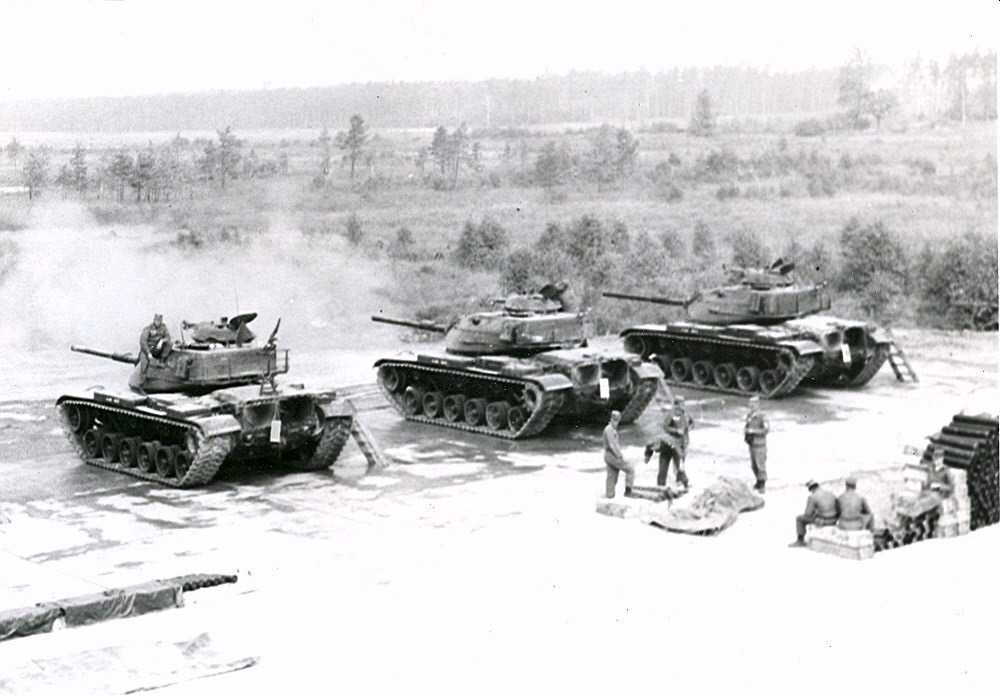
My father had taken command of the 5th Battalion, 68th Armor at Sullivan Barracks in Mannheim. He had taken over a massive mechanized combat unit: over 700 tankers and support soldiers, 52 M60 main battle tanks, more than a hundred M113 armored personnel carriers (APCs), dozens of M114 armored reconnaissance vehicles used by the cavalry scouts, several M577 Command Post Carriers, and a variety of heavy tactical vehicles, including M35 2.5-ton trucks — affectionately known as “deuce-and-a-halfs” — M939 5-ton trucks, M561 Gamma-Goats, M932 fuel trucks, and M60 AVLB (Armored Vehicle Launched Bridge) vehicles.

The various vehicles found within the 5th Battalion 68th Armor. M60A1 main battle tanks, M113 armored personnel carriers, M114 armored reconnaissance vehicles, M577 Command Post Carriers, AVLB (Armored Vehicle Launch Bridge), and Fuel Trucks.

Part of the autobiography of Dr. Anthony J. Carbone, Son in the Shadow of a Green Beret Hero
American M60 Series Main Battle Tank rolling down the small streets of a Geman village.

The unit insignia for the 68th Armored Regiment was a silver lion on a blue crest, with the Latin phrase “Ventre a Terra” scrolled beneath the shield. Translated, it means “Belly to the Ground,” describing what a lion does just before it attacks. That image — silent, watchful, coiled for action — embodied exactly the posture of a Cold War tank battalion stationed in Europe, ready to spring into action at a moment’s notice. My father took great pride in that insignia and everything it stood for.

68th Armor Regiment with Motto “Ventre A Terre” (Belly to the Ground)

Part of the autobiography of Dr. Anthony J. Carbone, Son in the Shadow of a Green Beret Hero.
68th Armor Regiment with Motto “Ventre A Terre” (Belly to the Ground)

Hand-Picked Key Battalion Personnel

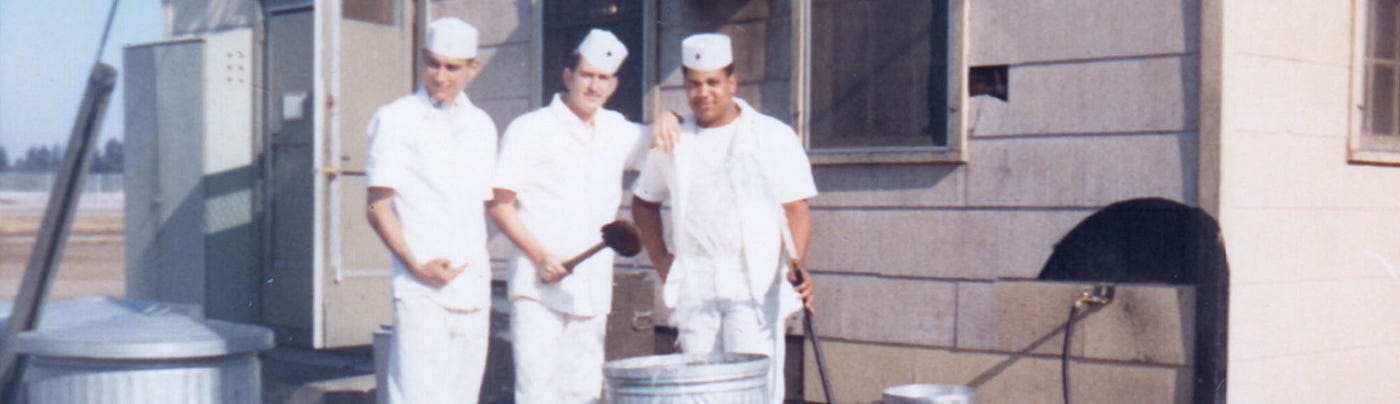
He hand-picked his key officers: Major Jim Mills was selected as the battalion S3 (Plans and Operations); Lieutenant Scalise served as the S1 (Personnel Officer & Adjutant); and Major Anthony Swain was his Executive Officer (XO). I don’t recall the name of his S2 (Intelligence Officer), but I’ll never forget who he said was the most important recruit he made at the start of his command — the battalion head chef, someone he had known and served with during his tour in Korea.

My father always believed I would follow in his footsteps and become an Army officer, and from a young age he took every opportunity to prepare me for that role. He told me often, “Feeding your men well is one of the most important things you can do for morale.” He meant it. The chef was the very first person he had reassigned to his new battalion.

Army cooks outside a U.S. Army mess hall.

Part of the autobiography of Dr. Anthony J. Carbone, Son in the Shadow of a Green Beret Hero.
Army cooks outside the mess hall

Battalion Motor Pool

On many weekends, my father’s jeep driver would come to our quarters to pick us up and bring us to Sullivan Barracks. I accompanied him on his rounds. He didn’t bring me along to impress me — he brought me to teach. We always began in the motor pool, where he’d check in with the Motor Sergeant and ask about the status of every single vehicle. “A tank battalion is useless,” he told me, “if the tanks and support vehicles can’t move at a moment’s notice.” He stressed how critical the Motor Sergeant was to the entire operation.

Next, we would stop at the Mail Room, where he introduced me to the Mail Clerk. “If you bring your men hot food and their mail out in the field,” he said, “they’ll follow you anywhere.”

Then he took me to meet the Supply Sergeant, explaining that the supply room controls all the gear and equipment that keeps a unit functioning. “Make friends with your supply sergeant on Day One,” he advised. “He’s your lifeline.”

The Mess Hall

And finally, we always ended our rounds at the mess hall, where we checked in with the chef. My father would taste test the food, sipping soup straight from the ladle, dipping bread into sauces, even pulling out his combat knife from his tanker’s boot to slice off a piece of roast beef for us to sample. The chef was remarkable. He created themed menus throughout the week — Italian Day in honor of my father, Soul Food DayHispanic DayAsian Day, and classic American Day. On holidays like Thanksgiving and New Year’s, officers and NCOs wore their dress uniforms and served the troops. The chef even created ice sculptures and elaborate displays. Our family always joined the battalion for those special meals.

Major Jim Mills, Battalion S3

Major Jim Mills, my father’s S3, became a great friend of our family. When my father was promoted to become the G3 of the 8th Infantry Division, Major Mills and his family followed us to Bad Kreuznach. His son, Jim Jr., became one of my best friends during high school there.

Photograph of Major James J. Mills Sr, Armor & Aviation Officer and Dad's (LTC Tony Carbone's) S3 Plans & Operations Officer.


Part of the autobiography of Dr. Anthony J. Carbone, Son in the Shadow of a Green Beret Hero.
Major James J Mills Sr, Armor & Aviation Officer and Dad’s S3 Officer

Hohenfels & Grafenwöhr

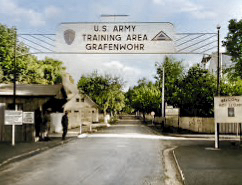
But back to Mannheim. This was the height of the Cold War, and the 5–68 Armor was constantly on alert. Many weeks were spent in the field, training at places like Hohenfels and Grafenwöhr. The tempo was relentless, but my father thrived on it.

U.S. Army Training Area at Grafenwöhr Germany.

Part of the autobiography of Dr. Anthony J. Carbone, Son in the Shadow of a Green Beret Hero.
U.S. Army Training Area at Grafenwöhr

It’s All About Tank Gunnery

When he took command, the battalion was struggling. He had inherited the unit from a commander who had been quietly relieved. At the time, 5–68 Armor ranked dead last in Tank Gunnery in the entire 8th Infantry Division — the lowest position a tank battalion could fall to. One officer even approached my father and said he was sorry that he had to take command of such a poor-performing unit. My father just smiled and said, “I’m delighted. We can only go up.”

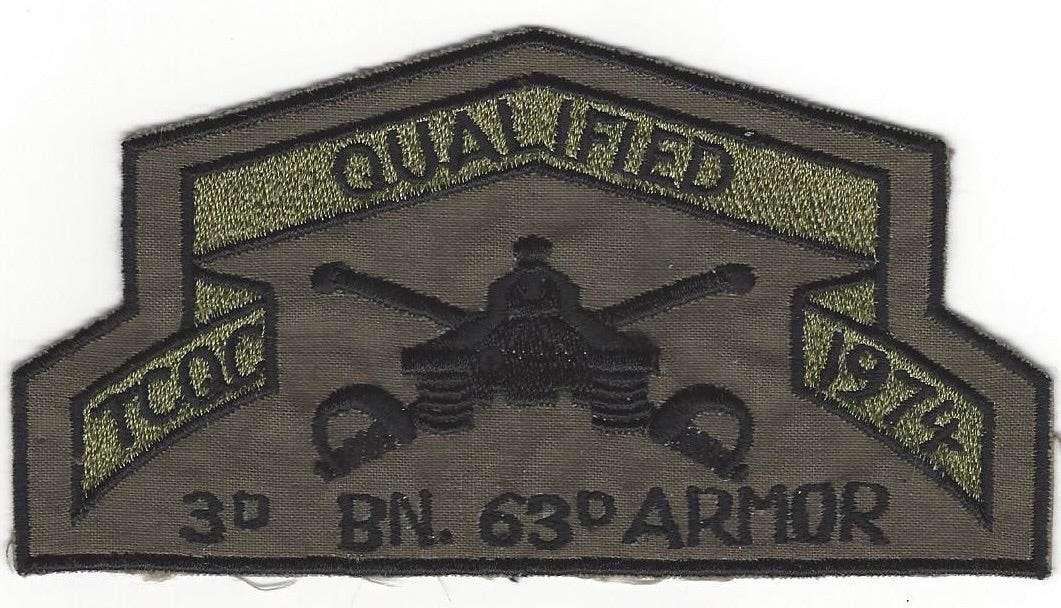
And they did. Before he relinquished command, the 5th Battalion, 68th Armor had gone from worst to first in tank gunnery. That achievement meant everything. In the world of armor, gunnery is life. Every soldier is trained to “Move, Shoot, and Communicate,” but if a tank can’t shoot accurately, it’s nothing more than a 52-ton steel coffin. My father turned that battalion around through leadership, standards, and trust in his men — and by never forgetting the basics: maintenance, mail, supply, and a hot meal.

Qualified Tank Crew Patch

Part of autobiography of Dr. Anthony J. Carbone, Son in the Shadow of a Green Beret Hero.
Qualified Tank Crew Badge similar to the ones earned by 5th Bn 68th Armor crewmembers

Benjamin Franklin Village (BFV)

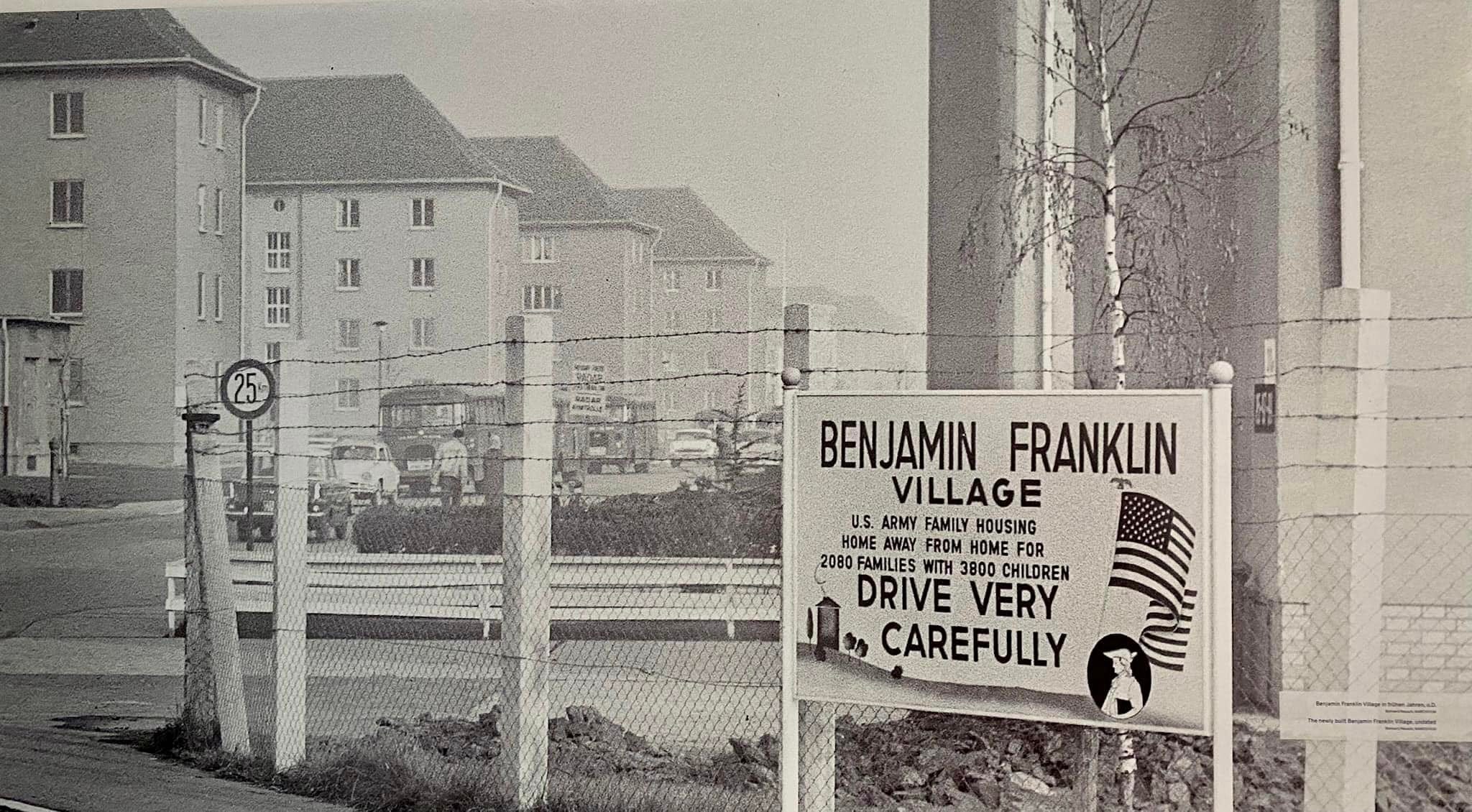
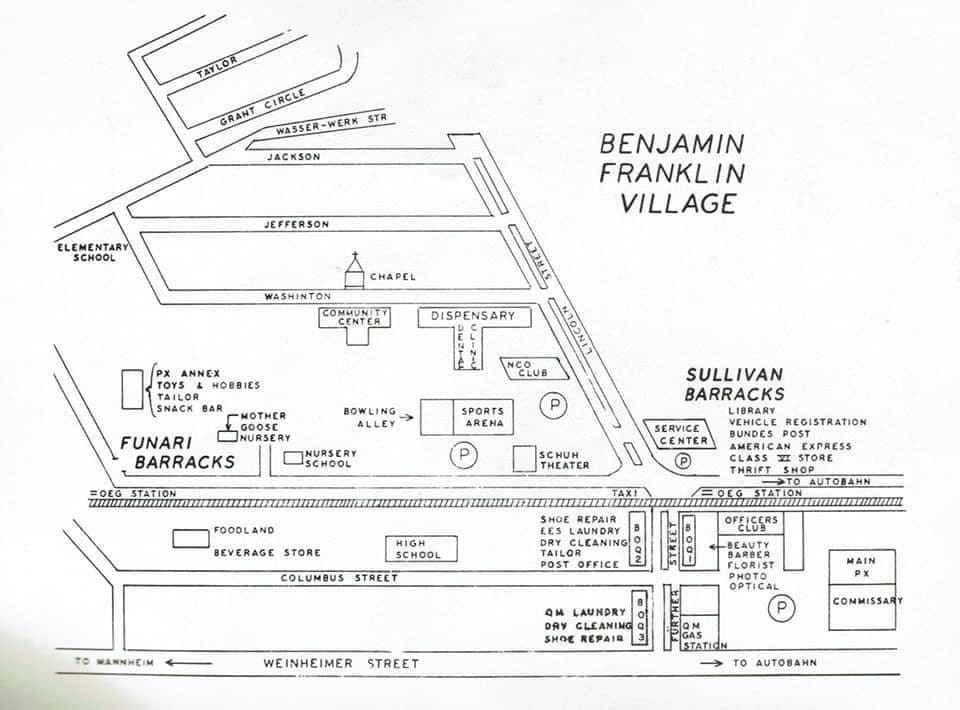
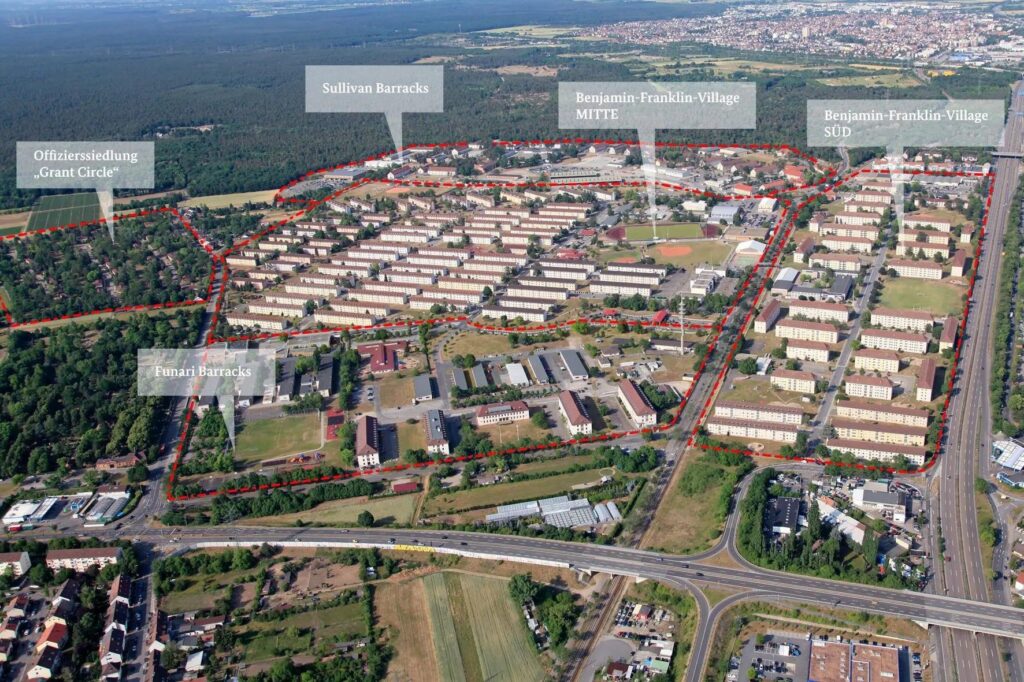
While my father’s battalion was housed within Sullivan Barracks, all of the families — including ours — lived in Benjamin Franklin Village, commonly known as BFV. We moved into beautiful, newly renovated officers’ quarters at 11 Grant Circle, a spacious two-story duplex with four bedrooms and one-and-a-half bathrooms. It was pristine — gleaming, freshly varnished wood floors, crisp whitewashed walls, and all the signs of recent renovation. My small bedroom was the only one located downstairs; the rest of the family — my parents and four sisters — had bedrooms upstairs.

Benjamin Franklin Village Gate.


Part of autobiography of Dr. Anthony J. Carbone, Son in the Shadow of a Green Beret Hero.

Map of Benjamin Franklin Village (BFV) and Barracks, Mannheim, Germany

Benjamin Franklin Village map showing Sullivan and Funari Barracks.

Part of autobiography of Dr. Anthony J. Carbone, Son in the Shadow of a Green Beret Hero.
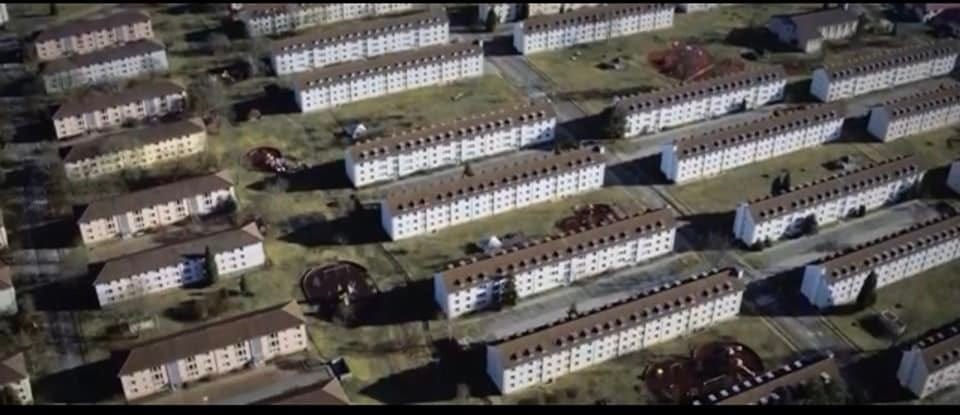
Aerial view of Benjamin Franklin Village (BFV) Mannheim, Germany.

Part of autobiography of Dr. Anthony J. Carbone, Son in the Shadow of a Green Beret Hero.
Aerial View of Benjamin Franklin Village (BFV) Mannheim, Germany

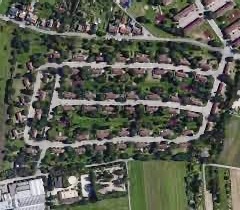
Grant Circle

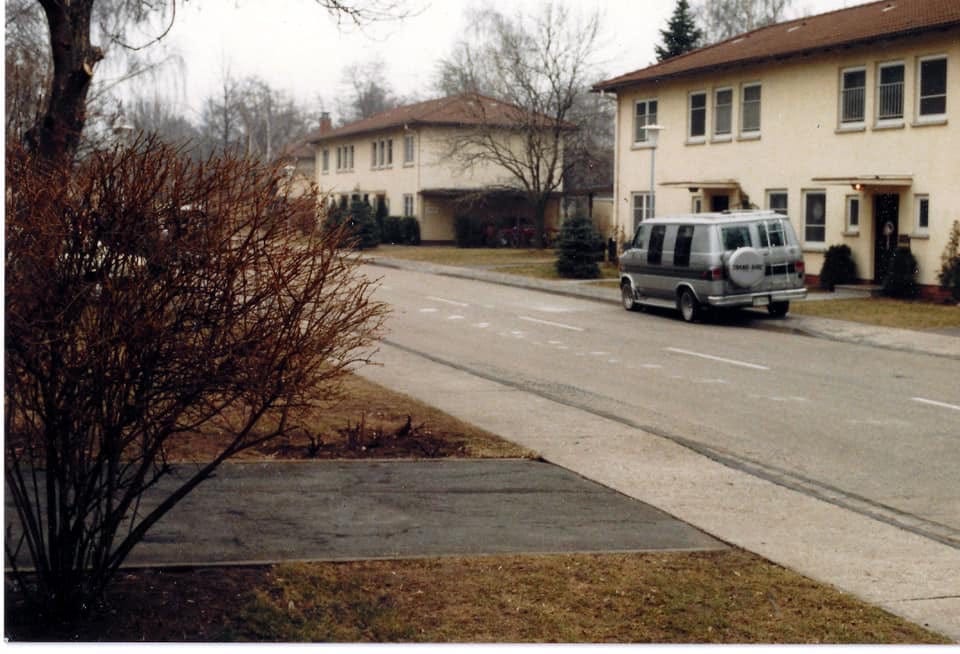
Grant Circle was the place to live on post. It was where the base commander, General Timmerburg, and all the full colonels and lieutenant colonels resided. It felt both prestigious and incredibly lucky to be there. Most of our closest friends lived in Grant Circle too, which meant that life there — especially in the evenings — was incredibly social. Army brats like us hung around outside most nights, talking for hours under the stars. Our house, right near the entrance to Grant Circle and the corner where Taylor Street split the circle in two, became one of the unofficial gathering spots. It always seemed to be the hub of activity.

Maps of BFV, the Kasernes and Grant Circle

Every commanding officer had a colorful replica of their Distinctive Unit Crest mounted outside their quarters. My father proudly displayed the crest of the 68th Armored Regiment — a blue shield with a silver lion, beneath which read the Latin motto: “Ventre a Terra”, meaning “Belly to the Ground.” The image of a crouched lion, low and poised to strike, captured the essence of a tank battalion ready for action at any moment. That crest nailed to the front of our home was a symbol of pride and command — and it let everyone know exactly who lived there.

We had a carport next to the house where my father parked our family station wagon. But his prized possession — his beautiful white Porsche 911— was always parked right out front, gleaming and impossible to miss.

Grant Circle of Benjamin Franklin Village (BFV) at Mannheim, Germany.


Part of autobiography of Dr. Anthony J. Carbone, Son in the Shadow of a Green Beret Hero.
Grant Circle Benjamin Franklin Village Mannheim Germany

At the far end of Grant Circle was a smaller loop where the full colonels lived in large single-family homes. And beyond even that, at the very end of “full colonel’s row,” stood the Commanding General’s house — a stately and fitting centerpiece for a Cold War-era military village.

Full Colonel's Quarters (like COL Bell's) Grant Circle at Benjamin Franklin Village in Mannheim, Germany.

Part of autobiography of Dr. Anthony J. Carbone, Son in the Shadow of a Green Beret Hero.
Full Colonel’s Quarters (like COL Bell’s) Grant Circle Benjamin Franklin Village Mannheim Germany

Jeff Bell and Family

My closest friend at Mannheim — then and to this very day — was Jeff Bell. His father, Colonel Wiley Bell, was a career Signal Corps officer, a veteran of the Korean War, the Chinese conflict, and Vietnam. A battle-tested and respected leader, he was also one of the warmest and funniest men I ever knew.

Jeff's father, Colonel Wiley Bell in Officer Dress Mess Uniform.

Part of autobiography of Dr. Anthony J. Carbone, Son in the Shadow of a Green Beret Hero.
Jeff’s father, Colonel WIley Bell in Officer Dress Mess Uniform

Mrs. Bell, on the other hand, was memorable in her own way: a chain-smoker, a fan of Coca-Cola by the liter, and someone who hated to cook. As a result, the Bell family ate out almost every meal — and lucky for me, they often invited me to join. They favored a cozy nearby Gasthaus, where Jeff and I always ordered our two favorites: Jägerschnitzel (mushroom cream schnitzel) and Zigeunerschnitzel — a paprika-spiced dish better known then as Gypsy Schnitzel.

German Gasthaus (restaurant) outside of Benjamin Franklin Village, Mannheim, Germany.

Part of autobiography of Dr. Anthony J. Carbone, Son in the Shadow of a Green Beret Hero.
German Gasthaus (restaurant) outside of Benjamin Franklin Village, Mannheim, Germany

Jeff Learns to Eat Italian

Jeff Bell was at our house for dinner regularly, but I’ll never forget one spaghetti night in particular. My mother had made classic spaghetti with meatballs, and Jeff took his usual seat at our table. After we said grace, Jeff picked up his fork and knife and began cutting his spaghetti into neat little pieces.

My best friend, Jeff Bell, at Mannheim, Germany.

Part of autobiography of Dr. Anthony J. Carbone, Son in the Shadow of a Green Beret Hero.

My father immediately stood up. In his firm but calm voice, he told Jeff to leave the table and go sit in the living room. Jeff obeyed, completely unsure whether my father was joking or serious. He sat there in awkward silence while the rest of us waited. Eventually, my father called him back into the dining room. He explained, in no uncertain terms, that in an Italian household like the Carbone’s, you never cut your spaghetti. Ever.

Then, with that rare combination of pride and precision, my father gave Jeff a lesson in Italian table manners, teaching him how to take the spaghetti with his fork and twirl it into a spoon in his other hand. And if you were to ask Jeff today how he eats spaghetti, he will still tell you: “I twirl it in my spoon — like the Italians do.”

Photo of chef eating spaghetti with red sauce the Italian way, swilling the spaghetti in a spoon.

Part of autobiography of Dr. Anthony J. Carbone, Son in the Shadow of a Green Beret Hero.
This is how you eat spaghetti in the Carbone home.

The Red Volkswagen Bug

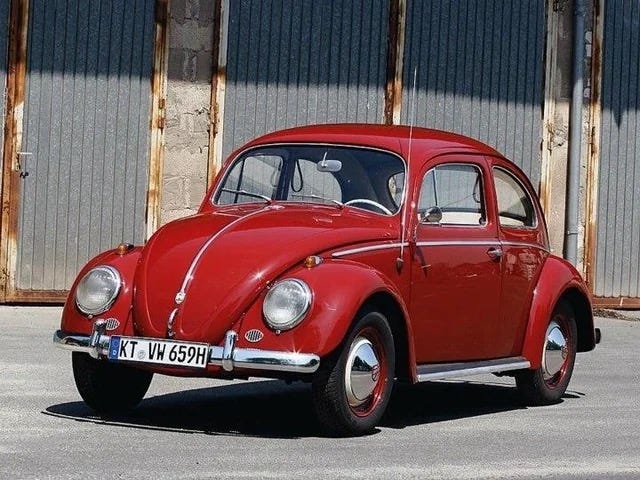
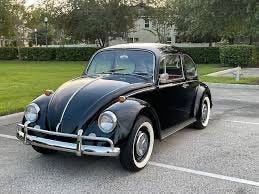
Jeff was one of the only students at Mannheim American High School who had his own car — an old, beat-up red Volkswagen Beetle, which made us kings among high schoolers. The heater didn’t work, so Jeff kept wool Army blankets in the back seat, and to make the windshield wipers work, I had to pull on strings coming out of the glove compartment. But it got us around.

Photo of red Volkswagen Beetle circa 1970 similar Jeff Bell's.

Part of autobiography of Dr. Anthony J. Carbone, Son in the Shadow of a Green Beret Hero.

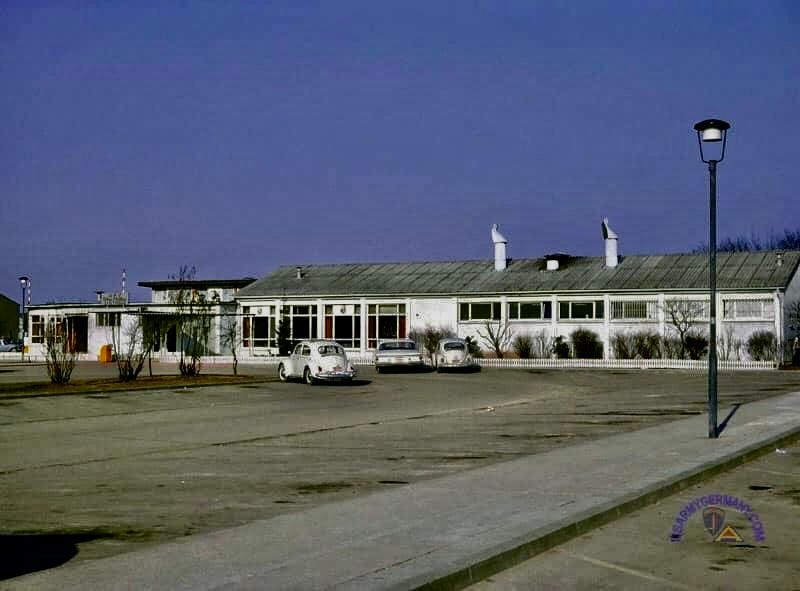
Mannheim Officers’ Club

We had a habit of sneaking away from school during lunch to eat at the Mannheim Officer’s Club. We charged our meals directly to Colonel Bell’s Officers’ Club account, eating like lieutenants while we were still teenagers. I still remember the code: 0011 — a number permanently burned into my memory like a locker combination.

Officers' Club at Mannheim, Germany.

Part of autobiography of Dr. Anthony J. Carbone, Son in the Shadow of a Green Beret Hero.
Officer’s Club Mannheim Germany

Years later, I told Colonel Bell about our lunchtime exploits, expecting some scolding or disapproval. But instead, he laughed so hard his false teeth fell out.

Mannheim American High School (MAHS) Bisons

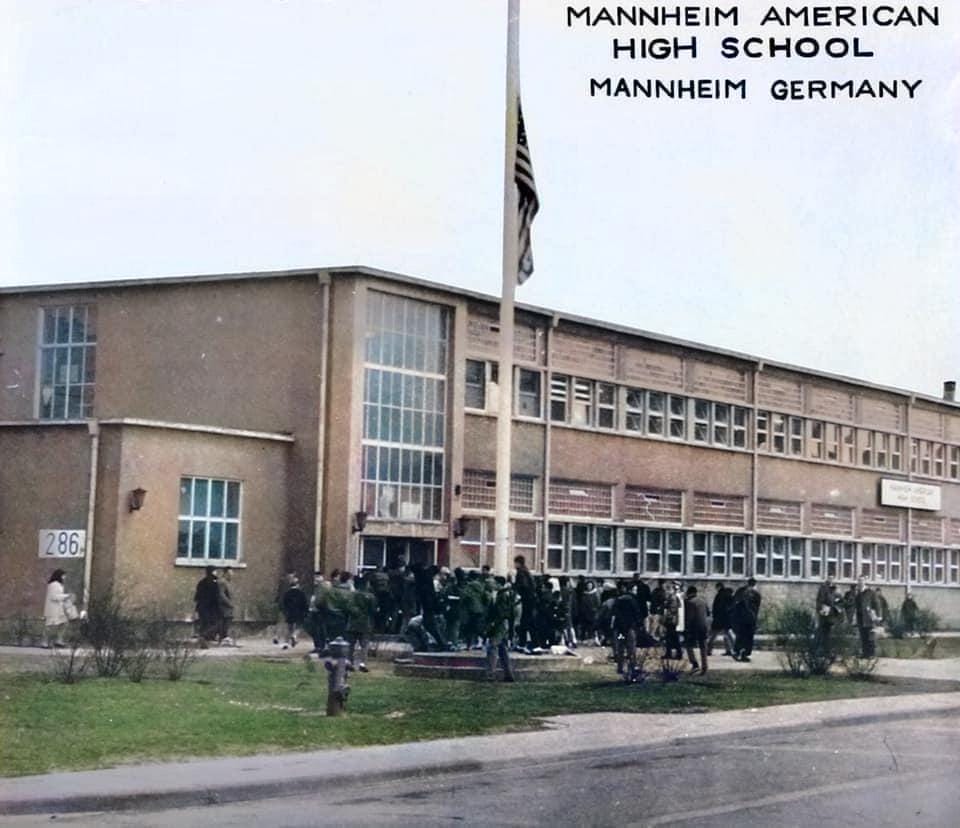
Mannheim American High School (MAHS), Mannheim, Germany

Part of autobiography of Dr. Anthony J. Carbone, Son in the Shadow of a Green Beret Hero.
Mannheim American High School (MAHS), Mannheim, Germany

Class of 1975 Seniors

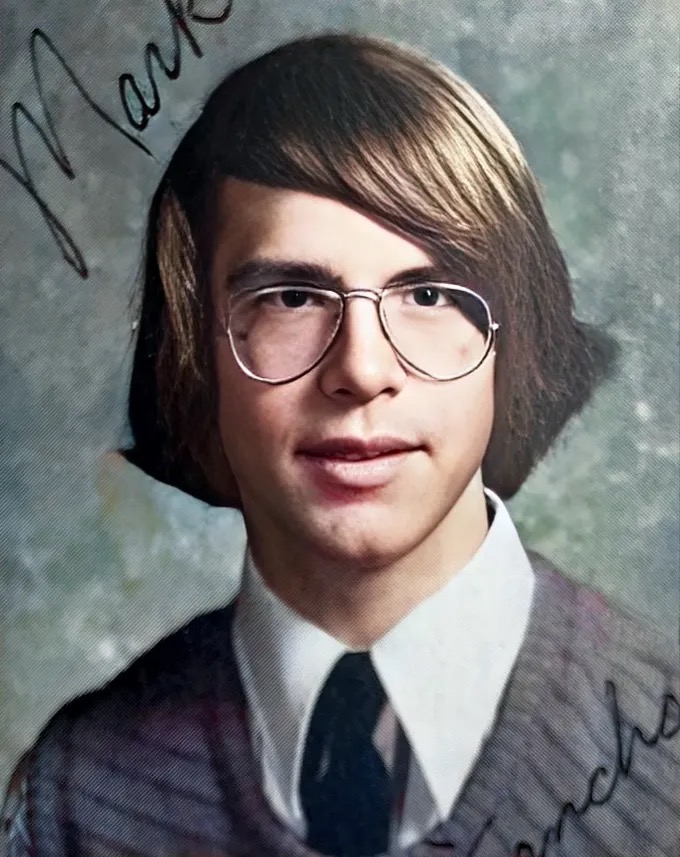
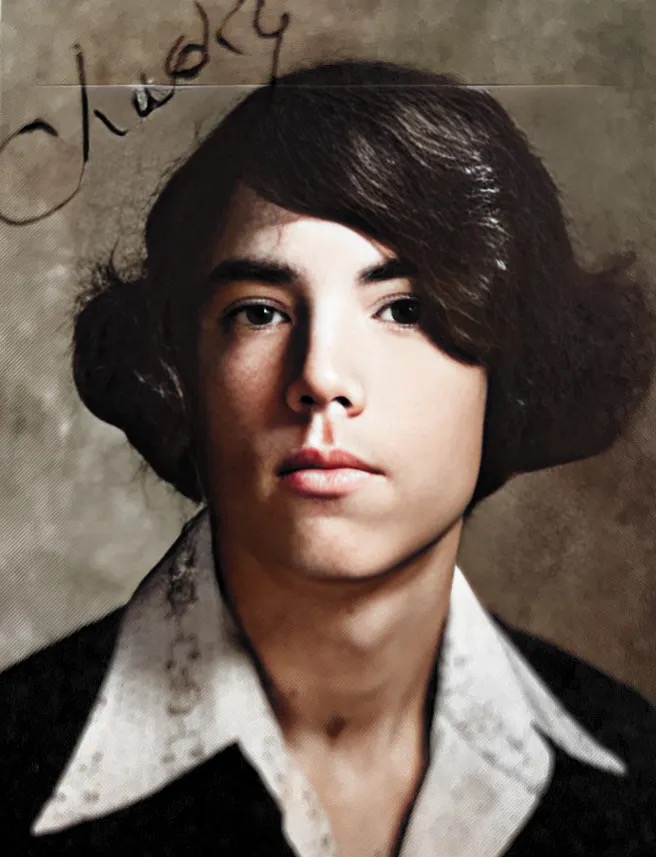
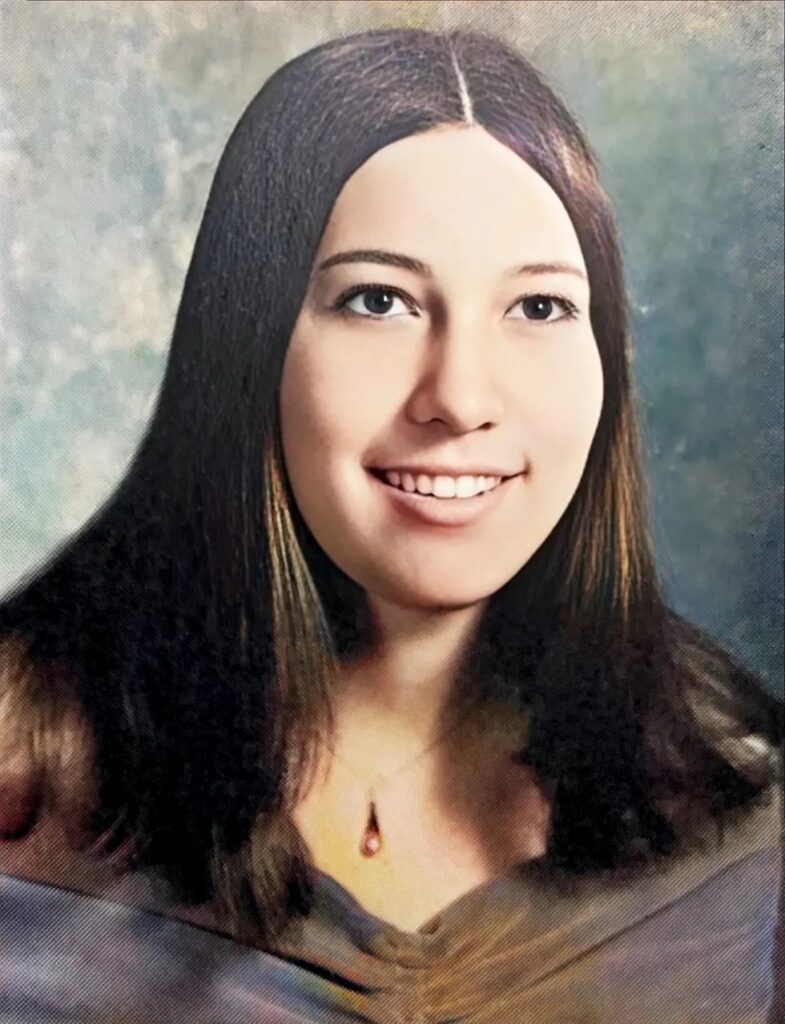
The Class of 1975 was Lynne’s Senior class, and it was filled with stars: Chris Corpus (Senior Class President, Varsity Football and Basketball), Jeff Wing (Varsity Football), Jeff Blair (Varsity Football and Basketball)Chuck Grayson (Varsity Football, Basketball and Golf), Bob Nicholson (Captain Varsity Football and Baseball, Class VP), and Kyle Kamalu (Varsity Tennis and Golf). Lynne’s best girlfriends were Gail Hayward and Lori Herrick (both Lettergirls with Lynne). And our duplex neighbor, Mark Sanchez — brilliant and eccentric — loved Diana but became one of my best friends.

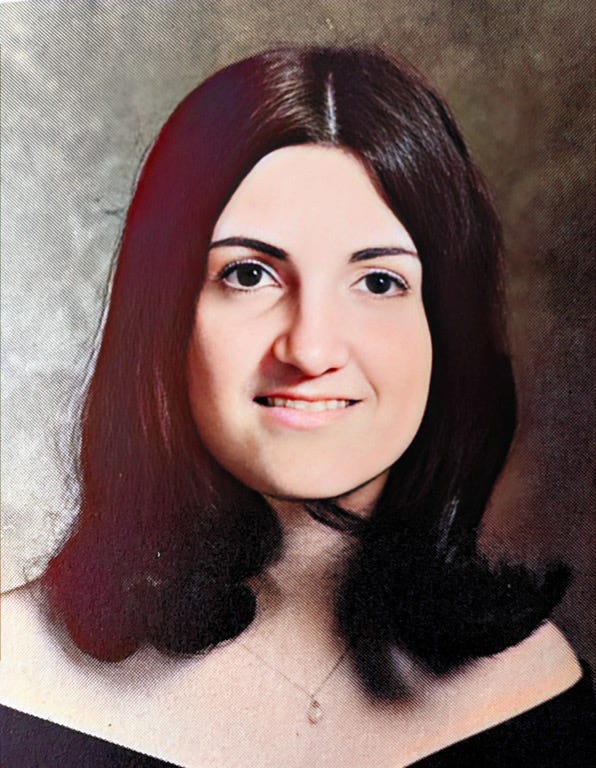
My oldest sister, Lynne Carbone's, formal senior portrait.

Part of autobiography of Dr. Anthony J. Carbone, Son in the Shadow of a Green Beret Hero.
My oldest sister, Lynne Carbone, Senior Portrait Class of 1975
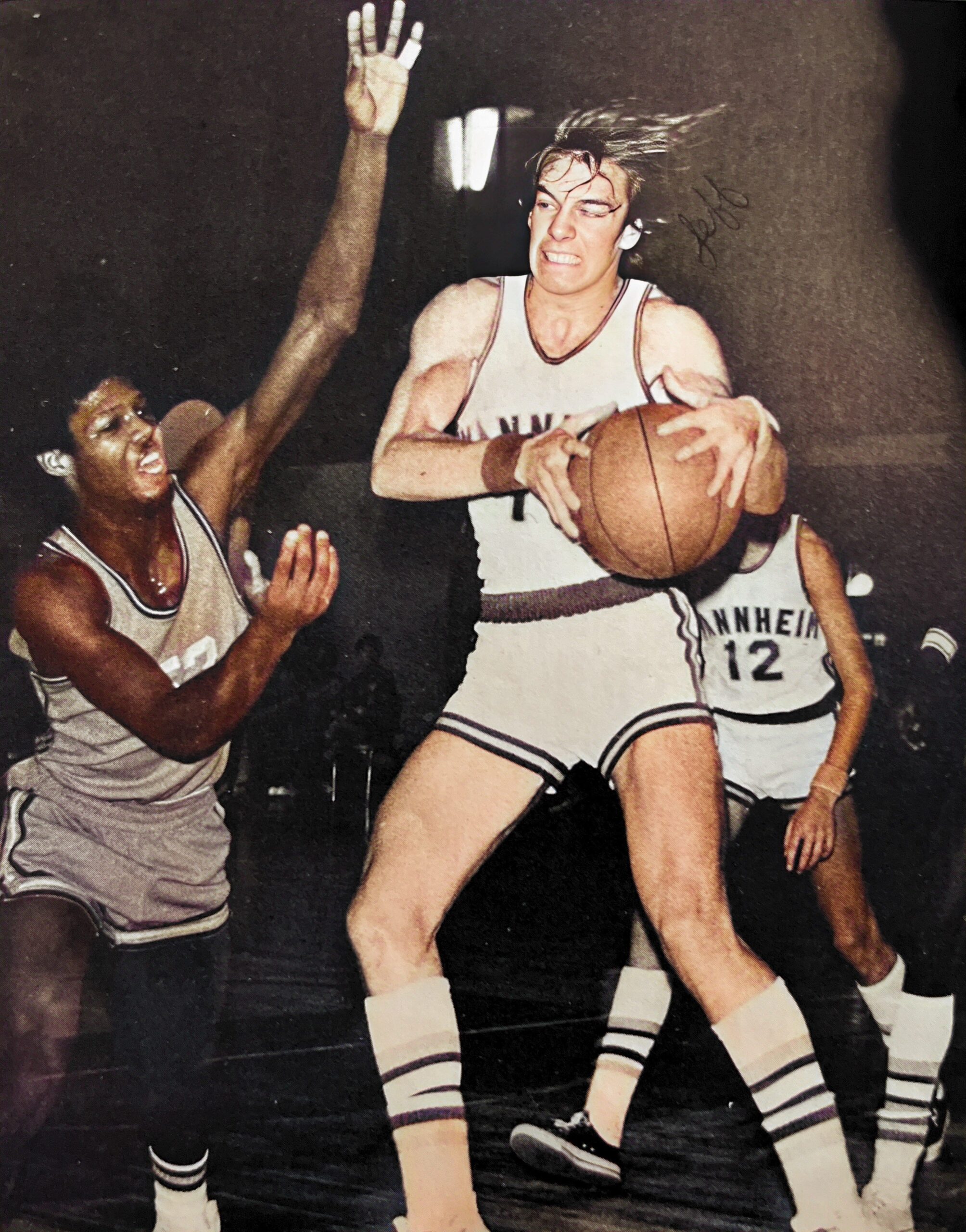
Jeff Blair, Co-Captain, Varsity Basketball Squad, Mannheim Ameican High School.

Part of autobiography of Dr. Anthony J. Carbone, Son in the Shadow of a Green Beret Hero.
Jeff Blair, Co-Captain of Varsity Basketball Squad, Mannheim Bisons
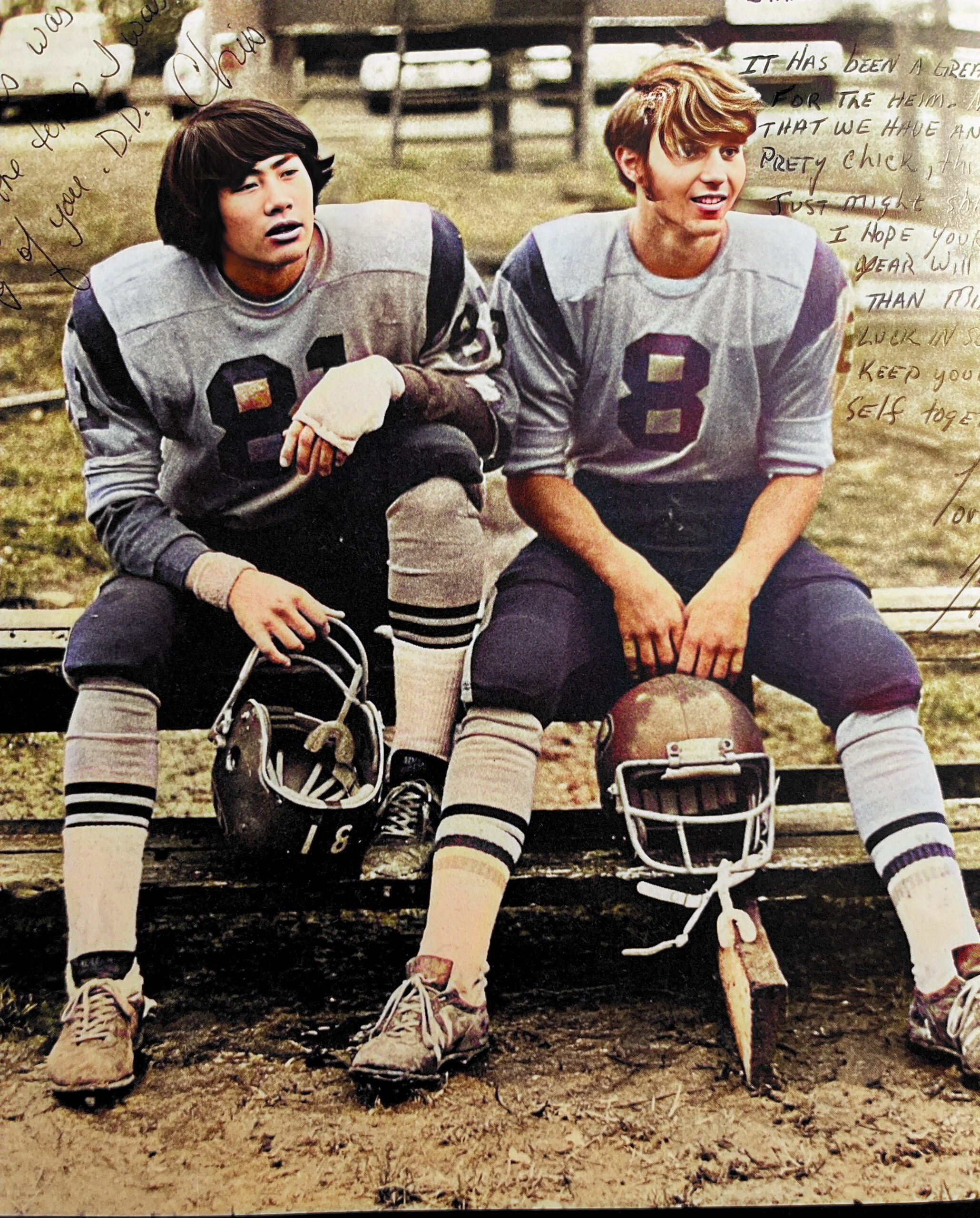
Varsity Football Co-Captains Crhis Corpus (Left) and Jeff Wing (Right) for Mannheim American High School.

Part of autobiography of Dr. Anthony J. Carbone, Son in the Shadow of a Green Beret Hero.
Chris Corpus (Left) & Jeff Wing (Right) Varsity Football Co-Captains
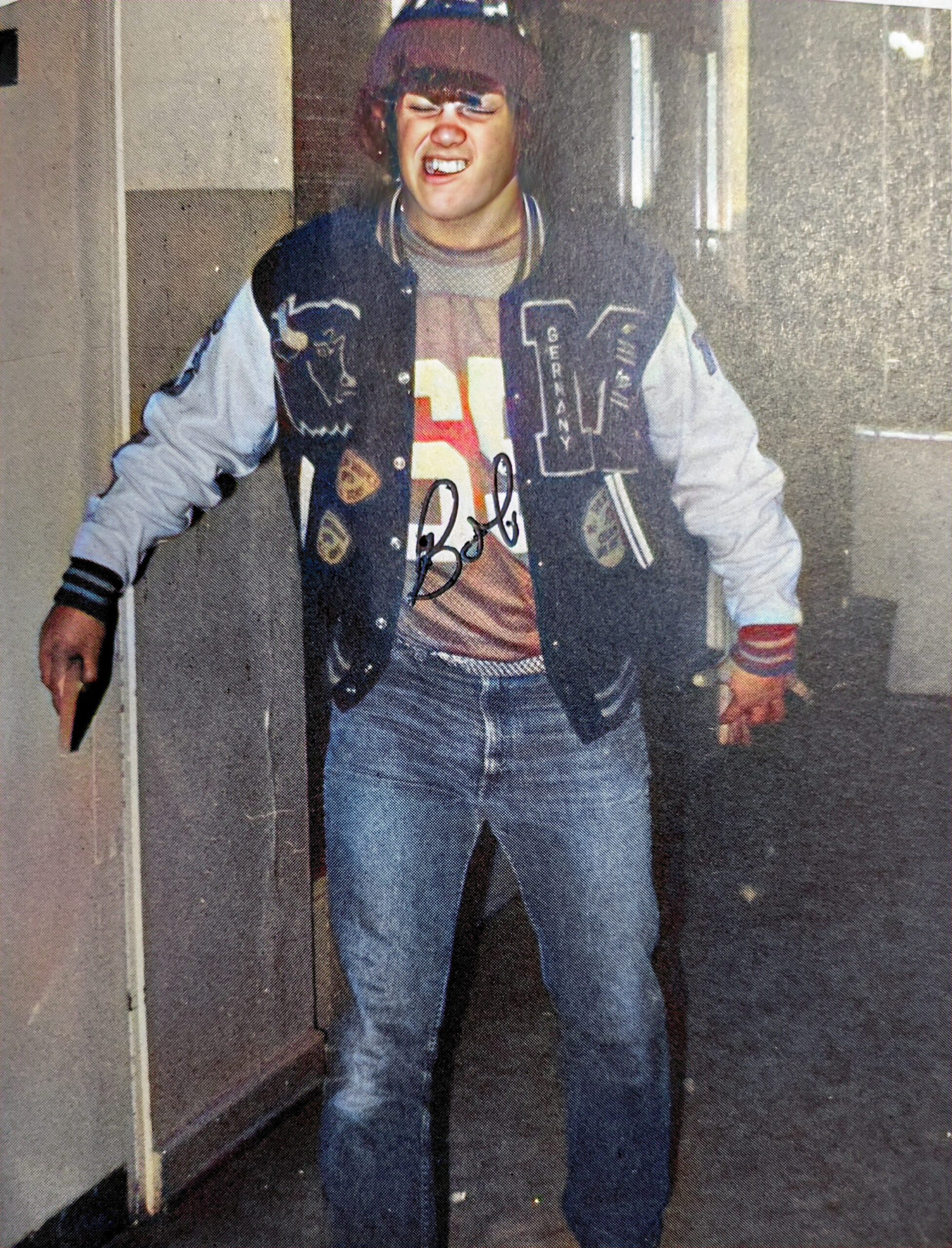
Bob Nicholson, Class of 1975, in his Mannheim Bison Varsity Letterjacket.

Part of autobiography of Dr. Anthony J. Carbone, Son in the Shadow of a Green Beret Hero.
Bob Nicholson (Class of 1975) in a classic Mannheim Bison Letterjacket
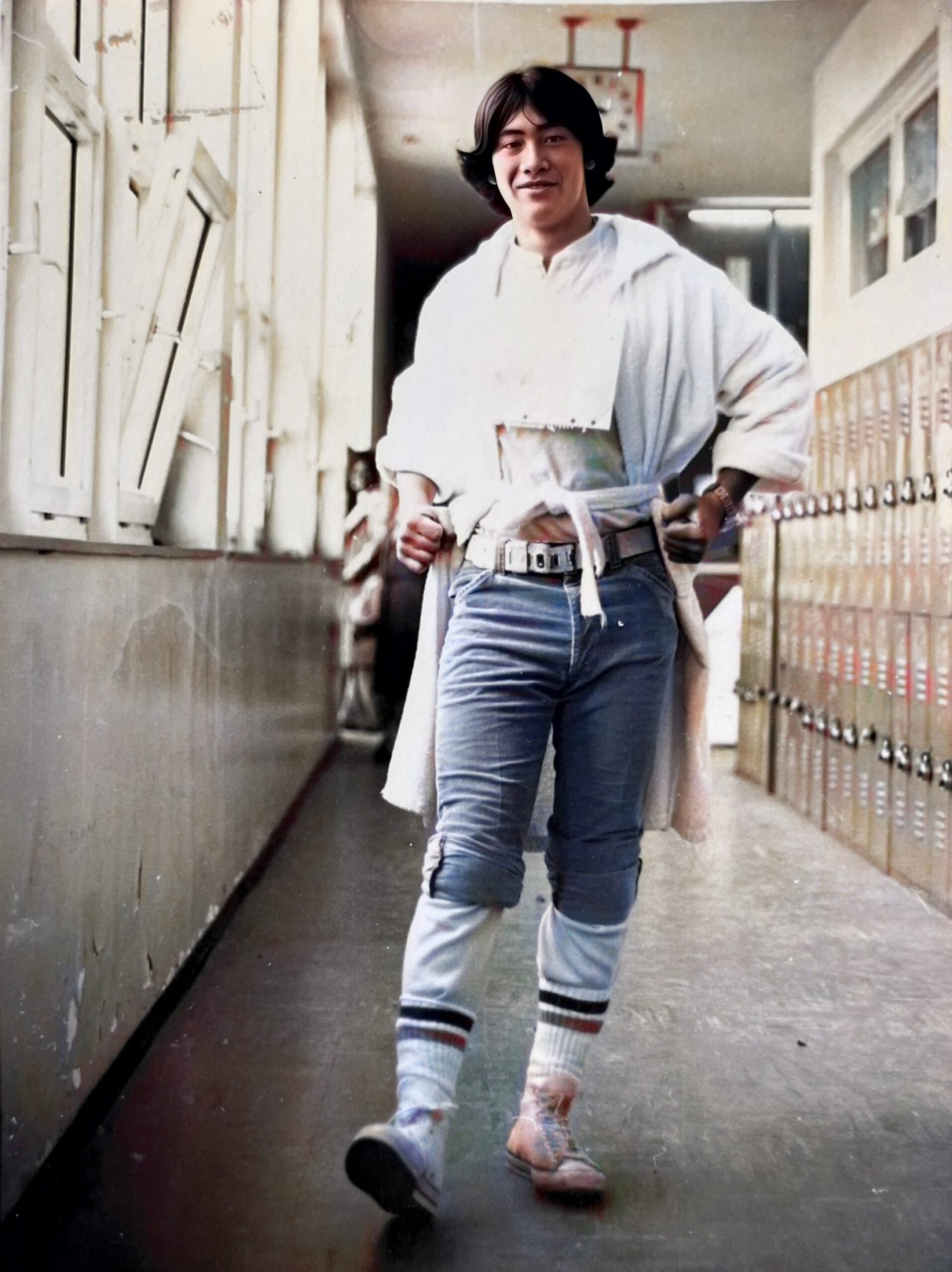
Corwin Christopher Corpus, Class of 1975 Senior Class President at Manneheim Ameican High School.

Part of autobiography of Dr. Anthony J. Carbone, Son in the Shadow of a Green Beret Hero.
Chirs Corpus, Class of 1975 Senior Class President

Class of 1976 Juniors

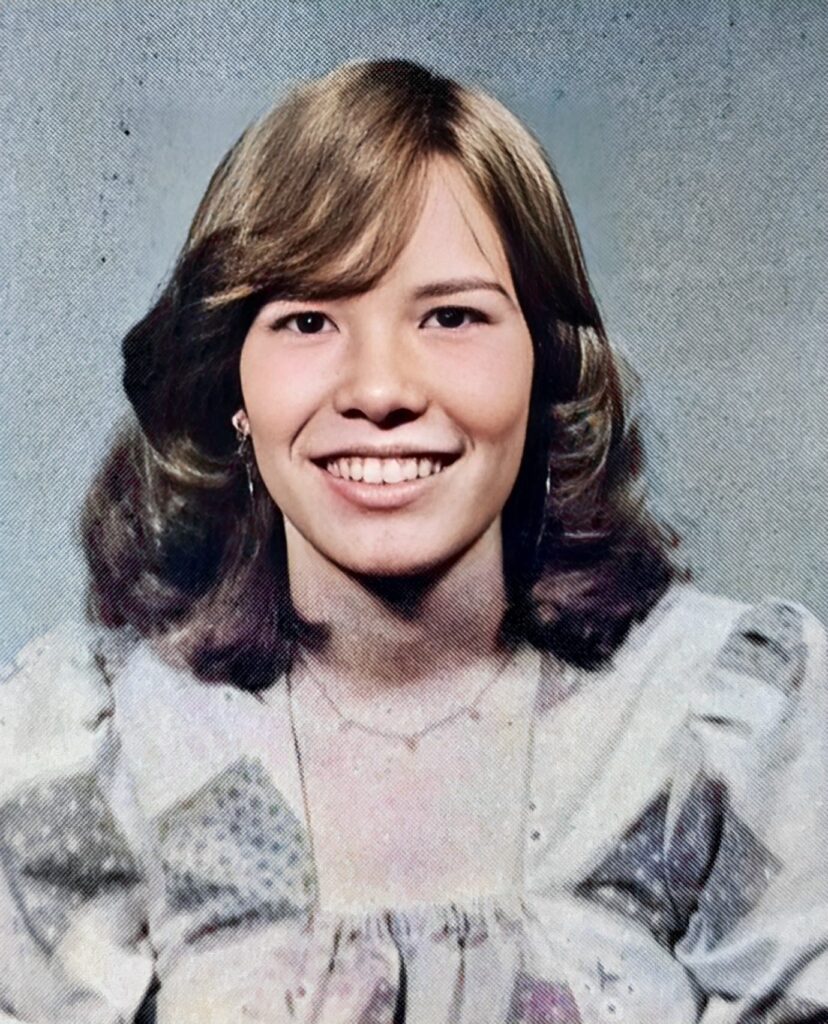
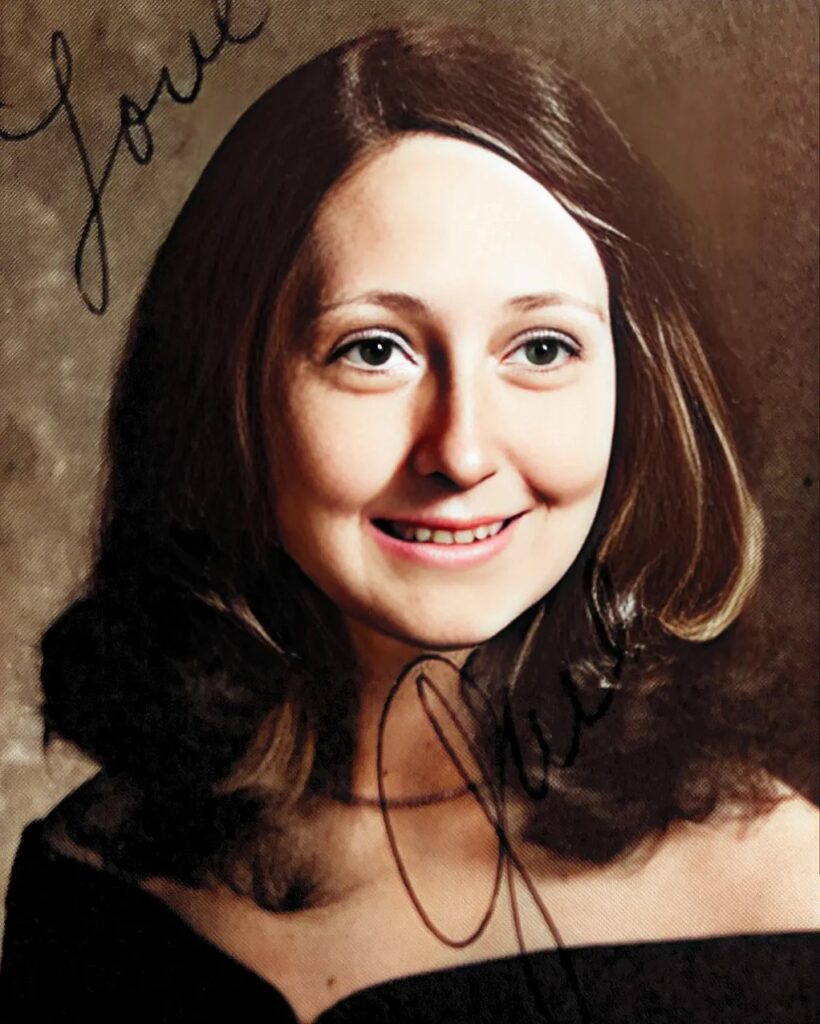
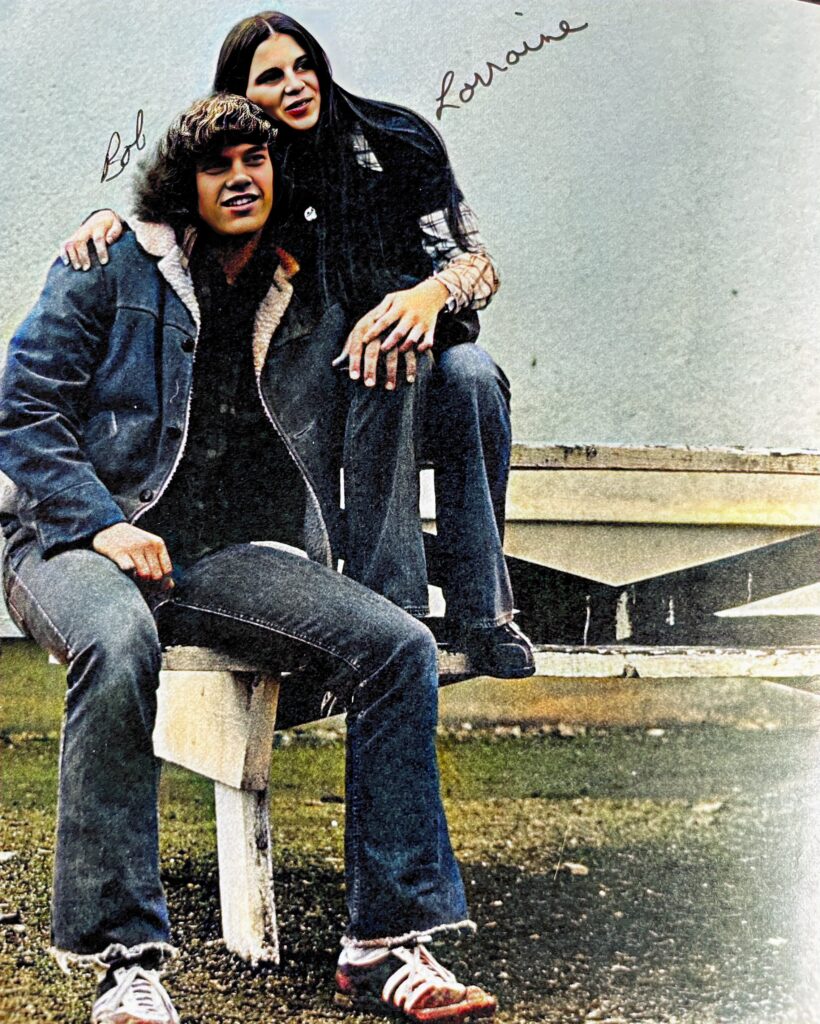
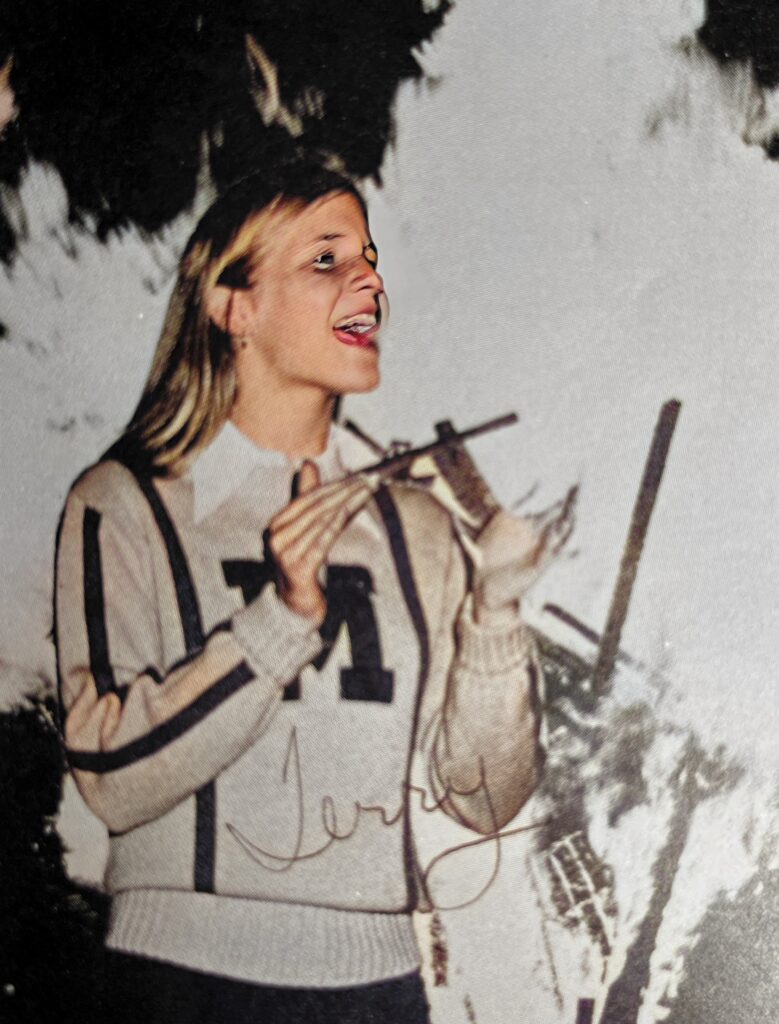
My sister Diana, in the Junior Class of 1976, was the most popular girl in school. She was Junior PrincessVarsity Cheerleader, and Homecoming escort to Jeff Blair. Everyone was in love with her. Her class included Rudy Glenn (Varsity Football and Varsity Soccer Captain 3 years in a row), Lorraine Duhovnik (Varsity Tennis), Terry Swenson (Varsity Cheerleader), the Auna twins, BeeBe (Varisty Cheerleader and Class President) and Murph (Varsity Basketball, Class VP and JROTC Officer), Kathy Wing, and Kelly Diest(Varsity Cheerleader)— along with Jeff Bell, my best friend and our beloved golf captain. Super athlete, Jenny Leitnaker, was in Diana’s class but was more of a friend of Jeff Bell and mine.

My sister Diana Carbone (Class of 1976) Senior Class Portrait at Mannheim American High School.

Part of autobiography of Dr. Anthony J. Carbone, Son in the Shadow of a Green Beret Hero.
My sister, Diana Carbone (Class of 1976)
Jeff Bell, Man of Fashion and Pro-Golfer.

Part of autobiography of Dr. Anthony J. Carbone, Son in the Shadow of a Green Beret Hero.
Jeff Bell, Man of Fashion and Golf Pro
Me with Lorraine Duhovnik (Junior Class) in the hallway of Mannheim American High School with Seniors, Mark Sanchez, Kyle Kamalu, and Bob Nicholson behind us.

Class of 1977 — Me and my Fellow Sophomores

I was a sophomore in the Class of 1977, but thanks to being ahead in school, I ended up in several of Diana’s classes — and even Lynne’s Physics classwith the infamous Miss Sapatka, a devout Star Trek fan who wore a Starfleet uniformand gave the Vulcan salute regularly. Odd as she was, she made physics one of my favorite subjects.

Class Photo at Mannheim American High School.

Part of autobiography of Dr. Anthony J. Carbone

I was also in Diana’s Chemistry class with Mr. Voltz, another science nerd with a great sense of humor, who eventually made me his assistant teacher because I earned straight A’s and was his top student. Diana wasn’t thrilled about sharing her classes — or her spotlight — with her nerdy little brother, but she had plenty of distractions, with every boy in school falling for her.

I was inducted into the National Honor Society, joined the choir, and made the Junior Varsity Soccer Team thanks to Rudy Glenn (Captain of the Varsity soccer team and a future professional soccer player), who took me under his wing. One afternoon, Rudy came up to me, dribbling a soccer ball, and asked if I played. “Not at all,” I said. “I can’t play anything.” He smiled and said, “Anyone can learn soccer.” And I did. By senior year, I was Captain of the Varsity Soccer Team, and we won the European Championship in our DoDDS division.

National Honor Society Inductees, Mannheim American High School.

Part of autobiography of Dr. Anthony J. Carbone, Son in the Shadow of a Green Beret Hero.
National Honor Society Inductees at Mannheim American

Rudy Glenn, Varsity Football & Soccer Star

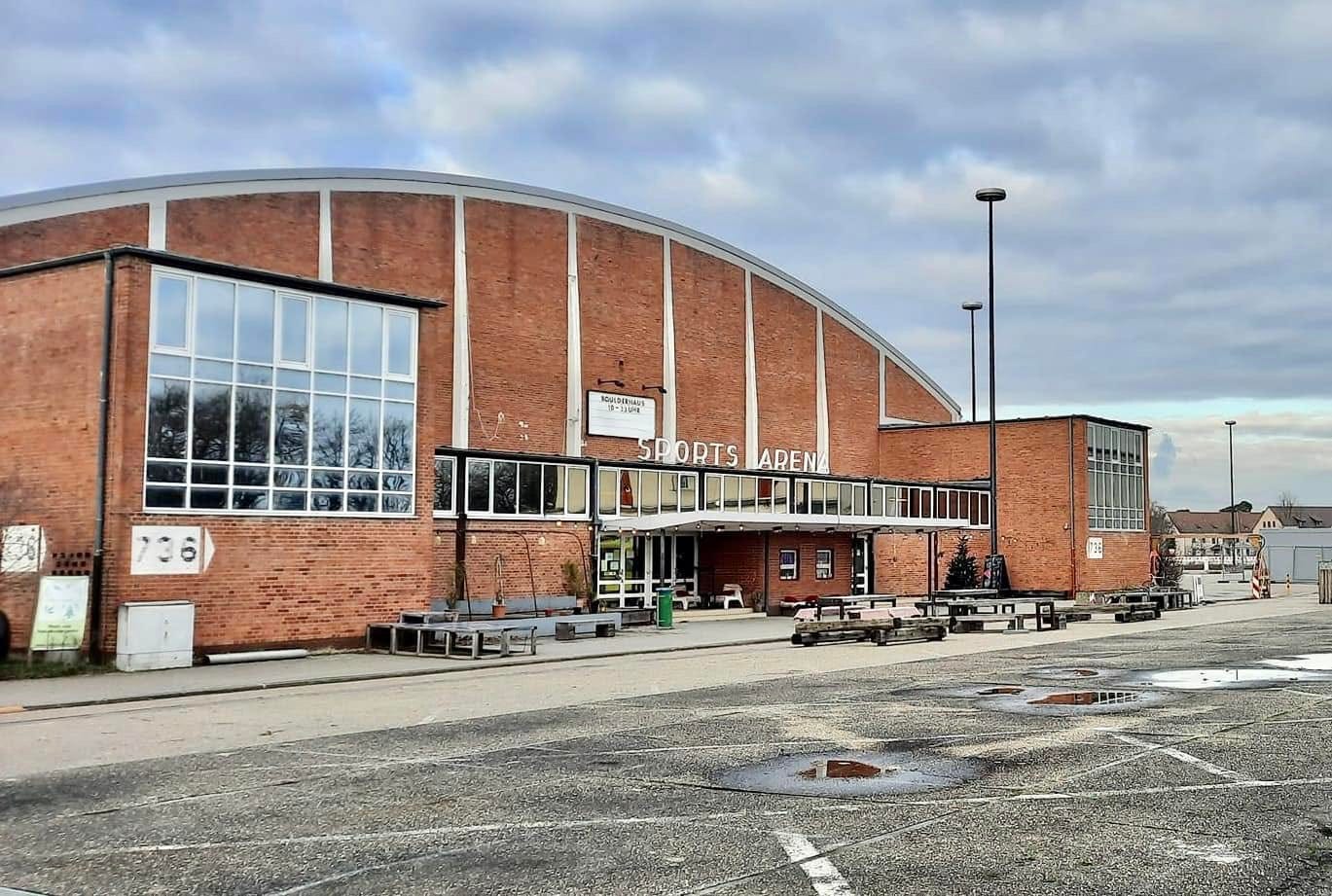
Sports Arena at Benjamin Franklin Village, Mannheim, Germany.

Part of autobiography of Dr. Anthony J. Carbone, Son in the Shadow of a Green Beret Hero.
Sports Arena in Benjamin Franklin Village Mannheim, Germany where MAHS played basketball.

Other Class of 1977 Notables

My class also had its own share of notables: Debbie Murray, who became a nurse anesthetist and a lifelong friend of Diana and mine; Andrea Simmons, the Diana Carbone of our sophomore class; and Jim Mills, son of my father’s S3, who followed us to Bad Kreuznach and became an All-Europe athlete there.

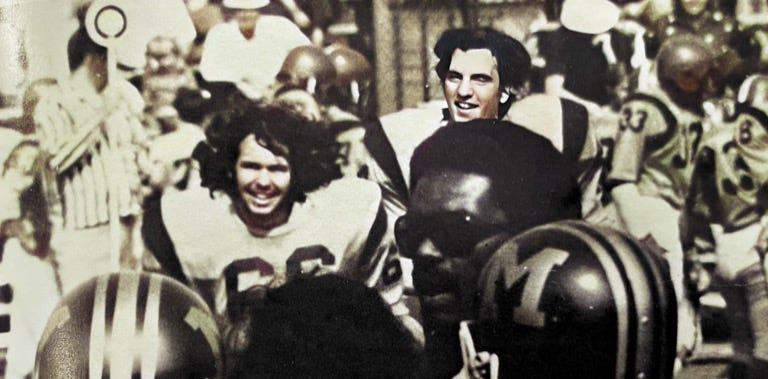
Jim Mills Jr (#66) On the Mannheim Bison Varsiry Football Team.

Part of the autobiography of Dr. Anthony J. Carbone, Son in the Shadow of a Green Beret Hero.
Jim Mills Jr with that 1970s hair!

Class of 1978–Freshman Class

And from the Class of 1978, one student I’ll never forget: Debi Bell, Jeff’s sister, who I thought was beautiful, kind, and incredibly talented. She was a JV cheerleader, a top gymnast and volleyball player, and she even agreed to be my date for a few dances — mostly out of kindness… and brotherly loyalty. Jeff and I made every single game and practice of Debi’s. Yes, I had a big (unrequited) crush.

Homecoming ’75: A Portrait of the Perpetual Ninth Wheel

The photograph of me below with 4 senior class friends: Mark Sanchez, Chuck Grayson, Kyle Kamalu, and John Timmerburg with their dates (forget Mark’s date name, Gail Hayward, Beebe Auna and Michele Kamalu). This was a photograph taken before Homecoming dance at Mannheim American High School in 1975. This sums up my high school romantic life in a single photograph — this night, I was the 9th wheel!
Photograph of Mannheim American High School Homecoming Dance evening with 4 senior classmen friends: Mark Sanchez, Chuck Grayson, Kyle Kamalu, and John Timmerburg.  With their dates: (Can't remember Mark's date name), Gail Hayward, Beebe Auna, and Michele Kamalu.  I am the 9th wheel.  Autobiography of Dr. Anthony J. Carbone.

Mannheim was a great school with great students and faculty. It was one of those small Department of Defense Schools Europe (DODSEUR) where everyone had to be involved in everything just to make the school function — which made it an absolute blast. Our superstar athletes were also in the choir, the chess club, and every other club imaginable because each one meant one thing: a road trip. And when your school is in Germany, that means one club might hold a meeting in London, another in Nürnberg, another in Berlin. The sports teams traveled somewhere exciting nearly every other weekend. It’s how I saw all of Germany for free.
Basketball Teams Roadtrip to Nüremberg

I remember traveling to Nürnberg for a basketball tournament with the teams — but even more memorably, I traveled with the cheerleaders and beautiful Kathy Wing, who was my co-basketball manager.

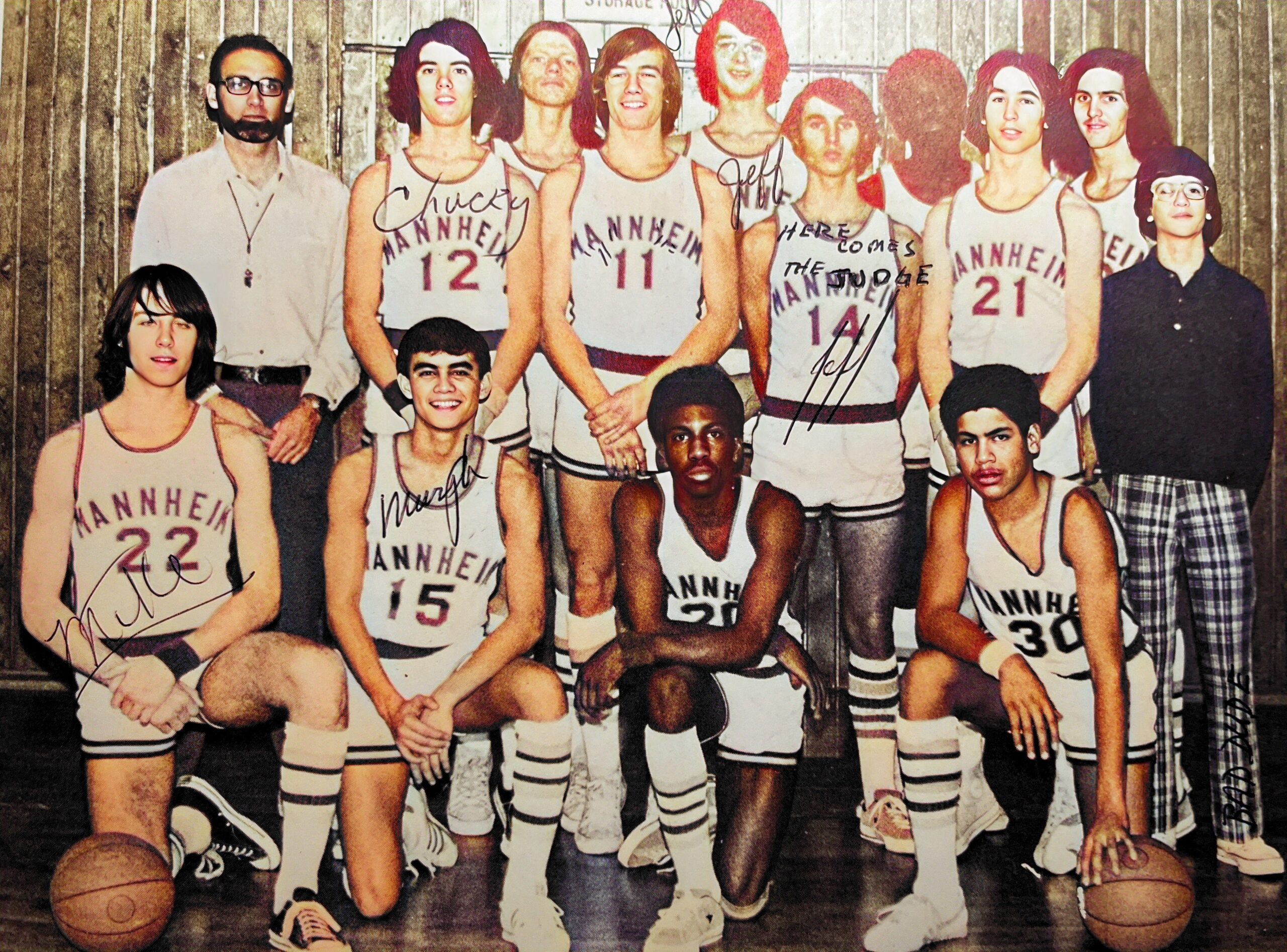
Men's Varsity Basketball Team with me as the manager at 5 foot 2 inches at Mannheim American High School in Germany.
Part of the autobiography of Dr. Anthony J. Carbone, Son in the Shadow of a Green Beret Hero.
Mens Varsity Basketball Squade (with me as manager)
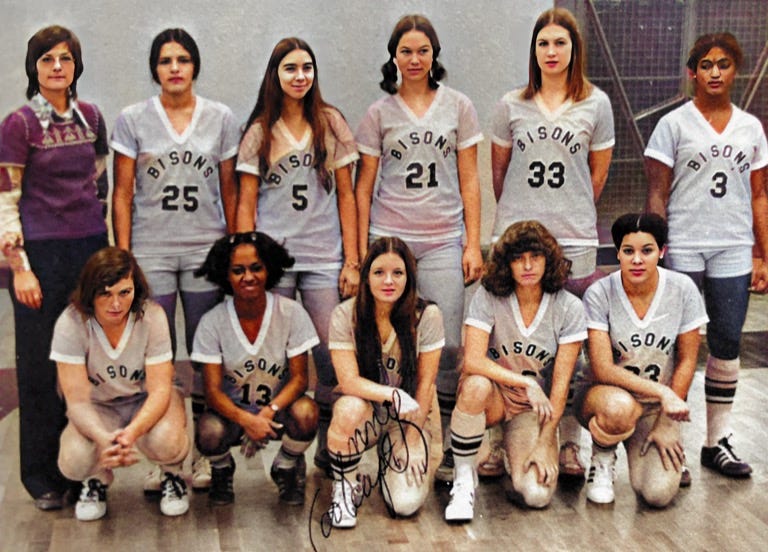
Women's Varsity Basketball Team, Mannheim American High School.

Part of the autobiography of Dr. Anthony J. Carbone, Son in the Shadow of a Green Beret Hero.
Women’s Varsity Basketball Squad

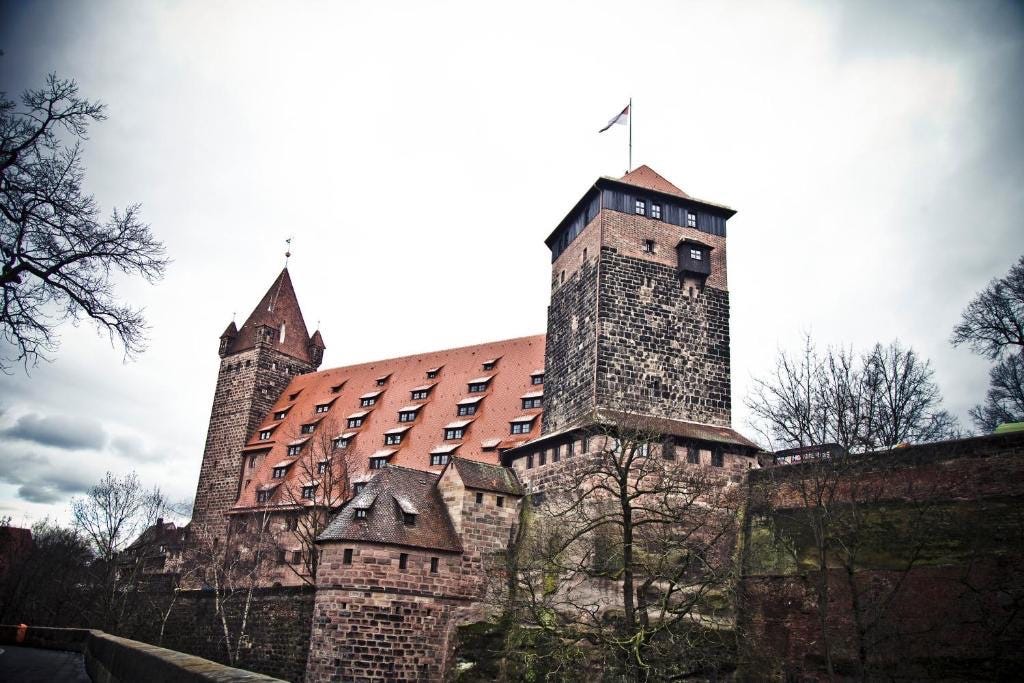
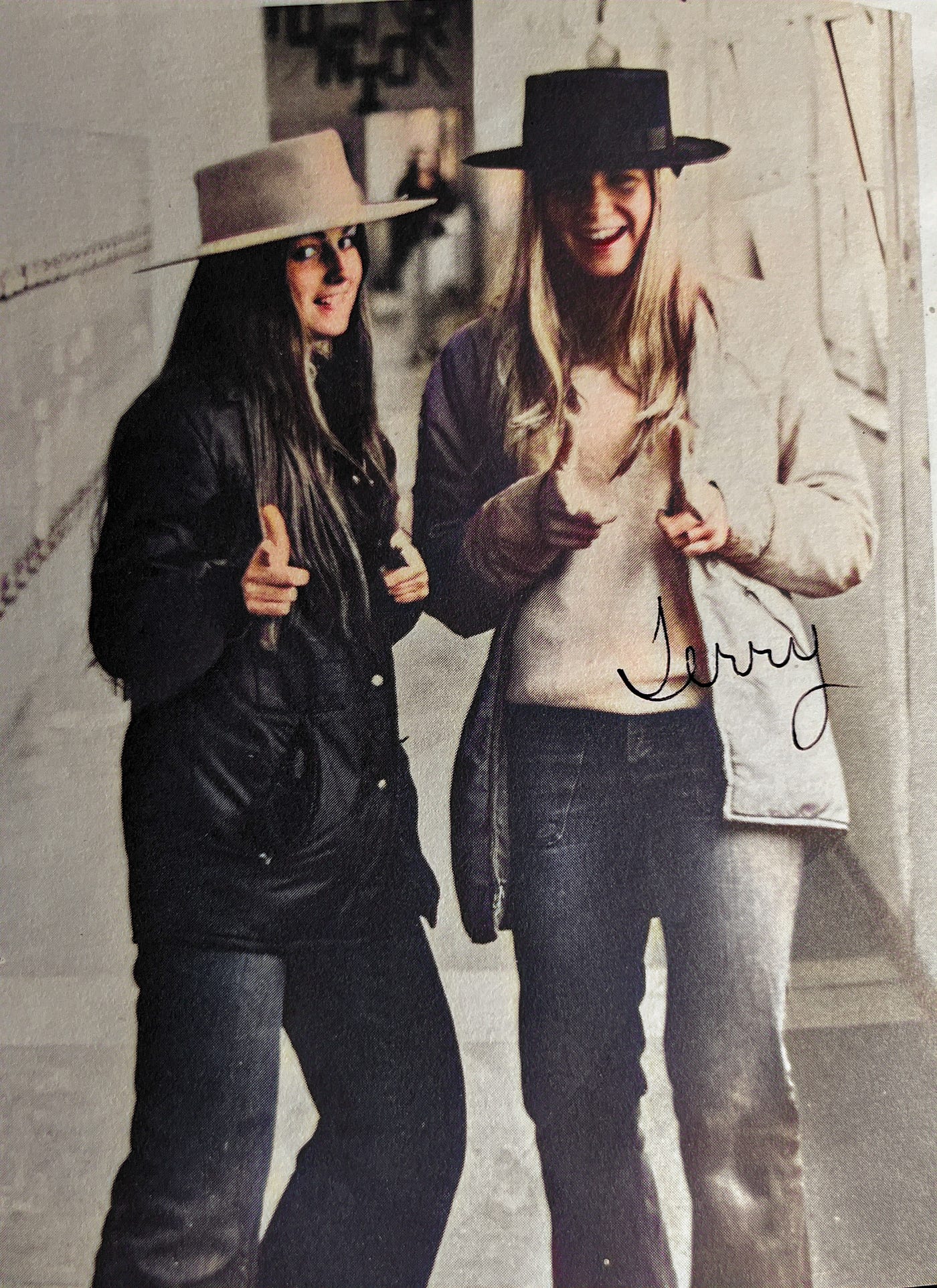
They put us up in the old Nürmberg Castle, right in the center of town. The youth hostel was actually located in one of the ancient towers of the castle. That night, I figured out that the cheerleaders were in the room directly below mine. Naturally, I tied my tennis shoes together by the laces, leaned out of the castle tower window, and started swinging them down, hoping to get their attention. Sure enough, I was thrilled when Terry Swenson and Kelly Diest poked their heads out of the window below and looked up at me, laughing. I might have been small in high school, but I definitely put my genius IQ to work when it counted.

Nüremberg Castle that contained the youth hostel where the basketball teams and cheerleaders in Nürmberg, Germany.

Part of the autobiography of Dr. Anthony J. Carbone, Son in the Shadow of a Green Beret Hero.
Nürmberg Castle (Youth Hostel) Germany
Kelly Diest (Left) and Terry Swenson (Right) varsity cheerleaders two of the most popular and nicest girls at Mannheim Ameican High School, Germany.

Part of the autobiography of Dr. Anthony J. Carbone, Son in the Shadow of a Green Beret Hero.
Kelly Diest (Left) and Terry Swenson (Right)
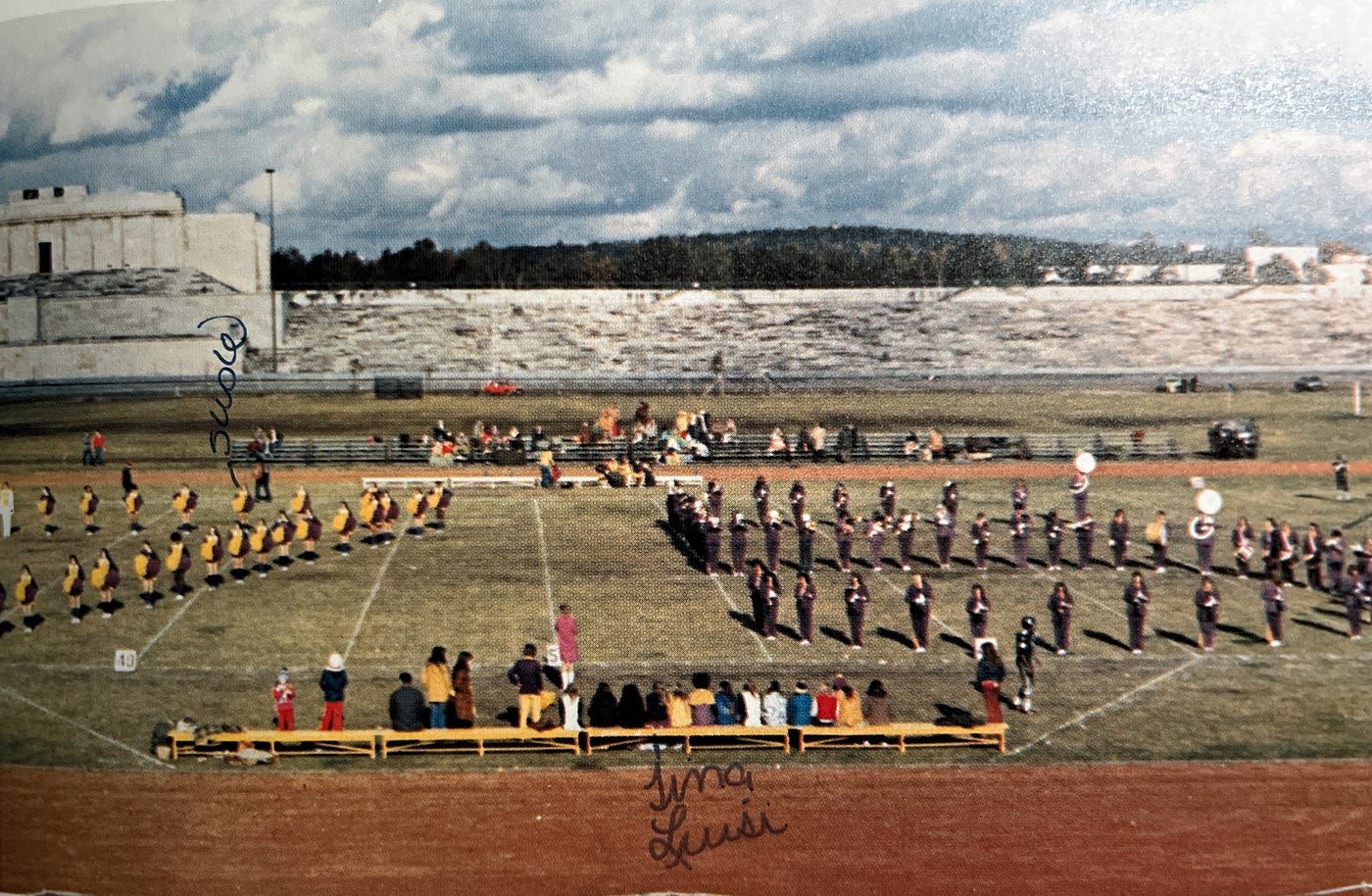
We played Nüremberg American High School football and soccer in the infamous Nüremberg Stadium that Hitler fave his rallies years ago.

Mannheim American High School Band and Lettergirls performing.


Part of the autobiography of Dr. Anthony J. Carbone, Son in the Shadow of a Green Beret Hero.
We played Nüremberg American High School football & soccer in the infamous Nüremberg Stadium that Hitler gave his rallies years ago.

Kelly Diest and the Kissing Booth

And then, there was my first real kiss. I can’t remember the exact event — it might have been a school fair or some kind of student fundraiser — but I definitely remember the kissing booth. And I absolutely remember who was inside it. There she was: the one and only Kelly Diest — gorgeous, red-haired, and a cheerleader. I was already in love with her, and now, here she was, smiling at me through the booth window. I gave her a quarter and stepped up. She gently placed her hands on my face and kissed me on the lips — oncetwice, and on the third kiss, I felt something I had never felt before: my first French kiss. I was stunned. Giddy. Smitten. My head was spinning.

I left the auditorium, ran home to my room, grabbed a roll of quarters I had saved from commissary tips, and sprinted right back to the kissing booth. I stood there handing Kelly one quarter after another — completely starstruck. At one point, I remember Kelly turning to one of my sisters and saying with a laugh, “I think your brother really likes kissing!” She had no idea. I’ve never forgotten Kelly Diest.

Kelly Diest (Class of 1976) Mannheim American High School.

Part of the autobiography of Dr. Anthony J. Carbone, Son in the Shadow of a Green Beret Hero.
Kelly Diest

Summer Hire at Seckenheim

In the summer of 1975, Lynne had just left for college in Boston, and Diana and I both signed up for “Summer Hire” through the U.S. Government. We earned $1.65 an hour — not much even back then. Diana landed a cushy gig working the front desk at the Military Police Station with her best friend, Leslie Roddy. Their job mostly involved answering phones and getting flirted with by MPs all day.

I wasn’t quite so lucky. I got assigned to an isolated Army base out in Seckenheim, a kaserne filled with warehouses and a giant industrial laundromat and ended up working in a warehouse that handled shipments of household goods — giant wooden crates shipped from the States. The place was run entirely by German nationals working for the U.S. Government, most of whom considered it the ultimate cush job. As the token American kid, they made me do everything: the paperwork, the filing, and even unloading trucks with a forklift — at age 14.
To pacify me, they called me Meister (which means “Boss”), fed me cartons of German Orangina, and gave me girlie magazines while they lounged around drinking beer all day. Yes, it was a bizarre experience.

Joined in Seckenheim by Jeff Bell & Kathy Wing

The one saving grace was that I wasn’t alone. I was stationed out in Seckenheim with my buddy Jeff Bell and the stunning Kathy Wing, who I adored and who later became our basketball team manager with me. Jeff got an equally tough assignment at the government furniture warehouse. We both worked like dogs that summer. Every day we ate lunch in a tiny canteen — just two Deutschmarks (about 50 cents) for a hot meal.

At first, Jeff and I were completely grossed out by the laundromat staff: large, tough old German women in sweaty uniforms manhandling loads of military uniforms and linens. But by the end of the summer, we’d catch each other sneaking glances at them — clearly overworked and heat-addled — and then smack each other on the shoulder and break out laughing.

Honestly, the only real consolation was the twice-daily commute. Jeff and I crammed ourselves into Jeff’s tiny Volkswagen Beetle for the long, hot ride to and from Seckenheim every day with Kathy Wing. That made the entire summer worth it.

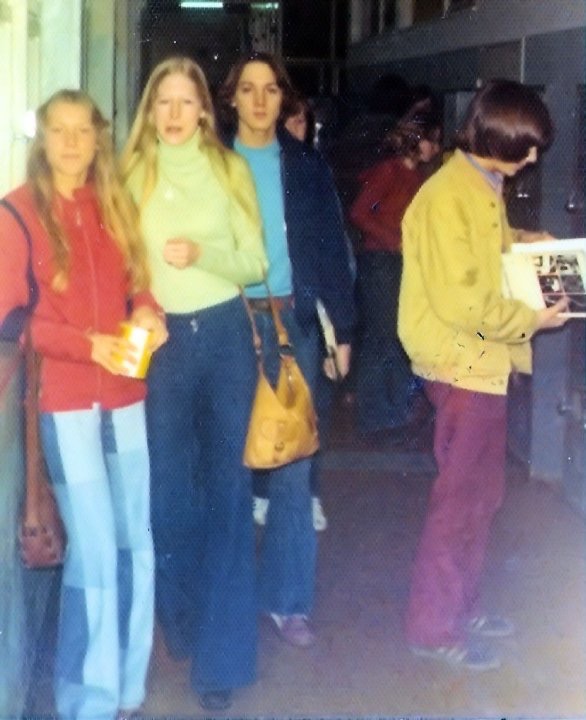
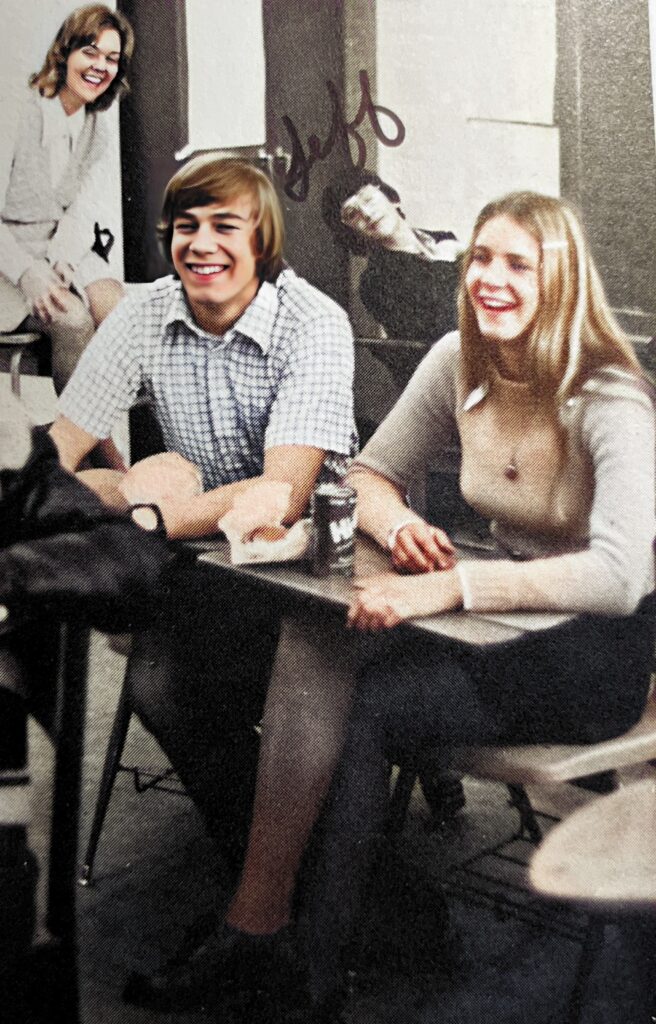
Mannheim American HS Hallway with Debbie Bell, Debbie Murray, Jeff Bell, and Tony Carbone.  Biography of Dr. Anthony J. Carbone
Mannheim American HS Hallway with Debbie Bell, Debbie Murray, Jeff Bell, and Tony Carbone.

Mischief in Mannheim

Mannheim was definitely my mischievous era. Our family had a lot of rules, which wasn’t unusual for military families at the time. One of the biggest rules was that we were not to leave the house when my parents were away — a rule you’ll soon see I broke more than once. Another rule was that Diana, Lynne, and I had to leave for events together and return home together at our designated curfew.

Jeff & I Watch Out for Diana

That meant almost every weekend ended the same way: Jeff Bell and I driving around Mannheim in the VW Beetle looking for Diana, who was always just moments away from getting in trouble. She wasn’t a bad kid — not at all. She was just incredibly naive when it came to boys, and Jeff and I became her unofficial watchdogs.

Chinese Fire Drill

And speaking of that little Volkswagen Beetle, Jeff and I made the most of it. We cruised around both on-post and off, pulled Chinese fire drills at intersections, and generally used it as our ticket to freedom. Once, when I was supposed to be babysitting my younger sisters Pamela and Cynthia, Jeff and I decided to take them out cruising. We hit a stoplight somewhere downtown Mannheim when a car full of other Army brats behind us honked, which was our cue for a car swap.

Jeff and I jumped out of the Beetle and ran to the car behind us, leaving Pam and Cynthia in the front seat. To their horror — and mine — two strangers jumped into the Beetle and drove off with my little sisters. According to Pam and Cynthia, it was one of the most terrifying moments of their childhood. Thankfully, the “strangers” were just other high school kids we knew — and Jeff and I recovered the girls moments later. My parents never found out. To this day, Pam and Cynthia still bring up that story, and I still count my lucky stars that I survived that one without court-martial.

Night of the Armor Ball

But I wasn’t always that lucky. One night, my parents got all dressed up — my father in his Dress Blue uniform and my mother in a gown — and they headed out in the Porsche for the Armor Ball. That usually meant they’d be out until midnight or later, so it was one of the nights I decided to sneak outof the house. Big mistake.

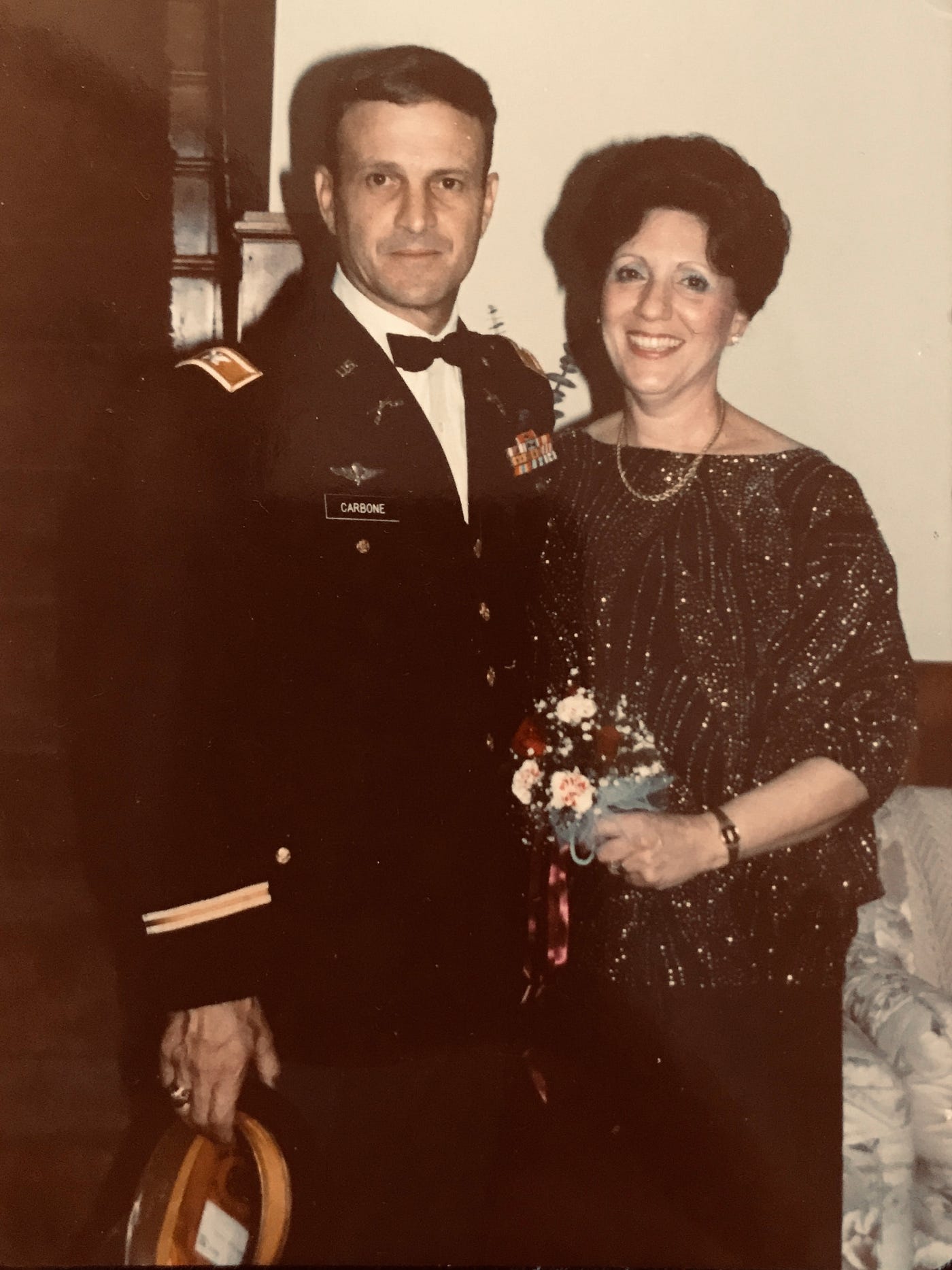
Dad (Colonel Tony Carbone) in his dress blue uniform and Mom (Edda Carbone) in an evening gown.

Part of the autobiography of Dr. Anthony J. Carbone, Son in the Shadow of a Green Beret Hero.
Dad in his Dress Blue Uniform and Mom in her evening dress.

My mother became ill on the way to the Armor Ball, and my father turned the Porsche around to bring her home and put her to bed. Meanwhile, I was out with Jeff, causing mischief for hours. When I finally returned home and slid my key into the front door, it opened on its own. My heart stopped. There, standing in the doorway, was my father — still in his uniform pants with suspenders, jacket off, calm as could be. In a very soft voice, he said: “Go sit on the couch.” I did. And I sat there for what felt like hours. Eventually, he came back into the living room and, in the same soft, low voice, he said: “Never do that again.”  I shook my head and muttered, “Never again, sir.” Then he quietly said: “Now, get to bed.”

My father’s power and authority

That was how powerful my father was — with everyone.  He never had to raise his voice. In fact, I can say with 100% certainty that he never raised his voice at my mother — not once in my life. It reminded me of that time back in Leavenworth, when the hippie brat came stomping into our quarters. My father spoke to him with the same calm authority, and I’m pretty sure that kid messed his pants.

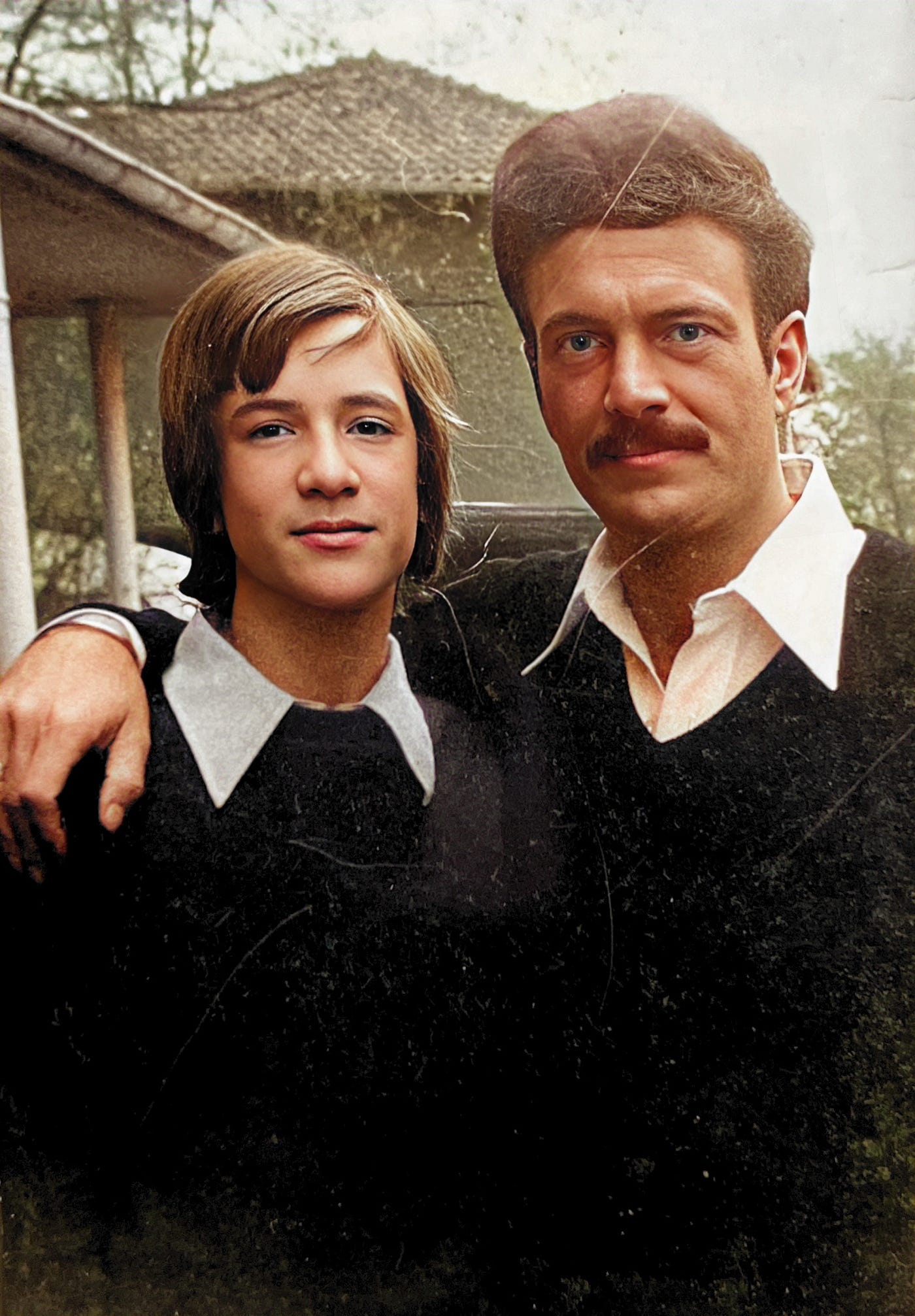
Me with my father (LTC Tony Carbone) outside our quarters on Grant Circle in Benjamin Franklin Village (BFV), Mannheim, Germany.

Part of the autobiography of Dr. Anthony J. Carbone, Son in the Shadow of a Green Beret Hero.
Me with my father (had to be hours before his next haircut).
Base family housing area showing typical government apartment buildings at Benjamin Franklin Village, Mannheim, Germany.

Part of the autobiography of Dr. Anthony J. Carbone, Son in the Shadow of a Green Beret Hero.
Base Housing Benjamin Franklin Village, Mannheim, Germany

The American Youth Association (AYA)

On weekends, all of us high school students gathered at the AYA (American Youth Association), which was a cultural time capsule of the 1970s. There were couches to hang out on, a few pinball machines, a small snack bar window, and walls covered in blacklight posters. At the center was a big dance floor, and suspended above it, the ultimate prize: a shiny disco ball. We had dances every weekend, and for a teenage couple on an Army base, an AYA dance was about as far as you could go.

The American Youth Association (AYA) buiding at Benjamin Franklin Village (BFV) Mannheim, Germany where we dependents played games, hung out and had dances.


Part of the autobiography of Dr. Anthony J. Carbone, Son in the Shadow of a Green Beret Hero.
American Youth Association (AYA) Building in Mannheim, Germany

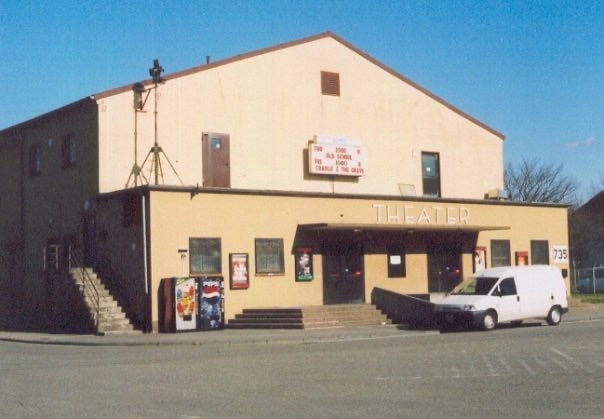
Saturday afternoons meant the post theaterMatinees were free, and regular movies cost 25 cents. You had to show either your military dependent ID card or your dog tags to get in. Every movie began with everyone standing for the National Anthem — no exceptions. And because soldiers and dependents were seated together, the theater lights were never turned off completely. We watched every film in a dim glow.

Post Theater at Benjamin Franklin Village (BFV) Mannheim, Germany.

Part of the autobiography of Dr. Anthony J. Carbone, Son in the Shadow of a Green Beret Hero.
Post Theater at Benjamin Franklin Village, Mannheim, Germany

Fun Times at the A&W

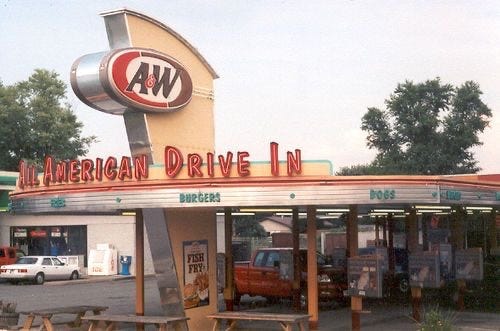
And then there was the A&W drive-in just outside the back gate of Sullivan Barracks. In the days before fast food chains conquered the globe, this was a very big deal. Jeff and I would pull into the lot and a waitress — often on roller skates, would come to take our order. We almost always ordered the same thing: an A&W Crunchburger (a hamburger with crispy onion strings on top). And of course, an ice-cold root beer float.

A&W drive-in restaurant like the one just off-post where Jeff and I would frequent in his VW Beetle in Mannheim, Germany.

Part of the autobiography of Dr. Anthony J. Carbone, Son in the Shadow of a Green Beret Hero.
Typical A&W Drive Thur c.1975

Those nights — cruising with Jeff, jukebox tunes playing, root beer in hand, sneaking glances at girls we liked, hoping not to get caught breaking curfew . Those were the sweet, golden days of youth. Mannheim was structured and disciplined, but it was also a place where we found room to rebel just enoughlaugh just loud enough, and live just fully enough to remember it all forever.

Military Orders Again!

But as all military kids know, just when life starts to feel perfect, the orders come down. Midway through Diana’s senior year, my father received new orders: he was to leave his beloved tank battalion and take a position at 8th Infantry Division Headquarters in Bad Kreuznach. Lynne had already left for college in Boston, but for Diana and me, the news hit like a punch to the gut.

We were devastated. Mannheim had become our home and the greatest place we have ever been assigned. I was just beginning to feel like I belonged, even though girls like Kelly Diest, Lorraine Duhovnik, Terry Swenson, or Kelly Wing barely noticed me. A teenager’s hope that one of them might give me a chance lingered, but that dream soon shattered. Yearbooks, countless photographs, and cherished childhood memories remained my solace.

Sitting outside our quarters in Mannheim, Germany (August 1976), before moving to Bad Kreuznach.

Decision made–Diana stays in Mannheim; I go to Bad Kreuznach

There were tears, long talks, and serious negotiations, but eventually my parents reached a compromise: Diana would stay behind to finish her senior year at Mannheim. She moved in with the Roddy family until she graduated. Meanwhile, the rest of us — my parents, my younger sisters, and I — packed up once more and moved to Bad Kreuznach.

Major Mills and Family Follow Us to Bad Kreuznach

We weren’t the only ones making the move. My father’s trusted S3, Major Jim Mills, was also reassigned to 8th Infantry Division HQ. His son, Jim Jr., followed us to BK — and the two of us would become close friends.

As the curtains closed on our life in Mannheim, I left behind a whirlwind of memories: first crushes, first kisses, wild drives in a beat-up Beetle, soccer matches, school dances, and the unbreakable bond with friends like Jeff Bell. Mannheim had been magic. But now, it was time to start again.

Photographs of Fellow Mannheim Bisons

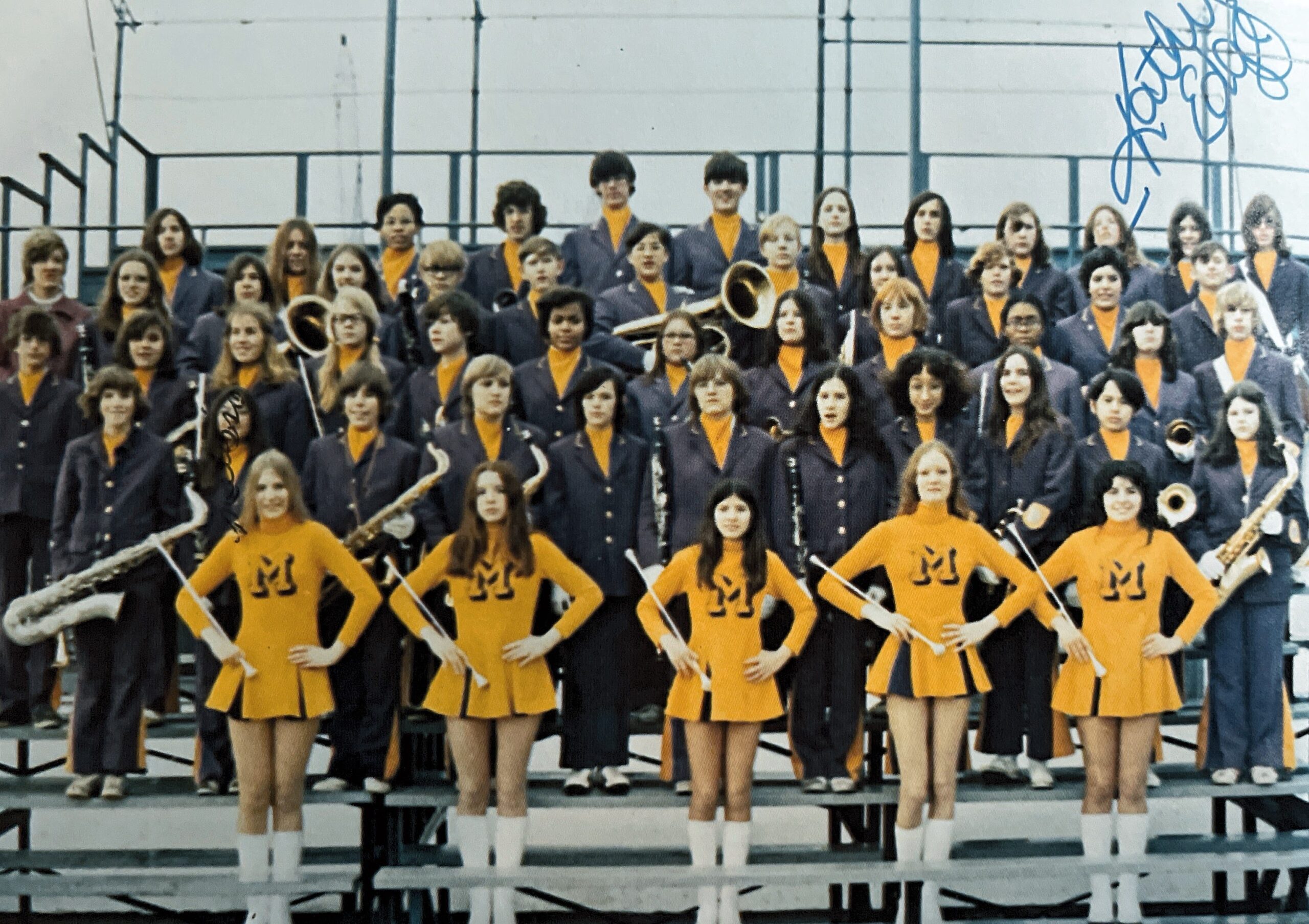
Mannheim American High School Marching Band and Majorettes.

Part of the autobiography of Dr. Anthony J. Carbone, Son in the Shadow of a Green Beret Hero.
Mannheim Ameican High School Marching Band & Majorettes
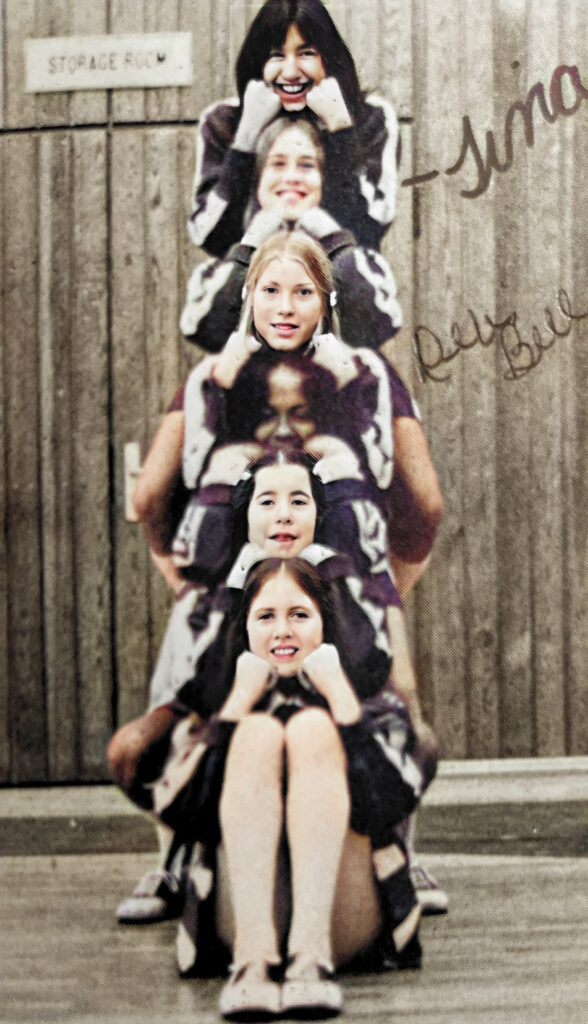
Few of the Mannheim Bison Lettergirls at Mannheim American High School in Germany.

Part of the autobiography of Dr. Anthony J. Carbone, Son in the Shadow of a Green Beret Hero.
Few of the Mannheim Bison Lettergirls
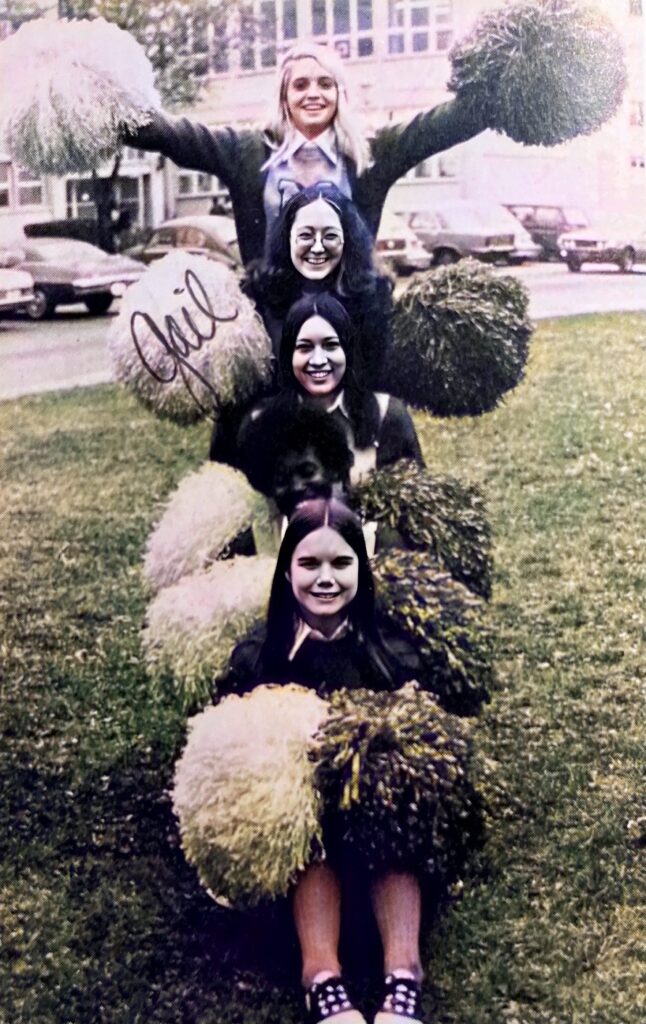
Few of the Mannheim Bison Lettergirls at Mannheim American High School in Germany.

Part of the autobiography of Dr. Anthony J. Carbone, Son in the Shadow of a Green Beret Hero.
Few of the Mannheim Bison Lettergirls
Few of the Mannheim Bison Lettergirls at Mannheim American High School in Germany.

Part of the autobiography of Dr. Anthony J. Carbone, Son in the Shadow of a Green Beret Hero.
Mannheim Bison Lettergirls

Mannheim American High School Class of 1977 Graduation

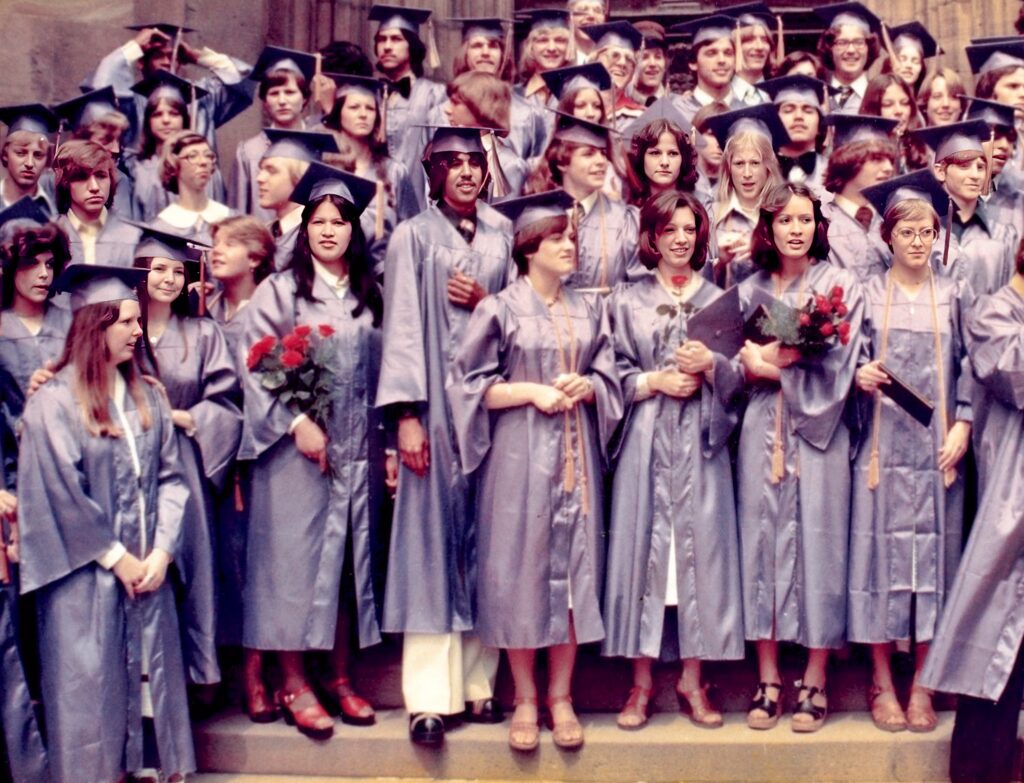
Graduating Class of 1977 in cap & gown, Mannheim American High School, Mannheim, Germany.  Biography of Dr. Anthony J. Carbone.

Home Page

Chapter 8: Return to Heidelberg, Our Second Tour of Germany

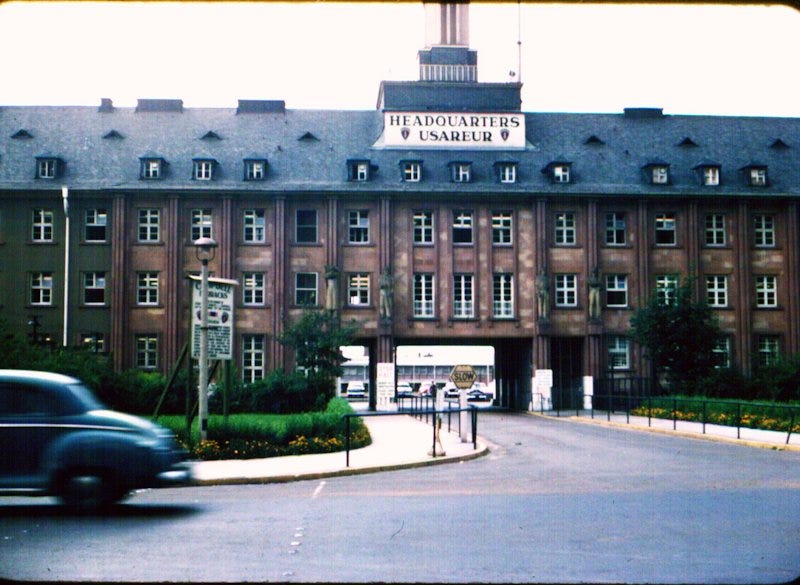
HQ US Army Europe (USAREUR) Patch. Autobiography of Dr. Anthony J. Carbone.

Believe Nothing You Hear, and Only Half of What You SeeA Memoir of Service, Shame, and the Search for Truth

Second Tour in Heidelberg, Germany

When I was ten years old, our family once again packed up our lives and headed overseas — this time for our second tour in Germany. My father had received orders assigning him to Headquarters, US Army Europe (USAREUR) and 7th Army, located at Campbell Barracks in Heidelberg. Unlike our earlier tour in the early 1960s, this one brought us back as seasoned travelers. I had already lived in multiple states and countries by then, and yet the thought of returning to Germany filled me with a deep sense of excitement and familiarity.
Shoulder patch of US Army Europe (USAREUR) Command that my father wore while assigned to Headquarters, USAEUR in Heidelberg, Germany.

Part of the autobiography of Dr. Anthony J. Carbone, Son in the Shadow of a Green Beret Hero
Headquarters US Army Europe (USAREUR) Shoulder Patch

Father works in the Mushroom

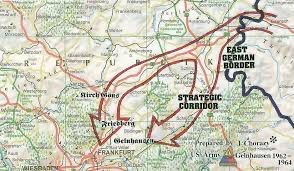
My father’s new assignment placed him in the Plans Department at Headquarters USAREUR, a position that carried immense responsibility. His Top Secret work took place deep in the lower levels of Campbell Barracks headquarters — in a windowless basement complex affectionately nicknamed “The Mushroom.” It was a fitting name for a place that seemed to operate in the dark, both literally and figuratively. There, my father and his fellow officers drafted highly classified contingency war plans in the event of a Soviet invasion through the Fulda Gap — the very terrain he had once patrolled with C Troop, 14th Armored Cavalry.

U.S. Army Campbell Barracks aeirial view in Heidelberg, Germany where my father worked in the War Plans Department in the deep basement called "The Mushroom".

Part of the autobiography of Dr. Anthony J. Carbone, Son in the Shadow of a Green Beret Hero
US Army Campbell Barracks in Heidelberg, Germany

We Live in Mark Twain Village (MTV) in Heidelberg

Although I didn’t fully understand the gravity of the Cold War at that age, I did understand that my father’s job was important. And we were lucky: his assignment came with stable, convenient housing and a chance to tour Europe. We lived in Mark Twain Village, a government residential community just steps from Campbell Barracks. Our second-floor apartment on Römerstrasse quickly became home.

Mark Twain Village (MTV) Military Family Housing Area in Heidelberg, Germany near Campbell Barracks, home of Headquarters, USAREUR.

Part of the autobiography of Dr. Anthony J. Carbone, Son in the Shadow of a Green Beret Hero
Mark Twain Village in Heidelberg, Germany
Typical housing quad at Mark Twain Village (MTV), military family housing area of Heidelberg, Germany for military personnel working at Campbell Barracks.

Part of the autobiography of Dr. Anthony J. Carbone, Son in the Shadow of a Green Beret Hero
Mark Twain Village in Heidelberg, Germany

Apollo 11 Moon Landing (July 20, 196)

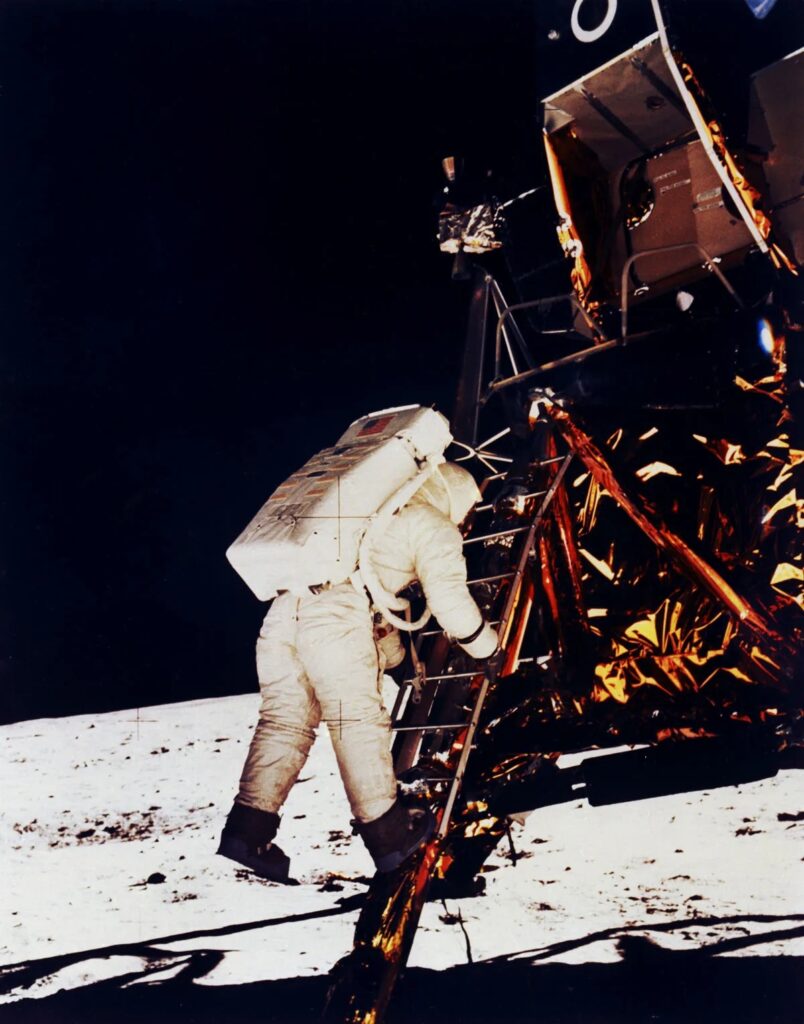
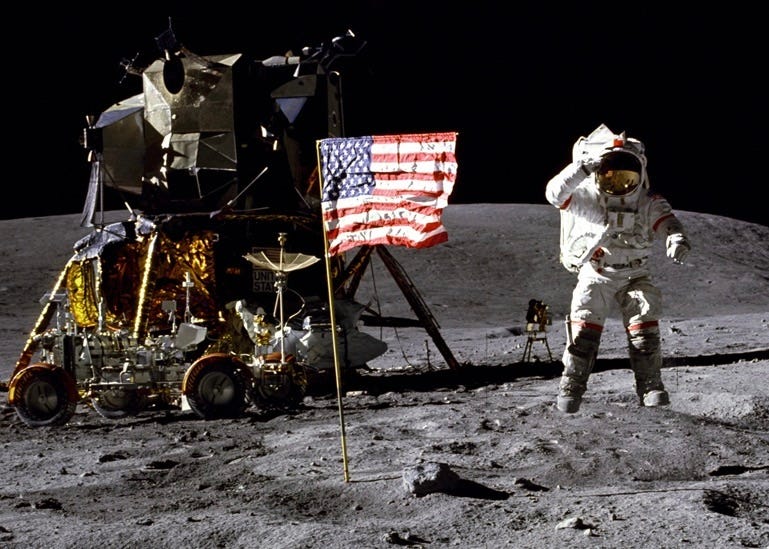
We had just settled into our new government quarters in Mark Twain Village in Heidelberg when the world seemed to stop for another historic moment. On July 20, 1969, we were glued to our little black-and-white television, watching the Armed Forces Radio & Television Network as the Apollo 11 mission unfolded. The Lunar Module touched down on the moon that evening (around 8PM German time), and I remember the suspense and awe in our household. We even woke up before dawn the next morning to see Neil Armstrong climb down the ladder and take that first step onto the lunar surface. His words — That’s one small step for man, one giant leap for mankind”— were broadcast across the globe, and even as a boy in Germany, I understood how extraordinary it was. The mission had launched from Florida on July 16, landed on the moon at 4:17 p.m. EDT on July 20, and Armstrong’s first step came at 10:56 p.m. EDT. By the time the astronauts returned safely to Earth on July 24, the entire world felt changed.

Watching Dad Walk Home from Campbell Barracks

From our living room window, my mother and I would sit together in the early evenings and watch the stream of officers walk home in their uniforms. Even though they all looked the same from a distance — identical green fatigues or Class A uniforms, same gait, same caps — I could always pick out my father by his walk. There was something distinctive and familiar in his stride and the way he tilted his head as though examining the terrain ahead of him, and spotting him from afar gave me a small sense of pride and comfort each day.

Parades at Campbell Barracks

We were so close to Campbell Barracks that we didn’t just see Army life — we heard it. The bugle calls, the thunderous boom of cannon salutes, and the rousing music of the 7th Army Band became the background soundtrack of our lives. If I had a day off school and it was light outside, I’d run over to Campbell Barracks to watch the soldiers march “Pass In Review”. Their gleaming boots, synchronized steps, colors and guidons waiving, and perfectly timed salutes made a deep impression on me. It was patriotic, ceremonial, and somehow reassuring.

U.S. 7th Army Band and soldiers "Pass in Review" on the parade field of Campbell Barracks in Heidelberg, Germany--home of Headquarters, USAEURA.

Part of the autobiography of Dr. Anthony J. Carbone, Son in the Shadow of a Green Beret Hero
US 7th Army Soldiers Pass In Review at Campbell Barracks in Heidelberg

Life in Mark Twain Village (MTV)

Mark Twain Village was filled with other Army families like ours. The kids played outside until dinner, rode bikes on the broad sidewalks, and gathered for games in the shared courtyards. We attended the American grade school nearby and shopped at the PX and commissary. Even though we were living in a foreign country, our daily life felt predictable and secure — until it didn’t.

Typical playground in. the quad betwen the apartment buildings of Mark Twain Village (MTV), the family housing area for military personnel working at Campbell Barracks, Home of HQ USAEURA, Heidelberg, Germany.

Part of the autobiography of Dr. Anthony J. Carbone, Son in the Shadow of a Green Beret Hero
Mark Twain Village Playground

Our Car is Used in a Kidnapping

One event pierced that sense of security in a way I’ll never forget. One night, thieves stole our family’s Pontiac station wagon, our trusted vehicle for school runs and weekend drives. Soon after, we discovered that kidnappers used it in the abduction of a young woman.

German and U.S. military police came to our apartment and fingerprinted each of us to help with the investigation of the recovered vehicle. I remember the serious, methodical way they worked, my fingerprints appearing on the identifcation card, and the sense of something terribly wrong. Later, it was revealed that chlorophorm had been used during the kidnapping. Our car was returned to us, but it never felt quite the same again. Driving around in it afterward felt strange and unsettling. As a boy, I didn’t yet have the words for trauma, but I knew we had been touched by something dark.

My 5th Grade Teacher Dies of Pneumonia

Another vivid memory from that year is one of personal sorrow. My fifth-grade teacher at Heidelberg American Grade School was only 21 years old. I’ve long since forgotten her name, but not her beauty or kindness. Even at ten, I knew we were lucky to have such a lovely and caring teacher.

My 5th Grade Class portrait at Heidelberg Elementary School No.1 in Mark Twain Village, 1970.  I am seated in the front row, 4th from the left.

Part of the autobiography of Dr. Anthony J. Carbone, Son in the Shadow of a Green Beret Hero
5th Grade Heidelberg American Grade School. Heidelberg, Germany. I’m in the brown jacket next to my girlfriend the girl scout.

Then one day, we were in the car — my parents in the front, me sitting in the middle between them on the bench seat — and Peter, Paul & Mary’sLeaving on a Jet Plane” came on the radio. I liked the song already, but suddenly it took on a whole new meaning. My parents turned to me gently and told me that my teacher had died — of pneumonia. I was stunned. “Pneumonia?” I asked. “Isn’t that curable with antibiotics?” They nodded softly but didn’t offer much more. I sat in silence as the song played, numb with disbelief. I don’t remember another thing about fifth grade. To this day, when I hear “Leaving on a Jet Plane,” I’m transported back to that car ride and the overwhelming sadness of losing someone so young.

Album cover to Peter, Paul & Mary's "Leaving on a Jet Plane" in High Fidelity.


Part of the autobiography of Dr. Anthony J. Carbone, Son in the Shadow of a Green Beret Hero
Peter Paul & Mary’s “Leaving On A Jet Plane”

I learn about suicide

That was not the only moment during our time in Heidelberg that shattered my childhood innocence. I remember another day, driving down Römerstrasse with my parents in that same Pontiac station wagon. I was again sitting between them in the front seat, the hum of the engine and the rhythm of everyday life lulling me into a sense of routine.

Then I heard my father whisper something to my mother. I couldn’t catch it all, but I heard enough: “The captain’s wife… she committed suicide.” My ears perked up. “What’s suicide?” I asked. My parents hesitated, then replied with quiet gravity, “It means she killed herself.” I was stunned. “Why would anyone kill themselves?” I asked again. They explained gently that she had been terribly homesick, living so far from her family, isolated in a foreign country. But I couldn’t understand how loneliness could drive someone to end their life. It seemed unthinkable.

As we continued driving, Joni Mitchell’s “Both Sides Now” came on the radio — “Bows and flows of angel hair…” — and that haunting melody fused itself forever to that moment. I couldn’t make sense of it then, and to be honest, I still struggle with it now. The suicide of that young officer’s wife marked me deeply. From that day on, suicide became something that both baffled and upset me — and it still does.

Album cover to Joni MItchel's "Both Sides Now".


Part of the autobiography of Dr. Anthony J. Carbone, Son in the Shadow of a Green Beret Hero
Joni Mitchell’s “Both Sides Now”

Nana Carbone visits us in Heidelberg

Despite these dark memories, Heidelberg was also a place of beauty, warmth, and family connection. During this tour, we had two long-time visitors who brought their own special energy to our household. My father’s mother, Nana Carbone, came to stay with us for a while. Our three-bedroom apartment was already tightly packed — my parents had their room, my four sisters shared another, and I had a small bedroom to myself. When we had overnight guests, I gave up my room and moved in with my sisters, sleeping on the floor between their two huge wooden bunkbeds. That simple act became a routine of sorts, and I never minded.

Photograph of Nana Carbone visiting us at our home in Mark Twain Village in Heidelberg, Germany.  With my mother (Edda Carbone), Sisters Lynne, Diana, Cynthia and Pamela Carbone.  Looks like it was my sister Diana's birthday with a birthday cake.  I am on the far left.

Part of the autobiography of Dr. Anthony J. Carbone, Son in the Shadow of a Green Beret Hero
Nana Carbone visiting us in Heidelberg

8 of us in a VW Beetle from Heidelberg to Paris

We took Nana sightseeing around Heidelberg and beyond, but I especially remember one spontaneous Saturday morning at the breakfast table. My father asked, “Who wants to go visit Paris?” We all exploded with excitement, raising our hands and pleading to go. He told us to gather our money — every coin and bill we could find, both American and German. We brought him our coins, our Deutschmarks, our pfennigs, and he carefully counted them up and announced that we had just enough.

The funniest part was that we no longer had the station wagon — at the time, we only had a 1960s-era German Volkswagen Beetle. So all eight of us — my father, Nana Carbone, my mother, and the five Carbone kids — crammed into that tiny car, along with our luggage, and drove all the way from Heidelberg to Paris. My father drove, Nana rode up front, and the rest of us — every last one — sat piled in the back, sandwiched together like sardines. It was cramped, absurd, and completely unforgettable.

Black Volkswagen Beetle circa 1960 that 8 of us piled into to drive from Heidelberg, Germany to Paris, France when my Nana Carbone was visiting us in Heidelberg.

Part of the autobiography of Dr. Anthony J. Carbone, Son in the Shadow of a Green Beret Hero
Black Volkswagen Beetle circa 1960 that 8 of us piled into to drive from Heidelberg to Paris when my Nana Carbone visited us.
Postcard of Paris that was a souvenir from our trip to Paris in 1970 when Nana Carbone visited us in Heidelberg, Germany.

Part of the autobiography of Dr. Anthony J. Carbone, Son in the Shadow of a Green Beret Hero
Postcard of Paris that was a Souvenir from our trip to Paris with my Nana Carbone.

Auntie Norma Stays with us Again

We also hosted my Auntie Norma that year. She came to stay for an extended visit and, as always, I gave her my bedroom and joined my sisters on the floor. Auntie Norma traveled with us occasionally, but she also took full advantage of Army-sponsored trips for officer wives and soldiers. She explored Europe independently, sometimes with others, often alone, always intrepid with cameras in hand. She was fearless, curious, and full of stories. Her presence added color to our home, and her spirit of adventure made a lasting impression on me. She has always been a part of our nuclear family to me.

Photo of main street Rotenburg, insided the famous walled city showing the iconic tower gate.  This was one of the most favorite places for our family to visit and show our visitors.

Part of the autobiography of Dr. Anthony J. Carbone, Son in the Shadow of a Green Beret Hero
Rotenburg ob der Tauber Germany, one of our favorite places to visit

I loved Germany

Although everyone in my family lived through three tours in Germany, the timing of this particular tour in my childhood made it the most significant for me. Germany — especially Heidelberg — became an essential part of my identity. Studying the German language began both in school and independently. German history, culture, and geography sparked deep fascination, leading our family to travel throughout the country. Military life, particularly my father’s role in the U.S. Army and the broader structure of NATO forces stationed across Europe, especially captivated me.

Even then, I knew I wanted to follow in my father’s footsteps. I was determined to become an Army officer. And I dreamed of returning to Germany for as many tours as the Army would allow.

Photograph of Neuschwanstein Castle, the icon of Bavaria (the American sector of Germany).  We took our visiting guests there often.

Part of the autobiography of Dr. Anthony J. Carbone, Son in the Shadow of a Green Beret Hero
Neuschwanstein Castle Bavaria Germany

Looking back, our second tour in Germany was not just another chapter in our family’s military life — it was the foundation of my emerging sense of self. It was a time when I began to understand the complexity of the world, to absorb culture, history, and tragedy, and to see clearly the path I would one day walk. Heidelberg wasn’t just a post — it was a place where I began to grow up.

Bierstein from HQ USAREUR in Heidelberg Germany. Captain Carbone. Dr. Carbone autobiography/
Bierstein HQ USAREUR Heidelberg Germany presented to my father, Captain Tony Carbone
5th grade school portraits while attending Heidelberg American Elementary School in Heidelberg, Germany.  Biography of Anthony J. Carbone.

Home Page

Chapter 4: Our First Tour in Germany: Fulda & Heidelberg

14th Armored Cavalry Distinctive Unit Crest with Motto Suave Moi Stationed at Rose Barracks , Fulda, Germany guarding the Fulda Gap near the Soviet Border. Autobiography of Dr. Anthony J. Carbone

Believe Nothing You Hear, and Only Half of What You See — A memoir of Service, Shame and the Search for Truth

Dad Gets Orders for Fulda, Germany

In 1964, during the height of the Cold War, my father received deployment orders to Fulda, West Germany. The Berlin Wall had only recently gone up, and global tensions were at a boil. It was a serious time, and the assignment my father received reflected that gravity.

Command of C Troop, 14th Armored Cavalry

Dad was given command of C “Charlie” Troop, 14th Armored Cavalry Regiment, in Fulda, Germany — stationed at one of the most sensitive flashpoints between NATO and the Warsaw Pact.

The unit insignia from the 14th Cavalry in front of crossed sabers, the U.S. military symbol of Cavalry, and the unit motto of “Suivez Moi” which is French for “follow me”. This is the unit crest that Captain Carbone wore when he commanded Troop C, 14th Armored Cavalry in Fulda, Germany.
Insignia of the 14th Armored Cavalry with Crossed Cavalry Sabers and the motto, “Suivez Moi,” which is French for “Follow Me”.

The Fulda Gap

Known as the “Charging Charlies“, C-Troop (and the rest of the 14th Cavalry) was responsible for guarding the infamous Fulda Gap, the strategic corridor military planners believed the Soviets would use to launch a massive armored invasion into Western Europe.

Map of Fulda Gap Germany During Cold War

Family Prepares for a Transatlantic Transfer

My father deployed ahead of us to report for duty and secure housing, while the rest of us — my mother, my three sisters, and I — prepared for the long move overseas. The process of uprooting our lives for Germany was as complex as it was memorable. Every item we owned had to be sorted into four categories: (1) Hold Baggage — essentials that traveled by air; (2) Household Goods — the bulk of our possessions, shipped by slow-moving cargo ship; (3) Storage — items too big or unnecessary to bring; and (4) Trash or Give Away — whatever wouldn’t make the cut.

Birth of Sister #3, Cynthia

Just weeks before our departure, on January 29, 1964, my third sister Cynthia was born. Her arrival added both joy and urgency to our preparations. With a newborn in the house, the challenge of organizing an international military move became even more formidable. But as always, my mother handled everything with grace and efficiency — tending to Cynthia’s every need while managing three other young children and the complex logistics of uprooting a household. Cynthia took her very first flight as an infant in her mother’s arms, beginning a life already shaped by service, travel, and family sacrifice.

This is the passport of Anthony J. Carbone’s mother, Edda V. Carbone, and her four children: Lynne, Diana, Anthony Jr., and Cynthia. This is the passport that Mom used to get into Germany and then return home to the United States.
My mother’s passport with Lynne, Diana, Anthony Jr. and Cynthia.
Anthony Jr.’s mother, Edda Carbone, with his baby sister Cynthia on her lap prior to our trip to Germany.
Mom with Cynthia in Medford before leaving for Germany.

Though I was very young, that journey remains burned into my memory. We traveled to McGuire Air Force Base in New Jersey, where we boarded a sleek four-propeller Douglas C-118 Liftmaster aircraft operated by the Military Air Transport Service (MATS)— packed mostly with uniformed GIs. We were one of the few military families on board. My mother, ever composed and elegant, wore a pencil skirt and sweater, her trademark pearl necklace resting neatly at her collar as she carried my baby sister Cynthia in her arms. She handled the journey with grace, even while managing four children. I remember GIs stepping in to help — each of us was being held or entertained by a soldier at one point. It was a shared moment of kindness and connection in a time of great upheaval.

Douglas C-118 Liftmaster operated by the Military Air Transport Service (MATS) out of McGuire Air Force Base. This is the type of plane that we flew from McGuire to New Foundland to Shannon, Ireland, to Frankfort, Germany.
Douglas C-118 Liftmaster operated by the Military Air Transport Service (MATS) out of McGuire AFB.

Family Flies to Germany — Headed to Fulda

The flight took us from McGuire to Gander, Newfoundland, then across the Atlantic to Shannon, Ireland, and finally to Rhein Main Air Force Base in West Germany. It took 16 to 18 hours, and when we landed, we were met by my father and our “sponsors” — an Army family assigned to help us transition into German life.

The Famous Welcome Sign to Europe at Rhein-Main Air Base in Frankfurt, West Germany in the 1960s.
The Famous Welcome Sign to Europe at Rhein-Main Air Base in Frankfurt, Germany.
Coat of Arms for the city of Fulda, Germany with a shield that is a black cross on white border on left half, and 3 white eidelweiss flowers on a red border on the right, topped with a crown of stone.  Autobiography of Dr. Anthony J. Carbone
Coat of Arms for Fulda, Germany

We live on a farm on the Germany “Economy”

At that time, there were no on-post quarters available for us in Fulda, so we rented a home “on the economy,” Army-speak for off-base living. Our rented house sat on a small German farm, nestled in the hills above a Catholic school that I attended for kindergarten alongside my sisters Lynne and Diana. The nuns who taught us wore full habits and ran a tight ship. I remember the heavy wooden Brio toys we played with, the scent of peppermint tea served before naps, and the solemn atmosphere of strict German discipline.

Lynne and Diana with their snowman in front of our house on the economy (off-post) in Fulda, West Germany. Our kindergarten and elementary school, run by German Catholic nuns, was right down the hill in our backyard.  Autobiography of Dr. Anthony J. Carbone.

Our landlord’s daughter, Effie, was a teenage girl with long blonde braids who lived downstairs and was mainly Lynne’s friend. Our babysitter was Marlena lived up the street from us. She spoke just enough English to make herself understood and was endlessly patient with us.

My oldest sister Lynne with our first German Volkswagen Beetle in Fulda, Germany.  All bundled up for the German winter.  Autobiography of Anthony J. Carbone.

My favorite sights, sounds and smells of Germany

Some of my most vivid childhood memories are rooted in that farm — the air thick with the scent of wildflowers, blossoming trees, and the unforgettable smell of “honeywagons,” large wooden barrels filled with manure used to fertilize the fields. Coal was still the primary source of heat, and the smoky, sulfur-rich air had a strange health to it — earthy and alive, part of the rural rhythm of Fulda. Another sensory thread woven deeply into those memories is the sound of church bells. They marked the hours with gentle regularity, rang out at midday for the Angelus, and on Sundays, filled the valley almost nonstop from dawn to dusk. Even now, the tolling of bells brings me instantly back to Germany — awakening a sense of calm, nostalgia, and rootedness that no other sound quite can.

One of Fulda, Germany's icons--the 18th Century Baroque Saint Salvator Cathedral whose bells could be heard all over the village.  Autobiography of Dr. Anthony J. Carbone.
18th Century Baroque Cathedral of Saint Salvatore in Fulda, Germany
All of Bavaria at the time (1960s) was gorgeous farmlands with incredible smells of nature. This is a view of the farmland in Fulda, West Germany.
The rolling farmlands of Fulda, Germany.

Dad Commands F Troop, 14th Armored Cavalry on Soviet Border

I don’t believe we owned a car at the time, so my father was picked up daily by his jeep driver to report to the regiment. It didn’t matter to me that we didn’t have a car because we loved living on the German farm. I was utterly captivated by the world we had entered. Even then, as a small boy, I had already made up my mind: I wanted to be a cavalry officer just like my father. I watched him closely, studying how he wore his uniform, how soldiers saluted him, how he led. To me, he was a hero, and I never questioned that I would follow in his footsteps someday.

My father, CPT Tony Carbone (center) with First Sergeant (left) and jeep driver (background). This is the same jeep and driver who used to pick up my father at our home on the economy and drive his to and from Downs Barracks where his cavalry troop was located.  Autobiography of Anthony J. Carbone.
Dad with his First Sergeant and jeep driver in the background.
Captain Tony Carbone (Dad) received the coveted award of First In Tank Gunnery (next to Troop First Sergeant Buswell) while commanding C Troop, 14th Armored Cavalry in Fulda, West Germany during the Cold War (c.1965).  Autobiography of Dr. Anthony J. Carbone.
CPT Carbone received the coveted award of First In Tank Gunnery (next to Troop First Sergeant Buswell)
Dad receiving a certifiicate for commaning C Troop, 14th Armored Cavalry in Fulda, West Germany (c. 1965)
Dad receiving a certifiicate for commaning C Troop, 14th Armored Cavalry in Fulda, West Germany.

We move on post into government quarters on Rose Barracks

Eventually, our family received government quarters. We moved into a tall, gray three-story apartment building that housed twelve Army families. The fourth floor had maid’s quarters built by the Nazis decades earlier. It wa, a haunting reminder of Germany’s past tucked above American military life. From my bedroom window, I could see the military airfield nearby. At night, as I lay in bed reading comic books under the covers. The rotating airfield beacon would cast alternating flashes of green and two white lights into my room. That rhythm of light, sweeping silently across my walls and pages, felt like a lullaby — strange, comforting, and unforgettable.

14th Armored Cavalry Regiment at Downs Barracks, Fulda, Germany (c. 1964). These were typical military buildings that the U.S. Army took over buildings from the Nazi forces after the war. This is a “Pass in Review” portion of an Army parade involving armored vehicles (M114 armored personel carriers used by the U.S. cavalry).
14th Armored Cavalry Regiment at Downs Barracks, Fulda, Germany
Fulda Army Airfield c.1964 showing the control tower and airfield beacon. Cessna L-19/O-1 Bird Dog ingle propeller aircraft were used for reconnaissance by the cavalry.
Fulda Army Airfield c.1964 showing the control tower and airfield beacon. The U.S. Army cavalry used Cessna L-19/O-1 Bird Dog aircraft were for reconnaissance.

Life on a cavalry post thrilled me. My father gave me occasional tours of the motor pool, the barracks, and the tanks. I couldn’t get enough. The Military Police (actually Unit Police–UPs) at the gate would sometimes let me stand next to them, waving in vehicles and offering salutes. The whole environment was electric to a young boy with big dreams.

Colors and Guidons of the full 14th Armored Cavalry Regiment at Downs Barracks. CPT Tony Carbone is somewhere in the line with other troop commanders. The Troop C, 14 Cavalry guidon can be seen if you look close enough.
Colors and Guidons of the full 14th Armored Cavalry Regiment at Downs Barracks

The Grim Reality of Guarding the Soviet Border

It wasn’t all parades and salutes for the 14th Armored Cavalry Regiment. Their mission was deadly serious. The regiment’s men actively guarded the infamous Fulda Gap, stationed at the spear’s tip.

Military planners expected that if the Soviet Union ever unleashed its armored divisions into Western Europe, the main thrust of their invasion would come roaring through this very corridor.

Photograph showing the West-East German border at the Fulda Gap with barricade with sign saying "Halt! Zonengrenze" (Stop! Border).  Autobiography of Dr. Anthony J. Carbone.

To the untrained eye, the countryside around Fulda was idyllic. Rolling hills, fertile farmland, and quiet villages created the picture of peace. The landscape gave no hint of the threat that loomed just across the line. However, the soldiers of the 14th Armored Cavalry knew better. They patrolled the NATO border daily, often within meters of East German and Soviet forces. From their observation posts, they could see the enemy through field glasses—watching them as intently as they were being watched in return.

Double barbed wire border at West-East Germany border in Fulda Gap.  Autobiography of Dr. Anthony J. Carbone
A border between East & West Germany that is just two barbed wire fences.
Families vist the border looking for the families in the East

Need for Tank Gunnery Proficiency

For these troopers, there was no illusion of safety. Tank gunnery, live-fire ranges, and field maneuvers weren’t training games—they were rehearsals for survival. Every round fired, every drill practiced, was preparation for the day the balloon might go up, when the border could erupt in fire and steel without warning.

14th Armored Cavalry M60 tanks practicing tank gunnery at Grafenwohr in Germany. Autobiography of Dr. Anthony J. Carbone.

The 14th Cavalry’s unspoken duty was to slow the Soviet juggernaut long enough for NATO reinforcements to mobilize. Everyone knew what that meant: if war broke out, the enemy would overrun the regiment in hours, perhaps even minutes.

It was a grim reality, but one they carried out with quiet professionalism. To a boy watching from the safety of Army quarters, the regiment looked like knights in armor. Unfortunately for the men who wore the spurs, it was a mission shadowed by constant danger.

Dad smoking his infamous Italian stogie followed by his Executive Officer (XO) Lieutenant Ron Meyer and 3rd Platoon Leader Lt Jim Zimmerman of the 14th Armored Cavalry at Fulda, Germany.  Autobiography of Dr. Anthony J. Carbone.
C Troop Commander, Captain Tony Carbone, with his Executive Officer (XO) Lieutenant Ron Meyers.

Baby Sister, Pamela, is born in Germany

During this tour, our family grew again. My baby sister Pamela was born on September 11, 1965 at the 97th General Hospital in Frankfurt, Germany. My mother was too far along in her pregnancy to make the long trip home, so Pamela became the only one of us not born at Lawrence Memorial Hospital in Medford, Massachusetts. She even held dual American-German citizenship until she turned eighteen.

This is the 97th General Hospital in Frankfurt, Germany, where my baby sister Pamela Carbone was born in 1965.
97th General Hospital in Frankfurt, Germany.
My baby sister Pamela riding on my mother in Germany
My baby sister Pamela's baptism party in our on-post quarters on Rose Barracks, Fulda, Germany.  Autobiography of Dr. Anthony J. Carbone.
My sister, Pamela’s, baptism party in our post quarters in Fulda, Germany.

Our first deployment to Germany wasn’t just a posting — it was the beginning of my lifelong identification with the Army, with cavalry tradition, and with the kind of honorable service my father embodied. It was the chapter where I began to understand who I was becoming — and who I aspired to be.

Dad Gets Orders for HQ USAREUR in Heidelberg, Germany

As his command in Fulda came to an end, our family received new orders: a transfer to Headquarters, US Army Europe and 7th Army (HQ USAREUR) Heidelberg. This meant a new home for our family — one unlike any we had experienced before. We relocated to an American military housing area called Patrick Henry Village (PHV), located just on the outskirts of Heidelberg.

This is the Headquarters US Army Europe (USAREUR) in Heidelberg, Germany. Another Nazi military building that was conviscated and repurposed by the U.S. Army after the war.
Headquarters US Army Europe (USAREUR) in Heidelberg, Germany

Our Family Moves Into Post Housing — Patrick Henry Village

PHV was more than just a place to live; it was a self-contained American suburb transplanted into the heart of Germany. During the Cold War, it became one of the largest military family housing areas in Europe, with over 16,000 Americans living in approximately 1,500 apartment buildings. Every building looked exactly the same — white-painted concrete blocks with terra cotta roof tiles, lined up in precise rows. Each building contained three stairwells, with 18 apartments stacked over three floors.

The fourth floor usually housed maids’ quarters or temporary billeting units. From the outside, there were no distinguishing features. That fact became a nightmare on my very first day of school when I got hopelessly lost trying to find my way back home. Every building looked the same, and the playgrounds behind them all were full of noisy children. To this day, I have no idea how my mother managed to find me in that uniform maze of concrete, stairwells, and unfamiliar faces — but she did.

Apartment Buildings at Patrick Henry Village. Classic goverment multi-family housing units that housed American military families and were found all over Germany after the war.
Apartment Buildings at Patrick Henry Village

Aerial View of PHV Shows Size and Similarity of Post Housing

Aerial view of Patrick Henry Village showing the uniform multi-family governement quarters.

Playing freely on Post Housing Area in Patrick Henry Village

Despite that early trauma, I quickly adapted and grew to love life in Patrick Henry Village. Behind each building was a small playground, usually occupied by a noisy cluster of children from different corners of the country, brought together by the rhythm of Army life. After school and on weekends, those playgrounds became our kingdom. We ran wild until the familiar rituals of military tradition called us back to order.

An unknown military dependent (Army brat) resting in the playground behind housing units in Patrick Henry Village.
Playground behind housing units in Patrick Henry Village.
Children met in the playground without the need for mothers supervising us. This was the usual diversity of cultures and backgrounds that I grew up with in the military.
Children met in the playground without the need for mothers supervising us.

Military Bugle Calls

Every evening at exactly 1700 hours, a cannon blast echoed across the post, followed by the bugler’s mournful notes of “Retreat” and “To The Color.” At that moment, everything on base stopped. Cars pulled to the side of the road. Soldiers stepped out and faced the flag. Children froze in mid-play, instinctively turning toward the post colors. Everyone stood silently until the last note faded. That simple act — performed every day — instilled in me a deep and abiding sense of patriotism. Even today, the memory of it gives me goosebumps.

Bugler sounds Reville (usually at sunrise), Retreat (usually at 1700 at the end of the work day), Tattoo (which traditionally meant “last call” or “close the taps” around 2000), and Taps (usually at 2100) that can be heard across the post.
Bugler sounds Reville, Retreat, Tattoo, and Taps at scheduled times that can be heard post-wide.

HQ USAREUR at Patton Barracks in Heidelberg

My father’s duty station was at Patton Barracks, which housed the Headquarters of United States Army Europe (USAREUR) and the 7th Army. As a boy, I didn’t fully grasp the weight of those names or the significance of the command my father now served. But I understood that he wore his uniform with pride, and that our family’s life revolved around a larger mission. We belonged to something big.

Front gate with MP shack for Patton Barracks, Heidelberg, West Germany c. 1960s,
Patton Barracks, Heidelberg, Germany

We Enjoy Off-Post Visits to Altstadt Heidelberg

Though Patrick Henry Village was distinctly American, we were just a short ride away from one of the most beautiful cities in all of Europe — Heidelberg. Nestled on the banks of the Neckar River, Heidelberg is a city of old-world charm and deep historical roots. Dating back to the time of the Celts and Romans, it is best known for its stunning Schloss Heidelberg — a romantic, partially ruined castle perched on a hill overlooking the river and the old city.

Lynne, Cynthia and Anthony Jr. Carbone sitting along the Necker River in Heidelberg, West Germany in the early 1960s. The Alte Brücke (Old Bridge) and der Heidelberg Schloss (Heidelberg Castle) can be seen in the background.
Lynne, Cynthia and me sitting at the Necker River with the Alte Brücke and the Heidelberg Castle behind us.
Lynne, Diana, Cynthia and me (Anthony Jr.) Carbone during our Sunday outing in Old Town Heidelberg. That’s our old tan colored Mercedes.
Lynne, Diana, Cynthia and me during our Sunday outing in Old Town Heidelberg. That’s our old Mercedes.
My parents (Captain Anthony and Edda Carbone) during one of our many Sunday trips to Old Heidelberg. My mother in her skirt, heels and pearls like I always remember her. Dad always looked good in and out of uniform.
Mom & Dad in Old Heidelberg

Altstadt Heidelberg

My favorite part of Heidelberg was the Altstadt — Old Heidelberg — located along the river beneath the castle. Its cobblestone streets wound past the Heiliggeistkirche (the Church of the Holy Ghost) and over the beautiful Alte Brücke, the Old Bridge. We spent many Sundays wandering those streets, exploring castle ruins and soaking in the beauty of this ancient town. On most Sundays, our family ritual began with mass at the post chapel, where I served as an altar boy. Afterward, we’d drive to the Officer’s Club for Sunday brunch — a tradition that blended sacred and social rhythms into a weekly ceremony of our own.

Heidelberg Castle with the Alte Brücke over the Necker River.
Heiliggeistkirche (the Church of the Holy Ghost) in the old section of Heidelberg.
Heiliggeistkirche (the Church of the Holy Ghost) in Heidelberg.
The medevel style entrance to Die Alte Brücke, that crosses the Necker River in Heidelberg.
The Entrance to Die Alte Brücke

Auntie Norma Stays with us Again

During this period, one of the most beloved figures in our family life came to stay with us — my mother’s younger sister, Norma Pietrantoni. Auntie Norma had always been a special presence in our lives, visiting us at every post we were assigned to, often stepping in as a second mother or nanny. In the 1960s, she worked as the personal secretary to the President of Harvard University. But when her boss took a sabbatical, Auntie Norma made a bold decision: she packed her suitcase and lived with us in both Fulda and later in Heidelberg for several months.

At a time when it was rare for single women to travel alone, Auntie Norma became a fearless explorer. While helping my mother care for my baby sisters, she also toured Europe — sometimes joining military-sponsored trips with soldiers, and other times venturing out entirely on her own. She was an avid photographer and the person behind most of the 16mm movie reels that captured our childhood in Germany. Thanks to Auntie Norma, so many of our memories from that magical time were not only lived but beautifully preserved.

Auntie Norma Pietrantoni holding baby Cynthia Carbone along with the rest of the family (Captain Tony Carbone, Edda Carbone, Lynne, Diana and Anthony Jr.)
Auntie Norma holding baby Cynthia

Lynne’s Birthday in Heidelberg

Lynne’s birthday in Heidelberg with Diana, Tony, Cynthia and baby Pamela.
Lynne’s birthday in Heidelberg with Diana, Tony, Cynthia and baby Pamela

Heidelberg became more than just a city to me. It was a place of magic and mystery, history and reverence. The contrast between the crisp, ordered life of Patrick Henry Village and the timeless elegance of Heidelberg shaped my understanding of the world. One was duty, the other was beauty — and I was lucky enough to be raised with both.

Home Page