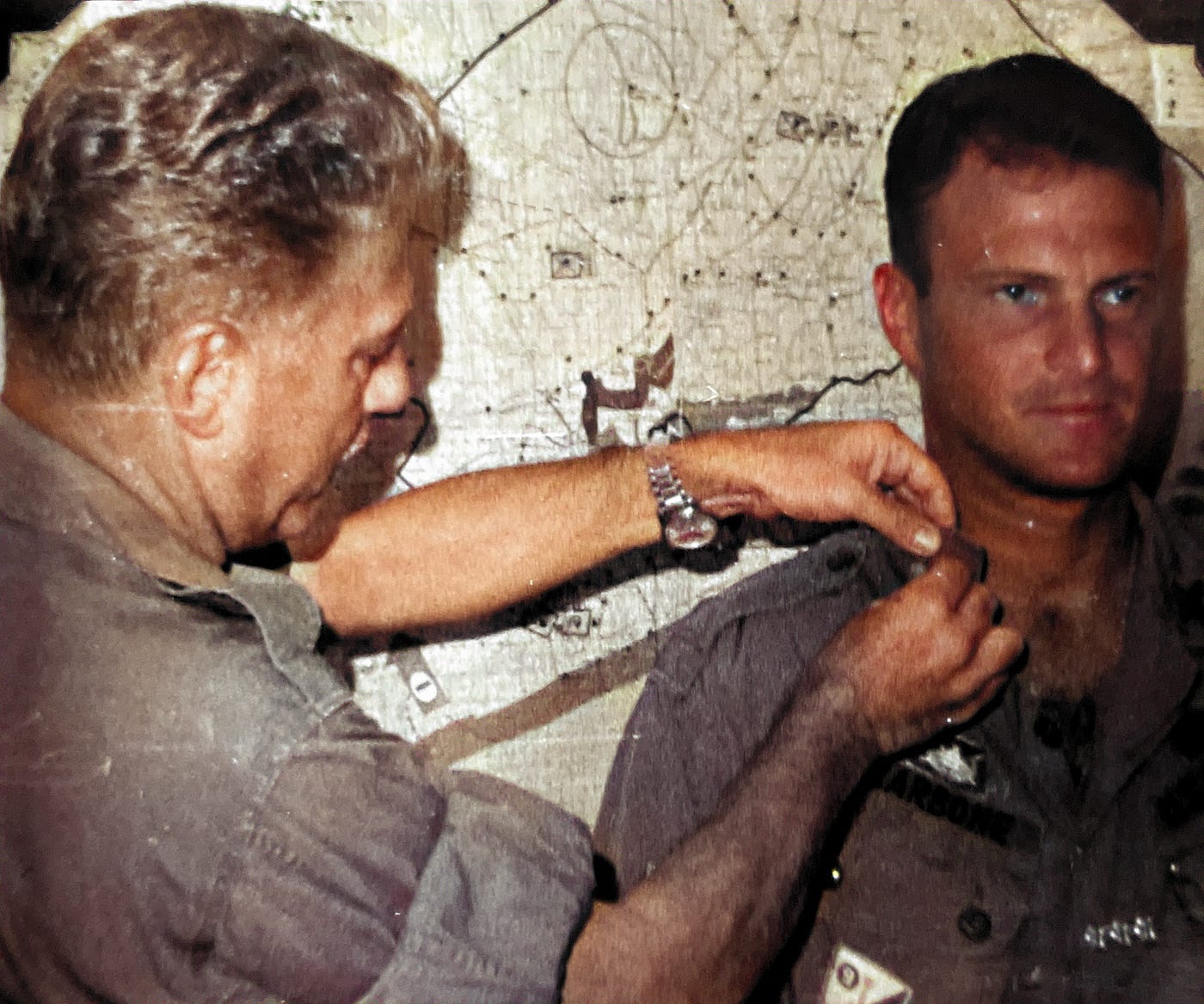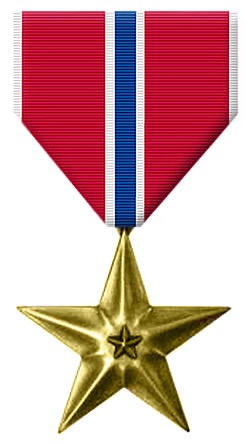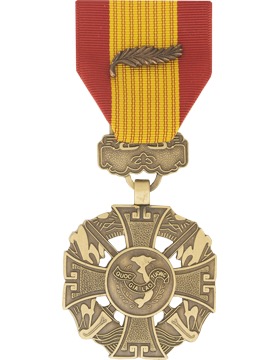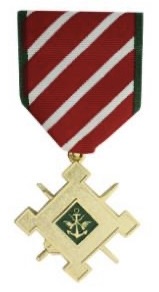
Chapter 22: My Senior Year at Notre Dame

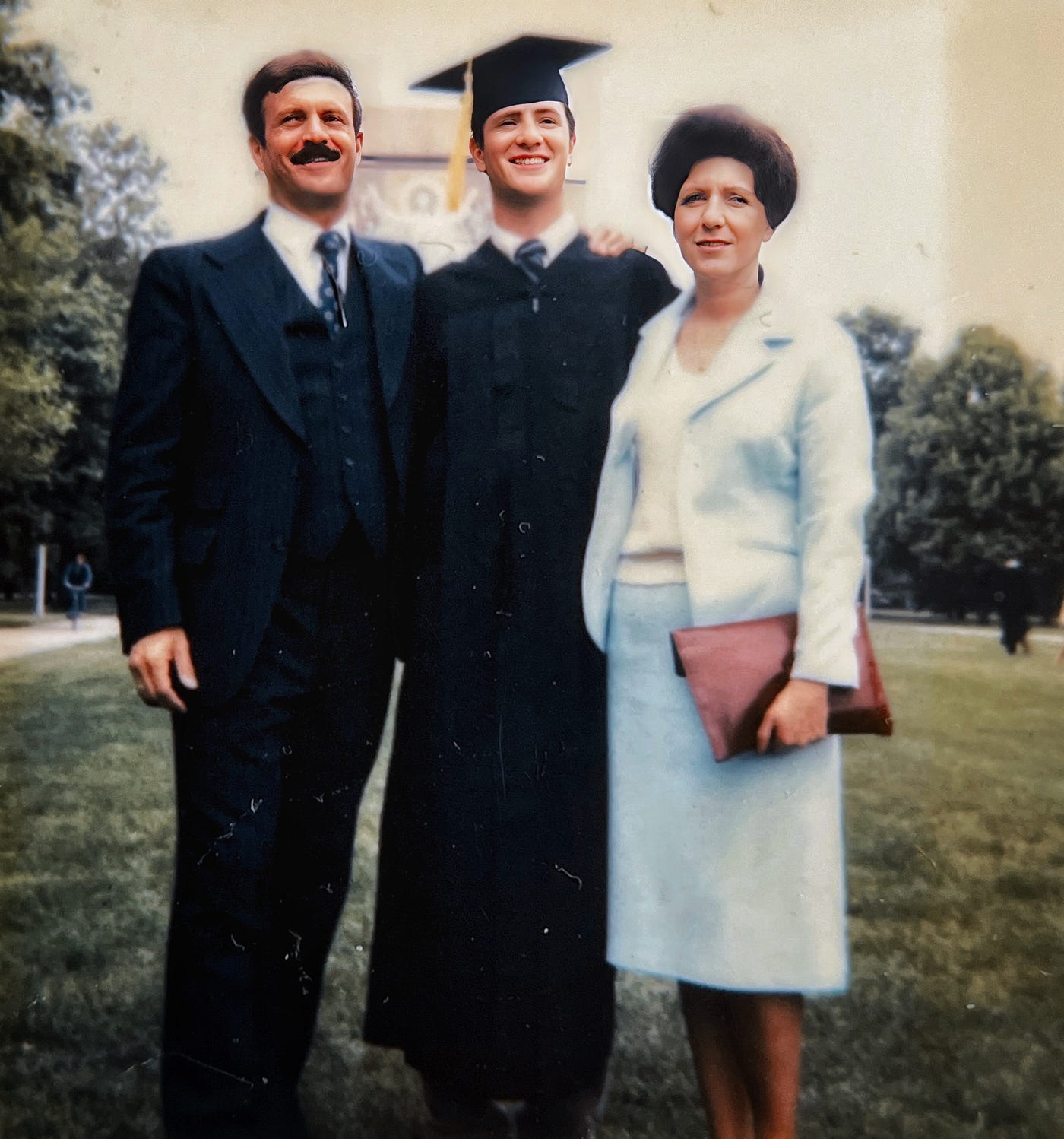
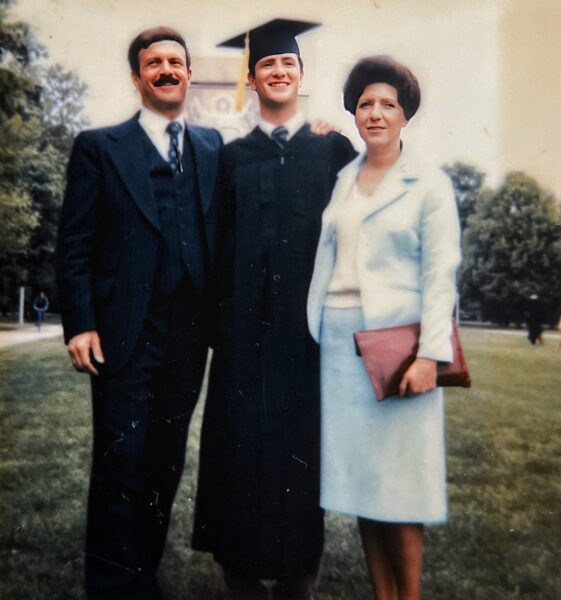
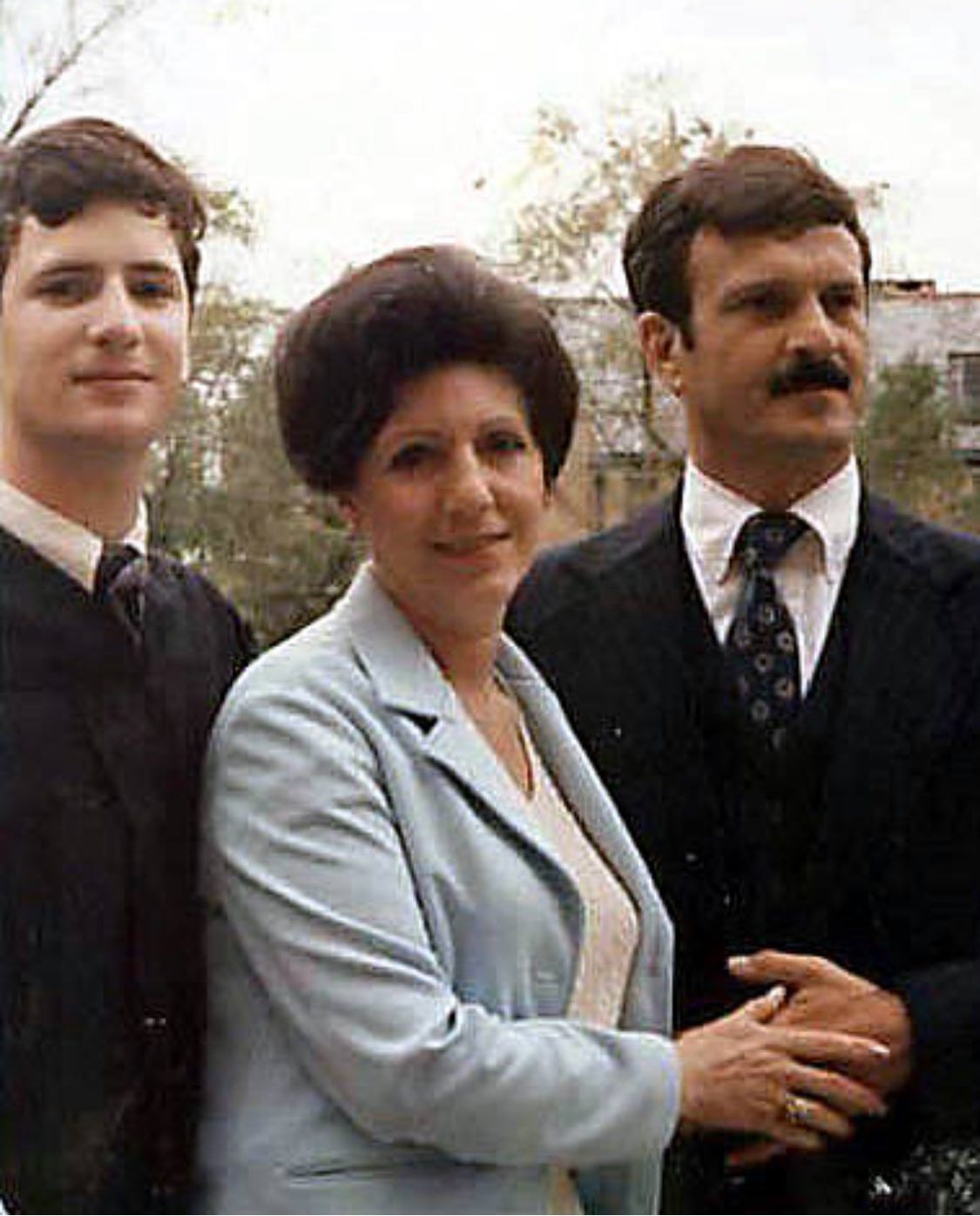
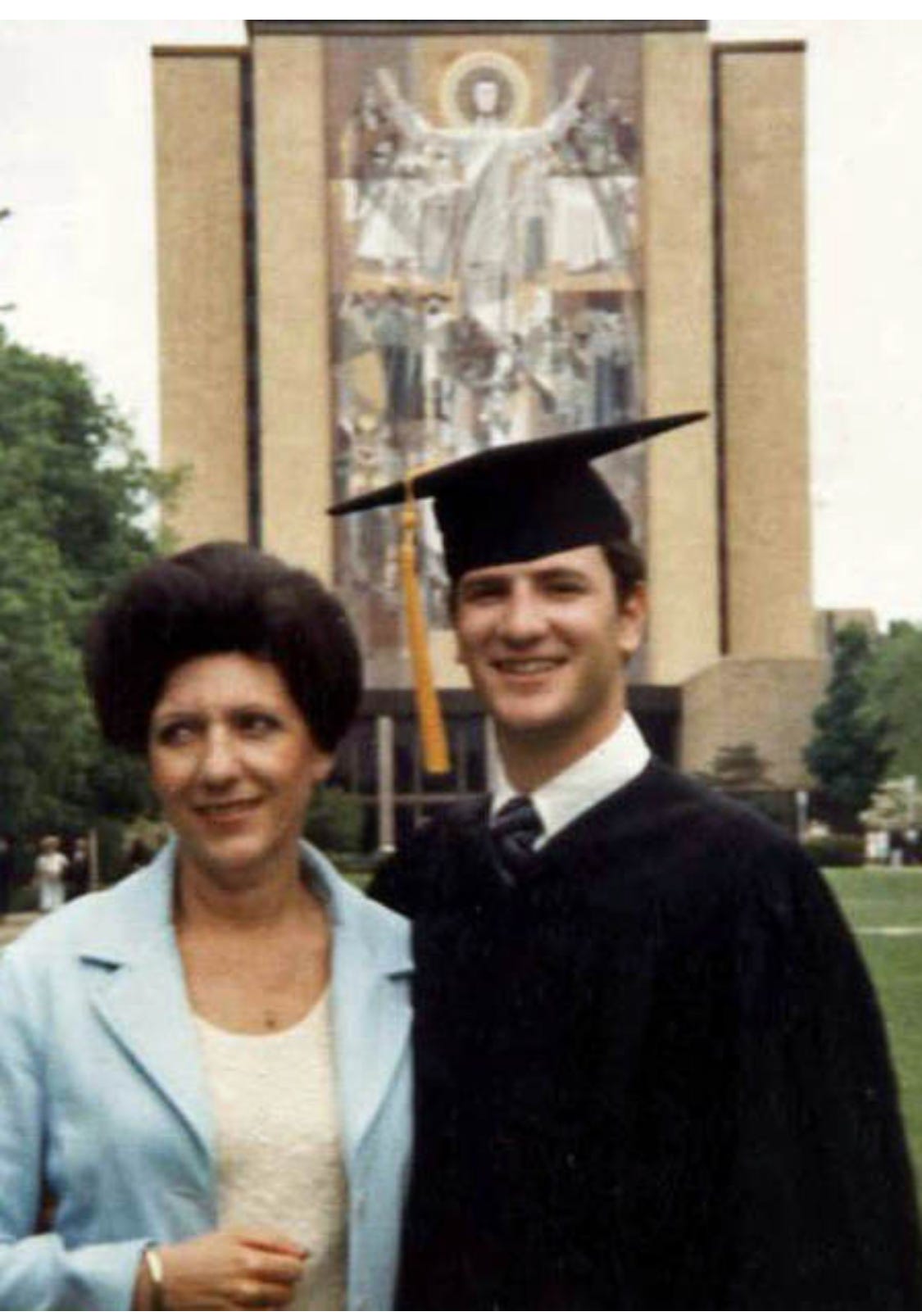
Photo of graduate Anthony J. Carbone with his parents Colonel Tony and Edda Carbone. In front of the Hesburg Library at the University of Notre Dame.

Believe Nothing You Hear, and Only Half of What You SeeA memoir of Service, Shame and the Search for Truth

Return to Campus

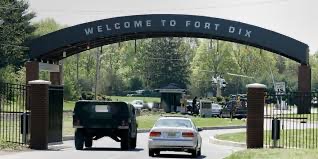
I returned to Notre Dame on Saturday, August 23, 1980, ready to begin my final year of college. I had just left my family at Fort Dix, New Jersey. My father had taken his new assignment as the Senior Army Advisor to the 50th Armored Division and the New Jersey National Guard. Saying goodbye carried a certain weight — this was it, my last year at Notre Dame. In many ways, the year that would set the course for what came next.
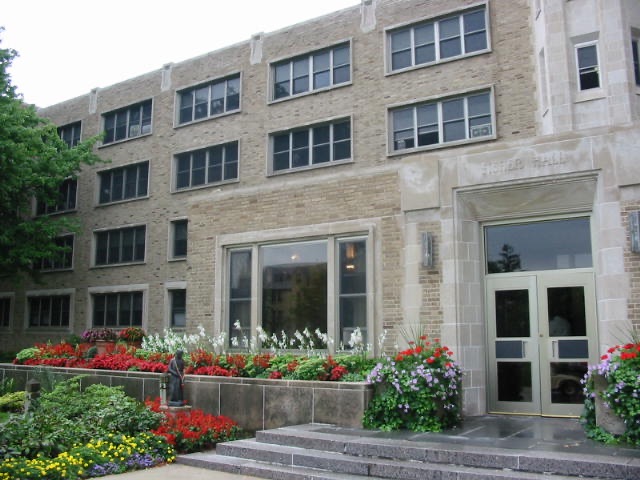
Back to Campus and Fisher Hall

By now, I had the routine down. Arrive at Fisher Hall. Reconnect with the Fisher Hall gang. Track down Mariann at Lyons Hall. Dinner at South Dining Hall with everyone together again. Pick up my belongings from storage and turn Room 221 of Fisher into my bachelor’s pad for the year. It felt comfortable, familiar — like slipping back into a well-worn groove.
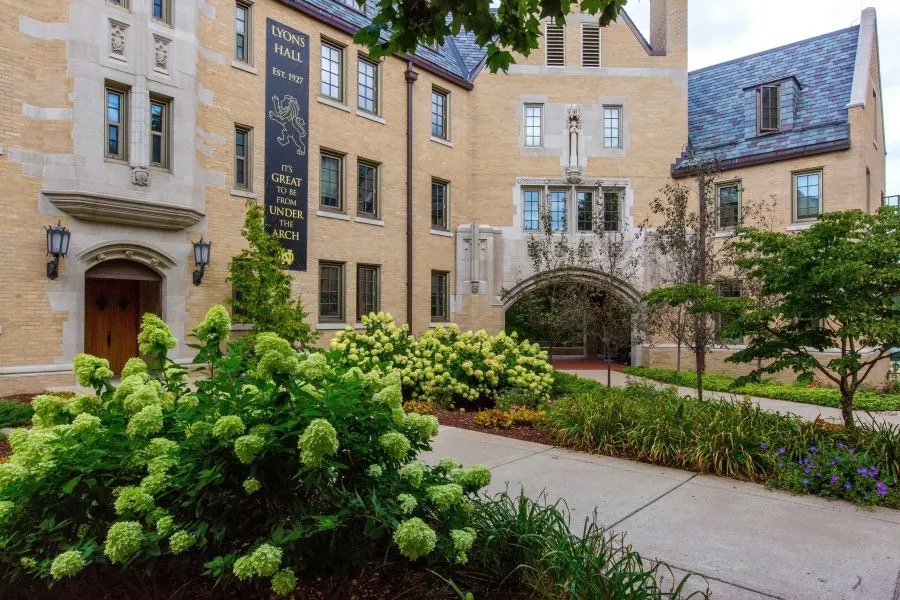
The Fisher Hall Gang

Returning to Notre Dame and Fisher Hall for my final year felt like coming home to a band of brothers. We had our tight-knit Fisher Hall gang: Bob Terifay, my fellow pre-med senior. Andy CordesAl Emory, and Chris Kane, all senior engineering majors. Matt Bedics, our senior philosophy mind. Scott Olds, our pre-med junior genius. And Joe DeLaney, our sharp-witted pre-law junior.

We weren’t just classmates — we were a crew bound by late-night study sessions, endless banter in the hallways, and a shared love of Notre Dame traditions. Adding to our circle were the three steady girlfriends. I had Mariann Schmitz. Andy was with Ginger Miklausen. And Joe with Bernadette Young. All three couples would go on to marry soon after graduation. Which made our Fisher Hall gang feel even more like a family.
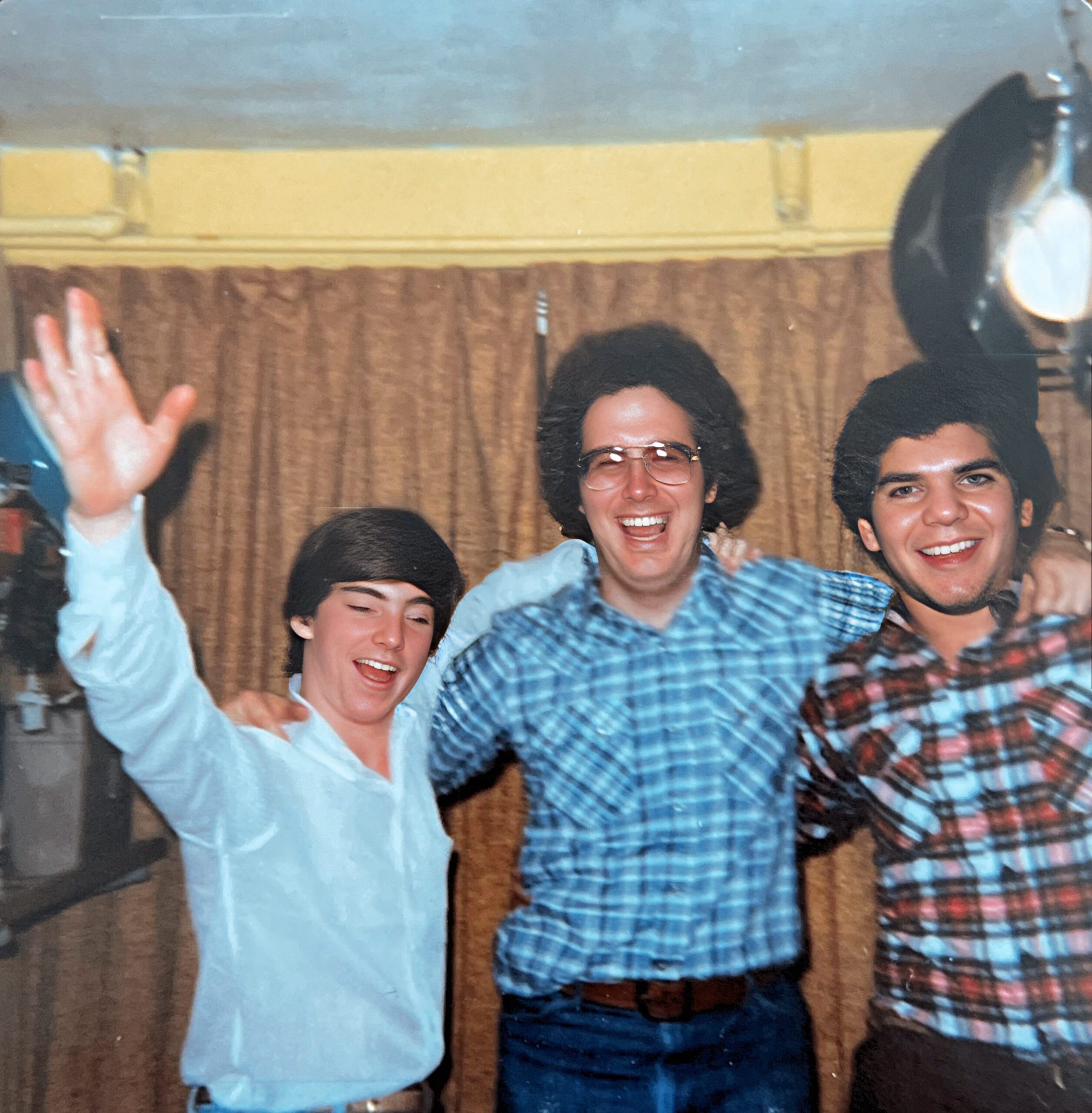
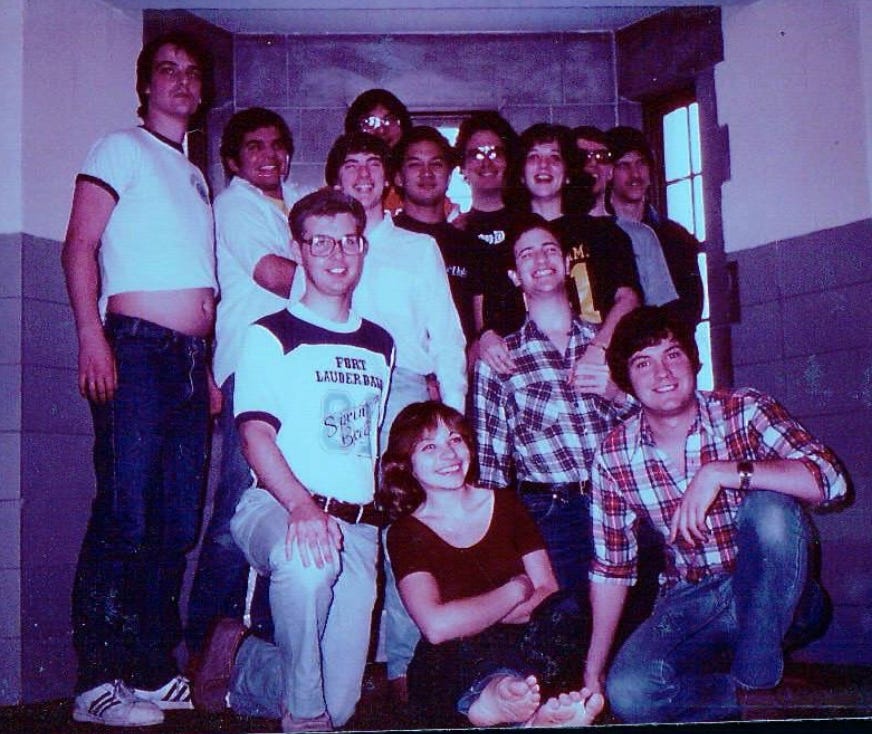
Photograph of 3 young men from Fisher Hall, University of Notre Dame.  Friends of Dr. Anthony J. Carbone.

Group photo of Fisher Hall Gang at University of Notre Dame.  Anthony Carbone with Mariann Schmitz.  Andy and Ginger Cordes.

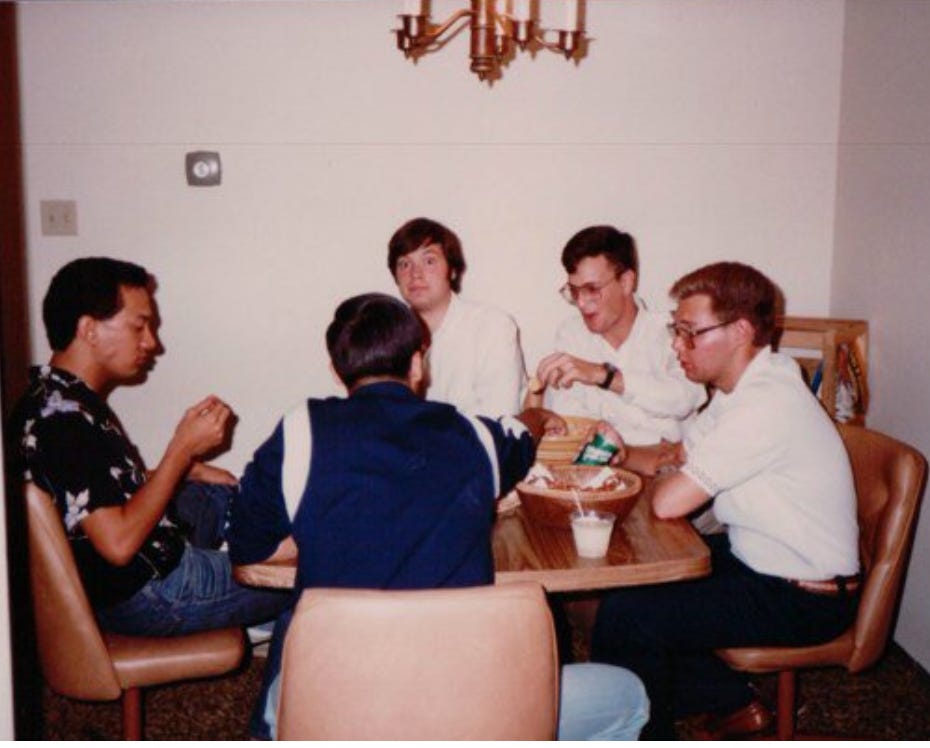
Fisher Hall gang at small dinner table.  Anthony J. Carbone with Andy Cordes and Scott Olds.

Registration Day

Monday, August 25, was Class Registration Day. My schedule ended up being a mix of heavy requirements and a few breaths of relief. Only two science courses first semester — Embryology (BIOL 301) with its demanding laboratory, and Physiology Lab (BIOL 344L). I signed up for Medical Ethics(THEO 344), a required English class on the Novel (ENGL 322). And, for my one true elective, Introduction to Music (MUS 220). That music class would turn out to be the only course where I could truly relax.
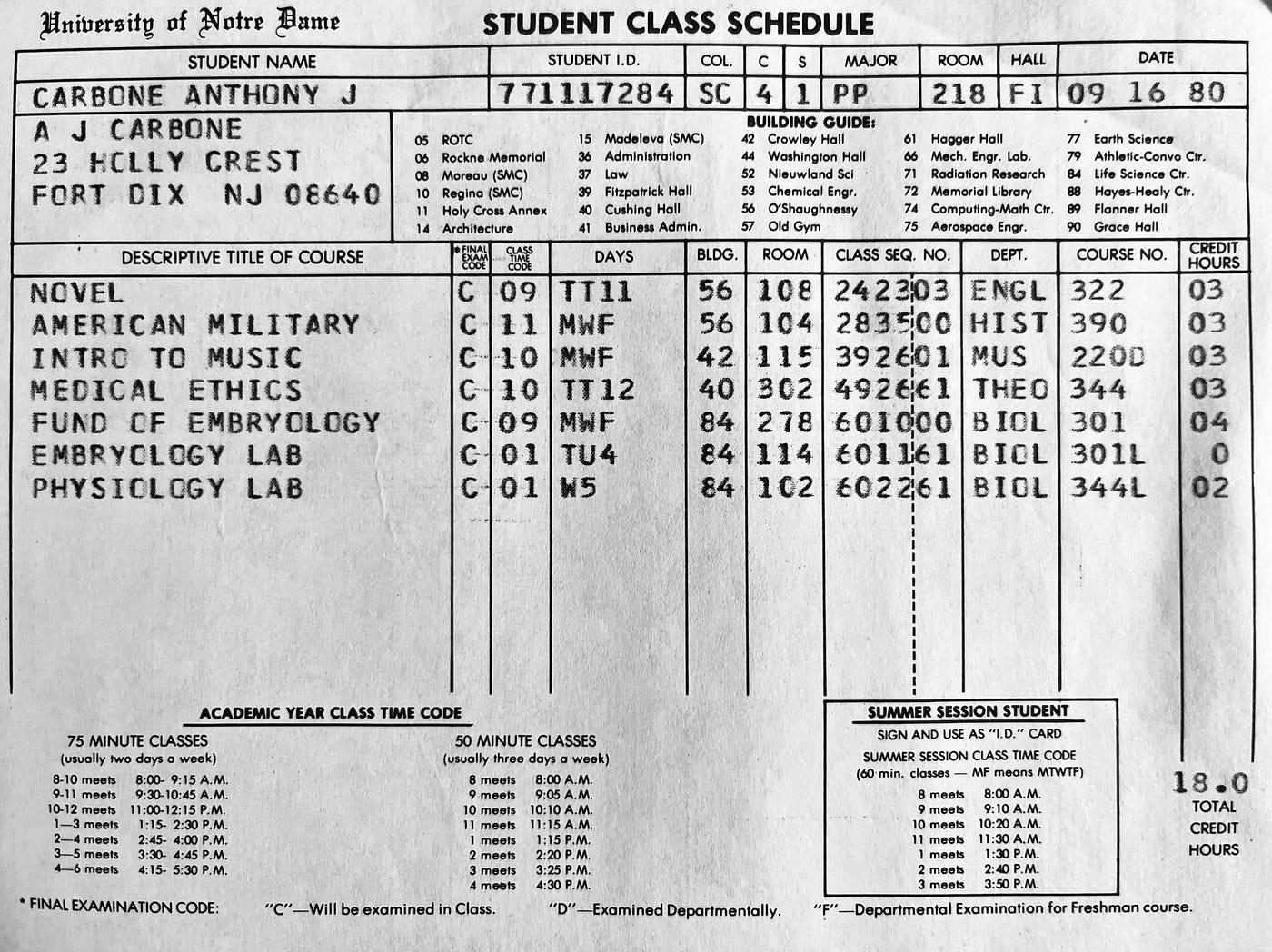
University of Notre Dame Student Class Schedule for Senior Year First Semester. Courses include Embryology with Lab, Physiology Lab, American Military History, Novel, and Intro to Music. Biography of Dr. Anthony J. Carbone.

ROTC and Military History

ROTC senior year was every bit as demanding as junior year, only in a different way. Last year, I had been preparing myself for ROTC Advanced Camp. This year, the responsibility shifted — I was the one preparing the junior class cadets for their turn at Advanced Camp. On top of that came my academic load. American Military History turned out to be one of my most difficult courses. I found both the professor and the material fascinating, but the exams were brutal. My learning disability with rote memorization — names, dates, and battles — was exactly the foundation of the course. No matter how hard I studied, the details slipped through my fingers. The tests felt like uphill battles every time.
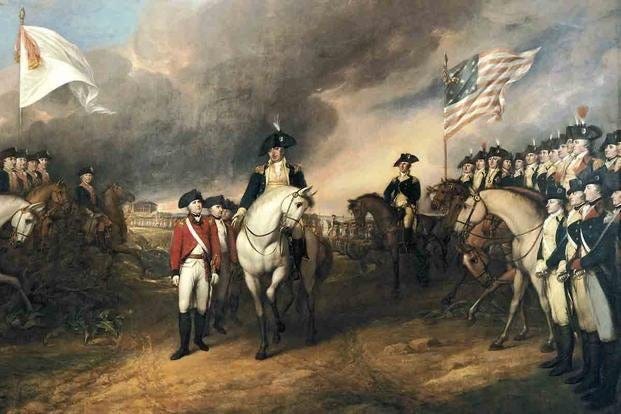
Painting of British Major General Charles Cornwallis surrenders his army at Yorktown, the U.S. Army’s first — but not last — overall war victory. Biography of Anthony J. Carbone.

Senior Year ROTC Position

As part of the ROTC routine, I had to report to the Professor of Military Science (PMS). We reviewed my evaluation from Advanced Camp at Fort Riley over the summer. My rating came back in the Top 1%. The PMS wasted no time asking if I wanted to be the next Fighting Irish Battalion Commander. It was the most coveted position for a senior cadet — prestige, responsibility, recognition. For many, it was the crown jewel of the ROTC program. But I turned it down.
The truth was, I had been wrestling with this decision for weeks. This was my last chance to raise my GPA before applying to medical school. I knew that taking on the role of Battalion Commander would be all-consuming, and I couldn’t afford the distraction. In the moment, it felt like the disciplined and practical choice — but it was a decision I later came to regret. The cadet who grabbed the title after me seemed to take delight in treating me like a brand-new recruit for the rest of the year. And the PMS, perhaps disappointed in me, seemed to punish my decision by assigning me only the rank of Cadet First Lieutenant.
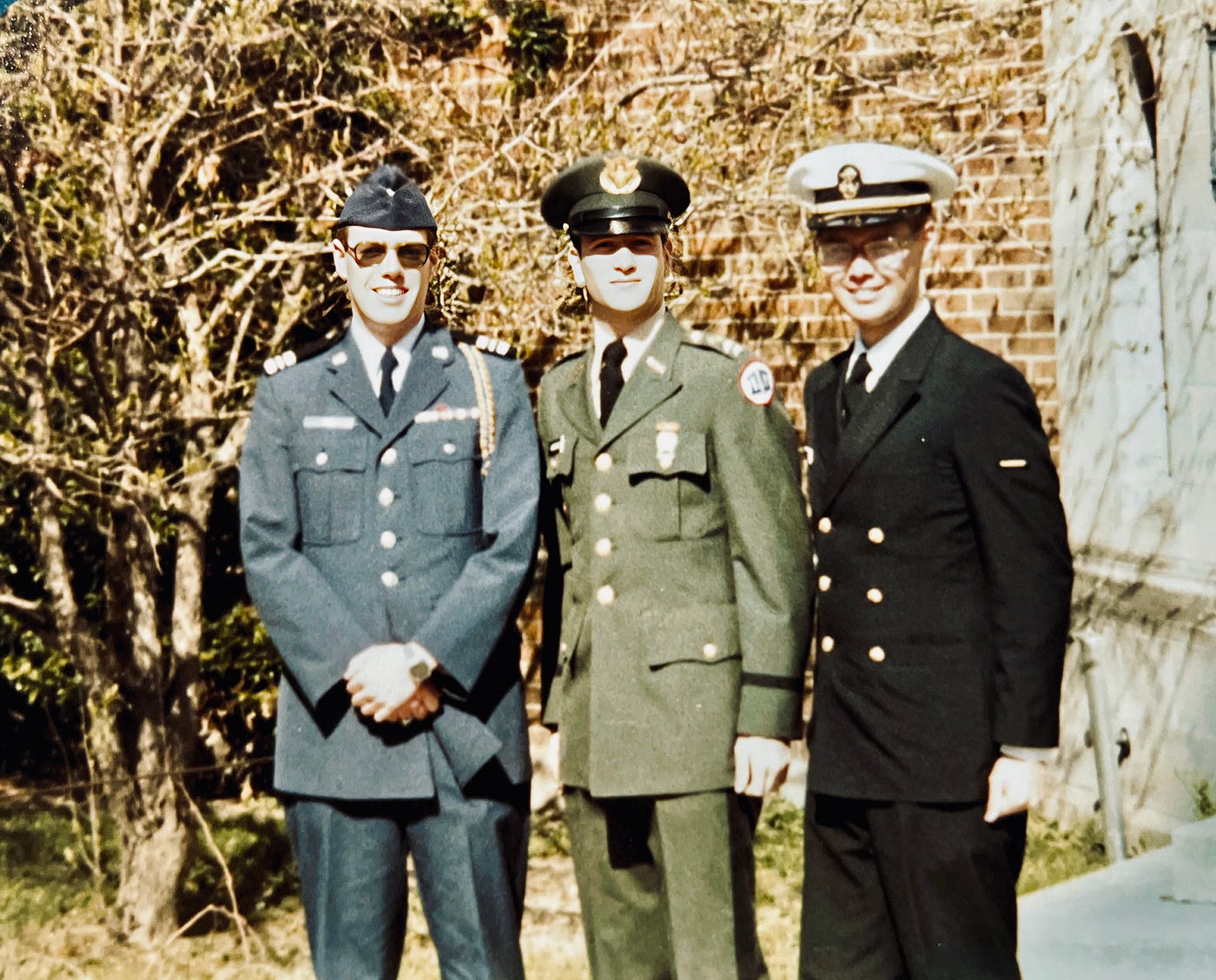
3 ROTC cadets in dress uniform in front of Fisher Hall at the University of Notre Dame.  Anthony J Carbone (Army), Chris Kane (USAF), and one US Navy midshipman.
Three Fisher Hall Section ROTC Cadets

Despite everything I had accomplished in ROTC and in my academic life up to that point, I carried a quiet but persistent lack of confidence. It didn’t make sense — I had proven myself again and again — but deep down, I couldn’t quite shake it. Partly because my father was intent on teaching me humility, to the point that it choked out any developing confidence.
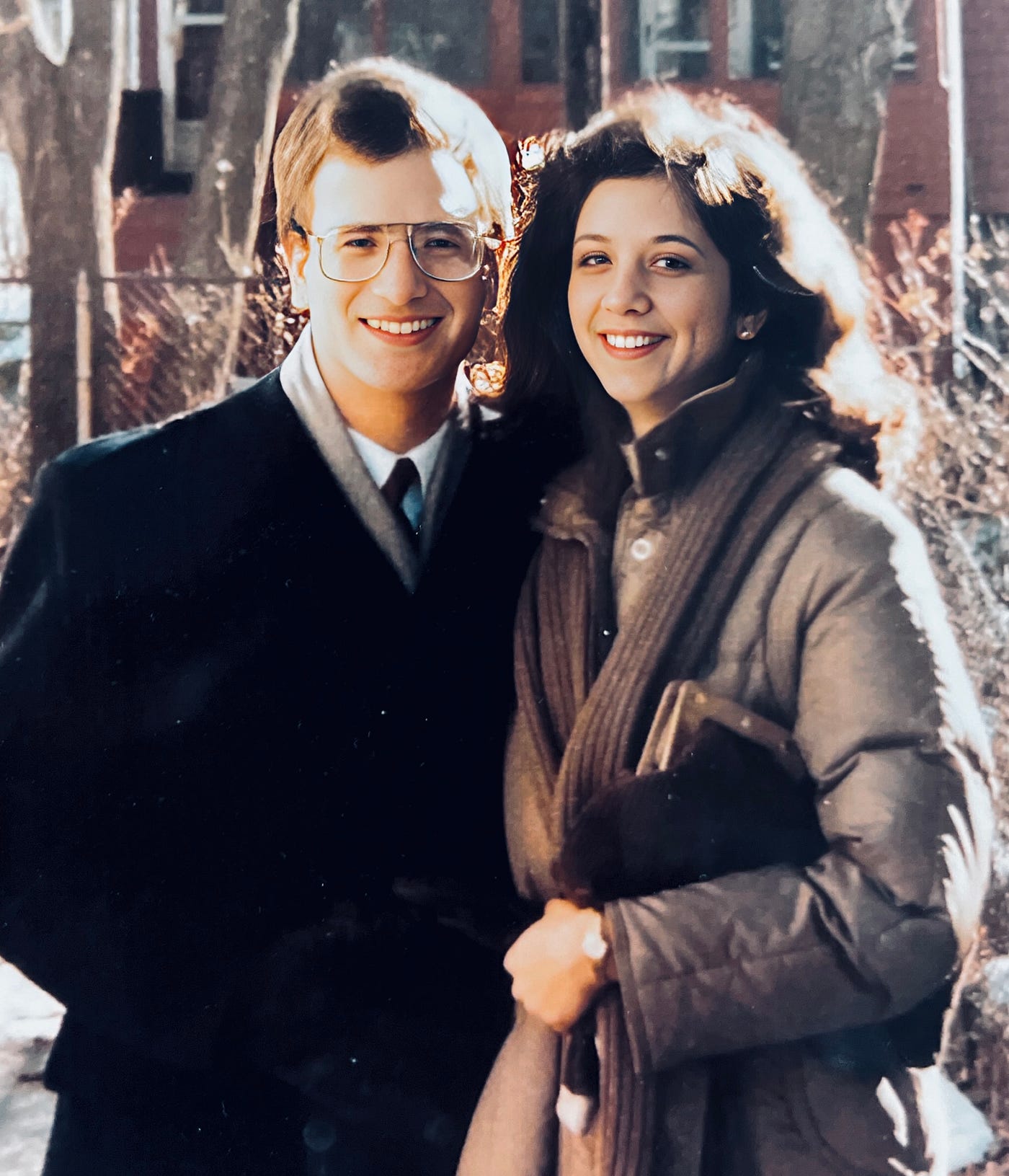
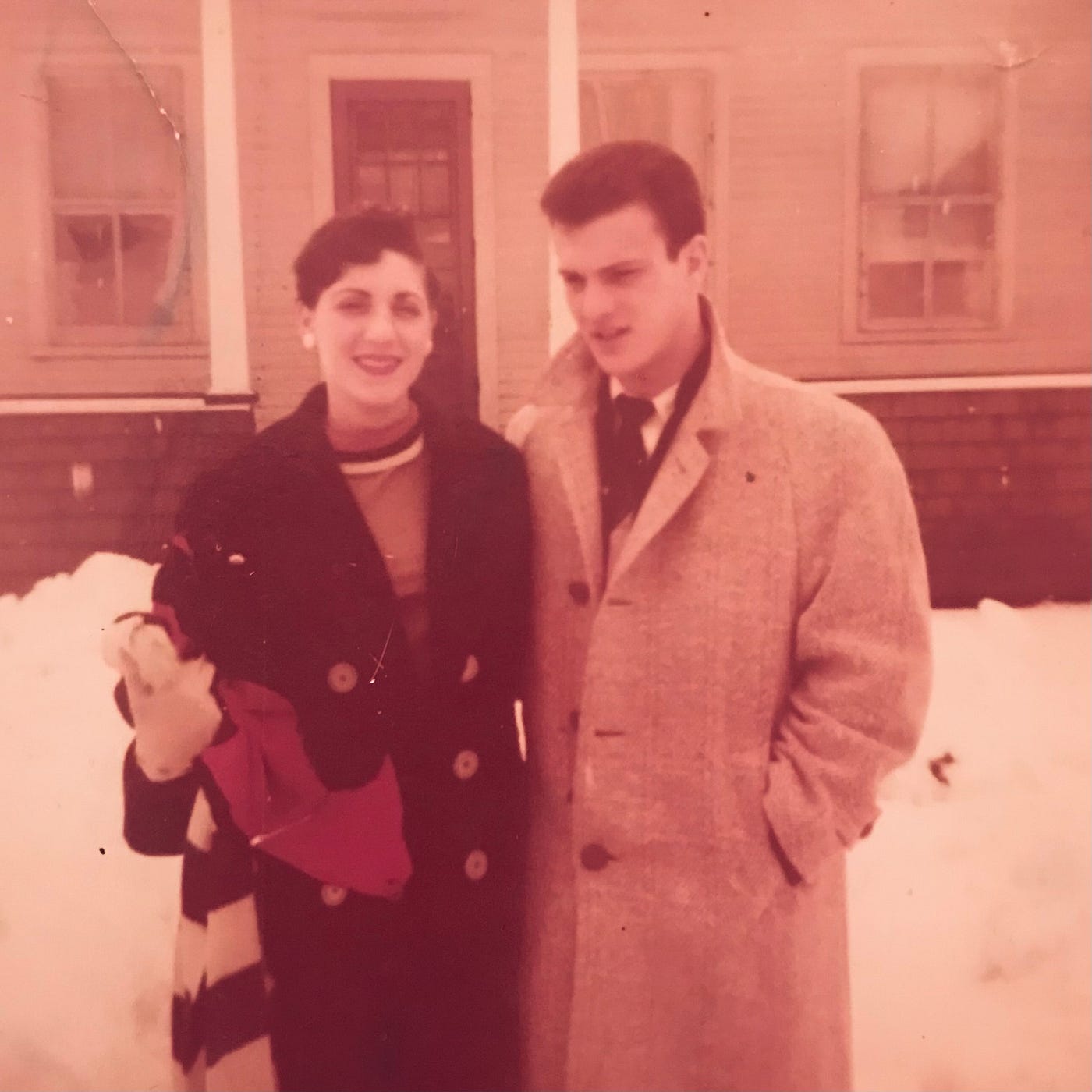
Photograph of Anthony J. Carbone with Mariann Schmitz in winter coats with scarves.
With Mariann Schmitz

Senior Year with Mariann

Mariann was at the center of my senior year. We were more than just a couple — we were companions in the truest sense. Ours was not a relationship defined by drama or passion alone, but by a steady closeness that anchored me. She understood me in ways no one else did, and she had a calming presence that quieted the anxieties I often carried.

Except for classes and the restrictions of parietals, we were inseparable. We studied together in my room every day, we ate every meal together, and we moved through campus life as a pair. In many ways, she completed me, filling in the gaps where I lacked confidence or balance. By then, even our families had begun to know each other, which only deepened the sense that what we shared was lasting and real.

Senior Year Missions

In my senior year, I focused on two missions: first, raising my overall GPA to boost my chances of getting into medical school, and second, preparing to commission as a U.S. Army officer.

For ROTC, I had to submit my branch preferences, and I listed them in order as Military Intelligence, Medical Service Corps, and Armor. Then came the assignment location choices. If I had my way, it would be simple: (1) Germany, (2) Germany, (3) Anywhere in Europe. The Army would give me its answer soon enough.
The bulk of my mental energy that autumn was spent trying to raise my GPA while I waited for an interview from any of the medical schools I had applied to. It was an endless waiting game. Every day I checked my mailbox in Fisher Hall, hoping for a letter that might finally open the door to an interview. The uncertainty gnawed at me. Most nights I prayed at the Grotto with Mariann, asking God to guide my path and steady my nerves. My classmates seemed to be coasting through their senior year with light schedules and carefree weekends, while I carried the heavy weight of not knowing whether my dream of becoming a doctor would ever get off the ground.

Ronald Reagan is Elected President

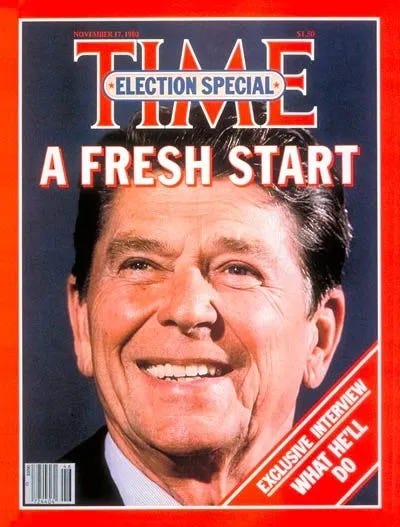
The semester flew by because I was so busy balancing academics, ROTC responsibilities, and the endless cycle of medical school applications. In the midst of all this, the country was caught up in the 1980 presidential election. In November, Ronald Reagan won a landslide victory over incumbent Jimmy Carter, signaling a dramatic political shift for the nation. Even on campus, you could feel the change in mood — an undercurrent of renewed confidence and patriotism that matched the new decade just beginning.
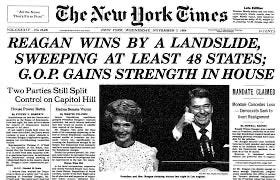
New York Times front page "Reagan Wins By A Landslide, Sweeping at Least 48 States; GOP Gains Strength in House."  Biography of Dr. Anthony J. Carbone.

Cover of Times Magazine with face of President Reagan with "A Fresh Start".  Biography of Dr. Anthony J. Carbone.

Thanksgiving 1980

Thanksgiving was a repeat trip to Mariann’s family home in Wheaton, Illinois. That year, Mrs. Schmitz decided to have the meal catered, which felt like a real treat. I slept downstairs again in John Jr.’s wood-paneled basement bedroom, complete with its enormous waterbed. Mariann’s roommate, Bernadette Young, joined us for Thanksgiving in Wheaton.
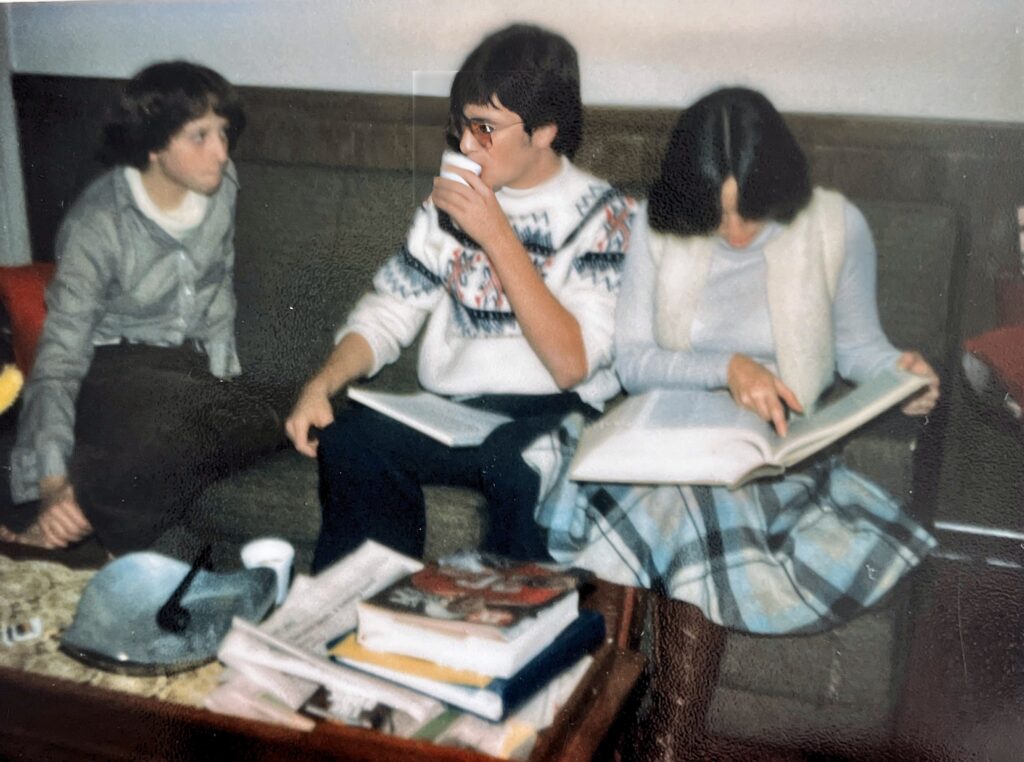
Photograph of 3 people sitting on a couch, one young man and two young ladies.  Biography of Dr. Anthony J. Carbone.
At Mariann’s house in Wheaton, Illinois, at Thanksgiving with her youngest sister, Jacqueline (to my right), and Mari’s roommate, Bernadette Young (to my left).

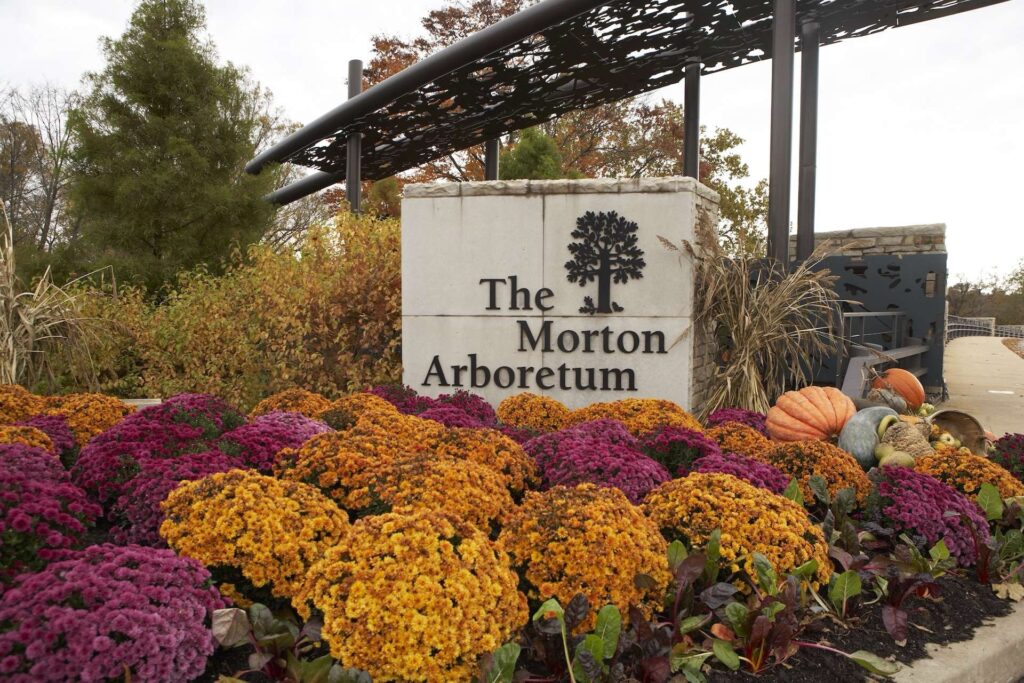
One of the highlights of the weekend was when Mariann and I drove out to the Morton Arboretum. Founded in 1922 by Joy Morton — son of Arbor Day founder J. Sterling Morton and the man behind Morton Salt — the Arboretum was created as an outdoor museum of trees and a center for tree research and conservation. It was the perfect place for a quiet walk together, surrounded by nature.
Fighting Irish Football

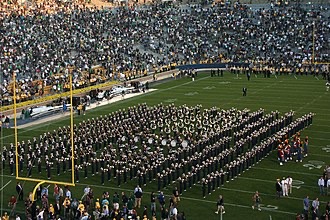
Notre Dame football in the fall of 1980 gave us plenty to cheer about. The highlight of the season was the dramatic victory over Michigan, sealed by a last-second field goal that had the whole campus buzzing for days. Saturdays were sacred for the Fisher Hall gang and our girlfriends. We would walk together across campus to the stadium, always stopping to watch and listen to the Band of the Fighting Irish perform for students and fans before the game. And always on the lookout for our Fisher Hall Irish Guardsman.
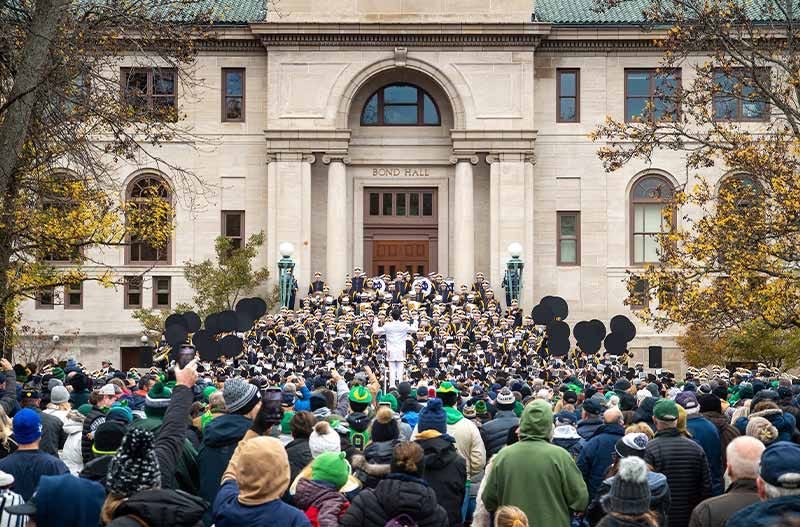
The Notre Dame Marching Band, founded in 1845, is the oldest university marching band in continuous existence in the country. From its beginnings as the Notre Dame Cornet Band, it grew into a symbol of spirit and tradition, playing at every home football game since the program’s very first in 1887. The sight and sound of the band — its drum cadence, the brass fanfares, and the unity of its formations — were an inseparable part of every football Saturday.
Fall Final Exams December 13–19, 1980

Fall Final Examinations ran from December 13–19, 1980, and they demanded steady effort from start to finish. My goal for the year was to raise my GPA for medical school applications, and I stayed focused on that. The sciences were as rigorous as ever — Embryology pushed my limits, while Physiology rewarded my persistence with an A. In Novels (English 322), I wrote a paper that came together better than expected, and in Medical Ethics (Theology 344) I faced one of those exhausting Blue Book essay exams, but came out with another A. Introduction to Music (Music 220) balanced the load with a course I thoroughly enjoyed, deepening my appreciation for the classics and revealing a growing fondness for the Baroque. The American Military History exam proved the most difficult, but I managed it better than I anticipated. Of course, my last examination fell on the final day — premeds were always the last to leave campus for the holidays. Step by step, course by course, the semester added up to real progress — exactly what I needed as medical school decisions drew nearer.

Christmas 1980 Vacation in Boston

Christmas Holiday 1980 ran from December 20 to January 12. I flew from South Bend to Boston Logan to spend Christmas and New Year’s with my family at my grandparents’ home in Medford, Massachusetts. My parents, Cynthia and Pamela, drove up from Fort Dix, New Jersey to join us. Lynne and Diana were both still in school in Boston, so they were already there when I arrived. As with most Christmas breaks, Christmas Eve and Christmas Day passed in a blur — I was running on fumes after weeks of final exam preparation.

Our Italian Christmas Traditions

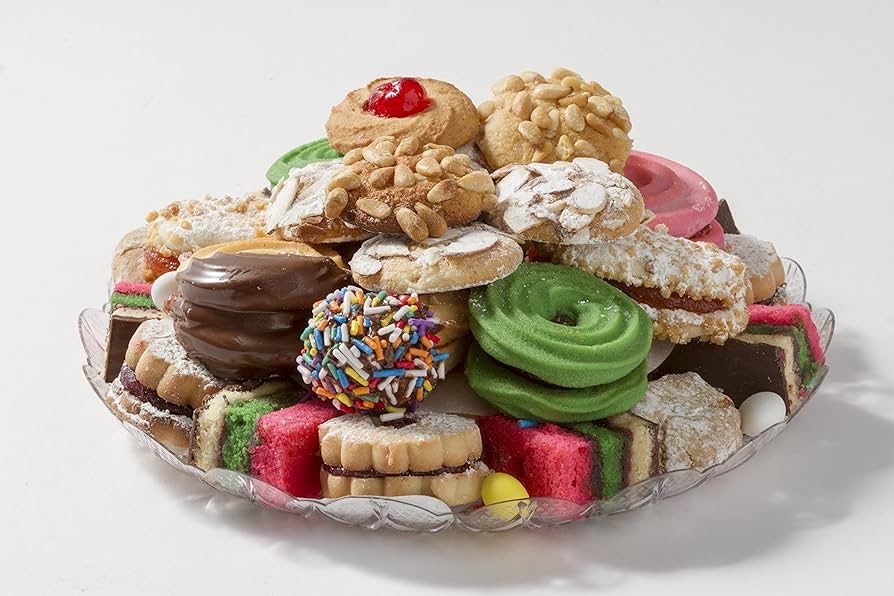
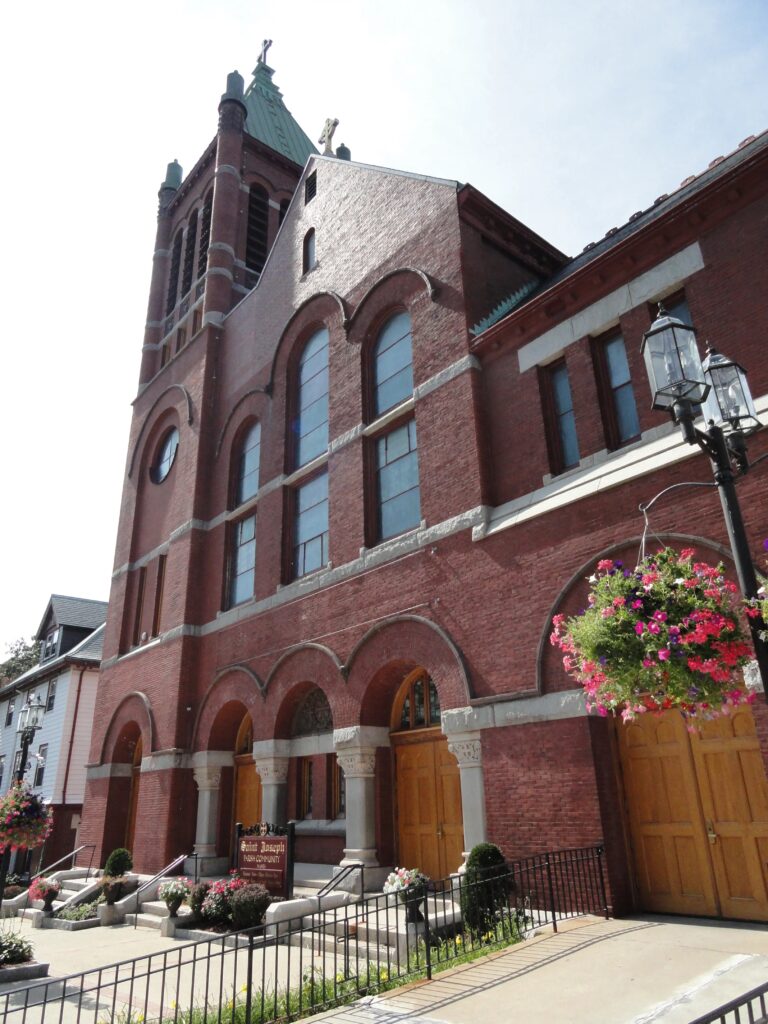
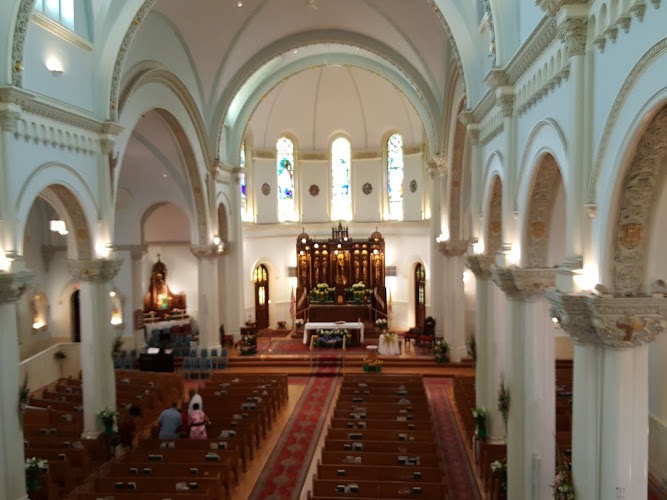
Still, the traditions were the same. On Christmas Eve, we gathered for the great Feast of the Seven Fishes with my aunts, uncles, and cousins. At midnight, we attended Mass at Saint Joseph’s Catholic Church — the same church where all of us had been baptized, where we received our First Communions, and where my sisters were married. Christmas Day brought another feast at Nana’s: roast turkey and roast beef, salad and fruit, then nuts, and finally desserts like cannoli, Italian cookies, and my mother’s favorite, Italian rum cake.
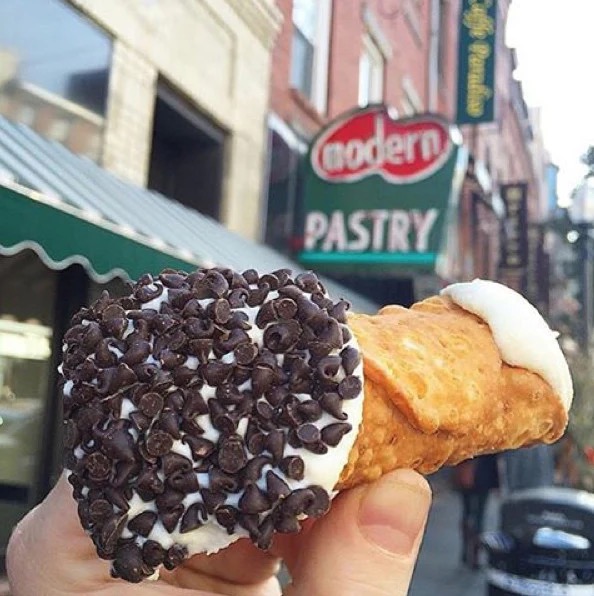

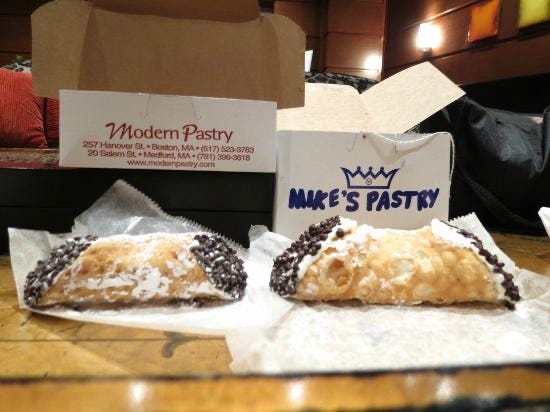
The Mike’s vs. Modern Pastry Debate

This would always lead us to the family debate on who makes a better cannoli — Mike’s or Modern Pastry. Having lived in Boston’s North End (the Italian section), I am partial to Modern Pastry.
What about medical school?

The holiday wasn’t without its stresses. Every relative seemed to ask the same question: Have you heard from any medical schools yet?” I hadn’t, and each time I was asked, the weight of uncertainty pressed on me a little more. On top of that, I was phoning Mariann a couple of times a day, racking up long-distance charges. By the end of the holiday, the phone bill was steep, and I was definitely in trouble for it.

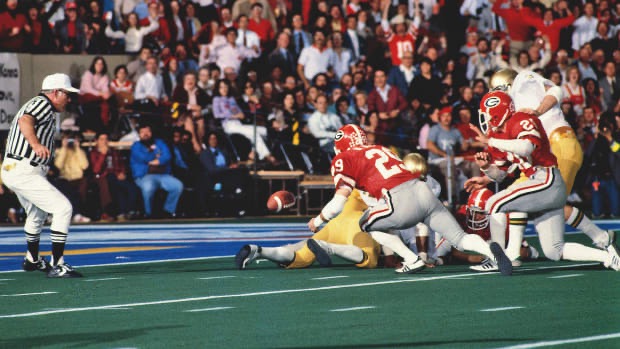
New Year’s was a quieter affair. In my family, it was never a grand occasion. We’d watch the ball drop in Times Square, share a hug and a kiss at midnight, and then be in bed by 12:30. The next morning, we went to Mass for the Solemnity of Mary, before turning our attention to football. On New Year’s Day, we gathered to watch Notre Dame face Georgia in the Sugar Bowl. A little over a week later, on January 11, I was back on the plane to South Bend, ready to begin the spring semester.

Sugar Bowl Notre Dame vs. Georgia (January 1, 1981)

That season under Coach Dan Devine, the Irish finished with a 9–3 record. The team capped its year with an appearance in the 1981 Sugar Bowl against Georgia. Hopes were high for a bowl victory, but Georgia’s freshman running back Herschel Walker proved unstoppable, and Notre Dame fell 17–10. It was a bitter ending to what had been an exciting season, but the tradition, pageantry, and sense of community that surrounded Notre Dame football remained unforgettable.
Return to Campus for my Final Semester

Flying back into South Bend in early January, I felt the familiar mix of anticipation and relief that always came with returning to campus. I hauled my bags into Fisher Hall, where I caught up with Bob, Andy, Al, Scott, and the rest of the gang — lots of handshakes, backslaps, and quick stories about our holidays.

But as always, the first place I really wanted to be was Lyons Hall, looking for Mariann. Seeing her again was the best part of returning to Notre Dame, and it made the long break apart melt away in an instant. That first evening back, we all headed over to South Dining Hall for dinner, trading stories and laughter as we settled back into campus life.

There was also a deeper current running beneath all the reunion energy. I knew this was the start of my final semester at Notre Dame — a place that, over four years, had become the longest I had ever lived anywhere in my life. That fact alone gave everything a little more weight. I was keenly aware that the semester would fly by, and that before long I’d be saying goodbye to good friends — some I might never see again. But I also knew I’d see Mariann again. That certainty brought a quiet comfort as I braced myself for the final stretch.

Spring Registration (January 13, 1981)

My last semester at Notre Dame, and at long last, a slightly lighter schedule. For the first time in four years, I wasn’t buried under calculus equations or the endless grind of organic chemistry. Instead, my final academic stretch looked almost enjoyable. I had just one core science — Comparative Anatomy (BIOL 302) with its inevitable laboratory component. ROTC was still part of the mix, with Military Management II (Military Science 412), sharpening us for commissioning only four months away.

To balance out the science and military, I registered for American Writers Survey (ENGL 383), where we dove into classics by Ernest Hemingway, F. Scott Fitzgerald, and Edgar Allan Poe, who once warned: “Believe nothing you hear, and only half of what you see.” Rounding out the schedule was Religion & Art (Philosophy 361), an hour each day spent studying breathtaking works of sacred art, and New Testament: Death & Afterlife (Theology 314), which promised to stretch both faith and imagination. By the time I graduated, I think I had a minor in Philosopy & Theology. And ROTC should count automatically as a minor in Military Science.
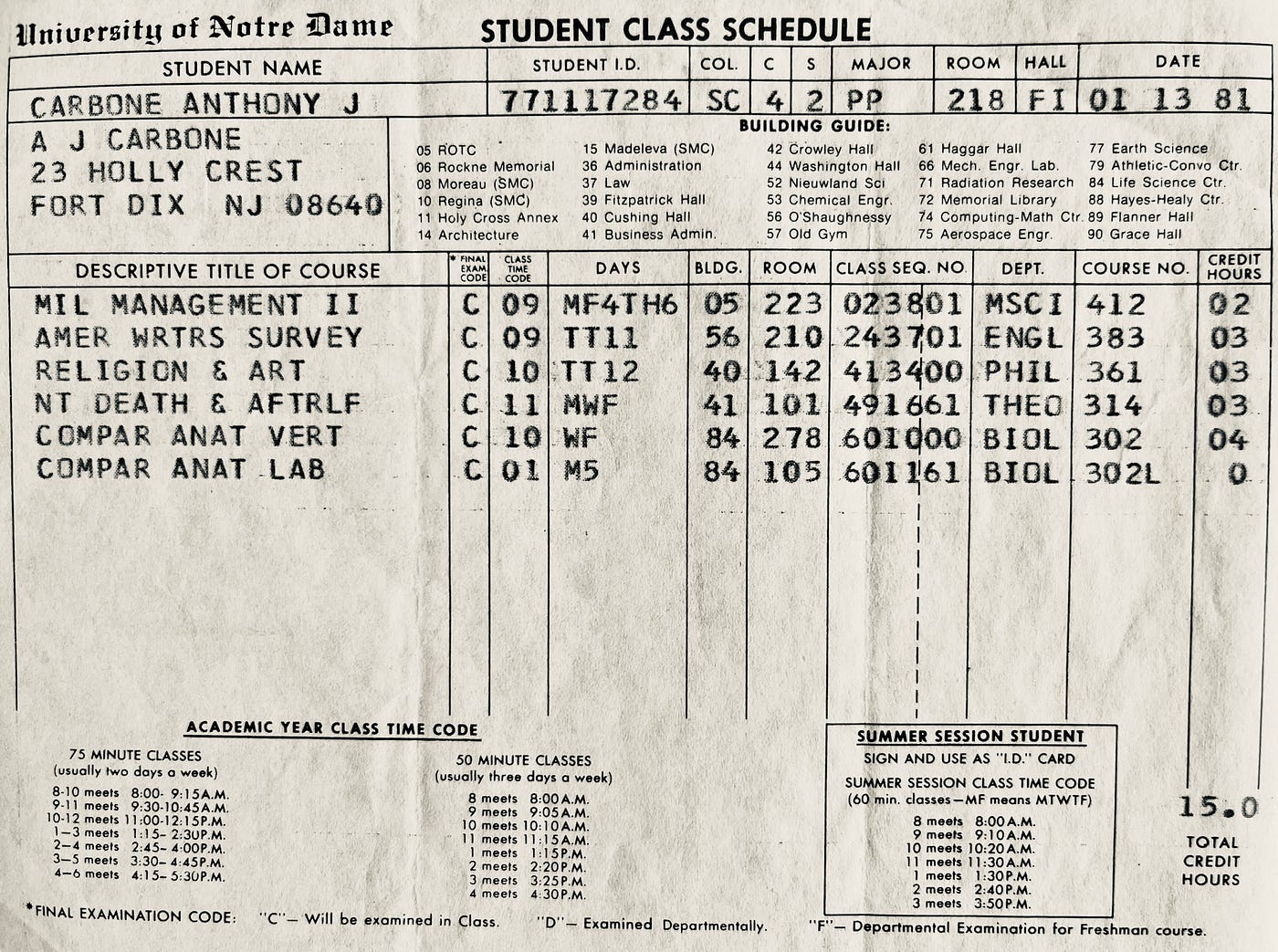
University of Notre Dame Class Schedule 4th Year 2nd Semester for Anthony J. Carbone. Courses include Comparative Anatomy plus lab, ROTC Military Management II, American Writers Survey, Religion & Art, and New Testament: Death and Afterlife.
Student Class Schedule for Spring Semester of my Senior Year at Notre Dame.

It was still a full load, but one that finally left me breathing room — a welcome change for a senior staring down the last lap of the race. More than anything, it gave me the chance to step back and enjoy the life I had built here: evenings in Fisher Hall with Bob, Andy, Al, Chris, Joe and Scott, long walks across campus with Mariann, and the daily rhythms of a place that had come to feel like home. I knew the months would fly by, but I wanted to make every one of them count.

Reagan Inauguration (20 January 1981)

On January 20, 1981, history unfolded as Ronald Reagan was inaugurated as the 40th President of the United States. It was a day marked by symbolism and change — the end of the Carter years and the beginning of what many hoped would be a new era of strength and optimism for the country.

Mariann and I gathered in the lounge of Fisher Hall with the rest of the gang to watch the inauguration on television. There was a sense of excitement in the room, mixed with the usual banter, but also an awareness that this was a turning point for America. Watching it together, with Mariann at my side and surrounded by good friends, tied the national moment into the fabric of my senior year.
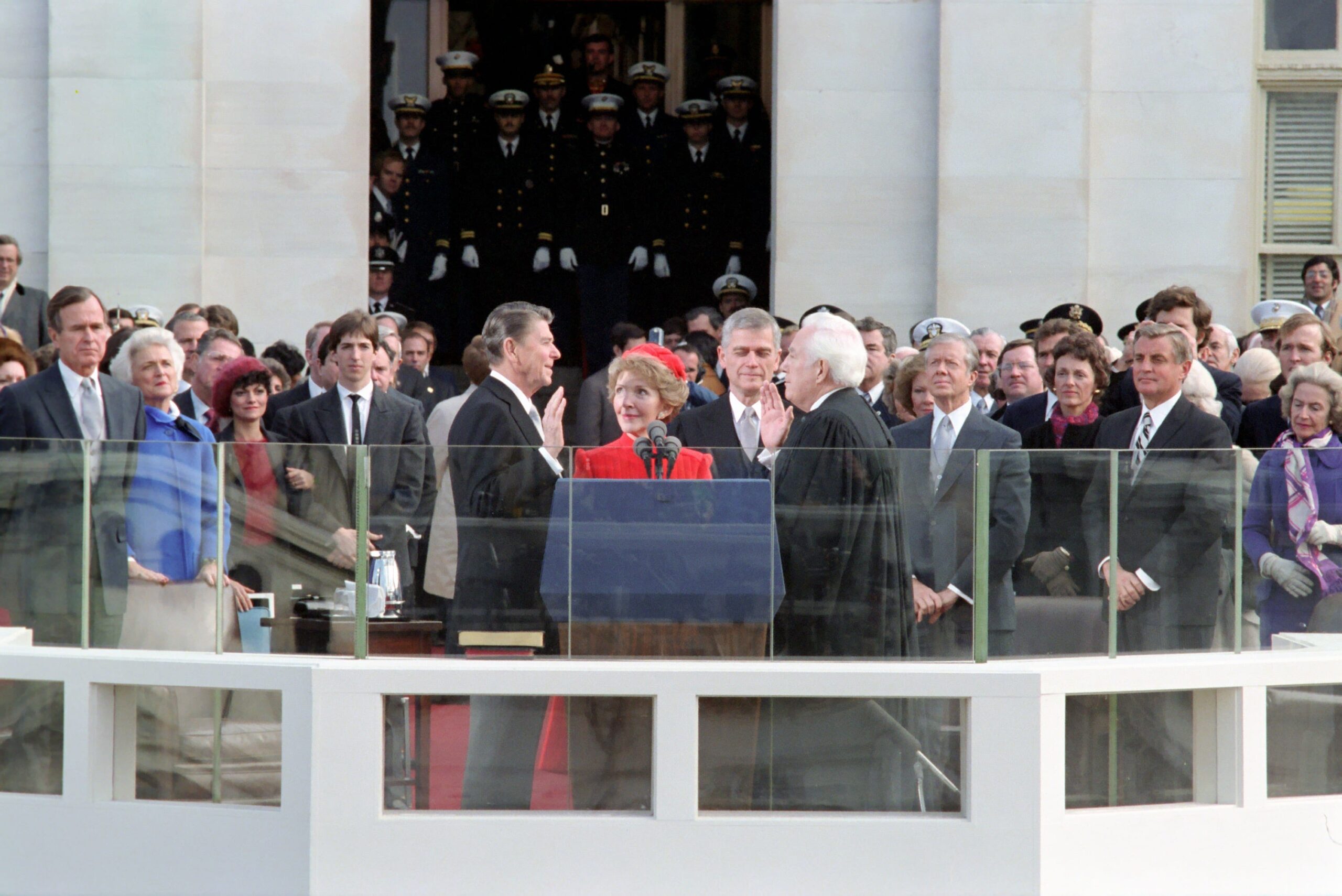
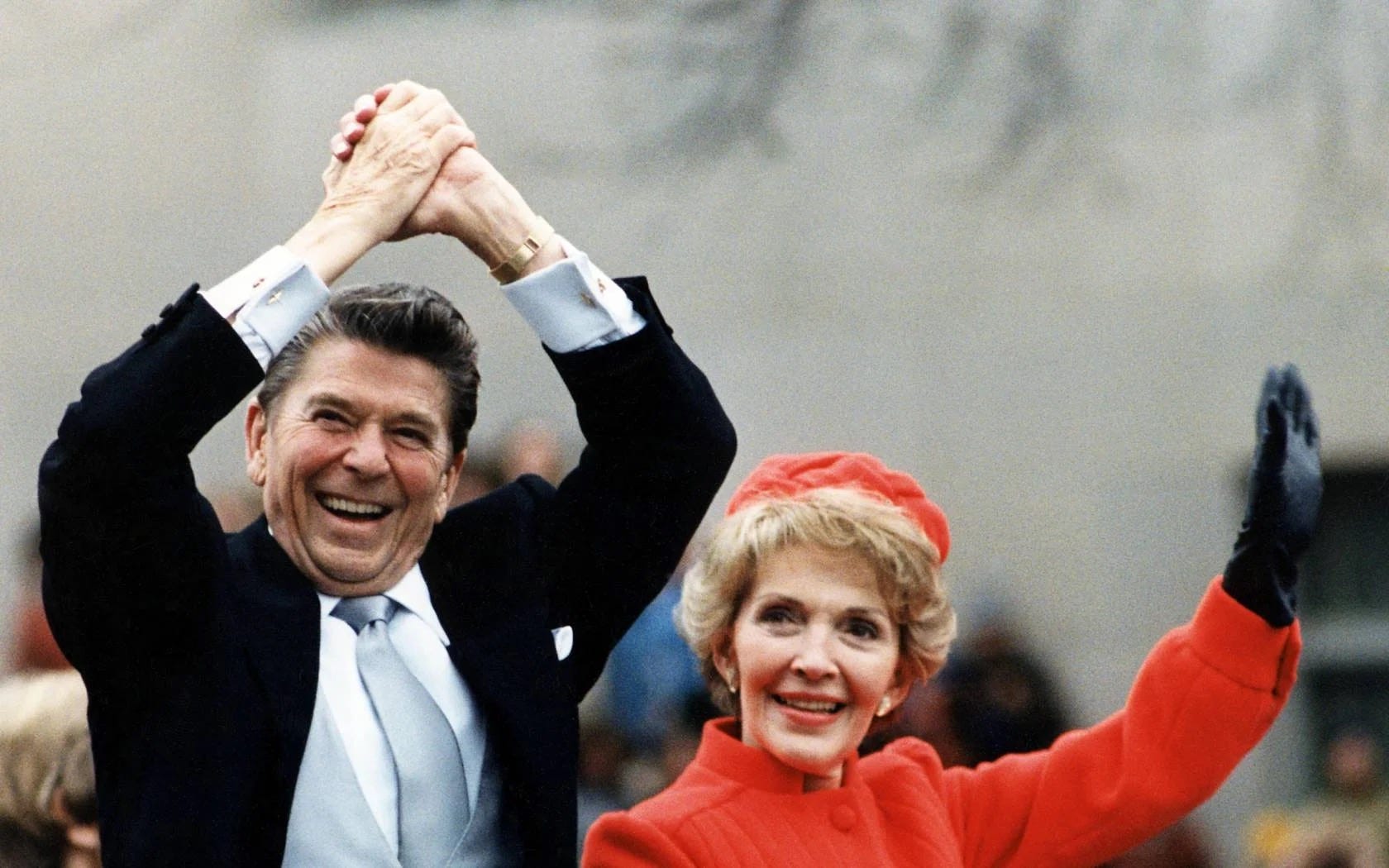
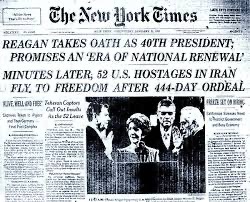
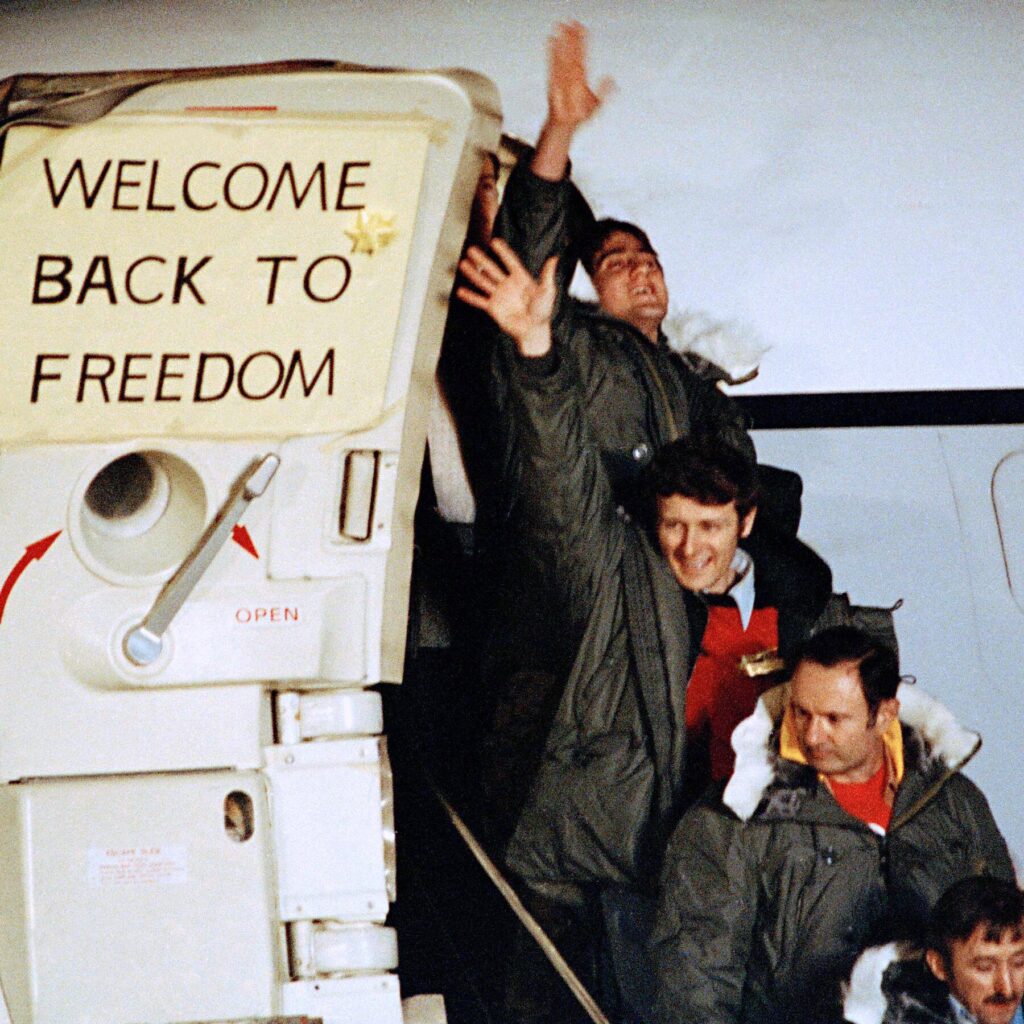
American Hostages Released From Iran After 444 Days

Just minutes after Reagan took the oath of office, the American hostages held in Iran for 444 days were released, adding even more drama to an already historic moment.
Tri-Military Ball (February 21, 1981)

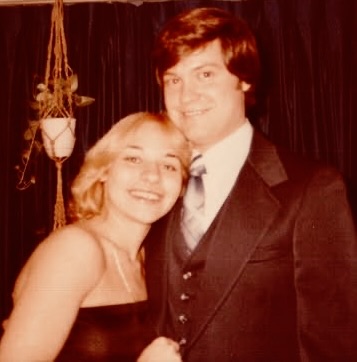
On February 21, 1981, we gathered for the Tri-Military Ball, a joint celebration of Army, Air Force, and Navy ROTC. Of course, I took Mariann as my date. It felt good to wear my dress uniform, now adorned with the badges and awards I had earned at ROTC Advanced Camp the previous summer. But what made the evening truly special was walking into that ballroom with Mariann at my side. I was proud of her — not only for her beauty, but for her intelligence and social grace. Mariann was the kind of partner who made me feel completely at ease at any event. She remembered names when I couldn’t, and she had a clever way of getting people to introduce themselves first so I wouldn’t be caught in the awkward position of trying to recall them. She was, in every sense, my better half.
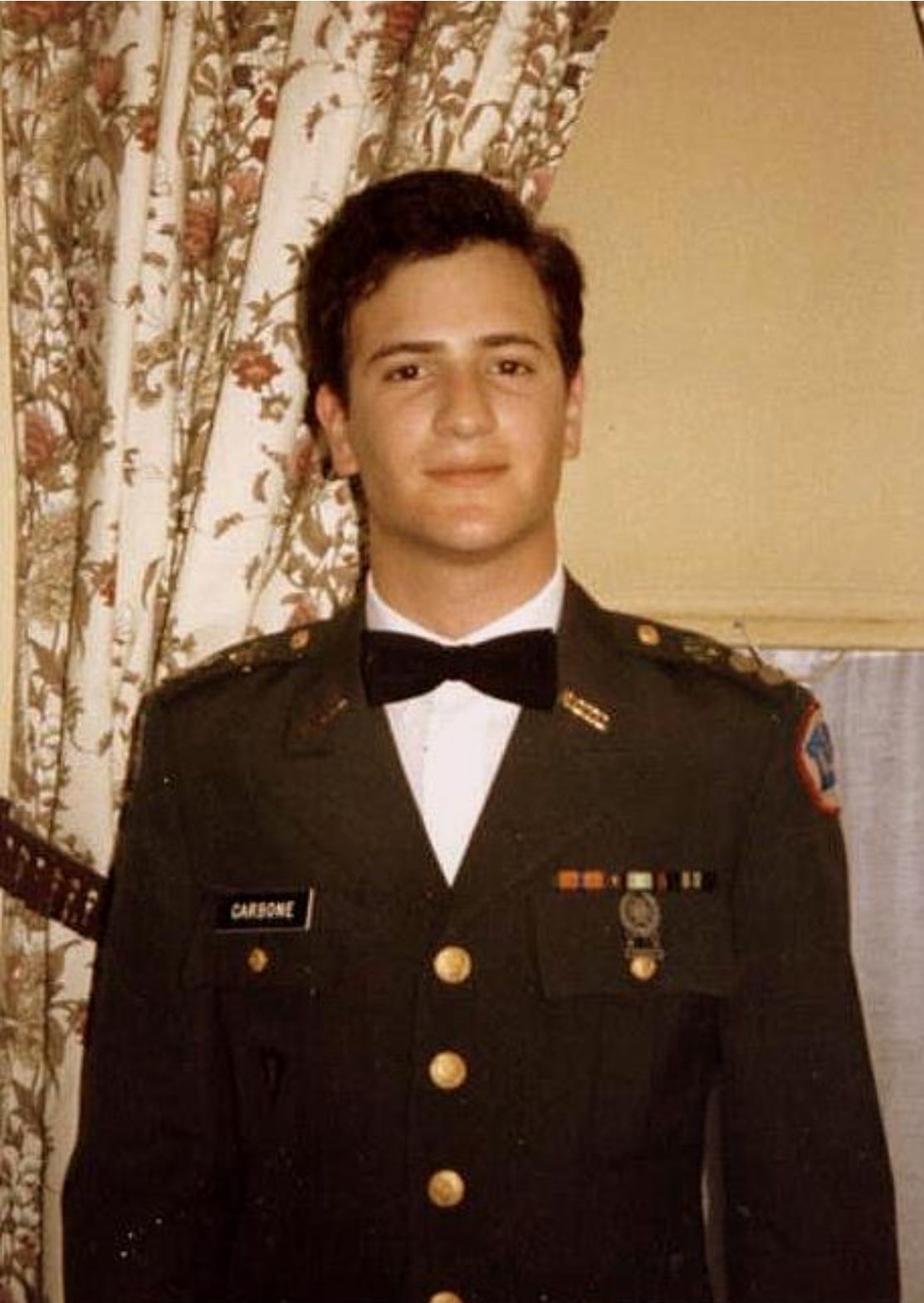
Army ROTC Cadet Lieutenant Anthony J. Carbone in dress uniform with ribbons and Expert Marksmanship Badge.
Taking Mariann to the Tri-Military Ball at Notre Dame

The night carried all the formality and tradition of the military, complete with the expected reception line. At the head stood our Professor of Military Science, Lieutenant Colonel Henry Gordon, with his wife at his side. As I stepped forward, he shook my hand and introduced me to his wife as “Cadet Bill Carbone.” I smiled and replied, “My name is Anthony. I’ve been your cadet for four years.” Then, as I turned to Mariann, I jokingly introduced her to him as “Sergeant Gordon.” The look of shock on his face was priceless, and Mariann laughed as I properly introduced her to Mrs. Gordon. That moment of humor broke the stiffness of the line, and together, Mariann and I carried the evening with the same warmth and confidence that made her the perfect date for any occasion.

More of the Fisher Hall Gang
Assassination Attempt on President Reagan (March 30, 1981)

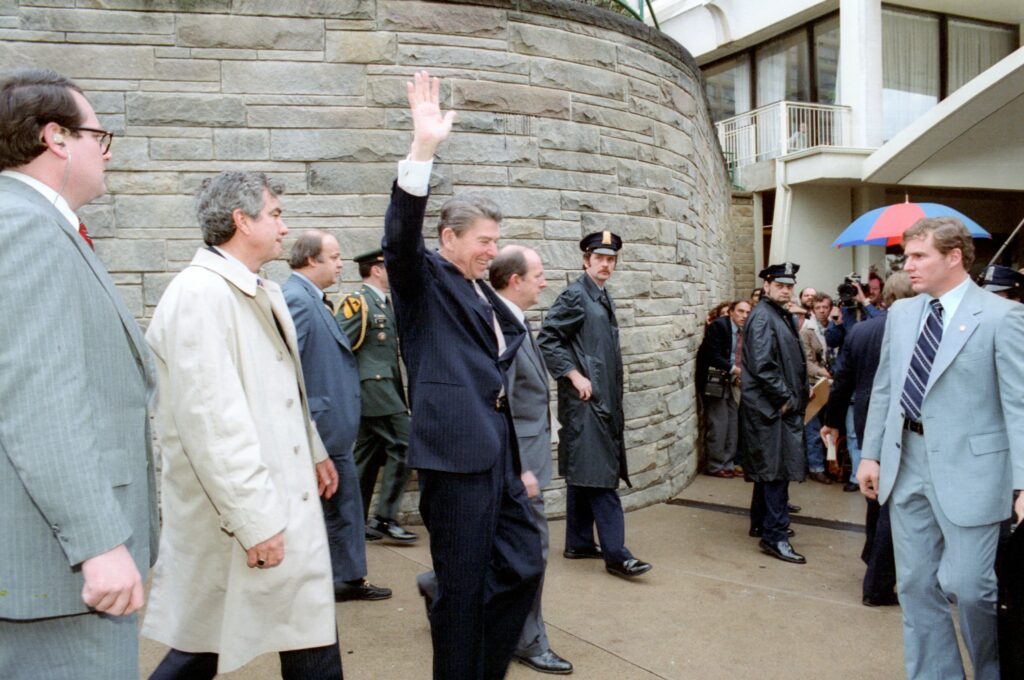
On March 30, 1981, the nation was shaken when President Ronald Reagan was shot and wounded by John Hinckley Jr. outside a Washington, D.C. hotel. I can remember the exact moment the news broke. I was in Comparative Anatomy Lab, where a few of us were goofing around with our specimens while the radio played music in the background. Suddenly, the broadcast was interrupted: “We interrupt this program for a special news bulletin. President Reagan has been shot in an attempted assassination attempt…” The room fell instantly silent. Reagan had been struck by a bullet that narrowly missed his heart, but he recovered quickly and reassured the country with his resilience and humor.
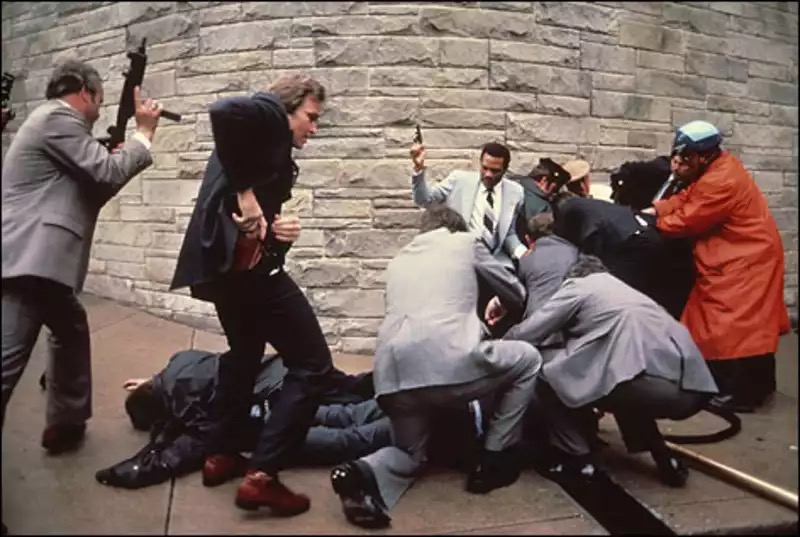
Hinckley, who had acted in a delusional attempt to impress actress Jodie Foster, was later found not guilty by reason of insanity and confined to St. Elizabeth’s Hospital for the Criminally Insane — a place I would one day walk the halls of as a Georgetown medical student. At the time, I had no idea that my future path would bring me face-to-face with the same institution where the man who had nearly killed the President was confined, giving me firsthand insight into the uneasy intersection of mental health and criminal justice.
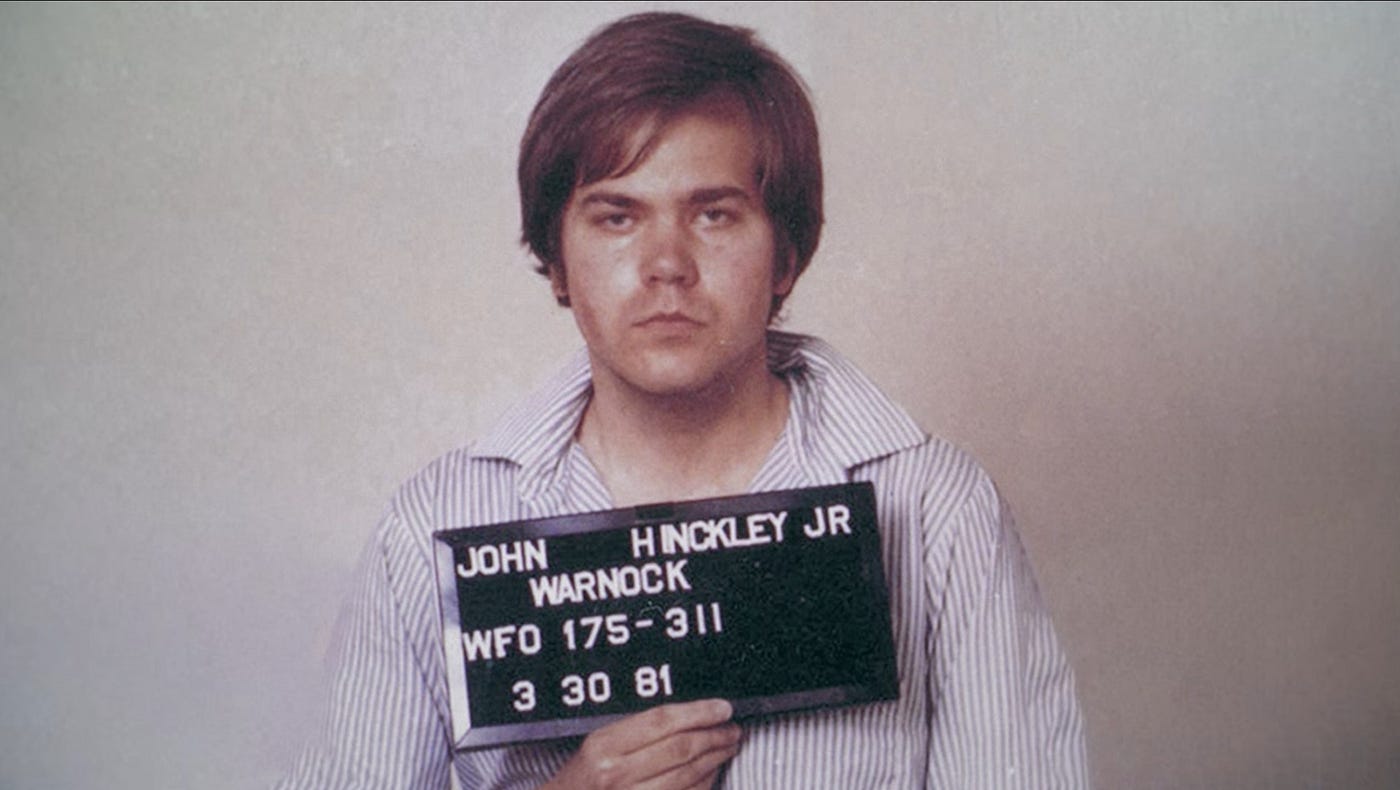
John Hinckley Jr’s Mugshot (March 30, 1981)

Assassination Attempt on Pope John Paul II — May 13, 1981

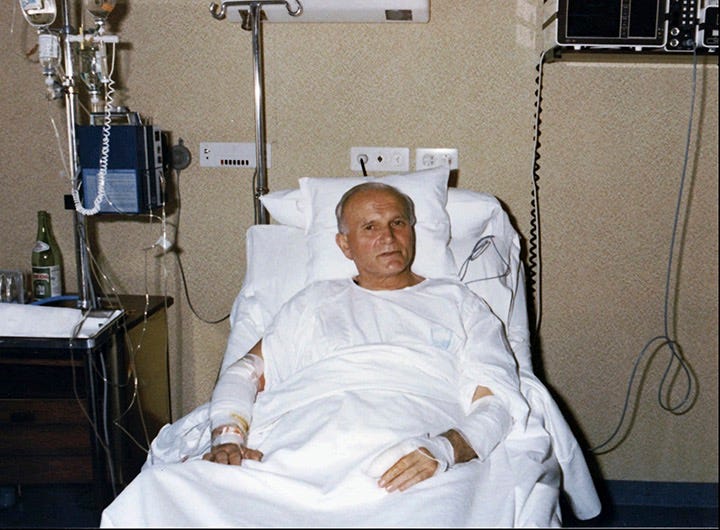
On Wednesday, May 13, 1981, just one day after my last final exam at Notre Dame, the world seemed to stop again. It was 11:17 a.m. Central Daylight Time when the broadcast cut in. A group of us — our Fisher Hall gang of seniors, along with Mariann and Ginger, who were staying behind to attend our graduation — were in our rooms watching television. I was sitting with Mari when the familiar words rang out: “We interrupt this program for a special news bulletin. Pope John Paul II was just shot in Saint Peter’s Square in an apparent assassination attempt. He is being rushed to the Agostino Gemelli University Polyclinic in Rome for emergency surgery.” The room went silent. We sat frozen, stunned by the idea that someone would try to kill the Pope. Reports came in that he had been hit in the abdomen and suffered intestinal injuries, his survival uncertain as surgeons fought for hours to save his life.
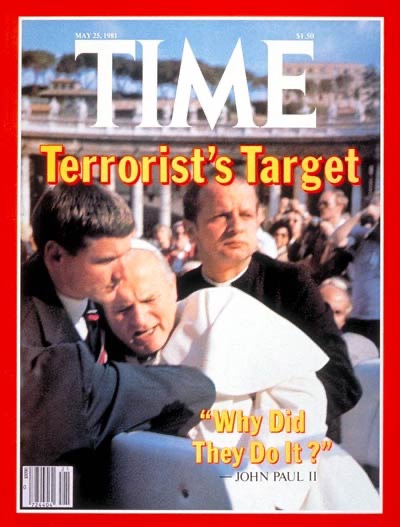
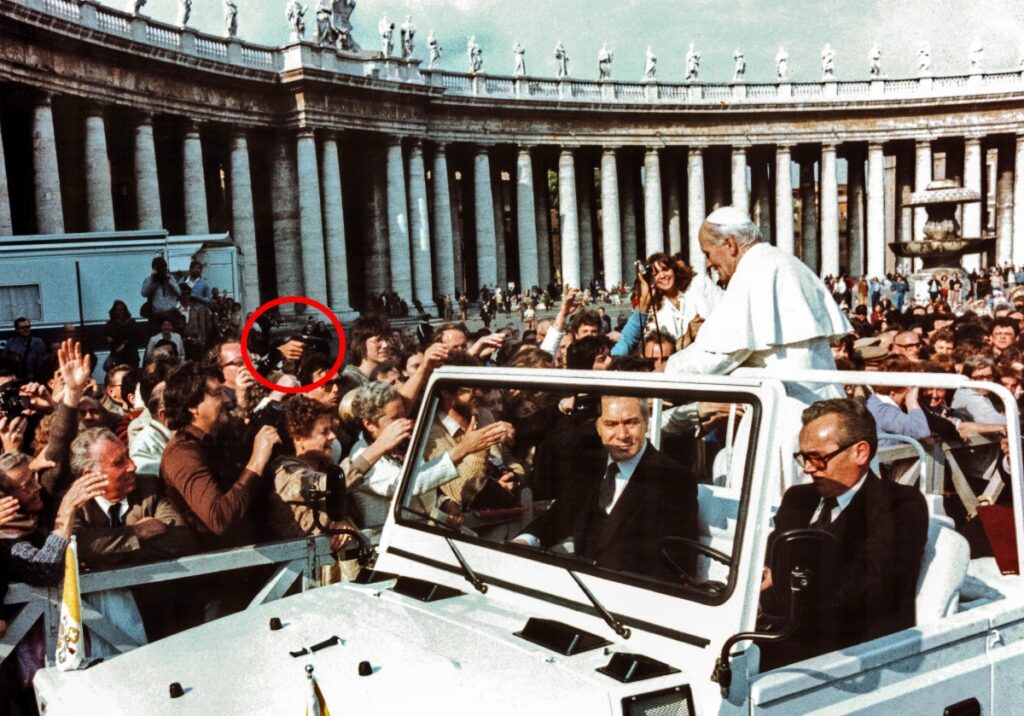
Incredibly, Pope John Paul II did survive, spending three weeks in the hospital recovering from his wounds.
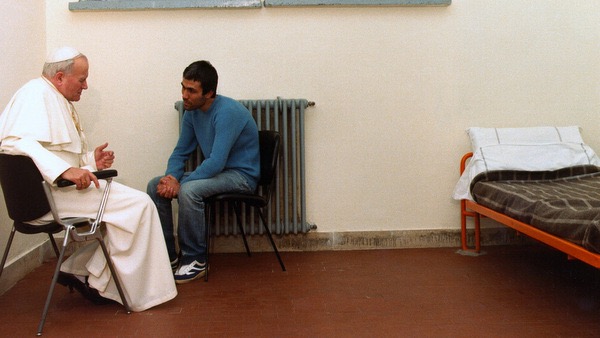
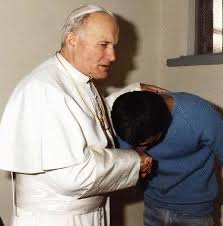
What followed made an even greater impression: his extraordinary act of forgiveness. In 1983, he visited Mehmet Ali Ağca — the man who had tried to kill him — in prison, offering him mercy and compassion instead of bitterness.
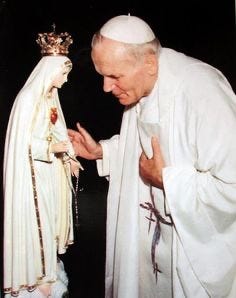
The Pope later attributed his survival to the intercession of Our Lady of Fátima, whose feast day coincided with the shooting.
President Reagan had survived his assassination attempt just six weeks earlier. The parallel ordeals forged a deep friendship between the two men, uniting them in resilience, faith, and a shared determination to confront tyranny and defend human dignity.
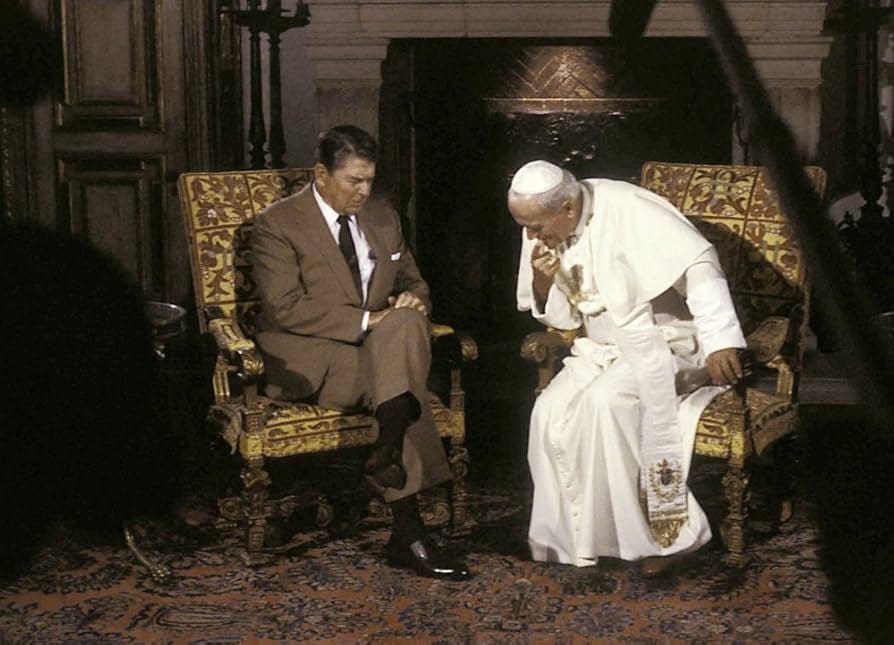
Army Branch and Location Assignments

Shortly before commissioning, all of us Senior Army ROTC cadets received the orders we had been anxiously awaiting — our Army branch and unit assignments. I remember holding the envelope with a mix of anticipation and dread, knowing that whatever it contained would shape the next chapter of my life. First, my request for an educational delay to attend medical school was denied. I had been branched in the U.S. Army Chemical Corps with an initial assignment to the U.S. Army Chemical School at Fort McClellan, Alabama for the Chemical Officer Basic Course.
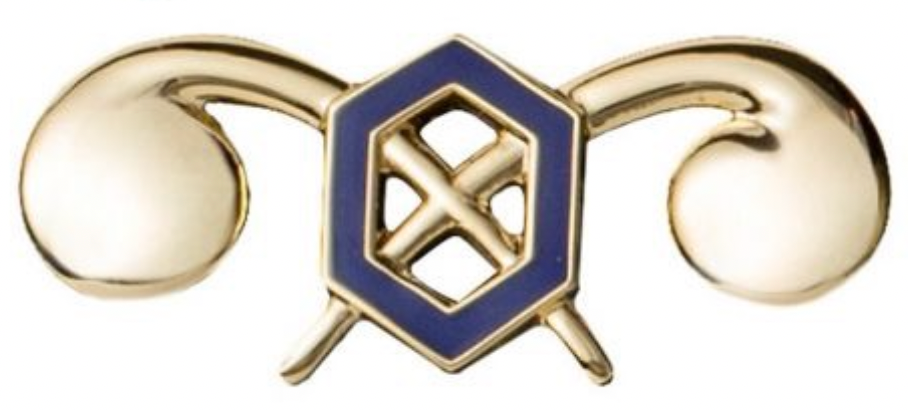
For someone who had grown up studying my father’s military career, I was amazed — I didn’t even know the Army had a Chemical Corps. I could feel my father’s quiet disappointment that I hadn’t been branched into the combat arms, like Armor or Cavalry, the “real” soldiers.
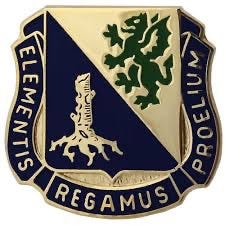
The unit crest of the Chemical Corps. A green Griffen with the motto: “Elementis Regamus Proelium” stands for “Win the Battle Through the Elements”

Not Korea, but Fort Irwin

The Army also asked if I would like to serve in Korea, which meant a one-year, unaccompanied tour. I replied that I would prefer anywhere in the United States or Europe. My father’s disapproval was clear; Korea had been the start of his own career, the proving ground of the Army, and he could not understand why I was thinking about Mariann instead of my career. Eventually, my assignment was revealed: the National Training Center at Fort Irwin, California.
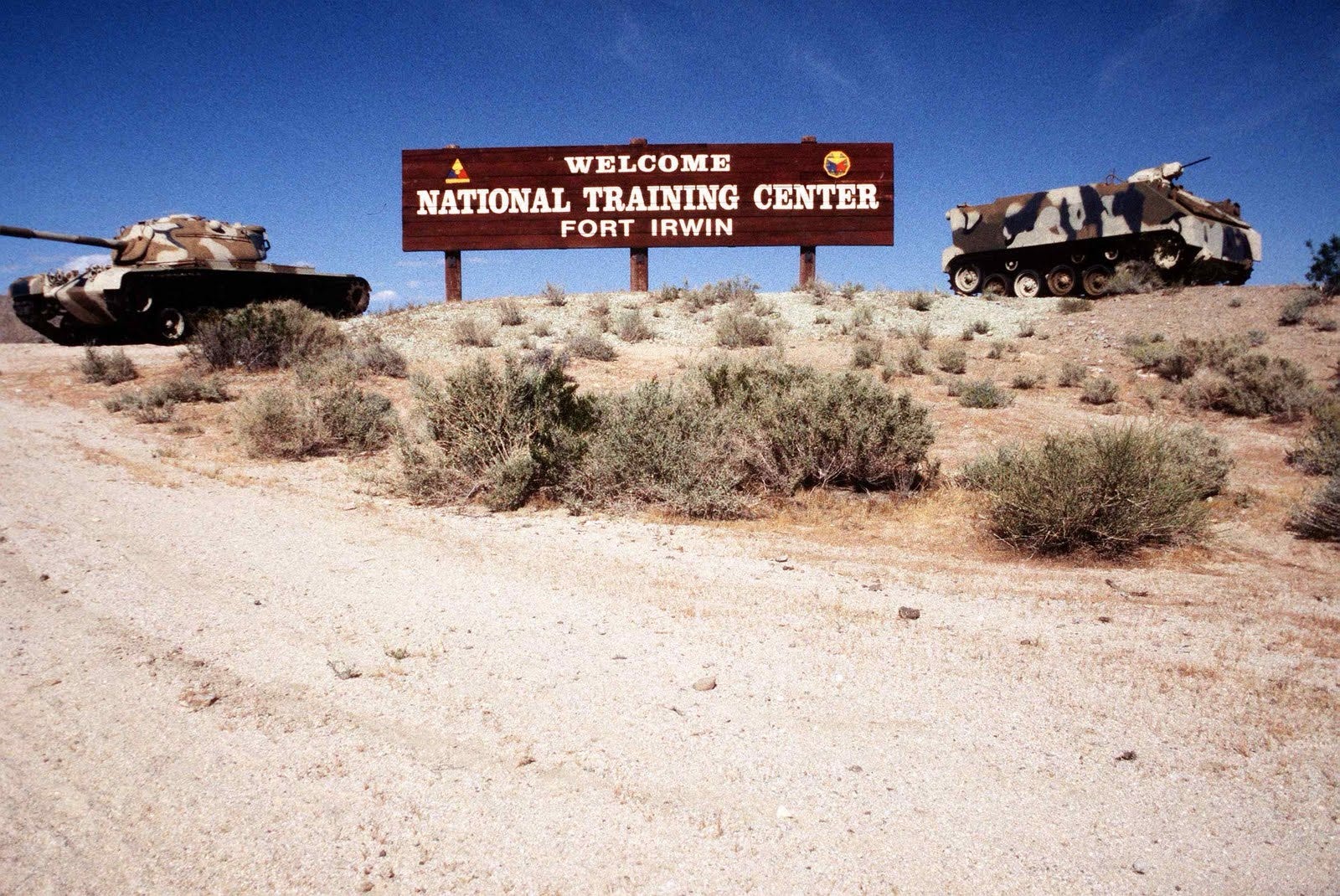
Entrance to the National Training Center at Fort Irwin and the infamous Painted Rocks Momument honoring units who have rotated through the NTC.

I had never heard of the post, which had only reopened weeks before. When I told my father, he said, “Great assignment, JR!” — and I knew I was in trouble. Sure enough, Fort Irwin was located in the infamous Mojave Desert, bordering on Death Valley, USA, a harsh and unforgiving landscape that would test me in ways I had never imagined.

Commencement Weekend (May 15–17, 1981)
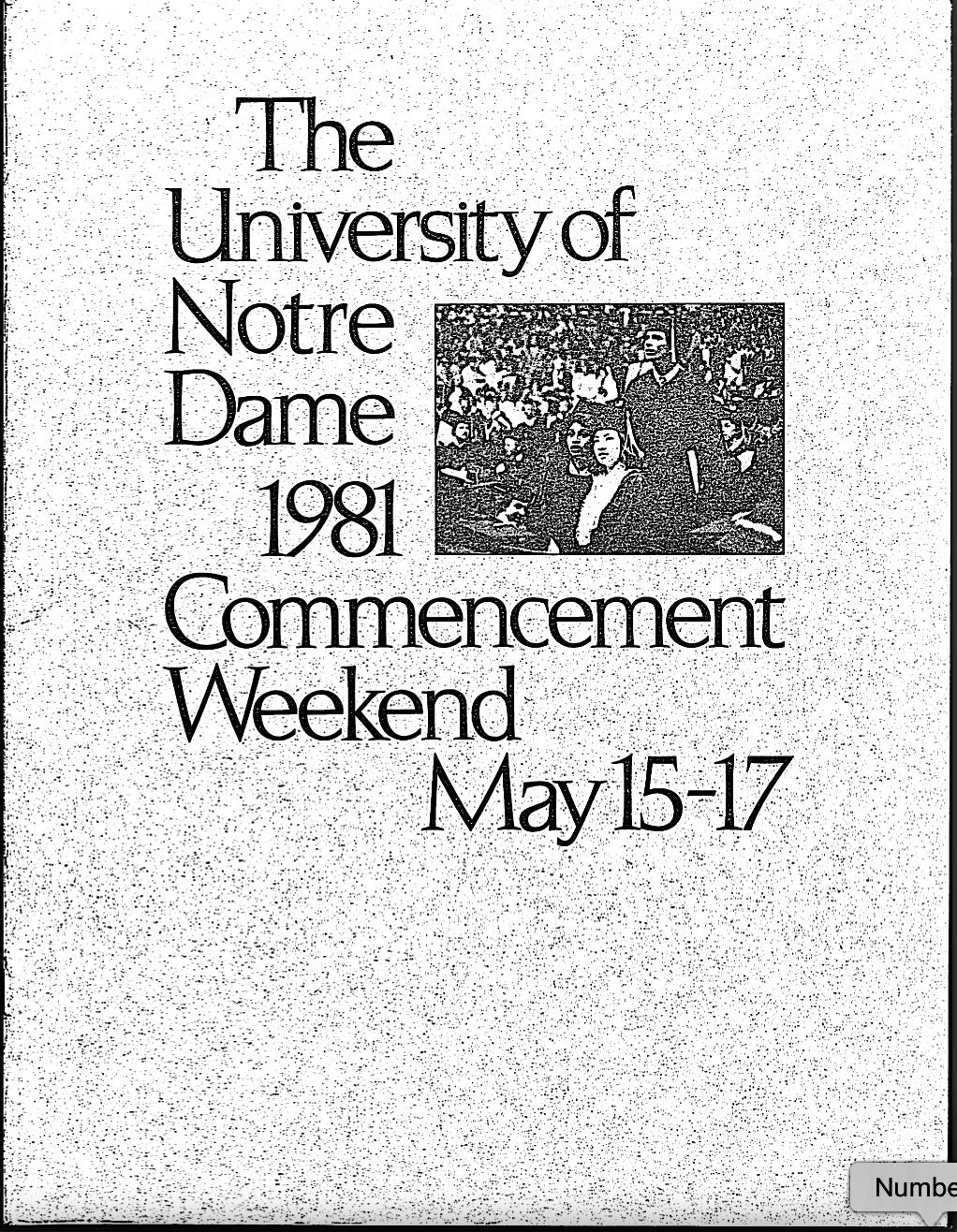
The University of Notre Dame 1981 Commencement Weekend May 15–17 Bulletin. Biography of Dr. Anthony J. Carbone.

My entire family — Mom, Dad, and all four of my sisters — made the trip out to Notre Dame for my commissioning and graduation. And of course, Mariann was right by my side through it all. The weekend was packed with ceremony and meaning.

Commissioning Ceremony (May 16, 1981)

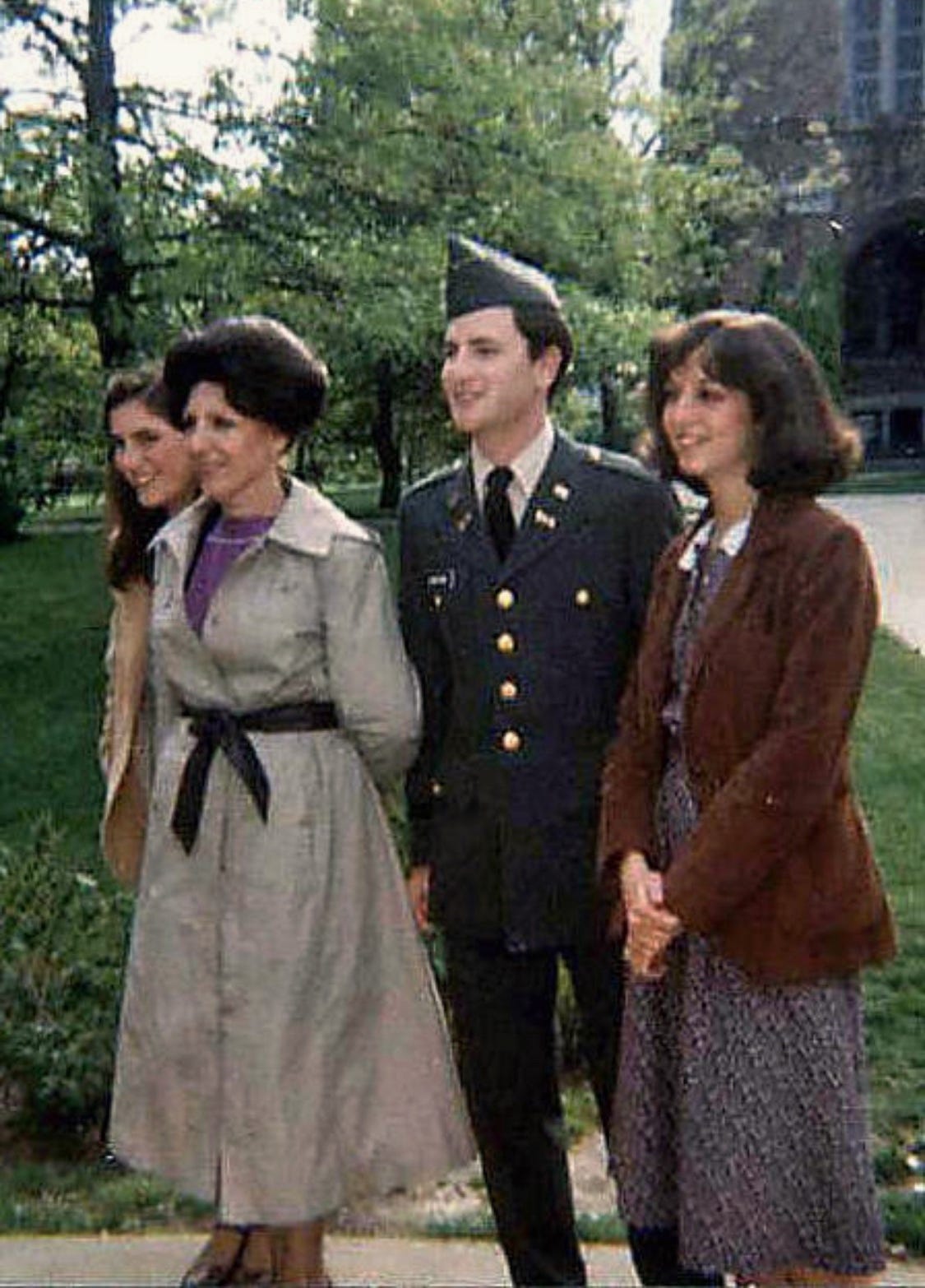
On Saturday, May 16, the day began at 10 a.m. with the Army ROTC Commissioning. The most powerful moment for me was taking the Oath of Office, sworn in by my father, a Colonel in the U.S. Army.

“I, Anthony J. Carbone, do solemnly swear that I will support and defend the Constitution of the United States against all enemies, foreign and domestic; that I will bear true faith and allegiance to the same; that I take this obligation freely, without any mental reservation or purpose of evasion; and that I will well and faithfully discharge the duties of the office on which I am about to enter. So help me God.”

To stand there, repeating those words, and to be sworn in by my own father — it was overwhelming. The pride of the moment was real, but so was the quiet sting. Deep down, I prayed that he had finally let go of his disappointment that I had turned down West Point. I couldn’t be sure. I sensed it still lingered in him, unspoken. But as I looked at my mother, my sisters, and Mariann, I saw nothing but pride in their eyes. That helped temper the pain. For me, it was the beginning of a new life: at once exhilarating, humbling, and sobering.
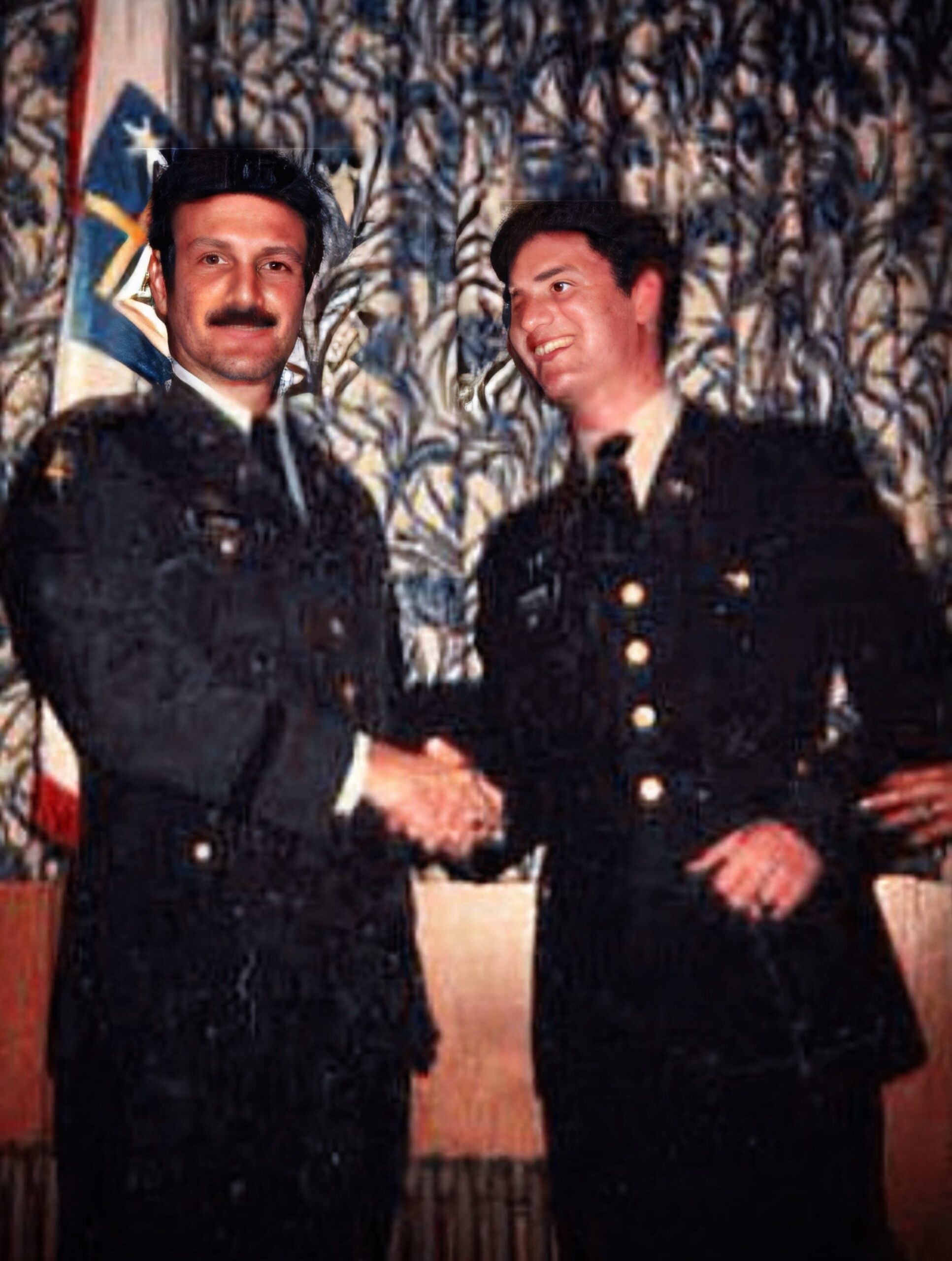
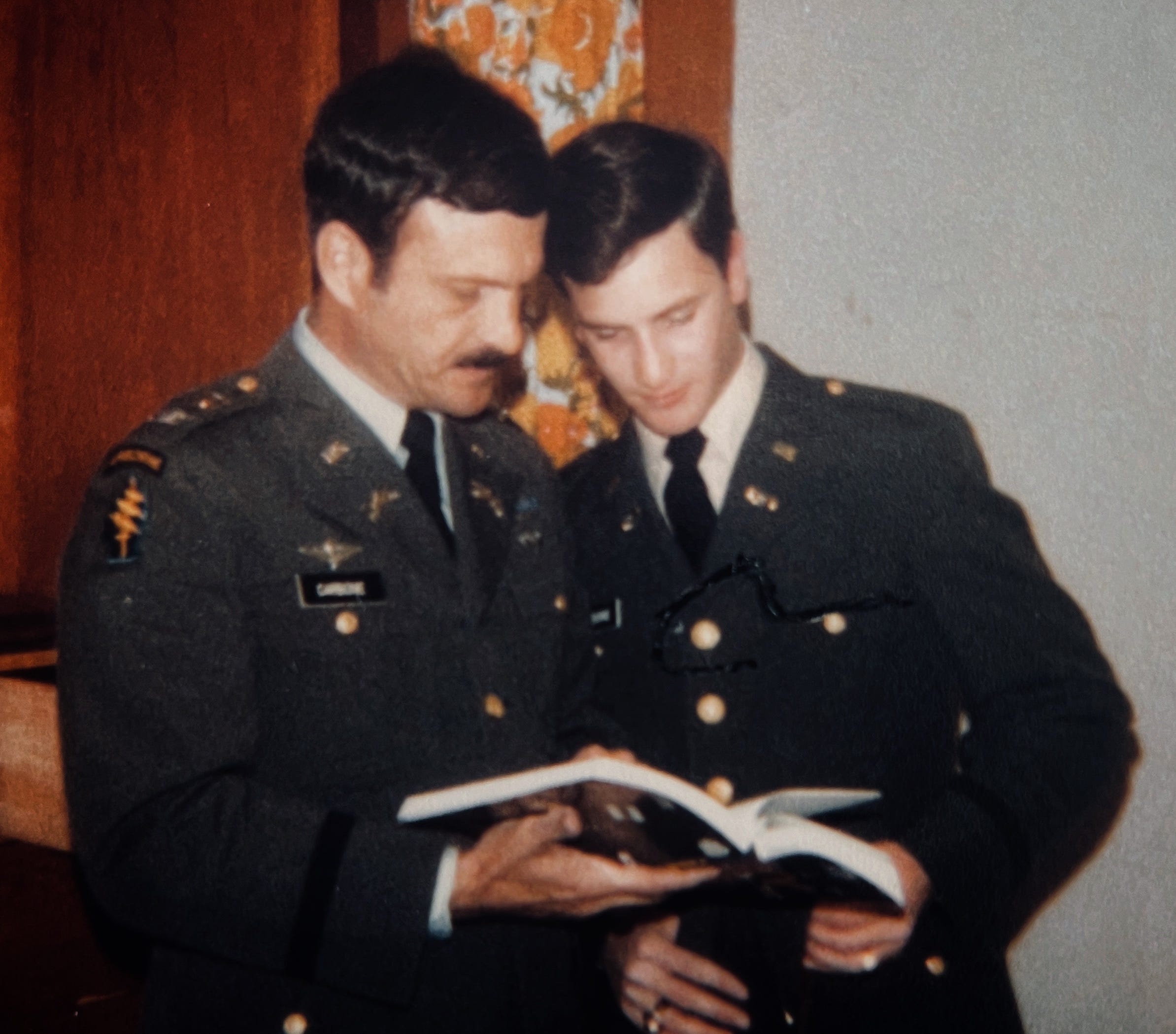
My father, Colonel Tony Carbone, commissioned me as a new Second Lieutenant in the U.S. Army
Commissioning Day with my mother, Mariann, and my sister Pamela at Notre Dame (May 16, 1981). Biography of Dr. Anthony J. Carbone.
Commissioning Day with my mother, Mariann, and my sister Pamela at Notre Dame (May 16, 1981)
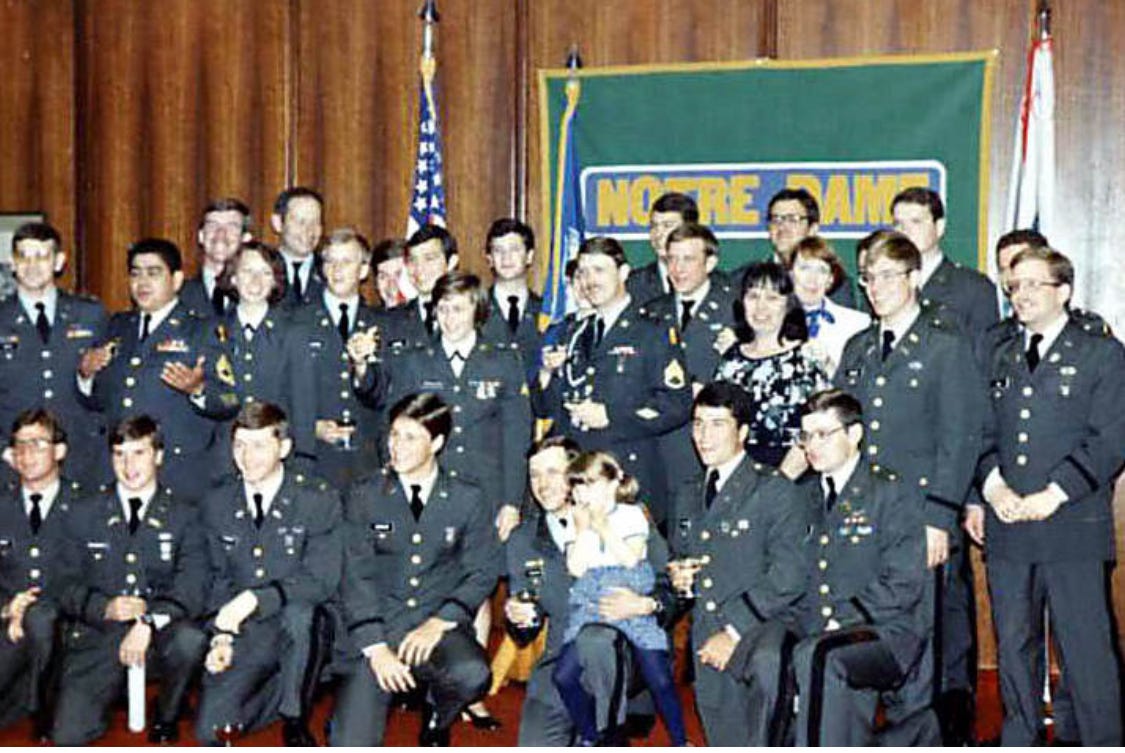
Newly commissioined U.S. Army Second Lieutenants from Notre Dame Army ROTC (May 16, 1981). I am in the back row between the American flag and Notre Dame banner. Biography of Dr. Anthony J. Carbone.
Newly commissioned Army officers from Notre Dame (May 16, 1981). I am in the back row between the American flag and the Notre Dame banner.

Academic Procession & Baccalaureate Mass

Later, at 4:20 p.m., came the Academic Procession at the Athletic and Convocation Center, followed by the Baccalaureate Mass at 5 p.m. The evening was full: a cocktail party and buffet supper from 7 to 8:30 p.m., then a concert by the University of Notre Dame Glee Club at Stepan Center at 9 p.m. It was a long, emotional, and exhausting day for all of us.
Commencement Ceremony (May 17, 1981)

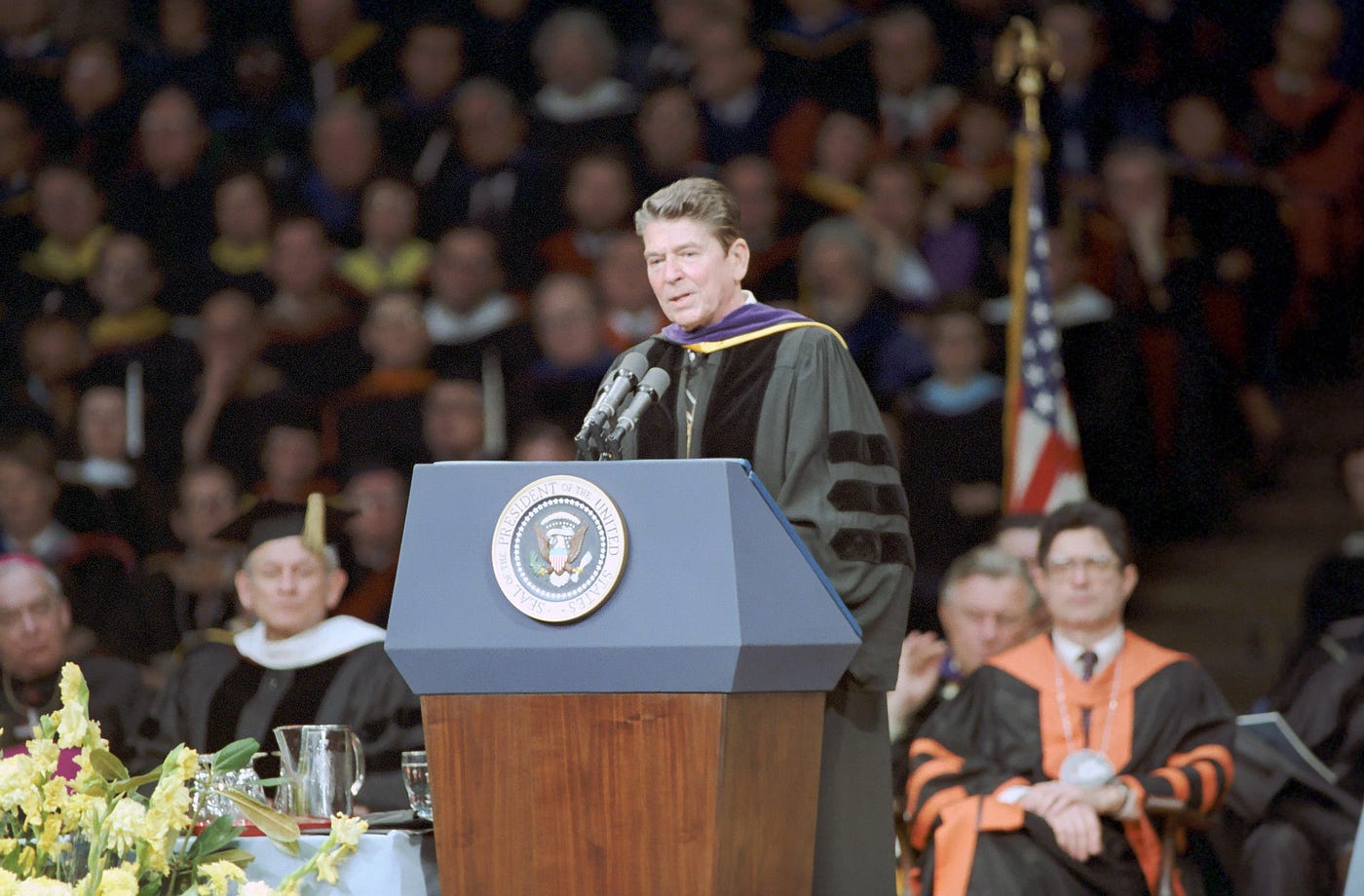
The highlight of the day, however, was President Ronald Reagan himself. On May 17, 1981, just weeks after surviving an assassination attempt, Reagan chose Notre Dame for his first public appearance. The arena crackled with anticipation. Secret Service agents were everywhere, watchful eyes scanning the crowd as we passed through metal detectors and searches to enter. The sense of history unfolding right before us was undeniable.

When President Reagan finally appeared, the entire arena erupted. His presence filled the space — larger than life, resilient, and still carrying the aura of a man who had stared down death and come back smiling. His address mixed humor with deep inspiration, speaking of America’s role in the world, the strength of freedom, and the resilience of our people. It was everything you could hope for from a commencement address, and more.
Honoring “Knute Rockne, All American”

Then came one of those unforgettable Notre Dame moments. Father Theodore Hesburgh, our legendary president, conferred honorary degrees upon both Reagan and actor Pat O’Brien. The symbolism was perfect — O’Brien, who had portrayed Knute Rockne, and Reagan, forever remembered as “The Gipper,” standing together on our stage. The crowd went wild, the cheers echoing like the roar of a football Saturday in Notre Dame Stadium.
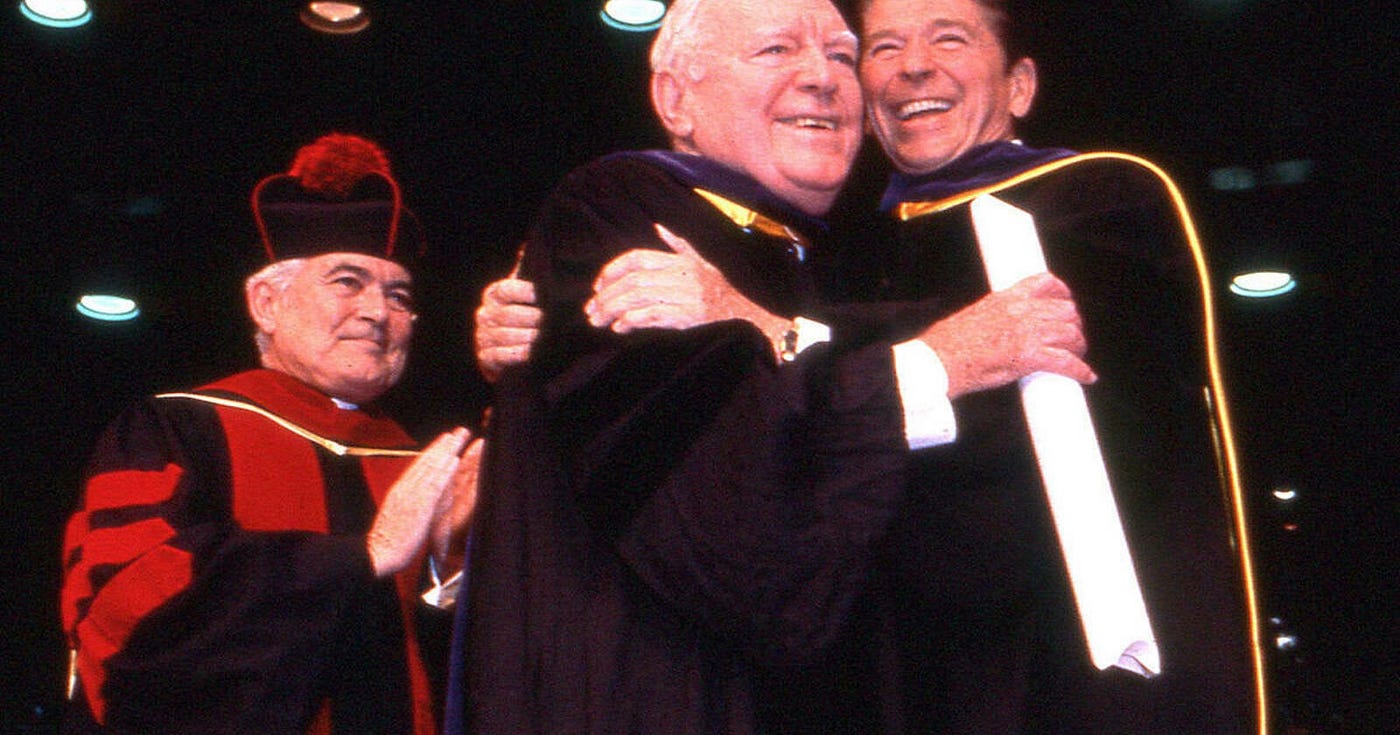
Pat O’Brien and President Reagan hugging after being awarded honorary degrees by Father Theodore Hesburgh.

Reflections on Past Four Years

For me, it was overwhelming. I had just been commissioned as a U.S. Army officer the day before, had received my diploma, and was now witnessing history alongside my family and Mariann. I felt a profound sense of pride — not just as a new graduate, not just as a soldier, but as an American. It was a moment that fused together all of my identities: Notre Dame man, Army officer, and citizen of a country that, despite its trials, always found a way to rise.

As President Reagan spoke, I couldn’t help but reflect on my own journey. Four years at Notre Dame had taught me discipline, resilience, and the value of faith and friendship. Now, standing on the threshold of adulthood, commissioned as an officer, and armed with my diploma, I felt a surge of possibility. Reagan’s words about courage, responsibility, and service resonated deeply with me — not as abstract ideals, but as a call to action for my own life.

That day, surrounded by family, friends, and Mariann, I realized that the lessons of Notre Dame, the discipline of ROTC, and the support of loved ones had prepared me for whatever challenges lay ahead. It was not just a graduation; it was the beginning of everything I had worked for, a launch into a life I was ready to embrace with confidence, hope, and gratitude.
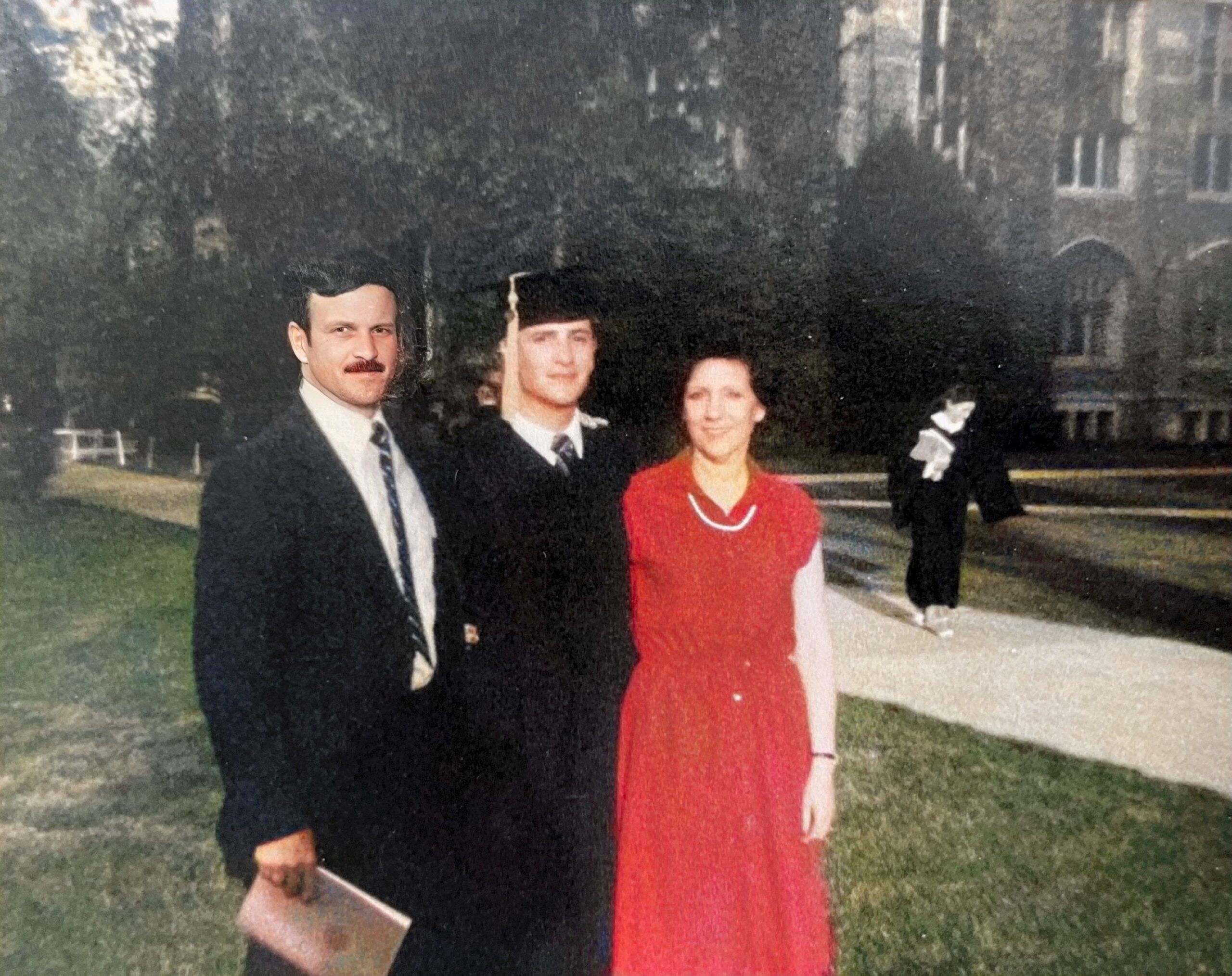
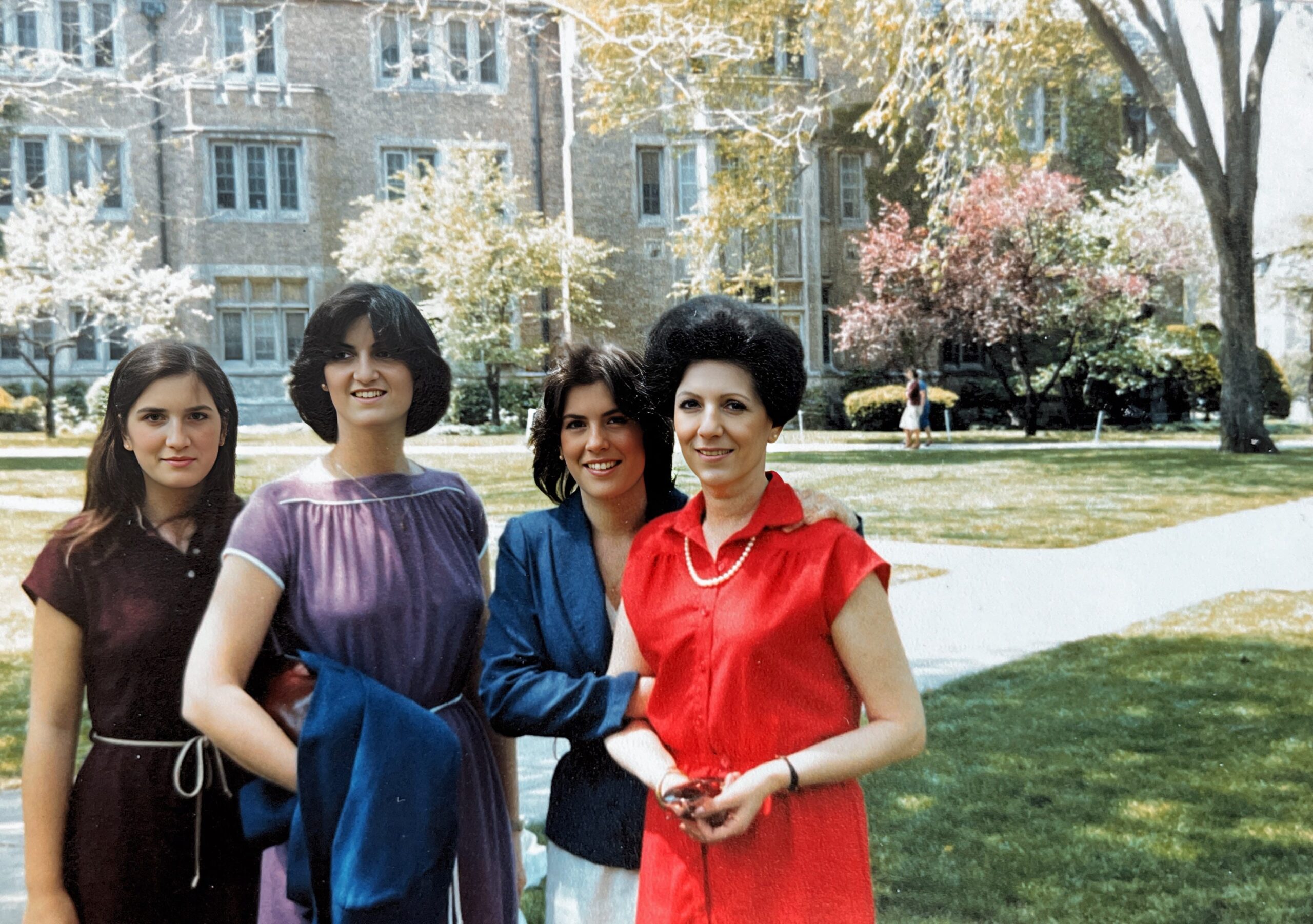
With my parents and sisters at the Big Commencement Ceremony Day with President Ronald Reagan (May 17, 1981)

The Final Chapter of my Notre Dame Experience

Looking back, my senior year at Notre Dame was a whirlwind of challenge, growth, and unforgettable experiences. Between demanding academics, ROTC responsibilities, and the uncertainty of my future, I learned to balance discipline with perseverance, ambition with patience, and intellect with heart.

Mariann’s companionship, the support of my family, and the camaraderie of the Fisher Hall gang made every obstacle more manageable and every success sweeter. From the highs of football victories and the Tri-Military Ball to the sobering moments of world events and the exhilaration of commissioning and graduation, the year was a microcosm of life itself — intense, unpredictable, and profoundly rewarding. As I left campus for the last time, I carried not only a diploma and a commission but a sense of purpose, pride, and readiness for the next chapter of my life.
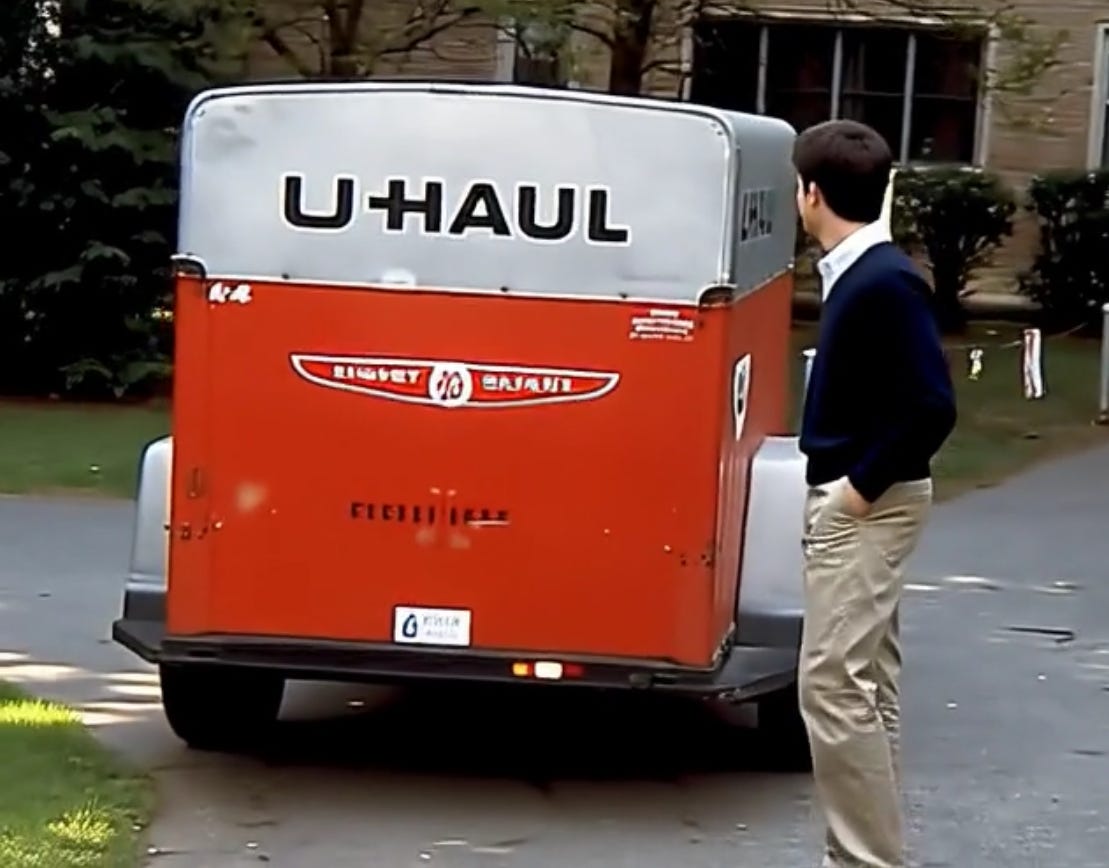
Photograph of me standing in front of the U-Haul that I used to move out of Fisher Hall at the University of Notre Dame on May 17, 1981 following graduation. Biography of Dr. Anthony J. Carbone.
Loading up my belongings from Fisher Hall into a U-Haul for the last time (May 17, 1981)

Home Page

Chapter 16: My first semester at Notre Dame

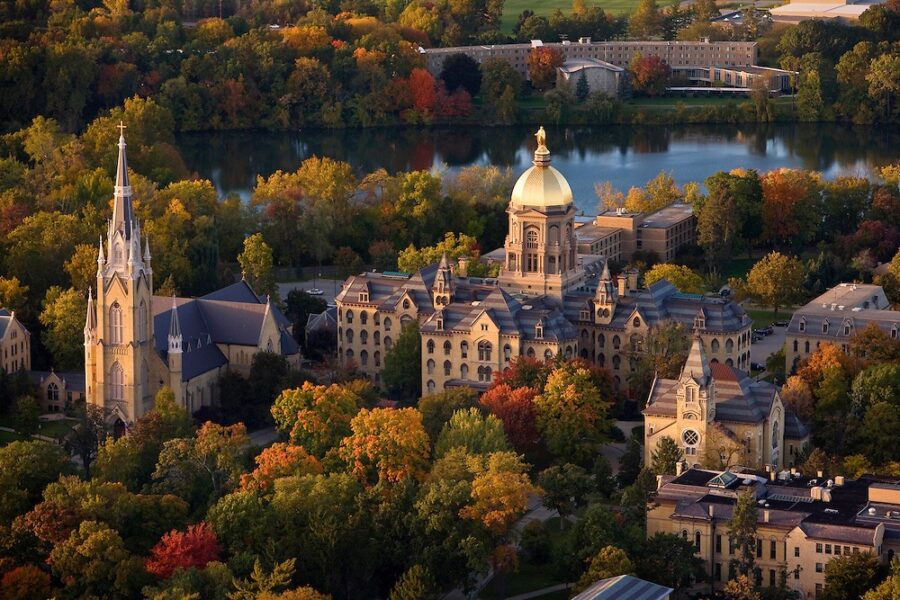
Aerial view of campus of University of Notre Dame. Showing the Golden Dome and Our Lady above the Admin Building. Autobiography of Dr. Anthony J. Carbone.

Believe Nothing You Hear, and Only Half of What You See — A memoir of Service, Shame and the Search for Truth

My First Week of College at Notre Dame

By the time the first official week of college began, our long summer of anticipation was finally over. The buzz of orientation events and the flurry of new friendships had barely settled when a singular rite of passage landed in our hands and marked our true arrival into Notre Dame life.

The Infamous Dog Book

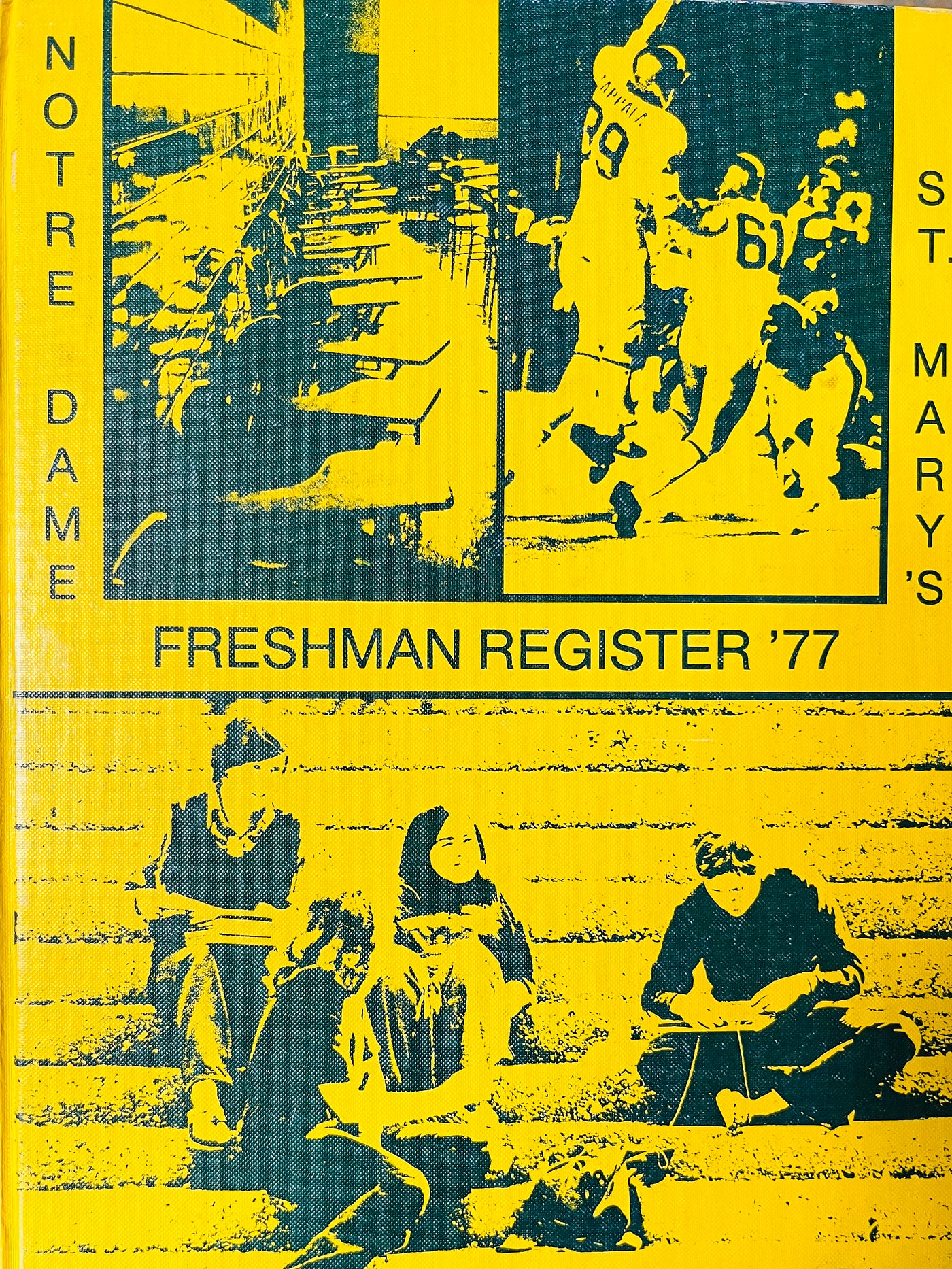
It came wrapped in glossy pages. The little blue-and-yellow hardback — formally titled The Notre Dame & Saint Mary’s Freshman Register, Class of 1977— was better known across campus by its infamous, irreverent nickname: The Dog Book.

Notre Dame & St Mary’s College Freshman Register ’77 (The “Dog Book”)

The Girls of Saint Mary’s

Now, let me clarify from the start: the girls of Saint Mary’s were anything but “dogs.” The name was a holdover from Notre Dame’s all-male history and had lingered through decades of tradition and crude humor. But if you were a freshman guy in 1977, you knew exactly what the Dog Book meant. It was your first unofficial introduction to the incoming class — your own classmates and, far more tantalizingly, the women across the road at Saint Mary’s College.

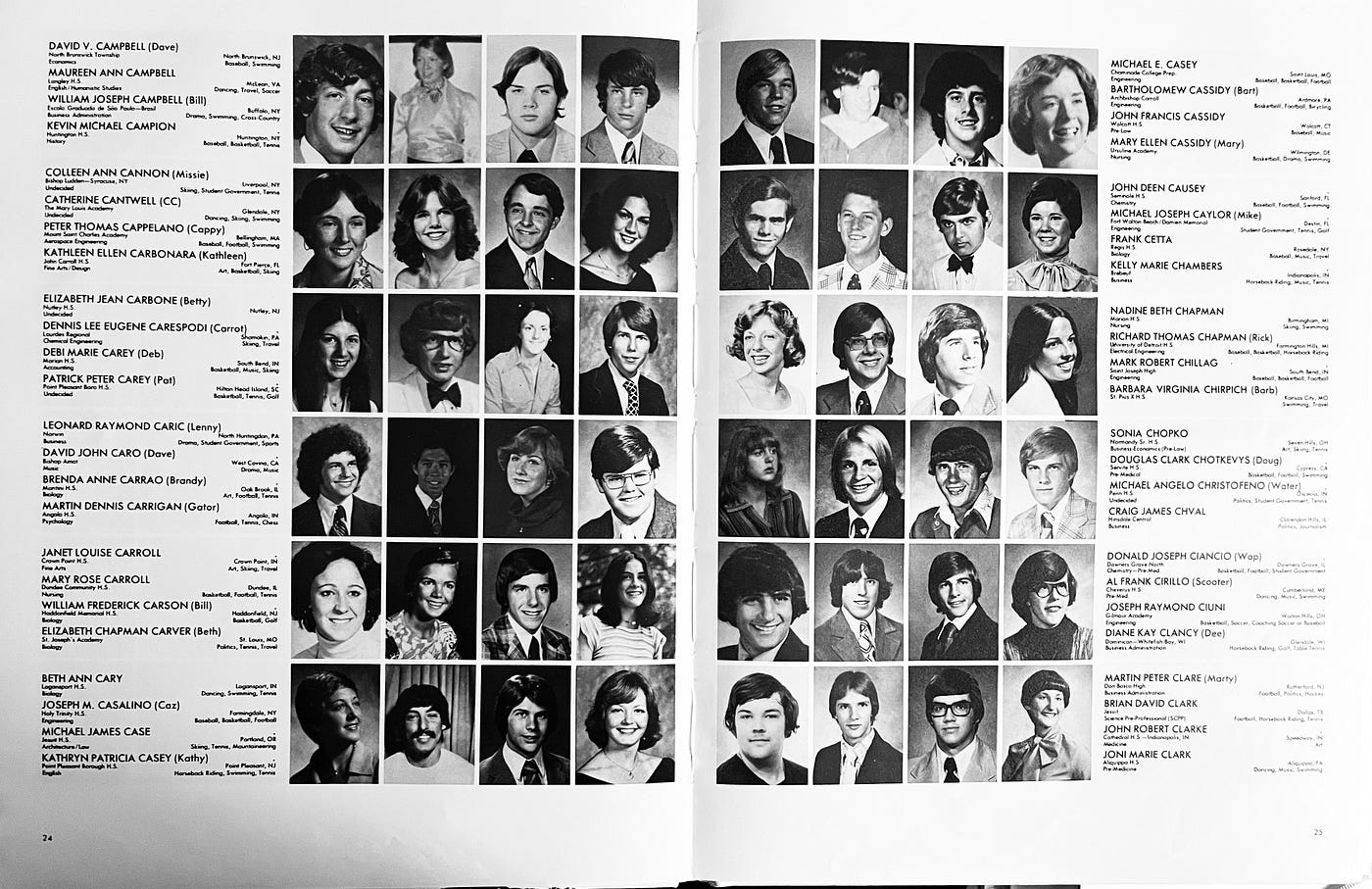
The book was laid out like a catalog: headshots of every incoming freshman at both schools, organized alphabetically. Each photo came with a name, nickname (if they had one), hometown, high school, and intended major. No bios. No blurbs. Just faces, facts, and enough fuel for hours of hallway commentary.

The moment the Dog Books were delivered to Fisher Hall, tradition took over. Guys poured out of their dorm rooms with books in hand and formed an impromptu gathering in the hallway. We sat cross-legged against the cinderblock walls, flipping pages together as if we were drafting fantasy football teams — or, more accurately, evaluating potential dates, girlfriends, and future wives.

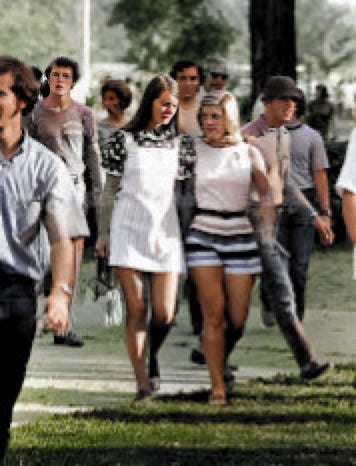
Girls of Saint Mary’s College mingled among the boys on the campus of Notre Dame

The jokes flew fast. So did the judgments. Someone would point at a photo and say, “She looks like trouble.” Another guy would shout, “Bottom of Page 56 — dibs!” Every once in a while someone would spot a classmate or recognize a name and make a big show of it, good or bad. It was crude, superficial, often cruel — but also a strange kind of bonding ritual.

I Avoided Being in the Dog Book

And I remember one very specific feeling: relief. I wasn’t in the Dog Book. Not a picture. Not a nickname. Nothing. Because I hadn’t applied to Notre Dame the traditional way, my name had been left out of the publication entirely. I watched the teasing pile up on a few poor souls — guys and girls alike — and silently thanked the registration gods for my invisibility. That day, anonymity was a blessing.

Notre Dame & St Mary’s Freshman Register from 1977 (Showing Elizabeth Carbone and no Anthony Carbone)

For all its dated humor and objectifying overtones, the Dog Book was a tradition. And like so many Notre Dame traditions, it was one we absorbed without question — half-laughing, half-cringing, entirely immersed in the absurdity of it all.

Saint Mary’s College (SMC): The College Across the Street

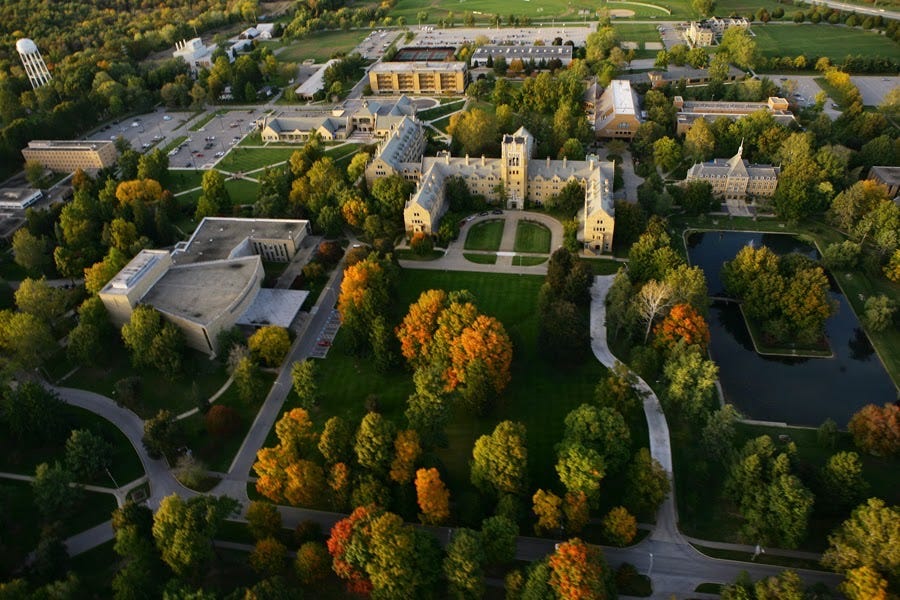
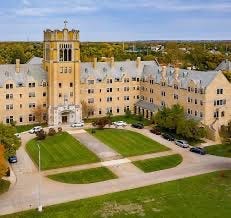
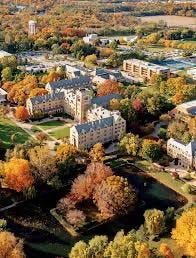
Aerial photograph of Saint Mary’s College, Notre Dame, Indiana.
Aerial view of Saint Mary’s College, Notre Dame, Indiana

To really understand the role the Dog Book played in campus life, you had to understand something about the girls across the street. Saint Mary’s College (SMC), a Catholic women’s college sponsored by the Sisters of the Holy Cross, stood just across U.S. Route 933, a short walk from the main gates of Notre Dame. But culturally, it often felt a world apart.

In 1977, Saint Mary’s enrolled 876 students, with 101 new applicants joining that fall. Student life at SMC was still steeped in tradition and governed by parietal rules that had barely budged despite the cultural revolutions of the late ’60s and early ’70s. These rules restricted when and how male visitors could enter the women’s dorms — usually limited to certain weekend hours, and always under strict supervision. The Sisters of the Holy Cross (CSC) still played an active role on campus, both academically and spiritually, guiding their students with a sense of purpose, decorum, and discipline.

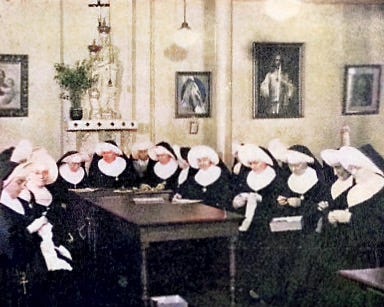
The Sisters of the Holy Cross (CSC)

My First Venture to Saint Mary’s

LeMans Hall

Like most Notre Dame freshmen, I was more than a little fascinated by the girls of Saint Mary’s. They seemed like a blend of grace, charm, mystery — and yes, temptation. I forget exactly how I met my first SMC coed, but I was invited over to her dormitory, Le Mans Hall, for a Saturday evening visit early in the semester.

LeMans Hall at Saint Mary's College across from the University of Notre Dame.  Biography of Dr. Anthony J. Carbone.
Le Mans Hall at Saint Mary’s College

Rules of Saint Mary’s College

I was already nervous walking across the road by myself, unsure of the etiquette or expectations. But when I arrived, things got a whole lot more intimidating. There was an elderly nun stationed at the reception desk in the front hall. She asked me, in a tone that made it clear she was not one to be trifled with, what my intentions were. I stammered something about being invited, and obediently handed over my Notre Dame ID card when she requested it.

Getting Past the Front Desk

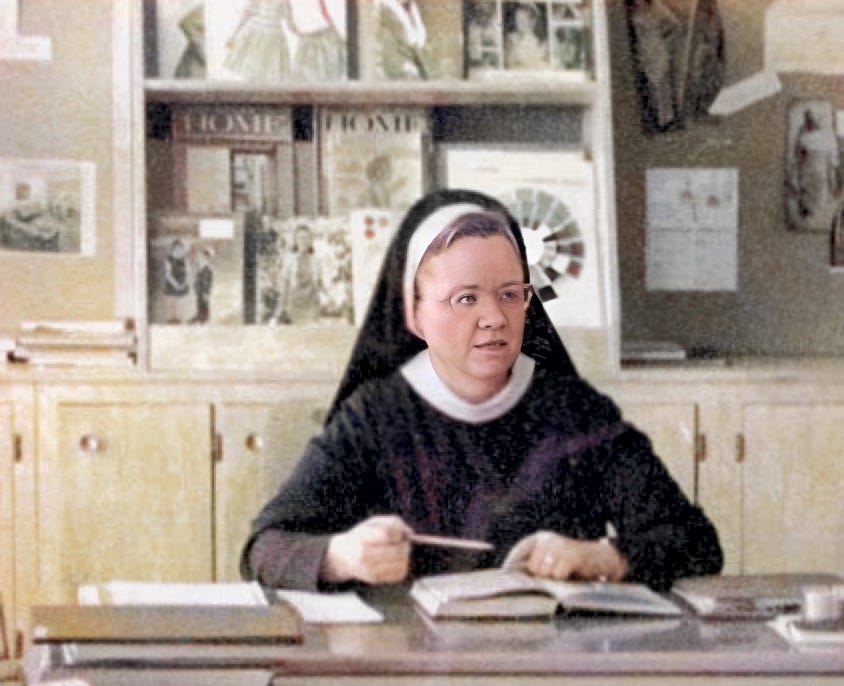
Photograph of older religious sister at a desk at Saint Mary's College.  Biography of Dr. Anthony J. Carbone.

Then came the interrogation. She called upstairs to verify that the young lady had indeed invited me, and when the coed confirmed, the nun told her to come down to escort me personally. No unsupervised wandering was allowed. Once upstairs, I was so on edge that I can barely remember the girl, her room, or what we even talked about. All I remember is the phone ringing about forty-five minutes into our visit. It was the same nun, calling the room to speak to me directly.

“Anthony,” she said in a clear, commanding voice, “you have fifteen minutes to leave the dormitory before parietal hours begin.” Parietals. That was the Notre Dame–SMC term for the formal rules regulating male visitation in female residence halls — rules that had the force of institutional and moral authority behind them. Once parietals began, all male guests had to be out, no exceptions. And this particular nun wasn’t leaving anything to chance.

I thanked her, hung up the phone, and left immediately — heart racing, palms sweating, a little dazed by the whole ordeal. I honestly don’t remember if I ever went back to that room, or even spoke to the young lady again.

It wasn’t just the strictness that kept me away. I was busy — pre-med classes, ROTC, and intramural soccer didn’t leave much space for cross-campus courtships. But I’d be lying if I said the nun hadn’t made a lasting impression. Avoiding Sisters of the Holy Cross became something of a subconscious strategy that semester.

The Saint Mary’s Panty Raids

I didn’t set foot in a Saint Mary’s dorm again until the panty raid in the spring — a decades-old tradition that had long blurred the line between innocent fun and cultural cringe. The stories from the women of Saint Mary’s say it all.

“Our room being on the second floor… provided the best view for Panty Raid. Seeing all the guys run up The Avenue near midnight, yelling, and girls screaming back, was quite a sight… Some girls actually threw panties down!” — Alice M. Tsui, Class of 1970

“I remember calling my mother and telling her I needed all new underwear because I had thrown almost all my things to the boys.” — Judy Johnson Crates, Class of 1970

“The ND guys got into the dorm and were trolling the halls… We pushed a desk up against our door and watched through the transom while the campus guards tried to chase them down!” — Karen Preston McCarty, Class of 1970

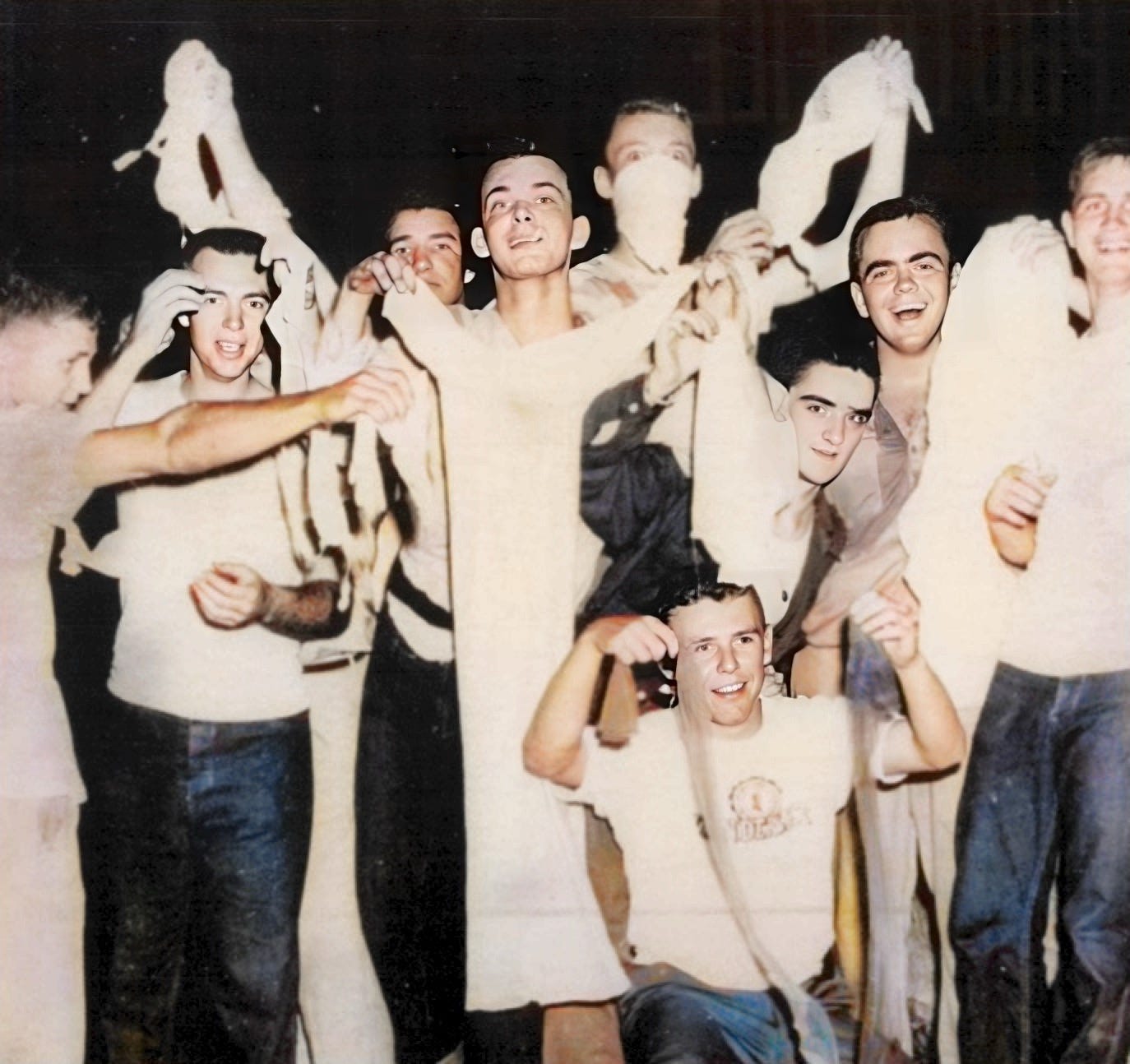
Group of Notre Dame boys holding lingerie from a recent Panty Raid at Saint Mary's College.  Biography of Dr. Anthony J. Carbone.
Notre Dame boys at St. Mary’s panty raid

It was outrageous. It was immature. And in hindsight, it’s the kind of thing that could never — and probably should never — happen today. At the time, we actively embraced many bizarre traditions as part of life under the Golden Dome.

Even by the time I was a freshman in 1977, the tradition was beginning to fade, or at least lose its luster. But the lore lingered. And for many of us, that was more than enough to keep the mystique of Saint Mary’s alive — whether we were brave enough to cross the Avenue or not.

Cadet Life Begins

While dorm pranks and hallway rituals offered a strange kind of social education, my real initiation into Notre Dame life came through two far more demanding callings — both of which began to take shape that very first week. I arrived on campus with a clear and heavy burden: two missions, equally urgent.

The first was academic. I was a pre-professional science major on the pre-med track, and I knew that earning a shot at medical school would take everything I had. There were no shortcuts. No excuses. I had to perform — and outperform — starting on day one.

The second mission was military. As an Army ROTC scholarship cadet, I actively committed—both contractually and personally—to developing into a leader capable of earning a first-class lieutenant commission by graduation.

That meant discipline, training, and excellence in every formation, drill, and leadership lab for the next four years. Two tracks. One man. No room to stumble.

So while most of my classmates were still finding their rhythm in dorm life, I was already switching gears — fast. I traded in the laughter of Dog Book hallway sessions and the chaos of panty raids for the early-morning demands of a cadet’s life. Gone were the Sperry’s and free time. In their place: combat boots, pressed uniforms, tight schedules, and 0600 alarms.

ROTC and Reality

The day of ROTC orientation began with the usual morning routine in Fisher Hall: a shower down the hall, a quick breakfast at South Dining Hall, and then a walk across campus. The morning sun lit the yellow brick buildings beautifully as I passed the Knute Rockne Memorial Gym — “The Rock” — on my way to the ROTC building.

Knute Rockne Memorial Building on the South Quad of the University of Notre Dame.  Biography of Dr. Anthony J. Carbone.
Knute Rockne Memorial Building

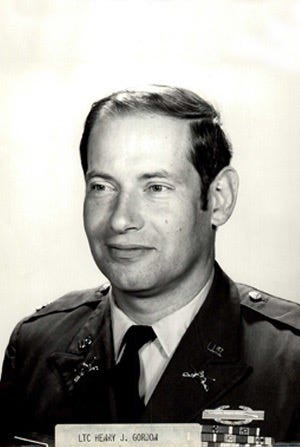
Professor of Military Science (PMS)Lieutenant Colonel Henry J. Gordon greeting us. A team of senior cadets who had clearly been through it all before also helped us.

Professor of Military Science (PMS) LTC Henry Gordon, University of Notre Dame. Biography of Dr. Anthony J. Carbone.
Professor of Military Science (PMS) for University of Notre Dame, LTC Gordon

Received my Army ROTC Basic Issue

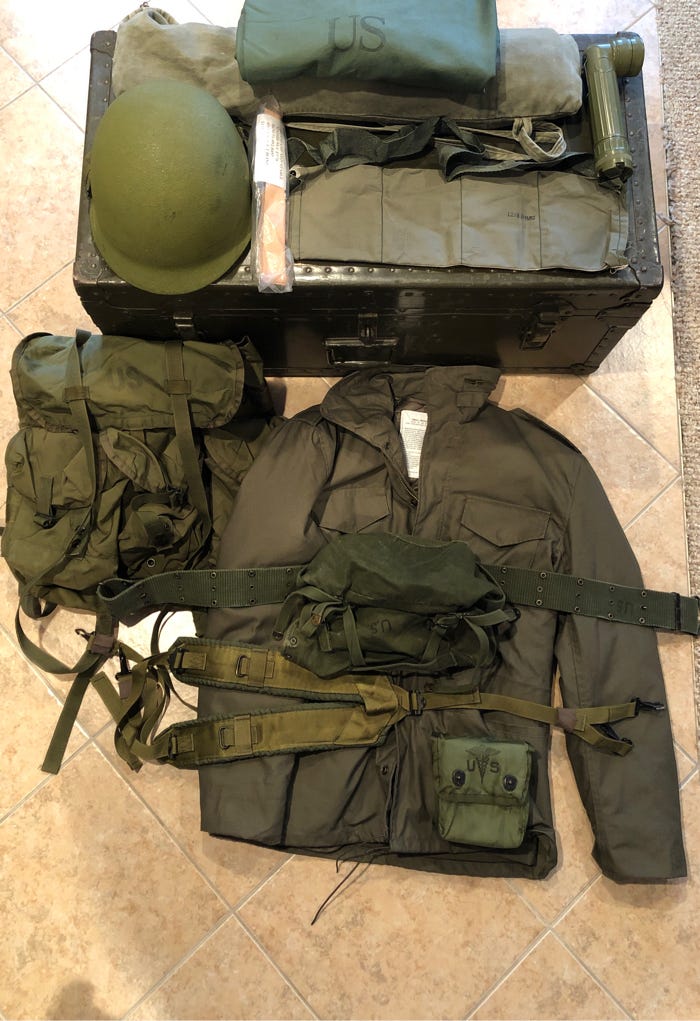
The orientation included a historical overview of Notre Dame’s long-standing military tradition, stretching back to the Civil War, officially formalized in 1951. There were about 50 of us new Army cadets. We were issued our fatigues, boots, T-shirts, caps, helmut, a few other GI items — our first taste of uniformed life.

U.S. Army basic issue of gear including steel pot Helmut, flashlight and footlocker.  Biography of Dr. Anthony J. Carbone.

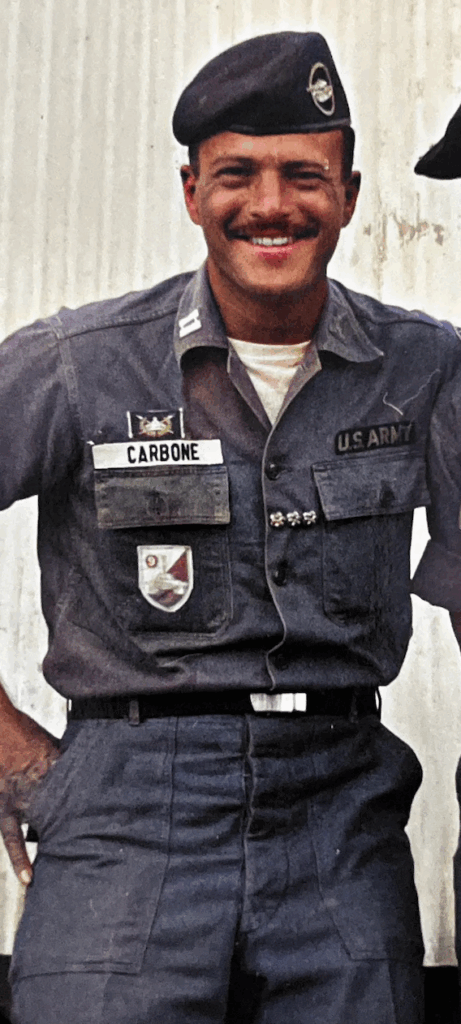
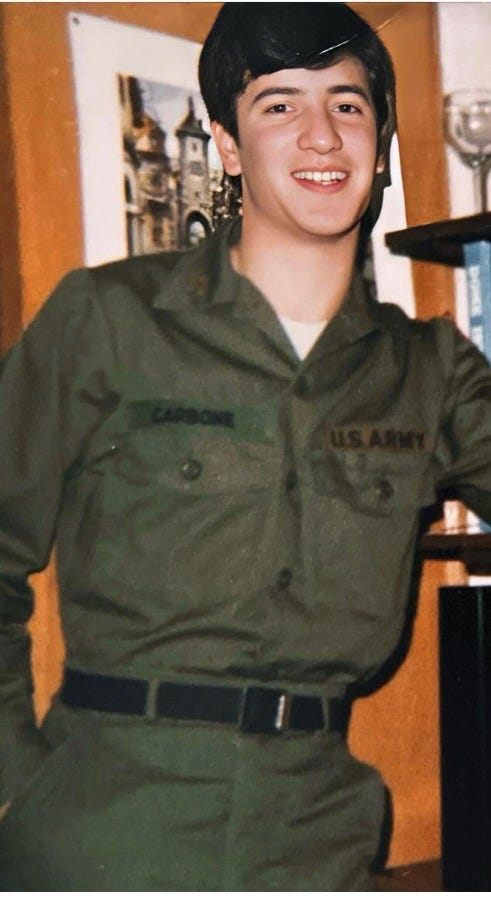
For most, it was a novelty; yet, for me, it was second nature. I had grown up watching my father in his starched olive drab fatigues, crisp white T-shirts, and brightly colored unit patches. By 1977, ROTC cadets like me were still wearing the OG-107 uniform — green fatigues with subdued patches. The details had changed, but the discipline hadn’t. I knew how a uniform should look. And as you know, I was already a master boot-shiner. The rituals felt more familiar than foreign.

My Father & Me in the Old & New Army Fatigues

Truthfully, the orientation itself felt underwhelming. Compared to what I imagined at West Point, it felt like a watered-down version. I left wondering — again — if I had made the right choice turning down my West Point appointment.

Pre-Med at Fisher Hall

Back at Fisher Hall, I connected with Bob Terifay, the other pre-med student in our section. He was brilliant, confident, and pathologically competitive — a natural leader of the freshmen, even though no one had elected him. He already seemed to have every textbook memorized. I had no problem striving for A’s, but I didn’t get any joy from beating my classmates. I would have been happy if we all aced the exams. That wasn’t Bob’s style.

Robert Terifay, Pre-Medicine at University of Notre Dame.  Biography of Dr. Anthony J. Carbone.
Bob Terifay, Pre-Med, Fisher Hall Freshman

In Bob Terifay’s defense, Bob was a great guy. A genuinely nice guy, smart as a tac, faithful Catholic boy. Bob was the unofficial leader of our Fisher Hall section. He would step out of his dorm room when it was dinnertime, clap his hands, and announce dinnertime to all by yelling “Pret!” (French for “Ready!“) Bob’s only problem was that he was a pre-med student at Notre Dame.

ROTC Scholarship Pays for Books & Supplies

I stuck close to him for a while because he had insider knowledge. He told me what to expect, what to prep for, and which professors to avoid. We walked together to the Hammes Bookstore, where a I learned a wonderful surprise — my ROTC scholarship covered all my books and supplies. That was a massive relief.

My First Year Academic Load

Many of our classes overlapped, except for Military Science and German. My first year schedule of courses included two semesters of: General Chemistry I&II with lab, Calculus I&II, English Composition & Literature, Intro to Philosophy, Intro to Sociology, Intermediate German, and Military Science.

The schedule was punishing. Science labs were four-hour marathons that earned just one credit hour. ROTC drills and PT demanded more time. Tuesdays were especially brutal — leadership labs in the afternoon, military class in the evening.

My Prep School Classmates-CLEP’d

What made it worse was this: many of the other pre-meds had come from elite Catholic prep schools and private academies. Most had CLEP’d out of chemistry, biology, or calculus thanks to AP credits. They were already a semester — sometimes a year — ahead of me. I had no such advantage. I came from a strong public high school, but I was starting from zero. And I knew I had to work twice as hard to keep up.

Advanced Placement AP Textbooks Calculus Biology Chemistry History.  Biography of Dr. Anthony J. Carbone.

Army ROTC Drill

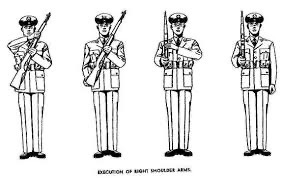
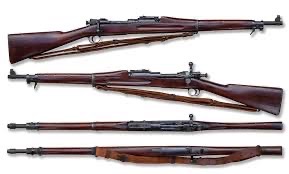
Drill periods were a throwback. We trained with M1903 Springfield rifles — heavy, nine-pound bolt-action relics from World War II. We practiced saluting, standing at attention, and performing the full 15-Count Manual of Arms. I can still snap it off to this day. If you could master the Springfield, the M16 was a walk in the park.

My First Day of Class

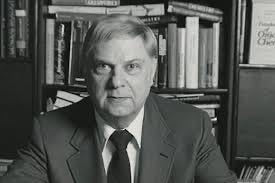
My first day of classes at Notre Dame must have been so chaotic and overwhelming that I only remember one class: General Chemistry I. The legendary Professor Emil T. Hofman, who also served as the Dean of the Freshman Year of Studies was our teacher.

The Legendary Dean Emil T. Hofman

Emil T. Hofman, Dean of Freshmen Year Studies & Professor of Chemistry. University of Notre Dame. Dr. Carbone Autobiography.
Emil T. Hofman, Dean of Freshmen Year Studies & Professor of Chemistry

He was strict. In fact, he was so strict that he once gave future Nobel Prize in Medicine winner Eric Wieschaus — Notre Dame Class of 1969 — a B in both semesters of chemistry. Over four decades, Emil T. taught more than 60 percent of each freshman class. That totaled over 32,000 students, with more than 8,000 of them going on to become doctors. He was a Notre Dame institution unto himself.

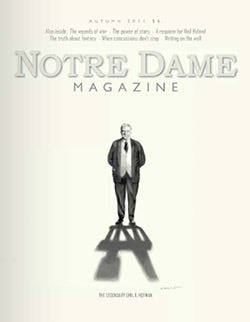
Dean Emil T. Hofman being celebrated on the cover of Notre Dame Magazine. Professor of Chemistry. Dean of Freshmen Year Studies. University of Notre Dame. Dr. Carbone autobiography.
Emil T. Hofman on the cover of Notre Dame Magazine

Basic Chemistry House Rules

First Rule: Begin with the Lord’s Prayer

The class began with a brief introduction. Then, with no warmup or small talk, Professor Hofman commanded, “Settle down!” before leading us in the Lord’s Prayer. Every class began that way. That was the First Rule of Chemistry Class. At the end of the prayer, he would say, “Queen of Peace,” and we would reply in unison, “Pray for us.” Without fail.

Second Rule: Quiz Every Friday

Next, he went straight into the second rule. There would be a mandatory seven-question multiple-choice question quiz every Friday covering the material presented during the week. These quizzes were known for being tough, motivating many students to spend their Thursday nights studying to prepare for them. The phrase “Deliver us from Emil” was a common student sentiment.

Third Rule: Assigned Seats and “These are the rows!”

Assigned Seats: A key aspect of his first day routine, and indeed the entire semester, was the assignment of seats. Students were given specific seats they had to occupy for every class, a practice that ensured attendance could be easily monitored and probably discouraged late arrivals or skipping class.

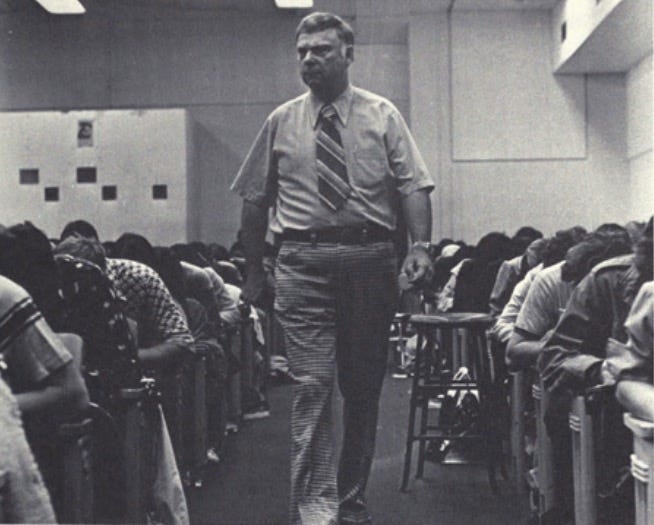
“These Are the Rows!”: Related to the assigned seating, Hofman had a particular way of emphasizing the importance of staying in one’s assigned place. He would emphatically declare, “These are the rows!” This phrase reinforced the strictness of the seating arrangement and left no doubt that deviations would not be tolerated. This was likely a combination of setting expectations for discipline and ensuring a consistent classroom environment.

Dean Emil T. Hofman proctoring the weekly Friday Quiz. Professor of Chemistry and Dean of Freshmen Year Studies. University of Notre Dame.
Dean Emil T. Hofman proctoring the weekly Friday Quiz

When’s Your Birthday?

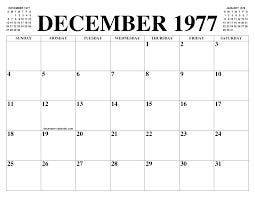
That’s when the girl sitting to my right turned towards me and abruptly asked, “When’s your birthday?” I told her, “Me? December 3rd. Why?” She replied, “Oh, just curious,” and she went back to listening to Professor Hofman. She didn’t say another word to me — not that day, not the next, not for months.

Calendar from December 1977 showing my birthday, 3 December, on Saturday.  Biography of Anthony J. Carbone.

My 18th Birthday

2 Girls and 2 Birthday Cakes

Then came Saturday, December 3rd, 1977 — I was 18 years old. Out of nowhere, that same beautiful girl and her equally beautiful roommate knocked on my door in Fisher Hall, holding a homemade birthday cake. “We came to celebrate your eighteenth birthday,” they said. They lit eighteen candles, sang “Happy Birthday to You,” and handed me a slice.

My First R-Rated Movie Followed by my First Beer in a Bar

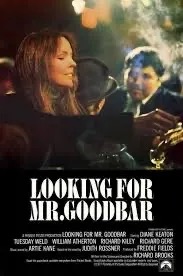
Then things got interesting. They took me to my first R-rated movieLooking for Mr. Goodbar. Sitting between two beautiful girls I barely knew during that particular film was, to say the least, uncomfortable. Afterward, they drove me across the border into Niles, Michigan to Kubiak’s Tavern so I could legally order my first alcoholic drink. I think we danced a little at the bar, laughed a lot, and eventually headed back.

The Goodnight Kisses

All three of us squeezed into the front bench seat of the car, me squarely in the middle. When we pulled up to Fisher Hall, I turned to thank them for the best birthday of my life and started to open the door.

Blonde girl in pink minidress and white boots in the driver's seat of a 1970s-era car with blue bench seats.  Biography of Dr. Anthony J. Carbone.

“Not so quick, Tony,” they both said. I turned back toward my classmate. “What?” She leaned in and gave me a five-minute French kiss. I was blown away. As I turned the other direction to open the door, her roommate gently pulled me back. “Slow down,” she said. Then she gave me a five-minute French kiss of her own. It was, hands down, the best birthday of my life.
Football Season and My Neighbor Joe Montana

Without a doubt, the most exciting part of my freshman year at Notre Dame was football season — a highlight in any Domer’s college experience. But for me and every student in 1977, it was unforgettable because we won the National Championship.

1977 NCAA National Football Champions. University of Notre Dame Fighting Irish. Joe Montana. Dr. Anthony Carbone autobiography.

Notre Dame Fighting Irish Football Wins NCAA National Championship

That year, the Notre Dame Fighting Irish, coached by Dan Devine and led by quarterback Joe Montana, finished the season with an 11–1 record and capped it off by demolishing the previously undefeated and top-ranked Texas Longhorns 38–10 in the Cotton Bowl. That victory sealed our tenth national title.

Quarterback Joe Montana and Coach Dan Devine

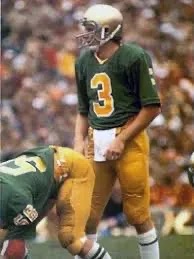
Photograph of Joe Montana (#3) talking to Coach Dan Devine during a football game.  Biography of Dr. Anthony J. Carbone.

Entering the 1977 season, Joe Montana was a junior quarterback, but he found himself in a precarious position on the depth chart—listed as third string after battling injuries and inconsistent play. His relationship with Coach Dan Devine wasn’t particularly warm or enthusiastic.

However, the turning point came in the third game of the season against Purdue. Notre Dame was losing 24-14, and starting quarterback Rusty Lisch was struggling. When backup Gary Forystek was injured, Devine was forced to turn to Montana, despite the previous tension. However, the turning point came in the third game of the season against Purdue. Notre Dame was losing 24-14, and starting quarterback Rusty Lisch was struggling. When backup Gary Forystek was injured, Devine was forced to turn to Montana, despite the previous tension.

Montana, a former seventh-string quarterback, was inserted into the game late in the third quarter. What followed was a classic comeback performance: Montana threw for 154 yards and a touchdown in the final 11 minutes, leading the Irish to a dramatic 31-24 victory. This comeback, in particular, helped launch Montana’s legend and reignited Notre Dame’s national championship hopes.

After this game, Devine recognized Montana’s capabilities and named him the starting quarterback. The team went on to win every game from that point forward, culminating in a dominating 38-10 victory over number one ranked Texas in the Cotton Bowl and securing the national championship. While their relationship might have been complicated, the Purdue game became a pivotal moment for both Montana and Devine, proving that despite any previous doubts or disagreements, they were a powerful combination that propelled Notre Dame to a memorable championship season.

Joe Montana and Four All-American Football Stars

The 1977 squad was stacked with All-Americans: Ken MacAfee, Ross Browner, Luther Bradley, and Bob Golic. But surprisingly, Joe Montana — our quarterback and undeniable team leader — was not named to any All-American team. That still bothers me to this day. Joe’s later NFL career proved what a star he truly was. He led the 49ers to four Super Bowl victories and earned MVP honors in three of them. His 92-yard winning drive in Super Bowl XXIII became legendary. And his eight Pro Bowl appearances set the standard for greatness.

Bob Golic #55 of the Fighting Irish football team.  Biography of Dr. Anthony J. Carbone.
Bob Golic #55

Joe Montana My Next Door Neighbor

I knew Joe Montana–he was my next-door neighbor in Fisher Hall. The kind, funny, somewhat shy, and good-looking guy you see today in commercials and commentary — that was the exact same Joe I knew back then. He was humble and approachable. Let me give you two stories that show who Joe Montana really was.

Notre Dame Football Stadium

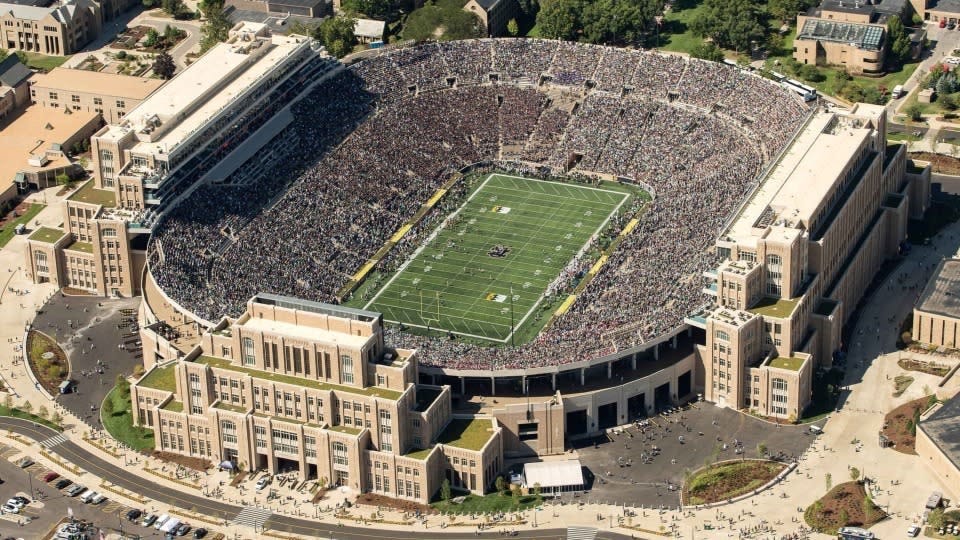
First, during home games at Notre Dame Stadium — “The House that Rockne Built” — student seating was assigned by class year and then by residence hall. Seniors got prime seats near the 50-yard line. Freshmen like us were tucked in the end zone. Our whole Fisher Hall section sat together.

Notre Dame Football Stadium “The House That Rockne Built”. Biography of Dr. Anthony J. Carbone.
Notre Dame Football Stadium “The House That Rockne Built”

Joe Montana and His Fisher Freshmen

In nearly every game, whenever Notre Dame’s offense got into the red zone near our end zone seats, Joe Montana would pause behind the center, scan the crowd, find us — the Fisher Hall freshmen — point directly at us, and then throw a touchdown pass. That was Joe. In his biggest moments, in a deafening stadium, on national television, he remembered his freshman friends. That, to me, is what leadership looks like.

Joe Visits My Room Nightly for Snacks

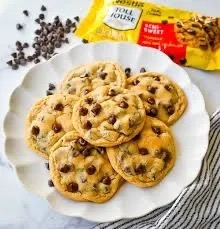
And Joe’s kindness extended off the field. Many nights, he’d quietly slip into my dorm room late, because I had a TV and he didn’t. He’d lay down on my bed, turn on the television, and say with a grin, “What do you have?” — hand outstretched. My four sisters constantly sent me care packages, especially homemade Tollhouse chocolate chip cookies. Joe knew it. So I’d break out the latest box and share it with him. He was always gracious and genuinely appreciative.

No Athletic Dorms, Cafeterias, or Tables

Notre Dame was different. Unlike big football schools, we had no athletic fraternities, no athlete-only dorms, no athlete dining halls. Our NCAA stars lived with us. Ate with us. Walked across campus like any other student. In our Fisher Hall section alone, we had Joe Montana, Jerome Heavens, and Mike Calhoun — which meant that we got to meet the other players when they visited.

Definitely, no hostesses!

I later visited schools like Alabama and Florida and saw how athletes were treated like royalty. I met women who called themselves “hostesses” and bragged about entertaining football recruits. Some even said they were on scholarship for it. When I told them that Notre Dame didn’t have hostesses, they didn’t believe me. I said, “Believe me. Notre Dame is so small, we know what goes on. And we do not have hostesses.”

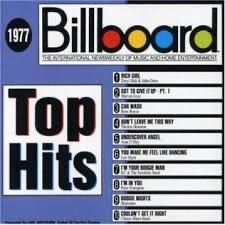
1977 Music

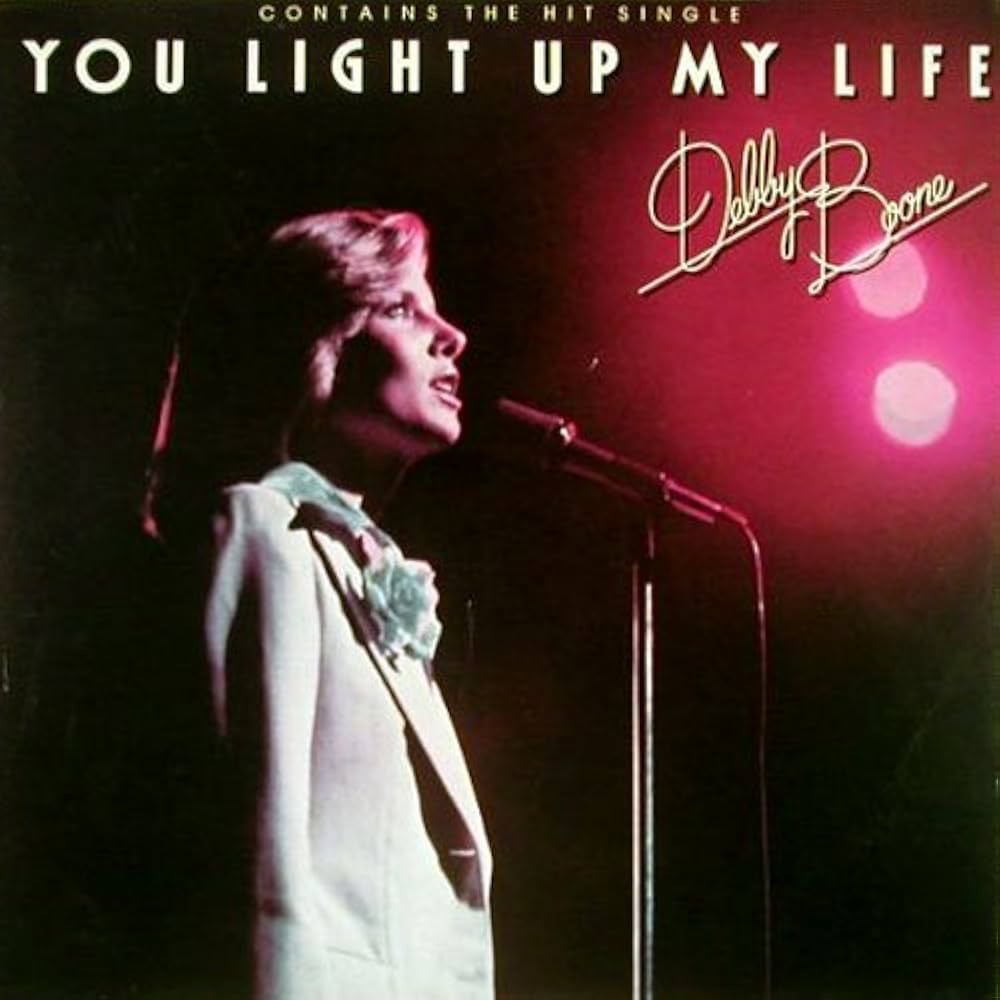
The music of 1977 was definitely not one of my favorites; I am much more of a 1960s, maybe early-1970s music fan. Debby Boone’s “You Light Up My Life” debued in October 1977 and stayed #1 until the end of the year. So “You Light Up My Life” reminds me of my first round of college final examinations, and I am happy that the song was so overplayed that it’s never been on the air since.

Crosby, Stills & Nash at Notre Dame

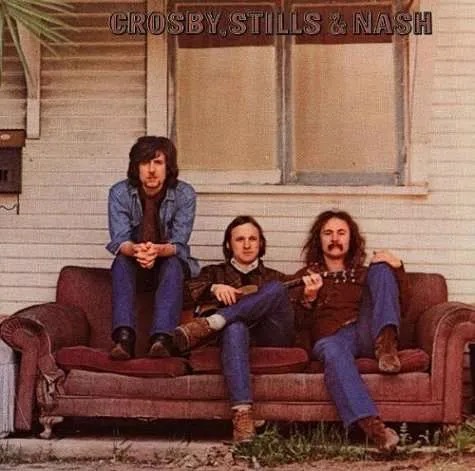
On November 5, 1977, I saw Crosby, Stills & Nash perform at the Athletics and Convocation Center. The stage setup looked exactly like their famous album cover — just the three of them sitting together on a leather couch, guitars in hand, playing pure acoustic sets. No flashy lights or backup bands, just their harmonies filling the arena. It felt intimate despite the size of the crowd, like we were all sitting in their living room. I was happy because they played all of their greatest hits.

A Wild & Crazy Night at Notre Dame

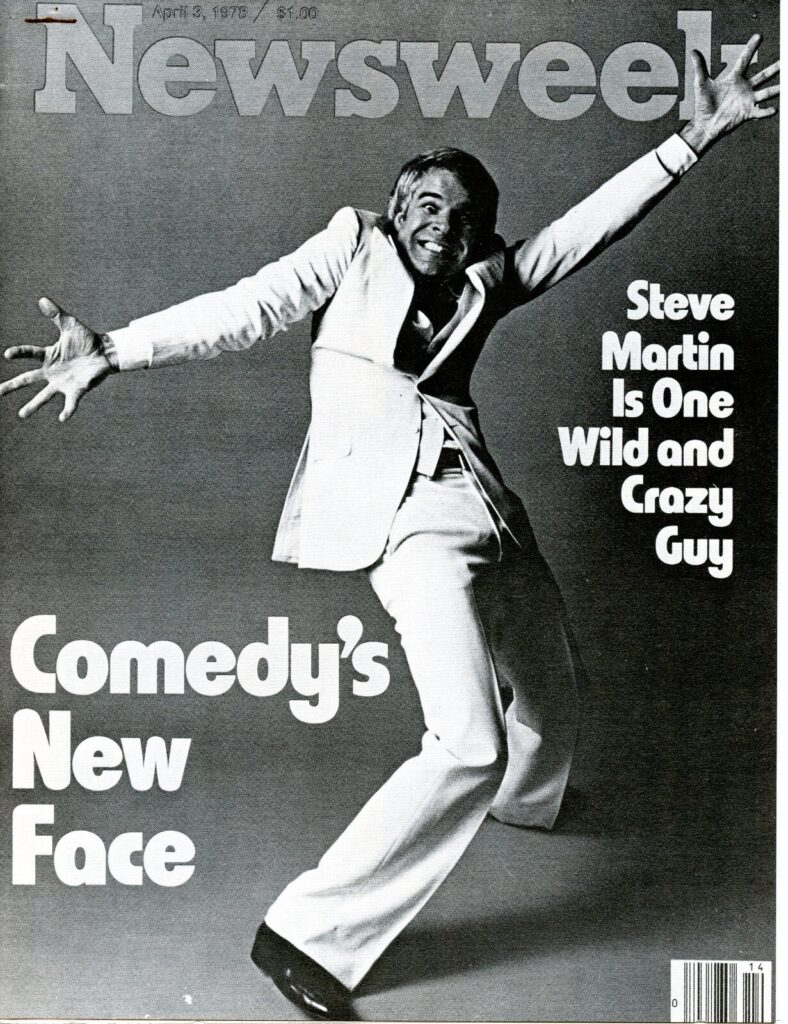
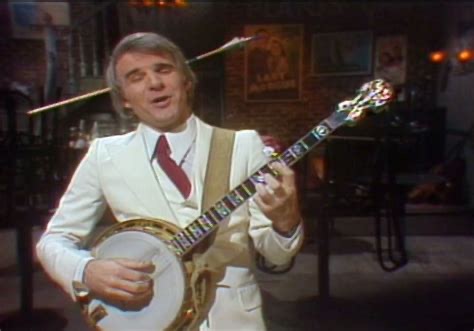
Four days later, on November 9, 1978, I had the rare treat of seeing Steve Martin perform live on campus. He was debuting his now-famous “Wild & Crazy Guy” routine from Saturday Night Live. Dressed in his classic white suit with an arrow going through his head, he alternated between cracking absurd one-liners and picking out lightning-fast banjo tunes. I had always known he was funny, but that night I also realized he was quite a musician. This was the act that catapulted him into superstardom, and I was lucky enough to see it up close and personal right there at Notre Dame.

Thanksgiving, Homesickness, and a Visit from Jeff Bell

First Thanksgiving Away From Home

Thanksgiving came, and I wasn’t able to make it home. The cost of traveling after an already expensive first semester was just too much. It was the first major holiday I had ever spent away from my family, and the homesickness hit hard. Most of the students left campus to go home, and suddenly, the bustling grounds of Notre Dame became eerily quiet.

The only people left were a handful of domestic students like me and the international students who also had nowhere to go. The University did its best to create some holiday spirit. The Dining Hall put on a Thanksgiving feast, complete with turkey, stuffing, mashed potatoes, and pumpkin pie. The food was good, and the gesture was appreciated, but it didn’t come close to the warmth and chaos of a Carbone family holiday back in Winchester. I smiled politely through dinner, then went back to the dorm, feeling the weight of distance more than ever.

Jeff Bell Visits Notre Dame

Shortly after Thanksgiving and before finals in December, I got a much-needed boost. My buddy Jeff Bell drove up from his college in Texas to visit me. His arrival felt like a taste of home, and I was excited to show him around the campus that I was beginning to call my own.

Jeff was immediately impressed. The sight of Fisher Hall, the Gothic buildings, the golden dome — he soaked it all in. But nothing impressed him more than running into Joe Montana in our dorm hallway. He was even more awestruck when we went to the South Dining Hall for dinner and spotted both Joe Montana and Ross Browner eating together like regular students. That moment stayed with him for decades. To Jeff, it was unthinkable that future NFL legends would sit among the student body without any entourage, just two guys with trays and a meal card.

But Jeff quickly realized that Notre Dame wasn’t exactly a party school. That Saturday night, he turned to me and asked, “Where is everybody?” I smiled and said, “You want to see where everyone is on a Saturday night?”

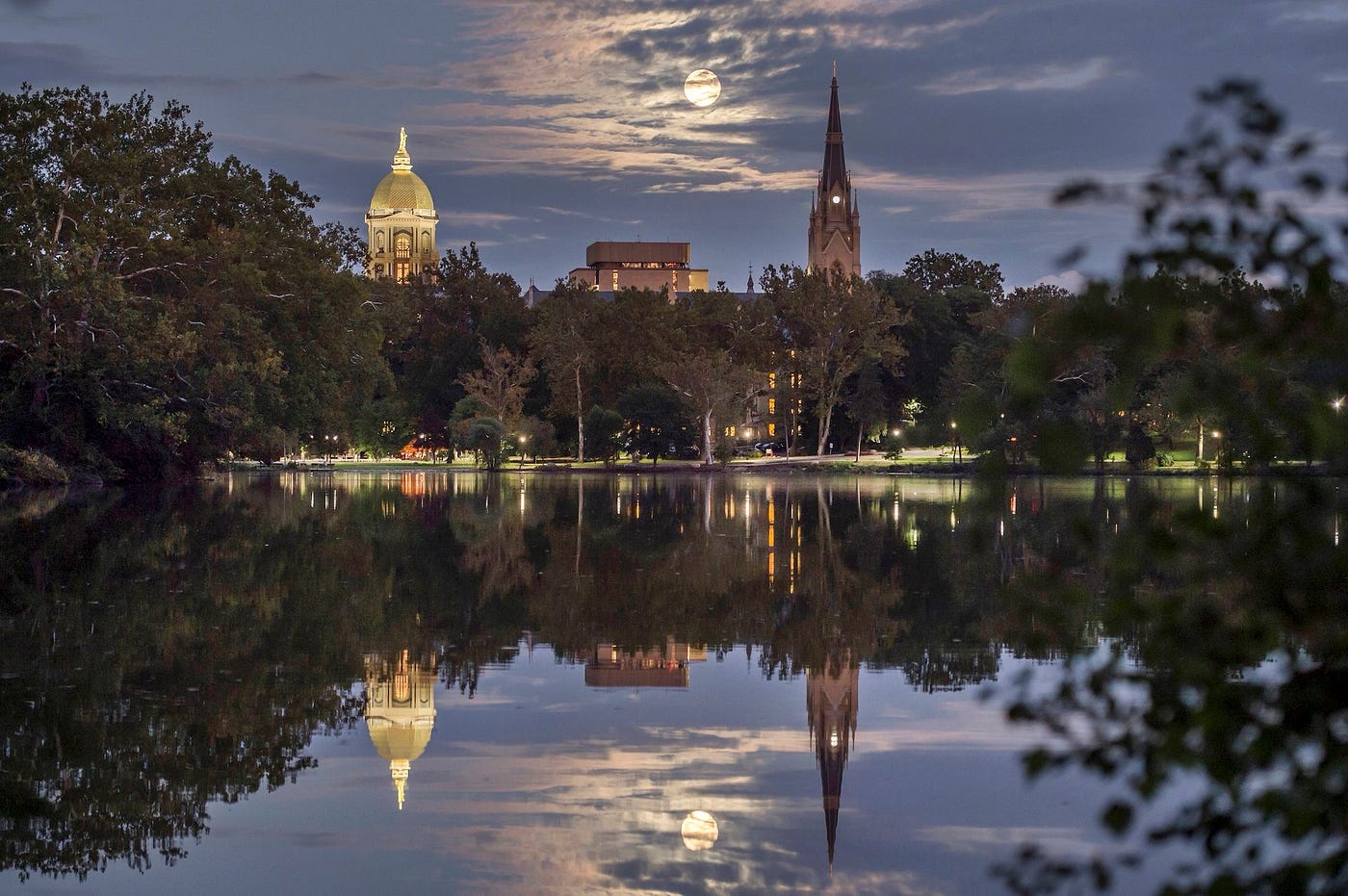
The Big 3 Icons of Notre Dame: Golden Dome, Memorial Library, Sacred Heart Basilica at Twilight

The Library

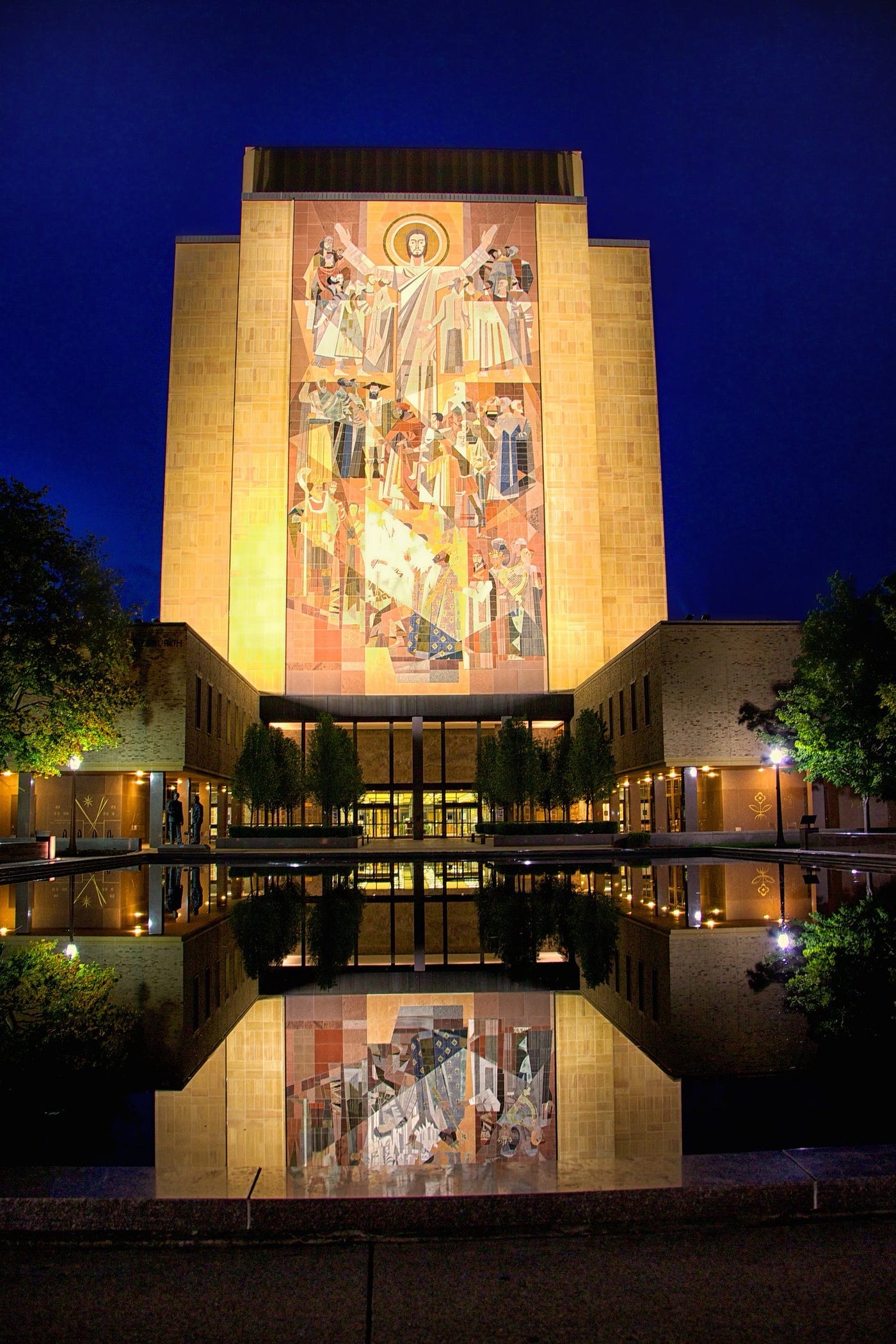
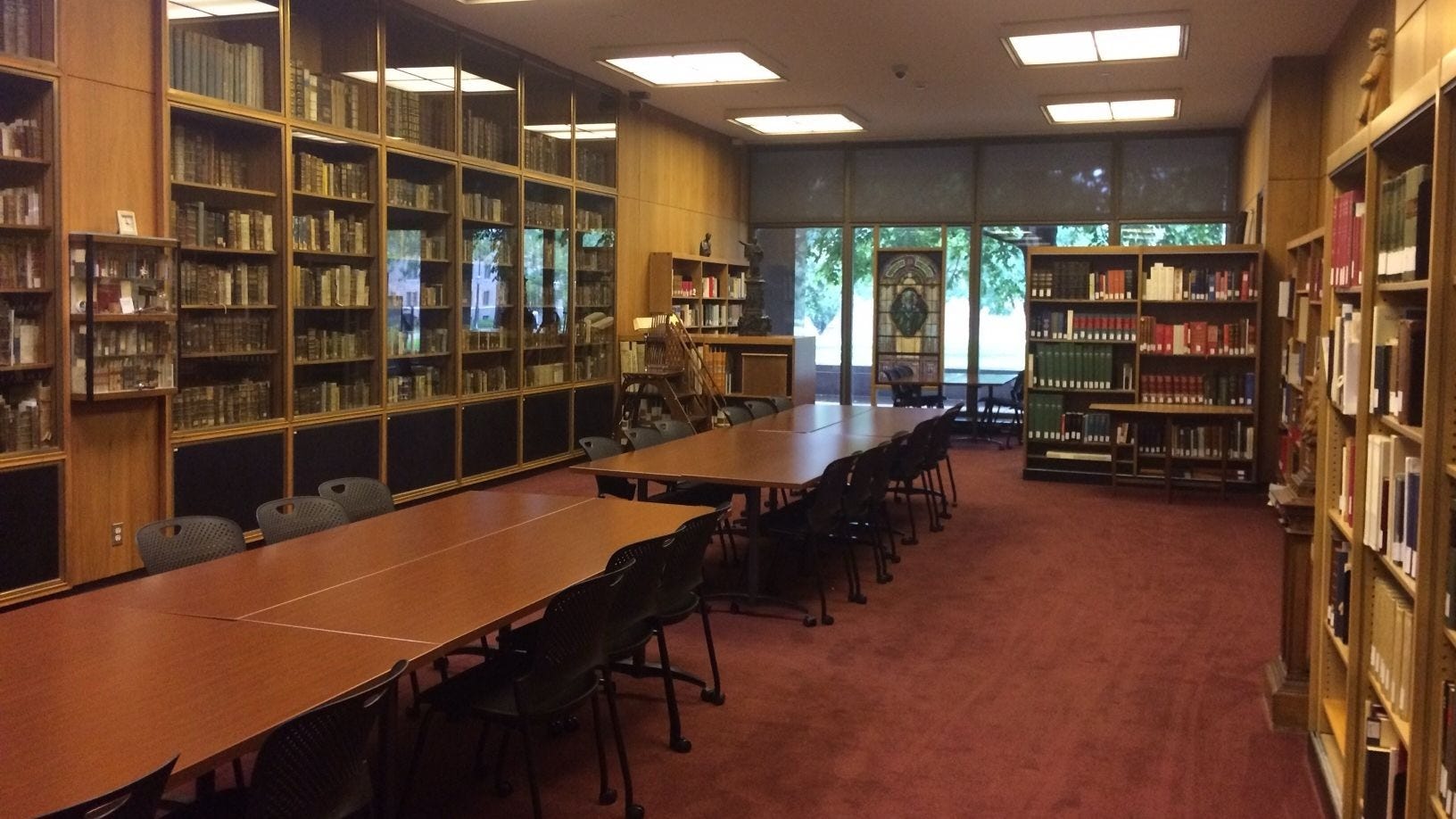
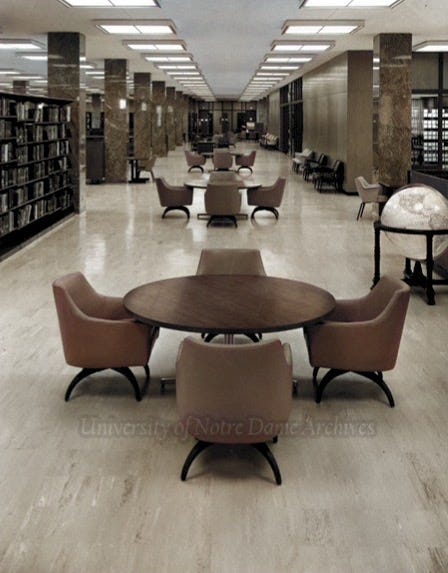
I led him to the Notre Dame Memorial Library — the 13-story tower with the massive mural of Jesus stretching his arms skyward, affectionately known as “Touchdown Jesus.” When we entered, the place was packed. The first floor buzzed with activity, the snack bar and bathrooms offering quick breaks for students deep in study.

Notre Dame’s Hesburgh Library at Night (With “Touchdown Jesus” Mural)

Jeff was baffled. “This is where everyone goes on a Saturday night?”

The “Pre-Med” Floor

I nodded, but told him I couldn’t study there — too many distractions. So we took the elevator to the 13th floor: the “Pre-Med Floor.” As soon as the doors opened, the atmosphere shifted. You could hear every cough, every footstep, every rustle of paper. When I turned a page in my textbook, I could feel heads involuntarily lift from their cubicles just at the sound.

The Pre-Med Floor of Hesburgh Library (After Hours)

This was serious business. The Pre-Med students at Notre Dame didn’t mess around. Competition was fierce. Focus was absolute. It was a place of quiet desperation and razor-sharp ambition.

Jeff took it all in, visibly stunned. He never said much about it, but he never came back to visit again during undergrad. He waited until I made it to medical school at Georgetown. I think that night explained it all.

Final Exams: A Humbling First Encounter

All that remained of my first semester was final examinations. And let me say this clearly: they were a humbling experience.

I studied nearly 24/7 in the days leading up to exams. Every waking moment was spent buried in textbooks, notes, and problem sets. My mind was constantly racing between subjects — chemistry equations, biology lab reports, calculus proofs, and theology essays. Sleep came in short bursts. Meals were rushed. My stress was constant.

Final Exam Care Packages From Mom

I was deeply grateful that my mother had purchased a Notre Dame-sponsored Exam Care Package, which came loaded with snacks and encouragement. Even better, my four sisters came through as always — sending their signature Toll House chocolate chip cookies and bags of gummi bears to get me through the marathon week. Those care packages felt like lifelines.

Pre-Med Exams Until the Last Day

What surprised and frustrated me most was learning that students in other majors were already finished. My friend Matt Bedics, a philosophy major, was packed up and home for the holidays while I was still knee-deep in test prep. Pre-Med and Engineering students weren’t so lucky — our final exams stretched all the way to the last possible day of the semester, often just a few days before Christmas.

Exam Time

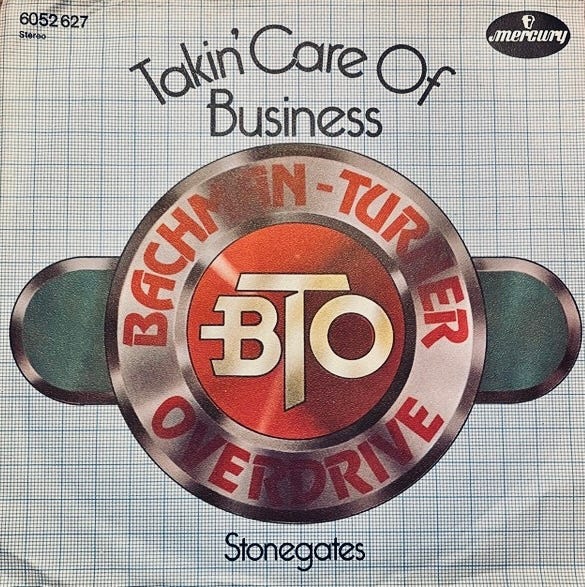
When the time came to Fisher Hall for our examination, Andy Cordes started a tradition that lasted all four years. Right when it was time for everyone to get ready to leave to take final examinations, Andy would start playing Bachman Turner Overdrive’s (BTO) “Taking Care of Business”. And one by one, each of us would open our dorm room doors and step into the hallway singing.

Album cover for Bachman Turner Overdrive (BTO) “Taking Care of Business”. Biography of Dr. Anthony J. Carbone.

The exams themselves were brutal. Chemistry in particular shook my confidence. The content was dense, the questions were sharp, and I knew I hadn’t nailed it. After everything was over, I didn’t even want to check my grades. I was too afraid. I needed a break from the pressure, the competition, and the relentless self-judgment. What should I expect from a professor who gave a pre-med Nobel Laureate a “B” in Chemistry?

Grades are Posted

But my pre-med buddy Bob Terifay had no such hesitation. He stormed back into Fisher Hall with his usual energy, grinning as he delivered the news: “You got a C in Chemistry!” I was stunned. “How the hell do you know my grade?” He just smiled. Somehow, he had remembered my Notre Dame student ID number: 7711117284. I have no idea how or why. But he did. And he looked up my grades like it was nothing.

Scholastic report card from my first semester at University of Notre Dame from 1977. Dr. Anthony J Carbone’s autobiography

Bob clearly was better at rote memorization than me. And I know he had a better academic preparation than I did. All I knew was that I had survived. And that, for my first semester at Notre Dame, would have to be enough.

When I finally made it home to Fort Leavenworth for the holidays, I was so mentally and physically drained that I didn’t feel like myself again until after Christmas Day. That’s how deeply finals had consumed me.

Home Page

Chapter 10: Dad Gets Assigned to the Pentagon and We Move to Woodbridge, Virginia

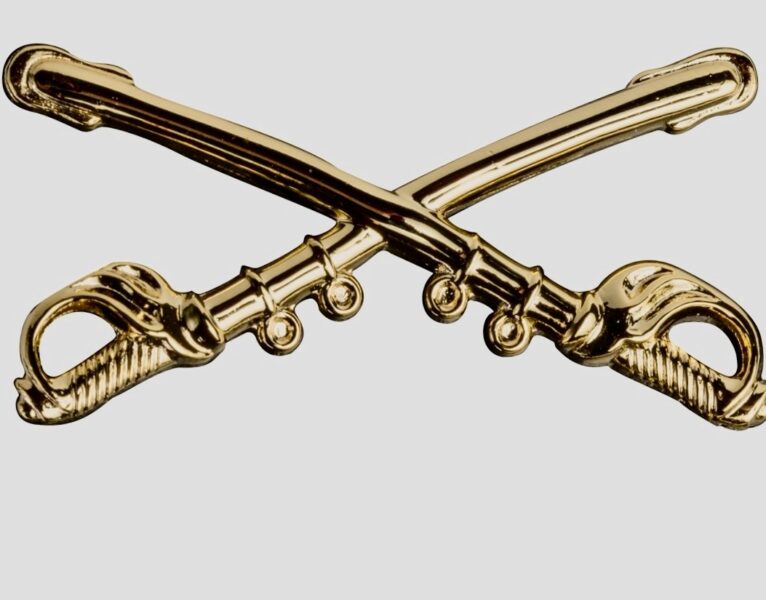
Cavalry Officer Branch Insignia US Army. Autobiography of Dr. Anthony J. Carbone

Believe Nothing You Hear, and Only Half of What You SeeA Memoir of Service, Shame, and the Search for Truth

Dad Gets Orders for the Pentagon & We Move to Woodbridge, Virginia

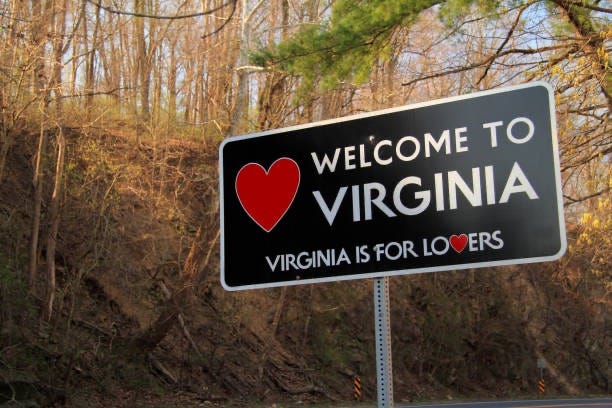
The Virginia is for Lovers sign

Part of autobiography of Dr. Anthony J. Carbone, Son in the Shadow of a Green Beret Hero
Virginia’s Logo for the 1970’s

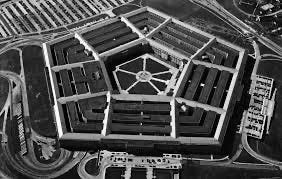
Job at the Pentagon

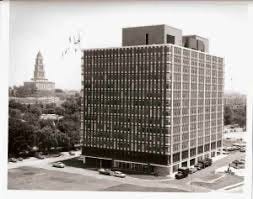
In the late summer of 1971, we arrived in Woodbridge, Virginia, just in time for the start of the school year. My father had returned from Vietnam and was assigned to the Armor Officer Branch at the Pentagon. To the outside world, this seemed like a prestigious post — Washington D.C., the Pentagon, a desk job with influence. His section was eventually moved to the Hoffman Building in Alexandria, Virgina, but that didn’t make things any better for him — to my father, it was the worst assignment of his career.

His new job involved issuing deployment orders — sending fellow Armor officers into the very war he had just come home from. It was the kind of responsibility that haunted him. But what I believe truly embittered him were the officers who looked for ways to dodge their duty. He loathed cowardice. For a tanker who thrived in the field, where courage was tested in dust and diesel and sweat, being confined to an office, moving paper instead of people, was a kind of death. Gone were the tank engines, the battalion maneuvers, and the brotherhood of warriors. Now he was just one more suit commuting to a beige building full of bureaucracy.

New Friends the Callens

There was, however, one redeeming element of that year: Mr. Richard Callen. A civilian with a GS-11 rating, Mr. Callen lived nearby and carpooled with my father to the Pentagon. But he was more than a work buddy — he and his wife Karen became lifelong friends to my parents. The Callahans were kind, sincere, and the kind of people who asked real questions and listened to the answers. In a time when shallow relationships were the norm, theirs was a friendship that endured, shaped by mutual respect.

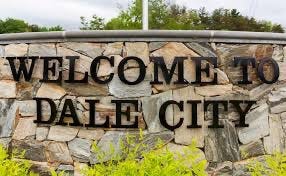
Dale City in Woodbridge, Virginia

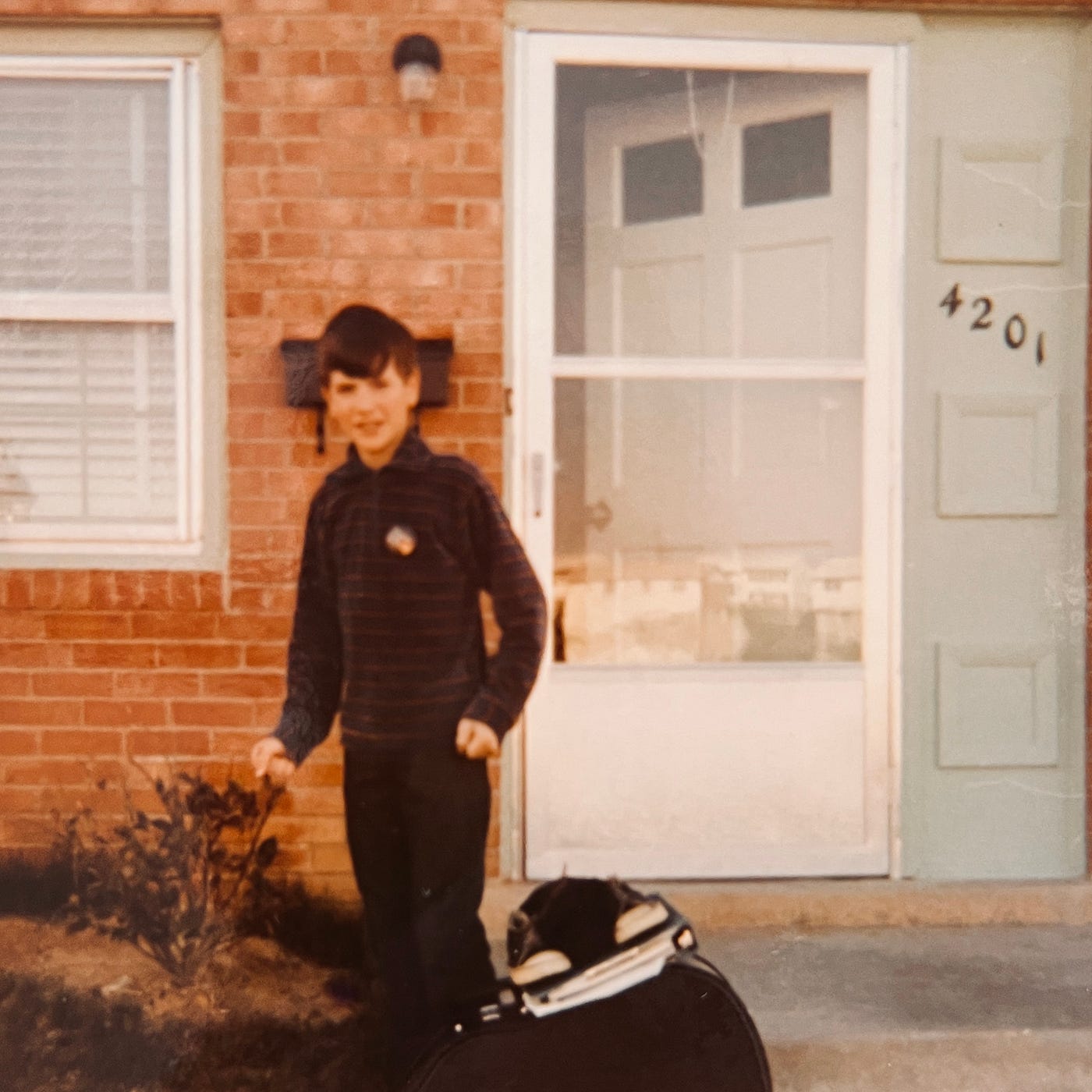
We moved into a brand-new, single-family home in a sprawling Dale City subdivision, located at 4201 Harvest Court. The house was pistachio-green on the outside, with green shag carpeting and dark wood paneling on the inside. I hatedthat pistachio-green exterior, but this was our first home — the first one my parents actually owned.

Me in front of our house at 4201 Harvest Court, Woodbridge, Virginia

Part of autobiography of Dr. Anthony J. Carbone, Son in the Shadow of a Green Beret Hero
Me in front of our house at 4201 Harvest Court, Woodbridge, Virginia

After years of base housing and temporary quarters, just having a steady address for three full years felt like luxury. Harvest Court was a quiet little cul-de-sac with just seven homes, tucked away in a sleepy pocket of suburban Virginia.

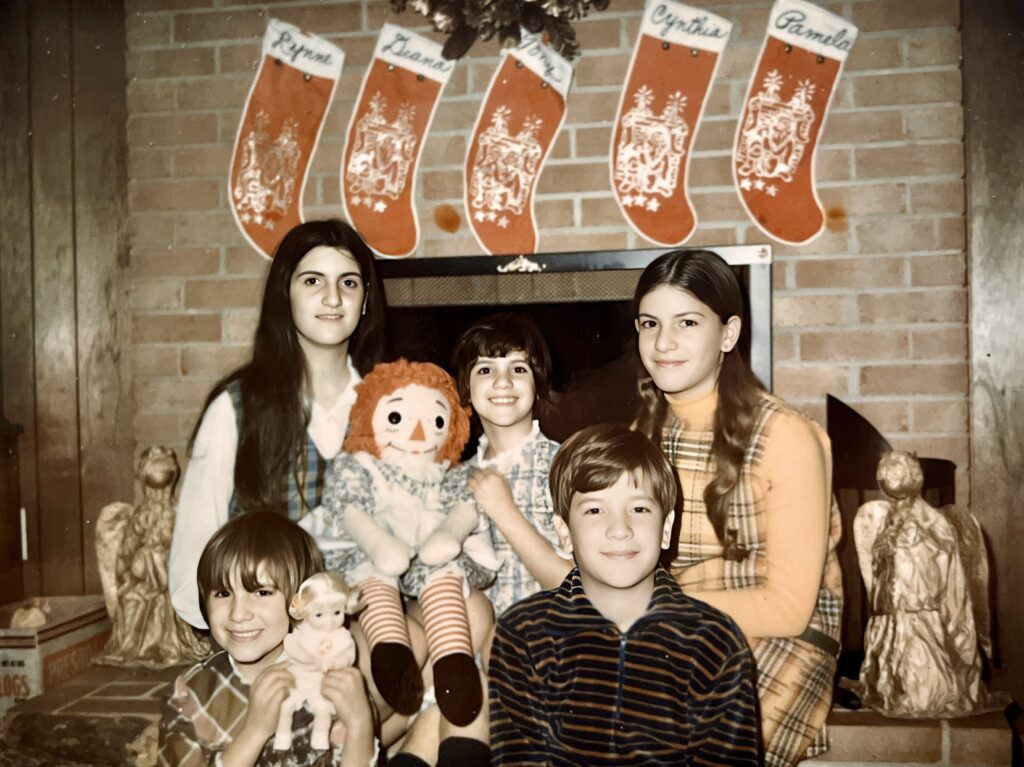
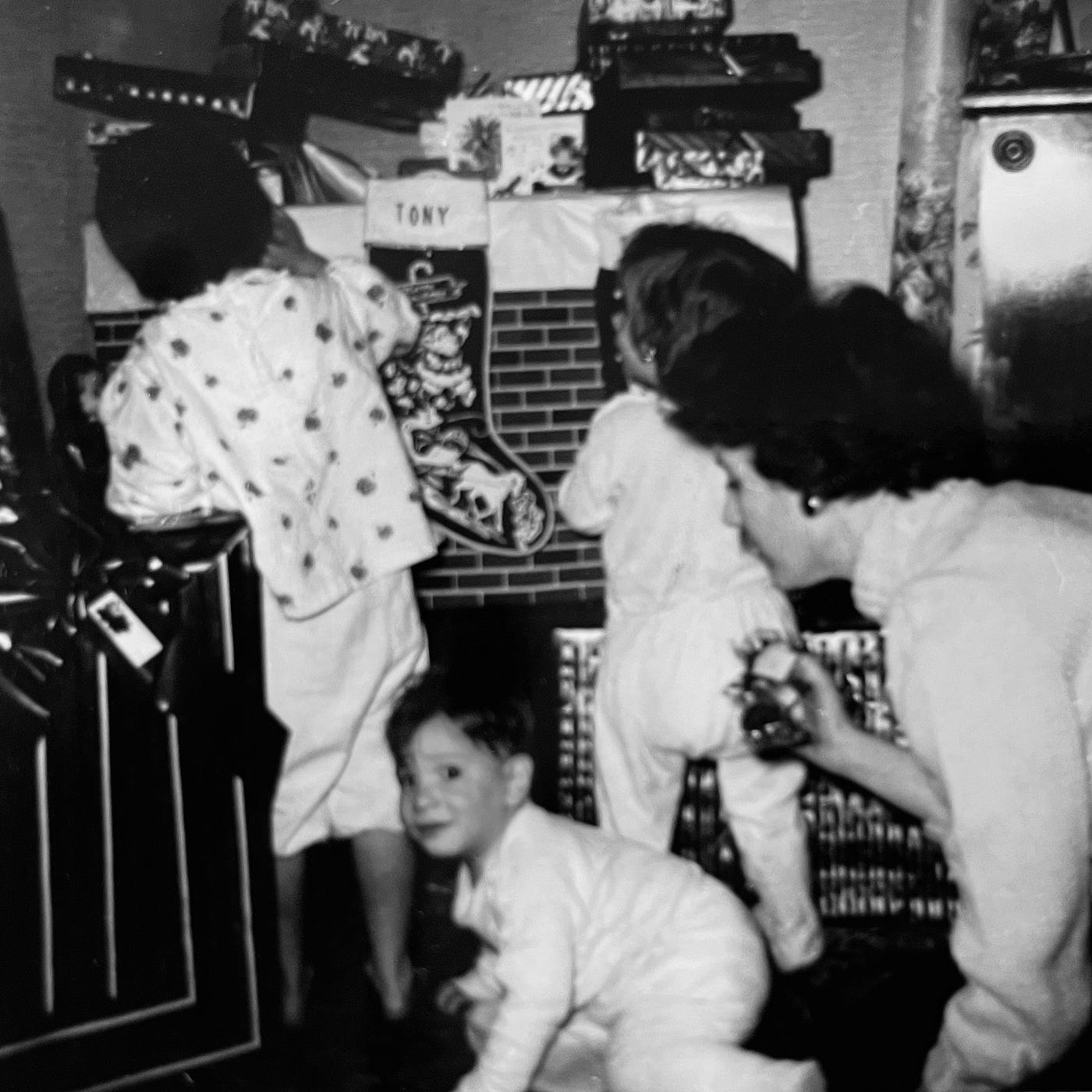
Photograph of me with my four sisters at Christmas time with our stockings hanginf on the fireplace.  Lynne, Diana, Tony Jr, Cynthia & Pamela.  Biography of Dr. Anthony J. Carbone.

Washington DC Monuments & Museums

Another great advantage of living in Woodbridge, Virginia was that we were now close not only to Washington, D.C.and its historic monuments — the White House, Capitol Building, Smithsonian Museums, and all those gleaming marble landmarks — but also to our Carbone relatives, the Carluccios.

The Carluccios

My father’s cousin Lucille (Carbone) had married Uncle Joe Carluccio, and they lived within visiting distance. Their home was spotless, warm, and always welcoming — thanks in no small part to Auntie Lucille, who exuded quiet elegance and grace. She was pure Carbone: classy, demure, and always composed. Her husband, Uncle Joe, was more than family — he was one of my father’s closest friends. If you didn’t know better, you’d assume they were brothers by blood.

They had two daughters: Debbie and Donna. Debbie was just a year older than I was but in the same grade, and she looked like a college coed — tall, stunning, with long, dark hair parted straight down the middle in true 1970s fashion, and a dazzling smile. She had a cool-girl edge to her — tough on the outside, but genuinely sweet when you got to know her. Her younger sister Donna was her polar opposite: smaller, louder, and a bit of a brat. While Debbie exuded grace and maturity, Donna brought the chaos.

A fun genetic twist: Debbie and I were technically double first cousins, or whatever the proper genealogical term might be. Both of our grandfathers were brothers, and both of our grandmothers were sisters. We saw the Carluccios regularly — about once a month during our three years in Woodbridge — and those visits added a sense of family rootedness in what otherwise felt like a season of drift for my father. You’ll hear more about the Carluccios in chapters to come — they remained an important part of my story.

Camping with My Father

My father took full advantage of the U.S. Army’s Morale, Welfare and Recreation (MMR) which provided tickets to baseball games, boating and camping equipment and passes. We went camping often. My father was a gormet camping cook. We had meals like roasted chicken and spaghetti. And of course we did our best fishing.

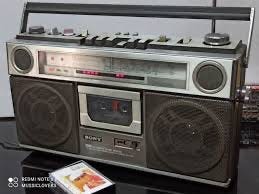
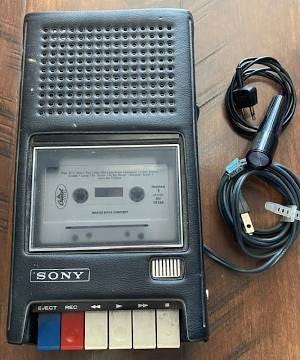
Camping at DoD Camp Ground with my father. Note SONY cassette recorder on picnic table.

Part of autobiography of Dr. Anthony J. Carbone,
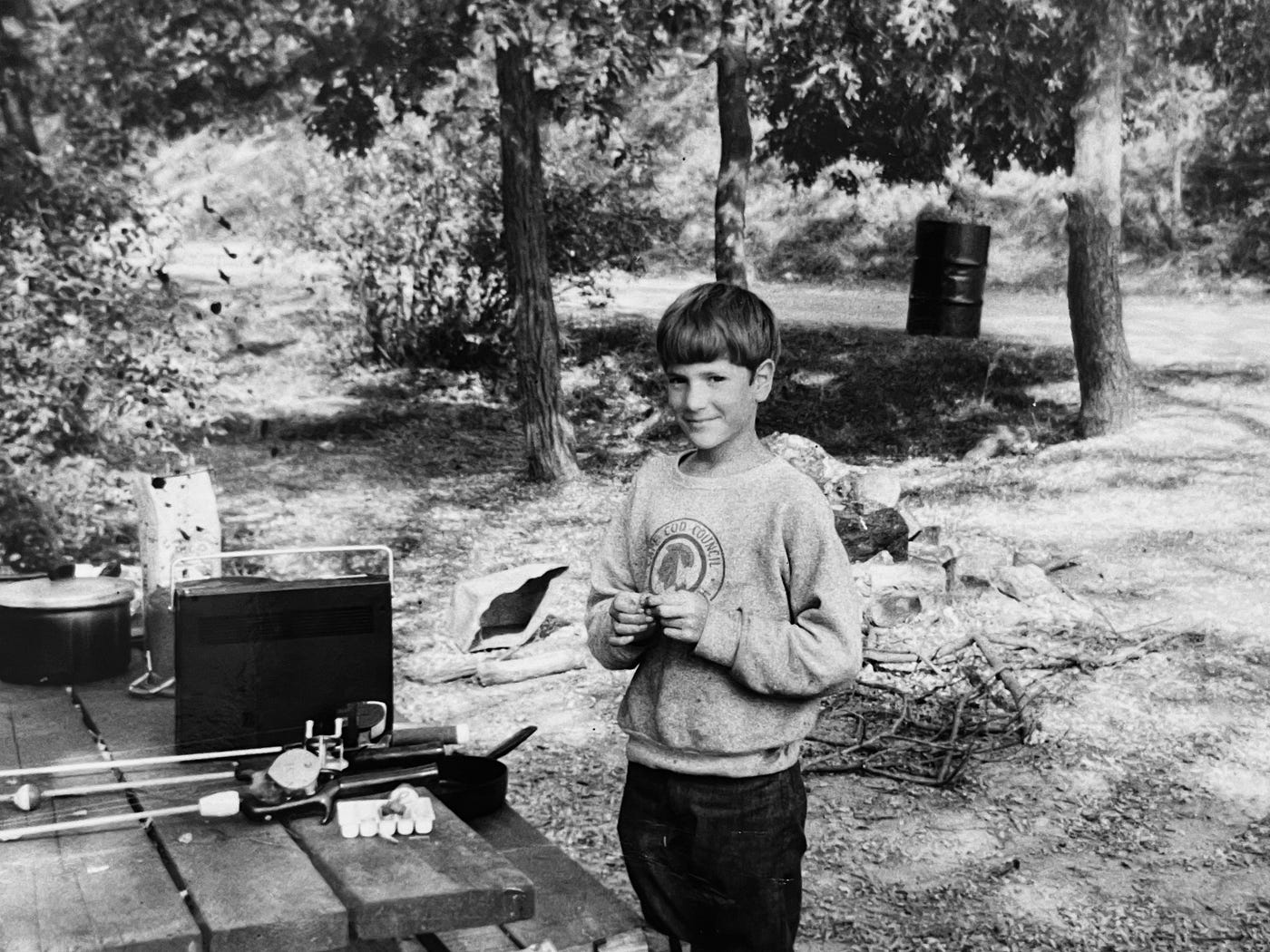
Camping with my father wearing my Cape Cod Boy Scout Council sweatshirt. Note the infamous SONY cassette recorder on the picnic table (that my father used to send us tapes from Vietnam)

My Friend, Tim Ring

My closest friend on the block was a younger kid named Tim Ring, though calling him “little” would be misleading — he was at least three times my size. Despite the age difference, we clicked instantly and spent countless afternoons riding bikes, tossing footballs, and watching cartoons. Tim had an older sister who looked like she had walked off the cover of a minidress catalog — exactly the kind of teenage beauty that defined the early 1970s. His older brother had been set to attend the U.S. Air Force Academy, only to drop out of high school at the last minute — a shocking move that reflected the strange, restless spirit of the time.

The Ring household was also one of the first I knew that fit the mold of a “modern” American family. I almost never saw his parents. He was a latchkey kid before the term became common — independent, self-sufficient, and raised more by circumstance than supervision. It left an impression on me.

Next door to Tim lived a man who spent most of his free time working on classic cars in his driveway. That summer, I watched him restore a 1955 Chevy Corvette from the ground up. Piece by piece, he brought it back to life — gleaming chrome, leather seats, flawless curves. The final touch came when he had it painted a beautiful metallic blue that shimmered in the sun like an oil slick. I was mesmerized. Then, one day, I stopped by and asked where the car had gone. “Sold it,” he said casually. I couldn’t believe it. How could you spend all summer creating something so beautiful, only to give it away? I didn’t understand it at the time. Maybe it was about the process, not the product. But to my young mind, it felt like watching someone build their dream — then hand it off to a stranger.

Mills E. Godwin Middle School

I started 7th grade that fall at Mills E. Godwin Middle School, a so-called “progressive” school that actually lived up to the label. It ran on a year-round 45–15 schedule — forty-five school days followed by fifteen off. This meant we got breaks in all four seasons, which I loved, but it made family planning chaotic since my sisters were on a traditional schedule at the local high school.

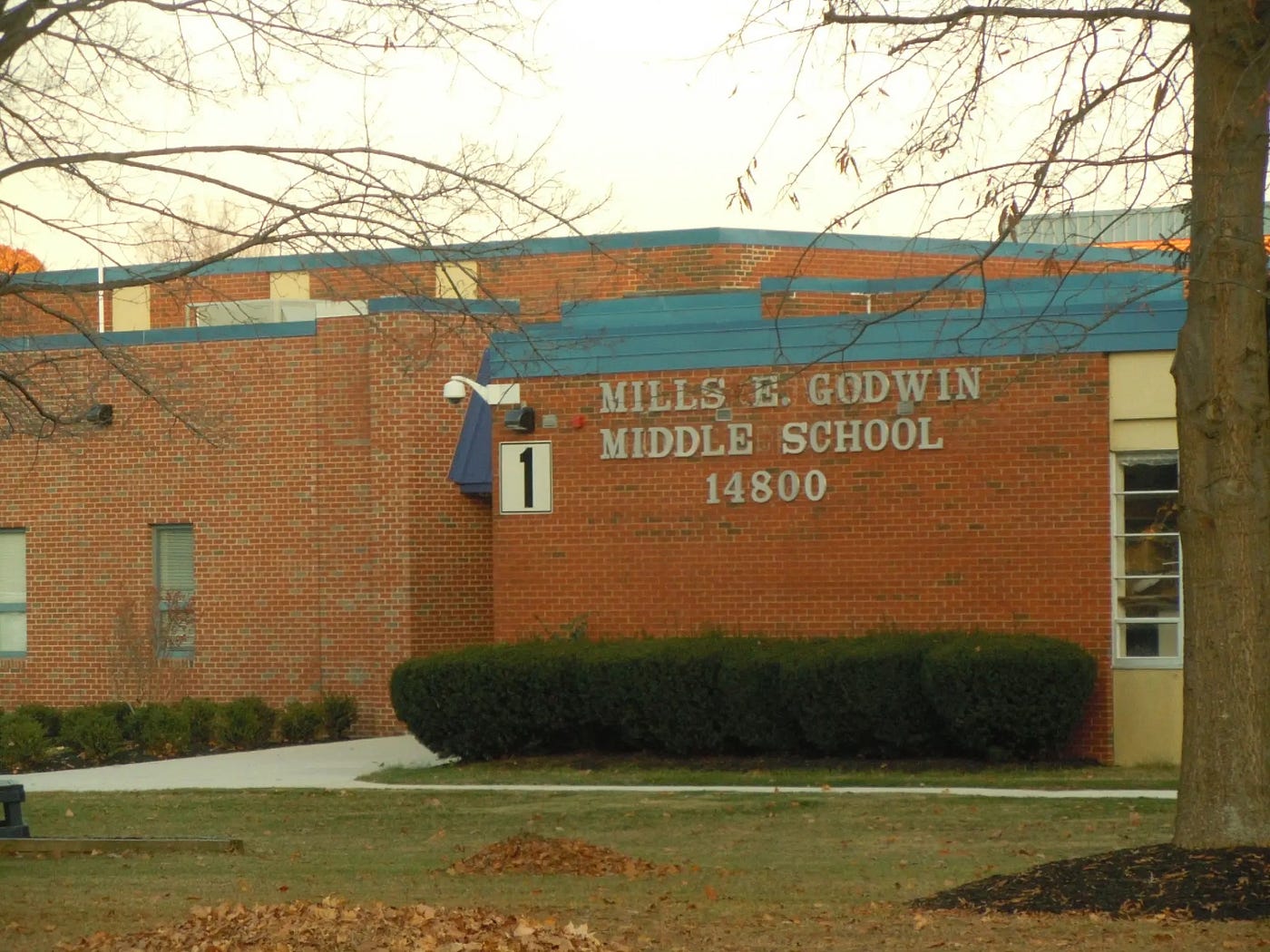
Mills E. Godwin Middle School in Woodbridge,Virginia.

Part of autobiography of Dr. Anthony J. Carbone, Son in the Shadow of a Green Beret Hero
Mills E. Godwin Middle School, Woodbridge, Virgina

The Progressive School

The school was divided into four rotating color-coded groups: Red, Yellow, Blue, and Green. I was in Blue, while kids just across the street from me were in Red, which meant we never had school at the same time. Only three groups were in session at any given time, which kept the building under control but gave everything a weird rhythm. The structure of the school itself was equally unconventional. Classes were co-ed, and all students took both Shop and Home Economics. Our main subjects were blended into a long “Block” session, mixing English, history, and science in one flowing period.

Even the physical layout was strange. Godwin was housed in a single massive room — basically an old auditorium — divided only by six-foot-high partitions. You could hear the teacher in the next “room” while trying to concentrate on your own. Students didn’t sit at desks either. Most of us sat cross-legged on the carpeted floor, grooving through the school day in true 1970s fashion.

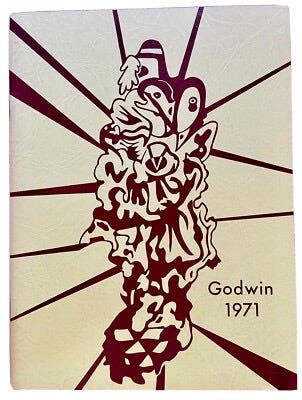
Yearbook from Mills E. Godwin Middle School in Woodbridge, Virginia.

Part of autobiography of Dr. Anthony J. Carbone, Son in the Shadow of a Green Beret Hero
Yearbook from Mills E. Godwin Middle School in Woodbridge

The Watergate Hearings

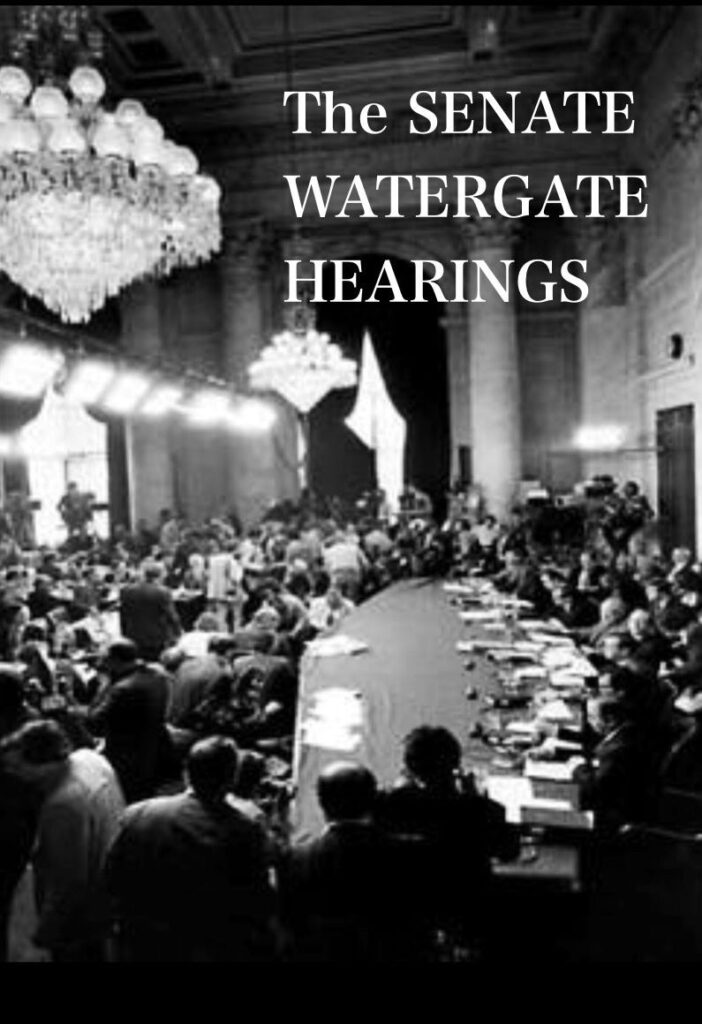
Because I scored so well on my placement tests, I was exempted from most of the regular coursework and spent much of my time in the library, where I became completely absorbed in the Watergate Hearings on television. I didn’t fully understand the intricacies of the scandal, but I recognized that I was witnessing history. The drama, the questions, the fall of a president — it felt massive.

The Senate Watergate Hearings that I watched during middle school.

Part of autobiography of Dr. Anthony J. Carbone, Son in the Shadow of a Green Beret Hero
Senate Watergate Hearings on Television

IQ Testing & Genius IQ, But Can’t Memorize

Despite being an excellent student, I struggled constantly with memorization. Locker combinations, phone numbers, names — I forgot them all. Memorizing the Boy Scout Oath or prays for First Communion and Conformation terrified me. Spelling made no sense to me. I assumed something was wrong.

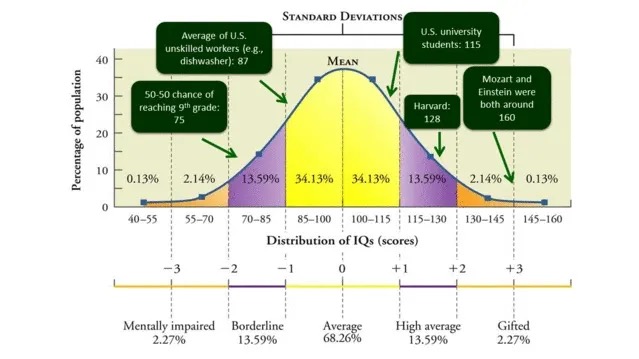
The school psychologist tested me repeatedly, and every time I scored a Genius IQ — 160 or higher. He was baffled and asked me, “How can a genius have trouble memorizing?!” I had no idea. I still don’t. It’s just how I am wired. I love learning, breezed through assignments, and earned straight A’s, but the basic act of remembering facts or phrases left me panicked. That contradiction — genius but with difficulty memorizing— has shaped my professional and social life ever since.

Middle School Activiites

Surprisingly, none of this ever made me feel like an outsider. I made friends easily–was even elected class representative by write-in vote, which surprised everyone, including me. Joined the school choir, where I discovered a passion and a gift for music. I eventually made regional and all-state choir as a first tenor, a rare honor for a middle schooler. Life at Godwin was strange and beautiful — a little chaotic, a little brilliant, like the 1970s themselves.

Visit From My Cousin Johnny

Another good memory is when my cousin Johnny Lakos from the Boston area came to visit us. Johnny was the oldest of the four boys of my godmother, Auntie Yole, my mother’s oldest sister. At the time, he was growing up in Billerica, Massachusetts, which had a reputation as a tough neighborhood. One summer when we were back in Medford, I broke my right hand after John got into a fight with a group of local tough guys at the corner store. Things might have turned out much worse if the store owner hadn’t come charging outside with a baseball bat to scatter the crowd.

Photograph of my cousin John Lakos when he visited us in Woodbridge, VA.  We are both wearing my father's green beret and saluting.  You can see a NASA model of a Mercury spaceship that was given to me from my Uncle Arthur McDonald, who worked for NASA and Grummun Aerospace.

Music of 1972

One of the things that sticks with me about our time in Woodbridge in 1972 was the music. Two songs that I’ll never forget from that year were “American Pie” by Don McLean and “Everything I Own” by Bread. Yes, I’ll admit it — I liked Bread, and David Gates had a voice that stuck with you. Lynne’s favorite that year was “Motorcycle Mama” by Sailcat, while she was trying to find her 1970s free-spirited nature. And Diana? She was still deep in her Donny Osmond phase, blasting “Go Away Little Girl” from her bedroom while gazing at his poster on the wall. Meanwhile, I found myself falling hard for Michelle Phillips of The Mamas & the Papas — her blonde hair and bohemian spirit were electric.

Entering Woodbridge Senior High School

By the time I entered Woodbridge Senior High School, the world around us felt just as chaotic. It was a wild time in America. The Vietnam War was reaching a painful crescendo before the Paris Peace Accords finally brought it to an end. Watergate was on every television, peeling away the illusion of presidential authority. The drug culture was roaring. The sexual revolutionwas in full swing, and so, it seemed, were my teenage hormones.

I was noticing girls for the first time — just in time to be thrown into the whirlwind that was Woodbridge Senior High. Unlike Godwin’s experimental vibe, Woodbridge was huge and traditional. My freshman class alone had over 1,000 students. The school was so overcrowded that we were placed on split-shifts: half the school attended from 0600 to noon, the other half from noon to 1800. My sisters and I drew the short straw — we were in the afternoon shift.

Eventually, though, a brand-new, modern, and massive school building was completed, large enough to accommodate us all. The moment we walked into that sleek, state-of-the-art campus, everything changed. We loved it. I was finally at the same school as my sisters, and for the first time, we could enjoy high school together. I had the same lunch break as my sister Diana, so I always ate with her and her girlfriends. So I got to know the sophomore girls easily.

New Woodbride Senior High School

Part of autobiography of Dr. Anthony J. Carbone, Son in the Shadow of a Green Beret Hero
Woodbridge Senior High School in Virgina

Taking Field Biology During the Summer

One of the biggest turning points for me came during summer school, where Diana and I were required to take a class because of our involvement in choir. We signed up for Field Biology — and I hit the jackpot. The class consisted of 26 girls and 1 lucky boy (me), many of them cheerleaders, majorettes, or fellow choir members. Every day we took field trips to local parks, where we studied flora and fauna and wrote reports. I quickly became known as the only student willing to do the dissections, which won me a strange kind of fame. I guess I was destined to become a surgeon.

9th Grade Field Biology Class
looking in microscopes.

Part of autobiography of Dr. Anthony J. Carbone, Son in the Shadow of a Green Beret Hero
9th Grade Field Biology Class

But let’s be honest — it was the bus rides and field trips with the girls that I loved most. Despite my shyness, I started to meet girls, and for a boy on the cusp of adolescence, there was no better time. Mini-dresses & skirts were still in fashion, and I fell in love ten times a day.

One of those girls, Sue Grizzard, who was a year ahead of me, even asked me to the Sadie Hawkins Dance. I was thrilled because it was my first real date with a girl. And Sue became my first high school crush.

My friend, Sue Grizzard, from Woodbridge Senior High School

The Changing Times of the 1970s

It was also a time when the cultural tides were shifting fast — even inside our own home. Diana had stacks of Tiger Beat Magazine posters of Donny Osmond and David Cassidy from The Partridge Family pinned to her bedroom wall, dreaming of clean-cut pop idols with pearly smiles. 

My musical tastes were evolving too. I was drifting away from folk music like the Mamas & the Papas and Don McLean’s American Pie, and moving into the hazy world of rock like The 5 Man Electrical Band’s “Signs” and psychedelic rock, hypnotized by songs like “Crimson & Clover” by Tommy James and the Shondells. The innocence of the 1960s was giving way to something more experimental, more sensual, and I was riding that wave right into high school.

Senior High Activities

That first year of high school also brought new freedoms. We were finally allowed to attend football gamesschool concerts, and other evening events. I especially loved Friday night varsity football games. The energy, the marching band, the lights on the field — it was everything high school was supposed to be.

In just a few short years, I had gone from watching Watergate on TV and wondering why I couldn’t remember a locker combination, to discovering music, girls, and football under the Friday night lights. And all of it — the political chaos, the cultural shifts, the awkward first steps into teenage life — was part of the strange and wonderful chapter we called Woodbridge.

Nixon Resigns August 9, 1974

My copy of the front page of the Stars & Stripes newspaper from 9 August 1974 showing "Nixon Resigning"

Part of autobiography of Dr. Anthony J. Carbone, Son in the Shadow of a Green Beret Hero.
I still have the 9 August 1974 edition of the Stars & Stripes announcing President Nixon’s resignation.
9th Grade Class Photo from Woodbridge Senior High School, Woodbridge, Virgina while Dad was assigned to the Pentagon.  Biography of Dr. Anthony J. Carbone.
9th Grade Class Photo from Woodbridge Senior High School

Home Page

Chapter 9: MACV-SOG: My Father’s Top Secret Mission as a Black Operations Green Beret

Green Beret with 5th SF Vietnam Flash with Viet Cong Flag and MACV-SOG Knife. Autobiography of Dr. Anthony J. Carbone.

Believe Nothing You Hear, and Only Half of What You SeeA Memoir of Service, Shame, and the Search for Truth

Distintivie Unit Patches, Flashes, and Badges of the Special Operations:

5th Special Forces (Vietnam) Green Beret Flash with Special Forces Unit Insignia (worn by enlisted members) with SF Motto "De Oppresso Liber" (To Liberate the Oppressed)

Part of the autobiography of Dr. Anthony J. Carbone, Son in the Shadow of a Green Beret Hero
5th Special Forces (Vietnam) Green Beret Flash with Special Forces Unit Insignia (worn by enlisted members) with SF Motto “De Oppresso Liber” (To Liberate the Oppressed)
Unit Shoulder Patch of the U.S. 5th Special Forces with Airborne and Special Forces specialty tabs.

Part of the autobiography of Dr. Anthony J. Carbone, Son in the Shadow of a Green Beret Hero
Unit Should Patch of the 5th Special Forces with Airborne and Special Forces specialty tabs.
Army of the Republic of Vietnam (ARVN) = South Vietnamese Special Forces Patch

Part of the autobiography of Dr. Anthony J. Carbone, Son in the Shadow of a Green Beret Hero
Army of Republic of Vietnam (ARVN) Special Forces Patch
Official MACV-SOG (Special Operations Group) Joint Patch

Part of the autobiography of Dr. Anthony J. Carbone, Son in the Shadow of a Green Beret Hero
Official MACV-SOG Joint Patch

Military Assistance Command Vietnam–Studies & Observation Group (MACV-SOG)

The Vietnam War was America’s longest and most controversial conflict, and at its murky core lay a secret war few even knew existed. MACV-SOG — Military Assistance Command, Vietnam — Studies and Observations Group — was the elite unit that waged that secret war. Established in 1964, it was composed of the best the U.S. military had to offer: Army Special Forces, Navy SEALs, Marine Recon, Air Force commandos, and CIA operatives. Their missions were so clandestine that, if captured, their government would deny any knowledge of them. These operatives conducted daring raids, reconnaissance, POW rescues, and psychological operations in Laos, Cambodia, and North Vietnam — places where we weren’t even supposed to be. My father was one of them.

Dad (MAJ Tony Carbone) as MACV-SOG Command & Control XO at Ban Mê Thuôt, Vietnam.

Part of the autobiography of Dr. Anthony J. Carbone, Son in the Shadow of a Green Beret Hero.
Dad (MAJ Tony Carbone) as MACV-SOG Command & Control XO at Ban Me Thuot, Vietnam
My father (MAJ Tony Carbone) with MACV-SOG (Special Operations Group) at Ban Mê Thuôt, Vietnam.


Part of the autobiography of Dr. Anthony J. Carbone, Son in the Shadow of a Green Beret Hero.
MAJ Carbone with MACV-SOG 5th Special Forces at Ban Mê Thuôt, Vietnam
Dad (MAJ Tony Carbone) in his quarters at Ban Mê Thuôt Camp with MACV-SOG 5th Special Forces Vietnam.

Part of the autobiography of Dr. Anthony J. Carbone, Son in the Shadow of a Green Beret Hero
Dad in his quarters at Ban Mê Thuôt Camp with MACV-SOG 5th Special Forces Vietnam
Photograph of a Typical MACV-SOG Team of 2 American Operatives and 5–12 Montagnard Soldiers.

Part of the autobiography of Dr. Anthony J. Carbone, Son in the Shadow of a Green Beret Hero.
Typical MACV-SOG Team of 2 American Operatives and 5–12 Montagnard Soldiers

Command & Control South (CCS) in Ban Mê Thuôt

Assigned to Command & Control South (CCS), the smallest and perhaps most dangerous of SOG’s field units, my father served as its Deputy Commander. CCS was based out of Ban Mê Thuôt and operated in the dense jungles of southern Cambodia. Recon teams, Hatchet forces, and SLAM companies under CCS conducted missions across invisible lines drawn in Washington but ignored by enemy troops. The Ho Chi Minh Trail was their target — a jungle superhighway of men, weapons, and supplies. And my father helped direct the effort to stop it.

MACV-SOG CCS Patch, Command & Control South, Ban Me Thuot, Dr. Carbone's Blog.  Anthony J. Carbone  autobiography.

Ho Chi Minh Trail

Map of Vietnam during the war c.1970 showing the Ho Chi Minh Trail and the routes used by the VC & NVA to enter and resupply their forces in South Vietnam.

Part of the autobiography of Dr. Anthony J. Carbone, Son in the Shadow of a Green Beret Hero.
Map of Vietnam during the war c.1970 showing the Ho Chi Minh Trail and the routes used by the VC & NVA to enter and resupply their forces in South Vietnam.

The Montagnard Tribes

The Montagnard people of Vietnam’s Central Highlands were among the fiercest and most loyal allies of MACV-SOG. These indigenous tribesmen, renowned for their jungle skills and unwavering courage, formed the backbone of many recon teams sent into Laos and Cambodia. On nearly every SOG mission, it was the Montagnards who shouldered the greatest burden — and suffered the greatest losses. They were often massacred by the dozen while shielding their American teammates. Yet their loyalty never wavered. Before battle, a Montagnard shaman would sometimes perform a sacred two-hour ritual to drive out evil spirits, sealing the warrior bond with a simple yet powerful gesture: placing a hand-forged copper or brass bracelet on the wrist of the Green Beret. That bracelet symbolized trust, brotherhood, and a vow to protect. My father wore his Montagnard bracelet for years after the war, a silent tribute to those who fought — and died — beside him.

Montagnard soldiers supporting MACV-SOG forces in Ban Mê Thuôt that supported U.S. special forces.

Part of the autobiography of Dr. Anthony J. Carbone, Son of a Green Beret Hero.
Montagnard soldiers supporting MACV-SOG forces in Ban Mê Thuôt that supported U.S. special forces.
Montagnard soldiers supporting MACV-SOG forces in Ban Mê Thuôt. One is demonstrating the use of the blowgun — another favorite of SOG operatives (along with the crossbow).


Part of the autobiography of Dr. Anthony J. Carbone, Son of a Green Beret Hero.
Montagnard soldiers supporting MACV-SOG forces in Ban Mê Thuôt. One is demonstrating the use of the blowgun — another favorite of SOG operatives (along with the crossbow)..

Parting Gift from the Officers & Men of MACV-SOG CCS 5th SF (Airborne)

Parting Gift (Plaque) Presented to Major Tony Carbone from the Officers & Men of MACV-SOG Command & Control South (CCS) 5th Special Forces (Airborne)

Family Lived at Otis AFB on Cape Cod While Dad Was At War

Unlike most American troops whose tours in Vietnam lasted twelve months, my father volunteered for an eighteen-month tour with MACV-SOG. It was dangerous, grueling, and top secret. While he lived in constant peril, commanding missions into the jungle with a rifle on his back, my mother and our family were stationed at Otis Air Force Base on peaceful Cape Cod. It was a stark contrast — he fought for his life daily while we played under blue skies on the lush grounds of one of New England’s most tranquil military bases.

My father arranged for us to live at 5356 Spaatz Street, Otis AFB, Massachusetts — just under two hours from our grandparents in Medford.

With my father at 5356 Spaatz Street, Otis Air Force Base, before he left for Vietnam.

We saw them often, and they visited us just as frequently. We lived across the street from another Army family — the Napolis — and their son Joe Jr. became my closest friend, and we did everything together.

First Class Support at Otis Air Force Base

Somehow, my father had left such an impression with the base leadership that the Air Force took remarkable care of us. Military police visited regularly to check in. We were treated with kindness and respect, like we mattered. Directly across the street lived USCG Commander Ferguson, a Coast Guard pilot who flew rescue helicopters and had two daughters and a trained military police dog.

USCG Sikorsky HH-52A Seaguard Rescue Mission

Commander Ferguson took Joe and me under his wing — he brought us to Little League, karate, Boy Scouts. For the first time, I started to really thrive in Scouts. I even attended summer camp at Camp Greenough on Nantucket Island with Joe. Commander Ferguson became a kind of surrogate father while my real dad was away. His influence planted the seed that would later grow into my desire to become a military Flight Surgeon.

Camp Greenough Scout Reservation sign on Nantucket Island off of Cape Cod, where I attended Boy Scout Summer Camp while my father was in Vietnam.

Part of the autobiography of Dr. Anthony J. Carbone, Son in the Shadow of a Green Beret Hero.
Camp Greenough on Nantucket Island off of Cape Cod

Most of our life at Otis was simple, safe, and full of joy. Blueberry picking became such a regular activity that I developed a lifelong dislike for blueberries. Our extended family stayed with us as often as they could. Our house was always filled with warmth, laughter, and love.

Tragedy Strikes the Elementary School

But not everything was light and carefree. I don’t remember much about sixth grade, but one winter morning is seared into my memory. My friends and I were walking to school, and they decided to take a shortcut across the frozen Osborne Pond. I hesitated. Something didn’t feel right. They laughed and called me a chicken as they stepped onto the ice. I chose to walk around the pond.

Satellite view of Otis Air Force Base on Cape Cod showing Spaatz Street (where we lived when my father was in Vietnam) and Osborne Pond where four of my 4th grade classmates drowned after falling through the ice.

Part of the autobiography of Dr. Anthony J. Carbone, Son in the Shadow of a Green Beret Hero.
Otis Air Force Base Showing Spaatz Street and Osborne Pond

Moments later, I heard cracking. Then screams. The ice gave way, and the boys plunged into the freezing water. I ran to the school and got our sixth-grade teacher. He sprinted back with me, then dove into the icy water without hesitation. I watched as he broke the ice with his bare hands and head, trying to reach the boys. Four of my classmates died that day. Class was canceled. I never went near that pond again. To this day, I won’t stand on a frozen pond or lake.

My 6th Grade Class at Otis AFB. I’m holding the sign in a yellow shirt. With our teacher, who dove into the icy water trying to save our classmates.

Commander Ferguson began flying his helicopter over Osborne Pond each morning, smashing the ice to make sure no child would ever take that shortcut again.

Vietnam War on Television

And while we experienced joy and tragedy on Cape Cod, my father was thousands of miles away, walking the line between life and death every day. Though I was only in sixth grade, I was old enough to understand what was going on. Every night, I watched the CBS Evening News with Walter Cronkite, who updated America on the war my father was living. I didn’t know the details of his mission, but I knew it was something different — something dangerous.

Music of 1970-1971

While my father was deep in the jungles of Vietnam in 1970 and 1971, the music playing back home felt like a snapshot of a world in flux. The Billboard Top 10 captured that contrast—The Partridge Family’s sugary “I Think I Love You” hit #1, while Edwin Starr’s explosive protest anthem “War” followed at #2.

I remember my cousin Johnny Antonelli Jr. visiting us at Otis AFB in early ’71. His arms full of 45s—Neil Diamond’s aching “I Am… I Said,” Rod Stewart’s raspy “Maggie May,” Isaac Hayes’ gritty “Theme From Shaft.” My sister Diana swooned over Donny Osmond’s “Go Away Little Girl” and “One Bad Apple,” while I was absorbing everything from the Beatles’ “Let It Be” to the 5 Man Electrical Band’s rebellious “Signs” and Tommy James and the Shondelle psychodelic “Crimson & Clover.” It was a strange, electric time—and the music captured every confusing, clashing note of it.

My Father’s Letters From Vietnam

My father wrote me often, sending handwritten letters filled with simple life messages and often with drawings he made of Viet Cong underground fortresses— little snapshots of life from halfway around the world.

Letter from my father (MAJ Tony Carbone) written on MACV-SOG CCS stationary while in Ban Mê Thuôt, Vietnam.  This one was written on my birthday, December 3rd.

Part of the autobiography of Dr. Anthony J. Carbone, Son in the Shadow of a Green Beret Hero.
Letter from Dad in Vietnam on my birthday, 3 December 1970
Newspaper article that my father (MAJ Tony Carbone) sent to me from Vietnam describing the complex underground Viet Con tunnel system.

Part of the autobiography of Dr. Anthony J. Carbone, Son in the Shadow of a Green Beret Hero.
Newspaper article describing the complex underground Viet Con tunnel system.

Cassette Tape Messages From Vietnam

And he continued to send us cassette tapes, his calm voice crackling through the speaker as he described his days. I remember one message clearly: “Hey, kids. Hope you’re being good to your mom. I had a quick trip back to Saigon last week… Tell Mrs. Napoli I saw Joe — he’s doing fine, probably buying up half of Saigon!” Then suddenly, in the background — dogs barking. Explosions. Sirens. Machine gun fire. “Whoops! Gotta go!” The tape cut off. When he returned minutes — or days — later, his voice was just as casual: “Now, where was I? Oh, right. Joe looks good. I also saw Bob Moscatelli. I love and miss all of you. Oh, and I sent some new photos. Kids, be good to your mother. Edda, I love you with all my heart.”

Photo of a Typical SONY cassette recorder that we used to send messages to each other during the Vietnam War.

Part of the autobiography of Dr. Anthony J. Carbone, Son in the Shadow of a Green Beret Hero.
Typical SONY cassette recorder that we used to send messages to each other during the Vietnam War.

Those tapes were more than updates — they were lifelines. We played them again and again. They made us feel close. They also gave me nightmares. In the photos he sent, I studied the barbed wire behind him, the machine gun nests, the rifles on the wall. It wasn’t abstract — it was real. And it was terrifying.

Rest & Recooperation (R&R) in Waikiki, Hawaii

Like all soldiers, my father received a short R&R during his deployment and spent it with my mother at the Hale Koa Hotel in Waikiki, Hawaii. I know they cherished that time, but I remember fewer photographs than from his earlier tour. Maybe that’s because this tour wasn’t just different. It was darker.

Parents (MAJ Anthony Carbone and Mrs. Edda Carbone) in Waikiki, Hawaii during my father's R&R from Vietnam War.

Part of the autobiography of Dr. Anthony J. Carbone, Son in the Shadow of a Green Beret Hero.
Parents in Waikiki, Hawaii for R&R from Vietnam

R&R Stateside

Because of the length of his deployment, he was also granted something almost unheard of — a one-week trip home. My mother planned a massive party at Otis. All the relatives came to Cape Cod. There was food, laughter, a sense of celebration. But I noticed something no one else seemed to. My father spent most of that party with his back pressed against a building, barely moving. He wasn’t himself. I told myself he was jet-lagged. But years later, I realized the truth: just days earlier, he had been hiding in the jungle, possibly fighting hand-to-hand with enemy soldiers. Now he was expected to make small talk over potato salad. Of course, he was on edge.

The moment I’ll never forget came when we took him to the airport. As he prepared to return to Vietnam, I saw something I’d never seen before: my father was nervous. Visibly so. He pulled a matchbook from his pocket, opened it, and began to read goodbye notes written on the cardboard striker. Then, quietly, he began to cry. My father — the Green Beret — was crying. In that moment, I knew: Vietnam was not just dangerous. It was hell. And he was walking straight back into it.

Matchbook Issued to GIs in C-Rations During Vietnam War.  My father read goodbye notes from a similar matchbook when he returned to Vietnam after visiting us at Otis Air Force Base on Cape Cod during his second tour in Vietnam.

Part of the autobiography of Dr. Anthony J. Carbone, Son in the Shadow of a Green Beret Hero.
Matchbook Issued to GIs in C-Rations During Vietnam War. My father read goodbye notes from a similar matchbook when he returned to Vietnam after visiting us at Otis Air Force Base on Cape Cod during his second tour in Vietnam.

The Secret Wars of SOG and its High Cost of Life

Years later, I read SOG: The Secret Wars of America’s Commandos in Vietnam by Major John L. Plaster. It told of the kinds of missions my father directed — Top Secret patrols into Cambodia, ambushes, pilot rescues, and cross-border raids. These missions had a staggering 100% casualty rate. Montagnards were slaughtered. American Green Berets would cover each other’s escape with machine gun fire, often dying in the process.

Copy of the cover of the Book SOG: The Secret Wars of America’s Commandos in Vietnam by John L. Plaster.

Part of the autobiography of Dr. Anthony J. Carbone, Son in the Shadow of a Green Beret Hero.
Book SOG: The Secret Wars of America’s Commandos in Vietnam by John L. Plaster

And then I understood. I understood my father’s survivors’ guilt. I understood his silence. He wasn’t a Rambo., he didn’t talk about the war, he didn’t wear shirts or pins or bumper stickers. He simply came home and tried to live.

The Rare War Stories

He once told a story in private, during a quiet evening with an old MACV-SOG buddy he had invited over to meet me. I was just newly commissioned into the Army as a Chemical Corps officer and I my father invited his SOG friend who was also a chemical officer over to talk to me. They spoke in low voices, laughing softly. I sat nearby, listening.

Photograph of 2 MACV-SOG HALO Jumpwe from a Huey Helicopter during the Vietnam War.

Part of the autobiography of Dr. Anthony J. Carbone, Son in the Shadow of a Green Beret Hero.
MACV-SOG HALO Jump from a Huey Helicopter

The Reason for the Porsche 911

He described a mission — a parachute jump into Laos, deep into enemy territory. He landed in a rice paddy, rolled up his chute, and lay in the water, waiting for the extraction birds to clear the area. Then he saw a Viet Cong soldier with an AK-47 walking straight toward him. He whispered to himself: “F***. I’m dead. He has to see me.” He begged God for survival and made a silent promise: “If I make it out of this alive, I’ll throw out every stitch of clothing I own and buy a Porsche 911.” The soldier turned and walked away. My father eventually made it home safely. When we moved to Germany for a third time, He tossed out all his clothes — much to my mother’s horror — and filled his closet with tacky 1970s leisure suits. Then he bought his Porsche 911.

Don’t Worry–They Won’t Get Away!

He never wore his story — but I carry it for him now. For years, his Green Beret sat quietly in a drawer, beside a well-worn Special Forces manual and a captured Viet Cong flag — silent relics of a war he rarely spoke about. But it was the plaque given to him by the officers and men of MACV-SOG Command & Control South that told me everything I needed to know.

Engraved on a placque using my father’s own commanding words in the heat of battle as they cried out to him: Sir, “THEY GOT US SURROUNDED” — and his legendary reply — “DON’T WORRY, THEY WON’T GET AWAY!” — it captured the unshakable courage and fierce resolve that defined his leadership. It’s not easy growing up in the shadow of a Green Beret hero. But when that shadow is cast by a man like my father, you don’t run from it. You stand in it with pride, hoping one day to be worthy of its strength.

MACV-SOG Mementos That My Father Gave Me

“THEY GOT US SURROUNDED. DON’T WORRY, THEY WON’T GET AWAY!”

My father’s photo in Ban Me Thuot, Vietnam, his Special Forces manual, Captured Viet Cong Flag, and Placque presented to him by the Officers & Men of MACV-SOG Command & Control South Upon His Departure.  With my father's famous quote:  "THEY GOT US SURROUNDED.  DON'T WORRY, THEY WON'T GET AWAY!"

Part of the autobiography of Dr. Anthony J. Carbone, Son in the Shadow of a Green Beret Hero.
My father’s photo in Ban Me Thuot, Vietnam, his Special Forces manual, Captured Viet Cong Flag, and Placque presented to him by the Officers & Men of MACV-SOG Command & Control South Upon His Departure. With my father’s famous quote: “THEY GOT US SURROUNDED. DON’T WORRY, THEY WON’T GET AWAY!”

It’s not easy growing up in the shadow of a Green Beret hero — but I wouldn’t trade that shadow for anything in the world.

A few more letters from my father in Ban Mê Thuôt, Vietnam

Letter from my father (MAJ Tony Carbone) written to me from Bon Mê Thuôt, Vietnam during the war on 17 June 1970.

Part of the autobiography of Dr. Anthony J. Carbone, Son in the Shadow of a Green Beret Hero.
Letter from my father (MAJ Tony Carbone) written to me from Bon Mê Thuôt, Vietnam during the war on 17 June 1970.

Part of the autobiography of Dr. Anthony J. Carbone, Son in the Shadow of a Green Beret Hero.
Letters from Dad in Vietnam 17 June 1970
Letter from my father (MAJ Tony Carbone) written to me from Bon Mê Thuôt, Vietnam during the war on 13 July 1970.

Part of the autobiography of Dr. Anthony J. Carbone, Son in the Shadow of a Green Beret Hero.
Letter from my father (MAJ Tony Carbone) written to me from Bon Mê Thuôt, Vietnam during the war on 13 July 1970.

Part of the autobiography of Dr. Anthony J. Carbone, Son in the Shadow of a Green Beret Hero.
Letter from Dad in Vietnam 13 July 1970
Letter from my father (MAJ Tony Carbone) written to me from Bon Mê Thuôt, Vietnam during the war on 5 November 1970.

Part of the autobiography of Dr. Anthony J. Carbone, Son in the Shadow of a Green Beret Hero.
Letter from my father (MAJ Tony Carbone) written to me from Bon Mê Thuôt, Vietnam during the war on 5 November 1970.

Part of the autobiography of Dr. Anthony J. Carbone, Son in the Shadow of a Green Beret Hero.
Letter from my father (MAJ Tony Carbone) written to me from Bon Mê Thuôt, Vietnam during the war on 19 November 1970.

Part of the autobiography of Dr. Anthony J. Carbone, Son in the Shadow of a Green Beret Hero.
Letter from my father (MAJ Tony Carbone) written to me from Bon Mê Thuôt, Vietnam during the war on 19 November 1970.

Part of the autobiography of Dr. Anthony J. Carbone, Son in the Shadow of a Green Beret Hero.
Letter from Dad in Vietnam 19 November 1970
6th Grade Class Photo at Otis Air Force Base while my father was in Vietnam.  Biography of Anthony J. Carbone.

Home Page

Chapter 8: Return to Heidelberg, Our Second Tour of Germany

HQ US Army Europe (USAREUR) Patch. Autobiography of Dr. Anthony J. Carbone.

Believe Nothing You Hear, and Only Half of What You SeeA Memoir of Service, Shame, and the Search for Truth

Second Tour in Heidelberg, Germany

When I was ten years old, our family once again packed up our lives and headed overseas — this time for our second tour in Germany. My father had received orders assigning him to Headquarters, US Army Europe (USAREUR) and 7th Army, located at Campbell Barracks in Heidelberg. Unlike our earlier tour in the early 1960s, this one brought us back as seasoned travelers. I had already lived in multiple states and countries by then, and yet the thought of returning to Germany filled me with a deep sense of excitement and familiarity.

Shoulder patch of US Army Europe (USAREUR) Command that my father wore while assigned to Headquarters, USAEUR in Heidelberg, Germany.

Part of the autobiography of Dr. Anthony J. Carbone, Son in the Shadow of a Green Beret Hero
Headquarters US Army Europe (USAREUR) Shoulder Patch

Father works in the Mushroom

My father’s new assignment placed him in the Plans Department at Headquarters USAREUR, a position that carried immense responsibility. His Top Secret work took place deep in the lower levels of Campbell Barracks headquarters — in a windowless basement complex affectionately nicknamed “The Mushroom.” It was a fitting name for a place that seemed to operate in the dark, both literally and figuratively. There, my father and his fellow officers drafted highly classified contingency war plans in the event of a Soviet invasion through the Fulda Gap — the very terrain he had once patrolled with C Troop, 14th Armored Cavalry.

U.S. Army Campbell Barracks aeirial view in Heidelberg, Germany where my father worked in the War Plans Department in the deep basement called "The Mushroom".

Part of the autobiography of Dr. Anthony J. Carbone, Son in the Shadow of a Green Beret Hero
US Army Campbell Barracks in Heidelberg, Germany

We Live in Mark Twain Village (MTV) in Heidelberg

Although I didn’t fully understand the gravity of the Cold War at that age, I did understand that my father’s job was important. And we were lucky: his assignment came with stable, convenient housing and a chance to tour Europe. We lived in Mark Twain Village, a government residential community just steps from Campbell Barracks. Our second-floor apartment on Römerstrasse quickly became home.

Mark Twain Village (MTV) Military Family Housing Area in Heidelberg, Germany near Campbell Barracks, home of Headquarters, USAREUR.

Part of the autobiography of Dr. Anthony J. Carbone, Son in the Shadow of a Green Beret Hero
Mark Twain Village in Heidelberg, Germany
Typical housing quad at Mark Twain Village (MTV), military family housing area of Heidelberg, Germany for military personnel working at Campbell Barracks.

Part of the autobiography of Dr. Anthony J. Carbone, Son in the Shadow of a Green Beret Hero
Mark Twain Village in Heidelberg, Germany

Apollo 11 Moon Landing (July 20, 196)

We had just settled into our new government quarters in Mark Twain Village in Heidelberg when the world seemed to stop for another historic moment. On July 20, 1969, we were glued to our little black-and-white television, watching the Armed Forces Radio & Television Network as the Apollo 11 mission unfolded. The Lunar Module touched down on the moon that evening (around 8PM German time), and I remember the suspense and awe in our household. We even woke up before dawn the next morning to see Neil Armstrong climb down the ladder and take that first step onto the lunar surface. His words — That’s one small step for man, one giant leap for mankind”— were broadcast across the globe, and even as a boy in Germany, I understood how extraordinary it was. The mission had launched from Florida on July 16, landed on the moon at 4:17 p.m. EDT on July 20, and Armstrong’s first step came at 10:56 p.m. EDT. By the time the astronauts returned safely to Earth on July 24, the entire world felt changed.

Watching Dad Walk Home from Campbell Barracks

From our living room window, my mother and I would sit together in the early evenings and watch the stream of officers walk home in their uniforms. Even though they all looked the same from a distance — identical green fatigues or Class A uniforms, same gait, same caps — I could always pick out my father by his walk. There was something distinctive and familiar in his stride and the way he tilted his head as though examining the terrain ahead of him, and spotting him from afar gave me a small sense of pride and comfort each day.

Parades at Campbell Barracks

We were so close to Campbell Barracks that we didn’t just see Army life — we heard it. The bugle calls, the thunderous boom of cannon salutes, and the rousing music of the 7th Army Band became the background soundtrack of our lives. If I had a day off school and it was light outside, I’d run over to Campbell Barracks to watch the soldiers march “Pass In Review”. Their gleaming boots, synchronized steps, colors and guidons waiving, and perfectly timed salutes made a deep impression on me. It was patriotic, ceremonial, and somehow reassuring.

U.S. 7th Army Band and soldiers "Pass in Review" on the parade field of Campbell Barracks in Heidelberg, Germany--home of Headquarters, USAEURA.

Part of the autobiography of Dr. Anthony J. Carbone, Son in the Shadow of a Green Beret Hero
US 7th Army Soldiers Pass In Review at Campbell Barracks in Heidelberg

Life in Mark Twain Village (MTV)

Mark Twain Village was filled with other Army families like ours. The kids played outside until dinner, rode bikes on the broad sidewalks, and gathered for games in the shared courtyards. We attended the American grade school nearby and shopped at the PX and commissary. Even though we were living in a foreign country, our daily life felt predictable and secure — until it didn’t.

Typical playground in. the quad betwen the apartment buildings of Mark Twain Village (MTV), the family housing area for military personnel working at Campbell Barracks, Home of HQ USAEURA, Heidelberg, Germany.

Part of the autobiography of Dr. Anthony J. Carbone, Son in the Shadow of a Green Beret Hero
Mark Twain Village Playground

Our Car is Used in a Kidnapping

One event pierced that sense of security in a way I’ll never forget. One night, thieves stole our family’s Pontiac station wagon, our trusted vehicle for school runs and weekend drives. Soon after, we discovered that kidnappers used it in the abduction of a young woman.

German and U.S. military police came to our apartment and fingerprinted each of us to help with the investigation of the recovered vehicle. I remember the serious, methodical way they worked, my fingerprints appearing on the identifcation card, and the sense of something terribly wrong. Later, it was revealed that chlorophorm had been used during the kidnapping. Our car was returned to us, but it never felt quite the same again. Driving around in it afterward felt strange and unsettling. As a boy, I didn’t yet have the words for trauma, but I knew we had been touched by something dark.

My 5th Grade Teacher Dies of Pneumonia

Another vivid memory from that year is one of personal sorrow. My fifth-grade teacher at Heidelberg American Grade School was only 21 years old. I’ve long since forgotten her name, but not her beauty or kindness. Even at ten, I knew we were lucky to have such a lovely and caring teacher.

My 5th Grade Class portrait at Heidelberg Elementary School No.1 in Mark Twain Village, 1970.  I am seated in the front row, 4th from the left.

Part of the autobiography of Dr. Anthony J. Carbone, Son in the Shadow of a Green Beret Hero
5th Grade Heidelberg American Grade School. Heidelberg, Germany. I’m in the brown jacket next to my girlfriend the girl scout.

Then one day, we were in the car — my parents in the front, me sitting in the middle between them on the bench seat — and Peter, Paul & Mary’sLeaving on a Jet Plane” came on the radio. I liked the song already, but suddenly it took on a whole new meaning. My parents turned to me gently and told me that my teacher had died — of pneumonia. I was stunned. “Pneumonia?” I asked. “Isn’t that curable with antibiotics?” They nodded softly but didn’t offer much more. I sat in silence as the song played, numb with disbelief. I don’t remember another thing about fifth grade. To this day, when I hear “Leaving on a Jet Plane,” I’m transported back to that car ride and the overwhelming sadness of losing someone so young.

Album cover to Peter, Paul & Mary's "Leaving on a Jet Plane" in High Fidelity.


Part of the autobiography of Dr. Anthony J. Carbone, Son in the Shadow of a Green Beret Hero
Peter Paul & Mary’s “Leaving On A Jet Plane”

I learn about suicide

That was not the only moment during our time in Heidelberg that shattered my childhood innocence. I remember another day, driving down Römerstrasse with my parents in that same Pontiac station wagon. I was again sitting between them in the front seat, the hum of the engine and the rhythm of everyday life lulling me into a sense of routine.

Then I heard my father whisper something to my mother. I couldn’t catch it all, but I heard enough: “The captain’s wife… she committed suicide.” My ears perked up. “What’s suicide?” I asked. My parents hesitated, then replied with quiet gravity, “It means she killed herself.” I was stunned. “Why would anyone kill themselves?” I asked again. They explained gently that she had been terribly homesick, living so far from her family, isolated in a foreign country. But I couldn’t understand how loneliness could drive someone to end their life. It seemed unthinkable.

As we continued driving, Joni Mitchell’s “Both Sides Now” came on the radio — “Bows and flows of angel hair…” — and that haunting melody fused itself forever to that moment. I couldn’t make sense of it then, and to be honest, I still struggle with it now. The suicide of that young officer’s wife marked me deeply. From that day on, suicide became something that both baffled and upset me — and it still does.

Album cover to Joni MItchel's "Both Sides Now".


Part of the autobiography of Dr. Anthony J. Carbone, Son in the Shadow of a Green Beret Hero
Joni Mitchell’s “Both Sides Now”

Nana Carbone visits us in Heidelberg

Despite these dark memories, Heidelberg was also a place of beauty, warmth, and family connection. During this tour, we had two long-time visitors who brought their own special energy to our household. My father’s mother, Nana Carbone, came to stay with us for a while. Our three-bedroom apartment was already tightly packed — my parents had their room, my four sisters shared another, and I had a small bedroom to myself. When we had overnight guests, I gave up my room and moved in with my sisters, sleeping on the floor between their two huge wooden bunkbeds. That simple act became a routine of sorts, and I never minded.

Photograph of Nana Carbone visiting us at our home in Mark Twain Village in Heidelberg, Germany.  With my mother (Edda Carbone), Sisters Lynne, Diana, Cynthia and Pamela Carbone.  Looks like it was my sister Diana's birthday with a birthday cake.  I am on the far left.

Part of the autobiography of Dr. Anthony J. Carbone, Son in the Shadow of a Green Beret Hero
Nana Carbone visiting us in Heidelberg

8 of us in a VW Beetle from Heidelberg to Paris

We took Nana sightseeing around Heidelberg and beyond, but I especially remember one spontaneous Saturday morning at the breakfast table. My father asked, “Who wants to go visit Paris?” We all exploded with excitement, raising our hands and pleading to go. He told us to gather our money — every coin and bill we could find, both American and German. We brought him our coins, our Deutschmarks, our pfennigs, and he carefully counted them up and announced that we had just enough.

The funniest part was that we no longer had the station wagon — at the time, we only had a 1960s-era German Volkswagen Beetle. So all eight of us — my father, Nana Carbone, my mother, and the five Carbone kids — crammed into that tiny car, along with our luggage, and drove all the way from Heidelberg to Paris. My father drove, Nana rode up front, and the rest of us — every last one — sat piled in the back, sandwiched together like sardines. It was cramped, absurd, and completely unforgettable.

Black Volkswagen Beetle circa 1960 that 8 of us piled into to drive from Heidelberg, Germany to Paris, France when my Nana Carbone was visiting us in Heidelberg.

Part of the autobiography of Dr. Anthony J. Carbone, Son in the Shadow of a Green Beret Hero
Black Volkswagen Beetle circa 1960 that 8 of us piled into to drive from Heidelberg to Paris when my Nana Carbone visited us.
Postcard of Paris that was a souvenir from our trip to Paris in 1970 when Nana Carbone visited us in Heidelberg, Germany.

Part of the autobiography of Dr. Anthony J. Carbone, Son in the Shadow of a Green Beret Hero
Postcard of Paris that was a Souvenir from our trip to Paris with my Nana Carbone.

Auntie Norma Stays with us Again

We also hosted my Auntie Norma that year. She came to stay for an extended visit and, as always, I gave her my bedroom and joined my sisters on the floor. Auntie Norma traveled with us occasionally, but she also took full advantage of Army-sponsored trips for officer wives and soldiers. She explored Europe independently, sometimes with others, often alone, always intrepid with cameras in hand. She was fearless, curious, and full of stories. Her presence added color to our home, and her spirit of adventure made a lasting impression on me. She has always been a part of our nuclear family to me.

Photo of main street Rotenburg, insided the famous walled city showing the iconic tower gate.  This was one of the most favorite places for our family to visit and show our visitors.

Part of the autobiography of Dr. Anthony J. Carbone, Son in the Shadow of a Green Beret Hero
Rotenburg ob der Tauber Germany, one of our favorite places to visit

I loved Germany

Although everyone in my family lived through three tours in Germany, the timing of this particular tour in my childhood made it the most significant for me. Germany — especially Heidelberg — became an essential part of my identity. Studying the German language began both in school and independently. German history, culture, and geography sparked deep fascination, leading our family to travel throughout the country. Military life, particularly my father’s role in the U.S. Army and the broader structure of NATO forces stationed across Europe, especially captivated me.

Even then, I knew I wanted to follow in my father’s footsteps. I was determined to become an Army officer. And I dreamed of returning to Germany for as many tours as the Army would allow.

Photograph of Neuschwanstein Castle, the icon of Bavaria (the American sector of Germany).  We took our visiting guests there often.

Part of the autobiography of Dr. Anthony J. Carbone, Son in the Shadow of a Green Beret Hero
Neuschwanstein Castle Bavaria Germany

Looking back, our second tour in Germany was not just another chapter in our family’s military life — it was the foundation of my emerging sense of self. It was a time when I began to understand the complexity of the world, to absorb culture, history, and tragedy, and to see clearly the path I would one day walk. Heidelberg wasn’t just a post — it was a place where I began to grow up.

Bierstein from HQ USAREUR in Heidelberg Germany. Captain Carbone. Dr. Carbone autobiography/
Bierstein HQ USAREUR Heidelberg Germany presented to my father, Captain Tony Carbone
5th grade school portraits while attending Heidelberg American Elementary School in Heidelberg, Germany.  Biography of Anthony J. Carbone.

Home Page

Chapter 7: Command & General Staff College at Fort Leavenworth

US Army Command & General Staff College Seal. Autobiography of Dr. Anthony J. Carbone.

Believe Nothing You Hear, and Only Half of What You SeeA Memoir of Service, Shame, and the Search for Truth

Return to the Command & General Staff College as a Tactical Instructor

After returning from Vietnam, the Army sent my father to the Command and General Staff College (CGSC) at Fort Leavenworth. This wasn’t just another stop on the military carousel — it was a pivotal milestone in his ascending career. Officers who were selected early for CGSC earned a mark of distinction.It signaled that the Army saw him not only as a skilled officer but as a leader with long-term potential.

Front Gate to Fort Leavenwork, Kansas where the Command & General Staff College is located.
After returning from his first tour in Vietnam in 1967, my father received prestigious orders to attend the United States Army Command and General Staff College (CGSC) at Fort Leavenworth, Kansas. This wasn’t just another stop on the military carousel — it was a pivotal milestone in his ascending career. Being selected early for CGSC was a mark of distinction. It signaled that the Army saw him not only as a skilled officer but as a leader with long-term potential.

Front Gate to Fort Leavenworth, Kansas
The Command and General Staff College is one of the crown jewels of military education. Established in 1881 by General William Tecumseh Sherman as the School of Application for Infantry and Cavalry, it was designed to train officers in the complexities of tactics, operations, and command. By 1907 it had become the School of the Line, and eventually evolved into what is now CGSC. Its mission remains timeless: to educate and develop agile, adaptive leaders who can operate in joint, interagency, and multinational environments — and to advance the art and science of the profession of arms.

Seal of the U.S. Command & General Staff College at Fort Leavenworth, Kansas
My father knew that the college had shaped some of America’s greatest military minds. Its alumni list reads like a hall of fame: Eisenhower, MacArthur, Marshall, Patton, Bradley, Westmoreland, and later, Colin Powell and Norman Schwarzkopf. To follow in their footsteps — even to walk the same halls — was both humbling and inspiring.
Since on-post housing was limited and claimed quickly, our family settled down in a modest townhouse in a small civilian development called Redwood Gardens, located about 35 miles southeast of Fort Leavenworth, in Kansas City, Kansas. Though a few other military families lived there, it lacked the closeness, safety, and camaraderie of post living. For us kids, it was an isolating and sometimes chaotic environment.

Civilian housing at Redwood Gardens in Kansas City, Kansas.
Our townhouse was cramped. My father turned a corner of the basement into a makeshift study where he would disappear for hours, immersed in maps, doctrine, and war histories. The workload at CGSC was intense, and the pressure to excel immense.

Carbone Family Portrait in the Command & General Staff College Yearbook “The Bell”
My own memories of Kansas City during that time are scattered and, for the most part, not especially fond. That year seemed filled with accidents and discomfort. Pamela fell down the basement stairs and had to get stitches on her face. Diana dove into the shallow end of the neighborhood pool and broke her front tooth in half, eventually receiving a dental cap. I got into a fight when I saw a bully beating up a younger kid — jumped in, broke my hand, and spent the rest of the summer in a cast.
One of my more cherished memories I have of our time in Kansas City was the day that Lynne, Diana, and I were all confirmed in the Catholic Church — on the same day — by the Archbishop of Kansas City, Bishop Edward Joseph Hunkeler. It was a peaceful and proud moment in an otherwise trying year.
On weekends when my father could sneak away from his studies, we would occasionally, we would make a special trip into the Italian section of Kansas City to stock up on authentic cold cuts — thin slices of mortadella, prosciutto, and provolone cheese — all tucked lovingly into crusty loaves of Italian bread. The vibrant tapestry of Kansas City in 1967 was interwoven with the rich history of its Italian community, particularly in the neighborhood then known as the North End. Having drawn immigrants — mostly from Sicily — since the 1860s, this area, which would soon be renamed Columbus Park, bustled with life centered around Holy Rosary Church and its many family-owned shops and markets. This self-sufficient “Little Italy” offered more than just delicious food — it was a place where tradition, language, and community thrived. Even as changes like the construction of Interstate 35 began to carve through its heart and displace families, the neighborhood remained a beloved reminder of cultural roots and Sunday flavors that felt like home.

Columbus Park “Little Italy” in Kansas City
But another memory stands out even more clearly — not for its peace, but for its intensity. Just a few doors down from our townhouse lived a parentless family of unruly boys who had clearly slipped through the cracks. They had long, unkempt hair — a growing trend in the late 1960s — and I remember them smoking on their back steps, jeering at us as we passed. One day, they went too far and scared my mother. That was a mistake.
I’ll never forget the moment my father found out. He calmly called out, “Hey, J.R.! Come with me!” and together we stepped into the backyard and walked down the road toward the rough boys’ unit. My father knocked on the door, and the oldest, cockiest of them answered. My father made it very clear: he didn’t want any of them speaking to his wife or his children again.
The kid smirked and said something along the lines of, “What is it to you? I don’t plan on stopping.” Without hesitation, my father grabbed the kid by his long hair and — in a move I can only describe as quiet thunder — drew his service Colt 1911 .45 caliber pistol and placed it gently but firmly under the boy’s jaw. His voice was low, measured, deadly calm. “This will be the last time that I warn you.” Then he released the boy, turned to me, and said evenly, “J.R., let’s get back to your mother… and never say a word about this to her.” That day left a mark on me. I had always admired my father, but in that moment, I saw him not only as a soldier but as a protector. I had never felt so safe in my life.
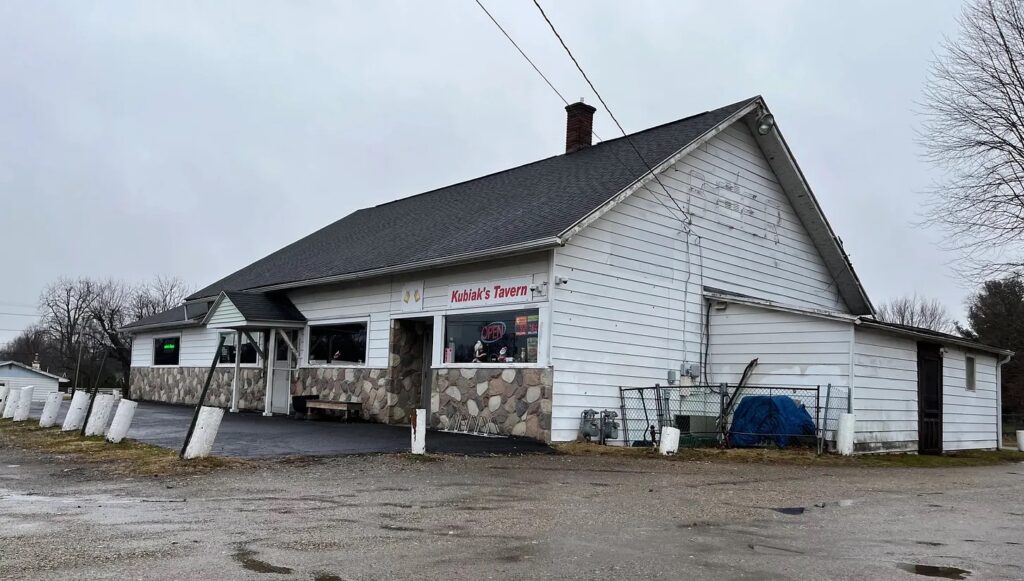
Despite all the challenges of civilian housing, my heart always returned to the post of Fort Leavenworth. Some of my fondest memories of that tour are tied to my personal fascination with the history of the fort — especially its deep connections to the U.S. Cavalry. I was captivated by the legacy of General George Armstrong Custer and his 7th Cavalry, as well as the legendary Buffalo Soldiers of the 10th U.S. Cavalry — the same regiment my father had served with during his tour in Korea. I felt a personal connection to that history, one that ran through the bloodline of my own father.

General George Armstrong Custor of the U.S. 7th Cavalry.

Buffalo Soldiers of the U.S. 10th Cavalry
The post was still very much a place of history. Many of the old red brick buildings from cavalry days still stood, preserved like time capsules from another era. I found myself drawn again and again to the Fort Leavenworth museum, which was filled with relics from Custer, the 7th Cavalry, and the 10th Cavalry. There were even artifacts and exhibits tied to President Abraham Lincoln’s visit to the post, which added another layer of reverence. My family often made Sunday day trips to the museum. Those quiet visits — walking through dusty uniforms, sabers, saddles, and faded photographs — lit a spark in me. Even as a child, I felt that Fort Leavenworth was hallowed ground.

Typical post housing at Fort Leavenworth dating back to its cavalry days.
The post itself dates back to May 8, 1827, when Colonel Henry Leavenworth established Cantonment Leavenworth along the Missouri River. It became the first permanent settlement in what would eventually become Kansas, and is today the oldest active Army post west of the Mississippi River. Originally serving as a quartermaster depot, arsenal, and garrison to safeguard the fur trade and commerce along the Santa Fe Trail, the post was briefly evacuated in 1829 and occupied by Kickapoo Indians before being re-garrisoned later that same year. On February 8, 1832, it was officially renamed Fort Leavenworth.

General Henry Leavenworth
Over time, the post developed a reputation not just as a military outpost, but as an intellectual center of the Army. It housed the prestigious Combined Arms Research Library (CARL), and it became a place where strategic thought and operational planning were forged and refined.

Combined Arms Research Library at Fort Leavenworth/
Yet there was another layer to Fort Leavenworth’s identity — its prisons. The United States Disciplinary Barracks (USDB), established in 1875, is the Department of Defense’s only maximum-security military prison. Right outside the gates, the Leavenworth Federal Penitentiary, operated by the Department of Justice, stood as a towering reminder of the civilian justice system’s reach.

U.S. Disciplany Barracks at Fort Leavenworth, Kansas.
Both institutions had reputations for housing some of the most notorious figures in American criminal and military history — from military murderers and spies to civilian outlaws like George “Machine Gun” Kelly, labor leader Eugene V. Debs, and Robert Stroud, the so-called Birdman of Alcatraz. Their stories seemed to hang in the air like myths. Even as children, we sensed the gravity of their presence, and we were always reminded not to stray too far from home. There was mystery and menace just over the horizon.

U.S. Federal Penatentary at Leavenworth, Kansas.
Despite the shadow cast by those prisons, Fort Leavenworth stood as a monument to something greater. It was a place of heritage, reflection, and deep military tradition. For my father, the CGSC experience was transformative. It shaped his approach to leadership and helped define the rest of his career. For our family, it was a time of adaptation, growing pains, and strength. And for me, Fort Leavenworth stirred something inside — an early reverence for history, heroism, and the cavalry legacy that connected us all.

Dad receiving another medal at the Command & General Staff College with my mother by his side.
Front Gate to Fort Leavenworth, Kansas

This History of Command & General Staff College

The United States Command and General Staff College is one of the crown jewels of military education. Established in 1881 by General William Tecumseh Sherman as the School of Application for Infantry and Cavalry, it was designed to train officers in the complexities of tactics, operations, and command. By 1907 it had become the School of the Line, and eventually evolved into what is now CGSC. Its mission remains timeless: to educate and develop agile, adaptive leaders who can operate in joint, interagency, and multinational environments — and to advance the art and science of the profession of arms.

Seal of the U.S. Command & General Staff College at Fort Leavenworth, Kansas.
Seal of the U.S. Command & General Staff College at Fort Leavenworth, Kansas

Famous Alumni of Command & General Staff College

My father knew that the college had shaped some of America’s greatest military minds. Its alumni list reads like a hall of fame: Eisenhower, MacArthur, Marshall, Patton, Bradley, Westmoreland, and later, Colin Powell and Norman Schwarzkopf. To follow in their footsteps — even to walk the same halls — was both humbling and inspiring.

Family Lives Off-Post in Redwood Gardens in Kansas City

Since on-post housing was limited and claimed quickly, our family settled down in a modest townhouse in a small civilian development called Redwood Gardens, located about 35 miles southeast of Fort Leavenworth, in Kansas City, Kansas. Though a few other military families lived there, it lacked the closeness, safety, and camaraderie of post living. For us kids, it was an isolating and sometimes chaotic environment.

Civilian housing at Redwood Gardens in Kansas City where we lived while my father attended the U.S. Command & General Staff College at Fort Leavenworth.
After returning from his first tour in Vietnam in 1967, my father received prestigious orders to attend the United States Army Command and General Staff College (CGSC) at Fort Leavenworth, Kansas. This wasn’t just another stop on the military carousel — it was a pivotal milestone in his ascending career. Being selected early for CGSC was a mark of distinction. It signaled that the Army saw him not only as a skilled officer but as a leader with long-term potential.

Front Gate to Fort Leavenworth, Kansas
The Command and General Staff College is one of the crown jewels of military education. Established in 1881 by General William Tecumseh Sherman as the School of Application for Infantry and Cavalry, it was designed to train officers in the complexities of tactics, operations, and command. By 1907 it had become the School of the Line, and eventually evolved into what is now CGSC. Its mission remains timeless: to educate and develop agile, adaptive leaders who can operate in joint, interagency, and multinational environments — and to advance the art and science of the profession of arms.

Seal of the U.S. Command & General Staff College at Fort Leavenworth, Kansas
My father knew that the college had shaped some of America’s greatest military minds. Its alumni list reads like a hall of fame: Eisenhower, MacArthur, Marshall, Patton, Bradley, Westmoreland, and later, Colin Powell and Norman Schwarzkopf. To follow in their footsteps — even to walk the same halls — was both humbling and inspiring.
Since on-post housing was limited and claimed quickly, our family settled down in a modest townhouse in a small civilian development called Redwood Gardens, located about 35 miles southeast of Fort Leavenworth, in Kansas City, Kansas. Though a few other military families lived there, it lacked the closeness, safety, and camaraderie of post living. For us kids, it was an isolating and sometimes chaotic environment.

Civilian housing at Redwood Gardens in Kansas City, Kansas.
Our townhouse was cramped. My father turned a corner of the basement into a makeshift study where he would disappear for hours, immersed in maps, doctrine, and war histories. The workload at CGSC was intense, and the pressure to excel immense.

Carbone Family Portrait in the Command & General Staff College Yearbook “The Bell”
My own memories of Kansas City during that time are scattered and, for the most part, not especially fond. That year seemed filled with accidents and discomfort. Pamela fell down the basement stairs and had to get stitches on her face. Diana dove into the shallow end of the neighborhood pool and broke her front tooth in half, eventually receiving a dental cap. I got into a fight when I saw a bully beating up a younger kid — jumped in, broke my hand, and spent the rest of the summer in a cast.
One of my more cherished memories I have of our time in Kansas City was the day that Lynne, Diana, and I were all confirmed in the Catholic Church — on the same day — by the Archbishop of Kansas City, Bishop Edward Joseph Hunkeler. It was a peaceful and proud moment in an otherwise trying year.
On weekends when my father could sneak away from his studies, we would occasionally, we would make a special trip into the Italian section of Kansas City to stock up on authentic cold cuts — thin slices of mortadella, prosciutto, and provolone cheese — all tucked lovingly into crusty loaves of Italian bread. The vibrant tapestry of Kansas City in 1967 was interwoven with the rich history of its Italian community, particularly in the neighborhood then known as the North End. Having drawn immigrants — mostly from Sicily — since the 1860s, this area, which would soon be renamed Columbus Park, bustled with life centered around Holy Rosary Church and its many family-owned shops and markets. This self-sufficient “Little Italy” offered more than just delicious food — it was a place where tradition, language, and community thrived. Even as changes like the construction of Interstate 35 began to carve through its heart and displace families, the neighborhood remained a beloved reminder of cultural roots and Sunday flavors that felt like home.

Columbus Park “Little Italy” in Kansas City
But another memory stands out even more clearly — not for its peace, but for its intensity. Just a few doors down from our townhouse lived a parentless family of unruly boys who had clearly slipped through the cracks. They had long, unkempt hair — a growing trend in the late 1960s — and I remember them smoking on their back steps, jeering at us as we passed. One day, they went too far and scared my mother. That was a mistake.
I’ll never forget the moment my father found out. He calmly called out, “Hey, J.R.! Come with me!” and together we stepped into the backyard and walked down the road toward the rough boys’ unit. My father knocked on the door, and the oldest, cockiest of them answered. My father made it very clear: he didn’t want any of them speaking to his wife or his children again.
The kid smirked and said something along the lines of, “What is it to you? I don’t plan on stopping.” Without hesitation, my father grabbed the kid by his long hair and — in a move I can only describe as quiet thunder — drew his service Colt 1911 .45 caliber pistol and placed it gently but firmly under the boy’s jaw. His voice was low, measured, deadly calm. “This will be the last time that I warn you.” Then he released the boy, turned to me, and said evenly, “J.R., let’s get back to your mother… and never say a word about this to her.” That day left a mark on me. I had always admired my father, but in that moment, I saw him not only as a soldier but as a protector. I had never felt so safe in my life.
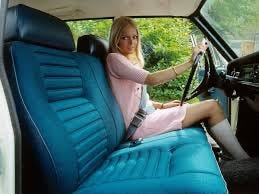
Despite all the challenges of civilian housing, my heart always returned to the post of Fort Leavenworth. Some of my fondest memories of that tour are tied to my personal fascination with the history of the fort — especially its deep connections to the U.S. Cavalry. I was captivated by the legacy of General George Armstrong Custer and his 7th Cavalry, as well as the legendary Buffalo Soldiers of the 10th U.S. Cavalry — the same regiment my father had served with during his tour in Korea. I felt a personal connection to that history, one that ran through the bloodline of my own father.

General George Armstrong Custor of the U.S. 7th Cavalry.

Buffalo Soldiers of the U.S. 10th Cavalry
The post was still very much a place of history. Many of the old red brick buildings from cavalry days still stood, preserved like time capsules from another era. I found myself drawn again and again to the Fort Leavenworth museum, which was filled with relics from Custer, the 7th Cavalry, and the 10th Cavalry. There were even artifacts and exhibits tied to President Abraham Lincoln’s visit to the post, which added another layer of reverence. My family often made Sunday day trips to the museum. Those quiet visits — walking through dusty uniforms, sabers, saddles, and faded photographs — lit a spark in me. Even as a child, I felt that Fort Leavenworth was hallowed ground.

Typical post housing at Fort Leavenworth dating back to its cavalry days.
The post itself dates back to May 8, 1827, when Colonel Henry Leavenworth established Cantonment Leavenworth along the Missouri River. It became the first permanent settlement in what would eventually become Kansas, and is today the oldest active Army post west of the Mississippi River. Originally serving as a quartermaster depot, arsenal, and garrison to safeguard the fur trade and commerce along the Santa Fe Trail, the post was briefly evacuated in 1829 and occupied by Kickapoo Indians before being re-garrisoned later that same year. On February 8, 1832, it was officially renamed Fort Leavenworth.

General Henry Leavenworth
Over time, the post developed a reputation not just as a military outpost, but as an intellectual center of the Army. It housed the prestigious Combined Arms Research Library (CARL), and it became a place where strategic thought and operational planning were forged and refined.

Combined Arms Research Library at Fort Leavenworth/
Yet there was another layer to Fort Leavenworth’s identity — its prisons. The United States Disciplinary Barracks (USDB), established in 1875, is the Department of Defense’s only maximum-security military prison. Right outside the gates, the Leavenworth Federal Penitentiary, operated by the Department of Justice, stood as a towering reminder of the civilian justice system’s reach.

U.S. Disciplany Barracks at Fort Leavenworth, Kansas.
Both institutions had reputations for housing some of the most notorious figures in American criminal and military history — from military murderers and spies to civilian outlaws like George “Machine Gun” Kelly, labor leader Eugene V. Debs, and Robert Stroud, the so-called Birdman of Alcatraz. Their stories seemed to hang in the air like myths. Even as children, we sensed the gravity of their presence, and we were always reminded not to stray too far from home. There was mystery and menace just over the horizon.

U.S. Federal Penatentary at Leavenworth, Kansas.
Despite the shadow cast by those prisons, Fort Leavenworth stood as a monument to something greater. It was a place of heritage, reflection, and deep military tradition. For my father, the CGSC experience was transformative. It shaped his approach to leadership and helped define the rest of his career. For our family, it was a time of adaptation, growing pains, and strength. And for me, Fort Leavenworth stirred something inside — an early reverence for history, heroism, and the cavalry legacy that connected us all.

Part of the autobiography of Dr. Anthony J. Carbone, Son in the Shadow of a Green Beret Hero.
Civilian housing at Redwood Gardens in Kansas City, Kansas.

Dad sets up basement as Study

Our townhouse was cramped. My father turned a corner of the basement into a makeshift study where he would disappear for hours, immersed in maps, doctrine, and war histories. The workload at CGSC was intense, and the pressure to excel immense.

Carbone Family Portrait in the U.S. Command & General Staff College Yearbook "The Bell".

Part of the autobiography of Dr. Anthony J. Carbone, Son in the Shadow of a Green Beret Hero.
Carbone Family Portrait in the Command & General Staff College Yearbook “The Bell”

The bad memories of Kansas City

My own memories of Kansas City during that time are scattered and, for the most part, not especially fond. That year seemed filled with accidents and discomfort. Pamela fell down the basement stairs and had to get stitches on her face. Diana dove into the shallow end of the neighborhood pool and broke her front tooth in half, eventually receiving a dental cap. I got into a fight when I saw a bully beating up a younger kid — jumped in, broke my hand, and spent the rest of the summer in a cast.

Lynne, Diana and I get Confirmed

One of my more cherished memories I have of our time in Kansas City was the day that Lynne, Diana, and I were all confirmed in the Catholic Church — on the same day — by the Archbishop of Kansas City, Bishop Edward Joseph Hunkeler. It was a peaceful and proud moment in an otherwise trying year.

Papa Carbone Dies

The saddest memory I have from our time in Kansas City was the death of my grandfather, Papa Carbone (Anthony Benjamin Carbone). He had just retired and moved to Florida with my grandmother when he suffered a fatal stroke. I remember my father calling me into my bedroom one evening. I could see that he was upset, and at first I worried I had done something wrong. We both sat on my bed, and he said quietly, “I have some bad news. Your grandfather—my father—died today.” I don’t remember another word after that, but what has stayed with me all these years is that my father cried. It was the first time I had ever seen him cry, and in my whole life with him, I would only see him cry once more. My parents quickly flew to Florida for the wake and funeral, while Auntie Norma came to Kansas City to care for us children.

Photograph of my grandfather, Papa Carbone (Anthony Benjamin Carbone the tailor) holding me when I was about one year old.  Gray haired gentleman wearing a suit and tie holding a toddler boy in his arms.  Autobiography of Dr. Anthony J. Carbone.
Papa Carbone holding me when I was about one year old.

Columbus Park–The Italian Section of Kansas City

On weekends when my father could sneak away from his studies, we would occasionally, we would make a special trip into the Italian section of Kansas City to stock up on authentic cold cuts — thin slices of mortadella, prosciutto, and provolone cheese — all tucked lovingly into crusty loaves of Italian bread.

In 1967, Kansas City’s vibrant tapestry reflected the rich history of its Italian community, especially in the neighborhood then known as the North End. Since the 1860s, Sicilian immigrants actively built a lively, close-knit area—soon renamed Columbus Park—centering it around Holy Rosary Church and filling it with family-owned shops and bustling markets.

This self-sufficient “Little Italy” offered more than just delicious food — it was a place where tradition, language, and community thrived. Even as changes like the construction of Interstate 35 began to carve through its heart and displace families, the neighborhood remained a beloved reminder of cultural roots and Sunday flavors that felt like home.

Columbus Park "Little Italy" section of Kansas City.

Part of the autobiography of Dr. Anthony J. Carbone, Son in the Shadow of a Green Beret Hero.
Columbus Park “Little Italy” in Kansas City

My Badass Father the Soldier

But another memory stands out even more clearly — not for its peace, but for its intensity. Just a few doors down from our townhouse lived a parentless family of unruly boys who had clearly slipped through the cracks. They had long, unkempt hair — a growing trend in the late 1960s — and I remember them smoking on their back steps, jeering at us as we passed. One day, they went too far and scared my mother. That was a mistake.

I’ll never forget the moment my father found out. He calmly called out, “Hey, J.R.! Come with me!” and together we stepped into the backyard and walked down the road toward the rough boys’ unit. My father knocked on the door, and the oldest, cockiest of them answered. My father made it very clear: he didn’t want any of them speaking to his wife or his children again.

The kid smirked and said something along the lines of, “What is it to you? I don’t plan on stopping.” Without hesitation, my father grabbed the kid by his long hair and — in a move I can only describe as quiet thunder — drew his service Colt 1911 .45 caliber pistol and placed it gently but firmly under the boy’s jaw. His voice was low, measured, deadly calm. “This will be the last time that I warn you.” Then he released the boy, turned to me, and said evenly, “J.R., let’s get back to your mother. And never say a word about this to her.” That day left a mark on me. I had always admired my father, but in that moment, I saw him not only as a real soldier. I had never felt so safe in my life.
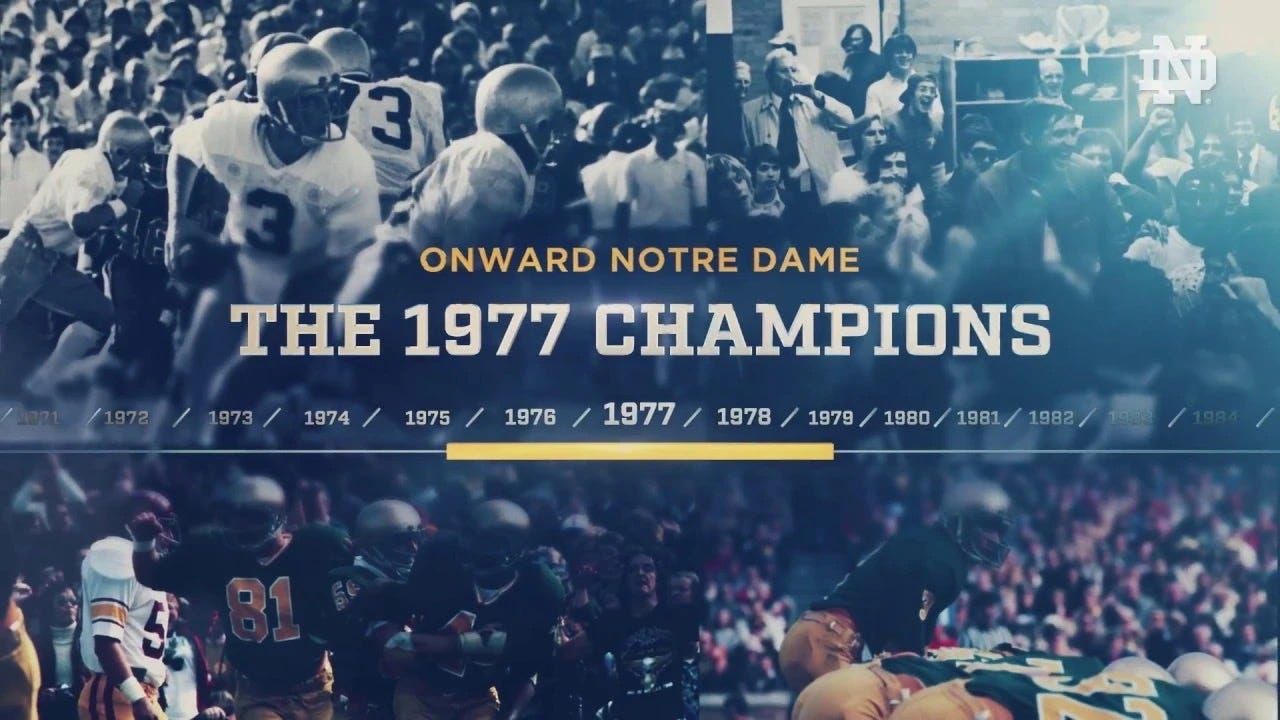
History of Fort Leavenworth

Despite all the challenges of civilian housing, my heart always returned to the post of Fort Leavenworth. Some of my fondest memories of that tour stem from my personal fascination with the fort’s history, particularly its deep connections to the Cavalry. I actively explored the legacy of General George Armstrong Custer and his 7th Cavalry, as well as the legendary Buffalo Soldiers of the 10th U.S. Cavalry— the same regiment my father had served with during his tour in Korea. I felt a personal connection to that history, one that ran through the bloodline of my own father.

General George Armstrong Custer of the U.S. 7th Cavalry.

Part of the autobiography of Dr. Anthony J. Carbone, Son in the Shadow of a Green Beret Hero.
General George Armstrong Custor of the U.S. 7th Cavalry.
Buffalo Soldiers of the U.S. 10th Cavalry.

Part of the autobiography of Dr. Anthony J. Carbone, Son in the Shadow of a Green Beret Hero.
Buffalo Soldiers of the U.S. 10th Cavalry

The Fort Leavenworth Museum

The post was still very much a place of history. Many of the old red brick buildings from cavalry days still stood, preserved like time capsules from another era. I repeatedly visited the Fort Leavenworth museum, eagerly exploring its relics from Custer, the 7th Cavalry, and the 10th Cavalry.

There were artifacts and exhibits tied to President Abraham Lincoln’s visit to the post, which added another layer of reverence. My family often made Sunday day trips to the museum. Those quiet visits — walking through dusty uniforms, sabers, saddles, and faded photographs — lit a spark in me. As a child, I regarded Fort Leavenworth as hallowed ground.

Classic Cavalry-Era Post Housing

Typical post housing at Fort Leavenworth dating back to its cavalry days.

Part of the autobiography of Dr. Anthony J. Carbone, Son in the Shadow of a Green Beret Hero.
Typical post housing at Fort Leavenworth dating back to its cavalry days.

The post itself dates back to May 8, 1827, when Colonel Henry Leavenworth established Cantonment Leavenworth along the Missouri River. It became the first permanent settlement in what would eventually become Kansas, and is today the oldest active Army post west of the Mississippi River. Originally serving as a quartermaster depot, arsenal, and garrison to safeguard the fur trade and commerce along the Santa Fe Trail, the post was briefly evacuated in 1829 and occupied by Kickapoo Indians before being re-garrisoned later that same year. On February 8, 1832, it was officially renamed Fort Leavenworth.

Portrait of General Henry Leavenworth.

Part of the autobiography of Dr. Anthony J. Carbone, Son in the Shadow of a Green Beret Hero.
General Henry Leavenworth

Combined Arms Research Library

Over time, the post developed a reputation not just as a military outpost, but as an intellectual center of the Army. It housed the prestigious Combined Arms Research Library (CARL), and it became a place where strategic thought and operational planning were forged and refined.

Photograph of the Combined Arms Research Library at Fort Leavenworth, Kansas.

Part of the autobiography of Dr. Anthony J. Carbone, Son in the Shadow of a Green Beret Hero.
Combined Arms Research Library at Fort Leavenworth/

US Disciplinary Barracks at Fort Leavenworth

Yet there was another layer to Fort Leavenworth’s identity — its prisons. The United States Disciplinary Barracks (USDB), established in 1875, is the Department of Defense’s only maximum-security military prison.

Photograph of the U.S. Disciplinary Barracks at Fort Leavenworth, Kansas.

Part of the autobiography of Dr. Anthony J. Carbone, Son in the Shadow of a Green Beret Hero.
U.S. Disciplany Barracks at Fort Leavenworth, Kansas.

Leavenworth Federal Penitentiary

Right outside the gates, the Leavenworth Federal Penitentiary, operated by the Department of Justice, stood as a towering reminder of the civilian justice system’s reach.

Photograph of the U.S. Federal Penitentiary at Leavenworth, Kansas 

Part of the autobiography of Dr. Anthony J. Carbone, Son in the Shadow of a Green Beret Hero.
U.S. Federal Penatentiary at Leavenworth, Kansas.

Famous Resident Convicts

Both institutions had reputations for housing some of the most notorious figures in American criminal and military history — from military murderers and spies to civilian outlaws like George “Machine Gun” Kelly, labor leader Eugene V. Debs, and Robert Stroud, the so-called Birdman of Alcatraz. Their stories seemed to hang in the air like myths. Even as children, we sensed the gravity of their presence, and we were always reminded not to stray too far from home. There was mystery and menace just over the horizon.

Despite the shadow cast by those prisons, Fort Leavenworth stood as a monument to something greater. It was a place of heritage, reflection, and deep military tradition. For my father, the CGSC experience was transformative. It shaped his approach to leadership and helped define the rest of his career. For our family, it was a time of adaptation, growing pains, and strength. And for me, Fort Leavenworth stirred something inside — an early reverence for history, heroism, and the cavalry legacy that connected us all.

Grant Hall at Fort Leavenworth, Kansas.  Headquarters of the U.S. Army Combined Arms Center.  Autobiography of Dr. Anthony J. Carbone.
Grant Hall at Fort Leavenworth, Kansas. Headquarters of the U.S. Army Combined Arms Center
4th Grade School Photo in Kansas City, Kansas while Dad was attending the U.S. Command & General Staff College at Fort Leavenworth. Biography of Dr. Anthony J. Carbone.
4th Grade Class Photo from Kansas City, Kansas

Home Page

Chapter 5: Dad’s First Tour of Duty in Vietnam (1966–1967)

Dad as Tactical Advisor to ARVN Cavalry Unit in Vietnam. Autobiography of Dr. Anthony J. Carbone.

Believe Nothing You Hear, and Only Half of What You SeeA Memoir of Service, Shame, and the Search for Truth

Assignment to MACV as Cavalry Tactical Advisor in Vietnam

In 1966, the war in Vietnam escalated, and our family felt its reach personally. My father received orders from the Pentagon to deploy to the Republic of Vietnam, assigned to the Military Assistance Command, Vietnam — MACV — as a U.S. Army advisor. It was his first tour, and he would spend the next year embedded with Army of the Republic of Vietnam (ARVN) cavalry and armored units in the Mekong Delta, particularly near Bac LieuTan An, and Soc Trang. His mission was to help train, advise, and support the South Vietnamese military as they fought to reclaim and secure their homeland from the Viet Cong insurgency and the growing threat of the North Vietnamese Army.

U.S. Military Assistance Command Vietnam (MACV) Patch.  Worn by early American Tactical Advisors to the South Vietnamese.
Part of the autobiography of Dr. Anthony J. Carbone, Son in the Shadow of a Green Beret Hero.
U.S. Military Assistance Command Vietnam (MACV) Patch

Dad Enjoyed His First Tour in Vietnam as a Tactical Advisor to an ARVN Cavalry Unit

My father seemed to genuinely enjoy this first tour, especially compared to the more grueling Special Operations tour he would undertake later. He fell in love with the Vietnamese people — their resilience, their warmth, and especially their children. His photo albums from this era are full of beautiful, candid photographs of everyday life in the Mekong Delta: women carrying baskets at the market, children waving at the camera, families riding bicycles, soldiers resting between patrols. He always had a camera slung over his shoulder and took great pride in arranging these moments into carefully assembled albums that told his story. His affection for the people and the land of Vietnam is evident in every image.

Dad (Captain Tony Carbone) with one of the many South Vietnamese officers that he advised.  Both are wearing the Vietnamese Tankers Badge proudly over their right chest.
Part of the autobiography of Dr. Anthony J. Carbone, Son in the Shadow of a Green Beret Hero.
Captain Carbone with one of the many South Vietname officers that he advised.

Dad is Awarded the ARVN Armor Officer Black Beret & Tankers Badge

Dad was member of MACV Advisor Team #63 in Sóc Trăng

MACV Adviosry Team #63 in Soc Trang where Captain Tony Carbone was assigned during his first deployment to Vietnam.
Part of the autobiography of Dr. Anthony J. Carbone, Son in the Shadow of a Green Beret Hero.
MACV Advisory Team #63 in Sóc Trăng
Republic of Vietnam 17th Cavalry ready for inspection. This was the ARVN cavalry unit that my father (CPT Tony Carbone) served as tactical advisor.
Part of the autobiography of Dr. Anthony J. Carbone, Son in the Shadow of a Green Beret Hero.
Army of Republic of Vietnam (ARVN) 17th Cavalry ready for inspection.
Republic of Vietnam Armored Unit on Patrol in Mekong Delta.  Line of American made M113 armored personnel carriers (APCs) and M114 armored reconnaissance vehicles.
Part of the autobiography of Dr. Anthony J. Carbone, Son in the Shadow of a Green Beret Hero.
Republic of Vietnam Armored Unit on Patrol in Mekong Delta

The unenviable dangerous job of Tunnel Rat in Vietnam

Entrance to Viet Cong tunnel system.  The soldiers who took on the dangerous task of entering and clearing enemy tunnels were affectionately refered to as "Tunnel Rats".
Part of the autobiography of Dr. Anthony J. Carbone, Son in the Shadow of a Green Beret Hero.
Entrance to Viet Cong tunnel system.

My father had a special love for the Vietnamese children

Dad (CPT Tony Carbone) was always taking photos of young Vietnamese children.
Part of the autobiography of Dr. Anthony J. Carbone, Son in the Shadow of a Green Beret Hero.
Dad with one of the many Vietnamese children he loved.

Dad met a lot of celebrities visiting the troops in Vietnam

While the duties of a MACV advisor were serious — often dangerous — there were lighter moments as well. Being based closer to Saigon gave my father access to some unique opportunities. He met a number of American celebrities who visited the troops to boost morale, including Ann Margret, Chuck ConnorsJames GarnerHenry FondaEfrem Zimbalist Jr.Don DeForeBob Meredith of the Dallas Cowboys, Dick Bass of the L.A. Rams, and Jerry Wilson of the St. Louis Cardinals. My father always had a deep appreciation for film, sports, and storytelling, and these moments added a personal highlight to an otherwise austere and high-stakes assignment.

CPT Carbone with Actor Efrem Zimbalist Jr, one of the many celebrities who visited troops outside of the safety of Saigon.
Part of the autobiography of Dr. Anthony J. Carbone, Son in the Shadow of a Green Beret Hero.
Actor Efrem Zimbalist Jr
Dad spent time with Actor Henry Fonda outside of Saigon.
Part of the autobiography of Dr. Anthony J. Carbone, Son in the Shadow of a Green Beret Hero.
Actor Henry Fonda

Professionally, his accomplishments during this year were significant. On February 1, 1967, he was promoted to the rank of Major. That same year, he earned two prestigious badges: the Vietnamese Armor Badge and the U.S. Combat Infantry Badge, a testament to his active engagement in combat operations alongside the Vietnamese forces he advised. He often went out with ARVN cavalry units into hostile territory, coordinating air strikes and artillery, gathering intelligence, and supporting civil pacification efforts. He used to send me letters with drawings of the elaborate Viet Cong tunnel systems he discovered — complete with false walls, hidden entrances, and escape shafts. As a young boy watching the Vietnam War unfold on our television every evening, I was both captivated and proud. His war stories made him larger than life to me.

Dad awarded the Combat Infantry Badge (CIB) in Vietnam

CPT Tony Carbone receiving the Combat Infantry Badge while serving as an Advisor for MACV in the Republic of Vietnam.
Part of the autobiography of Dr. Anthony J. Carbone, Son in the Shadow of a Green Beret Hero.
Dad being awarded the U.S. Army Combat Infantry Badge (CIB)
U.S. Army Combat Infantry Badge (CIB)

Dad gets promoted to Major while in Vietnam

Dad (CPT Tony Carbone) being promoted to the rank of Major during his first tour of duty in Vietnam.
Part of the autobiography of Dr. Anthony J. Carbone, Son in the Shadow of a Green Beret Hero.
Dad being promoted to Major.

While Dad was in Vietnam, we moved back to Medford

Back in the U.S., we were living in Medford, Massachusetts, on the first floor of a multi-family home at 44 Frederick Avenue. The building belonged to the parents-in-law of my godfather, Uncle George Pietrantoni, and we lived just downstairs from them. It was a warm, close-knit Italian-American neighborhood, and I saw Uncle George and Auntie Carole often.

44 Fredrick Avenue, Medford, Massachusetts. Carbone home in 1966. Autobiography of Dr. Anthony J. Carbone.

Went to the Dame School

I was in second grade that year and attended the Lorin L. Dame School on George Street along with my sisters Dianaand Lynne. I had second grade with old Miss Collins.

The Dame Elementary School on George Street in Medford, Massachusetts. Where I attended 1st and 2nd Grades. Autobiography of Dr. Anthony J. Carbone.

The school was about halfway between our apartment and Nana and Papa Pietrantoni’s house on Winthrop Street, and I remember spending many weekends with my grandparents.

Nana & Papa Pietrantoni’s Home

My grandfather went grocery shopping every Saturday morning and always came home with fresh Scali bread and sliced Italian cold cuts. Sunday mornings were reserved for Mass at Saint Joseph’s Catholic Church, the same church where all of us kids were baptized, where I made my First Communion, and where three of my sisters would eventually marry.

After Mass, we’d gather at Nana & Papa’s for a traditional Italian Sunday dinner of spaghetti and meatballs. Uncle Aldo would show up just long enough to eat a couple of meatballs and play a tune or two on the upright piano in the dining room. Those weekends were loud, joyful, and full of love — and food.

My Godfather, George Pietrantoni

Uncle George was like a second father to me while mine was away. He’d often give me a quarter and send me down to the corner store to buy him a pack of Lucky Strikes. Back then, a six-year-old could do that without raising eyebrows.

If I was lucky, he’d give me an extra nickel or dime so I could grab a few pieces of penny candy. I felt so grown up, entrusted with money and a mission.

Buying penny candy from the corner store back in the 1960s. Autobiography of Dr. Anthony J. Carbone.

I also got to ride around with him in his stunning white 1960 Chevrolet Impala with red interior. I’d sit on his lap and “steer” the big red wheel while the windows were rolled down, the radio playing, and Lucky Strike smoke curling into the summer air. I remember those rides like they were yesterday.

Auntie Norma, meanwhile, was working at Harvard University and still living at home with Auntie Cynthia and Yvonne. She had just bought a beautiful record RCA console that played both 45s and 33 rpm LPs.

We’d all gather around to dance in the living room to songs like The Four Seasons’ “Sherry,” The Mamas and the Papas’ “Monday, Monday,”and The Seekers’ “Another You.” The music made our home feel alive and connected — even as we all missed my father terribly.

My mother wrote my father every night

At home, my mother did everything she could to keep the family strong and grounded during his year-long absence. She wrote to him every single night. Every. Single. Night. My father, in turn, wrote back faithfully to her and to each of us. His letters weren’t just updates — they were expressions of love, encouragement, and longing. They brought him home to us in every envelope. I still have many of those letters today, yellowed with time but full of heart. I am amazed by how my parents stayed so deeply in love during such a prolonged and uncertain separation and know that their love letters helped — that steady rhythm of writing and receiving, day after day, page after page, was their emotional lifeline.

Red, White, & Blue striped envelopes used to send Air Mail.
Part of the autobiography of Dr. Anthony J. Carbone, Son in the Shadow of a Green Beret Hero.

R&R in Waikiki, Hawaii

In the middle of his tour, they were reunited for a brief but beautiful week of R&R in Waikiki, Hawaii, paid for by the military. The photographs from that vacation are among my favorites. My parents looked like newlyweds again — smiling, tanned, holding hands on the beach. You can see it in their eyes: how much they missed each other, and how much they cherished every second of that week. Love, real love, endures like that.

Mom and Dad on R&R at Waikiki, Hawaii during his first tour of Vietnam.
Part of the autobiography of Dr. Anthony J. Carbone, Son in the Shadow of a Green Beret Hero.
Mom & Dad on R&R at Waikiki, Hawaii during his first tour of Vietnam.

The Apollo One Disaster (January 27, 1967)

I still remember one cold evening in our apartment at 44 Frederick Avenue in Medford. It January 27, 1967 around 6:30 PM, and we were gathered around the television as the Apollo 1 spacecraft was preparing for liftoff. In those days, America was captivated by the space race, and for young boys like me, NASA was nothing short of magical. But that excitement turned to horror. A fire erupted inside the command module during a pre-launch test, killing astronauts Gus Grissom, Ed White, and Roger Chaffee. The tragedy shocked the nation and forced NASA to halt manned missions until major safety changes could be made. I was just a boy, but I never forgot that night. It was the first time I realized that even heroes could be vulnerable, and that the pursuit of exploration carried real danger.

MARS Calls from Vietnam

On a happier note, every few months the Army arranged MARS (Military Auxiliary Radio System) calls so that soldiers could connect with their families. These long-distance conversations, relayed through ham radios, required us to speak in military fashion — ending each phrase with “Over.” One particular call still makes me laugh to this day. My father had said, “I’m making you a tape,” referring to a new cassette recording. But my mother misheard him and replied, “You want me to send you a cake? Over.” The radio operator, patiently relaying both sides, jumped in to clarify: “Ma’am, I believe your husband said he is making you a tape, not a cake.” We all burst into laughter on both ends of the line.

Military Auxillary Radio System (MARS) was a network of HAM radio operators used by the military in Vietnam to communicate with family back in the United States.
Part of the autobiography of Dr. Anthony J. Carbone, Son in the Shadow of a Green Beret Hero.
My mother on the telephone with my father, most likely using the MARS system.
Part of the autobiography of Dr. Anthony J. Carbone, Son in the Shadow of a Green Beret Hero.
My mother on the telephone with my father in Vietnam.

Cassette Tape Messages

That was a time when compact cassette recorders, newly developed in Japan, allowed us to exchange audio messages across continents. We’d record ourselves talking about school, daily life, or just saying, “I love you,” and mail them across the ocean. My father would send his replies back, and we would sit together and listen to his voice on the living room floor. I wish we still had those tapes today. I would give anything to hear my parents’ voices again — those tender, hopeful, loving voices carried across time and space

One of the early SONY cassette recorders used to make recordings of messages and conversations.
Part of the autobiography of Dr. Anthony J. Carbone, Son in the Shadow of a Green Beret Hero.

This first tour in Vietnam marked a profound chapter in my father’s career — and in our family’s life. It tested our endurance, but it also revealed the depth of our bonds. While he was advising and fighting alongside his ARVN brothers in the Mekong Delta, he was still husband, father, and family man — writing letters, making tapes, taking photographs, and dreaming of home.
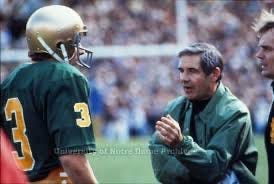
Home Page

Chapter 4: Our First Tour in Germany: Fulda & Heidelberg

14th Armored Cavalry Distinctive Unit Crest with Motto Suave Moi Stationed at Rose Barracks , Fulda, Germany guarding the Fulda Gap near the Soviet Border. Autobiography of Dr. Anthony J. Carbone

Believe Nothing You Hear, and Only Half of What You See — A memoir of Service, Shame and the Search for Truth

Dad Gets Orders for Fulda, Germany

In 1964, during the height of the Cold War, my father received deployment orders to Fulda, West Germany. The Berlin Wall had only recently gone up, and global tensions were at a boil. It was a serious time, and the assignment my father received reflected that gravity.

Command of C Troop, 14th Armored Cavalry

Dad was given command of C “Charlie” Troop, 14th Armored Cavalry Regiment, in Fulda, Germany — stationed at one of the most sensitive flashpoints between NATO and the Warsaw Pact.

The unit insignia from the 14th Cavalry in front of crossed sabers, the U.S. military symbol of Cavalry, and the unit motto of “Suivez Moi” which is French for “follow me”. This is the unit crest that Captain Carbone wore when he commanded Troop C, 14th Armored Cavalry in Fulda, Germany.
Insignia of the 14th Armored Cavalry with Crossed Cavalry Sabers and the motto, “Suivez Moi,” which is French for “Follow Me”.

The Fulda Gap

Known as the “Charging Charlies“, C-Troop (and the rest of the 14th Cavalry) was responsible for guarding the infamous Fulda Gap, the strategic corridor military planners believed the Soviets would use to launch a massive armored invasion into Western Europe.

Map of Fulda Gap Germany During Cold War

Family Prepares for a Transatlantic Transfer

My father deployed ahead of us to report for duty and secure housing, while the rest of us — my mother, my three sisters, and I — prepared for the long move overseas. The process of uprooting our lives for Germany was as complex as it was memorable. Every item we owned had to be sorted into four categories: (1) Hold Baggage — essentials that traveled by air; (2) Household Goods — the bulk of our possessions, shipped by slow-moving cargo ship; (3) Storage — items too big or unnecessary to bring; and (4) Trash or Give Away — whatever wouldn’t make the cut.

Birth of Sister #3, Cynthia

Just weeks before our departure, on January 29, 1964, my third sister Cynthia was born. Her arrival added both joy and urgency to our preparations. With a newborn in the house, the challenge of organizing an international military move became even more formidable. But as always, my mother handled everything with grace and efficiency — tending to Cynthia’s every need while managing three other young children and the complex logistics of uprooting a household. Cynthia took her very first flight as an infant in her mother’s arms, beginning a life already shaped by service, travel, and family sacrifice.

This is the passport of Anthony J. Carbone’s mother, Edda V. Carbone, and her four children: Lynne, Diana, Anthony Jr., and Cynthia. This is the passport that Mom used to get into Germany and then return home to the United States.
My mother’s passport with Lynne, Diana, Anthony Jr. and Cynthia.
Anthony Jr.’s mother, Edda Carbone, with his baby sister Cynthia on her lap prior to our trip to Germany.
Mom with Cynthia in Medford before leaving for Germany.

Though I was very young, that journey remains burned into my memory. We traveled to McGuire Air Force Base in New Jersey, where we boarded a sleek four-propeller Douglas C-118 Liftmaster aircraft operated by the Military Air Transport Service (MATS)— packed mostly with uniformed GIs. We were one of the few military families on board. My mother, ever composed and elegant, wore a pencil skirt and sweater, her trademark pearl necklace resting neatly at her collar as she carried my baby sister Cynthia in her arms. She handled the journey with grace, even while managing four children. I remember GIs stepping in to help — each of us was being held or entertained by a soldier at one point. It was a shared moment of kindness and connection in a time of great upheaval.

Douglas C-118 Liftmaster operated by the Military Air Transport Service (MATS) out of McGuire Air Force Base. This is the type of plane that we flew from McGuire to New Foundland to Shannon, Ireland, to Frankfort, Germany.
Douglas C-118 Liftmaster operated by the Military Air Transport Service (MATS) out of McGuire AFB.

Family Flies to Germany — Headed to Fulda

The flight took us from McGuire to Gander, Newfoundland, then across the Atlantic to Shannon, Ireland, and finally to Rhein Main Air Force Base in West Germany. It took 16 to 18 hours, and when we landed, we were met by my father and our “sponsors” — an Army family assigned to help us transition into German life.
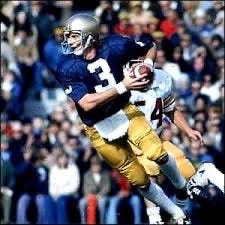
The Famous Welcome Sign to Europe at Rhein-Main Air Base in Frankfurt, West Germany in the 1960s.
The Famous Welcome Sign to Europe at Rhein-Main Air Base in Frankfurt, Germany.
Coat of Arms for the city of Fulda, Germany with a shield that is a black cross on white border on left half, and 3 white eidelweiss flowers on a red border on the right, topped with a crown of stone.  Autobiography of Dr. Anthony J. Carbone
Coat of Arms for Fulda, Germany

We live on a farm on the Germany “Economy”

At that time, there were no on-post quarters available for us in Fulda, so we rented a home “on the economy,” Army-speak for off-base living. Our rented house sat on a small German farm, nestled in the hills above a Catholic school that I attended for kindergarten alongside my sisters Lynne and Diana. The nuns who taught us wore full habits and ran a tight ship. I remember the heavy wooden Brio toys we played with, the scent of peppermint tea served before naps, and the solemn atmosphere of strict German discipline.

Lynne and Diana with their snowman in front of our house on the economy (off-post) in Fulda, West Germany. Our kindergarten and elementary school, run by German Catholic nuns, was right down the hill in our backyard.  Autobiography of Dr. Anthony J. Carbone.

Our landlord’s daughter, Effie, was a teenage girl with long blonde braids who lived downstairs and was mainly Lynne’s friend. Our babysitter was Marlena lived up the street from us. She spoke just enough English to make herself understood and was endlessly patient with us.

My oldest sister Lynne with our first German Volkswagen Beetle in Fulda, Germany.  All bundled up for the German winter.  Autobiography of Anthony J. Carbone.

My favorite sights, sounds and smells of Germany

Some of my most vivid childhood memories are rooted in that farm — the air thick with the scent of wildflowers, blossoming trees, and the unforgettable smell of “honeywagons,” large wooden barrels filled with manure used to fertilize the fields. Coal was still the primary source of heat, and the smoky, sulfur-rich air had a strange health to it — earthy and alive, part of the rural rhythm of Fulda. Another sensory thread woven deeply into those memories is the sound of church bells. They marked the hours with gentle regularity, rang out at midday for the Angelus, and on Sundays, filled the valley almost nonstop from dawn to dusk. Even now, the tolling of bells brings me instantly back to Germany — awakening a sense of calm, nostalgia, and rootedness that no other sound quite can.

One of Fulda, Germany's icons--the 18th Century Baroque Saint Salvator Cathedral whose bells could be heard all over the village.  Autobiography of Dr. Anthony J. Carbone.
18th Century Baroque Cathedral of Saint Salvatore in Fulda, Germany
All of Bavaria at the time (1960s) was gorgeous farmlands with incredible smells of nature. This is a view of the farmland in Fulda, West Germany.
The rolling farmlands of Fulda, Germany.

Dad Commands F Troop, 14th Armored Cavalry on Soviet Border

I don’t believe we owned a car at the time, so my father was picked up daily by his jeep driver to report to the regiment. It didn’t matter to me that we didn’t have a car because we loved living on the German farm. I was utterly captivated by the world we had entered. Even then, as a small boy, I had already made up my mind: I wanted to be a cavalry officer just like my father. I watched him closely, studying how he wore his uniform, how soldiers saluted him, how he led. To me, he was a hero, and I never questioned that I would follow in his footsteps someday.

My father, CPT Tony Carbone (center) with First Sergeant (left) and jeep driver (background). This is the same jeep and driver who used to pick up my father at our home on the economy and drive his to and from Downs Barracks where his cavalry troop was located.  Autobiography of Anthony J. Carbone.
Dad with his First Sergeant and jeep driver in the background.
Captain Tony Carbone (Dad) received the coveted award of First In Tank Gunnery (next to Troop First Sergeant Buswell) while commanding C Troop, 14th Armored Cavalry in Fulda, West Germany during the Cold War (c.1965).  Autobiography of Dr. Anthony J. Carbone.
CPT Carbone received the coveted award of First In Tank Gunnery (next to Troop First Sergeant Buswell)
Dad receiving a certifiicate for commaning C Troop, 14th Armored Cavalry in Fulda, West Germany (c. 1965)
Dad receiving a certifiicate for commaning C Troop, 14th Armored Cavalry in Fulda, West Germany.

We move on post into government quarters on Rose Barracks

Eventually, our family received government quarters. We moved into a tall, gray three-story apartment building that housed twelve Army families. The fourth floor had maid’s quarters built by the Nazis decades earlier. It wa, a haunting reminder of Germany’s past tucked above American military life. From my bedroom window, I could see the military airfield nearby. At night, as I lay in bed reading comic books under the covers. The rotating airfield beacon would cast alternating flashes of green and two white lights into my room. That rhythm of light, sweeping silently across my walls and pages, felt like a lullaby — strange, comforting, and unforgettable.
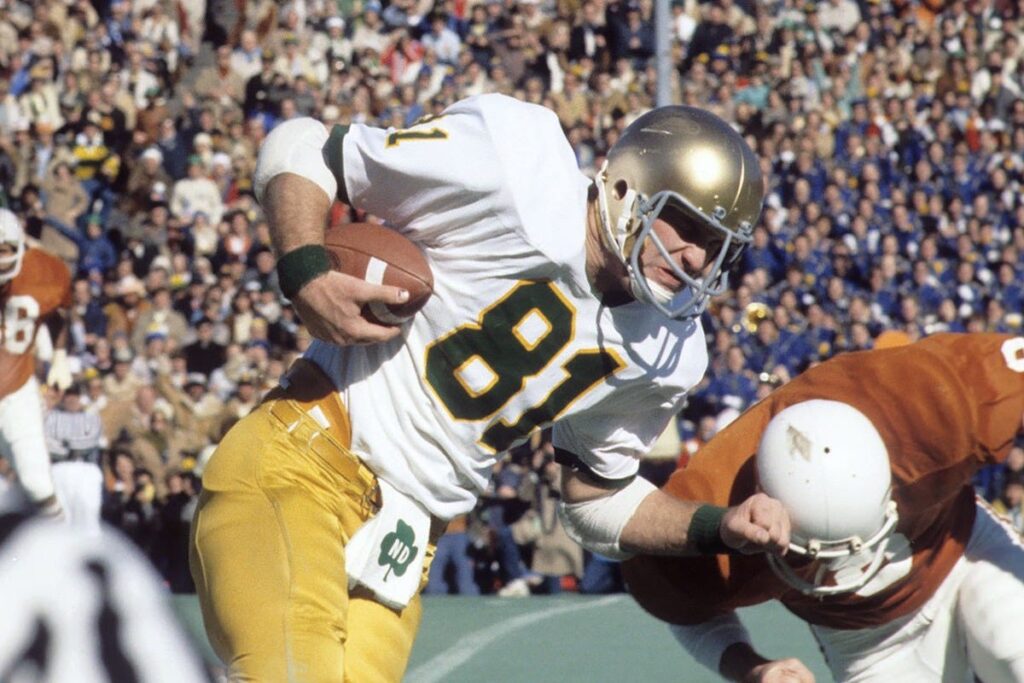
14th Armored Cavalry Regiment at Downs Barracks, Fulda, Germany (c. 1964). These were typical military buildings that the U.S. Army took over buildings from the Nazi forces after the war. This is a “Pass in Review” portion of an Army parade involving armored vehicles (M114 armored personel carriers used by the U.S. cavalry).
14th Armored Cavalry Regiment at Downs Barracks, Fulda, Germany
Fulda Army Airfield c.1964 showing the control tower and airfield beacon. Cessna L-19/O-1 Bird Dog ingle propeller aircraft were used for reconnaissance by the cavalry.
Fulda Army Airfield c.1964 showing the control tower and airfield beacon. The U.S. Army cavalry used Cessna L-19/O-1 Bird Dog aircraft were for reconnaissance.

Life on a cavalry post thrilled me. My father gave me occasional tours of the motor pool, the barracks, and the tanks. I couldn’t get enough. The Military Police (actually Unit Police–UPs) at the gate would sometimes let me stand next to them, waving in vehicles and offering salutes. The whole environment was electric to a young boy with big dreams.

Colors and Guidons of the full 14th Armored Cavalry Regiment at Downs Barracks. CPT Tony Carbone is somewhere in the line with other troop commanders. The Troop C, 14 Cavalry guidon can be seen if you look close enough.
Colors and Guidons of the full 14th Armored Cavalry Regiment at Downs Barracks

The Grim Reality of Guarding the Soviet Border

It wasn’t all parades and salutes for the 14th Armored Cavalry Regiment. Their mission was deadly serious. The regiment’s men actively guarded the infamous Fulda Gap, stationed at the spear’s tip.

Military planners expected that if the Soviet Union ever unleashed its armored divisions into Western Europe, the main thrust of their invasion would come roaring through this very corridor.

Photograph showing the West-East German border at the Fulda Gap with barricade with sign saying "Halt! Zonengrenze" (Stop! Border).  Autobiography of Dr. Anthony J. Carbone.

To the untrained eye, the countryside around Fulda was idyllic. Rolling hills, fertile farmland, and quiet villages created the picture of peace. The landscape gave no hint of the threat that loomed just across the line. However, the soldiers of the 14th Armored Cavalry knew better. They patrolled the NATO border daily, often within meters of East German and Soviet forces. From their observation posts, they could see the enemy through field glasses—watching them as intently as they were being watched in return.

Double barbed wire border at West-East Germany border in Fulda Gap.  Autobiography of Dr. Anthony J. Carbone
A border between East & West Germany that is just two barbed wire fences.
Families vist the border looking for the families in the East

Need for Tank Gunnery Proficiency

For these troopers, there was no illusion of safety. Tank gunnery, live-fire ranges, and field maneuvers weren’t training games—they were rehearsals for survival. Every round fired, every drill practiced, was preparation for the day the balloon might go up, when the border could erupt in fire and steel without warning.

14th Armored Cavalry M60 tanks practicing tank gunnery at Grafenwohr in Germany. Autobiography of Dr. Anthony J. Carbone.

The 14th Cavalry’s unspoken duty was to slow the Soviet juggernaut long enough for NATO reinforcements to mobilize. Everyone knew what that meant: if war broke out, the enemy would overrun the regiment in hours, perhaps even minutes.

It was a grim reality, but one they carried out with quiet professionalism. To a boy watching from the safety of Army quarters, the regiment looked like knights in armor. Unfortunately for the men who wore the spurs, it was a mission shadowed by constant danger.

Dad smoking his infamous Italian stogie followed by his Executive Officer (XO) Lieutenant Ron Meyer and 3rd Platoon Leader Lt Jim Zimmerman of the 14th Armored Cavalry at Fulda, Germany.  Autobiography of Dr. Anthony J. Carbone.
C Troop Commander, Captain Tony Carbone, with his Executive Officer (XO) Lieutenant Ron Meyers.

Baby Sister, Pamela, is born in Germany

During this tour, our family grew again. My baby sister Pamela was born on September 11, 1965 at the 97th General Hospital in Frankfurt, Germany. My mother was too far along in her pregnancy to make the long trip home, so Pamela became the only one of us not born at Lawrence Memorial Hospital in Medford, Massachusetts. She even held dual American-German citizenship until she turned eighteen.

This is the 97th General Hospital in Frankfurt, Germany, where my baby sister Pamela Carbone was born in 1965.
97th General Hospital in Frankfurt, Germany.
My baby sister Pamela riding on my mother in Germany
My baby sister Pamela's baptism party in our on-post quarters on Rose Barracks, Fulda, Germany.  Autobiography of Dr. Anthony J. Carbone.
My sister, Pamela’s, baptism party in our post quarters in Fulda, Germany.

Our first deployment to Germany wasn’t just a posting — it was the beginning of my lifelong identification with the Army, with cavalry tradition, and with the kind of honorable service my father embodied. It was the chapter where I began to understand who I was becoming — and who I aspired to be.

Dad Gets Orders for HQ USAREUR in Heidelberg, Germany

As his command in Fulda came to an end, our family received new orders: a transfer to Headquarters, US Army Europe and 7th Army (HQ USAREUR) Heidelberg. This meant a new home for our family — one unlike any we had experienced before. We relocated to an American military housing area called Patrick Henry Village (PHV), located just on the outskirts of Heidelberg.

This is the Headquarters US Army Europe (USAREUR) in Heidelberg, Germany. Another Nazi military building that was conviscated and repurposed by the U.S. Army after the war.
Headquarters US Army Europe (USAREUR) in Heidelberg, Germany

Our Family Moves Into Post Housing — Patrick Henry Village

PHV was more than just a place to live; it was a self-contained American suburb transplanted into the heart of Germany. During the Cold War, it became one of the largest military family housing areas in Europe, with over 16,000 Americans living in approximately 1,500 apartment buildings. Every building looked exactly the same — white-painted concrete blocks with terra cotta roof tiles, lined up in precise rows. Each building contained three stairwells, with 18 apartments stacked over three floors.

The fourth floor usually housed maids’ quarters or temporary billeting units. From the outside, there were no distinguishing features. That fact became a nightmare on my very first day of school when I got hopelessly lost trying to find my way back home. Every building looked the same, and the playgrounds behind them all were full of noisy children. To this day, I have no idea how my mother managed to find me in that uniform maze of concrete, stairwells, and unfamiliar faces — but she did.

Apartment Buildings at Patrick Henry Village. Classic goverment multi-family housing units that housed American military families and were found all over Germany after the war.
Apartment Buildings at Patrick Henry Village

Aerial View of PHV Shows Size and Similarity of Post Housing

Aerial view of Patrick Henry Village showing the uniform multi-family governement quarters.

Playing freely on Post Housing Area in Patrick Henry Village

Despite that early trauma, I quickly adapted and grew to love life in Patrick Henry Village. Behind each building was a small playground, usually occupied by a noisy cluster of children from different corners of the country, brought together by the rhythm of Army life. After school and on weekends, those playgrounds became our kingdom. We ran wild until the familiar rituals of military tradition called us back to order.
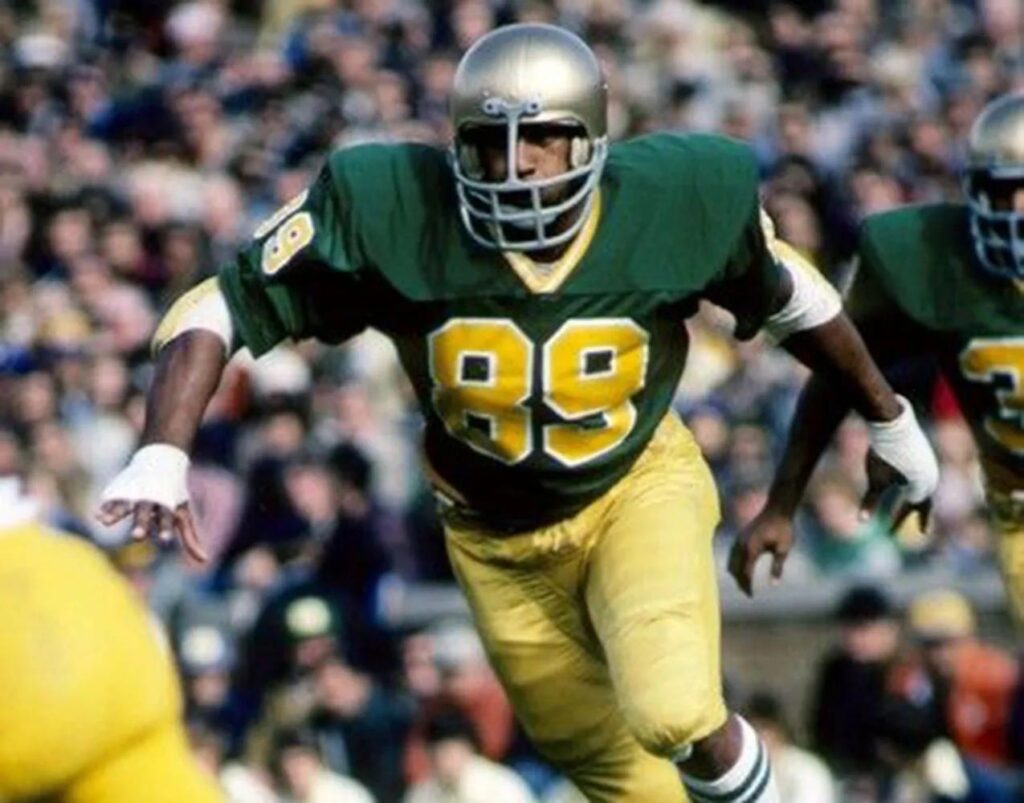
An unknown military dependent (Army brat) resting in the playground behind housing units in Patrick Henry Village.
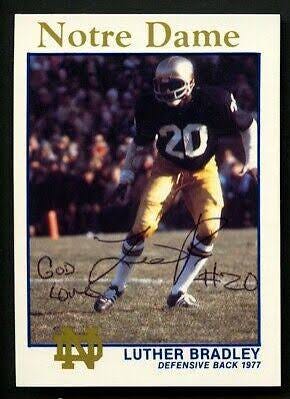
Playground behind housing units in Patrick Henry Village.
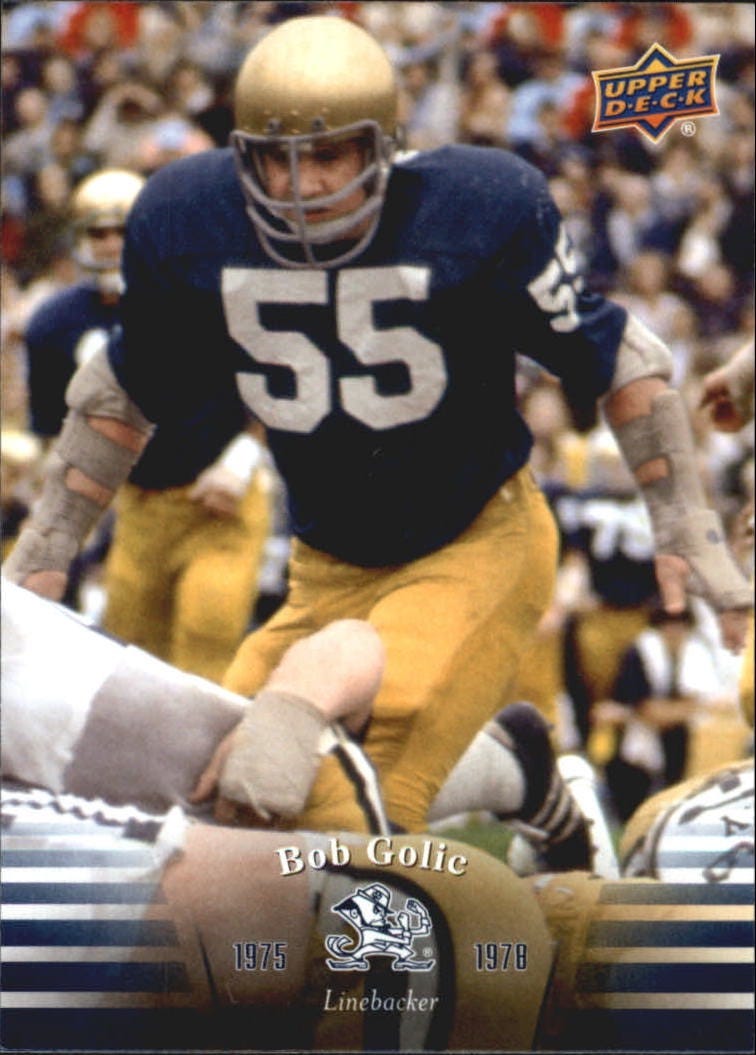
Children met in the playground without the need for mothers supervising us. This was the usual diversity of cultures and backgrounds that I grew up with in the military.
Children met in the playground without the need for mothers supervising us.

Military Bugle Calls

Every evening at exactly 1700 hours, a cannon blast echoed across the post, followed by the bugler’s mournful notes of “Retreat” and “To The Color.” At that moment, everything on base stopped. Cars pulled to the side of the road. Soldiers stepped out and faced the flag. Children froze in mid-play, instinctively turning toward the post colors. Everyone stood silently until the last note faded. That simple act — performed every day — instilled in me a deep and abiding sense of patriotism. Even today, the memory of it gives me goosebumps.

Bugler sounds Reville (usually at sunrise), Retreat (usually at 1700 at the end of the work day), Tattoo (which traditionally meant “last call” or “close the taps” around 2000), and Taps (usually at 2100) that can be heard across the post.
Bugler sounds Reville, Retreat, Tattoo, and Taps at scheduled times that can be heard post-wide.

HQ USAREUR at Patton Barracks in Heidelberg

My father’s duty station was at Patton Barracks, which housed the Headquarters of United States Army Europe (USAREUR) and the 7th Army. As a boy, I didn’t fully grasp the weight of those names or the significance of the command my father now served. But I understood that he wore his uniform with pride, and that our family’s life revolved around a larger mission. We belonged to something big.

Front gate with MP shack for Patton Barracks, Heidelberg, West Germany c. 1960s,
Patton Barracks, Heidelberg, Germany

We Enjoy Off-Post Visits to Altstadt Heidelberg

Though Patrick Henry Village was distinctly American, we were just a short ride away from one of the most beautiful cities in all of Europe — Heidelberg. Nestled on the banks of the Neckar River, Heidelberg is a city of old-world charm and deep historical roots. Dating back to the time of the Celts and Romans, it is best known for its stunning Schloss Heidelberg — a romantic, partially ruined castle perched on a hill overlooking the river and the old city.

Lynne, Cynthia and Anthony Jr. Carbone sitting along the Necker River in Heidelberg, West Germany in the early 1960s. The Alte Brücke (Old Bridge) and der Heidelberg Schloss (Heidelberg Castle) can be seen in the background.
Lynne, Cynthia and me sitting at the Necker River with the Alte Brücke and the Heidelberg Castle behind us.
Lynne, Diana, Cynthia and me (Anthony Jr.) Carbone during our Sunday outing in Old Town Heidelberg. That’s our old tan colored Mercedes.
Lynne, Diana, Cynthia and me during our Sunday outing in Old Town Heidelberg. That’s our old Mercedes.
My parents (Captain Anthony and Edda Carbone) during one of our many Sunday trips to Old Heidelberg. My mother in her skirt, heels and pearls like I always remember her. Dad always looked good in and out of uniform.
Mom & Dad in Old Heidelberg

Altstadt Heidelberg

My favorite part of Heidelberg was the Altstadt — Old Heidelberg — located along the river beneath the castle. Its cobblestone streets wound past the Heiliggeistkirche (the Church of the Holy Ghost) and over the beautiful Alte Brücke, the Old Bridge. We spent many Sundays wandering those streets, exploring castle ruins and soaking in the beauty of this ancient town. On most Sundays, our family ritual began with mass at the post chapel, where I served as an altar boy. Afterward, we’d drive to the Officer’s Club for Sunday brunch — a tradition that blended sacred and social rhythms into a weekly ceremony of our own.

Heidelberg Castle with the Alte Brücke over the Necker River.
Heiliggeistkirche (the Church of the Holy Ghost) in the old section of Heidelberg.
Heiliggeistkirche (the Church of the Holy Ghost) in Heidelberg.
The medevel style entrance to Die Alte Brücke, that crosses the Necker River in Heidelberg.
The Entrance to Die Alte Brücke

Auntie Norma Stays with us Again

During this period, one of the most beloved figures in our family life came to stay with us — my mother’s younger sister, Norma Pietrantoni. Auntie Norma had always been a special presence in our lives, visiting us at every post we were assigned to, often stepping in as a second mother or nanny. In the 1960s, she worked as the personal secretary to the President of Harvard University. But when her boss took a sabbatical, Auntie Norma made a bold decision: she packed her suitcase and lived with us in both Fulda and later in Heidelberg for several months.

At a time when it was rare for single women to travel alone, Auntie Norma became a fearless explorer. While helping my mother care for my baby sisters, she also toured Europe — sometimes joining military-sponsored trips with soldiers, and other times venturing out entirely on her own. She was an avid photographer and the person behind most of the 16mm movie reels that captured our childhood in Germany. Thanks to Auntie Norma, so many of our memories from that magical time were not only lived but beautifully preserved.

Auntie Norma Pietrantoni holding baby Cynthia Carbone along with the rest of the family (Captain Tony Carbone, Edda Carbone, Lynne, Diana and Anthony Jr.)
Auntie Norma holding baby Cynthia

Lynne’s Birthday in Heidelberg

Lynne’s birthday in Heidelberg with Diana, Tony, Cynthia and baby Pamela.
Lynne’s birthday in Heidelberg with Diana, Tony, Cynthia and baby Pamela

Heidelberg became more than just a city to me. It was a place of magic and mystery, history and reverence. The contrast between the crisp, ordered life of Patrick Henry Village and the timeless elegance of Heidelberg shaped my understanding of the world. One was duty, the other was beauty — and I was lucky enough to be raised with both.

Home Page

Chapter 3: A New Airborne Officer’s Career

New 2nd Lieutenant Cavalry Officer Tony Carbone in Uniform. Autobiography of Dr. Anthony J. Carbone.

Believe Nothing You Hear, and Only Half of What You SeeA Memoir of Service, Shame, and the Search for Truth

Army Commissions Father a Cavalry Lieutenant

My father as a newly commissioned 2nd Lieutenant Armor Officer at Fort Knox, Kentucky.
My father as a newly commissioned 2nd Lieutenant Armor Officer

Father Receives Orders for Fort Knox, Kentucky

After graduating from Norwich University on December 18, 1958, the President of the United States commissioned my father into the United States Army as a Cavalry Officer. His first assignment brought him and my mother the U.S. Army Armor Officer Basic Course at Fort Knox, Kentucky. The Army designed this several-month training program to transform him from a generalist cavalry officer into a specialist in armor and mechanized warfare.

We lived in a modest government house nestled in the company grade officer neighborhood of Fort Knox during that time. Though the housing was simple, it felt more spacious and comfortable than the trailer we had come from in Missouri. For my mother, this was a slight reprieve — finally, a bit of stability while my father threw himself into his next round of training.

Front gate to Fort Knox, Kentucky — Home of the U.S. Armor Branch and School.
Fort Knox, Kentucky Front Gate

Father Receives Orders for Fort Leonard Wood, Missouri

After completing the Armor Officer Basic Course at Fort Knox, my father received orders to Fort Leonard Wood, Missouri in 1959, where the Army put him in charge of a training platoon. It was the beginning of his official military career — an ideal soldier stepping into the long shadow of duty, discipline, and sacrifice.

Dad (2LT Tony Carbone) as a new lieutenant (with “Tiny” Minoski) at Fort Leonard Wood
Father as a new lieutenant (with “Tiny” Minoski) at Fort Leonard Wood

Family Living Off-Post in a Tiny Trailer in Missouri

But for my mother, this period was anything but glamorous. She moved into a tiny trailer off base with my two sisters, Lynne and Diana. The trailer had no telephone, no car, and very few luxuries. Isolated in rural Missouri and far from her family in Medford, Massachusetts, my mother often described those early days as some of the most difficult in their marriage. It was a time of intense homesickness and growing pains — where she began to understand what it truly meant to be an officer’s wife.

Mother with sisters Lynne and Diana by our trailor at Fort Leonard Wood, Missouri
Mother with sisters Lynne and Diana by our trailer at Fort Leonard Wood, Missouri

My Birth, December 3, 1959

In the winter of 1959, my mother made a brave decision. Wanting to be close to her family and the familiar care of her longtime doctor, she traveled alone — with no car and no support from the Army — back to Medford, Massachusetts, to give birth to me. My father remained on duty at Fort Leonard Wood, unable to accompany her. I was born on December 3, 1959, at Lawrence Memorial Hospital, delivered by Dr. Trodella — the same physician who had brought my sisters Lynne and Diana into the world. Not long after my birth, my mother bundled up her newborn son and returned to Missouri, where our now family of five squeezed back into the same little trailer.

Anthony Joseph Carbone Jr born December 3, 1959.
Baby crib Name card for Anthony J. Carbone Jr. showing date of birth December 3, 1959 at 8:35 PM.

My Mother’s Younger Sister Greyhound from Boston to Missouri Alone

Then a story about my aunts and Fort Leonard Wood always surprised and impressed me. My mother’s younger sisters — Norma, Cynthia, and Yvonne — decided to visit her all the way from Boston. They didn’t have much money, and none of them had ever traveled so far. But they pooled what they had, boarded a Greyhound bus, and rode all the way across the country to rural Missouri.

Greyhound Bus like the one my 3 young aunts road from Boston to Fort Leonard Wood c.1960.
Dr. Carbone’s Autobiography: A Son in the Shadow of a Green Beret Hero

This was long before mobile phones or even reliable landlines. When they finally arrived, they sat at the local bus station for hours, waiting patiently for my father to get off duty and pick them up. During their visit, there were now eight people living in that little trailer. My mother described it as cramped and chaotic, yet she said it was one of the most joyful and loving visits of her life. Laughter, babies, stories, and sisterhood filled that small space, reminding all of us that even in humble surroundings, family makes room for family.

Father Sent to Airborne School at Fort Benning, Georgia

Upon completion of his assignment at Fort Leonard Wood in 1960, my father received orders to attend paratrooper training at the U.S. Army Airborne School at Fort Benning, Georgia. Over the course of three grueling weeks, he trained relentlessly to earn the coveted silver paratrooper wings. The jumps were real. The risks were real. My father stood determined and proud when he completed the course and became a paratrooper, a distinction he carried with pride for the rest of his life.

Jump towers at Airborne School, Fort Benning, Georgia.
Dr. Carbone’s Autobiography: A Son in the Shadow of a Green Beret Hero
250-Foot Jump towers at Airborne School, Fort Benning, Georgia
Dad (CPT Tony Carbone) making a perfect Parachute Landing Fall (PLF) on the drop zone at Fort Benning.
Dr. Carbone’s Autobiography: A Son in the Shadow of a Green Beret Hero
Dad making a perfect Parachute Landing Fall (PLF) on the drop zone at Fort Benning.

Father Receives Orders for 10th Cavalry Regiment in Korea

Shortly after completing his airborne training, my father actively served a year-long unaccompanied tour in South Korea from 1960–1961, leading as a Cavalry Platoon Leader and Squadron Adjutant with the 10th Cavalry Regiment.

I have photographs of him wrapped in his heavy Army-issue extreme cold weather parka and wearing those oversized insulated “Mickey Mouse” boots designed for sub-zero conditions. The images showed him standing beside tanks that had slid off icy roads and flipped completely over in the snow — gritty proof of the harsh terrain and rugged conditions he endured.

Dad (Tony Carbone) and long-time friend, Tiny Minosky, enjoying winter in Korea.
Dr. Carbone’s Autobiography: A Son in the Shadow of a Green Beret Hero
Dad and Tiny Minosky enjoying winter in Korea
Father as a Cavalry Lieutenant in South Korea.
Dr. Carbone’s Autobiography: A Son in the Shadow of a Green Beret Hero
Father as a Cavalry Lieutenant in South Korea

My godfather, Uncle George, stepped in to help

During that year, while my father braved the Korean winter, I was just one to two years old, too young to understand his absence but old enough to feel its impact. My godfather, Uncle George Pietrantoni, only about 18 at the time, stepped into the void, becoming a familiar presence in my life. But when my father returned, I had entered the “Stranger-Danger” phase of childhood, wary of unfamiliar faces — even his. My instinctive withdrawal stung him deeply, planting the seeds of an awkward tension that lingered between us for years, a quiet rift neither of us fully knew how to bridge.
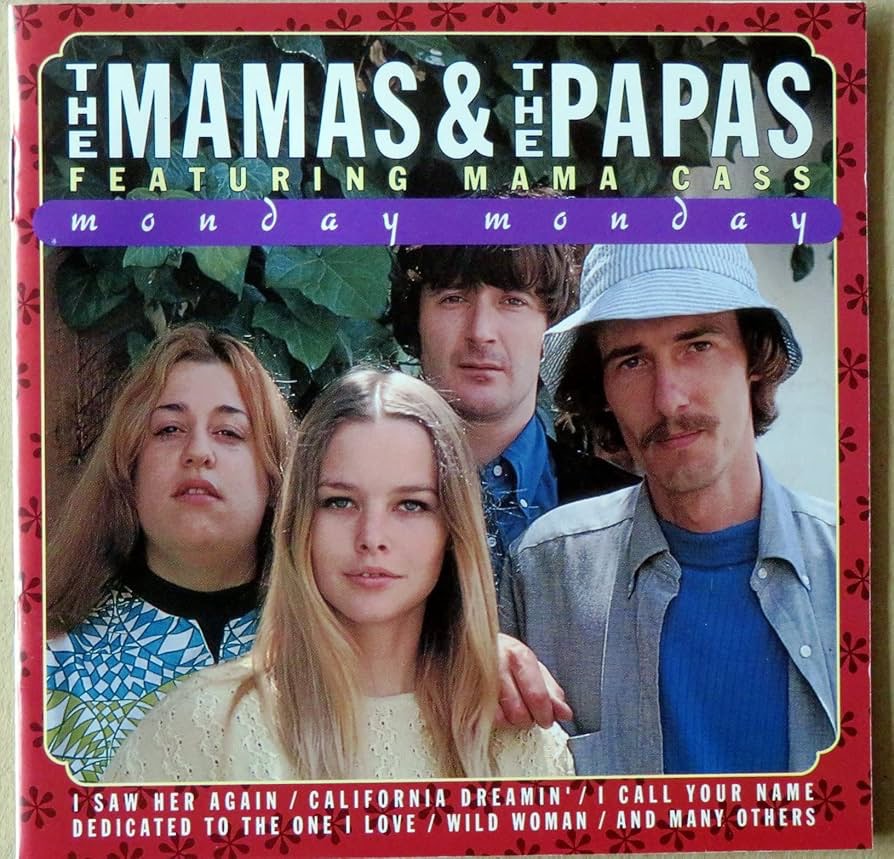
We Live With Nana Pietrantoni

While my father served in Korea, my mother brought us back to our haven in Medford, Massachusetts, to live at my nana’s house. That house, a bustling three-story home, was our true home away from home. My grandparents lived on the second and third floor, along with my nana’s sister, my great aunt Concetta, three of my mother’s sisters (Aunties Norma, Cynthia and Yvonne), and eventually — my mother and her three children. 

The house was always alive with movement and voices. Family members came and went in a constant stream, and my nana seemed to be cooking from sunrise to midnight. The smell of garlic and fresh tomato sauce filled every hallway. My papa was always in the backroom sewing on his vintage Singer sewing machine with a rhymthic chucka sound. It was noisy, crowded, and warm — and to me, it was the safest place on earth.

Mom, Lynne, Diana, Anthony Jr, and Auntie Yvonne at 143 Winthrop Street in Medford.
Dr. Carbone’s Autobiography: A Son in the Shadow of a Green Beret Hero
Mom, Lynne, Diana, Anthony Jr, and Auntie Yvonne at 143 Winthrop Street in Medford
Photograph of my mother with my older sisters Lynne and Diana dressed up for mass.  At my Nana & Papa Pietrantoni's house in Medford, Massachusetts.  Autobiography of Dr. Anthony J. Carbone.
Mum with my two older sisters, Lynne and Diana
Auntie Norma holding me (Anthony Carbone Jr) at my grandparents’ house in Medford, Massachusetts.
Dr. Carbone’s Autobiography: A Son in the Shadow of a Green Beret Hero.
Auntie Norma holding me at my grandparents’ house in Medford, Massachusetts
Lynne, Diana and Anthony Carbone Jr. Formal Portrait.
Dr. Carbone’s Autobiography: A Son in the Shadow of a Green Beret Hero.
Lynne, Diana and Anthony Jr.
Young Lynne, Diana, and Anthony Jr Carbone celebrating with their mother, Edda Carbone, at Nana Pietrantoni's house in Medford, Massachusetts.
Dr. Carbone’s Autobiography: A Son in the Shadow of a Green Beret Hero
Christmas 1960 at Nana & Papa Pietrantoni’s house while my father was in Korea.

Father Receives Orders for 101st Airborne DIvision at Fort Campbell, Kentucky

After completing his tour in Korea, the Army sent my father to Fort Campbell, Kentucky, where he served from 1961 to 1963 with the prestigious 101st Airborne Division, the “Screaming Eagles.” He served as the Adjutant for the Headquarters and Headquarters Company of the division. Once again, our family lived in government quarters on post, adjusting to the routines and rituals of a new Army installation.

Dad in the living room of our post quarters at Fort Campbell, Kentucky.  Classic mid-century furniture and furnishings.  Autobiography of Dr. Anthony J. Carbone.
Dad in the living room of our post quarters at Fort Campbell, Kentucky
With my mother (Edda Carbone) when I was about 3 years old. This photo was taken behind our goverment quarters at Fort Campbell, Kentucky. Autobiography of Dr. Anthony J. Carbone.
With my mother behind our quarters on Fort Campbell, Kentucky

My father wearing his paratrooper wings and 101st Airborne Division patch with his father and sister, Rosemarie. Fort Campbell, Kentucky.
Dr. Carbone’s Autobiography: A Son in the Shadow of a Green Beret Hero
My father wearing his paratrooper wings and 101st Airborne Division patch with his father and sister, Rosemarie.

The Cuban Missile Crisis

During this same period, in October of 1962, the United States faced one of the most dangerous confrontations of the Cold War — the Cuban Missile Crisis. This 13-day standoff between the United States and the Soviet Union began when American reconnaissance aircraft discovered that the Soviets were installing nuclear missiles in Cuba, just 90 miles from Florida. President John F. Kennedy responded by ordering a naval blockade of the island and demanding the immediate removal of the missiles. For nearly two weeks, the world stood on the brink of nuclear war. Thankfully, U.S. and Soviet leaders eventually resolved the crisis through diplomacy, though only after extraordinary tension and heightened military readiness.

New York Times front page from October 23, 1962 with headline "U.S. Imposes Arms Blockade on Cuba on Finding Offensive-Missile Sites; Kennedy Ready for Soviet Showdown".  Photo of President John F. Kennedy.
Dr. Carbone’s Autobiography: A Son in the Shadow of a Green Beret Hero
NY Times Article from October 1962 on the Cuban Missile Crisis

Dad and the 101st Airborne Prepare to Invade Cuba

Most history books record that elite Army units, including the 101st Airborne Division, were mobilized and staged in Florida and Georgia in anticipation of a possible full-scale invasion of Cuba. However, what most people don’t know — and what I know from my own father’s account — is that he was part of a classified mission to Puerto Rico. As the Adjutant for the Command & Control Battalion of the 101st Airborne Division, he and a select group of officers were quietly deployed to Ramey Air Force Base in Aguadilla, Puerto Rico, during the height of the crisis. Their presence there was never officially acknowledged in the open-source historical record, but it’s part of our family’s private history.

I remember overhearing fragments of the story growing up — how the tension was palpable, the operation strictly need-to-know, and the mood deadly serious. My father never glorified the moment, but the fact that he was trusted to be part of such a critical, behind-the-scenes operation speaks volumes about the kind of officer he was becoming. The Cuban Missile Crisis may have been narrowly avoided through diplomacy, but my father and others in the 101st were prepared to act at a moment’s notice.

U.S. Marine Corps Forces Preparing for Ination of Cuba on Puerto Rican Island during the Cuban Missile Crisis.
Dr. Carbone’s Autobiography: A Son in the Shadow of a Green Beret Hero
USMC Forces Preparing for Invation of Cuba on Puerto Rican Island

Dad Gets Promoted to Captain

My father was promoted to the rank of Captain on my third birthday. This was while serving as the Adjutant for the Command & Control Battalion of the 101st Airborne Division.

Mom pinning on Captain’s bars on my newly promoted father (CPT Anthony J. Carbone).
Dr. Carbone’s Autobiography: A Son in the Shadow of a Green Beret Hero.
Mom pinning on Captain’s bars on my newly promoted father.
Captain Carbone staning in front of our quarters at Fort Campbell, Kentucky while assigned as the Adjutant to Headquarters company of the 101st Airborne Division.
Dr. Carbone’s Autobiography: A Son in the Shadow of a Green Beret Hero
Captain Carbone staning in front of our quarters at Fort Campbell, Kentucky.

Father Gets Orders for Fort Benning, Georgia

In 1963, was father received orders sending him back to the U.S. Army Infantry School and Center at Fort Benning, Georgia to attend the Infantry Officer Advance Course. This was considered an honor and special assignment for an Armor officer.

Famous “Follow Me” Statue at the U.S. Army Infantry School & Center at Fort Benning, Georgia.
Dr. Carbone’s Autobiography: A Son in the Shadow of a Green Beret Hero
Famous “Follow Me” Statue at the U.S. Army Infantry School & Center at Fort Benning, Georgia.

President & Mrs. Kennedy Travel to Texas and the World Changed

And then came Friday, November 22, 1963. I was not yet four years old, but I remember that day with the kind of clarity that defies age. It was the day President John F. Kennedy was assassinated. The world stopped.

President John F. Kennedy with his wife Jackie Kennedy in Presidential Limousine with Texas Governor Connoly and his wife moments before his assassination on November 22, 1963.
Dr. Carbone’s Autobiography: A Son in the Shadow of a Green Beret Hero
President Kennedy with Jackie in Presidential Limo in Dallas

The Moment of the Assassination of the President in Dealy Plaza

John F. Kennedy in the presidential limousine the moment he was assassinated by unknown assassin on the Grassy Knoll in Dealy Plaza, Texas on November 22, 1963.
Dr. Carbone’s Autobiography: A Son in the Shadow of a Green Beret Hero
Moment of JFK’s Assasination from the Grassy Knoll in Dealy Plaza Dallas

Walter Cronkite Officially Announces the Death of President Kennedy on Live Television

Our home fell into an eerie silence. My parents sat motionless, tears in their eyes, staring at the black-and-white television. I didn’t fully understand what had happened, but I knew it was something terrible. Even as a young boy, I already knew about the Secret Service. I also knew the President was the most powerful man in America. And now, even he could be shot in broad daylight. That single realization shattered something inside me.

Walter Cronkite as he removes his glasses while announcing the death of President John F. Kennedy on CBS News, as seen from a television monitor on November 22, 1963.
Dr. Carbone’s Autobiography: A Son in the Shadow of a Green Beret Hero
Walter Cronkite as he removes his glasses while announcing the death of President John F. Kennedy on CBS News, as seen from a television monitor on Nov. 22, 1963

I suddenly understood the world wasn’t safe and being afraid that my father would now have to go to war. I already knew — instinctively — that war was a bad and dangerous place.

That weekend was unlike any other. We were all home, transfixed by the television as we watched President Johnson get sworn in on Air Force One and saw Kennedy’s casket return to Washington.

Lee Harvey Oswald is Assassinated on Live Television

I heard the panicked interviews of Lee Harvey Oswald in Dallas — and then, we watched in disbelief as Oswald was shot and killed by Jack Ruby live on TV just two days later.

Jack Ruby assassinates Lee Harvey Oswald in Dallas Police Station on live television on November 24, 1963.
Dr. Carbone’s Autobiography: A Son in the Shadow of a Green Beret Hero
Jack Ruby Assasinates Lee Harvey Oswald in Dallas Police Station on live television on November 24, 1963,

The Late President’s Funeral Procession

And then came the long, beautiful, sorrow-filled funeral procession. I still see John-John’s heartbreaking salute. The Old Guard soldiers. The late President’s casket on the caisson. Black Jack, the riderless horse. The muffled drums. The silence of millions.

President John F. Kennedy's Funeral Procession with casket on a caisson pulled by members of the 3rd Infantry Divisions "The Old Guard" on November 25, 1963.
Dr. Carbone’s Autobiography: A Son in the Shadow of a Green Beret Hero
President Kennedy’s Funeral Procession led by members of the 3rd Infantry Division’s “The Old Guard” on November 25, 1963.
John Kennedy Jr salutes his father's casket during the late President Kennedy's funeral on November 25, 1963.
Dr. Carbone’s Autobiography: A Son in the Shadow of a Green Beret Hero
John Jr Salutes his father’s casket during funeral
The Riderless Horse "Black Jack" led by a member of The Old Guard of the 3rd Infantry Division, during the funeral procession for the late President John F. Kennedy on November 25, 1963.
Dr. Carbone’s Autobiography: A Son in the Shadow of a Green Beret Hero
Riderless Horse Black Jack during President Kennedy’s Furneral Procession
Burial of the Late President John F. Kennedy at Arlington National Cemetery on November 25, 1963.
Dr. Carbone’s Autobiography: A Son in the Shadow of a Green Beret Hero
Burial of the Late President John F Kennedy at Arlington National Cemetery

The Infamous Warren Commission Report

The trauma of that moment stayed with me. It gave me nightmares for years. It also ignited a lifelong obsession with understanding what really happened. The very first nonfiction book I ever read was The President’s Commission on the Assassination of President Kennedy. Even as a child, I could tell it wasn’t right. The Warren Commission’s report was filled with holes — chapters openly admitted that facts and testimony had been disregarded simply because they didn’t fit the predetermined outcome.

The Official Warren Commission Report on the Assassination of President John F. Kennedy first published on September 27, 1964.
Dr. Carbone’s Autobiography: A Son in the Shadow of a Green Beret Hero
The Official Warren Commission Report on the Assassination of President John F Kennedy

I didn’t buy it. I was one of the earliest skeptics I knew. Sixty years later, I’m still studying that moment in history. That day in November didn’t just end the Kennedy era. For me, it ended childhood.

Father Receives Orders for Germany

Shortly afterward, my father received new military orders. In early 1964, we packed up once again and prepared to travel to Germany for our first of three tours to Europe.

But I left a part of my innocence behind in America — along with the memory of a young president whose life, and death, which taught me that truth is not always what it appears or what we’re told.

Home Page

Chapter 2: Family, Courtship and Commitment

Mom & Dad at my mother's prom. Autobiography of Dr. Anthony J. Carbone.

Believe Nothing You Hear, and Only Half of What You See — A memoir of Service, Shame and the Search for Truth

My Young Father Sent to Bordentown Military Institute

My father was the youngest of four children. His three sisters — Lucille, Theresa, and Rosemarie — absolutely adored their little brother throughout their lives. He was a typical roughhousing boy who loved sports and was constantly in trouble. As a result, my grandparents sent him away to military boarding school — Bordentown Military Institute in New Jersey. Bordentown turned out to be the magic solution, helping straighten out my father into an ideal soldier. It marked the beginning of an honorable 50-year military career.

Cadets from Bordentown Military Institute, New Jersey on parade (c. 1950s).
Dr. Anthony Carbone's Autobiography.
Bordentown Military Institute, New Jersey

My Father as a Cadet at Bordentown Military Institute

My father (Cadet Tony Carbone) in his Bordentown Military Institute uniform during his high school years (c.1953).
Dr. Anthony Carbone's Autobiography.
Dad at Bordentown Military Institute
My grandparents, Nana & Papa Carbone, visiting my father (Cadet Tony Carbone) at Bordentown Military Institute, in New Jersey (c.1954).
Dr. Anthony Carbone's Autobiography.
Nana & Papa Carbone visiting my father at Bordentown Military Institute

Carbone Family Moves to Stoneham, Massachusetts

By that time, the Carbone family had moved to Stoneham, Massachusetts, just outside Boston, where my grandfather worked in the garment district. One day while my father was on leave from Bordentown, he attended a high school party in Medford, Massachusetts, where my mother lived. That’s where they met — and from that night forward, my father was in love for the rest of his life. They corresponded while apart. My mother was slower to fall for him, but eventually, he won her heart.

Mom (Edda Pietrantoni) and Dad (Cadet Tony Carbone) at my mother’s prom at Medford High School, Medford, Massachusetts c.1954.
Dr. Anthony Carbone's Autobiography.
Mom and Dad at my mother’s prom at Medford High School

Father Enters Norwich University

After graduating from Bordentown, my father attended Norwich University, the Military College of Vermont, as an Army cadet. My mother was working as a secretary at Hood Milk in Boston.

Cadets in formation outside of Old Jackman Hall, Norwich University (c.1950s).
Dr. Anthony Carbone's Autobiography.
Corps of Cadets at Norwich University

My Parents Marriage

On November 25, 1955, my father convinced my mother to elope. The elopement caused an uproar. His parents insisted they actively marry in a church before living together, which they did on December 22, 1955.

My parents always celebrated both anniversaries.

My parents’ (Anthony Carbone and Edda Pietrantoni) church wedding reception December 22, 1955 in Medford, Massachusetts.
Dr. Anthony Carbone's Autobiography.
My parents’ church wedding reception December 22, 1955

Parents Get Settled at Norwich

Norwich University wasn’t happy about the marriage either — cadets were forbidden to wed — so my father was busted in rank. His father cut him off financially, forcing him to work up to three jobs at once to finish school and ROTC training. They were assigned to the “pre-fab” apartments where married cadets lived.

Mom & Dad at Norwich in front of the Prefabs near Norwich University campus when my father was a married cadet
Dr. Anthony Carbone's Autobiography.
Mom & Dad at Norwich in front of the Prefabs

Birth of My Sister, Lynne

My oldest sister, Lynne, was born in 1957, and my father graduated from Norwich University on December 18, 1958 — the same day my second sister, Diana, was born.

My mother (Edda Carbone) with my oldest sister Lynne Elizabeth Carbone (c.1957).
Dr. Anthony Carbone's Autobiography.
My mother with my oldest sister Lynne Elizabeth.

It wasn’t until after the wedding, when both families finally met, that an incredible coincidence emerged: my maternal grandfather had been working in a factory owned by my paternal grandfather for years — without either of them realizing their future connection. The discovery delighted both families, and the two grandfathers became great friends.

Death of my Father’s Sister Lucille and Brother-in-Law Patrick

Tragedy would strike the Carbone family once again. My father’s eldest sister, Lucille, and her husband Patrick Bonesera of Medford, Massachusetts, were killed by a drunk driver near their home in Lawrence Estates on Valentine’s Day. They left behind two young children, my cousins Margie and Ricky — who were raised by my Uncle John and Auntie Rosemarie Antonelli. The loss was devastating and left a permanent mark on the family’s story. My father kept a news clip with the drunk driver’s name in his wallet for many years to come.

My father’s oldest sister Auntie Lucille Bonesera & his brother-in-law, Uncle Pat Bonesara, before they were killed by a drunk driver in the 1950s.
Dr. Anthony Carbone's Autobiography.
Auntie Lucille & Uncle Pat Bonesara

My Father’s Sister Theresa Marries Uncle Arthur McDonald

My father’s second sister was Theresa B. Carbone was born on July 4, 1926. She married an Irish-American, Arthur F. McDonald, and the two of them had seven children: Dennis, Thomas, Michael, James, Arthur, Jeffrey and Susan.

My father's second sister Theresa B. Carbone and her husband Arthur F. McDonald with their firstborn, my cousin Dennis McDonald.
Dr. Anthony Carbone's Autobiography.
Uncle Arthur, Auntie Terry, and Cousin Dennis McDonald

Uncle Arthur at Kennedy Space Center

My Uncle Arthur worked for Grumman Aerospace at the Kennedy Space Center in Florida for 30 years in the Apollo Program, and focusing on the Grummun Lunar Module. I remember during the exciting early years of the American space program, Uncle Arthur would send me astronaut patches, photographs, and models of each of the space ships.

Dr. Carbone’s Autobiography: Grumman Aerospace’s Lunar Module for the Apollo Program being worked on at the Kennedy Space Center in Cape Kennedy in the 1960s. My Uncle Arthur.
Dr. Anthony Carbone's Autobiography.
Grumman Aerospace Engineers Working on the Apollo’s Lunar Module at Cape Kennedy.

My Father’s Sister Rosemarie Marries Johnny Antonelli

My father’s youngest sister Rosemarie married Johnny Antonelli, a celebrated American professional baseball player. Together, they had four children, Lisa, Donna, John Jr, and Regina and were raised in Rochester, New York.

Uncle John & Auntie Rosemarie (Carbone) Antonelli. Uncle John served in the Old Guard (3rd Infantry Regiment) that guards the Tomb of the Unknown Soldier at Arlington National Cemetery.
Dr. Anthony Carbone's Autobiography.
Uncle John & Auntie Rosemarie Antonelli. He served in the Old Guard (3rd Infantry Regiment) that guards the Tomb of the Unknown Soldier at Arlington National Cemetery.

Uncle Johnny Antonelli the Professional Baseball Pitcher

My uncle was a left-handed starting pitcher, he played for the Boston / Milwaukee Braves, New York / San Francisco Giants, and Cleveland Indians between 1948 and 1961. Noted at the outset of his career as the recipient of the biggest bonus in baseball history when he signed with the Braves for $52,000 in 1948, Antonelli became a six-time National League All-Star, a two-time 20-game winner, and an essential part of the 1954 World Series champion Giants’ pitching staff. His success brought a sense of pride and celebrity into the family at a time when hope was deeply needed.

Uncle Johnny Antonelli pitching for the New York Giants (Baseball Card).
Dr. Anthony Carbone's Autobiography.
Uncle Johnny Antonelli pitching for the New York Giants

My Parents Meet and Fall in Love for Life

My parents met during their high school years and quickly fell in love — a love that would last for more than fifty years of marriage. Their bond was something rare and beautiful, marked by a constant affection that made them seem more like sweethearts than a long-married couple. My father often called my mother “Ellie Mae” and proudly referred to her as his girlfriend. Even after decades together, whenever they were in the same room, you could still see the spark between them. Their love never faded — it only deepened with time.

Mom and Dad in an automatic photo booth in the early 1960s.
Dr. Anthony Carbone's Autobiography.
Mom & Dad were boyfriend & girlfriend for life.

Home Page

Chapter 1: The Italian-American Tailors’ Legacy

Vintage Singer sewing machine used by my tailor grandfathers. Autobiography of Dr. Anthony J. Carbone.

Believe Nothing You Hear, and Only Half of What You SeeA Memoir of Service, Shame, and the Search for Truth

Both Grandfather’s Emegrated From Italy

Both of my grandfathers came to America at the turn of the 20th century, part of the great wave of Italian immigrants who left their homeland in search of a better life. What they lacked in money, they made up for in skill and determination. Remarkably, they shared the same trade: both were tailors — men who stitched suits with care, who worked with their hands, and who built their lives one hemline at a time.

Paternal Grandfather: Antonio Benjamino Carbone

My paternal grandfather, Antonio Benjamino Carbone, was born near Rome, Italy on January 8, 1899. His father was Giuseppe Carbone and his mother was Lucia Montemurro. He sailed from southern Italy and landed in New York City after passing through Ellis Island. He originally settled in the Jamaica Queens, a borough of New York City overflowing with dreams and the pungent smell of coal smoke and tenement kitchens.

The Carbone Family Coat of Arms & Notables

Carbone Family Coat of Arms displaying notables such as the Marquis of Padua, a Cardinal, a Senator, and a Tribune of the Roman Republic Army. Military tribunes were among the most senior officers in a legion. They were responsible for leading troops, maintaining discipline, and ensuring the soldiers’ welfare. They were often young men from the equestrian or senatorial classes (wealthy and influential families) who sought military experience. This position served as a stepping stone.
Dr. Anthony Carbone's Autobiography: Chapter 1 The Tailors' Legacy
Carbone Family Coat of Arms displaying notables such as the Marquis of Padua, a Cardinal, a Senator, and a Tribune of the Roman Republic Army.

Carbone Family Genealogy

Leather bound, hand-typed, genealogist report on the Carbone Family written in the 1960s.  Biography of Dr. Anthony J. Carbone.

In the 1960s, my grandfather, Papa Carbone, commissioned a genealogist in Italy to trace the Carbone family history. I find this fascinating, because it was decades before the invention of the Internet. This genealogist had to travel from town to town, office to office, archive to archive, piecing together the Carbone lineage. He discovered something extraordinary: the Carbone name traces back to 500 BC.

He recorded his findings in a leather-bound book, hand-typed in both English and Italian.

The genealogist begins the book with the story of Gneo Papirio Carbone, a tribune of the common people in 92 BC. Historical records state that in 87 BC, he actively led one of four army corps in Marius and Cinna’s army.

The book goes on to describe tribunes, legionnaires, consuls, and soldiers; at least three Catholic cardinals; 14 barons; two marquises; multitude of authors; poet laureates; artists; even the baker for King Louis. One Carbone reportedly married Mary of England, King Henry VIII’s daughter. The family erected monuments in the Duomo of Naples, Sorrento, Rome, and other locations where they held noble privileges, including Capua, Reggio Messina, and Genoa.

Maternal Grandfather: Giovanni di Domenico Pietrantoni

My maternal grandfather, Giovanni di Domenico Pietrantoni was born on 13 February 1893, in Goriano Sicoli, L’Aquila, Abruzzo, Italy. His father, Domenico Pietrantonio, was 27 and his mother, Annantonia Ciccone, was 25. He emmigrated to Boston, Massachusetts via Ellis Island in 1921, and eventually settled on Hanover Street in the Italian North End of Boston.

Papa Pietrantoni’s War Medal from Italian Minister of Defense 1934

Both Families Emigrate to America

Their journeys were treacherous. They traveled by steerage, crammed into the lower decks of steamships — dark, foul-smelling, and disease-ridden compartments. They told stories of passengers who didn’t survive the voyage, of children lost to fever and old men who never made it above deck again. But for those who did survive, there was the unforgettable sight of Lady Liberty, rising out of the harbor like a promise.

New Immigrants Cheer at the Sight of the Statue of Liberty Upon Arriving to America.  Dr. Anthony Carbone's Autobiography: Chapter 1 The Tailors' Legacy
New Immigrants Cheer at the Sight of the Statue of Liberty Upon Arriving to America

Arrival at Ellis Island & Evaluation by Public Health Officers

At Ellis Island, their fates were further altered — not just by medical inspections and customs agents, but by the careless swipe of a pen. Immigrants were separated — men to one side, women and children to the other — and examined for any sign of disease. Then came the interviews. Names were lost in translation.

Public Health Officers Inspect Newly Arrived Immigrants at Ellis Island.  Dr. Anthony Carbone's Autobiography: Chapter 1 The Tailors' Legacy
Public Health Officers Inspect Newly Arrived Immigrants at Ellis Island

New American Names

My grandfather Antonio Benjamino Carbone became Anthony Benjamin CarboneGiovanni di Domenico Pietrantoni was simplified to John Pietrantoni. Their rich, lyrical names — each syllable a tribute to family, region, and history — flattened into something more “American.” But they didn’t complain. They were simply grateful to begin again.

Marriage of Nana & Papa Carbone

In 1922, Papa Carbone married Michelina Annarella, whose name was later changed to Margaret — though everyone called her “Maggie.” Her father was Francesco Annarella and her mother was Theresa Patriarca. Nana Carbone was a second-generation Italian-American born in Kings County, New York. Interestingly, the two Carbone brothers married two Annarella sisters. My Carbone grandparents had 3 daughters and 2 sons.

Nana & Papa Carbone's Wedding Portrait.  Dr. Anthony Carbone's Autobiography: Chapter 1 The Tailors' Legacy
Nana & Papa Carbone’s Wedding

Wedding of Nana & Papa Pietrantoni

Papa Pietrantoni married Giovanna Ranno, who was called “Jenny,” in the North End of Boston on January 16, 1926, in Boston, Suffolk, Massachusetts, United States. They were both first-generation Americans and they were the parents of 4 sons and 5 daughters.

Nana & Papa Pietrantoni's Wedding Portrait.
Dr. Anthony Carbone's Autobiography: Chapter 1 The Tailors' Legacy
Nana & Papa Pietrantoni’s Wedding

I find it fascinating that although both grandfathers arrived in America with the same skill — tailoring — however, their destinies unfolded in dramatically different ways.

Papa Carbone the Tailor

My father’s father rose to great success. He became a sought-after designer, crafting uniforms for the U.S. military and bespoke suits for celebrities like Joe DiMaggio, Frank Sinatra and the Mayor of New York. Their home reflected that prosperity — a large house staffed by servants, a rarity for immigrant families of that era. My grandfather loved driving new Buicks and spending summers at Lake Ronkonkoma on Long Island.

My grandfather, Antonio Benjamino Carbone the tailor. Dr. Anthony Carbone's Autobiography: Chapter 1 The Tailors' Legacy
My grandfather, Antonio Benjamino Carbone

Death of the First Carbone Son Followed by Birth of my Father

Tragedy struck when their first son, Anthony Benjamin Carbone Jr., died in early childhood. So when my father was born on May 2, 1935, they named him Anthony Joseph Carbone. To ensure his survival, he was tended to by both a nurse and a wet-nurse, a testament to the lingering fear of loss and the privilege the family could afford by then.

My young father, Anthony Joseph Carbone.  Dr. Anthony Carbone's Autobiography: Chapter 1 The Tailors' Legacy
My father, Anthony Joseph Carbone

Papa Pietrantoni the Tailor

In stark contrast, my maternal grandfather, Giovanni Pietrantoni, also a classy gentleman tailor, lived a life of hardship. He raised ten children in a crowded tenement apartment at 4 Battery Street in Boston’s North End, the heartbeat of the city’s Italian-American community. Several of my grandmother’s relativeslived with them — multiple families under one leaky roof, scraping together a life one stitch, one meal, one paycheck at a time.

My maternal grandfather, Giovanni Pietrantoni the tailor.  Dr. Anthony Carbone's Autobiography: Chapter 1 The Tailors' Legacy
My maternal grandfather, Giovanni Pietrantoni

The contrast between the two households — one of elegance and status, the other of noise, love, and survival — would shape the family stories I heard growing up, and eventually, shape me.

Home Page

Prologue

BELIEVE NOTHING YOU HEAR, AND ONLY HALF OF WHAT YOU SEE — A Memoir of Service, Shame, and the Search for Truth

This prologue introduces the emotional and philosophical foundation of this memoir. While many of the events it alludes to are revealed later, it offers a glimpse of the deeper truths that shaped my life’s journey.

The Prologue

My father gave me that advice when I was a boy still learning to trust the world. “JR,” he said (short for Anthony Jr.), “believe nothing you hear, and only half of what you see.” I didn’t understand it then. I thought truth was obvious and justice inevitable. But as I got older, as life broke me down and built me back in ways I never expected, those words became my anchor.

I grew up in the long, complicated shadow of a Green Beret hero. My father was the kind of man little boys want to become, and grown men feel unworthy to follow. I spent my life trying to live up to his ideals—of duty, honor, country, family, courage—and paid a high price when I couldn’t.

I served my country–I wore the uniform. And later, I was a soldier and a healer. But under the surface, I was unraveling. Crushed by trauma I didn’t yet understand. Haunted by what I saw, by what I didn’t see, and worst of all, by what others chose to believe.

There’s a moment in every man’s life when he realizes the truth doesn’t always win. That moment came for me like a whisper—a rumor. One lie was enough to destroy a reputation I spent decades building. And it wasn’t the first. It wouldn’t be the last.

I’ve been judged for things I didn’t do. Lost friends, careers, my peace of mind. I’ve walked into rooms where the air went still. I’ve watched good people turn away because they heard something. That’s why I live by my father’s words now more than ever.

This memoir is not just about service—it’s about shame. It’s about how the system fails, how silence protects the wrong people, and how strength sometimes means learning to survive in your own skin.

I’m telling this story not to clear my name, but to reclaim my life. To show that even in the aftermath of lies, there is still truth worth telling—and a man still worth knowing.
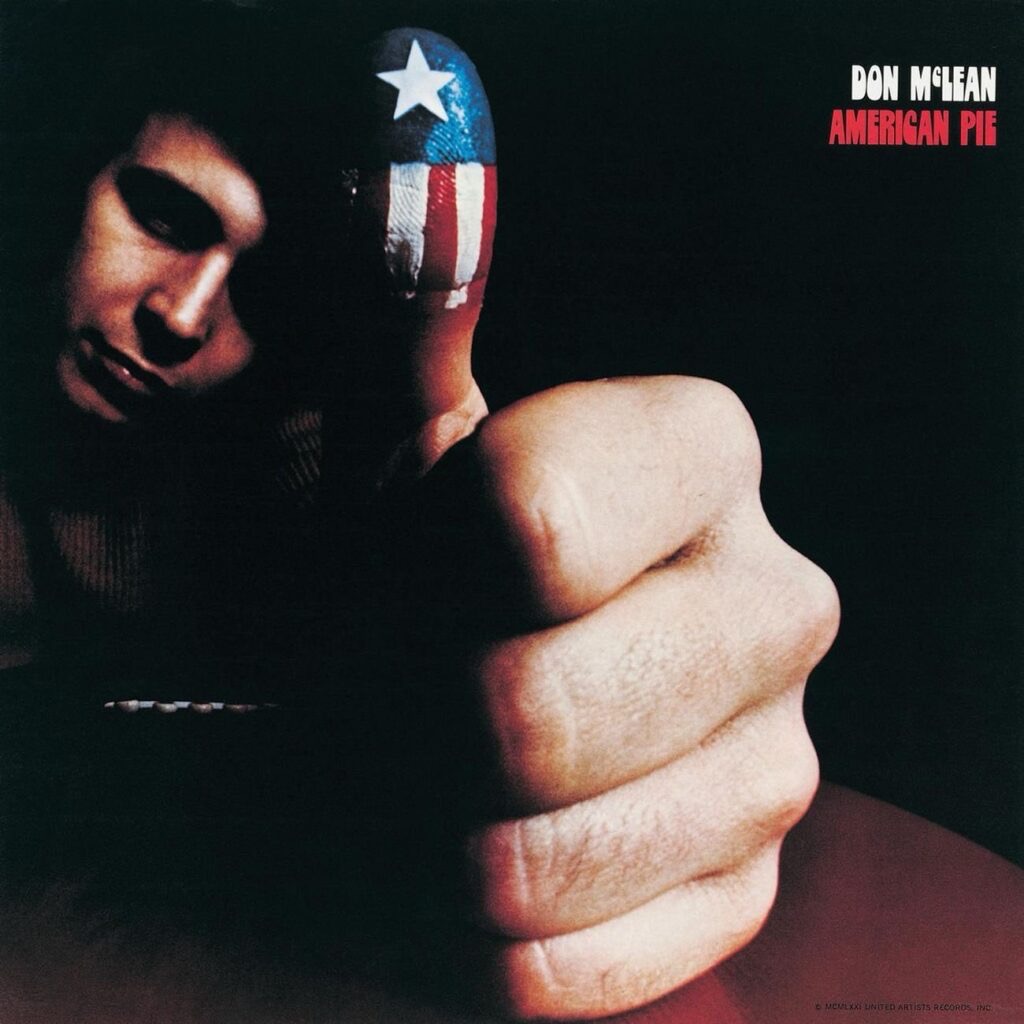
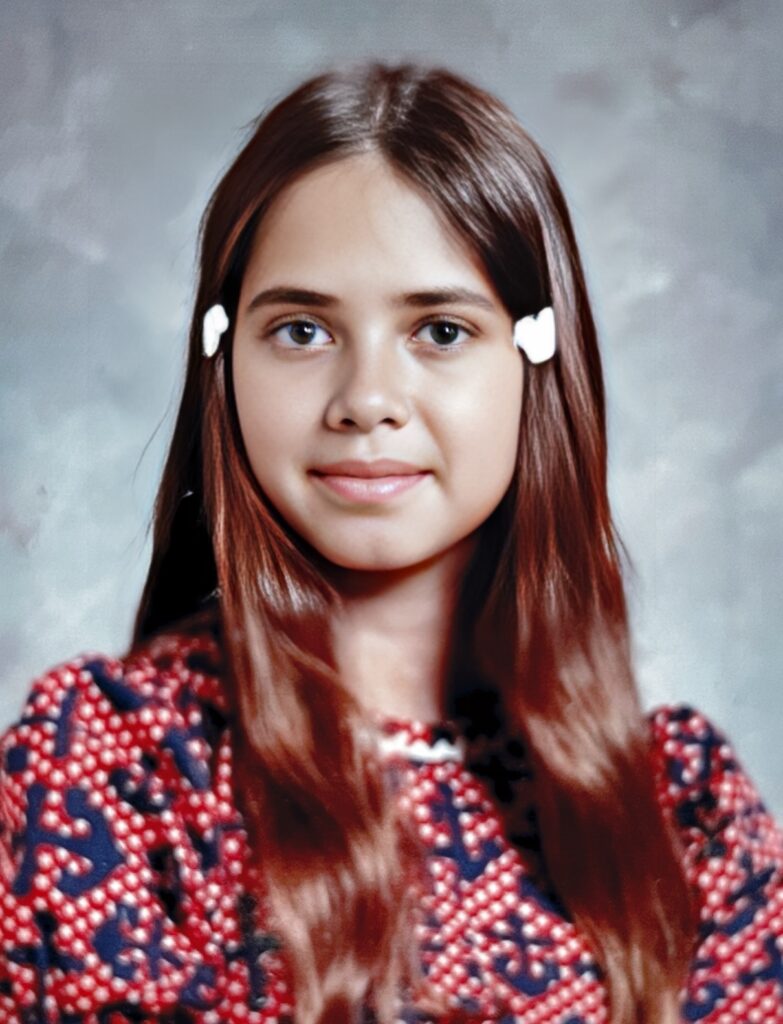
So read what follows with open eyes. And remember what my father said.

Home Page: Believe Nothing You Hear, and Only Half of What You See